Monday, January 19, 2026

IN TRIBUTE TO AND HONOR OF DR. MARTIN LUTHER KING, JR. (1929-1968): Part 2--Dr. King the Democratic Socialist

All,
 
In honor of the late Dr. Martin Luther King, Jr. (1929-1968) -- visionary prophet, social activist, cultural critic, public intellectual, community organizer, radical political leader, and profound global advocate and defender of peace, freedom, justice, equality, and human rights whose extraordinary contributions to the history of the ongoing African American liberation struggle in all of its many complex dimensions, and the general mass movements for social, cultural, economic, and political revolution against all forms of racism, sexism, militarism, imperialism, and class domination in the United States and in the rest of the world remain absolutely essential and invaluable to this day.

Kofi 
Jack O'Dell - The Radical Martin Luther King
AfroMarxist
June 6, 2018


VIDEO:  
 
Monthly Review An Independent Socialist Magazine
Topics: History , Labor

Book Review

The Jack O’Dell Story
by Paul Buhle
May 1, 2011


PHOTO: Jack O’Dell (1923-2019), also known as Hunter Pitts O’Dell, was a Communist Party organizer, an outstanding political theorist and journalist a member of the Southern Christian Leadership Conference (SCLC), a trusted senior advisor to Dr. Martin Luther King, Jr. and a civil rights activist. O’Dell was deeply involved in Jesse Jackson’s 1984 presidential campaign, as well as numerous other civil rights organizing events throughout the United States. He died at age 96 in 2019.

MLK Day Special: Dr. Martin Luther King Jr. in His Own Words
January 15, 2024 

Democracy Now!

VIDEO:  
Today is the federal holiday that honors Dr. Martin Luther King Jr. He was born January 15, 1929. He was assassinated April 4, 1968, at the Lorraine Motel in Memphis, Tennessee. He was just 39 years old. While Dr. King is primarily remembered as a civil rights leader, he also championed the cause of the poor and organized the Poor People’s Campaign to address issues of economic justice. Dr. King was also a fierce critic of U.S. foreign policy and the Vietnam War. We play his “Beyond Vietnam” speech, which he delivered at New York City’s Riverside Church on April 4, 1967, as well as his last speech, “I’ve Been to the Mountaintop,” that he gave on April 3, 1968, the night before he was assassinated. 

Democracy Now! is an independent global news hour that airs on over 1,500 TV and radio stations Monday through Friday. Watch our livestream at democracynow.org Mondays to Fridays 8-9 a.m. ET.
 

Jack O'Dell (1923-2019): Black Activist & Civil Rights Organizer

February 24, 2024
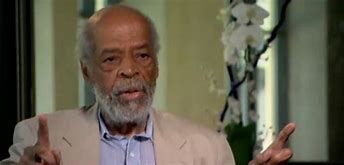
Jack O'Dell (1923-2019)

Jack O'Dell (1923-2019) was a well-known activist, writer, organizer, Communist Party member (CPUSA) , labor and SCLC organizer and close confidant of Martin Luther King Jr. Born in Detroit, O'Dell briefly attended Diliard University in New Orleans. After enlisting in the United State Army during World War II, he joined the National Martime Union. By the late 1950's, he was heavily involved with SCLC and Martin Luther King. Forced to leave SCLC because of his Communist affliations, O'Dell went on to serve as an editor at Freedomways Magazine, chair the Pacifica Foundation radio station group and served as an aide for Operation PUSH and Jesse Jackson's 1984 and 1988 Presidential campaigns.

Jack O’Dell testified before the Senate internal security subcommittee in 1956. He was called to respond to questions about whether he was an organizer for the Communist Party, but he declined to answer and called the chairman, Senator James Eastland, a Mississippi Democrat, “an enemy of the Negro people, and an avowed one


Bio/Obituary

Wiki


https://en.wikipedia.org/wiki/Jack_O%27Dell

New York Times


https://www.nytimes.com/2019/11/19/us/jack-odell-dead.html

The Nation


https://www.thenation.com/article/archive/who-jack-odell/

Stanford University


https://kinginstitute.stanford.edu/odell-hunter-pitts-jack


Writings

The Black Freedom Movement Writings of Jack O'Dell


https://www.jstor.org/stable/10.1525/j.ctt1ppxfh
https://www.ucpress.edu/book/9780520274549/climbin-jacobs-ladder


Archives

New York Public Library: Schomburg


https://archives.nypl.org/scm/21106


Documentary film

The issue of Jack O'Dell


https://vimeo.com/251717171


His Voice

On SNYC (Southern Negro Youth Congress)


https://www.youtube.com/watch?v=Dfzfhy8y830


On leaving the CPUSA


https://www.youtube.com/watch?v=v5eVo9Ns-uY&list=RDCMUC2xX2FI6s4i9xz3t9qjayhg&start_radio=1&rv=v5eVo9Ns-uY&t=307


On Martin Luther King

 https://www.youtube.com/watch?v=slxGTkKtdxo


On leaving the movement of Martin Luther King


https://www.youtube.com/watch?v=gBBb7m983Vo

Confronting Racial Capitalism


https://pcp.gc.cuny.edu/2014/11/video-confronting-racial-capitalism-jack-odell-barbara-ransby-nikhil-pal-singh-christina-heatherton/


About Him

Conference


https://labor.washington.edu/odell 

The Legacy of Jack O'Dell in the Black Freedom Movement


https://www.youtube.com/watch?v=YEBdIqWNlqg


Monthly Review
https://monthlyreview.org/2011/05/01/the-jack-odell-story/


Hunter Pitts “Jack” O’Dell (1924-2019) 

December 1, 2009
by Melissa Turner  

Community organizer and civil rights activist Hunter Pitts O’Dell was born in Detroit, Michigan on August 11, 1924. His father George Edwin O’Dell worked in hotels and restaurants in Detroit. His mother, Emily (Pitts) O’Dell, who studied music at Howard University, later taught adults to play classical piano. O’Dell’s grandparents played a pivotal role in raising him during the turbulent 1930s, and he took his grandfather’s nickname, “Jack,” as his own in order to pay homage to him. O’Dell’s witnessing of racial violence, labor strikes, and social unrest during this period led to his interest in labor and social reform issues.

In 1941, O’Dell left Michigan after high school to attend Xavier University in New Orleans, where he studied pharmacology. He abandoned his studies in order to enlist in the Merchant Marines and fight for the United States during World War II. It was during this period that he became exposed to a variety of progressive and radical thinkers of American and European origins. He also joined an integrated union (the National Maritime Union) and became involved in a variety of civil rights activities. One of these included organizing hotel and restaurant workers in Florida in 1946.

In the 1950s, at the height of McCarthyism in the United States, O’Dell’s left-leaning ideals as well as his membership in the Communist Party USA, led to his expulsion from his union. He remained, however, one of the most energetic and vocal community organizers in the South. He found it difficult to sustain employment because of federal investigations into his political views. O’Dell’s work in the South in the 1950s introduced him to nonviolent resistance as a tactic of the civil rights movement. He claimed to have resigned his Communist Party membership at the end of the 1950s.

While involved in planning the 1959 youth march on Washington for integrated schools, O’Dell became acquainted with major civil rights leaders and strategists such as Martin Luther King Jr., A. Philip Randolph, and Stanley Levison. O’Dell joined King’s Southern Christian Leadership Conference (SCLC) and was particularly active in planning its successful Birmingham campaign in 1963. O’Dell’s involvement, however, allowed opponents to smear the entire movement as “communist” because of his past membership in the Communist Party. Recognizing that his continued involvement with King and the Southern civil rights movement would continue to be a problem for SCLC, he resigned from the organization late in 1963. After his resignation, O’Dell wrote for Freedomways, a political journal dedicated to black freedom struggles worldwide.

Jack O’Dell continued to be a political activist. He spoke out against the Vietnam War, supported Eugene McCarthy in the late 1960s, worked on Jesse Jackson’s 1984 presidential campaign, and was involved in a number of civil rights and community organizing events in New York and other cities across the United States.

O’Dell and his wife Jane Power lived in Vancouver, British Columbia. On October 31, 2019, O’Dell died of a stroke at a hospital in Vancouver. He was 96 years old. He is survived by his wife; a daughter, Judith Beatty; a son, Tshaka Lafayette; his brother Edwin; and his sister Carolyn Peart.

ABOUT THE AUTHOR:

Melissa Turner

Melissa Turner is a an independent historian who studies radical historians and intellectuals. She holds advanced degrees in history and political science and is particularly interested in 20th Century thinkers in Western Europe and the United States.

https://panopticonreview.blogspot.com/2015/01/in-honor-of-late-dr-martin-luther-king.html

The Radical King

Series: King Legacy (Book 11)
Hardcover: 320 pages
Publisher: Beacon Press (January 13, 2015)
ISBN-10: 0807012823
ISBN-13: 978-0807012826


by Martin Luther King Jr. (Author), Cornel West (Editor)


A revealing collection that restores Dr. King as being every bit as radical as Malcolm X

“The radical King was a democratic socialist who sided with poor and working people in the class struggle taking place in capitalist societies. . . . The response of the radical King to our catastrophic moment can be put in one word: revolution—a revolution in our priorities, a reevaluation of our values, a reinvigoration of our public life, and a fundamental transformation of our way of thinking and living that promotes a transfer of power from oligarchs and plutocrats to everyday people and ordinary citizens. . . . Could it be that we know so little of the radical King because such courage defies our market-driven world?” —Cornel West, from the Introduction

Every year, Dr. Martin Luther King, Jr., is celebrated as one of the greatest orators in US history, an ambassador for nonviolence who became perhaps the most recognizable leader of the civil rights movement. But after more than forty years, few people appreciate how truly radical he was.

Arranged thematically in four parts, The Radical King includes twenty-three selections, curated and introduced by Dr. Cornel West, that illustrate King’s revolutionary vision, underscoring his identification with the poor, his unapologetic opposition to the Vietnam War, and his crusade against global imperialism. As West writes, “Although much of America did not know the radical King—and too few know today—the FBI and US government did. They called him ‘the most dangerous man in America.’ . . . This book unearths a radical King that we can no longer sanitize.”

http://truth-out.org/progressivepicks/item/28568-martin-luther-king-jr-all-labor-has-dignity

Martin Luther King, Jr.: All Labor Has Dignity
Monday, 19 January 2015by Martin Luther King, Jr.
Beacon Press
Book Excerpt


In his introduction to the newly published anthology of King speeches and writings, Cornel West writes, "This book unearths a radical King that we can no longer sanitize." West writes of a charismatic leader who was "anti-imperial, anti-colonial, anti-racist" and embodied "democratic socialist sentiments."

The following is Chapter 21 from The Radical King:

On February 12, 1968—President Lincoln's birthday—as Dr. King traveled from state to state, garnering rousing support for the Poor People's Campaign, more than a thousand sanitation workers in Memphis walked off the job. A month into the strike, on March 18, strikers and their supporters packed Bishop Charles Mason Temple of the Church of God in Christ in what the Reverend James Lawson would describe as a "sardine atmosphere." With few notes, King addressed the overflowing church by connecting the localized strike to the plight of all workers, especially those in the service economy.

[The following speech was delivered by Dr. King in support of the Memphis sanitation workers' strike, just two weeks before he was assassinated in the same city.]

My dear friend James Lawson and to all of these dedicated and distinguished ministers of the gospel assembled here tonight, and to all of the sanitation workers and their families and to all of my brothers and sisters—I need not pause to say how very delighted I am to be in Memphis tonight, and to see you here in such large and enthusiastic numbers.

As I came in tonight, I turned around and said to Ralph Abernathy, "They really have a great movement here in Memphis." You are demonstrating something here that needs to be demonstrated all over our country. You are demonstrating that we can stick together and you are demonstrating that we are all tied in a single garment of destiny, and that if one black person suffers, if one black person is down, we are all down. I've always said that if we are to solve the tremendous problems that we face we are going to have to unite beyond the religious line, and I'm so happy to know that you have done that in this movement in a supportive role. We have Baptists, Methodists, Presbyterians, Episcopalians, members of the Church of God in Christ, and members of the Church of Christ in God, we are all together, and all of the other denominations and religious bodies that I have not mentioned.

But there is another great need, and that is to unite beyond class lines. The Negro "haves" must join hands with the Negro "have-nots." And armed with compassionate traveler checks, they must journey into that other country of their brother's denial and hurt and exploitation. This is what you have done. You've revealed here that you recognize that the no D is as significant as the PhD, and the man who has been to no-house is as significant as the man who has been to Morehouse. And I just want to commend you.

It's been a long time since I've been in a situation like this and this lets me know that we are ready for action. So I come to commend you and I come also to say to you that in this struggle you have the absolute support, and that means financial support also, of the Southern Christian Leadership Conference.

You are doing many things here in this struggle. You are demanding that this city will respect the dignity of labor. So often we overlook the work and the significance of those who are not in professional jobs, of those who are not in the so-called big jobs. But let me say to you tonight, that whenever you are engaged in work that serves humanity and is for the building of humanity, it has dignity, and it has worth. One day our society must come to see this. One day our society will come to respect the sanitation worker if it is to survive, for the person who picks up our garbage, in the final analysis, is as significant as the physician, for if he doesn't do his job, diseases are rampant. All labor has dignity.

But you are doing another thing. You are reminding, not only Memphis, but you are reminding the nation that it is a crime for people to live in this rich nation and receive starvation wages. And I need not remind you that this is our plight as a people all over America. The vast majority of Negroes in our country are still perishing on a lonely island of poverty in the midst of a vast ocean of material prosperity. My friends, we are living as a people in a literal depression. Now you know when there is mass unemployment and underemployment in the black community they call it a social problem. When there is mass unemployment and underemployment in the white community they call it a depression. But we find ourselves living in a literal depression, all over this country as a people.

Now the problem is not only unemployment. Do you know that most of the poor people in our country are working every day? And they are making wages so low that they cannot begin to function in the mainstream of the economic life of our nation. These are facts which must be seen, and it is criminal to have people working on a full-time basis and a full-time job getting part-time income. You are here tonight to demand that Memphis will do something about the conditions that our brothers face as they work day in and day out for the well-being of the total community. You are here to demand that Memphis will see the poor.

You know Jesus reminded us in a magnificent parable one day that a man went to hell because he didn't see the poor. His name was Dives. And there was a man by the name of Lazarus who came daily to his gate in need of the basic necessities of life, and Dives didn't do anything about it. And he ended up going to hell. There is nothing in that parable which says that Dives went to hell because he was rich. Jesus never made a universal indictment against all wealth. It is true that one day a rich young ruler came to Him talking about eternal life, and He advised him to sell all, but in that instance Jesus was prescribing individual surgery, not setting forth a universal diagnosis.

If you will go on and read that parable in all of its dimensions and its symbolism you will remember that a conversation took place between heaven and hell. And on the other end of that long-distance call between heaven and hell was Abraham in heaven talking to Dives in hell. It wasn't a millionaire in hell talking with a poor man in heaven, it was a little millionaire in hell talking with a multimillionaire in heaven. Dives didn't go to hell because he was rich. His wealth was his opportunity to bridge the gulf that separated him from his brother Lazarus. Dives went to hell because he passed by Lazarus every day, but he never really saw him. Dives went to hell because he allowed Lazarus to become invisible. Dives went to hell because he allowed the means by which he lived to outdistance the ends for which he lived. Dives went to hell because he maximized the minimum and minimized the maximum. Dives finally went to hell because he sought to be a conscientious objector in the war against poverty.

And I come by here to say that America, too, is going to hell if she doesn't use her wealth. If America does not use her vast resources of wealth to end poverty and make it possible for all of God's children to have the basic necessities of life, she, too, will go to hell. And I will hear America through her historians, years and generations to come, saying, "We built gigantic buildings to kiss the skies. We built gargantuan bridges to span the seas. Through our spaceships we were able to carve highways through the stratosphere. Through our airplanes we are able to dwarf distance and place time in chains. Through our submarines we were able to penetrate oceanic depths."

It seems that I can hear the God of the universe saying, "Even though you have done all of that, I was hungry and you fed me not, I was naked and you clothed me not. The children of my sons and daughters were in need of economic security and you didn't provide it for them. And so you cannot enter the kingdom of greatness." This may well be the indictment on America. And that same voice says in Memphis to the mayor, to the power structure, "If you do it unto the least of these of my children you do it unto me."

Now you are doing something else here. You are highlighting the economic issue. You are going beyond purely civil rights to questions of human rights. That is a distinction.

We've fought the civil rights battle over the years. We've done many electrifying things. Montgomery, Alabama, in 1956, fifty thousand black men and women decided that it was ultimately more honorable to walk the streets in dignity than to ride segregated buses in humiliation. Fifty thousand strong, we substituted tired feet for tired souls. We walked the streets of that city for 381 days until the sagging walls of bus segregation were finally crushed by the battering rams of the forces of justice. In 1960, by the thousands in this city and practically every city across the South, students and even adults started sitting in at segregated lunch counters. As they sat there, they were not only sitting down, but they were in reality standing up for the best in the American dream and carrying the whole nation back to those great wells of democracy, which were dug deep by the founding fathers in the formulation of the Constitution and the Declaration of Independence.

In 1961, we took a ride for freedom and brought an end to segregation in interstate travel. In 1963, we went to Birmingham, said, "We don't have a right, we don't have access to public accommodations." Bull Connor came with his dogs and he did use them. Bull Connor came with his fire hoses and he did use them. What he didn't realize was that the black people of Birmingham at that time had a fire that no water could put out. We stayed there and worked until we literally subpoenaed the conscience of a large segment of the nation, to appear before the judgment seat of morality on the whole question of civil rights. And then in 1965 we went to Selma. We said, "We don't have the right to vote." And we stayed there, we walked the highways of Alabama until the nation was aroused, and we finally got a voting rights bill.

Now all of these were great movements. They did a great deal to end legal segregation and guarantee the right to vote. With Selma and the voting rights bill one era of our struggle came to a close and a new era came into being. Now our struggle is for genuine equality, which means economic equality. For we know now that it isn't enough to integrate lunch counters. What does it profit a man to be able to eat at an integrated lunch counter if he doesn't earn enough money to buy a hamburger and a cup of coffee? What does it profit a man to be able to eat at the swankiest integrated restaurant when he doesn't earn enough money to take his wife out to dine? What does it profit one to have access to the hotels of our city and the motels of our highway when we don't earn enough money to take our family on a vacation? What does it profit one to be able to attend an integrated school when he doesn't earn enough money to buy his children school clothes?

And so we assemble here tonight, and you have assembled for more than thirty days now to say, "We are tired. We are tired of being at the bottom. We are tired of being trampled over by the iron feet of oppression. We are tired of our children having to attend overcrowded, inferior, quality-less schools. We are tired of having to live in dilapidated substandard housing conditions where we don't have wall-to-wall carpets but so often we end up with wall-to-wall rats and roaches. We are tired of smothering in an airtight cage of poverty in the midst of an affluent society. We are tired of walking the streets in search for jobs that do not exist. We are tired of working our hands off and laboring every day and not even making a wage adequate to get the basic necessities of life. We are tired of our men being emasculated so that our wives and our daughters have to go out and work in the white lady's kitchen, leaving us unable to be with our children and give them the time and the attention that they need. We are tired."

And so in Memphis we have begun. We are saying, "Now is the time." Get the word across to everybody in power in this time in this town that now is the time to make real the promises of democracy. Now is the time to make an adequate income a reality for all of God's children. Now is the time for city hall to take a position for that which is just and honest. Now is the time for justice to roll down like water and righteousness like a mighty stream. Now is the time.

Now let me say a word to those of you who are on strike. You have been out now for a number of days, but don't despair. Nothing worthwhile is gained without sacrifice. The thing for you to do is stay together, and say to everybody in this community that you are going to stick it out to the end until every demand is met, and that you are gonna say, "We ain't gonna let nobody turn us around." Let it be known everywhere that along with wages and all of the other securities that you are struggling for, you are also struggling for the right to organize and be recognized.

We can all get more together than we can apart; we can get more organized together than we can apart. And this is the way we gain power. Power is the ability to achieve purpose, power is the ability to affect change, and we need power. What is power? Walter Reuther said once that "power is the ability of a labor union like UAW to make the most powerful corporation in the world—General Motors—say yes when it wants to say no." That's power. And I want you to stick it out so that you will be able to make Mayor Loeb and others say yes, even when they want to say no.

Now the other thing is that nothing is gained without pressure. Don't let anybody tell you to go back on the job and paternalistically say, "Now, you are my men and I'm going to do the right thing for you. Just come on back on the job." Don't go back on the job until the demands are met. Never forget that freedom is not something that is voluntarily given by the oppressor. It is something that must be demanded by the oppressed. Freedom is not some lavish dish that the power structure and the white forces in policy-making positions will voluntarily hand out on a silver platter while the Negro merely furnishes the appetite. If we are going to get equality, if we are going to get adequate wages, we are going to have to struggle for it.

Now you know what? You may have to escalate the struggle a bit. If they keep refusing, and they will not recognize the union, and will not agree for the check-off for the collection of dues, I tell you what you ought to do, and you are together here enough to do it: in a few days you ought to get together and just have a general work stoppage in the city of Memphis.

And you let that day come, and not a Negro in this city will go to any job downtown. When no Negro in domestic service will go to anybody's house or anybody's kitchen. When black students will not go to anybody's school and black teachers . . .

[After conferring with his aides, King returned to the microphone briefly to say he would return to Memphis to lead a mass march within a few days.]Delivered at the American Federation of State, County,

and Municipal Employees mass meeting, Bishop Charles
Mason Temple, Church of God in Christ, Memphis,
Tennessee, March 18, 1968.

Excerpted from The Radical King by Dr. Martin Luther King, Jr. Edited and Introduced by Dr. Cornel West (Beacon Press, 2015). Not to be reposted without permission from the publisher.

Martin Luther King, Jr.

Nobel Peace Prize laureate and architect of the nonviolent civil rights movement, Dr. Martin Luther King, Jr., was among the twentieth century's most influential figures. One of the greatest orators in US history, King also authored several books, including Stride Toward Freedom: The Montgomery Story, Where Do We Go from Here: Chaos or Community?, and Why We Can't Wait. King was assassinated in Memphis, Tennessee, on April 4, 1968.

Related Stories

Martin Luther King's Vision of Justice
By Eugene Robinson, The Washington Post Writers Group | Op-Ed
Martin Luther King Was a Radical, Not a Saint
By Peter Dreier, Truthout | News Analysis
Black Lives Matter / Black Life Matters: A Conversation with Patrisse Cullors and Darnell L. Moore
By Monica J. Casper, The Feminist Wire | Interview
Show Comments 

Dr. Cornel West discusses his book, The Radical King. Beacon Press, 2015

The Center for the study of Race, Politics and Culture at the University of Chicago presented Dr. Cornel West as its annual public lecture on February 1, 2015 at Rockefeller Memorial Chapel:


VIDEO: https://www.youtube.com/watch?v=-tLcoNXk8OI
https://www.youtube.com/embed/-tLcoNXk8OI


The Dr. Martin Luther King Jr. You Won’t Read About in Textbooks 
January 11, 2022 

On January 10, the Zinn Education Project hosted historian Jeanne Theoharis in conversation with Jesse Hagopian about the Dr. Martin Luther King Jr. that is not found in textbooks and school curricula. 
 
This was for the Teach the Black Freedom Struggle series of classes with people’s historians.

As Theoharis notes in an article in The Atlantic, “Critics of Black Lives Matter have held up King as a foil to the movement’s criticisms of law enforcement, but those are views that King himself shared. Martin Luther King Jr. proclaimed, ‘We can never be satisfied as long as the Negro is the victim of the unspeakable horrors of police brutality.’ King understood that police brutality — like segregation — wasn’t just a southern problem.”

Here are a few reactions from participants:

My instruction is now more informed with truth and I am able to provide a broader context for his work.

Dr. Theoharis’ scholarship helps me understand civil rights history in a way that I was never taught. Thank you.

I learned that Dr. King’s public persona was definitely white-washed to make him more acceptable to the white audience and less intimidating, as well.

Jeanne Theoharis had the presence of mind to ground us in the difficulties of the struggle today for educators. Jesse Hagopian followed suit and signified how hard the work is at this moment in these grim conditions.

Thanks so much. This community means a great deal to me. The ideas embolden my political imagination and offer succor. I also just love seeing people who are in the struggle for radical education.


Video of the full event, except the breakout sessions.
Transcript

Click below for the full transcript with resources mentioned in the discussion.


Transcript:
 

Jesse Hagopian: We are very fortunate this evening to be joined by Jeanne Theoharis, a distinguished professor of political science at Brooklyn College. She is the author and editor of numerous books, including some of my favorites: A More Beautiful and Terrible History: The Uses and Misuses of Civil Rights History and also The Rebellious Life of Mrs. Rosa Parks and the new YA edition, which I highly recommend educators get for their classrooms. She is also the co-founder and collaborator on this series and is a true people’s historian in her scholarship and her practice. So, welcome Jeanne.

Jeanne Theoharis: Thank you. It’s so great to be here. But, I do feel like we need to have a moment; like what a hard week it’s been, a crushing week I think particularly for educators. So, I just wanted to hold space for a second just to say I know it’s so hard and if you’re feeling like it’s hard please understand you’re in community together with us tonight. Because we think we’ve seen the most disrespectful thing and then we see something else even more disrespectful, and 

Hagopian: I know the attacks keep coming on hard-working educators and it seems like our health and safety is not the priority for these school systems and for the broader country, so it helps to all be in it together though and have some comrades in the struggle. So I’m glad people have joined us in this community.

Thank you for starting us with that acknowledgement, and I’m really excited about this class today, because we really have to win back the Reverend Dr. Martin Luther King Jr. We’re in a struggle for his legacy right now and because everybody seems to want to claim him — I mean you have the left claiming him, liberals claim him. I remember seeing a McDonald’s ad growing up that celebrated Martin Luther King at the same time they’re not paying a living wage to their workers.

Then, today you have even the far right anti-Critical Race Theorists — I like to call them uncritical race theorists — they claim him, as well. In launching the anti-history 1776 Project, President Trump even said quote “there’s no more powerful force than a parent’s love for their children.” And patriotic moms and dads are going to demand that their children are no longer fed hateful lies about this country. We embrace the vision of Martin Luther kKing where children are not judged “by the color of their skin but the content of their character.”

This quote from King is repeated ad nauseam and I wanted to ask you why is Martin Luther King claimed by people with such different politics? I’m also curious to know what you think King would say about the struggle over Critical Race Theory today and what King would want students to learn about in school today.

Theoharis: Well, to start off I think we want to remember that this kind of sea change is not true when he dies. Somewhere between two thirds and three quarters of Americans don’t approve of King, don’t approve of his work, when he dies. And we’re going to see that flip twenty years later.

For people who are interested, I talk about this in A More Beautiful and Terrible History, that part of what we see, from the very beginning we see this push for a King holiday by civil rights activist Coretta and there’s all this pushback. Then we get to the 1980s and President Reagan had been a longtime opponent of the holiday but he’s running for re-election and he starts to see it as a way to win over moderates. So interestingly, that opposition changes to support and we see Reagan sign the federal legislation making the third Monday of January a holiday for Dr. King. I think that’s a really important moment because I think if we look at what Reagan says that day — he puts forth this kind of American exceptionalist idea of King that I think then lies at the heart of the way that everybody feels. Like [they] would be friends with King, they’d be protesting with King, and that’s this idea that in most countries Dr. King wouldn’t even get to speak at all, but in a country like the United States, when you shine a light on injustice, and you do it the right way, then it changes. And King and Parks are kind of the poster children for this idea. So what I think then happens is that King becomes a way to celebrate the robustness of American democracy, and then everyone claims him because he seems to stand for American progress.

I think one of the most misused quotes of King is “the arc of the universe is long but it bends towards justice,” because I think that tends to be used in this narrative of progress, that we might still have a long way to go but we’re just constantly progressing. And King himself took that, too. I mean King eviscerated this idea, he called it the myth of time. It’s like time is neutral basically, and I’m paraphrasing him, the forces of evil have used it better and that there’s nothing, like things only progress through our actions and this notion that America’s gradually progressing towards more and more justice is not true. So, in many ways I think there’s this way we hold on to that quote because I think it gives us hope in hard times and I think there is a way that obviously King is a religious man and he’s talking about the god of justice, but not the way that we tend to misuse that quote, which is like this narrative of just constantly getting better and better, which is I think one of the key ways that King then gets used by both conservatives and liberals to basically be like ‘we had a problem and we’ve largely fixed it and yeah America.’

Hagopian: Yeah, absolutely. It seems to me that that’s just such a great framework for how we got to this situation where everybody claims them, and most people really misuse his legacy and it just is galling to see how many times the right use a couple of quotes out of context to attack Critical Race Theory in schools. They’re gearing up right now to celebrate MLK day as a way to attack kids’ rights to learn about structural racism.

Theoharis: One of the things I think we’re going to talk about today, and kind of is the heart of why we decided to have this session, is the new book that I’m working on which is really looking at Dr. King’s long-standing understanding of northern racism, or racism as not a southern problem but an American cancer, and therefore his understanding from the 1950s onward — not just in 1967 — of structural racism in this country, that racism is not about hate or meanness. I mean, again, I think some of King’s quotes about love tend to get misused to obscure how he understands racism fundamentally as structural and the ways that he also understands that the south is often used to shield northern liberals. And by north I mean what King would mean would be northeast, midwest, and west coast from grappling with the racism endemic in those places.

Part of what we’re going to be talking about tonight is all of this, this is what my research has gone and just really uncovering, this whole other side of King that I think we’re so much less familiar with, and how long he called out northern liberals, how long he stood with northern movements. I think we tend to see King only taking on northern racism in the last years, post-Watts, and that’s just not the case. So, we can talk about that and I can share some resources on that. Because in some sense, even as much as I think we all have tried to get outside of the myths of King, one of the things that I’ve been really grappling with in this new project is how much there’s still ways that we tend to buy into things about King, like King being this southern respectability politics guy when over and over and over he’s calling out these kind of behavioral solutions as not solutions; that personal responsibility is not public policy and what you need is public policy and calling out the police and the courts and seeing the situation in northern cities as a system of internal colonialism and seeing racism as being about profit and materialism. This is the King that I think we want to sit with and learn more with, because I think he really speaks to where we are today.

Hagopian: Yeah, absolutely, and I hope that so many teachers will be emboldened after our session today to lean into teaching about structural racism and know that King would have your back in that struggle. I can’t wait to dig into more of what he thought about some of the other struggles in the north, for sure. But, I want to also take a look at some of his views on what he would think about Black Lives Matter and police. In some of these, the call to defund the police, I think, has really captured people’s imagination.

In this wonderful book, A More Beautiful and Terrible History, you quote King saying,

When we ask Negros to abide by the law, let us also demand that the white man abide by the law. In the ghettos, day in and day out, he violates welfare laws to deprive the poor of their meager allotments. He flagrantly violates building codes and regulations. His police make a mockery of the law, and he violates law on equal employment and education and the provisions for civil service.

So, give us context for that quote and what King’s attitude would be to the police and systemic racism.

Theoharis: There are a couple of things just to really remember from the outset. The first is that King has a lot of experience with police abuse and police misconduct. King was arrested 29 times and he is often roughed up in those, and some of them are caught on tape. So, if you’ve ever seen, in 1958 Ralph Abernathy is on trial for something, and he and Coretta go down to the courthouse in Montgomery to try to go see him, and they arrest him for loitering. Then there’s a very famous picture where he’s basically [in a] half -Nelson, they pinned his arm behind his back and they have his head down on the counter — and this is in front of a photographer! Then they arrest him and they take him back to the cell and they rough him up in the cell. You may also have seen when he gets arrested in April of 1963, where he goes to Birmingham, when he’s getting arrested they lift him off the ground.

So, I think one of the things that I’ve done more lately is to go back to things we think we know and to watch them again. It means that to have the police pick your body up, King was terrified of the police and I think we forget what it takes to get arrested time after time after time. In fact, I should say, the first time he’s in Montgomery is during the Montgomery Bus Boycott. He gets arrested for speeding five miles over the limit and then they take him into their car, they don’t just give him a ticket, they drive him around — he thinks he’s going to be killed. So, from that very first counter, he’s terrified of the police. What it takes for King to be able to do this over and over and over, I think we sometimes forget that. So, that’s the first thing I want to bring up.

The second thing is, I think sometimes we tend to think about King’s critique of the police being about southern racist police. Part of why Jesse just read that quote, and why I think it’s so important, is because he’s talking not just about the police as bad individuals but a structure. So when he talks about this system of internal colonialism in northern cities he calls the police and the courts enforcers of that system. He talks about the ways that police abuse . . . After the Watts uprising he writes this piece where he’s talking about how disillusioned he is because he’s often welcomed in these northern cities, but the minute he starts talking about northern injustice then “only the language is polite” is what he said.

Then he writes, “ As the nation Negro and white trembled with outrage at police brutality in the south. Police misconduct in the north was rationalized, tolerated, and usually decided.”  In fact he had been calling for change in the police. A year before the Watts uprising there was a six-day uprising in Harlem and the mayor invited King to the city to try to calm things down. King gets to the city and basically he’s like, “You need a civilian complaint review board. You need to basically fire the cops.” And the mayor totally ignores him. But this notion that King is separate from the calls that we are talking about today just is not borne out when you actually look at what King is doing and how he talks about the police.

Let me read you one more thing, and this is from 1964; this is not 1967 King, this is 1964.

Armies of officials are clothed in uniform and vested with authority, armed with the instruments of violence and death, and conditioned to believe that they can intimidate, maim, or kill Negroes with the same recklessness that once motivated the slave owner.

Wow. I mean, he’s very much thinking about the role that the police play, not just racist Bull Connor or racist Jim Clark, but the role the police play in society. So, I think that’s really important.

The second thing I want us to think about in terms of Black Lives Matter, I think we often forget that at the heart of King’s belief in nonviolent direct action is a belief in disruption and the need for disruption. I think we’ve made him into passive [and] hand-holding and he’s [actually] very clear that in some sense part of what nonviolent direct action is supposed to do is it’s supposed to upset; in some sense injustice is comfortable.

Just to give you one one of my favorite examples, because it is such a direct parallel to today. In 1964, Brooklyn CORE, the chapter of the Congress of Racial Equality, had been organizing for years. They’d been organizing around housing segregation, around job discrimination, around school desegregation. They’ve managed to win two jobs at [illegible] Bakery and they managed to get one family into a different school. So, all these token things, and by 1964 they are really fed up, and 1964 is the year of the World’s Fair here in New York City. So, Brooklyn CORE decides that they’re going to escalate their tactics and they are going to call for a stall on the highway going out to Flushing Meadows, which is where the World’s Fair is going to be held. Now, this obviously sounds familiar; people go nuts, I mean white leaders and Black moderate leaders, Robert Moses of New York, they all think it’s a horrible idea, terrible, and they try to get King to come out against this idea, and King refuses.

I’m just going to read you what he writes:

We do not need allies who are more devoted to order than to justice.

And again, this is calling for a highway stalling. I hear a lot of talk these days about how King writes about how our direct action talk alienates former friends.

I would rather feel they’re bringing to the surface latent prejudices that are already there. If our direct action programs alienate our friends they never were really our friends.

I mean, I can give you lots of other examples, but I think at the base of those examples is his understanding that nonviolent direct action has to be disruptive, it has to make people uncomfortable. It’s not about making people love you, it’s about making people uncomfortable enough to be changed and moved to action. It’s not about one big group hug, and that’s how you get changed. No. So, I think that’s the other way that I think he’s really misused, because I think there’s often this sense with Black Lives Matter of ‘you’re not doing it the right way, you’re not using the right tactics,’ when in fact most of the criticisms of Black Lives Matter are criticisms that were waged against King and the Civil Rights Movement for being reckless, for being out of control, for being aggressive, for being disruptive. All of those things are waged against King as well, even though that’s not how we remember.

Hagopian: That’s right. There is so much there. Thank you. What I just took away from what you said that I hadn’t fully processed was the radical ideas that King had early on. I guess I had also thought about him coming to radical conclusions. Certainly in the last year of his life all sorts of radical statements are being made. But you digging up that quote from 1964 really just puts lie to everybody trying to use him to moderate the struggle today.

Theoharis: Totally. I mean, let me give you one more example, just because we’re on the topic of schools. So, one of the tactics that northern movements start to use by the early 1960s, because they’re trying to get desegregation in New York, in Chicago, in Boston, and they’re getting all this resistance — “We don’t have segregation here,” “We don’t even keep track of it,” “This would require busing [and] we don’t like busing” — and so one of the tactics you see northern movements turning to by 1963, 1964 is the school boycott. In the fall of 1963 in Chicago the biggest civil rights protest — we’ve talked about this in these sessions before — happened. Not the March on Washington, but it happened in New York City in February 1964 where almost a half a million students and teachers stayed out of school to protest the fact that they were ten years after Brown and there was still not even a comprehensive plan for desegregation in New York City, let alone actual desegregation. So again, King was supporting the school boycott in Chicago, supporting the school boycott in New York, and supporting the school boycott in Boston. And there’s all these critics in the New York Times, they hate this, and so two months later King, in a column in the Amsterdam News, comes out again in favor of the school boycott and really is taking some of these critics on.

“The school boycott in practice has proved very effective,” he writes, “in uncovering the injustice and indignity that school children in the Negro, Puerto Rican minority communities face. School boycotts have punctured the thin veneer of the north’s racial self-righteousness.” This is the spring of 1964, pre-passage of the Civil Rights Act. “School boycotts have punctured the thin veneer of the north’s racial self-righteousness.” Responding to the criticism that these disruptive tactics alienate well-meaning allies, King made clear the truth of the matter is that it is the harvest of past apathy to tragic conditions that were allowed to exist without any serious concern. Basically he’s like “this has been happening and you’re getting all upset with this tactic and the reason you are is because you have let this problem go on.”

Hagopian: Wow, brilliant analysis and also beautiful language. I thank you for sharing his direct quotes there. I love the way he condemns the northern structural racism in the schools. King is widely celebrated but only a very narrow part of what he said is lifted up in the mainstream, like four words from his speech at the 1963 March on Washington for Jobs and Freedom are often repeated. “I have a dream.” But not his more radical views, such as when he said “something is wrong with capitalism, there must be a better distribution of wealth,” and “maybe America must move towards democratic socialism.” So, I’m hoping you could talk about his economic vision, his views on unions and class.

Theoharis: I think we want to go back to the March on Washington speech, where it begins with him talking about America giving Black people a bad check. Again, many of us might not use checks anymore, but he’s saying basically they’ve come there, they refuse to believe, and again iI’m paraphrasing him, that they’ve defaulted on this promissory note, but they’ve come to collect. What we know about a bad check is that the only way to write a bad check is you have to have a good check; you don’t get to just apologize and say, “So, I gave you a bad check. I didn’t mean it.” You have to give people a good check; so to me, in that most iconic speech, King is saying “we are here for material redress. That’s what it’s going to take.”

I think that’s the fundamental idea, but when we talk about that in terms of Reparations we could talk about the harm being not just a moral harm but an economic exploitation. Certainly he understood segregation to be, again in the way that we tended to see his critique of segregation being about meanness or about people not wanting to sit next to each other, and he very much talks about it in terms of profit, in terms of how much money is being made and also taken out of the Black community. And I think we miss what we might call the racial capitalism argument that King is making. So he understands and, yes, so he’s assassinated.

He’s building a Poor People’s Campaign. One of the last things he’s working on at the end is bringing together . . . he’s talking about the three evils of poverty, racism, and militarism, and he’s building an interracial Poor People’s Campaign when he’s assassinated. That will be continued by his friends and colleagues that summer, and again the vision, and then its continuing in a new version, a new Poor People’s Campaign today that’s being co-chaired actually by my sister and Reverend Barber. So yes, this vision was where he was at the end of his life, that we need to attack these three things in tandem, and that you can’t not talk about militarism because, in fact, this is the constant argument used to say “we can’t pay for these other things.” So King is talking about how that becomes a way to also deform and distort our society.

Hagopian: Totally, and I love that there’s a new Poor People’s Campaign. That’s really the way to honor mMartin Luther King today. If you want to check out that campaign and get active in that, not this nonsense from the right.

I want to ask you one more question before we move to the breakout sessions and that is more about your new book that you’re working on now. The Civil Rights Movement is generally taught as a southern phenomenon and yet, as you pointed out earlier, some of the biggest protests of that era were actually in the north. In your new book on King, you’re focusing on Martin Luther King’s work in the north, so I’m hoping you can speak about what that work looked like and what he thought about northern liberals.

Theoharis: I came to this work, well, it started a while ago. I was [doing] research on the Civil Rights Movement in LA, pre the Watts uprising and I kept finding Dr. King and I was like, “Wait a minute, this is not the story I was taught.” The story I was taught was that King turns his attention to LA and problems after Watts, and King is in LA at least 15 times in the late 1950s and early 1960s, and he’s standing with movements around school segregation, he’s standing with movements against police brutality, he’s standing with movements fighting housing segregation. It’s not like he’s just there raising money for the south.

So that’s where this journey began, and I just realizing how much this argument then makes King, it distances us from him, because I think that one of the ways, if you are forced to see that King actually sees racism structurally, he sees that it’s not a southern aberration but fundamental to the nation. He’s constantly, from the beginning, critiquing northern liberals who point to Mississippi but aren’t dealing with job discrimination or housing segregation in their own community, and he’s constantly talking about that. One of the things I realized that I hadn’t paid attention to is that King actually spends these formative years of young adulthood in the north.

We know his biography: he goes to Morehouse early, he starts at Morehouse when he’s 16, so he graduates Morehouse at 19. It’s at Morehouse that he gets his religious calling; he didn’t necessarily think he wanted to follow in his father’s footsteps because he found it too emotional and not tied to the world. And then he found a path, a religious calling, that was where he could blend those two. He decides to go to divinity school and he goes to divinity school at Crozer Seminary in Pennsylvania [where] he spends three years and then he goes on to get his doctorate at Boston University. So he basically spends from age 19 to 25 in the north confronting not just a promised land but also the racism of the north.

For instance, when King moves to Boston he’s 21 or 22, and he has huge trouble finding anybody who’ll rent to him. He talks about the incredible housing segregation that he counters there. A year before, in 1950, he and some friends went out for drinks across the border from where he’s in seminary in Maple Shade, New Jersey. The owner refuses to serve them, they protest, they say, “Hey, New Jersey has an anti-discrimination law.” The owner gets a gun and basically threatens them at gunpoint and kicks them out. They’re outraged. They go back, they think about [suing] because New Jersey has an anti-discrimination law on the books. These three white University of Pennsylvania law students offer to help because they go and test the place they’re served. But then when push comes to shove, those white University of Pennsylvania students back out, so they won’t testify and the case falls apart.

So, King’s own personal experiences — and I could go on in the north — are both showing him the racism of the north, but they’re also showing him the limits of northern liberalism, the limits of anti-discrimination law, the limits of people who say that they’re your allies. Allies kind of get flat, flabby, and so to me part of our story begins there, so that when he moves from Boston [and] takes his first job in Montgomery, that’s when we meet him and that’s when he starts to step into this leadership role. But he comes to that with six years of becoming an adult, becoming who he is as an intellectual, who he is as a religious leader in the north. There is never a moment when King is not writing about it.

Also, the north is in his first book on Montgomery, Stride Toward Freedom, he is also calling out northern liberals and the need for northern liberals to be liberal at home and not just look at the south. That is there from the very beginning.  I think just seeing that coming out of King’s own experience [and] also in the ways that we tend to see that experience and miss its import I think is really significant.

Hagopian: Yes, that’s so useful. One question for you, Jeanne, could you talk more about how King developed his radical ideas about racial capitalism, about the police, about imperialism, about Black liberation? Who were his mentors, his teachers, his experiences that led him to those conclusions?

Theoharis: A couple of things. I think we want to remember how young King is in Montgomery. He is still in formation, he is 26 years old that morning, December 2, when he gets the call from E. D. Nixon that the Women’s Political Council is planning a boycott for Monday and they’re trying to get the ministers on board. They want to use King’s church. If anybody’s ever been to Montgomery, King’s church, the Dexter Avenue Baptist Church, is really centrally located in Montgomery. It’s right next to the capitol. They want to use King’s church for this meeting to get the ministers on board and King basically says that morning — and the King’s have a three week old baby, their first baby. They’ve just had her — and he hesitates and he says, “Can you call me back?” Just like any of the rest of us would at 6am. I always like to start there because I think we sometimes assume that King just knows what to do, or he’s just destined or whatever.

And I think that Jesse’s question about learning takes us in a different direction, which is that King is in process and he’s going to have to make decisions, and he’s going to have to step into this role. Part of how he steps into this role is by one of the things that I’ve come to see again in research for this new book is that he’s doing all of this traveling, he’s speaking all over the country, but in doing so he’s also hooking up with all of these different local movements in all these places and learning from that. And one of the people he’s learning from is Bayard Rustin. People might know Rustin as one of the key organizers of the 1963 March on Washington. Rustin is a socialist, he’s a journalist, he’s a pacifist, and he’s one of King’s key interlocutors, from the Montgomery Bus Boycott until 1960.

And then Adam Clayton Powell. People may know that Adam Clayton Powell doesn’t like that King is learning from Rustin, and King and Rustin in some sense embody a different kind of masculinity than Powell. It’s nonviolent but confrontational, and Powell is a politician, a backroom dealer. So he doesn’t like how much influence Rustin has in terms of the ways that King is turning into a leader. Again, this is a much different kind of “race man,” if we’re going to use that term. People may know that Powell threatened to say that Rustin and King were having an affair, and even though they’re not having an affair King can get scared, Rustin offers to pull back, and King takes him up on it. So, for a while then King and Rustin’s relationship fades. Then we see that it grows again around the March on Washington, and he will be very important in terms of King’s thinking in 1964 and 1965. Then again, they part ways because Rustin gets more pragmatic and King gets more radical. So, Rustin is a key person who’s shaping King’s ideas.

Another thing I want us to be thinking about is just how it’s shaping King’s ideas to be traveling around the country seeing all these different movements, and in some sense growing from that knowledge, seeing what people are trying, seeing what’s working and not, but also seeing in many ways particularly how much resistance there is in the north that looks different than the south. It’s not necessarily the klan, it’s not necessarily burning crosses. Sometimes it’s violent, sometimes it’s bureaucratic, sometimes it’s using the levers of power. But to think about King always learning, and to think about King as an intellectual whose journey . . . I mean basically he’s 26 when it starts and he’s 39 when he’s assassinated. So, he’s learning and in some sense part of King’s genius is his ability to constantly keep thinking things over and turning things over and reshaping things. I think we miss that aspect of King. King is a dynamic thinker and political strategist or activist.

Hagopian: Yeah, I love that description of how he was constantly in motion with his ideas and learning, developing, rather than the image that often gets portrayed of a fully formed messiah. Some of my favorite artists, too, never got stuck in one period. I love how Miles Davis freaked everybody out with fusion jazz, or Bob Dylan freaked out his audience, too. We change and develop and grow, and I really like that description.

We have some really good questions coming in the chat that we can move to. Somebody asked why is the narrative that Dr. King’s radicalism was gradual and post-Watts?

Theoharis: I think part of this is the media and thinking about the role of the media in the Civil Rights Movement. Again, we have a too simplistic narrative because I think the media plays a very important role in shining a light on the Southern Civil Rights Movement. John Lewis will talk about the role of the media like we would have been a bird without wings, and certainly there are some really key moments, particularly if we think about the Freedom Rides or the sit-ins or what happened on the Edmund Pettus Bridge. The media then shines a light on those things in a sustained way that then begins to change the United States, but that same media is based in the north and tends to take a very different tone when covering civil rights issues at home.

This is another thing that I’ve gotten very interested in in this new project, the ways that I’ve been looking for instance at the ways the New York Times covers the movement in Birmingham in 1963 versus the ways it’s covering King, either what he’s doing when he’s doing other things. One of the funniest things I found was this piece, in September of 1963 the 16th Street Baptist Church in Birmingham got bombed and the four pre-teenaged young women got killed. One of King’s first responses to this, which I had not remembered, is to call for a nationwide boycott of Christmas shopping. He is so angry but he is also like, “This is not just a Birmingham problem, this is an American problem.”

The New York Times goes crazy and they write this editorial; it’s the craziest thing. I mean, basically it’s like war on Christmas; they accuse him of waging a war on Christmas and that basically he’s doing the same thing that these people who had bombed the church would be doing, and they would be turning Christmas into a day of hate if they did that. It’s insane, but I think it gets at the ways that the media is going to shape how we understand who King is, what he’s doing, and what he’s not doing. So, I think part of this idea of King turning his attention to the north after Watts is because the media turns its attention to the north after Watts in ways that it tended to not want to cover the Civil Rights Movement in New York, in the ways that it was covering the movement in Birmingham by 1963, for instance. A product of the time.

Then, I think King makes strategic use . . . One of the things that I came to realize also is this point of how he’s been in LA so many times and he’s been talking about police brutality before 1965. He talked about all these things but that shock after Watts, he’s strategic, he’s using that shock to open up more space to talk about things he’d been trying to talk about for years. He realizes there’s more space and so he’s also using it. In some sense, these papers are willing to give him a lot more space to talk about these things and to listen to things he’s been saying for a long time.

Yes, that’s really important. I hadn’t thought about it quite that way. That’s very useful. More questions are coming in. Someone says they would like to hear more of the discussion about the international connections of Dr. King’s work, and someone else said they would love to hear more about the internationalist nature of his stance and how that relates to the current Black Lives Matter movement.

Theoharis: A couple of things. One of the things that he and Coretta do shortly after the end of the Montgomery Bus Boycott is they go to India. They begin to make these international connections. But, I think one of the things, and I’ve talked about this a little at previous sessions so maybe people have heard me say this before, but when we want to talk about King’s internationalism we really have to begin with Coretta Scott King, because she’s an internationalist in many ways.

She comes to their marriage with an international decision; already she supports Henry Wallace’s third party candidacy in 1948 for the presidency. Wallace is running on a pro-peace, anti-segregation third-party platform, so she’s in some sense more political even than King is. When they meet in the early 1960s she starts to get involved in international women’s peace actions; she goes to Geneva in 1962 around global peace and issues; she joins the Women’s International League for Peace and Freedom; and interestingly, when he wins the Nobel Prize in 1964, she really sees this as they now have a different responsibility, that their responsibility has shifted from just being to the United States to the world. She talks about starting to talk to him, to say you have to start coming out against U.S. involvement in Vietnam more publicly, that we now have this responsibility to the world. This is a very costly stand; she comes out publicly earlier than him, so she’s speaking out against the war at various events. In 1965 a journalist then asked him, “Did you educate her?”, and he says, “No, she educated me,” and we know then that by 1967 he was very out publicly and he certainly opposed the war long before 1967.

But I think really thinking about his internationalism, in part learning from her, I think that the vision that she has and those experiences that she’s having is really important.

Hagopian: No doubt,  just the way that Black women in general are erased from the telling of the Black Freedom Struggle all too often, and then specifically how the monumental role Coretta plays in the development of King’s politics is so important. So thank you for adding that.

We’ve got some more great questions coming. Chris Wilson says, “I had a chat with Rev. Jim Lawson last year and he brought up an idea that I had been thinking about and that I think needs more research. For our recent history, Lawson suggested that following the LBJ Democratic Party’s reluctant backing of civil rights caused an anti-democratic small d backlash against racial progress that turned into a general anti-government movement, which is really what led to January 6th. In other words, racism drove what we are now seeing in the radical white extremists who see government itself as the enemy. I wonder what you think of that?

Theoharis: Well, I think I would like to take this in a slightly different direction, and this is partly because my head is in the north, which is that the other aspect I think we need to think about, because I think we tend to have this Nixon Southern Strategy idea, basically that Nixon and the New Right will find what scholars have termed the Southern Strategy, which is to speak a racial politics, but not as like vehemently and outwardly. That’s how you then move this group of moderate white working-class and middle-class people to the right.

But, I actually think the origins of that are not in the south but in the north, and I think what we need to see is that, and when we we see King talking about northern liberalism or calling out northerners, I think one of the things we see is that, and one of the things he’s recognizing is, “Okay, these allies might be willing to change the south, but they are not willing to change where they are, and if you make them change where they are, if you even start to talk about that, you’re going to get this backlash.” So he’s very much . . . one of the interesting things, he starts getting, for instance in 1964, people talking about this Wallace backlash and it’s so surprising that Wallace has the support outside the south. Then he’s like, “It’s always been there.” He’s constantly talking about this, and that people have not recognized that there is this anti-civil rights strand in the north that comes out when the change gets too close to home. There’s a larger commitment to civil rights, but then when it actually involves school desegregation at home, no. When it comes to actually changing your own housing, no.

I actually think what we need to spend more time thinking about is the ways that racial politics tend to be associated with whatever Reagan Democrats or the Southern Strategy comes out of in some sense these northerners in the early 1960s, who might again be willing to say, “Mississippi is a horrible, racist place and we should fix that,” but are absolutely saying no to school desegregation here in New York City. So, I think there’s the question of this right wing but I’m wanting to think about this middle and the ways that we’ve misunderstood the racial politics of the middle as the south driving it, when I think that’s too simplistic.

Hagopian: Yeah, that’s really interesting. I like the way you frame that. Thank you. More questions are coming in. Anything about what King said about the earth, environmentalism, materialism? That was one of the questions. Another one is asking about what King would be doing today. Then I have maybe one more question for you after that.

Theoharis: So, I don’t know about King’s environmentalism, although again my recent research suggests that there’s probably so much to find. I just have been amazed at how much,and I really suggest that people use King day to go back and read King, because I feel like the more I read him the more I’m like, “Wow, there’s all these things, even boxes I was putting him in, that you just have to get rid of.”

What would he be doing today? Well, I think one of the things is how uncomfortable King made people, how unpopular he was, and I think there’s something humbling about that, which is that all these papers are editorializing against him, they all come out against him when he comes out against Vietnam, they all are criticizing. And again, earlier than that, too. So, what it means to have to keep going in the midst of that public disapproval and hatred.

The last time King and Parks see each other she’s living in Detroit. He comes to this very fancy suburb of Detroit called Grosse Pointe, then a month before he’s assassinated he talks about this as the most disruptive indoor audience he ever experienced. He’s heckled so much that night, he’s called a traitor so much that night. She talks about what a mess it was: They were so afraid that he was going to be assassinated that night that the police chief sat on King’s lap. King is not a tall man; the police chief sits on his lap and they drive him into this school. He’s speaking in Grosse Pointe because they’re worried he’s going to be killed. So, what it means to just be confronting that level of opposition and hatred all the time.

I think one of the things about where King would be today, I think he would be making people uncomfortable in the ways that he was making people uncomfortable in 1968, or in 1963, or 1958. He believed in disruptive politics. Again, going back to where we started our conversation about policing, one of the things I just have been forced to think about a lot that I just really hadn’t was Dr. King’s body and what it means that he kept putting himself and his body in jeopardy, in some sense, in all of these arrests. Just thinking about what it takes to do that and with this understanding that having your body touched and manhandled in all the ways that his body was touched and manhandled by police. Just thinking about the actual person.

Hagopian: I really like that. You’re absolutely right, he would be disrupting things along with the disrupters of the 2020 uprising. I just love the way you always point out that those who try to create a dichotomy between Black Lives Matter and the uprising and Martin Luther King really don’t understand the legacy of arrests that he was committed to using to disrupt injustice. So, that’s great.

You mentioned his meeting there with Rosa Parks, and I thought maybe we would just end with one last question about his relationship with Rosa Parks, who you have written so extensively about. I would just love to hear more about how these two most celebrated figures of the Civil Rights Movement are often both misunderstood and mistaken. You have a new film coming out, which I’m so excited to see, about Rosa Parks. People here should definitely be ready to see that, to teach with it, and share it with others. I’m hoping you can talk about Rosa and Martin Luther King’s relationship, and Rosa’s attitude towards Martin Luther King.

Theoharis: What Jesse’s referring to is a documentary being made and finalized right now based on my book. The film is also going to be called The Rebellious Life of Mrs. Rosa Parks, based on my book. It’s just been amazing to get to see her life come alive on the screen.

So, she gets disgusted later in life about the ways that he’s getting misused and misunderstood, and there’s this funny quote from her, where she’s also like, “He’s not just constantly dreaming, he was acting.” She starts pushing for a holiday, like many other activists, from the moment he’s assassinated, and she’s doing all this stuff. There’s this great photo of her the next year, on the first anniversary, where she has this huge bullhorn and she’s wearing almost like a cowboy hat or something — I don’t know, some sort of funny hat — and she pushes for this holiday.

But, then she also comes to see the way that he’s getting stripped of who he was. So that’s interesting. That’s later in life. I mean, one of the things, again thinking about King as an actual person, he comes to Montgomery, he’s 25, to pastor at his first church and and he comes to an NAACP meeting. He speaks one night, this is right after the Brown decision, and she just is flabbergasted because he’s just such a good speaker. He’s so young; I mean, he’s 25 then. If you look at King, he just looks so young, and she is just so proud. She’s 42 at this point, or 41 maybe, when she first meets him, so they’re not exactly peers. They’re not the same age. King has graduate degrees, and Rosa Parks doesn’t get to go to college. She’s working class, he’s more middle class. But she’s just so proud of him and when you see him through her eyes it’s like watching this young man turn into this incredible national leader, just watching it before your eyes. Again, I think it reminds us that King is a real person, making choices and figuring it out, and just how remarkable it is.

Hagopian: That’s so wonderful and such a great place to wrap up this conversation. Thank you so much, Jeanne, and thanks to everybody who’s here with us this evening.


While this transcript was edited, there may be minor errors or typos — if you notice something you believe to be incorrect please contact us at zep@zinnedproject.org.


Audio

Listen to the recording of the session on these additional platforms.

Overcast Logo Google Podcasts Logo Pocket Casts Logo