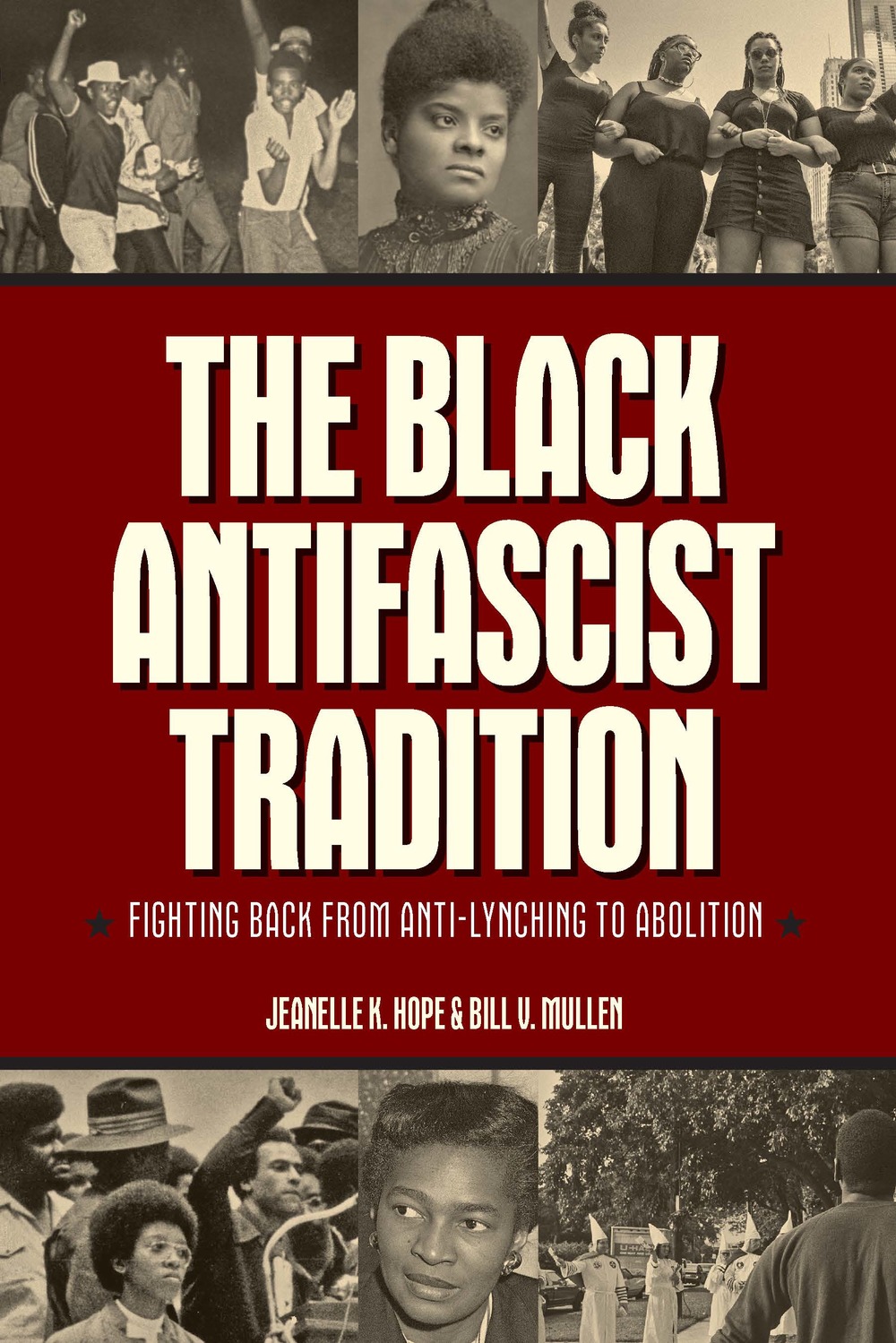
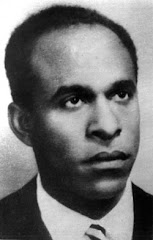
“What’s Past is Prologue…"
https://panopticonreview.blogspot.com/2024/03/the-fundamental-crisis-and-foundational.html
FROM THE PANOPTICON REVIEW ARCHIVES
(Originally posted on March 1, 2024):
https://panopticonreview.blogspot.com/2024/03/the-fundamental-crisis-and-foundational.html
FROM THE PANOPTICON REVIEW ARCHIVES
(Originally posted on March 1, 2024):
Monday, March 11, 2024
The Fundamental Crisis and Foundational Contradiction Facing the United States During the Upcoming Presidential Election Year of 2024: Fascism guided, informed, and enabled by the Doctrines and Practices of White Supremacy and Global Capitalism--PART 19
"Fascism is a new name for that kind of terror the Negro has always faced in America."
--Langston Hughes (1936)

“I come from a land whose democracy from the very beginning has been tainted with race prejudice born of slavery, and whose richness has been poured through the narrow channels of greed into the hands of the few. I come to the Second International Writers Congress representing my country, America, but most especially the Negro peoples of America, and the poor peoples of America—because I am both a Negro and poor. And that combination of color and of poverty gives me the right then to speak for the most oppressed group in America, that group that has known so little of American democracy, the fifteen million Negroes who dwell within our borders.
We are the people who have long known in actual practice the meaning of the word Fascism—for the American attitude towards us has always been one of economic and social discrimination: in many states of our country Negroes are not permitted to vote or to hold political office. In some sections freedom of movement is greatly hindered, especially if we happen to be sharecroppers on the cotton farms of the South. All over America we know what it is to be refused admittance to schools and colleges, to theatres and concert halls, to hotels and restaurants. We know Jim Crow cars, race riots, lynchings, we know the sorrows of the nine Scottsboro boys, innocent young Negroes imprisoned some six years now for a crime that even the trial judge declared them not guilty of having committed, and for which some of them have not yet come to trial. Yes, we Negroes in America do not have to be told what Fascism is in action. We know. Its theories of Nordic supremacy and economic suppression have long been realities to us.”--July, 1936
We are the people who have long known in actual practice the meaning of the word Fascism—for the American attitude towards us has always been one of economic and social discrimination: in many states of our country Negroes are not permitted to vote or to hold political office. In some sections freedom of movement is greatly hindered, especially if we happen to be sharecroppers on the cotton farms of the South. All over America we know what it is to be refused admittance to schools and colleges, to theatres and concert halls, to hotels and restaurants. We know Jim Crow cars, race riots, lynchings, we know the sorrows of the nine Scottsboro boys, innocent young Negroes imprisoned some six years now for a crime that even the trial judge declared them not guilty of having committed, and for which some of them have not yet come to trial. Yes, we Negroes in America do not have to be told what Fascism is in action. We know. Its theories of Nordic supremacy and economic suppression have long been realities to us.”--July, 1936
--Langston Hughes, Good Morning, Revolution: Uncollected Social Protest Writings (Lawrence Hill, 1973)
https://panopticonreview.blogspot.com/2024/10/leading-historian-political-theorist.htmlFROM THE PANOPTICON REVIEW ARCHIVES
(Originally posted on October 24, 2024)
The Fundamental Crisis and Foundational Contradiction Facing the United States During the Upcoming Presidential Election of 2024: Fascism guided, informed, and enabled by the Doctrines and Practices of White Supremacy, Misogyny, Judicial Corruption, Xenophobia, Imperial Militarism, and Global Capitalism--PART 41:
"Fascism is a system of political authority and social order intended to reinforce the unity, energy, and purity of communities in which liberal democracy stands accused of producing division and decline...a form of political behavior marked by obsessive preoccupation with community decline, humiliation or victimhood and by compensatory cults of unity, energy and purity, in which a mass-based party of committed nationalist militants, working in uneasy but effective collaboration with traditional elites, abandons democratic liberties and pursues with redemptive violence and without ethical or legal restraints goals of internal cleansing and external expansion.”
(Originally posted on October 24, 2024)
The Fundamental Crisis and Foundational Contradiction Facing the United States During the Upcoming Presidential Election of 2024: Fascism guided, informed, and enabled by the Doctrines and Practices of White Supremacy, Misogyny, Judicial Corruption, Xenophobia, Imperial Militarism, and Global Capitalism--PART 41:
"Fascism is a system of political authority and social order intended to reinforce the unity, energy, and purity of communities in which liberal democracy stands accused of producing division and decline...a form of political behavior marked by obsessive preoccupation with community decline, humiliation or victimhood and by compensatory cults of unity, energy and purity, in which a mass-based party of committed nationalist militants, working in uneasy but effective collaboration with traditional elites, abandons democratic liberties and pursues with redemptive violence and without ethical or legal restraints goals of internal cleansing and external expansion.”
—Robert Paxton, The Anatomy of Fascism (2004)
In 2021, Paxton wrote an op-ed for Newsweek in which he stated that he now believed Donald Trump was a fascist, after insisting for several years that he was instead a right-wing populist. Trump's incitement of the 2021 storming of the United States Capitol was the deciding factor in him changing his view.
“If Trump wins, it’s going to be awful. If he loses, it’s going to be awful too.” Paxton scoured his brain for an apt historical analogy but struggled to find one. Hitler was not elected, he noted, but legally appointed by the conservative president, Paul von Hindenburg...In Italy, Mussolini was also legitimately appointed. “The king chose him,” Paxton said, “Mussolini didn’t really have to march on Rome.” Trump’s power, Paxton suggested, appears to be different. “The Trump phenomenon looks like it has a much more solid social base,” Paxton said. “Which neither Hitler nor Mussolini would have had.”
—Robert Paxton, from interview with Elisabeth Zerofsky "Is It Fascism? A Leading Historian Changes His Mind”, New York Times magazine, October 23, 2024
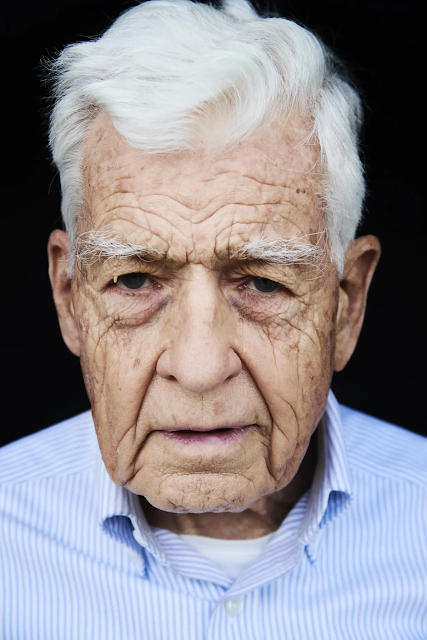
PHOTO: Robert Paxton (b. June 15, 1932) Credit: Erik Madigan Heck for The New York Times
The Anatomy of Fascism. by Robert Paxton. Vintage Books. 2004
The Anatomy of Fascism. by Robert Paxton. Vintage Books. 2004

https://truthout.org/articles/trumps-push-for-mass-deportation-is-a-wake-up-call-on-normalization-of-violence/
Op-Ed
Politics & Elections
Trump’s Anti-Immigrant Fearmongering Exposes Extent of Fascism’s Rise in 2024
A new poll offers an alarming wake-up call about how normalized violence has become in this era of gangster capitalism.
by Henry A. Giroux
October 21, 2024
Truthout
A new poll offers an alarming wake-up call about how normalized violence has become in this era of gangster capitalism.
by Henry A. Giroux
October 21, 2024
Truthout

PHOTO: Former President Donald Trump gestures after speaking at a campaign rally on October 19, 2024, in Latrobe, Pennsylvania.Win McNamee / Getty Images
Stoked by vitriolic political rhetoric spread by the right and increasingly left unchallenged by leading Democratic politicians, the normalization of a hostile and violent attitude toward immigrants is spreading. Under such circumstances, democracy has reached a dangerous moment given the emergence of a violent politics emboldened by fantasies of racial cleansing and a national rebirth.
In a poll released on October 16, researchers at Marquette Law School found that, if presented with an unsympathetically worded question about whether immigrants without documentation should be deported, a full 58 percent of U.S. respondents are in favor of mass deportation.
Meanwhile, the punishing call for mass deportation of immigrants is amplified and reinforced through a combination of both bigoted anti-immigration bills and violence directed against immigrants in the streets. On the legislative front, the alarming rise of hostility toward immigrants is evident in the surge of anti-immigrant bills in various U.S. states, with 233 proposals introduced this year — a 77 percent increase from the year before.
These bills focus on enhancing border security, criminalizing the presence of undocumented people and limiting access to public services for undocumented individuals. As Pedro Camacho noted in The Latin Times, “These proposals, often targeting the estimated 11.2 million undocumented immigrants in the U.S., frequently focus on Latino communities, which make up 66% of this population.”
One particularly cruel anti-immigration bill, passed in Texas in 2021, named Operation Lone Star, targets migrants for arrests on ludicrous misdemeanor charges such as trespassing. It gets worse. This three-year $11.2 billion program financed sending thousands of National Guard troops to the border while “installing razor wire along the Rio Grande.”
Anti-immigrant violence, erupting with brutal force on the streets of the U.S., has woven itself into the fabric of daily life, becoming an inescapable and relentless presence. More recently, for example, after former President Trump and J.D. Vance baselessly accused Haitian immigrants in Springfield, Ohio, of stealing and eating pets, the city endured a wave of terror. This included bomb threats that forced elementary schools to close, coordinated swatting attacks designed to intimidate residents and targeted harassment campaigns that have increasingly focused on community events for queer and trans people.
Trump’s baseless claim that Aurora, Colorado, is “under violent attack” by Venezuelan gangs — a claim that has been directly refuted by local officials, including Aurora’s Republican mayor, Mike Coffman — is a dangerous escalation of his anti-immigrant rhetoric. This false narrative not only stokes fear and division but also has tangible, harmful impacts on vulnerable communities. As reported by Diane Carman in The Colorado Sun, many migrant families are feeling targeted and unsafe, with their children traumatized to the point of having nightmares
This rhetoric amounts to a modern-day blood libel and form of state sanctioned terrorism against vulnerable groups, all the while giving Trump and his white supremacist and proto-Nazi allies a platform to vilify immigrants, people of color, and others they deem disposable. The resulting violence is amplified by white nationalist rhetoric, which spreads rapidly on social media, inciting further hostility and aggression against oppressed communities.
In recent years, particularly in the aftermath of the post-2008 financial crisis, amid the rise of Trump and the proto-fascist MAGA movement, along with an alarming increase in hate-filled far right media platforms, violence has ceased to be merely an instrument of political conflict; it has become politics itself. As Mary Kaldor once noted, the blurring of lines between violence and politics signals a profound shift in the way power is exercised in the contemporary world. This shift became starkly apparent following Donald Trump’s 2016 election. In the last eight years, he has employed divisive, dehumanizing and racist rhetoric that has emboldened white nationalist movements and reshaped the political landscape under the dark cloud of an impending fascist politics — even VP Harris refers to Trump as a fascist. Trump’s campaign and presidency normalized a toxic rhetoric that vilified immigrants, people of color, and other oppressed groups, creating a political climate where previously fringe and indefensible ideas found legitimacy in mainstream discourse. His racist statements — such as describing Mexican immigrants as “rapists,” “vermin” and “criminals” — expanded the threat of what might be called a politics of disposability. Moreover, his call for a Muslim ban acted as a dog whistle, signaling to proto-fascists, racists, and other far right groups that their dead language and hate-filled ideology had a champion in the White House.
The alarming rise of hostility toward immigrants is evident in the surge of anti-immigrant bills in various U.S. states, with 233 proposals introduced this year.
The centrality of violence to contemporary politics could not be any clearer than Donald Trump’s calls for “one really violent day,” promoting police brutality as policy; his promise to defeat “the enemy from within” with “the national guard, or if really necessary, by the military”; his eugenicist rhetoric; and his promotion of racist lies about migrants committing crimes despite repeatedly refutation, while assuring attendees at his rallies that, if elected, “now we have to live with these animals, but not for long.”
Trump’s rise marked a turning point where political discourse and physical aggression intertwined. His presidency provided cover for vigilante actions, ranging from attacks on asylum seekers at the border to coordinated assaults on protestors and marginalized groups. Social media platforms became tools for spreading white nationalist propaganda, enabling coordinated harassment campaigns and radicalizing individuals at a pace previously unseen.
This normalization of violence is intricately linked to the rise of gangster capitalism, a system in which corporate power, media manipulation and fascist ideologies converge to create a culture steeped in lies, hatred and the erosion of democratic values. Gangster capitalism is a new stage in the evolution of the market values dominating the organization of everyday life. Driven by an unyielding drive for power and profits, it no longer needs a legitimating narrative such as the promise of upward mobility and the sharing of wealth. It now aligns itself with the basic elements of an emerging fascism in the United States, claiming that whatever failures plague society — from climate disasters and staggering inequality to homelessness and mass shootings — are due to immigrants, the poor, Black people, women, trans people, and anyone else who doesn’t fit in the white Christian narrative about who counts as a citizen. At the heart of this global culture of violence is the concentrated power of a billionaire class that drives the arms industries, profits from war and embraces an eliminationist ethic that views militarism as the chief force for racial cleansing.
At the heart of this growing cultural shift is the rise of “culture war machines” — media platforms dominated by outlandish TV hosts and podcast personalities. These figures spread a toxic mix of misinformation and disinformation across social media, becoming the mouthpieces for a new politics of violence. They not only promote seditious ideas but also legitimize physical aggression against democratic institutions. They tread in lies, assume celebrity status and represent a new form of propaganda driven by social media that amounts to a form of digital fascism. Supporting this apparatus of violence are the defense industries and arms dealers, who profit from and actively sustain this ecosystem of fear and conflict. These corporate entities funnel resources into the militarization of public life, stoking paranoia and glorifying violence, while simultaneously benefiting from the erosion of civil society. The result is a confluence of media-driven violence, political extremism and profit, where the normalization of aggression is not only ideological but also a deeply entrenched economic enterprise.
These cultural war machines celebrate violence and insurrection as acts of patriotism, going so far as to bolster the possibility of a civil war if Trump loses the 2024 election. The January 6 Capitol riot is a chilling example of this dynamic. Donald Trump’s claims that the insurrectionists were patriotic Americans and that the event was merely a peaceful rally reflect the extent to which misinformation has been weaponized, violence normalized and apocalyptic fantasies spectacularized. These digi-fascist narratives are filled with lies, hate, racism and a virulent misogyny, and are amplified by far right media outlets like Fox News, Newsmax, and other reactionary media platforms whose ideological projects include redefining who counts as a legitimate American and attacking any viable element of civic culture. Their trademark, which filters into institutions such as schools and even the mainstream media, is an expanding pedagogy of repression, fear and what can be called ethicide — the death of social responsibility.
This normalization of violence is also underpinned by a racial component that structures contemporary war culture and its powerful pedagogical apparatuses, technological policies and political policies. Widespread sympathy for Ukrainians, largely because they are white, stands in stark contrast to the silence in many quarters surrounding the horror and unimaginable suffering inflicted by Israel on Palestinians in Gaza and the occupied West Bank. The normalization of violence bleeds into the rhetoric of extermination. Israel’s genocidal war against Palestinians signifies a dangerous convergence of power, technology and language that normalizes the unthinkable, unforgivable and indefensible. A stark example of this cruelty took place on September 17, when Israel’s used booby-trapped pagers and walkie-talkies in Lebanon and Syria, which detonated in grocery stores, houses and crowded squares inflicting horrific injuries on civilians, including on children who suffered severe, penetrating, traumatic wounds to their heads, bodies and limbs.
Sophia Goodfriend, writing in the London Review of Books, notes that “developments in algorithmic warfare have transformed Israeli military operations…. These operations, designed to catch the world’s attention, were the latest example of the deployment by Israel’s military and intelligence services of spectacular high-tech methods. They were intended to send the message that Israel is an omnipotent security state.” Such acts of violence demonstrate the terrifying reach of militarized technology, where algorithms and weaponry merge to inflict maximum harm with minimal accountability. The use of violence in this instance reeks of a brutality that has no limits and undermines even the logic of normalization, extending into the realm of the utterly indefensible.
War, in this context, becomes not only an outgrowth of the dreams of the powerful but also a mechanism for reinforcing racial hierarchies and global inequities. The selective empathy extended to white victims of violence reveals how deeply embedded racism is in the global war culture.
As Norman Solomon makes clear in his brilliant book, War Made Invisible, as the forces of gangster capitalism continue to erode democratic institutions, peace takes a backseat to the interests of the war industry. The munitions industry, war-hungry politicians and the capitalist class that profits from endless conflict have made war a central component of global politics. In the United States and other Western nations, the armed forces are revered, with military might and death machines enjoying celebrity status. The glorification of war and violence is not only normalized but celebrated, making it difficult to imagine a political system that prioritizes peace over profits. As David Cortright has observed, summing up an argument made by Andrew Bacevich, “The military industrial system remains ascendant regardless of who is in office or which political party has power. It consistently absorbs the largest share of national resources and technological capacity, and it is sustained by cultural myths that make the military the most trusted institution in American society and the arms budget practically impervious to challenge.”
This normalization of violence is intricately linked to the rise of gangster capitalism, a system in which corporate power, media manipulation and fascist ideologies converge to create a culture steeped in lies, hatred and the erosion of democratic values.
C. Wright Mills, writing in the mid-20th century, anticipated the rise of what he called “observation posts”— institutions that, under the guise of education and media, serve to depoliticize the masses. In the 21st century, these observation posts have taken on new urgency as depots of pedagogical repression. Social media, far from being a tool of democratic engagement, has become a powerful instrument in the politics of denial. The far right cultural apparatuses, led by platforms like Fox News, amplify misinformation and perpetuate a narrative of violence and exclusion. Many journalists and writers fear that the culture of hysteria, bigotry and hate, fueled by these disimagination machines, will translate into voter suppression and the reelection of authoritarian figures like Trump.
In this image-based society, violence is reduced to an image-based spectacle, permeating the entire spectrum of cultural platforms, and reduced banal commentary by robotic stenographers pretending to be news analysts. Alarmingly, the seriousness of the threat of widespread violence in the U.S. is barely addressed in the corporate controlled media. Under such circumstances, as David Theo Goldberg notes, politics and war have become indistinguishable — and civil war is no longer the end of politics but its normalized expression. The Republican Party’s flirtation with the idea of civil war — as seen in Texas’s lawless disregard for federal immigration laws, Trump’s promise to pardon the Capitol rioters if reelected, and his repeated threats to punish and imprison his opponents if elected president in 2024 — demonstrates how violence is being woven into the fabric of everyday political life.
The rise of fascism, in this context, is not a sudden development but the product of a long historical arc. Fascism, as scholars like Alberto Toscano remind us, has deep roots in the history of the United States, from the legacy of slavery to the violence of the KKK, to the racial segregation of Jim Crow. This long shadow of racial fascism is being revived and reimagined under the conditions of neoliberalism, which exacerbates inequality, promotes racial hatred and fosters a contempt for social responsibility. The potential for fascism exists in every society, lying dormant until the conditions for its resurgence are ripe. Today, under gangster capitalism, the threat of fascism is particularly acute.
Jonathan Crary’s notion of “digi-fascism” encapsulates the role of digital platforms in the rise of fascist ideologies. Right-wing propaganda machines, alongside the power of transnational corporations and intelligence agencies, have created digital tools that serve the interests of a sociopathic billionaire elite. Such tools subordinate their potential benefit to the common good to a politics of repression, surveillance and consumer idiocy. These tools amplify violence and suppression, often transforming online rhetoric into real-world violence. Thomas Klikauer in his insightful comments on social media reveals the short path from digital violence to physical violence, a phenomenon seen in the increasing number of hate crimes and politically motivated attacks fueled by online radicalization.
In the age of digital demagoguery, censorship and repression of progressive voices have intensified, further entrenching the culture of violence. Critics of Israel’s war on Palestinians are now doxed, their images circulated on social media and fired from their jobs. Digital censorship reduces the readership of progressive platforms while promoting right-wing ideologies that trade in hatred and exclusion. Historical erasure, such as the banning of discussions about racial inequities, works to normalize systemic racism and depoliticize the masses. The power of manufactured ignorance, where deliberate lies hold more sway than truth, creates a collective psychosis that is difficult to dismantle. We live in an age marked by what Judy Estrin calls “authoritarian intelligence,” knowledge and institutions now mobilized to harness wealth for the financial elite and concentrate power in the hands of tech leaders, such as Elon Musk, eager to control society.
In this political climate, Barbara F. Walter’s concept of “ethicide” captures the moral decay of the far right — with its deliberate targeting of ethnic identities and its efforts to make political violence an organizing principle of politics. The Republican Party and other far right movements have removed ethical boundaries in pursuit of apocalyptic fantasies that justify violence and authoritarianism. The current political landscape, underpinned by the worst elements of gangster capitalism, mirrors the sordid history of fascism. While the echoes of slavery, Jim Crow, the KKK and 1930s Germany may not fit perfectly with Trump’s brand of authoritarianism, the parallels are alarming.
As neoliberalism continues to undermine democratic institutions, the need for critical education becomes more urgent. Theorists such as Edward Said, Gayatri Spivak, Judith Butler, Robin D. G. Kelley, South African Nobel Prize winner J.M. Coetzee, and others provide a defense of the humanities, which offers a pathway out of the culture of violence by emphasizing the importance of critical literacy, the power of education as a practice of freedom and a crucial element of any viable democracy. However, the forces of gangster capitalism have little interest in fostering a critically literate citizenry or promoting the critical and democratic functions of education. Instead, they prioritize profit and power, leaving the humanities and the democratic values they uphold, in peril. How else to explain the worst elements of gangster capitalism: the scourge of inequality, a contempt for social responsibility, the promotion of racial hatred, a growing ecological catastrophe, an attack on the social state and public goods, and a corrupt alignment with the neofascist forces of MAGA, Trump and a Vichy-ridden Republican Party.
At this time in history, as the menacing cloud of fascism threatens to descend upon much of the world, it is crucial to understand that the normalization of violence and the rise of fascism in the age of gangster capitalism are deeply intertwined. As violence becomes the defining feature of political life, democratic institutions are eroded, and the space for critical inquiry shrinks. And the horror of possibility of the unthinkable: torture, war and death loom on the horizon. The war culture, fueled by racial hatred, munitions industries and corporate greed, thrives in this environment, leaving little room for peace or justice. Beyond the need for mass mobilization and collective resistance, a small measure of hope lies in reclaiming the power of education, particularly the humanities and liberal arts, to challenge the culture of violence and foster a critically literate and engaged citizenry willing to translate critical ideas into powerful acts of individual and collective resistance.
© Henry A. Giroux
ABOUT THE AUTHOR:
Henry A. Giroux
Henry A. Giroux currently holds the McMaster University Chair for Scholarship in the Public Interest in the English and Cultural Studies Department and is the Paulo Freire Distinguished Scholar in Critical Pedagogy. His most recent books include: The Terror of the Unforeseen (Los Angeles Review of books, 2019), On Critical Pedagogy, 2nd edition (Bloomsbury, 2020); Race, Politics, and Pandemic Pedagogy: Education in a Time of Crisis (Bloomsbury 2021); Pedagogy of Resistance: Against Manufactured Ignorance (Bloomsbury 2022) and Insurrections: Education in the Age of Counter-Revolutionary Politics (Bloomsbury, 2023), and coauthored with Anthony DiMaggio, Fascism on Trial: Education and the Possibility of Democracy (Bloomsbury, 2025). Giroux is also a member of Truthout’s board of directors.
Stoked by vitriolic political rhetoric spread by the right and increasingly left unchallenged by leading Democratic politicians, the normalization of a hostile and violent attitude toward immigrants is spreading. Under such circumstances, democracy has reached a dangerous moment given the emergence of a violent politics emboldened by fantasies of racial cleansing and a national rebirth.
In a poll released on October 16, researchers at Marquette Law School found that, if presented with an unsympathetically worded question about whether immigrants without documentation should be deported, a full 58 percent of U.S. respondents are in favor of mass deportation.
Meanwhile, the punishing call for mass deportation of immigrants is amplified and reinforced through a combination of both bigoted anti-immigration bills and violence directed against immigrants in the streets. On the legislative front, the alarming rise of hostility toward immigrants is evident in the surge of anti-immigrant bills in various U.S. states, with 233 proposals introduced this year — a 77 percent increase from the year before.
These bills focus on enhancing border security, criminalizing the presence of undocumented people and limiting access to public services for undocumented individuals. As Pedro Camacho noted in The Latin Times, “These proposals, often targeting the estimated 11.2 million undocumented immigrants in the U.S., frequently focus on Latino communities, which make up 66% of this population.”
One particularly cruel anti-immigration bill, passed in Texas in 2021, named Operation Lone Star, targets migrants for arrests on ludicrous misdemeanor charges such as trespassing. It gets worse. This three-year $11.2 billion program financed sending thousands of National Guard troops to the border while “installing razor wire along the Rio Grande.”
Anti-immigrant violence, erupting with brutal force on the streets of the U.S., has woven itself into the fabric of daily life, becoming an inescapable and relentless presence. More recently, for example, after former President Trump and J.D. Vance baselessly accused Haitian immigrants in Springfield, Ohio, of stealing and eating pets, the city endured a wave of terror. This included bomb threats that forced elementary schools to close, coordinated swatting attacks designed to intimidate residents and targeted harassment campaigns that have increasingly focused on community events for queer and trans people.
Trump’s baseless claim that Aurora, Colorado, is “under violent attack” by Venezuelan gangs — a claim that has been directly refuted by local officials, including Aurora’s Republican mayor, Mike Coffman — is a dangerous escalation of his anti-immigrant rhetoric. This false narrative not only stokes fear and division but also has tangible, harmful impacts on vulnerable communities. As reported by Diane Carman in The Colorado Sun, many migrant families are feeling targeted and unsafe, with their children traumatized to the point of having nightmares
This rhetoric amounts to a modern-day blood libel and form of state sanctioned terrorism against vulnerable groups, all the while giving Trump and his white supremacist and proto-Nazi allies a platform to vilify immigrants, people of color, and others they deem disposable. The resulting violence is amplified by white nationalist rhetoric, which spreads rapidly on social media, inciting further hostility and aggression against oppressed communities.
In recent years, particularly in the aftermath of the post-2008 financial crisis, amid the rise of Trump and the proto-fascist MAGA movement, along with an alarming increase in hate-filled far right media platforms, violence has ceased to be merely an instrument of political conflict; it has become politics itself. As Mary Kaldor once noted, the blurring of lines between violence and politics signals a profound shift in the way power is exercised in the contemporary world. This shift became starkly apparent following Donald Trump’s 2016 election. In the last eight years, he has employed divisive, dehumanizing and racist rhetoric that has emboldened white nationalist movements and reshaped the political landscape under the dark cloud of an impending fascist politics — even VP Harris refers to Trump as a fascist. Trump’s campaign and presidency normalized a toxic rhetoric that vilified immigrants, people of color, and other oppressed groups, creating a political climate where previously fringe and indefensible ideas found legitimacy in mainstream discourse. His racist statements — such as describing Mexican immigrants as “rapists,” “vermin” and “criminals” — expanded the threat of what might be called a politics of disposability. Moreover, his call for a Muslim ban acted as a dog whistle, signaling to proto-fascists, racists, and other far right groups that their dead language and hate-filled ideology had a champion in the White House.
The alarming rise of hostility toward immigrants is evident in the surge of anti-immigrant bills in various U.S. states, with 233 proposals introduced this year.
The centrality of violence to contemporary politics could not be any clearer than Donald Trump’s calls for “one really violent day,” promoting police brutality as policy; his promise to defeat “the enemy from within” with “the national guard, or if really necessary, by the military”; his eugenicist rhetoric; and his promotion of racist lies about migrants committing crimes despite repeatedly refutation, while assuring attendees at his rallies that, if elected, “now we have to live with these animals, but not for long.”
Trump’s rise marked a turning point where political discourse and physical aggression intertwined. His presidency provided cover for vigilante actions, ranging from attacks on asylum seekers at the border to coordinated assaults on protestors and marginalized groups. Social media platforms became tools for spreading white nationalist propaganda, enabling coordinated harassment campaigns and radicalizing individuals at a pace previously unseen.
This normalization of violence is intricately linked to the rise of gangster capitalism, a system in which corporate power, media manipulation and fascist ideologies converge to create a culture steeped in lies, hatred and the erosion of democratic values. Gangster capitalism is a new stage in the evolution of the market values dominating the organization of everyday life. Driven by an unyielding drive for power and profits, it no longer needs a legitimating narrative such as the promise of upward mobility and the sharing of wealth. It now aligns itself with the basic elements of an emerging fascism in the United States, claiming that whatever failures plague society — from climate disasters and staggering inequality to homelessness and mass shootings — are due to immigrants, the poor, Black people, women, trans people, and anyone else who doesn’t fit in the white Christian narrative about who counts as a citizen. At the heart of this global culture of violence is the concentrated power of a billionaire class that drives the arms industries, profits from war and embraces an eliminationist ethic that views militarism as the chief force for racial cleansing.
At the heart of this growing cultural shift is the rise of “culture war machines” — media platforms dominated by outlandish TV hosts and podcast personalities. These figures spread a toxic mix of misinformation and disinformation across social media, becoming the mouthpieces for a new politics of violence. They not only promote seditious ideas but also legitimize physical aggression against democratic institutions. They tread in lies, assume celebrity status and represent a new form of propaganda driven by social media that amounts to a form of digital fascism. Supporting this apparatus of violence are the defense industries and arms dealers, who profit from and actively sustain this ecosystem of fear and conflict. These corporate entities funnel resources into the militarization of public life, stoking paranoia and glorifying violence, while simultaneously benefiting from the erosion of civil society. The result is a confluence of media-driven violence, political extremism and profit, where the normalization of aggression is not only ideological but also a deeply entrenched economic enterprise.
These cultural war machines celebrate violence and insurrection as acts of patriotism, going so far as to bolster the possibility of a civil war if Trump loses the 2024 election. The January 6 Capitol riot is a chilling example of this dynamic. Donald Trump’s claims that the insurrectionists were patriotic Americans and that the event was merely a peaceful rally reflect the extent to which misinformation has been weaponized, violence normalized and apocalyptic fantasies spectacularized. These digi-fascist narratives are filled with lies, hate, racism and a virulent misogyny, and are amplified by far right media outlets like Fox News, Newsmax, and other reactionary media platforms whose ideological projects include redefining who counts as a legitimate American and attacking any viable element of civic culture. Their trademark, which filters into institutions such as schools and even the mainstream media, is an expanding pedagogy of repression, fear and what can be called ethicide — the death of social responsibility.
This normalization of violence is also underpinned by a racial component that structures contemporary war culture and its powerful pedagogical apparatuses, technological policies and political policies. Widespread sympathy for Ukrainians, largely because they are white, stands in stark contrast to the silence in many quarters surrounding the horror and unimaginable suffering inflicted by Israel on Palestinians in Gaza and the occupied West Bank. The normalization of violence bleeds into the rhetoric of extermination. Israel’s genocidal war against Palestinians signifies a dangerous convergence of power, technology and language that normalizes the unthinkable, unforgivable and indefensible. A stark example of this cruelty took place on September 17, when Israel’s used booby-trapped pagers and walkie-talkies in Lebanon and Syria, which detonated in grocery stores, houses and crowded squares inflicting horrific injuries on civilians, including on children who suffered severe, penetrating, traumatic wounds to their heads, bodies and limbs.
Sophia Goodfriend, writing in the London Review of Books, notes that “developments in algorithmic warfare have transformed Israeli military operations…. These operations, designed to catch the world’s attention, were the latest example of the deployment by Israel’s military and intelligence services of spectacular high-tech methods. They were intended to send the message that Israel is an omnipotent security state.” Such acts of violence demonstrate the terrifying reach of militarized technology, where algorithms and weaponry merge to inflict maximum harm with minimal accountability. The use of violence in this instance reeks of a brutality that has no limits and undermines even the logic of normalization, extending into the realm of the utterly indefensible.
War, in this context, becomes not only an outgrowth of the dreams of the powerful but also a mechanism for reinforcing racial hierarchies and global inequities. The selective empathy extended to white victims of violence reveals how deeply embedded racism is in the global war culture.
As Norman Solomon makes clear in his brilliant book, War Made Invisible, as the forces of gangster capitalism continue to erode democratic institutions, peace takes a backseat to the interests of the war industry. The munitions industry, war-hungry politicians and the capitalist class that profits from endless conflict have made war a central component of global politics. In the United States and other Western nations, the armed forces are revered, with military might and death machines enjoying celebrity status. The glorification of war and violence is not only normalized but celebrated, making it difficult to imagine a political system that prioritizes peace over profits. As David Cortright has observed, summing up an argument made by Andrew Bacevich, “The military industrial system remains ascendant regardless of who is in office or which political party has power. It consistently absorbs the largest share of national resources and technological capacity, and it is sustained by cultural myths that make the military the most trusted institution in American society and the arms budget practically impervious to challenge.”
This normalization of violence is intricately linked to the rise of gangster capitalism, a system in which corporate power, media manipulation and fascist ideologies converge to create a culture steeped in lies, hatred and the erosion of democratic values.
C. Wright Mills, writing in the mid-20th century, anticipated the rise of what he called “observation posts”— institutions that, under the guise of education and media, serve to depoliticize the masses. In the 21st century, these observation posts have taken on new urgency as depots of pedagogical repression. Social media, far from being a tool of democratic engagement, has become a powerful instrument in the politics of denial. The far right cultural apparatuses, led by platforms like Fox News, amplify misinformation and perpetuate a narrative of violence and exclusion. Many journalists and writers fear that the culture of hysteria, bigotry and hate, fueled by these disimagination machines, will translate into voter suppression and the reelection of authoritarian figures like Trump.
In this image-based society, violence is reduced to an image-based spectacle, permeating the entire spectrum of cultural platforms, and reduced banal commentary by robotic stenographers pretending to be news analysts. Alarmingly, the seriousness of the threat of widespread violence in the U.S. is barely addressed in the corporate controlled media. Under such circumstances, as David Theo Goldberg notes, politics and war have become indistinguishable — and civil war is no longer the end of politics but its normalized expression. The Republican Party’s flirtation with the idea of civil war — as seen in Texas’s lawless disregard for federal immigration laws, Trump’s promise to pardon the Capitol rioters if reelected, and his repeated threats to punish and imprison his opponents if elected president in 2024 — demonstrates how violence is being woven into the fabric of everyday political life.
The rise of fascism, in this context, is not a sudden development but the product of a long historical arc. Fascism, as scholars like Alberto Toscano remind us, has deep roots in the history of the United States, from the legacy of slavery to the violence of the KKK, to the racial segregation of Jim Crow. This long shadow of racial fascism is being revived and reimagined under the conditions of neoliberalism, which exacerbates inequality, promotes racial hatred and fosters a contempt for social responsibility. The potential for fascism exists in every society, lying dormant until the conditions for its resurgence are ripe. Today, under gangster capitalism, the threat of fascism is particularly acute.
Jonathan Crary’s notion of “digi-fascism” encapsulates the role of digital platforms in the rise of fascist ideologies. Right-wing propaganda machines, alongside the power of transnational corporations and intelligence agencies, have created digital tools that serve the interests of a sociopathic billionaire elite. Such tools subordinate their potential benefit to the common good to a politics of repression, surveillance and consumer idiocy. These tools amplify violence and suppression, often transforming online rhetoric into real-world violence. Thomas Klikauer in his insightful comments on social media reveals the short path from digital violence to physical violence, a phenomenon seen in the increasing number of hate crimes and politically motivated attacks fueled by online radicalization.
In the age of digital demagoguery, censorship and repression of progressive voices have intensified, further entrenching the culture of violence. Critics of Israel’s war on Palestinians are now doxed, their images circulated on social media and fired from their jobs. Digital censorship reduces the readership of progressive platforms while promoting right-wing ideologies that trade in hatred and exclusion. Historical erasure, such as the banning of discussions about racial inequities, works to normalize systemic racism and depoliticize the masses. The power of manufactured ignorance, where deliberate lies hold more sway than truth, creates a collective psychosis that is difficult to dismantle. We live in an age marked by what Judy Estrin calls “authoritarian intelligence,” knowledge and institutions now mobilized to harness wealth for the financial elite and concentrate power in the hands of tech leaders, such as Elon Musk, eager to control society.
In this political climate, Barbara F. Walter’s concept of “ethicide” captures the moral decay of the far right — with its deliberate targeting of ethnic identities and its efforts to make political violence an organizing principle of politics. The Republican Party and other far right movements have removed ethical boundaries in pursuit of apocalyptic fantasies that justify violence and authoritarianism. The current political landscape, underpinned by the worst elements of gangster capitalism, mirrors the sordid history of fascism. While the echoes of slavery, Jim Crow, the KKK and 1930s Germany may not fit perfectly with Trump’s brand of authoritarianism, the parallels are alarming.
As neoliberalism continues to undermine democratic institutions, the need for critical education becomes more urgent. Theorists such as Edward Said, Gayatri Spivak, Judith Butler, Robin D. G. Kelley, South African Nobel Prize winner J.M. Coetzee, and others provide a defense of the humanities, which offers a pathway out of the culture of violence by emphasizing the importance of critical literacy, the power of education as a practice of freedom and a crucial element of any viable democracy. However, the forces of gangster capitalism have little interest in fostering a critically literate citizenry or promoting the critical and democratic functions of education. Instead, they prioritize profit and power, leaving the humanities and the democratic values they uphold, in peril. How else to explain the worst elements of gangster capitalism: the scourge of inequality, a contempt for social responsibility, the promotion of racial hatred, a growing ecological catastrophe, an attack on the social state and public goods, and a corrupt alignment with the neofascist forces of MAGA, Trump and a Vichy-ridden Republican Party.
At this time in history, as the menacing cloud of fascism threatens to descend upon much of the world, it is crucial to understand that the normalization of violence and the rise of fascism in the age of gangster capitalism are deeply intertwined. As violence becomes the defining feature of political life, democratic institutions are eroded, and the space for critical inquiry shrinks. And the horror of possibility of the unthinkable: torture, war and death loom on the horizon. The war culture, fueled by racial hatred, munitions industries and corporate greed, thrives in this environment, leaving little room for peace or justice. Beyond the need for mass mobilization and collective resistance, a small measure of hope lies in reclaiming the power of education, particularly the humanities and liberal arts, to challenge the culture of violence and foster a critically literate and engaged citizenry willing to translate critical ideas into powerful acts of individual and collective resistance.
© Henry A. Giroux
ABOUT THE AUTHOR:
Henry A. Giroux
Henry A. Giroux currently holds the McMaster University Chair for Scholarship in the Public Interest in the English and Cultural Studies Department and is the Paulo Freire Distinguished Scholar in Critical Pedagogy. His most recent books include: The Terror of the Unforeseen (Los Angeles Review of books, 2019), On Critical Pedagogy, 2nd edition (Bloomsbury, 2020); Race, Politics, and Pandemic Pedagogy: Education in a Time of Crisis (Bloomsbury 2021); Pedagogy of Resistance: Against Manufactured Ignorance (Bloomsbury 2022) and Insurrections: Education in the Age of Counter-Revolutionary Politics (Bloomsbury, 2023), and coauthored with Anthony DiMaggio, Fascism on Trial: Education and the Possibility of Democracy (Bloomsbury, 2025). Giroux is also a member of Truthout’s board of directors.
https://en.wikipedia.org/wiki/Robert_Paxton
Robert Paxton
From Wikipedia, the free encyclopedia
Robert Owen Paxton (born June 15, 1932) is an American political scientist and historian specializing in Vichy France, fascism, and Europe during the World War II era. He is Mellon Professor Emeritus of Social Science in the Department of History at Columbia University. He is best known for his 1972 book Vichy France: Old Guard and New Order, which precipitated intense debate in France, and led to a paradigm shift in how the events of the Vichy regime are interpreted.
Robert Paxton
From Wikipedia, the free encyclopedia
Robert Owen Paxton (born June 15, 1932) is an American political scientist and historian specializing in Vichy France, fascism, and Europe during the World War II era. He is Mellon Professor Emeritus of Social Science in the Department of History at Columbia University. He is best known for his 1972 book Vichy France: Old Guard and New Order, which precipitated intense debate in France, and led to a paradigm shift in how the events of the Vichy regime are interpreted.
Early life
Paxton was born on June 15, 1932, in Lexington, Virginia.[1] After attending secondary school in New England, he received a B.A. from Washington and Lee University in 1954. Later, he won a Rhodes Scholarship and spent two years earning an M.A. at Merton College, Oxford,[2] where he studied under historians including James Joll and John Roberts. He earned a Ph.D. from Harvard University in 1963.[3]
Career
Paxton taught at the University of California, Berkeley[2] and the State University of New York at Stony Brook before joining the faculty of Columbia University in 1969. He served there for the remainder of his career, retiring in 1997. He remains a professor emeritus. He has contributed more than twenty reviews to The New York Review of Books, beginning in 1978 and continuing through 2017.[4]
Vichy
Paxton is best known for his 1972 book Vichy France: Old Guard and New Order, 1940-1944. In opposition to the traditional view pioneered by Robert Aron, he argued that the Vichy government was eager to collaborate with Nazi Germany and did not practice "passive resistance" to German rule.[5] Unlike Aron and Henri Michel, Paxton did not play down Vichy's achievements in his explanation of its domestic agenda. He argued that the reforms undertaken by the Vichy government prefigured the reforms of the 1950s and 1960s and derived from Vichy's aim to transform French society.[5]
Paxton has focused his work on exploring models and definition of fascism.
In his 1998 paper "The Five Stages of Fascism," he suggests that fascism cannot be defined solely by its ideology, since fascism is a complex political phenomenon rather than a relatively coherent body of doctrine like communism or socialism. Instead, he focuses on fascism's political context and functional development. The article identifies five paradigmatic stages of a fascist movement, although he notes that only Nazi Germany and Fascist Italy progressed through all five:
Intellectual exploration, where disillusionment with popular democracy manifests itself in discussions of lost national vigor
Rooting, where a fascist movement, aided by political deadlock and polarization, becomes a player on the national stage
Arrival to power, where conservatives seeking to control rising leftist opposition invite fascists to share power
Exercise of power, where the movement and its charismatic leader control the state in balance with state institutions such as the police and traditional elites such as the clergy and business magnates.
Radicalization or entropy, where the state either becomes increasingly radical, as did Nazi Germany, or slips into traditional authoritarian rule, as did Fascist Italy.[16]
In his 2004 book The Anatomy of Fascism, Paxton refines his five-stage model and puts forward the following definition for fascism:
Fascism may be defined as a form of political behavior marked by obsessive preoccupation with community decline, humiliation, or victim-hood and by compensatory cults of unity, energy, and purity, in which a mass-based party of committed nationalist militants, working in uneasy but effective collaboration with traditional elites, abandons democratic liberties and pursues with redemptive violence and without ethical or legal restraints goals of internal cleansing and external expansion.[17]
In 2021, Paxton wrote an op-ed for Newsweek in which he stated that he now believed Donald Trump was a fascist, after insisting for several years that he was instead a right-wing populist. Trump's incitement of the 2021 storming of the United States Capitol was the deciding factor in him changing his view.[18]
Awards
In 2009, the French government awarded Paxton the Légion d'honneur, the highest French order of merit.[19]
Works
Parades and Politics at Vichy (1966), Princeton University Press, ISBN 9780691051420.
L'Armée de Vichy (Paris: Tallandier Éditions, 2004), French translation.
Vichy France: Old Guard and New Order, 1940-1944 (1972), Alfred A. Knopf, ISBN 9780394473604.
A new introduction prefaced the Morningside Edition published by Columbia University Press, 1982, ISBN 0231054270
Another new introduction prefaced the 2001 publication by Columbia University Press, ISBN 0231124694.
with W. J. Boyle Jr, and D. A. Cutler. "Hudson-Delaware region." American Birds 32 (1978): 326–331.
"The German Opposition to Hitler: A Non-Germanist's View." Central European History 14.4 (1981): 362–368.
Vichy France and the Jews (1981), with Michael Marrus.
A new edition was published in 1995 by Stanford University Press, ISBN 0804724997.
"The Nazis and the Jews in Occupied Western Europe, 1940-1944" (1982), with Michael Marrus, The Journal of Modern History vol. 54, no. 4. pp 687–714. online
"Anti-Americanism in the Years of Collaboration and Resistance." in The Rise and Fall of Anti-Americanism ed. by Denis Lacorne et al. (Palgrave Macmillan UK, 1990) pp. 55–66.
With Mame Warren. "Oral History Interview with Robert O. Paxton, April 18, 1996." online.
French Peasant Fascism: Henry Dorgere's Greenshirts and the Crises of French Agriculture, 1929-1939 (1997).
"The Five Stages of Fascism Archived August 27, 2018, at the Wayback Machine" (1998), The Journal of Modern History vol. 70, no. 1.
The Anatomy of Fascism. Alfred A. Knopf. 2004. ISBN 1-4000-4094-9.
"Vichy vs. the Nazis" (2008), The New York Review of Books.
"Comparisons and definitions." The Oxford Handbook of Fascism ed The Oxford Handbook of Fascism ed by R.J.B. Bosworth (2010) pp 547–565.
Europe in the Twentieth Century with co-author Julie Hessler, (1st ed. 1975; 5th edition, Wadsworth/Cengage 2011)
"Vichy Lives!—In a way." The New York Review of Books (April 25, 2013) online.
"American Duce: Is Donald Trump a Fascist or a Plutocrat?" Harper's Magazine (May 2017) online.
with Manuel Bragança, and Fransiska Louwagie. "Interview with Robert O. Paxton, on the Writing of History and Ego-history." in Ego-histories of France and the Second World War (Palgrave Macmillan, Cham, 2018. 19–22).
"Entering the Profession at the End of the Cold War" (2004, revised for H-DIPLO 2020 autobiography
See also
Vichy syndrome
Further reading
J. Sweets, ′Chaque livre un événement: Robert Paxton and the French, from the brisuer de glace to iconoclaste tranquille′, in S. Fishman et al. (eds.), France at War: Vichy and the Historians (Oxford: Oxford University Press, 2000), pp. 21–34.
Moshik Temkin, ′Avec un certain malaise: The Paxtonian Trauma in France, 1973-74′, Journal of Contemporary History, Vol. 38, No. 2 (Apr., 2003), pp. 291–306.
External links
Wikiquote has quotations related to Robert Paxton.
"Robert O. Paxton - Mellon Professor Emeritus of Social Sciences". Columbia University. Archived from the original on May 18, 2017. Retrieved September 25, 2012.
Paxton, Robert O. (January 7, 2016). "Is Fascism Back?". Project Syndicate. Retrieved March 21, 2016.
Paxton, Robert O. (11 January 2021). "I've Hesitated to Call Donald Trump a Fascist. Until Now." Newsweek. Retrieved 8 February 2021.