Showing posts with label Sarah Palin. Show all posts

Wednesday, January 12, 2011

Paul Krugman and Bob Herbert Pay Us The Painful Honor of Telling Us The Truth About Our Society

http://www.nytimes.com/2011/01/10/opinion/10krugman.html?scp=2&sq=Paul Krugman&st=Search


All,

In a society that far too often lacks the will and honesty to confront its greatest fears, weaknesses, pathologies, and hatreds and thus nearly always winds up retreating in a manic depressive fog of evasion, infantilism, lies, and denial whenever real tragedy strikes, it is our good fortune to thankfully find people who simply refuse to play this dumb tired game of hypocrisy and self delusion. By insisting on the truth no matter how painful and distressing they pay us the honor of treating us like actual responsible adults and citizens instead of mindless and childishly passive victims of our own history. By demanding that we acknowledge and embrace the myriad sources of our collective confusion, anger, and ignorance in order to face up to and hopefully conquer them they pay us the respect of insisting that we take responsibility for our humanity and the consequences of the decisions we make in dealing with our actual hopes, dreams, and desires. Krugman and Herbert are two such individuals who realize that our country can only change for the better if we collectively decide to tirelessly work and struggle to make it better. And that process begins with us telling ourselves the hard fundamental truths about ourselves even or rather especially when it hurts the most.

Kofi

OP-ED COLUMNIST

Climate of Hate
By PAUL KRUGMAN
January 11, 2011

New York Times


When you heard the terrible news from Arizona, were you completely surprised? Or were you, at some level, expecting something like this atrocity to happen?


Fred R. Conrad/The New York Times
Paul Krugman

Put me in the latter category. I’ve had a sick feeling in the pit of my stomach ever since the final stages of the 2008 campaign. I remembered the upsurge in political hatred after Bill Clinton’s election in 1992 — an upsurge that culminated in the Oklahoma City bombing. And you could see, just by watching the crowds at McCain-Palin rallies, that it was ready to happen again. The Department of Homeland Security reached the same conclusion: in April 2009 an internal report warned that right-wing extremism was on the rise, with a growing potential for violence.

Conservatives denounced that report. But there has, in fact, been a rising tide of threats and vandalism aimed at elected officials, including both Judge John Roll, who was killed Saturday, and Representative Gabrielle Giffords. One of these days, someone was bound to take it to the next level. And now someone has.

It’s true that the shooter in Arizona appears to have been mentally troubled. But that doesn’t mean that his act can or should be treated as an isolated event, having nothing to do with the national climate.

Last spring Politico.com reported on a surge in threats against members of Congress, which were already up by 300 percent. A number of the people making those threats had a history of mental illness — but something about the current state of America has been causing far more disturbed people than before to act out their illness by threatening, or actually engaging in, political violence.

And there’s not much question what has changed. As Clarence Dupnik, the sheriff responsible for dealing with the Arizona shootings, put it, it’s “the vitriolic rhetoric that we hear day in and day out from people in the radio business and some people in the TV business.” The vast majority of those who listen to that toxic rhetoric stop short of actual violence, but some, inevitably, cross that line.

It’s important to be clear here about the nature of our sickness. It’s not a general lack of “civility,” the favorite term of pundits who want to wish away fundamental policy disagreements. Politeness may be a virtue, but there’s a big difference between bad manners and calls, explicit or implicit, for violence; insults aren’t the same as incitement.

The point is that there’s room in a democracy for people who ridicule and denounce those who disagree with them; there isn’t any place for eliminationist rhetoric, for suggestions that those on the other side of a debate must be removed from that debate by whatever means necessary.

And it’s the saturation of our political discourse — and especially our airwaves — with eliminationist rhetoric that lies behind the rising tide of violence.

Where’s that toxic rhetoric coming from? Let’s not make a false pretense of balance: it’s coming, overwhelmingly, from the right. It’s hard to imagine a Democratic member of Congress urging constituents to be “armed and dangerous” without being ostracized; but Representative Michele Bachmann, who did just that, is a rising star in the G.O.P.

And there’s a huge contrast in the media. Listen to Rachel Maddow or Keith Olbermann, and you’ll hear a lot of caustic remarks and mockery aimed at Republicans. But you won’t hear jokes about shooting government officials or beheading a journalist at The Washington Post. Listen to Glenn Beck or Bill O’Reilly, and you will.

Of course, the likes of Mr. Beck and Mr. O’Reilly are responding to popular demand. Citizens of other democracies may marvel at the American psyche, at the way efforts by mildly liberal presidents to expand health coverage are met with cries of tyranny and talk of armed resistance. Still, that’s what happens whenever a Democrat occupies the White House, and there’s a market for anyone willing to stoke that anger.

But even if hate is what many want to hear, that doesn’t excuse those who pander to that desire. They should be shunned by all decent people.

Unfortunately, that hasn’t been happening: the purveyors of hate have been treated with respect, even deference, by the G.O.P. establishment. As David Frum, the former Bush speechwriter, has put it, “Republicans originally thought that Fox worked for us and now we’re discovering we work for Fox.”

So will the Arizona massacre make our discourse less toxic? It’s really up to G.O.P. leaders. Will they accept the reality of what’s happening to America, and take a stand against eliminationist rhetoric? Or will they try to dismiss the massacre as the mere act of a deranged individual, and go on as before?

If Arizona promotes some real soul-searching, it could prove a turning point. If it doesn’t, Saturday’s atrocity will be just the beginning.

http://www.nytimes.com/2011/01/11/opinion/11herbert.html?src=me&ref=general


OP-ED COLUMNIST

A Flood Tide of Murder
By BOB HERBERT
January 11, 2011
New York Times

By all means, condemn the hateful rhetoric that has poured so much poison into our political discourse. The crazies don’t kill in a vacuum, and the vilest of our political leaders and commentators deserve to be called to account for their demagoguery and the danger that comes with it. But that’s the easy part.


Damon Winter/The New York Times
Bob Herbert

If we want to reverse the flood tide of killing in this country, we’ll have to do a hell of a lot more than bad-mouth a few sorry politicians and lame-brained talking heads. We need to face up to the fact that this is an insanely violent society. The vitriol that has become an integral part of our political rhetoric, most egregiously from the right, is just one of the myriad contributing factors in a society saturated in blood.

According to the Brady Campaign to Prevent Gun Violence, more than a million people have been killed with guns in the United States since 1968, when Robert Kennedy and the Rev. Dr. Martin Luther King Jr. were killed. That figure includes suicides and accidental deaths. But homicides, deliberate killings, are a perennial scourge, and not just with guns.

Excluding the people killed in the terror attacks of Sept. 11, 2001, more than 150,000 Americans have been murdered since the beginning of the 21st century. This endlessly proliferating parade of death, which does not spare women or children, ought to make our knees go weak. But we never even notice most of the killings. Homicide is white noise in this society.

The overwhelming majority of the people who claim to be so outraged by last weekend’s shooting of Representative Gabrielle Giffords and 19 others — six of them fatally — will take absolutely no steps, none whatsoever, to prevent a similar tragedy in the future. And similar tragedies are coming as surely as the sun makes its daily appearance over the eastern horizon because this is an American ritual: the mowing down of the innocents.

On Saturday, the victims happened to be a respected congresswoman, a 9-year-old girl, a federal judge and a number of others gathered at the kind of civic event that is supposed to define a successful democracy. But there are endless horror stories. In April 2007, 32 students and faculty members at the Virginia Polytechnic Institute were shot to death and 17 others were wounded by a student armed with a pair of semiautomatic weapons.

On a cold, rainy afternoon in Pittsburgh in 2009, I came upon a gray-haired woman shivering on a stone step in a residential neighborhood. “I’m the grandmother of the kid that killed those cops,” she whispered. Three police officers had been shot and killed by her 22-year-old grandson, who was armed with a variety of weapons, including an AK-47 assault rifle.

I remember having lunch with Marian Wright Edelman, the president of the Children’s Defense Fund, a few days after the Virginia Tech tragedy. She shook her head at the senseless loss of so many students and teachers, then told me: “We’re losing eight children and teenagers a day to gun violence. As far as young people are concerned, we lose the equivalent of the massacre at Virginia Tech about every four days.”

If we were serious, if we really wanted to cut down on the killings, we’d have to do two things. We’d have to radically restrict the availability of guns while at the same time beginning the very hard work of trying to change a culture that glorifies and embraces violence as entertainment, and views violence as an appropriate and effective response to the things that bother us.

Ordinary citizens interested in a more sane and civilized society would have to insist that their elected representatives take meaningful steps to stem the violence. And they would have to demand, as well, that the government bring an end to the wars overseas, with their terrible human toll, because the wars are part of the same crippling pathology.

Without those very tough steps, the murder of the innocents by the tens of thousands will most assuredly continue.

I wouldn’t hold my breath. The Gabrielle Giffords story is big for the time being, but so were Columbine and Oklahoma City. And so was the anti-white killing spree of John Muhammad and Lee Malvo that took 10 lives in Maryland, Virginia and Washington, D.C., in October 2002. But no amount of killing has prompted any real remedial action.

For whatever reasons, neither the public nor the politicians seem to really care how many Americans are murdered — unless it’s in a terror attack by foreigners. The two most common responses to violence in the U.S. are to ignore it or be entertained by it. The horror prompted by the attack in Tucson on Saturday will pass. The outrage will fade. The murders will continue.

Tuesday, January 11, 2011

Congressman Raul Grijalva on The Toxic and Bigoted Political Climate in Arizona and the Demagogic Rhetoric of Sarah Palin

Democratic congressman Raul Grijalva of Arizona

http://www.huffingtonpost.com/2011/01/08/grijalva-palin-needs-to-l_n_806283.html


Grijalva: Palin Needs To Look At Her Own Behavior
by Ryan Grim
January 8, 2010
The Huffington Post


Rep. Raul Grijalva (D-Ariz.), who represents a district adjacent to Gabrielle Giffords's, said that Saturday's shooting is a consequence of the vitriolic rhetoric that has arisen over the past few years among extreme elements of the Tea Party.

"The climate has gotten so toxic in our political discourse, setting up for this kind of reaction for too long. It's unfortunate to say that. I hate to say that," Grijalva said in an interview with The Huffington Post. "If you're an opponent, you're a deadly enemy," Grijalva said of the mindset among Arizona extremists. "Anybody who contributed to feeding this monster had better step back and realize they're threatening our form of government."

Grijalva said that Tea Party leader Sarah Palin should reflect on the rhetoric that she has employed. "She -- as I mentioned, people contributing to this toxic climate -- Ms. Palin needs to look at her own behavior, and if she wants to help the public discourse, the best thing she could do is to keep quiet."

Grijalva said that his family has been provided with protection and that he expects further precautions will be taken by Capitol Police when he returns to Capitol Hill.

"Her whole future's ahead of her," Grijalva said of Giffords. "She's a moderate; I'm not. She's my friend. Our difference of opinion did not interfere with our friendship."

"This is a very sad day for the nation."

HERE'S A COPY OF THE VILE AND INFAMOUS "DEMOCRATS IN CROSSHAIRS" MAP


Sarah Palin had posted this heinous map on her Facebook page during the November 2010 midterm elections and has now removed it from her Facebook site as a result of the shooting

Congresswoman Gabrielle Giffords was Targeted for Assassination by Jared Lee Loughner

http://www.telegraph.co.uk/news/worldnews/northamerica/usa/us-politics/8248696/American-congresswoman-Gabrielle-Giffords-fights-for-life-after-being-shot-in-head.html

ALL,

THIS ARTICLE CONFIRMS THAT THE SHOOTER DIRECTLY TARGETED THE CONGRESSWOMAN FOR ASSASSINATION. SEE HORRIFIC DETAILS BELOW.

WHEN THE CONGRESSWOMAN'S FATHER WAS ASKED IF HIS DAUGHTER HAD ANY ENEMIES HE REPLIED "YEAH, THE WHOLE TEA PARTY."


Kofi

"Her father, Spencer Giffords, 75, wept when asked if his daughter had any enemies. "Yeah," he told The New York Post. "The whole Tea Party."

Mrs Palin issued a brief statement on the shooting. "My sincere condolences are offered to the family of Rep Gabrielle Giffords and the other victims of today's tragic shooting in Arizona," she said."


US Politics

American congresswoman Gabrielle Giffords fights for life after being shot in head
Gabrielle Giffords, a Democratic Congresswoman, was fighting for her life after being shot in the head by a gunman who opened fire on a public meeting in Tucson, Arizona, killing six people.


By Philip Sherwell, in New York
09 Jan 2011
The Telegraph
LONDON

The dead included a nine-year-old girl, a Giffords aide and a federal district judge whose life had previously been threatened over a contentious illegal immigration lawsuit that he was hearing. A further 12 people were injured in the rampage.

Miss Giffords, 40, who is married to an astronaut, survived the murderous shooting spree, despite being shot at point blank range by a single bullet that passed through her brain and out of her head.

President Barack Obama said she was "battling for her life". Initial reports listed the congresswoman among those killed, but doctors later said they were "optimistic" after emergency surgery.

"We cannot tell what kind of recovery but I'm about as optimistic as it can get in this situation," said Dr Peter Rhee, trauma surgeon a Tucson University Medical Centre.

The suspected gunman, identified by law enforcement officials as Jared Loughner, 22, also from Tucson, was in custody after being tackled by bystanders as he tried to flee the scene.


The attack immediately focused attention on the shrill political climate in the US. Miss Giffords had narrowly beaten off tough challenge in November's congressional elections by a Tea Party-backed Republican candidate, she had previously received death threats and her offices had been shot at.

But federal investigators were also studying bizarre and rambling video and social networking postings by someone in the name of Jared Loughner in whcih he apparently railed against the US government.

Another chilling twist was the presence of John Roll, a district judge, among the dead. He and his family were given protection in 2009 after he ruled that a lawsuit by illegal immigrants could proceed – a decision that was denounced on conservative talk show radio and brought an estimated 200 death threats.

The shooting took place in a car park outside a Safeway grocery store in a Tucson shopping mall as Miss Giffords was talking to an elderly couple at a "Congress on your Corner" event which she had advertised an hour previously on her Twitter account.

Andrea Gooden, an eyewitness who was working across the road from the shooting, said: "I heard about 15 shots. Then there were people racing across the parking lot."

Steven Rayle, who was on the scene at the time of the shooting and helped to hold the suspect down while waiting for police, told the Gawker website: "The event was very informal. Giffords had set up a table outside the Safeway and about 20 to 30 people were gathered to talk to her. The gunman, who may have come from inside the Safeway, walked up and shot Giffords in the head first."

Alex Villec, 19, a campaign volunteer, was organising the line of constituents when the shooter first approached.

The gunman "said, 'Can I talk to the congresswoman?', or something to that effect," said Mr Villec, who told him to join the queue.
A few minutes later, the man left the back of the line and walked toward Miss Giffords amid a group of 20 to 25 constituents, employees and volunteers.

"He was intent when he came back - a pretty stone-cold glance and glare," Mr Villec said. "I didn't see his gun, but it was clear who he was going for. He was going for the congresswoman.

"A few staff members were caught in the crossfire... His goal was the congresswoman."

Mr Villec saw him raise his hand and heard gun shots before ducking behind a pillar and later running across the car park to a bank for safety. "It was bedlam," he said. "People were getting down on the ground. They were screaming. I just did what I could to keep myself protected."

Dr Steven Aryle, a hospice doctor, was among those waiting to meet Miss Giffords when he saw a man about two feet from her side shoot her in the head, without saying a word.

He said he heard another 15 to 20 rounds. He helped hold the suspect down after other witnesses tackled and disarmed him.
"It was surreal. Gunshots sound less real in person," he said. "I thought someone was staging a protest. It just didn't feel real."

Miss Giffords' husband Mark Kelly was on Saturday night flying to Tucson, with his daughter by a previous marriage. A veteran of three space flights and a highly popular member of Nasa's astronaut corps, he had been due to command the last scheduled flight of the space shuttle programme in April. His twin brother, Scott, is also a Nasa astronaut, currently in orbit in the International Space Station.

Miss Giffords had been named as a political campaign objective for conservatives in November's elections by Sarah Palin, the former Alaska governor, because of her strong support for the health reforms of President Barack Obama.

The Congresswoman, who is Jewish, is a gun-owner and supporter of the right to bear arms. She was also a strong advocate of abortion rights.
Mrs Palin published a "target map" on her website using images of gun sights to identify 20 Democrats, including Miss Giffords. But she nonetheless fought off a tough challenge from her Tea Party-backed Republican opponent to win re-election to her third term in Congress.

Her father, Spencer Giffords, 75, wept when asked if his daughter had any enemies. "Yeah," he told The New York Post. "The whole Tea Party."
Mrs Palin issued a brief statement on the shooting. "My sincere condolences are offered to the family of Rep Gabrielle Giffords and the other victims of today's tragic shooting in Arizona," she said.

"On behalf of Todd [her husband] and my family, we all pray for the victims and their families, and for peace and justice."
President Obama said the attack was "an unspeakable tragedy" and added: "We do not yet have all the answers. What we do know is that such a senseless and terrible act of violence has no place in a free society.

"I ask all Americans to join me and Michelle in keeping Representative Giffords, the victims of this tragedy, and their families in our prayers."
The newly-elected Republican House Speaker, John Boehner, said: "I am horrified by the senseless attack on Congresswoman Gabrielle Giffords and members of her staff. An attack on one who serves is an attack on all who serve."

Miss Giffords had just returned from Washington to Arizona after being sworn in to the new House. She had sent a message on the social networking site Twitter inviting constituent to the "Congress on Your Corner" event.

"Please stop by to let me know what is on your mind or tweet me later," she wrote. In a message earlier in the day, she said: "So good to be home. Happy New Year!"

Miss Giffords had previously complained of an attack by vandals on her Tucson office, and told friends she had been threatened.

The Washington Post said it was not the first time someone brought a gun to a Giffords event. A protester in August took a gun to a "Congress on Your Corner" event in Douglas, Arizona. Police were alerted after he dropped the firearm, the newspaper said

Arizona has been at the forefront of sharp and often ugly political conflicts over immigration and the role of government in the US. Rocks were thrown through the windows of Miss Gifford's constituency offices in Tucson last year.

Jan Brewer, the state's Republican governor, introduced a controversial law in the summer allowing police to question people if they suspected they were illegal immigrants. The new legislation prompted nationwide demonstrations by pro- and anti-immigrant groups.
JD Hayworth, a conservative former Republican Arizona congressman, said that members of Congress and other politicians in the state have been shying away from large town hall-style meetings for security reasons.

He said that Miss Giffords was taking part in what has become more of the "norm", events with smaller groups of voters, rather than large crowds that could turn rowdy or worse. Yet it was just this setting that exposed her and her aides to another danger as the lone gunman struck.
Mr Hayworth said the last campaign was a "very contentious one. But that was true for all of us in all directions." He added: "She is a very impressive person. And we're all praying for her."

Miss Giffords was a well-known local figure who had previously served in the Arizona state legislature and was often seen in her district riding her Harley Davidson motorcycle.

She was born in Tucson and graduated from Cornell University in 1996 with a master's degree in regional planning. Before entering politics, she ran her family's tire and automotive business in Tucson.

It is believed to be the first time that a woman politician has been the object of an assassination attempt in America, a country where elected leaders have often been the subject of attacks.

Who's Going To Take Public Responsibility for Contributing To These Heinous Acts of Violence?

All,

This statement was posted earlier today (January 8, 2010) by Paul Krugman on the shooting (it has now been confirmed that 17 other people--not 12 as it was reported earlier)--were also shot by the gunman. So far at least 2 of them--a Federal judge and a small child--have died. Congresswoman Giffords is still in critical condition following surgery...

Kofi


January 8, 2011

Assassination Attempt In Arizona

A Democratic Congresswoman has been shot in the head; another dozen were also shot.

We don’t have proof yet that this was political, but the odds are that it was. She’s been the target of violence before. And for those wondering why a Blue Dog Democrat, the kind Republicans might be able to work with, might be a target, the answer is that she’s a Democrat who survived what was otherwise a GOP sweep in Arizona, precisely because the Republicans nominated a Tea Party activist. (Her father says that “the whole Tea Party” was her enemy.) And yes, she was on Sarah Palin’s infamous “crosshairs” list.

Just yesterday, Ezra Klein remarked that opposition to health reform was getting scary. Actually, it’s been scary for quite a while, in a way that already reminded many of us of the climate that preceded the Oklahoma City bombing.

You know that Republicans will yell about the evils of partisanship whenever anyone tries to make a connection between the rhetoric of Beck, Limbaugh, etc. and the violence I fear we’re going to see in the months and years ahead. But violent acts are what happen when you create a climate of hate. And it’s long past time for the GOP’s leaders to take a stand against the hate-mongers.

Update: I see that Sarah Palin has called the shooting “tragic”. OK, a bit of history: right-wingers went wild over anyone who called 9/11 a tragedy, insisting that it wasn’t a tragedy, it was an atrocity.

Update: I’m going to take down comments on this one; they would need a lot of moderating, because the crazies are coming out in force, and it’s all too likely to turn into a flame war.

Tuesday, February 16, 2010

The Ominous Rise of the Tea Party Movement in the United States And What It Portends For American Politics

http://www.nytimes.com/2010/02/16/us/politics/16teaparty.html?th=&emc=th&pagewanted=all

All,

The Tea Party phenomenon is an extremely dangerous movement that combines hard right fanaticism with virulent white racism, paramilitary notions of social rebellion, and a rabidly populist form of what can only be charitably called mass psychotic paranoia. Coupled with a raft of openly demagogic leaders and supporters from the conventional Republican right like Sarah Palin and various aspects of a truly sinister and deeply incoherent form of faux libertarianism represented by independent rightwing media wingnuts like Glenn Beck and Rush Limbaugh this movement has all the ominous trappings of an emergent protofascist tendency that is clearly threatening to become a fullblown national power in American politics.

Despite or perhaps even because of the sheer madness of many of its demented tenets and beliefs this movement must be taken very seriously precisely because millions of white Americans currently subscribe to it in one form or another. All the signs indicate that if the present national economic crisis continues in its present form this movement will only become larger and more centrally organized and if that happens it is a recipe for disaster and can only lead to mass chaos and a violent cataclysm in the general society in the long run...

Be Afraid. Be Very Afraid...

Kofi


A Tea Party rally in Washington in September


A Special Comment about The Tea Party Movement and Racism by Keith Olbermann on his "Countdown" news program on MSNBC--February 15, 2010

Tea Party Movement Lights Fuse for Rebellion on Right

By DAVID BARSTOW
Published: February 15, 2010
New York Times


SANDPOINT, Idaho — Pam Stout has not always lived in fear of her government. She remembers her years working in federal housing programs, watching government lift struggling families with job training and education. She beams at the memory of helping a Vietnamese woman get into junior college.

But all that was before the Great Recession and the bank bailouts, before Barack Obama took the White House by promising sweeping change on multiple fronts, before her son lost his job and his house. Mrs. Stout said she awoke to see Washington as a threat, a place where crisis is manipulated — even manufactured — by both parties to grab power.

She was happily retired, and had never been active politically. But last April, she went to her first Tea Party rally, then to a meeting of the Sandpoint Tea Party Patriots. She did not know a soul, yet when they began electing board members, she stood up, swallowed hard, and nominated herself for president. “I was like, ‘Did I really just do that?’ ” she recalled.

Then she went even further.

Worried about hyperinflation, social unrest or even martial law, she and her Tea Party members joined a coalition, Friends for Liberty, that includes representatives from Glenn Beck’s 9/12 Project, the John Birch Society, and Oath Keepers, a new player in a resurgent militia movement.

When Friends for Liberty held its first public event, Mrs. Stout listened as Richard Mack, a former Arizona sheriff, brought 1,400 people to their feet with a speech about confronting a despotic federal government. Mrs. Stout said she felt as if she had been handed a road map to rebellion. Members of her family, she said, think she has disappeared down a rabbit hole of conspiracy theories. But Mrs. Stout said she has never felt so engaged.

“I can’t go on being the shy, quiet me,” she said. “I need to stand up.”

The Tea Party movement has become a platform for conservative populist discontent, a force in Republican politics for revival, as it was in the Massachusetts Senate election, or for division. But it is also about the profound private transformation of people like Mrs. Stout, people who not long ago were not especially interested in politics, yet now say they are bracing for tyranny.

These people are part of a significant undercurrent within the Tea Party movement that has less in common with the Republican Party than with the Patriot movement, a brand of politics historically associated with libertarians, militia groups, anti-immigration advocates and those who argue for the abolition of the Federal Reserve.

Urged on by conservative commentators, waves of newly minted activists are turning to once-obscure books and Web sites and discovering a set of ideas long dismissed as the preserve of conspiracy theorists, interviews conducted across the country over several months show. In this view, Mr. Obama and many of his predecessors (including George W. Bush) have deliberately undermined the Constitution and free enterprise for the benefit of a shadowy international network of wealthy elites.

Loose alliances like Friends for Liberty are popping up in many cities, forming hybrid entities of Tea Parties and groups rooted in the Patriot ethos. These coalitions are not content with simply making the Republican Party more conservative. They have a larger goal — a political reordering that would drastically shrink the federal government and sweep away not just Mr. Obama, but much of the Republican establishment, starting with Senator John McCain.

In many regions, including here in the inland Northwest, tense struggles have erupted over whether the Republican apparatus will co-opt these new coalitions or vice versa. Tea Party supporters are already singling out Republican candidates who they claim have “aided and abetted” what they call the slide to tyranny: Mark Steven Kirk, a candidate for the Senate from Illinois, for supporting global warming legislation; Gov. Charlie Crist of Florida, who is seeking a Senate seat, for supporting stimulus spending; and Meg Whitman, a candidate for governor in California, for saying she was a “big fan” of Van Jones, once Mr. Obama’s “green jobs czar.”

During a recent meeting with Congressional Republicans, Mr. Obama acknowledged the potency of these attacks when he complained that depicting him as a would-be despot was complicating efforts to find bipartisan solutions.

“The fact of the matter is that many of you, if you voted with the administration on something, are politically vulnerable in your own base, in your own party,” Mr. Obama said. “You’ve given yourselves very little room to work in a bipartisan fashion because what you’ve been telling your constituents is, ‘This guy’s doing all kinds of crazy stuff that is going to destroy America.’ ”

The ebbs and flows of the Tea Party ferment are hardly uniform. It is an amorphous, factionalized uprising with no clear leadership and no centralized structure. Not everyone flocking to the Tea Party movement is worried about dictatorship. Some have a basic aversion to big government, or Mr. Obama, or progressives in general. What’s more, some Tea Party groups are essentially appendages of the local Republican Party.

But most are not. They are frequently led by political neophytes who prize independence and tell strikingly similar stories of having been awakened by the recession. Their families upended by lost jobs, foreclosed homes and depleted retirement funds, they said they wanted to know why it happened and whom to blame.

That is often the point when Tea Party supporters say they began listening to Glenn Beck. With his guidance, they explored the Federalist Papers, exposés on the Federal Reserve, the work of Ayn Rand and George Orwell. Some went to constitutional seminars. Online, they discovered radical critiques of Washington on Web sites like ResistNet.com (“Home of the Patriotic Resistance”) and Infowars.com (“Because there is a war on for your mind.”).

Many describe emerging from their research as if reborn to a new reality. Some have gone so far as to stock up on ammunition, gold and survival food in anticipation of the worst. For others, though, transformation seems to amount to trying on a new ideological outfit — embracing the rhetoric and buying the books.

Tea Party leaders say they know their complaints about shredded constitutional principles and excessive spending ring hollow to some, given their relative passivity through the Bush years. In some ways, though, their main answer — strict adherence to the Constitution — would comfort every card-carrying A.C.L.U. member.

But their vision of the federal government is frequently at odds with the one that both parties have constructed. Tea Party gatherings are full of people who say they would do away with the Federal Reserve, the federal income tax and countless agencies, not to mention bailouts and stimulus packages. Nor is it unusual to hear calls to eliminate Social Security, Medicare and Medicaid. A remarkable number say this despite having recently lost jobs or health coverage. Some of the prescriptions they are debating — secession, tax boycotts, states “nullifying” federal laws, forming citizen militias — are outside the mainstream, too.

At a recent meeting of the Sandpoint Tea Party, Mrs. Stout presided with brisk efficiency until a member interrupted with urgent news. Because of the stimulus bill, he insisted, private medical records were being shipped to federal bureaucrats. A woman said her doctor had told her the same thing. There were gasps of rage. Everyone already viewed health reform as a ruse to control their medical choices and drive them into the grip of insurance conglomerates. Debate erupted. Could state medical authorities intervene? Should they call Congress?

As the meeting ended, Carolyn L. Whaley, 76, held up her copy of the Constitution. She carries it everywhere, she explained, and she was prepared to lay down her life to protect it from the likes of Mr. Obama.

“I would not hesitate,” she said, perfectly calm.

A Sprawling Rebellion

The Tea Party movement defies easy definition, largely because there is no single Tea Party.

At the grass-roots level, it consists of hundreds of autonomous Tea Party groups, widely varying in size and priorities, each influenced by the peculiarities of local history.

In the inland Northwest, the Tea Party movement has been shaped by the growing popularity in eastern Washington of Ron Paul, the libertarian congressman from Texas, and by a legacy of anti-government activism in northern Idaho. Outside Sandpoint, federal agents laid siege to Randy Weaver’s compound on Ruby Ridge in 1992, resulting in the deaths of a marshal and Mr. Weaver’s wife and son. To the south, Richard Butler, leader of the Aryan Nations, preached white separatism from a compound near Coeur d’Alene until he was shut down.

Local Tea Party groups are often loosely affiliated with one of several competing national Tea Party organizations. In the background, offering advice and organizational muscle, are an array of conservative lobbying groups, most notably FreedomWorks. Further complicating matters, Tea Party events have become a magnet for other groups and causes — including gun rights activists, anti-tax crusaders, libertarians, militia organizers, the “birthers” who doubt President Obama’s citizenship, Lyndon LaRouche supporters and proponents of the sovereign states movement.

It is a sprawling rebellion, but running through it is a narrative of impending tyranny. This narrative permeates Tea Party Web sites, Facebook pages, Twitter feeds and YouTube videos. It is a prominent theme of their favored media outlets and commentators, and it connects the disparate issues that preoccupy many Tea Party supporters — from the concern that the community organization Acorn is stealing elections to the belief that Mr. Obama is trying to control the Internet and restrict gun ownership.

WorldNetDaily.com trumpets “exclusives” reporting that the Army is seeking “Internment/Resettlement” specialists. On ResistNet.com, bloggers warn that Mr. Obama is trying to convert Interpol, the international police organization, into his personal police force. They call on “fellow Patriots” to “grab their guns.”

Mr. Beck frequently echoes Patriot rhetoric, discussing the possible arrival of a “New World Order” and arguing that Mr. Obama is using a strategy of manufactured crisis to destroy the economy and pave the way for dictatorship.

At recent Tea Party events around the country, these concerns surfaced repeatedly.

In New Mexico, Mary Johnson, recording secretary of the Las Cruces Tea Party steering committee, described why she fears the government. She pointed out how much easier it is since Sept. 11 for the government to tap telephones and scour e-mail, bank accounts and library records. “Twenty years ago that would have been a paranoid statement,” Ms. Johnson said. “It’s not anymore.”

In Texas, Toby Marie Walker, president of the Waco Tea Party, stood on a stage before several thousand people, ticking off the institutions she no longer trusts — the federal government, both the major political parties, Wall Street. “Many of us don’t believe they have our best interests at heart,” Ms. Walker said. She choked back tears, but the crowd urged her on with shouts of “Go, Toby!”

As it happened in the inland Northwest with Friends for Liberty, the fear of Washington and the disgust for both parties is producing new coalitions of Tea Party supporters and groups affiliated with the Patriot movement. In Indiana, for example, a group called the Defenders of Liberty is helping organize “meet-ups” with Tea Party groups and more than 50 Patriot organizations. The Ohio Freedom Alliance, meanwhile, is bringing together Tea Party supporters, Ohio sovereignty advocates and members of the Constitution and Libertarian Parties. The alliance is also helping to organize five “liberty conferences” in March, each featuring Richard Mack, the same speaker invited to address Friends for Liberty.

Politicians courting the Tea Party movement are also alluding to Patriot dogma. At a Tea Party protest in Las Vegas, Joe Heck, a Republican running for Congress, blamed both the Democratic and Republican Parties for moving the country toward “socialistic tyranny.” In Texas, Gov. Rick Perry, a Republican seeking re-election, threw his support behind the state sovereignty movement. And in Indiana, Richard Behney, a Republican Senate candidate, told Tea Party supporters what he would do if the 2010 elections did not produce results to his liking: “I’m cleaning my guns and getting ready for the big show. And I’m serious about that, and I bet you are, too.”

Turning Points

Fear of co-option — a perpetual topic in the Tea Party movement — lay behind the formation of Friends for Liberty.

The new grass-roots leaders of the inland Northwest had grown weary of fending off what they jokingly called “hijack attempts” by the state and county Republican Parties. Whether the issue was picking speakers or scheduling events, they suspected party leaders of trying to choke off their revolution with Chamber of Commerce incrementalism.

“We had to stand our ground, I’ll be blunt,” said Dann Selle, president of the Official Tea Party of Spokane.

In October, Mr. Selle, Mrs. Stout and about 20 others from across the region met in Liberty Lake, Wash., a small town on the Idaho border, to discuss how to achieve broad political change without sacrificing independence. The local Republican Party was excluded.

Most of the people there had paid only passing attention to national politics in years past. “I voted twice and I failed political science twice,” said Darin Stevens, leader of the Spokane 9/12 Project.

Until the recession, Mr. Stevens, 33, had poured his energies into his family and his business installing wireless networks. He had to lay off employees, and he struggled to pay credit cards, a home equity loan, even his taxes. “It hits you physically when you start getting the calls,” he said.

He discovered Glenn Beck, and began to think of Washington as a conspiracy to fleece the little guy. “I had no clue that my country was being taken from me,” Mr. Stevens explained. He could not understand why his progressive friends did not see what he saw.

He felt compelled to do something, so he decided to start a chapter of Mr. Beck’s 9/12 Project. He reserved a room at a pizza parlor for a Glenn Beck viewing party and posted the event on Craigslist. “We had 110 people there,” Mr. Stevens said. He recalled looking around the room and thinking, “All these people — they agree with me.”

Leah Southwell’s turning point came when she stumbled on Mr. Paul’s speeches on YouTube. (“He blew me away.”) Until recently, Mrs. Southwell was in the top 1 percent of all Mary Kay sales representatives, with a company car and a frenetic corporate life. “I knew zero about the Constitution,” Mrs. Southwell confessed. Today, when asked about her commitment to the uprising, she recites a line from the Declaration of Independence, a Tea Party favorite: “We mutually pledge to each other our lives, our fortunes, and our sacred honor.”

Mr. Paul led Mrs. Southwell to Patriot ideology, which holds that governments and economies are controlled by networks of elites who wield power through exclusive entities like the Bilderberg Group, the Trilateral Commission and the Council on Foreign Relations.

This idea has a long history, with variations found at both ends of the political spectrum. But to Mrs. Southwell, the government’s culpability for the recession — the serial failures of regulation, the Federal Reserve’s epic blunders, the cozy bailouts for big banks — made it resonate all the more, especially as she witnessed the impact on family and friends.

“The more you know, the madder you are,” she said. “I mean when you finally learn what the Federal Reserve is!”

Last spring, Mrs. Southwell quit her job and became a national development officer for the John Birch Society, recruiting and raising money across the West, often at Tea Party events. She has been stunned by the number of Tea Party supporters gravitating toward Patriot ideology. “Most of these people are just waking up,” she said.

Converging Paths

At Liberty Lake, the participants settled on a “big tent” strategy, with each group supporting the others in the coalition they called Friends for Liberty.

One local group represented at Liberty Lake was Arm in Arm, which aims to organize neighborhoods for possible civil strife by stockpiling food and survival gear, and forming armed neighborhood groups.

Also represented was Oath Keepers, whose members call themselves “guardians of the Republic.” Oath Keepers recruits military and law enforcement officials who are asked to disobey orders the group deems unconstitutional. These include orders to conduct warrantless searches, arrest Americans as unlawful enemy combatants or force civilians into “any form of detention camps.”

Oath Keepers, which has been recruiting at Tea Party events around the country and forging informal ties with militia groups, has an enthusiastic following in Friends for Liberty. “A lot of my people are Oath Keepers,” Mr. Stevens said. “I’m an honorary Oath Keeper myself.”

Mrs. Stout became an honorary Oath Keeper, too, and sent an e-mail message urging her members to sign up. “They may be very important for our future,” she wrote.

By inviting Richard Mack to speak at their first event, leaders of Friends for Liberty were trying to attract militia support. They knew Mr. Mack had many militia fans, and not simply because he had helped Randy Weaver write a book about Ruby Ridge. As a sheriff in Arizona, Mr. Mack had sued the Clinton administration over the Brady gun control law, which resulted in a Supreme Court ruling that the law violated state sovereignty by requiring local officials to conduct background checks on gun buyers.

Mr. Mack was selling Cadillacs in Arizona, his political career seemingly over, when Mr. Obama was elected. Disheartened by the results, he wrote a 50-page booklet branding the federal government “the greatest threat we face.” The booklet argued that only local sheriffs supported by citizen militias could save the nation from “utter despotism.” He titled his booklet “The County Sheriff: America’s Last Hope,” offered it for sale on his Web site and returned to selling cars.

But last February he was invited to appear on “Infowars,” the Internet radio program hosted by Alex Jones, a well-known figure in the Patriot movement. Then Mr. Mack went on “The Power Hour,” another Internet radio program popular in the Patriot movement.

After those appearances, Mr. Mack said, he was inundated with invitations to speak to Tea Parties and Patriot groups. Demand was so great, he said, that he quit selling cars. Then Andrew P. Napolitano, a Fox News legal analyst, invited him to New York to appear on his podcast.

“It’s taken over my life,” Mr. Mack said in an interview.

He said he has found audiences everywhere struggling to make sense of why they were wiped out last year. These audiences, he said, are far more receptive to critiques once dismissed as paranoia. It is no longer considered all that radical, he said, to portray the Federal Reserve as a plaything of the big banks — a point the Birch Society, among others, has argued for decades.

People are more willing, he said, to imagine a government that would lock up political opponents, or ration health care with “death panels,” or fake global warming. And if global warming is a fraud, is it so crazy to wonder about a president’s birth certificate?

“People just do not trust any of this,” Mr. Mack said. “It’s not just the fringe people anymore. These are just ordinary people — teachers, bankers, housewives.”

The dog track opened at 5:45 p.m. for Mr. Mack’s speech, and the parking lot quickly filled. Inside, each Friends for Liberty sponsor had its own recruiting table. Several sheriffs and state legislators worked the crowd. “I came out to talk with folks and listen to Sheriff Mack,” Ozzie Knezovich, the sheriff of Spokane County, Wash., explained.

Gazing out at his overwhelmingly white audience, Mr. Mack felt the need to say, “This meeting is not racist.” Nor, he said, was it a call to insurrection. What is needed, he said, is “a whole army of sheriffs” marching on Washington to deliver an unambiguous warning: “Any violation of the Constitution we will consider a criminal offense.”

The crowd roared.

Mr. Mack shared his vision of the ideal sheriff. The setting was Montgomery, Ala., on the day Rosa Parks refused to give up her bus seat for a white passenger. Imagine the local sheriff, he said, rather than arresting Ms. Parks, escorting her home, stopping to buy her a meal at an all-white diner.

“Edmund Burke said the essence of tyranny is the enforcement of stupid laws,” he said. Likewise, Mr. Mack argued, sheriffs should have ignored “stupid laws” and protected the Branch Davidians at Waco, Tex., and the Weaver family at Ruby Ridge.

Legacy

A popular T-shirt at Tea Party rallies reads, “Proud Right-Wing Extremist.”

It is a defiant and mocking rejoinder to last April’s intelligence assessment from the Department of Homeland Security warning that recession and the election of the nation’s first black president “present unique drivers for right wing radicalization.”

“Historically,” the assessment said, “domestic right wing extremists have feared, predicted and anticipated a cataclysmic economic collapse in the United States.” Those predictions, it noted, are typically rooted in “antigovernment conspiracy theories” featuring impending martial law. The assessment said extremist groups were already preparing for this scenario by stockpiling weapons and food and by resuming paramilitary exercises.

The report does not mention the Tea Party movement, but among Tea Party activists it is viewed with open scorn, evidence of a larger campaign by liberals to marginalize them as “racist wingnuts.”

But Tony Stewart, a leading civil rights activist in the inland Northwest, took careful note of the report. Almost 30 years ago, Mr. Stewart cofounded the Kootenai County Task Force on Human Relations in Coeur d’Alene. The task force has campaigned relentlessly to rid north Idaho of its reputation as a haven for anti-government extremists. The task force tactics brought many successes, including a $6.3 million civil judgment that effectively bankrupted Richard Butler’s Aryan Nations.

When the Tea Party uprising gathered force last spring, Mr. Stewart saw painfully familiar cultural and rhetorical overtones. Mr. Stewart viewed the questions about Mr. Obama’s birthplace as a proxy for racism, and he was bothered by the “common message of intolerance for the opposition.”

“It’s either you’re with us or you’re the enemy,” he said.

Mr. Stewart heard similar concerns from other civil rights activists around the country. They could not help but wonder why the explosion of conservative anger coincided with a series of violent acts by right wing extremists. In the Inland Northwest there had been a puzzling return of racist rhetoric and violence.

Mr. Stewart said it would be unfair to attribute any of these incidents to the Tea Party movement. “We don’t have any evidence they are connected,” he said.

Still, he sees troubling parallels. Branding Mr. Obama a tyrant, Mr. Stewart said, constructs a logic that could be used to rationalize violence. “When people start wearing guns to rallies, what’s the next thing that happens?” Mr. Stewart asked.

Rachel Dolezal, curator of the Human Rights Education Institute in Coeur d’Alene, has also watched the Tea Party movement with trepidation. Though raised in a conservative family, Ms. Dolezal, who is multiracial, said she could not imagine showing her face at a Tea Party event. To her, what stands out are the all-white crowds, the crude depictions of Mr. Obama as an African witch doctor and the signs labeling him a terrorist. “It would make me nervous to be there unless I went with a big group,” she said.

The Future

Pam Stout wakes each morning, turns on Fox News, grabs coffee and an Atkins bar, and hits the computer. She is the hub of a rapidly expanding and highly viral political network, keeping a running correspondence with her 400 members in Sandpoint, state and national Tea Party leaders and other conservative activists.

Mrs. Stout forwards along petitions to impeach Mr. Obama; petitions to audit the Federal Reserve; petitions to support Sarah Palin; appeals urging defiance of any federal law requiring health insurance; and on and on.

Meanwhile, she and her husband are studying the Constitution line by line. She has the Congressional switchboard programmed into her cellphone. “I just signed up for a Twitter class,” said Mrs. Stout, 66, laughing at the improbability of it all.

Yet for all her efforts, Mrs. Stout is gripped by a sense that it may be too little too late. Yes, there have been victories — including polls showing support for the Tea Party movement — but in her view none of it has diminished the fundamental threat of tyranny, a point underscored by Mr. Obama’s drive to pass a health care overhaul.

She and her members are becoming convinced that rallies alone will not save the Republic. They are searching for some larger answer, she said. They are also waiting for a leader, someone capable of uniting their rebellion, someone like Ms. Palin, who made Sandpoint one of the final stops on her book tour and who has announced plans to attend a series of high-profile Tea Party events in the next few months.

“We need to really decide where we’re going to go,” Mrs. Stout said.

These questions of strategy, direction and leadership were clearly on the minds of Mrs. Stout’s members at a recent monthly meeting.

Their task seemed endless, almost overwhelming, especially with only $517 in their Tea Party bank account. There were rallies against illegal immigration to attend. There was a coming lecture about the hoax of global warming. There were shooting classes to schedule, and tips to share about the right survival food.

The group struggled fitfully for direction. Maybe they should start vetting candidates. Someone mentioned boycotting ABC, CBS, NBC and MSNBC. Maybe they should do more recruiting.

“How do you keep on fighting?” Mrs. Stout asked in exasperation.

Lenore Generaux, a local wildlife artist, had an idea: They should raise money for Freedom Force, a group that says it wants to “reclaim America via the Patriot movement.” The group is trying to unite the Tea Parties and other groups to form a powerful “Patriot lobby.” One goal is to build a “Patriot war chest” big enough to take control of the Republican Party.

Not long ago, Mrs. Stout sent an e-mail message to her members under the subject line: “Revolution.” It linked to an article by Greg Evensen, a leader in the militia movement, titled “The Anatomy of an American Revolution,” that listed “grievances” he said “would justify a declaration of war against any criminal enterprise including that which is killing our nation from Washington, D.C.”

Mrs. Stout said she has begun to contemplate the possibility of “another civil war.” It is her deepest fear, she said. Yet she believes the stakes are that high. Basic freedoms are threatened, she said. Economic collapse, food shortages and civil unrest all seem imminent.

“I don’t see us being the ones to start it, but I would give up my life for my country,” Mrs. Stout said.

She paused, considering her next words.

“Peaceful means,” she continued, “are the best way of going about it. But sometimes you are not given a choice.”


Monday, February 15, 2010

Frank Rich On Sarah Palin, the Obama Administration, and the Danger of Political Con Games

http://www.nytimes.com/2010/02/14/opinion/14rich.html?e

All,

On-the-let's-get-very-serious-front, Part 2: Still more strong and forthright analysis by the outstanding political journalist Frank Rich. With more truth and more deadly consequences for us all...

Kofi


February 14, 2010

OP-ED COLUMNIST

Palin’s Cunning Sleight of Hand
By FRANK RICH
New York Times

Liberals had a blast mocking Sarah Palin last weekend when she was caught addressing the Tea Party Convention with a cheat sheet scrawled on her hand. Even the president’s press secretary, Robert Gibbs, couldn’t resist getting into the act and treated a White House briefing to a Palin hand gag of his own.

Yet the laughter rang hollow. You had to wonder if Palin, who is nothing if not cunning, had sprung a trap. She knows all too well that the more the so-called elites lampoon her, the more she cements her cred with the third of the country that is her base. Her hand hieroglyphics may not have been speaking aids but bait.

If so, mission accomplished. Her sleight of hand gave the anti-Palin chorus another prod to deride her as an empty-headed, subliterate clown, and her fans another cue to rally. The only problem is that the serious import of Palin’s overriding political message got lost in this distracting sideshow. That message has the power to upend the Obama presidency — even if Palin, with her record-low approval ratings, never gets anywhere near the White House.

The Palin shtick has now become the Republican catechism, parroted by every party leader in Washington. Their constant refrain, delivered with cynicism but not irony, is this: Republicans are the anti-big-government, anti-stimulus, anti-Wall Street, pro-Tea Party tribunes of the common folk. “This is about the people,” as Palin repeatedly put it last weekend while pocketing $100,000 of the Tea Partiers’ money.

Incredibly enough, this message is gaining traction. Though Obama remains more personally popular than the G.O.P., Republicans pulled ahead of the Democrats in the latest ABC News/Washington Post poll, among others, in a matchup for the 2010 midterms.

This G.O.P. populism is all bunk, of course. Republicans in office now, as well as Palin during her furtive public service in Alaska, have feasted on federal pork, catered to special interests, and pursued policies indifferent to recession-battered Americans. And yet they’re getting away with their populist masquerade — not just with a considerable swath of voters but even with certain elements in the “liberal media.” The Dean of the Beltway press corps, the columnist David Broder, cited Palin’s “pitch-perfect populism” in hailing her as “a public figure at the top of her game” in Thursday’s Washington Post.

That Republican leaders can pass off deceptive faux-populism as “pitch-perfect populism” is in part a testament to the blinding intensity of the economic anger and anxiety roiling the country. It also shows the power of an incessant bumper-sticker fiction to take root when ineffectually challenged — and, most crucially, the inability of Democrats to make a persuasive case that they offer anything better.

The Obama White House remains its own worst enemy. No sooner did Palin’s Tea Party speech end than we learned of the president’s tone-deaf interview expressing admiration for “very savvy businessmen” like Lloyd Blankfein of Goldman Sachs. With that single remark, Obama ingeniously identified himself with the most despised aspects of both Washington and Wall Street — the bailout and the bonuses. He still doesn’t understand that to most Americans, Blankfein is a savvy businessman only in the outrageous sense that he managed to grab his bonus some 17 months after the taxpayers had the good grace to save him from going out of business altogether.

Instead of praising bailed-out bankers, the president might have more profitably instructed his press secretary to drop the lame Palin jokes and dismantle the disinformation campaign her speech delivered to a national audience. Palin, unlike Obama, put herself on the side of the angels, railing against Wall Street’s bonuses and bailout, even though she and John McCain had supported TARP during the campaign. Palin also bragged that she had “joined with other conservative governors” in “rejecting some” stimulus dollars when in reality she rejected only a symbolic 3 percent of those dollars — soon to be overruled by the Alaskan Legislature, which took every last buck.

This disingenuousness is old hat for Palin, who hired lobbyists to pursue $27 million in earmarks while serving as mayor of the town of Wasilla (pop. 6,700) and loudly defended her state’s “bridge to nowhere” until her politically opportunistic flip-flop. What’s new is the extent to which her test-marketed dishonesty has now become the template for her peers in the G.O.P. “populist” putsch. Adopting her example — while unencumbered by her political baggage — the party is exploiting the Tea Party movement to rebrand itself as un-Washington while quietly conducting business as usual in the capital.

There’s “no difference” between G.O.P. and Tea Party beliefs, claims the House Republican leader, John Boehner. Not exactly. The three senators named “porkers of the month” for December by the nonpartisan Citizens Against Government Waste were all Republicans: Richard Shelby of Alabama, Susan Collins of Maine and Thad Cochran of Mississippi. Shelby is so unashamedly addicted to earmarks that he used a senatorial “hold” to halt confirmation votes on 70 Obama administration appointees until his costly shopping list of Alabama pork projects was granted. Or so he did until his over-the-top theatrics earned him unwelcome attention and threatened to derail his party’s pious antispending posturing.

While more brazen than his peers, Shelby is otherwise typical of them. Jonathan Karl of ABC News last week unearthed photographs of various G.O.P. congressmen posing in their districts with stimulus checks that they had publicly opposed. The Washington Times uncovered more than a dozen other Republican lawmakers who privately solicited stimulus money from the Department of Agriculture while denouncing the stimulus to their constituents and the news media, often angrily.

Even the G.O.P./Tea Party heartthrob of the hour, Scott Brown, is not the barn-coat-wearing populist he purports to be. In her speech, Palin saluted him as “just a guy with a truck” who was doing “his part to put our government back on the side of the people.” In reality Brown’s Massachusetts Senate campaign benefited from a last-minute flood of contributions from financial industry donors — with 80 percent of the haul coming from outside the state. It says all you need to know about our politics that his Democratic opponent, Martha Coakley, matched him by holding a fund-raiser largely sponsored by lobbyists for the health care and pharmaceutical industries.

Now that he’s in the Senate, Brown is likely to junk the truck and side full time with Wall Street against Main Street. To do otherwise would be to buck his party’s entire establishment. Shelby, the ranking Republican on the Senate Banking Committee, has already signaled that he’ll fight the Obama administration’s push for a “Volcker rule” to rein in too-big-to-fail financial behemoths. The conservative message guru Frank Luntz has drafted a memo instructing G.O.P. legislators on how to defeat a new Consumer Financial Protection Agency while camouflaging themselves as populist foes of the very banks and credit card companies that that agency would regulate. That’s a neat trick — Luntz’s nonpolitical clients include Merrill Lynch and American Express — and it helps explain why Wall Street is now tilting its contributions to Congressional Republicans for 2010.

Yet it’s the Democrats who are now most linked to corporate interests, thanks to all the backroom deals over health care. More Americans have heard of the Medicaid money shoveled to the Democratic senators Ben Nelson (the January “porker of the month”) and Mary Landrieu in exchange for their health care votes than of Thad Cochran’s $8.75 million earmark for the “Exchange With Historic Whaling and Trading Partners Program” (a proposed cut in the Obama budget). The Republicans are so disciplined at claiming the fiscal-hawk high road that even Jenny Sanford, the wronged first lady of South Carolina, is still defending her husband, Mark, as an uncompromising defender of “hard-earned tax dollars” in her new tell-all memoir, “Staying True.” Though she gives us the skinny on her husband’s philandering, she never mentions the subsequent revelations that expenses for his trysts and other personal travel were billed to taxpayers.

Before he was done in by his Argentine firecracker — and before the emergence of Palin — Sanford was floated by The Wall Street Journal editorial page and others on the right as an ideal ticket mate for John McCain in 2008. As a congressman he had slept on a futon in his office and voted against a breast cancer postage stamp as wasteful “feel-good legislation.” As governor, he refused to take stimulus money despite the fact that South Carolina had the nation’s fastest-growing unemployment rate. When an unemployed man from Charleston caring for a seriously ill mother and sister called in to C-Span last February begging Sanford for help, he didn’t budge. But he did volunteer to pray for the caller and his family.

So it went with Palin last weekend. Her only concrete program for dealing with America’s pressing problems came in the question-and-answer session. “It would be wise of us to start seeking some divine intervention again in this country,” she said, “so that we can be safe and secure and prosperous again.” That pretty much sums up her party’s economic program, at least: divine intervention will achieve what government intervention cannot. That the G.O.P. may actually be winning this argument is less an indictment of Palin than of Washington Democrats too busy reading the writing on her hand to see or respond to the ominous political writing on the wall.


Copyright 2010 The New York Times Company

Tuesday, January 26, 2010

The Legacy of White Supremacy and the Emerging Crisis in American Politics

http://www.theroot.com/views/how-barack-obama-paving-way-palin-presidency

All,

OK, granted--this article is a little over-the-top and melodramatic in some ways but the general intellectual insight and clarity of Jeter's overall analysis-- beyond of course his personal predictions about Sarah Palin specifically--is very accurate and deeply disturbing. What Jeter gets just right in this article is a clear and lucid understanding of just how powerful and enduring the centuries long tradition of racist and extreme rightwing demagoguery is in American politics and culture, and how the rancid "legacy of the Confederacy" permeates every single aspect of political, economic, and social reality in both our major structural institutions and the general social culture of the United States. It is this tradition and legacy that is attacking and excoriating Obama's agenda today and that far too often Obama himself is running away in fear of. This of course only plays into their hands and the seemingly bizarre and desperate Republican strategy of simply saying NO to every single thing Obama or the Democratic Party proposes legislatively is now working by default simply because Obama refuses to confront and defeat this tendency on his own independent political and ideological terms--and that is because it is now clear that overall Obama has no firm or concretely progressive politics that can't be changed or weakened to accomodate his conservative enemies whenever it becomes clear that Obama is in for a real dogfight on fundamental principles. By always trying to avoid or sidestep these inevitable and NECESSARY battles over political and ideological terrain and ideas Obama has in effect allowed his and our enemies to acquire strategic territory and authority over important questions dealing with the national political economy and the general social culture that they otherwise wouldn't have if Obama and the DP generally had the courage and conviction to fight and oppose.

So as Jeter says "Be Afraid. Be Very Afraid." Today, America is looking more and more like the Weimar Republic circa 1930 and any reading of modern political history that would simply dismiss this assessment as also being too over-the-top or melodramatic hasn't been paying very close attention to just how heinous and destructive political life has been in this country over the past 40 years and what it has wrought...Stay tuned...

Kofi


Published on The Root (http://www.theroot.com)


How Barack Obama Is Paving the Way for a Palin Presidency
By: Jon Jeter
Posted: January 25, 2010
The Root


You don’t have to be psychic to read the tea leaves. Be afraid, be very afraid.

It does not take a pollster, partisan or psychic to see a harbinger of things to come in Massachusetts voters’ choice of a Republican to fill Ted Kennedy’s Senate seat. If Barack Obama’s next three years in the White House are anything like his first, he will surely be a one-term president.

And for black America, that’s the good news.

Because if history is any guide, the truly awful news is that the smart money is on Sarah Palin to replace Obama in the White House.

Foreshadowing a Palin presidency is a perfect, gathering storm of economics, politics and tribalism, which is not to suggest that Obama is an innocent bystander in his reversal of fortune. It is certainly true that he inherited a capsized economy. But his administration has done little to right the ship. And no president can survive double-digit unemployment and 30,000 foreclosures a month for long.

“But what about Ronald Reagan,” the skeptics are no doubt asking now, “who was saddled with a deep recession in his first term, yet bounced back to win reelection in a landslide?” The difference is epic: Reagan’s poor-performing economy was stalled; Obama’s is broken, and despite all the sanguine media talk of a recovery, the crisis shows no signs of abating anytime soon.

Even before the recession hit, there were more maids, cashiers and waitresses in the United States than factory workers, and, when inflation is accounted for, workers have not had a raise in almost 40 years. The trillions of taxpayer dollars showered on Wall Street has produced record profits and fat bonuses, but has done nothing to loosen clogged credit lines. Lending in October of last year was down nearly 15 percent from the previous year—and the White House refuses to launch a New Deal-like jobs program, or provide any substantive relief to borrowers who are in over their head on mortgages, student loans or credit cards.

According to a recent Bloomberg News poll, only 8 percent of consumers say they plan to spend more in 2010, and with the circulation of cash slowing to a snail’s pace, you don’t need Paul Krugman to answer this question: If nobody’s lending, and nobody’s spending, how does your economy grow?

It doesn’t.

In fact, the economic crisis that is most comparable to the current situation is not the Great Depression, or the 1981 slowdown, but Japan’s decade-long recession that began with the bust of its real-estate bubble in the early ‘90s.

A protracted stagnation will likely produce competing responses from voters in 2012, both of them bad for Obama. Polls show that African Americans continue to overwhelmingly support the president even though the unemployment rate for blacks is nearly twice the national average. That won’t change much, if at all, in the next three years. But will the laid–off African-American workers, who have exhausted their jobless benefits, turn out to vote in Gary, Ind., Detroit, Cleveland, Philly and Tampa with the same enthusiasm, and in the same numbers, as they did in 2008? Black New Yorkers certainly didn’t turn out last year for Bill Thompson, the African-American Democratic mayoral nominee, who lost narrowly to Michael Bloomberg, the Republican incumbent. Voter turnout was the city’s lowest in almost a century.

Conversely, while the economic climate is likely to leave the country’s most reliably liberal voting bloc demoralized and disengaged from an electoral process, this same dispossession has historically energized white, conservatives—particularly when cast in a racial hue. Consider the post-Reconstruction era, or the post-civil rights era, or even South Africa’s Afrikaners who responded to a fiscal crisis by electing the National Party which introduced apartheid in 1948. Today, you can see a populist, scattershot backlash, emerging in the form of the Republican-led “tea-bag” protests, South Carolina Congressman Joe Wilson’s heckling of Obama and the rock-star sized crowds generated by Palin’s book tour.

In a Dec. 20 interview with NBC’s Meet The Press, Markos Moulitsas, founder of the liberal blog, the Daily Kos, said that his own polling showed that 86 percent of Republican voters plan on casting ballots in the 2010 midterm elections, compared to 56 percent of Democrats, and 32 percent of African Americans.

On the same show, NBC correspondent Andrea Mitchell said: “There’s an anger out there, and I have not seen it since my very first campaign which was George Wallace. There is an angry subtext because of economic dislocation.”

Like the defiant, segregationist Alabama governor, Palin, the former Alaska governor, speaks the language of the white Southern and suburban voters who fear that the American way of life is under attack from an out-of-touch, Godless, effete and multiracial big-city crowd. With her folksy charisma and parochial values, Palin is the latest in a long line of demagogues —from post-Reconstruction governors in the Deep South to Father Coughlin in the ‘30s, from Reagan to Lou Dobbs—who’ve emerged to redeem, or reclaim, the land from Northern carpetbaggers and uppity Negroes.

According to a December Gallup poll, 44 percent of Americans have a favorable view of Palin, an increase of 4 percentage points from October, and narrowing the gap with Obama, whose favorability rating dropped 20 percentage points since his inauguration, to 49 percent.

As the Massachusetts election demonstrates, the problem is not, as much of the media alleges, that Obama and the Democrats have overreached. They haven’t gone far enough. Scott Brown, the Republican candidate in last week’s Massachusetts election, tellingly, made health care “reform” the focus of his triumphant campaign, traveling the state in an old, GM pickup truck, arguing, quite accurately, that the Senate health care plan would cost Americans more money, not less. According to one exit poll, Obama voters who opted for the Republican candidate Scott Brown in Tuesday’s election, said, by a margin of 3-to-2, that the Senate health care proposal “doesn’t go far enough.” Eight of 10 voters in the state continue to want a public option.

Be afraid. Be very afraid.

Jon Jeter is the author of Flat Broke in the Free Market: How Globalization Fleeced Working People (WW Norton) and the co-author of A Day Late and A Dollar Short: High Hopes and Deferred Dreams in Obama’s “PostRacial America” (John Wiley and Sons).


Sunday, November 15, 2009

Reading Sarah Palin and Surviving the Perils of Protofascist Chic


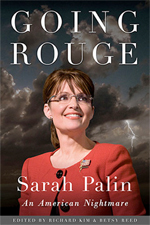
Sarah Palin's autobiography will be released the same day as a more critical perspective in "Going Rouge: Sarah Palin - An American Nightmare." (Photo: Tricia Ward; Edited: Jared Rodriguez / truthout)

http://www.truthout.org/1112097

All,

Here she comes yall...The latest rightwing pinup for protofascist chic...(or the ugly legacy of Ann Coulter strikes again)...

Kofi


"Going Rouge" Takes On the Palin Nightmare

Thursday 12 November 2009

by: Maya Schenwar, t r u t h o u t | Interview


Sarah Palin's autobiography will be released the same day as a more critical perspective in "Going Rouge: Sarah Palin - An American Nightmare." (Photo: Tricia Ward; Edited: Jared Rodriguez / t r u t h o u t)

Next Tuesday, when Sarah Palin's already-bestselling memoir, "Going Rogue: An American Life," hits shelves, another much-anticipated look at the Palin phenomenon will also debut: "Going Rouge: Sarah Palin - An American Nightmare" (available exclusively at orbooks.com). The book includes both new and classic essays by the likes of Max Blumenthal, Eve Ensler, Katrina vanden Heuvel, Jessica Valenti, Juan Cole, Jim Hightower, Robert Reich, Naomi Klein and many more.

I interviewed Richard Kim and Betsy Reed, the editors of "Going Rouge," about Palin's place in the American political landscape, her influence on the tenor of Republican politics, and why they did not choose to make Levi Johnston a focal point of their anthology.

MS: Although your book is being released the same day as "Going Rogue" and has a similar cover, it doesn't seem like you intend to trick readers into buying the book when they mean to buy "Going Rogue." What was your aim in compiling this anthology?

Betsy Reed: We want to emphasize that although the cover has an element of satire, the book is not a parody. Our goal was to present a serious appraisal of Sarah Palin's record and an assessment of her role in American politics - and her future in American politics. She is a very well-packaged celebrity at this point, so we felt it was important to show her beneath the gloss.

Richard Kim: "Going Rogue" has already printed 1.5 million copies, and it has been number one on Amazon for weeks. We can assume that it's going to be painting her in the most generous and heroic light, and it's really important to tell the other side of her story, about her record in Alaska as governor, what she did on the campaign trail and what her politics are, and not to fall prey to the Sarah Palin branding machine.

BR: We're seeing this argument take shape where anyone who's critical of Sarah Palin is portrayed as launching unfair personal attacks on her. Our book is not personal at all; it's about who she is politically. There's really nothing about Levi Johnston in the book.

MS: That's refreshing.

RK: He only enters in there once or twice. There's no full-frontal nudity in the book, either.

"Going Rouge" is available starting Nov. 17 at orbooks.com.

MS: I'd like to know how you settled on the title of "Going Rouge," besides the play on words?

BR: Well, we can readily admit the play on words was a large part of the appeal, although we suggest in a cheeky way in our introduction that any similarities are purely coincidental.

But we also argue in our introduction that Sarah Palin represents something interesting and new in Republican politics, in that she is very much presented as a woman - a mother, a hockey mom - and her pedigree as a beauty queen was a very explicit part of her marketing as a vice-presidential candidate. This is highly suspect coming from a party that's been against every major agenda item for the women's movement. The title allows us to comment on that phenomenon: the Republican Party "going rouge."

Why do you think Sarah Palin remains so widely accepted by conservatives as a viable national politician, despite her obvious shortcomings?

RK: A part of that is definitely the narrative she sells; being a mom from Alaska. Also, she also does share the views of 20 percent of the electorate: the far right. And it's clear that they are not actually thinking in this moment of winning national elections. They're not even trying to hold onto a seat in New York's 23rd district, which has been in Republican hands since the 1850s. That was the race where Sarah Palin intervened and hacked out the moderate Republican. So that's a big question that's unknown: Is the Republican Party going to follow Palin into basically suicidal territory in terms of a national election?

BR: I think she does have quite a strong following among a certain cohort of Christian, conservative, white, married women. The Republican party is a mostly male phenomenon, but I think Republicans recognized that they needed to do better with women when they picked her.

RK: Going back to what Betsy said earlier, the narrative that she sends out of being persecuted is actually deeply resonant now with that portion of the Republican Party, which is out of power in the White House, out of power in Congress, and seeing the policies of the Bush years being rolled back. She constantly says, "I'm not being recognized by the national media, so I'm going to go rogue and tell you the story directly." In that way she can bypass Washington and bypass the media world.

BR: It's nothing new - The American right has always felt itself to be aggrieved. They always present themselves as fighting against a liberal elite. During the Bush years, obviously, they controlled everything. But now with Obama, there's a receptive audience for Sarah Palin's line of being the victim of this liberal conspiracy.

MS: That sense of victimhood can make it difficult for the media to cover Sarah Palin at all. If you had to map out a strategy for the progressive media in confronting the phenomenon of Sarah Palin over the next couple of years, what would you include?

RK: The best thing progressives did during the election was stick to record record record; facts facts facts. When you line those up, you see what a disaster she was as governor and what a disaster she would be as vice president.

That should be the strategy going forward. When she posts on Facebook that Obama's going to have "death panels" that execute her Downs Syndrome baby, we have to point to where he actually talks about optional end-of-life consultations. When she talks about how "In God We Trust" has been taken off the dollar coin, implying that it was an Obama plot, progressives have to point out that in fact, this was passed by a Republican Congress and George W. Bush.

So, there's going to be a portion of the electorate that believes whatever she says, but the results of the election and the results of the summer health care debate have shown that if we stick to the facts and the record, she's usually debunked.

MS: So, what kind of impact do you hope the book will have on Palin's probable presidential campaign?

BR: In some ways, Sarah Palin represents very bad news for the Republican Party. So part of us just wants to say, "Go for it!"

RK: But then, look at what she did with Betsy McCaughey's "death panels," which were just a little thing in the New York Post and no one on the national stage was paying attention to it. Then Sarah Palin blasted it on her Facebook page, and for the entire month of August, instead of discussing the public option or single payer or any of the other health care proposals out there, we were stuck fighting that garbage.

BR: So, we're probably not going to see President Palin in 2012. The larger effect we're looking at is that Sarah Palin is warping our political debate.

MS: Criticisms of Sarah Palin always seem to contain this combination of outrage and humor. That's a hard balance to strike, and I'm interested in how you dealt with that balance in compiling the anthology.

RK: Some of the humor in the book just comes from quoting Sarah Palin. She's funny enough just on her own. There's a piece in the book that puts Sarah Palin's own words into verse, in haiku form.

So, some of the writers have a lot of fun with her. She has a sort of comic element, but then there are also terrifying elements to her, like the ignorance that she exposed in her interviews with Katie Couric or with Charlie Gibson.

That balance is represented in the book. The appeal of her youth, her wardrobe, her charm has been used to evade the hard political questions of her record and her knowledge.

MS: Is Sarah Palin a "rogue" phenomenon, or does she represent a trend in the Republican Party?

RK: What we see in Sarah Palin's continued political relevance, even though she holds no office, is that in some ways she's doing what Newt Gingrich and Dick Armey and all these other former Republican politicians are doing - using their status as media figures to push an agenda. They don't have to actually govern, or face the consequences of their actions at the polls. So, what she represents is actually the takeover of the Republican Party by these non-governmental actors - and you can throw Rush Limbaugh and Glenn Beck in there - this cabal of people who are not beholden to any electorate. Those are the people in the driver's seat.

BR: There's not anything inherently wrong with a person who's a media personality being influential in politics. We have that on the left, too. But Paul Krugman makes a good point in his [Nov. 9] column: These people don't have to worry about governing, so they can be as irresponsible as they want in their rhetoric, and could potentially make the country ungovernable for Democrats.

RK: Even Arlen Specter and Joe Lieberman and Michele Bachmann have to come home and face their constituency. Sarah Palin doesn't need to do that anymore, and that's one of the things that makes her a great danger in the next few years.

--------

"Going Rouge: Sarah Palin - An American Nightmare" can be purchased at orbooks.com.