Showing posts with label Jazz piano. Show all posts

Saturday, November 29, 2014

Renowned pianist, composer, arranger, teacher, and ensemble leader GERI ALLEN (b. June 12, 1957) is featured from November 29 to December 5, 2014 in SOUND PROJECTIONS, AN ONLINE QUARTERLY MUSIC MAGAZINE

https://www.facebook.com/pages/The-Panopticon-Review/342702882479366
 

All,

I hope you enjoyed the fourth week issue (November 22-28) of SOUND PROJECTIONS, the new online quarterly music magazine which features the extraordinary work, art, and life of the legendary musician, composer, singer, songwriter, and cultural icon Jimi Hendrix. Week #5 begins TODAY on Saturday, November 29, 2014 @10AM PST which is @1PM EST. The featured artist for the upcoming week (November 29-December 5) is the outstanding and internationally renowned pianist, composer, arranger, teacher and ensemble leader Geri Allen.  So enjoy this week’s musical entry in SOUND PROJECTIONS, the online music magazine and please pass the word to your friends, colleagues, comrades, and associates that the magazine is now up and running at the following site.  Please click on the link below:


http://soundprojections.blogspot.com/ 


Thanks.  For further important details please read below...
Kofi

Sound Projections

A sonic exploration and tonal analysis of contemporary creative music in a myriad of improvisational/composed settings, textures, and expressions. 


Welcome to Sound Projections

I'm your host Kofi Natambu. This online magazine features the very best in contemporary creative music in this creative timezone NOW (the one we're living in) as well as that of the historical past. The purpose is to openly explore, examine, investigate, reflect on, studiously critique, and take opulent pleasure in the sonic and aural dimensions of human experience known and identified to us as MUSIC. I'm also interested in critically examining the wide range of ideas and opinions that govern our commodified notions of the production, consumption, marketing, and commercial exchange of organized sound(s) which largely define and thereby (over)determine our present relationships to music in the general political economy and culture.

Thus this magazine will strive to critically question and go beyond the conventional imposed notions and categories of what constitutes the generic and stylistic definitions of 'Jazz', 'classical music', 'Blues', 'Rhythm and Blues', 'Rock 'n Roll', 'Pop', 'Funk', 'Hip Hop' etc. in order to search for what individual artists and ensembles do creatively to challenge and transform our ingrained ideas and attitudes of what music is and could be.

So please join me on this ongoing visceral, investigative, and cerebral quest to explore, enjoy, and pay homage to the endlessly creative and uniquely magisterial dimensions of MUSIC in all of its guises and expressive identities.

Saturday, November 29, 2014

Geri Allen  (b. June 12, 1957):  Renowned pianist, composer, arranger, teacher, and ensemble leader


GERI ALLEN

SOUND PROJECTIONS 
AN ONLINE QUARTERLY MUSIC MAGAZINE
EDITOR: KOFI NATAMBU
WINTER, 2014


VOLUME ONE                                      NUMBER ONE


MILES DAVIS


Featuring the Musics and Aesthetic Visions of:
 
ANTHONY BRAXTON
November 1-7

CECIL TAYLOR
November 8-14

STEVIE WONDER
November 15-21

JIMI HENDRIX
November 22-28

GERI ALLEN
November 29-December 5


HERBIE HANCOCK
December 6-12

SONNY ROLLINS
December 13-19

JANELLE MONAE
December 20-26

GARY CLARK, JR.
December 27-January 2

NINA SIMONE
January 3-January 9

ORNETTE COLEMAN
January 10-January 16

WAYNE SHORTER
January 17-23

*[Special bonus feature: A celebration of the centennial year of musician, composer, orchestra leader, and philosopher SUN RA, 1914-1993] 
January 24-30

WHAT IS SOUND PROJECTIONS?:


This is a quarterly magazine which means that each individual issue will appear every three months following the first issue on November 1, 2014 and that four issues will constitute the completion of one volume (Volume 1, Numbers 1-4). Twelve (12) artists will be featured during each quarter. In this design template this means that one artist will be featured per week for 12 weeks beginning with the first issue on November 1 and thus continuing for three months until the second issue appears on February 1, 2015. Thus each subsequent issue will repeat the cycle with 12 new artists featured for each quarter. The photo in the middle of the page (in the first issue it is Miles Davis) constitutes the cover image for the magazine for that quarter and this image changes every three months with each subsequent issue. What follows is the weekly schedule for each artist in volume one, number one that runs from November 1, 2014 to January 23, 2015 with the second round of new artists appearing in the February 1, 2015 issue (volume one, number two):

ANTHONY BRAXTON November 1-7
CECIL TAYLOR November 8-14
STEVIE WONDER November 15-21
JIMI HENDRIX November 22-28
GERI ALLEN November 29-December 5
HERBIE HANCOCK December 6-12
SONNY ROLLINS December 13-19
JANELLE MONAE December 20-26
GARY CLARK, JR. December 27-January 2
NINA SIMONE January 3-January 9
ORNETTE COLEMAN January 10-January 16
WAYNE SHORTER January 17-23

SUN RA 2014 Centennial  January 24-30

Friday, October 10, 2014

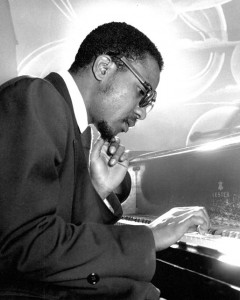
A TRIBUTE TO AND CELEBRATION OF THE LIFE AND MUSIC OF THE IMMORTAL PIANIST AND COMPOSER THELONIOUS 'SPHERE' MONK, 1917-1982


TODAY OCTOBER 10, 2014 IS THE 97th BIRTHDAY OF THE IMMORTAL PIANIST AND COMPOSER THELONIOUS MONK 1917-1982

SO LET'S CELEBRATE AND PAY HOMAGE TO THIS MUSICAL GIANT...


THELONIOUS MONK: THE JAZZ COMPOSER AS VISIONARY

by Kofi Natambu


[This essay is an excerpt from a new book-in-progress by Kofi Natambu entitled A BRAND NEW BAG: How African Americans Revolutionized U.S. Culture and Changed the World, 1955-1975]

“They were always telling me for years to play commercial, be commercial. I’m not commercial. I say play your own way. Don’t play what the public wants—you play what you want and let the public pick up on what you’re doing—even if it does take them fifteen, twenty years.”    
--Thelonious Monk

“Monk is a virtuoso of the specific techniques of Jazz, in challengingly original uses of accent, rhythm, meter, time and of musically expressive space, rest, and silence…He is a major jazz composer, the first since Duke Ellington…His repertory abounds with intriguing melodies, truly instrumental pieces…To play Monk properly, musicians justly testify, you have to know the melody and the harmony and understand how they fit together…It is a sign of the great Jazz composer that his sense of form extends beyond written structure and beyond individual improviser, to encompass a whole performance…So it is with Monk.”
 --Martin Williams


THELONIOUS MONK
(b. October 10, 1917--d. February 17, 1982)

By 1955 the legendary pianist-composer Thelonious Sphere Monk (b. October 10, 1917) had been playing music professionally for over twenty years. Like everything else about him--from his highly original name to his stubbornly independent, innovative, and utterly idiosyncratic approach to nearly every aspect of his extraordinary life and career--Monk was his “own man” from very early on. Moving with his family from North Carolina to New York at the age of five in 1922, the precocious Monk always went his own way and made his own decisions about how he wanted to live—even as a child. Thus, during his junior year in the spring of 1934 Monk left the acadmically rigorous and prestigious Stuyvesant High School in New York (which was and is a very competitive citywide magnet school which only admitted the best and most gifted students in the city) to pursue a professional career in music. He was just 17 at the time but had already impressed a number of his teachers and musical peers as a young man of great talent and potential. Coming from a very proud and independent black working-class family who loved music and insisted that their three children take music lessons (both of Monk’s parents worked and Thelonious, Sr.—Monk’s father--also played piano), Monk initially resisted his mother’s suggestions that he play violin and later the trumpet (neither of which Monk liked). However, young Thelonious was utterly fascinated by his sister’s Marion’s piano lesons which she took on the family’s upright piano and the ten year old much preferred listening to her, especially when her music teacher came to their house. By the age of 12 in 1930 Monk had already learned to play the piano very well on his own by ear and keen observation. Highly impressed, the music teacher, a Mr. Wolfe (who was then a student at New York’s famed Julliard School of Music), told Monk’s parents not to waste any more money on their daughter’s lessons since Marion had no real interest in playing music, but it was very apparent to the teacher that her younger brother Thelonious had “a prodigious talent.” This quickly led to the highly precocious youngster enrolling in music courses in school and taking professional lessons from a series of private teachers. Since Monk also excelled academically in math and physics it wasn’t long before Monk began formally composing music, using his command of harmony and melodic ideas to augment his already extraordinary rhythmic sense. By the time Monk turned 19 in 1936 he had already written a number of major compositions, most notably “Ruby My Dear,” that were destined to become Jazz classics.

In 1936 Monk began playing on the road as a touring professional with an evangelist(!) from the Sanctified church named Reverend Graham (who was known publically as “The Texas Warhorse”) who sang and preached in various churches while Monk’s trio played rollicking gospel and rhythm and blues tunes behind her. It’s important to note that as early as 1934 Monk and his trio had already worked at small gigs and dances in New York, usually earning small amounts in tips and cover charges. Monk remained with the evangelist’s troupe for over two years traveling all over the country in both cities and small rural towns alike. This day-to-day immersion in the challenging demands of black folk vernacular styles as both accompanist and ensemble leader gave the dedicated young musician very valuable experience and provided the early aesthetic foundation for his eventually unique and independent styles of composing and improvising music in the Jazz tradition.

In 1938 Monk, homesick from the lonely rough and tumble life of the road, returned to his beloved New York and soon based his own playing style on the stride piano traditions established by such living African American piano legends (and Monk’s personal idols) as James P. Johnson (who happened to live near Monk’s west side Manhattan neighborhood at the time) and Fats Waller. In addition Monk was being deeply influenced by the pianist/composer/bandleader Duke Ellington who also rooted his piano style in the stride tradition, a profound black vernacular music aesthetic of the early 1900s. It was the highly innovative modernity of Ellington’s fecund ideas in piano harmony, rhythmic structure, and orchestral arrangements that inspired Monk in a particularly special way and revealed the possibilities for him to continue and expand on his own experimental efforts.

In 1940 the now 22 year old Monk became house pianist at Minton’s Playhouse, a small Harlem nightclub and nightly gathering place for many aspiring young Jazz musicians and composers who came together on a regular basis at the club to jam and experiment with new musical ideas during afterhours at all night and early morning sessions. These sessions soon became legendary as the place where in the mid 1940s the revolutionary Jazz style ‘Bebop’ was born. Monk’s deep involvement with this movement during endless jam sessions in the early and mid 1940s made Monk’s name well known to other musicians who became very familiar with his challenging compositions and unusual solo playing. This was of course long before the general listening public became aware of his talents. From 1940-1945, an intensely creative period in which Monk wrote many new compositions including his signature classic “’Round Midnight” in 1941, Monk continued to work in relative obscurity at Minton’s and other small clubs in Harlem and in the famed midtown 52nd street clubs and bars where Monk and his angular dissonant harmonies, dynamic rhythms, and soaring, lyrical melodies quickly made him a leading and influential figure among the modernist Jazz cognoscenti. Working closely with such fellow pioneers of this exciting new music as the extraordinary drummer Kenny “Klook” Clarke, revolutionary guitarist Charlie Christian, iconic saxophonist Charlie ‘Bird’ Parker, and trumpet legend John “Dizzy” Gillespie, Monk soon became a major mentor to many young emerging musicians like the then newly arrived 19 year old Miles Davis in 1945. By this time scores of musicians were experimenting with new harmonic structures, melodic ideas, and rhythmic conceptions. The intense cross-fertilization of styles, ideas, and musical structures were deeply rooted in the modern experimentations with form and content that were sweeping all the arts of the period in literature, painting, dance, and cinema and “Bebop” (or as the musicians themselves simply called it “modern music”) was at the forefront of this cultural and aesthetic revolution.

It was abundantly clear, as Monk himself told a number of interviewers, that his style was “more original” than many of the standardized, generic, and conventional forms of the Bebop movement. Yet Monk was already one of the primary architects of the best and most creative aspects of this movement and was a major source of distilling, synthesizing, and extending the ideas and structures from the myriad of historical musical sources that this generation of modernist musicians consciously absorbed, honed, and developed: Jazz swing styles inherited from the 1920s and ‘30s (e.g. Louis Armstrong, Ellington, Art Tatum, Lester Young, Count Basie, Coleman Hawkins, etc.) both ‘popular’ and ‘avant-garde’ advances in 20th century classical music (e.g. Stravinsky, Varese, Hindemith, Ives, Bartok, Prokofiev, Ravel, Debussy, etc.), and new black vernacular uses/appropriations of the rich blues and rhythm and blues/rock ‘n roll traditions, as well as various forms of gospel/spiritual music.

All this and more went into Monk’s complex and powerful compositions that while quite intricate and even difficult in harmonic terms, somehow remained both very lyrical (if quirkily idiosyncratic) melodically, as well as creatively connected to black vernacular dance rhythms. This combination of stylistic elements became a trademark of Monk’s compositions and improvisations and led him to finally getting an offer in 1947 to record as a leader of his own ensembles. Now thirty years old and a mature young artist in many respects (though still unknown to people outside of the music), Monk recorded two albums worth of his original compositions (and a few standards) with the small recording label known as Blue Note. Boldly entitled The Genius of Modern Music, Volumes I & II these records put Monk on the mainstream music map for the first time and introduced the man often rather archly referred to in Jazz publications and the mainstream media as “The High Priest of Bebop,” to a new Jazz audience that were just beginning to respond to the innovations of the modernists in the music. Despite this new, limited recognition Monk was still barely making ends meet and was desperately struggling to stay above water economically. However, Monk categorically refused to give up his musical identity or compromise his artistic vision in any way despite many pressures to do so. His first recordings were often lauded (or greatly misunderstood) by the critics and journalists who continued to interview and write about him for a wide range of magazines and newspapers both in and outside the general Jazz world. The laconic, witty, and candid pianist was always considered great copy for the media. However Monk remained almost invisible to any mainstream audience of music lovers.

This situation of severe commercial isolation and economic marginalization during a very creative and productive period of composing and performing his music was juxtaposed to a concomitant rise in status and prestige by fellow musicians, composers, and critics that continued well into the 1950s. Monk continued to record on a regular basis for the important small recording labels Blue Note, Prestige, and Riverside. Thus he began the series of major, classic recordings that quickly established his reputation as one of the most significant Jazz composers and soloists in modern music. It was also during this time that Monk first began to be mentioned as the most important composer in the music since the great Duke Ellington revolutionized the Jazz orchestra in the 1920s. At the height of the Bebop craze from 1948-1954 and the justly rapid ascension of Charlie “Bird’ Parker and Dizzy Gillespie as living icons of the movement, Monk made an equally revolutionary breakthrough himself in an utterly independent personal style that drew from bebop conventions (as it did from swing, rhythm and blues, classical, and gospel traditions) but were at the same time completely fresh and different in form and content from his numerous influences. These recordings were made with many of the most important, original, and talented musicians in Modern Jazz--Parker, Gillespie, Miles Davis, Sonny Rollins, Milt Jackson, Art Blakey, Kenny Clarke, Percy Heath, Max Roach, and Kenny Dorham, among others--and in many ways served as the basic creative and aesthetic foundation of where Jazz was to evolve and grow after 1955.

Thus by the mid-fifties Thelonious Sphere Monk II was a man who already had a very clear and completely masterful command of the modernist and vernacular traditions that characterized the revolutions in both popular and avant-garde music during the post WWII era. This knowledge and understanding on both an innovative theoretical and performance level profoundly transformed the 1955-1975 era in Jazz and made Monk, along with Miles Davis, Sonny Rollins, Charles Mingus, Max Roach, John Coltrane, Cecil Taylor, and Ornette Coleman the leading musical figures in a particularly tumultuous and exciting period of American art and culture.

The visionary quality of Monk’s musical aesthetic lay in an intensely self conscious and self reflexive effort to simultaneously question, critique, and fundamentally rethink the traditionally specific roles and identities of harmonic structure, melodic form, and rhythmic content in modern music and reassert/reclaim SOUND itself as the most important individual and collective element in both improvisational and composed ensemble settings alike. For decades since the 1890s both African American and European/white American popular, vernacular, and (semi)classical musics had been dependent on inherited conventional modes of organizing musical patterns through the predominance of either harmony (songform structures), melody (songform lyrics), or rhythm (fixed metrical time). By the early 1900s various avant-garde practices in the United States and Europe had begun to overtly upset and challenge these conventions somewhat (by breaking up and/or distorting/rearranging the forms themselves) but still largely in terms of the central role of fundamentally Western conceptions and methodologies that favored a critical embrace (dissonance) or dismissive denial (atonality) of the diatonic scale as a ‘negative’ reference (e.g. Schoenburg, Ives, Webern, etc.). However, through the then revolutionary interventions of such major figures as Louis Armstrong and Ellington by the early 1920s, Jazz began creatively embracing and appropriating conventional music structures and ideas from a myriad of western sources while subtly transforming and subverting them with highly idiosyncratic (and African derived) methods of either using dissonant or unorthodox harmonies as well as crosscutting and constructivist architectural rhythms (a structural and expressive device known as ‘riffing’) in both compositional and improvisational contexts. It’s crucial to note that the major black Jazz composers, improvisors, and arrangers of the 1920s and ‘30s (Jelly Roll Morton, Ellington, Sidney Bechet, Art Tatum, Count Basie, Fletcher Henderson, Don Redman, Lester Young, Coleman Hawkins) were very adept at using these sources while also creating and improvising entirely new ways of expressing melodic lyricism and ‘pop’ song forms such as Louis Armstrong’s brilliant inventions of ‘scat’ singing and ‘swing’ instrumental styles.

Out of this historical maelstrom of multinational aesthetic and cultural traditions and conceptions, Monk consciously critiqued, individually reworked, and creatively extended and subverted the conventions of 20th century modernist and vernacular sources (including those of ‘Bebop’) to forge his own vision of what constituted ‘modern music.’ The first principle was a reliance and insistence on changing the sound of the piano (and by extension other instrumental voices in the ensemble) through an entirely new approach to note articulation, timbral dynamics, and use of temporal/spatial elements in his own improvisations and composing material for other musicians in his groups. As a result many early listeners to Monk’s music--musicians, critics, and general listeners alike-- thought that Monk was not a very technically accomplished pianist (again in the strictly Western European traditional/classical terms which were the canonical norm in the United States). This misunderstanding and profound ignorance of the actual sources of Monk’s methods and approach to instrumental expression and compositional structure was an impediment to many people in jazz circles until the critical and listening Jazz public (and many musicians as well) finally ‘caught up’ to many of Monk’s innovations by the late 1950s. By then Monk was already an established twenty-five year jazz veteran whose once radical contributions to voicing, phrasing, and tempo were finally the ‘new modern mainstream’ of the Jazz tradition.

The extraordinary recordings that Monk made from 1955-1965 only further solidified and cemented this reputation and suddenly made his work de rigueur for the young, emerging innovators and radicals of the period. In 1955 Monk finally began to receive the commercial attention (and monetary success) that had previously eluded him without compromising himself by ‘going commercial’ in any way as an artist. This reality completely validated Monk’s famous assertion that one must ‘play [your] own way’ and ensured that he would enter the rarefied pantheon of the greatest musicians and composers in the history of his art completely on his own terms. It was a profound lesson in artistic integrity, dedication to craft, and disciplined perseverance that would serve as a beacon for an entire new generation of gifted, ambitious players and composers in the 1960s, the ‘70s, and beyond who recognized that Monk’s greatest and most significant contributions lie not only in his fierce aesthetic commitment but in not allowing himself to be corrupted and distracted by the relentless demands and pressures of the marketplace. The result was one of the most singular, influential bodies of work in the entire canon of 20th century music.

THELONIOUS MONK
 

FROM THE PANOPTICON REVIEW ARCHIVES

(Originally posted on October 24, 2009):

Saturday, October 24, 2009

Thelonious Monk: An American Original


http://monkbook.com/about
Dr. Robin D.G. Kelley 
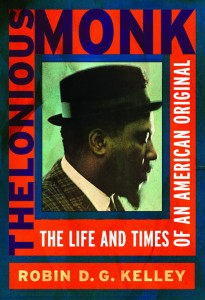
Thelonious Monk: The Life and Times of An American Original by Robin Kelley--Free Press, October 2009


All,

The book is finally out and it is simply INCREDIBLE. This is an absolutely stupendous achievement by one of the finest social historians and cultural critics in this country, the great Robin D.G. Kelley. Dr. Kelley has written the definitive biography of the legendary Thelonious Monk and it is a 600 page masterpiece. Over ten years of exhaustive historical research and writing went into this opus and it was more than worth the wait! So don't hesitate for another second. GET THIS BOOK TODAY AND TELL EVERYONE YOU KNOW AND THEIR FRIENDS TO GO COP IT NOW...

(Note: I will be doing an extensive review and analysis of Dr. Kelley's new biography on this site as soon as I finish reading the text)

Kofi

http://monkbook.com/about/

Who Is Thelonious Sphere Monk?

With the arrival Thelonious Sphere Monk, modern music—let alone modern culture—simply hasn’t been the same. Recognized as one of the most inventive pianists of any musical genre, Monk achieved a startlingly original sound that even his most devoted followers have been unable to successfully imitate. His musical vision was both ahead of its time and deeply rooted in tradition, spanning the entire history of the music from the “stride” masters of James P. Johnson and Willie “the Lion” Smith to the tonal freedom and kinetics of the “avant garde.” And he  shares with Edward “Duke” Ellington the distinction of being one of the century’s greatest American composers. At the same time, his commitment to originality in all aspects of life—in fashion, in his creative use of language and economy of words, in his biting humor, even in the way he danced away from the piano—has led fans and detractors alike to call him “eccentric,” “mad” or even “taciturn.” Consequently, Monk has become perhaps the most talked about and least understood artist in the history of jazz.

Born on October 10, 1917, in Rocky Mount, North Carolina, Thelonious was only four when his mother Barbara, big sister Marion, and baby brother Thomas, moved to New York City. Unlike other Southern migrants who headed straight to Harlem, the Monks settled on West 63rd Street in the “San Juan Hill” neighborhood of Manhattan, near the Hudson River. His father, Thelonious, Sr., joined the family three years later, but health considerations forced him to return to North Carolina. During his stay, however, he often played the harmonica, “Jew’s harp,” and an old player piano the family acquired soon after he arrived. Thelonious’s mother also played piano, mostly hymns and other sacred music, and she encouraged her children’s musical interests by taking them to hear Franko Goldman’s band perform in nearby Central Park and paying for music lessons. She arranged piano lessons for Marion and hoped Thelonious would take up violin. He chose trumpet instead, and studied the instrument briefly but was challenged by bronchial issues. He was about eleven when Marion’s piano teacher took Thelonious on as a student. By his early teens, he was playing rent parties, sitting in on piano at a local Baptist church, and was reputed to have won several  “amateur hour” competitions at the Apollo Theater.

Admitted to Peter Stuyvesant, one of the city’s best high schools, Monk dropped out at the end of his sophomore year to pursue music and during the summer of 1935 took a job as a pianist for a traveling evangelist and faith healer. Returning after two years, he formed his own quartet and played local bars and small clubs until the spring of 1941, when he became the house pianist at Minton’s Playhouse in Harlem.

Minton’s, legend has it, was where the “bebop revolution” began. The after-hours jam sessions at Minton’s, along with similar musical gatherings at Monroe’s Uptown House, Dan Wall’s Chili Shack, among others, attracted a new generation of musicians brimming with fresh ideas about harmony and rhythm—notably Charlie Parker, Dizzy Gillespie, Mary Lou Williams, Kenny Clarke, Oscar Pettiford, Max Roach, Tadd Dameron, and Monk’s close friend and fellow pianist, Bud Powell. Monk’s harmonic innovations proved fundamental to the development of modern jazz in this period. Anointed by some critics as the “High Priest of Bebop,” several of his compositions (“52nd Street Theme,” “‘Round Midnight,” “Epistrophy,” “I Mean You”) were favorites among his contemporaries.

Yet, as much as Monk helped usher in the bebop revolution, he also charted a new course for modern music few were willing to follow. Whereas most pianists of the bebop era played sparse chords in the left hand and emphasized fast, even eighth and sixteenth notes in the right hand, Monk combined an active right hand with an equally active left hand, fusing stride and angular rhythms that utilized the entire keyboard. And in an era when fast, dense, virtuosic solos were the order of the day, Monk was famous for his use of space and silence. In addition to his unique phrasing and economy of notes, Monk would “lay out” pretty regularly, enabling his sidemen to experiment free of the piano’s fixed pitches. As a composer, Monk was less interested in writing new melodic lines over popular chord progressions than in creating a whole new architecture for his music, one in which harmony and rhythm melded seamlessly with the melody. “Everything I play is different,” Monk once explained, “different melody, different harmony, different structure. Each piece is different from the other. … [W]hen the song tells a story, when it gets a certain sound, then it’s through…completed.”

Despite his contribution to the early development of modern jazz, Monk remained fairly marginal during the 1940s and early 1950s. Besides occasional gigs with bands led by Kenny Clarke, Lucky Millinder, Kermit Scott, and Skippy Williams, in 1944 tenor saxophonist Coleman Hawkins was the first to hire Monk for a lengthy engagement and the first to record with him. Most critics and many musicians were initially hostile to Monk’s sound. Blue Note, then a small record label, was the first to sign him to a contract. Thus, by the time he went into the studio to lead his first recording session in 1947, he was already thirty years old and a veteran of the jazz scene. Although all of Monk’s Blue Note sides are hailed today as some of his greatest recordings, at the time of their release in the late 1940s and early 1950s, they proved to be a commercial failure.

Harsh, ill-informed criticism limited Monk’s opportunities to work—opportunities he desperately needed especially after his marriage to Nellie Smith in 1948, and the birth of his son, Thelonious, Jr., in December of 1949. Monk found work where he could, but he never compromised his musical vision. His already precarious financial situation took a turn for the worse in August of 1951, when he was falsely arrested for narcotics possession, essentially taking the rap for his friend Bud Powell. It was his second arrest; the first, in 1948, was for possession of marijuana. Deprived of his cabaret card—a police-issued “license” without which jazz musicians could not perform in New York clubs—Monk was denied gigs in his home town for the next six years. Nevertheless, he played neighborhood clubs in Brooklyn, the Bronx, and Harlem, sporadic concerts, took out-of-town gigs, composed new music, and made several trio and ensemble records under the Prestige label (1952–1954), which included memorable performances with Sonny Rollins, Miles Davis, and Milt Jackson. In the fall of1953, he celebrated the birth of his daughter Barbara, and the following summer he crossed the Atlantic for the first time to play the Paris Jazz Festival. During his stay, he recorded his first solo album for Vogue. These recordings would begin to establish Monk as one of the century’s most imaginative solo pianists.

In 1955, Monk signed with a new label, Riverside, and recorded several outstanding LP’s which garnered critical attention, notably Thelonious Monk Plays Duke Ellington, The Unique Thelonious Monk, Brilliant Corners, Monk’s Music and his second solo album, Thelonious Himself. In 1957, with the help of his friend and sometime patron, the Baroness Pannonica de Koenigswarter, he had finally gotten his cabaret card restored and enjoyed a very long and successful engagement at the Five Spot CafĂ© with John Coltrane on tenor saxophone, Wilbur Ware and later Ahmed Abdul-Malik on bass, and Shadow Wilson on drums. From that point on, his career began to soar; his collaborations with Johnny Griffin, Sonny Rollins, Art Blakey, Clark Terry, Gerry Mulligan, and arranger Hall Overton, among others, were lauded by critics and studied by conservatory students. Monk even led a successful big band at Town Hall in 1959. It was as if jazz audiences had finally caught up to Monk’s music.

By 1961, Monk had established a more or less permanent quartet consisting of Charlie Rouse on tenor saxophone, John Ore (later Butch Warren and then Larry Gales) on bass, and Frankie Dunlop (later Ben Riley) on drums. He performed with his own big band at Lincoln Center (1963), and the quartet made a few European and world tours throughout the decade. In 1962, Monk had also signed with the gargantuan Columbia records, and in February of 1964 he became the third jazz musician in history to grace the cover of Time Magazine.

However, with fame came the media’s growing fascination with Monk’s alleged eccentricities. Stories of his behavior on and off the bandstand often overshadowed serious commentary about his music. The media helped invent the mythical Monk—the reclusive, naĂŻve, idiot savant whose musical ideas were supposed to be entirely intuitive rather than the product of intensive study, knowledge and practice. Indeed, his reputation as a recluse (Time called him the “loneliest Monk”) reveals just how much Monk had been misunderstood. As his former sideman, tenor saxophonist Johnny Griffin, explained, Monk was somewhat of a homebody: “If Monk isn’t working he isn’t on the scene. Monk stays home. He goes away and rests.” Unlike the popular stereotypes of the jazz musician, Monk was devoted to his family. He appeared at family events, played birthday parties, and wrote playfully complex songs for his children: “Little Rootie Tootie” for his son, “Boo Boo’s Birthday” and “Green Chimneys” for his daughter, and a Christmas song titled “A Merrier Christmas.” The fact is, the Monk family held together despite long stretches without work, severe money shortages, sustained attacks by critics, grueling road trips, bouts with illness, and the loss of close friends.

During the 1960s, Monk scored notable successes with albums such as Criss Cross, Monk’s Dream, It’s Monk Time, Straight No Chaser, and Underground. But as Columbia/CBS records pursued a younger, rock-oriented audience, Monk and other jazz musicians ceased to be a priority for the label. Monk’s final recording with Columbia was a big band session with Oliver Nelson’s Orchestra in November of 1968, which turned out to be both an artistic and commercial failure. Columbia’s disinterest and Monk’s deteriorating health kept the pianist out of the studio. In January of 1970, Charlie Rouse left the band, and two years later Columbia quietly dropped Monk from its roster. For the next few years, Monk accepted fewer engagements and recorded even less. His quartet featured saxophonists Pat Patrick and Paul Jeffrey, and his son Thelonious, Jr., took over on drums in 1971. That same year and again in 1972, Monk toured widely with the “Giants of Jazz,” a kind of bop revival group consisting of Dizzy Gillespie, Kai Winding, Sonny Stitt, Al McKibbon and Art Blakey, and made his final public appearance in July of 1976. Physical illness, fatigue, and perhaps sheer creative exhaustion convinced Monk to give up playing altogether. On February 5, 1982, he suffered a stroke and never regained consciousness; twelve days later, on February 17th, he died.

Today Thelonious Monk is widely accepted as a genuine master of American music. His compositions constitute the core of jazz repertory and are performed by artists from many different genres. He is the subject of award winning documentaries, biographies and scholarly studies, prime time television tributes, and he even has an Institute created in his name. The Thelonious Monk Institute was created to promote jazz education and to train and encourage new generations of musicians. It is a fitting tribute to an artist who was always willing to share his musical knowledge with others but expected originality in return.

Book Events

Monday, October 5, 2009, 7:00 – 9:00 PM
Barnes and Noble
66th and Broadway
New York, NY
212-595-6859

Thursday, October 8, 2009, 7:30
Book party, Discussion, and Jam session
The Brecht Forum
451 West Street, New York, NY 10014 (between Bank & Bethune Streets)
Phone: (212) 242-4201 – Email: brechtforum at brechtforum.org

Saturday, October 10, 2009, 6:00 – 8:00 PM
Politics and Prose Bookstore and Coffee House
5015 Connecticut Ave., NW
Washington, DC
http://www.politics-prose.com/

Tuesday, October 13, 2009, 7:30 PM
Conversation with Robin D. G. Kelley on Thelonious Monk
With Guest, pianist Randy Weston
Center for Jazz Studies, Columbia University
Dwyer Cultural Center, 258 St. Nicholas Ave. and 123rd St.
New York

Thursday, October 15, 2009, 3:00 PM
Reading and book signing, “‘North of the Sunset’: Thelonious Monk’s L.A. Stories”
Charles E. Young Research Library, UCLA
Presentation Room
Los Angeles, CA
Free and open to the public

Tuesday, October 20, 2009, 7:00 PM
Book Soup
8818 W Sunset Blvd
Los Angeles, CA 90069-2125
(310) 659-3110
http://www.booksoup.com/

October 23, 2009, 7:00 PM
Vroman’s Bookstore
695 E Colorado Blvd
Pasadena, CA 91101
(626) 449-5320
http://www.vromansbookstore.com/

October 27, 1009, 7:00 PM
Eso Won Bookstore
4311 Degnan Blvd.
Los Angeles, CA 90008
(323) 290-1048
info@esowonbookstore.com
http://www.esowonbookstore.com/

October 29, 2009, 7:00 PM
City Lights Bookstore
261 Columbus Avenue at Broadway (North Beach)
San Francisco, California 94133
Tel (415) 362-8193
http://www.citylights.com/

Return to Main Menu.

Home
The Book
About The Author
Reviews
Sessionography
Who Is Thelonious Sphere Monk?
Photos
Videos
Book Events
Links
Contact

The Book

Thelonious Monk: The Life and Times of an American Original

“The piano ain’t got no wrong notes!” So ranted Thelonious Sphere Monk, who proved his point every time he sat down at the keyboard. His angular melodies and dissonant harmonies shook the jazz world to its foundations, ushering in the birth of “bebop” and establishing Monk as one of America’s greatest composers. Yet throughout much of his life, his musical contribution took a backseat to tales of his reputed behavior. Writers tended to obsess over Monk’s hats or his proclivity to dance on stage. To his fans, he was the ultimate hipster; to his detractors he was temperamental, eccentric, taciturn, or child-like. But, these labels tell us little about the man or his music.

In the first book on Thelonious Monk based on exclusive access to the Monk family papers and private recordings, as well as a decade of prodigious research, prize-winning historian Robin D. G. Kelley brings to light a startlingly different Thelonious Monk–witty, intelligent, generous, family-oriented, politically engaged, brutally honest, and a devoted father and husband. Indeed, Thelonious Monk is essentially a love story. It is a story of familial love, beginning with Monk’s enslaved descendants from whom Thelonious inherited an appreciation for community, freedom, and black traditions of sacred and secular song. It is about a doting mother who scrubbed floors to pay for piano lessons  and encouraged her son to follow his dream. It is the story of romance, from Monk’s initial heartbreaks to his life-long commitment to his muse, the extraordinary Nellie Monk. And it is about his unique friendship with the Baroness Nica de Koenigswarter, a scion of the famous Rothschild family whose relationship with Monk and other jazz musicians has long been the subject of speculation and rumor. Nellie, Nica, and various friends and family sustained Monk during the long periods of joblessness, bipolar episodes, incarceration, health crises, and other  tragic and difficult moments.

Above all, Thelonious Monk is the gripping saga of an artist’s struggle to “make it” without compromising his musical vision. It is a story that, like its subject, reflects the tidal ebbs and flows of American history in the twentieth century. Elegantly written and rich with humor and pathos, Thelonious Monk is the definitive work on modern jazz’s most original composer.

Advance Praise for Thelonious Monk: The Life and Times of an American Original

“Robin Kelley’s new biography Thelonious Monk: The Life And Times of an American Original is a breath of fresh air amongst the biographies of our legendary jazz musicians. This book is thorough, detailed and written with a true affinity for Monk’s humaneness and creative musical output. It fills in the missing pieces about the growth of the jazz scene in New York through the ’40s, ’50s and ’60s, detailing each step of TSM’s development – who passed through his bands, what gigs he played and what happened on those scenes. It’s an invaluable and close look at the center of the world’s most important creative musical developments in these decades: New York City.”

—Chick Corea

“Thelonious Monk: The Life And Times of an American Original is one of the most anticipated books in jazz scholarship, and well worth the wait. Robin D. G. Kelley represents one of this generation’s most important voices equipped with the knowledge, passion and respect for both jazz and jazz musicians required to interpret the many details and nuances of Thelonious Monk’s life. This compelling book will both challenge old assumptions and inspire new assessments of the life and legacy one of the world’s greatest musicians.”

—Geri Allen, pianist/composer, Associate Professor of Jazz and Contemporary Improvisation, University Of Michigan

“Powerful, enraging and enduring. . . . In Robin Kelley’s finely grained and surely definitive life-and-times study, Thelonious Monk: The Life And Times of an American Original, has found an original biographer.”

—David Levering Lewis, biographer of W.E.B. Du Bois and Pulitzer Prize winner

“An honest and eloquent treatment of one of our most important artists, Thelonious Monk: The Life And Times of an American Original is a stunning tour de force! It is the most comprehensive treatment of Monk’s life to date. Furthermore, in Monk’s story, Kelley has found the perfect medium to shed light on a nation’s, and a people’s, history and persistent quest for freedom. In so doing he has given us a book that is  as bold, brilliant and beautiful as Monk and his music.”

—Farah Jasmine Griffin, author of If You Can’t Be Free, Be a Mystery: In Search of Billie Holiday

About The Author

Robin D. G. Kelley never met Thelonious Monk, but he grew up with his music. Born in 1962, he spent his formative years in Harlem in a household and a city saturated with modern jazz. As a child he took a few trumpet lessons with the legendary Jimmy Owens, played French horn in junior high school, and picked up piano during his teen years in California. In 1987, Kelley earned his PhD in History from UCLA and focused his work on social movements, politics and culture—although music remained his passion.

During his tenure on the faculties of Emory University, the University of Michigan, New York University, and Columbia University, Kelley’s scholarly interests shifted increasingly toward music. He has written widely on jazz, hip hop, electronic music, musicians’ unions and technological displacement, and social and political movements more broadly.

Before becoming Professor of American Studies and Ethnicity at the University of Southern California, Robin D. G. Kelley served on the faculty at Columbia University’s Center for Jazz Studies, where he held the first Louis Armstrong Chair in Jazz Studies. Besides Thelonious Monk: The Life and Times of an American Original, Kelley has authored several prize-winning books, including Hammer and Hoe: Alabama Communists During the Great Depression (University of North Carolina Press, 1990); Race Rebels: Culture Politics and the Black Working Class (The Free Press, 1994); Yo’ Mama’s DisFunktional!: Fighting the Culture Wars in Urban America (Beacon Press, 1997), which was selected one of the top ten books of 1998 by the Village Voice; Three Strikes: Miners, Musicians, Salesgirls, and the Fighting Spirit of Labor’s Last Century, written collaboratively with Dana Frank and Howard Zinn (Beacon 2001); and Freedom Dreams: The Black Radical Imagination (Beacon Press, 2002). He also edited (with Earl Lewis), To Make Our World Anew: A History of African Americans (Oxford University Press, 2000), a Choice Outstanding Academic Title and a History Book Club Selection. Kelley also co-edited (with Sidney J. Lemelle) Imagining Home: Class, Culture, and Nationalism in the African Diaspora (Verso, 1994). He is currently completing Speaking in Tongues: Jazz and Modern Africa (Harvard University Press, forthcoming), and a general survey of African American history co-authored with Tera Hunter and Earl Lewis to be published by Norton.

Kelley’s essays have appeared in several anthologies and journals, including The Nation, Monthly Review, The Voice Literary Supplement, New York Times (Arts and Leisure), New York Times Magazine, Rolling Stone, Color Lines, Code Magazine, Utne Reader, Lenox Avenue, African Studies Review, Black Music Research Journal, Callaloo, New Politics, Black Renaissance/Renaissance Noir, One World, Social Text, Metropolis, American Visions, Boston Review, Fashion Theory, American Historical Review, Journal of American History, New Labor Forum, Souls, Metropolis, and frieze: contemporary art and culture, to name a few.

Video of Robin Kelley author of new biography Thelonious Monk: The Life And Times of An American Original talking about Monk and his book:


http://panopticonreview.blogspot.com/2010/01/httpwww.html

FROM THE PANOPTICON REVIEW ARCHIVES

(Originally posted on January 2, 2010):

Saturday, January 2, 2010

Women Who Had a Major Influence on Thelonious Monk's Life and Art: Barbara Monk, Nellie Smith Monk, Alberta Simmons, and Mary Lou Williams


MARY LOU WILLIAMS 

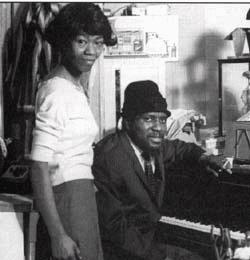
Nellie and Thelonious Monk

Nellie Monk (1921-2002)

 
http://www.npr.org/blogs/ablogsupreme/2009/12/the_women_who_made_thelonious_monk.html

All,

See what I said about "Genius and Recognition" in my previous post below about Monk, Baraka, and Robin Kelley? Well, that admonition goes DOUBLE here. So thank you, Thank you, THANK YOU Mrs. Barbara Monk, Mary Lou Williams, Alberta Simmons, and Nellie Smith Monk (the one Thelonious always "crepesculed" with) for being absolutely instrumental as well as essential in the formation and growth of one of the greatest and most important artists of the 20th century...

Kofi

The Women Who Made Thelonious Monk
by Walter Ray Watson
National Public Radio--NPR


My story about Thelonious Monk biographer Robin D.G. Kelley ran on All Things Considered yesterday. But wait! There's much more to say: Kelley's new book, Thelonious Monk: The Life and Times of An American Original, takes considerable pains to acknowledge the support of women in the life of the musician.


The photo ID of Barbara Monk, Thelonious Monk's mother, shows that she was employed by the City of New York to clean public offices. (courtesy of the Thelonious Monk Estate)

First, there's his mother, Barbara Monk, who moved to New York City with Thelonious Monk Sr., and their three children: Thomas, the eldest; his sister Marion, and Thelonious Jr., the youngest child. The family moved to New York City to escape the farm life they had known in North Carolina. Thelonious Sr. eventually returned to Carolina, and Monk's mother and sister raised the family. Barbara Monk cleaned city offices to support her kids. When the youngest Monk began skipping classes during his senior year at Stuyvesant High School -- and eventually left altogether -- it was Barbara Monk who encouraged him to take that leap of faith.

A few years earlier, she had also supported Thelonious Jr.'s decision to follow a Christian evangelist, a woman whose name was never known to the family (and whose precise religious affiliation was just as hard to pin down), on a barnstorming tour of Midwestern towns for nearly two years.

As Kelley recounts in his book, Monk's travels through Kansas and other states is the most mysterious and undocumented time in Monk's life. But they were also perhaps his most fruitful years as an itinerant artist, learning how to call tunes on the spot, and how to respond to both musicians and audiences in the moment.

There was also a piano teacher early in Monk's development named Alberta Simmons. Kelley learned about Simmons' life from her daughter, Alberta Webb; Simmons, born in 1892, died long ago. Alberta Simmons was a performer, and assimilated the stride styles of Fats Waller, James P. Johnson and Eubie Blake. She played the Clef Club, speakeasies in New York City, and even went out to Flushing, Queens for gigs. But as Webb told Kelley, "Being a woman, [Simmons] got sort of sidetracked trying to raise her children. Unfortunately things did not work out in later years."

Kelley's detective work found New York census records of Alberta Simmons at five year intervals. As time progressed, Simmons reported her career as piano teacher, and, in later years, "domestic worker." But before her earnings as a teacher dried up, Thelonious Monk learned stride piano from the woman. Monk was known to visit the home of James P. Johnson, and attend "cutting sessions" by other famed stride practitioners. But early on, Alberta Simmons showed him the way.

Kelley told me that Alberta Simmons never got the chance to make a recording, so there's no sample artifact of her playing style. Her daughter, Alberta Webb, told Kelley that she unfortunately had no photographs of her mother to share either -- and Webb died before the publication of Kelley's book. It's one of Kelley's regrets, he says. (Then again, you develop a mountain of regrets when you interview 300 people, read countless lost articles and spend 14 years on a mission that no one quite believes you would complete.) On the bright side, Kelley says that it's not much of a leap to think of Monk's 1956 solo recording of "Memories of You," the Andy Razaf/Eubie Blake song, as his tribute to Alberta Simmons. According to Kelley's research, she played this tune often, as if it were her own. Here's an excerpt (from The Unique Thelonious Monk, originally issued on Riverside Records):

Then, of course, there's his wife, Nellie Monk. She can't be underestimated for her role as partner, protector, career manager and supporter of Thelonious Monk. She gave her husband the space and time to develop his musical sense of space and time. She also cleaned private homes and worked as a seamstress in the lean years: The period when his music was dismissed or ignored by critics, thus making him a hard sell to the public, to club managers and to anyone considering him for studio recordings.

Last but not least, there's the great pianist and composer Mary Lou Williams, who defended, promoted and befriended Monk. Reportedly, she first heard him as a young man in Kansas City while he was touring with that mysterious traveling evangelist. She later helped him get gigs in New York, and introduced him to a great deal of music. Kelley writes that despite Monk's Baptist roots and travels with evangelical revivals, he attended Catholic churches with Williams. Among the home recordings Kelley was exposed to by the Monk Estate were these pieces that Williams arranged and wrote out for Monk to try. Hear Monk practice "All God's Chillun Got Rhythm."

Takes One and Two:

Take Three:

Robin Kelley also sent me an unpublished excerpt he wrote about the music.

After ending his home recording of "Body and Soul" abruptly, Mr. Monk then shuffles some papers on the piano and announces, with the enthusiasm of a kid in a toy store, "Now let me see how we make out with this now. Mmmmm!" He then proceeds to tentatively work through an arrangement of "All God's Chillun Got Rhythm" -- a Gus Kahn and Bronislau Kaper composition Mr. Monk never recorded nor included in his repertoire. The initial choruses sound a lot like Mary Lou Williams' 1946 trio recording (Classics Records 1050) of the song, which I confirmed when archivist Ann Kuebler helped me locate the arrangement (titled simply "Chillun") in Ms. Williams' papers at the Institute for Jazz Studies. It is likely that Mr. Monk had a copy of her arrangement from the 1940s since they exchanged quite a bit of music during the early days of bebop. In particular, Mr. Monk takes from the arrangement Ms. Williams' rephrasing of the melody, the ascending arpeggios in the third and fourth bar of the song's A section, and the key signature: A-flat ... By the second take, he begins to incorporate more of his own unique phrases and improvised lines, including a striding left hand and dissonant clusters in the piano's upper register. Perhaps as a tribute to Mary Lou Williams, his final six bar cadence incorporates the kind of "boogie woogie" left hand figures Ms. Williams often used. By the third take, "Chillun" is entirely his own. Opening rubato, almost ballad-like, Mr. Monk throws in an unusual bass line in bars 9-12 and shifts into stride piano, over which he plays several high register phrases over and over to see what they sound like. By the time he returns to the melody, Mrs. Nellie Monk adds her singing voice and Mr. Monk closes with a tag similar to what he plays at the end of Gershwin's "Nice Work if You Can Get It."

Also, Mary Lou recorded this [arrangement] on October 7, 1946 (three days before Monk's 29th birthday). Unique are her phrasing of the melody and, most importantly, the bass line, in bars 3 and 4 of the A section; those ascending arpeggios. Notice how he echoes her phrasing throughout, especially in early takes of the song.


Here's the first 'A' section of Mary Lou's version:


Now go back and listen to Monk's versions with this information: The context makes a huge difference.

As long as Monk's legacy still rings in our ears, the women who contributed to Monk's development as a child, student, artist and man are to be honored. (And then there's the Baroness Pannonica de Koenigswarter, but that's another story in itself.) Thanks to Robin Kelley for keeping their gifts to the music alive, if not unearthing them altogether.

7:45 PM ET | 12-30-2009 | permalink

Posted by Kofi Natambu at 2:13 AM

Labels: Alberta Simmons, Barbara Monk, Jazz history, Jazz piano, Mary Lou williams, Nellie Monk, NPR, Thelonious Monk, Walter Ray Watson


Jazz Icons: Thelonious Monk- Live In '66 + Other Monk videos in Japan, Germany, France, Denmar, Holland, England, and the United States

http://www.youtube.com/watch?v=LR-7Mo8IZsI&index=20&list=RDvz0w3Bx8M2Y


http://revive-music.com/2012/04/05/thelonious-monk-straight-no-chaser/

Documentary film: Thelonious Monk Straight, No Chaser, 1988
Directed by Charlotte Zwerin


Thelonious Monk was one of the true, undisputed innovators of jazz. His influence, both in playing and composition, altered all of us as musicians and even more fans of the art form. Straight, No Chaser primes itself as the definitive film documenting Monk’s life. With insight from family, friends, and collaborators such as John Coltrane, Teo Macero, Johnny Griffin, and more the picture the film paints is one of incredible talent and collaborative spirit. Early on Monk took notice from fellow jazz legends Fats Waller, Charlie Parker, Dizzy Gillespie, and more, which only furthered his vibe and energy. Check out the entire film below and comment with your thoughts!


Thelonious Monk Documentary -- 1/10:

http://www.youtube.com/watch?v=s2z67tTQIvI


Monk Documentary--2/10:

http://www.youtube.com/watch?v=5hN-hY_PYqM


Monk Documentary--3/10:

http://www.youtube.com/watch?v=JOVpjHX4j_8


Monk Documentary--4/10:

http://www.youtube.com/watch?v=a2X_bsgbOdM


Monk Documentary--5/10:

http://www.youtube.com/watch?v=52n-swe78G8


Monk Documentary--6/10:

http://www.youtube.com/watch?v=oskRTxtP4ts


Monk Documentary--7/10:

http://www.youtube.com/watch?v=q2c0nLhrsCg


Monk Documentary--8/10:

http://www.youtube.com/watch?v=oK6D8w_VM_M


Monk Documentary--9/10:

http://www.youtube.com/watch?v=-qYi375P0NM


Monk Documentary--10/10:

http://www.youtube.com/watch?v=vz0w3Bx8M2Y


Jazz Icons: Thelonious Monk- Live In '66 + Other Monk videos in Japan, Germany, France, Denmar, Holland, England, and the United States

http://www.youtube.com/watch?v=LR-7Mo8IZsI&index=20&list=RDvz0w3Bx8M2Y


http://www.thetribeonline.com/2011/04/a-monks-life-thelonious-monk/

A Monk’s Life: Thelonious Monk


A mystery man, to most of us, the Monk is widely considered one of the most innovative and creative musicians of the 20th century. Who was this man? Why the hat? Why the jacket? Why the beard? To give you a rough idea – Duke Ellington wrote, recorded, produced and released over 1,000 songs in his career. Monk composed around 70. But Monk is the next most frequently recorded jazz composer after Ellington. With 930 less songs, he has been as widely recorded as the biggest name of 20th century jazz. That’s the gist. But beyond the statistics, the man was one of flamboyance, energy, creativity, originality, and above all – style. His early work in shaping the bebop genre, his later work in changing conceptions of jazz performance and improvisation, and his crazy dance moves combined to create one of the most powerful people in jazz history. This is how it happened.

Monk was born in 1917 in North Carolina. His family relocated to Manhattan, where he began to play the piano around 1923. He was mostly a self-taught musician, although he sometimes snuck in on his sister’s lessons. His first performance experience was in gospel and church music, playing small and large church organs. But he eventually found interest (and work) in jazz, which was the thing in 1930s Manhattan. His practice and playing eventually landed him a job at a local nightclub, Minton’s Playhouse, as the resident pianist. Playing in the work hours was more of a chore for Monk – as the real music went on after hours. Monk participated in ‘cutting contests’ with other jazz solo artists. These were musical battles, basically improvisational competitions, ‘fought’ between contemporary pianists. They were meant to determine the mastery of a new musician on the scene, competing against regional masters.

These musical battles led to the formation of a new style of jazz – bebop. Developing from roots in stride piano, common at the time. The bebop that Monk was beginning to carve out was a common style with other leading artists, like Charlie Parker and Dizzy Gillespie. This new genre was a result of the need to create innovative forms of playing to ‘survive’ in the Manhattan jazz scene. Monk knew this from the start, and his musical innovations ensured that he could play the survival-of-the-fittest game with supreme confidence. His improvisational style flourished with bebop, but he quickly grew away from it. His writing style and improvisation included very dissonant chord choices and scale use, sharp and unusual rhythms, abrupt silences, and odd heavily syncopated geometric melodies. These features were revolutionary in the 1940s and even more so when fully developed in the 60s.

After establishing himself on the Manhattan scene in the early 40s, he gained a reputation and began playing and performing studio recordings with the Coleman Hawkins Quartet. As things were picking up, in 1951 he became entangled in a narcotics case, which resulted in his New York City Cabaret Card removed – the card which allowed him to play alcoholic establishments in the city. With this gone, he lost his residency, and his audience, and his performances. He spent time in the mid-50s writing, practicing, and playing out-of-town gigs from time to time. During this intermission, he began meeting and producing records with other well-known jazz musicians, including saxophonist Sonny Rollins and Miles Davis. Davis, one of the most well respected jazz performers in the world, ran into problems with Monk because he found Monk’s playing simply too difficult to play over. Rumour has it that Davis asked Monk to sit out and stop accompanying, which caused extreme tension between the two that almost led to violence.

Ready to put his past troubles (and Manhattan) behind him, Monk visited Europe in 1954 where he performed and recorded in Paris. Although trouble didn’t leave him, as he was again caught up in narcotics difficulties over marijuana possession. Luckily a close friend took responsibility and he got off clean. He was still finding trouble, while trying to avoid it. Luckily for him, things were about to turn up.

Riverside Records was ready to take Monk on. He recorded with the label from 1955-1961. Although Monk arrived highly regarded, producers found his music too ‘difficult’ for mass consumption. He was coerced to produce several albums of covers (of the basic jazz standards) to spread his music to public audiences. By 1956, he began to produce his original music in ‘Brilliant Corners’, which was very complex (requiring Sonny Rollins, on the title track, to have to paste together separate tracks because the saxophone part was so difficult).  But it was considered a success for Monk, and it propelled him to produce more originals and more albums. After receiving back his New York City Cabaret Card, he put himself back on the Manhattan circuit, where (revitalized with his original music), he established a place and an image for himself.

And his image was as unique as his playing style. He was well known for his eccentric hats, suits and sunglasses. He was one of the first who began the beret and sunglasses look that we are so familiar with in jazz cafĂ©s today. His hats ran the gamut from trendy berets to ridiculous fez hats. Monk’s manner matched his style – frequently he would leave the piano and just stand up to walk around or dance before sitting down again. These touches made him stand out in the jazz community as more than just another musician – he was a character. With musical talent to match. Monk continued to play in other jazz groups with John Coltrane and (yes, really) Miles Davis, before being signed to Columbia Records in 1962. He produced and released many live albums and studio recordings up until the mid 1970s, when he disappeared from the jazz scene. Many believe that he finally fell to mental illness that had haunted him his whole life – either manic depression or schizophrenia. He retired to a friend’s New Jersey home, where he lived until he died of a stroke in 1982.

What else can be said of such a jazz legend? Not much, I’m afraid. The only thing to do now is to listen to the music that made his life – the music that was Thelonious Monk. Below are links to recordings to some of his most famous songs. Get a taste for one of the 20th century’s best musicians. A Tribe article could hardly do him justice.


Blue Monk: http://www.youtube.com/watch?v=SmhP1RgbrrY&feature=related

‘Round Midnight: http://www.youtube.com/watch?v=OMmeNsmQaFw&feature=related

Straight No Chaser: http://www.youtube.com/watch?v=hIkmNNmAnAM&feature=related

Well You Needn’t: http://www.youtube.com/watch?v=FOvKLvWuZjg

Epistrophy: http://www.youtube.com/watch?v=dZ9El7k4mNo


Tuesday, June 24, 2014

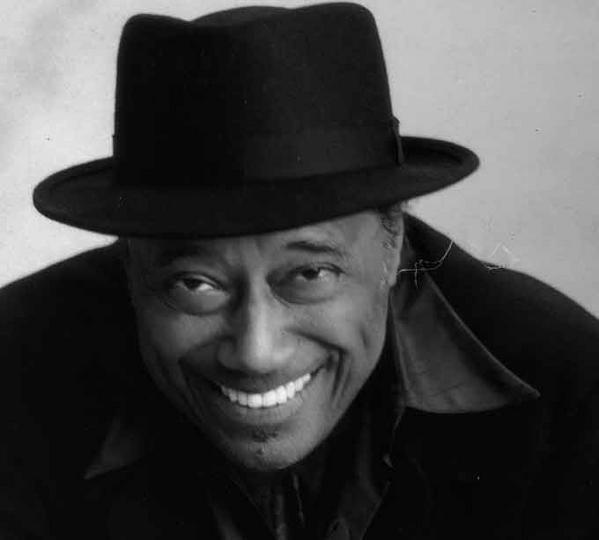
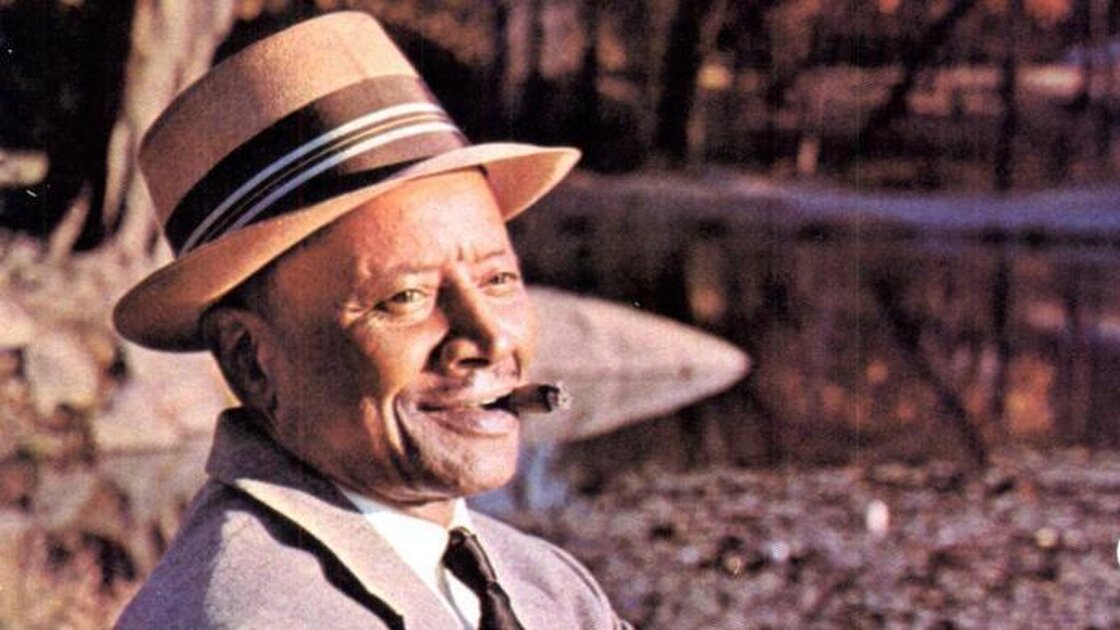
Horace Silver, 1928-2014: Legendary Pianist, Composer, and Ensemble Leader


HORACE SILVER
(b. September 2, 1928--d. June 18, 2014)
All,
Since January 9, 2014 we have lost the following GIANTS among us: Amiri Baraka,  Mabel Williams, Maya Angelou, Fred Ho, Chokwe Lumumba, Vincent Harding, Yuri Kochiyama, Ruby Dee, and now Horace Silver.  While these justly revered figures have peacefully made their respective transitions and we  are  now fortunate enough to fully embrace their inspiring  ancestral force in our lives,  it is indeed sobering and  truly humbling to remember and acknowledge just how profound and valuable the quality and depth of their  lives and the  creative legacies they have left have been and will continue to be for all of us. For they taught us what it really means to change and transform the world through the sheer force of one's personal contribution and courageous example in both Art and Life and for that we are and must remain eternally grateful.  Thank you Horace for your incredible music and the extraordinary lifeforce that it embodies and represents.  Rest in Peace and Power brother...
Kofi 

http://www.nytimes.com/2014/06/19/arts/music/horace-silver-85-master-of-earthy-jazz-is-dead.html?_r=0 MUSIC
 

Horace Silver, 85, Master of Earthy Jazz, Is Dead 
By Peter Keepnews
JUNE 18, 2014
New York Times


Horace Silver in 1997
Credit Alan Nahigian

Horace Silver, a pianist, composer and bandleader who was one of the most popular and influential jazz musicians of the 1950s and ’60s, died on Wednesday at his home in New Rochelle, N.Y. He was 85.

His death was announced by Blue Note Records, the company for which he recorded from 1952 to 1979.

After a high-profile apprenticeship with some of the biggest names in jazz, Mr. Silver began leading his own group in the mid-1950s and quickly became a big name himself, celebrated for his clever compositions and his infectious, bluesy playing. At a time when the refined, quiet and, to some, bloodless style known as cool jazz was all the rage, he was hailed as a leader of the back-to-basics movement that came to be called hard bop.

Hard bop and cool jazz shared a pedigree: They were both variations on bebop, the challenging, harmonically intricate music that changed the face of jazz in the 1940s. But hard bop was simpler and more rhythmically driven, with more emphasis on jazz’s blues and gospel roots. The jazz press tended to portray the adherents of cool jazz (most of them West Coast-based and white) and hard bop (most of them East Coast-based and black) as warring factions. But Mr. Silver made an unlikely warrior.

“I personally do not believe in politics, hatred or anger in my musical composition,” he wrote in the liner notes to his album “Serenade to a Soul Sister” in 1968. “Musical composition should bring happiness and joy to people and make them forget their troubles.”

And Mr. Silver’s music was never as one-dimensional as it was sometimes portrayed as being. In an interview early in his career he said he was aiming for “that old-time gutbucket barroom feeling with just a taste of the backbeat.” That approach was reflected in the titles he gave to songs, like “Sister Sadie,” “Filthy McNasty” and “The Preacher,” all of which became jazz standards. But his output also included gently melodic numbers like “Peace” and “Melancholy Mood” and Latin-inflected tunes like “Señor Blues.” “Song for My Father,” probably his best-known composition, blended elements of bossa nova and the Afro-Portuguese music of the Cape Verde islands, where his father was born.

His piano playing, like his compositions, was not that easily characterized. Deftly improvising ingenious figures with his right hand while punching out rumbling bass lines with his left, he managed to evoke boogie-woogie pianists like Meade Lux Lewis and beboppers like Bud Powell simultaneously. Unlike many bebop pianists, however, Mr. Silver emphasized melodic simplicity over harmonic complexity; his improvisations, while sophisticated, were never so intricate as to be inaccessible.

Horace Ward Martin Tavares Silver was born on Sept. 2, 1928, in Norwalk, Conn. His father, who was born John Silva but changed the family name to the more American-sounding Silver after immigrating to the United States, worked in a rubber factory. His mother, Gertrude, was a maid and sang in a church choir.


Although he studied piano as a child, Mr. Silver began his professional career as a saxophonist. But he had returned to the piano, and was becoming well known as a jazz pianist in Connecticut, by the time the saxophonist Stan Getz — soon to be celebrated as one of the leading lights of the cool school — heard and hired him in 1950.

“I had the house rhythm section at a club called the Sundown in Hartford,” Mr. Silver told The New York Times in 1981. “Stan Getz came up and played with us. He said he was going to call us, but we didn’t take him seriously. But a couple of weeks later he called and said he wanted the whole trio to join him.”

Mr. Silver worked briefly with Getz before moving to New York in 1951. He was soon in demand as an accompanist, working with leading jazz musicians like the saxophonists Coleman Hawkins and Lester Young. In 1953, Mr. Silver and the drummer Art Blakey formed a cooperative group, the Jazz Messengers, whose aggressive style helped define hard bop and whose lineup of trumpet, tenor saxophone, piano, bass and drums became the standard hard-bop instrumentation.

After two and a half years, during which Mr. Silver began his long and prolific association with Blue Note, he left the Jazz Messengers, which carried on with Blakey as the sole leader, and formed his own quintet. It became a showcase for his compositions.

Another album by Mr. Silver is “Further Explorations by the Horace Silver Quintet.”  Credit:  Blue Note Records


Those compositions, beginning with “The Preacher” in 1955 — which his producer, Alfred Lion of Blue Note, had tried to discourage him from recording because he considered it too simplistic — captured the ears of a wide audience. Many were released as singles and garnered significant jukebox play. By the early ’60s Mr. Silver’s quintet was one of the most popular nightclub and concert attractions in jazz, and an inspiration for countless other bandleaders.

Like Blakey, Miles Davis (with whom he recorded) and a few others, Mr. Silver was known for discovering and nurturing young talent, including the saxophonists Hank Mobley, Joe Henderson and Michael Brecker; the trumpeters Art Farmer, Woody Shaw, Tom Harrell and Dave Douglas; and the drummers Louis Hayes and Billy Cobham. His longest-lived ensemble, which lasted about five years in the late 1950s and early ’60s, featured Blue Mitchell on trumpet and Junior Cook on tenor saxophone.

As interest in jazz declined in the ’70s, Mr. Silver disbanded his quintet and began concentrating on writing lyrics as well as music, notably on a three-album series called “The United States of Mind,” his first album to feature vocalists extensively. He later resumed touring, but only for a few months each year, essentially assembling a new group each time he went on the road.

“I’m shooting for longevity,” he explained. “The road is hard on your body. I’m trying to get it all over with in four months and then recoup.” He said he also wanted to spend more time with his son, Gregory, who survives him.

In 1981, Mr. Silver formed his own label, Silveto. His recordings for that label featured vocalists and were largely devoted to what he called “self-help holistic metaphysical music” — life lessons in song with titles like “Reaching Our Goals in Life” and “Don’t Dwell on Your Problems” that left critics for the most part unimpressed.


Jon Pareles of The Times wrote in 1986 that Mr. Silver’s “naĂŻvely mystical lyrics” made his new compositions sound like “near-miss pop songs.” On later albums for Columbia, Impulse and Verve, Mr. Silver returned to a primarily instrumental approach.

Mr. Silver was named a National Endowment for the Arts Jazz Master in 1995 and received a President’s Merit Award from the Recording Academy in 2005.

Many of his tunes became staples of the jazz repertoire — a development, he said, that surprised him. “When I wrote them,” he said in a 2003 interview for the website All About Jazz, “I would say to myself that I hope these at least withstand the test of time. I hope they don’t sound old in 10 years or something.”

Rather than sounding dated, his compositions continued to be widely performed and recorded well into the 21st century. And while he acknowledged that “occasionally I hear an interpretation of one of my tunes that I say that they sure messed that one up,” he admitted, “For the most part I enjoy all of it.”


FROM THE PANOPTICON REVIEW ARCHIVES

(Originally posted on September 2, 2013):

Monday, September 2, 2013

HAPPY 85th BIRTHDAY TO THE GREAT HORACE SILVER, LEGENDARY PIANIST AND COMPOSER

All,

The legendary pianist and composer Horace Silver (b. September 2, 1928), one of the seminal and crucial creative links between the black modernist musical styles known popularly as "bebop" and "hardbop" throughout the 1950s, '60s, '70s and beyond as well as one of the masters of developing a fresh and innovative synthesis of these dynamic post 1945 styles with black vernacular traditions in blues, funk, and gospel musics which became a very popular genre known widely as "Soul Jazz" which were represented by such major groups of the period as the original 'Jazz Messengers' an ensemble which Silver cofounded with the famed drummer Art Blakey in 1954 as well as various bands led by such important musicians and composers as Cannonball and Nat Adderley, the electrifying Clifford Brown-Max Roach Quintet, and many different trios, quartets, and larger ensembles led by a large and prominent number of pianists, organists, drummers, trumpet players, and saxophonists of so-called Modern Jazz in the elctrifying 1945-1980 era. What follows is a heartfelt tribute to one of the most creatively lyrical, soulful, and consistently compelling musicians and composers in post WW2 American music on his 85th birthday. ENJOY...

Kofi


HORACE SILVER AT THE PIANO IN 1968:
 

 MUSIC BY PIANIST/COMPOSER HORACE SILVER

"Song For My Father" (1964)


Horace Silver (born September 2, 1928), born Horace Ward Martin Tavares Silva in Norwalk, Connecticut, is an American jazz pianist. Silver is known for his distinctive humorous and funky playing style and for his pioneering compositional contributions to hard bop. Silver was influenced by a wide range of musical styles, notably gospel music, African music, and Latin American music and sometimes ventured into the soul jazz genre.

Song for My Father is a 1964 album by the Horace Silver Quintet, released on the Blue Note label. The album was inspired by a trip that Silver had made to Brazil. The cover artwork features a photograph of Silver's father, John Tavares Silver, to whom the title song was dedicated.

A jazz standard, "Song for My Father" is here in its original form. It is a Bossa Nova in F-minor with an AAB head. On the head, a trumpet and tenor saxophone play in harmony. The song has had a noticeable impact in pop music. The opening bass piano notes were borrowed by Steely Dan for their song "Rikki Don't Lose That Number", while the opening horn riff was borrowed by Stevie Wonder for his song "Don't You Worry 'Bout a Thing".

Horace Silver — piano
Carmell Jones — trumpet
Joe Henderson — tenor saxophone
Teddy Smith — bass
Roger Humphries — drums

"Senor Blues" (1964)--Composition by Horace Silver
The Horace Silver Quintet:

Horace Silver - piano
Blue Mitchell - trumpet
Junior Cook - tenor saxophone
Gene Taylor - bass
Louis Hayes - drums


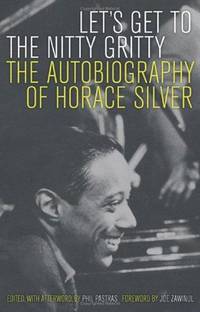
Let's Get to the Nitty Gritty: The Autobiography of Horace Silver by Horace Silver with Phil Pastras (Editor) , Steve Isoardi (Introduction), Joe Zawinul (Foreword)

University of California Press; First edition (hardcover), 2006; first edition (paperback), August, 2007


Horace Silver is one of the last giants remaining from the incredible flowering and creative extension of bebop music that became known as "hard bop" in the 1950s. This freewheeling autobiography of the great composer, pianist, and bandleader takes us from his childhood in Norwalk, Connecticut, through his rise to fame as a musician in New York, to his comfortable life “after the road” in California. During that time, Silver composed an impressive repertoire of tunes that have become standards and recorded a number of classic albums. Well-seasoned with anecdotes about the music, the musicians, and the milieu in which he worked and prospered, Silver’s narrative—like his music—is earthy, vernacular, and intimate. His stories resonate with lessons learned from hearing and playing alongside such legends as Art Blakey, Charlie Parker, and Lester Young. His irrepressible sense of humor combined with his distinctive spirituality make his account both entertaining and inspiring. Most importantly, Silver’s unique take on the music and the people who play it opens a window onto the creative process of jazz and the social and cultural worlds in which it flourishes.

Let’s Get to the Nitty Gritty also describes Silver’s spiritual awakening in the late 1970s. This transformation found its expression in the electronic and vocal music of the three-part work called The United States of Mind and eventually led the musician to start his own record label, Silveto. Silver details the economic forces that eventually persuaded him to put Silveto to rest and to return to the studios of major jazz recording labels like Columbia, Impulse, and Verve, where he continued expanding his catalogue of new compositions and recordings that are at least as impressive as his earlier work.

Let's Get to the Nitty Gritty: The Autobiography of Horace Silver by Horace Silver with Phil Pastras (Editor) , Steve Isoardi (Introduction), Joe Zawinul (Foreword)

University of California Press; First edition (hardcover), 2006; first edition (paperback), August, 2007:

http://alyoung.org/2014/06/19/horace-silver-september-2-1928-june-18-2014-in-memoriam/

HORACE SILVER | September 2, 1928 – June 18, 2014 | in memoriam
_______________________________________________

Courtesy Blue Note Records

Legendary jazz pianist, composer-arranger and poet-sculptor of funky hard bop, dies at age 85
Horace Silver was brilliant. A populist musician-performer. he loved and respected the audience he’d helped build for an earthy style of bebop deeply rooted in jazz’s blues and gospel origins. With drummer Art Blakey, Silver co-founded the conquering Jazz Messengers. I’m old enough to remember seeing his name listed as Stan Getz’s pianist on 78- and 45-rpm discs on the Royal Roost label when, at age 12, I began to collect records in earnest. I remember, too, the time I called to speak to him when Phil McKellar, a radio DJ at CKLW — a Canadian station in Windsor, Ontario, across the river from Detroit — was interviewing Silver right after Six Pieces of Silver, his first Blue Note album, came out.

A tuba player in Detroit’s Central High band, I was just beginning to play trumpet. In a live broadcast Horace asked: “Al, do you play?”

“Yes,” I said.

“What?”

“Trumpet.”

“Oh, yeah, all right! Come on down to the club, man — and bring your horn.”

I almost died. I’d just sarted taking lessons. By the time he reached his late teens, Horace Silver had moved from Connecticut to New York to play professionally.

Consider the titles of some of his classics: “Señor Blues,” “Opus de Funk,” “Quicksilver,” “The Preacher,” “Filthy McNasty ,” “Sister Sadie,” “Doodlin’,” “Opus de Funk,” “Nica’s Dream,” “Strollin,’” ‘The Tokyo Blues” “The Bagdhad Blues,” “Psychedelic Sally,” and “Song for My Father.”

Is there a price we can place on the treasury of pleasure Horace Silver has left to us?
– Al Young


Jazz Profiles from NPR
Horace Silver
Produced by Miyoshi Smith


Read and listen

Horace Silver is widely regarded as the father of hard bop piano. He places heavy emphasis on the blues and even gospel roots of jazz, while working in intricate, original improvisations. His energetic playing and infectious compositions never fail to get listeners moving to the rhythm.

Listen to trumpeter Randy Brecker, drummer Louis Hayes, and writer Gary Giddins talk about Horace's music

Born of African American and Portuguese parentage on September 3, 1928 in Norwalk, Connecticut, Horace's first introduction to music came in high school, where he played saxophone in the marching band and orchestra. He didn't get really serious about music until after he heard Jimmy Lunceford's band play.

Listen to Horace recall listening with his father to Jimmy Lunceford's band

Horace switched from saxophone to piano and immersed himself in jazz, teaching himself to play and jamming frequently with his teenage friends. His big break came when he was offered a job at the Sundown nightclub in Hartford, where he backed some of the most famous names in jazz, including saxophonist Stan Getz who was so impressed with him that he asked him to join him on the road.

Eventually, Horace settled in New York, finding steady work as a jazz recording session pianist. His remarkable solos on Miles Davis' 1954 Prestige album, Walkin', that caught the attention of many jazz musicians and critics.

A few months prior to Miles' Walkin' sessions, Horace teamed up with drummer Art Blakey and formed the Jazz Messengers. The first edition included trumpeter Kenny Dorham, tenor saxophonist Hank Mobley, and bassist Doug Watkins. Their soulful sound soon became synonymous with the group's label, Blue Note Records.

Listen to Giddins explain how Horace's music came to define the mid-1950s Blue Note sound
"I hope my stuff will be naturally commercial, but it has to be natural, you know. I'm not gonna do something that's not me. I've been myself my whole life, throughout my musical career."
-- Horace Silver

Horace left the Messengers in 1956, but he kept up a relationship with Blue Note that lasted over 25 years, recording some of the label's most treasured albums. His ensembles became hands-on training grounds for future jazz stars including Donald Byrd, Art Farmer, Joe Henderson, and many others.


Listen to saxophonist Joe Henderson and Brecker explain Silver's compositional and leadership style

Horace created signature compositional elements that would later be closely studied by both his contemporaries and those who followed in his footsteps. One was the way he would write unison parts for the bass player and his left-hand rhythmic figure on piano; another was the way he wrote bracing horn harmonies on top of rollicking rhythms.

Listen to Horace explain some of his compositional methods

Despite the immediate distinction of Horace's music, he doesn't adhere to any particular formula. He draws from a wide array of complex harmonies, rhythmic motifs, and codas.

Listen to Horace dismiss formulaic approach to compositon

As a pianist, Horace has never demonstrated the pyrotechnics of an Art Tatum or Oscar Peterson, becoming instead an artist who works brillantly within his means, especially when it comes accompanying other soloists.

Listen to Giddins and Horace talk about his piano playing

Horace's music always betrays his love for Latin music. He grew up listening to Cape Verdean folk songs from his father, who hailed from that region. On songs such as "The Cape Verdean Blues" and "Señor Blues," Horace pushes the Latin influences to the forefront.

Listen to Horace share his love for Latin music

After leaving Blue Note Records in 1979, Horace released material on his independent lables, Silverto and Emerald. He transitioned back to the major labels in the 1990s, releasing critically acclaimed CDs for Columbia and Impulse! Records. Now in his seventies, Horace is still thrilling audiences with his soulful playing.

Listen to Horace reflect on his music


SHOW PLAYLIST

View Horace Silver show playlist

NPR RESOURCES

Listen to the NPR Basic Jazz Record Library entry for Horace Silver' 1964 album Song For My Father

Browse the NPR Jazz Web site -- NPRJazz.org
_________________________________________________


1983 HORACE SILVER INTERVIEW
Three Audio Clips
Canadian Jazz Archive Online | FM 91 (Toronto)
_________________________________________________

© Blue Note Records

Listen to “Song for My Father,”(Canção para Meu Pai) just one of Horace Silver’s celebrated and much-played works.

Seasoned jazz lovers A.B. Spellman and Murray Horowitz revisit Horace Silver’s music to discuss in depth his deathless “Song for My Father.”
_______________________________________________

“Nica’s Dream”
(1956)

 
Horace Silver, composer and pianist; Donald Byrd, trumpet, Hank Mobley, tenor saxophone; Doug Watkins, bass; Art Blakey, drums

© Columbia Records
HORACE SILVER AT WORK

Horace Silver: 'Song for My Father'
by A. B. SPELLMAN and MURRAY HORWITZ
August 01, 2001

Horace Silver's father on the cover of Silver's classic Blue Note recording 'Song for My Father' in 1964

Hear the NPR Basic Jazz Record Library Entry

4 min 4 sec
Playlist

Web Resources

Horace Silver on the Web
 
[MUSIC]

A.B. SPELLMAN, National Endowment for the Arts: Murray Horwitz, this is Horace Silver playing "Song for My Father," one of his famous compositions. Why do you like this CD?

MURRAY HORWITZ, American Film Institute: I don't know if anybody, like me, can ever use the word mature in a sentence, and be taken seriously. But, it is a kind of a maturation of the hard-boppers, who sort of did a funkier thing than the straight bebop that was prevalent in the 1940s and early '50s. And by 1964, when this was recorded, it really is a kind of mature sound. These men know exactly what they are doing.

[MUSIC]

SPELLMAN: Horace Silver's own piano style is very syncopated and very heavily chorded.

HORWITZ: And for that reason, I think you put your finger onto something. It's deceptive. You know, because, it doesn't sound like he's doing much. But if you listen carefully, he's always building it, emotionally and intellectually, and therefore musically. He builds these wonderful solos in a way that you hardly notice that he's doing it.

SPELLMAN: Horace is as much recognized as a composer as he is for a soloist. So, what are your favorite compositions on this one?

HORWITZ: Right, A.B., he's written a lot of jazz standards, really, that have been recorded by the likes of Dizzy Gillespie and Art Blakey. On this record, the title tune, "Song for My Father," pays kind of an homage to his father, who came from the Cape Verde Islands. There's a gorgeous, piano trio ballad called, "Lonely Woman."

[MUSIC]

SPELLMAN: The musicians on this CD are a mixture of very well known soloists like Joe Henderson, Horace, Junior Cook, and Blue Mitchell, but also some lesser known musicians.

HORWITZ: There's a trumpet player named Carmell Jones. There's a drummer named Roger Humphries. And one of the delights of jazz music, I think, is that very often some people who you've never heard of can come up with some very satisfying, and very swinging performances. And all of these performances are swinging.

[MUSIC]

HORWITZ: This is actually an album that was kind of patched together back in the '60s at a moment when Horace Silver changed the personnel in his band, so you actually have two different bands playing on different sessions. And that gives a littler more excitement to the record, I think. That's one of the reason that I like it, I've decided, because it's exciting music. And there's a littler grittier texture to the new band, because maybe they aren't used to playing together as much.

[MUSIC]

SPELLMAN: So, for your NPR Basic Jazz Record Library, we're recommending Song for My Father by the pianist Horace Silver. It's on the Blue Note label. For NPR Jazz, I'm A.B. Spellman.

HORWITZ: And, I'm Murray Horwitz.


Horace Silver
From Wikipedia, the free encyclopedia


Background information
Birth name Horace Ward Martin Tavares Silva[1]
Born September 2, 1928 (age 84)
Norwalk, Connecticut, United States
Genres Jazz, hard bop, modal jazz, mainstream jazz, soul jazz, jazz fusion, post-bop
Occupations Pianist, composer, bandleader
Instruments Piano
Years active 1950–1999

Associated acts Art Blakey, Miles Davis, Stan Getz, Art Farmer, Gigi Gryce, Milt Jackson, Hank Mobley, Lee Morgan, Junior Cook, Blue Mitchell, Woody Shaw, Joe Henderson, Bob Cranshaw, Michael Brecker, Randy Brecker, Mickey Roker

Horace Silver (born Horace Ward Martin Tavares Silva, September 2, 1928, Norwalk, Connecticut, United States) is an American jazz pianist and composer.[1]

Silver is known for his distinctive humorous and funky playing style and for his pioneering compositional contributions to hard bop. He was influenced by a wide range of musical styles, notably gospel music, African music, and Latin American music and sometimes ventured into the soul jazz genre.[2][3]

Contents

1 Early life and career
2 Blue Note years
3 Influences
4 Later years
5 Legacy
6 Discography
6.1 As leader
6.2 As sideman
7 References
8 External links

Early life and career

His father, who was known as John Tavares Silva, was from the island of Maio in Cape Verde. His mother was born in New Canaan, Connecticut, and was of Irish-African descent.
Silver began his career as a tenor saxophonist but later switched to piano. His tenor saxophone playing was highly influenced by Lester Young, and his piano style by Bud Powell. Silver was discovered in the Sundown Club in Hartford, Connecticut in 1950 by saxophonist Stan Getz. Getz was playing as a guest star at the club with Silver’s trio backing him up.[4] Getz liked Silver’s band and brought them on the road, eventually recording three of Silver’s compositions. It was with Getz that Silver made his recording debut.

He moved to New York City in 1951, where he worked at the jazz club Birdland on Monday nights, when different musicians would come together and informally jam. During that year he met the executives of the label Blue Note while working as a sideman. He eventually signed with them, remaining there until 1980. It was in New York that he formed The Jazz Messengers, a cooperatively-run group with Art Blakey.

In 1952 and 1953 Silver recorded three sessions with his own trio, featuring Blakey on drums and Gene Ramey, Curly Russell and Percy Heath on bass. The drummer-pianist team lasted for four years; during this time, Silver and Blakey recorded at Birdland (A Night at Birdland Vol. 1) with Russell, Clifford Brown and Lou Donaldson, at the Bohemia with Kenny Dorham and Hank Mobley, and also in the studios. Silver was also a member of the Miles Davis All Stars, recording the influential Walkin' in 1954.
Blue Note years[edit source]

From 1956 onwards, Silver recorded exclusively for the Blue Note label, eventually becoming close to label boss Alfred Lion, who allowed him greater input on aspects of album production than was usual at the time. During his years with Blue Note, Silver helped to create the rhythmically forceful branch of jazz known as "hard bop", which combined elements of rhythm-and-blues and gospel music with jazz. Gospel elements are particularly prominent on one of his biggest hits, "The Preacher", which Lion thought corny, but Silver persuaded him to record it.

While Silver's compositions at this time featured surprising tempo shifts and a range of melodic ideas, they caught the attention of a wide audience. His own piano playing easily shifted from aggressively percussive to lushly romantic within just a few bars. At the same time, his sharp use of repetition was funky even before that word could be used in polite company. Along with Silver's own work, his bands often featured such rising jazz stars as saxophonists Junior Cook and Hank Mobley, trumpeter Blue Mitchell, and drummer Louis Hayes. Silver's key albums from this period include Horace Silver Trio (1953), Horace Silver and the Jazz Messengers (1955), 6 Pieces of Silver (1956) and Blowin' the Blues Away (1959), which includes his famous "Sister Sadie". He also combined jazz with a sassy take on pop through the 1961 hit "Filthy McNasty".
Influences[edit source]

Silver tended not to play up that he was proficient in Portuguese, nor draw directly on his rich Lusophone musical upbringing. His 1965 hit, "Cape Verdean Blues," is the only clear rhythmic reference to his childhood home where his father and friends jammed, with traditional Capeverdean morna and coladeira as the main fare. In the interview for the liner notes to 1964's Song for My Father (Cantiga Para Meu Pai), however, Silver remarked of the title track, "This tune is an original of mine, but it has a flavor of it that makes me think of my childhood days. Some of the family, including my father and my uncle, used to have musical parties with three or four stringed instruments; my father played violin and guitar. Those were happy, informal sessions." Silver melded additional Lusophone influences into his music directly after his February 1964 tour of Brazil. Referring to "Song for My Father," Silver said, "I was very much impressed by the authentic bossa nova beat. Not just the monotonous tick-tick-tick, tick-tick, the way it's usually done, but the real bossa nova feeling, which I've tried to incorporate into this number."

His early influences included the styles of boogie-woogie and the blues. It includes but is not limited to Art Tatum, Teddy Wilson, Nat “King” Cole, and Thelonious Monk. He liked to quote other musicians within his own work and would often recreate famous solos in his original pieces as something of a tribute to the greats who influenced him.
During Silver's time with Blakey he rarely recorded as a leader, but after splitting with him in 1956, formed his own hard bop quintet at first featuring the same line-up as Blakey's Jazz Messengers with 18-year-old Louis Hayes replacing Blakey. The quintet's more enduring line-up featured Blue Mitchell and Junior Cook.

In 1963 Silver created a new group featuring Joe Henderson on tenor saxophone and Carmell Jones on trumpet; this quintet recorded most of Silver's best-known album Song for My Father. When Jones left to settle in Europe, the trumpet chair was filled by a young Woody Shaw and Tyrone Washington replaced Henderson.

Silver's compositions, catchy and very strong harmonically, gained popularity while his band gradually switched to funk and soul. This change of style was not readily accepted by many long-time fans. The quality of several albums of this era, such as The United States of Mind (on which Silver himself provided vocals on several tracks), is to this day contested by fans of the genre. Silver's spirituality displayed on these albums also has a mixed reputation. However, many of these later albums featured many interesting musicians (such as Randy Brecker). Silver was the last musician to be signed to Blue Note in the 1970s before it went into temporary hiatus. In 1981 he formed his own short-lived labels, Silveto and Emerald.

Later years

After Silver's long tenure with Blue Note ended, he continued to create vital music. The 1985 album Continuity of Spirit (Silveto) features his unique orchestral collaborations.

In the 1990s, he directly answered the urban popular music that had been largely built from his influence on It's Got To Be Funky (Columbia, 1993). Now living surrounded by a devoted family in California, Silver has received much of the recognition due a venerable jazz icon. In 2005, the National Academy of Recording Arts and Sciences (NARAS) gave him its President's Merit Award. The SFJazz Collective focused on Horace Silver's music for their 2010 season.[5]

Legacy

Silver's music has been a major force in modern jazz. He was one of the first pioneers of the style known as hard bop, influencing such pianists as Bobby Timmons, Les McCann, and Ramsey Lewis. Second, the instrumentation of his quintet (trumpet, tenor sax, piano, double bass, and drums) served as a model for small jazz groups from the mid-1950s until the late 1960s.[citation needed] Further, Silver's ensembles provided an important training ground for young players, many of whom (such as Donald Byrd, Art Farmer, Blue Mitchell, Woody Shaw, Junior Cook, and Joe Henderson) later led similar groups of their own.

Silver's talent did not go unnoticed among rock musicians who bore jazz influences, either; Steely Dan sent Silver into the Top 40 in the early 1970s when they crafted their biggest hit single, "Rikki, Don't Lose That Number," off the bass riff that opens "Song for My Father."

As social and cultural upheavals shook the nation during the late 1960s and early 1970s, Silver responded to these changes through music. He commented directly on the new scene through a trio of records called The United States of Mind (1970–72) that featured the spirited vocals of Andy Bey. The composer got deeper into cosmic philosophy as his group, Silver 'N Strings, recorded Silver 'N Strings Play The Music of the Spheres (1979).

Discography

As leader:
Blue Note Records

1955: Horace Silver and the Jazz Messengers
1956: 6 Pieces of Silver
1957: The Stylings of Silver
1958: Further Explorations
1958: Live at Newport '58
1959: Finger Poppin'
1959: Blowin' the Blues Away
1960: Horace-Scope
1961: Doin' the Thing
1962: The Tokyo Blues
1963: Silver's Serenade
1965: Song for My Father
1965: The Cape Verdean Blues
1966: The Jody Grind
1968: Serenade to a Soul Sister
1969: You Gotta Take a Little Love
1970: That Healin' Feelin'
1971: Total Response
1972: All
1972: In Pursuit of the 27th Man
1975: Silver 'n Brass
1976: Silver 'n Wood
1977: Silver 'n Voices
1978: Silver 'n Percussion
1979: Silver 'n Strings Play the Music of the Spheres
Silverto Records/Emerald Records
1964: Live 1964
1965: The Natives are Restless Tonight
1981: Guides to Growing Up
1983: Spiritualizing the Senses
1984: There's No Need to Struggle
1985: The Continuity of Spirit
1988: Music to Ease Your Disease
Columbia Records
1956: Silver's Blue
1993: It's Got to Be Funky
1994: Pencil Packin' Papa
Impulse! Records
1996: The Hardbop Grandpop
1997: A Prescription for the Blues
Other labels
1962: Paris Blues (Pablo)
1991: Rockin' with Rachmaninoff (Bop City)
1999: Jazz Has a Sense of Humor (Verve)
Compilations
The United States of Mind (Blue Note) - compiles That Healin' Feelin', Total Response, and All
As sideman[edit source]
with Nat Adderley :
Introducing Nat Adderley (1955, EmArcy)
with Art Blakey :
A Night at Birdland Vol. 1 (1954, Blue Note)
A Night at Birdland Vol. 2 (1954, Blue Note)
A Night at Birdland Vol. 3 (1954, Blue Note)
At the Cafe Bohemia, Vol. 1 (1955, Blue Note)
At the Cafe Bohemia, Vol. 2 (1955, Blue Note)
Art Blakey with the Original Jazz Messengers (1956, Columbia)
Originally (1956, Columbia)
with Dee Dee Bridgewater :
Love and Peace: A Tribute to Horace Silver (1994, Verve)
with Kenny Burrell :
K. B. Blues (1957, Blue Note)
with Donald Byrd :
Byrd's Eye View (1955, Transition)
with Paul Chambers :
Whims of Chambers (1956, Blue Note)
with Kenny Clarke :
Bohemia After Dark (1955, Savoy)
with Al Cohn :
Al Cohn's Tones (1953, Savoy)
with Miles Davis :
Miles Davis Volume 1 (1954, Blue Note Records)
Blue Haze (1954, Prestige Records)
Walkin' (1954, Prestige Records)
Bags' Groove (1954, Prestige Records)
with Kenny Dorham :
Afro-Cuban (1955, Blue Note Records)
with Lou Donaldson :
Quartet/Quintet/Sextet (1952, Blue Note Records)
with Art Farmer :
Early Art (1954, Prestige)
The Art Farmer Septet (1954, Prestige)
with Leonard Feather :
Cats vs. Chicks (1954, MGM)
with Stan Getz :
The Complete Roost Recordings (1951, Blue Note Records)
Birdland Sessions (1952, Fresh Sound)
With Giants of Jazz
Giants of Jazz (1955, Mercury Records)
with Terry Gibbs :
Jazz USA (1951, Brunswick)
with Gigi Gryce :
When Farmer Met Gryce (1954, Prestige)
Nica's Tempo (1955, Savoy)
with Coleman Hawkins :
Disorder at the Border (1952, Spotlite)
with J. J. Johnson :
The Eminent Jay Jay Johnson Volume 2 (1955, Blue Note)
with Milt Jackson :
Milt Jackson Quartet/Quintet (1954, Prestige Records)
Milt Jackson Quartet (1955, Prestige Records)
Plenty, Plenty Soul (1957, Atlantic)
with Cliff Jordan & John Gilmore
Blowing in from Chicago (1957, Blue Note)
with Howard McGhee :
Howard McGhee, Volume 2 (1953, Blue Note)
with Hank Mobley :
Hank Mobley Quartet (1955, Blue Note)
The Jazz Message of Hank Mobley (1956, Savoy)
Hank Mobley Sextet (1956, Blue Note)
Hank Mobley and his All Stars (1957, Blue Note)
Hank Mobley Quintet (1957, Blue Note)
with J. R. Monterose :
J. R. Monterose (1956, Blue Note)
with Lee Morgan :
Lee Morgan Indeed! (1956, Blue Note)
Lee Morgan Sextet (1956, Blue Note)
with Clifford Jordan and John Gilmore :
Blowing in from Chicago (1957, Blue Note)
with Rita Reys :
The Cool Voice of Rita Reys (1956, Columbia)
with Sonny Rollins :
Sonny Rollins, Vol. 2 (1957, Blue Note)
with Sonny Stitt :
Arrangements by Richards (1953, Roost/Mosaic)
With Clark Terry:
Clark Terry (EmArcy, 1955)
with Phil Urso :
The Philosophy of Urso (1954, Savoy)
with Lester Young :
The Pres Box, Vol. 10-12 (1953, Jazz Up)
References[edit source]

^ a b "Distinguished Americans & Canadians of Portuguese Descent". Archived from the original on 2007-12-12. Retrieved 2008-01-09.
^ Allmusic
^ Du Noyer, Paul (2003). The Illustrated Encyclopedia of Music (1st ed.). Fulham, London: Flame Tree Publishing. p. 140. ISBN 1-904041-96-5.
^ Feather, Leonard. In New Faces - New Sounds [LP liner notes].
^ [1][dead link]
External links[edit source]

Official site

Horace Silver Discography at the Hard Bop Home Page
Horace Silver entry at the Jazz Discography Project
Listening In: An Interview with Horace Silver by Bob Rosenbaum, Los Angeles, December 1981 (PDF file)
"The Dozens: Twelve Essential Horace Silver Recordings" by Bill Kirchner (Jazz.com)

Horace Silver by Dmitri Savitski, 1989.

Horace Silver - Wikipedia, the free encyclopedia
en.wikipedia.org
Horace Silver (born Horace Ward Martin Tavares Silva, September 2, 1928, Norwalk, Connecticut, United States) is an American jazz pianist and composer

Posted by Kofi Natambu at 2:01 PM
Labels: 20th century Art, African American music, Hardbop, Horace Silver, Improvisation and composition, Jazz piano, Music History