Donna Summer, 1948-2012
 John McConnico/Associated Press Donna Summer performed in Norway at Nobel Peace Prize Ceremony for President Obama in 2009.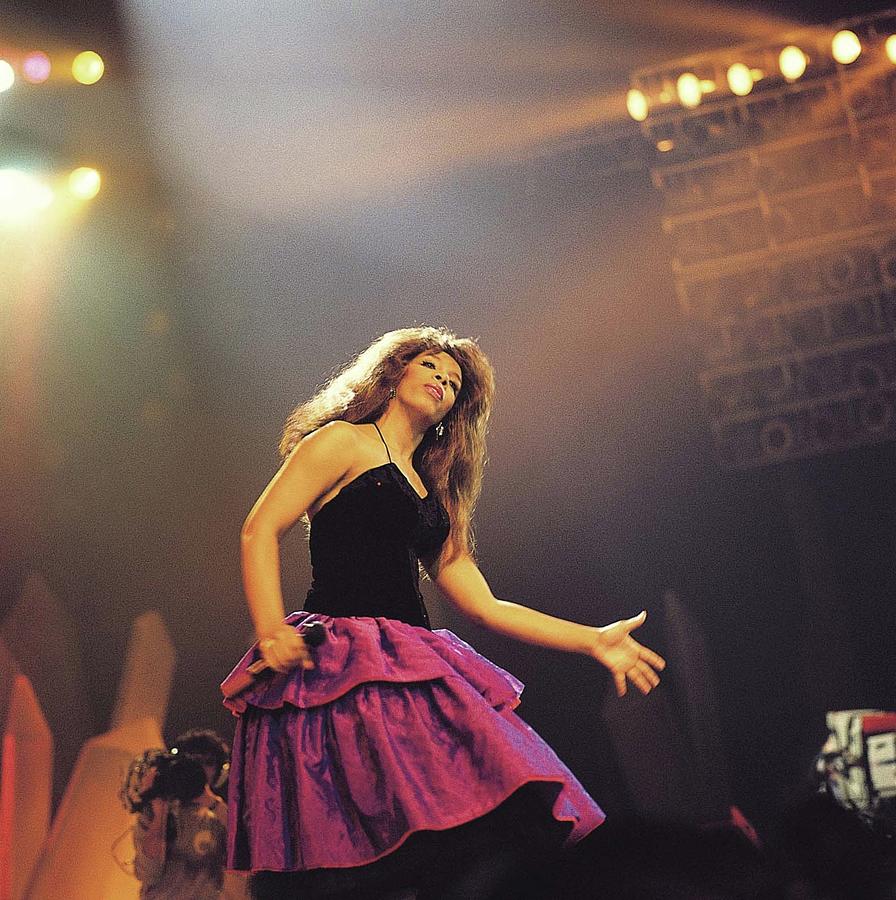
Donna Summer Photo by David Redfern/Redferns
Donna Summer performs in Hollywood, Florida.
Larry Marano/WireImage
https://www.spin.com/2012/05/donna-summer-rip-hear-her-legacy-15-tracks/
http://www.rollingstone.com/music/news/report-donna-summer-dead-at-63-20120517
All,
FACT: Donna Summer easily possessed one of the six greatest female voices of the past 50 years-- alongside such fellow popular music legends as Aretha Franklin, Dionne Warwick, Etta James, Chaka Khan, and Whitney Houston.
All,
FACT: Donna Summer easily possessed one of the six greatest female voices of the past 50 years-- alongside such fellow popular music legends as Aretha Franklin, Dionne Warwick, Etta James, Chaka Khan, and Whitney Houston.
ANOTHER FACT: Ms. Summer never received the serious and sustained critical attention and artistic props she should have received during her nearly 40 year career because her initial early fame and reputation in the mid and late 1970s was made in Disco--an aggressively commercial and often creatively reductive pop musical genre that many fans and critics alike either passionately loved or absolutely hated. The so-called controversial aspects of this aesthetic and popular division and conflict (which was even more importantly also widely reflected in the deeply rooted racial, gender, and sexual identity divisions and conflicts of the general society and culture of the 1974-1984 period) had the net effect of largely distorting and even obscuring what the real nature of Summer's overall contributions to popular music actually were and thus played a rather nefarious role in ignoring how her pervasive musical and thus artistic legacy was much more profound and enduring than many of her early often vociferous detractors thought or made it out to be. Thankfully we not only have long range critical hindsight to help us correct this flawed perspective on Summer's music and considerable vocal skills but more importantly we have the recordings and video evidence to viscerally remind us all just how truly gifted and talented this popular singer and songwriter actually was and why she and her art will be sorely missed. The bigger truth is that yet another great African American artist is gone far too soon but her provocative and joyous songs, infectious and dynamic spirit, and simply extraordinary voice will not only continue to inspire but remind us of the genuine value of what we've lost...RIP Donna...
Kofi
http://www.youtube.com/watch?v=C2q2bis6eLE&feature=related
http://www.nytimes.com/2012/05/18/arts/music/donna-summer-queen-of-disco-dies-at-63.html?_r=1&ref=obituaries&pagewanted=all
Donna Summer, Queen of Disco Who Transcended the Era, Dies at 63
by Jon Pareles
May 17, 2012
New York Times
Donna Summer, the multimillion-selling singer and songwriter whose hits captured both the giddy hedonism of the 1970s disco era and the feisty female solidarity of the early 1980s, died on Thursday at her home in Naples, Fla. She was 63.
The cause was cancer, her publicist, Brian Edwards, said.
With her doe eyes, cascade of hair and sinuous dance moves, Ms. Summer became the queen of disco — the music’s glamorous public face — as well as an idol with a substantial gay following. Her voice, airy and ethereal or brightly assertive, sailed over dance floors and leapt from radios from the mid-’70s well into the ’80s.
She riffled through styles as diverse as funk, electronica, rock and torch song as she piled up 14 Top 10 singles in the United States, among them “Love to Love You Baby,” “Bad Girls,” “Hot Stuff,” “Last Dance” and “She Works Hard for the Money.” In the late ’70s she had three double albums in a row that reached No. 1, and each sold more than a million copies.
Her combination of a church-rooted voice and up-to-the-minute dance beats was a template for 1970s disco, and, with her producers Giorgio Moroder and Pete Bellotte, she pioneered electronic dance music with the synthesizer pulse of “I Feel Love” in 1977, a sound that pervades 21st-century pop. Her own recordings have been sampled by, among others, Beyoncé, the Pet Shop Boys, Justice and Nas.
Ms. Summer won Grammy Awards for dance music, R&B, rock and gospel. Her recorded catalog spans the orgasmic moans of her first hit, “Love to Love You Baby,” the streetwalker chronicle of “Bad Girls,” the feminist moxie of “She Works Hard for the Money” and the religious devotion of “Forgive Me,” a gospel song that earned her another Grammy.
Through it all, Ms. Summer’s voice held on to an optimistic spirit and a determination to flourish. She garnered loyal fans. In 2009 she performed in Oslo at the concert honoring the Nobel Peace Prize awarded to President Obama.
On Thursday, the president released a statement, saying, “Her voice was unforgettable, and the music industry has lost a legend far too soon.”
Jon Landau, the chairman of the nominating committee at the Rock and Roll Hall of Fame, also issued a statement — an unusual one in which he said it was unfortunate that the hall had never inducted her.
“There is absolutely no doubt that the extraordinary Donna Summer belongs in the Rock and Roll Hall of Fame,” Mr. Landau wrote. “Regrettably, despite being nominated on a number of occasions, our voting group has failed to recognize her — an error I can only hope is finally and permanently rectified next year.”
LaDonna Adrian Gaines was born Dec. 31, 1948, in the Dorchester neighborhood of Boston, one of seven children. She grew up singing in church and decided in her teens to make music her career. In the late 1960s she joined the Munich company of the rock musical “Hair” and relocated to Germany, where she became fluent in German and worked as a studio vocalist, in musical theater and briefly as a member of the Viennese Folk Opera. She married an Austrian actor, Hellmuth Sommer, in 1972, and after they divorced she kept his name but changed the spelling. She had already recorded her first single under the name Donna Gaines, an unsuccessful remake in 1971 of the Jaynetts’ “Sally Go ’Round the Roses.”
Her work as a backup singer brought her to the attention of Mr. Moroder and Mr. Bellotte. Her 1974 debut album with them, “Lady of the Night,” was released only in Europe. But with “Love to Love You Baby” in 1975, Ms. Summer became a sensation. She said she recorded that song’s breathy, moaning vocals lying on her back on the studio floor with the lights out, thinking about how Marilyn Monroe might coo its words.
The American label Casablanca signed her after hearing the song in its initial European version, titled “Love to Love You,” and asked her to extend it for disco play. The resulting 17-minute single contains more than 20 simulated orgasms and became an international hit, reaching No. 2 on the American pop chart. Ms. Summer quickly released two more albums, “A Love Trilogy” and “Four Seasons of Love,” a concept album tracing a romance over the course of a year.
But she was increasingly uncomfortable being promoted as a sex goddess. “I’m not just sex, sex, sex,” she told Ebony magazine in 1977. “I would never want to be a one-dimensional person like that.”
She became so depressed that in late 1976 she attempted suicide, she wrote in her 2003 autobiography, “Ordinary Girl: The Journey,” written with Marc Eliot. She began taking medication for depression and seeking consolation in religion, becoming a born-again Christian in 1979.
“I Remember Yesterday,” one of two albums Ms. Summer released in 1977, revolved around the concept of mixing disco with the sounds of previous decades. But it was a song representing the future, “I Feel Love,” that would make the most impact. Its all-electronic arrangement was a startling new sound for a pop song, and its contrast of human voice versus synthetic backdrop would echo through countless club hits in its wake.
Ms. Summer was still demonstrating her versatility. She followed up with an orchestral album, “Once Upon a Time,” a set of songs telling a Cinderella story, and then a live album in 1978, “Live and More,” which yielded a hit with a version of “MacArthur Park.” That was the first of four No. 1 singles she would have in a year, followed by “Hot Stuff,” “Bad Girls” and a duet with Barbra Streisand, “No More Tears (Enough Is Enough).” Ms. Summer won her first Grammy Award — for best R&B vocal performance, female — with “Last Dance,” a song by Paul Jabara. It was introduced on the soundtrack to the 1978 movie “Thank God It’s Friday” and has ended many a wedding party ever since.
Disco as a fad was peaking, and Ms. Summer strove to outlast it. Her 1979 double album, “Bad Girls,” put some rock guitar into songs like “Hot Stuff”; it won a Grammy for best rock vocal performance, female. Her first collection of hits, “On the Radio: Greatest Hits Volumes 1 and 2,” also reached No. 1 in 1979, and the newly recorded title song was a Top 10 single.
Another hit from 1979, “Heaven Knows,” reached No. 4 on the pop chart, with personal repercussions. Ms. Summer recorded it with the group Brooklyn Dreams, and she married its co-founder, Bruce Sudano, in 1980. He survives her, along with three daughters — Brooklyn Sudano, Amanda Sudano and Mimi Dohler — and four grandchildren. She is also survived by a brother, Ricky Gaines, and four sisters: Dara Bernard, Mary Ellen Bernard, Linda Gaines and Jeanette Yancey.
“On the Radio” was Ms. Summer’s last album for Casablanca. As disco receded, she moved to Geffen Records, seeking to hold her broader pop audience. She tried new wave rock on “The Wanderer” in 1981, then switched to the R&B produced by Quincy Jones for “Donna Summer” in 1982. But she would reach her 1980s commercial peak with “She Works Hard for the Money” in 1983, collaborating with the producer Michael Omartian. It was her last Top 10 album, and amid its gleaming pop productions it included “He’s a Rebel,” an indirect Christian rock song — “He’s a rebel, written up in the lamb’s book of life” — that won a Grammy for best inspirational performance.
Ms. Summer’s career waned in the mid-1980s. Pop fans paid little attention to two albums from that period, “Cats Without Claws” and “All Systems Go,” and she alienated gay fans when she was quoted as having described AIDS as divine punishment for an immoral lifestyle. Though she repeatedly denied making that statement, many gay listeners boycotted her music, and by the time she had reconciled with gay organizations, her hitmaking streak was broken. Her last Top 10 hit, “This Time I Know It’s for Real,” was in 1989.
But she continued to record and perform. She and Mr. Sudano moved to Nashville (they maintained homes there and in Florida) and wrote songs together, including a No. 1 country single for Dolly Parton, “Starting Over Again.” A 1997 remix of a song Ms. Summer recorded in 1992 with Mr. Moroder, “Carry On,” won her the first Grammy given for best dance music. Well into the 2000s, she continued to appear on the dance-music charts: three songs from her last studio album, “Crayons,” in 2008, reached No. 1 on that chart, as did her final single, “To Paris With Love,” in 2010.
“This music will always be with us,” Ms. Summer told The New York Times in 2003. “I mean, whether they call it disco music or hip-hop or bebop or flip-flop, whatever they’re going to call it, I think music to dance to will always be with us.”
Donna Summer Dead at 63
Disco legend was struggling with cancer
Kofi
http://www.youtube.com/watch?v=C2q2bis6eLE&feature=related
http://www.nytimes.com/2012/05/18/arts/music/donna-summer-queen-of-disco-dies-at-63.html?_r=1&ref=obituaries&pagewanted=all
Donna Summer, Queen of Disco Who Transcended the Era, Dies at 63
by Jon Pareles
May 17, 2012
New York Times
Donna Summer, the multimillion-selling singer and songwriter whose hits captured both the giddy hedonism of the 1970s disco era and the feisty female solidarity of the early 1980s, died on Thursday at her home in Naples, Fla. She was 63.
The cause was cancer, her publicist, Brian Edwards, said.
With her doe eyes, cascade of hair and sinuous dance moves, Ms. Summer became the queen of disco — the music’s glamorous public face — as well as an idol with a substantial gay following. Her voice, airy and ethereal or brightly assertive, sailed over dance floors and leapt from radios from the mid-’70s well into the ’80s.
She riffled through styles as diverse as funk, electronica, rock and torch song as she piled up 14 Top 10 singles in the United States, among them “Love to Love You Baby,” “Bad Girls,” “Hot Stuff,” “Last Dance” and “She Works Hard for the Money.” In the late ’70s she had three double albums in a row that reached No. 1, and each sold more than a million copies.
Her combination of a church-rooted voice and up-to-the-minute dance beats was a template for 1970s disco, and, with her producers Giorgio Moroder and Pete Bellotte, she pioneered electronic dance music with the synthesizer pulse of “I Feel Love” in 1977, a sound that pervades 21st-century pop. Her own recordings have been sampled by, among others, Beyoncé, the Pet Shop Boys, Justice and Nas.
Ms. Summer won Grammy Awards for dance music, R&B, rock and gospel. Her recorded catalog spans the orgasmic moans of her first hit, “Love to Love You Baby,” the streetwalker chronicle of “Bad Girls,” the feminist moxie of “She Works Hard for the Money” and the religious devotion of “Forgive Me,” a gospel song that earned her another Grammy.
Through it all, Ms. Summer’s voice held on to an optimistic spirit and a determination to flourish. She garnered loyal fans. In 2009 she performed in Oslo at the concert honoring the Nobel Peace Prize awarded to President Obama.
On Thursday, the president released a statement, saying, “Her voice was unforgettable, and the music industry has lost a legend far too soon.”
Jon Landau, the chairman of the nominating committee at the Rock and Roll Hall of Fame, also issued a statement — an unusual one in which he said it was unfortunate that the hall had never inducted her.
“There is absolutely no doubt that the extraordinary Donna Summer belongs in the Rock and Roll Hall of Fame,” Mr. Landau wrote. “Regrettably, despite being nominated on a number of occasions, our voting group has failed to recognize her — an error I can only hope is finally and permanently rectified next year.”
LaDonna Adrian Gaines was born Dec. 31, 1948, in the Dorchester neighborhood of Boston, one of seven children. She grew up singing in church and decided in her teens to make music her career. In the late 1960s she joined the Munich company of the rock musical “Hair” and relocated to Germany, where she became fluent in German and worked as a studio vocalist, in musical theater and briefly as a member of the Viennese Folk Opera. She married an Austrian actor, Hellmuth Sommer, in 1972, and after they divorced she kept his name but changed the spelling. She had already recorded her first single under the name Donna Gaines, an unsuccessful remake in 1971 of the Jaynetts’ “Sally Go ’Round the Roses.”
Her work as a backup singer brought her to the attention of Mr. Moroder and Mr. Bellotte. Her 1974 debut album with them, “Lady of the Night,” was released only in Europe. But with “Love to Love You Baby” in 1975, Ms. Summer became a sensation. She said she recorded that song’s breathy, moaning vocals lying on her back on the studio floor with the lights out, thinking about how Marilyn Monroe might coo its words.
The American label Casablanca signed her after hearing the song in its initial European version, titled “Love to Love You,” and asked her to extend it for disco play. The resulting 17-minute single contains more than 20 simulated orgasms and became an international hit, reaching No. 2 on the American pop chart. Ms. Summer quickly released two more albums, “A Love Trilogy” and “Four Seasons of Love,” a concept album tracing a romance over the course of a year.
But she was increasingly uncomfortable being promoted as a sex goddess. “I’m not just sex, sex, sex,” she told Ebony magazine in 1977. “I would never want to be a one-dimensional person like that.”
She became so depressed that in late 1976 she attempted suicide, she wrote in her 2003 autobiography, “Ordinary Girl: The Journey,” written with Marc Eliot. She began taking medication for depression and seeking consolation in religion, becoming a born-again Christian in 1979.
“I Remember Yesterday,” one of two albums Ms. Summer released in 1977, revolved around the concept of mixing disco with the sounds of previous decades. But it was a song representing the future, “I Feel Love,” that would make the most impact. Its all-electronic arrangement was a startling new sound for a pop song, and its contrast of human voice versus synthetic backdrop would echo through countless club hits in its wake.
Ms. Summer was still demonstrating her versatility. She followed up with an orchestral album, “Once Upon a Time,” a set of songs telling a Cinderella story, and then a live album in 1978, “Live and More,” which yielded a hit with a version of “MacArthur Park.” That was the first of four No. 1 singles she would have in a year, followed by “Hot Stuff,” “Bad Girls” and a duet with Barbra Streisand, “No More Tears (Enough Is Enough).” Ms. Summer won her first Grammy Award — for best R&B vocal performance, female — with “Last Dance,” a song by Paul Jabara. It was introduced on the soundtrack to the 1978 movie “Thank God It’s Friday” and has ended many a wedding party ever since.
Disco as a fad was peaking, and Ms. Summer strove to outlast it. Her 1979 double album, “Bad Girls,” put some rock guitar into songs like “Hot Stuff”; it won a Grammy for best rock vocal performance, female. Her first collection of hits, “On the Radio: Greatest Hits Volumes 1 and 2,” also reached No. 1 in 1979, and the newly recorded title song was a Top 10 single.
Another hit from 1979, “Heaven Knows,” reached No. 4 on the pop chart, with personal repercussions. Ms. Summer recorded it with the group Brooklyn Dreams, and she married its co-founder, Bruce Sudano, in 1980. He survives her, along with three daughters — Brooklyn Sudano, Amanda Sudano and Mimi Dohler — and four grandchildren. She is also survived by a brother, Ricky Gaines, and four sisters: Dara Bernard, Mary Ellen Bernard, Linda Gaines and Jeanette Yancey.
“On the Radio” was Ms. Summer’s last album for Casablanca. As disco receded, she moved to Geffen Records, seeking to hold her broader pop audience. She tried new wave rock on “The Wanderer” in 1981, then switched to the R&B produced by Quincy Jones for “Donna Summer” in 1982. But she would reach her 1980s commercial peak with “She Works Hard for the Money” in 1983, collaborating with the producer Michael Omartian. It was her last Top 10 album, and amid its gleaming pop productions it included “He’s a Rebel,” an indirect Christian rock song — “He’s a rebel, written up in the lamb’s book of life” — that won a Grammy for best inspirational performance.
Ms. Summer’s career waned in the mid-1980s. Pop fans paid little attention to two albums from that period, “Cats Without Claws” and “All Systems Go,” and she alienated gay fans when she was quoted as having described AIDS as divine punishment for an immoral lifestyle. Though she repeatedly denied making that statement, many gay listeners boycotted her music, and by the time she had reconciled with gay organizations, her hitmaking streak was broken. Her last Top 10 hit, “This Time I Know It’s for Real,” was in 1989.
But she continued to record and perform. She and Mr. Sudano moved to Nashville (they maintained homes there and in Florida) and wrote songs together, including a No. 1 country single for Dolly Parton, “Starting Over Again.” A 1997 remix of a song Ms. Summer recorded in 1992 with Mr. Moroder, “Carry On,” won her the first Grammy given for best dance music. Well into the 2000s, she continued to appear on the dance-music charts: three songs from her last studio album, “Crayons,” in 2008, reached No. 1 on that chart, as did her final single, “To Paris With Love,” in 2010.
“This music will always be with us,” Ms. Summer told The New York Times in 2003. “I mean, whether they call it disco music or hip-hop or bebop or flip-flop, whatever they’re going to call it, I think music to dance to will always be with us.”
Donna Summer Dead at 63
Disco legend was struggling with cancer
by ROLLING STONE
May 17, 2012
Disco legend Donna Summer died this morning in Florida at the age of 63, family sources have told the Associated Press. The singer had been battling cancer for some time.
"Early this morning, we lost Donna Summer Sudano, a woman of many gifts, the greatest being her faith," reads a statement from the singer's family. "While we grieve her passing, we are at peace celebrating her extraordinary life and her continued legacy. Words truly can't express how much we appreciate your prayers and love for our family at this sensitive time."
Summer was a five-time Grammy winner best known for smash hits including "I Feel Love," "Love to Love You Baby" and "She Works Hard for the Money." Her collaborations with producer Giorgio Moroder in the the Seventies broke ground for dance music and have been hugely influential on electronic music in the decades since.
Born and raised in Boston, Summer grew up singing in church before joining a short-lived psychedelic rock band. After winning a role in a touring production of Hair, she moved to Germany, where she would meet Moroder. Their collaboration on the suggestive "Love to Love You Baby," which Summer sang with Marilyn Monroe's breathy singing style in mind, became a huge dancefloor hit after Casablanca Records' Neil Bogart requested a long version of the song – 17 minutes.
Summer went on to major success during the disco era, scoring Number One pop singles with "Hot Stuff," "Bad Girls" and an unlikely version of Jimmy Webb's "MacArthur Park." In 2004 Summer was elected to the Dance Music Hall of Fame, and in 2009 she performed at the Nobel Peace Prize Concert in honor of President Obama.
Asked upon the release of her 2008 album Crayons whether she felt vindicated by her longevity, Summer replied, "I don't think they made fun of my music as much as they made fun of some of the music that maybe came as a result of that whole genre. But I do think in the course of time it is nice to reestablish something and to say, 'Okay, this stood the test of time. . . ' I have nothing to prove to anyone. I just get out there and do my best, and those who love it, great. And those who don't, they'll move on to something else."
Additional reporting by Steve Baltin
http://www.youtube.com/watch?v=jOpUfTi1keI&feature=related
Donna Summer: Is There Life After Disco?
Rolling Stone's 1978 cover story on the singer by Mikal Gilmore
 Donna Summer on the cover of 'Rolling Stone.' Photograph by Brian Leatart
This story is from the March 23rd, 1978 issue of Rolling Stone.
Until I saw Donna Summer a year ago on a Midnight Special with Lou Rawls, I'd viewed her music simply as brilliantly packaged aural sex, nothing too meaty, and, in spite of its implied intimacies, nothing too personal. But when she joined Rawls on the dais dressed like a Bloomingdale's Cleopatra, she sang probably the most affectingly full-blooded version of "Swing Low, Sweet Chariot" I'd ever heard. This wasn't the cooing voice she used on records.
The second time I saw her was on the set of the Casablanca Records and Film Works-Motown production, Thank God It's Friday. Donna was playing an aspiring singer trying to persuade a disco DJ to let her perform a song. After several rebuffs, the singer sneaks into the booth and locks the door behind her, so it's just the two of them. Then she unbuttons the top button of her blouse and fixes him with a stare from the corners of her eyes. I remember thinking it was one of the most curious expressions I'd ever seen, wide-open, withheld and coldly erotic.
But now, at Christmas time, when Donna pulls into the Casablanca Records' office of Susan Munao, wearing a billowing green velvet dress and pencil-heeled black boots, she looks neither mysterious nor erotic, just dog tired.
Her handshake is firm and her smile is friendly, but her wide eyes are bloodshot. Her tall frame is muscular and her face, framed by wavy black hair and centered with a puggish nose, is less angular than in album photos. While Munao leaves to fetch Cokes, Donna sinks into a swivel armchair with an exaggerated sigh.
In rotelike speech with an occasional Bostonian curl, Summer attributes her languor to the last two days' regimen of interviews and rehearsals. Then, without breathing space or prompting, she launches into a detailed, detached explanation of her plans for taking Once upon a Time (her latest album) to the stage in the spring. After a few minutes, Munao returns to announce that Summer's boyfriend, Michael, would like to speak to her for a moment. "He has those Christmas cards you wanted," Munao says. Michael, a tall, blond man wearing a red-and-white satin warmup jacket, saunters into the room possessively and places a card before Donna.
"No, no," she says, plucking it from his hand, "this won't do. You can't tell who's supposed to be who. Is that a cartoon of Neil Bogart [Casablanca's president] or Jeff Wald [Donna's comanager with Joyce Bogart at the time]?"
"Well, that's Neil, I guess," he says. "You can tell because he's sort of fat." Before going, Michael mentions that he'd met a psychic healer earlier in the day and asked him by Donna's later.
"Well, I don't want to see him." Donna hitches her shoulder like a kid turning down porridge.
"Believe me," he says slowly, "you want to see him. I mean, this guy has such an eerie aura about him. He told me more in fifteen minutes about what's been going down in your life and career than I could've told him."
"Oh yeah? What'd he say about my headaches and insomnia?"
Michael leans over the desk at Donna, resting his weight on his knuckles. "He said to tell you that he'll take on your pain because it won't hurt him."
"Really?" Her face brightens. "Really? Look, ask him if he'll meet with me tonight. Maybe he'll take away this negativity so I can sleep." After Michael saunters back out, I tell her it sounds as if she's going through a rough stretch. "Oh God," she says, letting out a long breath, "I can't even begin to tell you. Too much has happened lately. It seems like an absurdity. I just got back from this Italian tour that was so ill organized and badly paced that I thought I was going to break. In one airport I was so gone that they had to give me oxygen and wheel me to the plane, and all I could think was, 'I've got a show to do tonight.'
"Sometimes it gets to the point where you've been pushed for so long, by this motorous, monstrous force, this whole production of people and props that you're responsible for, by audiences and everything that rules you, until you take it upon yourself to be a machine. And at some point a machine breaks down. I feel like I want to cry most of the time and just get rid of it, but sometimes I get so pent-up, I can't. And that's when I get afraid."
Probably more than any other single personality, Donna Summer has come to represent disco artistry, a fairly enigmatic thing to epitomize. In the rigid framework of disco, the artist's role is so often reduced to that of a prop that the term "artist" hardly even applies. Few disco performers have attempted to adopt the genre to their own bents and even fewer have managed to escape it altogether. Strangely, Summer has been not only its most flagrant example of prop usage, but also the most successful at transcending the prop – and, in turn, disco itself.
In her early hits, particularly "Love to Love You Baby," Donna and her producers – Giorgio Moroder and Pete Bellotte – embellished and strengthened the prop by affording it a persona of sorts: Donna became a servile vixen with a whispery voice, intoning and moaning over a metronomic beat that had all the intensity of a sex act between consenting androids. (No less an authority than Time clocked the seventeen-minute performance at a prodigious twenty-two orgasms.) If it seemed a persona of dubious and limited worth, it nevertheless had the desired results: Donna became disco's best-known personality – one of the few to endure – and, in the bargain, one of its most consistent sellers.
http://www.youtube.com/watch?v=BIzD_M3GQvM&feature=related
But Summer's two albums last year, I Remember Yesterday and Once upon a Time, were ambitious departures from the sexy marionette image and breathy vocal mannerisms, and at times suspended disco's influence altogether. I Remember Yesterday was a random sampler of twentieth-century-pop vocal styles, from the Hollywood "jazz age" title track to the electronic reverie of "I Feel Love," the album's biggest single. (According to Donna, it was the one track she had the least hand in writing. "Giorgio brought me these popcorn tracks he'd recorded and I said, 'What the hell is this, Giorgio?' I finished it sort of as a joke.") But Once upon a Time, says Donna, "is the first record I can really say is a part of me." In the course of its four sides, she and lyricist Pete Bellotte rework the Cinderella fairy tale, transplanting her from the castle and silk landscape of yore to a Fritz Lang-like urban nightmare where claustrophobia is both Cinderella's greatest infirmity and impetus.
Donna's own childhood in Boston as Donna Gaines, the daughter of an electrician and schoolteacher, she says, wasn't far removed from the Once upon a Time scenario. "I grew up in a family with five girls and one boy, and we lived in a three-family house, so I had to compete. To be heard, you had to talk loud. Either that or you just tried to find a hollow corner where you could sit and fantasize about being someplace else. And school wasn't any easier. I went to school with some pretty violent people, and I was an outsider because I couldn't live on that black-and-white separatist premise. Racial? I didn't know what the word meant until I was older."
Singing became a way for Donna to assert her worth. Though her church-choir director always refused her plea to sing a solo, she knew she had a voice. "Because when I screamed, I screamed loud," Summer says. "I just wasn't getting it out right. So that's when I would go up to my parents' bedroom to do breathing exercises and listen to Mahalia Jackson records." Instead of at the church, she sang her professional debut at Boston's Psychedelic Supermarket in 1967 with a band called Crow ("the crow being me because I was the only black member of the group").
Donna left Boston in 1967 at the age of eighteen to accept a role in a Munich-based edition of Hair. While in Germany, she married an Austrian actor from the troupe, Helmut Sommer (they are now divorced, but she's retained the name and Anglicized its spelling); had a child, Mimi (who lives most of the time with Donna's family in Boston); sang in Vienna Folk Opera productions of Porgy and Bess and Showboat, and spent her afternoons singing backup at Munich's Musicland studios. It was there that she met producers Giorgio Moroder and Pete Bellotte, and together they had a minor string of pap-pop hits in Western Europe.
Moroder had just licensed his Oasis label to Casablanca for American distribution in 1975, when he and Summer recorded "Love to Love You Baby," which failed in all European markets that had previously played Summer, save one – Paris.
When Neil Bogart first received "Love to Love You Baby," his luck had just begun to change for the better. Kiss mania was starting, and it looked as though it might save Casablanca from an impending bankruptcy incurred by the Here's Johnny: Magic Moments from the Tonight Show turkey on which Bogart had high-rolled $1.5 million. But Bogart, who'd borrowed his last name from Humphrey Bogart (real name: Neil Bogatz) and appropriated his company's name from the actor's best-known film, likes to flaunt his loser's luck. The first time Bogart played "Love to Love You," the story goes, was at a party at his house, where he kept getting requests to play it again and again for the dancers. Bogart decided then to gamble with a full-sided version for her album and called Moroder in Munich that night to request a new track.
"You know what I used to tell people in the beginning?" asks Bogart, sitting in front of his cutaway windows in his Persian-décor office. "'Take Donna home and make love to her – the album, that is. It'll become part of your family.'" Along those lines, Casablanca promoted the record by encouraging radio stations to play the track at midnight, sponsoring "seventeen minutes of love with Donna Summer," although it aimed its heaviest push at the discos just then sprouting around the country.
Did Bogart worry at the time that the sexy hype might limit Donna's credibility?
"Hype. What a marvelous, misused word. Terribly misused." He leans forward with the eagerness of a doctor with a ready-made diagnosis. "If you hype something and it succeeds, you're a genius, it wasn't a hype; if you hype it and it fails, then it's just a hype. We did build her up bigger than life on that first album [Love to Love You Baby]. We hyped ourselves, if anything, so if somebody says that she's a hype, hopefully they know how to use the word.
"The sex-image thing didn't concern me as much as it did others – or as much as it did Donna, for that matter. It concerned me because it concerned Donna; that's the extent of it. I had no doubt that she would blossom as nicely as she has. She's the only person I know to go from being a disco artist to an 'everyman' artist."
"It's slowly been getting easier for me to sleep," says Donna, picking at some tortilla chips in a dish before her. "And those squeezing headaches are finally gone. But for a few weeks there, it was torture." We are sitting in a corner booth at Carlos & Charlie's, a Spanish-style Sunset Strip singles habitat that has little carousel unicorns and medieval turrets adorning its green shingle roof. Donna makes an Imogene Coca cross-eyed face over a particularly peppery chip and then tells about her meeting with the psychic. He said that before she could remove the "negativity" around her, she must first look closely at the people guiding her affairs. Coincidentally or not, since our first meeting a month ago, she has terminated her relationship with Wald, DeBlasio, Nanas & Associates management and enlisted Susan Munao from Casablanca to work with Joyce Bogart as comanager. And Michael, who introduced her to the psychic in the first place, seems also to have faded along the way.
Joyce Bogart had gone into partnership with Jeff Wald, et al. after marrying Neil Bogart in 1976, but Donna says she found the new association unworkable. "It's like having an artist and you don't even know what in the hell they're about. When I was on that tour in Italy and I was calling them trying to tell them what the problem was, all they could say was, 'Cancel the tour.' My name is on that billboard, and those audiences are not going to understand why I'm canceling, and unless I'm deathly ill, I don't want to do that .... Anyway, as far as I can see they're just manipulated by the machinery of this whole business."
(Jeff Wald replies: "Shit, so the dressing rooms at some three-hundred-year-old theater in Verona weren't adequate – that's what you get when you play a three-hundred-year-old theater. That's part of show business. I didn't get involved with her until after she came back from Europe – that was supposed to be Ron DeBlasio's business. I found her to be immature, demanding and childish.
"Her expectancy of what management is doesn't match mine. She would call you up to get a jet for her to get out of a place, and after you spend six hours getting the plane in the air on the way to her, she calls you back and tells you her astrologer told her not to fly that day.
"She likes somebody to live with her and hold her hand, and I'm not going to do that. My job is to advise and counsel. I think we made major contributions to her career.")
But, I wonder, given Donna's disco-derived image, doesn't she feel she's been manipulated too?
"Constantly," she says, tilting her head in a little-girl-share-a-secret pose. "And it can be pretty frightening when you realize you're a part of the machine. But you can always change that. In the beginning it was like being a commodity. The image and the person got characterized as one and the same, and I was saying, 'No, wait. There's more to me than meets the eye – maybe twenty pounds more.' By the time of Spring Affair [1976], it was enough. I couldn't go on singing those soft songs. I've sung gospel and Broadway musicals all my life and you have to have a belting voice for that. And because my skin is black they categorize me as a black act, which is not the truth. I'm not even a soul singer. I'm more a pop singer."
A waiter brings Donna her chef's salad. "Oh no," says Donna, calling him back. "I'm sorry. I ... uh ...," she lapses momentarily into German, then catching herself, translates apologetically: "I forgot to tell you. I'm allergic to cheese. Can you take this back?" I've noticed her slip into German two or three times before, so I ask her what America must have seemed like on her return.
"Frightening, to say the least. Even going home to Boston was a shock. People couldn't understand me, a black, speaking German. I didn't really get used to it until last spring when I broke up with my German boyfriend." And California? She looks over her shoulder, peering out through the lead-glass window that frames the Casablanca offices across the street. "California will probably never seem like home to me. Sometimes I get bored riding down the beautiful streets of L.A. I know it sounds crazy, but I just want to go to New York and see people... suffer. I know that there's another kind of world that I don't get to see, that I'm protected from, but I'm aware of it because I grew up there. Sometimes this is like being displaced from the real world."
An uncomfortably tall man in a reindeer-pattern sweater has corralled his friends into the corner of the mirrored room and is sharing his excitement with them. "You know that part in 'Love to Love You Baby' where she starts to fuck the microphone? I got so excited that I was jumping up and down until my little bastard stood up." Flashing a proud smirk, he reaches down and pats the corduroy area between his legs where his "little bastard" is now merrily reposed.
The occasion is the last evening of Donna Summer's first starring engagement at Sahara Tahoe's High Sierra Room, and the place is a waiting room backstage. In spite of this one corner of good cheer, though, the mood among those waiting for the star is reserved. Donna's first show of the evening had been beset by a bizarrely fluctuating sound system and a near-comatose dinner crowd. I'd wondered beforehand why Donna bypassed the usual concert-hall circuit in favor of Tahoe and Las Vegas, but Joyce Bogart informed me that "that's her audience. She draws an audience that's sixty to eighty percent white, ranging up to forty-five years of age, and that means places like Tahoe and Vegas." Donna says it's because she can find "recruits" for her music in those audiences. Tonight, though, there were no recruits to be found, and when Donna came offstage she was almost in tears.
But now when she enters the waiting room from her dressing cubicle, the mood of a half-hour before seems forgotten. Dressed in a short, blue silk kimono and wearing a lovely smile, this is the Donna Summer of her album covers – fully alluring. She begins to circle the room, stopping and chatting animatedly with any unfamiliar face she sees. When she gets to the corner where the happy owner of the "little bastard" waits, he hands her a copy of Once upon a Time for an autograph. "Would you draw something weird on the back?" She complies with a hurried cartoon sketch of a girl in a gown. "Oh, is that you?" he says. "Be sure to draw some big boobs on it, just like yours."
She smiles indulgently. "You mean big butt. I have a big butt."
"Well, you said it, not me," he says, and gives her a squeeze beneath the kimono. She shoots him a glare that could cut marble, but he's oblivious. As she hands him back the album, he leans over and tries to kiss her on the lips. She pulls back for a quick second, then turns and offers her cheek instead. For just the glint of a second I catch a look in her eyes – a look that abides.
An hour later, moments before her last show of the engagement, Donna and three of her sisters, who sing backup for her, stand in the wings, clinging affectionately to each other in a tight prayer circle. "Ladies and Gentlemen," announces an FM-modulated voice, "the High Sierra Room is proud to present the 'First Lady of Love,' "and Donna takes her place center stage, singing Barry Manilow's "Could It Be Magic," one of her favorite songs. Supported by a full orchestra and a meticulous rhythm sextet, Donna's show de-emphasizes her disco sources in favor of a campier cabaret production. She's a Sophie Tucker on "One of These Days," Judy Garland on "I Got It Bad (And That Ain't Good)," and a little like her idol, Josephine Baker, on the intro to "My Man."
But when she gets to "Love to Love You Baby," the disco pulse washes over her, and she comes damn close to copulating with her mike stand, writhing up and down its length with palpable shivers. Judging from the audience's response, this is still the Donna Summer they know best. Suddenly, with only a blink between songs, the pitapat beat becomes "I Feel Love," juxtaposing the erotic with the icelike. Donna dances in angular, jerky motions and her face is a dazed, mechanical mask.
Then, almost as though she finds Giorgio's mesmerizing "popcorn tracks" too confining, she begins to sing, "Feel it!" on the offbeat, gradually transforming the song into a fevered gospel and bolting into a coltish dance. I'm reminded of that moment at the end of Once upon a Time's second side, when, after fifteen minutes of brilliant electronic tension, Cinderella's dream – to be free of the machines – true, signaled by an acoustic piano flourish. The first time I heard that, I thought of Metropolis, Fritz Lang's archetypal science-fiction film about man's revolt against the machines, and its simple maxim: "The mediator between the mind and the machine must be the heart."
Earlier in the week. Donna had said: "I guess I was treated as a novelty type at first, but that was to be expected. I wasn't a hype. It's probably like what Marilyn Monroe must have gone through her whole life, playing the part of a dumb blondie while she was depriving herself of something greater. She couldn't make them believe it, and it killed her as a result. I don't want that to happen to me."
Now, after the encore, Donna stumbles into the wings looking faint and has to be helped into a chair. A stage attendant slips over her face an oxygen mask, kept handy because of Tahoe's high altitude. Sitting there gasping, her big eyes peering over the plastic pocket stuck on her face. Donna looks slightly scared, very tired – and wholly indomitable. But it's a gentle, not a hard look, the look of someone who's just won a tough audience but is waiting for a tougher one. It's the indomitability of someone who abides – not her place, but her time.
http://www.youtube.com/watch?v=CbGKeyCywTY
http://www.rollingstone.com/music/news/donna-summers-best-songs-20120517
Donna Summer's Best Songs Listen to our playlist of the disco queen's greatest dance hits and ballads
http://www.youtube.com/watch?v=qG07rYStCjw&feature=results_main&playnext=1&list=PL81860D9A882562A8
By ROLLING STONE
May 17, 2012
Donna Summer, who died today from cancer at the age of 63, was more than one of the disco era's most successful artists. She earned a string of hits throughout the Seventies and Eighties with her innovative songwriting and powerful, sensual voice that has influenced dance music for decades. From the rough-and-tumble of "Bad Girls" to the triumphant anthem (and wedding favorite) "Last Dance," and many moving ballads in between, Summer helped define the magic of the dance floor all over the world. Here is a playlist of 16 of our favorite musical moments from the Queen of Disco.
http://www.youtube.com/watch?v=V5AztWseIdU&feature=fvst
Donna Summer's Best Musical Moments
1. On The Radio Donna Summer 4:56
2. Bad Girls Donna Summer 6:47
3. Hot Stuff - 12" Version Donna Summer 4:57
4. Love To Love You Baby - Single Version Donna Summer 5:19
5. She Works Hard For The Money Donna Summer 3:19
6. Last Dance - Single Version Donna Summer 3:55
7. Na Na Hey Hey Donna Summer 4:35
8. Dim All The Lights Donna Summer 3:36
9. This Time I Know It's For Real Donna Summer 3:12
10. I Love You - Single Version Donna Summer 8:15
11. I Feel Love - 12" Version Donna Summer 3:27
12. Shout It Out Donna Summer 6:28
13. MacArthur Park - Single Version Donna Summer 4:48
14. No More Tears (Enough Is Enough) Donna Summer, Barbra Streisand 4:04
15. Fame (The Game) Donna Summer 3:30
16. The Queen Is Back Donna Summer
Read more: http://www.rollingstone.com/music/news/donna-summers-best-songs-20120517#ixzz1vJfGd2Yl
Watch Donna Summer Tribute on PBS. See more from Tavis Smiley.