Showing posts with label Structural and institutional racism. Show all posts

Saturday, March 16, 2024

The Fundamental Crisis and Foundational Contradiction Facing the United States During the Upcoming Presidential Election Year of 2024: Fascism guided, informed, and enabled by the Doctrines and Practices of White Supremacy and Global Capitalism--PART 22

https://www.nytimes.com/2024/03/13/magazine/nikole-hannah-jones-colorblind-racial-justice.html

Five Takeaways From Nikole Hannah-Jones’s Essay on the ‘Colorblindness’ Trap

How a 50-year campaign has undermined the progress of the civil rights movement.

PHOTO:  Credit:  Shuran Huang for The New York Times
March 13, 2024
New York Times

Last June, the Supreme Court ruled that affirmative action in college admissions was not constitutional. After the decision, much of the discussion was about its impact on the complexions of college campuses. But in an essay in The Times Magazine, I argue that we were missing the much bigger and more frightening story: that the death of affirmative action marks the culmination of a radical 50-year strategy to subvert the goal of colorblindness put forth by civil rights activists, by transforming it into a means of undermining racial justice efforts in a way that will threaten our multiracial democracy.

What do I mean by this? Here are the basic points of my essay:

Conservatives are interpreting the court’s ruling broadly, and since last summer, they have used it to attack racial-justice programs outside the field of higher education. Since the decision, conservative groups have filed and threatened lawsuits against a range of programs that consider race, from diversity fellowships at law firms to maternal-health programs. One such group has even challenged the medical school of Howard University, one of the nation’s pre-eminent historically Black universities. Founded to educate people who had been enslaved, Howard’s mission has been to serve Black Americans who had for generations been systematically excluded from American higher education. These challenges to racial-justice programs will have a lasting impact on the nation’s ability to address the vast disparities that Black people experience.

In my essay, I demonstrate that these challenges to racial-justice programs often deploy the logic of “colorblindness,” the idea that the Constitution prohibits the use of race to distinguish citizens and that the goal of a diverse, democratic nation should be a society in which race does not determine outcomes for anyone. Civil rights leaders used the idea of colorblindness to challenge racial apartheid laws and policies, but over the last 50 years, conservatives have successfully co-opted both the rhetoric and the legal legacy of the civil rights era not to advance racial progress, but to stall it. And, I’d argue, reverse it.

Though the civil rights movement is celebrated and commemorated as a proud period in American history, it faced an immediate backlash. The progressive activists who advanced civil rights for Black Americans argued that in a society that used race against Black Americans for most of our history, colorblindness is a goal. They believed that achieving colorblindness requires race-conscious policies, such as affirmative action, that worked specifically to help Black people overcome their disadvantages in order to get to a point where race no longer hindered them. Conservatives, however, invoke the idea of colorblindness to make the case that race-conscious programs, even to help those whose race had been used against them for generations, are antithetical to the Constitution. In the affirmative-action decision, Chief Justice John G. Roberts Jr., writing for the majority, embraced this idea of colorblindness, saying: “Eliminating racial discrimination means eliminating all of it.”

But mandating colorblindness in this way erases the fact that Black Americans still suffer inequality in every measurable aspect of American life — from poverty to access to quality neighborhoods and schools to health outcomes to wealth — and that this inequality stems from centuries of oppressive race-specific laws and policies. This way of thinking about colorblindness has reached its legal apotheosis on the Roberts court, where through rulings on schools and voting the Supreme Court has helped constitutionalize a colorblindness that leaves racial disparities intact while striking down efforts to ameliorate them.

These past decisions have culminated in Students for Fair Admissions v. Harvard, which can be seen as the Supreme Court clearing the way to eliminate the last legal tools to try to level the playing field for people who descend from slavery.

Part of the issue, I argue, is that the purpose of affirmative action got muddled in the 1970s. It was originally designed to reduce the suffering and improve the material conditions of people whose ancestors had been enslaved in this country. But the Supreme Court’s decision in the 1978 Bakke case changed the legally permissible goals of affirmative action, turning it into a generalized diversity program. That has opened the door for conservatives to attack the program for focusing on superficial traits like skin color, rather than addressing affirmative action's original purpose, which was to provide redress for the disadvantages descendants of slavery experienced after generations of oppression and subordination.

When this country finally abolished slavery, it was left with a fundamental question: How does a white-majority nation, which wielded race-conscious policies and laws to enslave and oppress Black people, create a society in which race no longer matters? After the short-lived period of Reconstruction, lawmakers intent on helping those who had been enslaved become full citizens passed a slate of race-conscious laws. Even then, right at the end of slavery, the idea that this nation owed something special to those who had suffered under the singular institution of slavery faced strident opposition, and efforts at redress were killed just 12 years later with Reconstruction’s end. Instead, during the nearly 100-year period known as Jim Crow, descendants of slavery were violently subjected to a dragnet of racist laws that kept them from most opportunities and also prevented America from becoming a true democracy. During the civil rights era, when Black Americans were finally assured full legal rights of citizenship, this question once again presented itself: In order to address the disadvantage Black Americans faced, do we ignore race to eliminate its power, or do we consciously use race to undo its harms? Affirmative action and other racial-justice programs were born of that era, but now, once again, we are in a period of retrenchment and backlash that threatens the stability of our nation. My essay argues that if we are to preserve our multiracial democracy, we must find a way to address our original sin.


Nikole Hannah-Jones is a domestic correspondent for The New York Times Magazine focusing on racial injustice. Her extensive reporting in both print and radio has earned a Pulitzer Prize, National Magazine Award, Peabody and a Polk Award. 

More about Nikole Hannah-Jones


Sunday, December 31, 2023

Henry A. Giroux and Hasan Minhaj on the White Supremacist Roots and Intellectual, Ideological, Cultural, and Political Content and Historical Identity of Education in the United States

Affirmative Action | Patriot Act with Hasan Minhaj | Netflix Netflix Is A Joke

All,


This brilliant and bitterly HILARIOUS statement by Hasan Minaj is--and has always been-- one of the most profound, HONEST, ACCURATE AND ABSOLUTELY TRUE ANALYSES OF THE ACTUAL REALITY OF WHAT AFFIRMATIVE ACTION IS AND MEANS---AND WHAT IT ALWAYS WAS IN THE LARGER CONTEXT OF THE ENTIRE WARPED HISTORY OF THIS VIRULENTLY WHITE SUPREMACIST NATION .


SO THANK YOU HASAN. I laughed outloud in 2018 when you first aired this brilliant fucking TAKEDOWN of the massive racist FRAUD the "critical discourse" surrounding AA is and has always been and I'm laughing even harder at your deeply incisive and right on target exegesis through extremely bitter fucking tears five years later.


SHARE THIS BEAUTIFUL VIDEO WITH EVERYONE YOU KNOW...or just tell yourself and others a million more racist delusional LIES about what Affirmative Action actually is and means…


Kofi


"What's Past is Prologue..."


Affirmative Action | Patriot Act with Hasan Minhaj | Netflix

Netflix Is A Joke

October 28, 2018 


#HasanMinhaj #PatriotAct #Netflix


Hasan Minhaj breaks down the history of affirmative action, its impact on his experience with the modern education system, and how a recent lawsuit against Harvard that could go to the Supreme Court could change it forever.


VIDEO: 


"It is certain in any case that Ignorance, allied with power, is the most ferocious enemy justice can have." 
--James Baldwin 
 
DEFEAT FASCISM BEFORE FASCISM DEFEATS YOU

https://www.laprogressive.com/election.../apartheid-pedagogy
 
Home
Elections and Campaigns

DeSantis’s Apartheid Pedagogy in the Age of Fascist Politics

It is hard to understand how African Americans who were raped, tortured, whipped, and subject to unimaginable acts of dehumanization somehow benefited from the horrors of slavery.

by Henry A. Giroux
July 23, 2023
LAProgressive

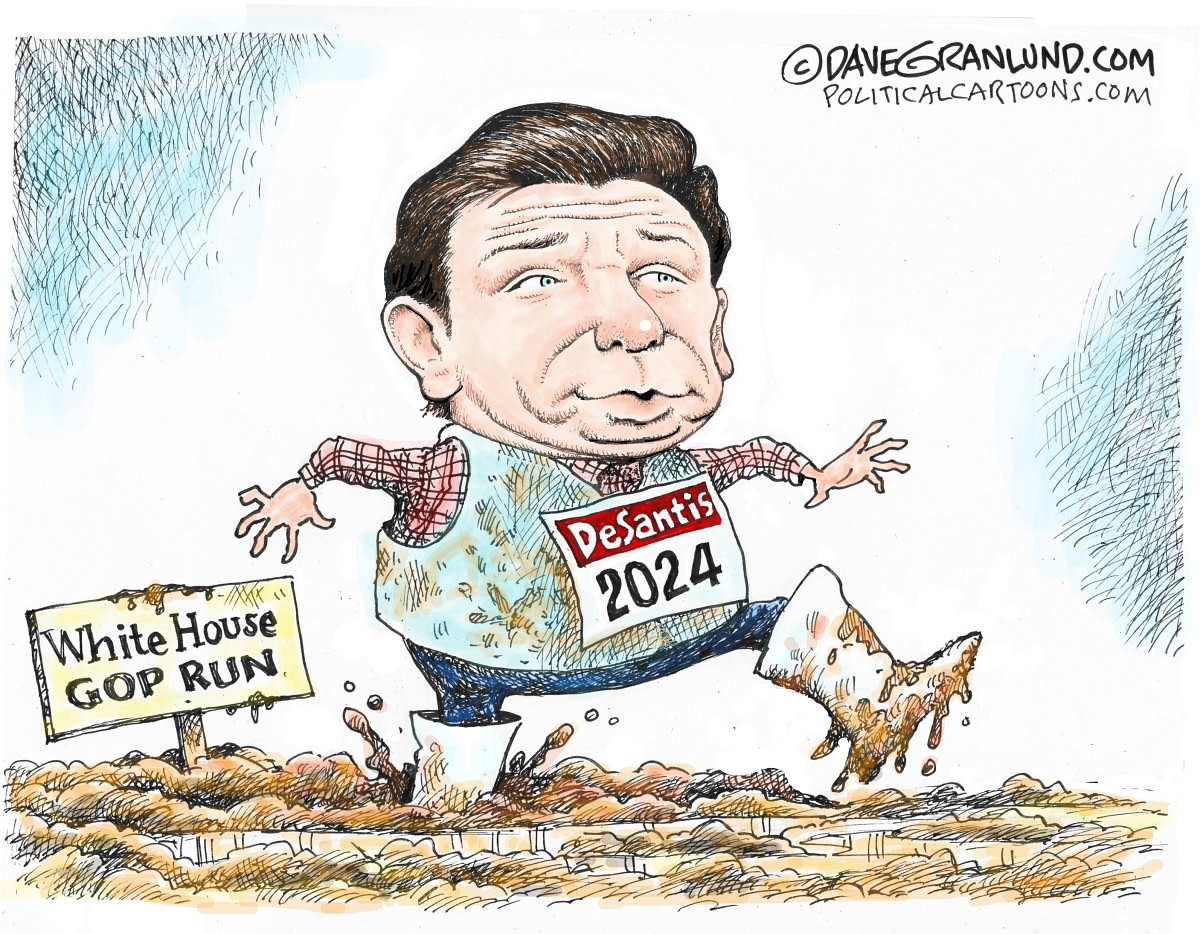
IMAGE: Cagle Cartoon: Dave Granlund


The cult of manufactured ignorance now works through disimagination machines engaged in a politics of falsehoods and erasure. Matters of justice, ethics, equality, and historical memory now vanish from the classrooms of public and higher education and from powerful cultural apparatuses and social media platforms that have become the new teaching machines.

In the current era of white supremacy, the most obvious version of apartheid pedagogy is present in attempts by Republican Party politicians to rewrite the narrative regarding who counts as an American, especially in the whitening of American history. This whitening of collective identity is largely reproduced by right-wing attacks on diversity and race sensitivity training, critical race programs in government, and social justice and racial issues in the schools. These bogus assaults are all too familiar and include widespread and coordinated ideological and pedagogical attacks against both historical memory and critical forms of education.

The fight to censor critical, truth-telling versions of American history and the current persistence of systemic racism is part of a larger conservative project to prevent teachers, students, journalists, and others from speaking openly about crucial social issues that undermine a viable democracy. Such attacks are increasingly waged by conservative foundations, anti-public intellectuals, politicians, and media outlets. These include right-wing think tanks such as Heritage Foundation and Manhattan Institute, conservative scholars such as Thomas Sowell, right-wing politicians such as Mitch McConnell, and far-right media outlets such as City Journal, The Daily Caller, Federalist, and Fox News. The threat of teaching children about the history and systemic nature of racism appears particularly dangerous to politicians such as Florida Gov. Ron DeSantis, who claim that critical race theory and other “anti-racist” programs constitute forms of indoctrination that threatens to undermine the alleged foundations of Western Civilization.

In doing so, they attempt to undermine and discredit the critical faculties necessary for students and others to examine history as a resource in order to “investigate the core conflict between a nation founded on radical notions of liberty, freedom, and equality, and a nation built on slavery, exploitation, and exclusion.”[1]

White ignorance is crucial to upholding the poison of white supremacy.

White ignorance is crucial to upholding the poison of white supremacy. Apartheid pedagogy is about denial and disappearance—a manufactured ignorance that attempts to whitewash history and rewrite the narrative of American exceptionalism as it might have been framed in in the 1920s and 30s when members of a resurgent Ku Klux Klan shaped the policies of some school boards. Apartheid pedagogy uses education as a disimagination machine to convince students and others that racism does not exist, that teaching about racial justice is a form of indoctrination, and that understanding history is more an exercise in blind reverence than critical analysis. Apartheid pedagogy aims to reproduce current systems of racism rather than end them. Apartheid pedagogy most ardent proponent is Florida Gov. Ron DeSantis who has become America's most prominent white supremacist. Nowhere is his version of apartheid pedagogy most obvious than in the new African American history standards adopted in 2023 by the Florida Board of Education. Under the new standards, middle-school students are told that slaves benefited from slavery by “developing new skills which…could be applied to their personal benefit.”

It is hard to understand how African Americans who were raped, tortured, whipped, and subject to unimaginable acts of dehumanization somehow benefited from the horrors of slavery. This is white supremacy on steroids. Under this form of apartheid pedagogy, students are also instructed that the acts of violence committed against African-Americans [as in] the “1905 Atlanta race riot, 1919 Washington, D.C. Race Riot, 1920 Ocoee Massacre, 1921 Tulsa Massacre and the 1923 Rosewood Massacre” were perpetrated not only by whites but also by African Americans.[2] White supremacy is once again rewriting history by stating that mass violence and massacres committed by white racist mobs were sparked by violence from Blacks. In fact, in all of these massacres, whites entered Black communities and destroyed homes, businesses, and murdered Blacks. Two examples will suffice.

In the November 2, 1920, the Ocoee massacre took place. As Isis Davis-Marks observes, a white mob “of around 250 burned 22 homes, 2 churches and a fraternal lodge. The number of black residents killed in the attack remains unknown, with estimates ranging from 3 to 60. Several contemporary observers placed the death toll at between 30 and 35.” [3]

During the Tulsa Race Massacre, which took place on May 30, 1921. whites committed numerous acts of violence against Black people. The Red Cross later estimated that “some 1,256 houses were burned; 215 others were looted but not torched. Two newspapers, a school, a library, a hospital, churches, hotels, stores and many other Black-owned businesses were among the buildings destroyed or damaged by fire.”[4] 36 Black people were murdered.

DeSantis’ attempt to rewrite history and engage in a form of apartheid pedagogy is an attempt to both cover up this violence and strip away a history of structural racism. It is also an attempt to eliminate those historical narratives that instruct us to see what is wrong in our history so it cannot be repeated. This type of racist pedagogy is aimed at both whitewashing history and erasing the hard-fought struggles by African Americans to expand and protect their fundamental rights. Under such circumstances, history becomes a petri dish of lies designed to shift the country into a time when white oppression was legitimated and normalized. In addition, DeSantis’ attempt to distort the authoritarian ideology, menacing tactics, and violence aimed at those groups considered excess, a threat, and disposable is part of a larger attempt to erase how his own politics are closely aligned with fascist ideologies and practices rooted in the past.[5]

This is a form of “patriotic education” being put in place by a resurgence of those who support Jim Crow power relations and want to impose pedagogies of repression on students in the classroom. This type of retribution is a part of a longstanding politics of fear, censorship and academic repression that has been waged by conservatives since the student revolts of the 1960s.[6]

The public imagination is now in crisis. Radical uncertainty has turned lethal. In the current historical moment, tyranny, fear, and hatred have become defining modes of governance and education. Right-wing politicians bolstered by the power of corporate controlled media now construct ways of thinking and feeling that prey on the anxieties of the isolated, disenfranchised, and powerless. to substitute disillusionment and incoherence for a sense of comforting ignorance, the thrill of hyper-masculinity, and the security that comes with the militarized unity of the accommodating masses waging a war on democracy. The public imagination is formed through habits of daily life, but only for the better when such experiences are filtered through the ideals and promises of a democracy. This is no longer true. Under neoliberal fascism, the concentration of power in the hands of a ruling elite has ensured that any notion of change regarding equality and justice is now tainted, if not destroyed, as a result of what Theodor Adorno called a retreat into apocalyptic bombast marked by “an organized flight of ideas.”[7]

America’s slide into a fascist politics demands a revitalized understanding of the historical moment in which we find ourselves

America’s slide into a fascist politics demands a revitalized understanding of the historical moment in which we find ourselves, along with a systemic critical analysis of the new political formations that mark this period. Part of this challenge is to create a new language and mass social movement to address and construct empowering terrains of education, politics, justice, culture, and power that challenge existing systems of racist violence and economic oppression.

Any viable pedagogy of resistance needs to create the educational and pedagogical tools to produce a radical shift in consciousness, capable of both recognizing the scorched earth policies of neoliberal capitalism, and the twisted ideologies that support it. This shift in consciousness cannot take place without pedagogical interventions that speak to people in ways in which they can recognize themselves, identify with the issues being addressed, and place the privatization of their troubles in a broader systemic context.[8] Niko Block gets it right in arguing for a “radical recasting of the leftist imagination,” in which the concrete needs of people are addressed and elevated to the forefront of public discussion in order to address and get ahead of the crises of our times. He writes:

"The crises of the twenty-first century call for a radical recasting of the leftist imagination. This process involves building bridges between the real and the imaginary, so that the path to achieving political goals is plain to see. Accordingly, the articulation of leftist goals must resonate with people in concrete ways, so that it becomes obvious how the achievement of those goals would improve their day-to-day lives. The left, in this sense, must appeal to people’s existing identities and not condescend the general public as victims of “false consciousness.” All this means building movements of continual improvement and refusing to ask already-vulnerable people for short-term losses on the abstract promise of long-term gains. This project also demands that we understand precisely why right-wing ideology retains a popular appeal in so many spaces.[9]

A pedagogy of resistance must be on the side of hope and civic courage in order to fight against a paralyzing indifference, grave social injustices, and mind deadening attacks on the public imagination. At stake here is the struggle for a new world based on the notion that capitalism and democracy are not the same, and that we need to understand the world, how we think about it and how it functions, in order to change it. In the spirit of Martin Luther King, Jr’s call for a more comprehensive view of oppression and political struggle, it is crucial to address his call to radically interrelate and restructure consciousness, values, and society itself. In this instance, King and other theorists such as Saskia Sassen call for a language that ideologically ruptures and changes the nature of the debate about democracy, education, politics, hope, and social justice. We live in an era in which the distinction between the truth and misinformation is under attack. Ignorance has become a virtue, and education has become a tool of repression that elevates self-interest and privatization to central organizing principles of both economics and politics. The socio-historical conditions that enable racism, systemic inequality, anti-intellectualism, mass incarceration, the war on youth, poverty, state violence, and domestic terrorism must be remembered in the fight against that which now parades as ideologically normal. Historical memory and the demands of moral witnessing must become part of a deep grammar of political and pedagogical resistance in the fight against neoliberal capitalism and its updated forms of fascism.

Central to any viable notion of pedagogical resistance is the courage to think about what kind of world we want—what kind of future we want to build for our children. These are questions that can only be addressed when address politics and capitalism as part of a general crisis of democracy. This challenge demands the willingness to develop an anti-capitalist consciousness as the basis for a call to action, one willing to dismantle the present structure of neoliberal capitalism. Chantal Mouffe is right in arguing that “before being able to radicalize democracy, it is first necessary to recover it,” which means first rejecting the commonsense assumptions that capitalism and democracy are synonymous.[10]


[11] There is ample evidence of such solidarity in the policies advocated by the progressive Black Lives Matter protest, the call for green socialism, movements for health as a global right, growing resistance against police violence, emerging ecological movements such as the youth-based Sunrise movement, the Poor People’s Campaign, the massive ongoing strikes waged by students and teachers against the defunding and corporatizing of public education, and the call for resistance from women across the globe fighting for reproductive rights.

What must be resisted at all costs, is an “apartheid pedagogy,” rooted in the notion that a particular mode of oppression, and those who bear its weight, offers political guarantees.[12] Identifying different modes of oppression is important, but it is only the first step in moving from addressing the history and existing mechanisms that produce such trauma to developing and embracing a politics that unites different identities, individuals, and social movements under the larger banner of democratic socialism. This is a politics that refuses the easy appeals of ideological silos which “limits access to the world of ideas and contracts the range of tools available to would-be activists.”[13]

The urgency of the historical moment demands new visions of social change, an inspired and energized sense of social hope, and the necessity for diverse social movements to unite under the collective struggle for democratic socialism. The debilitating political pessimism of neoliberal gangster capitalism must be challenged as a starting point for believing that rather than being exhausted, the future along with history is open and now is the time to act. It is time to make possible what has for tool long been declared as impossible.

NOTES:

[1] George Sanchez and Beth English, “OAH Statement on White House Conference on American History,” Organization of American History (September 2020). Online.
[2] Antonio Planas. “New Florida standards teach students that some Black people benefited from slavery because it taught useful skills,” NBC News (July 20, 2023). Online:
[3] Isis Davis-Marks, “The Little-Known Story of America’s Deadliest Election Day Massacre,” Smithsonian Magazine (November 13, 2020). Online:
[4] History.com editors, “Tulsa Race Massacre,” History (May 31, 2023).
[5] This issue is taken up brilliantly by Federico Finchelstein, A Brief History of Fascist Lies (Oakland: University of California Press, 2020).
[6] Michelle Goldberg, “The Campaign to Cancel Wokeness,” New York Times. (February 26, 2021).
[7] Volker Weiss, “afterword,” in Theodor W. Adorno, Aspects of the New Right-Wing Extremism (London: Polity, 2020), p. 61.
[8] See Robert Latham, A. T. Kingsmith, Julian von Bargen and Niko Block, eds Challenging the Right, Augmenting the Left—Recasting Leftist Imagination (Winnipeg, Canada: Fernwood Publishing, 2020).
[9] Nico Block, “Augmenting the Left: Challenging the Right, Reimagining Transformation,” Socialist Project: the Bullet (August 31, 2020).
[10] Chantal Mouffe, For a Left Populism, [London: Verso, 2018], p. 37.
[11] Institute for Critical Social Analysis, “A Window of Opportunity for Leftist Politics?” Socialist Project: the Bullet (August 3, 2020).
[12] I have taken the notion of “apartheid pedagogy” from Adam Shatz, “Palestinianism” London Review of Books (43:9 (May 6, 2021), p. 28.
[13] Robin D.G. Kelley, “Black Study, Black Struggle – final response,” Boston Review, (March 7, 2016).
The opinions expressed here are solely the author's and do not reflect the opinions or beliefs of the LA Progressive.


TAGS: RacismfascismRonDesantiswhitesupremacydesantis


ABOUT THE AUTHOR:


Henry A. Giroux currently holds the McMaster University Chair for Scholarship in the Public Interest in the English and Cultural Studies Department and is the Paulo Freire Distinguished Scholar in Critical Pedagogy. His most recent books include: The Terror of the Unforeseen (Los Angeles Review of books, 2019), On Critical Pedagogy, 2nd edition (Bloomsbury, 2020); Neoliberalism’s War on Higher Education, 2nd edition (Haymarket Books 2020); and Race, Politics, and Pandemic Pedagogy: Education in a Time of Crisis (Bloomsbury 2021), Pedagogy of Resistance: Against Manufactured Ignorance (Bloomsbury 2022). His latest book is Insurrections: Education in the Age of Counter-revolutionary politics (Bloomsbury in 2023). His website is www.henryagiroux.com


IMAGE: Cagle Cartoon: Dave Granlund

Wednesday, October 18, 2023

IMPORTANT NEW BOOKS:

Black Grief/White Grievance: The Politics of Loss
by Juliet Hooker
‎ Princeton University Press, 2023


[Publication date: October 3, 2023]

How race shapes expectations about whose losses matter

In democracies, citizens must accept loss; we can’t always be on the winning side. But in the United States, the fundamental civic capacity of being able to lose is not distributed equally. Propped up by white supremacy, whites (as a group) are accustomed to winning; they have generally been able to exercise political rule without having to accept sharing it. Black citizens, on the other hand, are expected to be political heroes whose civic suffering enables progress toward racial justice. In this book, Juliet Hooker, a leading thinker on democracy and race, argues that the two most important forces driving racial politics in the United States today are Black grief and white grievance. Black grief is exemplified by current protests against police violence―the latest in a tradition of violent death and subsequent public mourning spurring Black political mobilization. The potent politics of white grievance, meanwhile, which is also not new, imagines the United States as a white country under siege.

Drawing on African American political thought, Hooker examines key moments in US racial politics that illuminate the problem of loss in democracy. She connects today’s Black Lives Matter protests to the use of lynching photographs to arouse public outrage over post–Reconstruction era racial terror, and she discusses Emmett Till’s funeral as a catalyst for the civil rights struggles of the 1950s and 1960s. She also traces the political weaponization of white victimhood during the Obama and Trump presidencies. Calling for an expansion of Black and white political imaginations, Hooker argues that both must learn to sit with loss, for different reasons and to different ends.

An intriguing, academic analysis of the link between U.S. racial politics and democracy."---Rebekah Kati, Library Journal

"This fascinating and critical research sheds light on the personal and political ramifications of loss and the racial inequities they continue to perpetuate."
---Karla Strand, Ms. Magazine

REVIEWS:


“Black Grief/White Grievance is every bit as stark and urgent as the moment of racial reckoning that inspired it. Juliet Hooker has brilliantly dissected a fundamental dichotomy of American life―the inequality of loss―and pointed to its damning implications for our democracy. By all indicators, these insights will only grow more relevant with time.”―Jelani Cobb, Columbia Journalism School

“This fascinating book provides a rich and timely dialogical space that goes beyond our polarized politics. Juliet Hooker’s subtle analysis gets inside the complex dynamics of the Black and White worlds in order to deepen our commitment to democratic possibilities.”―
Cornel West, Union Theological Seminary

“Juliet Hooker has penned an intervention that is important, necessary, and long overdue. The significance of loss and its unequal distribution has gone without saying in political theory for far too long. This omission has prevented us from attempting to grapple honestly with the fact that some of what has been lost is impossible to recover or repair, and from understanding what costs are embedded in actually existing democratic life and who has been made to bear those costs. Hooker's contribution in this work is surgical and incisive, with large implications for the field.”―
Deva Woodly, author of Reckoning: Black Lives Matter and the Democratic Necessity of Social Movement

“This book is an extraordinary work of critical race studies and democratic theory. Alert to the inchoate affective dimensions of loss, Hooker brilliantly reveals a deeply racialized economy of suffering that demands the interminable spectacle of Black death and public performance of Black loss. Resisting the democratic politics of repair, she discovers new forms of Black worldmaking that inspire transformative action in the present.”―
Linda M. G. Zerilli, University of Chicago

“In this soberly eloquent book, Juliet Hooker shows that our common humanity requires all Americans to accept that losses of unjust privileges are not valid grounds for grievance, and that the burdens of unjust losses must not include duties to heroically overcome them. By refusing these wrongful conceptions of loss, we may find more gainful paths for ourselves and others.”
―Rogers M. Smith, University of Pennsylvania

“With
Black Grief/White Grievance, Juliet Hooker examines the two terms of her book’s title in all their profound contradictions. Drawing on W.E.B. Du Bois, Claudia Rankine, and many others, she provides the outlines of a racial system built in part on affectual politics, but without ignoring structural racism. By contrasting Black grief and white grievance so coherently and emotionally, by looking at the political weight of racist affect, of white shame and rage, of continuous Black mourning and attempts to transcend it, Hooker makes a serious contribution to the theory of racism. This startling and promising book is not to be missed!”―Howard Winant, University of California, Santa Barbara

ABOUT THE AUTHOR:


Juliet Hooker is the Royce Family Professor of Teaching Excellence in Political Science at Brown University. She is the author of Race and the Politics of Solidarity and Theorizing Race in the Americas: Douglass, Sarmiento, Du Bois, and Vasconcelos, which was awarded the American Political Science Association’s 2018 Ralph Bunche Book Award for the best work in ethnic and cultural pluralism and the 2018 Best Book Award of the Race, Ethnicity, and Politics Section of the American Political Science Association.
 

The Darkened Light of Faith: Race, Democracy, and Freedom in African American Political Thought
by Melvin L. Rogers
‎Princeton University Press, 2023
[Publication date: September 26, 2023]
REVIEWS:
“Rogers thoroughly rewrites our understanding of the history of political philosophy by at long last incorporating nineteenth-century African American thought in the narrative. When liberalism and utilitarianism abandoned commitments to participation, civic culture, and solidarity in the mid-nineteenth century, republicanism didn’t die. Instead, African American thinkers mined and transformed this tradition, as Rogers in turn does again, to push Americans toward a full flowering of a culture rooted in freedom and dignity for all. This is a brilliant book.”―Danielle Allen, author of Our Declaration: A Reading of the Declaration of Independence in Defense of Equality

“Rarely does a book fundamentally alter our understanding of a subject. Melvin Rogers’s
The Darkened Light of Faith is one such book. Grand and profound, it not only provides insights about the people and ideas it examines, but also offers wisdom about how we ought to live together. The care and brilliance with which Rogers treats African American political thought is breathtaking and inspiring. This will be a foundational book for as long as the world turns.”―Nicholas Buccola, author of The Fire Is Upon Us: James Baldwin, William F. Buckley Jr., and the Debate over Race in America

“At a moment when the value of democracy has been challenged by a resurgent authoritarian right and, in entirely different ways and to different ends, by antiracist thinkers on the left, Rogers advances a brilliant defense of democratic ideals.
The Darkened Light of Faith makes its case through innovative readings of African American political thinkers who insist that U.S. democracy can and must be reconstructed.”―Lawrie Balfour, author of Toni Morrison: Imagining Freedom

“With
The Darkened Light of Faith, Rogers solidifies his place among the most sophisticated and insightful interpreters of the African American political tradition. After his learned, probing, and elegant treatment, it’s impossible to read these familiar texts and debates in the usual ways. The political wisdom and ethical truths that Rogers extracts from such thinkers as Walker, Wells, Cooper, and Du Bois will be absolutely vital if we are ever to transform the United States into a racially just society.”―Tommie Shelby, author of We Who Are Dark: The Philosophical Foundations of Black Solidarity

“What a triumph! With Copernican gusto, Melvin Rogers shatters the genealogy of republicanism, showing how nineteenth- and twentieth-century Black political thinkers and activists offered alternatives to white supremacy and reimagined freedom beyond domination. It is not too early to place Rogers’s landmark book alongside David Walker’s
Appeal, Anna Julia Cooper’s A Voice from the South, W.E.B. Du Bois’s Darkwater, and Angela Davis’s Lectures on Liberation.”―Neil Roberts, editor of A Political Companion to Frederick Douglass

“Melvin Rogers has written a brilliant book. Aiming to wrest democracy from the grip of white supremacy, he presents incisive readings of key figures in the African American intellectual and artistic traditions, from David Walker and W.E.B. Du Bois to Billie Holiday and James Baldwin, and develops a powerful and attractive political vision inspired by their insights. Philosophically rich, imaginative, erudite, and beautifully written,
The Darkened Light of Faith is a major contribution to political theory and intellectual history.”―Duncan Bell, author of Dreamworlds of Race: Empire and the Utopian Destiny of Anglo-America

ABOUT THE AUTHOR:


Melvin L. Rogers is professor of political science and associate director of the Center for Philosophy, Politics, and Economics at Brown University. He is the author of The Undiscovered Dewey: Religion, Morality, and the Ethos of Democracy, coeditor of African American Political Thought: A Collected History, and editor of John Dewey’s The Public and Its Problems.


Punished For Dreaming: How School Reform Harms Black Children and How We Healby Bettina L. Love
St. Martin's Press, 2023 

[Publication date: September 12, 2023]

NOW A NEW YORK TIMES AND A USA TODAY BESTSELLER

“I am an eighties baby who grew to hate school. I never fully understood why. Until now. Until Bettina Love unapologetically and painstakingly chronicled the last forty years of education ‘reform’ in this landmark book. I hated school because it warred on me. I hated school because I loved to dream.”

―Ibram X. Kendi, New York Times bestselling author of How to be an Antiracist

In the tradition of Michelle Alexander, an unflinching reckoning with the impact of 40 years of racist public school policy on generations of Black lives


In
Punished for Dreaming Dr. Bettina Love argues forcefully that Reagan’s presidency ushered in a War on Black Children, pathologizing and penalizing them in concert with the War on Drugs. New policies punished schools with policing, closure, and loss of funding in the name of reform, as white savior, egalitarian efforts increasingly allowed private interests to infiltrate the system. These changes implicated children of color, and Black children in particular, as low performing, making it all too easy to turn a blind eye to their disproportionate conviction and incarceration. Today, there is little national conversation about a structural overhaul of American schools; cosmetic changes, rooted in anti-Blackness, are now passed off as justice.

It is time to put a price tag on the miseducation of Black children. In this prequel to
The New Jim Crow, Dr. Love serves up a blistering account of four decades of educational reform through the lens of the people who lived it. Punished for Dreaming lays bare the devastating effect on 25 Black Americans caught in the intersection of economic gain and racist ideology. Then, with input from leading U.S. economists, Dr. Love offers a road map for repair, arguing for reparations with transformation for all children at its core.

REVIEWS:

KIRKUS REVIEWS: 150 MOST ANTICIPATED BOOKS OF THE FALL
NEXT BIG IDEA CLUB: SEPTEMBER 2023 MUST-READ BOOKS
WE ARE TEACHERS: THE BEST NEW BOOKS COMING SEPTEMBER 2023


“Detailed and persuasive, this is a must-read for educators.”

―Publishers Weekly, starred review

“Lays out the racial injustices rampant in the public education system, from the era of school segregation to the massive resistance to Brown v. Board to the current era of so-called school choice. … an important―though enraging and heartbreaking―read.”

―Booklist

"A stark critique of 40 years of education policies that were deliberately crafted ‘to punish Black people for believing in and fighting for their right to quality public education.’ … An impassioned plea for educational justice.”

―Kirkus Reviews

“A landmark book.”

―Ibram X. Kendi, author of How to be an Antiracist

“Brilliant."

―Carol Anderson, bestselling author of White Rage

"Love is one of our fiercest advocates."
―Michael Eric Dyson, bestselling author

"An urgent call to action."
―Salamishah Tillet, winner of the Pulitzer Prize

"Blends brilliance, warmth, and a deep commitment to the pursuit of justice for all our nation’s children."
―Brittney Cooper, bestselling author of Eloquent Rage

"Accessible and deeply personal...Love's interviews with Black folks... add a tenderness and intimacy."
―Eve L. Ewing, author of Ghosts in the Schoolyard

"Love brilliantly exposes how the promise of education as a means to lift all boats and right historical wrongs is coopted by politics, strategies, euphemisms, and implicit biases that surveil and control children of color under the guise of teaching them. This is an urgent, often surprising, ultimately must-read book for anyone concerned with the pedagogy in and of our nation."
―Jonathan Metzl, author of Dying of Whiteness

ABOUT THE AUTHOR:


Dr. Bettina L. Love is the William F. Russell Professor at Teachers College, Columbia University and the bestselling author of We Want To Do More Than Survive. In 2022, the Kennedy Center named Dr. Love one of the Next 50 Leaders making the world more inspired, inclusive, and compassionate. She is a co-founder of the Abolitionist Teaching Network (ATN), whose mission is to develop and support teachers and parents fighting injustice within their schools and communities, having granted over $250,000 to abolitionists around the country. She is also a founding member of the Task Force that launched the program In Her Hands, distributing more than $15 million to Black women living in Georgia. In Her Hands is one of the largest guaranteed income pilot programs in the U.S. Dr. Love is a sought-after public speaker on a range of topics, including abolitionist teaching, anti-racism, Hip Hop education, Black girlhood, queer youth, educational reparations, and art-based education to foster youth civic engagement. In 2018, she was granted a resolution by Georgia's House of Representatives for her impact on the field of education.