Showing posts with label Political Education. Show all posts

Friday, June 3, 2011

Black Public Intellectuals Cornel West and Melissa Harris-Perry Debate the Policies of the Obama Administration on the 'Ed Schultz Program' on MSNBC


http://www.thenation.com/authors/melissa-harris-perry

All,

Ever heard of being able to chew gum and talk/walk/gawk at the same damn time?...Yeah, yeah I thought you had...Me too!...Which is all the more reason why these endless tirades about the personal and political behavior of (black and white) public intellectuals by other (black and white) intellectuals are so often utterly bizarre and hopelessly and hilariously DUMB--especially when the real major subtext of and reason for these rhetorical jibes and jabs have far more to do with what the Obama Administration is or is not doing and whether one generally supports or is actively critical of the actual performance of the President of the United States vis-a-vis U.S. corporate elites, The Republican and Tea parties, Wall Street, the massive imperialist war machine (ever heard of Iraq, Afghanistan, Libya, Pakistan folks?), not to mention chronic structural unemployment, the dire need for major education, Health care, and financial reform, and transparency in government (just for starters)...

In the following scathing, witty, and highly lucid piece Melissa Harris-Perry eloquently and judiciously takes her Princeton colleague Cornel West to task for stupidly conflating silly personal motives with serious political ones in his most recent critique of the President in his interview with Chris Hedges and does a fine, wicked job of exposing the fundamental hypocrisy of West's friend Tavis Smiley's own fawning public relationship with the corporate elites of Wal-Mart, Wells Fargo, and McDonald's, among others in their ongoing contradictory claims to "speak truth to power" in the current national economic crisis. Perry goes on to also point out that tenured university professors with large salaries and considerable access to material resources and institutional support that the "average citizen" could not possibly equal puts them both in a privileged position that must be honestly confronted, acknowledged, and accounted for in their own publicly critical assessments of the meaning of events and issues facing the national body politic--especially as it relates to the actual policy positions and programs of the President. Perry's clear-eyed ability to cut through the fog of personal ego and self serving grandstanding is thus important and timely and generally can't or shouldn't be dismissed...

Yet at the same time it must also be said that despite whatever obvious flaws, shortcomings, weaknesses, and contradictions of public intellectuals from academia it's very important that one not lose sight of whatever substantive critical analyses by West and Perry can be and have been made of President Obama and the national government as well as the wealthy elite economic and political institutions and interests that they far too often service and privilege above the masses of people. So that even though West has had a bitter and contentious 'personal' relationship with the former major Obama economic advisor Lawrence Summers in the past when Summers was still the President of Harvard and Cornel still taught there, it is still important to recognize that his intrepid critique of Summers goes far beyond their own personal acrimony and speaks directly to West detailing and exposing the reactionary economic policy 'advice' Summers gave to the President that he and the Democratic Party later implemented. Given these larger realities one must not lose sight of the far bigger and vastly more important responsibility of truly speaking truth to power and publicly advocating and fighting for radical grassroots change via the instruments of mass organizations and actual political involvement and participation. In other words there is ample room and a great necessity for real useful knowledge that even privileged academics and intellectuals can and must provide if their commitment is to a much broader vision that goes far beyond that of mere ego reinforcement and taking idle 'personal' potshots at professional colleagues and associates who also seek a forum that exceeds that of the corrupt and cynical soundbite obsessed media and the lucrative financial and head expanding lures, temptations, and traps of the national lecture circuit...

Kofi


Cornel West v. Barack Obama
by Melissa Harris-Perry
May 17, 2011
The Nation

Professor Cornel West is President Obama’s silenced, disregarded, disrespected moral conscience, according to Chris Hedges’s recent Truthdig column, “The Obama Deception: Why Cornel West went Ballistic.” In a self-aggrandizing, victimology sermon deceptively wrapped in the discourse of prophetic, Professor West offers thin criticism of President Obama and stunning insight into the delicate ego of the self-appointed black leadership class that has been largely supplanted in recent years.

West begins with a bit of historical revision. West suggests that the president discarded him without provocation after he offered the Obama for America campaign his loyal service and prayers. But anyone with a casual knowledge of this rift knows it began during the Democratic primary, not after the election. It began, not with a puffed-up president but when Cornel West’s “dear brother” Tavis Smiley threw a public tantrum because Senator Obama refused to attend Smiley’s annual State of Black America. Smiley repeatedly suggested that his forum was the necessary black vetting space for the Democratic nominees. He needed to ask Obama and Clinton tough questions so that black America could get the answers it needed. But black America was doing a fine job making up its own mind in the primaries and didn’t need Smiley’s blessing to determine their own electoral preferences. Indeed, when Smiley got a chance to hold candidate Clinton “accountable” he spent more time fawning over her than probing about her symbolic or substantive policy stances that impacted black communities. Fiercely loyal to his friend, Professor West chose sides and began to undermine candidate Obama in small and large ways. Candidate Obama ceased calling West back because he was in the middle of a fierce campaign and West’s loyalties were, at best, divided. I suspect candidate Obama did not trust his “dear brother” to keep the campaign secrets and strategies. I also suspect he was not inaccurate in his hesitancy.

West may have had principled, even prophetic reasons, for choosing this outsider position relative to Obama, but it is dishonest to later frame that choice as a betrayal on the part of the president. After what I had written about Senator Clinton during the campaign I wasn’t expecting an offer from the State Department.

Furthermore, West’s sense of betrayal is clearly more personal than ideological. In Hedges’s article West claims that a true progressive would always put love of the people above concern with the elite and privileged. Then he complains, “I couldn’t get a ticket [to the inauguration] with my mother and my brother. I said this is very strange. We drive into the hotel and the guy who picks up my bags from the hotel has a ticket to the inauguration…. We had to watch the thing in the hotel.” Let me get this straight—the tenured, Princeton professor who collects five figures for public lectures was relegated to a hotel television while an anonymous hotel worker got tickets to the inauguration! What kind of crazy, mixed-up class politics are these? Wait a minute…

What exactly is so irritating to West about inaugural ticket-gate? It can’t be a claim that the black, progressive intellectual community was unrepresented. Yale’s Elizabeth Alexander was the poet that cold morning. It can’t be that the “common man” was shut out because the Neighborhood Ball was reserved for the ordinary women and and men who worked to make Obama ’08 possible. It must be a simple matter of jealous indignation. While I appreciate the humanness in such a reaction, it hardly counts as a prophetic critique.

Since the inaugural snub, Professor West has made his personal animosity and political criticism of the president his main public talking point. There was that hilariously bad documentary with Tavis Smiley and the rest of the Soul Patrol in 2009. There is the tiresome repetitiveness with which West invokes the name of his erstwhile Harvard nemesis Lawrence Summers as indicative of President Obama’s failed economic vision. And just a few weeks ago there was the eminently watchable screaming match on MSNBC where love-the-people West called Rev. Al Sharpton a “mascot” for the Obama administration. Add to this three-year screed the current Hedges article and it looks more like a pissing match than prophecy.

Take for example West’s ad hominem attack on the president’s racial identity.

“I think my dear brother Barack Obama has a certain fear of free black men.… It’s understandable. As a young brother who grows up in a white context, brilliant African father, he’s always had to fear being a white man with black skin. All he has known culturally is white. He is just as human as I am, but that is his cultural formation.”

This comment is utter hilarity coming from Cornel West who has spent the bulk of his adulthood living in those deeply rooted, culturally rich, historically important black communities of Cambridge, Massachusetts, and Princeton, New Jersey. And it is hard to see his claim that Obama is “most comfortable with upper middle-class white and Jewish men who consider themselves very smart, very savvy and very effective in getting what they” as anything other than a classic projection of his own comfortably ensconced life at Harvard and Princeton Universities. Harvard and Princeton are not places that are particularly noted for their liberating history for black men.

Let me be clear, being an Ivy League professor does not mean that one has no room to offer critical engagement on issues of race. Like Professor West, I too make my living at elite, predominantly white institutions. For the past five years we were on the same payroll at Princeton. Like Professor West I supplement my income by giving lectures about race, politics and history. Like West, I hope to influence policy, inspire individuals and intervene in public conversations about race. My criticism of West is his seeming unwillingness to acknowledge how our structural positions within the academy and in public intellectual life can be just as compromising to our position vis-à-vis black communities as is President Obama’s.

As tenured professors Cornel West and I are not meaningfully accountable, no matter what our love, commitment or self-delusions tell us. President Obama, as an elected official, can, in fact, be voted out of his job. We can’t. That is a difference that matters. As West derides the president’s economic policies he remains silent on his friend Tavis Smiley’s relationship with Wal-Mart, Wells Fargo and McDonald’s—all corporations whose invasive and predatory actions in poor and black communities have been the target of progressive organizing for decades. I have never heard him take Tavis Smiley to task for helping convince black Americans to enter into predatory mortgages. I’ve never heard him ask whether Tavis’s decision to publish R. Kelley’s memoirs might be a less than progressive decision. He doesn’t hold Tavis accountable because Tavis is his friend and he is loyal. I respect that, but I also know that if he were in elected office the could not get off so easily. Opposition research would point out the hypocrisy in his public positions in a way that would make him vulnerable come election time. As a media personality and professor he is safely ensconced in a system that can never vote him off the island. I think an honest critique of Obama has to begin by acknowledging his own privileges.

Instead, West seems determined to keep black politics tethered to a patronage model of politics. He tells Hedges:

“Our last hope is to generate a democratic awakening among our fellow citizens. This means raising our voices, very loud and strong, bearing witness, individually and collectively. Tavis [Smiley] and I have talked about ways of civil disobedience, beginning with ways for both of us to get arrested…”

God help us if Cornel West and Tavis Smiley getting arrested is our last chance at a democratic awakening.

I have many criticisms of the Obama administration. I wrote angrily about his choice of Rick Warren to deliver a prayer at the inauguration. I have spoken on television about my disagreement with drone attacks in Pakistan and been critical of the administration’s initial choice to prosecute DADT cases. I worked for more progressive health care reform legislation and supported organizations that resisted the reproductive rights “compromises” in the bill. I’ve been scathing in public remarks and writings about the President’s education policy. My husband leads a nonprofit that is suing HUD for its implementation of a discriminatory formula in the post-Katrina Road Home program. The president has never called me. I got my ticket to the inauguration from Canada! (Because Canadian Broadcast Television who gave me a chance to narrate the day’s events.) But I can tell the difference between a substantive criticism and a personal attack. It is clear to me that West’s ego, not the health of American democracy, is the wounded creature in this story.


About the Author:

Melissa Harris-Perry
COLUMNIST
The Nation

Melissa Harris-Perry, an associate professor of politics and African-American studies at Princeton University, is completing her latest book, Sister Citizen: A Text for Colored Girls Who've Considered Politics When Being Strong Isn't Enough. She is a contributor to MSNBC.

Wednesday, February 9, 2011

The Revolution is Dependent on the People--Not the Media

http://www.nytimes.com/2011/02/06/opinion/06rich.html?src=me&ref=general

All,

As always my man Frank Rich is right on time and right on target with an intelligent and insightful analysis of what is really happening in the world and why. It's called Journalism folks (or at least it used to be)...

Kofi


February 5, 2011

Wallflowers at the Revolution
By FRANK RICH
New York Times

A month ago most Americans could not have picked Hosni Mubarak out of a police lineup. American foreign policy, even in Afghanistan, was all but invisible throughout the 2010 election season. Foreign aid is the only federal budget line that a clear-cut majority of Americans says should be cut. And so now — as the world’s most unstable neighborhood explodes before our eyes — does anyone seriously believe that most Americans are up to speed? Our government may be scrambling, but that’s nothing compared to its constituents. After a near-decade of fighting wars in the Arab world, we can still barely distinguish Sunni from Shia.

The live feed from Egypt is riveting. We can’t get enough of revolution video — even if, some nights, Middle West blizzards take precedence over Middle East battles on the networks’ evening news. But more often than not we have little or no context for what we’re watching. That’s the legacy of years of self-censored, superficial, provincial and at times Islamophobic coverage of the Arab world in a large swath of American news media. Even now we’re more likely to hear speculation about how many cents per gallon the day’s events might cost at the pump than to get an intimate look at the demonstrators’ lives.

Perhaps the most revealing window into America’s media-fed isolation from this crisis — small an example as it may seem — is the default assumption that the Egyptian uprising, like every other paroxysm in the region since the Green Revolution in Iran 18 months ago, must be powered by the twin American-born phenomena of Twitter and Facebook. Television news — at once threatened by the power of the Internet and fearful of appearing unhip — can’t get enough of this cliché.

Three days after riot police first used tear gas and water hoses to chase away crowds in Tahrir Square, CNN’s new prime-time headliner, Piers Morgan, declared that “the use of social media” was “the most fascinating aspect of this whole revolution.” On MSNBC that same night, Lawrence O’Donnell interviewed a teacher who had spent a year at the American school in Cairo. “They are all on Facebook,” she said of her former fifth-grade students. The fact that a sampling of fifth graders in the American school might be unrepresentative of, and wholly irrelevant to, the events unfolding in the streets of Cairo never entered the equation.

The social networking hype eventually had to subside for a simple reason: The Egyptian government pulled the plug on its four main Internet providers and yet the revolution only got stronger. “Let’s get a reality check here,” said Jim Clancy, a CNN International anchor, who broke through the bloviation on Jan. 29 by noting that the biggest demonstrations to date occurred on a day when the Internet was down. “There wasn’t any Twitter. There wasn’t any Facebook,” he said. No less exasperated was another knowledgeable on-the-scene journalist, Richard Engel, who set the record straight on MSNBC in a satellite hook-up with Rachel Maddow. “This didn’t have anything to do with Twitter and Facebook,” he said. “This had to do with people’s dignity, people’s pride. People are not able to feed their families.”

No one would deny that social media do play a role in organizing, publicizing and empowering participants in political movements in the Middle East and elsewhere. But as Malcolm Gladwell wrote on The New Yorker’s Web site last week, “surely the least interesting fact” about the Egyptian protesters is that some of them “may (or may not) have at one point or another employed some of the tools of the new media to communicate with one another.” What’s important is “why they were driven to do it in the first place” — starting with the issues of human dignity and crushing poverty that Engel was trying to shove back to center stage.

Among cyber-intellectuals in America, a fascinating debate has broken out about whether social media can do as much harm as good in totalitarian states like Egypt. In his fiercely argued new book, “The Net Delusion,” Evgeny Morozov, a young scholar who was born in Belarus, challenges the conventional wisdom of what he calls “cyber-utopianism.” Among other mischievous facts, he reports that there were only 19,235 registered Twitter accounts in Iran (0.027 percent of the population) on the eve of what many American pundits rebranded its “Twitter Revolution.” More damning, Morozov also demonstrates how the digital tools so useful to citizens in a free society can be co-opted by tech-savvy dictators, police states and garden-variety autocrats to spread propaganda and to track (and arrest) conveniently networked dissidents, from Iran to Venezuela. Hugo Chávez first vilified Twitter as a “conspiracy,” but now has 1.2 million followers imbibing his self-sanctifying Tweets.

This provocative debate isn’t even being acknowledged in most American coverage of the Internet’s role in the current uprisings. The talking-head invocations of Twitter and Facebook instead take the form of implicit, simplistic Western chauvinism. How fabulous that two great American digital innovations can rescue the downtrodden, unwashed masses. That is indeed impressive if no one points out that, even in the case of the young and relatively wired populace of Egypt, only some 20 percent of those masses have Internet access.

That we often don’t know as much about the people in these countries as we do about their Tweets is a testament to the cutbacks in foreign coverage at many news organizations — and perhaps also to our own desire to escape a war zone that has for so long sapped American energy, resources and patience. We see the Middle East on television only when it flares up and then generally in medium or long shot. But there actually is an English-language cable channel — Al Jazeera English — that blankets the region with bureaus and that could have been illuminating Arab life and politics for American audiences since 2006, when it was established as an editorially separate sister channel to its Qatar-based namesake.

Al Jazeera English, run by a 35-year veteran of the Canadian Broadcasting Company, is routinely available in Israel and Canada. It provided coverage of the 2009 Gaza war and this year’s Tunisian revolt when no other television networks would or could. Yet in America, it can be found only in Washington, D.C., and on small cable systems in Ohio and Vermont. None of the biggest American cable and satellite companies — Comcast, DirecTV and Time Warner — offer it.

The noxious domestic political atmosphere fostering this near-blackout is obvious to all. It was made vivid last week when Bill O’Reilly of Fox News went on a tear about how Al Jazeera English is “anti-American.” This is the same “We report, you decide” Fox News that last week broke away from Cairo just as the confrontations turned violent so that viewers could watch Rupert Murdoch promote his new tablet news product at a publicity event at the Guggenheim Museum in New York.

Unable to watch Al Jazeera English, and ravenous for comprehensive and sophisticated 24/7 television coverage of the Middle East otherwise unavailable on television, millions of Americans last week tracked down the network’s Internet stream on their computers. Such was the work-around required by the censorship practiced by America’s corporate gatekeepers. You’d almost think these news-starved Americans were Iron Curtain citizens clandestinely trying to pull in the jammed Voice of America signal in the 1950s — or Egyptians desperately seeking Al Jazeera after Mubarak disrupted its signal last week.

The consequence of a decade’s worth of indiscriminate demonization of Arabs in America — and of the low quotient of comprehensive adult news coverage that might have helped counter it — is the steady rise in Islamophobia. The “Ground Zero” mosque melee has given way to battles over mosques as far removed from Lower Manhattan as California. Soon to come is a national witch hunt — Congressional hearings called by Representative Peter King of New York — into the “radicalization of the American Muslim community.” Given the disconnect between America and the Arab world, it’s no wonder that Americans are invested in the fights for freedom in Egypt and its neighboring dictatorships only up to a point. We’ve been inculcated to assume that whoever comes out on top is ipso facto a jihadist.

This week brings the release of Donald Rumsfeld’s memoir. The eighth anniversary of the invasion of Iraq is to follow. As we took in last week’s fiery video from Cairo — mesmerizing and yet populated by mostly anonymous extras we don’t understand and don’t know — it was hard not to flash back to those glory days of “Shock and Awe.” Those bombardments too were spectacular to watch from a safe distance — no Iraqi faces, voices or bodies cluttered up the shots. We lulled ourselves into believing that democracy and other good things were soon to come. It took months, even years, for us to learn the hard way that in truth we really had no idea what was going on.


Friday, January 21, 2011

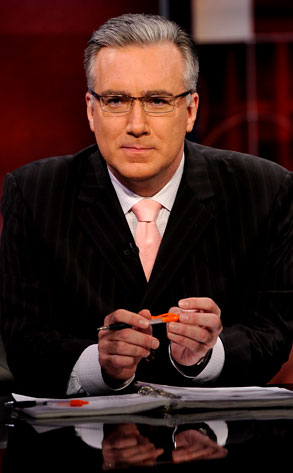
Outstanding Political Journalist and Social Commentator Keith Olbermann Leaves MSNBC

Keith Olbermann
Virginia Sherwood/NBC

Virginia Sherwood/MSNBC
Keith Olbermann in November 2010

http://mediadecoder.blogs.nytimes.com/2011/01/21/olbermann-hosts-last-countdown-on-msnbc/?scp=2&sq=Keith Olbermann&st=cse

All,

This is a major incalcuable loss to political journalism in this country and nothing short of a catastrophe for millions of viewers like myself who have steadfastly relied upon Mr. Olbermann for his outstanding daily news, social commentary, and analytical journalism broadcasts on MSNBC since 2003. In my view Keith is by far the finest, most informed, politically courageous, and intellectually dynamic television journalist since the legendary late, great Edward R. Murrow (1908-1965), and one of the most important and leading voices in this country for a truly progressive/radical point of view in so-called "mainstream" media. I am stunned, angry, and thoroughly heartsick that a man of this moral, ethical, and political caliber, clarity, integrity, intelligence, courage, and compassion is leaving the professional airwaves (no doubt involuntarily pushed in this direction by the corporate and managerial sponsors of his network), and can barely find the words to express my deep and profound gratitude and thanks for the tremendous contribution and now legacy he has left us. Keith Olbermann is a GIANT in an ignorant, bigoted, and cowardly land of pygmies who are as always systematically destroying this society and culture by harassing, denigrating, censoring, and getting rid of its most profound, humane, and visionary leaders like Keith because they categorically refuse to shut up and do the lowly bidding of the brazen corporate thieves, pathological liars, hypocrites, and mass murderers in the venal pursuit of profit$ who do indeed "run" this country. The forced departure of Keith Olbermann from network journalism and mass media communications is yet still another horrifying indication among many that we are all in far deeper trouble in this country than we think...

Kofi

January 21, 2011, 9:20 PM

Olbermann Leaves ‘Countdown’ on MSNBC
By BILL CARTER
New York Times

9:24 p.m. | Updated Keith Olbermann, the highest-rated host on MSNBC, announced abruptly on the air Friday night that he is leaving “Countdown with Keith Olbermann” immediately.

The host, who has had a stormy relationship with the management of the network for some time, especially since he was suspended for two days last November, came to an agreement with NBC’s corporate management late this week to settle his contract and step down.

In a closing statement on his show, Mr. Olbermann said simply that it would be the last edition of the program. He offered no explanation other than on occasion, the show had become too much for him.

Mr. Olbermann thanked his viewers for their enthusiastic support of a show that had “gradually established its position as anti-establishment.”

In a statement, MSNBC said : “MSNBC and Keith Olbermann have ended their contract. The last broadcast of ‘Countdown with Keith Olbermann’ will be this evening. MSNBC thanks Keith for his integral role in MSNBC’s success and we wish him well in his future endeavors.”

MSNBC announced that “The Last Word” with Lawrence O’Donnell would replace “Countdown” at 8 p.m., with “The Ed Show” with Ed Schultz taking Mr. O’Donnell’s slot at 10 p.m. Mr. Olbermann did not discuss any future plans, but NBC executives said one term of his settlement will keep him from moving to another network for an extended period of time.

Mr. Olbermann had signed a four-year contract extension in 2008 for an estimated $30 million. He hosted “Countdown” at 8 p.m. since 2003 and it became the foundation of the channel’s surge to status as the second-ranked news channel on cable television, after Fox News, surpassing the one-time leader CNN.

Mr. Olbermann’s outspoken, and sometimes controversial, support of liberal positions and Democratic candidates redefined MSNBC from a neutral news channel to one with that openly sought to offer viewers on the left their own voice, much as Fox News has done so successfully for an audience of viewers with conservative opinions.

Mr. Olbermann challenged Fox News publicly on numerous occasions, especially the top-rated cable host Bill O’Reilly, whom he regularly tweaked and frequently placed in the top circle of infamy on a segment Mr. Olbermann called “The Worst Person in the World.”

Ratings for his show grew, though he never really approached the level of popularity Mr. O’Reilly has achieved. But he helped grow the MSNBC liberal brand by his frequent invitations to one guest, Rachel Maddow, who was eventually offered her own show on MSNBC.

Ms. Maddow became the 9 p.m. host following Mr. Olbermann and has built such a successful show that some NBC executives felt less concerned about losing Mr. Olbermann as the signature star of the network.

According to several senior network executives, NBC’s management had been close to firing Mr. Olbermann on previous occasions, most recently in November after he revealed that he had made donations to several Democratic candidates during the 2010 congressional elections — one of them, coincidentally, was Rep. Gabrielle Giffords, who has been the subject of many of his recent shows after being shot in an assassination attempt in Tucson on Jan. 8.

The top MSNBC executive, Phil Griffin, said the donations had violated NBC News standards and ordered Mr. Olbermann suspended. His fans responded with a petition to reinstate him that attracted over 250,000 signatures. Mr. Olbermann returned two days later. In his response he said the rules on donations had been “inconsistently applied.”

Friday, October 2, 2009

In Conversation with Michael Moore and Naomi Klein: A Working Critique of Capitalism

http://www.naomiklein.org/articles/2009/09/americas-teacher


Michael Moore: America's Teacher
By Naomi Klein
September 24th, 2009
Published in The Nation.

On September 17, in the midst of the publicity blitz for his new cinematic takedown of the capitalist order--Capitalism: A Love Story-- Moore talked with Nation columnist Naomi Klein by phone about the film, the roots of our economic crisis and the promise and peril of the present political moment. To listen to a podcast of the full conversation, click here. Following is an edited transcript of their conversation.--The Nation Editors

Below, you can listen to the full audio recording of their thirty-minute conversation. How is President Obama handling the economic crisis? Who is taking on Wall Street? And who is letting Wall Street take advantage of us? Find out in this exclusive podcast conversation between The Nation's Naomi Klein and documentarian Michael Moore.

Listen here:


Naomi Klein: So, the film is wonderful. Congratulations. It is, as many people have already heard, an unapologetic call for a revolt against capitalist madness. But the week it premiered, a very different kind of revolt was in the news: the so-called tea parties, seemingly a passionate defense of capitalism and against social programs.

Meanwhile, we are not seeing too many signs of the hordes storming Wall Street. Personally, I'm hoping that your film is going to be the wake-up call and the catalyst for all of that changing. But I'm just wondering how you're coping with this odd turn of events, these revolts for capitalism led by Glenn Beck.

Michael Moore: I don't know if they're so much revolts in favor of capitalism as they are being fueled by a couple of different agendas, one being the fact that a number of Americans still haven't come to grips with the fact that there's an African-American who is their leader. And I don't think they like that.

NK: Do you see that as the main driving force for the tea parties?

MM: I think it's one of the forces--but I think there's a number of agendas at work here. The other agenda is the corporate agenda. The healthcare companies and other corporate concerns are helping to pull together what seems like a spontaneous outpouring of citizen anger.

But the third part of this is--and this is what I really have always admired about the right wing: they are organized, they are dedicated, they are up at the crack of dawn fighting their fight. And on our side, I don't really see that kind of commitment.

When they were showing up at the town-hall meetings in August--those meetings are open to everyone. So where are the people from our side? And then I thought, Wow, it's August. You ever try to organize anything on the left in August?

NK: Wasn't part of it also, though, that the left, or progressives, or whatever you want to call them, have been in something of a state of disarray with regard to the Obama administration--that most people favor universal healthcare, but they couldn't rally behind it because it wasn't on the table?

MM: Yes. And that's why Obama keeps turning around and looking for the millions behind him, supporting him, and there's nobody even standing there, because he chose to take a half measure instead of the full measure that needed to happen. Had he taken the full measure--true single-payer, universal healthcare--I think he'd have millions out there backing him up.

NK: Now that the Baucus plan is going down in flames, do you think there's another window to put universal healthcare on the table?

MM: Yes. And we need people to articulate the message and get out in front of this and lead it. You know, there's close to a hundred Democrats in Congress who had already signed on as co-signers to John Conyers's bill.

Obama, I think, realizes now that whatever he thought he was trying to do with bipartisanship or holding up the olive branch, that the other side has no interest in anything other than the total destruction of anything he has stood for or was going to try and do. So if [New York Congressman Anthony] Weiner or any of the other members of Congress want to step forward, now would be the time. And I certainly would be out there. I am out there. I mean, I would use this time right now to really rally people, because I think the majority of the country wants this.

NK: Coming back to Wall Street, I want to talk a little bit more about this strange moment that we're in, where the rage that was directed at Wall Street, what was being directed at AIG executives when people were showing up in their driveways--I don't know what happened to that.

My fear was always that this huge anger that you show in the film, the kind of uprising in the face of the bailout, which forced Congress to vote against it that first time, that if that anger wasn't continuously directed at the most powerful people in society, at the elites, at the people who had created the disaster, and channeled into a real project for changing the system, then it could easily be redirected at the most vulnerable people in society; I mean immigrants, or channeled into racist rage.

And what I'm trying to sort out now is, Is it the same rage or do you think these are totally different streams of American culture--have the people who were angry at AIG turned their rage on Obama and on the idea of health reform?

MM: I don't think that is what has happened. I'm not so sure they're the same people.

In fact, I can tell you from my travels across the country while making the film and even in the last few weeks, there is something else that's simmering beneath the surface. You can't avoid the anger boiling over at some point when you have one in eight mortgages in delinquency or foreclosure, where there's a foreclosure filing once every 7.5 seconds and the unemployment rate keeps growing. That will have its own tipping point.

And the scary thing about that is that historically, at times when that has happened, the right has been able to successfully manipulate those who have been beaten down and use their rage to support what they used to call fascism.

Where has it gone since the crash? It's a year later. I think that people felt like they got it out of their system when they voted for Obama six weeks later and that he was going to ride into town and do the right thing. And he's kind of sauntered into town promising to do the right thing but not accomplishing a whole heck of a lot.

Now, that's not to say that I'm not really happy with a number of things I've seen him do.

To hear a president of the United States admit that we overthrew a democratically elected government in Iran, that's one of the things on my list I thought I'd never hear in my lifetime. So there have been those moments.

And maybe I'm just a bit too optimistic here, but he was raised by a single mother and grandparents and he did not grow up with money. And when he was fortunate enough to be able to go to Harvard and graduate from there, he didn't then go and do something where he could become rich; he decides to go work in the inner city of Chicago.

Oh, and he decides to change his name back to what it was on the birth certificate--Barack. Not exactly the move of somebody who's trying to become a politician. So he's shown us, I think, in his lifetime many things about where his heart is, and he slipped up during the campaign and told Joe the Plumber that he believed in spreading the wealth.

And I think that those things that he believes in are still there. Now, it's kind of up to him. If he's going to listen to the Rubins and the Geithners and the Summerses, you and I lose. And a lot of people who have gotten involved, many of them for the first time, won't get involved again. He will have done more to destroy what needs to happen in this country in terms of people participating in their democracy. So I hope he understands the burden that he's carrying and does the right thing.

NK: Well, I want to push you a little bit on this, because I understand what you're saying about the way he's lived his life and certainly the character he appears to have. But he is the person who appointed Summers and Geithner, who you're very appropriately hard on in the film.

And one year later, he hasn't reined in Wall Street. He reappointed Bernanke. He's not just appointed Summers but has given him an unprecedented degree of power for a mere economic adviser.

MM: And meets with him every morning.

NK: Exactly. So what I worry about is this idea that we're always psychoanalyzing Obama, and the feeling I often hear from people is that he's being duped by these guys. But these are his choices, and so why not judge him on his actions and really say, "This is on him, not on them"?

MM: I agree. I don't think he is being duped by them; I think he's smarter than all of them.

When he first appointed them I had just finished interviewing a bank robber who didn't make it into the film, but he is a bank robber who is hired by the big banks to advise them on how to avoid bank robberies.

So in order to not sink into a deep, dark pit of despair, I said to myself that night, That's what Obama's doing. Who better to fix the mess than the people who created it? He's bringing them in to clean up their own mess. Yeah, yeah. That's it. That's it. Just keep repeating it: "There's no place like home, there's no place like home..."

NK: And now it turns out they were just being brought in to keep stealing.

MM: Right. So now it's on him.

NK: All right. Let's talk about the film some more. I saw you on Leno, and I was struck that one of his first questions to you was this objection--that it's greed that's evil, not capitalism. And this is something that I hear a lot--this idea that greed or corruption is somehow an aberration from the logic of capitalism rather than the engine and the centerpiece of capitalism. And I think that that's probably something you're already hearing about the terrific sequence in the film about those corrupt Pennsylvania judges who were sending kids to private prison and getting kickbacks. I think people would say, That's not capitalism, that's corruption.

Why is it so hard to see the connection, and how are you responding to this?

MM: Well, people want to believe that it's not the economic system that's at the core of all this. You know, it's just a few bad eggs. But the fact of the matter is that, as I said to Jay [Leno], capitalism is the legalization of this greed.

Greed has been with human beings forever. We have a number of things in our species that you would call the dark side, and greed is one of them. If you don't put certain structures in place or restrictions on those parts of our being that come from that dark place, then it gets out of control. Capitalism does the opposite of that. It not only doesn't really put any structure or restriction on it. It encourages it, it rewards it.

I'm asked this question every day, because people are pretty stunned at the end of the movie to hear me say that it should just be eliminated altogether. And they're like, "Well, what's wrong with making money? Why can't I open a shoe store?"

And I realized that [because] we no longer teach economics in high school, they don't really understand what any of it means.

The point is that when you have capitalism, capitalism encourages you to think of ways to make money or to make more money. And the judges never could have gotten the kickbacks had the county not privatized the juvenile hall. But because there's been this big push in the past twenty or thirty years to privatize government services, take it out of our hands, put it in the hands of people whose only concern is their fiduciary responsibility to their shareholders or to their own pockets, it has messed everything up.

NK: The thing that I found most exciting in the film is that you make a very convincing pitch for democratically run workplaces as the alternative to this kind of loot-and-leave capitalism.

So I'm just wondering, as you're traveling around, are you seeing any momentum out there for this idea?

MM: People love this part of the film. I've been kind of surprised because I thought people aren't maybe going to understand this or it seems too hippie-dippy--but it really has resonated in the audiences that I've seen it with.

But, of course, I've pitched it as a patriotic thing to do. So if you believe in democracy, democracy can't be being able to vote every two or four years. It has to be every part of every day of your life.

We've changed relationships and institutions around quite considerably because we've decided democracy is a better way to do it. Two hundred years ago you had to ask a woman's father for permission to marry her, and then once the marriage happened, the man was calling all the shots. And legally, women couldn't own property and things like that.

Thanks to the women's movement of the '60s and '70s, this idea was introduced to that relationship--that both people are equal and both people should have a say. And I think we're better off as a result of introducing democracy into an institution like marriage.

But we spend eight to ten to twelve hours of our daily lives at work, where we have no say. I think when anthropologists dig us up 400 years from now--if we make it that far--they're going to say, "Look at these people back then. They thought they were free. They called themselves a democracy, but they spent ten hours of every day in a totalitarian situation and they allowed the richest 1 percent to have more financial wealth than the bottom 95 percent combined."

Truly they're going to laugh at us the way we laugh at people 150 years ago who put leeches on people's bodies to cure them.

NK: It is one of those ideas that keeps coming up. At various points in history it's been an enormously popular idea. It is actually what people wanted in the former Soviet Union instead of the Wild West sort of mafia capitalism that they ended up with. And what people wanted in Poland in 1989 when they voted for Solidarity was for their state-owned companies to be turned into democratically run workplaces, not to be privatized and looted.

But one of the biggest barriers I've found in my research around worker cooperatives is not just government and companies being resistant to it but actually unions as well. Obviously there are exceptions, like the union in your film, United Electrical Workers, which was really open to the idea of the Republic Windows & Doors factory being turned into a cooperative, if that's what the workers wanted. But in most cases, particularly with larger unions, they have their script, and when a factory is being closed down their job is to get a big payout--as big a payout as they can, as big a severance package as they can for the workers. And they have a dynamic that is in place, which is that the powerful ones, the decision-makers, are the owners.

You had your US premiere at the AFL-CIO convention. How are you finding labor leadership in relation to this idea? Are they open to it, or are you hearing, "Well, this isn't really workable"? Because I know you've also written about the idea that some of the auto plant factories or auto parts factories that are being closed down could be turned into factories producing subway cars, for instance. The unions would need to champion that idea for it to work.

MM: I sat there in the theater the other night with about 1,500 delegates of the AFL-CIO convention, and I was a little nervous as we got near that part of the film, and I was worried that it was going to get a little quiet in there.

Just the opposite. They cheered it. A couple people shouted out, "Right on!" "Absolutely!" I think that unions at this point have been so beaten down, they're open to some new thinking and some new ideas. And I was very encouraged to see that.

The next day at the convention the AFL-CIO passed a resolution supporting single-payer healthcare. I thought, Wow, you know? Things are changing.

NK: Coming back to what we were talking about a little earlier, about people's inability to understand basic economic theory: in your film you have this great scene where you can't get anybody, no matter how educated they are, to explain what a derivative is.

So it isn't just about basic education. It's that complexity is being used as a weapon against democratic control over the economy. This was Greenspan's argument--that derivatives were so complicated that lawmakers couldn't regulate them.

It's almost as if there needs to be a movement toward simplicity in economics or in financial affairs, which is something that Elizabeth Warren, the chief bailout watchdog for Congress, has been talking about in terms of the need to simplify people's relationships with lenders.

So I'm wondering what you think about that. Also, this isn't really much of a question, but isn't Elizabeth Warren sort of incredible? She's kind of like the anti-Summers. It's enough to give you hope, that she exists.

MM: Absolutely. And can I suggest a presidential ticket for 2016 or 2012 if Obama fails us? [Ohio Congresswoman] Marcy Kaptur and Elizabeth Warren.

NK: I love it. They really are the heroes of your film. I would vote for that.

I was thinking about what to call this piece, and what I'm going to suggest to my editor is "America's Teacher," because the film is this incredible piece of old-style popular education. One of the things that my colleague at The Nation Bill Greider talks about is that we don't do this kind of popular education anymore, that unions used to have budgets to do this kind of thing for their members, to just unpack economic theory and what's going on in the world and make it accessible. I know you see yourself as an entertainer, but I'm wondering, do you also see yourself as a teacher?

MM: I'm honored that you would use such a term. I like teachers.


Thursday, April 2, 2009

Michael Moore On The Case!

Subject: "We the People" to "King of the World": "YOU'RE FIRED!"
A letter from Michael Moore

Reply-To: maillist@michaelmoore.com

Friends,

Nothing like it has ever happened. The President of the United States, the elected representative of the people, has just told the head of General Motors -- a company that's spent more years at #1 on the Fortune 500 list than anyone else -- "You're fired!"

I simply can't believe it. This stunning, unprecedented action has left me speechless for the past two days. I keep saying, "Did Obama really fire the chairman of General Motors? The wealthiest and most powerful corporation of the 20th century? Can he do that? Really? Well, damn! What else can he do?!"

This bold move has sent the heads of corporate America spinning and spewing pea soup. Obama has issued this edict: The government of, by, and for the people is in charge here, not big business. John McCain got it. On the floor of the Senate he asked, "What does this signal send to other corporations and financial institutions about whether the federal government will fire them as well?" Senator Bob Corker said it "should send a chill through all Americans who believe in free enterprise." The stock market plunged as the masters of the universe asked themselves, "Am I next?" And they whispered to each other, "What are we going to do about this Obama?"

Not much, fellows. He has the massive will of the American people behind him -- and he has been granted permission by us to do what he sees fit. If you liked this week's all-net 3-pointer, stay tuned.

I write this letter to you in memory of the hundreds of thousands of workers over the past 25+ years who have been tossed into the trash heap by General Motors. Many saw their lives ruined for good. They turned to alcohol or drugs, their marriages fell apart, some took their own lives. Most moved on, moved out, moved over, moved away. They ended up working two jobs for half the pay they were getting at GM. And they cursed the CEO of GM for bringing ruin to their lives.

Not one of them ever thought that one day they would witness the CEO receive the same treatment. Of course Chairman Wagoner will not have to sign up for food stamps or be evicted from his home or tell his kids they'll be going to the community college, not the university. Instead, he will get a $23 million golden parachute. But the slip in his hands is still pink, just like the hundreds of thousands that others received -- except his was issued by us, via the Obama-man. Here's the door, buster. See ya. Don't wanna be ya.

I began my day today in Washington, D.C. I went to the U.S. Senate and got into their Finance Committee's hearing on the Wall Street bailout. The overseers wanted to know how the banks spent the money. And many of these banks won't tell them. They've taken trillions and nobody knows where the money went. It certainly didn't go to create jobs, relieve mortgage holders, or free up loans that people need. It was so shocking to listen to this, I had to leave before it was over. But it gave me an idea for the movie I was shooting.

Later, I stopped by the National Archives to stand in line to see the original copy of our Constitution. I thought about how twenty years ago this month I was just down the street finishing my first film, a personal plea to warn the nation about GM and the deadly economy it ruled. On that March day in 1989 I was broke, having collected the last of my unemployment checks, relying on help from my friends (Bob and Siri would take me out to dinner and always pick up the check, the assistant manager at the movie theater would sneak me in so I could watch an occasional movie, Laurie and Jack bought an old Steenbeck (editing) machine for me, John Richard would slip me an unused plane ticket so I could go home for Christmas, Rod would do anything for me and drive to Flint whenever I needed something for the film). My late mother (she would've turned 88 tomorrow if she were still with us) and my GM autoworker dad told me in the kitchen they wanted to help and handed me a check for an astounding thousand dollars. I didn't know they even had a thousand dollars. I refused it, they insisted I take it -- "No!" -- and then, in that parental voice, told me I was to cash it so I could finish my movie. I did. And I did.

So on that March day in 1989, as I was driving down Pennsylvania Avenue, my 9-year-old car just died. I coasted over to the curb, put my head down on the steering wheel and started to cry. I had no money to take it in to be repaired, and I certainly had nothing to pay the tow truck driver. So I got out, screwed the license plates off so I wouldn't be fined, turned my back and just left it there for good. I looked over at the building next to me. It said "National Archives." What better place to donate my dead car, I thought, as I walked the rest of the way home.

Though it wasn't easy for me, I still never had to suffer what so many of my friends and neighbors went through, thanks to General Motors and an economic system rigged against them. I wonder what they must have all thought when they woke up this Monday morning to read in the Detroit News or the Detroit Free Press the headlines that Obama had fired the CEO of GM. Oh -- wait a minute. They couldn't read that. There was no Free Press or News. Monday was the day that both papers ended home delivery. It was cancelled (as it will be for four days every week) because the daily newspapers, like General Motors, like Detroit, are broke.

I await the President's next superhero move.

Yours,
Michael Moore
MMFlint@aol.com
MichaelMoore.com
(Go State!)

P.S. Please know that it has not been lost on any of us from the Rust Belt how our corporate bigwigs were treated (remember, the auto companies wanted a loan, not a handout) compared to how the titans of Wall Street got trillions of free cash, lunch at the White House and a photo op with the Prez. Trust me, we get it. And, if there is a God in heaven, the thieves of Wall Street will soon pay. Also... the sight of our president having to promise that he would back every GM warranty and give consumers a bonus if they trade in their old Grand Am for a hybrid, was alternately sad, hilarious, and just plain weird. This is what it's come to: the Commander in Chief of the Free World is now Mr. Goodwrench. Jeesh.


Join Mike's Mailing List | Join Mike's Facebook Group | Become Mike's MySpace Friend


Michael Francis Moore is a critically acclaimed and Academy Award-winning American filmmaker, author, social activist, and political commentator. He is the director and producer of Bowling for Columbine, Fahrenheit 9/11, and Sicko, three of the top five highest-grossing documentaries of all time. In September 2008, he released his first free movie on the Internet, Slacker Uprising, documenting his personal crusade to encourage more Americans to vote in presidential elections. He has also written and starred in the TV shows TV Nation and The Awful Truth.

Moore has openly criticized globalization, large corporations, gun ownership, the Iraq War, former U.S. President George W. Bush and the American health care system in his written and cinematic works. In 2005 Time magazine named him one of the world's 100 most influential people. In 2005, Moore started the annual Traverse City Film Festival in Traverse City, Michigan. In 2008, he closed his Manhattan office and moved it to Traverse City, where he is working on his new film.


Monday, December 1, 2008

We Are Already in The Future!

All,

As usual Amiri Baraka is right on time and incisively analytical, armed with the most important and relevant political truths and implications of Obama's electoral victory and the current ideological fallout-- both positive and negative-- from it. It's a great relief and an inspiration to realize that someone on the Left fully comprehends, articulates, and appreciates in both a critical and useful sense what this election actually means and what our subsequent role as genuine progressive citizens could and should be. In other words:
YES WE (STILL) CAN!-- to turn another variation on an important phrase I keep hearing in my head loud and clear as I truly think and reflect upon what we-- via Barack and his consummate campaign--REALLY accomplished. As Amiri clearly points out among his many other highly salient insights:

"It is up to us, the Left, to build on the powerful democratic coalition Obama’s campaign and election have already built. We must strive to make such a democratic coalition more than just a temporary election campaign call and fight to turn such ideas and momentary commitment into a powerful new base on which to focus Obama’s first term, but also to build this into a permanent aspect of US society. The anti war forces are another key aspect of this coalition and a means to call for a refocusing of the 10 billion dollars a month now spent on the Iraq war."

Further...

"First of all the very election of Obama has done more to bring some aspect of equality to the society than reams of pseudo leftist posturing. Which, all returns in, is meant merely to show the writer is smarter than you are. But what, dreary pundits, would a McCain victory have done? And supposed your wasted vote had contributed to such? To always be on the outside nitpicking away with not one sign of useful political practice or construction, this is too often what the Left has become. I say it again, people who have never and cannot elect a dog catcher but who are full of immense ideas about politics. Bah, Humbug!"

"No single election, my friends, will ever bring us Socialism, if that’s what you really seek. The struggle is protracted, hasn’t that been said? We have yet even to convince the “revolutionaries” they are in the United States. But Obama is not even in office yet these pundits of pitifulness already have the hole card on what his governance cannot or will not do. This is especially irritating from those commentators who counseled us not to vote for him in the first place....

"We want to build a new Democratic Coalition as an engine for the bringing about of a People’s Democracy. Any narrowing of the “Post racial coalition” that elected Obama is a mistake. We must fight to make it real...."

All I can add to Baraka's typically astute commentary is a resounding AMEN ...Read his entire essay below...


Kofi


We Are Already In The Future!
by Amiri Baraka
November 29, 2008

At election’s denouement, to the Right the outraged, self loathing of the loser & the losers, including one dude standing mutely in Michigan, a Republican delegate, in a Klan suit, describing Obama as an “Islamic communist”. To the Left, the self important drears who had urged us to throw our votes away, as they objectively, in the name of their “principles”, gave votes to John McCain.

Even dizzier, we supposedly hear from the left right corkscrew terrorist , Al Qaeda insults that Obama is a “house slave” But as I sd in an instant rejoinder, “Anyone who thinks suicide is revolutionary ain’t all that bright to begin with. And as for that slave calling, best they refrain from drawing our attention to the fact that some of the Arab ruling class always thought of Black people as slaves”. But we are willing to be momentarily cool, remembering Mao’s dictum, “fight your enemies one by one”.

But back to reality. We have just won an election. We, meaning the masses in the US, indeed the people of the world. (I was in Italy, France, Spain, Norway during the period leading up to and through the election. In Italy just before the election at my readings I urged the Italians to call the states, since I knew they had a bunch of relatives over here, and tell them to vote. In city after city the crowds all seemed to cheer for Obama’s victory.) And whoever seeks to downplay that victory is fool or enemy.

We shd understand the white supremacy junkies on the right. Their last pop was Old Dutch cleanser and seltzer water, so they have had almost to cold turkey off that WS they been shootin up, though still dizzy from its fumes. But the Left or soi disant would be Left or some who style themselves, what? , progressive, moderate, wheeze wheeze. Some of these, certainly the vote wasters, sound almost as pitiful. As one pitiful pundit warns us, “Obama’s election is to save capitalism…not bring equality to the society.” What a silly person.

First of all the very election of Obama has done more to bring some aspect of equality to the society than reams of pseudo leftist posturing. Which, all returns in, is meant merely to show the writer is smarter than you are. But what, dreary pundits, wd a McCain victory have done? And supposed your wasted vote had contributed to such? To always be on the outside nitpicking away with not one sign of useful political practice or construction, this is too often what the Left has become. I say it again, people who have never and cannot elect a dog catcher but who are full of immense ideas about politics. Bah, Humbug!

No single election, my friends, will ever bring us Socialism, if that’s what you really seek. The struggle is protracted, hasn’t that been said? We have yet even to convince the “revolutionaries” they are in the United States. But Obama is not even in office yet these pundits of pitifulness already have the hole card on what his governance cannot or will not do. This is especially irritating from those commentators who counseled us not to vote for him in the first place. One wonders if they think their counsel, which meant nothing, is more valuable than having an actual person of color with the widest mandate in history actually elected president?

But to run off howling about it’s not this and it’s not that, when we do not yet have a viable analysis of what it really is! Not understand how that victory was achieved is to willfully miss a rare opportunity of learning how to master the capitalist electoral system. One of the reasons we do not yet understand how to harness the electoral process to a revolutionary and socialist agenda is that too many of the very people who should be leading such a process denounce and/or avoid it. To do what? Make statements and demonstrate. To withdraw from the most acceptable way of gaining power in the society defies understanding by any rational means. Except for the hold that infantile leftism and anarchism have on too many wishing to present themselves as revolutionary.

Barack Obama raised hundreds of millions of dollars, much of it as a result of using the internet culture, for fundraising and organizing. Let the foolish Right agonize over their attempt at denigrating “Community Organizer”. Now they have at least felt a C.O. foot planted up their B &A Hinds.

Obama raised 150 million dollars in October alone! He beat both Hilary Clinton & John McCain fund raising. At one point he wanted to buy one hour of time on CNN to lay out a complete campaign message, but CNN vetoed it. And here we thought that money was the ultimate boss. What the Right cannot forget nor the milksop Left is that Obama was/is smarter than both of them! And more in tune with the popular mind, not only of the 98% of the Afro American population but, obviously of the great majority of Americans. This, in itself, is a fantastic new precedent that must be acted upon immediately, before the corporate right media and all our “independent” smarty pants commentators cloud over the main issues.

The “bottom line” of Obama’s campaign was his initiation at the grass level in his appeal. The 2004 Democratic convention is widely seen as the opening of his campaign and I can accept that, but even to be there to do that. A first term senator of color from Illinois. How did he get to be a Senator in the lst place? I watched the biopic on CNN and what I got from it is a skill developed as a, what?, community organizer. To organize significant groups around their own interests and with that connecting them in motion around some larger issue. Obama carried his Chicago experience, his Illinois constituency, with him and as he made more powerful meaningful connections, like an extension cord, his total reach and power expanded.

For the Left, they should never speak another word about “politics” unless they can understand and explain to their own constituents, how this Black man, Ok, this person of color, Ok, this half white dude, became President of the United States. Because it is just such grounding in basic everyday electorally oriented politics that the Left denounces and eschews. To all our detriments. In the main, the Left holds rallies and makes statements. Community Organization is almost as foreign to them as the Right. (But then the Right does its “community organization” through their media).

Usually, when the Left talks about “the people” or “the masses” they come out of some comic book academic manual confusing the US, the most highly developed 21st century monopoly capitalist society, with 19th century Russia or early 20th century China. Both largely peasant societies with small but developing working classes. The US is neither.

The US is both debtor and predator state, at the same time. With a highly developed yet debt burdened working class who are told every day that they are the middle class. There is a middle class, a petty bourgeoisie, a very very affluent sector, who are the lieutenants and paid liars, the middle management who are also deeply in debt. There is also a petty petty bourgeois, the teachers, government workers, civil servants, office workers, &c. Racism still internally divides these classes horizontally, with the Afro American people still at the bottom, yet those same Afro American people, nearly 50 million, have a gross national product of 600 Billion dollars a year , the 16th largest in the world.

There have already been Four Revolutions in the United States. The first in the 18th century, for “independence” (quotes because in some ways it never completely happened. Check out British holdings in the US). The 2nd in the 19th century, the Civil War, which ended chattel slavery (& w/the 13th, 14th 15th amendments) and competitive capitalism, ushered in monopoly capitalism and began to free the white worker from the land.

The 3rd revolution was the 50’s to 70’s Civil Rights and Black Liberation Movements which ended petty apartheid & segregation (Civil Rights Bill, Voting Rights Bill, Brown vs. Bd of Ed). Though a case could be made that this was an extended motion that was initiated by the post Civil War move out of the south by millions of Black people transforming the Afro American people from a largely peasant rural people to a working class. An urban proletariat.

The Obama election is the 4th Revolution! What is needed now is for the would be Left, the revolutionaries, the progressive sector of the body politic, the Communists to correctly analyze and project widely just what kind of revolution this is. But more than that, lay out exactly what is to be done at this point, the entry to a new stage of US social development, like we used to say, What is the key link, to make the next forward motion.

**************************************************************************

We should know that the stage of society to which we are moving toward would be some kind of Peoples Democracy. Fundamentally, this is the social base of Obama’s victory, the so called Post racial coalition. We understand that there is yet no such reality existing concretely in the institutions and relations of US society , except that is the oncoming force that won the 4th Revolution and it is this force that must harnessed as a living material entity in transforming US society.

This would place us near the most advanced stage of bourgeois democracy. We can see Monopoly capitalism crashing down around their and our heads! We have agreed to give the rulers a trillion dollars so they can continue to be rich and the rulers. But for the would be Leftists to tell us that Obama’s Only or that his “primary function is to save capitalism by building a united front to rescue capitalism NOT to bring about a more egalitarian, antiracist anti sexist pro environment society”. Why would anyone who was actually struggling for Democracy say that? It sounds like the sour grapes of the people who wanted us to waste our votes , but even though they tailed 98% of the Afro American and half of the rest of the American people, still want to give us advice and instructions. Actually, it is they who need advice and instructions.

To make such a one sided infantile Leftist or Trot like analysis of the election would only turn that overwhelming majority whom you tail anyway, even more sharply and outspokenly against you. There is neither balance nor real analysis in that statement. Just an attempt to be again, more revolutionary than the people. But the task of the revolutionary is to lead the people by taking what they already know and giving it back to them with the focus of the present the past and the future.

Plus to see Obama’s victory as simply a victory for monopoly capitalism is so thoroughly anarchist that it rejects the most important essence of the entire Obama drama, i.e. it was the highest stroke of the Civil Rights and Black Liberation Movements yet. We bled to integrate lunch counters, buses, public toilets, water fountains, was that struggle just to create a united front to save monopoly capitalism? Do you think Obama’s victory less than those? It was a concrete victory for Democracy. Don’t you understand that you cd say the victory of the North in the civil was just to preserve capitalism? Yes, at a higher level. But don’t you think the concomitant advance of the Afro American people worth noting?

So to say Obama’s only function is to save monopoly capitalism, we say,”I’m glad you can dig it, but that's not all... “To claim merely an anarchist or infantile position and not deepen the analysis so we can understand that monopoly capitalism cannot survive unless it adopts some aspects of social democracy. Obama’s election is the first aspect of that social democracy. In the same way that FDR’s “New Deal” could not survive, even as a method of maintaining monopoly capitalism unless it adopted important features of socialism, social democracy, i.e., social security and Unemployment insurance, the WPA public Works project to put people back to work. Even the artists. I said before that what Obama must bring us is “A New New Deal”! That is why it is so important that he hit the ground running, in much the same way that Roosevelt did in his first 100 Days. (See ….) I was glad to hear that he was reading accounts of the emergency bills Roosevelt passed before the reactionary congress could block him. Obama faces the same exigency. We need a “fast break” strategy with a few”alley oop” dunks perhaps. Before the opposition can resolidify itself.

We have a great unity among the people now with Obama’s victory and we and the people must move forward with that catalyst. We must unite principally against still existing racism and white supremacy. We must also unite against the domination of monopoly capitalism over the people’s needs. The theft of a trillion dollars has infuriated the people, certainly we can unite them, build a united front around the need to destroy surviving racism and white supremacy and for creating greater regulations on monopoly capitalism. If we give the investment banks a trillion dollars we should own those investment banks. If we give another two hundred fifty billion to the auto industry, we should own that auto industry.

We cannot wipe away monopoly capitalism with one election but our minimum program must include regulation of it, Public ownership reversing the trend of outsourcing, and sending factories out of the country, usually out of working class and minority neighborhoods. Certainly we can build a united front around these things.

We should be listing those things we can do, those things that Obama’s election has enabled us to do rather than spending time telling people that what they and he did was nothing!

In attacking monopoly capitalism we shd support small capitalism and minority capitalism and fight that those businesses and institutions in working class and minority communities get the dollars that we are giving the investment banks and auto industry.

The development of small capitalism in those communities and state ownership of these financial institutions would be steps forward in terms of the development of a Peoples Democracy. Is this socialism, No, but we must first regulate and weaken monopoly capitalism, in tune with the peoples newly awakened appetite for expanded democracy and their hard times which we know and can make them better understand is caused by the domination of monopoly capitalism and imperialism, including the Iraq war.

It is up to us, the Left, to build on the powerful democratic coalition Obama’s campaign and election have already built. We must strive to make such a democratic coalition more than just an temporary election campaign call and fight to turn such ideas and momentary commitment into a powerful new base on which to focus Obama’s first term, but also to build this into a permanent aspect of US society. The anti war forces are another key aspect of this coalition and a means to call for a refocusing of the 10billion dollars a month now spent on the Iraq war.

We shd try to build a broad united front out of the consensus coming out of the 53% of the electorate that voted for Obama! One wonders how people in the Black Left who were at the North Carolina meeting, and some others, can really call for an even smaller united front than the hundred or so people who met there. What we need is a unity based on real struggle over actual objectives and motives, i.e. being “open and above board” without “conspiracy and intrigue”.

There are forces who dropped out of the Black Radical Congress because they were angry about alleged CPUSA “domination”, domination of what, and to what end? Just as a somewhat earlier canard that they couldn’t be in any group where there were white people. We wonder is this some fear of not being able to struggle for the correct line in these forces presence?

Too often it seems that some of the Black Left are really nationalists straining for a new identity by claiming to be Left but never Marxist Leninists. Some are Black Nationalists who claim “Left” by being influenced by Trotskyist or Anarchist stands.

At any rate we need an even broader United Front guided by genuine revolutionaries, communists not Trot influenced Black Leftists.

+++++

There are questions about Obama’s appointments even before he is inaugurated. Just as there were questions about him refusing public funding. On the second issue, it shd be obvious by now that Obama saw the public funding, as it is now constructed, to be a ruse to cripple his fund raising, while the Republicans would run ragtime and out raise him, just as Hillary would have done.

On the chief of staff, Rahm Emanuel, we should try to understand that this was a very smart choice. The constant calumny against Obama that he is a Muslim. The Right kept screaming his middle name, Hussain, in hopes that would stop the Obamacoaster that enveloped the country. The constant questions about his support for Israel or from the other side about his relationship to the “Zionist entity” were a constant negation Obama faced. Even now, after the election, the fool, al Qaeda’s Zawahari, hurls insults about Obama. Just as some ignorant American anarchists threaten to disrupt the inauguration because of “Obama’s Zionism & Militarism”.

Rahm Emanuel’s selection is due to confound those who are not thoughtful about just what challenges Obama faces. The ever lurking actual Zionists will always make trouble until they can have what they really want, not peace, but the entire Middle East as a fiefdom ruled by Israel.

The Emanuel appointment stops Zionist mischief at the door. Karl Rove’s television appearance blasting Emanuel as “combative, ill tempered and foul mouthed” and that he was Obama’s worst appointment , were very encouraging to me. Let the rumor mongers and mischief makers and other nattering nabobs try to cause havoc at the gates. I trust Emanuel to handle that as chief of staff, both the constant undermining questions of the Zionists as well as the others who want to make Obama a Zionist. To be a friend of the Israeli people is no crime, to foster a Zionist dictatorship over the Middle East would be a crime. We cannot see Obama doing the latter.

The first necessity of the Obama precedent is to put out a call for a nationwide Democratic Coalition, to heighten even further the attack on white supremacy and racism. Even to fight to get these made illegal, unlawful. This would be the essence of the Post racial coalition, which has already shown its potential power with the election of the President. The Kennedy years could have set something of a precedent, but his assassination along with the assassinations of Malcolm X, Dr. King, Bobby Kennedy, peaked with the election of Nixon and then the takeover at the end of the 70’s by the Reagan steamroller which has been with us in essence until today.

Those assassinations were a Right wing coup, an oil smelling coup that at its denouement was the invasion of the Middle East and the outright takeover of the oil fields, plus the move of the financial markets to Dubai, as alternate to London and Wall St. Monsters covered with and bathing in oil . The crash of the financial markets in the US and to some extent worldwide can mark the end of this domination if we will move on the new precedent of Obama’s election.

Not only must this new Democratic Coalition take on White supremacy and Racism but the oppose and struggle to end the domination of monopoly capitalism over the people of the US, end the war in Iraq and in essence its domination of the world. State ownership, nationalization, new funding for non monopoly and small business. This democratic coalition must be built into a permanent electoral presence as well to combat the still powerful and ruthless forces of white supremacy and the domination of society by monopoly capitalism.

The Public Works' New New Deal would see Katrina damaged New Orleans as a top priority and seek to reconstruct the entire gulf ravaged area from Louisiana to Texas. The sagging infrastructure of bridges and tunnels and urban structures must be repaired. This is one solution to chronic unemployment. Certainly these inner cities are in need of public dollars for employment and reconstruction. Just as in the depression 30’s Roosevelt’s new deal even supported the arts, we must see that our new Democratic Coalition demands the same kind of support after years of the Republicans attacks on public support of the Arts.

We want to build a new Democratic Coalition as an engine for the bringing of a People’s Democracy. Any narrowing of the “Post racial coalition” that elected Obama is a mistake. We must fight to make it real. Those who think that tailing “Labor” mostly the labor bureaucrats or pushing economism as a substitute for political organizing and fielding candidates for every position we are able to are merely continuing the marginalization and irrelevance of the Left. The call for an anti racist anti monopoly Democratic Coalition is correct and necessary and the only move that will give the genuine revolutionaries leadership of the progressive political struggle in the US.


Amiri Baraka (formerly Leroi Jones, b. 1934) is one of the major and most important writers of the past half century in the United States, as well as a longtime political and cultural activist and teacher since the early 1960s. Highly gifted and creatively proficient in many different genres of literature--poetry, playwriting, cultural criticism, the essay, fiction, music and literary theory, history, and criticism, as well as journalism --Baraka is also a consummate political organizer, theoretician, and strategist who has founded and/or been an integral part of many different social, cultural, and political organizations and is widely considered the leading force behind the legendary Black Arts Movement (BAM), a national cultural phenomenon that revolutionized American writing and cultural expression in the late 1960s and early 1970s. Amiri is the legendary and prolific author of over 30 books (!), an esteemed member of the American Academy of Arts and Letters, and a past winner of the American Book Award, the Langston Hughes Award, and fellowships from the Rockefeller Foundation and the National Endowment of the Arts. Baraka also taught literature, music history, cultural history, politics, and African American Studies for over 30 years at SUNY--Stony Brook, Columbia, Yale, and Georgetown universities.


Wednesday, March 26, 2008

The Democratic Power & Potential of Civic Agency in Obama's Campaign

http://allafrica.com/stories/printable/200803250176.html

All,

An important and perceptive article on the U.S. Democratic Party primary election by academic critics and political analysts in South Africa that outlines and confirms precisely what I and many others have been saying from the very beginning about the programmatic, strategic, and tactical dimensions (as well as larger ideological implications) of Obama's mass participatory and community based grass-roots campaign vis-a-vis Clinton's traditional and fundamentally authoritarian top-down micromanagement style (all italics and bold face type in article are mine)...

Kofi


Obama Presents Decisive Choice Not Only to U.S.
Business Day (Johannesburg)

ANALYSIS
25 March 2008

By Harry Boyte And Peter Vale
Johannesburg, South Africa

A PHRASE that US presidential hopeful Barack Obama has used in several speeches -- "We are the ones we've been waiting for" -- comes from a song of the American civil rights movement. It has an interesting link with SA, having been inspired by June Jordan's The Poem for South African Women, which commemorated the August 9 1956 Women's March to Pretoria.

And the way it is resonating in the buildup to the US presidential election suggests that civic agency, the form of politics it has captured, has relevance to SA. Civic agency politics views citizenship as active, informed and skilful participation.

Bernice Johnson Reagon composed the song, We Are The Ones, in the early 1960s. It became a rallying cry of the freedom movement, capturing the spirit of citizenship and freedom schools, which trained blacks in skills of collective action. These skills fed into the community organising movement that shaped Obama as a young organiser in Chicago. Today, civic agency and self-empowerment are the secret of Obama's appeal.

Commentators who miss the point about this form of self-empowerment invariably mischaracterise the US civil rights movement. A case in point was the debate in January's New Hampshire primary election about which leader, Martin Luther King or Lyndon Johnson, should get credit for civil rights achievements. As King often acknowledged, the power of the movement came not from great leaders but rather from ordinary men and women in communities who saw themselves as agents of change.

Civic agency is different from most forms of citizen action, which take the form of mass mobilisation. These strategies are all largely formulaic: find a target to demonize, stir up emotion with inflammatory language, and create a "script" defining the issue in terms of good and evil. The activist experiences of the Clintons have always been closely associated with this approach.

In contrast, Obama and other broad-based citizen organising networks made up of religious congregations, trade unions and other civic groups, emphasise organising rather than mobilising. This involves an intense focus on developing the public skills and talents of citizens. Members of broad-based organisations are taught to understand human complexity. Activists become skilled at creating what are called "public relationships", overcoming differences for the sake of effective public action. They are encouraged to think in long-term and strategic ways.

Organisers pay close attention to local cultures and networks. Their overall goal is not simply to win victories but also to foster what Doran Schrantz, a leader in Obama's old organising network, calls people's "public growth".

So, the idea of civic agency shapes not only Obama's message of "a different kind of politics", but also his entire operation. This partly explains why his campaign has been far more attentive to local cultures, social networks and the building of public relationships than have other recent contests within the Democratic Party. Skilful organising and faith in citizen agency, far more than Obama's personal charisma, is the reason for the large voter turnout he has inspired.

Are there lessons for SA in this?

Since the late 1970s, a pervasive culture of "customer service" has become the dominant motif of government throughout the world. Notwithstanding the recent genuflection towards the idea of a "developmental state", South African policy discourse is shot through with the logic of management and delivery. As a result, South Africans are more prone to ask, "What can I get?" than, "How can I help solve public problems?" Not only has this left them powerless, but it has undermined the buoyancy once found in vital corners the country's civic life -- the unions, the universities, the churches.

South African democracy is certainly poorer by this retreat of citizens from the everyday decisions which determine their individual and collective futures.

It will of course take far more than a US presidential campaign to change this trend in SA and, indeed, elsewhere.

But the power of civic agency is certainly on the rise -- Obama's success shows that ordinary people can respond to the message that they can become responsible, powerful architects of their lives and shapers of their environments.

The choice between Obama and Clinton is the choice between a new kind of politics based on civic agency and the politics of division and fear based on consumerism. It is the choice between a citizen-driven and an expert-driven world. It is also a choice between democracy and control by the rich, the powerful and the expert.


Boyte is founder and co-director of the Centre for Democracy and Citizenship at the University of Minnesota and author of the forthcoming The Citizen Solution: How You Can Make a Difference. Vale is the Nelson Mandela Professor of Politics, Rhodes University, and professor in the department of politics and international relations at Macquarie University, Sydney.

Copyright © 2008 Business Day. All rights reserved. Distributed by AllAfrica Global Media (allAfrica.com).
