Discourse that allows us to express a wide range of ideas, opinions, and analysis that can be used as an opportunity to critically examine and observe what our experience means to us beyond the given social/cultural contexts and norms that are provided us.
Showing posts with label Art and Politics. Show all posts
Showing posts with label Art and Politics. Show all posts
The artist’s compelling and predictive use of aphorisms has blurred the lines between political slogans, poetry and the language of advertising, offering a dark mirror for our meme-driven age.
by Megan O’Grady
October 19, 2020
New York Times
PHOTO/IMAGE:
Barbara Kruger’s “Untitled (Questions)” (1990/2018), on view at the
Geffen Contemporary at the Museum of Contemporary Art, Los Angeles. Elon
Schoenholz
Barbara Kruger (born January 26, 1945) is an American conceptual artist and collagist associated with The Pictures Generation. Most of her work consists of black-and-white photographs, overlaid with declarative captions, stated in white-on-red Futura Bold Oblique or Helvetica Ultra Condensed text. The phrases in her works often include pronouns such as "you", "your", "I", "we", and "they", addressing cultural constructions of power, identity, consumerism, and sexuality. Kruger lives and works in New York and Los Angeles. Kruger is a Distinguished Professor of New Genres at the UCLA School of the Arts and Architecture.
Books:
My Pretty Pony (1998), text by Stephen King, illustrations by Barbara Kruger, Library Fellows of the Whitney Museum of American Art
Barbara Kruger: 7 January to 28 January 1989 by Barbara Kruger, Mary Boone Gallery, 1989
Barbara Kruger: 5 January to 26 January 1991 by Barbara Kruger, 1991
Remote Control: Power, Cultures, and the World of Appearances by Barbara Kruger, 1994
Love for Sale by Kate Linker, 1996
Remaking History (Discussions in Contemporary Culture, No 4) by Barbara Kruger, 1998
Thinking of You, 1999 (The Museum of Contemporary Art, Los Angeles)
Barbara Kruger by Angela Vettese, 2002
Money Talks by Barbara Kruger and Lisa Phillips, 2005
Barbara Kruger by Barbara Kruger, Rizzoli 2010
Film and video
"The Globe Shrinks". 2010
"Pleasure, Pain, Desire, Disgust". 1997
"Twelve". 2004
Bulls on Parade video clip, Rage Against the Machine (1996)
"Art in the Twenty-First Century". 2001
"Cinefile: Reel Women". 1995
"Picturing Barbara Kruger". 2015[51]
See also:
Art & Language
You Are Not Yourself, 1981 work by Kruger
Feminist art movement in the United States
Shepard Fairey
Emi Fontana
Jenny Holzer
Martin Firrell
Louise Lawler
Cindy Sherman
Mike Kelley
Joel Wachs, Los Angeles City Council member who helped Kruger get permission for an outdoor art piece
PHOTO/IMAGE: Barbara Kruger’s “Untitled (Questions)” (1990/2018), on view at the Geffen Contemporary at the Museum of Contemporary Art, Los Angeles. Elon Schoenholz
NOTE: This post can also now be found here at the Panopticon Review On Facebook
page.
THE FOLLOWING STATEMENT FROM 1857 IS AS ALWAYS A POWERFUL REMINDER TO
ALL OF US WHAT THIS ENTIRE SITUATION IS REALLY ALL ABOUT AND WHAT THE
STAKES REALLY ARE IN THIS CONFLICT...AND IN THE FINAL ANALYSIS IT AIN'T
GOT A DAMN THING TO DO WITH WHETHER OR NOT ANYONE IS NOMINATED FOR OR
RECEIVES AN AWARD:
"Power concedes nothing without a demand. It
never did and it never will. Find out just what any people will quietly
submit to and you have found out the exact measure of injustice and
wrong which will be imposed upon them, and these will continue till they
are resisted with either words or blows, or both. The limits of tyrants
are prescribed by the endurance of those whom they oppress.” ----FREDERICK DOUGLASS, August 3, 1857
This feeble “response” by the token black president of the Academy of
Motion Picture Arts and Sciences is absolutely PATHETIC, isn’t it? Not
to mention utterly predictable. After all It's no coincidence that here
we find yet another black token president of a white supremacist
institution (this time in Hollyweird instead of Washington D.C.) crying
crocodile tears over the brazenly obvious fact that she is the head
resident custodian of an institution that despises and has no human,
social, economic, political, moral, or ethical regard for not only her
but anyone who even looks like her (i.e. “ the nonwhites"). But the
much larger and far more important question is this: WHEN WILL THE MORE
THAN 100 MILLION PEOPLE OF COLOR IN THE UNITED HATES ACTUALLY FIGHT
FOR, DEMAND, ORGANIZE, CREATE, AND SUSTAIN VIABLE ALTERNATIVES TO THE
PRESENT WHITE SUPREMACIST INSTITUTIONS THAT CURRENTLY OPPRESS AND
EXPLOIT US WITH OUR IMPLICIT/COMPLICIT CONSENT?…OR HASN’T ANYONE HERE
EVER HEARD OF A LITTLE PRINCIPLE CALLED SELF DETERMINATION?…
Kofi
Academy President Issues Lengthy Statement on Lack of Oscars Diversity #OscarsSoWhite Creator Endorses Oscar Boycott by Stephen Galloway. 1/18/2016
In the wake of Spike Lee and Jada Pinkett Smith announcing they will
not be attending this year's Oscars, Cheryl Boone Isaacs says she was
"heartbroken and frustrated" by the nominations, which did not include
any performers of color. Cheryl Boone Isaacs, president of the
Academy of Motion Picture Arts and Sciences, on Monday issued a lengthy
statement on the lack of diversity in this year's Oscar nominations,
which has become the subject of mounting criticism.
"I’d like to
acknowledge the wonderful work of this year’s nominees," she said.
"While we celebrate their extraordinary achievements, I am both
heartbroken and frustrated about the lack of inclusion. This is a
difficult but important conversation, and it’s time for big changes.
"The Academy is taking dramatic steps to alter the makeup of our
membership. In the coming days and weeks we will conduct a review of our
membership recruitment in order to bring about much-needed diversity in
our 2016 class and beyond," Boone Isaacs said in what amounted to a
rare and unusual move on the part of the Academy.
"As many of you
know," she continued, "we have implemented changes to diversify our
membership in the last four years. But the change is not coming as fast
as we would like. We need to do more, and better and more quickly."
"This isn’t unprecedented for the Academy," added Boone Isaacs. "In the
‘60s and ‘70s, it was about recruiting younger members to stay vital
and relevant. In 2016, the mandate is inclusion in all of its facets:
gender, race, ethnicity and sexual orientation. We recognize the very
real concerns of our community, and I so appreciate all of you who have
reached out to me in our effort to move forward together." Read More David Oyelowo Goes Off on Oscars: "I Am an Academy Member and It Doesn't Reflect Me"
Speaking to The Hollywood Reporter earlier Monday evening just before
she was honored with the Rosa Parks Humanitarian Award at the King
Legacy Awards, presented at the Sheraton Gateway Hotel in Los Angeles,
Boone Isaacs said that “there’s been enough conversation” and that it is
time for the entertainment industry to take action to improve
diversity.
She said that she was “disappointed” that, for the
second year in a row, the Oscar nominations, announced last week, failed
to include any performers of color. Academy CEO Dawn Hudson, who was
also in attendance, added that she was "devastated" by the nominations.
The Academy again finds itself the focus of criticism over the lack of
opportunities for minorities within the film industry. Earlier on
Monday, Spike Lee, who received an honorary Oscar from the Academy at
its Board of Governors Awards in November, announced in an Instagram
post that he and his wife Tonya Lewis Lee “cannot support it” and would
not attend the upcoming Oscars on Feb. 28.
"Mean No Disrespect To
My Friends, Host Chris Rock and Producer Reggie Hudlin, President
Isaacs And The Academy," Lee wrote. "But, How Is It Possible For The 2nd
Consecutive Year All 20 Contenders Under The Actor Category Are White?
And Let's Not Even Get Into The Other Branches. 40 White Actors In 2
Years And No Flava At All. We Can't Act?! WTF!!" Read More
Oscars: Jada Pinkett Smith Says She Won't Attend Awards, Contemplates
Appropriate Response to Lack of Nonwhite Nominees
The Academy
president said she had not heard from Lee about his decision, but that
she remained a strong supporter of his in general.
Boone Isaacs, who is African-American, said she herself has experienced racism, but declined to go into detail.
At the same time, she said even if it is the industry that is to blame
for not creating more diverse product, it would be wrong for the Academy
to avoid responsibility in a year when there has been at least a
handful of movies with actors of color that she found worthy of
nomination.
'There've been four or five wonderful movies,' she
said, citing Lee’s own Chi-Raq, Concussion, Creed, Beasts of No Nation
and Straight Outta Compton.
Boone Isaacs noted that the Academy
has formed a committee, made up of members of the industry, to explore
how to improve diversity. She announced earlier at the Governors Awards
that the Academy is developing a five-year plan called A2020 with an eye
toward improving diversity within the Academy itself and the industry
at large.
Academy Board Endorses Changes to Increase Diversity in Oscar Nominees and Itself by MICHAEL CIEPLY January. 22, 2016 New York Times
“The academy is going to lead and
not wait for the industry to catch up,” said Cheryl Boone Isaacs, the
academy’s president. Credit Kevin Winter/Getty Images
LOS ANGELES — Confronting a fierce protest over a second straight year
of all-white Oscar acting nominations, the Academy of Motion Picture
Arts and Sciences said on Friday that it would make radical changes to
its voting requirements, recruiting process and governing structure,
with an aim toward increasing the diversity of its membership.
The changes were approved at an unusual special meeting of the group’s
51-member governing board Thursday night. The session ended with a
unanimous vote to endorse the new processes, but action on possible
changes to Oscar balloting was deferred for later consideration. The
board said its goal was to double the number of female and minority
members by 2020.
Related in Opinion: Contributing Op-Ed Writer: The Oscars and Hollywood’s Race Problem January. 22, 2016
“The academy is going to lead and not wait for the industry to catch
up,” the academy’s president, Cheryl Boone Isaacs, said in a statement.
Ms. Isaacs referred to an often-repeated complaint that the academy, in
its lack of diversity, reflects the demographics of a film industry that
for years has been primarily white and male. The most
striking of the changes is a requirement that the voting status of both
new and current members be reviewed every 10 years.
Voting status
may be revoked for those who have not been active in the film business
in a decade. But members who have had three 10-year terms will have
lifetime voting rights, as will those who have won or been nominated for
an Academy Award.
The academy’s membership is made up of roughly
6,200 movie professionals around the world, and it was not immediately
clear how many would be purged from the voting rolls by the new rule.
The changes, and possible balloting adjustments, will not affect this year’s awards, which will be presented on Feb. 28.
Related Coverage: Oscars So White? Or Oscars So Dumb? Discuss. January 15, 2016 The Carpetbagger: Charlotte Rampling Says Oscars ‘Boycott’ Is ‘Racist Against Whites’ January 22, 2016
In the short term, the new rules and processes may tamp down some of
the criticism that resulted when no film focusing primarily on minority
characters was among this year’s eight best picture nominees, and all 20
acting nominees were white.
Ava DuVernay, who was not nominated
last year for her direction of the best picture nominee “Selma,”
declined to comment on the changes, but tweeted the academy’s letter,
and added, “One good step in a long, complicated journey for people of
color + women artists.”
But the moves by the academy, which aims
to replace older members with a younger, more diverse group, are certain
to be met with some criticism, and perhaps resistance. Academy voting
rights rank among Hollywood’s more coveted marks of status, not least
because of the screening invitations and flattering attention that come
with them.
“I’m squarely in what I would call the mentorship
phase of my life,” said Sam Weisman, a member of the academy’s
directors’ branch since 1998. While working steadily in television, he
has not had a feature directing credit since “Dickie Roberts: Former
Child Star” in 2003.
“I judge the Nicholl fellowships and the Student Academy Awards, but am
I not qualified to vote?” asked Mr. Weisman, referring to academy
mentorship programs in which he has been involved.
The academy
will also expand its governing board by adding three new seats. Those
are to be filled by the group’s president with an eye toward increasing
the number of women and minorities on the board. Currently, about a
third of the board members are women and Ms. Isaacs is its only
African-American.
In a parallel move, the academy will add new members from diverse backgrounds to its various committees.
Stephanie Allain, a producer of “Beyond the Lights” (2014) and “Hustle
& Flow” (2005) and a member of the academy, said she was elated,
especially with the addition of three members to Board of Governors who,
she assumed, would be women or people of color.
“The world is
watching, basically, so what are we going to do?” said Ms. Allain, who
is black. “Are we going to do the right thing? And I think that we
have.”
Many in the industry say that especially in the studio
world, opportunities have been slower to come to female filmmakers, an
imbalance that the academy’s proposed expansion is unlikely to fix.
“The academy is the endgame,” Ms. Allain said. “But the beginning of
the game is the industry responding to the curated talent that comes
through programs like Film Independent, the folks that go through the
Sundance Film Festival and the LA Film Festival. They just need jobs.
That’s how we’re really going to solve the problem — not by more
programs or committees, but by jobs.”
Without providing details,
the academy’s statement also said it would “supplement the traditional
process” by which members are recruited — an invitation process meant to
focus on achievement — with “an ambitious, global campaign to identify
and recruit qualified new members who represent greater diversity.”
One person briefed on the changes, who spoke on condition of anonymity
because of confidentiality strictures, said the supplemental recruiting
would be a year-round process, and would be heavily influenced by staff
and officers rather than traditional membership committees. While Will
Smith, who was overlooked as a nominee for his role in “Concussion,” has
said he will not attend this year’s ceremony, Charlotte Rampling, who
was nominated for best actress for “45 Years,” condemned much of the
protest on Friday as being “racist against whites.”
“One can
never really know, but perhaps the black actors did not deserve to make
the final list,” Ms. Rampling said in an interview with the French radio
network Europe 1 that was done before the academy made its
announcement. Still far from certain is whether the voting
changes, and further possible tweaks to the Oscar ballot — for instance a
return to the 10-film field of best picture nominees used in 2010 and
2011 — will restore the more diverse set of nominations that prevailed
in the decade leading to the choice of “12 Years a Slave” as best
picture in 2014.
In those 10 years, 24 of the 200 acting nominees
were black, approximately matching the proportion of blacks in the
North American movie audience and population, according to statistics
compiled by the Motion Picture Association of America.
Black
actors who won Oscars during that period included Octavia Spencer for
“The Help,” Mo’Nique for “Precious: Based on the Novel ‘Push’ by
Sapphire,” Jennifer Hudson for “Dreamgirls” and Jamie Foxx for “Ray.”
When Mr. Foxx won, in 2005, he was also nominated for best supporting
actor for his role in “Collateral.”
In 2014, Lupita Nyong’o was
named best supporting actress for her role in “12 Years a Slave,” John
Ridley won an Oscar for writing its adapted screenplay, and Steve
McQueen, who is also black, was nominated as the film’s director, but
lost to Alfonso Cuarón, who is Mexican. Last year’s best director,
Alejandro González Iñárritu, is also Mexican.
Last year, however,
along with Ms. DuVernay being left out, David Oyelowo was not nominated
for his critically acclaimed role as Martin Luther King Jr. in “Selma.”
This year’s shutout of minority actors caused particular outrage among
those who had believed Mr. Smith might be nominated, or perhaps Michael
B. Jordan for his role in “Creed” or Idris Elba as a supporting actor
for “Beasts of No Nation.” The director of “Creed,” Ryan Coogler, who is
black, was also overlooked.
“Straight Outta Compton” faced a
tougher climb in the acting categories, because its young cast was an
ensemble, with no obvious leads. But the film has been nominated for a
Screen Actors Guild ensemble award, and for a best film award from the
Producers Guild of America.
“I think it’s completely ridiculous
to bring in ethnicity to the evaluation of creative performances and
filmmaking and acting,” said Kieth Merrilll, 75, who won an Oscar in
1974 for his documentary “The Great American Cowboy” and was nominated
in 1998 for best documentary short. He also noted that he had an adopted
black daughter and four black grandchildren. “We’re supposed to be
evaluating talent in categories, and one of the categories is ‘What is
their ethnicity?’ To make it one of the categories is ridiculous.”
The speed and breadth of the board’s Thursday night action surprised
even some academy insiders, who at midweek were predicting no action
until a regularly scheduled board meeting on Tuesday, and who were
strongly playing down any steps to trim the voting rights of older
members.
How the academy deals with the intricacies of “activity”
in the film business may raise complex questions, said Mr. Weisman, the
director. If, like Mr. Weisman, a director has had development deals
that did not result in a film, will he be ruled inactive? Will writers
who have generated scripts that were not bought, or made, likewise lose
privileges? Might a cagey executive put a dormant publicist on low-cost
retainer during Oscar season, protecting and perhaps influencing that
member’s vote?
In its statement on Friday, the academy said those
members who are moved to emeritus status because they have not met the
new activity criteria would not pay dues, but would continue to enjoy
the privileges of membership other than voting. Correction: January 22, 2016
An earlier version of this article misidentified the Oscar-winning
director in 2014, It was Alfonso Cuarón, not Alejandro González
Iñárritu.
Cara Buckley contributed reporting from Park City, Utah; Rachel Donadio from Paris; and Lorne Manly from New York. A version of this article appears in print on January 23, 2016, on page
A1 of the New York edition with the headline: Oscars to Lead By Example
On Diversity.
The reaction to the Academy of Motion Picture Arts and Sciences saying
on Friday that it was taking steps to double the number of female and
minority members by 2020 was varied.
Some members lauded the
move, saying it was necessary in the wake of a second straight year in
which no minority actors were cited among the 20 acting nominees. Other
members were critical and wondered how older members of the academy
would be affected.
Stephanie Allain, a producer of “Beyond the Lights” (2014) and “Hustle & Flow” (2005)
“I think it’s great they responded so quickly. I think, just from my cursory read of it, it is a really great way to go.”
She said she was especially impressed with the addition of three
members to the Board of Governors who would, she assumed, would be women
or people of color.
“We’re so visible that we should play a leadership role,” she said,
adding, “The world is watching, basically, so what are we going to do?
Are we going to do the right thing? And I think that we have.”
She also said, “The Academy is the endgame. But the beginning of the
game is the industry responding to the curated talent that comes through
programs like Film Independent, the folks that go through the Sundance
Film Festival and the LA Film Festival. They just need jobs. That’s how
we’re really going to solve the problem — not by more programs or
committees, but by jobs.”
Kieth Merrill, who won an Oscar in 1974
for his documentary “The Great American Cowboy” and was nominated for
best documentary short in 1997
Mr. Merrill, 75, said he found the changes and the logic behind them outlandish.
“I’m sure I’ll sound racist, I’m sure I’ll sound prejudiced, and I’m
not. I think it’s completely ridiculous to bring in ethnicity to the
evaluation of creative performances and filmmaking and acting,” Mr.
Merrill said, noting several times that he had an adopted black daughter
and four black grandchildren.
“We’re supposed to be evaluating
talent in categories, and one of the categories is ‘what is their
ethnicity?’ ” he said. “To make it one of the categories is ridiculous.”
Michael Moore, Oscar winner in 2003 for best documentary for “Bowling for Columbine”
“These are good changes, but what’s amazing is how swiftly the Academy
has reacted,” Mr. Moore said in an email. “A change like this in the old
days would’ve taken years (if at all), not days. Now let’s hope that
the real culprit in keeping Hollywood so white and male — the industry
itself — will make similar changes.”
Photo: Michael Moore,
documentary filmmaker: “These are good changes, but what’s amazing is
how swiftly the Academy has reacted,” Credit Dog Eat Dog Films
He
added that six years ago, “doubling the number of African-Americans in
the doc branch would have meant doubling the number zero to ... zero. I
and others began an effort to change this in 2010 and now we have around
a dozen in our branch. I’m going to propose at the next meeting we
double that number THIS year, not by 2020.”
Sam Weisman, director of films like “George of the Jungle” and “Bye Bye Love”
“I judge the Nicholl fellowships and the student Academy Awards, but am
I not qualified to vote?” asked Mr. Weisman, referring to academy
mentorship programs in which he has been involved.
How the
academy deals with the intricacies of “activity” in the film business,
he noted, may raise complex questions. Mr. Weisman’s last feature credit
was “Dickie Roberts: Former Child Star” in 2003, though he has done
extensive television work since then. If, like Mr. Weisman, a director
has had development deals that did not result in a film, will he be
ruled out?
“This is a way to get this off their plates in advance
of the awards show,” Mr. Weisman said, referring to the controversy
over the lack of diversity among this year’s nominees.
THE PANOPTICON REVIEW IS PROUD TO CELEBRATE THE 50TH ANNIVERSARY OF THE WORLD RENOWNED ASSOCIATION FOR THE ADVANCEMENT OF CREATIVE MUSICIANS (AACM) WHICH WAS FORMED IN MARCH OF 1965 BY A LARGE AND VERY ACTIVE COALITION OF BLACK MUSICIANS AND COMPOSERS WHO WERE FULLY COMMITTED TO THE REVOLUTIONARY PRINCIPLE OF SELF DETERMINATION IN THE ARTS AND IN THEIR LIVES.
Since their founding by a group of forward-thinking jazz musicians that included pianist/composer Muhal Richard Abrams, pianist Jodie Christian, drummer Steve McCall, and composer Phil Cohran, the AACM have been a force for innovation within the jazz community. The Chicago-based organization is a registered nonprofit organization dedicated, according to the AACM statement, "to nurturing, performing, and recording serious, original music." In the '60s and especially the '70s, the AACM were widely acknowledged as being in the forefront of experimental jazz. Early AACM members such as Abrams, Henry Threadgill, Anthony Braxton, Jack DeJohnette, and the members of the Art Ensemble of Chicago (Lester Bowie, Roscoe Mitchell, Joseph Jarman, Famadou Don Moye, and Malachi Favors) created music that would have creative implications that reached far beyond the city of Chicago. Their motto is "Great Black Music, Ancient to the Future." Although there is not one typical AACM artist, it can be said that their membership in general has attempted to transcend common practice by absorbing into their work various influences lying outside the jazz domain (African indigenous musics and European classical forms, for example).
Sound
The AACM grew out of a rehearsal band led by Muhal Richard Abrams in 1962. The group, known informally as the Experimental Band, never performed, but existed to read down scores written by Abrams, Cohran, DeJohnette, Jarman, Mitchell, Troy Robinson, and Maurice McIntyre, among others. Many of the band's writers employed compositional techniques taken from contemporary classical music -- serialism, polytonality, and chromaticism. The group's first rehearsals were held in a South Side tavern, but the band eventually moved to Abraham Lincoln Center, one of the city's oldest settlement houses. Obviously inspired by a high level of creativity and frustrated by a lack of performance opportunities, Abrams, Christian, Cohran, and McCall instigated the formation of a cooperative that would produce concerts, and opened membership to their cohorts in the Experimental Band. In May of 1965, the AACM were chartered by the state of Illinois as a nonprofit organization. Six groups comprised the original AACM: Christian's hard bop quintet; Cohran's Artistic Heritage Ensemble; the Experimental Band; and the groups of Robinson, Jarman, and Mitchell. The next year, Delmark recorded Mitchell's band. The resulting album, Sound, was the first of many to come out of the AACM.
In addition to their function as a concert producer, the AACM run a free training program for inner-city youth. The AACM School of Music offers instruction on all instruments and vocals, as well as classes in music theory. The faculty is made up entirely of AACM members, many of whom are themselves graduates of the program. Although the cooperative's influence in the jazz world waned a bit in the '80s and '90s, affiliated artists continued to produce bold and compelling music. Newer members like saxophonist/composer Edward Wilkerson, percussionist Kahil El-Zabar, and saxophonist Ari Brown continued the AACM's tradition of high creative achievement.'
A POWER STRONGER THAN ITSELF: The AACM and American Experimental Music (University of Chicago Press, 2008)
BY THE OUTSTANDING MUSICIAN, COMPOSER, AND PROFESSOR OF MUSIC AT COLUMBIA UNIVERSITY GEORGE E. LEWIS WHO HAS BEEN A CHARTER MEMBER OF THE AACM HIMSELF SINCE 1971.
Kofi THE FOLLOWING PHOTOS BELOW ARE TAKEN FROM THE CRITICALLY ACCLAIMED AND AWARD WINNING BOOK:
TOP TO BOTTOM: A famous collective shot of members of the AACM taken in the late 1960s, a photo of the book by Dr. Lewis on the AACM, another famous photo of members of the music collective taken with the co-founder Muhal Richard Abrams in the center of the photo playing a clarinet, and a photo of Dr. Lewis with his trombone and music computer modules from which Mr. Lewis composes some of his prodigious work.
AACM Panel Discussion: Muhal Richard Abrams, Frederick Berry, George Lewis, and Roscoe Mitchell with Charles Kronengold: Moderator
CCRMA, Stanford University. May 12, 2014.
From George Lewis's work "A Power Stronger than Itself":
"Since its founding on the virtually all-black South Sideof Chicago in 1965, the African American musicians'collective known as the Association for the Advancement of Creative Musicians has played an unusual prominent role in the development of American experimental music.
Over more than forty years of work, the composite output of AACM members has explored a wide range of methodologies, processes, and media. AACM musicians developed new and influential ideas about timbre, sound, collectivity, extended technique and instrumentation, performance practice, intermedia, the relationship of improvisation to composition, form, scores, computer music technologies, invented acoustic instruments, installations, and kinetic sculptures."
Preparations for the AACM’s 50th Anniversary are underway! Since 1965 the AACM has been instrumental in thecontinuation of the tradition of creating original music with an influence that extends across the globe. In this respect, the AACM is preparing for a worldwide celebration of musical presentations, installations, exhibitions and more as the organization reaches a half century in 2015. This year long celebration will honor, reflect and advance the organization’s contributions to the world's musical landscape.
“FREE AT FIRST: The Audacious Journey of the Association for the Advancement of Creative Musicians” The phrase “Free At First” is meant to reflect the very birth of this organization was inclusive of the members of AACM, who were unfettered by convention and tradition and adopted a “free” style that recognized no boundaries and defied categorization. The AACM had the audacity to compose, perform, publish, own, and institutionalize their own music and to prepare future exponents of their genre-bending, experimental form. Further, their collective, rather than confining the individual, actually made room for individual freedom of expression.
“Free At First” is also a reference to the sense of freedom the founders and early members approached musical compositions, organizational concepts and institution building – especially with the AACM School of Music. The scope of the exhibition is intended to provide the social framework, political climate, cultural milieu and the philosophical underpinnings within which this musician’s collective has thrived and survived – the only musicians’ collective still standing!
“Free At First” will be as broad and wide-ranging an exhibition as is the music created by the AACM. From historic and iconic photographs to a musical soundscape inclusive of AACM founders and the newest generation; from performance costumes and uniquely crafted awards of recognition to performance posters from around the globe; from a recreation of the famous Henry Threadgill “Hubkaphone” as an installation piece to be experienced by all visitors to a long ago silent film of Threadgill playing this unique instrument. Audience members will also be engaged in an exhibition game called, “Finding AACM” with questions and hints of where to find clues located somewhere throughout the exhibition.
Organized by DuSable Museum of African American History; Curated by Dr. Carol L. Adams and Janis Lane-Ewart. Exhibition Designer: Dorian Sylvain. “FREE AT FIRST: The Audacious Journey of the Association for the Advancement of Creative Musicians” is sponsored by: The Chicago Community Trust, The DuSable Museum of African American History, and United Airlines, the Official Airline of the DuSable Museum.The DuSable Museum of African American History gratefully acknowledges the Chicago Park District’s generous support of the Museum.
The AACM Collective Turns 50 (With Its Radical Creativity Intact) By Seth Colter Walls March 13, 2015 Pitchfolk
Before he moved to New York and became a key drummer in Miles Davis’ powerful electric lineup, circa Bitches Brew, Jack DeJohnette played drums all over Chicago in the early 1960s. This was the same period during which future Art Ensemble of Chicago saxophonists Roscoe Mitchell and Joseph Jarman were studying music at Woodrow Wilson College, and when a pianist-educator named Muhal Richard Abrams was leading rehearsals of what he called the Experimental Band, over at the C&C Lounge on the city’s South Side.
In 1963, DeJohnette introduced Mitchell to Abrams. Two years later, with DeJohnette off in New York, Mitchell attended the first meetings of a new collective cofounded by the pianist: the Association for the Advancement of Creative Musicians (or AACM). Inspired by the freer approaches to jazz improvisation suggested by Ornette Coleman and John Coltrane, as well as by Western-classical and world-music performance practices, members of the association pledged fidelity to no genre, focusing their goals instead on the composition and performance of original pieces—no matter the form. "Write whatever you want," Abrams once told a member, "and we’ll look at it."
Though DeJohnette is better known in mainstream jazz circles for his distinguished career as a bandleader—and for his participation in outfits with Keith Jarrett and Pat Metheny—he hasn’t lost touch with these exploratory, avant-garde titans. Their communion can be heard on Made in Chicago, DeJohnette’s latest album for the ECM label. Recorded live in 2013, it reunites the drummer with both Abrams and Mitchell, and includes another AACM luminary in the bargain: the saxophonist-composer Henry Threadgill. Over the course of a 70-minute set, each heavyweight contributes an original composition (Mitchell even gets two). Along with the younger Larry Gray on bass, this wrecking crew’s concert closer is a brief, jointly improvised piece. This excerpt comes courtesy of ECM.
Jack DeJohnette: "Ten Minutes (excerpt)"
Abrams starts off with a minimalist riff on the piano, and is joined first by Mitchell’s horn (on the left channel) and Threadgill’s (on the right), before DeJohnette’s drums—playing free, but with an undeniable pulse—help the piece achieve liftoff. The freewheeling bash of that track is just one joyous texture on a master-class album that keeps things consistently intense and stylistically diverse.
Mitchell’s frenetic 1977 piece "Chant" kicks off the set with a four-note theme that Abrams references during a piano solo, before DeJohnette and Mitchell take over for an extended (and explosive) duo passage. On the slower, more sombre Abrams composition that follows, "Jack 5", Threadgill deals out piercing blues licks from his alto, while DeJohnette picks his spots like the master that he is—dropping stray percussion blasts that have the cumulative force of any recent 15-minute black-metal track you might care to compare his playing against. And then the drummer plays some danceable, funk-adjacent groove, all on his own (just in case you forgot his discography as a sideman includes On the Corner).
Mitchell busts out a bass recorder for his chamber-music style composition "This". Later on, DeJohnette’s composition "Museum of Time" provides him with the opportunity to stray a little closer to standard swing (and also gives Threadgill time to show how mesmerizing he can sound on the flute).
As much as any 70-minute set can, Made in Chicago feels like a balanced, contemporary introduction to the many-sided history of the AACM. Some of its textures clearly reflect the fact that, like many other AACM members, Abrams, Mitchell and Threadgill have all written contemporary classical music in addition to perfecting their improvisational languages. Chamber music pieces by all three will be performed as part of an all-AACM gig at New York’s Roulette on March 19, along with works by the pianist Amina Claudine Myers, the trumpeter Wadada Leo Smith, and the late violinist Leroy Jenkins.
Smith has also enjoyed a productive stretch of late, with his chamber-music-meets-jazz ensemble opus Ten Freedom Summers—a massive work that draws its animating spirit from icons and phenomena surrounding the Civil Rights movement—being selected as a finalist for the Pulitzer in composition, back in 2013.
50 Years of the AACM Celebrated in NYC Concerts Music of Henry Threadgill, Muhal Richard Abrams, more By JazzTimes A series of concerts celebrating the 50th anniversary of the founding in Chicago of the Association for the Advancement of Creative Musicians (AACM) will take place in New York City on Feb. 26, March 19 and April 28-29. The concerts will take place at Roulette in Brooklyn and the Bohemian National Hall on Manhattan’s Upper East Side. Each evening will feature works by such AACM composers as Muhal Richard Abrams, Thurman Barker, Leroy Jenkins, George Lewis, Roscoe Mitchell, Amina Claudine Myers, Wadada Leo Smith and Henry Threadgill.
Events are co-sponsored by Interpretations, SEM Ensemble, Roulette Intermedia, the Czech Center New York at Bohemian National Hall and Ostrava Center for New Music.
Details, as provided in a press release, follow:
Thursday February 26, 2015 @ Roulette AACM50: Amina Claudine Myers Trio // Thurman Barker's Strike Force Plus New music from two important figures of the Association for the Advancement of Creative Musicians. Pianist and composer Amina Claudine Myers brings her trio with Jerome Harris (bass guitar) and Reggie Nicholson (drums). Composer and percussionist Thurman Barker presents the premiere of ‘South Side Suite’, and other works. Featuring his Strike Force Plus, with Malik Washington (timpani, percussion) Bryan Carrott (vibes, percussion), Eli Fountain (marimba, percussion), Ray Mantilla (percussion), Lonnie Gasperini (hammond organ) and Thurman Barker (drumset and percussion).
Thursday, March 19, 2015 @ Roulette
AACM50: Thomas Buckner performs works by Muhal Richard Abrams, Leroy Jenkins, Roscoe Mitchell, Amina Claudine Myers, Henry Threadgill & Wadada Leo Smith Baritone Thomas Buckner celebrates 50 years of the Association For the Advancement of Creative Musicians with an evening of works written for him by AACM composers. Accompanied by pianists Joseph Kubera and Amina Claudine Myers, violist Stephanie Griffin, cellist Christopher Hoffman, flutist JD Parran, and percussionists Matthew Gold and Alex Lipowski, Buckner performs concert works by Muhal Richard Abrams, Leroy Jenkins, Roscoe Mitchell, Amina Claudine Myers, Wadada Leo Smith, and Henry Threadgill.
Tuesday, April 28, 2015 @ The Bohemian National Hall AACM50: SEM Ensemble performs George E. Lewis, Roscoe Mitchell, Henry Threadgill, John Cage, Petr Kotik, & Christian Wolff
Petr Kotik leads the SEM Ensemble and members of the Ostravska Banda (Czech Republic) in works for chamber ensemble by noted composers of the Association for the Advancement of Creative Musicians on the occasion of their 50th Anniversary. Works by AACM members George E. Lewis, Roscoe Mitchell (with Thomas Buckner, baritone), and Henry Threadgill are featured alongside works by John Cage, Petr Kotik, and Christian Wolff.
Wednesday, April 29, 2015 @ The Bohemian National Hall AACM50: Orchestra of the SEM Ensemble & Ostravska Banda Perform Muhal Richard Abrams, George E. Lewis, Roscoe Mitchell, & Wadada Leo Smith // The Trio (Abrams/Mitchell/Lewis) Petr Kotik leads the Orchestra of the SEM Ensemble and members of the Ostravska Banda (Czech Republic) in orchestral works by George E. Lewis, Roscoe Mitchell (with baritone Thomas Buckner), Wadada Leo Smith, and AACM founder Muhal Richard Abrams. The evening also includes a rare New York appearance by The Trio, the distinguished improvising trio of Muhal Richard Abrams, George Lewis, and Roscoe Mitchell.
All concerts start at 8PM.
ROULETTE: 509 Atlantic Ave. Downtown Brooklyn BOHEMIAN NATIONAL HALL 321 East 73RD Street, New York City, NY 10021 General admission: suggested donation For more information on Interpretations visit Interpretations.
Fifty years ago, a group of South Side jazz musicians found themselves backed against a wall. Clubs were closing, radio stations were going pop, America's musical interests were shifting elsewhere: toward youth-oriented rock 'n' roll.
If these Chicago jazz artists had given in to inevitably changing musical tastes, jazz might have devolved into a nostalgia bath or succumbed to the commercial excesses of the fusion era that followed. Instead, the Chicago musicians who half a century ago created the Association for the Advancement of Creative Musicians, or AACM, invented original musical languages, created intriguing new instruments, crafted novel ways of penning scores and otherwise defied long-standing presumptions about how music was supposed to be made.
AACM recordings: Bold ideas in sound
Because their work was steeped in the rituals of ancient Africa, as well as certain traditions of early New Orleans music, the AACM artists managed to convey a vast sweep of black cultural history — even as they were reinventing an art form. And though they didn't necessarily intend it, their breakthroughs opened the door to new ways of creating, staging and perceiving music.
Chicago and the rest of the musical planet will be celebrate the AACM's 50th throughout this year, a fitting response considering this organization's global profile and impact.
Pioneering AACM artists such as Muhal Richard Abrams, Henry Threadgill, Roscoe Mitchell, Anthony Braxton (a MacArthur Fellowship winner) and Wadada Leo Smith (a Pulitzer Prize finalist) command international followings, as do AACM figures such as Nicole Mitchell, Kahil El'Zabar and George Lewis (another MacArthur Fellow)
Related: AACM's spirit endures in underground rock If early AACM bands such as the Art Ensemble of Chicago and Threadgill's Air carried the organization's banner to acclaim in Europe and beyond in the late 1960s and '70s, subsequent groups such as Nicole Mitchell's Black Earth Ensemble, Ernest Dawkins' Live the Spirit Ensemble, Dee Alexander's Evolution Ensemble and El'Zabar's Ritual Trio continue to do so today.
But even an admirer of this majestic history might reasonably ask what exactly is the AACM? An organization? An attitude? A series of cultural practices?
Surely it's all of those, but also something more.
"It's really kind of a spirit thing," says Kelan Phil Cohran, a founder of the organization and, at 87, an active musician in Chicago and around the world.
"It was — and is — about creating your own artistic presence. That was the primary goal. Nothing has value other than that."
The idea of forging a singular sound and musical personality always has been central to jazz, dating back to its first great composer-intellectual, Jelly Roll Morton, and its first genius improviser, Louis Armstrong — both of New Orleans.
But the AACM founders in Chicago conceived fiercely individualistic approaches to music under duress, for their world was imploding in the early 1960s.
"Chicago musicians had been employed seven days a week — we couldn't get a day off," recalls Cohran, who came to Chicago in 1953, when jobs were plentiful.
"And gradually, by degrees, it went down and down, until there was no work at all."
Club dates, dance-band gigs, R&B sessions and the like were evaporating in the early 1960s, because of shifting musical fashions, changing population patterns and discriminatory enforcement of cabaret licensing laws, as George Lewis outlines in his definitive study, "A Power Stronger Than Itself: The AACM and American Experimental Music" (University of Chicago Press).
In response, the South Side musicians organized.
If clubs wouldn't hire them, they would present concerts themselves. If conventional jazz idioms of an earlier era were losing the public's attention, they'd create music they wanted to hear, whether there was an audience for it or not.
In 1962, Abrams formed the Experimental Band that included saxophonists Fred Anderson, Joseph Jarman and Roscoe Mitchell and drummers Jack DeJohnette and Steve McCall (drawing inspiration from Sun Ra's Arkestra).
This was the cauldron from which the AACM would emerge, a gathering of musical free-thinkers eager to break free of bebop, hard bop, cool and other stylistic boxes into which jazz had been packaged, sold and confined.
By 1965, Abrams, Cohran, McCall, pianist Jodie Christian and recording secretary Sandra Lashley signed the articles of incorporation for the AACM, officially launching what would become a revolution in sound.
"We figured there was no place for us to be showcased, no place to be heard," Anderson told me in 1990, as the AACM was preparing to celebrate its 25th anniversary (he died in 2010 at age 81).
"Most of the clubs weren't too keen on booking the latest new music, and there weren't even that many clubs to begin with. So we decided to showcase ourselves, build an organization that would feature us, instead of waiting around for someone else to do it.
"It was really tough at first. Any time you're breaking ground and playing original music, you can expect resistance. But that was no problem, because the Chicago guys were used to that."
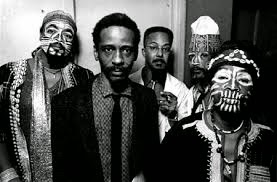
The Art Ensemble of Chicago was the first to trumpet the new movement around the world, conquering Europe in the late 1960s with its free-flowing improvisations, unconventional instrumentation, Afrocentric garb and African-inspired face-painting.
Nothing like this had been heard or seen in jazz, inspiring sold-out concerts and wide critical acclaim in Europe and, eventually, back home in the U.S.
Threadgill's band Air similarly seduced audiences foreign and domestic with its unusual melodic material and its translucent ensemble textures, inspiring a galvanic shift in audience expectations of what jazz could be.
"We had no idea the AACM would catch on as it did," Abrams told me in 1990. "We certainly didn't establish it to be some kind of important institution.
"We weren't looking for notoriety, or anything. If we had, it probably wouldn't have turned out that way.
"We simply were turning to each other for support, and that was all it took. The resources were within us."
No doubt the AACM wasn't the first such enterprise.
The Underground Musicians' Association, UGMA, in Los Angeles, and the Jazz Composers Guild, in New York, slightly predated it.
Something was in the air. But none of these groups, or others that followed, attained the impact and longevity of the AACM.
Exactly why the AACM flourished artistically — notwithstanding virtually no financial support from foundations or corporations — is open to debate. The ingenuity and virtuosity of the musicians, as well as Chicago's long-standing taste for the jazz avant-garde, surely were essential.
But there's another reason too: the intrepid spirit of the AACM pioneers, who had a particular kind of grit.
"The first-generation AACM founders were all children of the first wave of migrants to venture north," wrote Lewis in "A Power Stronger Than Itself."
Which meant that "all of these people that we are talking about came from very, very struggling environments," Jarman said in Lewis' book.
"Every one of them started out at the bottom — maybe not the flat bottom, but pretty close."
Related AACM's spirit endures in underground rock Music
AACM's spirit endures in underground rock See all related
These musicians, who started with so little, simply willed the AACM — and its philosophies and musical practices — into existence.
And the organization survived, "in part, because support of one's own career wasn't the highest value," Lewis told me when his book "A Power Stronger Than Itself" was published in 2008. "People were invested in supporting each other and are (still) invested in supporting each other."
Indeed, a communal spirit has defined the AACM since the beginning and, in fact, has served as a model for the unusually collegial Chicago jazz scene in general.
That's not to say that the AACM didn't have internal battles to be expected in any human endeavor.
"We've had hard times, families have broken up, love affairs have fallen apart," Chicago multi-instrumentalist Mwata Bowden told me in 1995, during the AACM's 30th anniversary celebrations. "But we have persevered, we have continued to look forward, we have moved the music all the way around the world."
Moreover, it's critical to understand that the AACM did not signify a particular sound, style, idiom or aesthetic.
Each AACM band — from Cohran's soulful Artistic Heritage Ensemble to Braxton's hyper-cerebral experiments — was distinct from the others.
The AACM simply gave these far-flung musical explorers a common spiritual home.
The connective tissue among the bands and musicians of the AACM, past and present, lies not in the sound of music that cannot be categorized, but in a philosophy of experimentation informed by African antiquity and innovative instrumental technique.
Thus the AACM's motto: "Great Black Music, Ancient to the Future."
The past five decades have produced recordings of vast expressive and stylistic range, as well as lasting influence on other jazz demographics.
Would the innovations of Chicago saxophonist Ken Vandermark (another MacArthur Fellowship winner) and the North Side experimental scene he helped build have been possible without the AACM?
Would the cross-cultural innovations of Asian and Asian-American musicians such as Tatsu Aoki, Jeff Chan, Jon Jang and Francis Wong have flowered without the model and inspiration of the AACM? Seems doubtful.
Many of the early generation AACM players have left Chicago, with Threadgill spending a great deal of time in India, Abrams and Lewis based in New York, Nicole Mitchell in California.
Others have passed away, among them indelible figures such as trumpeter Lester Bowie, saxophonists Kalaparusha Maurice McIntyre and Vandy Harris, bassist Charles Clark and violinist Leroy Jenkins.
But the music still thrives in the gifts of new generations of Chicago players such as trumpeter Corey Wilkes, singer Saalik Ziyad and performance poet Khari B, now chairman of the AACM.
Times change, but the AACM continues, surely fueled by what William Russo once told me was the "spiritual and moral underpinnings to their art."
Is that what Cohran, an AACM co-founder, hears in this music?
"It's there," Cohran says. "That's all the AACM played. When you play somebody else's music, you never will get that.
"To me, the greatest goal is to find a reservoir that provides you with this spirit."
The AACM was that reservoir, and 50 years later, it remains so.
Published on Jan 13, 2015
Jack DeJohnette: Made in Chicago
Henry Threadgill: alto saxophone, bass flute, bass recorder Roscoe Mitchell: soprano and alto saxophones, wooden flute Muhal Richard Abrams: piano Larry Gray: double bass, violoncello Jack DeJohnette: drums
With "Made In Chicago", an exhilarating live album, Jack DeJohnette celebrates a reunion with old friends. In 1962, DeJohnette, Roscoe Mitchell and Henry Threadgill were all classmates at Wilson Junior College on Chicago’s Southside, pooling energies and enthusiasms in jam sessions. Shortly thereafter Jack joined Muhal Richard Abrams’ Experimental Band, and Roscoe and Henry soon followed him. When Abrams cofounded the Association for the Advancement of Creative Musicians in 1965, DeJohnette, Mitchell and Threadgill were all deeply involved, presenting concerts and contributing to each other’s work under the AACM umbrella. Jack brought them together again for a very special concert at Chicago’s Millennium Park in August 2013, completing the group with the addition of bassist/cellist Larry Gray. The concert recording – featuring compositions by Roscoe, Henry, Muhal and Jack, plus group improvising - was mixed by Manfred Eicher and Jack DeJohnette at New York’s Avatar Studio. "Made In Chicago" is issued as the AACM begins its 50th anniversary year.
Jazz (Music Genre) AACM celebrates a golden anniversary by Howard Reich Chicago Tribune hreich@chicagotribune.com
Anthony Braxton performs on stage on Day 2 of Middelheim Festival 2013 at Park Den Brandt on August 16, 2013 in Antwerpen, Belgium. (Peter Van Breukelen, Redferns via Getty Images)
February 27, 2015 Chicago Tribune They changed the way we think about music
Fifty years ago, a group of South Side jazz musicians found themselves backed against a wall. Clubs were closing, radio stations were going pop, America's musical interests were shifting elsewhere: toward youth-oriented rock 'n' roll.
If these Chicago jazz artists had given in to inevitably changing musical tastes, jazz might have devolved into a nostalgia bath or succumbed to the commercial excesses of the fusion era that followed. Instead, the Chicago musicians who half a century ago created the Association for the Advancement of Creative Musicians, or AACM, invented original musical languages, created intriguing new instruments, crafted novel ways of penning scores and otherwise defied long-standing presumptions about how music was supposed to be made.
AACM recordings: Bold ideas in sound
Because their work was steeped in the rituals of ancient Africa, as well as certain traditions of early New Orleans music, the AACM artists managed to convey a vast sweep of black cultural history — even as they were reinventing an art form. And though they didn't necessarily intend it, their breakthroughs opened the door to new ways of creating, staging and perceiving music.
Chicago and the rest of the musical planet will be celebrate the AACM's 50th throughout this year, a fitting response considering this organization's global profile and impact.
Pioneering AACM artists such as Muhal Richard Abrams, Henry Threadgill, Roscoe Mitchell, Anthony Braxton (a MacArthur Fellowship winner) and Wadada Leo Smith (a Pulitzer Prize finalist) command international followings, as do AACM figures such as Nicole Mitchell, Kahil El'Zabar and George Lewis (another MacArthur Fellow).
AACM's spirit endures in underground rock
If early AACM bands such as the Art Ensemble of Chicago and Threadgill's Air carried the organization's banner to acclaim in Europe and beyond in the late 1960s and '70s, subsequent groups such as Nicole Mitchell's Black Earth Ensemble, Ernest Dawkins' Live the Spirit Ensemble, Dee Alexander's Evolution Ensemble and El'Zabar's Ritual Trio continue to do so today.
But even an admirer of this majestic history might reasonably ask what exactly is the AACM? An organization? An attitude? A series of cultural practices?
Surely it's all of those, but also something more.
"It's really kind of a spirit thing," says Kelan Phil Cohran, a founder of the organization and, at 87, an active musician in Chicago and around the world.
"It was — and is — about creating your own artistic presence. That was the primary goal. Nothing has value other than that."
The idea of forging a singular sound and musical personality always has been central to jazz, dating back to its first great composer-intellectual, Jelly Roll Morton, and its first genius improviser, Louis Armstrong — both of New Orleans.
A growing list of AACM celebrations
But the AACM founders in Chicago conceived fiercely individualistic approaches to music under duress, for their world was imploding in the early 1960s.
"Chicago musicians had been employed seven days a week — we couldn't get a day off," recalls Cohran, who came to Chicago in 1953, when jobs were plentiful.
"And gradually, by degrees, it went down and down, until there was no work at all."
Club dates, dance-band gigs, R&B sessions and the like were evaporating in the early 1960s, because of shifting musical fashions, changing population patterns and discriminatory enforcement of cabaret licensing laws, as George Lewis outlines in his definitive study, "A Power Stronger Than Itself: The AACM and American Experimental Music" (University of Chicago Press).
In response, the South Side musicians organized.
If clubs wouldn't hire them, they would present concerts themselves. If conventional jazz idioms of an earlier era were losing the public's attention, they'd create music they wanted to hear, whether there was an audience for it or not.
In 1962, Abrams formed the Experimental Band that included saxophonists Fred Anderson, Joseph Jarman and Roscoe Mitchell and drummers Jack DeJohnette and Steve McCall (drawing inspiration from Sun Ra's Arkestra).
This was the cauldron from which the AACM would emerge, a gathering of musical free-thinkers eager to break free of bebop, hard bop, cool and other stylistic boxes into which jazz had been packaged, sold and confined.
By 1965, Abrams, Cohran, McCall, pianist Jodie Christian and recording secretary Sandra Lashley signed the articles of incorporation for the AACM, officially launching what would become a revolution in sound.
"We figured there was no place for us to be showcased, no place to be heard," Anderson told me in 1990, as the AACM was preparing to celebrate its 25th anniversary (he died in 2010 at age 81).
"Most of the clubs weren't too keen on booking the latest new music, and there weren't even that many clubs to begin with. So we decided to showcase ourselves, build an organization that would feature us, instead of waiting around for someone else to do it.
"It was really tough at first. Any time you're breaking ground and playing original music, you can expect resistance. But that was no problem, because the Chicago guys were used to that."
The Art Ensemble of Chicago was the first to trumpet the new movement around the world, conquering Europe in the late 1960s with its free-flowing improvisations, unconventional instrumentation, Afrocentric garb and African-inspired face-painting.
Nothing like this had been heard or seen in jazz, inspiring sold-out concerts and wide critical acclaim in Europe and, eventually, back home in the U.S.
Threadgill's band Air similarly seduced audiences foreign and domestic with its unusual melodic material and its translucent ensemble textures, inspiring a galvanic shift in audience expectations of what jazz could be.
"We had no idea the AACM would catch on as it did," Abrams told me in 1990. "We certainly didn't establish it to be some kind of important institution.
"We weren't looking for notoriety, or anything. If we had, it probably wouldn't have turned out that way.
"We simply were turning to each other for support, and that was all it took. The resources were within us."
No doubt the AACM wasn't the first such enterprise.
The Underground Musicians' Association, UGMA, in Los Angeles, and the Jazz Composers Guild, in New York, slightly predated it.
Something was in the air. But none of these groups, or others that followed, attained the impact and longevity of the AACM.
Exactly why the AACM flourished artistically — notwithstanding virtually no financial support from foundations or corporations — is open to debate. The ingenuity and virtuosity of the musicians, as well as Chicago's long-standing taste for the jazz avant-garde, surely were essential.
But there's another reason too: the intrepid spirit of the AACM pioneers, who had a particular kind of grit.
"The first-generation AACM founders were all children of the first wave of migrants to venture north," wrote Lewis in "A Power Stronger Than Itself."
Which meant that "all of these people that we are talking about came from very, very struggling environments," Jarman said in Lewis' book.
"Every one of them started out at the bottom — maybe not the flat bottom, but pretty close."
Related:
AACM's spirit endures in underground rock Music
These musicians, who started with so little, simply willed the AACM — and its philosophies and musical practices — into existence.
And the organization survived, "in part, because support of one's own career wasn't the highest value," Lewis told me when his book "A Power Stronger Than Itself" was published in 2008. "People were invested in supporting each other and are (still) invested in supporting each other."
Indeed, a communal spirit has defined the AACM since the beginning and, in fact, has served as a model for the unusually collegial Chicago jazz scene in general.
That's not to say that the AACM didn't have internal battles to be expected in any human endeavor.
"We've had hard times, families have broken up, love affairs have fallen apart," Chicago multi-instrumentalist Mwata Bowden told me in 1995, during the AACM's 30th anniversary celebrations. "But we have persevered, we have continued to look forward, we have moved the music all the way around the world."
Moreover, it's critical to understand that the AACM did not signify a particular sound, style, idiom or aesthetic.
Each AACM band — from Cohran's soulful Artistic Heritage Ensemble to Braxton's hyper-cerebral experiments — was distinct from the others.
The AACM simply gave these far-flung musical explorers a common spiritual home.
The connective tissue among the bands and musicians of the AACM, past and present, lies not in the sound of music that cannot be categorized, but in a philosophy of experimentation informed by African antiquity and innovative instrumental technique.
Thus the AACM's motto: "Great Black Music, Ancient to the Future."
The past five decades have produced recordings of vast expressive and stylistic range, as well as lasting influence on other jazz demographics.
Would the innovations of Chicago saxophonist Ken Vandermark (another MacArthur Fellowship winner) and the North Side experimental scene he helped build have been possible without the AACM?
Would the cross-cultural innovations of Asian and Asian-American musicians such as Tatsu Aoki, Jeff Chan, Jon Jang and Francis Wong have flowered without the model and inspiration of the AACM? Seems doubtful.
Many of the early generation AACM players have left Chicago, with Threadgill spending a great deal of time in India, Abrams and Lewis based in New York, Nicole Mitchell in California.
Others have passed away, among them indelible figures such as trumpeter Lester Bowie, saxophonists Kalaparusha Maurice McIntyre and Vandy Harris, bassist Charles Clark and violinist Leroy Jenkins.
But the music still thrives in the gifts of new generations of Chicago players such as trumpeter Corey Wilkes, singer Saalik Ziyad and performance poet Khari B, now chairman of the AACM.
Times change, but the AACM continues, surely fueled by what William Russo once told me was the "spiritual and moral underpinnings to their art."
Is that what Cohran, an AACM co-founder, hears in this music?
"It's there," Cohran says. "That's all the AACM played. When you play somebody else's music, you never will get that.
"To me, the greatest goal is to find a reservoir that provides you with this spirit."
The AACM was that reservoir, and 50 years later, it remains so.
Founded in 1965 and still active today, the Association for the Advancement of Creative Musicians (AACM) is an American institution with an international reputation. George E. Lewis, who joined the collective as a teenager in 1971, establishes the full importance and vitality of the AACM with this communal history, written with a symphonic sweep that draws on a cross-generational chorus of voices and a rich collection of rare images.
Moving from Chicago to New York to Paris, and from founding member Steve McCall’s kitchen table to Carnegie Hall, A Power Stronger Than Itself uncovers a vibrant, multicultural universe and brings to light a major piece of the history of avant-garde music and art.
The following text is an excerpt from
A Power Stronger Than Itself The AACM and American Experimental Music by George E. Lewis University of Chicago Press, 2008: The Development of the Experimental Band
Alternative Pedagogies of Experimental Music
For many musicians, the space race began not in 1957 with the Soviet Union’s launch of the satellite Sputnik, but in 1946, when the pianist Herman Blount came up on the train from Birmingham to Bronzeville. Soon after his arrival, Sonny (as he was called) landed a job with Fletcher Henderson’s orchestra at the Club De Lisa on 55th and State, a gig that he held down until mid-1947, when the Red Saunders Band succeeded Henderson. Sonny stayed on, rehearsing the band and refashioning Saunders’s backup arrangements for singers like Laverne Baker, Dakota Staton, Joe Williams, and Sarah Vaughan. Blount founded his own band in 1950, with people like saxophonists Harold Ousley, Von Freeman, Earl Ezell (later Ahmad Salaheldeen), and John Jenkins, bassist Wilbur Ware, and drummer Vernel Fournier.
Sometime in 1952, Blount announced that the Creator had ordered him to change his name. He went downtown to the Circuit Court of Cook County and legally became “Le Sony’r Ra.” In addition, he registered a business under the name of “Sun Ra.” Most musicians in Chicago, however, still knew him as Sonny, one of the qualified musicians of the South Side’s musical community. As Jodie Christian remembers,
My first encounter with him, he was playing stride piano, working at the It Club on 55th and Michigan. He was a good pianist, playing conventional piano, stride. We were playing, and Sun Ra was playing as a single pianist, a cocktail piano player opposite us. He hadn’t become “Sun Ra” then. I never heard anybody say that they remember when he started to organize this type of band, the space band. All of a sudden, it was there.
In 1952 Sonny began to seek out younger musicians from Captain Dyett’s DuSable regime, including drummer Robert Barry and saxophonist Laurdine “Pat” Patrick, to form a group called the Space Trio. Eventually, Sun Ra’s band began to grow, with exciting young musicians such as trombonist Julian Priester; percussionist Jim Herndon; bassist Victor Sproles; trumpeters Art Hoyle, Hobart Dotson, and Dave Young; and saxophonists James Spaulding, John Gilmore, Charles Davis, and Marshall Allen. Sonny’s charisma, erudition, and creativity inspired the musicians, who regarded him as their mentor. As Marshall Allen observed, “Sun Ra taught me to translate spirit into music.”
Around this time, as Sonny’s compositional palette became richer, he coined the term “Arkestra” for his band. “That’s the way black people say ‘orchestra,’” he observed laconically. At the Arkestra’s daily rehearsals, Sonny began to explicitly connect his music with projects of identity, philosophy, historical recovery, and mysticism. He explored the role of black people in the creation of civilization, and maintained that music could both change individual moral values and affect the fate of the world. The titles of his pieces began to connect two major themes—the infinite, Ethiopianist Zion of outer space, and the African mothership of Egypt, Ethiopia, and Nubia.
As anthropologist and Ra biographer John Szwed has noted, with Sun Ra, “music often seemed to be the subtext for some grander plan, one not always clear to the musicians.” Whatever the plan, Jodie Christian saw at first hand that Sonny’s disciplined domination of the Arkestra was absolute.
One day he was playing at Budland and the whole band was there, but Sun Ra wasn’t there. So I told John [Gilmore] and them, why don’t y’all hit and Sun Ra can come in later? “Naw, we don’t hit till Sonny comes in.” Sonny comes in an hour later. He ran in, sat down at the piano, and the band took their seats. You know what he said? “Let that be a lesson.” So at the end of the set I asked John, what was the lesson? He said, I don’t know, but Sonny said it was.
Alvin Fielder met Ra while working a dance gig on the West Side in 1959. “He asked me where I was from, and I told him I was from Mississippi. So he said, ‘Look, man, I bet you can play some shuffles.’” Sonny invited Fielder to an Arkestra rehearsal. “I was way above my head. I thought I was playing well, but as I look back, I’m sure that I wasn’t. Anyway, Sunny invited me to join the band. So I did.” Fielder played with Ra in 1959 and 1960. “Of course, the money wasn’t that great. But then again, as I look back, I should have been paying him.” Late in 1960, Sun Ra’s spaceship, with John Gilmore, Marshall Allen, and Pat Patrick on board, blasted off from Chicago for points east, eventually landing in New York City in January 1961. By 1962, the composer and pianist was preparing for an important New York concert with his Cosmic Jazz Space Group.
Philip Cohran had been working with the Arkestra since John Gilmore had brought him to a rehearsal in 1958. For Cohran, Ra’s example “opened my world up as a composer. I had written a few songs of merit before I got with him, but he taught me the one thing that really made a difference in my life, and that is: whatever you want to do, do it all the time. Once I learned that, there was no looking back.”
All the same, Cohran decided not to climb aboard for the Arkestra’s New York foray. “When I left ‘The Society,’” Cohran remembered, “everybody thought I was crazy. When I told Sun Ra that I was going to deal with my own thing, and I quit the band, I started studying on my own. I said, I don’t need nobody else to tell me what to do, I’ll just go ahead and do it myself. So I started studying every day.” In fact, during this time, the possibility of challenging the societal status quo drew many African Americans toward independent research into historical and spiritual knowledge. Richard Abrams says that “I always had a keen interest for looking into the so-called ‘occult arts,’ Around '59 or '60 I really started getting into that. One of the first books I read was Autobiography of a Yogi by Paramahansa Yogananda. It awakened something in me that needed awakening. I bought literature and bought literature, and ended up finding out about the Rosicrucians. I got in touch with them and hooked up with the Rosicrucians.”
As Abrams became known as one of Chicago’s up-and-coming pianist-composers, two musicians exercised a profound impact upon his musical direction. The composer, arranger, and trumpeter William E. “Will” Jackson, who had played with Jimmie Lunceford, lived down the street from Abrams, and began to informally teach the young pianist the craft of arranging and orchestration. Around 1955, Jackson introduced the young composer to pianist Walter “King” Fleming, perhaps the most important early local influence on Abrams’s piano improvisations. Abrams began to compose, arrange, and play for Fleming’s band. “Every so often,” Abrams remembers, “they would let me sit in at the piano, until I would make a mistake and they would tell me to get up. But they would put me back down there until I learned how to do it.” Attracting the attention of radio personality Daddy O’Daylie, Abrams, saxophonist Nicky Hill, bassist Bob Cranshaw, drummer Walter Perkins, and trumpeter Paul Serrano formed a band called the MJT+3. In 1957, the group’s first recording, Daddy-O Presents MJT+3, featured a number of Abrams compositions, including “No Name,” which was actually composed collaboratively by Abrams and Fleming.
Abrams was also moving further along the autodidact path that had led him away from the conservatory. “I could always make up music,” Abrams remembered, “but it was plain stubbornness. I wanted to do it my own way. Even as a kid, when I didn’t even know how to do it, I would rebel against the mainstream situation.” The search for a way of teaching himself led him to the pianist, composer, and arranger Charles Stepney, who introduced Abrams to Joseph Schillinger’s unusual system of musical composition. Stepney, a house arranger for Chess Records, was soon to apply Schillinger-related principles, along with ideas from composer Henry Cowell’s early text, New Musical Resources and the work of Gy÷rgy Ligeti, to his landmark work for Ramsey Lewis, the Dells, the Rotary Connection and Minnie Riperton, Phil Upchurch, Muddy Waters, and Earth, Wind, and Fire. Stepney introduced Schillinger’s books to Abrams, who ended up buying his own copies. Everywhere he went over the next four years, Abrams kept these two massive tomes at the ready, teaching himself the complete system and developing new ideas under its guidance.
Schillinger was a pianist, composer, and theorist who came to the United States from Russia in 1928. Something of a polymath, Schillinger collaborated on experimental electronic instrument design with fellow Russian expatriate Leon Theremin and Cowell, who wrote the foreword to Schillinger’s signal work, the 1,600-page Schillinger System of Musical Composition, first published in the mid-1940s. The elusive Schillinger Society published and distributed the system as two large, expensive books containing many detailed musical examples, and in 1945, former Schillinger student Lawrence Berk founded the Schillinger House of Music to carry on the master’s teachings. In 1954, the school changed its name to the Berklee School of Music, as its curriculum expanded to include genres outside the canon of pan-European classical music, most notably jazz.
Schillinger taught that a wide variety of expressive forms, including both tonal and post-tonal harmony, could be both generated and analyzed algorithmically using mathematical formulae. His system emerged alongside other mathematics-oriented formal methods that emerged in the mid-to-late 1940s, such as French composer Olivier Messiaen’s 1944 Technique de mon langage musical, and later, the integral serialism that developed in America, with the work of Milton Babbitt, and in Europe, in the work of Karlheinz Stockhausen and Messiaen’s former student, Pierre Boulez. Schillinger’s work with graphic elements, which anticipated by more than a decade the stochasticism of Iannis Xenakis, seemed to be justified by the premise of Cowell’s “overture” to the first volume of the Schillinger system, which held out the promise of using the system to move beyond well-established musical methods that were appearing stiflingly hegemonic in some circles: “The currently taught rules of harmony, counterpoint, and orchestration certainly do not suggest to the student materials adapted from his own expressive desires,” Cowell wrote. “Instead he is given a small and circumscribed set of materials, already much used, together with a set of prohibitions to apply to them, and then he is asked to express himself only within these limitations.”
While serialism based its rule sets firmly on the chromatic scale, and bebop harmony revised Wagnerian chromaticism, the Schillinger system made few presumptions concerning materials. Rather, whatever materials were identified by the composer as salient—rhythmic, harmonic, timbral, melodic, dynamic—became the basis for further generation and transformation. Thus, as Cowell noted, “the Schillinger System offers possibilities, not limitations; it is a positive, not a negative approach to the choice of musical materials.” As such, the system was equally suited “to old and new styles in music, and to ‘popular’ and ‘serious’ composition.” For this reason, the Schillinger system soon attracted composers from Earle Brown to B. B. King. The explicit organicism of Schillinger’s Mathematical Basis of the Arts connected musical invention with forms active in the natural environment, advancing the basically synaesthetic proposition that gestures active in one art form could find explicit, ordered, primordial analogues in another.
Positing an explicit role for the religious and spiritual aspects of music, Schillinger’s ideas ran counter to modernism’s secularist ideal. As a budding painter who had already explored the synaesthetics of Kandinsky, Abrams was excited about Schillinger’s construction of a necessary, ordered connection between sound, sense, science, emotion, reason, and the natural world. These ideas resounded with Abrams’s own explorations of the connection between music and spirituality. “I was really educated now, in a big way,” Abrams exulted, “because I was impressed with a method for analyzing just about anything I see, by approaching it from its basic premise. The Schillinger stuff taught me to break things back down into raw material—where it came from—and then, on to the whole idea of a personal or individual approach to composition.”
While Abrams was beginning to get a foothold in the Chicago musical scene, Steve McCall left the city to join the U.S. Air Force. Eventually, his orders took him to Bangor, Maine, where he ran the service club. “The service being what it was, it was a typically bad experience,” his sister Rochelle recalled. “Somebody put a note on the door, ‘All Niggers, Coons and Nightfighters Be Off The Street By Midnight.’” McCall returned to Chicago in 1954, and found a job in the airline industry. During that time, he bought his first set of drums, and used free air travel passes to visit New York and Philadelphia, where he took drum lessons from Charles “Specs” Wright, who had animated the big bands of Dizzy Gillespie and Earl Bostic. Watching the styles of Marshall Thompson, Wilbur Campbell, James Pettis, and Vernel Fournier, among others, by 1960 McCall had become one of the most sought-after young drummers in Chicago.
Around that same time, Abrams was looking for an outlet for his new ideas, and an opportunity emerged to do just that in 1961, when “there was a group of mainstream guys that formed a band for cats to write charts and things. We were rehearsing at the C&C Lounge on Cottage Grove and 63rd. A cat named Chuck ran it. It was a great big old long place, with a stage up front. They had floor shows in there. Eddie Harris was a part of it, Marshall Thompson.” By 1960, the ad hoc, informal educational system of jazz, combining high-school band training, informal jam sessions, home schooling, and autodidacticism, had already produced some of the world’s most influential music. Even so, many experienced Chicago musicians were seeking ways to address the limitations of this model of learning. For instance, neither high-school ensemble classes nor jam sessions taught theory in a consistent way. Vibraphonist Emanuel Cranshaw describes one of the alternatives that some musicians pursued in the mid-1950s:
Cats like Chris Anderson used to have classes in this basement on 39th and Lake Park, the way Barry Harris used to do. He was playing with a guitar player, a cat named Leo Blevins. Leo wouldn’t do much teaching, it was mostly Chris. Cats would come by with notebooks and he’d get up and talk. All the cats that you know—Herbie [Hancock] would go down there, and [pianist] Harold Mabern. Muhal was probably down there too.
Jam sessions, as historian Scott DeVeaux observes, “did not test such crucial professional skills or specializations as sight-reading, leading a section, or the endurance required to be the high-note man in a trumpet section.” Moreover, competition-based models of music-making tended to relegate collectivity and solidarity among musicians to the background at a time when more collaborative notions of the relationship of community to individuality were being pursued in many segments of the African American community. Thus, there were practical reasons for creating an environment in which musicians could rehearse, teach, and exchange knowledge across generations, as Eddie Harris told an interviewer in 1994. “Trying to play around Chicago,” Harris explained, “you figured there are guys that never played first chair, there are guys that never played on a big band, and there are other guys that never had an opportunity to write for a large number of people, and there are people that wanted to sing, and sing in front of a band—so let’s form a workshop.”
Harris credits trumpeter Johnny Hines as cofounder of the workshop, which at first attracted over one hundred musicians: “You start meeting guys, like the late Charles Stepney . . . There became a group of us. Muhal Richard Abrams, Raphael [Rafael] Garrett, James Slaughter, [drummer] Walter Perkins, Bill Lee. There was a small group of us who were on the same wavelength in trying things . . . not just sit down and play an Ellis Larkins run or a Duke Ellington run . . . we all wanted to try some different things.” The C&C Lounge provided a minimal but absolutely vital initial infrastructure for the musicians. Chicago trumpeter William Fielder, the brother of Alvin Fielder, recalls that “the C&C Lounge was a school for young musicians. Chuck and Claudia, his wife (C&C), offered the musicians a wonderful musical opportunity. The club would be empty and Chuck would say, ‘Play for me.’” Eyes on the Sparrow: The First New Chicagoans
The C and C-based ensemble gradually developed a largely generational divide between musicians who wanted to develop the band in a more commercial direction, and others who wished to continue the radical explorations for which the group had been formed. As Eddie Harris recalled, “Johnny Hines tried to take the musicians more our age; he wanted to go into the Regal Theater so he could have a band to really accompany all the stars that come in there. Muhal had taken the younger musicians and let them learn in reading on scales and playing with each other.” After Harris left to pursue his fortunes from Exodus to Jazz, the rehearsal ensemble soon dissipated, but a new ensemble, consisting largely of the younger players who were gathering around Abrams, started regular rehearsals at the C&C. The ensemble, which gradually came to be known as the Experimental Band, became a forum for Abrams to test his new, Schillinger-influenced compositional palette. Abrams recalls simply, “I just gathered together some people around me, some younger guys, and started to keep things going.” Two of these “younger guys,” saxophonists Roscoe Mitchell and Joseph Jarman, played critically important roles in what was later to become the AACM. Mitchell and Jarman had not participated in the fast life of the 63rd Street jam sessions that had animated the young adult experiences of Abrams, Donavon, Favors, and Christian. For these two younger musicians, adulthood and musical maturity would come in the 1960s, a very different decade indeed.
Born in Chicago in 1940, Roscoe Mitchell grew up in the western part of Bronzeville. Like Favors’s, Mitchell’s parents were religious, and his uncle was the minister of a spiritualist church. “I used to really enjoy the music in the church,” Mitchell recalled. “At the time I wasn’t that interested in the sermons.” Since the 1930s, Washington Park had been a center of black South Side life, with tennis, softball, swimming, and horseback riding. As a young person, Mitchell often spent an entire day in the park, talking to older musicians and watching them as they practiced.
Jarman was born in 1937 in Pine Bluff, Arkansas. His father left the family just as Joseph was born, and within a year his seventeen-year-old mother joined the Great Migration to Chicago, finding a job in the defense industry. Unlike virtually all of the early AACM musicians, Jarman lived on the largely white North Side, and attended an integrated school, Schiller Elementary, just down the street from his home. The family’s eventual move to Bronzeville, near 48th and St. Lawrence, was the occasion for considerable turbulence in Jarman’s new life at school. “I had a lot of trouble and a lot of fights,” Jarman explained, “because it was a completely different society, a different moral and ethical standard. Then we moved back to the North Side and I went back to Schiller. This is all in that puberty range, ten to fourteen years of age. When I went back to Schiller, I got in trouble because I had been so influenced by the other school. I became a ‘bad boy.’”
Jarman and Mitchell were thoroughly steeped in Hollywood-style popular culture. It cost nine cents to go to the movies, and Mitchell and his young friends would walk about two miles from 59th and State, crossing over the Bronzeville border to the white movie theater, the Southtown, on 63rd and Halsted. Mitchell and his family listened avidly to Chicago radio’s Al Benson and McKie Fitzhugh, as well as Symphony Sid’s New York–based shows. And then there was television, an important, even revolutionary force that had not been part of the growing-up process for Jodie Christian’s generation. Locally, Chicago’s Old Swingmaster, Al Benson, featured singers such as Joe Williams on his 1951 TV show, and the Mahalia Jackson Show appeared in 1955. At the national level, black performers, including the Ink Spots, the Mills Brothers, Bill “Bojangles” Robinson, Nat King Cole, Martha Davis, Cab Calloway, Louis Armstrong, Carmen McRae, Lionel Hampton, and Duke Ellington all appeared. In 1950, Hazel Scott had her own fifteen-minute TV show in New York, and in 1952, singer Billy Daniels became the first African American to have his own nationally sponsored television show.
However, as commercial television grew, so did the racism of its corporate leaders. By the late 1950s, the medium had resolved “to keep blacks off national television as much as possible.” Instead, television portrayed marvelous white people, living in sumptuous, yet not too ostentatious homes, driving new cars that never broke down (at least not for long), playing with their kids and friendly dogs, and tending crisply manicured lawns. Although for the 1950s black working class, TV was a prime portal through which white middle-class values and ideologies entered their lives, as George Lipsitz has observed, the exclusion of African Americans from full participation in white society meant that their culture was not completely permeated by the values and images of the dominant culture. In fact, very few blacks in Mitchell’s neighborhood owned or had access to a television set, and in “real life,” as Mitchell remembers, “We didn’t really have to look on TV for role models because they were all in our neighborhood.” African Americans of Mitchell’s generation regularly encountered blacks who did not conform to media stereotypes, allowing neighborhood residents to more easily detect and critique the social and political agendas embedded in the medium.
Through his aunt Mary and his uncle Preston, “the family renegades in Chicago,” Joseph Jarman was introduced to the Regal Theater, and to local nightclubs.
I would go there to play with my cousins, and I began to learn the names of these people—Lester Young, Charlie Parker, James Moody, Nat “King” Cole, Miles Davis. They would be playing this music every time I went there, but I didn’t know the name of the music; it was just pretty music. I knew all the singers—the popular music, but I was more drawn to this other music because you just listened, and what you heard was inside rather than words and rhythms that they would suggest through the popular forms.
In the mid-1950s, Mitchell’s family moved briefly to Milwaukee, where he started high school and began playing the clarinet. His brother Norman came to live with the family, bringing along a collection of 78 rpm jazz recordings—killers, they used to call them. Louis Armstrong, J. J. Johnson. Billy Taylor was very popular back then. Lester Young, Coleman Hawkins.” As with Jarman, this strange new music exercised a peculiar power over Mitchell. “For me that was a weird time,” Mitchell recalled, “because after I started listening to jazz I didn’t want to listen to anything else any more. There was a certain coolness that went along with that—you understood jazz, that made you cooler. After a while I went back to include all those other musics I had grown up with.”
Entering DuSable High School, Jarman was drawn to Captain Dyett’s band. His parents could not afford to buy him a trumpet, Jarman’s preferred instrument, so he joined the band as a snare drummer. “All you needed was a drum pad and drumsticks, which cost about six dollars. The drum I played belonged to the school, and I couldn’t take it home.” Another future AACM member living nearby, James Johnson, played bassoon in the Dyett band. Johnson and Jarman would practice together, eventually developing a unique daily schooltime lunch ritual: “We would go across the street every day, usually without very much lunch money, maybe fifty cents a day. We refused to eat in the lunchroom. We would go across the street and put a nickel apiece in the jukebox. We could hear three songs for a dime. We would always play this one song by James Moody, ‘Last Train from Overbrook.’ We would play that every day.” In addition to performance classes, the school’s version of music history recalled Abrams’s 1940s grammar school experiences:
They’d show these films of white operas and white orchestras, like Mozart’s music—Mozart was real big—Beethoven’s music, and Brahms. That would be a part of our musical education. The teacher would show it, then talk about it, and you’d write a little paper on it. This was music history, but it was never really appealing. It was nice, but it was so much nicer to be in the band room hearing that live stuff.
Mitchell characterizes those who went to DuSable during the Dyett era as “fortunate,” but even Englewood, where he went to high school, had its advantages. He began playing baritone saxophone in the high-school band, and borrowed an alto saxophone from another student. Jazz was not taught at Englewood, but getting to know the precocious saxophonist Donald “Hippmo” Myrick, who later became associated with both Philip Cohran and Earth, Wind, and Fire, made up for that lack. “He kind of took me under his wing, because he already knew the stuff,” said Mitchell. “He was a fully accomplished musician in high school.”
The historian Robin D. G. Kelley has raised the possibility that some future AACM members were radicalized in part by the challenges of military life—not only combat, but also the racism that was endemic to service in the U.S. armed forces. In 1955, in his junior year in high school, Jarman dropped out and joined the army. “I went into the Airborne school, and the Ranger school, because you could make extra money. I made it through basic training and jump school as number two, because they wouldn’t accept a black as number one.” The army was where Jarman started to play the alto saxophone: “I got out of ‘the line’—the death zone—by transferring to the band. The first saxophone I had was a plastic one, like Ornette Coleman. The bandmaster gave me thirty days to get my act together or he would kick me back into the line. In that band were a lot of people who helped me to get my act together.”
Mitchell joined the army in 1958. Army musicians had plenty of time to practice and exchange information, and Mitchell met a number of saxophonists, such as Nathaniel Davis, as well as fellow Chicagoans Ruben Cooper and Lucious White, Jarman’s neighbor as a young person. Mitchell also came into contact with Palmer Jenkins, Sergeant Mitchell, William Romero, and Joseph Stevenson, “who was incredible on the saxophone. He was a great influence on Anthony [Braxton] when Anthony was in the army.” Mitchell was eventually transferred to Heidelberg, Germany, where he frequented local jam sessions at places like the well-known Cave 54, where pianist Karl Berger, trombonist Albert Mangelsdorff, saxophonist Bent Jaedig and other European and American musicians met and performed together. Hard bop was the coin of that realm, although Ornette Coleman’s music was beginning to make an impression. During this time, Mitchell met saxophonist Albert Ayler, who was in a different army band, stationed in France. After duty hours, Mitchell would go to sessions and listen to Ayler:
I didn’t really know what he was doing, but I did know, because I was a saxophonist, that he had an enormous sound on the instrument. They would have these sessions, and everybody was, you know, talking about him behind his back, but one time they played a blues. Albert played the blues about three choruses straight. After that he started stretching, and something went off in my head—Oh, I see what he’s doing now.” It made an impression on me.
In August 1958, Jarman was discharged. “It was not something I wanted to continue,” Jarman said, “because it was very anti-human, this attitude they were making people into.” After a brief visit home to Chicago, he experienced a kind of odyssey: “I went wandering around the United States. I went to Arizona. My aunt was there. I stayed there for eight months or so. I couldn’t talk during this period; I was mute. I went to the Milwaukee Institute of Psychiatric Research in Wisconsin, as an outpatient, and enrolled in the Milwaukee Institute of Technology. They got me to be able to talk again, and I haven’t shut my mouth since.”
After his discharge from the army, Mitchell felt that “it was pretty much set that I was going to be a musician.” With the support of his father, who offered to provide him with a place to stay, he decided to use his GI Bill funds to go to Chicago’s Woodrow Wilson Junior College in 1961, where he met Jarman for the first time. “Jarman was already into a contemporary-type bag when I met him. He was always a little bit out there, all the time.” The two musicians studied with Richard Wang, who was, according to Jarman, “very adventurous as far as ‘jazz’ music was concerned, as well as ‘classical’ music.” According to Wang himself, who has to be credited along with the redoubtable Walter Dyett in any history of the early AACM members, in addition to the standard lessons in theory, counterpoint, and keyboard harmony, the young musicians were exposed to the music of the Second Viennese School, as well as John Coltrane and Ornette Coleman. The standard texts included Paul Hindemith’s classic 1946 Elementary Training for Musicians, which later became an aspect of AACM autodidacticism. Other texts included Hindemith’s 1945 The Craft of Musical Composition and composer Arnold Schoenberg’s 1951 Style and Idea.
Wang’s students, who performed in jazz and classical ensembles, included Malachi Favors and saxophonists John Powell, Anthony Braxton, and Henry Threadgill, as well as Richard Brown, who was playing piano and clarinet, rather than the saxophone for which he became known years later under his adopted name of Ari. Friday afternoons were devoted to rehearsals that brought Wilson students together with the cream of Chicago’s musicians. Present at these events were people like Eddie Harris, Charles Stepney, drummers Steve McCall and Jack DeJohnette, bassists Betty Dupree and Jimmy Willis, pianist Andrew Hill, and several musicians who had been part of the Sun Ra Arkestra, including trumpeter Hobart Dotson and percussionists Richard Evans and Jim Herndon. In the meantime, Jarman, Favors, Threadgill, pianist Louis Hall, and drummer Richard Smith (now Drahseer Khalid) had formed their own group, playing hard bop.
One day in 1963, Roscoe Mitchell turned up at a rehearsal of the Experimental Band at the C&C Lounge, and met Richard Abrams, who had been introduced to the saxophonist by pianist-drummer Jack DeJohnette. Malachi Favors, an early member of the rehearsal band, remarked to Abrams how impressed he was by Mitchell’s playing. “Muhal kind of took me in,” Mitchell recalled. “I’d go to school, and I’d go straight from school to Muhal’s, when he was living in that little place off Cottage Grove, down in the basement. I remember he had painted everything that velvet purple color. Sometimes I’d be down over to Muhal’s at ten, eleven, twelve at night, playing or working on music.”
Soon, Mitchell and Favors began rehearsing together and developing new compositions, often with two other young experimentalists, trumpeter Fred Berry and drummer Alvin Fielder. Fielder was becoming aware that “there comes a point where you go from a notion of swinging and keeping a pulse to a notion of time being something different. . . . Sun Ra had always told me, ‘Al, loosen up,’ I didn’t know what he meant, really.” Looking for something different, Fielder visited New York for nearly a year in 1962, but somehow, the music being played by what he remembered as a “clique” of musicians from Boston, Detroit, and Chicago was not satisfying his growing urge to find another path. “I first started to loosen up after meeting Muhal,” Fielder said. Abrams was performing in a trio with Rafael Garrett and Steve McCall. Fielder replaced the peripatetic McCall, and began to meet musicians from a younger circle of experimentalists. “The first time I played in a so-called free group was with Roscoe,” Fielder noted. As he told writer Ted Panken, “Roscoe Mitchell came to a rehearsal I was doing with Muhal, Kalaparusha [Maurice McIntyre] and [trombonist and bassist] Lester Lashley. He just sat and listened, and asked me could I play free [laughs]. I said, ‘Yeah, I play free,’ So he invited me to a rehearsal with Freddie Berry and Malachi Favors. That’s how the original Roscoe Mitchell Quartet started.”
“The first compositions we played in Roscoe’s group were very much like Ornette’s music,” Fielder recalled. “I developed a philosophy there that I wanted to play my bebop as loose as possible and I wanted to play my free music as tight as possible.” Up to that point, Fielder had been playing around town with musicians like saxophonists Cozy Eggleston and Earl Ezell (later Ahmad Salaheldeen), and pianist Danny Riperton, the brother of singer Minnie Riperton. Now, he was in the process of crossing a personal, conceptual, and professional Rubicon, with a very different kind of music. Discovering at first hand the social dynamics of the “Inside/Outside” binary, Fielder noticed that “None of the bebop cats would call me any more, once I started working with Muhal and Roscoe.” Meanwhile, Mitchell was trying to get his friend Joseph Jarman to come down and play with the Experimental Band. As Jarman tells it,
Roscoe said, you oughta come, there’s this guy who’s got a rehearsal band down here. He’s a nice guy and he knows a lot about music. So I went down there and there was this guy, and he greets you like you were his brother or something. He said, welcome, and there were all these people in there, and I had to step back, because some of them were like famous people—local Chicago musicians, Jack DeJohnette, Scotty Holt, Steve McCall. And then this guy gave me an invitation whenever I felt like it to come by his house and get music lessons. He’d offer you herb tea and it would be so good,” Jarman recalled. “He was into herbology, astrology, painting, all this mystical stuff that I had dreamed of. It was like I had found a teacher.
After daily classes with the dedicated, expansive Wang, the young musicians would join the nightly throng at Peggy and Richard Abrams’s tiny basement apartment on South Evans, where they would explore musical, cultural, political, social, and spiritual ideas. Abrams’s range of experiences and interests deeply affected the young musicians. “Muhal’s place would always stay packed with people,” said Mitchell. “He’d have all this time for all these people, and still at the end of the week he’d come to the band with a big-band chart.”
Abrams’s leadership of the Experimental Band extended and revised the alternative pedagogical direction begun in 1961 at the C&C, with the ensemble functioning as a site for exchange, learning, and experimentation across generations: “The Experimental Band gave me a place to play this music I was writing, but the younger musicians couldn’t read the music, because it was too advanced for them. So I had to make up ways for them to play it, all these improvised ways for them to do stuff. I would have them learn a passage, do hand signals for them to play different things.” The collective-oriented atmosphere of the Experimental Band became a regular forum that recalled the spirit of Will Jackson and King Fleming. As Abrams affirmed, “The attention that they gave me and the help that they gave me awakened something in me that needed to extend out to other people. Whenever someone newer in the music scene would come along, I would always be willing to help if they sought my help, and I would always reflect back on the fact that those gentlemen helped me.”
With the Experimental Band, Abrams moved to create cooperative situations where musicians could both learn new ideas and techniques from others, and bring in their own music and hear it performed. Mitchell and Jarman soon started composing music under Abrams’s guidance. Jarman’s recollection was of an open situation where exploration would be encouraged:
He said, “Write whatever you want, and we’ll look at it.” There was no judgment thing. We might say thumbs down or thumbs up individually or personally, but no one would ever say that publicly. I might bring a piece in and they’ll play it. They won’t say whether they like it or not but they’ll do their darnedest to play it as best as they could. Underneath they might have been saying, “What does this guy think he’s doing?” Or, “Wow, thumbs up.” But still they would do it.
Mitchell’s narrative points up how the composer-centered aspect of the AACM can be seen to emerge directly from Abrams’s encouragement. “I was getting my writing chops together,” said Mitchell, “and he [Abrams] always encouraged people to write, write, write. He was showing us all of these different compositional methods. He always had a deep appreciation for all kinds of music, and studied all kinds of music. He had a lot to draw on, and he passed it on freely to the people that wanted to learn that.” The new musical resources that were being explored were by no means limited to composition. New ideas and ways of thinking about structure in improvisation were also being hammered out. As Jarman told an interviewer in 1967, Abrams would say, “Don’t just think about what you’re playing when you’re playing a solo—think about what came before and what’s going to come after.”
Typically, however, Abrams minimizes the extent of the contact between himself and the younger musicians to a single crucial encounter. Abrams remembers that his initial advice to Mitchell concerning composition was to “write down what you’re playing on your horn. He proceeded to do that—that’s where ‘Nonaah and stuff like that comes from—and he’s never looked back since, and we never discussed composition any more.”
“That’s not really true,” said Mitchell. “He would always be turning people on to books, and talking about scores. Maybe he just doesn’t realize the effect that he had on people’s lives.” In fact, the young musicians were in constant, almost daily contact with Abrams. Saxophonist Gene Dinwiddie, an original AACM member, remembers that “Everybody was following him around like little puppies.”
Since their founding by a group of forward-thinking jazz musicians that included pianist/composer Muhal Richard Abrams, pianist Jodie Christian, drummer Steve McCall, and composer Phil Cohran, the AACM have been a force for innovation within the jazz community. The Chicago-based organization is a registered nonprofit organization dedicated, according to the AACM statement, "to nurturing, performing, and recording serious, original music." In the '60s and especially the '70s, the AACM were widely acknowledged as being in the forefront of experimental jazz. Early AACM members such as Abrams, Henry Threadgill, Anthony Braxton, Jack DeJohnette, and the members of the Art Ensemble of Chicago (Lester Bowie, Roscoe Mitchell, Joseph Jarman, Famadou Don Moye, and Malachi Favors) created music that would have creative implications that reached far beyond the city of Chicago. Their motto is "Great Black Music, Ancient to the Future." Although there is not one typical AACM artist, it can be said that their membership in general has attempted to transcend common practice by absorbing into their work various influences lying outside the jazz domain (African indigenous musics and European classical forms, for example).
Sound
The AACM grew out of a rehearsal band led by Muhal Richard Abrams in 1962. The group, known informally as the Experimental Band, never performed, but existed to read down scores written by Abrams, Cohran, DeJohnette, Jarman, Mitchell, Troy Robinson, and Maurice McIntyre, among others. Many of the band's writers employed compositional techniques taken from contemporary classical music -- serialism, polytonality, and chromaticism. The group's first rehearsals were held in a South Side tavern, but the band eventually moved to Abraham Lincoln Center, one of the city's oldest settlement houses. Obviously inspired by a high level of creativity and frustrated by a lack of performance opportunities, Abrams, Christian, Cohran, and McCall instigated the formation of a cooperative that would produce concerts, and opened membership to their cohorts in the Experimental Band. In May of 1965, the AACM were chartered by the state of Illinois as a nonprofit organization. Six groups comprised the original AACM: Christian's hard bop quintet; Cohran's Artistic Heritage Ensemble; the Experimental Band; and the groups of Robinson, Jarman, and Mitchell. The next year, Delmark recorded Mitchell's band. The resulting album, Sound, was the first of many to come out of the AACM.
In addition to their function as a concert producer, the AACM run a free training program for inner-city youth. The AACM School of Music offers instruction on all instruments and vocals, as well as classes in music theory. The faculty is made up entirely of AACM members, many of whom are themselves graduates of the program. Although the cooperative's influence in the jazz world waned a bit in the '80s and '90s, affiliated artists continued to produce bold and compelling music. Newer members like saxophonist/composer Edward Wilkerson, percussionist Kahil El-Zabar, and saxophonist Ari Brown continued the AACM's tradition of high creative achievement.
Association for the Advancement of Creative Musicians From Wikipedia, the free encyclopedia
Association for the Advancement of Creative Musicians Abbreviation AACM Predecessor Experimental Band Formation May 1965 Founder Muhal Richard Abrams, Jodie Christian, Steve McCall, Phil Cohran Type Non-profit organization Purpose Support and encourage jazz performers, composers and educators Location Chicago, Illinois Region USA Official language English Key people Henry Threadgill, Anthony Braxton, Jack DeJohnette Main organ A Power Stronger Than Itself: The Association for the Advancement of Creative Musicians Affiliations Black Artists' Group Endowment MacArthur Foundation Mission "to nurturing, performing, and recording serious, original music"
The Association for the Advancement of Creative Musicians (AACM) is a non-profit organization, founded in Chicago, Illinois, United States, by pianist/composer Muhal Richard Abrams, pianist Jodie Christian, drummer Steve McCall, and composer Phil Cohran. Early members included Henry Threadgill, Anthony Braxton, Jack DeJohnette, Wadada Leo Smith, Leroy Jenkins, Amina Claudine Myers, Adegoke Steve Colson, Chico Freeman, George Lewis and the Art Ensemble of Chicago: Lester Bowie, Roscoe Mitchell, Joseph Jarman, Famoudou Don Moye, and Malachi Favors. The AACM is devoted "to nurturing, performing, and recording serious, original music," according to its charter. It supports and encourages jazz performers, composers and educators.
Contents 1 Background 2 Members 3 References 4 Further reading 5 External links Background
The AACM was formed in May 1965 by a group of musicians centered on pianist Muhal Richard Abrams who had organized an Experimental Band since 1962. The musicians were generally steadfast in their commitment to their music, despite a lack of performance venues and sometimes indifferent audiences. From 1969 the AACM organised a music education program for inner-city youths.[1] In the 1960s and 1970s AACM members were among the most important and innovative in all of jazz, though the AACM's contemporary influence has waned some in recent years. Many AACM members have recorded widely: in the early days on the Delmark Records Avant Garde Jazz series and later on the Black Saint/Soul Note and India Navigation labels, and to a lesser extent on the Arista Records and ECM labels.[2]
The musical endeavors of members of the AACM often include an adventurous mixing of avant-garde jazz, classical, and world music. The AACM also ran a school, The AACM School of Music, with classes in all areas taught by members of the AACM. The AACM also had a strong relationship with an influential sister organization, the Black Artists' Group (BAG) of St. Louis, Missouri. The AACM has received aid from the MacArthur Foundation and has a strong relationship with Columbia College. A Power Stronger Than Itself: The Association for the Advancement of Creative Musicians by George Lewis, has been published by the University of Chicago Press (May 2008).[3] Members Muhal Richard Abrams Fred Anderson Renee Baker Harrison Bankhead Mwata Bowden Lester Bowie Anthony Braxton Billy Brimfield Jodie Christian Phil Cohran Adegoke Steve Colson Iqua Colson Pete Cosey Ernest Dawkins Kahil El'Zabar Douglas Ewart Malachi Favors Alvin Fielder Chico Freeman Aaron Getsug Fred Hopkins Joseph Jarman Leroy Jenkins George Lewis Steve McCall Kalaparusha Maurice McIntyre Nicole Mitchell Roscoe Mitchell Don Moye Amina Claudine Myers Reggie Nicholson Jeff Parker Avreeayl Ra Matana Roberts Wadada Leo Smith Isaiah Spencer Henry Threadgill Edward Wilkerson References
Litweiler, John (1984). The Freedom Principle: Jazz After 1958. Da Capo. ISBN 0-306-80377-1. Delmark.com Chinen, Nate (May 2, 2008). "Four Decades of Music That Redefined Free". The New York Times. Retrieved June 7, 2012.
Further reading
Lewis, George E. (2008). A Power Stronger Than Itself: The AACM and American Experimental Music. Chicago: University of Chicago Press. ISBN 0226477037. Reich, Howard. (March 1, 2015) Revolution in sound. Chicago Tribune. section 4, page 1. Kot, Greg. (March 1, 2015) AACM's spirit endures in underground rock. Chicago Tribune. section 4, page 1.
External links
AACM official site
A 1996 paper by a Kenyon College student: The Sixties, Chicago, and the AACM Retrospective profile of group in the New York Times May 2008 Review essay on A Power Stronger Than Itself at Sweet Pea's Ghost Dance and Music Review PHOTOS OF CHARTER AACM MEMBERS FROM THE LEGENDARY AND ICONIC GROUP KNOWN AS THE ART ENSEMBLE OF CHICAGO:
Roscoe Mitchell Lester Bowie Joseph Jarman Malachi Favors and Don Moye
"I'm for truth, no matter who tells it. I'm for justice, no matter who it's for or against."
W.E.B. DuBois (1868-1963)
"There is but one coward on earth, and that is the coward that dare not know."
Dr. Martin Luther King, Jr. (1929-1968)
"Change does not roll in on the wheels of inevitability, but comes through continuous struggle. And so we must straighten our backs and work for our freedom. A man can't ride you unless your back is bent. "
James Baldwin (1924-1987)
"Precisely at the point when you begin to develop a conscience you must find yourself at war with your society."
Aimé Césaire (1913-2008)
"A civilization that proves incapable of solving the problems it creates is a decadent civilization. A civilization that chooses to close its eyes to its most crucial problems is a stricken civilization. A civilization that uses its principles for trickery and deceit is a dying civilization."
Nina Simone (1933-2003)
"There's no other purpose, so far as I'm concerned, for us except to reflect the times, the situations around us and the things we're able to say through our art, the things that millions of people can't say. I think that's the function of an artist and, of course, those of us who are lucky leave a legacy so that when we're dead, we also live on. That's people like Billie Holiday and I hope that I will be that lucky, but meanwhile, the function, so far as I'm concerned, is to reflect the times, whatever that might be."
Amilcar Cabral (1924-1973)
"Always bear in mind that the people are not fighting for ideas, for the things in anyone's head. They are fighting to live better and in peace, to see their lives go forward, to guarantee the future of their children ....Hide nothing from the masses of our people. Tell no lies. Expose lies whenever they are told. Mask no difficulties, mistakes, failures. Claim no easy victories..." .
Angela Davis (b. 1944)
"The idea of freedom is inspiring. But what does it mean? If you are free in a political sense but have no food, what's that? The freedom to starve?”
Duke Ellington (1899-1974)
“Jazz is the freest musical expression we have yet seen. To me, then, jazz means simply freedom of musical speech! And it is precisely because of this freedom that so many varied forms of jazz exist. The important thing to remember, however, is that not one of these forms represents jazz by itself. Jazz simply means the freedom to have many forms.”
Amiri Baraka (1934-2014)
"Thought is more important than art. To revere art and have no understanding of the process that forces it into existence, is finally not even to understand what art is."
Frederick Douglass (1817-1895)
"Power concedes nothing without a demand. It never did and it never will. Find out just what any people will quietly submit to and you have found out the exact measure of injustice and wrong which will be imposed upon them, and these will continue till they are resisted with either words or blows, or both. The limits of tyrants are prescribed by the endurance of those whom they oppress.” --August 3, 1857
Cecil Taylor (1929-2018)
“Musical categories don’t mean anything unless we talk about the actual specific acts that people go through to make music, how one speaks, dances, dresses, moves, thinks, makes love...all these things. We begin with a sound and then say, what is the function of that sound, what is determining the procedures of that sound? Then we can talk about how it motivates or regenerates itself, and that’s where we have tradition.”
Ella Baker (1903-1986)
"Strong people don't need strong leaders"
Paul Robeson (1898-1976)
"The artist must take sides. He must elect to fight for freedom or for slavery. I have made my choice. I had no alternative."
John Coltrane (1926-1967)
"I want to be a force for real good. In other words, I know there are bad forces. I know that there are forces out here that bring suffering to others and misery to the world, but I want to be the opposite force. I want to be the force which is truly for good."
Miles Davis (1926-1991)
"Jazz is the big brother of Revolution. Revolution follows it around."
C.L.R. James (1901-1989)
"All development takes place by means of self-movement, not organization by external forces. It is within the organism itself (i.e. within the society) that there must be realized new motives, new possibilities."
Frantz Fanon (1925-1961)
"Now, political education means opening minds, awakening them, and allowing the birth of their intelligence as [Aime] Cesaire said, it is 'to invent souls.' To educate the masses politically does not mean, cannot mean, making a political speech. What it means is to try, relentlessly and passionately, to teach the masses that everything depends on them."
Edward Said (1935-2003)
“I take criticism so seriously as to believe that, even in the midst of a battle in which one is unmistakably on one side against another, there should be criticism, because there must be critical consciousness if there are to be issues, problems, values, even lives to be fought for."
Antonio Gramsci (1891-1937)
“The challenge of modernity is to live without illusions and without becoming disillusioned. There must be pessimism of the intellect and optimism of the will.”
Susan Sontag (1933-2004)
"Do stuff. Be clenched, curious. Not waiting for inspiration’s shove or society’s kiss on your forehead. Pay attention. It’s all about paying attention. Attention is vitality. It connects you with others. It makes you eager. Stay eager."
Kofi Natambu, editor of The Panopticon Review, is a writer, poet, cultural critic, and political journalist whose poetry, essays, criticism, reviews, and journalism have appeared in many literary magazines, journals, newspapers, and anthologies. He is the author of a biography MALCOLM X: His Life & Work (Alpha Books) and two books of poetry: THE MELODY NEVER STOPS (Past Tents Press) and INTERVALS (Post Aesthetic Press). He was the founder and editor of SOLID GROUND: A NEW WORLD JOURNAL, a national quarterly magazine of the arts, culture, and politics and the editor of a literary anthology NOSTALGIA FOR THE PRESENT (Post Aesthetic Press). Natambu has read his work throughout the country and given many lectures and workshops at academic and arts institutions. He has taught American literature, literary theory and criticism, cultural history and criticism, film studies, political science, creative writing, philosophy, critical theory, and music history and criticism (Jazz, Blues, R&B, Hip Hop) at many universities and colleges. He was also a curator in the Education Department of Detroit’s Museum of African American History. Born in Detroit, Michigan, Natambu currently lives in Berkeley, California with his wife Chuleenan.