Showing posts with label Critical Race Theory. Show all posts

Wednesday, February 7, 2024

The Fundamental Crisis and Foundational Contradiction Facing the United States During the Upcoming Presidential Election Year of 2024: Fascism guided, informed, and enabled by the Doctrines and Practices of White Supremacy and Global Capitalism--PART 15

 "What's Past is Prologue..."

https://www.cnn.com/.../black-history-month.../index.html

Black History Month exposes the fallacy of White 'discomfort'
by Peniel E. Joseph
February 2, 2022
CNN

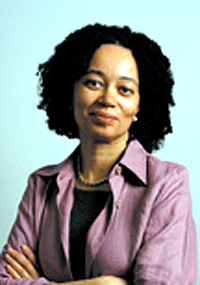
Peniel E. Joseph - Kelvin Ma/Tufts University/Kelvin Ma/Tufts UniversityPeniel E. Joseph - Kelvin Ma/Tufts University/Kelvin Ma/Tufts University
This year, Black History Month commemorations will unfold alongside efforts in numerous states to ban the teaching of its content. Efforts that purport to bar the teaching of "Critical Race Theory" have evolved into a full-scale assault, with Republican lawmakers unleashing attacks on Black History under the guise of protecting White children from "discomfort.”
Florida Gov. Ron DeSantis, who seems intent on riding anti-CRT sentiment all the way to the White House, has made national headlines by backing a bill that would prevent any content that would make students or state employees feel "guilt" about their individual identities. Meanwhile, Virginia -- home of the capital of the Confederate States of America -- also banned CRT.
And now, Glenn Youngkin, Virginia's first Republican governor in a decade (whose victory was largely orchestrated by his savvy participation in race-fueled culture wars), has now created a tip line for parents who object to the content being taught in public schools. Unsurprisingly, the line has already been flooded by memes using sarcasm to state the obvious -- this isn't about preventing teachers from making kids feel uncomfortable. This is about avoiding discussions of racism -- and by extension, Black history -- altogether.
Republican lawmakers in multiple states and counties have effectively set out to cancel histories that White parents may find uncomfortable and in the process are seeking to cancel Black History Month and discussion of other uncomfortable histories, including the Holocaust and murderous campaigns unleashed against indigenous peoples as a result of settler colonialism.
RELATED:  The real reason some people are so afraid of ‘Maus'
Black history offers the nation an unvarnished origin story -- one that transcends the mythology of America's founding and conveys the lived realities of native peoples and Black Americans and their centrality to the United States we live in today.
Sharing these stories with school children in an age-appropriate manner is not something we should fear. But the erroneous narrative that teaching Black history provokes anxiety, discomfort, guilt or anger for White children has insidious roots. Let us not forget that the classrooms of White children have been a battleground before, and that the cry of parental rights and choice were the order of the day back then as well.
Today's children should have the chance to know and relate to the Black school children, mostly young girls, who braved White mobs during the 1950s and 1960s -- and experienced their own anxiety, fear and trauma. That history deserves to be reckoned with by new generations of school children, irrespective of the manufactured concerns of Republican Party officials or White parents.
CNN reporter asks GOP politician about statements on critical race theory. Hear his response
Efforts to cancel Black history because it's too uncomfortable also reflect mainstream media narratives centering the anger and indignation of White parents regarding the teaching of Black history in public education. This has largely erased the perspective of Black parents. As one Black mother of three from Charlottesville, Virginia, told the Washington Post, "They say, 'Our children are too young to hear about racism.' Who is 'our' children? I don't remember a day of my life when I wasn't taught about racism, or learning about it through just existing. Our children, meaning Black children, have had to be taught different ways to stay safe to maneuver through the world.”
This effort to block the teaching of histories that make White parents and children uncomfortable is the logical outcome of the manufactured controversy over Critical Race Theory, a theoretical concept taught in law schools that researches the persistence of structural racism in the law and legal policies. In essence, these latest efforts by Virginia and Florida -- not to mention those enacted by Mississippi and Tennessee show that what's afoot here is adult politics, not kids' educations.
As Tennessee Rep. Antonio Parkinson, a Democrat from Memphis and chair of the General Assembly's Black Caucus told the Associated Press, "Anything that tells the truth about our history, for whatever reason, their fragility comes into play and it is exposed.”
VIDEO: Hannah-Jones: Anti-CRT backlash designed to stoke white resentment 01:37
Tellingly, the sweeping new legislation introduced under the auspices of anti-CRT rhetoric and amplified by GOP politicians seeking to cancel Black History nationally, will do more than make it harder to teach about racial slavery, Jim Crow segregation, lynching and structural racism.
It will also deny students an opportunity to analyze and interrogate recent events, such as the 2017 violence in Charlottesville and the January 6 Capitol insurrection -- two events to which race was pivotal. Such censorship impoverishes our nation, dishonors the countless numbers of White, Black and multiracial activists who have struggled (and still struggle) to achieve equal citizenship and dignity for all people. To engage this debate on the GOP's terms sets us on a precarious road of having politicians decide what narratives are legitimate and which are considered unacceptable.
Black History Month has roots in "Negro History Week" created by Carter G. Woodson in 1926. The Harvard-educated Woodson founded the Association for the Study of Negro Life and History (now the Association for the Study of Afro American Life and History) in 1915 as a way to educate not only Black Americans, but the entire nation about the central role African Americans had played in the development of the United States, from slavery to freedom.
For centuries, we have imbibed Big Lies about the origins of American wealth, technological innovation, military strength and moral and political aspirations. By erasing the centrality of Black people -- their labor and intellectual genius in the face of state-sanctioned efforts to exploit them and deny their full citizenship -- we managed to create a national consensus around a story of American exceptionalism, one repeated by politicians and schoolchildren, preachers and professors, business leaders and diplomats for much of our history.
That false consensus is what lawmakers seek to preserve in their concerted efforts to suppress Black history in the classroom. What we are now witnessing is the latest White backlash against efforts to reimagine American democracy from the bottom up.
Black History Month is a rich opportunity to resist the small-minded thinking that rationalizes how children cannot -- or should not -- understand the United States as a nation whose history holds both pride and shame. As Dr. Martin Luther King Jr. reminded the nation, in his last speech, America's greatness remains rooted in the "right to protest for right!" This year, as we celebrate Black History Month, this truth is worth remembering now more than ever. 
 
ABOUT THE AUTHOR:

Peniel E. Joseph is the Barbara Jordan Chair in ethics and political values and the founding director of the Center for the Study of Race and Democracy at the LBJ School of Public Affairs at the University of Texas at Austin, where he is also a professor of history. He is the author of "Stokely: A Life" and "The Sword and the Shield: The Revolutionary Lives of Malcolm X and Martin Luther King Jr." The views expressed here are his own. View more opinion articles on CNN.”


Wednesday, December 2, 2020

The Destructiveness of Trump's Equity Gag Order and What Biden Must Do Now: African American Policy Forum hosted and moderated by Kimberle Crenshaw: December 2, 2020

https://www.facebook.com/TheAfricanAmericanPolicyForum

Greetings Friends:

Imagine a world in which a deadly virus disproportionately kills people of color, yet efforts to address documented race disparities in health care are banned...

A world in which medical practitioners and researchers are no longer permitted to learn about the implicit biases that contribute to these deadly outcomes...

A world in which the history of housing segregation and its current role in grounding massive wealth disparities cannot be acknowledged as structural racism...

A world in which colleges and universities that have produced some of the very tools that are used to identify patterns of race and gender inequality suddenly agree that such tools cannot be used in their own institutions...

A world in which hate speech is protected but anti-racist ideas are banned and deemed un-American...

A world in which the very capacity to name social injustice is taken away and replaced by a whitewashed vision of American history as the only story that can be legitimately and safely told...

If this sounds like a nightmare, then I urge you to wake up to our current reality.

Join me tonight, December 2nd, at 8 PM EDT (5 PM PDT) to learn about this grave threat to our civil rights and civil liberties from leading thinkers and activists on the frontlines of fighting back: Carol Anderson, Rachel Godsil, Laura Gomez, Charles Lawrence, Janai Nelson, and Lisa Rice. The episode, titled “#TruthBeTold: The Destructiveness of Trump's Equity Gag Order & What Biden Must Do Now,” will elevate Trump’s ongoing effort to snuff out the racial reckoning that has changed the national conversation about race, and how his Executive Order uploads an alt-right fringe view into national policy. The ban rehearses past efforts to suppress liberation by gagging and punishing those who promote equitable practices throughout our society.

This authoritarian suppression will continue to cast a shadow over our future until it is rescinded and its damages are repaired. That won’t happen unless we understand the threat and organize to meet it.

If we can’t be heard, we can’t make change. And that’s the point of the Gag Order. Everyone who cares about fairness and equity has to show up and show out.

You can read more about the panelists, and RSVP, here.

In solidarity,

Kimberlé Crenshaw

Please follow AAPF on Instagram (@AAPolicyForum), Twitter (@AAPolicyForum), and Facebook for more updates. You can also follow our E.D. Kimberlé Crenshaw @sandylocks on Twitter, and @kimberlecrenshaw on Instagram.

 #TruthBeTold:  

The Destructiveness of Trump's Equity Gag Order and What Biden Must Do Now

December 2, 2020
Streamed live 6 hours ago

African American Policy Forum
AAPF
Hosted and moderated by Kimberle Crenshaw

If you are interested in supporting more programming like this, please support the African American Policy Forum at: www.aapf.org/donate.

How did President Trump take a fringe ideology and put it at the center of federal policymaking? How has Trump’s mainstreaming of alt-right ideas and tactics impeded critical work being done to advance the causes of racial justice and gender equity? What must President-elect Biden do to fight back against the right’s censorship of social justice? All of these questions and more will be discussed on this week’s episode of #UnderTheBlacklight.

This episode of #UnderTheBlacklight will focus on our recently-released #TruthBeTold Report. This timely report examines the Equity Gag Order promulgated by the Trump administration that prohibits federal agencies and federal contractors from conducting diversity trainings and equity programming that touch on topics such as intersectionality, structural racism, and implicit bias.

On this episode, AAPF Executive Director Kimberlé Crenshaw will be joined by Carol Anderson, Rachel Godsil, Laura Gomez, Charles Lawrence, Janai Nelson, and Lisa Rice will discuss not only the impact of the Equity Gag Order but also explore the historical antecedents of the current white supremacist backlash, the contemporary resistance to it, and its crucial implications for our future.

VIDEO:


https://www.youtube.com/watch?v=6esQs3F-Wg0&feature=youtu.be
<iframe width="560" height="315" src="https://www.youtube.com/embed/6esQs3F-Wg0" frameborder="0" allow="accelerometer; autoplay; clipboard-write; encrypted-media; gyroscope; picture-in-picture" allowfullscreen></iframe>


NOTE:  This post can also now be found here at the Panopticon Review On Facebook page.

Tuesday, October 18, 2011

A Tribute To The Ongoing Intellectual, Social, and Moral Legacy of Derrick A. Bell, 1930-2011

Derrick A. Bell, 1930-2011

Patricia J. Williams


http://www.thenation.com/blog/163897/professor-derrick-bell-1930-2011?rel=emailNation

All,

Still another tribute to the profound and lasting legacy of the late, great African American scholar, activist, theorist, and teacher Derrick Bell (1930-2011) by one of his many outstanding, renowned, and deeply appreciative students, African American scholar, law professor, social critic, and writer Patricia Williams...

Kofi


Professor Derrick Bell, 1930–2011
Patricia J. Williams

October 11, 2011

The Nation


I met Professor Derrick Albert Bell when I was 19 years old. I was an undergraduate, but a student of his had invited me to sit in on one of his classes in constitutional law at Harvard. At that point in my life, I was thinking of going on for a PhD in… linguistics? Urban studies? Sociology? Maybe art history. I was lost in the something-or-other stage of my life and couldn’t for the life of me make up my squishy, floaty mind.

Professor Bell’s lecture fixed all that. He had that class divided into interest and advocacy groups, taking various sides in the Supreme Court cases they were studying. The teams were arguing with each other like mad, and the passion and purpose flying around that room were like tangible objects. You had to duck to avoid getting laser-beamed by the sharp, whizzing commotion of high-octane ideas.

When I actually got to law school, I discovered that not every class was like Professor Bell’s. This was around the same time that The Paper Chase came out, which highlighted the harsh questioning of the Socratic Method that then reigned supreme in most of legal academia. I cowered with my classmates in fear of what often felt like mockery or derision. In addition, there were not a lot of women in law school in those days—we were only 8 percent of the class—and sexism was only beginning to be addressed as just possibly inimical to the educational process. I had expected to love law school. Instead, I hated it within the first ten minutes.

Derrick Bell is the only reason I didn’t leave. As he had in that first glimpse of his teaching, he made ideas come alive. He made the dry pages of treatises vivid; he never let us forget the human stories behind every tract, every suit, every appeal. He imbued legal education with a sense of purpose and responsibility: we weren’t there for ourselves alone, but to live up to a calling and to become of service. He helped me reframe the sense of isolation and intimidation I felt as causes, as precisely the reasons there was an obligation to stay the course.

Until Professor Bell, people like me—females, African-Americans, students who weren’t wealthy, who weren’t legacies—were left to our own devices to try to penetrate the Old Boys network. We had to discover that secret societies even existed before we could try to break down the doors; and we had to comprehend how many deals were made in eating clubs before we could understand why invitation to those high tables was not merely about the potatoes au gratin.

There was every manner of institutional insularity in those days, calculated to shut out most of the world. In contrast, Professor Bell’s door was always open. His mind was always open. Always soft-spoken, always polite, he made others’ doors open too—he supported disability, elderly and gay rights long before any of that was part of the national conversation. He worked to get more women on the faculty when few others thought their lack an issue. Over time, his efforts changed not only Harvard but the way all law schools treated students. He spoke truth to power in a way that removed that notion from mere cliché. And he created family in the unlikely setting of a law school.

I had the great fortune to work as a research assistant for him, updating the first two editions of his textbook Race, Racism and American Law. It was the best job I ever had, not only because of what I learned about the practice of law but because he connected me to a practice of being. He was what Malcolm Gladwell has called a “nodal” person: anything worth knowing could be found through him. With all due respect to Kevin Bacon, Derrick Bell was only two or three degrees removed from everyone on the planet.

A few years after I graduated from law school, Professor Bell urged me to think about teaching. It was not a career path I ever would have considered otherwise. This was at a time when there were virtually no women in law teaching—to say nothing of women of color. He said he just saw me as teaching; and so it was. It would be too easy to say he was visionary like that; but the truth is he made things happen. He believed in a broadly inclusive mandate for equality that was boundless and prescient. He pushed and he pulled and he checked in on his students. He made friends with them for life. He was so unqualifiedly selfless that many of us called him Father Derrick—not because he was ever paternalistic but because he was such a wise provider to those of us stumbling about in a professional world that was new, inscrutable and not altogether welcoming. He was a mentor before we had a word for it.

Like legions of others, I felt like a daughter among extensive and extended family. And as such, I, we, suffered constantly from sibling rivalry—we all wanted to be Derrick’s favorite child. We came and we went, we visited and lunched, we darted in and out of his life like hummingbirds eternally hungry for succor. But if he made us feel “as though” we were family, we were always aware of his real family, the vital core that was his pride and joy. His first wife, Jewel, and his second wife, Janet, were true intellectual companions, both as warm, funny and kind as he. And his sons—Derrick, Douglas and Carter—were his heart. I was fortunate—and old enough—to have watched those three remarkable sons grow up. I baby-sat for them, walked the family dogs with them, shared so many lovely moments. They were delightful, polite, thoughtful children; and all three have grown up to be great-souled, good-hearted and gentle human beings. What greater pride can there be.

Derrick Bell touched more people than most of us mere mortals could ever dream. He was a great man precisely because there were no conditions upon his energies. He had a huge capacity for love, for justice and for justice as a form of love. Like all the greatest teachers, his influence remains eternally generative.

Friday, October 7, 2011

DERRICK BELL, 1930-2011: Author, Law Professor, Legal Scholar, Innovative Social Theorist, and Political Activist


Derrick A. Bell: 1930-2011

Steve Liss/Time Life Pictures, via Getty Images
Derrick Bell walking with a group of Harvard law students after taking a voluntary unpaid leave of absence to protest the lack of tenured minority women professors.


http://www.nytimes.com/2011/10/06/us/derrick-bell-pioneering-harvard-law-professor-dies-at-80.html?_r=1&pagewanted=all

All,

The world has just lost another GIANT of great ethical, moral, and political courage and integrity and that rarest and most profound example of the contemporary academic as a committed social activist--a genuine 'public intellectual' in every important and compelling sense of that often greatly misunderstood and distorted phrase. Dr. Bell was also an inspiring intellectual hero of mine whose extraordinary theoretical and practical contributions to legal and historical scholarship and social activism were a major guiding force and influence in the lives of two generations of American college students and legal scholars throughout not only this country but the world. Dr. Bell never wavered in his always highly principled commitment to real democracy, justice, freedom, and equality in the academic and legal worlds as well as the general society and always put his own sterling reputation and actual body on the line for the uniquely radical and innovative ideas, principles, and values that animated all of his tireless work and truly exemplary life. To say that the passing of this African American visionary leader and teacher who embodied the advanced DuBoisian tradition of meticulously fusing the very best in scholarship, critical theory, and political/cultural activism is a tremendous loss is a great understatement. However Dr. Bell's immense legacy will live on in the many students and professional workers in the U.S., Europe, Africa, Asia, and Latin America who were and continue to be deeply affected and transformed by his work and life. Thank you Dr. Bell for the glorious sacrifices rooted in love and discipline that you always insisted on making in spite of the insidious racism and endlessly patronizing tokenism that you so often found among your professional colleagues and adversaries alike. RIP brother...

 
Kofi 

 
Derrick Bell, Law Professor and Rights Advocate, Dies at 80 by FRED A. BERNSTEIN
October 6, 2011
New York Times

 
Derrick Bell, a legal scholar who saw persistent racism in America and sought to expose it through books, articles and provocative career moves — he gave up a Harvard Law School professorship to protest the school’s hiring practices — died on Wednesday in Manhattan. He was 80 and lived on the Upper West Side.

The cause was carcinoid cancer, his wife, Janet Dewart Bell, said.

Mr. Bell was the first tenured black professor at Harvard Law School and later one of the first black deans of a law school that was not historically black. But he was perhaps better known for resigning from prestigious jobs than for accepting them.

While he was working at the Civil Rights Division of the Justice Department in his 20s, his superiors told him to give up his membership in the N.A.A.C.P., believing it posed a conflict of interest. Instead he quit the department, ignoring the advice of friends to try to change it from within.

Thirty years later, when he left Harvard Law School, he rejected similar advice. At the time, he said, his first wife, Jewel Hairston Bell, had asked him, “Why does it always have to be you?” The question trailed him afterward, he wrote in a 2002 memoir, “Ethical Ambition,” as did another posed by unsympathetic colleagues:

“Who do you think you are?”

Professor Bell, soft-spoken and erudite, was “not confrontational by nature,” he wrote. But he attacked both conservative and liberal beliefs. In 1992, he told The New York Times that black Americans were more subjugated than at any time since slavery. And he wrote that in light of the often  violent struggle that resulted from the Supreme Court’s 1954 desegregation decision, Brown v. Board of Education, things might have worked out better if the court had instead ordered that both races be provided with truly equivalent schools.

He was a pioneer of critical race theory — a body of legal scholarship that explored how racism is embedded in laws and legal institutions, even many of those intended to redress past injustices. His 1973 book, “Race, Racism and American Law,” became a staple in law schools and is now in its sixth edition.

Mr. Bell “set the agenda in many ways for scholarship on race in the academy, not just the legal academy,” said Lani Guinier, the first black woman hired to join Harvard Law School’s tenured faculty, in an interview on Wednesday.

At a rally while a student at Harvard Law, Barack Obama compared Professor Bell to the civil rights hero Rosa Parks.

Professor Bell’s core beliefs included what he called “the interest convergence dilemma” — the idea that whites would not support efforts to improve the position of blacks unless it was in their interest. Asked how the status of blacks could be improved, he said he generally supported civil rights litigation, but cautioned that even favorable rulings would probably yield disappointing results and that it was best to be prepared for that.

Much of Professor Bell’s scholarship rejected dry legal analysis in favor of stories. In books and law review articles, he presented parables and allegories about race relations, then debated their meaning with a fictional alter ego, a professor named Geneva Crenshaw, who forced him to confront the truth about racism in America.

One of his best-known parables is “The Space Traders,” which appeared in his 1992 book, “Faces at the Bottom of the Well: The Permanence of Racism.” In the story, as Professor Bell later described it, creatures from another planet offer the United States “enough gold to retire the national debt, a magic chemical that will cleanse America’s polluted skies and waters, and a limitless source of safe energy to replace our dwindling reserves.” In exchange, the creatures ask for only one thing: America’s black population, which would be sent to outer space. The white population accepts the offer by an overwhelming margin. (In 1994 the story was adapted as one of three segments in a television movie titled “Cosmic Slop.”)

Not everyone welcomed the move to storytelling in legal scholarship. In 1997 Richard Posner, the conservative law professor and appeals court judge, wrote in The New Republic that “by repudiating reasoned argumentation,” scholars like Professor Bell “reinforce stereotypes about the intellectual capacities of nonwhites.”Professor Bell’s narrative technique nonetheless became an accepted mode of legal scholarship, giving female, Latino and gay scholars a new way to introduce their experiences into legal discourse. Reviewing “Faces at the Bottom of the Well” in The New York Times, the Supreme Court reporter Linda Greenhouse wrote: “The stories challenge old assumptions and then linger in the mind in a way that a more conventionally scholarly treatment of the same themes would be unlikely to do.”

Derrick Albert Bell Jr. was born on Nov. 6, 1930, in Pittsburgh, to Derrick Albert and Ada Elizabeth Childress Bell. After graduating from Schenley High School near Pittsburgh’s Hill District, he became the first member of his family to go to college, attending Duquesne University in Pittsburgh. He received his bachelor’s degree in 1952.

A member of the R.O.T.C. at Duquesne, he was later an Air Force officer for two years, one of them in Korea. Afterward he attended the University of Pittsburgh Law School, where he was the only black student, earning his degree in 1957.

After his stint at the Justice Department, he headed the Pittsburgh office of the NAACP Legal Defense and Educational Fund, leading efforts to integrate a public swimming pool and a skating rink. Later, assigned to Mississippi, he supervised more than 300 school desegregation cases.

In 1969, after teaching briefly at the University of Southern California, he was recruited and hired by Harvard Law School, where students were pressuring the administration to appoint a black professor. Mr. Bell conceded that he did not have the usual qualifications for a Harvard professorship, like a federal court clerkship or a degree from a top law school.

In 1980 he left Harvard to become dean of the University of Oregon School of Law, but he resigned in 1985 when the school did not offer a position to an Asian-American woman. After returning to Harvard in 1986, he staged a five-day sit-in in his office to protest the school’s failure to grant tenure to two professors whose work involved critical race theory.

In 1990 he took an unpaid leave of absence, vowing not to return until the school hired, for the first time, a black woman to join its tenured faculty. His employment effectively ended when the school refused to extend his leave. By then, he was teaching at New York University School of Law, where he remained a visiting professor until his death. Harvard Law School hired Professor Guinier in 1998.

Mr. Bell said his personal decisions took a toll on his first wife, Jewel, who had cancer when he left Harvard in 1990 and died that year. In 1992 he began a correspondence with Janet Dewart, who was the communications director of the National Urban League. Ms. Dewart proposed marriage before the couple even met. A few months later, Mr. Bell accepted.

In addition to his wife, he is survived by three sons from his first marriage, Derrick A. Bell III and Douglas Dubois Bell, both of Pittsburgh, and Carter Robeson Bell of New York; two sisters, Janet Bell of Pittsburgh and Constance Bell of Akron, Ohio; and a brother, Charles, of New York.

In “Ethical Ambition,” Mr. Bell expressed doubts about his legacy: “It is not easy to look back over a long career and recognize with some pain that my efforts may have benefited my career more clearly than they helped those for whom I have worked.”

But Professor Guinier, who continues to teach at Harvard, differed with that view. “Most people think of iconoclasts as lone rangers,” she said on Wednesday. “But Derrick was both an iconoclast and a community builder. When he was opening up this path, it was not just for him. It was for all those who he knew would follow into the legal academy.”


http://madamenoire.com/…/derrick-bell-esteemed-professor-a…/


Derrick Bell, Esteemed Professor and Civil Rights Advocate, Dies at 80 

OCTOBER 06, 2011  
by Cynthia Wright
Madame Noire

Derrick Bell, a legal scholar who continuously worked to expose the racism that exists within society has passed away. Mr. Bell, 80 died early this morning at St. Luke’s-Roosevelt Hospital with his wife, Janet Dewart by his side. Mr. Bell was born on November 6, 1930 in Pittsburgh, where he eventually ended up attending the University of Pittsburgh Law School. At that time, he was the only black student. He also served in the Air Force for two years, with one taking place in Korea.

Afterward, he briefly joined the Justice Department, soon after he went to work for the N.A.A.C.P. Legal Defense Fund. In 1968, he moved out west to teach at the University of Southern California, where he was courted by Harvard Law but turned them down. During the early 80′s he worked as the dean at the University of Oregon but left when an Asian woman was denied tenure there. He eventually returned to Harvard in 1986, where he stayed until the law school refused to tenure a black female. Bell, then decided to take a position at New York University Law School, where he remained until his death.

Not afraid of being seen as a controversial figure, even though he described himself as not “confrontational by nature”, he always led by example and on his own terms. While in his 20′s, when working at the Civil Rights Division of the Justice Department, he was told to relinquish his ties with the N.A.A.C.P., instead of holding on to his Justice Department position, he opted to quit.

A pioneer of “critical race theory,” in which the law is examined to see how race benefits or hinders those that come into contact with the law or legal institutions. Mr. Bell also believed that whites were not quick to assist with the issues surrounding blacks, unless they had something to gain from the interaction.

Mr. Bell was the first tenured black professor at Harvard Law School and the first black dean of a law school that was not historically black. Yet, even with obtaining such prestigious jobs throughout his career, which never stopped him from stepping away from any position – if he felt that what they were doing was unjust. I cannot continue to urge students to take risks for what they believe if I do not practice my own precepts, he often stated.

That line of thinking led him to leave his tenured position at Harvard Law School, 30 years after accepting their offer, due to the school not being willing to tenure any of other black professors.Ms. Dewart and three sons survive him from his first marriage, Derrick Albert Bell III and Douglas Dubois Bell, both of Pittsburgh, and Carter Robeson Bell of New York; two sisters, Janet Bell of Pittsburgh and Constance Bell of Akron, Ohio; and a brother, Charles Bell of New York.Cynthia Wright is an avid lover of all things geeky. When she isn’t freelancing, she can be found on her blog BGA Life and on Twitter at @cynisright.


http://www.youtube.com/watch?v=0djo2awGsAc&feature=player_embedded#!


"The Space Traders" adapted screenplay by Trey Ellis from an original short story by Derrick Bell. Television film of story was aired on the science fiction omnibus series "Cosmic Slop" on HBO in 1994:


Derrick Bell
Born Derrick A. Bell, Jr.
November 6, 1930
Hill District of Pittsburgh
Died October 5, 2011
Manhattan Island, New York, New York
Nationality American
Education A.B. from Duquesne University
LL.B. from the University of Pittsburgh School of Law
Occupation University Professor, Author
Employer New York University School of Law
Known for Critical Race Theory

Derrick A. Bell, Jr. (Nov. 6, 1930 - Oct. 5, 2011) was the first tenured African-American professor of Law at Harvard University, and largely credited as the originator of Critical Race Theory.

Born in the Hill District of Pittsburgh, Bell received an A.B. from Duquesne University in 1952 and an LL.B. from the University of Pittsburgh School of Law in 1957. After graduation, and after a recommendation from then United States Associate Attorney General William Rogers, Bell took a position with the Civil Rights Division of the U.S. Justice Department. He was the only Black person working for the Justice Department at the time. In 1959, the government asked him to resign his membership in the National Association for the Advancement of Colored People (NAACP) because it was thought that his objectivity, and that of the department, might be compromised or called into question. Bell quit rather than give up his NAACP membership.

Soon afterwards, Bell took a position as an assistant counsel for the NAACP Legal Defense and Educational Fund (LDF), crafting legal strategies at the forefront of the battle to undo racist laws and segregation in schools. At the LDF, he worked alongside other prominent civil rights attorneys such as Thurgood Marshall, Robert L. Carter and Constance Baker Motley. Bell was assigned to Mississippi, the cradle of the deep South, where racism was at its most virulent and entrenched. While working at the LDF, Bell supervised more than 300 school desegregation cases and spearheaded the fight of James Meredith to secure admission to the University of Mississippi over the protests of Governor Ross Barnett. [1]

"I learned a lot about evasiveness, and how racists could use a system to forestall equality," Bell was quoted as saying in the Boston Globe. "I also learned a lot riding those dusty roads and walking into those sullen hostile courts in Jackson, Mississippi. It just seems that unless something's pushed, unless you litigate, nothing happens."[2]

In the mid-1960s Bell took a short term position with the University of Southern California. In 1969, with the help of protests from black students for a minority faculty member, Bell was hired to teach at Harvard Law School. At Harvard, Bell established a new course in civil rights law, published a celebrated case book, Race, Racism and American Law, and produced a steady stream of law review articles. As a teacher, Bell became a mentor and role model to a generation of students of color, but he played a delicate balancing act at the university. Bell became the first black tenured professor in Harvard Law School's history and called on the university to improve its minority hiring record. But shortly after his tenure in 1971, a white university vice-president tried to purchase a house that Bell had been previously offered through university; Bell saw this as a case of discrimination. This was the first case in which Bell's charges of racism would mobilize his supporters, who championed his efforts to stand up for principle, and anger his detractors, who accused him of being too quick with his allegations of bigotry.[2]

Protests over faculty diversity

In 1980 Bell became the dean of the University of Oregon School of Law, becoming the first African American to ever head a non-black law school. He resigned several years later over a dispute about faculty diversity. Bell then taught at Stanford University for a year.

Returning to Harvard in 1986, Bell staged a five-day sit-in in his office to protest the school's failure to grant tenure to two legal scholars on staff, both of whom adhered to a movement in legal philosophy that claims legal institutions play a role in the maintenance of the ruling class' position. The administration, not giving an inch, claimed substandard scholarship and teaching on the part of the professors as the reason for the denial of tenure, but Bell called it an unambiguous attack on ideology. Bell's sit-in galvanized student support but sharply divided the faculty.[2]
Bell reentered the debate over hiring practices at Harvard in 1990, when he vowed to take an unpaid leave of absence until the school appointed a female of color to its tenured faculty. At the time, of the law school's 60 tenured professors, only three were black and five were women. The school had never had a black woman on the tenured staff.[2]

Students held vigils and protests in solidarity with Bell with the support of some faculty. Critics, including some faculty members, called Bell's methods counterproductive, and Harvard administration officials insisted they had already made enormous inroads in hiring.[2] The story of his protest is detailed in his book Confronting Authority.

To some observers, Bell's lament about Harvard amounted to a call for the school to lower its academic qualifications in the quest to mold a diversified faculty on the campus. But Bell argued that academically able faculty were being ignored and that critics of diversity invariably underplay the value of a faculty that is broadly reflective of society, and, more importantly, that the credentials demanded by institutions like Harvard perpetuate the domination of white, well-off, middle-aged men. As he commented in the Boston Globe, "Let's look at a few qualifications--say civil rights experience ... that might allow [a chance at a tenured teaching position for] more folks here who, like me, maybe didn't go to the best law school but instead have made a real difference in the world."[2]

Visiting professorship

In 1992, Bell, who had taken a visiting professorship at New York University, was formally removed from the Harvard faculty. In a speech to Harvard students quoted in the Boston Globe, Bell urged the future scholars and activists to continue the moral fights that he had championed, saying: "Your faith in what you believe must be a living, working faith that draws you away from comfort and security, and toward risk through confrontation."[2]

Harvard ultimately hired civil rights attorney and U.S. Assistant Attorney General nominee Lani Guinier shortly after Bell left. Since resigning from Harvard, he remained at NYU Law where he continued to write and lecture on issues of race and civil rights.

Academic contributions

Bell is arguably the most influential source of thought critical of traditional civil rights discourse. Bell’s critique represented a challenge on the dominant liberal and conservative position on civil rights, race and the law. He employed three major arguments in his analyses of racial patterns in American law: constitutional contradiction, the interest convergence principle, and the price of racial remedies.
Bell continued writing about critical race theory even after accepting a teaching position at Harvard University. Much of his legal scholarship was influenced by his experience both as a black man and as a civil rights attorney. Writing in a narrative style, Bell contributed to the intellectual discussions on race. According to Bell, his purpose in writing was to examine the racial issues within the context of their economic and social and political dimensions from a legal standpoint.

For instance, in The Constitutional Contradiction, Bell argued that the framers of the Constitution chose the rewards of property over justice. With regard to the interest convergence, he maintains that "whites will promote racial advances for blacks only when they also promote white self-interest." Finally, in The Price of Racial Remedies, Bell argues that whites will not support civil rights policies that may threaten white social status.

Bell is also the author of a number of books and short stories, including "Ethical Ambition" and "The Space Traders".

Derrick Bell is a supporter of animal rights.[3]

On October 5th, 2011, Derrick Bell succumbed to Carcinoid Cancer at St. Luke's-Roosevelt Hospital, at the age of 80. [4]

In popular media

His short story The Space Traders was adapted in 1994 by director Reginald Hudlin and writer Trey Ellis. It aired as the leading segment of a three part television anthology entitled "Cosmic Slop" which focused on minority centric Science Fiction.[5]

References

^ Legal History Blog: New Archive: The Derrick Bell Papers
^ a b c d e f g Isaac Rosen. "Black Biography: Derrick Bell". Retrieved 2008-05-23.
^ Kentucky Fried Cruelty :: Celebrity Support :: Derrick Bell
^ Derrick Bell, Law Professor and Rights Advocate, Dies at 80
^ Cosmic Slop (1994) entry on IMDB.com

External links

NYU Law Faculty Profile
Derrick Bell's oral history video excerpts at The National Visionary Leadership Project
The HistoryMakers Biography
Rules Of Racial Standing