Showing posts with label Judith Butler. Show all posts

Tuesday, December 19, 2023

Judith Butler On the Pernicious Role of Censorship and the Intellectual, Moral, and Political Fight Against It in the Struggle For Freedom, Justice, and Self Determination in Palestine in Opposition To Israeli Warfare in Gaza


Image: Faith Ninivaggi/Reuters
 

Politics

There Can Be No Critique

Not only does censorship allow the slaughter of Palestinians to continue; it also serves as the mirror and justification for state violence.

by Judith Butler
December 13, 2023
Boston Review


Education, Israel and Palestine

"The crisis of academic freedom we are currently facing is as acute as any since the McCarthy years in the United States. The charge of anti-Semitism has been instrumentalized to shut down speech in ways that should be acutely alarming for anyone who cares not only about free speech in the public domain, but academic freedom on college campuses. When even calls for ceasefire are considered anti-Semitic, only those who support Israel’s annihilationist war against the Palestinian people in Gaza are exonerated of the charge. The conflation of anti-Semitism with anti-Zionism can only serve the purposes of extreme censorship, for it constrains those who oppose ongoing Israeli violence, the killing of nearly 18,000 Gazans to date, from expressing moral and political outrage and defending fundamental principles of free expression and political justice. If we dare to name the killing as annihilationist, as bearing genocidal intent, or as genocide itself, as more than 800 jurists have recently insisted, then we are accused of anti-Semitism. But what does it mean to speak up against genocide only to be censored? It means that only speech that defends injustice is defensible…”

—Judith Butler, "There Can Be No Critique--Not only does censorship allow the slaughter of Palestinians to continue–it also serves as the mirror and justification for state violence” Boston Review, December 13, 2023


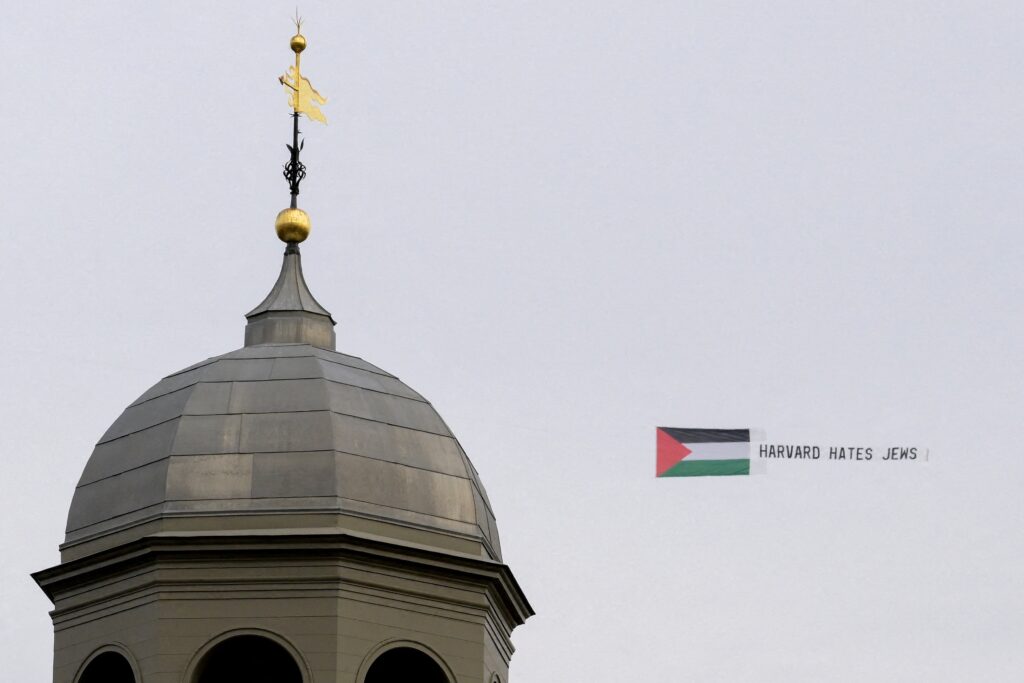
In the wake of genocidal violence in Gaza and the silencing of debate on college campuses, it now hardly matters that I, along with others, did not like every aspect of the arguments made by some student groups in the wake of October 7. When I offered my critique in the London Review of Books of the language used by the Harvard Palestine Solidarity Committee, I did so in the spirit of a conversation. I did not foresee how their viewpoint would be shut down, nor the extent of harassment and doxxing they would suffer. There is, however, still time to defend these students’—and all students’—rights to express their point of view without fear of retaliation or harm.

The crisis of academic freedom we are currently facing is as acute as any since the McCarthy years in the United States. The charge of anti-Semitism has been instrumentalized to shut down speech in ways that should be acutely alarming for anyone who cares not only about free speech in the public domain, but academic freedom on college campuses. When even calls for ceasefire are considered anti-Semitic, only those who support Israel’s annihilationist war against the Palestinian people in Gaza are exonerated of the charge. The conflation of anti-Semitism with anti-Zionism can only serve the purposes of extreme censorship, for it constrains those who oppose ongoing Israeli violence, the killing of nearly 18,000 Gazans to date, from expressing moral and political outrage and defending fundamental principles of free expression and political justice. If we dare to name the killing as annihilationist, as bearing genocidal intent, or as genocide itself, as more than 800 jurists have recently insisted, then we are accused of anti-Semitism. But what does it mean to speak up against genocide only to be censored? It means that only speech that defends injustice is defensible.
Students were right to bring attention to the longer history of violence that has culminated in this horrible moment.

When Israeli generals, backed by President Herzog, contend that there are no civilians in Gaza (evoking Golda Meir’s infamous phrase that “there is no such thing as a distinct Palestinian people”) they set the stage for being fully exonerated for obliterating civilians in Gaza. If there are no civilians, then there can be, by definition, no civilian deaths, no war crimes can be committed, and all killing is justified. The “no” of “no civilian deaths” bespeaks and ratifies the logic of annihilation itself. It does not happen and it cannot be opposed. Derealization of killing joins the censorship of any speech that would name it as genocide or even as a war crime or call for its end. It makes sense that student groups form and join small and massive rallies alike to protest this detestable logic and the relentless campaign of slaughter it supports. Those who oppose their protests as “anti-Semitism” cheapen, inflate, and instrumentalize a charge that should be reserved for the clear instances of anti-Semitism that emerge in anti-Zionist rhetoric. Those should be named and opposed since all racism must be opposed. So too should Christian nationalist anti-Semitism that supports Zionism, to which Netanyahu gives a pass. But precisely in this moment we are called upon to ask how censorship, doxxing, and bullying not only suppress—or outlaw—the public condemnation of crimes against humanity but serve to justify the killing In a mind-bending twist, those who oppose genocide are, paradoxically, sometimes accused of genocidal intention, as we saw in Republican representative Elise Stefanik’s December 7 public grilling of University of Pennsylvania president Liz Magill and Harvard president Claudine Gay. Her interrogation packed a number of dubious assumptions into the questions—that certain phrases express genocidal intent—rather than considering their place in an emancipation movement. Intifada, generally translated as “uprising” in Arabic, means “to be shaken” or “to shake oneself.” It is understood as a movement that refuses to remain docile in the face of colonial violence, an effort to throw off the shackles of colonial rule. It is also a call for Palestinian unity. Does it necessarily imply genocidal violence? No. Now, some may imagine that the colonized, once freed of their shackles, will turn against the colonizer with vengeful, genocidal intention. But imagining is not prediction. Indeed, that will not happen if a radical decolonization is successful. If the rage of intifada, however, is directed against colonial rule, then decolonization will more likely produce another emotion: emancipatory joy, a sense of freedom, the release from shackles that have only tightened over the seventy-five years of their imposition. One need only ask whether Palestinians would prefer to be killed by non-Jewish actors to see that it is state violence they oppose.

When asked whether Harvard University would condemn calls for Jewish genocide, Gay rightly hesitated, since the question assumed that anyone who called for “intifada” or chanted “from the river to the sea” was expressing genocidal intent or making a concrete threat to obliterate Israeli Jewish life, or Jewish life more broadly. The interrogation should have stopped right there to expose its fugitive assumptions. In the moment of questioning, however, they were consolidated: “intifada” and “from the river to the sea” were, without a pause of reflection, made identical with calling for genocide against the Jews, and calls for liberation were understood as threats of anti-Semitic violence. When the ability to reflect on questionable assumptions is ruled out, the trap is set. The terrible consequence is that there can be no critique of Israel’s killing machine, no oppositional speech, that is not immediately construed as a call for violence—if not the verbal threat of violence itself. Any president would be right to hesitate before answering such a question, since the interrogator has offered a set of false premises and specious conflations in the form that that question has taken. In the aftermath of Magill’s resignation, president Gay has an ethical decision to make: to stand up to forms of inquisition that conflate resistance to Israeli violence with genocidal intention, to stand up for the rights of protest and dissent, or to become an instrument of censorship and denial. Her stated apology does not bode well. Whatever she finally decides will set a consequential precedent for both academic freedom and freedom of expression.

At universities, we question the question for its premises. If we lose that critical capacity from our classrooms and from public life, we have lost our mission, and we have failed ourselves and our students. The censor is fierce and consequential, since we do get cancelled or lose our positions, or become smeared in the media. Without conviction, many simply obey the demand to signal their condemnation of Hamas in formulaic ways out of fear. Critical thought has vanished, and the demand to display moral condemnation becomes a form of moral terror.

Gay’s position has been compromised from the beginning by allowing the doxxing of students and failing to support their basic rights of assembly and expression. Of course, she has been, and will now be, criticized by Zionists for not having intervened to shut down the Harvard Palestine Solidarity Committee more quickly and brutally. The effort to suppress their message helped to initiate the the wave of campus censorship we now see, one that operates formally and informally. Such censorship not only allows this campaign of slaughter against Palestinians to continue but serves as its mirror and justification. The Israeli state shuts down Palestinian life, and censorship of statements of solidarity with the Palestinian struggle (conceived as larger and longer than Hamas) are shut down as well. The one requires the other, since a war against civilians can only be won if (a) the international community is convinced that civilians are either human shields or all terrorists and (b) open, public criticism of those assumptions, among other appalling conflations, can be suppressed. In other words, killing with impunity of this magnitude requires a censorship campaign that shuts down speech that would rightly name and oppose that killing, narrate the history of killing, and the structural violence of the state itself.
Censorship wields power, but it confesses that matters are already out of the control of those who use it.

It is not just the Harvard students who find their speech mangled in the public reception and their lives besieged by media attacks, doxxing, and harassment. All student speech that seeks to counter the conflation of anti-Semitism with anti-Zionism, or indeed, all efforts to name Israeli killing as genocidal, are targets. Students are harassed and job offers are rescinded, their professional aspirations are halted or destroyed, and their ability to withstand appalling accusations results in forms of psychic damage that only they can truly (one day) relay.

If this moment were less fraught with fear and hatred, we could pause and ask some important questions. Is Hamas a terrorist movement or a movement for armed resistance? When students defend Palestine, are they calling for decolonization, the end to Israeli state violence, or are they cheering for the death of Israelis? Shall we ask them? Shall we bother to find out? Or should we, as we now do, move quickly to the conclusion that the emancipation of Palestine leads to death for Israelis when, in fact, it may lead to a new possibility for cohabitation, whether in a one- or two-state solution or another form of governance? My own political alliances remain with the Boycott, Divestment and Sanctions movement whose nonviolent instruments and aims comport with my own values. But perhaps it is important to ask those who defend Hamas as a movement of armed resistance how they situate this armed resistance within a history of armed struggles, and what, if any, conditions would have to be met for the laying down of arms. One obvious answer is that Israeli state violence would have to end. If Israeli state violence is the condition of possibility for armed resistance, then the cessation of that violence would doubtless produce another political constellation.

I quarreled with the Harvard Palestine Solidarity Committee in my LRB essay for claiming that “the apartheid regime is the only one to blame” for the deadly attacks by Hamas on Israeli targets. I thought it was “wrong to apportion responsibility in that way, and nothing should exonerate Hamas from responsibility for the hideous killings they have perpetrated.” I do not think it makes sense to say that Israeli violence is the name for the violence that Hamas commits, since Hamas has its own plan, and the decision to launch an armed struggle is one for which it assumes responsibility. One could even say that claiming Hamas’s violence is only Israeli violence turned back on the Israelis undermines the agency of those Palestinians who have taken up the position in favor of armed struggle. They are not vessels for a reverse Israeli violence but are acting in their own name and for their own reasons, or so I would presume. That said, the students are surely right that there would be no need for armed struggle were there not an ongoing and insufferable infliction of state violence by a colonial power against the besieged and dispossessed.

But this thought can barely be communicated, let alone argued with, under present historical conditions. Palestinian lives are being destroyed in Gaza, and every Palestinian will object to that destruction. If they object, and we object with them, that does not make us supporters of Hamas. It only makes us vocal critics of genocide.

Let me then apologize and make clear: the students have every right to oppose the way that “the conflict” has been framed in the press, the way that October 7 and Hamas’s acts become the false starting point for any public debate, effacing the seventy-five years of occupation, detention, dispossession, and land theft that came before it. We do not have to back everything about their message to deplore unconditionally the way they have been damaged by the Zionist movement in the United States. They have a right to speak, to speak out against injustice, and to have their voices be heard—and fairly debated—in the public sphere. The censorship of their voices is in all respects unconscionable, for it demands silence in the face of an appalling attack on Palestinian lives and refuses to consider the campaign of slaughter that Israel now wages as part of a longer campaign to deny the basic rights of the Palestinian people to their homes, their land, and a future of political self-determination free of violence.

Censorship is always the instrument of the weak. Yes, it wields power, but it confesses that matters are already out of the control of those who use it. Censorship is deployed by those who seek to contain or eliminate a point of view they do not want to be heard. It attributes great power to that point of view because, perhaps, it knows that vocal opposition to injustice can attract supporters who still have the courage to see, name, and oppose the horror of what is happening. Censorship may instill fear of the censor in those who watch its operation as the cultural wing of the military campaign against Palestine. But there are always those who refuse to be contained or silenced by the censor, those whose sensibilities are awakened by the censor and oppose the stifling of speech and debate. Let us join those who believe that the Harvard students were right to speak freely, right to oppose injustice, and right to bring attention to the longer history of violence that has culminated in this horrible moment.

Universities should be places where we are free to learn about such viewpoints, where students are free to express dissenting ones, and where debates on the merits of their views should be encouraged. There are so many conversations to be had, including the question of how those of us committed to nonviolence can play an active role in preserving rights of speech and the critique of falsehoods. Censorship belongs to the scourge of authoritarianism. And as attacks on democracy are rampant and rising, it is the responsibility of university administrators to safeguard rights of free expression, especially when the atmosphere is tense, the language is fraught, and allegations and threats take the place of reflection and debate. To be prohibited from opposing injustice is to suffer a further injustice. Can we perhaps have a debate about justice? The university might then have the chance to renew its reputation for open inquiry. Can we listen to our students? The university might then have a chance to become a place of learning and provide, for faculty, a new lesson in humility.

Boston Review is nonprofit, paywall-free, and reader-funded.


Judith Butler


ABOUT THE AUTHOR:


Judith Butler is Distinguished Professor at the Graduate School at the University of California, Berkeley. Her forthcoming book, Who’s Afraid of Gender?, will be published in 2024.

Tuesday, October 31, 2023

Ilan Pappé and Judith Butler On What the Gaza War Actually Represents, the Imperialist Role of the United States, and Israeli State Violence Against the Palestinian People

Israeli Historian Ilan Pappé on Gaza War, Hostages & the Context Behind Current Violence

We speak with Israeli historian Ilan Pappé about Israel’s escalating war on Gaza, as well as a leaked document from the country’s Ministry of Intelligence that suggests permanently expelling Gaza’s entire population to the Sinai Desert in Egypt. “This is a massive operation of killing, of ethnic cleansing, of depopulation,” says Pappé. He also says the only way to secure the release of the more than 200 hostages held by Hamas is to agree to an all-for-all swap for the thousands of Palestinian political prisoners held by Israel, including many women, children and elderly people. “This is the only way to release the people who were taken.” Pappé is a leading critic of the Israeli occupation, a professor of history and the director of the European Centre for Palestine Studies at the University of Exeter. His books include The Ethnic Cleansing of Palestine, A History of Modern Palestine: One Land, Two Peoples and The Idea of Israel: A History of Power and Knowledge. 
 
Transcript: 
 

Judith Butler: Palestinians Are Not Being “Regarded as People” by Israel and US

Judith Butler calls for immediate ceasefire, Palestinians’ right of return and the dismantling of colonial structures.

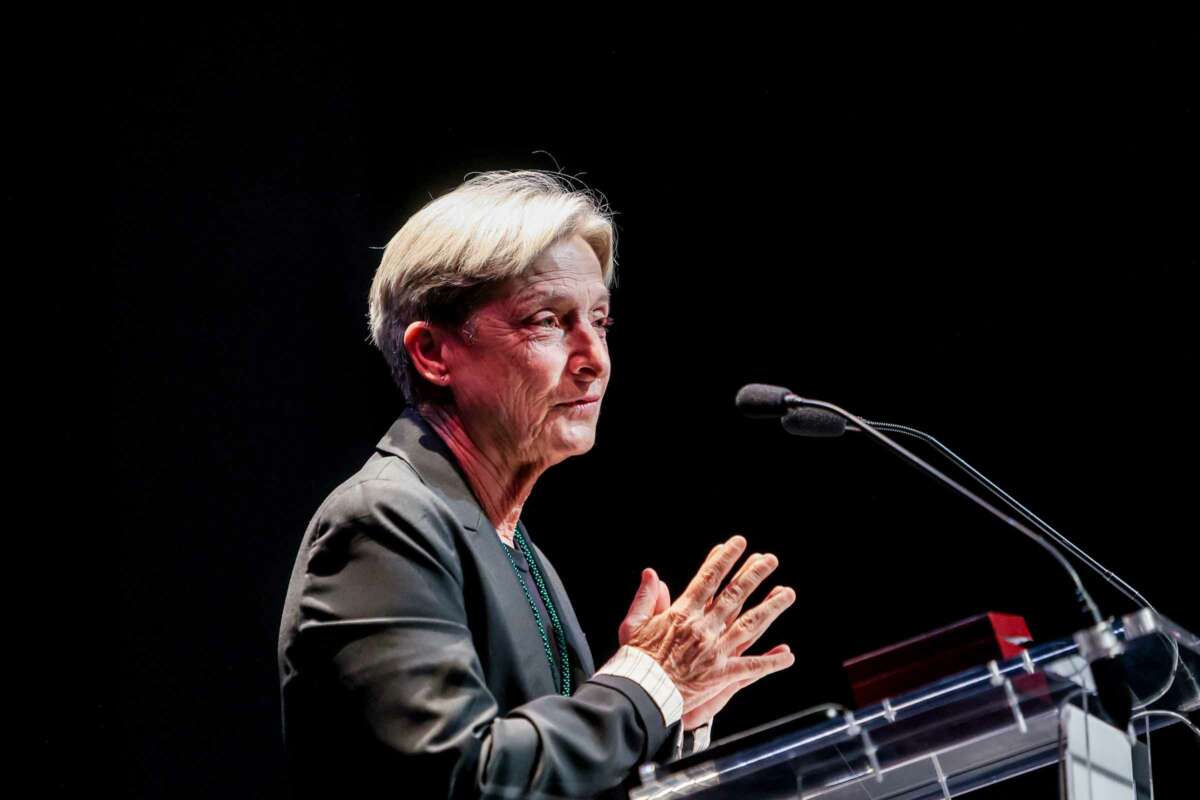
PHOTO:  Philosopher Judith Butler receives the Gold Medal of the Circulo de Bellas Artes, on October 27, 2022, in Madrid, Spain.

What’s happening in Gaza is genocide. The bodies keep falling, piling up. This is happening under our collective watch, our moment in history.

Israeli forces have now killed more than 8,300 people in Gaza, including at least 3,400 Palestinian children, and tens of thousands more face an acute risk of death as the Israeli military continues to prevent people in Gaza from accessing adequate food, clean water and functional medical care. The U.S. State Department has reportedly estimated that 30,000 babies under 6 months of age with barely formed immune systems are currently drinking contaminated water in Gaza. I dread to imagine the colossal ways in which illness and starvation wrought by conditions like these may soon push the death toll exponentially higher, even as Israel continues expanding its ground attacks under the cover of the ongoing communications blackout caused when Israeli forces severed Gaza’s phone and internet systems.

Since October 7 — when Hamas militants killed over 1,000 people in Israel and took hundreds of hostages and Israel began its ongoing campaign of mass murder — I have been in a state of profound grief. I am sick to my stomach in the face of so much death, so much destruction, so much displacement, oppression and genocide faced by so many Gazans. When I look at my own beloved children, I imagine with horror the over 3,400 Palestinian children who have been murdered, their tender and vulnerable bodies torn apart and buried under rubble. They are not terrorists! They are just as precious as any other children around the world. In my eyes, they are just as precious as Israeli children.

In the face of this grief and horror, I needed to have a dialogue, a desperate conversation. To that end, I turned to philosopher Judith Butler not just for insight, but for reasons of shared pain and outrage, and for a shared commitment to end all violence. A prominent U.S. philosopher, Butler is distinguished professor in the Graduate School of the University of California, Berkeley, and holds the Hannah Arendt Chair at the European Graduate School. Butler is the author of numerous influential books, including The Force of Nonviolence, Gender Trouble, Precarious Life, Notes Toward a Performative Theory of Assembly, and most recently, What World Is This? A Pandemic Phenomenology.

Butler is also an advisory board member of Jewish Voice for Peace who recently sent an open letter to President Joe Biden publicly declaring their “opposition to what the Israeli government is doing with American assistance” and calling on the U.S. government “to seek an immediate ceasefire.”

George Yancy: Judith, I’ve been thinking of your book, Precarious Life: The Powers of Mourning and Violence, in which you write, “To say, effectively, that anyone who utters their heartache and outrage out loud [about Palestinian suffering] will be considered (belatedly and by powerful “listeners”) as antisemitic, is to seek to control the kind of speech that circulates in the public sphere, to terrorize with the charge of anti-Semitism, and to produce a climate of fear through the tactical use of a heinous judgment to which no progressive person would want to be subject.”

It does seem that offering any critique or questioning of Israel, especially at this moment, automatically exposes one to being charged with antisemitism by those who are strategically seeking to shield the Israeli government from critique by conflating antisemitism with legitimate critiques of Israeli policy. During this unrelenting bombardment of Palestinians within Gaza, those in the U.S. advocating for Palestinian rights are being targeted through acts of verbal and physical harassment, and even death threats. These are the ugly “McCarthyite” conditions that are being created as people voice their dissent against the historical and extant cruelty toward Palestinians under Israeli occupation. This is an unfair position to be in for anyone who cares about the suffering of all human beings.

I was put on the infamous Professor Watchlist because I was accused of teaching leftist propaganda to conservative students or engaging in some form of radical pedagogy that supposedly does harm to them. If it causes harm to teach students to understand the meaning of global systemic violence, suffering, oppression and the need for radical love to change the conditions of this violent world of ours, then, yes, I am guilty as charged.

What’s happening in Gaza is genocide. The bodies keep falling, piling up. This is happening under our collective watch, our moment in history.

If someone critiques Israel for its practice of apartheid against Palestinians — which involves placing Palestinians in a constant state of poverty, precarity and insecurity, and where Palestinians have been tortured, murdered, detained and had their homes demolished — offering such a critique does not make that person antisemitic. None of us would want to live under horrible and dreadful conditions where our very lives depend upon the prerogatives of an oppressive state with enough power to control whether we eat or not, drink clean water or not, take care of our sick or not — live or die. To twist a legitimate and necessary critique of Israel’s injustice toward Palestinians into a charge of antisemitism would, logically speaking, indict Amnesty International, Human Rights Watch, or the Jerusalem-based human rights organization B’Tselem as also being antisemitic, because they recognize the hegemonic apartheid conditions under which Palestinians live — “both within [Israel’s] borders and in the occupied territories.”

The weaponization of the idea of antisemitism creates a context of pressure to praise Israel and deny Palestinian rights or be silent out of fear of being called an antisemite. Judith, you and I have made very clear that we both oppose the violence that Hamas inflicted on Israeli civilians, and that when it comes to human life, we respect the lives of Israeli Jews as much as we respect the lives of Palestinians. You made this point clear when you wrote, “I oppose the violence that Hamas has inflicted and have no alibi to offer. When I say that, I am making clear a moral and political position.” And yet, even as we make this clear, we will still face disingenuous smears from right-wing groups for critiquing the mass killing of civilians that the Israeli military is now wreaking upon the people of Gaza. So, let’s begin there. How do we critique the actions of Israel, especially at this fragile and traumatic moment?

Judith Butler: Dear George, I am sorry to hear that you have been targeted by these right-wing groups. I have as well, and my email always carries a hateful message…

At this moment, our attention needs to turn to the horrific suffering of the Palestinian people, for a genocide is surely taking place. Academics, activists and artists who call for the State of Israel to stop its deportation, bombing, killing and starvation techniques are themselves being censored for naming the violence for what it is. So those of us who have been targeted for teaching ethnic studies, teaching against racism, teaching gender and sexuality, are suddenly in the company of all those who are quite literally punished for speaking out against genocide.

This is not a “conflict” between two parties, but a form of violent dispossession that dates back to 1948, if not before, and constitutes not a new Nakba, but the continuation of one that has never stopped for millions of people.

The media moves quickly, as do complicit states, to conflate Hamas (its military wing) with all forms of Palestinian struggle, to destroy the distinction between civilians and militants, and to call an armed struggle “terrorism” rather than a resistance to an increasingly violent state and military apparatus.

As intellectuals, we are under an obligation to make clear distinctions, to understand the history of Palestinian suffering and resistance under colonial repression: forcible dispossession, land theft, arbitrary detention and torture within prisons, bombings, harassment and murder. This is not a “conflict” between two parties, but a form of violent dispossession that dates back to 1948, if not before, and constitutes not a new Nakba, but the continuation of one that has never stopped for millions of people.

The mainstream media describes in graphic detail the killings of Israelis on October 7, and we are rightly galled and horrified. But it seems that the vast number of children killed in Gaza will never have the kind of global attention and empathy that the Israeli child will have. We will know the Israeli’s name and family, but we will only get a number for the Palestinian child, or thousands of children, unless we find and circulate the reporting that Palestinians are doing from the ground, often within scenes of agony. I do think it would matter if we could understand Hamas as engaging in armed struggle, and then we could have the kinds of debates that make sense. But the main aims have to be the dismantling of occupation and supporting the political freedom of Palestinians as they seek to determine an autonomous future with the support and admiration of the world.

GY: As someone racialized as Black, I know what it feels like to be under constant surveillance, to have one’s freedom of movement under the control of others, to be made to feel homeless, to feel deep anxiety and fear because of imminent police violence, to experience one’s life governed by carceral logics and to live with that tremendous weight of precarity, instability and embodied trauma from the anti-Black structural dimensions of whiteness. Yet, I refuse to conflate what it means to be Black in the U.S. with what it means to live as a Palestinian under apartheid. I can try to understand what growing up as a Palestinian child in Gaza must mean in terms of intergenerational trauma, having no sense of the future or self-determination, but I have not experienced the specificity of Palestinian lived experience under occupation.

Palestinians in Gaza know what it is like to live under constant blockade by Israel and to live under conditions of pervasive poverty. Existentially, ethically and politically, they know what it is like to desire independence, to long for freedom from occupation, only to have it denied. They know what it means to be evicted from their homes.

Surely, President Biden knew of this prior to this moment of tragedy within Gaza and Israel and before his recent Tel Aviv trip to shore up his (and by extension, the U.S.’s) support for Israel. However, I don’t recall his sense of moral urgency to visit the region because of the unconscionable long suffering of Palestinians. In fact, Biden said,

When I was in Israel yesterday, I said that when America experienced the hell of 9/11, we felt enraged, as well. While we sought and got justice, we made mistakes. So, I cautioned the government of Israel not to be blinded by rage.

Unfortunately, and yet predictably, this was an uncritical, unquestioning narrative alliance. What was needed was a counternarrative. Biden should have said: “When I was in Gaza yesterday, I said to the Palestinian people that the United States was founded on settler colonialism, hatred, brutality and murder of Indigenous peoples. I told them that white Americans used discourses of ‘barbarism’ and ‘savagery’ to dehumanize Indigenous people and to drive their genocide, displacement and dispossession.” And Biden should have said: “We refuse to see this happen to you! For we understand these actions as ‘pure unadulterated evil.’ Therefore, the U.S. demands an immediate ceasefire!”

And let us not forget that at this moment of agonizing grief that this is not the first time that Palestinians are experiencing the war crime of collective punishment. As Seraj Assi reminds us,

Gazans have been under a vicious blockade for nearly two decades, subjected to Israel’s repeated air strikes and raids, military operations and collective punishment. The majority of its two million people still scrape by in cramped refugee camps under unlivable conditions. Former Israeli Defense Forces (IDF) military chief Benny Gantz, referring to Israel’s 2014 invasion of Gaza, has boasted of “bombing Gaza back to the Stone Age.” The IDF describes its tactic in Gaza as “mowing the grass.”

How have so many not heard the cries and lamentations of Palestinians? There is no ambiguity. The answer has to do with the fact that Palestinians are deemed “uncivilized” by the Israeli government and some of its Western allies. After all, it was Benjamin Netanyahu who said this battle is not only Israel’s, but “it is civilization’s battle.”

Such despicable discourse and inhumanity would not be tolerated for a moment if it were Israeli Jews who were experiencing the horrors faced by Palestinians of “beatings, shootings, killings, assassinations, lynchings, curfews, military checkpoints, house demolitions, evictions, deportations, disappearances, uprooting of trees, mass arrests, extended imprisonments, and detentions without trial.”

So, there are double standards. And the U.S. takes the side of Israel, providing billions of dollars of support to its military each year. For me, this means that the U.S. supports the occupation of Palestinians, supports apartheid. Not to listen to Palestinians about their existential plight (and I mean prior to the recent declaration of “war” by Israel) under occupation is another way of saying: “We don’t give a damn. Your people, your children, don’t have the same ontological standing as Israeli Jews.” Why is it that so many have failed to hear the voices of suffering Palestinians under the weight of oppressive conditions? How do we get those who don’t seem to hear or see the suffering of Palestinians to hear and see them?

JB: I think perhaps what you are pointing out, George, is that Zionism has from the start engaged in a racist project. Theodor Herzl said there were no inhabitants on that land so that the Jews, a people without a land, could seize it without compunction. What that meant was that the Palestinians there were not regarded as people — they literally could not be seen as human forms. Can we say that the same epistemic racism is being played out in Gaza today? If all Palestinians are Hamas, and Hamas is nothing but “terrorism,” then murder at a mass scale is “justified.” I am, perhaps uselessly, in favor of nonviolent resistance, which is why I have supported the Boycott, Divestment, and Sanctions (BDS) movement since 2009. But those who understand and accept armed struggle usually make a distinction between civilian and non-civilian targets. If the public debate included the history of violence and the emergence of armed struggle in the face of the Oslo betrayals, we would be having a different public discourse.

The acknowledgement of the existence of a humanitarian crisis requires the recognition of the humanity of Palestinians. Perhaps this brings us back to the theme of Palestinian humanity or its erasure.

George, you point out that there are important ways of linking different forms of racism, without saying that they are all the same. Robin D.G. Kelley notes, “I connect the original meaning of Juneteenth with Palestine. The principles of Jubilee apply to people dispossessed in their own land, trapped in state-sanctioned enclosures and subject to military assault, carrying debts imposed by illegal occupation.” Gabrielle Gurley, writing about the attacks on Palestinian worshipers at al-Aqsa during Ramadan in 2021, makes the link clear: “The rubber bullets and tear gas shot into crowds, the pummeling of heads into cement and asphalt, the arrests, and the expulsions magnify the cruelty — and that’s the point. But they also brought the dehumanization and the daily roster of injustices faced by Palestinians into sharp relief — just as George Floyd’s murder last year did for anyone who had wanted to absolve America of racial terrorism.”

But let’s remember what June Jordan saw when, in 1982, Palestinian encampments were bombed and massacres committed in Sabra and Shatila in Lebanon. Her poem, “Apologies to All the People in Lebanon,” includes these lines:

“They said something about never again and then

they made close to one million human beings homeless

in less than three weeks and they killed or maimed

40,000 of your men and your women and your children

But I didn’t know and nobody told me and what

could I do or say, anyway?

“They said they were victims. They said you were

Arabs.

They called your apartments and gardens guerrilla

strongholds.

They called the screaming devastation

that they created the rubble.

Then they told you to leave, didn’t they?”

How can we not hear that poem now? Why is that poem still true now? Consider June Jordan’s words along with Amnesty International Secretary General Agnès Callamard’s new report from Gaza. This echo is horrendous: “They have pulverized street after street of residential buildings killing civilians on a mass scale and destroying essential infrastructure, while new restrictions mean Gaza is fast running out of water, medicine, fuel and electricity. Testimonies from eyewitness and survivors highlighted, again and again, how Israeli attacks decimated Palestinian families, causing such destruction that surviving relatives have little but rubble to remember their loved ones by.”

And let us remember as well June Jordan’s daring act of solidarity that same year in “Moving Towards Home”:

“I was born a Black woman

and now

I am become a Palestinian

against the relentless laughter of evil

there is less and less living room

and where are my loved ones?

It is time to make our way home.”

Let us also remember that the same groups that teach how to produce a fully militarized police force, such as the Israeli-export Urban Shield, have targeted both Palestinians and Black people, treating all uprisings and forms of resistance as “terrorism,” domestic or foreign. It was Palestinian activists who sent advice to those fighting against police violence in Ferguson on how to deal with pepper spray and other military tactics.

GY: Your reference to Theodor Herzl reminded me of Britain’s deployment of the racist doctrine of terra nullius (“nobody’s land”) to “justify” the appropriation of land from Indigenous peoples in Australia. And your delineation of Black thinkers who clearly recognize the shared overlapping realities of the plight of Black people in the United States and Palestinians in Gaza is indispensable. I immediately thought of the document, We Charge Genocide: The Crime of Government Against the Negro People, which was written by the Civil Rights Congress and designed to bring attention to the genocidal conditions of Black people in the U.S. As you know, Paul Robeson, along with other signatories of the document, gave the signed petition to the United Nations in 1951. I also thought of Black theorist Christina Sharpe where, In the Wake: On Blackness and Being, she urges Black people to imagine critical ways to respond “to terror and the varied and various ways that our Black lives are lived under occupation,” and emphasizes that Black people have “no state or nation to protect us, with no citizenship bound to be respected.” And your point about militarized policing tactics that are designed to target both Palestinians and Black people, especially within urban spaces, speaks to Georgia’s maddening plan to build “Cop City,” which will entail environmental racist implications and deep ramifications for increasing the militarized policing of Black people.

The world that we inhabit is violent, evil, ethically inept, crass, bloodthirsty, revengeful, always on the brink to counter violence with violence, where countries threaten the use of their powerful and sophisticated military arsenal, where others speak of the use of nuclear weapons, where children — our collective children — suffer in the wake of “adult” violence. This is not the world that I desire. In fact, I detest it with as much outrage as I can muster. And yet, I fight against being trapped by an implosive sense of deep sadness. In the light of so much horror in this world, perhaps we should ask ourselves constantly: Where do we go from here? How do we get out of this mess, this morass?

The roots of the problem are in a state formation that depended on expulsions and land theft to establish its own “legitimacy.”

I would like to focus this question on the Palestinian situation. Judith, what is next for Palestinians who are fleeing Gaza, who will continue to seek freedom? In fact, it is not even clear to me that they have another place where they can flee, a place that they can safely call “home.” To move anywhere away from Gaza must feel like another form of being deracinated, displaced, dispossessed — yet another Nakba. The UN already “considers it impossible for such a movement [of people] to take place without devastating humanitarian consequences.” Yet, the acknowledgement of the existence of a humanitarian crisis requires the recognition of the humanity of Palestinians. Perhaps this brings us back to the theme of Palestinian humanity or its erasure.

As I watch this “war” unfold, there are times when it is hard to breathe, where the heaviness is lodged in my chest, when I can’t watch (or refuse to watch) the images of death and destruction. I see the inordinate military power of Israel. After all, the Palestinians don’t have the power to tell Israelis to leave Israel because it is about to become rubble. The fact that Netanyahu can order Palestinians, entire families, to “evacuate” to the southern part of Gaza, only to flee in a direction that has already been bombed by Israel, demonstrates the inordinate power of Israel. It reveals the deep vulnerability of Palestinians, especially as they are killed by Israeli airstrikes as they leave. While it is the case that aid trucks have arrived through the Rafah border with humanitarian aid, even this aid, which was far from sufficient, was mobilized because Israel allowed it to happen.

This power is also inextricably linked to hubris and grandiose self-righteousness. “Israeli Defense Minister Yoav Gallant said that once Hamas had been defeated, Israel would end its ‘responsibility’ for life in the Gaza Strip.’’ This “responsibility” was not something that was historically necessary. My sense is that there would be no claims about responsibility or the end thereof if it wasn’t for Israeli occupation to begin with. I say this, however, without denying the vulnerability of Israeli Jews. Yet, Israeli Jews can return home. Jewish people have a history of being ousted. Why is it that for so many, their ethical and existential sense of the horror of that history doesn’t move them toward a shared sense of solidarity with Palestinians, which would involve a deep commitment to eliminating suffering and displacement?

In Giving an Account of Oneself, you write, “Our capacity to reflect upon ourselves, to tell the truth about ourselves, is correspondingly limited by what the discourse, the regime, cannot allow into speakability.” I wonder if what is needed is a radically new discourse that will somehow epistemologically un-suture (profoundly open) Israeli Jews and thereby allow into speakability that which will effectively address the crimes against Palestinian people — which, it seems to me, will perhaps prove to be ethically, politically and existentially beneficial to Israeli Jews.

JB: I suppose that what is unspeakable is that the Ashkenazi Jews of the world, whose history includes being targeted by a wave of expulsions and murders in Europe, would not oppose expulsion, genocide, starvation and bombing against a people, the Palestinian people, who have been systematically expelled from their own lands and criminalized for wanting them back. I am not sure that a humanistic appeal to Israeli Jews will do the trick, for the roots of the problem are in a state formation that depended on expulsions and land theft to establish its own “legitimacy.” There is no resolution to the violence we see until the right of return for Palestinians is honored, and very few Israelis have been able to grasp the legitimacy of that claim, and to be part of imagining how that might come about. Zochrot is one beautiful exception.

One cannot have “peace” if doing so demands that Palestinians agree to subjection, affirm their dispensability, and accept their structural subordination and subjection to systemic forms of violence and racism.

One cannot have “co-habitation” without first dismantling the colonial structures that make it impossible on truly equal terms. One cannot have “peace” if doing so demands that Palestinians agree to subjection, affirm their dispensability, and accept their structural subordination and subjection to systemic forms of violence and racism. We see that language has been stolen and abused, especially when those who cry out for justice are accused of being terrorists, or their allies. Universities and arts institutions, like 92NY in New York City, are cancelling authors and suppressing speech that advocates for Palestinian life and freedom. Jewish Currents has documented this.

And Palestine Legal, the enormously talented and courageous advocacy group, recently reported more than 200 instances of censorship, suppression or job loss already taking place. It is intolerable that those who speak for justice are censored, which means that injustice redoubles itself and the fate of our world, the prospects for speaking truth in public, become ever more dim. But the censorship of our voices, George, as bad as that is, does not compare with the eradication of those lives that would speak now if they could, those voices now reduced to rubble.

I do think that racism makes sure that not all lives are equally grievable. But those lives do not become grievable just by cultivating our individual capacities to grieve. They become livable and grievable only when racism is fully dismantled. To name and acknowledge those lives that should never have been lost, to gather for that purpose, is to link grieving with outrage and the communal demand for justice. So, grief, rage, community and solidarity — these are the signposts of our agonizing present and the potentials for whatever future might still be possible.


ABOUT THE INTERVIEWER:


George Yancy is the Samuel Candler Dobbs professor of philosophy at Emory University and a Montgomery fellow at Dartmouth College. He is also the University of Pennsylvania’s inaugural fellow in the Provost’s Distinguished Faculty Fellowship Program (2019-2020 academic year). He is the author, editor and co-editor of over 20 books, including Black Bodies, White Gazes; Look, A White; Backlash: What Happens When We Talk Honestly about Racism in America; and Across Black Spaces: Essays and Interviews from an American Philosopher published by Rowman & Littlefield in 2020.


Judith Butler on Hamas, Israel’s Collective Punishment of Gaza & Why Biden Must Push for Ceasefire--Part Two

 
This is Part 2 of our interview with philosopher Judith Butler, one of dozens of Jewish American writers and artists who signed an open letter to President Biden calling for an immediate ceasefire in Gaza. Butler is also on the advisory board of Jewish Voice for Peace. 


Watch Part 1 here: 
 

Democracy Now! is an independent global news hour that airs on over 1,500 TV and radio stations Monday through Friday. Watch our livestream at democracynow.org Mondays to Fridays 8-9 a.m. ET. 

Palestinian Lives Matter Too: Jewish Scholar Judith Butler Condemns Israel’s “Genocide” in Gaza--Part One

We speak with philosopher Judith Butler, one of dozens of Jewish American writers and artists who signed an open letter to President Biden calling for an immediate ceasefire in Gaza. “We should all be standing up and objecting and calling for an end to genocide,” says Butler of the Israeli assault. “Until Palestine is free … we will continue to see violence. We will continue to see this structural violence producing this kind of resistance.” Butler is the author of numerous books, including The Force of Nonviolence: An Ethico-Political Bind and Parting Ways: Jewishness and the Critique of Zionism. They are on the advisory board of Jewish Voice for Peace. 
 
Transcript: 


Democracy Now! is an independent global news hour that airs on over 1,500 TV and radio stations Monday through Friday. 
 
Watch our livestream at democracynow.org Mondays to Fridays 8-9 a.m. ET.