Showing posts with label antiblackness. Show all posts

Sunday, December 24, 2023

Malcolm X, the Black Radical Tradition, Human Rights, The Necessity of Resistance, and the Arduous Struggle of Palestinians in Gaza For Liberation From Massive State Violence Inflicted by Israel and the United States

Interview
Racial Justice

What Would Malcolm X Say About Gaza and Black Resistance in the US Today?

Scholar Michael Sawyer brings the political philosophy of Malcolm X to bear on the horrors taking place in Gaza.

by George Yancy
December 23, 2023
Truthout


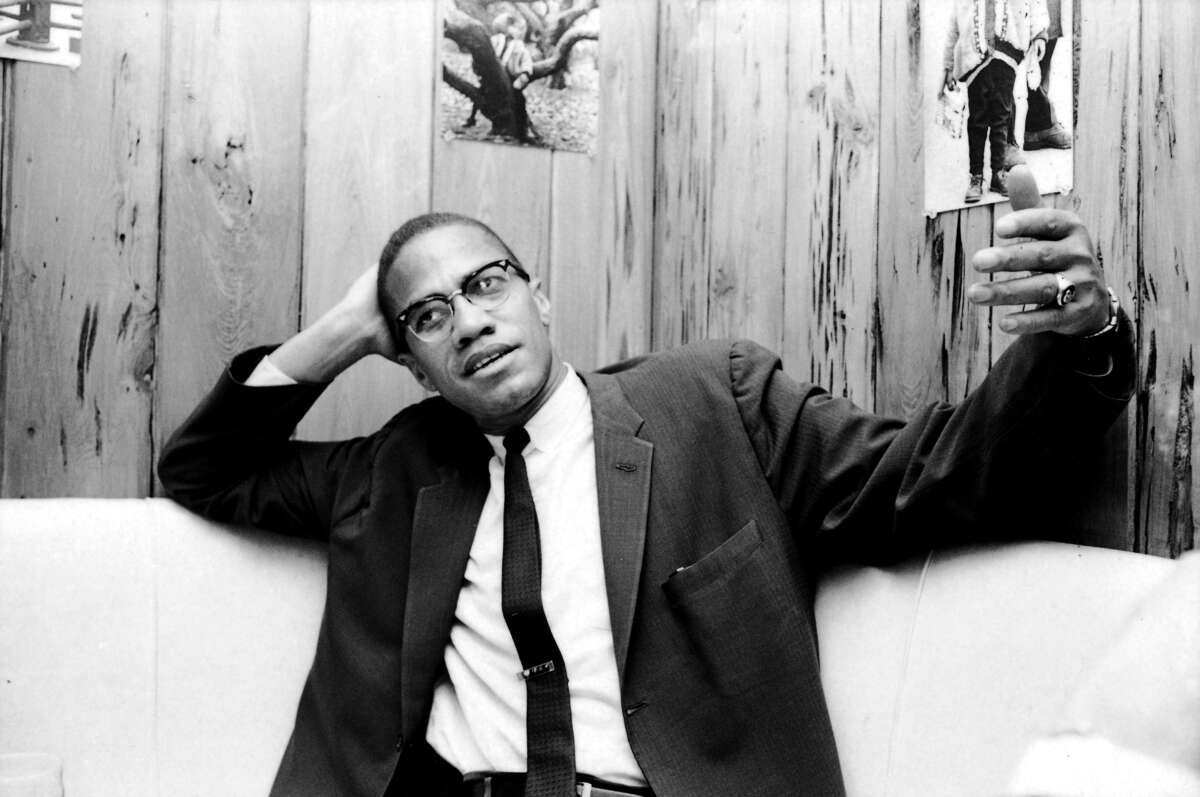
Malcolm X pictured on March 1, 1964.
Truman Moore / Getty Images

In deep times of sorrow and catastrophe, some of us flee. We flee either because we don’t want to face the weight and ugliness of the horror — willed ignorance — or we flee because we need a reprieve. I find myself needing a reprieve, though I’m by no means beyond the trappings of the former. There are other times when I seek out the wisdom of those human beings who refused to turn their faces from forms of social terror and found strength to endure. Think here of Ida B. Wells-Barnett and her powerful fight against the lynching of Black people as forms of white, twisted desire and an attempt to control Black freedom.

I recall as a teenager lying back on the floor listening to Malcolm X speeches on vinyl records that my father had collected. Malcolm X’s powerful and articulate voice encouraged me to read the dictionary, to embody the sting of his discourse, the truth that he spoke. I wanted to be like Malcolm X. I didn’t want to be a milquetoast person afraid to speak the truth. Many years later, I would read as much as I could get my hands on by and about Malcolm X. I found that many people were more interested in donning the X as opposed to understanding the complexity of the man. In 1991, I had the good fortune to meet Malcolm’s wife, Betty Shabazz, who also happily signed my copy of The Autobiography of Malcolm X. I also had the deep honor of meeting Malcolm’s youngest brother, Robert Little, in 1993. He and I spent deep quality time discussing Malcolm.

As I was thinking about the horrors taking place in Gaza, the Black Lives Matter movement, and so much more, I thought of Malcolm, his wisdom and his indefatigable courage. Wondering what Malcolm thought about the crucible of this moment, while understanding the potential mistakes involved in presentism, or where we judge the past using dominant attitudes from the present, I turned to scholar Michael Sawyer. Sawyer is an associate professor of African American Literature and Culture, a faculty affiliate of Africana Studies and the Director of Graduate Studies of the Department of English at the University of Pittsburgh, as well as the author of the groundbreaking book, Black Minded: The Political Philosophy of Malcolm X. We discussed what Malcolm X means to us today and why his thought continues to be powerfully germane. The interview that follows has been lightly edited for clarity and length.

George Yancy: When I say the name of Malcolm X (who later took the name El-Hajj Malik El-Shabazz) in the context of the college classroom, I find that many students mistakenly associate him with advocacy for wanton violence. But in Malcolm X Speaks (edited by George Breitman), Malcolm X is clear about how he understands violence. He says, “I have never advocated any violence. I have only said that Black people who are the victims of organized violence perpetrated upon us by the Klan, the Citizens’ Councils, and many other forms, should defend ourselves. And when I say we should defend ourselves against the violence of others, they use their press skillfully to make the world think that I am calling for violence, period.” Black self-defense — to take a stand against Black brutalization and oppression — for Malcolm X, is not the same as white terrorism, which is predicated upon the hatred of Black people, their dehumanization and disposability. Malcolm X reminds me of the distinction made between terrorism and the collective struggle against oppression maintained by the Palestinian American activist and scholar Edward Said.

Said is clear that terrorism or the emphasis on armed struggle that is indiscriminate and “sometimes foolishly and in a political sense stupidly relied on” is unacceptable. Said would not accept the killing of innocent civilians. But he was supportive of the struggle against oppression. It is not lost on me that Patrick Henry, who was one of the “founding fathers” of the United States and a famous orator, was against the hegemonic British rule over the American colonies. Indeed, he is known as saying, “Give me liberty, or give me death!” I imagine that the Black people that he enslaved would have been killed had they made such a fiery and insurrectionist claim against slavery and their so-called white masters. That brings me to my main question. Black people continue to live under conditions of anti-Black racism. Yet, when we resist, we are seen as violent. We can’t fight against anti-Blackness in the name of liberty where this might mean deciding to die in the process.

Talk about how Malcolm X would frame the contradictions that I’m suggesting. How might he propose that we collectively think about resisting anti-Black racism in the U.S. in the 21st century? And how might he propose Black people support other collective groups that have been negatively racialized and othered under colonial and oppressive conditions? I’m thinking here specifically of Palestinians. Malcolm X was critical of the dispossession of Palestinians, writing: “Did the Zionists have the legal or moral right to invade Arab Palestine, uproot its Arab citizens from their homes and seize all Arab property for themselves just based on the ‘religious’ claim that their forefathers lived there thousands of years ago? Only a thousand years ago the Moors lived in Spain. Would this give the Moors the legal and moral right to invade the Iberian Peninsula, drive out its Spanish citizens, and then set up a Moroccan nation where Spain used to be, as the European Zionists have done to our Arab brothers and sisters in Palestine?”

Michael E. Sawyer: First, George, I want to thank you for the opportunity to be in dialogue with you on this platform, especially as we prepare for the 100th anniversary of the birth of Malcolm X on May 19, 2024. The thrust of your question is timely and provocative in that it deals with the unspeakable violence we are all witness to in the conflict between Israel and putatively Hamas. I say putatively because the carnage we have witnessed is, in toto, skewed towards those we understand to be non-combatants. As we situate ourselves to deal with this question through the thinking of Malcolm X, we will have to develop some abstract understandings of several terms: violence vs. nonviolence, resistance, and something that approximates the right (or perhaps the necessity) to resist regimes of oppression, whether they be state-sanctioned or not.

Abstractly, Malcolm X insists upon a very careful, what I will call a “distinct-indistinction,” between violence and nonviolence as forms of resistance on the part of oppressed subjects. Broadly, he forces us to realize that as far as systems of power are concerned, any activity that is designed to destabilize structures of power are deemed “violent.” Meaning that all technologies of resistance — say, for instance, speech acts against a regime — are reacted to, or at least categorized, in the same manner as an armed insurgency. This means that as a practical matter, the telos [or end goal] of any form of protest — let’s use the term “disruptive activity” — will almost universally first be characterized as violent and then reacted to in violent fashion. That is, the abstraction I referenced above that needs to be further glossed as also distinct from acts of self-defense against violence which Malcolm X understands as required to be violent. That abstraction allows us to deal with the specificity of your question that I take to situate, and I believe this to be correct, the plight of Palestinians as inextricably related to the denial of liberty to Black people in this country.

That linkage is, in my estimation, one of the foundational advances provided by the philosophical system (if you will allow me that) Malcolm X developed in that he understands “Black” to reference aggrieved subjects wherever and whoever they might be; a form of global transnational and trans-subjective Blackness. What that means, returning to the abstraction developed above, is that resistance to the occupation of Gaza or the West Bank by anyone will necessarily be seen as violent by the state of Israel. And I want to take care to acknowledge that there are actors within that government who do not subscribe to this view, and are reacted to violently. That means that a terror attack like that on October 7 by Hamas and others will be understood as a kind of capstone in a logic of violence, whether individual acts in that chain of events can be characterized as violent or not.

What this seems to assert is that the answer to the totality of your question regarding what is to be done to effectively oppose systems of state-sanctioned oppression is to mount a structural/systemic response to the structural/systemic refraction of all protest into acts of violence that necessarily tend to blur and, at the same time, magnify actual acts of violence. What Malcolm X endeavors to do through his transnational and trans-subjective understanding of Black(ness) was to create a type of super-citizenship that enjoyed the protection of recognized states for those situated within crucibles of oppression wherever that might be. This becomes Black Panther Party orthodoxy in that oppressed African Americans were deemed to be substantively existing in colonies and therefore colonized. Here, “super” is in great measure meant to be something like “greater than” but also shorthand for “superseding” in that it is an overarching understanding that invalidates typologies of citizenship that are designed only to render subjects objects in terms of the law: acted upon rather than protected by. This would be the kinetic realization of the dormant or potential power of the United Nations Universal Declaration of Human Rights and other prohibitions against apartheid, etc. Aggrieved parties would have the ability, or more accurately already be understood to be protected and if necessary, dynamically so by international peace-keepers dedicated to a realization of the term “liberty” that hovers over this discussion. We are disconcertingly far from realizing that goal.

Part of how I think about anti-Black racism is through the lens of white supremacy, though I don’t limit my understanding of anti-Blackness to white groups such as Christian Identity, neo-Nazis or “alt-right” Republicans. Whiteness is not limited to overt hatred or conscious racial discrimination or the use of the N-word. White hegemony, white power and white privilege are systemic. Even poor white people get to benefit ontologically from being racially defined as white. In fact, to define white supremacy exclusively in terms of white hatred would exclude those white people who continue to reap the benefits from a system that dehumanizes Black people and other racially minoritized people. Whiteness functions to conceal its power through mundane processes that are structured as “normal.” To challenge white supremacy, one has to challenge the commonplace ways in which whiteness continues to operate and accrue a sense of safety for white people — being able to drive while white and feel no anxiety about being pulled over because one is white, shopping while white and not being racially profiled, and never needing to teach one’s white children about how to behave in the presence of police officers for fear that one is immediately suspected of being a “criminal.” As white educator Peggy McIntosh says, “In my class and place, I did not see myself as racist because I was taught to recognize racism only in individual acts of meanness by members of my group, never in invisible systems conferring unsought racial dominance on my group from birth.”

I find that when my white students discuss white supremacy, they limit their critiques to forms of discrete hatred or meanness. Encouraging them to rethink white supremacy through a systemic lens, where anti-Blackness is indissociable from whiteness as a structure, they become almost nihilistic or fatalistic, which is never my aim. I do want them to lean into the conundrum of what it means to be white and yet ethical under a system of anti-Blackness where they are complicit. That is crucial. For me, to undo the system of white supremacy would entail undoing whiteness as a site of hegemony and privilege.

On March 19, 1964, Black jazz critic A. B. Spellman asked Malcolm X about his use of the term “revolution” and if such a thing was occurring in the U.S. at that time. Malcolm X responded, “There hasn’t been. The people who are involved in a revolution don’t become a part of the system — they destroy the system; they change the system. The genuine word for a revolution is Umwälzung which means a complete overturning and a complete change.” As we grapple with white supremacy at this moment in the U.S., especially in terms of the unabashed white nationalist ethos that Donald Trump has explicitly galvanized, how might the words of Malcolm X instigate more radical thinking amongst white people themselves in terms of what it would take to rid the U.S. or even the world of white supremacy? What would Malcolm X require of white people when it comes to radically undoing/overthrowing the system that underwrites their whiteness; indeed, white ontology?

As I mention in my book, Black Minded, which is the impetus for this discussion, for Malcolm X, all roads lead to revolution. What this requires is that the spirit of your insightful reference to Malcolm X’s use of the term Umwälzungbe unpacked. We first must disabuse ourselves of the predisposition to characterize all forms of disruption as revolutionary or revolution. So, to situate revolution as the genus of radical activity rather than a species of it is to make a categorical error that comes with dire consequences.

Briefly, if you think of a Lamborghini as the genus of car rather than a species of car, at least two bad things can happen. First, you won’t recognize other cars, or second, you might expect all things called “cars” to perform like Lamborghinis. So, if I think that all modalities of radicalism or radical activity — or perhaps more accurately, forms of disruption — are revolutionary, then I can miss things that don’t look like what I require them to look like that are in fact revolutionary and/or expect things like demonstrations to perform like revolution. Circling back and refining what I said about Malcolm X understanding all roads to lead to revolution is to understand just that. The road from Chicago to LA isn’t in LA when you first pull onto Route 66. There are miles to cover and things that have to happen and you may not make it, but these are steps in a particular direction. Any step toward the telos of revolution is understood to always already be revolutionary or violent and is thus obstructed. All of this is ably though incompletely taken up in Bernard Yack’s The Longing for Total Revolution: Philosophic Sources of Social Discontent from Rousseau to Marx and Nietzsche, which basically asserts that a preoccupation with a romanticized understanding of the French Revolution makes it impossible for us, in the aftermath of that chaos, to accurately characterize acts of protest against structured power; and here I want “characterize” to do a lot of work. I need it to mean the ability to properly plan, execute, witness, categorize and manage expectations. So, to me, what Malcolm X is saying is: Don’t expect a demonstration to upend a system and don’t be surprised when an actual act of revolution causes complete upheaval, which may not necessarily be what people are hoping for: colloquially, everyone wants to have a revolution, but nobody wants to clean up afterwards.

So, getting back to where you started, what you are describing to me with respect to students’ disaggregating commonplace complicity with white supremacy and anti-Blackness as unrelated from more dynamic forms of racial hatred is the result of another categorical error. So, if we understand whiteness and everything that comes with it as the genus, complicity with those benefits as well as actively functioning as a racist are species of whiteness that can be interrogated separately but understood to be related to one another in that whiteness understood in this fashion is the threshold condition for things that fall under it and to your point “where anti-Blackness is indissociable from whiteness as a structure.”

To get to the closing moments of this question, which is what needs to be done to begin to develop a program for the eradication of white supremacy globally, would first require that we have an informed reexamination of events. I mean something as basic as perhaps being willing to understand that the American Revolution was not a revolution, but rather something that approximates a civil war that was predicated upon refining the functioning of white supremacy outside of continental Europe. That continued with the Civil War in the 19th century, and Trumpism represents an attempt to revitalize essential elements of that practice that had been suppressed in the late 20th century. This reasserts that anti-Blackness that begins as chattel slavery and reverberates and evolves is the engine of white supremacy. To dismantle or render inoperative anti-Blackness would impair white supremacy. What that means is that white people must necessarily be willing to address the genus of whiteness that would be evacuated of its force by actively first understanding something as basic as that Black people exist outside of the necessity of what Toni Morrison understands as the “white gaze.”

Malcolm X also said that “the Negro Revolution is no revolution because it condemns the system and then asks the system that it has condemned to accept them into their system.” While I don’t see myself as a revolutionary (unless to be a revolutionary means that I am prepared to fight for love of the whole of humanity and the Earth), how might we as Black academics rethink ways in which we uncritically accept aspects of the system of white racial capitalism? For example, as professors, how might we change the system when we are in many ways part of the professional managerial class? I’m trying to be honest here, taking Malcolm X at his word.

This formulation on the part of Malcolm X that refines the term “Revolution” with the modifier “Negro” is, in many ways, Malcolm X at his best. I say that to mean the way Malcolm turns to Black people and endeavors for us to redefine ourselves as the first step toward something that I want to call Self-Authorized Blackness. Malcolm X understands the term Negro to be more than pejorative but to represent the verbalization of the debasement of Black identity that unmoors it from referents that aren’t dictated by white supremacy. You see this most exemplified by his refusal in multiple public forums to allow white people to force him to utter what he understood as his “slave name.” That’s something that Negros do, not Black People, and as a necessary product of that claim, revolution that seeks to find subjects welcomed by the very system that made the revolution necessary in the first place is a waste of time, and worse, tends to reify the problem. So, to get at your really difficult question, what we need to do as Black academics as distinct from what Malcolm X would pejoratively understand as Negro academics is to exhibit the type of bravery, intellectual and otherwise, that he exemplified. That means — and this is to mechanically adopt everything we have been talking about here — calling things what they are, and in so doing, having the proper expectations for them. For me, that means the work we do within the structure of the university itself that I’m using as a master signifier for the business of Western thought, not necessarily the substance of it, can be disruptive, demonstrative and provocative, but probably not revolutionary. I don’t think it’s an accident that so many important movements begin on campuses and then find themselves facing outward but never forgetting that beginning. I think that it is incumbent upon actors within the academy who are serious about the kind of disruption we are understanding Malcolm X to be demanding of us to be diligent about maintaining a relationship to what I want to call The Black Commons. Not as a hierarchical referent but to understand that space as the place where the theory of revolutionary disruption of the status quo can be put into practice.

Malcolm X stressed the importance of the necessity of Black people loving themselves. He understood the importance of the complex and toxic ways in which Black people had internalized what I have theorized as the white gaze. It is a gaze that is part of a larger epistemic structure that refuses to see Black people as human and deserving of respect. His love for Black people didn’t just end after he parted ways with the Nation of Islam. He continued to teach Black people the importance of decolonizing their minds, of freeing themselves from the lies and myths that were designed to keep them oppressed. Philosophically, Malcolm X emphasized a counter-narrative that uplifts Black dignity and Black existential and cultural vibrancy. He spoke unambiguously about the ineradicable value of Black life. Malcolm X’s message predates the contemporary manifestation of the Black Lives Matter (BLM) movement. In what ways do you see Malcolm X’s political and cultural philosophy as a precursor to BLM?

Ishmael Reed, during an event memorializing Max Roach’s We Insist!: Freedom Now Suite at Harlem Stage, proposed that Black Studies became necessary in the wake of the assassination of Malcolm X. I don’t disagree with that, but want to use your question to further pull that thread and say that the mirror that Malcolm X held up to the world generally and Black folks in particular was meant to position us to study Blackness from a perspective of the kind of love you are drawing our attention to with this question. I think your marshaling of your theorization of the white gaze resonates with what I gestured at with bringing Morrison to the conversation. What I mean by putting you in conversation with Morrison and Malcolm X is to propose that the eradication of the white gaze is to resolve the deleterious effects of the misapprehension of true identity (self-consciousness) that W. E. B. Du Bois begins with when he insists that double consciousness “…only lets [Black people] see [themselves] through the revelation of the other world.” Malcolm, Morrison and you want to do (when I say “do” I mean “be” in the philosophical sense of “Being”) different. When I say different, I mean to move beyond a definition of Being that has been hijacked by white supremacy and anti-Blackness. Instead, the three of you start from a perspective of Love for Black people rather than hate.

This is important for a bunch of reasons, but significantly I want to lean into the notion of Malcolm X as beginning and ending with Love to deal with the misapprehension of him as angry and violent; a minister of hate as he was often labeled. To Love Black People in the context of negatively framed Blackness in what I have called the coercive crucible of white supremacy and anti-Blackness is disruptive and deemed violent. This is why the concept of Black Life “Mattering” was met at best with derision and at worst with violence. That is the substance, violence, of the Blue Lives Matter response to the slogan Black Lives Matter. It’s a threat, and one that has to be taken seriously in that it isn’t a meta threat but a physical one. So, in the same way that Reed sees Malcolm X’s death as the necessary and sufficient catalyst for Black Studies, I would propose that his notion of Black Love for the Black Self is the framework upon which BLM, the concept, hangs. Malcolm’s call to love your Black self is necessarily a presupposition of the fact that Black people matter in positive ways and not to matter in only being demonstrated to not matter, resonating with Giorgio Agamben’s consideration of the homo sacer.

What becomes clear to me is that Malcolm X’s aim — which was certainly impacted by the teachings of the honorable Elijah Muhammad — was to rethink the semiotics of Blackness, to rethink the political, economic and ideological rendering of the Black body as slavish. In a talk that Malcolm X gave at the University of Ghana on May 13, 1964, he said, “Either you are a citizen or you are not a citizen at all. If you are a citizen, you are free; if you are not a citizen, you are a slave.” As I thought about this quote, I wondered what Malcolm X would think about Afropessimism. Despite the power of his message, its legacy, it is certainly clear that many Black people continue to doubt their status as “citizens” given the continued anti-Black practices within the U.S. Clearly, George Floyd died at the hands of an empire that regards Black life on the cheap. Black people continue to be exposed to gratuitous violence, are subjected to general dishonor, and their children are taken from them through so many death-dealing ways (shot and murdered unarmed, incarcerated, rendered abject through medical racism and child welfare). How might Malcolm X sustain a conceptualization of Blackness as freedom through such pervasive anti-Black hydraulics, especially given the challenging and powerful claim articulated by scholar Frank Wilderson that “Blackness is coterminous with slaveness.”

I want to begin at the end of your question with Professor Wilderson’s assertion that “Blackness is coterminous with slaveness.” I really need to gloss this, and I want to do that through everything we have been saying about Malcolm X’s love for Black people and being Black. If by that assertion, Wilderson means that Blackness as framed by white supremacy — and here I’m thinking of what Du Bois says about the inability to know the self when viewing the self through the framework of those dedicated to your destruction — then I would agree that Blackness as such under those conditions can appear to be coterminous with slaveness. I believe Malcolm X and I also want to do something different and say that what I would call Negatively Framed Blackness is conterminous with “slaveness” and Blackness qua Blackness is the interruption of that binary without the necessity of dialectical interaction. This is the mirror that Malcolm holds up for the use of Black people. A mirror that allows self-reflection and authorization that meets that Black subject at the point of their own positive eruption that happens beyond the boundary of, back to your term, the white gaze. I agree with Wilderson in that so long as we countenance the capturing of important terms like Being, Subject, Human, Ontology, etc. by white supremacists, then we are indeed trapped in that semiotic funhouse. This is the rethinking of semiotics of Blackness that you put into play. This is the substance of your provocation in the question above that deals with the difference between Negro Revolution and Black Revolution.

I would say that for me, participating in a linguistic regime that refuses the existence of Blackness as a positive vibration is to accept the totalizing nature of the system of white supremacy and I refuse that. I insist that there was Blackness as a positive way of Being before the Middle Passage and Malcolm X’s loving on Black people in order to insist on us loving ourselves is Black Revolution then, now, and in the future. I love the phrase “pervasive anti-Black hydraulics” because it speaks to the mechanical way I see the world, and linguistically insists that there is a pervasive Black hydraulic pulsing away that, again, I want to assert is not designed, constructed, operated or maintained in dialectical congress with white supremacy or anti-Blackness.

To that end — and this is a part of your question I don’t want to miss dealing with — I think Malcolm X would see Afropessimism as an essential step in the long march toward the type of Revolutionary Blackness he insists upon that is not preoccupied with but fully aware of the framework that discourse so accurately maps. I don’t believe that Negatively Framed Blackness or Negative Black Being is either ontologically or the telos of Blackness, and I don’t want to have that sound Pollyannaish but rather a position of aspiration informed by the dogged durability of Black people under the dire conditions of threat that you have referenced here. That’s why I get up in the morning. To me, that is why you put in the effort to produce these conversations and why I took the time to try to participate in a manner that is I hope useful. Thank you so much for this opportunity.


ABOUT THE INTERVIEWER:


George Yancy is the Samuel Candler Dobbs professor of philosophy at Emory University and a Montgomery fellow at Dartmouth College. He is also the University of Pennsylvania’s inaugural fellow in the Provost’s Distinguished Faculty Fellowship Program (2019-2020 academic year). He is the author, editor and co-editor of over 20 books, including Black Bodies, White Gazes; Look, A White; Backlash: What Happens When We Talk Honestly about Racism in America; and Across Black Spaces: Essays and Interviews from an American Philosopher published by Rowman & Littlefield in 2020.

Monday, December 18, 2023

The Reactionary Lobbying Group AIPAC Is Attempting To Destroy the Careers of Progressive Socialist Politicians in Congress Focusing On 'The Squad'

https://jacobin.com/2023/12/pro-israel-billionaires-socialists-dsa-aipac-gaza-cease-fire-israel-war?mc_cid=917d570ade&mc_eid=543806b6cc 

Pro-Israel Billionaires Are Spending Big to Oust Socialists From Office

Across the country, pro-Israel groups and billionaires are trying to stop the antiwar movement pushing for a cease-fire in Gaza by bringing down its elected leaders, including Rashida Tlaib and Ilhan Omar. These are fights the Left can win with popular support.

PHOTO:  Benjamin Netanyahu speaking at the 2019 American Israel Public Affairs Committee Policy Conference in Washington, DC. (Cheriss May / NurPhoto via Getty Images)


Socialists in elected office are standing up for Palestinian rights and demanding a cease-fire in Gaza. A handful of billionaires, rejecting this progressive and popular agenda, are trying hard to take down these antiwar lawmakers. As well, many conservative and centrist Democratic candidates are launching primary challenges against them, hoping to be the recipients of big campaign cash from the American Israeli Public Affairs Committee (AIPAC) and similar pro-Israel groups. AIPAC and its allies — like-minded organizations and big donors — told the New York Times that they are going to spend big, probably far more than in previous election cycles, to defeat anyone standing up for Palestine. Many of their targets are members of Democratic Socialists of America (DSA) or close allies of the organization.

It’s essential that we defend those elected officials who are providing principled leadership to the Left in the midst of Israel’s brutal assault on the Gaza Strip, which has so far killed more than nineteen thousand Palestinians. Israeli president Benjamin Netanyahu’s allies have plenty of money, but politically, they’re flailing as international support for Israel’s war gradually declines in the face of its indiscriminate bombing of civilians. The call for a permanent cease-fire in Gaza is broadly popular, as are the economic justice issues these officeholders champion, so these should be winnable fights if the Left can stay organized. A 61 percent majority of likely US voters believes the United States should support a cease-fire, while only 28 percent oppose such a move — even though only sixty-two members of Congress have publicly called for one so far.

Michigan representative Rashida Tlaib may be number one on AIPAC’s enemies list. The DSA-endorsed congresswoman, who is the only Palestinian American to serve in the US House of Representatives, has faced censurefrom her colleagues for her Palestinian advocacy. Two Detroit Senate candidates say that AIPAC offered them $20 million to abandon their Senate races and run against her. Both refused, in pretty indignant terms, and despite the hefty political bounty on her head, Tlaib still doesn’t have a serious primary opponent. AIPAC has for now resorted to running attack ads against her through its dark money arm, equating her advocacy for a cease-fire in Gaza — and her participation in antiwar protests — with enabling terrorists.

AIPAC has a genuine challenger for Missouri representative Cori Bush, a democratic socialist activist from St Louis who introduced the House bill calling for a cease-fire, around which so much of the antiwar movement has mobilized. In an especially depraved move, Wesley Bell, the prosecutor who investigated the Ferguson Police Department after the infamous police murder of Michael Brown, switched his attentions from unseating far-right Senator Josh Hawley — a worthy goal — to launching a primary campaign against Bush, tapping into monied ire over her cease-fire bill.

Most of the “Squad” will be targeted in 2024. AIPAC remains, as the Nation put it in 2022, “desperate to defeat Summer Lee.” The group has tried backing both primary challengers and Republicans against the Pennsylvania representative and former DSA member, and it is expected to do so again in 2024. Minnesota representative Ilhan Omar, one of the most principled anti-imperialist and pro-Palestinian voices in office and a close ally of DSA members in Congress, faces multiple primary challengers competing for AIPAC funds.

Perhaps most worrisome is the animus against Representative Jamaal Bowman of New York. Bowman, ironically, left DSA when many members felt he was not sufficiently supportive of the group’s stance on Palestine, but he has turned out to be one of the strongest voices in Washington regarding the urgency of a cease-fire and the injustice of Israel’s occupation. Bowman’s seat may now be the most imperiled of any Squad member, as AIPAC has recruited Westchester County executive George Latimer to run against him, and Latimer may tap into considerable pro-war sentiment in the district.

Bowman isn’t the only New York elected official being targeted — a coalition of billionaires will also be taking aim at several state officeholders. A recent report in Hell Gate, a local New York City news site, confirmed rumors that had been flying around for months: a group of centrist and right-wing millionaires and billionaires, including Gil Cygler, a rental car mogul, as well as bigger names like Ronald Lauder (Republican diplomat and heir to the Estée Lauder Company) and Thomas J. Tisch (investor and Brown University chancellor), want New York’s socialists out of office. While these billionaires have disliked DSA’s success in expanding renters’ rights, the organization’s advocacy for Palestinians has galvanized even more ruling-class opposition.

DSA officials under fire include state senators Jabari Brisport of Brooklyn and Kristen Gonzalez of Queens, as well as Assemblymembers Marcela Mitaynes and Emily Gallagher from Brooklyn. (For full disclosure, I’m a DSA member and live in Brisport’s district; I’ve volunteered on his campaigns in the past and plan to do so again.) While the New York State Legislature does not set foreign policy, socialist elected officials have been visible at Palestinian solidarity protests.

A particular object of ire for the pro-Israel billionaires is Assemblymember Zohran Mamdani of Queens, who wrote the “Not on Our Dime” legislation, which would bar any charity in New York State from funding Israeli settlement activity (because the tax-exempt status of nonprofits makes them effectively government-supported). Mamdani also joined a group of legislators and activists on hunger strike in front of the White House recently, demanding a cease-fire in Gaza.

New York City Council doesn’t make foreign policy any more than the state government does. But these pro-Netanyahu billionaires understand that local leaders do help shape the discourse and play a role in building political movements. They’re also targeting Brooklyn councilmember Shahana Hanif, who was not endorsed by DSA but has said that she identifies as a socialist, and who has been outspoken in her support of a cease-fire in Gaza.

New York’s pro–Benjamin Netanyahu billionaires haven’t succeeded in their previous efforts to topple DSA-endorsed candidates. They have, however, backed successful challenges to longtime black socialist city councilmember Charles Barron and helped drive newcomer city councilmember Kristin Richardson Jordan, another democratic socialist not aligned with DSA, out of office.

The lawmakers presently targeted by AIPAC and the pro-Netanyahu billionaires are indispensable leaders on the Left, and it would be a travesty to lose any of them as political representatives. In the past, so much monied opposition might have been the kiss of death to an American left movement, especially given that most people aren’t well-informed about foreign policy. But that’s not the case right now.

The Left is up to the challenge of fighting well-funded opposition today. These fights require people and commitment, and all these districts have both — that’s how left-wing candidates get into office in the first place. DSA and allied groups like the Working Families Party, especially working with the wider movement for Palestinian rights and the hundreds of thousands of Americans who have taken to the streets to demand a cease-fire, have the grassroots power to fight back and win. Every decent American should join them.


ABOUT THE AUTHOR:


Liza Featherstone is a columnist for Jacobin, a freelance journalist, and the author of Selling Women Short: The Landmark Battle for Workers’ Rights at Wal-Mart.

Filed Under:

Saturday, October 14, 2023

IMPORTANT NEW BOOKS:

Democracy Awakening: Notes On The State of America
by Heather Cox Richardson
Viking,  2023

[Publication date:  September 26, 2023]


“Engaging and highly accessible.”—Boston Globe

“A vibrant, and essential history of America's unending, enraging and utterly compelling struggle since its founding to live up to its own best ideals… It's both a cause for hope, and a call to arms.”--Jane Mayer, author
Dark Money

From historian and author of the popular daily newsletter LETTERS FROM AN AMERICAN, a vital narrative that explains how America, once a beacon of democracy, now teeters on the brink of autocracy -- and how we can turn back.


In the midst of the impeachment crisis of 2019, Heather Cox Richardson launched a daily Facebook essay providing the historical background of the daily torrent of news. It soon turned into a newsletter and its readership ballooned to more than 2 million dedicated readers who rely on her plainspoken and informed take on the present and past in America.

In
Democracy Awakening, Richardson crafts a compelling and original narrative, explaining how, over the decades, a small group of wealthy people have made war on American ideals. By weaponizing language and promoting false history they have led us into authoritarianism -- creating a disaffected population and then promising to recreate an imagined past where those people could feel important again. She argues that taking our country back starts by remembering the elements of the nation’s true history that marginalized Americans have always upheld. Their dedication to the principles on which this nation was founded has enabled us to renew and expand our commitment to democracy in the past. Richardson sees this history as a roadmap for the nation’s future.

Richardson’s talent is to wrangle our giant, meandering, and confusing news feed into a coherent story that singles out what we should pay attention to, what the precedents are, and what possible paths lie ahead. In her trademark calm prose, she is realistic and optimistic about the future of democracy. Her command of history allows her to pivot effortlessly from the Founders to the abolitionists to Reconstruction to Goldwater to Mitch McConnell, highlighting the political legacies of the New Deal, the lingering fears of socialism, the death of the liberal consensus and birth of “movement conservatism.”

Many books tell us what has happened over the last five years.
Democracy Awakening explains how we got to this perilous point, what our history really tells us about ourselves, and what the future of democracy can be.
REVIEWS:
“[Democracy Awakening] is the most lucid just-so story for Trump’s rise I’ve ever heard. It’s magisterial.” –Virginia Heffernan, Washington Post

“Heather Cox Richardson’s
Democracy Awakening is an important addition to the burgeoning literature and scholarship on what I have characterized as America’s Third Reconstruction…she is at her best simply telling us the story of how we came to be living on the brink of ending our nearly 250-year democratic experiment.”
–Peniel Joseph, Democracy

"A fresh historical interpretation of American democracy and its many challenges...It’s an unusual but effective structure, allowing Richardson to do what she does best: show her readers how history and the present are in constant conversation. Reminding us that 'how it comes out rests…in our own hands,' Richardson empowers us for the chapters yet to come."
—Kirkus *Starred Review*

“Engaging and highly accessible.”
Boston Globe

“This is a vibrant, and essential history of America's unending, enraging and utterly compelling struggle since its founding to live up to its own best ideals. From yesterday's enslavers to today's authoritarians, it shows how bad actors have always tried to twist history to serve their own purposes, but again and again, less powerful challengers have risen and often won. It's both a cause for hope, and a call to arms.”
Jane Mayer, author Dark Money: The Hidden History of the Billionaires Behind the Rise of the Radical Right
 
“With her characteristic powerful prose, Heather Richardson explores the raging (in every sense of the word) political, cultural, and social forces that an elite minority has fostered to divide Americans, erode democracy, and rise to power. By reclaiming this history, she reminds us that democracy is a process, not an endpoint -- and that it demands our efforts now, more than ever.”

Joanne Freeman, Professor of History at Yale University and author of Field of Blood
 
"No one understands the warp and woof of the complicated tapestry that is the United States, no one apprehends the undertow and disparate forces that have directed the tides of American politics, no one forges the connections between then and now better than Heather Cox Richardson does. The result is a cogent, challenging, thoughtful, riveting and beautiful narrative.  Brava!"
Ken Burns, Filmmaker
 
“For the last several turbulent years, millions have looked to Heather Cox Richardson’s daily letters for vital historical perspective, wisdom, and moral clarity. In
Democracy Awakening, Richardson goes beyond the news cycle to explain how we got here, placing our current political crisis against the age-old struggle to expand civil rights and economic opportunity. What emerges is a brilliant and honest account of our nation’s past and present. If you care about American democracy—and are engaged in the fight to preserve it—this book is a must-read.”
Preet Bharara, former U.S. Attorney for the Southern District of New York

ABOUT THE AUTHOR:


Heather Cox Richardson is a professor of history at Boston College and an expert on American political and economic history. She is the author of seven books, including the award-winning How the South Won the Civil War. Her work has appeared in The Washington Post, The New York Times, and The Guardian, among other outlets. Her widely read newsletter, Letters from an American, synthesizes history and modern political issues.

Until Our Lungs Give Out: Conversations on Race, Justice, and the Future
by George Yancy
‎Rowman & Littlefield Publisher, 2023

[Publication date:  September 15, 2023]


From Library Journal's Starred Review: "All readers stand to learn something from this compelling book."

Award-winning author, scholar, and social visionary George Yancy brings together the greatest minds of our time to speak truth to power and welcome everyone into a conversation about the pursuit of justice, equality, and peace.

This interwoven collection of searingly honest interviews with leading intellectuals includes conversations with Noam Chomsky, Judith Butler, Cornel West, Robin D. G. Kelley, and Peter McLaren. Each conversation bears witness to the weighty moment in which it was first conducted and presented by Truthout and Tikkun magazines while pointing to ramifications, future hurdles, and practical optimism for moving forward.

Learning how to speak about such topics as white supremacy and global whiteness, xenophobia, anti-BIPOC racism, fear of critical race theory, and the importance of Black feminist and trans perspectives, readers will be better able to join future conversations with their peers, those in power, and those who need to be empowered to change the status quo. 

REVIEWS:

Award-winning Yancy presents this collection of interviews that are replete with ideas and insights about all that the pursuit of justice, equality, and peace entails. The author brings together leading intellectuals and philosophers—Noam Chomsky, Judith Butler, Cornel West, and Eric Foner, for example—to discuss the topic in raw, searing honesty. Author/scholar/activist Frank B. Wilderson III describes the impact of unrelenting oppression against Black people, and there are powerful chapters such as the one called, "To Be Black in the U.S. Is To Have a Knee Against Your Neck Every Day." The book also includes observations by somewhat lesser-known people: author Chelsea Watego; British-based political sociologist Akwugo Emejulu, and Brian Burkhart, and more. Explicitly addressed is the preposterous suggestion that everyone just "move on" from thinking about racism. This book’s contributors say that the only way society can do that is if white people go through some type of kenosis about their prejudices and notions that people do not deserve the same rights. All readers stand to learn something from this compelling book.Library Journal, Starred Review

These stimulating and wide-ranging engagements—from Noam Chomsky and Judith Butler, to Robin Kelley, Mari Matsuda, and Cornel West—remind us of the range and depth of philosophical knowledge that underscores George Yancy’s work as a public intellectual as well as a scholar. This collection of conversations is a must-read for those of us seeking deeper understandings of the complex interactions of race, class, gender, and justice.

-- Henry Louis Gates Jr, the Alphonse Fletcher University Professor, Harvard University

Until Our Lungs Give Out is a painfully relevant and indispensable book that brings together world-renowned scholars to collectively demonstrate what it looks like to face the horrors and deep conflicts of the world head on and to speak against them despite the dangers of doing so. As one of our nation's most searingly insightful philosophers, Yancy has prophetically modeled speaking truth in love and has steadfastly refused to sugarcoat the truth no matter the personal cost to him. This collection of critical conversations underscores the hard truth that we have neither been good stewards of the earth nor have we been good neighbors toward each other. We have failed to give the abundance of care that each one of us deserves. Until Our Lungs Give Out bears witness to a cadre of renowned peacemakers (not peacekeepers) who will fight for national and global justice, humanity and peace until their lungs give out.

-- Kirsten Powers, CNN senior political analyst, New York Times bestselling author

Many thanks to philosopher and public intellectual George Yancy for this bounty of engaged thought from our foremost thinkers. We need this gift now more than ever—as a source of both perception and hope.

 -- Nell Irvin Painter, author of The History of White People

Robin D. G. Kelley poignantly captures the protests for racial justice during the surge in white nationalist retaliations. He states, 'If there is such a thing as the arc of the moral universe, it does not bend on its own. We bend it one way, our enemies bend it back.' George Yancy’s interviews with Kelley and many of the most important thinkers and doers of our times inspire many ways we can go forward from here. These interviews are thought-provoking, forward-thinking, and inspiring about next steps.

-- Tera W. Hunter, author of Bound in Wedlock: Slave and Free Black Marriage in the Nineteenth Century

Until Our Lungs Give Out is a timely and tremendously important book. It presents thoughtful and thought-provoking conversations between distinguished philosopher George Yancy and a dazzling array of the world’s most profound, original, and generative thinkers about anti-Black racism in the U.S. and around the world.

-- George Lipsitz, author of The Possessive Investment in Whiteness

The title of George Yancy’s new collection of interviews tells it all: he gives voice to the top critical thinkers in today’s struggle against racism and sexism, thinkers who persist in their struggle to the end, until their lungs give out. I’ve never seen a volume which combines multiple perspectives with a united strong commitment to emancipation. Until Our Lungs Give Out gives hope, and hope is what we need in our dark times.

-- Slavoj Žižek, author of Surplus-Enjoyment: A Guide for the Non-Perplexed and Heaven in Disorder

In this set of interviews, George Yancy invites leading intellectuals to tarry with global white supremacy, planetary anti-blackness, nocent settler-colonialism, structural misogyny, and insatiable capitalist extraction. The message and messengers are deeply political, philosophical, and pedagogical. At once an act of defiance and radical love, Until Our Lungs Give Out asks us to peer into a futurity its authors likely will not inhabit.

-- Zeus Leonardo, author of Edward Said and Education

Refusing to adjust to injustice, George Yancy’s interlocutors speak with passion and urgency attesting to Yancy’s skill as an interviewer. Listen to what they have to say, for the insights they express speak to some of the gravest issues of our times.

-- Robert Gooding-Williams, professor of philosophy and African American studies, Columbia University

ABOUT THE AUTHOR:

George Yancy is the author, editor, and co-editor of over 20 books, including Backlash: What Happens When we Talk Honestly About Racism in America. He is known for his influential essays and interviews in the New York Times' philosophy column, The Stone. Yancy lives in Atlanta, Georgia and he works primarily in the areas of critical philosophy of race, critical whiteness studies, and philosophy of the Black experience. He is particularly interested in the formation of African-American philosophical thought as articulated within the social and historical space of anti-Black racism, African-American agency, and questions of identity formation. His current work focuses on the theme of whiteness and how it constitutes a site of embedded social reality and a site of deep and enduring opacity, which is related to what he has theorized as white ambush. He is interested in the ways in which whiteness as an embodied phenomenon is a reality underwritten by historical forces and practices. Hence, he takes history seriously as an ever present force through which bodies are positioned. He is interested in themes such as white subject formation, white epistemic ways of knowing/not knowing, privilege and hegemony, and forms of white spatial bonding as sites of white solidarity and interpellation (or hailing). He is also interested in how such forms of white epistemic and bodily bonding are underwritten by white intelligibility. Yancy explores the theme of racial embodiment, particularly in terms of how white bodies live their whiteness unreflectively in relationship to the deformation of the black body and other bodies of color. He sees the two as relational. Within this context, his work explores Black Erlebnis or the lived experience of black people, which raises important questions regarding Black subjectivity, modes of Black spatial mobility, ontological truncation, and embodied resistance.

Yancy is also interested in the intersection between philosophy and biography. More specifically, he is interested in questions regarding philosophical self-formation, that is, how philosophers come to believe what they believe and how such belief formations/configurations are linked to historical, cultural, racial, and gendered processes. Yancy is also interested in ways to engage philosophy dynamically, to practice frank speech or courageous speech, within and outside the classroom. Yancy's publications are varied and extensive. He has authored, edited, and co-edited numerous books, articles, and chapters. His work has been quoted worldwide, including in Turkey, Australia, South Africa, and Sweden. He is known for his powerful and influential conversations with philosophers on race at The Stone, New York Times. Yancy is also "Philosophy of Race" Book Series Editor at Lexington Books. Learn more at www.georgeyancy.com

 
Black AF History: The Un-Whitewashed Story of America
by Michael Harriot
Dey Street Books, 2023
 
[Publication date: September 19, 2023]

From acclaimed columnist and political commentator Michael Harriot, a searingly smart and bitingly hilarious retelling of American history that corrects the record and showcases the perspectives and experiences of Black Americans.

America’s backstory is a whitewashed mythology implanted in our collective memory. It is the story of the pilgrims on the Mayflower building a new nation. It is George Washington’s cherry tree and Abraham Lincoln’s log cabin. It is the fantastic tale of slaves that spontaneously teleported themselves here with nothing but strong backs and negro spirituals. It is a sugarcoated legend based on an almost true story.

It should come as no surprise that the dominant narrative of American history is blighted with errors and oversights—after all, history books were written by white men with their perspectives at the forefront. It could even be said that the devaluation and erasure of the Black experience is as American as apple pie.
 
In Black AF History, Michael Harriot presents a more accurate version of American history. Combining unapologetically provocative storytelling with meticulous research based on primary sources as well as the work of pioneering Black historians, scholars, and journalists, Harriot removes the white sugarcoating from the American story, placing Black people squarely at the center. With incisive wit, Harriot speaks hilarious truth to oppressive power, subverting conventional historical narratives with little-known stories about the experiences of Black Americans. From the African Americans who arrived before 1619 to the unenslavable bandit who inspired America’s first police force, this long overdue corrective provides a revealing look into our past that is as urgent as it is necessary. For too long, we have refused to acknowledge that American history is white history. Not this one. This history is Black AF.

REVIEWS:

“A razor-sharp reassessment of American history. . . . Entertainingly colloquial and impressively erudite, this meticulous survey of the American past is an invaluable resource.” — Publishers Weekly (starred review)

"Fresh eyes and bold, entertaining language combine in this authoritative, essential work of U.S. history." — Kirkus Reviews

“A stirring correction of U.S. history. . . . Emphasizing Black survival and resistance, Harriot simplifies complex issues into easily understandable, digestible bites. . . . With blunt, entertaining, irreverent, sarcastic, and sometimes laugh-out-loud statements, Harriot provocatively explains how the United States came to be and how money-focused, self-serving intentions made it what it is today.”
 — Library Journal

“Michael Harriot has done it. Written a book that evokes the full range of human emotions. Laughter. Rage. Sadness. Love (of Black resistance). Hate (of anti-Blackness). More laughter. Constant thinking and connecting and discovering. What an experience. But how can this book be anything less when it is Black AF History.” — Ibram X. Kendi, Award-winning author

“This is history as it should be told: straight, no chaser; unvarnished and unembossed. Michael Harriot, the Samuel L. Jackson of the written word, strikes again, weaving fascinating facts, scathing humor and pieces of his own life story to detail the stony road we trod.” — Joy Reid, Host of The ReidOut on MSNBC

“The story we've been told about America has always been redacted. With Black AF History, Michael Harriot removes the redacted parts and replaces them with griot-level storytelling. This is what everyone wishes their high school courses were actually like. Halfway through, you realize that this is not even a book about Black history, it's about how American history is Black AF.” — Pharrell Williams, Grammy Award-winning producer and musician

“Michael Harriot tells the most shocking (not shocking) stories of Black History I've ever heard. Every story is unbelievable yet, unfortunately, completely believable. Black AF History should be taught in every school across America.” — Amber Ruffin, comedian and host of The Amber Ruffin Show

“If I ever won an election for political office, I would have them swear me in on a copy of Black AF History. Michael Harriot is too funny to be this smart. Now, I have to go google how to ship a case of these to Ron DeSantis.” — W. Kamau Bell, Award-winning television host and stand-up comedian

“A masterwork… Harriot is completely unafraid to call bullshit where it is warranted, and the humorous sidebars, digressions, and reader activities add further value to a history that every American would do well to read… He presents the material in a way that promises to keep readers engaged and, when required, agitated and spurred to action, and documentation offers ample opportunity for anyone to dig further into a particular topic.” — Kirkus Reviews

ABOUT THE AUTHOR:

Michael Harriot is a columnist at theGrio.com where he covers the intersection of race, politics, and culture. His work has appeared in the Washington Post, The Atlantic, NBC, BET, and on his mother’s refrigerator. He is a political commentator on MSNBC and CNN and has been honored by the National Association of Black Journalists for commentary, digital commentary, and TV news writing. Michael is the creator and cohost of the podcast Drapetomaniax: Unshackled History, produced in partnership with Pharrel's OTHERtone. His college course “Race: An Economic Construct” was adapted by university economics departments across the country as a model for teaching the combination of history, economics, politics, and class structures.
 

Watch Your Language: Visual and Literary Reflections on a Century of American Poetry
by Terrance Hayes
Penquin Books, 2023
[Publication date:  July 18, 2023]
 
“Dazzling . . . a verbal and visual feast that defies genres.” —The Washington Post

From the National Book Award–winning author of
Lighthead, Terrance Hayes, a fascinating collection of graphic reviews and illustrated prose addressing the last century of American poetry—to be published simultaneously with his latest poetry collection, So to Speak

Canonized, overlooked, and forgotten African American poets star in Terrance Hayes's brilliant contemplations of personal, canonical, and allegorical literary development. Proceeding from Toni Morrison's aim to expand the landscape of literary imagination in
Playing in the Dark ("I want to draw a map, so to speak, of a critical geography"), Watch Your Language charts a lyrical geography of reading and influence in poetry. Illustrated micro-essays, graphic book reviews, biographical prose poems, and nonfiction sketches make reading an imaginative and critical act of watching your language. Hayes has made a kind of poetic guidebook with more questions than answers. "If you don't see suffering's potential as art, will it remain suffering?" he asks in one of the lively mock poetry exam questions of this musing, mercurial collection. Hayes's astonishing drawings and essays literally and figuratively map the acclaimed poet's routes, roots, and wanderings through the landscape of contemporary poetry.
REVIEWS:

Praise for Watch Your Language:

“A dazzling homage . . . [
Watch Your Language is] a verbal and visual feast that defies genres . . . exhilerating . . . Time and time again, [Hayes] introduces a phrase or form that appears familiar, then radically reinvents it. The results are strange, sometimes surreal and always sublimely surprising . . . [He] continues to devise language well worth watching.” —The Washington Post

“A wildly entertaining and honest view into a poet and artist’s rangy mind.” —
The Millions

“When one of America’s great poets assembles his poetic origin story in a collage-like collection of mini essays, illustrations, prose fragments, and assorted feuilletons of a life in poetry, it behooves us all to pay attention. In examining his own path to poetry, Terrance Hayes also manages to excavate a century of nearly forgotten African American poets, reminding us all of the very narrow poetic canon that predominates to this day in the academy. Essential reading.” —
LitHub

“A freewheeling work of creative originality . . . Equal parts zine, poetic bibliography, and interior atlas to Hayes' literary inheritance, this imaginative undertaking will intrigue aficionados of the author's expanding oeuvre and anyone looking for artistic inspiration.” 
 
Booklist

ABOUT THE AUTHOR:


Terrance Hayes is the author of Lighthead, winner of the 2010 National Book Award and finalist for the National Book Critics Circle Award. His other poetry collections are American Sonnets for My Past and Future Assassin, How to Be Drawn, Wind in a Box, Hip Logic, and Muscular Music, and he is also the author of To Float in the Space Between: A Life and Work in Conversation with the Life and Work of Etheridge Knight, which was a finalist for the National Book Critics Circle Award for criticism. His honors include a National Endowment for the Arts Fellowship, a Guggenheim Fellowship, and a 2014 MacArthur Fellowship. Hayes lives in New York City, where he is a professor of creative writing at New York University.