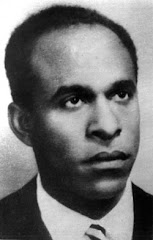
Discourse that allows us to express a wide range of ideas, opinions, and analysis that can be used as an opportunity to critically examine and observe what our experience means to us beyond the given social/cultural contexts and norms that are provided us.
Showing posts with label the constitution. Show all posts
Showing posts with label the constitution. Show all posts
The Supreme Court Is Playing a Dangerous Game by Jamelle Bouie March 22, 2024 New York Times
Christopher Lee for The New York Times
If
the chief currency of the Supreme Court is its legitimacy as an
institution, then you can say with confidence that its account is as
close to empty as it has been for a very long time.
Since
the court’s decision in Dobbs v. Jackson Women’s Health Organization
nearly two years ago, its general approval with the public has taken a
plunge. As recently as the last presidential election year, according to the Pew Research Center,
70 percent of Americans said they had a favorable view of the court. In
the wake of Dobbs, that number dipped to 44 percent. Twenty-four
percent of Democrats, according to Pew, said they approved of the
Supreme Court.
In the latest 538 average, just over 52 percent of Americans disapproved of the Supreme Court, and around 40 percent approved.
Does
the court know about its precipitous decline with much of the public?
It’s hard to say. It’s easier to answer a related question: Does it
care? If the recent actions of the conservative majority are any
indication, the answer is no.
Over the past month, members of that majority have effectively rewritten the 14th Amendment
to functionally shield Donald Trump from the constitutional
consequences of his actions leading up to and on Jan. 6. They have taken
up the former president’s tendentious argument that he is immune to
criminal prosecution for all actions taken while in office — postponing a trial
and potentially denying the public the right to know, before we go to
the polls in November, whether he is a criminal in the eyes of the law.
Most
recently, the court allowed the State of Texas, governed by a cadre of
some of the most reactionary conservatives in the country, to carry out its own immigration policy
in contravention of both federal officials and the general precedent
that it’s the national government that handles the national border, not
the states.
It is enough to make teachers and practitioners of constitutional law wonder, as my colleague Jesse Wegman noted last month,
whether there’s any reason to play the table as though it were still on
the level — to continue to treat the court as if it were anything other
than a partisan political institution.
Here
I want to raise an additional point. It’s not just the recent actions
of the Supreme Court — including the corrupt conduct of some of its
members — that jeopardize its legitimacy and political standing but also
the circumstances under which this particular court majority came into
being.
There is no way to look past
the fact that five of the six members of the conservative majority on
the Roberts court were nominated by presidents who entered office
without the winds of a popular majority. John Roberts and Samuel Alito,
the author of Dobbs, were placed on the court by George W. Bush, who
entered office short of a popular vote win and on the strength of a
contested Electoral College victory. The other three — Neil Gorsuch,
Brett Kavanaugh and Amy Coney Barrett — were nominated by Trump, who
lost the national popular vote by more than two million ballots in 2016.
The
three Trump justices bring additional baggage. Each one was nominated
and confirmed in a show of partisan power politics. Gorsuch was the
direct beneficiary of Senator Mitch McConnell’s blockade of the seat
held by Justice Antonin Scalia, who died early in 2016. Republicans, led
by McConnell, then the Senate majority leader, refused to give
President Barack Obama’s nominee, Judge Merrick Garland of the U.S.
Court of Appeals for the D.C. Circuit, a hearing in the Senate Judiciary
Committee. It was the first time the Senate had simply ignored a
president’s nominee for the Supreme Court.
Kavanaugh
was confirmed by a narrow vote of 50 to 48 (with one abstention and one
absence) in the face of a credible accusation of sexual assault.
Barrett was confirmed in flagrant violation of McConnell’s own rule for
Supreme Court nominations. To block Garland, McConnell said that it was
too close to an election to move forward; to confirm Barrett, McConnell
said that it was too close to an election to wait.
There
is no question that the Supreme Court’s ruling in Dobbs was the
catalyst for its poor standing with the public. But the Dobbs majority
owes itself to a garish Republican partisanship that almost certainly
worked to weaken the political ground on which it stood in relation to
the American people.
At the risk of
sounding a little dramatic, you can draw a useful comparison between the
Supreme Court’s current political position and the one it held on the
eve of the 1860 presidential election.
It
was not just the ruling itself that drove the ferocious opposition to
the Supreme Court’s decision in Dred Scott v. Sandford, which overturned
the Missouri Compromise and wrote Black Americans out of the national
community; it was the political entanglement of the Taney court with the
slaveholding interests of the antebellum Democratic Party.
"Ms. Goree said she was skeptical that changes would be made without the city’s being sued. “If the Justice Department doesn’t take it to the full extent of the law,” she said, “it’s not going to be one iota of a change.”
All,
Now we will finally find out if Obama and the Justice Department will have the guts and integrity to actually SUE these white supremacist criminals called the Ferguson, Mo. police department. Obviously the President and Eric Holder COULD AND SHOULD sue these assholes but unless and until they actually do what is desperately needed and demanded of them on behalf of the human and constitutional rights of African American citizens in this openly egregious situation I for one am not holding my breath in anticipation of the government doing the right thing for once with respect to the endless racist terrorism of the police throughout the country. In my view the Obama administration has generally been nothing but political cowards up to this point when it comes to the relentless ongoing "crises” of stark racial disparities, profiling, surveillance, rank psychological abuse, and outright physical violence used against black people in the United States since the President entered office in 2009. So while it appears on the surface of this report that the Justice Department is intent on finally doing something real and necessary in this particular instance I'm personally reserving any and all naive expectations or misplaced optimism about this latest news until I finally see some real, CONCRETE ACTION AND RESULTS that will actually seriously challenge and actively OPPOSE the venal injustices that are not only taking place in Ferguson but in every single city and town in this country where African Americans precariously reside...STAY TUNED...and PASS THE WORD...
Ferguson Police Routinely Violate Rights of Blacks, Justice Dept. Finds By MATT APUZZO MARCH 3, 2015 NEW YORK TIMES
Protesters on Tuesday outside the Ferguson Police Department, which is accused of violating the constitutional rights of blacks. Credit Whitney Curtis for The New York Times
WASHINGTON — Ferguson, Mo., is a third white, but the crime statistics compiled in the city over the past two years seemed to suggest that only black people were breaking the law. They accounted for 85 percent of traffic stops, 90 percent of tickets and 93 percent of arrests. In cases like jaywalking, which often hinge on police discretion, blacks accounted for 95 percent of all arrests.
The racial disparity in those statistics was so stark that the Justice Department has concluded in a report scheduled for release on Wednesday that there was only one explanation: The Ferguson Police Department was routinely violating the constitutional rights of its black residents.
Related Coverage:
Officials: US Report Finds Racial Bias in Ferguson PoliceMARCH 3, 2015
After Michael Brown’s shooting in Ferguson, Mo., many black residents protested what they called unfair treatment by the police. Justice Department to Fault Ferguson Police, Seeing Racial Bias in Traffic Stops
MARCH 1, 2015
The report, based on a six-month investigation, provides a glimpse into the roots of the racial tensions that boiled over in Ferguson last summer after a black teenager, Michael Brown, was fatally shot by a white police officer, making it a worldwide flash point in the debate over race and policing in America. It describes a city where the police used force almost exclusively on blacks and regularly stopped people without probable cause. Racial bias is so ingrained, the report said, that Ferguson officials circulated racist jokes on their government email accounts.
In a November 2008 email, a city official said Barack Obama would not be president long because “what black man holds a steady job for four years?” Another email included a cartoon depicting African-Americans as monkeys. A third described black women having abortions as a way to curb crime.
Patterns of Discrimination in Ferguson: (Click on link at the beginning of this article above to see the stark statistics of racism in the treatment of the Ferguson, Missouri police department)
According to a preliminary release, an investigation by the Justice Department’s Civil Rights Division into the police department in Ferguson, Mo., found a pattern of racial bias between 2012 and 2014 violating the Constitution and federal law.
“There are serious problems here that cannot be explained away,” said a law enforcement official who has seen the report and spoke on the condition of anonymity because it had not been released yet.
Those findings reinforce what the city’s black residents have been saying publicly since the shooting in August, that the criminal justice system in Ferguson works differently for blacks and whites. A black motorist who is pulled over is twice as likely to be searched as a white motorist, even though searches of white drivers are more likely to turn up drugs or other contraband, the report found.
Minor, largely discretionary offenses such as disturbing the peace and jaywalking were brought almost exclusively against blacks. When whites were charged with these crimes, they were 68 percent more likely to have their cases dismissed, the Justice Department found.
“I’ve known it all my life about living out here,” Angel Goree, 39, who lives in the apartment complex where Mr. Brown was killed, said Tuesday by phone.
Many such statistics surfaced in the aftermath of Mr. Brown’s shooting, but the Justice Department report offers a more complete look at the data than ever before. Federal investigators conducted hundreds of interviews, reviewed 35,000 pages of police records and analyzed race data compiled for every police stop.
The report will most likely force Ferguson officials to either negotiate a settlement with the Justice Department or face being sued by it on charges of violating the Constitution. Under Attorney General Eric H. Holder Jr., the Justice Department has opened more than 20 such investigations into local police departments and issued tough findings against cities including Newark; Albuquerque, N.M.; and Cleveland.
But the Ferguson case has the highest profile of Mr. Holder’s tenure and is among the most closely watched since the Justice Department began such investigations in 1994, spurred by the police beating of Rodney King in Los Angeles and the riots that followed.
While much of the attention in Ferguson has been on Mr. Brown’s death, federal officials quickly concluded that the shooting was simply the spark that ignited years of pent-up tension and animosity in the area. The Justice Department is expected to issue a separate report Wednesday clearing the police officer, Darren Wilson, of civil rights violations in the shooting.
Attorney General Eric H. Holder Jr. has had more than 20 police departments investigated. Credit Mandel Ngan/Agence France-Presse — Getty Images It is not clear what changes Ferguson could make that would head off a lawsuit.
The report calls for city officials to acknowledge that the police department’s tactics have caused widespread mistrust and violated civil rights. Ferguson officials have so far been reluctant to do so, particularly as relations between the city and Washington have grown strained.
Mr. Holder was openly critical of the way local officials handled the protests and the investigation into Mr. Brown’s death, and declared a need for “wholesale change” in the police department. Ferguson officials criticized Mr. Holder for a rush to judgment and saw federal officials as outsiders who did not understand their city.
Brian P. Fletcher, a former Ferguson mayor who is running for City Council in next month’s election, said he believed the report was unfair because the Justice Department relied on incomplete data. For example, he said, the racial disparity could be explained not by bias but by the large number of black people from surrounding towns who visit Ferguson to shop.
“I know to some degree we’re already on the right track because we’ve already modified our courts to make it fairer,” he said.
For Mr. Holder, the case has been deeply personal. He spoke about conversations he had as a boy with his father about what to do when stopped by the police. And he described his own experience as the victim of racial profiling. Such comments drew the ire of police groups who said Mr. Holder, the nation’s first black attorney general, was fueling anti-police sentiment in minority neighborhoods. Mr. Holder has stood by his remarks, which have since been echoed by James Comey, the F.B.I. director.
The report is due to be released in Mr. Holder’s final days in office. He announced his retirement last year and plans to leave as soon as the nominee to succeed him, Loretta E. Lynch, is confirmed in the Senate.
In pushing for police reforms, the Justice Department typically does not call for personnel changes, such as the firing of a police chief. Instead, it typically seek institutional changes, such as mandated training, efforts to diversify the police force and more outside oversight. In many cities, the two sides agree on a federal monitor to ensure the police department is complying.
Ms. Goree said she was skeptical that changes would be made without the city’s being sued.
“If the Justice Department doesn’t take it to the full extent of the law,” she said, “it’s not going to be one iota of a change.”
John Eligon contributed reporting from Kansas City, Mo.
"I'm for truth, no matter who tells it. I'm for justice, no matter who it's for or against."
W.E.B. DuBois (1868-1963)
"There is but one coward on earth, and that is the coward that dare not know."
Dr. Martin Luther King, Jr. (1929-1968)
"Change does not roll in on the wheels of inevitability, but comes through continuous struggle. And so we must straighten our backs and work for our freedom. A man can't ride you unless your back is bent. "
James Baldwin (1924-1987)
"Precisely at the point when you begin to develop a conscience you must find yourself at war with your society."
Aimé Césaire (1913-2008)
"A civilization that proves incapable of solving the problems it creates is a decadent civilization. A civilization that chooses to close its eyes to its most crucial problems is a stricken civilization. A civilization that uses its principles for trickery and deceit is a dying civilization."
Nina Simone (1933-2003)
"There's no other purpose, so far as I'm concerned, for us except to reflect the times, the situations around us and the things we're able to say through our art, the things that millions of people can't say. I think that's the function of an artist and, of course, those of us who are lucky leave a legacy so that when we're dead, we also live on. That's people like Billie Holiday and I hope that I will be that lucky, but meanwhile, the function, so far as I'm concerned, is to reflect the times, whatever that might be."
Amilcar Cabral (1924-1973)
"Always bear in mind that the people are not fighting for ideas, for the things in anyone's head. They are fighting to live better and in peace, to see their lives go forward, to guarantee the future of their children ....Hide nothing from the masses of our people. Tell no lies. Expose lies whenever they are told. Mask no difficulties, mistakes, failures. Claim no easy victories..." .
Angela Davis (b. 1944)
"The idea of freedom is inspiring. But what does it mean? If you are free in a political sense but have no food, what's that? The freedom to starve?”
Duke Ellington (1899-1974)
“Jazz is the freest musical expression we have yet seen. To me, then, jazz means simply freedom of musical speech! And it is precisely because of this freedom that so many varied forms of jazz exist. The important thing to remember, however, is that not one of these forms represents jazz by itself. Jazz simply means the freedom to have many forms.”
Amiri Baraka (1934-2014)
"Thought is more important than art. To revere art and have no understanding of the process that forces it into existence, is finally not even to understand what art is."
Frederick Douglass (1817-1895)
"Power concedes nothing without a demand. It never did and it never will. Find out just what any people will quietly submit to and you have found out the exact measure of injustice and wrong which will be imposed upon them, and these will continue till they are resisted with either words or blows, or both. The limits of tyrants are prescribed by the endurance of those whom they oppress.” --August 3, 1857
Cecil Taylor (1929-2018)
“Musical categories don’t mean anything unless we talk about the actual specific acts that people go through to make music, how one speaks, dances, dresses, moves, thinks, makes love...all these things. We begin with a sound and then say, what is the function of that sound, what is determining the procedures of that sound? Then we can talk about how it motivates or regenerates itself, and that’s where we have tradition.”
Ella Baker (1903-1986)
"Strong people don't need strong leaders"
Paul Robeson (1898-1976)
"The artist must take sides. He must elect to fight for freedom or for slavery. I have made my choice. I had no alternative."
John Coltrane (1926-1967)
"I want to be a force for real good. In other words, I know there are bad forces. I know that there are forces out here that bring suffering to others and misery to the world, but I want to be the opposite force. I want to be the force which is truly for good."
Miles Davis (1926-1991)
"Jazz is the big brother of Revolution. Revolution follows it around."
C.L.R. James (1901-1989)
"All development takes place by means of self-movement, not organization by external forces. It is within the organism itself (i.e. within the society) that there must be realized new motives, new possibilities."
Frantz Fanon (1925-1961)
"Now, political education means opening minds, awakening them, and allowing the birth of their intelligence as [Aime] Cesaire said, it is 'to invent souls.' To educate the masses politically does not mean, cannot mean, making a political speech. What it means is to try, relentlessly and passionately, to teach the masses that everything depends on them."
Edward Said (1935-2003)
“I take criticism so seriously as to believe that, even in the midst of a battle in which one is unmistakably on one side against another, there should be criticism, because there must be critical consciousness if there are to be issues, problems, values, even lives to be fought for."
Antonio Gramsci (1891-1937)
“The challenge of modernity is to live without illusions and without becoming disillusioned. There must be pessimism of the intellect and optimism of the will.”
Susan Sontag (1933-2004)
"Do stuff. Be clenched, curious. Not waiting for inspiration’s shove or society’s kiss on your forehead. Pay attention. It’s all about paying attention. Attention is vitality. It connects you with others. It makes you eager. Stay eager."
Kofi Natambu, editor of The Panopticon Review, is a writer, poet, cultural critic, and political journalist whose poetry, essays, criticism, reviews, and journalism have appeared in many literary magazines, journals, newspapers, and anthologies. He is the author of a biography MALCOLM X: His Life & Work (Alpha Books) and two books of poetry: THE MELODY NEVER STOPS (Past Tents Press) and INTERVALS (Post Aesthetic Press). He was the founder and editor of SOLID GROUND: A NEW WORLD JOURNAL, a national quarterly magazine of the arts, culture, and politics and the editor of a literary anthology NOSTALGIA FOR THE PRESENT (Post Aesthetic Press). Natambu has read his work throughout the country and given many lectures and workshops at academic and arts institutions. He has taught American literature, literary theory and criticism, cultural history and criticism, film studies, political science, creative writing, philosophy, critical theory, and music history and criticism (Jazz, Blues, R&B, Hip Hop) at many universities and colleges. He was also a curator in the Education Department of Detroit’s Museum of African American History. Born in Detroit, Michigan, Natambu currently lives in Berkeley, California with his wife Chuleenan.
 Christopher Lee for The New York Times