http://panopticonreview.blogspot.com/2013/04/the-legacy-of-elegance-or-how-duke.html
FROM THE PANOPTICON REVIEW ARCHIVES
(ORIGINALLY POSTED ON APRIL 29, 2013):
All,
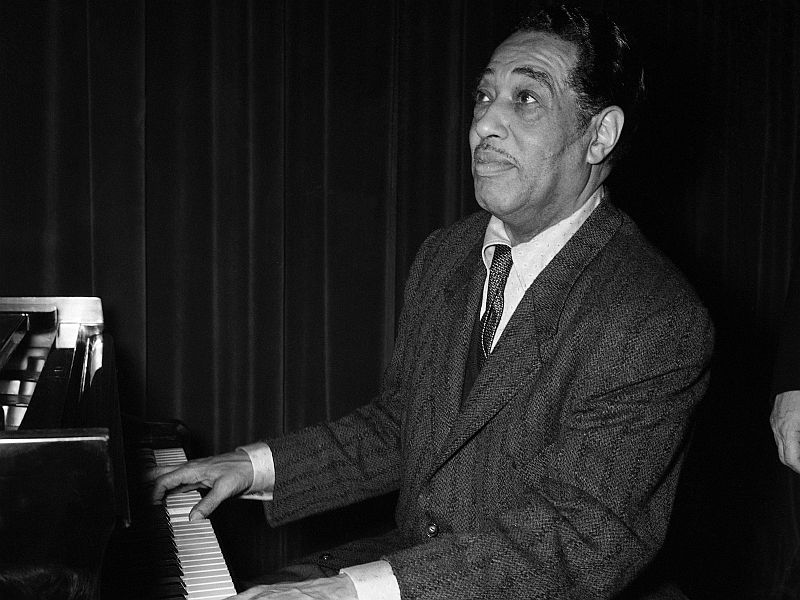
I submit the following question and perhaps even a wiseguy challenge to any and all possible doubters out there who should know better by now but perhaps don't (or sadly and to their own considerable loss maybe won't make the necessary effort to find out) and that is: Just how great was (and is) Duke Ellington...really? Well let's closely examine what the man and the visceral power, beauty, elegance, and sheer majesty of his artistry as conveyed through music actually accomplished in the world during the 20th century and what it just as clearly and forcefully continues to teach and inspire us in the 21st.
Edward Kennedy "Duke" Ellington was born on April 29, 1899 in Washington D.C. After an extensive apprenticeship with a number of outstanding local teachers and musical mentors like the legendary African American classical composer and multi-instrumentalist Will Marion Cook, Ellington began his professional career as a pianist and orchestra leader in 1924 and kept his extraordinary orchestra playing and recording for an astonishing 50 years(!) until his death in 1974 at the age of 75. During his prolific career Ellington wrote over 2,000 compositions and performed in all fifty states and throughout the world many times in such major international capitols as London, Paris, Berlin, Lisbon, Rio De Janeiro, Mexico City, Toronto, Montreal, Dakar, New Delhi, and Istanbul.
Recognized by many critics throughout the world as one of the major and most important composers and musicians of the 20th century, Ellington's deep impact on other musicians and composers in many different genres of music has been immense and continues to this day. Happy Birthday Duke!
Kofi
FROM THE PANOPTICON REVIEW ARCHIVES
(ORIGINALLY POSTED ON APRIL 29, 2013):
All,
I submit the following question and perhaps even a wiseguy challenge to any and all possible doubters out there who should know better by now but perhaps don't (or sadly and to their own considerable loss maybe won't make the necessary effort to find out) and that is: Just how great was (and is) Duke Ellington...really? Well let's closely examine what the man and the visceral power, beauty, elegance, and sheer majesty of his artistry as conveyed through music actually accomplished in the world during the 20th century and what it just as clearly and forcefully continues to teach and inspire us in the 21st.
Edward Kennedy "Duke" Ellington was born on April 29, 1899 in Washington D.C. After an extensive apprenticeship with a number of outstanding local teachers and musical mentors like the legendary African American classical composer and multi-instrumentalist Will Marion Cook, Ellington began his professional career as a pianist and orchestra leader in 1924 and kept his extraordinary orchestra playing and recording for an astonishing 50 years(!) until his death in 1974 at the age of 75. During his prolific career Ellington wrote over 2,000 compositions and performed in all fifty states and throughout the world many times in such major international capitols as London, Paris, Berlin, Lisbon, Rio De Janeiro, Mexico City, Toronto, Montreal, Dakar, New Delhi, and Istanbul.
Recognized by many critics throughout the world as one of the major and most important composers and musicians of the 20th century, Ellington's deep impact on other musicians and composers in many different genres of music has been immense and continues to this day. Happy Birthday Duke!
Kofi

EDWARD KENNEDY 'DUKE' ELLINGTON
b. April 29, 1899--d. May 24, 1974
EDWARD "DUKE" ELLINGTON (1899-1974)
Duke Ellington brought a level of style and sophistication to Jazz that it hadn't seen before. Although he was a gifted piano player, his orchestra was his principal instrument. Like Jelly Roll Morton before him, he considered himself to be a composer and arranger, rather than just a musician. Duke began playing music professionally in Washington, D.C. in 1917. His piano technique was influenced by stride piano players like James P. Johnson and Willie "The Lion" Smith. He first visited New York in 1922 playing with Wilbur Sweatman, but the trip was unsuccessful. He returned to New York again in 1923, but this time with a group of friends from Washington D.C. They worked for a while with banjoist Elmer Snowden until there was a disagreement over missing money. Ellington then became the leader. This group was called The Washingtonians. This band worked at The Hollywood Club in Manhattan (which was later dubbed the Kentucky Club). During this time Sidney Bechet played briefly with the band (unfortunately he never recorded with them), but more significantly the trumpet player Bubber Miley joined the band, bringing with him his unique plunger mute style of playing. This sound came to be called the "Jungle Sound", and it was largely responsible for Ellington's early success. The song "East St. Louis Toodle-Oo" is a good example of this style of playing. The group recorded their first record in 1924 ("Choo Choo (Gotta Hurry Home)" and "Rainy Nights (Rainy Days)", but the band didn't hit the big time until after Irving Mills became their manager and publisher in 1926. In 1927 the band re-recorded versions of "East St.Louis Toodle-Oo," debuted "Black and Tan Fantasy" and "Creole Love Call", songs that would be associated with him the for rest of his career, but what really put Ellington's Orchestra over the top was becoming the house band at the Cotton Club after King Oliver unwisely turned down the job. Radio broadcasts from the club made Ellington famous across America and also gave him the financial security to assemble a top notch band that he could write music specifically for. Musicians tended to stay with the band for long periods of time. For example, saxophone player Harry Carney would remain with Duke nonstop from 1927 to Ellington's death in 1974. In 1928 clarinetist Barney Bigard left King Oliver and joined the band. Ellington and Bigard would later co-write one of the orchestra's signature pieces "Mood Indigo" in 1930. In 1929 Bubber Miley, was fired from the band because of his alcoholism and replaced with Cootie Williams. Ellington also appeared in his first film "Black and Tan" later that year. The Duke Ellington Orchestra left the Cotton Club in 1931 (although he would return on an occasional basis throughout the rest of the Thirties) and toured the U.S. and Europe.
Unlike many of their contemporaries, the Ellington Orchestra was able to make the change from the Hot Jazz of the 1920s to the Swing music of the 1930s. The song "It Don't Mean a Thing (If It Ain't Got That Swing)" even came to define the era. This ability to adapt and grow with the times kept the Ellington Orchestra a major force in Jazz up until Duke's death in the 1970s. Only Louis Armstrong managed to sustain such a career, but Armstrong failed to be in the artistic vanguard after the 1930s . Throughout the Forties and Fifties Ellington's fame and influence continued to grow. The band continued to produce Jazz standards like "Take the 'A' Train", "Perdido", "The 'C' Jam Blues" and "Satin Doll". In the 1960s Duke wrote several religious pieces, and composed "The Far East Suite". He also collaborated with a very diverse group of musicians whose styles spanned the history of Jazz. He played in a trio with Charles Mingus and Max Roach, sat in with both the Louis Armstrong All-Stars and the John Coltrane Quartet, and he had a double big-band date with Count Basie. In the 1970s many of Ellington's long time band members had died, but the band continued to attract outstanding musicians even after Ellington's death from cancer in May, 1974, when his son Mercer took over the reins of the band.
SUGGESTED READING:
Duke Ellington In Person by Mercer Ellington with Stanley Dance, Da Capo Press, 1988
Ellington: The Early Years, Mark Tucker, Da Capo Press, 1995
Beyond Category : The Life and Genius of Duke Ellington by John Edward Hasse (Introduction by Wynton Marsalis), 1995, Da Capo Press
The World of Duke Ellington by Stanley Dance, 1981, Da Capo Press
The Duke Ellington Reader by Mark Tucker, 1995, Oxford University Press
Duke Ellington's America by Harry G. Cohen, 2010,
University of Chicago Press
Duke Ellington and His World: Biography by A. H. Lawrence Routledge, 2001
Duke Ellington brought a level of style and sophistication to Jazz that it hadn't seen before. Although he was a gifted piano player, his orchestra was his principal instrument. Like Jelly Roll Morton before him, he considered himself to be a composer and arranger, rather than just a musician. Duke began playing music professionally in Washington, D.C. in 1917. His piano technique was influenced by stride piano players like James P. Johnson and Willie "The Lion" Smith. He first visited New York in 1922 playing with Wilbur Sweatman, but the trip was unsuccessful. He returned to New York again in 1923, but this time with a group of friends from Washington D.C. They worked for a while with banjoist Elmer Snowden until there was a disagreement over missing money. Ellington then became the leader. This group was called The Washingtonians. This band worked at The Hollywood Club in Manhattan (which was later dubbed the Kentucky Club). During this time Sidney Bechet played briefly with the band (unfortunately he never recorded with them), but more significantly the trumpet player Bubber Miley joined the band, bringing with him his unique plunger mute style of playing. This sound came to be called the "Jungle Sound", and it was largely responsible for Ellington's early success. The song "East St. Louis Toodle-Oo" is a good example of this style of playing. The group recorded their first record in 1924 ("Choo Choo (Gotta Hurry Home)" and "Rainy Nights (Rainy Days)", but the band didn't hit the big time until after Irving Mills became their manager and publisher in 1926. In 1927 the band re-recorded versions of "East St.Louis Toodle-Oo," debuted "Black and Tan Fantasy" and "Creole Love Call", songs that would be associated with him the for rest of his career, but what really put Ellington's Orchestra over the top was becoming the house band at the Cotton Club after King Oliver unwisely turned down the job. Radio broadcasts from the club made Ellington famous across America and also gave him the financial security to assemble a top notch band that he could write music specifically for. Musicians tended to stay with the band for long periods of time. For example, saxophone player Harry Carney would remain with Duke nonstop from 1927 to Ellington's death in 1974. In 1928 clarinetist Barney Bigard left King Oliver and joined the band. Ellington and Bigard would later co-write one of the orchestra's signature pieces "Mood Indigo" in 1930. In 1929 Bubber Miley, was fired from the band because of his alcoholism and replaced with Cootie Williams. Ellington also appeared in his first film "Black and Tan" later that year. The Duke Ellington Orchestra left the Cotton Club in 1931 (although he would return on an occasional basis throughout the rest of the Thirties) and toured the U.S. and Europe.
Unlike many of their contemporaries, the Ellington Orchestra was able to make the change from the Hot Jazz of the 1920s to the Swing music of the 1930s. The song "It Don't Mean a Thing (If It Ain't Got That Swing)" even came to define the era. This ability to adapt and grow with the times kept the Ellington Orchestra a major force in Jazz up until Duke's death in the 1970s. Only Louis Armstrong managed to sustain such a career, but Armstrong failed to be in the artistic vanguard after the 1930s . Throughout the Forties and Fifties Ellington's fame and influence continued to grow. The band continued to produce Jazz standards like "Take the 'A' Train", "Perdido", "The 'C' Jam Blues" and "Satin Doll". In the 1960s Duke wrote several religious pieces, and composed "The Far East Suite". He also collaborated with a very diverse group of musicians whose styles spanned the history of Jazz. He played in a trio with Charles Mingus and Max Roach, sat in with both the Louis Armstrong All-Stars and the John Coltrane Quartet, and he had a double big-band date with Count Basie. In the 1970s many of Ellington's long time band members had died, but the band continued to attract outstanding musicians even after Ellington's death from cancer in May, 1974, when his son Mercer took over the reins of the band.
SUGGESTED READING:
Duke Ellington In Person by Mercer Ellington with Stanley Dance, Da Capo Press, 1988
Ellington: The Early Years, Mark Tucker, Da Capo Press, 1995
Beyond Category : The Life and Genius of Duke Ellington by John Edward Hasse (Introduction by Wynton Marsalis), 1995, Da Capo Press
The World of Duke Ellington by Stanley Dance, 1981, Da Capo Press
The Duke Ellington Reader by Mark Tucker, 1995, Oxford University Press
Duke Ellington's America by Harry G. Cohen, 2010,
University of Chicago Press
Duke Ellington and His World: Biography by A. H. Lawrence Routledge, 2001
Some Classic Duke Ellington compositions and performances of his famous orchestra on Video:
"The Mooche"
(Originally composed and recorded by Ellington in 1928; this recorded video version is from 1955)
http://www.youtube.com/watch?NR=1&feature=endscreen&v=CDVZdZMCc0w&list=PLE7E778C84423B0B8
"Perdido"
(Originally composed in 1941 by Ellington's longtime Latino trombonist Juan Tizol; this recorded video version is also from the mid 1950s)
"Diminuendo and Crescendo in Blue"
(Originally composed in by Ellington in 1937; this recorded video version is from the mid 1950s)
http://www.youtube.com/watch?v=mtWCq4cyRqQ&list=PLE7E778C84423B0B8
"Take the A-Train"
(Originally composd in 1941 by Billy Strayhorn; this recorded video version is from 1964 in Holland)
"In A Sentimental Mood"
http://www.youtube.com/watch?v=sR13ECD71xU&list=PLE7E778C84423B0B8
"Take the A-Train"
(Original recording from 1941 by Billy Strayhorn)
http://www.youtube.com/watch?feature=endscreen&NR=1&v=_rIsd3eMmMk
"It Don't Mean A Thing (if it ain't got that swing)". Recorded video version is from 1943--short film)
http://www.youtube.com/watch?v=qDQpZT3GhDg
Anatomy of A Murder (1959)
Directed by Otto Preminger
Starring Jimmy Stewart, Lee Remick, and Ben Gazarra
(Film Score by Duke Ellington)
Major Theme for
Anatomy of Murder:
"Flirtibird":
"The Mooche"
(Originally composed and recorded by Ellington in 1928; this recorded video version is from 1955)
http://www.youtube.com/watch?NR=1&feature=endscreen&v=CDVZdZMCc0w&list=PLE7E778C84423B0B8
"Perdido"
(Originally composed in 1941 by Ellington's longtime Latino trombonist Juan Tizol; this recorded video version is also from the mid 1950s)
"Diminuendo and Crescendo in Blue"
(Originally composed in by Ellington in 1937; this recorded video version is from the mid 1950s)
http://www.youtube.com/watch?v=mtWCq4cyRqQ&list=PLE7E778C84423B0B8
"Take the A-Train"
(Originally composd in 1941 by Billy Strayhorn; this recorded video version is from 1964 in Holland)
"In A Sentimental Mood"
http://www.youtube.com/watch?v=sR13ECD71xU&list=PLE7E778C84423B0B8
"Take the A-Train"
(Original recording from 1941 by Billy Strayhorn)
http://www.youtube.com/watch?feature=endscreen&NR=1&v=_rIsd3eMmMk
"It Don't Mean A Thing (if it ain't got that swing)". Recorded video version is from 1943--short film)
http://www.youtube.com/watch?v=qDQpZT3GhDg
Anatomy of A Murder (1959)
Directed by Otto Preminger
Starring Jimmy Stewart, Lee Remick, and Ben Gazarra
(Film Score by Duke Ellington)
Major Theme for
Anatomy of Murder:
"Flirtibird":
DUKE ELLINGTON, Warm Valley
"Money Jungle" LP
(Composition "Warm Valley" by Duke Ellington)
Featuring:
Duke Ellington--Piano
Charles Mingus--Bass
Max Roach--Drums
(Recorded by RCA-Victor in 1962)
Friday Night Jazz
APRIL 29, 2013
Reuben Jackson On Duke Ellington
Duke Ellington was the composer of American jazz standards such as Mood Indigo, sumptuous extended works like The Afro Eurasian Eclipse, The Far East Suite and three Sacred Concerts. He was also the consummate multitasker.
If I learned anything during my 20 year stint as archivist and curator with the Smithsonian's Duke Ellington Collection, it was this: It was not uncommon for the Washington, D.C. native to juggle studio sessions, new compositions, interviews, meetings, concert dates, friends, fans and, yes, romantic interests. He was not the central casting isolated artist seeking the muse in, say, some remote corner of Vermont's Northeast Kingdom. Humanity was his Walden Pond.
Still, it's one thing to be a multitasker. It's another to multitask with the deceptively casual attention and intense focus Ellington gave to each part of his life. Ellington loved people; he said the key to accomplishing as much as he did was "mental isolation."
When cataloging the sound recordings in the Smithsonian's collection, I still wondered how he managed to gracefully handle dozens of inane press conference questions about "jazz," a word he abhorred, then lead his Orchestra through an accessible yet musically radical reworking of an Ellington standard like "Mood Indigo" a few hours later. I have no idea how he did this with such unfailing grace—and I probably never will.
As some of you in the VPR listening audience know, I am also currently employed as an English teacher at Burlington High School. On average, I see an average of 35 students with very different personalities, interests and needs every day. By contrast, Ellington worked with groups of varying sizes, skills, and issues (curmudgeons, kleptomaniacs, some addicts) for nearly 50 years. More importantly, he consistently got the best out of these ensembles. Even "students" who disliked him intensely reveled in the time spent with the man they called The Maestro. (And I have the nerve to pant like an exhausted marathon runner on Friday afternoon!)
If Duke Ellington were reading this, he might utter one of his frequently-used axioms: "Don't let your intelligence get in the way of your learning." With that in mind, I'll cease with the first person reflections (I've commented at length about Ellington and some of his contemporaries in this VPR Presents lecture), and share that which mattered most to Duke Ellington: The music.
Below you'll find video of a couple of my favorites and a bibliography of reading and listening. You'll also hear something composed, performed or inspired by Ellington every week on my show.
-- Reuben Jackson, Host of Friday Night Jazz
Posted by Kofi Natambu at 11:30 PM
Labels: 20th century Art, African American Art, African American music, Biography, Duke Ellington, Improvisation, Jazz composition

The Duke Speaks:
Put it this way: Jazz is a good barometer of freedom… In its beginnings, the United States of America spawned certain ideals of freedom and independence through which, eventually, jazz was evolved, and the music is so free that many people say it is the only unhampered, unhindered expression of complete freedom yet produced in this country. ∞
There are two kinds of music. Good music, and the other kind. ∞
I merely took the energy it takes to pout and wrote some blues. ∞
Love is indescribable and unconditional. I could tell you a thousand things that it is not, but not one that it is. Either you have it or you haven’t; there’s no proof of it. ∞
Playing ‘bop’ is like playing Scrabble with all the vowels missing. ∞
If it sounds good and feels good, then it IS good! ∞
Music is my mistress and she plays second fiddle to no one. ∞
“Art is dangerous. It is one of the attractions: when it ceases to be dangerous you don't want it.”
Gray skies are just clouds passing over. ∞
The most important thing I look for in a musician is whether he knows how to listen. ∞
What is music to you? What would you be without music? Music is everything. Nature is music (cicadas in the tropical night). The sea is music, the wind is music. The rain drumming on the roof and the storm raging in the sky are music. Music is the oldest entity. The scope of music is immense and infinite. It is the ‘esperanto’ of the world. ∞
It is becoming increasingly difficult to decide where jazz starts or where it stops, where Tin Pan Alley begins and jazz ends, or even where the borderline lies between between classical music and jazz. I feel there is no boundary line. ∞
I don’t believe in categories of any kind, and when you speak of problems between blacks and whites in the U.S.A. you are referring to categories again. ∞
A goal is a dream with a finish line. ∞
I never had much interest in the piano until I realized that every time I played, a girl would appear on the piano bench to my left and another to my right. ∞
There is nothing to keeping a band together. You simply have to have a gimmick, and the gimmick I use is to pay them money! ∞
The wise musicians are those who play what they can master.
There is no art without intention. ∞
It don’t mean a thing if it ain’t got that swing. ∞
Put it this way: Jazz is a good barometer of freedom… In its beginnings, the United States of America spawned certain ideals of freedom and independence through which, eventually, jazz was evolved, and the music is so free that many people say it is the only unhampered, unhindered expression of complete freedom yet produced in this country. ∞
There are two kinds of music. Good music, and the other kind. ∞
I merely took the energy it takes to pout and wrote some blues. ∞
Love is indescribable and unconditional. I could tell you a thousand things that it is not, but not one that it is. Either you have it or you haven’t; there’s no proof of it. ∞
Playing ‘bop’ is like playing Scrabble with all the vowels missing. ∞
If it sounds good and feels good, then it IS good! ∞
Music is my mistress and she plays second fiddle to no one. ∞
“Art is dangerous. It is one of the attractions: when it ceases to be dangerous you don't want it.”
Gray skies are just clouds passing over. ∞
The most important thing I look for in a musician is whether he knows how to listen. ∞
What is music to you? What would you be without music? Music is everything. Nature is music (cicadas in the tropical night). The sea is music, the wind is music. The rain drumming on the roof and the storm raging in the sky are music. Music is the oldest entity. The scope of music is immense and infinite. It is the ‘esperanto’ of the world. ∞
It is becoming increasingly difficult to decide where jazz starts or where it stops, where Tin Pan Alley begins and jazz ends, or even where the borderline lies between between classical music and jazz. I feel there is no boundary line. ∞
I don’t believe in categories of any kind, and when you speak of problems between blacks and whites in the U.S.A. you are referring to categories again. ∞
A goal is a dream with a finish line. ∞
I never had much interest in the piano until I realized that every time I played, a girl would appear on the piano bench to my left and another to my right. ∞
There is nothing to keeping a band together. You simply have to have a gimmick, and the gimmick I use is to pay them money! ∞
The wise musicians are those who play what they can master.
There is no art without intention. ∞
It don’t mean a thing if it ain’t got that swing. ∞