Showing posts with label Anti-Imperialism. Show all posts

Thursday, October 19, 2023

Briahna Joy Gray and Dr. Cornel West On Israel-Palestine Violence and the Leftist Response + Marc Lamont Hill Speaks On Israel-Hamas War, International Law, History + More


The Left's Response to Israel/Palestine Violence (w/ Cornel West)

Premiered October 12, 2023  

Dr. West rejoins Bad Faith to talk about his choice to leave the Green Party, and whether it’s really the best strategic option. He then weighs in on the violence on Israel/Palestine and the controversies around the left’s response. What does he make of the Harvard student groups joint letter in response to Hamas’s attack? How does one acknowledge grief and compassion at the murder of Israeli civilians, without validating media narratives that exclusively value Israeli lives without acknowledging the ongoing occupation of Palestinians? It’s the kind of tough, empathic, important conversation we’ve come to expect from Dr. West. 

Subscribe to Bad Faith on YouTube to access our full video library. Find Bad Faith with Briahna Joy Gray on Twitter (@badfaithpod) and Instagram (@badfaithpod). Theme by Nick Thorburn (@nickfromislands)


ABOUT THE PARTICIPANTS:


Briahna Joy Gray (b. August 15, 1985) is an American political commentator, lawyer, and political consultant who served as the National Press Secretary for the Bernie Sanders 2020 presidential campaign. Gray is a contributing editor for Current Affairs, and was a senior politics editor for The Intercept. She hosts her own podcast, Bad Faith, and co-hosts The Hill's web series Rising. Ms. Gray is a graduate of both Harvard University and Harvard Law School


Dr. Cornel West (b. June 2, 1953) is currently the Dietrich Bonhoeffer Chair at Union Theological Seminary and is the former Professor of the Practice of Public Philosophy at Harvard University and Professor Emeritus at Princeton University. Cornel West graduated Magna Cum Laude from Harvard in three years and obtained his M.A. and Ph.D. in Philosophy at Princeton. A democratic socialist, two of Dr. West's most influential books are Race Matters (1993) and Democracy Matters (2004). He has written 20 books and has edited 13 and is widely recognized as one of the major, most important, and highly influential public intellectuals, scholars, critics, and activists in the world today. 


Marc Lamont Hill Speaks On Israel-Hamas War, International Law, History + More


ABOUT THE SPEAKER:


Marc Lamont Hill (b. December 17, 1978) is an American academic, author, activist, and television personality. He is a professor of urban education at the CUNY Graduate Center in New York City. Hill is the host of UpFront on Al Jazeera English, VH1 Live! on VH1, and Basketball Wives reunion shows. He is also a BET News correspondent. He is the author or co-author of four books: the award-winning Beats, Rhymes, and Classroom Life: Hip-Hop Pedagogy and the Politics of Identity; The Classroom and the Cell: Conversations on Black life in America; the New York Times bestseller Nobody: Casualties of America’s War on The Vulnerable from Ferguson to Flint and Beyond; and Gentrifier. He has also published two edited books: Media, Learning, and Sites of Possibility; and Schooling Hip-Hop: New Directions in Hip-Hop Based Education.

Trained as an anthropologist of education, Dr. Hill holds a Ph.D. (with distinction) from the University of Pennsylvania. He finished his undergraduate studies at Temple University, where he received his B.S. in education and Spanish in 2000. He later earned both an M.A. and a Ph.D. from the University of Pennsylvania. His research focuses on the intersections between culture, politics, and education in the United States and the Middle East.


Sunday, January 5, 2020

In their Ongoing Fight Against Imperialism Progressive Iraquis Want Both the United States and Iran To Leave their Country

https://truthout.org/…/iraqs-vote-to-kick-out-u-s-troops-re…

Op-Ed
War & Peace


Iraq’s Vote to Kick Out U.S. Troops Reflects Growing Anti-Imperialist Movement
by Raed Jarrar
January 5, 2020
Truthout


Iraqi protesters in the southern Iraqi city of Nasiriyah clash with supporters of Iraq's pro-Iranian paramilitary group Hashed Al-Shaabi on January 5, 2020, denouncing both the U.S. and Iran as "occupiers" while demanding reforms within their own government.AFP via Getty Images


This morning, the Iraqi Parliament said it loudly and clearly: “The Iraqi government must work to end the presence of any foreign troops on Iraqi soil and prohibit them from using its land, airspace or water for any reason.” Yes, all foreign forces, including the U.S. and Iran.

As we’ve all seen by now, the military escalation between the U.S. and Iran has been dominating headlines since the assassination of Qassim Suleimani, head of the Iran Revolutionary Guard’s “Quds Force.” Chaos and uncertainty surround the situation: Is Iran going to retaliate? Is the U.S. going to attack Iran? Was Suleimani a “good guy” or a “bad guy”? Media pundits are pointing fingers and speculating about the possibility of a Third World War sparked by military confrontation between the U.S. and Iran.

But lost in much of this discourse is the context and fate of Iraq and the Iraqi people. What will happen to the popular protest movement led by Iraqis over the past few months? What will happen next for Iraqis on the ground? The rising violence between the U.S. and Iran inside Iraq threatens Iraqis’ dreams of a better future and will most likely bring about more death and destruction to Iraq. That’s why, as evidenced by the Iraqi Parliament’s vote this morning, Iraqis want them both out.

Since October 2019, there has been an authentic and organic anti-corruption and anti-intervention uprising that has swept across Iraq, mainly led by young Iraqis who came to age after the 2003 U.S.-led invasion. Hundreds of unarmed protesters have been killed and thousands injured in the brutal response by the Iraqi government and its sectarian militias, many of whom are backed by both Iran and the U.S.

The protest movement is pushing for reforms within the Iraqi government, and one of its main calls is an end to all foreign interventions. This particular demand has posed a threat to some of the foreign powers that are fighting a proxy war in the country — mainly, the U.S. and Iran. Both countries have funneled money, weapons and training into Iraq to exert maximum control over the current regime, and Iraqi protesters are fed up with living in a corrupt, dysfunctional client state. In the streets of Baghdad and in the south of Iraq, Iraqis from all different sects and ethnicities have chanted against both the U.S. and Iranian interventions.

In response, the Iranian government has tried to manipulate Iraqis into rechanneling their anger at only the U.S. government. Similarly, the U.S. has also tried to manipulate Iraqis into rechanneling their anger toward Iran. These political games were most evident in the recent tit-for-tat military escalation between the U.S. and Iran in Iraq.


The rising violence between the U.S. and Iran inside Iraq threatens Iraqis’ dreams of a better future and will most likely bring about more death and destruction to Iraq.

In the last few days of 2019, Iranian-backed militias staged 11 separate attacks against U.S. bases in Iraq and tried to link the attacks to the protest movement. One of those attacks ended up killing a U.S. contractor and injuring a number of U.S. troops. The U.S. retaliated by bombing the camps of the pro-Iranian militia in Iraq, Kataeb Hezbollah, killing 24 and injuring over 50 — all of them were Iraqis. The militia then staged the protest at the U.S. Embassy in the Green Zone. The next day, the U.S. bombed the car that had the leader of Kataeb Hezbollah, al-Muhandis, at the Baghdad airport. None of this made it to U.S. headlines because it was more of the same: the U.S. and Iran using Iraqis as pawns in their political games. But the last event is where things got out of control — the same car that was bombed at the airport had in it Qassim Suleimani, the most powerful Iranian military figure.

Although Suleimani is only now a household name in the U.S., for anyone in Iraq, Syria, Lebanon, Yemen, or other parts of the Middle East, he is a controversial figure in the Middle East. In a region with raging civil wars, he is a hero to those affiliated with the Iraqi government and Assad regime, but he is nothing more than a notorious mass murderer to others. His militias in the region have killed and tortured civilians and razed entire cities to the ground.

Iraqis want both the U.S. and Iran out of their country.


Yet many in the anti-imperialist anti-war movement in the U.S. are notorious for over-simplifying foreign policy and painting a world in which only U.S. imperialism is “bad” and everyone else — especially those at odds with the U.S. empire — is “good.” Many anti-imperialist activists applied this oversimplified logic to analyses of the Soviet Union and Cuba in the past. And in more recent years there has continued to be a disturbing trend of whitewashing the crimes of leaders like Saddam Hussein, Nicolás Maduro, Bashar al-Assad and Suleimani. Back in 2003, it was necessary to criticize Saddam’s crimes and recognize he was a brutal dictator, and at the same time to oppose a U.S.-led invasion and occupation of Iraq. Now in 2020, it’s necessary to criticize Assad’s crimes and oppose the U.S.-led intervention in Syria. It is also necessary to criticize Suleimani’s crimes and the interventionist and oppressive policies of the Iranian government, and still say no to a U.S. war with Iran.

Even for those Iraqis who view Suleimani as a villain and a symbol of Iran’s unwelcome intervention in their country, news of his assassination by the U.S. was not something to be celebrated. Many Iraqis continue to think Trump is also a villain and still want both the U.S. and Iran out of their country.

From most Iraqis’ perspective, this is not complicated at all: There are no good guys. It’s not about who should interfere in the country, it’s about whether or not foreigners should have a say in Iraq’s present or future.

Iran supporters in Iraq, such as Hezbollah, claim that Iran is the good guy and that Iran can’t withdraw from Iraq because that would hand Iraq to the U.S. Meanwhile, U.S. supporters in Iraq claim that the U.S. is the good guy and if it were to withdraw, that would hand Iraq to Iran. From most Iraqis’ perspective, this is not complicated at all: There are no good guys. It’s not about who should interfere in the country, it’s about whether or not foreigners should have a say in Iraq’s present or future. It’s about giving Iraq back to Iraqis.

Iraqis demonstrators have been loudly and clearly conveying through months of protests that what they want is their independence, sovereignty and self-determination. They have paid a very heavy price with their blood and treasure because of interventions from the U.S., Iran and others.

Today’s vote in the Iraqi Parliament reflects a widespread awareness among Iraqis that military escalation between the U.S. and Iran threatens the Iraqi protest movement and could bring much death and destruction to the already war-torn country.

The best thing that people in the U.S. can do is to recognize Iraqis’ suffering and pain, and demand that our government and military get out of their way. The U.S. presence in Iraq is an obstacle in the way of Iraqi aspiration, and it is also being used as an excuse by Iran and others to continue meddling in Iraq’s business. An immediate end to U.S. military aid and weapons sales to the Iraqi government and a withdrawal from Iraq completely would be two important steps in the right direction.

ABOUT THE AUTHOR:

Raed Jarrar (@raedjarrar) is an Iraqi-American political advocate based in Washington, D.C.

PHOTO: Iraqi protesters in the southern Iraqi city of Nasiriyah clash with supporters of Iraq's pro-Iranian paramilitary group Hashed Al-Shaabi on January 5, 2020, denouncing both the U.S. and Iran as "occupiers" while demanding reforms within their own government. AFP via Getty Images

Monday, May 19, 2014

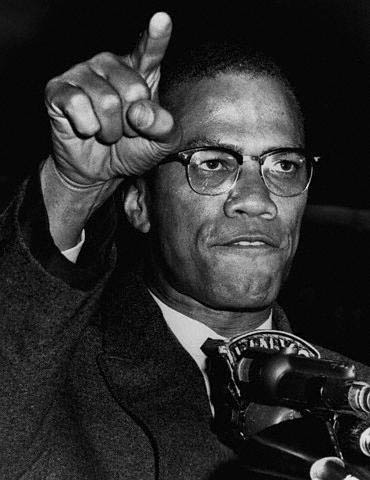
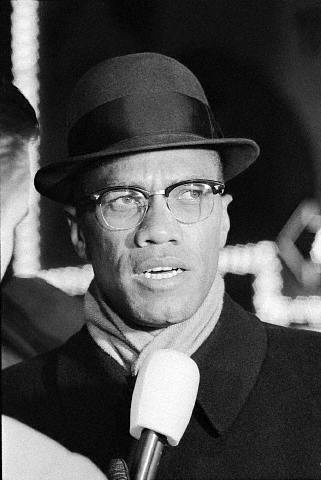
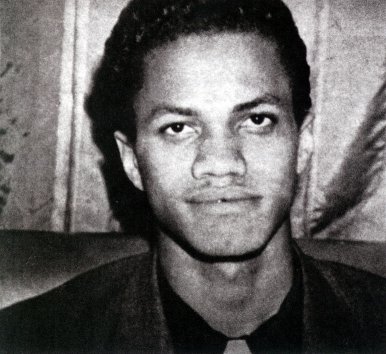
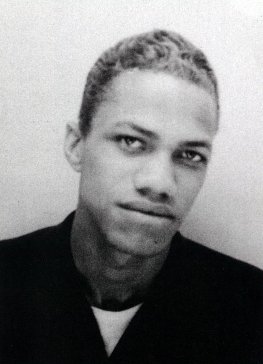
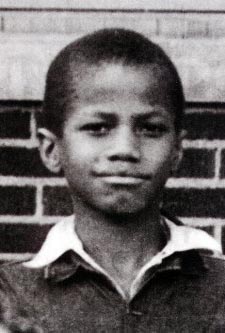
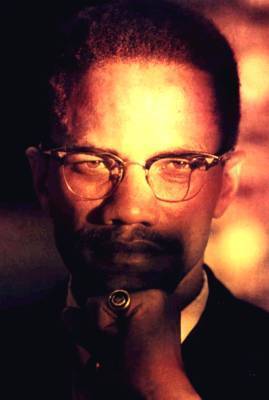
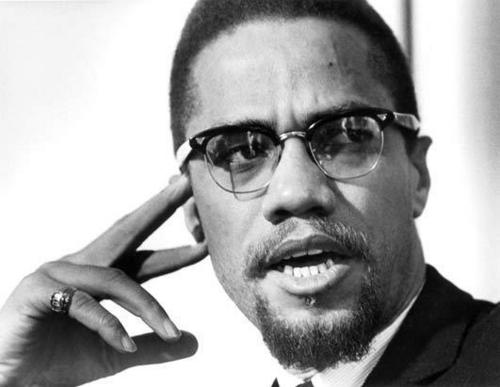
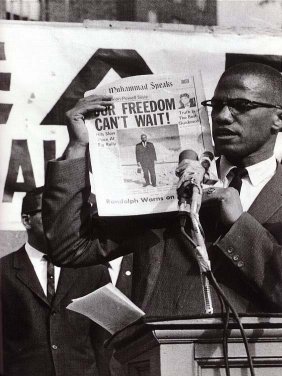
A Tribute To Malcolm X On His 89th Birthday

MALCOLM X
(b. May 19, 1925--d. February 21, 1965)


FROM THE PANOPTICON REVIEW ARCHIVES

(Originally posted on May 19, 2010):

Wednesday, May 19, 2010

A Tribute to Malcolm X on His 85th Birthday


All,

Malcolm X was born Malcolm Little on this day in Omaha, Nebraska in 1925 and was assassinated at the age of 39 on February 21, 1965 in New York's Harlem. In between those two events Malcolm lived one of the most complex, profound, dynamic, and iconic lives of the 20th century and had--as he continues to have--a tremendous impact and influence on millions of people throughout not only the United States but the entire globe. How he managed to accomplish this massive feat despite the severe and pervasive racist oppression and exploitation inflicted upon all African Americans of his generation-- and the decided lack of official social, economic, and cultural status especially accorded those like Malcolm who fiercely organized masses of people to oppose and resist such treatment--is one of the major accomplishments of modern African American history and marks Malcolm's revolutionary contributions to global political, spiritual, and cultural thought and activism as one of the most important and powerful legacies of any individual in the world during the 20th century. In my view Malcolm remains the most intellectually and socially significant, advanced, and innovative African American political leader since W.E.B. DuBois because he represented and embodied not only a deep, analytical understanding and insight into the myriad dialectical complexities and contradictions of African American life and culture, but he also understood and expressed in a particularly nuanced and organic manner just how the specific ideological and cultural dynamics of race and class in the United States affected the tone and identity of national liberation struggles both here and abroad. In addition Malcolm's deeply rooted disaporic connections to international Third World and Pan African movements in the colonial and postcolonial contexts of European and American hegemony over Africa, Latin America, and Asia--and the pervasive revolutionary anticolonial struggles against such domination and control in these societies--played a major role in also making Malcolm one of the leading global activists on behalf of anti- imperialist movements.

In 2002 I published a historical and political biography on Malcolm entitled 'The Life and Work of Malcolm X.' What follows below is the introduction to that text. Further information and texts by and about Malcolm as well as videos of him speaking will also be featured. It is in the spirit of great love and solidarity that we make these gestures in celebration of Malcolm's 85th birthday. May his extraordinary work and stellar personal example continue to lead and inspire us all.

Kofi

THE TRUE GENIUS OF MALCOLM X
by Kofi Natambu


“I know that societies have often killed the people who have helped to change those societies. And if I can die having brought any light, having exposed any meaningful truth that will help to destroy the racist cancer that is malignant in the body of America--then, all the credit is due to Allah. Only the mistakes have been mine."
--The Autobiography of Malcolm X
(as told to Alex Haley), 1965


“It is incorrect to classify the revolt of the Negro as simply a racial conflict of Black against white, or as a purely American problem. Rather, we are today seeing a global rebellion of the oppressed against the oppressor, the exploited against the exploiter.”
--Malcolm X
Barnard College, February 18, 1965

We live in an age of profound dishonesty, fear, hatred and timid equivocation. A dangerously facile cynicism, coupled with a soul-numbing infantilism has infected our society, rendering us seemingly powerless to productively affect or direct our lives. Too often ignorance and a smug reliance on easy orthodoxies of all kinds lend an illusory quality to our collective despair, lost as we often are on the beaches of loneliness and indecision. What’s worse is that so many of our so-called “leaders” lack any genuine intellectual, political, or moral energy to propose directions, methods, and ideas that require much more than adolescent posturing or punitive edicts. Opportunism and careerism rule the day, informed as they are by the insipid “pay me” principle, which ensures that ‘incidental’ things like integrity, discipline, compassion, generosity, and intelligence--the kind that gives one the opportunity to think, reflect, and act instead of foreclosing those possibilities—won’t inform and provide ballast for our insights and desires.

Which brings me to Malcolm X, also known as Malcolm Little, ‘Detroit Red’, ‘Satan’ and finally, El Hajj Malik El-Shabazz. The black man with many names, green eyes and red hair who didn’t live to see the age of forty but who lived a multitude of lives anyway. The black man from Omaha, Lansing, Detroit, Boston, and New York who lived to befriend, work with, inspire, confound, educate, learn from, and transform people and cultures and political and economic and cultural and religious systems and values on three continents, and who lived to tell his/their/our stories. The black man who spoke a bewildering number of languages from African American swing, bebop, and blues tonalities, in all of their ultra hip vernacular modes and dimensions to the mellifluously flowing nuances & inflections of Arabic, Creole, Yoruba, and Chinese stews fermenting with the ancient elixirs of their myriad linguistic, spiritual, and cultural traditions.

You see, Malcolm sought at all times and under every conceivable circumstance to know, and so knowledge returned the favor. Knowledge, whose handmaiden is faith, is something Malcolm “knew” well because experience was valuable to him, and he never took what it could reveal to him for granted. Even in the ugly basement of his own temporary confusions and stupidities, frustrations and disappointments, Malcolm always sought to know, to “truly understand and examine” that which he had been told was (or was not) “real.” He wasn’t content to find an easy niche and lie there, swatting flies and muttering everyday homilies. He understood, which is to say, appreciated the effort, time, and commitment that it took to “know” and “understand” anything, anyone, anywhere. He wanted always, to know more, and think more, and express more, and give more, and create more and expect more, and feel more, and experience more. It wasn’t enough for him to merely embrace an idea, action, or stance. He “knew” better. He had been taught by everyone and everything he had ever encountered to always critically question what he was “being told.” Not in order to checkmate some hapless opponent ‘Homer Simpson’ style, but to ask, endlessly and creatively, and forcefully, and quietly and loudly and gently and brusquely ASK not merely who, what, when, where, and how, but the “heavy duty” WHY(?)

Malcolm realized it would always take more than he was able or willing to give but he freely gave anyway, knowing that his ego or his pain or his ignorance or his fear would be inadequate. But because he gave, and believed in giving, and knew the limitations of fame, money, “suckcess,” and “identity” he was able, always, to supplant his former achievements and establish, build, work for, and embody still higher and different accomplishments. Malcolm wasn’t ‘hemmed in’ by politics or religion or ideology. He understood that in order to “live what you teach” and aspire to learning more required that one become a student of life. What made Malcolm so important is that he never lost faith in his ability to change, and be changed by, the world. But not merely the world we inherit but the world(s) we make and change and know and then (re)make again and again. Malcolm represented what Amilcar Cabral, the West African revolutionary meant when he said “Tell no lies, claim no easy victories.” He also knew why Frantz Fanon added “Every generation must, out of relative obscurity, discover its mission, fulfill it or betray it.” And oh yeah, this one: “To whom much is given, much is expected.” Malcolm also knew that what is “true” is not necessarily “real” or vice versa. No “virtual realities” for him. No ‘Survivor’-induced lies from the jungles of corporate gangsters & advertising executive suites for him. Only the “true” and the “real” in an exquisitely dialectical and yes yall, dialogical dance would ever suffice for Malcolm X, the known, but unknown one. As Miles Davis once said “Hate is like Love--they both build momentum.” The ‘X’ in Malcolm’s life was the algebra of possibilities to know and then gradually, inevitably “not know” so that knowledge and activity could find some new and fresh ways to connect and reconnect, combine and recombine in finally more useful and interesting ways. The ‘X’ is the African American in the diaspora finding his/her way “back home” to the selves that were always already “black” and will be again and again no matter what ‘colors’ we’re compelled to be. That, for Malcolm and his ‘X’ is what made it possible for him to insist on the eternally real and true core of the matter, which was and is and always will be our ‘Human Rights’, our Human Being Hood. He didn’t mean this in any pollyanna, namby-pamby, let’s-all hold-hands-and pretend-we’re-all-the-same-suckers-singing-songs-together manner either. No. His aim was simultaneously much higher and deeper than that. ‘Freedom is for the Free’. Which is to say, for those willing to pay the price. The price is always our very lives as in “You know the stakes is high.” Malcolm told us over and over again. And no man or woman can possibly give or take that freedom--unless we “allow” them to.

That is the TRUE genius of Malcolm X. He realized the sheer simplicity, which is to say, bone-crushing difficulty of what it means to be a “genius” and share that great capacity for love, thought, and action with the world/whirl. Malcolm looked & saw that genius is not something we are but something we do. That is his profound legacy to “his people” which is finally anyone who “really & truly” wants to be free & is more than willing to “pay the price.” The last words of his Autobiography quoted at the start of this soliloquy remind us so eloquently of his actual legacy to those of us who are not afraid to make a contribution to not merely the ‘concept’ of liberation, but the living, breathing necessity of it. That’s real & true...like Malcolm himself. This book is an attempt to recognize and express that fact.

Kofi Natambu
May 23, 2001
Oakland, California

MALCOLM X AND ASSOCIATES AT THE OXFORD UNION IN DECEMBER, 1964

Malcolm X: Complete audio recording of Oxford University Debate December 3, 1964

http://www.youtube.com/watch?v=fmrOOFJ12_I


Malcolm X Oxford Debate 1964 on Video
PART 1:


https://www.youtube.com/watch?v=Eo91MeMq8JE&feature=player_embedded


Malcolm X Oxford Debate 1964
PART 2:


https://www.youtube.com/watch?v=EnHiN6BXneE


Malcolm X Oxford Debate 1964
PART 3:


https://www.youtube.com/watch?v=pMtlJ3CSRW0


Malcolm X Oxford Debate 1964
PART 4:

https://www.youtube.com/watch?v=sxsixUFiYm8


Malcolm X at Oxford Union
Racial Politics in a Global Era
by Saladin Ambar
Oxford University Press, 2014

http://www.malcolmxonline.com/malcolm-x-videos.html

MALCOLM X SPEAKING:


Be peaceful, be courteous, obey the law, respect everyone; but if someone puts his hand on you, send him to the cemetery.

Education is the passport to the future, for tomorrow belongs to those who prepare for it today.

I believe in a religion that believes in freedom. Any time I have to accept a religion that won't let me fight a battle for my people, I say to hell with that religion.

I believe in human beings, and that all human beings should be respected as such, regardless of their color.

I don't even call it violence when it's in self defense; I call it intelligence.

I'm for truth, no matter who tells it. I'm for justice, no matter who it's for or against.

If you don't stand for something you will fall for anything.

If you have no critics you'll likely have no success.

If you're not ready to die for it, put the word 'freedom' out of your vocabulary.

In all our deeds, the proper value and respect for time determines success or failure.

My Alma mater was books, a good library... I could spend the rest of my life reading, just satisfying my curiosity.

Nobody can give you freedom. Nobody can give you equality or justice or anything. If you're a man, you take it.

Sitting at the table doesn't make you a diner, unless you eat some of what's on that plate. Being here in America doesn't make you an American. Being born here in America doesn't make you an American.

Malcolm X, Malcolm X Speaks, 1965

Time is on the side of the oppressed today, it's against the oppressor. Truth is on the side of the oppressed today, it's against the oppressor. You don't need anything else.

Malcolm X, Malcolm X Speaks, 1965

Usually when people are sad, they don't do anything. They just cry over their condition. But when they get angry, they bring about a change.

Malcolm X, Malcolm X Speaks, 1965

You can't separate peace from freedom because no one can be at peace unless he has his freedom.

Malcolm X, Malcolm X Speaks, 1965

BIBLIOGRAPHY OF BOOKS BY AND ABOUT MALCOLM X

Carson, Clayborne (1991). Malcolm X: The FBI File. New York: Carroll & Graf. ISBN 0-88184-758-5.
Clarke, John Henrik, ed. (1990) [1969]. Malcolm X: The Man and His Times. Trenton, N.J.: Africa World Press. ISBN 0-86543-201-5.
Clegg III, Claude Andrew (1997). An Original Man: The Life and Times of Elijah Muhammad. New York: St. Martin's Griffin. ISBN 0-312-18153-1.
Cone, James H. (1991). Martin & Malcolm & America: A Dream or a Nightmare. Maryknoll, N.Y.: Orbis Books. ISBN 0-88344-721-5.
DeCaro, Jr., Louis A. (1996). On the Side of My People: A Religious Life of Malcolm X. New York: New York University Press. ISBN 0-8147-1864-7.
Dyson, Michael Eric (1995). Making Malcolm: The Myth and Meaning of Malcolm X. Oxford: Oxford University Press. ISBN 0-19-509235-X.
Evanzz, Karl (1992). The Judas Factor: The Plot to Kill Malcolm X. New York: Thunder's Mouth Press. ISBN 1-56025-049-6.
Helfer, Andrew; Randy DuBurke (2006). Malcolm X: A Graphic Biography. New York: Hill and Wang. ISBN 0-8090-9504-1.
Karim, Benjamin (1992). Remembering Malcolm. with Peter Skutches and David Gallen. New York: Carroll & Graf. ISBN 0-88184-881-6.
Kondo, Zak A. (1993). Conspiracys: Unravelling the Assassination of Malcolm X. Washington, D.C.: Nubia Press. ISBN 0-9618815-1-13.
Lincoln, C. Eric (1961). The Black Muslims in America. Boston: Beacon Press. OCLC 422580.
Lomax, Louis E. (1987) [1968]. To Kill a Black Man. Los Angeles: Holloway House. ISBN 0-87067-731-4.
Lomax, Louis E. (1963). When the Word Is Given. Cleveland: World Publishing. OCLC 1071204.
Malcolm X (1992) [1965]. The Autobiography of Malcolm X. with the assistance of Alex Haley. New York: One World. ISBN 0-345-37671-4.
Malcolm X (1989) [1970]. By Any Means Necessary: Speeches, Interviews, and a Letter by Malcolm X. George Breitman, ed. New York: Pathfinder Press. ISBN 0-87348-150-X.
Malcolm X (1989) [1971]. The End of White World Supremacy: Four Speeches by Malcolm X. Benjamin Karim, ed. New York: Arcade. ISBN 1-55970-006-8.
Malcolm X (1990) [1965]. Malcolm X Speaks: Selected Speeches and Statements. George Breitman, ed. New York: Grove Weidenfeld. ISBN 0-8021-3213-8.
Malcolm X (1991) [1968]. The Speeches of Malcolm X at Harvard. Archie Epps, ed. New York: Paragon House. ISBN 1-55778-479-5.
Marable, Manning (2009). "Rediscovering Malcolm's Life: A Historian's Adventures in Living History". in Marable, Manning; Aidi, Hishaam D. Black Routes to Islam. New York: Palgrave Macmillan. ISBN 1-4039-8400-X.
Natambu, Kofi (2002). The Life and Work of Malcolm X. Indianapolis: Alpha Books. ISBN 0-02-864218-X.
Perry, Bruce (1991). Malcolm: The Life of a Man Who Changed Black America. Barrytown, N.Y.: Station Hill. ISBN 0-88268-103-6.
Rickford, Russell J. (2003). Betty Shabazz: A Remarkable Story of Survival and Faith Before and After Malcolm X. Naperville, Ill.: Sourcebooks. ISBN 1-4022-0171-0.
Sales, William W. (1994). From Civil Rights to Black Liberation: Malcolm X and the Organization of Afro-American Unity. Boston: South End Press. ISBN 0-89608-480-9.
Terrill, Robert (2004). Malcolm X: Inventing Radical Judgment. Lansing, Mich.: Michigan State University Press. ISBN 0-87013-730-1.
Further reading

Alkalimat, Abdul. Malcolm X for Beginners. New York: Writers and Readers, 1990.
Asante, Molefi K. Malcolm X as Cultural Hero: and Other Afrocentric Essays. Trenton, N.J.: Africa World Press, 1993.
Baldwin, James. One Day, When I Was Lost: A Scenario Based On Alex Haley's "The Autobiography Of Malcolm X". New York: Dell, 1992.
Breitman, George. The Last Year of Malcolm X: The Evolution of a Revolutionary. New York: Pathfinder Press, 1967.
Breitman, George, and Herman Porter. The Assassination of Malcolm X. New York: Pathfinder Press, 1976.
Carew, Jan. Ghosts In Our Blood: With Malcolm X in Africa, England, and the Caribbean. Chicago: Lawrence Hill, 1994.
Cleage, Albert B., and George Breitman. Myths About Malcolm X: Two Views. New York: Merit, 1968.
Collins, Rodney P. The Seventh Child. New York: Dafina; London: Turnaround, 2002.
Davis, Thulani. Malcolm X: The Great Photographs. New York: Stewart, Tabon and Chang, 1992.
DeCaro, Louis A. Malcolm and the Cross: The Nation of Islam, Malcolm X, and Christianity. New York: New York University, 1998.
Doctor, Bernard Aquina. Malcolm X for Beginners. New York: Writers and Readers, 1992.
Friedly, Michael. The Assassination of Malcolm X. New York: Carroll and Graf, 1992.
Gallen, David, ed. Malcolm A to Z: The Man and His Ideas. New York: Carroll and Graf, 1992.
Gallen, David, ed. Malcolm X: As They Knew Him. New York: Carroll and Graf, 1992.
Goldman, Peter. The Death and Life of Malcolm X. Urbana: University of Illinois Press, 1979.
Jamal, Hakim A. From The Dead Level: Malcolm X and Me. New York: Random House, 1972.
Jenkins, Robert L. The Malcolm X Encyclopedia. Westport, Conn.: Greenwood Press, 2002.
Kly, Yussuf Naim, ed. The Black Book: The True Political Philosophy of Malcolm X (El Hajj Malik El Shabazz). Atlanta: Clarity Press, 1986.
Leader, Edward Roland. Understanding Malcolm X: The Controversial Changes in His Political Philosophy. New York: Vantage Press, 1993.
Lee, Spike, with Ralph Wiley. By Any Means Necessary: The Trials and Tribulations of The Making Of Malcolm X. New York: Hyperion, 1992.
Maglangbayan, Shawna. Garvey, Lumumba, and Malcolm: National-Separatists. Chicago, Third World Press 1972.
Marable, Manning. On Malcolm X: His Message & Meaning. Westfield, N.J.: Open Media, 1992.
Shabazz, Ilyasah. Growing Up X. New York: One World, 2002.
Strickland, William et al.. Malcolm X: Make It Plain. New York: Penguin Books, 1994.
Terrill, Robert, ed. The Cambridge Companion to Malcolm X. Cambridge: Cambridge University Press, 2010.
T'Shaka, Oba. The Political Legacy of Malcolm X. Richmond, Calif.: Pan Afrikan Publications, 1983.
Wolfenstein, Eugene Victor. The Victims of Democracy: Malcolm X and the Black Revolution. London: Free Association Books, 1989.
Wood, Joe, ed. Malcolm X: In Our Own Image. New York: St. Martin's Press, 1992.

External links


The Official Web Site of Malcolm X Malcolm X: Make It Plain malcolm-x.org
Malcolm X: A Profile The Malcolm X Project at Columbia University Malcolm X Reference Archive Malcolm X: A Research Site
Interviews
Interview with Louis Lomax, from When the Word Is Given (1963) Interview with Dr. Kenneth Clark, Spring 1963
Video interview with Herman Blake,
October 1963 Interview with A.B. Spellman, May 1964
CBC television interview, January 1965
Speeches
"By Any Means Necessary", June 1964 (Video) Other links Malcolm X's FBI file

MORE LINKS:

Malcolm X - Complete audio recording of Oxford University Debate December 3, 1964

http://www.youtube.com/watch?v=fmrOOFJ12_I


Malcolm X Oxford Debate 1964 on Video
PART 1:


https://www.youtube.com/watch?v=Eo91MeMq8JE&feature=player_embedded


Malcolm X Oxford Debate 1964
PART 2:


https://www.youtube.com/watch?v=EnHiN6BXneE


Malcolm X Oxford Debate 1964
PART 3:


https://www.youtube.com/watch?v=pMtlJ3CSRW0


Malcolm X Oxford Debate 1964
PART 4:

https://www.youtube.com/watch?v=sxsixUFiYm8


Malcolm X at Oxford Union
Racial Politics in a Global Era
by Saladin Ambar
Oxford University Press, 2014

Malcolm X: Speeches and Interviews (1960-65)  
YouTube:
► 130:19
www.youtube.com/watch?v=t9AmuYqjRyg
Jul 10, 2011 - 130 min - Uploaded by ConspiracyScope
A compilation of Malcolm X interviews and speeches 1960-1965. http:// conspiracyscope ...
MALCOLM X banned speech - YouTube

► 3:31
www.youtube.com/watch?v=37rHYUh-cBQ
Feb 16, 2011 - 4 min - Uploaded by paname20
"Who taught you to hate the texture of your hair? Who taught you to hate the color of your skin ...
Malcolm X "Lost" Speech. - YouTube

► 4:17
www.youtube.com/watch?v=iSpEGuoHrIU
Apr 5, 2013 - 4 min - Uploaded by godvia
May 11th 1961, Brown University invites Malcolm X to defend his views on separation on the ...
Speeches of Malcolm X about Self Defense - YouTube

► 7:26
www.youtube.com/watch?v=WkoIgpU_DCU
Dec 8, 2009 - 7 min - Uploaded by abubakryn
This video is about racism, police brutality and other discriminations towards Black people and ...
Malcolm X - Ballot or Bullet - YouTube

► 53:37
www.youtube.com/watch?v=CRNciryImqg
Nov 23, 2006 - 54 min - Uploaded by TheJaredWilcurt
"The Ballot or The Bullet" was a speech by Malcolm X mostly about black nationalism ...
MALCOLM X SPEECHES.... - YouTube

► 9:43
www.youtube.com/watch?v=1qCl8m_KvJk
Apr 11, 2011 - 10 min - Uploaded by Mekki4ever
Changes start with ourselves....some people are able to Change the world.... others are part of ...
Malcolm X - The Last Speech - February 14, 1965 - YouTube

► 85:12
www.youtube.com/watch?v=5fnPXw-Tn6I
Dec 6, 2012 - 85 min - Uploaded by Donnie Mossberg
The Murder of Malcolm X - What Really Happened? by The Final Call 247,460 views ...
Malcolm X Speech: 'Stop Singing, Start Swinging!' - YouTube

► 7:43
www.youtube.com/watch?v=kjEO05mrLdQ
Nov 16, 2009 - 8 min - Uploaded by kruger97
Malcolm X clarifies his political and religious stances - and urges the need for meaningful activism.
Malcolm X Speech in Los Angeles (May 5, 1962) - YouTube

► 39:57
www.youtube.com/watch?v=gpr6PK-Cz3c
Dec 4, 2012 - 40 min - Uploaded by Donnie Mossberg
Malcolm X Speech in Los Angeles (May 5, 1962) - YouTube. Subscribe 5,873. All comments ...
MALCOLM X SPEECHES - YouTube

► 7:38
www.youtube.com/watch?v=8I9TQWKMLHY
Apr 15, 2011 - 8 min - Uploaded by The Wisdom of Malcolm X
For a complete collection of Malcolm X speeches, please click here: ... Malcolm X's Famous ...

Malcolm X , speech - YouTube

► 7:59
www.youtube.com/watch?v=DF73HbPTDuA
Feb 25, 2011 - 8 min - Uploaded by 6toyenvid
Quelques brides de discours sous titrés de Malcolm X .
Malcolm X Speeches - YouTube

► 4:58
www.youtube.com/watch?v=yvKJpr4Dac4
Dec 11, 2012 - 5 min - Uploaded by The Wisdom of Malcolm X
http://malcolmxfiles.blogspot.com/ "If the federal government does not find it within its power and ...
Malcolm X:Field Negro speech - YouTube

► 5:47
www.youtube.com/watch?v=OFXXNzim1Y0
Aug 19, 2009 - 6 min - Uploaded by BarackObama62
Malcolm X tells the difference between the house negro and the field negro.
MALCOLM X: OUR HISTORY WAS DESTROYED BY ... - YouTube

► 9:43
www.youtube.com/watch?v=ENHP89mLWOY
Sep 5, 2006 - 10 min - Uploaded by Malcolm X Speeches
http://malcolmxfiles.blogspot.com/ Rare color footage of Malcolm X appearing ... Orkut, Picasa ...
Malcolm X Video - Malcolm X - HISTORY.com
www.history.com/topics/black-history/malcolm-x/.../malcolm-x

Malcolm X speaks to reporters about the Black Nationalist Movement and the need to establish Black Rifle Clubs. ... Youtube ...

Top 5 Malcolm X Speeches | News One
newsone.com/184281/top-5-malcolm-x-speeches/
May 19, 2011 ... Top 5 Malcolm X Speeches The latest news and opinions from a Black perspective.

Looking Back at Malcolm X's Message to the Grassroots Speech ...

hiphopandpolitics.com/.../looking-back-malcolm-xs-message-grassroots- speech-delivered-50-years-ago-today/

Nov 10, 2013 ... One of Malcolm X's Most Important speeches, message to the grassroots was delivered 50 ... http://www.youtube.com/watch?v=7eHGQaTIW78 ...
Malcolm X Educational Videos | WatchKnowLearn

www.watchknowlearn.org/Category.aspx?CategoryID=3368
From YouTube ... In this video Malcolm X is giving a speech explaining the difference that he sees between the "house negro" and the "field negro". Malcolm X is ...

Malcolm X on Pinterest
www.pinterest.com/jsimply/malcolm-x/
Explore J H's hand-picked collection of Pins about Malcolm X on Pinterest. ... Malcolm X's Famous Speech After Returning From Mecca. Youtube by t6658.

Wednesday, May 19, 2010

A Tribute to Malcolm X on His 85th Birthday


Malcolm X: 1925-1965


All, 

Malcolm X was born Malcolm Little on this day in Omaha, Nebraska in 1925 and was assassinated at the age of 39 on February 21, 1965 in New York's Harlem. In between those two events Malcolm lived one of the most complex, profound, dynamic, and iconic lives of the 20th century and had--as he continues to have--a tremendous impact and influence on millions of people throughout not only the United States but the entire globe. How he managed to accomplish this massive feat despite the severe and pervasive racist oppression and exploitation inflicted upon all African Americans of his generation-- and the decided lack of official social, economic, and cultural status especially accorded those like Malcolm who fiercely organized masses of people to oppose and resist such treatment--is one of the major accomplishments of modern African American history and marks Malcolm's revolutionary contributions to global political, spiritual, and cultural thought and activism as one of the most important and powerful legacies of any individual in the world during the 20th century. In my view Malcolm remains the most intellectually and socially significant, advanced, and innovative African American political leader since W.E.B. DuBois because he represented and embodied not only a deep, analytical understanding and insight into the myriad dialectical complexities and contradictions of African American life and culture, but he also understood and expressed in a particularly nuanced and organic manner just how the specific ideological and cultural dynamics of race and class in the United States affected the tone and identity of national liberation struggles both here and abroad. In addition Malcolm's deeply rooted disaporic connections to international Third World and Pan African movements in the colonial and postcolonial contexts of European and American hegemony over Africa, Latin America, and Asia--and the pervasive revolutionary anticolonial struggles against such domination and control in these societies--played a major role in also making Malcolm one of the leading global activists on behalf of anti- imperialist movements.In 2002 I published a historical and political biography on Malcolm entitled 'The Life and Work of Malcolm X.' What follows below is the introduction to that text. Further information and texts by and about Malcolm as well as videos of him speaking will also be featured. It is in the spirit of great love and solidarity that we make these gestures in celebration of Malcolm's 85th birthday. May his extraordinary work and stellar personal example continue to lead and inspire us all.

Kofi

THE TRUE GENIUS OF MALCOLM X
by Kofi Natambu

“I know that societies have often killed the people who have helped to change those societies. And if I can die having brought any light, having exposed any meaningful truth that will help to destroy the racist cancer that is malignant in the body of America--then, all the credit is due to Allah. Only the mistakes have been mine."
                       --The Autobiography of Malcolm X
                         (as told to Alex Haley), 1965

“It is incorrect to classify the revolt of the Negro as simply a racial conflict of Black against white, or as a purely American problem. Rather, we are today seeing a global rebellion of the oppressed against the oppressor, the exploited against the exploiter.”
                      --Malcolm X
                        Barnard College, February 18, 1965


We live in an age of profound dishonesty, fear, hatred and timid equivocation. A dangerously facile cynicism, coupled with a soul-numbing infantilism has infected our society, rendering us seemingly powerless to productively affect or direct our lives. Too often ignorance and a smug reliance on easy orthodoxies of all kinds lend an illusory quality to our collective despair, lost as we often are on the beaches of loneliness and indecision. What’s worse is that so many of our so-called “leaders” lack any genuine intellectual, political, or moral energy to propose directions, methods, and ideas that require much more than adolescent posturing or punitive edicts. Opportunism and careerism rule the day, informed as they are by the insipid “pay me” principle, which ensures that ‘incidental’ things like integrity, discipline, compassion, generosity, and intelligence--the kind that gives one the opportunity to think, reflect, and act instead of foreclosing those possibilities—won’t inform and provide ballast for our insights and desires.Which brings me to Malcolm X, also known as Malcolm Little, ‘Detroit Red’, ‘Satan’ and finally, El Hajj Malik El-Shabazz. The black man with many names, green eyes and red hair who didn’t live to see the age of forty but who lived a multitude of lives anyway. The black man from Omaha, Lansing, Detroit, Boston, and New York who lived to befriend, work with, inspire, confound, educate, learn from, and transform people and cultures and political and economic and cultural and religious systems and values on three continents, and who lived to tell his/their/our stories. The black man who spoke a bewildering number of languages from African American swing, bebop, and blues tonalities, in all of their ultra hip vernacular modes and dimensions to the mellifluously flowing nuances & inflections of Arabic, Creole, Yoruba, and Chinese stews fermenting with the ancient elixirs of their myriad linguistic, spiritual, and cultural traditions.You see, Malcolm sought at all times and under every conceivable circumstance to know, and so knowledge returned the favor. Knowledge, whose handmaiden is faith, is something Malcolm “knew” well because experience was valuable to him, and he never took what it could reveal to him for granted. Even in the ugly basement of his own temporary confusions and stupidities, frustrations and disappointments, Malcolm always sought to know, to “truly understand and examine” that which he had been told was (or was not) “real.” He wasn’t content to find an easy niche and lie there, swatting flies and muttering everyday homilies. He understood, which is to say, appreciated the effort, time, and commitment that it took to “know” and “understand” anything, anyone, anywhere. He wanted always, to know more, and think more, and express more, and give more, and create more and expect more, and feel more, and experience more. It wasn’t enough for him to merely embrace an idea, action, or stance. He “knew” better. He had been taught by everyone and everything he had ever encountered to always critically question what he was “being told.” Not in order to checkmate some hapless opponent ‘Homer Simpson’ style, but to ask, endlessly and creatively, and forcefully, and quietly and loudly and gently and brusquely ASK not merely who, what, when, where, and how, but the “heavy duty” WHY(?)Malcolm realized it would always take more than he was able or willing to give but he freely gave anyway, knowing that his ego or his pain or his ignorance or his fear would be inadequate. But because he gave, and believed in giving, and knew the limitations of fame, money, “suckcess,” and “identity” he was able, always, to supplant his former achievements and establish, build, work for, and embody still higher and different accomplishments. Malcolm wasn’t ‘hemmed in’ by politics or religion or ideology. He understood that in order to “live what you teach” and aspire to learning more required that one become a student of life. What made Malcolm so important is that he never lost faith in his ability to change, and be changed by, the world. But not merely the world we inherit but the world(s) we make and change and know and then (re)make again and again. Malcolm represented what Amilcar Cabral, the West African revolutionary meant when he said “Tell no lies, claim no easy victories.” He also knew why Frantz Fanon added “Every generation must, out of relative obscurity, discover its mission, fulfill it or betray it.” And oh yeah, this one: “To whom much is given, much is expected.” Malcolm also knew that what is “true” is not necessarily “real” or vice versa. No “virtual realities” for him. No ‘Survivor’-induced lies from the jungles of corporate gangsters & advertising executive suites for him. Only the “true” and the “real” in an exquisitely dialectical and yes yall, dialogical dance would ever suffice for Malcolm X, the known, but unknown one. As Miles Davis once said “Hate is like Love--they both build momentum.” The ‘X’ in Malcolm’s life was the algebra of possibilities to know and then gradually, inevitably “not know” so that knowledge and activity could find some new and fresh ways to connect and reconnect, combine and recombine in finally more useful and interesting ways. The ‘X’ is the African American in the diaspora finding his/her way “back home” to the selves that were always already “black” and will be again and again no matter what ‘colors’ we’re compelled to be. That, for Malcolm and his ‘X’ is what made it possible for him to insist on the eternally real and true core of the matter, which was and is and always will be our ‘Human Rights’, our Human Being Hood. He didn’t mean this in any pollyanna, namby-pamby, let’s-all hold-hands-and pretend-we’re-all-the-same-suckers-singing-songs-together manner either. No. His aim was simultaneously much higher and deeper than that. ‘Freedom is for the Free’. Which is to say, for those willing to pay the price. The price is always our very lives as in “You know the stakes is high.” Malcolm told us over and over again. And no man or woman can possibly give or take that freedom--unless we “allow” them to.That is the TRUE genius of Malcolm X. He realized the sheer simplicity, which is to say, bone-crushing difficulty of what it means to be a “genius” and share that great capacity for love, thought, and action with the world/whirl. Malcolm looked & saw that genius is not something we are but something we do. That is his profound legacy to “his people” which is finally anyone who “really & truly” wants to be free & is more than willing to “pay the price.” The last words of his Autobiography quoted at the start of this soliloquy remind us so eloquently of his actual legacy to those of us who are not afraid to make a contribution to not merely the ‘concept’ of liberation, but the living, breathing necessity of it. That’s real & true...like Malcolm himself. This book is an attempt to recognize and express that fact.

Kofi Natambu
May 23, 2001
Oakland, California

http://www.malcolmxonline.com/malcolm-x-videos.html


MALCOLM X QUOTATIONS:Be peaceful, be courteous, obey the law, respect everyone; but if someone puts his hand on you, send him to the cemetery.

Education is the passport to the future, for tomorrow belongs to those who prepare for it today.

I believe in a religion that believes in freedom. Any time I have to accept a religion that won't let me fight a battle for my people, I say to hell with that religion.

I believe in human beings, and that all human beings should be respected as such, regardless of their color.

I don't even call it violence when it's in self defense; I call it intelligence.

I'm for truth, no matter who tells it. I'm for justice, no matter who it's for or against.

If you don't stand for something you will fall for anything.

If you have no critics you'll likely have no success.

If you're not ready to die for it, put the word 'freedom' out of your vocabulary.

In all our deeds, the proper value and respect for time determines success or failure.

My Alma mater was books, a good library... I could spend the rest of my life reading, just satisfying my curiosity.

Nobody can give you freedom. Nobody can give you equality or justice or anything. If you're a man, you take it.

Sitting at the table doesn't make you a diner, unless you eat some of what's on that plate. Being here in America doesn't make you an American. Being born here in America doesn't make you an American.

Malcolm X, Malcolm X Speaks, 1965


Time is on the side of the oppressed today, it's against the oppressor. Truth is on the side of the oppressed today, it's against the oppressor. You don't need anything else.

Malcolm X, Malcolm X Speaks, 1965

Usually when people are sad, they don't do anything. They just cry over their condition. But when they get angry, they bring about a change.

Malcolm X, Malcolm X Speaks, 1965

You can't separate peace from freedom because no one can be at peace unless he has his freedom.

Malcolm X, Malcolm X Speaks, 1965

BIBLIOGRAPHY OF BOOKS BY AND ABOUT MALCOLM XCarson, Clayborne (1991). Malcolm X: The FBI File. New York: Carroll & Graf. ISBN 0-88184-758-5.
Clarke, John Henrik, ed. (1990) [1969]. Malcolm X: The Man and His Times. Trenton, N.J.: Africa World Press. ISBN 0-86543-201-5.
Clegg III, Claude Andrew (1997). An Original Man: The Life and Times of Elijah Muhammad. New York: St. Martin's Griffin. ISBN 0-312-18153-1.
Cone, James H. (1991). Martin & Malcolm & America: A Dream or a Nightmare. Maryknoll, N.Y.: Orbis Books. ISBN 0-88344-721-5.
DeCaro, Jr., Louis A. (1996). On the Side of My People: A Religious Life of Malcolm X. New York: New York University Press. ISBN 0-8147-1864-7.
Dyson, Michael Eric (1995). Making Malcolm: The Myth and Meaning of Malcolm X. Oxford: Oxford University Press. ISBN 0-19-509235-X.
Evanzz, Karl (1992). The Judas Factor: The Plot to Kill Malcolm X. New York: Thunder's Mouth Press. ISBN 1-56025-049-6.
Helfer, Andrew; Randy DuBurke (2006). Malcolm X: A Graphic Biography. New York: Hill and Wang. ISBN 0-8090-9504-1.
Karim, Benjamin (1992). Remembering Malcolm. with Peter Skutches and David Gallen. New York: Carroll & Graf. ISBN 0-88184-881-6.
Kondo, Zak A. (1993). Conspiracys: Unravelling the Assassination of Malcolm X. Washington, D.C.: Nubia Press. ISBN 0-9618815-1-13.
Lincoln, C. Eric (1961). The Black Muslims in America. Boston: Beacon Press. OCLC 422580.
Lomax, Louis E. (1987) [1968]. To Kill a Black Man. Los Angeles: Holloway House. ISBN 0-87067-731-4.
Lomax, Louis E. (1963). When the Word Is Given. Cleveland: World Publishing. OCLC 1071204.
Malcolm X (1992) [1965]. The Autobiography of Malcolm X. with the assistance of Alex Haley. New York: One World. ISBN 0-345-37671-4.
Malcolm X (1989) [1970]. By Any Means Necessary: Speeches, Interviews, and a Letter by Malcolm X. George Breitman, ed. New York: Pathfinder Press. ISBN 0-87348-150-X.
Malcolm X (1989) [1971]. The End of White World Supremacy: Four Speeches by Malcolm X. Benjamin Karim, ed. New York: Arcade. ISBN 1-55970-006-8.
Malcolm X (1990) [1965]. Malcolm X Speaks: Selected Speeches and Statements. George Breitman, ed. New York: Grove Weidenfeld. ISBN 0-8021-3213-8.
Malcolm X (1991) [1968]. The Speeches of Malcolm X at Harvard. Archie Epps, ed. New York: Paragon House. ISBN 1-55778-479-5.
Marable, Manning (2009). "Rediscovering Malcolm's Life: A Historian's Adventures in Living History". in Marable, Manning; Aidi, Hishaam D. Black Routes to Islam. New York: Palgrave Macmillan. ISBN 1-4039-8400-X.
Natambu, Kofi (2002). The Life and Work of Malcolm X. Indianapolis: Alpha Books. ISBN 0-02-864218-X.
Perry, Bruce (1991). Malcolm: The Life of a Man Who Changed Black America. Barrytown, N.Y.: Station Hill. ISBN 0-88268-103-6.
Rickford, Russell J. (2003). Betty Shabazz: A Remarkable Story of Survival and Faith Before and After Malcolm X. Naperville, Ill.: Sourcebooks. ISBN 1-4022-0171-0.
Sales, William W. (1994). From Civil Rights to Black Liberation: Malcolm X and the Organization of Afro-American Unity. Boston: South End Press. ISBN 0-89608-480-9.
Terrill, Robert (2004). Malcolm X: Inventing Radical Judgment. Lansing, Mich.: Michigan State University Press. ISBN 0-87013-730-1.
Further reading

Alkalimat, Abdul. Malcolm X for Beginners. New York: Writers and Readers, 1990.
Asante, Molefi K. Malcolm X as Cultural Hero: and Other Afrocentric Essays. Trenton, N.J.: Africa World Press, 1993.
Baldwin, James. One Day, When I Was Lost: A Scenario Based On Alex Haley's "The Autobiography Of Malcolm X". New York: Dell, 1992.
Breitman, George. The Last Year of Malcolm X: The Evolution of a Revolutionary. New York: Pathfinder Press, 1967.
Breitman, George, and Herman Porter. The Assassination of Malcolm X. New York: Pathfinder Press, 1976.
Carew, Jan. Ghosts In Our Blood: With Malcolm X in Africa, England, and the Caribbean. Chicago: Lawrence Hill, 1994.
Cleage, Albert B., and George Breitman. Myths About Malcolm X: Two Views. New York: Merit, 1968.
Collins, Rodney P. The Seventh Child. New York: Dafina; London: Turnaround, 2002.
Davis, Thulani. Malcolm X: The Great Photographs. New York: Stewart, Tabon and Chang, 1992.
DeCaro, Louis A. Malcolm and the Cross: The Nation of Islam, Malcolm X, and Christianity. New York: New York University, 1998.
Doctor, Bernard Aquina. Malcolm X for Beginners. New York: Writers and Readers, 1992.
Friedly, Michael. The Assassination of Malcolm X. New York: Carroll and Graf, 1992.
Gallen, David, ed. Malcolm A to Z: The Man and His Ideas. New York: Carroll and Graf, 1992.
Gallen, David, ed. Malcolm X: As They Knew Him. New York: Carroll and Graf, 1992.
Goldman, Peter. The Death and Life of Malcolm X. Urbana: University of Illinois Press, 1979.
Jamal, Hakim A. From The Dead Level: Malcolm X and Me. New York: Random House, 1972.
Jenkins, Robert L. The Malcolm X Encyclopedia. Westport, Conn.: Greenwood Press, 2002.
Kly, Yussuf Naim, ed. The Black Book: The True Political Philosophy of Malcolm X (El Hajj Malik El Shabazz). Atlanta: Clarity Press, 1986.
Leader, Edward Roland. Understanding Malcolm X: The Controversial Changes in His Political Philosophy. New York: Vantage Press, 1993.
Lee, Spike, with Ralph Wiley. By Any Means Necessary: The Trials and Tribulations of The Making Of Malcolm X. New York: Hyperion, 1992.
Maglangbayan, Shawna. Garvey, Lumumba, and Malcolm: National-Separatists. Chicago, Third World Press 1972.
Marable, Manning. On Malcolm X: His Message & Meaning. Westfield, N.J.: Open Media, 1992.
Shabazz, Ilyasah. Growing Up X. New York: One World, 2002.
Strickland, William et al.. Malcolm X: Make It Plain. New York: Penguin Books, 1994.
Terrill, Robert, ed. The Cambridge Companion to Malcolm X. Cambridge: Cambridge University Press, 2010.
T'Shaka, Oba. The Political Legacy of Malcolm X. Richmond, Calif.: Pan Afrikan Publications, 1983.
Wolfenstein, Eugene Victor. The Victims of Democracy: Malcolm X and the Black Revolution. London: Free Association Books, 1989.
Wood, Joe, ed. Malcolm X: In Our Own Image. New York: St. Martin's Press, 1992.

External links

The Official Web Site of Malcolm X Malcolm X: Make It Plain malcolm-x.orgMalcolm X: A Profile The Malcolm X Project at Columbia University Malcolm X Reference Archive Malcolm X: A Research Site
Interviews
Interview with Louis Lomax, from When the Word Is Given (1963) Interview with Dr. Kenneth Clark, Spring 1963
Video interview with Herman Blake,
October 1963 Interview with A.B. Spellman, May 1964
CBC television interview, January 1965
Speeches
"By Any Means Necessary", June 1964 (Video) Other links Malcolm X's FBI file


MORE LINKS:

http://www.malcolmx.com/
http://www.brothermalcolm.net/

http://www.malcolmxonline.com/malcolm-x-videos.html