FROM THE KN ARCHIVES:
Re: Malcolm X and James Brown
RAP Since 1960:
Re: Malcolm X and James Brown
RAP Since 1960:
From Political Ideology To Popular Culture
by Kofi Natambu
St. Mark’s Poetry Project Newsletter (NYC)
April-May, 1992
by Kofi Natambu
St. Mark’s Poetry Project Newsletter (NYC)
April-May, 1992

What’s truly significant about RAP as a form of public discourse in the United States over the past three decades is the fact of its transition from a pop culture context (e.g. radio broadcasting, novelty recording and vernacular communication within the community) to a more formal and intellectualized political format during the mid and late 1960s, and its even more complex evolution into a form that today encompasses both social ideology and popular culture. From Malcolm X, Stokely Carmichael and H. ‘Rap’ Brown to Richard Pryor, Gil Scott-Heron and the Last Poets in little over a decade (ca. 1963-1976) is quite a leap even for the extraordinary pace of most black cultural change in the U.S. during the 20th century. That these major innovations in the form and content of language use have taken place in a social context that has been as strained and tension-filled as the explosive cultural terrain of American life since the 1950s only highlights the intense aesthetic seriousness and commitment of RAP to social and cultural transformation. This examination of the “modernist” roots of RAP in the period before the seemingly “unprecedented” appearance of the New Wave of rappers since 1980 also helps to clarify just how integral and profoundly influential these pioneers from the 1960s and 1970s have been.
A good place to begin this investigation would be the political styles and behavior of the leading advocates of ‘Black Power’ thinking and activity during the volatile 1960s. What is distinctive about the public rhetoric of such important political figures and activists as Malcolm X, H. ‘Rap’ Brown (dig the nick-name!), Stokely Carmichael and Bobby Seale (as just four representative examples) is that they all consciously used and included in their public speech and writings, phrasings, cadences, tropes, rhythms and stances that come directly out of the RAP tradition. These particular techniques and values also characterized the cultural aesthetics and politics of such leading African-American writers and intellectuals as Amiri Baraka (aka Leroi Jones), Henry Dumas, Larry Neal, Sonia Sanchez, Jayne Cortez, Don L. Lee, Etheridge Knight, David Henderson, Quincy Troupe, and lshmael Reed.
A very good case can be made that the widespread public appeal of these political and cultural figures in the black community was precisely their perceived ability to communicate in the vernacular mode as well as use the “King’s English.” This double-voiced quality of black verbal and cultural expression is characteristic of rappers who rely heavily on innuendo, irony, satire, inversion of tropes and what is known as the “put-on” (and “put-down”) to subvert and manipulate conventional significations. This highly creative and innovative approach to language allows these speakers and writers to connect with their audiences on a visceral level that often enhances and gives deeper social-cultural resonance to what they say.
As Henry Gates points out in The Signifying Monkey, this double-voiced discourse is designed to critically examine and question the mainstream as it simultaneously celebrates (again in a critical or “negative” sense) an alternative vision. Much of the so-called “boasting” done by black male and female rappers alike is derived from ancient African rituals of verbal expression that invokes a playful yet highly serious response to the complexities of human behavior. In this way parody, ridicule, in-jokes, punning and double-entendre serve to create and sustain an independent universe of social and linguistic communication. The act of refiguration in language leads to a fundamental revision and transformation of what is received or given. Thus black vernacular modes like RAP actively seek to intervene on and thereby revise previous texts or modes of expression. The very idea of sampling is concerned with just this kind of implied celebration and critique of the past since as a method it consciously “brings back” the past while commenting ironically on its presence in the present. This is accomplished through using melodic and rhythmic material from earlier songs as an integral part of the rap’s structure. Through the textual manipulation and restructuring of the sound-text we encounter an understanding of the actual root meaning of the word “text” which is derived from the ancient Latin root-word textus and the past participle texere which means “to weave.” In a major study by the distinguished linguist and cultural historian Walter J. Ong, entitled Orality and Literacy: The Technologizing of the Word (Methuen, 1982), we get a definition of the significance of this etymology:
A good place to begin this investigation would be the political styles and behavior of the leading advocates of ‘Black Power’ thinking and activity during the volatile 1960s. What is distinctive about the public rhetoric of such important political figures and activists as Malcolm X, H. ‘Rap’ Brown (dig the nick-name!), Stokely Carmichael and Bobby Seale (as just four representative examples) is that they all consciously used and included in their public speech and writings, phrasings, cadences, tropes, rhythms and stances that come directly out of the RAP tradition. These particular techniques and values also characterized the cultural aesthetics and politics of such leading African-American writers and intellectuals as Amiri Baraka (aka Leroi Jones), Henry Dumas, Larry Neal, Sonia Sanchez, Jayne Cortez, Don L. Lee, Etheridge Knight, David Henderson, Quincy Troupe, and lshmael Reed.
A very good case can be made that the widespread public appeal of these political and cultural figures in the black community was precisely their perceived ability to communicate in the vernacular mode as well as use the “King’s English.” This double-voiced quality of black verbal and cultural expression is characteristic of rappers who rely heavily on innuendo, irony, satire, inversion of tropes and what is known as the “put-on” (and “put-down”) to subvert and manipulate conventional significations. This highly creative and innovative approach to language allows these speakers and writers to connect with their audiences on a visceral level that often enhances and gives deeper social-cultural resonance to what they say.
As Henry Gates points out in The Signifying Monkey, this double-voiced discourse is designed to critically examine and question the mainstream as it simultaneously celebrates (again in a critical or “negative” sense) an alternative vision. Much of the so-called “boasting” done by black male and female rappers alike is derived from ancient African rituals of verbal expression that invokes a playful yet highly serious response to the complexities of human behavior. In this way parody, ridicule, in-jokes, punning and double-entendre serve to create and sustain an independent universe of social and linguistic communication. The act of refiguration in language leads to a fundamental revision and transformation of what is received or given. Thus black vernacular modes like RAP actively seek to intervene on and thereby revise previous texts or modes of expression. The very idea of sampling is concerned with just this kind of implied celebration and critique of the past since as a method it consciously “brings back” the past while commenting ironically on its presence in the present. This is accomplished through using melodic and rhythmic material from earlier songs as an integral part of the rap’s structure. Through the textual manipulation and restructuring of the sound-text we encounter an understanding of the actual root meaning of the word “text” which is derived from the ancient Latin root-word textus and the past participle texere which means “to weave.” In a major study by the distinguished linguist and cultural historian Walter J. Ong, entitled Orality and Literacy: The Technologizing of the Word (Methuen, 1982), we get a definition of the significance of this etymology:
‘Text’ from a root meaning ‘to weave’ is, in absolute terms, more compatible etymologically with oral utterance than is ‘literature,’ which refers to letters etymologically/ (literae) of the alphabet. Oral discourse has commonly been thought of even in oral milieus as weaving or stitching rhapsodien, ‘to rhapsodize,’ basically means in Greek to “stitch songs together.”1
In any event, it is the intersecting dimensions of orality and literacy that constitutes the real form and content of all rapping regardless of context. This is what characterizes the speech and writing styles of African American cultural and political figures who are compelled to be fluent in both areas because of their heavy involvement in public media. But what is fascinating in this synthesis of writing and oral expression is that they are used to not only “communicate” certain ideas and feelings, but to involve the listener (or reader) in a total experience that allows them to respond in a direct, visceral way to the information being presented to them. This transmitter/receiver relationship in black cultural settings is crucial to any examination of these language modes as both expression and critique. For the fundamental purpose of most black discourse in this context of social media is precisely to engage in critical theory about what (and how) meaning is conveyed. In fact, much of the often vociferous white academic and media response to the use of these methods of black “signifyin (g)” is a result of them not understanding or liking what is being said/written. This is important to acknowledge in as much as one of the major codes of the ideology of racism is that blacks are intellectually incapable of just this kind of subtle parody, satire, and critical analysis, especially of the sacred philosophical and aesthetic cows of the (white) Western tradition.
Masters of this (re)codifying strategy include the RAP group PUBLIC ENEMY and their extraordinary wordsmiths CHUCK D and FLAVOR-FLAV, as well as LL COOLJ, KRS-One, ICE-T, A TRIBE CALLED QUEST, ERIC B & RAKIM, QUEEN LATIFAH, DE LA SOUL, MC LYTE, ICE CUBE, and RUN DMC, all of whom have emerged as leading cultural figures in the past five to seven years(!). In a later chapter we will examine just why they are so important to this development.
But suffice it to say, for now, that these “new” rappers (as distinct from the previous generation of the 1960s and ‘70s) represent a decided leap forward in the complex semiology of figuration and (re) figuration that characterizes innovation in language use during this epoch. In the 1960s the black cultural nationalist and revolutionary nationalist movements as represented say, by the Black Panther Party and the Republic of New Africa; the Nation of Islam and SNCC, as well as such fundamentally black Marxist groups as Detroit’s League of Revolutionary Black Workers, all used rapping strategies to translate and express complex political ideas and philosophies about the dialectics of “race,” class, gender and political economy to a popular audience of blacks (and even some radical whites) who were well-versed in the signifying traditions of Afro-America where meaning is derived from historical experience and the myriad ways in which this experience is inscribed (figured, translated, interpreted, expressed) in language. The importance of italicizing this idea is that much too often critics and theorists mistake or substitute sociology and (pseudo) psychology for linguistic and cultural phenomena when dealing with black cultural reality. This is the result of venal racial mythology which attempts to reduce the “identity” of African-American culture to extremely narrow, predetermined essences of authenticity and ‘naturalism.’ What this acknowledgment foregrounds is the awareness of the signifier as being integral to any on-going, indeterminate conception of the signified in black culture. This is accomplished of course at the level of a creative and signifying challenge to the sign of meaning itself as encoded in the conventional English word signification. In other words, the black use of the word “signifyin (g) signifies on (that is, revises and transforms) the very term signification (i.e. meaning) itself.
Thus in the rapping tradition we find a different conception of how and why any particular meaning is conveyed through language. In the context of black political and cultural activists like Carmichael, Brown, Huey Newton, Kenny Cockrel, Baraka, Cortez and Scott-Heron, we encounter the continually creative (re) appropriation of conventional English words and phrases that are consciously revised, transformed and redefined to construct an entirely new or fresh approach to projecting meaning in society. The classic model for this kind of quick-witted revision and dynamic use of language was the great Malcolm X whose speeches, writings, and public statements are suffused with copious references to, and modern take-offs on, traditional folk expressions, tales, tropes and values. The highly personalized ‘spin’ that Malcolm would put on these modal elements was the adaptation of the urban hipster persona who through inside knowledge (the very definition of the word ‘hip’) and a razor-sharp manipulation of irony, paradox, and innuendo laced with a wicked sense of humor could slyly redefine and frame the terms of discourse in any given situation.
As a past master at the subtle and sometimes brutal art of signifying, Malcolm X excelled at the droll practice of what the English call “one-up-manship.” One of his favorite ploys was asking a seemingly innocent question, then when the person he was addressing couldn’t come up with an answer (and of course any response that they gave would be the ‘wrong’ one) he would delight in what in African-American culture is called “smacking someone upside the head” by giving the devastating ‘right’ answer to his own question. One question that he often asked of stuffy, pretentious black intellectuals (or any black authority figure) he was debating in a public forum would be the following:
Malcolm: Sir, what do they call a black man with a Ph.D.?
Respondent: I don’t know (or some other response)
Malcolm: A Nigger!
The point of this exchange would be to frame the very terms of the discourse by establishing immediately that racism was an ideological and social force that didn’t go away or become less destructive merely because an individual black person had ‘succeeded’ at something in the general society. Malcolm’s discursive strategy here was to foreground his critique of American society by including even the person(s) he was debating as an example of that which he was indicting. The fact that he did this equally with black and white men and women (either to make a negative orpositive point) meant that he was highly conscious of, and adept at, using the power of language to tell complex truths about the society and culture. That this was largely accomplished through the practice of signifying only made Malcolm’s ideas and perspective more accessible to the largely young audience that he was trying to reach.
The rapping aspects of Malcolm’s oratorical style were most clearly demonstrated in the syncopated cadences and staccato phrasings that he often used. Alternating with a sly, sometimes sinister sounding chuckle and highly dramatic, almost ominous silent pauses, Malcolm would often keep an audience spellbound by deftly weaving a pastiche of historical allusions, folk proverbs and admonitions, ironic jokes, satirical puns, the inversions of tropes and indirect discourse (a prime element as we’ve noted in the art of signifying). He was also a brilliant storyteller whose allegorical tales epitomized the innovative use of the rapping tradition. As the linguist Mitchell-Kernan points out: “Signifying does not always have negative valuations attached to it; it is clearly thought of as a kind of art—a clever way of conveying messages.”2
In Malcolm’s most famous collection of speeches MALCOLM X SPEAKS (Grove Press, 1965), we find many examples of just this sort of artful “cleverness.” In fact, this book and the world famous AUTOBIOGRAPHY published in 1965 after his death by assassination, (and now in its 40th printing!), are classic texts that clarify exactly why Malcolm is revered as a major sampling source for the current generation of rappers. A few examples of his singularly innovative style follows (all taken from Malcolm X Speaks and his Autobiography):
“I’m the man you think you are. ..If you want to know what I’ll do, figure out what you’ll do. I’ll do the same thing—only more of it”
I’m not going to sit at your table and watch you eat, with nothing on my plate,and call myself a diner...Being here in America doesn’t make you an American.”
“I’m speaking as a victim of this American system. And I see America through the eyes of the victim. I don’t see any American dream; I see an American nightmare.”8
“Shorty would take me to groovy, frantic scenes in different chicks’ and cats’ pads, where with the lights and juke down mellow, everybody blew gage and juiced back and jumped. I met chicks who were fine as May wine, and cats who were hip to all happenings.’4
“You get your freedom by letting your enemy know that you’ll do anything to get your freedom, then you’ll get it. It’s the only way you’ll get it.”
What is impossible to convey with these written examples is the subtle nuances of inflection, tone, cadence and phrasing that characterized Malcolm’s speaking style and how it directly affects his ability to signify in the terms we have already outlined. What most impresses the current generation of RAP artists is precisely Malcolm’s ability to transgress cultural and political sacred cows through his mastery of the verbal modes of parody, satire, circumlocution and mockery. Many of Malcolm’s speeches consciously set out to revise and transform conventional ideas about the nature and meaning of American history through the art of troping. By (re)figuring standard notions of what constitutes historical and social reality in the United States we get a critical narrative of the content of race relations, cultural expression, political philosophy and economic theory through a withering investigation into the mythology of these structures within the institutional parameters of the larger society. Malcolm was extremely adept at using indirect discourse and the implied or highly suggestive statement or phrase in lieu of literal minded posturing. The emphasis would always be on foregrounding the actual reality of conflict and contradiction in American culture vis-a-vis the given or received myth of how things “should be.” The result was often provocative and insightful.
The inspiring example of Malcolm X in the glaringly public arena of national and world politics led the next generation of African-American activists to base their oratorical and writing styles in the tradition of the vernacular. The bold, brash and scathing verbal expressions of such well-known figures as Stokely Carmichael, H. Rap Brown, Bobby Seale and the great boxer/poet Muhammad Ali were the very epitome of the rapping tradition in that humor, irony, parody, troping, and ingenious turns-of-phrase were the very content of their “messages.” The fact that rhyming, repetition, riffing, and indirect discourse (as well as scatology, insults, and folklore) were so integral to their cultural speech put them and others (like the comedian/philosophers Richard Pryor, Redd Foxx, and Bill Cosby and the legendary singer/musician/dancer James Brown) right into the ‘mainstream’ of the signifying styles so widely used and expressed in the general black community.
In the cultural work of Richard Pryor for example, one finds a particularly ingenious use of the official mythology of African-American identity in the United States as it confronts or contradicts the historical reality of actual cultural experience. Most of Pryor’s brilliant routines of the period from 1973-1983 (his era of greatest influence as an artist and as a cultural icon) concern themselves with signifying on or about America’s most treasured and insidious myths and lies about racial relations as they were connected to matters of political economy, sex, social consciousness, sports and everyday life. In his stand-up monologues Pryor spent a great deal of time having a discourse with his various characters as they related to the mass audience. These characters were drawn largely from the black working and lower middle class who were struggling to maintain a tenuous connection to their society despite the brutalizing and patronizing aspects of economic exploitation, political corruption, racial discrimination and street crime. The role of rapping in this context was to allow the audience to perceive, as in a Brechtian drama, just how and why their real lives served as a social counterpoint to the personas being “acted out” by Pryor in often tragicomic terms.
In all of these performances on records, concert stages, television, and film, Pryor was able to bring pathos and humor to the utterly idiosyncratic languages that his characters would use to engage the audience in an on-going psychodrama with the dilemmas of being human in a context that tried to deny cultural difference through crudely reductive appeals to “racial” myths that obscured how relations between people were grounded in the material conditions of their lives. The RAP aesthetic served to arm Pryor with the linguistic tools of signifying and vernacular expression necessary to cut through official lies (or ignorance) advanced by the general culture. Once again it is impossible to convey the incredible range of verbal signifiers encoded in a dazzling collection of voices, inflections, accents, cadences, and phrasings. A great place to begin an investigation into the hilarious and poignant world of Pryor’s imagination would be his award-winning recordings That Nigger’s Crazy (1974), Is It Something I Said? (1975), and Bicentennial Nigger (1976), three of the truly radical masterpieces in modern comedic history.
What the RAP tradition has learned from Pryor is that linear narrative styles can be used to tell cautionary tales in the folkloric tradition or that it can be seen as a structural foundation for highly improvisational strategies of critique or celebration. Thus specific methods of signifying can be revised, inverted or extended to make a point or deliver a message while using humor and laughter as a “weapon” in the war against racial ideology. Allusive language, allegory, scatological imagery, and cultural analysis/criticism can all be included in the density of effects (or “mix) that make up the environmental theater that is contemporary RAP. The seminal role of sound in this particular process can’t be underestimated since it is an element that so closely corresponds to the role of inflection, accent, and phrasing in the RAP-oriented poetic styles of such ‘70s figures as Ali, the Last Poets, and Scott-Heron (who was also a singer and musician). Many of the finest, most creative rappers today have mastered this synthetic/syncretic unity of persona, voice, and sonic mix, particularly the PUBLIC ENEMY crew (Chuck D, Flavor Flav and Terminator X), as well as LL Cool J (and his DJ, the amazing ‘Cut Creator’), Eric B & Rakim, Paris, Ice-T, Ice Cube, Queen Latifah (and her extremely versatile posse called ‘The Flavor Unit’), and the political activist/philosopher/poet/storyteller KRS-One.
It’s no coincidence then that this generation of RAP artists have listened so closely and carefully to the great ‘70s artists. The pervasive influence of Scott-Heron, the Last Poets, Pryor, and Ali can be heard very clearly in nearly every major (and minor) RAP album, CD and cassette-tape since the first recordings began to appear on the open market in 1977. However, the most important and seminal influence on the present generation, and a man whose entire career since the early 1950s embodies a highly sophisticated synthesis of music, language, performance, and social activism is the one and only “Mr. Please, Please, Please, the Godfather of Soul, The Inventor of funk, and the hardest working man in show business, Mr. Dynamite Jaaaammmess Brown!”
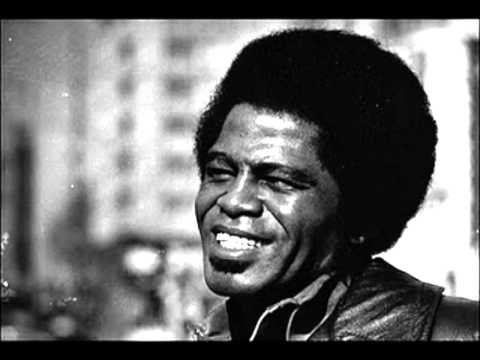
What makes James Brown (1933- ) so important is his profound understanding and use of the myriad African-American folk traditions in music (e.g. Blues, Gospel and Jazz), language (e.g. rapping, signifying, melisma, narrative, metanarrative), performance art (e.g. historical rituals of dress, stagecraft, public rites of communion and testimony, confession and mass participation); as well as a commitment to the principles of social justice, political and personal freedom, economic self-determination and independent cultural expression). What Brown represents so deeply and embodies so clearly in his very life is an elegant embrace of his own “blackness.” This is a blackness not of a contrived or fake essentialism but a cultural identity and philosophy forged out of an agonizing and joyous struggle with the vicissitudes of living. The idea of what the writer/poet/playwright/ critic Amiri Baraka calls “the verb force”8 dominates Brown’s aesthetic. The recurring preoccupation with history that permeates Brown’s massive collection of songs and performance (e.g. “There was a Time,” “I’m Black and I’m Proud,” “Money Won’t Change You,” “Think”); the fearless political statement (“I Don’t Want Nobody To Give Me Nothing—Open Up the Door and I’ll Get Myself,” “Soul Power,” “It’s A New Day,” “Get Up, Get Into It and Get Involved,” “New Breed”); the fervent celebrations of sex (“Cold Sweat,” “I Can’t Stand Myself When You Touch Me,” “Give It Up or Turnit a Loose,” “Sex Machine,” “Sexy, Sexy, Sexy”); the brash, bold (so-called) ‘boasting’ songs that celebrate the sheer art of living (“Superbad, “Ain’t It Funky Now,” “Let a Man Come In and Do the Popcorn,” “You Got To Have a Mother For Me,” Papa’s Got a Brand New Bag,” “I Got the Feelin’,” “Mother Popcorn”); and his overtly educational or “message’ songs which provide the major transitional link between current RAP and the Rhythm and Blues tradition that Brown pioneered (“King Heroin,” “Brother Rapp,” “Don’t Be A Drop Out,” “Get On the Good Foot,” “Talkin’ Loud and Sayin’ Nothin,” ‘The Payback,” “There It Is,” “Ain’t That a Groove”); not to mention the hard driving rhythmic dance music that revolutionized what could be done with beats in popular music (“Get It Together,” “Funky Drummer,” ‘The Popcorn,” “Let Yourself Go,” “Licking Stick,” “Cold Sweat,” “There Was A Time,” “Make it Funky,” “I Got Ants in My Pants,” “Mother Popcorn,” “Papa Don’t Take No Mess”). All these monster hits and many, many more (Brown has over 50 platinum records to his credit!) have established Brown as the biggest single influence on the new rappers whose age group (largely 21-30) were only small children or pre-adolescents when Brown was in his glorious prime (1965-1975).
What’s fascinating about Brown’s impact however, is how every aspect of his act from singing to dancing to his tireless community activism off the stage has been lionized, emulated, copied and incorporated into the form and content of contemporary RAP. His influence has been so great that he is the only artist whom all sectors and factions of today’s rappers readily agree on. This particular fact accounts for the legendary status that his music, language (from lyrics to oral sounds), performance sensibility, and fidelity to certain political and moral stances regarding his social and personal identity continues to have among the leading aesthetic and political forces in the RAP world. As a result, Brown provides an excellent point of departure for clarifying our understanding of the history of RAP in the 20th century.
Bibliography
The Death of Rhythm and Blues. Nelson George. Pantheon Books, 1988.
The Signifying Monkey: A Theory of Afro-American Literary Criticism. Henry Louis Gates, Jr., Oxford University Press, 1988
Orality and Literacy: The Technologizing of the Word. Walter J. Ong. Methuen, 1962.
Malcolm X Speaks. Malcolm X (Edited by George Brietman). Grove Press, 1965.
The Autobiography of Malcolm X. Malcolm X and Alex Haley. Grove Press, 1965.
The Beer Can By The Highway. John Kouwenhoven. Doubleday, 1961.
“Repetition As A Figure of Black Culture.” Black Literature and Literary Theory. James Snead Edited by Henry Louis Gates, Jr. Methuen, 1984.
Fresh: Hiphop Don’t Stop. Nelson George, Sally Banes, Susan Flinker and Patty Romanowski. Random House, 1985.
Black Music. Leroi Jones (Amiri Baraka). William Morrow, 1968.
Signifying Rappers: Rap and Race in the Urban Present. Mark Costello and David Foster Wallace. Ecco Press, 1990.
Mikhail Bahktin. Katerina Clark and Michael Holquist. Harvard University Press, 1984.
The Dialogic Imagination. Mikhail Bahktin. Edited by Michael Holquist. University of Texas Press, 1981.
NOTES
1 Gates, Page 45
2 Ibid.
3 Malcolm, Page 56
4 Autobiography of Malcolm, Page 57
5 FRESH, Page 81
6 Kouwenhoven, Page 142
7 Ibid.
8 Ibid.
Three Loku Poems by Kofi Natambu:
Masters of this (re)codifying strategy include the RAP group PUBLIC ENEMY and their extraordinary wordsmiths CHUCK D and FLAVOR-FLAV, as well as LL COOLJ, KRS-One, ICE-T, A TRIBE CALLED QUEST, ERIC B & RAKIM, QUEEN LATIFAH, DE LA SOUL, MC LYTE, ICE CUBE, and RUN DMC, all of whom have emerged as leading cultural figures in the past five to seven years(!). In a later chapter we will examine just why they are so important to this development.
But suffice it to say, for now, that these “new” rappers (as distinct from the previous generation of the 1960s and ‘70s) represent a decided leap forward in the complex semiology of figuration and (re) figuration that characterizes innovation in language use during this epoch. In the 1960s the black cultural nationalist and revolutionary nationalist movements as represented say, by the Black Panther Party and the Republic of New Africa; the Nation of Islam and SNCC, as well as such fundamentally black Marxist groups as Detroit’s League of Revolutionary Black Workers, all used rapping strategies to translate and express complex political ideas and philosophies about the dialectics of “race,” class, gender and political economy to a popular audience of blacks (and even some radical whites) who were well-versed in the signifying traditions of Afro-America where meaning is derived from historical experience and the myriad ways in which this experience is inscribed (figured, translated, interpreted, expressed) in language. The importance of italicizing this idea is that much too often critics and theorists mistake or substitute sociology and (pseudo) psychology for linguistic and cultural phenomena when dealing with black cultural reality. This is the result of venal racial mythology which attempts to reduce the “identity” of African-American culture to extremely narrow, predetermined essences of authenticity and ‘naturalism.’ What this acknowledgment foregrounds is the awareness of the signifier as being integral to any on-going, indeterminate conception of the signified in black culture. This is accomplished of course at the level of a creative and signifying challenge to the sign of meaning itself as encoded in the conventional English word signification. In other words, the black use of the word “signifyin (g) signifies on (that is, revises and transforms) the very term signification (i.e. meaning) itself.
Thus in the rapping tradition we find a different conception of how and why any particular meaning is conveyed through language. In the context of black political and cultural activists like Carmichael, Brown, Huey Newton, Kenny Cockrel, Baraka, Cortez and Scott-Heron, we encounter the continually creative (re) appropriation of conventional English words and phrases that are consciously revised, transformed and redefined to construct an entirely new or fresh approach to projecting meaning in society. The classic model for this kind of quick-witted revision and dynamic use of language was the great Malcolm X whose speeches, writings, and public statements are suffused with copious references to, and modern take-offs on, traditional folk expressions, tales, tropes and values. The highly personalized ‘spin’ that Malcolm would put on these modal elements was the adaptation of the urban hipster persona who through inside knowledge (the very definition of the word ‘hip’) and a razor-sharp manipulation of irony, paradox, and innuendo laced with a wicked sense of humor could slyly redefine and frame the terms of discourse in any given situation.
As a past master at the subtle and sometimes brutal art of signifying, Malcolm X excelled at the droll practice of what the English call “one-up-manship.” One of his favorite ploys was asking a seemingly innocent question, then when the person he was addressing couldn’t come up with an answer (and of course any response that they gave would be the ‘wrong’ one) he would delight in what in African-American culture is called “smacking someone upside the head” by giving the devastating ‘right’ answer to his own question. One question that he often asked of stuffy, pretentious black intellectuals (or any black authority figure) he was debating in a public forum would be the following:
Malcolm: Sir, what do they call a black man with a Ph.D.?
Respondent: I don’t know (or some other response)
Malcolm: A Nigger!
The point of this exchange would be to frame the very terms of the discourse by establishing immediately that racism was an ideological and social force that didn’t go away or become less destructive merely because an individual black person had ‘succeeded’ at something in the general society. Malcolm’s discursive strategy here was to foreground his critique of American society by including even the person(s) he was debating as an example of that which he was indicting. The fact that he did this equally with black and white men and women (either to make a negative orpositive point) meant that he was highly conscious of, and adept at, using the power of language to tell complex truths about the society and culture. That this was largely accomplished through the practice of signifying only made Malcolm’s ideas and perspective more accessible to the largely young audience that he was trying to reach.
The rapping aspects of Malcolm’s oratorical style were most clearly demonstrated in the syncopated cadences and staccato phrasings that he often used. Alternating with a sly, sometimes sinister sounding chuckle and highly dramatic, almost ominous silent pauses, Malcolm would often keep an audience spellbound by deftly weaving a pastiche of historical allusions, folk proverbs and admonitions, ironic jokes, satirical puns, the inversions of tropes and indirect discourse (a prime element as we’ve noted in the art of signifying). He was also a brilliant storyteller whose allegorical tales epitomized the innovative use of the rapping tradition. As the linguist Mitchell-Kernan points out: “Signifying does not always have negative valuations attached to it; it is clearly thought of as a kind of art—a clever way of conveying messages.”2
In Malcolm’s most famous collection of speeches MALCOLM X SPEAKS (Grove Press, 1965), we find many examples of just this sort of artful “cleverness.” In fact, this book and the world famous AUTOBIOGRAPHY published in 1965 after his death by assassination, (and now in its 40th printing!), are classic texts that clarify exactly why Malcolm is revered as a major sampling source for the current generation of rappers. A few examples of his singularly innovative style follows (all taken from Malcolm X Speaks and his Autobiography):
“I’m the man you think you are. ..If you want to know what I’ll do, figure out what you’ll do. I’ll do the same thing—only more of it”
I’m not going to sit at your table and watch you eat, with nothing on my plate,and call myself a diner...Being here in America doesn’t make you an American.”
“I’m speaking as a victim of this American system. And I see America through the eyes of the victim. I don’t see any American dream; I see an American nightmare.”8
“Shorty would take me to groovy, frantic scenes in different chicks’ and cats’ pads, where with the lights and juke down mellow, everybody blew gage and juiced back and jumped. I met chicks who were fine as May wine, and cats who were hip to all happenings.’4
“You get your freedom by letting your enemy know that you’ll do anything to get your freedom, then you’ll get it. It’s the only way you’ll get it.”
What is impossible to convey with these written examples is the subtle nuances of inflection, tone, cadence and phrasing that characterized Malcolm’s speaking style and how it directly affects his ability to signify in the terms we have already outlined. What most impresses the current generation of RAP artists is precisely Malcolm’s ability to transgress cultural and political sacred cows through his mastery of the verbal modes of parody, satire, circumlocution and mockery. Many of Malcolm’s speeches consciously set out to revise and transform conventional ideas about the nature and meaning of American history through the art of troping. By (re)figuring standard notions of what constitutes historical and social reality in the United States we get a critical narrative of the content of race relations, cultural expression, political philosophy and economic theory through a withering investigation into the mythology of these structures within the institutional parameters of the larger society. Malcolm was extremely adept at using indirect discourse and the implied or highly suggestive statement or phrase in lieu of literal minded posturing. The emphasis would always be on foregrounding the actual reality of conflict and contradiction in American culture vis-a-vis the given or received myth of how things “should be.” The result was often provocative and insightful.
The inspiring example of Malcolm X in the glaringly public arena of national and world politics led the next generation of African-American activists to base their oratorical and writing styles in the tradition of the vernacular. The bold, brash and scathing verbal expressions of such well-known figures as Stokely Carmichael, H. Rap Brown, Bobby Seale and the great boxer/poet Muhammad Ali were the very epitome of the rapping tradition in that humor, irony, parody, troping, and ingenious turns-of-phrase were the very content of their “messages.” The fact that rhyming, repetition, riffing, and indirect discourse (as well as scatology, insults, and folklore) were so integral to their cultural speech put them and others (like the comedian/philosophers Richard Pryor, Redd Foxx, and Bill Cosby and the legendary singer/musician/dancer James Brown) right into the ‘mainstream’ of the signifying styles so widely used and expressed in the general black community.
In the cultural work of Richard Pryor for example, one finds a particularly ingenious use of the official mythology of African-American identity in the United States as it confronts or contradicts the historical reality of actual cultural experience. Most of Pryor’s brilliant routines of the period from 1973-1983 (his era of greatest influence as an artist and as a cultural icon) concern themselves with signifying on or about America’s most treasured and insidious myths and lies about racial relations as they were connected to matters of political economy, sex, social consciousness, sports and everyday life. In his stand-up monologues Pryor spent a great deal of time having a discourse with his various characters as they related to the mass audience. These characters were drawn largely from the black working and lower middle class who were struggling to maintain a tenuous connection to their society despite the brutalizing and patronizing aspects of economic exploitation, political corruption, racial discrimination and street crime. The role of rapping in this context was to allow the audience to perceive, as in a Brechtian drama, just how and why their real lives served as a social counterpoint to the personas being “acted out” by Pryor in often tragicomic terms.
In all of these performances on records, concert stages, television, and film, Pryor was able to bring pathos and humor to the utterly idiosyncratic languages that his characters would use to engage the audience in an on-going psychodrama with the dilemmas of being human in a context that tried to deny cultural difference through crudely reductive appeals to “racial” myths that obscured how relations between people were grounded in the material conditions of their lives. The RAP aesthetic served to arm Pryor with the linguistic tools of signifying and vernacular expression necessary to cut through official lies (or ignorance) advanced by the general culture. Once again it is impossible to convey the incredible range of verbal signifiers encoded in a dazzling collection of voices, inflections, accents, cadences, and phrasings. A great place to begin an investigation into the hilarious and poignant world of Pryor’s imagination would be his award-winning recordings That Nigger’s Crazy (1974), Is It Something I Said? (1975), and Bicentennial Nigger (1976), three of the truly radical masterpieces in modern comedic history.
What the RAP tradition has learned from Pryor is that linear narrative styles can be used to tell cautionary tales in the folkloric tradition or that it can be seen as a structural foundation for highly improvisational strategies of critique or celebration. Thus specific methods of signifying can be revised, inverted or extended to make a point or deliver a message while using humor and laughter as a “weapon” in the war against racial ideology. Allusive language, allegory, scatological imagery, and cultural analysis/criticism can all be included in the density of effects (or “mix) that make up the environmental theater that is contemporary RAP. The seminal role of sound in this particular process can’t be underestimated since it is an element that so closely corresponds to the role of inflection, accent, and phrasing in the RAP-oriented poetic styles of such ‘70s figures as Ali, the Last Poets, and Scott-Heron (who was also a singer and musician). Many of the finest, most creative rappers today have mastered this synthetic/syncretic unity of persona, voice, and sonic mix, particularly the PUBLIC ENEMY crew (Chuck D, Flavor Flav and Terminator X), as well as LL Cool J (and his DJ, the amazing ‘Cut Creator’), Eric B & Rakim, Paris, Ice-T, Ice Cube, Queen Latifah (and her extremely versatile posse called ‘The Flavor Unit’), and the political activist/philosopher/poet/storyteller KRS-One.
It’s no coincidence then that this generation of RAP artists have listened so closely and carefully to the great ‘70s artists. The pervasive influence of Scott-Heron, the Last Poets, Pryor, and Ali can be heard very clearly in nearly every major (and minor) RAP album, CD and cassette-tape since the first recordings began to appear on the open market in 1977. However, the most important and seminal influence on the present generation, and a man whose entire career since the early 1950s embodies a highly sophisticated synthesis of music, language, performance, and social activism is the one and only “Mr. Please, Please, Please, the Godfather of Soul, The Inventor of funk, and the hardest working man in show business, Mr. Dynamite Jaaaammmess Brown!”
What makes James Brown (1933- ) so important is his profound understanding and use of the myriad African-American folk traditions in music (e.g. Blues, Gospel and Jazz), language (e.g. rapping, signifying, melisma, narrative, metanarrative), performance art (e.g. historical rituals of dress, stagecraft, public rites of communion and testimony, confession and mass participation); as well as a commitment to the principles of social justice, political and personal freedom, economic self-determination and independent cultural expression). What Brown represents so deeply and embodies so clearly in his very life is an elegant embrace of his own “blackness.” This is a blackness not of a contrived or fake essentialism but a cultural identity and philosophy forged out of an agonizing and joyous struggle with the vicissitudes of living. The idea of what the writer/poet/playwright/ critic Amiri Baraka calls “the verb force”8 dominates Brown’s aesthetic. The recurring preoccupation with history that permeates Brown’s massive collection of songs and performance (e.g. “There was a Time,” “I’m Black and I’m Proud,” “Money Won’t Change You,” “Think”); the fearless political statement (“I Don’t Want Nobody To Give Me Nothing—Open Up the Door and I’ll Get Myself,” “Soul Power,” “It’s A New Day,” “Get Up, Get Into It and Get Involved,” “New Breed”); the fervent celebrations of sex (“Cold Sweat,” “I Can’t Stand Myself When You Touch Me,” “Give It Up or Turnit a Loose,” “Sex Machine,” “Sexy, Sexy, Sexy”); the brash, bold (so-called) ‘boasting’ songs that celebrate the sheer art of living (“Superbad, “Ain’t It Funky Now,” “Let a Man Come In and Do the Popcorn,” “You Got To Have a Mother For Me,” Papa’s Got a Brand New Bag,” “I Got the Feelin’,” “Mother Popcorn”); and his overtly educational or “message’ songs which provide the major transitional link between current RAP and the Rhythm and Blues tradition that Brown pioneered (“King Heroin,” “Brother Rapp,” “Don’t Be A Drop Out,” “Get On the Good Foot,” “Talkin’ Loud and Sayin’ Nothin,” ‘The Payback,” “There It Is,” “Ain’t That a Groove”); not to mention the hard driving rhythmic dance music that revolutionized what could be done with beats in popular music (“Get It Together,” “Funky Drummer,” ‘The Popcorn,” “Let Yourself Go,” “Licking Stick,” “Cold Sweat,” “There Was A Time,” “Make it Funky,” “I Got Ants in My Pants,” “Mother Popcorn,” “Papa Don’t Take No Mess”). All these monster hits and many, many more (Brown has over 50 platinum records to his credit!) have established Brown as the biggest single influence on the new rappers whose age group (largely 21-30) were only small children or pre-adolescents when Brown was in his glorious prime (1965-1975).
What’s fascinating about Brown’s impact however, is how every aspect of his act from singing to dancing to his tireless community activism off the stage has been lionized, emulated, copied and incorporated into the form and content of contemporary RAP. His influence has been so great that he is the only artist whom all sectors and factions of today’s rappers readily agree on. This particular fact accounts for the legendary status that his music, language (from lyrics to oral sounds), performance sensibility, and fidelity to certain political and moral stances regarding his social and personal identity continues to have among the leading aesthetic and political forces in the RAP world. As a result, Brown provides an excellent point of departure for clarifying our understanding of the history of RAP in the 20th century.
Bibliography
The Death of Rhythm and Blues. Nelson George. Pantheon Books, 1988.
The Signifying Monkey: A Theory of Afro-American Literary Criticism. Henry Louis Gates, Jr., Oxford University Press, 1988
Orality and Literacy: The Technologizing of the Word. Walter J. Ong. Methuen, 1962.
Malcolm X Speaks. Malcolm X (Edited by George Brietman). Grove Press, 1965.
The Autobiography of Malcolm X. Malcolm X and Alex Haley. Grove Press, 1965.
The Beer Can By The Highway. John Kouwenhoven. Doubleday, 1961.
“Repetition As A Figure of Black Culture.” Black Literature and Literary Theory. James Snead Edited by Henry Louis Gates, Jr. Methuen, 1984.
Fresh: Hiphop Don’t Stop. Nelson George, Sally Banes, Susan Flinker and Patty Romanowski. Random House, 1985.
Black Music. Leroi Jones (Amiri Baraka). William Morrow, 1968.
Signifying Rappers: Rap and Race in the Urban Present. Mark Costello and David Foster Wallace. Ecco Press, 1990.
Mikhail Bahktin. Katerina Clark and Michael Holquist. Harvard University Press, 1984.
The Dialogic Imagination. Mikhail Bahktin. Edited by Michael Holquist. University of Texas Press, 1981.
NOTES
1 Gates, Page 45
2 Ibid.
3 Malcolm, Page 56
4 Autobiography of Malcolm, Page 57
5 FRESH, Page 81
6 Kouwenhoven, Page 142
7 Ibid.
8 Ibid.
"When I was a young boy, I used to read Chinese and Japanese poetry, and I loved the form the Japanese created called the haiku. So I created an Afro-American form called the loku, which is just short. We don't have time to count the syllables.”
--Amiri Baraka (1934-2014)
Three Loku Poems by Kofi Natambu:
American Exceptionalism
Only one country in the
history of the world
has ever used an atomic bomb
In the Age of Obama
If it appears that reality
is actually changing
it only means that
appearances are
deceiving
Grand Old Perversions
Welcome to the land of the spree and home of the knave
this eternal domain of the 3H Club
hatred hubris and hypocrisy
Only one country in the
history of the world
has ever used an atomic bomb
In the Age of Obama
If it appears that reality
is actually changing
it only means that
appearances are
deceiving
Grand Old Perversions
Welcome to the land of the spree and home of the knave
this eternal domain of the 3H Club
hatred hubris and hypocrisy





