Showing posts with label Iraq War. Show all posts

Tuesday, November 30, 2010

Chris Hedges On The Paramount Necessity of Resistance in the Fight For Real Change

http://www.truth-out.org/real-hope-is-about-doing-something65501


All,

As usual the indefatigable and fearless Chris Hedges goes for the gusto--like it or not. It takes real intellectual and moral courage these daze to find a reason to stubbornly fight for what one knows is right and to relentlessly call the many responsible parties out for their betrayal even if the odds are overwhelmingly against you and so many people think you're a fool to seriously demand something better and actively stand on principle to try to bring it about. Thankfully, Hedges is such a human being in a society and culture that has passively and tragically largely given itself over to massive institutional and pseudophilosophical forces that clearly seek to manipulate, corrupt, and destroy the world in the name of power, greed, hatred, hubris, hypocrisy, lies, fear, ignorance, and arrogance. Yet Hedges continues to write, fight, and organize in the face of a contemptuous Leviathan we stupidly and insanely call and trumpet as "American Exceptionalism." Meanwhile, Hedges and a few brave souls like him absolutely refuses to kowtow to and play the infantile supplicant for the rancid nativist aristocracy who typically are butt naked Emperors genuflecting to their own delusional fantasies of grandeur. The good news in the wake of all the ugly noise and despair is that Hedges knows better and continues to ACT on that knowledge--and so do we...

Kofi


Real Hope Is About Doing Something
Monday 29 November 2010
by: Chris Hedges | Truthdig | Op-Ed


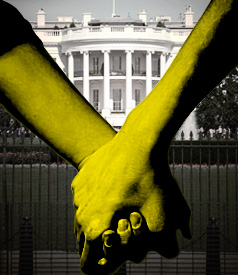
(Image: Jared Rodriguez / t r u t h o u t; Adapted: afagen, Brett Sayer)


On Dec. 16 I will join Daniel Ellsberg, Medea Benjamin, Ray McGovern and several military veteran activists outside the White House to protest the futile and endless wars in Iraq and Afghanistan. Many of us will, after our rally in Lafayette Park, attempt to chain ourselves to the fence outside the White House. It is a pretty good bet we will all spend a night in jail. Hope, from now on, will look like this.

Hope is not trusting in the ultimate goodness of Barack Obama, who, like Herod of old, sold out his people. It is not having a positive attitude or pretending that happy thoughts and false optimism will make the world better. Hope is not about chanting packaged campaign slogans or trusting in the better nature of the Democratic Party. Hope does not mean that our protests will suddenly awaken the dead consciences, the atrophied souls, of the plutocrats running Halliburton, Goldman Sachs, ExxonMobil or the government.

Hope does not mean we will halt the firing in Afghanistan of the next Hellfire missile, whose explosive blast sucks the oxygen out of the air and leaves the dead, including children, scattered like limp rag dolls on the ground. Hope does not mean we will reform Wall Street swindlers and speculators, or halt the pillaging of our economy as we print $600 billion in new money with the desperation of all collapsing states. Hope does not mean that the nation’s ministers and rabbis, who know the words of the great Hebrew prophets, will leave their houses of worship to practice the religious beliefs they preach. Most clerics like fine, abstract words about justice and full collection plates, but know little of real hope.

Hope knows that unless we physically defy government control we are complicit in the violence of the state. All who resist keep hope alive. All who succumb to fear, despair and apathy become enemies of hope. They become, in their passivity, agents of injustice. If the enemies of hope are finally victorious, the poison of violence will become not only the language of power but the language of opposition. And those who resist with nonviolence are in times like these the thin line of defense between a civil society and its disintegration.

Hope has a cost. Hope is not comfortable or easy. Hope requires personal risk. Hope does not come with the right attitude. Hope is not about peace of mind. Hope is an action. Hope is doing something. The more futile, the more useless, the more irrelevant and incomprehensible an act of rebellion is, the vaster and the more potent hope becomes. Hope never makes sense. Hope is weak, unorganized and absurd. Hope, which is always nonviolent, exposes in its powerlessness the lies, fraud and coercion employed by the state. Hope does not believe in force. Hope knows that an injustice visited on our neighbor is an injustice visited on us all. Hope posits that people are drawn to the good by the good. This is the secret of hope’s power and it is why it can never finally be defeated. Hope demands for others what we demand for ourselves. Hope does not separate us from them. Hope sees in our enemy our own face.

Hope is not for the practical and the sophisticated, the cynics and the complacent, the defeated and the fearful. Hope is what the corporate state, which saturates our airwaves with lies, seeks to obliterate. Hope is what our corporate overlords are determined to crush. Be afraid, they tell us. Surrender your liberties to us so we can make the world safe from terror. Don’t resist. Embrace the alienation of our cheerful conformity. Buy our products. Without them you are worthless. Become our brands. Do not look up from your electronic hallucinations to think. No. Above all do not think. Obey.

W.H. Auden wrote:

Faces along the bar
Cling to their average day:
The lights must never go out,
The music must always play,
All the conventions conspire
To make this fort assume
The furniture of home;
Lest we should see where we are,
Lost in a haunted wood,
Children afraid of the night
Who have never been happy or good.

The powerful do not understand hope. Hope is not part of their vocabulary. They speak in the cold, dead words of national security, global markets, electoral strategy, staying on message, image and money. The powerful protect their own. They divide the world into the damned and the blessed, the patriots and the enemy, the rich and the poor. They insist that extinguishing lives in foreign wars or in our prison complexes is a form of human progress. They cannot see that the suffering of a child in Gaza or a child in the blighted pockets of Washington, D.C., diminishes and impoverishes us all. They are deaf, dumb and blind to hope. Those addicted to power, blinded by self-exaltation, cannot decipher the words of hope any more than most of us can decipher hieroglyphics. Hope to Wall Street bankers and politicians, to the masters of war and commerce, is not practical. It is gibberish. It means nothing.

I cannot promise you fine weather or an easy time. I cannot assure you that thousands will converge on Lafayette Park in solidarity. I cannot pretend that being handcuffed is pleasant. I cannot say that anyone in Congress or the White House, anyone in the boardrooms of the corporations that cannibalize our nation, will be moved by pity to act for the common good. I cannot tell you these wars will end or the hungry will be fed. I cannot say that justice will roll down like a mighty wave and restore our nation to sanity. But I can say this: If we resist and carry out acts, no matter how small, of open defiance, hope will not be extinguished. If all we accomplish is to assure a grieving mother in Baghdad or Afghanistan, a young man or woman crippled physically and emotionally by the hammer blows of war, that he or she is not alone, our resistance will be successful. Hope cannot be sustained if it cannot be seen.

Any act of rebellion, any physical defiance of those who make war, of those who perpetuate corporate greed and are responsible for state crimes, anything that seeks to draw the good to the good, nourishes our souls and holds out the possibility that we can touch and transform the souls of others. Hope affirms that which we must affirm. And every act that imparts hope is a victory in itself.

Also from Auden:

Defenseless under the night
Our world in stupor lies;
Yet, dotted everywhere,
Ironic points of light
Flash out wherever the Just
Exchange their messages:
May I, composed like them
Of Eros and of dust,
Beleaguered by the same
Negation and despair,
Show an affirming flame.


Chris Hedges is a senior fellow at The Nation Institute. His newest book is “Death of the Liberal Class.” More information on the Dec. 16 protest can be found at http://www.stopthesewars.org

Tuesday, December 29, 2009

When Is Guantanamo Bay Prison Going To Be Closed Down?

http://www.nytimes.com/2009/12/23/us/politics/23gitmo.html?_r=1&th&emc=th

All,

This is sheer ineptitude on the part of the Obama Administration. Just ridiculous! The President is quickly turning into Jimmy Carter--another worldclass political bungler--right before our very eyes! There is no way under the sun that Obama can possibly excuse or defend not closing down Guantanamo after an entire year has passed and he continues to claim in public (as he did just two weeks ago in Oslo upon receiving the Nobel Peace Prize) that it is a "major priority" to have already closed it down (remember what the President said on inaugural day January 20, 2009?). Now everything is being set back to "at least" 2011. Just like the continuation of the endless wars in Iraq and Afghanistan as well as the many related issues of torture, secret warfare, and rendition of the previous criminal Bushwhacker administration, the Obama Administration has consistently shown an ominous tendency to lie and dissemble about its own actual goals and "priorities" with respect to American foreign policy. In any event Obama and his former Bush/Clinton team of hawkish military policy makers and advisors (Hillary, Jim Jones, Robert Gates) bear complete responsibility for the now ongoing criminality of the U.S. government in these matters and no amount of "moral" hand wringing or passing the buck to rightwing Republicans-- who like always oppose the very idea of closing down this heinous prison--can make up for this disaster...

Kofi


December 23, 2009

Plan to Move Guantánamo Detainees Faces New Delay
By CHARLIE SAVAGE
New York Times

WASHINGTON — Rebuffed this month by skeptical lawmakers when it sought finances to buy a prison in rural Illinois, the Obama administration is struggling to come up with the money to replace the Guantánamo Bay prison.

As a result, officials now believe that they are unlikely to close the prison at Guantánamo Bay, Cuba, and transfer its population of terrorism suspects until 2011 at the earliest — a far slower timeline for achieving one of President Obama’s signature national security policies than they had previously hinted.

While Mr. Obama has acknowledged that he would miss the Jan. 22 deadline for closing the prison that he set shortly after taking office, the administration appeared to take a major step forward last week when he directed subordinates to move “as expeditiously as possible” to acquire the Thomson Correctional Center, a nearly vacant maximum-security Illinois prison, and to retrofit it to receive Guantánamo detainees.

But in interviews this week, officials estimated that it could take 8 to 10 months to install new fencing, towers, cameras and other security upgrades before any transfers take place. Such construction cannot begin until the federal government buys the prison from the State of Illinois.

The federal Bureau of Prisons does not have enough money to pay Illinois for the center, which would cost about $150 million. Several weeks ago, the White House approached the House Appropriations Committee and floated the idea of adding about $200 million for the project to the military spending bill for the 2010 fiscal year, according to administration and Congressional officials.

But Democratic leaders refused to include the politically charged measure in the legislation. When lawmakers approved the bill on Dec. 19, it contained no financing for Thomson.

The administration will probably not have another opportunity until Congress takes up a supplemental appropriations bill for the Afghanistan war. Lawmakers are not likely to finish that bill until late March or April.

Moreover, the administration now says that the current focus for Thomson financing is the appropriations legislation for the 2011 fiscal year. Congress will not take that measure up until late 2010.

Frustrated by the difficulties in obtaining financing from Congress, administration officials had discussed invoking a little-known statute that would allow the president to declare a national emergency and then use military funds allocated for other construction projects to buy and retrofit the Illinois prison.

That statute, however, has never been used for a project quite like this one. Fearing that lawmakers would be angered by such a move and could respond by erasing the statute, the administration decided not to invoke it.

Matthew Waxman, who was assistant secretary of defense for detainee affairs in the Bush administration, said the Obama administration would need lawmakers’ support for its long-term post-Guantánamo plans. Invoking emergency powers to unilaterally buy Thomson, he said, would be “poking Congress in the eye in a way that would be very counterproductive.”

Still, it is not clear that Congress will be willing to approve money enabling the transfer of Guantánamo detainees to domestic soil — especially as the 2010 midterm election campaign heats up, with the likelihood that Republicans will pick up seats.

This year, Congress restricted the ability of the executive branch to transfer detainees into domestic prisons, a ban reiterated in the 2010 military appropriations bill.

The Thomson proposal enjoys strong support from Illinois Democrats, including Gov. Patrick J. Quinn and Senator Richard J. Durbin, who have hailed the idea as a means of creating jobs. More than 300 people turned out Tuesday in Sterling, Ill., for a hearing on the proposal, The Associated Press reported, and emotions ran high among people on each side of the proposal.

The White House has argued that closing Guantánamo would enhance national security by removing a symbol used by terrorist recruiters. It also said the closing would save taxpayers money because the Defense Department pays $150 million a year to operate the Guantánamo prison on the naval base there, while running the Illinois prison would cost $75 million.

Ben LaBolt, a White House spokesman, said Mr. Obama remained committed to closing the Guantánamo prison, adding, “We will continue to work with Congress to ensure that we secure the necessary funds to purchase and upgrade the Thomson prison, which will operate at a substantially lower cost to taxpayers, next year.”

But many Republicans oppose closing Guantánamo, arguing that housing the detainees on United States soil would create unnecessary security risks. Some crucial moderate Democrats are also skeptical.

Representative Ike Skelton of Missouri, the chairman of the House Armed Services Committee, is said to have privately expressed doubts to administration officials about the plan. Another member of that committee, Representative Loretta Sanchez, Democrat of California, also raised security and legal questions about the proposal.

“Particularly making something on U.S. soil an attraction for Al Qaeda and terrorists to go after — inciting them to attack something on U.S. soil — that’s a problem, and we need to think it through,” Ms. Sanchez said in an interview Tuesday.

In the Senate, Jim Webb, Democrat of Virginia, has argued that the problem with Guantánamo has been its lack of due process rights, not its physical location. He said recently that terrorism suspects “do not belong in our country, they do not belong in our courts, and they do not belong in our prisons.”

Mr. LaBolt pointed out that the detainee population was now smaller than it had been at any time since 2002, and that on other fronts in the effort to close Guantánamo, “substantial progress has been made in recent weeks.”

For example, Attorney General Eric H. Holder Jr. recently announced the first sets of civilian and military prosecutions for 10 detainees, and more such announcements are expected soon.

Last week, the United States transferred six detainees to Yemen in a trial program of repatriation to that country. About 91 of the roughly 200 detainees at Guantánamo are Yemeni; many are not considered “high value” suspects, but officials have been reluctant to repatriate them because of security conditions in Yemen.

Still, Congressional resistance to approving money for Thomson represents a steep hurdle toward dealing with the detainees who the administration has decided can neither be prosecuted nor safely transferred to the custody of other countries.

Indeed, Mr. Waxman said, the debate is certain to set off discussions on an issue that could drive away many civil-liberties-minded Democrats who have voiced initial support for Mr. Obama’s Thomson plan: the administration’s intention to imprison some detainees on United States soil without trials. “Some members of Congress may want to support rapid closure of Guantánamo but not to signal support for broad military detention powers,” Mr. Waxman said.


Copyright 2009 The New York Times Company

Sunday, November 15, 2009

American Imperialism in Action: The Ongoing Role of Big Oil in Iraq

http://www.truthout.org/1114092

All,

An important article that goes to the heart of exactly why the United States government invaded and occupied Iraq in the first place after their former longtime ally and vicious tyrant Saddam Hussein (then head of the wealthiest and most powerful nation in the Middle East outside of the other two major American allies in the region-- Israel and Saudi Arabia) tried to move out of his subordinate 'client-state' status with U.S. imperialism by invading Kuwait in 1990 and providing the first Bushwhacker Regime (George Dubya's notorious paterfamilia) with the dubious rationale for initiating the Persian Gulf War.

Kofi


Did Big Oil Win the War in Iraq?
Saturday 14 November 2009
by: Antonia Juhasz | AlterNet


As U.S. and British oil companies sign contracts with the Iraqi government, is it time to declare Big Oil the "victor" in the bloody venture?

Last week, ExxonMobil became the first U.S. oil company in 35 years to sign an oil-production contract with the government of Iraq.

As I write, several other contracts with the world’s largest oil companies are being finalized, and more are expected when a new negotiating round kicks off in Baghdad on Dec. 11.

Do these contracts represent a "victory" for Big Oil in Iraq? Yes, but not one as big as the companies had hoped for (at least, not yet).

Before the United States and Britain invaded Iraq in March 2003, their oil companies were shut out of oil-production contracts being negotiated by the government of Saddam Hussein. Today, more than six years of war later, Saddam is gone, and the U.S. and British oil companies are not only in on the oil contracts, they have managed to sweeten the terms.

However, organized resistance by Iraqis and people around the world has thus far succeeded in denying Big Oil its Big Prize: passage of the Iraq Oil Law, alternatively called Iraq Hydrocarbons Law, which would grant far greater control over Iraqi oil to foreign companies on terms much less favorable to Iraq than the current contracts provide.

If the negotiations proceed on their current path, foreign companies will produce the vast majority of Iraq’s oil. How much control they will exert, and who will reap the greatest benefits (and endure the steepest costs) is yet to be determined.

Before the Invasion

In January 2000, 10 days into President George W. Bush’s first term, representatives of the largest oil and energy companies joined the new administration to form the Cheney Energy Task Force. As part of its deliberations, the task force reviewed a series of lists titled "Foreign Suitors for Iraqi Oilfield Contracts" naming more than 60 companies from some 30 countries with contracts in various stages of negotiation.

None of contracts were with American nor major British companies, and none could take effect while the U.N. Security Council sanctions against Iraq remained in place. Three countries held the largest contracts: China, Russia and France -- all members of the Security Council and all in a position to advocate for the end of sanctions.

Were Saddam to remain in power and the sanctions to be removed, these contracts would take effect, and the U.S. and its closest ally would be shut out of Iraq’s great oil bonanza.

After the Invasion

The invasion of Iraq dealt handily with the problem of U.S. and British exclusion. ExxonMobil, Chevron, BP, ConocoPhillips and other major oil companies met with the Iraqi government on countless occasions, and the Iraqis tried to make deals.

But the oil companies, backed aggressively by the Bush administration, steadfastly insisted that contracts would only be signed after the Iraq Oil Law was passed. They nearly prevailed on several occasions, but organized resistance in and outside of Iraq has continually stymied the law’s passage.

Several forces have conspired to bring the oil companies to the negotiating table today.

Most recently and significantly, Iraq’s Parliament has refused to even consider the law until after the January 2010 elections. It is quite likely that a new government hostile to the interests of foreign (particularly U.S. and British) oil companies could come to power in those elections, making passage of the law much less likely. The deals being offered today would be the best the companies would be likely to get.

President Barack Obama and his administration have been vocal and active proponents of the law’s passage. However, this administration’s allegiance to the oil industry is not as steadfast as that of its predecessor.

The Obama administration’s push for passage of the law comes at the same time that it pursues withdrawal of all but a residual U.S. troop presence. It is hard to underestimate the added negotiating weight brought by 150,000 members of the U.S. (and until very recently British) military. Bush announced his most public declaration for passage of the Iraq Oil Law at the same time that he announced the surge of an additional 20,000 U.S. troops into Iraq. The pending loss of its most potent negotiating stick has clearly made the oil companies’ more willing to deal.

Secretary of State Hillary Rodham Clinton may have best put forward the administration’s position at the U.S.-Iraq Business and Investment Conference on Oct. 20, explaining: "A comprehensive hydrocarbon law is vital for regulating the [Iraq] oil sector. Parliament has delayed this vote until after January, but steps can be taken in the interim; for example, by holding transparent, credible auctions on oil and gas fields as we are seeing ..."

In other words, 'we know you want the law, but Parliament isn’t biting, and we’re not keeping 150,000 U.S. soldiers in Iraq indefinitely for you to get it. So, sign the d*** contracts.'

And finally, under immense pressure, the Iraqi Oil Ministry also has steadily been sweetening the deals.

The New Oil Contracts

The Iraq Oil Ministry began a bidding round in June for eight currently producing oil fields, which are among the largest in the world. Only one consortium -- BP and the Chinese National Petroleum Corp. -- agreed to the terms. The rest of the companies balked, saying the terms just simply were not generous enough. The terms have since been sweetened (and applied retroactively to BP and CNPC's deal), and the companies are now jumping on board.

Because the U.S. and British companies have, to a large degree, squeezed into pre-existing negotiations, some strange bedfellows have emerged to sign these new contracts, and more odd pairings are expected soon.

* BP and CNPC finalized the first new oil contract issued by Baghdad for the largest oil field in the country, the 17 billion barrel Rumaila field.

* ExxonMobil, with junior partner Royal Dutch Shell, won a bidding war against Russia’s Lukoil and junior partner ConocoPhillips for the 8.7 billion barrel West Qurna Phase 1 project.

* Italy's Eni SpA, with California’s Occidental Petroleum and the Korea Gas Corp., was awarded Iraq's Zubair oil field with estimated reserves of 4.4 billion barrels.

* Japan's Nippon Corp., leading a consortium of Japanese companies including Inpex Corp. and JGC Corp., is at an advanced stage in talks to win the Nassiriyah oil field.

* Shell, with partners CNPC and the Turkish Petroleum Corp., is also in discussions for the giant Kirkuk oil field, although negotiations have been delayed until after Iraq’s January elections.

The Terms

These contracts are complex and unique, representing a hybrid of existing models. They are not the best that the oil companies hoped for, which would have been production sharing agreements (PSAs). Nor are they the worst the companies might have feared; Iraq is not maintaining its nationalized system, closed to foreign oil company production participation (U.S. and other foreign oil companies sell Iraqi oil now and have done so for decades).

They are also not technical service contracts (TSCs), although this is what the Iraqi Oil Ministry has named them (likely in an attempt to thwart opposition to the contracts for offering too much to foreign oil companies). Greg Muttitt, an Iraq oil expert with Platform, told me, "TSCs generally last just a few years, they're generally for a specific job (e.g. installing pumps) rather than managing a field, and they go to service companies like Baker Hughes and Halliburton."

On the positive side for the companies, where the development production contracts (DPC) that Iraq was signing prior to the 2003 invasion offered 12-year contracts, today’s run for 20 to 25 years. And while as recently as a year ago the Iraqis offered the foreign companies a 50 percent ownership stake, today’s contracts offer them a 75 percent stake (25 percent for the Iraqi government).

On the other hand, where the PSAs sought under the Iraq Oil Law would give the companies an equity stake and the ability to book the oil in the fields as their own, these contracts provide reimbursement fees for capital and operational expenses and a fixed fee per barrel of oil produced and deny the companies the ability to book reserves.

It remains unclear whether the foreign companies or the Iraqi government ultimately has production decision-making authority. And some of the benefits included in the contracts would be annulled if the Iraq Oil Law were passed, including requirements to hire and train Iraqi workers and the transfer of needed technology.

Finally, the Iraqis apparently sweetened the deals further in the last few weeks by reducing the amount the foreign companies pay in taxes and allowing them to use private security forces to protect their facilities.

The Next Bidding Round

On Dec. 11 and 12, the second, much larger, bidding round will be launched in Baghdad. Forty-four international companies have been prequalified to bid on run for 11 groups of oil and gas fields in already producing and undiscovered fields. Negotiations will include the super giant Majnoon field, which Chevron and France’s Total have teamed up to bid for.

The contracts for these fields are expected to mirror those described above, but no "model contract" has been made publicly available.

Sunlight

The Iraq Oil Law has remained an elusive goal of the world’s most powerful industry and governments because a massive organized global resistance movement has been shining a bright spotlight on its content, its backers, and on the consequences of its passage.

We must continue to shine this spotlight on the new contract negotiations to help ensure that 1) the military occupation of Iraq will be able to conclude, and 2) that the Iraqis are not freed from a foreign military occupation only to be brought under foreign economic control.

(What these contract negotiations mean for the continued U.S. occupation of Iraq is the topic of my upcoming article for Political Research Associates.)


Antonia Juhasz is the director of the Chevron Program at Global Exchange. She is author of The Tyranny of Oil: the World's Most Powerful Industry, and What We Must Do To Stop It (HarperCollins, 2008), paperback to be released on Dec. 8 with a new foreword, and The Bush Agenda: Invading the World, One Economy at a Time (HarperCollins, 2006). She is the editor and lead author of The True Cost of Chevron: An Alternative Annual Report. She is on the National Advisory Board of Iraq Veterans Against the War, an associate fellow with the Institute for Policy Studies, a fellow with Oil Change International, and a senior analyst with Foreign Policy in Focus.

Saturday, November 7, 2009

Muslim & Arab American Citizens and President Obama Address Fort Hood Shooting

http://news.scotsman.com/world/Analysis-US-Muslims-fear-reprisals.5804066.jp


Analysis: US Muslims fear reprisals in wake of Fort Hood attack
Published Date: 07 November 2009
By Chris Stephen


THE KILLING of the Fort Hood soldiers by Major Nidal Hasan has set people in America's six-million strong Muslim community on edge, fearing a possible backlash against them.

Leading Islamic groups were quick to condemn the killings, with the largest Muslim civil rights group, the Council on American-Muslim Relations, declaring: "No political or religious ideology could ever justify or excuse such wanton and indiscriminate violence. American Muslims stand with our fellow citizens in offering both prayers for the victims."

Ibrahim Ramy of the Muslim American Foundation called on the government to protect Muslims from a backlash: "We reject the idea that this incident is motivated by a terrorist ideology of a religious community."

The attack comes as the council tries to persuade other Americans that Muslims in the United States do not identify with terrorism. "Most Americans were introduced to our faith on 9/11, watching a plane hitting a building," said council spokesman Corey Saylor. "Its an educational process. That will take years."

Just how many years is a moot point. Japanese Americans were seen as traitors following the shock of the attack on Pearl Harbor in the Second World War. "For Japanese Americans it took decades," said Mr Saylor.

The council's solution has been to promote education programmes designed to spread the word that US Muslims do not agree with extremist ideologies.

There has been little support among American Muslims for radical organisations and, to date, few racist attacks against Muslims are recorded.

US president Barack Obama's speech in Cairo earlier this year, in which he called on all Americans to recognise Muslims as fully integrated into the United States, eased tensions, but the council wants the president to do more.

"We're still waiting for him to visit an American mosque," said Mr Saylor.


http://thecaucus.blogs.nytimes.com/2009/11/06/fort-hood-shootings-pose-challenges-to-obama/?nl=us&emc=politicsemailemb1


November 6, 2009,

A Challenge for the Commander in Chief

By JEFF ZELENY
New York Times

President Obama spoke of the shootings during brief remarks from the White House Rose Garden on Friday.


President Obama faces a delicate question in the wake of the Fort Hood shootings.

In any moment of national tragedy, Americans expect to hear from their president. Mr. Obama quickly came forward, offering words of consolation, prayers for victims and their families, and the promise to find out how such a calamity could occur on a military base. On Friday afternoon, he is scheduled to visit troops at Walter Reed Medical Center. He will also attend a service for the victims.

But will the commander in chief also try to use this as a teachable moment?

Investigators, who believe Maj. Nidal Malik Hasan killed 13 people, are piecing together how and why the attack occurred.

The grainy photograph of the suspected shooter – Maj. Nidal Malik Hasan – is being shown again and again on television against a backdrop of news reports that he claimed to be harassed because of his Muslim faith.

Does that raise the burden for Mr. Obama to address any potential backlash against Muslims – military or civilian – in the United States?

Mr. Obama appeared in the Rose Garden at the White House shortly after 11:30 a.m., offering brief remarks on the Fort Hood shootings. He said that he met with Robert Mueller, the director of the F.B.I., and ordered that flags be flown at half-staff until next Wednesday, which is Veteran’s Day.

“We don’t know all the answers yet and I would caution against jumping to conclusions until we have all the facts,” Mr. Obama said. “What we do know is that there are families, friends and an entire nation grieving right now for the valiant men and women who came under attack yesterday in one of the worst mass shootings ever to take place on an American military base.”

He added, “We honor their service, we stand in awe of their sacrifice.”

The White House press secretary, Robert Gibbs, said later on Friday that Mr. Obama would attend a service for the victims. Mr. Gibbs said the president’s schedule for the coming week, before he leaves for Asia, is “in flux” as the White House awaits word of when a service might be scheduled.

But as Mr. Obama was already weighing how many more troops to send to Afghanistan and how to explain that decision to the nation, has the tragedy at Fort Hood complicated the task for the commander in chief?


Sheryl Gay Stolberg contributed reporting

Saturday, October 17, 2009

The Fundamental Requirement of Social Change: A Mass Movement that Goes Beyond the Limitations of the President and Congress

http://www.nytimes.com/2009/10/17/opinion/17blow.html?_r=1&th&emc=th

All,

This is the undeniable ugly truth in a nutshell...But the paramount question as always is: What are we gonna do about it?

Kofi


October 17, 2009

OP-ED COLUMNIST

Impatiently Waiting
By Charles M. Blow
New York Times

When, Mr. President? When will your deeds catch up to your words? The people who worked tirelessly to get you elected are getting tired of waiting. According to a Gallup poll released on Wednesday, Americans’ satisfaction with the way things are going in the country has hit a six-month low, and those decreases were led, in both percentage and percentage-point decreases, by Democrats and independents, not by Republicans.

The fierce urgency of now has melted into the maddening wait for whenever.

Take health care reform. Because of the president’s quixotic quest for bipartisanship, he refused to take a firm stand in favor of the public option. In that wake, Democrats gutted the Baucus bill to win the graces of Olympia Snowe — a Republican senator from a state with half the population of Brooklyn, a senator who is defying the will of her own constituents. A poll conducted earlier this month found that 57 percent of Maine residents support the public option and only 37 percent oppose it.

She is certainly living up to the state’s motto: Dirigo. That’s Latin for “I lead.” And the Democrats have followed. For shame.

When will the president take the risk of standing up for his convictions on health care instead of sacrificing good policies for good politics? (Or maybe not even good politics since a one-sided compromise is the same as a surrender.)

And health care is only one example.

On the same weekend that gay rights protesters marched past the White House, the president again said that his administration was “moving ahead on don’t ask don’t tell.” But when? This month? This year? This term?

As we prepare to draw down troops from the disaster that was the war in Iraq, we may commit more troops to the quagmire that is the war in Afghanistan and the government may miss its deadline for closing the blight that is the prison at Guantánamo Bay, Cuba.

Obama pledged to stem the tide of job losses and foreclosures and to reform the culture of the financial sector. Well, the Dow just hit 10,000 again while the national unemployment rate is about to hit 10 percent. And the firms we propped up are set to dole out record bonuses while home foreclosures have hit record highs. Main Street is still drowning in crisis while Wall Street is awash in Champagne. When will this imbalance be corrected?

Candidate Obama pledged to make the rebuilding of New Orleans a priority, but President Obama whisked into the city on Thursday for a visit so brief that one Louisiana congressman dubbed it a “drive-through daiquiri summit.” The president spent more time on the failed Olympic bid in Copenhagen than he did in the Crescent City.

At the town hall in New Orleans, Obama appealed for patience. He said, “Change is hard, and big change is harder.” Is that the excuse? Now where have I heard that before? Oh, yeah. From George Bush.

I invite you to join me on Facebook and follow me on Twitter, or e-mail me at chblow@nytimes.com.


http://www.nytimes.com/2009/10/17/business/economy/17wall.html?em=&pagewanted=print

October 17, 2009

Bailout Helps Fuel a New Era of Wall Street Wealth
By Graham Bowley
New York Times

Even as the economy continues to struggle, much of Wall Street is minting money — and looking forward again to hefty bonuses.

Many Americans wonder how this can possibly be. How can some banks be prospering so soon after a financial collapse, even as legions of people worry about losing their jobs and their homes?

It may come as a surprise that one of the most powerful forces driving the resurgence on Wall Street is not the banks but Washington. Many of the steps that policy makers took last year to stabilize the financial system — reducing interest rates to near zero, bolstering big banks with taxpayer money, guaranteeing billions of dollars of financial institutions’ debts — helped set the stage for this new era of Wall Street wealth.

Titans like Goldman Sachs and JPMorgan Chase are making fortunes in hot areas like trading stocks and bonds, rather than in the ho-hum business of lending people money. They also are profiting by taking risks that weaker rivals are unable or unwilling to shoulder — a benefit of less competition after the failure of some investment firms last year.

So even as big banks fight efforts in Congress to subject their industry to greater regulation — and to impose some restrictions on executive pay — Wall Street has Washington to thank in part for its latest bonanza.

“All of this is facilitated by the Federal Reserve and the government, who really want financial institutions to get back to lending,” said Gary Richardson, a research fellow at the National Bureau of Economic Research. “But we have just shown them that they can have the most frightening things happen to them, and we will throw trillions of dollars to protect them. I have big concerns about that.”

Not all banks are doing so well. Giants like Citigroup and Bank of America, whose fortunes are tied to the ups-and-downs of ordinary consumers, are struggling to turn themselves around, as are many regional banks.

But the decline of certain institutions, along with the outright collapse of once-vigorous competitors like Lehman Brothers, has consolidated the nation’s financial power in fewer hands. The strong are now able to wring more profits from the financial markets and charge higher fees for a wide range of banking services.

“They are able to charge more for all kinds of services because companies need banks and investment banks more now, and there are fewer strong ones to help them,” said Douglas J. Elliott of the Brookings Institution.

A year after the crisis struck, many of the industry’s behemoths — those institutions deemed too big to fail — are, in fact, getting bigger, not smaller. For many of them, it is business as usual. Over the last decade the financial sector was the fastest-growing part of the economy, with two-thirds of growth in gross domestic product attributable to incomes of workers in finance.

Now, the industry has new tools at its disposal, courtesy of the government.

With interest rates so low, banks can borrow money cheaply and put those funds to work in lucrative ways, whether using the money to make loans to companies at higher rates, or to speculate in the markets. Fixed-income trading — an area that includes bonds and currencies — has been particularly profitable.

“Robust trading results led the way,” said Howard Chen, a banking analyst at Credit Suisse, describing the latest profits.

To prevent a catastrophic financial collapse that would have sent shock waves through the economy, the government injected billions of dollars into banks. Some large institutions, like Goldman and Morgan, have since repaid their bailout money. But most of the industry still enjoys other forms of government support, which is helping to stoke profits.

Goldman Sachs and its perennial rival Morgan Stanley were allowed to transform themselves into old-fashioned bank holding companies. That switch gave them access to cheap funding from the Federal Reserve, which had been unavailable to them.

Those two banks and others like JPMorgan were also allowed to issue tens of billions of dollars of bonds that are guaranteed by the Federal Deposit Insurance Corporation, which insures bank deposits. With the F.D.I.C. standing behind them, the banks could borrow the money on highly advantageous terms. While some have since issued bonds on their own, they nonetheless enjoy the benefits of their cheap financing.

Granted, banks are also benefiting from a stabilizing economy. The fear that gripped the markets earlier this year, when doomsayers predicted a second Great Depression, has largely dissipated. Stocks, corporate bonds, even risky corporate i.o.u.’s — have all rallied from their bear market lows, some spectacularly so. The Dow Jones industrial average has soared 50 percent this year, and touched 10,000 this week for the first time since the crisis.

Banks that had marked down the value of the assets on their books during the dark days of the crisis are now enjoying a rebound in the value of many of those assets.

“Confidence has returned,” said Shubh Saumya, a financial services specialist at the Boston Consulting Group. “Some of the assets that bankers wrote down last year in the midst of the crisis, now they have got some of that back.”

As the number of banks has dwindled, the survivors are moving into the void left by rivals that are either dead or limping and unwilling to take risks.

A big reason for Goldman Sachs’s blowout profits this year has been the willingness of its traders to take big risks — they have put more money on the line while other banks that suffered last year have reined in such moves. Executives say there are big strategic gaps opening up between banks on Wall Street that are taking on more risks, and those that are treading a safer path.

Banks that have waded back into the markets have been able to exploit large gaps in the prices of various investments, a feature of the postcrisis financial markets. The so-called bid-ask spreads — the difference between the price at which banks are willing to buy things like bonds, and the price at which they are willing to sell — are roughly twice what they were two years ago.

Still, the newfound success is largely limited to the big securities houses on Wall Street. This week, Citigroup and Bank of America reported losses from credit card delinquencies and mortgage defaults — a sign of the lingering pain on Main Street.


Copyright 2009 The New York Times Company

Thursday, June 11, 2009

Disturbing National Divisions Over Torture and the Closing of Guantanamo Bay Prison

http://news.yahoo.com/s/ap/20090603/ap_on_re_us/us_ap_poll_obama_terrorism;_ylt=AhHMlKb1kCHpIrLIbW9ki2Os0NUE;_ylu=X3oDMTJyMGliN3A4BGFzc2V0A2FwLzIwMDkwNjAzL3VzX2FwX3BvbGxfb2JhbWFfdGVycm9yaXNtBGNwb3MDMQRwb3MDMgRzZWMDeW5fdG9wX3N0b3J5BHNsawNwb2xsdXNkaXZpZGU


All,

This is very bad news any way you look at it. What can be said about a ravenously greedy and imperialist nation that is this far out of touch with reality and any decent, humane sense of political, moral. and social responsibility? To think that a clinically insane totalitarian and protofascist like Dick Cheney is actually taken seriously and "followed" by millions of Americans is absolutely horrifying to say the least. It is precisely this kind of utterly infantile attitude by far too many people in this society that will no doubt be the ultimate death knell of this nation and everything it allegedly "stands for" if we don't grow the fuck up and actually become civilized members of the world.

On the other hand given the nightmarish history of this country what else is new?...

Kofi


Poll: US divided over torture, closing Guantanamo
By LIZ SIDOTI, Associated Press Writer
Wed Jun 3, 2009


WASHINGTON – Just over half of Americans say torture is at least sometimes justified to thwart terrorist attacks and are evenly divided over whether to close the Guantanamo Bay prison, according to a poll that underscores the challenges President Barack Obama faces in selling his terror-fighting policies.

Even so, the latest Associated Press-GfK survey also shows that Obama enjoys broad confidence that he can effectively handle terrorism in an era when many people say they still fear becoming a victim of it and when a swath of the public shares the views of Obama's Republican predecessor, George W. Bush.

At the same time, Obama hasn't lost support — he has a strong 64 percent job-approval rating — and nearly half of Americans still think the country's headed in the right direction. That's despite bipartisan rebukes of the new president's ordered closure of the Cuban island facility and former Vice President Dick Cheney's sustained criticism of Obama's approach to terrorism.

Terrorism and Guantanamo emerged in the poll as intensely partisan issues, with viewpoints largely split along ideological lines.

"To uphold the integrity of our Constitution for ourselves and for the world, it is important" that the U.S. close the Guantanamo prison, said Diana Jones, 68, a Democrat from Timonium, Md., who has faith in Obama's terror-battling abilities. "We need to treat other counties as we would want them to treat us." Plus, she added, keeping the prison open puts U.S. troops overseas at risk.

Countered Steve Marsh, 50, a Republican from Guntersville, Ala., who doesn't think Obama is strong enough on terrorism: "I'd just rather see them there than see them here on our soil. ... They don't, in my opinion, deserve to be treated as part of our prison system here. They need to be kept separate."

Such issues have dominated Obama's agenda in recent weeks as he has wrestled with the fallout of Bush-era policies and the legal questions surrounding them, while trying to fend off criticism from friends and foes alike.
Obama ordered the prison's closure and emphatically stated "we don't torture" just days after taking office as he sought to improve a sullied world image. But since then, he has found that making good on those campaign promises has, perhaps, been more difficult than anticipated.

The Democratic-controlled Senate demanded more details of Obama's plan when lawmakers voted 90-6 to refuse to give him $80 billion he requested to shutter the Bush-created prison at Guantanamo Bay, Cuba, by early 2010. Republicans also spoke out vigorously against the notion that dangerous terrorism suspects could end up confined on U.S. soil. And foreign allies balked at accepting the transfer of prisoners from the Navy-run facility when the United States didn't appear willing to do the same.

All that prompted Obama to deliver a speech in which he denounced "fear-mongering" by political opponents and insisted that U.S. maximum-security prisons can safely house the prisoners. He also argued anew that closing the prison, which has held hundreds of detainees for years without charges or trials, could make the U.S. safer because the prison would no longer motivate enemies overseas.

A novice commander in chief, Obama risks further defeat of his policies in Congress and disapproval of them abroad if he can't get the public on board. Thus, he's making a tough sell.

For now at least, the AP-GfK poll shows most Americans have faith in him, with 70 percent saying they are confident of Obama's ability to address terrorism. That's divided along party lines, with nearly all Democrats, two-thirds of independents and just over a third of Republicans expressing confidence.

Nearly eight years after terrorists struck on U.S. soil, more than a third of Americans say they worry about the chance that they or their relatives might fall victim to a terrorist attack — essentially unchanged from 35 percent five years ago.
All that said, the poll also shows potential areas of political vulnerability for Obama and indicates he must walk a fine line as he seeks to both protect the country and turn the page on Bush's national security policies.

Some 52 percent of people say torture can be at least sometimes justified to obtain information about terrorist activities from suspects, an increase from 38 percent in 2005 when the AP last asked the question. More than two-thirds of Republicans say torture can be justified compared with just over a third of Democrats.

On Obama's plan to close the Guantanamo prison, 47 percent approve, while 47 percent disapprove. Again, the country is divided on partisan lines, with most Republicans disapproving and most Democrats approving. Independents are evenly divided.

Despite the president's safety assurances, more than half of Americans say they would be worried about the chance of terrorism suspects escaping from U.S. high-security prisons. Yet again, more Republicans express concern than Democrats. Still, the figures indicate that the GOP-fueled fear may be resonating.

Leading the charge by Republicans against Obama's policies is Cheney, who the poll shows may be benefiting from his outspokenness since leaving office. Nearly a quarter had a favorable opinion of the former vice president, a measure that's risen steadily from a low of 13 percent in one 2007 poll.

For all the out-of-power GOP's angst, the poll found one bright spot for it: More people identified themselves as Republican than did last month, 23 percent to 18 percent.

The AP-GfK Poll was conducted May 28 to June 1 by GfK Roper Public Affairs & Media. It involved landline and cell phone interviews with 1,000 adults nationwide and has a margin of sampling error of plus or minus 3.1 percentage points.
___
Associated Press writer Natasha Metzler, AP Polling Director Trevor Tompson and News Survey Specialist Dennis Junius contributed to this report.

Copyright © 2009 Yahoo! Inc. All rights reserved.Questions or CommentsPrivacy PolicyTerms of ServiceCopyright/IP Policy

Thursday, May 21, 2009

Why Holding the Bushwhackers Accountable for their crimes is essential for the Obama Administration

http://www.huffingtonpost.com/jon-soltz/its-official-bush-admin-s_b_204745.html


"Haldeman, Ehrlichmann, Mitchell, and Dean/It follows a pattern/if you know what I mean"

--Gil Scott-Heron, 1975 ("The H2O Gate Blues" from the classic recording "Winter in America")

All,

As the old expression goes-- when you want to discover the inevitable logic of a series of seemingly obscure or hidden events and circumstances always "follow the bouncing ball" (which is directly akin to "follow the money", "follow the paper trail" etc.). The feces has hit the electric fan and the political contradictions are all coming to a razor sharp point. NO ONE from either the Democratic or Republican Party nor the White House itself be able to merely slide by "playing to the (mythical/non-existent) 'middle.' It's pee or get off the pot time right now and we'll all see very soon just what actual politics and ideological stances are demonstrably true, necessary, and trustworthy and which are false/fake/delusional/suicidal. I'm just perverse enough to openly cheer this evolving development because it will force everyone to actually reveal precisely who they are and what they are prepared to fight for and against in all the many battles raging in the U.S. today. Despite the harrowing context of it all the good news is that the Obama Administration will not be able to simply dance around these realities by hollow appeals to "bipartisanship" which obviously doesn't exist and will thus have to honestly confront and actively defeat the rightwing in these pitched battles over every aspect of domestic and foreign policy or risk losing everything of real progressive value to them (and us) by simply capitulating and/or caving in to the reactionary demands of the imperialist, racist, sexist, and homophobic right and their heinous demagogic 'leaders' like Cheney, Limbaugh, Gingrich, Palin, et al. STAY TUNED...

Kofi


Jon Soltz
Co-Founder of VoteVets.org, served as a Captain in Operation Iraqi Freedom
Posted: May 18, 2009
Huffington Post

It's Official: Bush Administration Saw Iraq As Religious War

When I signed up to serve in the United States Army, I did so because I wanted to serve my country. I wanted to - if called - put my life on the line to defend her, and all she stands for. We who served take an oath to defend this nation and its Constitution against all enemies, foreign and domestic. As a Jew, one of the most important principles to me in our Constitution is religious freedom. Steeped in the history of colonization of America by those who were persecuted for their worship, tolerance of all religions and not putting one ahead of another, is a core principle I would die for.

Little did I know that while I was preparing to go to Iraq, the Bush administration was using Bible passages (both Old and New Testaments) on cover sheets of security reports, emblazoned on top of pictures of our armed forces. The implication was clear - this was a religious war, and our troops were fighting for the God of the Bible.

GQ has a bunch of these cover sheets, hand delivered by Donald Rumsfeld to the White House.

Again and again, security updates were adorned with bible passages. "Open the gates that the righteous nation may enter, the nation that keeps faith (Isaiah 26:2)." "Behold, the eye of the LORD is on those who fear Him, On those who hope for His loving kindness, To Deliver their soul from death. (Psalm 33:16-19)."

"Therefore put on the full armor of God, so that when the day of evil comes, you may be able to stand your ground, and after you have done everything, to stand. (Ephesians 6:13)."

Again and again, no one at the White House seemed to object and demand the practice end, as the reports with biblical quotes kept coming and coming.

We know that the Bush administration launched the war based on flimsy and false intelligence, and used torture to try to falsely link Iraq to 9/11. But, what we now know is that in the opening days of the war in Iraq, even the flimsy intelligence took a backseat to the idea that this was a Biblical fight between the forces of good (those who worship the God of the Old and New Testaments) against those who worship the God that is chronicled in the Koran.

It doesn't just offend me as a Jew that I was apparently fighting for the New Testament in the eyes of the Bush Administration. And it doesn't just offend me as an American that they thought it proper to engage our troops in what they obviously saw as a religious crusade.

As someone who still has friends over in Iraq and Afghanistan, it boils my blood to think that insurgents and terrorists now have something else to show around as "proof" that America is "fighting a war on Islam." Rumsfeld and those at the Pentagon (as well as the White House) had to know that there was a possibility that these would come out, and only exacerbate the religious and cultural misunderstandings about the United States in the region. And yet, they didn't care.

This kind of message from the top trickled down, allowing some troops to feel comfortable in presenting themselves as Holy Warriors, and expressing that in areas where that kind of message hurts more than helps. Earlier this month, it was revealed that some troops were handing out Bibles in Afghanistan, written in Pashto and Dari. A chaplain told some troops that their job was to "hunt people for Jesus."

When Colin Powell endorsed Barack Obama for the Presidency, he made a point of raising the photo of the grieving mother of Kareem Rashad Sultan Khan at his grave at Arlington Cemetery. Khan - a Muslim - died for this country, in Iraq. He didn't die for the Bible. He wasn't even fighting for the Bible. He wasn't "hunting people for Jesus." If anything, brave men and women like Khan should serve as examples to the Muslim world that we don't fight religious wars.

Yet, now the long arm of the Bush administration has reached from the past into the present, again. We need to investigate how widespread this notion that we were in a religious war spread, and how far it trickled down. And, most of all, the President and Secretary of Defense must make clear to our forces that it is a false notion, and any actions based on it must stop now.

Crossposted at VetVoice.com

We Must Demand that President Obama Release ALL Information regarding U.S. Torture and War Crimes!

http://thecaucus.blogs.nytimes.com/2009/05/13/white-house-wants-a-delay-in-the-release-of-detainee-photos/?nl=pol&emc=pola1

All,

This is a horrible decision and there is no justification for it whatsoever except rank political cowardice on Obama's part. To now simply renege on his earlier commitment to release the photos not only makes him look both weak and afraid of the GOP led rightwing's reaction to investigations of military torture but it feebly attempts to give the absolutely false impression that not releasing these photos would somehow be in the best interests of the country and American troops in Iraq and Afghanistan as though NOT holding the government and the military completely accountable for widespread and highly illegal and immoral actions against military prisoners would somehow tamp down "anti-American opinion." This self serving and opportunist "argument" makes no sense whatever.

The ACLU is 100% correct in their critique of the President's decision (see their statement in the article below). My hope is that some independent investigative journalist(s) will soon get access to these photographs and release them without the interference, sanction, or censorious control of either the White House or the U.S. military.

Kofi


May 13, 2009

Obama Tries to Block Release of Detainee Photos
By JEFF ZELENY
New York Times


President Obama said on Wednesday that he is seeking to block the release of photographs that depict American military personnel abusing captives in Iraq and Afghanistan, worrying that the images could “further inflame anti-American opinion.”

As he left the White House to fly to Arizona for an evening commencement address, Mr. Obama briefly explained his abrupt reversal on releasing the photographs. He said the pictures, which he has reviewed, “are not particularly sensational, but the conduct did not conform with the Army manual.”


He did not take questions from reporters, but said disclosing the photos would have “a chilling effect” on future attempts to investigate detainee abuse.

The president’s decision marks a sharp reversal from a decision made last month by the Pentagon, which agreed in a case with the American Civil Liberties Union to release photographs showing incidents at Abu Ghraib and a half-dozen other prisons. At the time, the president signed off on the decision, saying he agreed with releasing the photos.

Robert Gibbs, the White House press secretary, said that the president met last week “with his legal team and told them that he did not feel comfortable with the release of the D.O.D. photos because he believes their release would endanger our troops.”

Mr. Obama has examined a sampling of the photographs within the last two weeks, Mr. Gibbs said, as he “spent some time reflecting on” the case to make the decision that was announced Wednesday.

Mr. Obama advised his top military commanders about his decision in a meeting on Tuesday at the White House. Several military officials had argued against the immediate release of the photographs, saying such action could harm American troops in the field.

“The president strongly believes that the release of these photos, particularly at this time, would only serve the purpose of inflaming the theaters of war, jeopardizing U.S. forces,” the official said, “and making our job more difficult in places like Iraq and Afghanistan.”

Officials said that one argument made to delay releasing the pictures was that the missions in both Iraq and Afghanistan were entering risky, new phases. In Iraq, American combat forces are withdrawing from urban areas and are reducing their numbers nationwide. In Afghanistan, more than 20,000 new troops are flowing in to combat an insurgency that has grown in potency.

At a Defense budget hearing on Capitol Hill later on Wednesday afternoon, Defense Secretary Robert M. Gates indicated that the White House might appeal the decision to the Supreme Court. “I believe that’s under consideration,” Mr. Gates told the House Armed Services Committee.

Mr. Gates also said that he had changed his opinion about releasing the photographs because of the strong views of his commanders. “Both General McKiernan and General Odierno have expressed very serious reservations about this and their very great worry that release of these photographs will cost American lives,” Mr. Gates said.

Geoff Morrell, the Pentagon press secretary, said earlier that Generals Odierno, McKiernan and also David Petraeus “have all voiced real concern about this. Particularly in Afghanistan, this is the last thing they need.”

Mr. Gates shared the concerns of his commanders about the impact of the photo release on the troops and the battlefield, and had had a “multitude of conversations” with Mr. Obama on the issue.

The Pentagon’s decision to release the pictures came after the A.C.L.U. prevailed at the Federal District Court level and before a panel of the Second Circuit. The photographs were set to be released on May 28. But as that date approached, a growing sense of unease among military officials was expressed to Mr. Gates, who relayed the concerns to the president.

Many also recalled the Abu Ghraib photographs, showing prisoners naked or in degrading positions, sometimes with Americans posing smugly nearby, caused an uproar in the Arab world and concerns within the military that the actions of a relatively few service members had tainted the entire forces.

In this more recent case, the A.C.L.U. argued that disclosing the pictures was “critical for helping the public understand the scope and scale of prisoner abuse as well as for holding senior officials accountable for authorizing or permitting such abuse,” said Amrit Singh, who argued the case on behalf of the group before the Second Circuit Court of Appeals in Manhattan.

The A.C.L.U. sharply criticized the president’s decision. In a statement, its executive director, Anthony D. Romero said:

“The Obama administration’s adoption of the stonewalling tactics and opaque policies of the Bush administration flies in the face of the president’s stated desire to restore the rule of law, to revive our moral standing in the world and to lead a transparent government. This decision is particularly disturbing given the Justice Department’s failure to initiate a criminal investigation of torture crimes under the Bush administration.

“It is true that these photos would be disturbing; the day we are no longer disturbed by such repugnant acts would be a sad one. In America, every fact and document gets known – whether now or years from now. And when these photos do see the light of day, the outrage will focus not only on the commission of torture by the Bush administration but on the Obama administration’s complicity in covering them up. Any outrage related to these photos should be due not to their release but to the very crimes depicted in them. Only by looking squarely in the mirror, acknowledging the crimes of the past and achieving accountability can we move forward and ensure that these atrocities are not repeated.”


A senior administration official said that the president met last week with his legal team and reached the conclusion that the interests of the military and the U.S. government would not be served by releasing the photos.

“The president would be the last to excuse the actions depicted in these photos,” the administration official said. “That is why the Department of Defense investigated these cases, and why individuals have been punished through prison sentences, discharges, and a range of other punitive measures.”

The next step was not immediately clear. White House officials said a court filing was due on Wednesday, which would outline the administration’s legal approach.

During the court case, defense officials had fought the release of the photographs, connected with investigations between 2003 and 2006, on the grounds that the release could endanger American military personnel overseas and that the privacy of detainees would be violated. But the Second Circuit, in upholding a lower court ruling, said the public interest involved in release of the pictures outweighed a vague, speculative fear of danger to the American military or violation of the detainees’ privacy.

One Pentagon official involved in the discussion said the photos show detainees in humiliating positions, but stressed that they were not as provocative as pictures of detainee abuse at Abu Ghraib.

The official said the photos show detainee nudity, and that some include images of detainees shackled for transfer. Other photographs show American military personnel with weapons drawn and pointed at detainees in what another official said had the appearance of “a war trophy.”

One argument made by Pentagon and military officials who oppose the release is that they do not contribute to public knowledge of American policy, as might the release of other memos by the Office of the Legal Counsel. One example cited in internal discussions was the series of riots that followed publication of cartoons by Danish newspapers that were viewed as hostile and insulting to Islam.

The release of these detainee photographs, Pentagon and military officials said, would only serve to provoke outrage and, in particular, might be used by violent extremists to stoke attacks and recruit suicide bombers. Military personnel in Iraq and Afghanistan were said to be particular targets of such attacks, but officials said that civilian targets might be chosen by extremists, as well.

In a letter dated April 23, Lev L. Dassin, the acting United States Attorney in this case, wrote to Judge Alvin K. Hellerstein of the Southern District, to say that the Pentagon had agreed to release 44 photographs involved in the case, plus ”a substantial number of other images” gathered by Army investigators.

Elisabeth Bumiller and Thom Shanker contributed to this post.


http://www.huffingtonpost.com/john-cusack/a-hollow-and-horrible-equ_b_203817.html

All,

Cusack is not only one of my favorite actors but more importantly his eloquent and powerful statement below is 100% correct and I emphatically agree with every single syllable of it...Thanks John...

Kofi


John Cusack
Filmmaker
Posted: May 15, 2009
Huffington Post

A Hollow and Horrible Equivocation

If I had the President's Blackberry, I would send this.

President Obama,

On Wednesday you reversed your administration's promise to finally release pictures of detainee abuse.

The release of the photos was won by ACLU lawyers who have fought to bring to light the full extent of the brutality and torture that U.S. Army and intelligence services have perpetrated against human beings in Iraq, Afghanistan, Guantanamo Bay and at CIA "black sites" around the world. Torture that was sanctioned and effectively legalized under the former administration, and that, if we are to be honest, most Americans knew -- or should have known -- was being carried out in our names.

Only now is the knowledge starting to give rise to the widespread outrage and calls for accountability that such crimes against humanity deserve. Growing numbers of citizens are demanding the independent investigation and prosecution of the members of the Bush administration responsible for the vitiation of fundamental legal principles like habeas corpus and the flagrant violation of both international and domestic laws against torture. The pundits, hacks and shills who dismiss these calls for investigation and prosecution -- integral to any serious definition of accountability -- disgrace themselves and their country.

The situation in which we now find ourselves is so bizarre, it's hard to fathom. New revelations continue to surface -- we learn that Vice President Cheney's office ordered and specified how a man was to be tortured, and mounting evidence suggests the United States tortured to extract false confessions that would justify preemptive war on Iraq. Yet a Democratic president leads a Democratic congress to whitewash institutionalized torture and in effect trash any conceivable notion of the rule of law, all in the name of "looking forward."

And now we hear that the administration will block the release of new evidence in this hideous criminal conspiracy. Now you, the president who came to power with promises of transparency and change, say you don't want to release the photos because they "will further inflame anti-American sentiment" and endanger U.S. troops fighting in Iraq and Afghanistan.

The ACLU lucidly replies:

"It is true that these photos would be disturbing; the day we are no longer disturbed by such repugnant acts would be a sad one. In America, every fact and document gets known -- whether now or years from now. And when these photos do see the light of day, the outrage will focus not only on the commission of torture by the Bush administration but on the Obama administration's complicity in covering them up. Any outrage related to these photos should be due not to their release but to the very crimes depicted in them."

Maybe, Mr. President, you've succumbed to all the fear-mongering that the Bush administration and Republican Party sold for so long. Most Democrats have been silent enablers so consistently -- maybe we've all bought into it. We know the truth but we still can't admit it; just as for years signs and traces of torture performed in our name were there, we saw without seeing, and knew without knowing. When those first photos from Abu Ghraib were broadcast around the world five years ago, we told ourselves the sadism was the work of just a few maniacs. When we heard the privatization frenzy that spread like a cancer through the Bush years extended even to interrogation -- effectively making torture its own nightmarish "cottage industry" -- we looked away. And now our first official response is to let it all slide... and just move on.

If we do, we are truly lost. This kind of willful collective blindness must not endure, and it must never happen again. It's not enough to be against torture, in this new political moment when speaking out against it is suddenly in vogue. All the information now so readily available contradicts all the official narratives: that we didn't know, a few bad apples, that those responsible have already been investigated and punished. And then there's the outrageous substitute for a narrative, the debate about whether or not torture works. It's a question so insane, it probably makes bin Laden grin like a Cheshire cat.

So, if torture works, we should... perfect it and use it? Complete insanity.

We must finally be able to look at the photos and see and understand that the broken and humiliated bodies of men half-way around the world depicted therein represent not only the systematically applied U.S. policies, but also the horrible and likely inevitable ramifications of military occupations of other countries.

We hope, Mr. President, you will lead, but the Constitution doesn't allow you to obstruct justice... The Department of Justice must act with conviction and follow the law.

We understand the enormous pressures and complexities you confront everyday. But the old defenses for these crimes sound hollow and horrible coming from your lips. You are defending the indefensible.

Releasing all the photos depicting detainee abuse and initiating an independent inquiry and prosecution of those responsible at the highest level is the only way forward.

This is not an issue of partisan politics. It's a police matter... the investigation of a crime scene in which many more of us are complicit than is comfortable to recognize.

Sincerely,

Your name here.


Thursday, April 23, 2009

The Obama Administration Must Prosecute Bush Administration Officials for Ordering Torture

Sen. Carl Levin
Democratic U.S. Senator from Michigan

April 21, 2009

New Report: Bush Officials Tried to Shift Blame for Detainee Abuse to Low-Ranking Soldiers


Today we're releasing the declassified report of the Senate Armed Services Committee's investigation into the treatment of detainees in U.S. custody. The report was approved by the Armed Services Committee on November 20, 2008 and has, in the intervening period, been under review at the Department of Defense for declassification.

In my judgment, the report represents a condemnation of both the Bush administration's interrogation policies and of senior administration officials who attempted to shift the blame for abuse - such as that seen at Abu Ghraib, Guantanamo Bay, and Afghanistan - to low ranking soldiers. Claims, such as that made by former Deputy Secretary of Defense Paul Wolfowitz that detainee abuses could be chalked up to the unauthorized acts of a "few bad apples," were simply false.

The truth is that, early on, it was senior civilian leaders who set the tone. On September 16, 2001, Vice President Dick Cheney suggested that the United States turn to the "dark side" in our response to 9/11. Not long after that, after White House Counsel Alberto Gonzales called parts of the Geneva Conventions "quaint," President Bush determined that provisions of the Geneva Conventions did not apply to certain detainees. Other senior officials followed the President and Vice President's lead, authorizing policies that included harsh and abusive interrogation techniques.

The record established by the Committee's investigation shows that senior officials sought out information on, were aware of training in, and authorized the use of abusive interrogation techniques. Those senior officials bear significant responsibility for creating the legal and operational framework for the abuses. As the Committee report concluded, authorizations of aggressive interrogation techniques by senior officials resulted in abuse and conveyed the message that physical pressures and degradation were appropriate treatment for detainees in U.S. military custody.

In a May 10, 2007, letter to his troops, General David Petraeus said that "what sets us apart from our enemies in this fight... is how we behave. In everything we do, we must observe the standards and values that dictate that we treat noncombatants and detainees with dignity and respect. While we are warriors, we are also all human beings." With last week's release of the Department of Justice Office of Legal Counsel (OLC) opinions, it is now widely known that Bush administration officials distorted Survival Evasion Resistance and Escape "SERE" training - a legitimate program used by the military to train our troops to resist abusive enemy interrogations - by authorizing abusive techniques from SERE for use in detainee interrogations. Those decisions conveyed the message that abusive treatment was appropriate for detainees in U.S. custody. They were also an affront to the values articulated by General Petraeus.

In SERE training, U.S. troops are briefly exposed, in a highly controlled setting, to abusive interrogation techniques used by enemies that refuse to follow the Geneva Conventions. The techniques are based on tactics used by Chinese Communists against American soldiers during the Korean War for the purpose of eliciting false confessions for propaganda purposes. Techniques used in SERE training include stripping trainees of their clothing, placing them in stress positions, putting hoods over their heads, subjecting them to face and body slaps, depriving them of sleep, throwing them up against a wall, confining them in a small box, treating them like animals, subjecting them to loud music and flashing lights, and exposing them to extreme temperatures. Until recently, the Navy SERE school also used waterboarding. The purpose of the SERE program is to provide U.S. troops who might be captured a taste of the treatment they might face so that they might have a better chance of surviving captivity and resisting abusive and coercive interrogations.

SERE training techniques were never intended to be used in the interrogation of detainees in U.S. custody. The Committee's report, however, reveals troubling new details of how SERE techniques came to be used in interrogations of detainees in U.S. custody.

Influence of SERE on Military Interrogations at Guantanamo Bay

The Committee's investigation uncovered new details about the influence of SERE techniques on military interrogations at Guantanamo Bay, Cuba (GTMO). According to newly released testimony from a military behavioral scientist who worked with interrogators at GTMO, "By early October [2002] there was increasing pressure to get 'tougher' with detainee interrogations" at GTMO. (p. 50). As a result, on October 2, 2002, two weeks after attending interrogation training led by SERE instructors from the Joint Personnel Recovery Agency (JPRA), the DoD agency that oversees SERE training, the behavioral scientist and a colleague drafted a memo proposing the use of aggressive interrogation techniques at GTMO. The behavioral scientist said he was told by GTMO's intelligence chief that the interrogation memo needed to contain coercive techniques or it "wasn't going to go very far." (p. 50). Declassified excerpts from that memo indicate that it included stress positions, food deprivation, forced grooming, hooding, removal of clothing, exposure to cold weather or water, and scenarios designed to convince a detainee that "he might experience a painful or fatal outcome." On October 11, 2002, Major General Michael Dunlavey, the Commander of JTF-170 at GTMO requested authority to use aggressive techniques. MG Dunlavey's request was based on the memo produced by the behavioral scientists.

MG Dunlavey's request eventually made its way to Department of Defense (DoD) General Counsel Jim Haynes' desk. Notwithstanding serious legal concerns raised by the military service lawyers, Haynes recommended that Secretary of Defense Donald Rumsfeld approve 15 of the interrogation techniques requested by GTMO. On December 2, 2002, Secretary Rumsfeld approved Haynes' recommendation, authorizing such techniques as stress positions, removal of clothing, use of phobias (such as fear of dogs), and deprivation of light and auditory stimuli.

The Committee's investigation revealed that, following Secretary Rumsfeld's authorization, senior staff at GTMO drafted a standard operating procedure (SOP) for the use of SERE techniques, including stress positions, forcibly stripping detainees, slapping, and "walling" them. That SOP stated that "The premise behind this is that the interrogation tactics used at U.S. military SERE schools are appropriate for use in real-world interrogations." Weeks later, in January 2003, trainers from the Navy SERE school travelled to GTMO and provided training to interrogators on the use of SERE techniques on detainees. (pp. 98-104).

Impact of Secretary Rumsfeld's Authorization on Interrogations in Iraq and Afghanistan

The influence of Secretary Rumsfeld's December 2, 2002, authorization was not limited to interrogations at GTMO. Newly declassified excerpts from a January 11, 2003, legal review by a Special Mission Unit (SMU) Task Force lawyer in Afghanistan state that "SECDEF's approval of these techniques provides us the most persuasive argument for use of 'advanced techniques' as we capture possible [high value targets] ... the fact that SECDEF approved the use of the... techniques at GTMO, [which is] subject to the same laws, provides an analogy and basis for use of these techniques [in accordance with] international and U.S. law." (p.154).

The Committee's report also includes a summary of a July 15, 2004, interview with CENTCOM's then-Deputy Staff Judge Advocate (SJA) about Secretary Rumsfeld's authorization and its impact in Afghanistan. The Deputy SJA said: "the methodologies approved for GTMO... would appear to me to be legal interrogation processes. [The Secretary of Defense] had approved them. The General Counsel had approved them. .. I believe it is fair to say the procedures approved for Guantanamo were legal for Afghanistan." (p. 156).

The Committee's report provides extensive details about how the aggressive techniques made their way from Afghanistan to Iraq. In February 2003, an SMU Task Force designated for operations in Iraq obtained a copy of the SMU interrogation policy from Afghanistan that included aggressive techniques, changed the letterhead, and adopted the policy verbatim. (p. 158) Months later, the Interrogation Officer in Charge at Abu Ghraib obtained a copy of the SMU interrogation policy and submitted it, virtually unchanged, through her chain of command to Combined Joint Task Force 7 (CJTF-7), led at the time by Lieutenant General Ricardo Sanchez. On September 14, 2003, Lieutenant General Sanchez issued an interrogation policy for CJTF-7 that authorized interrogators to use stress positions, environmental manipulation, sleep management, and military working dogs to exploit detainees' fears in their interrogations of detainees.

The Committee's investigation uncovered documents indicating that, almost immediately after LTG Sanchez issued his September 14, 2003, policy, CENTCOM lawyers raised concerns about its legality. One newly declassified email from a CENTCOM lawyer to the Staff Judge Advocate at CJTF-7 - sent just three days after the policy was issued - warned that "Many of the techniques [in the CJTF-7 policy] appear to violate [Geneva Convention] III and IV and should not be used . . ." (p. 203). Even though the Bush administration acknowledged that the Geneva Conventions applied in Iraq, it was not until nearly a month later that CJTF-7 revised that policy.

Not only did SERE techniques make their way to Iraq, but SERE instructors did as well. In September 2003, JPRA sent a team to Iraq to provide assistance to interrogation operations at an SMU Task Force. The Chief of Human Intelligence and Counterintelligence at the Task Force testified to the Committee in February 2008 that JPRA personnel demonstrated SERE techniques to SMU personnel including so-called "walling" and striking a detainee as they do in SERE school. (p. 175). As we heard at our September 2008 hearing, JPRA personnel were present during abusive interrogations during that same trip, including one where a detainee was placed on his knees in a stress position and was repeatedly slapped by an interrogator. (p. 176). JPRA personnel even participated in an interrogation, taking physical control of a detainee, forcibly stripping him naked, and giving orders for him to be kept in a stress position for 12 hours. In August 3, 2007, testimony to the Committee, one of the JPRA team members said that, with respect to stripping the detainee, "we [had] done this 100 times, 1000 times with our [SERE school] students." The Committee's investigation revealed that forced nudity continued to be used in interrogations at the SMU Task Force for months after the JPRA visit. (pp. 181-182).

Over the course of the investigation, the Committee obtained the statements and interviews of scores of military personnel at Abu Ghraib. These statements reveal that the interrogation techniques authorized by Secretary Rumsfeld in December 2002 for use at GTMO - including stress positions, forced nudity, and military working dogs - were used by military intelligence personnel responsible for interrogations.

The Interrogation Officer in Charge in Abu Ghraib in the fall of 2003 acknowledged that stress positions were used in interrogations at Abu Ghraib. (p. 212).
An Army dog handler at Abu Ghraib told military investigators in February 2004 that "someone from [military intelligence] gave me a list of cells, for me to go see, and pretty much have my dog bark at them... Having the dogs bark at detainees was psychologically breaking them down for interrogation purposes." (p. 209).

An intelligence analyst at Abu Ghraib told military investigators in May 2004 that it was "common that the detainees on [military intelligence] hold in the hard site were initially kept naked and given clothing as an incentive to cooperate with us." (p. 212).

An interrogator told military investigators in May 2004 that it was "common to see detainees in cells without clothes or naked" and says it was "one of our approaches." (p. 213).

The investigation also revealed that interrogation policies authorizing aggressive techniques were approved months after the CJTF-7 policy was revised to exclude the techniques, and even after the investigation into detainee abuses at Abu Ghraib had already begun. For example, an interrogation policy approved in February 2004 in Iraq included techniques such as use of military working dogs and stress positions. (p. 220).

A policy approved for CJTF-7 units in Iraq in March 2004 also included aggressive techniques. While much of the March 2004 policy remains classified, newly declassified excerpts indicate that it warned that interrogators "should consider the fact that some interrogation techniques are viewed as inhumane or otherwise inconsistent with international law before applying each technique. These techniques are labeled with a [CAUTION]." Among the techniques labeled as such were a technique involving power tools, stress positions, and the presence of military working dogs. (pp. 220-221).

Warnings about Using SERE Techniques in Interrogations

Some have asked why, if it is okay for our own U.S. personnel to be subjected to physical and psychological pressures in SERE school, what is wrong with using those SERE training techniques on detainees? The Committee's investigation answered that question.

On October 2, 2002, Lieutenant Colonel Morgan Banks, the senior Army SERE psychologist warned against using SERE training techniques during interrogations in an email to personnel at GTMO, writing that:

[T]he use of physical pressures brings with it a large number of potential negative side effects... When individuals are gradually exposed to increasing levels of discomfort, it is more common for them to resist harder... If individuals are put under enough discomfort, i.e. pain, they will eventually do whatever it takes to stop the pain. This will increase the amount of information they tell the interrogator, but it does not mean the information is accurate. In fact, it usually decreases the reliability of the information because the person will say whatever he believes will stop the pain... Bottom line: the likelihood that the use of physical pressures will increase the delivery of accurate information from a detainee is very low. The likelihood that the use of physical pressures will increase the level of resistance in a detainee is very high... (p. 53).

Likewise, the Deputy Commander of DoD's Criminal Investigative Task Force at GTMO told the Committee in 2006 that CITF "was troubled with the rationale that techniques used to harden resistance to interrogations would be the basis for the utilization of techniques to obtain information." (p. 69).

Other newly declassified emails reveal additional warnings. In June 2004, after many SERE techniques had been authorized in interrogations and JPRA was considering sending its SERE trainers to interrogation facilities in Afghanistan, another SERE psychologist warned: "[W]e need to really stress the difference between what instructors do at SERE school (done to INCREASE RESISTANCE capability in students) versus what is taught at interrogator school (done to gather information). What is done by SERE instructors is by definition ineffective interrogator conduct... Simply stated, SERE school does not train you on how to interrogate, and things you 'learn' there by osmosis about interrogation are probably wrong if copied by interrogators." (p. 229).

Conclusion

If we are to retain our status as a leader in the world, we must acknowledge and confront the abuse of detainees in our custody. The Committee's report and investigation makes significant progress toward that goal. There is still the question, however, of whether high level officials who approved and authorized those policies should be held accountable. I have recommended to Attorney General Holder that he select a distinguished individual or individuals - either inside or outside the Justice Department, such as retired federal judges - to look at the volumes of evidence relating to treatment of detainees, including evidence in the Senate Armed Services Committee's report, and to recommend what steps, if any, should be taken to establish accountability of high-level officials - including lawyers.


http://www.huffingtonpost.com/2009/04/21/report-harsh-interrogatio_n_189817.html

Senate Report: Harsh Tactics Used In Attempt to Establish Non-Existent Iraq-al Qaida Link

A report released Tuesday by the Senate Armed Services Committee presented new details regarding Bush administration officials' approval of the military's use of harsh interrogation techniques on terrorism suspects. The 232-page, newly declassified report was approved by the Armed Services Committee on November 20, 2008, and had since then been under review at the Department of Defense for declassification.

Sen. Carl Levin, chairman of the Armed Services Committee, wrote about the significance of the report on HuffPost:

In my judgment, the report represents a condemnation of both the Bush administration's interrogation policies and of senior administration officials who attempted to shift the blame for abuse - such as that seen at Abu Ghraib, Guantanamo Bay, and Afghanistan - to low ranking soldiers. Claims, such as that made by former Deputy Secretary of Defense Paul Wolfowitz that detainee abuses could be chalked up to the unauthorized acts of a "few bad apples," were simply false.

The report revealed new information about the origins of the military's interrogation techniques. As the Washington Post writes:

[The report] sheds new light on the adaptation of techniques from a U.S. military program known as Survival, Evasion, Resistance and Escape (SERE), used to train American service personnel to resist interrogations if captured by an enemy that does not honor the Geneva Conventions' ban on torture.

The military's Joint Personnel Recovery Agency (JPRA) has been reported to have reverse-engineered these methods to break al-Qaeda prisoners. The techniques, including waterboarding, or simulated drowning, were drawn from the methods used by Chinese Communists to coerce confessions from U.S. soldiers during the Korean War -- a lineage that one instructor appeared to readily acknowledge.

"We can provide the ability to exploit personnel based on how our enemies have done this type of thing over the last five decades," Joseph Witsch wrote in a July 2002 memo.

What is perhaps more alarming is that few, if any, of the top officials involved in allowing the use of these interrogations methods knew anything about their 'gruesome origins' nor bothered to actually investigate what it was they were approving, according to the New York Times:

According to several former top officials involved in the discussions seven years ago, they did not know that the military training program, called SERE, for Survival, Evasion, Resistance and Escape, had been created decades earlier to give American pilots and soldiers a sample of the torture methods used by Communists in the Korean War, methods that had wrung false confessions from Americans.

Even George J. Tenet, the C.I.A. director who insisted that the agency had thoroughly researched its proposal and pressed it on other officials, did not examine the history of the most shocking method, the near-drowning technique known as waterboarding.

Establishing a link between al Qaida and Iraq was one of the factors motivating the use of these interrogation methods. From McClatchy:

A former U.S. Army psychiatrist, Maj. Charles Burney, told Army investigators in 2006 that interrogators at the Guantanamo Bay, Cuba, detention facility were under "pressure" to produce evidence of ties between al Qaida and Iraq.
Story continues below

"While we were there a large part of the time we were focused on trying to establish a link between al Qaida and Iraq and we were not successful in establishing a link between al Qaida and Iraq," Burney told staff of the Army Inspector General. "The more frustrated people got in not being able to establish that link . . . there was more and more pressure to resort to measures that might produce more immediate results."

While the New York Times had previously reported in December about how the Armed Services Committee report pinned much of the blame for detainee abuses at Guantanamo and Abu Ghraib on Donald Rumsfeld--Rumsfeld said at the time that the report contained ""unfounded allegations against those who have served our nation"--Politico flags some of the new details about the former Defense Secretary's role:

The report contains a Jan. 11, 2003 memo written by a military lawyer in Afghanistan linking use of harsh techniques against prisoners directly to approval of the methods by Rumsfeld. "SECDEF's approval of these techniques provides us the most persuasive argument for use of 'advanced techniques." Rumsfeld a few days later rescinded authority for use of the techniques at Guantanamo but military lawyers in Afghanistan still considered them permissible.

As for the impact of the report, the Washington Post notes that "the new findings are expected to add further pressure on the White House to authorize an independent investigation of the Bush-era interrogation policies." Earlier in the day Tuesday President Obama said he was open to the possible prosecution of Bush administration officials.

HuffPost's Ryan Grim has more on what may be in store for Bush administration lawyers such as Jay Bybee:

Rep. Jerry Nadler (D-N.Y.), in arguing for Bybee's impeachment, says that the purpose of the memos was not to give an honest legal analysis, but to deem legal behavior that is clearly illegal in order to encourage that illegal activity. The charge, says Nadler, would be something along the lines of conspiracy to abet torture.

House Judiciary Committee Chairman John Conyers Jr. (D-Mich.) announced Tuesday he would hold a hearing looking into the role Bush administration lawyers played in justifying torture. Some lawyers, Conyers told the Huffington Post, were engaged in honest analysis of the law. Others, he said, were simple law breakers.

"There are some who tried to do a get-out-of-jail-free card. Obviously, there are some that that's all they were thinking," said Conyers, declining to name specific names, citing his upcoming hearings.

But he has a few in mind. "We're coming after these guys," he said.