Showing posts with label Afghanistan. Show all posts

Saturday, November 22, 2014

When It Comes To WAR (And Defending Its Endless "Justifications") Never Trust A Politician--And That Especially Goes For the President!

All,

When it comes to WAR and its endless nearly always thoroughly fabricated "justifications" NEVER TRUST A POLITICIAN (and yeah, brothers and sisters, that caveat definitely includes the President of the United States!)...As usual, stay tuned and DON'T BELIEVE THE HYPE...

Kofi

The New York Times
BREAKING NEWS ALERT

NYTimes.com

 
BREAKING NEWS
Friday, November 21, 2014


In Secret, Obama Extended U.S. Military Role in Afghanistan Combat

President Obama signed a secret order in recent weeks authorizing a more expansive mission for the military in Afghanistan in 2015 than originally planned, a move that ensures American troops will have a direct role in fighting in the war-ravaged country for at least another year.

In an announcement in the White House Rose Garden in May, Mr. Obama said that the American military would have no combat role in Afghanistan next year, and that the missions for the 9,800 troops remaining in the country would be limited to training Afghan forces and to hunting the “remnants of Al Qaeda.”
 

But Mr. Obama’s secret order allows American forces to carry out missions against the Taliban and other militant groups threatening American troops or the Afghan government, a broader mission than the president described to the public earlier this year, according to several administration, military and congressional officials with knowledge of the decision. The new authorization also allows American jets, bombers and drones to support Afghan troops on combat missions.

http://www.nytimes.com/2014/11/22/us/politics/in-secret-obama-extends-us-role-in-afghan-combat.html?_r=0


POLITICS

In a Shift, Obama Extends U.S. Role in Afghan Combat
By MARK MAZZETTI and ERIC SCHMITT
November 21, 2014
New York Times


WASHINGTON — President Obama decided in recent weeks to authorize a more expansive mission for the military in Afghanistan in 2015 than originally planned, a move that ensures American troops will have a direct role in fighting in the war-ravaged country for at least another year.

Mr. Obama’s order allows American forces to carry out missions against the Taliban and other militant groups threatening American troops or the Afghan government, a broader mission than the president described to the public earlier this year, according to several administration, military and congressional officials with knowledge of the decision. The new authorization also allows American jets, bombers and drones to support Afghan troops on combat missions.

In an announcement in the White House Rose Garden in May, Mr. Obama said that the American military would have no combat role in Afghanistan next year, and that the missions for the 9,800 troops remaining in the country would be limited to training Afghan forces and to hunting the “remnants of Al Qaeda.”

The decision to change that mission was the result of a lengthy and heated debate that laid bare the tension inside the Obama administration between two often-competing imperatives: the promise Mr. Obama made to end the war in Afghanistan, versus the demands of the Pentagon that American troops be able to successfully fulfill their remaining missions in the country.

The internal discussion took place against the backdrop of this year’s collapse of Iraqi security forces in the face of the advance of the Islamic State as well as the mistrust between the Pentagon and the White House that still lingers since Mr. Obama’s 2009 decision to “surge” 30,000 American troops to Afghanistan. Some of the president’s civilian advisers say that decision was made only because of excessive Pentagon pressure, and some military officials say it was half-baked and made with an eye to domestic politics.

Mr. Obama’s decision, made during a White House meeting in recent weeks with his senior national security advisers, came over the objection of some of his top civilian aides, who argued that American lives should not be put at risk next year in any operations against the Taliban — and that they should have only a narrow counterterrorism mission against Al Qaeda.

But the military pushed back, and generals both at the Pentagon and in Afghanistan urged Mr. Obama to define the mission more broadly to allow American troops to attack the Taliban, the Haqqani network and other militants if intelligence revealed that the extremists were threatening American forces in the country.

The president’s order under certain circumstances would also authorize American airstrikes to support Afghan military operations in the country and ground troops to occasionally accompany Afghan troops on operations against the Taliban.

“There was a school of thought that wanted the mission to be very limited, focused solely on Al Qaeda,” one American official said.

Continue reading the main story
But, the official said, “the military pretty much got what it wanted.”

On Friday evening, a senior administration official insisted that American forces would not carry out regular patrols or conduct offensive missions against the Taliban next year.

“We will no longer target belligerents solely because they are members of the Taliban,” the official said. “To the extent that Taliban members directly threaten the United States and coalition forces in Afghanistan or provide direct support to Al Qaeda, however, we will take appropriate measures to keep Americans safe.”

In effect, Mr. Obama’s decision largely extends much of the current American military role for another year. Mr. Obama and his aides were forced to make a decision because the 13-year old mission, Operation Enduring Freedom, is set to end on Dec. 31.

The matter of the military’s role in Afghanistan in 2015 has “been a really, really contentious issue for a long time, even more contentious than troop numbers,” said Vikram Singh, who worked on Afghanistan policy both at the State Department and the Pentagon during the Obama administration and is now at the Center for American Progress in Washington.

American officials said that while the debate over the nature of the American military’s role beginning in 2015 has lasted for years, two issues in particular have shifted the debate in recent months.

The first is the advance of Islamic State forces across northern Iraq and the collapse of the Iraqi Army, which has led to criticism of Mr. Obama for a military pullout of Iraq that left Iraqi troops ill-prepared to protect their soil.

This has intensified criticism of Mr. Obama’s Afghanistan strategy, which Republican and even some Democratic lawmakers have said adheres to an overly compressed timeline that would hamper efforts to train and advise Afghan security forces — potentially leaving them vulnerable to attack from Taliban fighters and other extremists in the meantime.

This new arrangement could blunt some of that criticism, although it is also likely to be criticized by some Democratic lawmakers who will say that Mr. Obama allowed the military to dictate the terms of the endgame in Afghanistan.

The second factor is the transfer of power in Afghanistan to President Ashraf Ghani, who has been far more accepting of an expansive American military mission in his country than his predecessor, Hamid Karzai.

According to a senior Afghan official and a former Afghan official who maintains close ties to his former colleagues, in recent weeks both Mr. Ghani and his new national security adviser, Hanif Atmar, have requested that the United States continue to fight Taliban forces in 2015 — as opposed to being strictly limited to operations against Al Qaeda. Mr. Ghani also recently lifted the limits on American airstrikes and joint raids that Mr. Karzai had put in place, the Afghan officials said.

The new Afghan president has already developed a close working relationship with Gen. John F. Campbell, the allied commander in Afghanistan.

Continue reading the main storyContinue reading the main storyContinue reading the main story
 

“The difference is night and day,” General Campbell said in an email about the distinction between dealing with Mr. Ghani and Mr. Karzai. “President Ghani has reached out and embraced the international community. We have a strategic opportunity we haven’t had previously with President Karzai.”

American military officials saw the easing of the limits on airstrikes imposed by Mr. Karzai as especially significant, even if the restrictions were not always honored. During the summer, Afghan generals occasionally ignored Mr. Karzai’s directive and requested American air support when their forces encountered trouble.

Now it appears such requests will no longer have to be kept secret.

One senior American military officer said that in light of Mr. Obama’s decision, the Air Force expects to use F-16 fighters, B-1B bombers and Predator and Reaper drones to go after the Taliban in 2015.

“Our plans are to maintain an offensive capability in Afghanistan,” he said.

The officer said he expected the Pentagon to issue an order in the next several weeks detailing the military’s role in Afghanistan in 2015 under Operation Resolute Support, which will become the new name for the Afghanistan war.

The Pentagon plans to take the lead role in advising and training Afghan forces in southern and eastern Afghanistan, with Italy also operating in the east, Germany in the north and Turkey in Kabul.

But by the end of next year, half of the 9,800 American troops would leave Afghanistan. The rest would be consolidated in Kabul and Bagram, and then leave by the end of 2016, allowing Mr. Obama to say he ended the Afghan war before leaving office.

America’s NATO allies are expected to keep about 4,000 troops of their own in Afghanistan in 2015. The allies are expected to follow the American lead in consolidating and withdrawing their troops.

The United States could still have military advisers in Kabul after 2016 who would work out of an office of security cooperation at the United States Embassy. But the administration has not said how large that contingent might be and what its exact mission would be.

And it remains unclear how the continuing chaos in Iraq — and Mr. Obama’s decision to send troops back there — will affect the administration’s plans for an Afghanistan exit.

As the president said in the Rose Garden in May, “I think Americans have learned that it’s harder to end wars than it is to begin them.”

Matthew Rosenberg contributed reporting.

http://panopticonreview.blogspot.com/2010/10/obamas-war-lecture-by-tariq-ali-on.html

FROM THE PANOPTICON REVIEW ARCHIVES

(Orignally posted on October 5, 2010):

Tuesday, October 5, 2010

"Obama's War" : Video Lecture by Tariq Ali on Afghanistan (Parts 1-4)--April 19, 2010

TARIQ ALI
(b. 1943)

http://www.lrb.co.uk/2010/04/19/tariq-ali/obamas-war

All,

Please click on the videolink (Parts 1-4) above to view and listen to Tariq Ali's very important lecture from April 2010 on the Afghanistan war and the highly dubious military role of the Obama administration in an obviously "unwinnable" war that even Vice President Joe Biden -- of all people!-- privately defines as a "Vietnam like disaster". After nine years of occupation (which makes it the longest declared war in American history-- [NOTE: The Vietnam war lasted over 10 years in duration but was never formally and officially declared or approved by Congress beforehand as an American war]-- the U.S. still finds itself deeply mired in a massive quagmire of a region that historically has roundly defeated every delusional and stupidly ambitious imperialist invader from Alexander the Great to the Soviet Union...Check it out...

Kofi

Tariq Ali’s new book, The Obama Syndrome, will be published by Verso in October.

 
Obama’s War
by Tariq Ali
London Review of Books


During his presidential campaign, President Obama pledged more troops, ground intrusions and drone attacks to end the war in Afghanistan. This is a promise he has kept, but it won’t work. In this lecture Tariq Ali talks about why the war is unwinnable and can only lead to a bloody stalemate.

The eruption of Eyjafjallajökull prevented Tariq Ali from delivering this lecture at the School of Visual Arts in New York on 19 April as planned; it was instead broadcast from a studio in London.

The other events in this series are also available to watch online. J’accuse: Dreyfus in Our Time: a lecture by Jacqueline Rose; The Author in the Age of the Internet: a panel discussion featuring John Lanchester, Nicholas Spice, Colm Tóibín, Mary-Kay Wilmers and James Wood.

Posted by Kofi Natambu at 2:48 AM
Labels: Afghanistan, American Foreign Policy, President Obama, War on Terrorism

                                         
LONDON REVIEW OF BOOKS

http://panopticonreview.blogspot.com/2009/12/president-obama-and-the-miltary.html

FROM THE PANOPTICON REVIEW ARCHIVES

(Originally posted on December 1, 2009):

Tuesday, December 1, 2009

President Obama and the Military Quagmire in Afghanistan: The Looming Catastrophe
All,

It doesn't take a rocket scientist to see that this catastrophic decision on the President's part to cave in to the manipulative self serving demands of the Pentagon and his own military advisors and staff can only lead to absolute DISASTER. Afghanistan is nothing but a horrific quagmire that will be a cesspool of failure and defeat for Obama and his administration. More importantly it will be an even greater burden and mindless "sacrifice" for the rest of us. By allowing the venal likes of Dick Cheney and bumbling irresponsible U.S. generals like McChrystal (the main culprit behind the ugly and heinous attempt by the U.S. Army and the Bushwhacker administration to publically cover-up  the tragic "friendly fire" death of Pvt. Pat Tillman) to essentially "direct" the country's ongoing wars despite their own overwhelming failures and thoroughly corrupt and immoral actions, Obama has foolishly allowed himself to be caught in a Vietnam-like trap that-- if he doesn't wake up from the emptyheaded macho posturing at some point --very soon is going to destroy his Presidency. Like in Vietnam NO GOOD CAN POSSIBLY RESULT FROM THIS ACTION. Yeah folks this decision is just that bad. WORSE THAN BAD...

Kofi

Obama Issues Order for More Troops in Afghanistan
By ERIC SCHMITT
December 1, 2009
New York Times

WASHINGTON — President Obama issued orders to send about 30,000 additional American troops to Afghanistan as he prepared to address the nation Tuesday night to explain what may be one of the most defining decisions of his presidency.

Mr. Obama conveyed his decision to military leaders late Sunday afternoon during a meeting in the Oval Office and then spent Monday phoning foreign counterparts, including the leaders of Britain, France and Russia.

Robert Gibbs, the White House press secretary, declined to say how many additional troops would be deployed, but senior administration officials previously have said that about 30,000 will go in coming months, bringing the total American force to about 100,000.

On top of previous reinforcements already sent this year, the troop buildup will nearly triple the American military presence in Afghanistan that Mr. Obama inherited when he took office and represents a high-stakes gamble by a new commander in chief that he can turn around an eight-year-old war that his own generals fear is getting away from the United States.

The speech he plans to deliver at the United States Military Academy at West Point at 8 p.m. will be the first test of his ability to rally an American public that according to polls has grown sour on the war, as well as his fellow Democrats in Congress who have expressed deep skepticism about a deeper involvement in Afghanistan.

Mr. Gibbs told reporters at the White House that Mr. Obama would discuss in the speech how he intended to pay for the plan — a major concern of his Democratic base — and would make clear that he had a time frame for winding down the American involvement in the war.

“This is not an open-ended commitment,” Mr. Gibbs said.

The administration was sending its special representative for Afghanistan and Pakistan, Richard C. Holbrooke, to Brussels on Tuesday to begin briefing NATO and European allies about the policy.

He will be joined at NATO headquarters there on Friday by Secretary of State Hillary Rodham Clinton and Gen. Stanley A. McChrystal, who will brief NATO foreign ministers in his capacity as the senior allied commander.

Before leaving for West Point on Tuesday, Mr. Obama will meet with more than two dozen Congressional leaders at the White House to discuss his plan. Mr. Obama spent much of Monday calling allied leaders.

He spoke for 40 minutes with President Nicolas Sarkozy of France, who signaled that France was not in a position to commit more troops. There are currently 3,750 French soldiers and 150 police officers in Afghanistan.

“He said France would stay at current troop levels for as long as it takes to stabilize Afghanistan,” said an official briefed on the exchange, who spoke on the condition of anonymity to describe a private diplomatic exchange.

Instead of troops, Mr. Sarkozy told Mr. Obama that France was putting its focus on a conference in London sponsored by Germany and Britain to rally support for Afghanistan, officials in Washington and France said.

The French defense minister, Hervé Morin, publicly confirmed the French position on Monday, saying, “There is no question for now of raising numbers.”

Prime Minister Gordon Brown of Britain said Monday that Britain would send 500 additional troops to Afghanistan in early December, raising the number of British troops there to 10,000.

The announcement was closely coordinated between the governments in London and Washington, the two largest troop providers in the 43-nation coalition fighting in Afghanistan. Mr. Brown spoke to Mr. Obama by video link after his announcement in the House of Commons.

Mr. Obama also called President Dmitri A. Medvedev of Russia and Prime Minister Manmohan Singh of India, and he met at the White House with Prime Minister Kevin Rudd of Australia.

Administration officials said that Mr. Obama in his speech would lower American ambitions for the rate of training Afghan soldiers and the national police, a position that could put him at odds with some senior lawmakers.

They have been pressing to expand and accelerate the training, to speed the day when Afghan forces could assume more security duties and American troops could begin to withdraw.

In his strategic assessment, General McChrystal called for increasing the Afghan Army and the national police force by a combined 400,000 people.

But after originally embracing this approach, administration officials had second thoughts, fearing that pursuing this goal would just churn out thousands of substandard recruits. An administration official said the focus now would be on producing somewhat fewer but better trained troops, as quickly as possible. The shift was reported Monday by The Wall Street Journal.

Under the new plan, newly trained Afghan security forces will work with American or other allied forces at every level. General McChrystal recommended this requirement in his assessment to increase the quality of the Afghan force and “accelerate their ownership of Afghanistan’s security.”

A senior Defense Department official, speaking on the condition of anonymity to describe a plan that had not been formally announced, said Monday that the first additional troops would be thousands of Marines sent to opium-rich Helmand Province, a Taliban stronghold in the south of Afghanistan. The Marines will begin to arrive in the region in January, the official said, and will be followed by a steady flow of tens of thousands..

Most of the additional forces in the south will go to Kandahar Province, the Taliban heartland, where the United States is stretched thin and has very few troops in the province’s largest city, also called Kandahar. The Taliban are currently in control of large parts of the province and are contesting control of the city.

The Defense Department official said that the additional United States troops would be used to try to secure the city and then the region.

“With more forces we should be able to lock down the security in Kandahar and the surrounding areas of Kandahar,” the official said.

The official said that after the president’s speech, which will begin at 5:30 a.m. Wednesday in Afghanistan, General McChrystal would brief his commanders and then embark on a daylong fly-around to visit NATO military installations in the country — Kandahar in the south, Mazar-i-Sharif in the north, Bagram Air Base in the east and Herat in the west.

Reporting was contributed by Peter Baker, David E. Sanger, Sheryl Gay Stolberg, Elisabeth Bumiller and Mark Landler from Washington, Steven Erlanger from Paris, and John F. Burns from London.

Posted by Kofi Natambu at 4:42 AM
Labels: Afghanistan, American military, President Obama, The Pentagon, U.S. Foreign Policy, Vietnam

http://panopticonreview.blogspot.com/2009/12/tragedy-and-stupidity-of-obamas-war.html

FROM THE PANOPTICON REVIEW ARCHIVES

(Originally posted on December 2, 2009):

Wednesday, December 2, 2009

The Tragedy, Stupidity, and Futility of Obama's Escalation of War in Afghanistan


http://www.nytimes.com/2009/12/01/opinion/01herbert.html?em

All,

Herbert is 100% right of course. Too bad this President is not listening as he futilely, vainly, and foolishly tries to placate his many reactionary political enemies. WHAT A COLOSSAL WASTE!

Meanwhile: THE WORSE IS YET TO COME...

Kofi

Photo: http://panopticonreview.blogspot.com/2009/12/tragedy-and-stupidity-of-obamas-war.html

FROM THE PANOPTICON REVIEW ARCHIVES

(Originally posted on December 2, 2009):

Wednesday, December 2, 2009

 The Tragedy, Stupidity, and Futility of Obama's Escalation of War in Afghanistan

http://www.nytimes.com/2009/12/01/opinion/01herbert.html?em


All,

Herbert is 100% right of course. Too bad this President is not listening as he futilely, vainly, and foolishly tries to placate his many reactionary political enemies. WHAT A COLOSSAL WASTE!

Meanwhile: THE WORSE IS YET TO COME...

Kofi

OP-ED COLUMNIST

A Tragic Mistake 

By BOB HERBERT
November 30, 2009
New York Times


“I hate war,” said Dwight Eisenhower, “as only a soldier who has lived it can, as one who has seen its brutality, its futility, its stupidity.

He also said, “Every gun that is made, every warship launched, every rocket fired, signifies in the final sense a theft from those who hunger and are not fed, those who are cold and not clothed.”

I suppose we’ll never learn. President Obama will go on TV Tuesday night to announce that he plans to send tens of thousands of additional American troops to Afghanistan to fight in a war that has lasted most of the decade and has long since failed.

After going through an extended period of highly ritualized consultations and deliberations, the president has arrived at a decision that never was much in doubt, and that will prove to be a tragic mistake. It was also, for the president, the easier option.

It would have been much more difficult for Mr. Obama to look this troubled nation in the eye and explain why it is in our best interest to begin winding down the permanent state of warfare left to us by the Bush and Cheney regime. It would have taken real courage for the commander in chief to stop feeding our young troops into the relentless meat grinder of Afghanistan, to face up to the terrible toll the war is taking — on the troops themselves and in very insidious ways on the nation as a whole.

More soldiers committed suicide this year than in any year for which we have complete records. But the military is now able to meet its recruitment goals because the young men and women who are signing up can’t find jobs in civilian life. The United States is broken — school systems are deteriorating, the economy is in shambles, homelessness and poverty rates are expanding — yet we’re nation-building in Afghanistan, sending economically distressed young people over there by the tens of thousands at an annual cost of a million dollars each.

I keep hearing that Americans are concerned about gargantuan budget deficits. Well, the idea that you can control mounting deficits while engaged in two wars that you refuse to raise taxes to pay for is a patent absurdity. Small children might believe something along those lines. Rational adults should not.

Politicians are seldom honest when they talk publicly about warfare. Lyndon Johnson knew in the spring of 1965, as he made plans for the first big expansion of U.S. forces in Vietnam, that there was no upside to the war.

A recent Bill Moyers program on PBS played audio tapes of Johnson on which he could be heard telling Defense Secretary Robert McNamara, “Not a damn human thinks that 50,000 or 100,000 or 150,000 [American troops] are going to end that war.”

McNamara replies, “That’s right.”

Nothing like those sentiments were conveyed to the public as Johnson and McNamara jacked up the draft and started feeding young American boys and men into the Vietnam meat grinder.

Afghanistan is not Vietnam. There was every reason for American forces to invade Afghanistan in the immediate aftermath of Sept. 11, 2001. But that war was botched and lost by the Bush crowd, and Barack Obama does not have a magic wand now to make it all better.

The word is that Mr. Obama will tell the public Tuesday that he is sending another 30,000 or so troops to Afghanistan. And while it is reported that he has some strategy in mind for eventually turning the fight over to the ragtag and less-than-energetic Afghan military, it’s clear that U.S. forces will be engaged for years to come, perhaps many years.

The tougher choice for the president would have been to tell the public that the U.S. is a nation faced with terrible troubles here at home and that it is time to begin winding down a war that veered wildly off track years ago. But that would have taken great political courage. It would have left Mr. Obama vulnerable to the charge of being weak, of cutting and running, of betraying the troops who have already served. The Republicans would have a field day with that scenario.

Lyndon Johnson is heard on the tapes telling Senator Richard Russell, chairman of the Armed Services Committee, about a comment made by a Texas rancher in the days leading up to the buildup in Vietnam. The rancher had told Johnson that the public would forgive the president “for everything except being weak.”

Russell said: “Well, there’s a lot in that. There’s a whole lot in that.”

We still haven’t learned to recognize real strength, which is why it so often seems that the easier choice for a president is to keep the troops marching off to war.

Posted by Kofi Natambu at 5:47 AM
Labels: Afghanistan, Bob Herbert, Diplomacy vs. Warfare, Hubris, Imperialism, President Obama, U.S. Foreign Policy

Tuesday, November 30, 2010

Chris Hedges On The Paramount Necessity of Resistance in the Fight For Real Change

http://www.truth-out.org/real-hope-is-about-doing-something65501


All,

As usual the indefatigable and fearless Chris Hedges goes for the gusto--like it or not. It takes real intellectual and moral courage these daze to find a reason to stubbornly fight for what one knows is right and to relentlessly call the many responsible parties out for their betrayal even if the odds are overwhelmingly against you and so many people think you're a fool to seriously demand something better and actively stand on principle to try to bring it about. Thankfully, Hedges is such a human being in a society and culture that has passively and tragically largely given itself over to massive institutional and pseudophilosophical forces that clearly seek to manipulate, corrupt, and destroy the world in the name of power, greed, hatred, hubris, hypocrisy, lies, fear, ignorance, and arrogance. Yet Hedges continues to write, fight, and organize in the face of a contemptuous Leviathan we stupidly and insanely call and trumpet as "American Exceptionalism." Meanwhile, Hedges and a few brave souls like him absolutely refuses to kowtow to and play the infantile supplicant for the rancid nativist aristocracy who typically are butt naked Emperors genuflecting to their own delusional fantasies of grandeur. The good news in the wake of all the ugly noise and despair is that Hedges knows better and continues to ACT on that knowledge--and so do we...

Kofi


Real Hope Is About Doing Something
Monday 29 November 2010
by: Chris Hedges | Truthdig | Op-Ed


(Image: Jared Rodriguez / t r u t h o u t; Adapted: afagen, Brett Sayer)


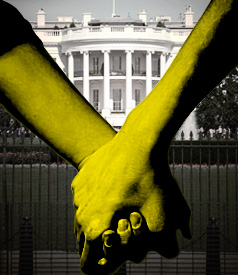
On Dec. 16 I will join Daniel Ellsberg, Medea Benjamin, Ray McGovern and several military veteran activists outside the White House to protest the futile and endless wars in Iraq and Afghanistan. Many of us will, after our rally in Lafayette Park, attempt to chain ourselves to the fence outside the White House. It is a pretty good bet we will all spend a night in jail. Hope, from now on, will look like this.

Hope is not trusting in the ultimate goodness of Barack Obama, who, like Herod of old, sold out his people. It is not having a positive attitude or pretending that happy thoughts and false optimism will make the world better. Hope is not about chanting packaged campaign slogans or trusting in the better nature of the Democratic Party. Hope does not mean that our protests will suddenly awaken the dead consciences, the atrophied souls, of the plutocrats running Halliburton, Goldman Sachs, ExxonMobil or the government.

Hope does not mean we will halt the firing in Afghanistan of the next Hellfire missile, whose explosive blast sucks the oxygen out of the air and leaves the dead, including children, scattered like limp rag dolls on the ground. Hope does not mean we will reform Wall Street swindlers and speculators, or halt the pillaging of our economy as we print $600 billion in new money with the desperation of all collapsing states. Hope does not mean that the nation’s ministers and rabbis, who know the words of the great Hebrew prophets, will leave their houses of worship to practice the religious beliefs they preach. Most clerics like fine, abstract words about justice and full collection plates, but know little of real hope.

Hope knows that unless we physically defy government control we are complicit in the violence of the state. All who resist keep hope alive. All who succumb to fear, despair and apathy become enemies of hope. They become, in their passivity, agents of injustice. If the enemies of hope are finally victorious, the poison of violence will become not only the language of power but the language of opposition. And those who resist with nonviolence are in times like these the thin line of defense between a civil society and its disintegration.

Hope has a cost. Hope is not comfortable or easy. Hope requires personal risk. Hope does not come with the right attitude. Hope is not about peace of mind. Hope is an action. Hope is doing something. The more futile, the more useless, the more irrelevant and incomprehensible an act of rebellion is, the vaster and the more potent hope becomes. Hope never makes sense. Hope is weak, unorganized and absurd. Hope, which is always nonviolent, exposes in its powerlessness the lies, fraud and coercion employed by the state. Hope does not believe in force. Hope knows that an injustice visited on our neighbor is an injustice visited on us all. Hope posits that people are drawn to the good by the good. This is the secret of hope’s power and it is why it can never finally be defeated. Hope demands for others what we demand for ourselves. Hope does not separate us from them. Hope sees in our enemy our own face.

Hope is not for the practical and the sophisticated, the cynics and the complacent, the defeated and the fearful. Hope is what the corporate state, which saturates our airwaves with lies, seeks to obliterate. Hope is what our corporate overlords are determined to crush. Be afraid, they tell us. Surrender your liberties to us so we can make the world safe from terror. Don’t resist. Embrace the alienation of our cheerful conformity. Buy our products. Without them you are worthless. Become our brands. Do not look up from your electronic hallucinations to think. No. Above all do not think. Obey.

W.H. Auden wrote:

Faces along the bar
Cling to their average day:
The lights must never go out,
The music must always play,
All the conventions conspire
To make this fort assume
The furniture of home;
Lest we should see where we are,
Lost in a haunted wood,
Children afraid of the night
Who have never been happy or good.

The powerful do not understand hope. Hope is not part of their vocabulary. They speak in the cold, dead words of national security, global markets, electoral strategy, staying on message, image and money. The powerful protect their own. They divide the world into the damned and the blessed, the patriots and the enemy, the rich and the poor. They insist that extinguishing lives in foreign wars or in our prison complexes is a form of human progress. They cannot see that the suffering of a child in Gaza or a child in the blighted pockets of Washington, D.C., diminishes and impoverishes us all. They are deaf, dumb and blind to hope. Those addicted to power, blinded by self-exaltation, cannot decipher the words of hope any more than most of us can decipher hieroglyphics. Hope to Wall Street bankers and politicians, to the masters of war and commerce, is not practical. It is gibberish. It means nothing.

I cannot promise you fine weather or an easy time. I cannot assure you that thousands will converge on Lafayette Park in solidarity. I cannot pretend that being handcuffed is pleasant. I cannot say that anyone in Congress or the White House, anyone in the boardrooms of the corporations that cannibalize our nation, will be moved by pity to act for the common good. I cannot tell you these wars will end or the hungry will be fed. I cannot say that justice will roll down like a mighty wave and restore our nation to sanity. But I can say this: If we resist and carry out acts, no matter how small, of open defiance, hope will not be extinguished. If all we accomplish is to assure a grieving mother in Baghdad or Afghanistan, a young man or woman crippled physically and emotionally by the hammer blows of war, that he or she is not alone, our resistance will be successful. Hope cannot be sustained if it cannot be seen.

Any act of rebellion, any physical defiance of those who make war, of those who perpetuate corporate greed and are responsible for state crimes, anything that seeks to draw the good to the good, nourishes our souls and holds out the possibility that we can touch and transform the souls of others. Hope affirms that which we must affirm. And every act that imparts hope is a victory in itself.

Also from Auden:

Defenseless under the night
Our world in stupor lies;
Yet, dotted everywhere,
Ironic points of light
Flash out wherever the Just
Exchange their messages:
May I, composed like them
Of Eros and of dust,
Beleaguered by the same
Negation and despair,
Show an affirming flame.


Chris Hedges is a senior fellow at The Nation Institute. His newest book is “Death of the Liberal Class.” More information on the Dec. 16 protest can be found at http://www.stopthesewars.org

Thursday, November 11, 2010

President Obama Must Take Full Responsibility for His Failures At Home and Abroad--NO MORE EXCUSES!

http://www.truth-out.org/mcclatchy-obama-renege-afghan-drawdown64998

All,

The ever escalating lies, ineptitude, opportunism, timidity, abdication, cowardice, and sheer bullshit by the now tottering Obama Administration is getting worse and more obvious by the day and the foul odor is frankly beginning to smell a whole lot like the heinous Bushwhacker regime. There is NO EXCUSE WHATSOEVER for this ongoing madness and this President and his administration is now 100% politically responsible for it at this point no matter what Obama says to the contrary. I'm also utterly sick and tired of all the endless emotional and intellectual apologias for him and his increasingly clueless and myopic policies by people who simply "feel sorry for the huge and unfair mess he has inherited from his predecessor." This by now empty, infantile, and self pitying sentiment won't cut it anymore. After all this ain't about him in the end, it's about US, and it's way past time that we fully recognize and come to serious grips with that fundamental fact...

Kofi


Report: Obama to Renege on Afghan Drawdown
Wednesday 10 November 2010
by: Robert Naiman, t r u t h o u t | News Analysis

Remember what Vice President Biden told Jonathan Alter in "The Promise"?

At the conclusion of an interview in his West Wing office, Biden was adamant. "In July of 2011 you're going to see a whole lot of people moving out. Bet on it," Biden said as he wheeled to leave the room, late for lunch with the president. He turned at the door and said once more, "Bet. On. It."

Let's hope for Alter's sake he didn't put any serious money down on Biden's wager. Because that "Promise" is starting to look pretty shaky.

McClatchy reports:

The Obama administration has decided to begin publicly walking away from what it once touted as key deadlines in the war in Afghanistan in an effort to de-emphasize President Barack Obama's pledge that he'd begin withdrawing U.S. forces in July 2011, administration and military officials have told McClatchy.

Why is this happening, according to McClatchy? Several reasons are cited:

"U.S. officials realized that conditions in Afghanistan were unlikely to allow a speedy withdrawal."

"During our assessments, we looked at if we continue to move forward at this pace, how long before we can fully transition to the Afghans? And we found that we cannot fully transition to the Afghans by July 2011," said one senior administration official.

On the face of it, this statement does not make sense. First of all, according to previous, repeated statements of US officials, including President Obama and Defense Secretary Gates, the date was not supposed to be conditions-based. The pace of the drawdown was supposed to be conditions based. So, if the McClatchy story is true, this is a big reversal of an Obama promise.

Second, the longstanding publicly stated policy that the Obama administration is, according to McClatchy, about to publicly walk away from, did not include a promise of a "speedy withdrawal." So, what these US officials are really telling McClatchy is not "we realized that conditions don't permit a speedy withdrawal," since these officials were never intending to carry out a "speedy withdrawal," but that according to them, conditions do not permit any meaningful withdrawal at all that starts in July 2011.

Third, it was never US policy to "fully transition to the Afghans" by July 2011; no human being on planet Earth, that I am aware of, ever stated or believed that that was going to happen. July 2011 was supposed to mark the beginning of the transition. So, this statement is like saying, "During our assessments, we realized that it is sometimes cold in parts of Alaska." Instead, what these officials are saying is: according to our assessments, we won't be able to transition to Afghan control by next summer to a sufficient degree to withdraw enough troops to plausibly call it a meaningful withdrawal.

What can we conclude from this?

First, the "surge" was a military failure. This should be openly acknowledged by everyone. Every US general and laptop bombardier pundit should have to write it on the blackboard 100 times: "The surge was a military failure."

But more importantly, the political policy in which the surge was embedded was a political failure. By coupling his capitulation to the military on the surge with his insistence on a date to begin troop withdrawals, we were told, Obama had politically outfoxed the military. Regardless of whether the surge succeeded or failed militarily, the troops would begin to come home anyway, and the military had signed off on that. If the McClatchy report is true, this was all hot air and rationalization. The surge failed militarily, and the conclusion being drawn is that the troops have to stay.

A second reason is cited:

Pakistanis had concluded wrongly that July 2011 would mark the beginning of the end of U.S. military operations in Afghanistan.

That perception, one Pentagon adviser said, has convinced Pakistan's military - which is key to preventing Taliban sympathizers from infiltrating Afghanistan - to continue to press for a political settlement instead of military action.

This is striking. Indeed, the Obama administration's announcement that US troops would begin withdrawing next summer has been widely credited with pushing forward efforts to achieve a political settlement. What is striking about this is that the Pentagon is explicitly saying that from the Pentagon's point of view, a political settlement must be prevented and, therefore, the timetable to begin withdrawal is bad because it was pushing forward prospects for a political settlement.

It's not shocking that Pentagon officials think this; it's shocking that they say it openly. It imitates Robert Mankoff 's recent New Yorker cartoon in which a general says:

"Well, I'm an optimist - I still think peace can be avoided."

A third reason is cited:

Last week's midterm elections also have eased pressure on the Obama administration to begin an early withdrawal. Earlier this year, some Democrats in Congress pressed to cut off funding for Afghanistan operations. With Republicans in control of the House of Representatives beginning in January, however, there'll be less push for a drawdown. The incoming House Armed Services chairman, Rep. Howard "Buck" McKeon, R-Calif., told Reuters last week that he opposed setting the date.

It is beyond dispute that Republican control of the House is a big setback for pressure to withdraw troops. But several things should be noted.

First, Representative McKeon did indeed tell Reuters that he opposed setting the date. But he also told Reuters that he saw the date as a done deal and wouldn't press to change it:

Reuters: But the actual deadline itself, you're not going to press for that to be changed?

McKeon: No. I think that's installed.

So, using Representative McKeon's statement to Reuters as an excuse to throw away the drawdown date is pretty weak.

Second, while leadership of the House and House committees is obviously a very big deal, the actual composition of the House with respect to opinions on the war in Afghanistan hasn't changed all that much. As I noted last week, 12 Democratic incumbents defeated last week were supporters of the McGovern Amendment which would have required the president to establish a timetable for military withdrawal from Afghanistan. 39 Democratic incumbents defeated last week voted against the McGovern Amendment. The overwhelming majority of the 153 Democrats in the House who wanted a timetable for withdrawal from Afghanistan are still in the House or were replaced by Democrats, joined by a new group of Republicans, some of whom - it's not clear yet how many - may be skeptics on the war.

Third, Democrats still control the Senate, and Armed Services Chair Senator Levin has been a strong supporter of the July 2011 date, which he has said is needed to put pressure on the Afghan government. Sen.-Elect Rand Paul recently stated that the Senate and the House need to debate the Afghanistan war, and that the arguments and authorization of force from ten years ago cannot justify US policy today. He has also said that military spending has to be on the table for cuts, and that the wars have to be part of that discussion.

Finally, there is a wild card. If you were going to draw up a list of five things that President Obama could do that would be likely to draw a primary challenge in 2012, throwing the Afghanistan drawdown in the trash would surely be on that list. From the point of view of the White House political people, that's a real political threat, even if they see Obama's renomination as a done deal: they don't want to see some Eugene McCarthy candidate take a third of the Democratic primary vote in New Hampshire or Iowa.

So, publicly walking away from the July 2011 drawdown is a "very big deal," and the White House political people should be screaming.

UPDATE: McClatchy has updated its original story, to include the following paragraph:

The White House vehemently denies that there is any change in policy. "The president has been crystal clear that we will begin drawing down troops in July of 2011. There is absolutely no change to that policy," said Tommy Vietor, a White House spokesman.

It's very good that the White House has vigorously responded to this story. It's very bad that "unnamed Administration officials" are allowed to publicly attack the president's "crystal clear" policy. If these "senior Administration officials" misrepresented the president, why can't the White House put a stop to "senior Administration officials" publicly attacking the resident's "crystal clear" policy?

Tuesday, October 5, 2010

"Obama's War" : Video Lecture by Tariq Ali on Afghanistan (Parts 1-4)--April 19, 2010


LONDON REVIEW OF BOOKS


http://www.lrb.co.uk/2010/04/19/tariq-ali/obamas-war

All,

Please click on the videolink (Parts 1-4) above to view and listen to Tariq Ali's very important lecture from April 2010 on the Afghanistan war and the highly dubious military role of the Obama administration in an obviously "unwinnable" war that even Vice President Joe Biden -- of all people!-- privately defines as a "Vietnam like disaster". After nine years of occupation (which makes it the longest declared war in American history-- [NOTE: The Vietnam war lasted over 10 years in duration but was never formally and officially declared or approved by Congress beforehand as an American war]-- the U.S. still finds itself deeply mired in a massive quagmire of a region that historically has roundly defeated every delusional and stupidly ambitious imperialist invader from Alexander the Great to the Soviet Union...Check it out...

Kofi


Tariq Ali’s new book, The Obama Syndrome, will be published by Verso in October.


Obama’s War
by Tariq Ali

During his presidential campaign, President Obama pledged more troops, ground intrusions and drone attacks to end the war in Afghanistan. This is a promise he has kept, but it won’t work. In this lecture Tariq Ali talks about why the war is unwinnable and can only lead to a bloody stalemate.

The eruption of Eyjafjallajökull prevented Tariq Ali from delivering this lecture at the School of Visual Arts in New York on 19 April as planned; it was instead broadcast from a studio in London.

The other events in this series are also available to watch online. J’accuse: Dreyfus in Our Time: a lecture by Jacqueline Rose; The Author in the Age of the Internet: a panel discussion featuring John Lanchester, Nicholas Spice, Colm Tóibín, Mary-Kay Wilmers and James Wood.


New Book by Political Journalist, Cultural Critic, Novelist, Historian, and Activist Tariq Ali on Obama & American Foreign Policy

Tariq Ali
Photo by Nina Subin


http://tariqali.org/archives/1640

Tariq Ali

http://tariqali.org/archives/category/books

The Obama Syndrome
AUGUST 25, 2010
Forthcoming from Verso, October 2010

A merciless dissection of Obama’s overseas escalation and domestic retreat

What has really changed since Bush left the White House? Very little, argues Ali in The Obama Syndrome, apart from the mood music. The hopes aroused during Obama’s election campaign have rapidly receded. Following the financial crisis, the “reform” president bailed out Wall Street without getting anything in return. With Democratic Party leaders and representatives bought by the lobbying system, the healthcare reform bill was quickly eviscerated, public education delivered to the market and the big banks rewarded with light-touch regulation. Abroad, the “war on terror” continues: torture on a daily basis in Bagram, Iraq indefinitely occupied, Israel permanently appeased, and more troops and drone attacks in Af-Pak than under Bush. Obama’s failures are paving the way for a Republican surge, while his own supporters become increasingly despondent.

Tariq Ali in The Obama Syndrome:

“In Cairo, at West Point, at Oslo, Obama has treated the world to one uplifting homily after another, each address larded with every euphemism that White House speechwriters can muster to describe America’s glowing mission in the world: ‘Our country has borne a special burden in global affairs’; ‘Our cause is just, our resolve unwavering.’ The model for this variant of imperial presidency is Woodrow Wilson—no less pious a Christian, whose every second word was peace, democracy or self-determination, while his armies invaded Mexico, occupied Haiti and attacked Russia. But cant still goes a long way to satisfy those who yearn for it …”

Please direct press inquiries to:
Clara Heyworth / clara@versobooks.com / 718-246-8160

View press release:
http://tariqali.org/wp-content/uploads/2010/07/ali_obama-syndrome_PR_1.pdf


Buy from Amazon.com / Amazon.co.uk:

http://www.amazon.com/Obama-Syndrome-Surrender-Home-Abroad/dp/1844674495/ref=sr_1_1?ie=UTF8&s=books&qid=1278090769&sr=8-1

Read / Watch Tariq Ali’s April 2010 lecture ‘Obama’s War’
:

http://tariqali.org/archives/1607

Tuesday, December 29, 2009

When Is Guantanamo Bay Prison Going To Be Closed Down?

http://www.nytimes.com/2009/12/23/us/politics/23gitmo.html?_r=1&th&emc=th

All,

This is sheer ineptitude on the part of the Obama Administration. Just ridiculous! The President is quickly turning into Jimmy Carter--another worldclass political bungler--right before our very eyes! There is no way under the sun that Obama can possibly excuse or defend not closing down Guantanamo after an entire year has passed and he continues to claim in public (as he did just two weeks ago in Oslo upon receiving the Nobel Peace Prize) that it is a "major priority" to have already closed it down (remember what the President said on inaugural day January 20, 2009?). Now everything is being set back to "at least" 2011. Just like the continuation of the endless wars in Iraq and Afghanistan as well as the many related issues of torture, secret warfare, and rendition of the previous criminal Bushwhacker administration, the Obama Administration has consistently shown an ominous tendency to lie and dissemble about its own actual goals and "priorities" with respect to American foreign policy. In any event Obama and his former Bush/Clinton team of hawkish military policy makers and advisors (Hillary, Jim Jones, Robert Gates) bear complete responsibility for the now ongoing criminality of the U.S. government in these matters and no amount of "moral" hand wringing or passing the buck to rightwing Republicans-- who like always oppose the very idea of closing down this heinous prison--can make up for this disaster...

Kofi


December 23, 2009

Plan to Move Guantánamo Detainees Faces New Delay
By CHARLIE SAVAGE
New York Times

WASHINGTON — Rebuffed this month by skeptical lawmakers when it sought finances to buy a prison in rural Illinois, the Obama administration is struggling to come up with the money to replace the Guantánamo Bay prison.

As a result, officials now believe that they are unlikely to close the prison at Guantánamo Bay, Cuba, and transfer its population of terrorism suspects until 2011 at the earliest — a far slower timeline for achieving one of President Obama’s signature national security policies than they had previously hinted.

While Mr. Obama has acknowledged that he would miss the Jan. 22 deadline for closing the prison that he set shortly after taking office, the administration appeared to take a major step forward last week when he directed subordinates to move “as expeditiously as possible” to acquire the Thomson Correctional Center, a nearly vacant maximum-security Illinois prison, and to retrofit it to receive Guantánamo detainees.

But in interviews this week, officials estimated that it could take 8 to 10 months to install new fencing, towers, cameras and other security upgrades before any transfers take place. Such construction cannot begin until the federal government buys the prison from the State of Illinois.

The federal Bureau of Prisons does not have enough money to pay Illinois for the center, which would cost about $150 million. Several weeks ago, the White House approached the House Appropriations Committee and floated the idea of adding about $200 million for the project to the military spending bill for the 2010 fiscal year, according to administration and Congressional officials.

But Democratic leaders refused to include the politically charged measure in the legislation. When lawmakers approved the bill on Dec. 19, it contained no financing for Thomson.

The administration will probably not have another opportunity until Congress takes up a supplemental appropriations bill for the Afghanistan war. Lawmakers are not likely to finish that bill until late March or April.

Moreover, the administration now says that the current focus for Thomson financing is the appropriations legislation for the 2011 fiscal year. Congress will not take that measure up until late 2010.

Frustrated by the difficulties in obtaining financing from Congress, administration officials had discussed invoking a little-known statute that would allow the president to declare a national emergency and then use military funds allocated for other construction projects to buy and retrofit the Illinois prison.

That statute, however, has never been used for a project quite like this one. Fearing that lawmakers would be angered by such a move and could respond by erasing the statute, the administration decided not to invoke it.

Matthew Waxman, who was assistant secretary of defense for detainee affairs in the Bush administration, said the Obama administration would need lawmakers’ support for its long-term post-Guantánamo plans. Invoking emergency powers to unilaterally buy Thomson, he said, would be “poking Congress in the eye in a way that would be very counterproductive.”

Still, it is not clear that Congress will be willing to approve money enabling the transfer of Guantánamo detainees to domestic soil — especially as the 2010 midterm election campaign heats up, with the likelihood that Republicans will pick up seats.

This year, Congress restricted the ability of the executive branch to transfer detainees into domestic prisons, a ban reiterated in the 2010 military appropriations bill.

The Thomson proposal enjoys strong support from Illinois Democrats, including Gov. Patrick J. Quinn and Senator Richard J. Durbin, who have hailed the idea as a means of creating jobs. More than 300 people turned out Tuesday in Sterling, Ill., for a hearing on the proposal, The Associated Press reported, and emotions ran high among people on each side of the proposal.

The White House has argued that closing Guantánamo would enhance national security by removing a symbol used by terrorist recruiters. It also said the closing would save taxpayers money because the Defense Department pays $150 million a year to operate the Guantánamo prison on the naval base there, while running the Illinois prison would cost $75 million.

Ben LaBolt, a White House spokesman, said Mr. Obama remained committed to closing the Guantánamo prison, adding, “We will continue to work with Congress to ensure that we secure the necessary funds to purchase and upgrade the Thomson prison, which will operate at a substantially lower cost to taxpayers, next year.”

But many Republicans oppose closing Guantánamo, arguing that housing the detainees on United States soil would create unnecessary security risks. Some crucial moderate Democrats are also skeptical.

Representative Ike Skelton of Missouri, the chairman of the House Armed Services Committee, is said to have privately expressed doubts to administration officials about the plan. Another member of that committee, Representative Loretta Sanchez, Democrat of California, also raised security and legal questions about the proposal.

“Particularly making something on U.S. soil an attraction for Al Qaeda and terrorists to go after — inciting them to attack something on U.S. soil — that’s a problem, and we need to think it through,” Ms. Sanchez said in an interview Tuesday.

In the Senate, Jim Webb, Democrat of Virginia, has argued that the problem with Guantánamo has been its lack of due process rights, not its physical location. He said recently that terrorism suspects “do not belong in our country, they do not belong in our courts, and they do not belong in our prisons.”

Mr. LaBolt pointed out that the detainee population was now smaller than it had been at any time since 2002, and that on other fronts in the effort to close Guantánamo, “substantial progress has been made in recent weeks.”

For example, Attorney General Eric H. Holder Jr. recently announced the first sets of civilian and military prosecutions for 10 detainees, and more such announcements are expected soon.

Last week, the United States transferred six detainees to Yemen in a trial program of repatriation to that country. About 91 of the roughly 200 detainees at Guantánamo are Yemeni; many are not considered “high value” suspects, but officials have been reluctant to repatriate them because of security conditions in Yemen.

Still, Congressional resistance to approving money for Thomson represents a steep hurdle toward dealing with the detainees who the administration has decided can neither be prosecuted nor safely transferred to the custody of other countries.

Indeed, Mr. Waxman said, the debate is certain to set off discussions on an issue that could drive away many civil-liberties-minded Democrats who have voiced initial support for Mr. Obama’s Thomson plan: the administration’s intention to imprison some detainees on United States soil without trials. “Some members of Congress may want to support rapid closure of Guantánamo but not to signal support for broad military detention powers,” Mr. Waxman said.


Copyright 2009 The New York Times Company

Friday, December 11, 2009

The Nobel Peace Prize, President Obama, and American Foreign Policy

President Obama and his wife, Michelle, before the Nobel dinner on Thursday in Oslo.


http://www.nytimes.com/2009/12/11/world/europe/11prexy.html?_r=1&nl=us&emc=politicsemailema1

http://www.nytimes.com/2009/12/11/world/europe/11prexy.text.html?ref=europe&pagewanted=all


All,

The patently false suggestion that the U.S. war in Afghanistan is a "just war" is not only rank philosophical sophistry on the President's part but is a frankly bizarre "defense" of America's actual foreign policy aims and objectives in a global conflict that goes back many decades prior to 9/11 and involves far more than merely defeating Al Queda or any other international terrorist network. It also strains credulity at the very least for Obama to assert that the United States involvement in war since WWII (the ONLY actual "just war" that this country has been involved in during the past century because it was part of a necessary global fight against fascism) constitutes a "humanitarian" or "morally justifiable" defense of human rights. The very notion that the heinous U.S. military interventions in Vietnam, Central America, and Iraq during the past 50 years and our lethal support of brutal, morally repugnant, and violently reprehensible dictators (Pinochet in Chile, Batista in Cuba, the Shah in Iran, and Saddam Hussein in Iraq among others) are demonstrations of the "moral and humanitarian use of force" in the world would be downright laughable if they weren't so incredibly tragic and destructive. In Hussein's case the ugly fact that he tried to violently step outside of his assigned subordinate role as one of America's 'client-state' proxies in the Middle East by engaging in his own regional brand of militaristic expansionism-- only to incur the wrath and fierce opposition of his former powerful global sponsor--simply reinforces this fundamental truth.

The fact that millions of innocent foreign civilians have been murdered by the U.S. military and such national security paramilitary institutions as the Central Intelligence Agency throughout the world easily exposes the lies, distortions, and evasions embedded in the dubious logic of the President's speech.

The fact that Obama also tried to vainly cover and defend his highly suspect argument by repeatedly invoking the honorable name of the late African American icon of nonviolent action against global war and imperialism, Dr. Martin Luther King, Jr., is not only brazen opportunism on the President's part but was particularly disturbing and alienating given the fact that in the recent past--most notably during the President's acceptance speech of the Democratic Party nomination on August 28, 2008--the 45th anniversary of the legendary 'I Have a Dream Speech' by Dr. King at the height of the Civil Rights Movement--Obama went out of his way to distance himself from King's memory by oddly refusing even to mention Dr. King's name (instead Obama referred to him obliquely as "the preacher from Georgia"). Further Obama has made a point of carefully avoiding making any direct statement of his own personal historical connection to King in public in the United States since he won the Democratic nomination. So it was very surprising and deeply unsettling to say the least to hear the President willfully distort King's actual philosophy and legacy via rhetorical condescension by stating that a "nonviolent movement could not have halted Hitler's armies." Of course we-- and surely Dr. King!--already knew that but Obama's implicitly patronizing tone in his speech about the tenets of "idealism vs, realism" gave the self-serving impression that his real world "pragmatism" was more useful and necessary than King's or anyone else's visionary "idealism" when it came to defending the "necessity" of war.

Despite the typically eloquent use of language that informs Obama's Nobel Peace Prize speech it is a highly misplaced and intellectually dishonest eloquence in defense of the indefensible and puts yet another Orwellian spin on the very idea of "peace" as just another useful instrument of war. If that's not disturbing enough one should consider the truly chilling news that the Machiavellian henchman and chief
Bushwhacker apparachik Karl Rove absolutely loved Obama's speech. So did Sarah Palin and Newt Gingrich.

Kofi


Accepting Peace Prize, Obama Evokes ‘Just War’

Doug Mills/The New York Times

President Obama accepted the Nobel Peace Prize during a ceremony in Oslo, Norway, on Thursday, with “deep gratitude and great humility,” conceding it could be seen as premature.

By JEFF ZELENY
Published: December 10, 2009
New York Times


OSLO — President Obama used his acceptance of the Nobel Peace Prize on Thursday to defend the idea that some wars were necessary and just, remind the world of the burden the United States had borne in the fight against oppression and appeal for greater international efforts for peace.

President Obama Gets Nobel Peace Prize

President Obama accepted the Nobel Peace Prize during a ceremony in Oslo, Norway, on Thursday, evoking 'just war' and conceding that it could be premature.

“We must begin by acknowledging the hard truth: we will not eradicate violent conflicts in our lifetimes,” Mr. Obama said, addressing the paradox of receiving an award for peace as commander in chief of a nation that is escalating the war in Afghanistan as it continues to fight in Iraq. “There will be times when nations — acting individually or in concert — will find the use of force not only necessary but morally justified.”

He delivered a mix of realism and idealism, implicitly criticizing both the Rev. Dr. Martin Luther King Jr. as naïve about a dangerous world and President George W. Bush as too quick to set aside fundamental American values in pursuit of security. And he embraced the concept of American exceptionalism, the idea that the United States has a special role as a defender of liberty, even as he promoted multilateralism.

In that way, he continued a pattern evident throughout his public career of favoring pragmatism over absolutes.

The address — delivered at once to a European audience that has grown skeptical about American power and to a domestic audience watching closely to see how he would handle the acceptance of an award that even he acknowledged he did not yet deserve — represented one of the broadest declarations of his foreign policy doctrine. He said that others deserved the award more, noting that his “accomplishments are slight,” but he accepted the prize with a strong endorsement of America’s place in the world.

“Whatever mistakes we have made, the plain fact is this,” Mr. Obama said. “The United States of America has helped underwrite global security for more than six decades with the blood of our citizens and the strength of our arms.”

The Nobel lecture, a 36-minute address that the president and his aides completed on an overnight flight from Washington, carried echoes of several American presidents, from Jimmy Carter to Mr. Bush, but Mr. Obama singled out one above all: John F. Kennedy.

Mr. Obama cited Mr. Kennedy’s focus on “not a sudden revolution in human nature but on a gradual evolution in human institutions.”

Mr. Obama called for more robust international sanctions against nations like Iran and North Korea that defy demands for them to curtail their nuclear programs.

Weeks after being criticized for not speaking out more publicly in defense of human rights while in China, he suggested that quiet diplomacy was sometimes the most productive path, even if it “lacks the satisfying purity of indignation.”

The ceremony was the focal point of a series of events celebrating Mr. Obama’s entry into the ranks of Nobel laureates. On Thursday night, the president and his wife, Michelle, appeared in a window of the Grand Hotel, waving to thousands of people below who had gathered for a torch-light parade.

Trumpets sounded when Mr. Obama walked down the long aisle of a soaring auditorium to deliver his address. He escorted his wife, who took her seat in the front row, before he assumed his position on the stage and faced the king and queen of Norway.

The Nobel chairman, Thorbjorn Jagland, opened the ceremony by explaining how the committee came to its decision two months ago. He said Mr. Obama’s leadership had been a “call to action for all of us.” As he invoked the story of Dr. King, the winner of the prize in 1964, he turned to Mr. Obama, saying, “Dr. King’s dream has come true.”

Mr. Obama pursed his lips and nodded gently as the audience applauded loudly. When he was presented his gold medal and Nobel diploma, he received a standing ovation that stretched for more than a minute. The crowd did not rise again until the conclusion of his remarks.

Mr. Obama’s speech was sober, with his remarks only sparingly interrupted by applause. He was applauded when he renewed his pledge to ban torture and close the prison at the American base at Guantánamo Bay, Cuba.

“We lose ourselves when we compromise the very ideals that we fight to defend,” Mr. Obama said. “And we honor those ideals by upholding them not when it is easy, but when it is hard.”

To a European audience of academics, diplomats and Nobel laureates, he said there was “a deep ambivalence about military action today,” which he said he suspected was rooted in “a reflexive suspicion of America.” But he offered a forceful defense of the United States, saying the lessons of history should ease those suspicions. And he urged his audience to envision a hopeful future.

“Let us reach for the world that ought to be,” he said, “that spark of the divine that still stirs within each of our souls.”

He did not dwell on the specifics of his announcement last week that he would send 30,000 more American troops to Afghanistan. But that decision, which attracted scores of peaceful demonstrators here, set the framework that Mr. Obama returned to again and again as he sought to explain his policy as an extension of the post-World War II system that contained the cold war.

“A decade into a new century, this old architecture is buckling under the weight of new threats,” Mr. Obama said. “The world may no longer shudder at the prospect of war between two nuclear superpowers, but proliferation may increase the risk of catastrophe. Terrorism has long been a tactic, but modern technology allows a few small men with outsize rage to murder innocents on a horrific scale.”

Mr. Obama, who is scheduled to stay in Oslo for about 26 hours, miffed some Norwegians by not participating in some of the traditional events surrounding the peace prize ceremony, including a luncheon and a concert.

Mr. Obama, sensitive to the criticism, explained the brevity of his visit. “I only wish that my family could stay longer in this wonderful country,” he told reporters, “but I still have a lot of work to do back in Washington, D.C., before the year is done.”

The president is scheduled to return to Washington on Friday.

Walter Gibbs contributed reporting.


December 11, 2009

TEXT

Obama’s Nobel Remarks

Following is the transcript of President Obama's speech at the Nobel Peace Prize ceremony in Oslo on Wednesday, as released by the White House:

Your Majesties, Your Royal Highnesses, distinguished members of the Norwegian Nobel Committee, citizens of America, and citizens of the world:

I receive this honor with deep gratitude and great humility. It is an award that speaks to our highest aspirations -- that for all the cruelty and hardship of our world, we are not mere prisoners of fate. Our actions matter, and can bend history in the direction of justice.

And yet I would be remiss if I did not acknowledge the considerable controversy that your generous decision has generated. (Laughter.) In part, this is because I am at the beginning, and not the end, of my labors on the world stage. Compared to some of the giants of history who've received this prize -- Schweitzer and King; Marshall and Mandela -- my accomplishments are slight. And then there are the men and women around the world who have been jailed and beaten in the pursuit of justice; those who toil in humanitarian organizations to relieve suffering; the unrecognized millions whose quiet acts of courage and compassion inspire even the most hardened cynics. I cannot argue with those who find these men and women -- some known, some obscure to all but those they help -- to be far more deserving of this honor than I.

But perhaps the most profound issue surrounding my receipt of this prize is the fact that I am the Commander-in-Chief of the military of a nation in the midst of two wars. One of these wars is winding down. The other is a conflict that America did not seek; one in which we are joined by 42 other countries -- including Norway -- in an effort to defend ourselves and all nations from further attacks.

Still, we are at war, and I'm responsible for the deployment of thousands of young Americans to battle in a distant land. Some will kill, and some will be killed. And so I come here with an acute sense of the costs of armed conflict -- filled with difficult questions about the relationship between war and peace, and our effort to replace one with the other.

Now these questions are not new. War, in one form or another, appeared with the first man. At the dawn of history, its morality was not questioned; it was simply a fact, like drought or disease -- the manner in which tribes and then civilizations sought power and settled their differences.

And over time, as codes of law sought to control violence within groups, so did philosophers and clerics and statesmen seek to regulate the destructive power of war. The concept of a "just war" emerged, suggesting that war is justified only when certain conditions were met: if it is waged as a last resort or in self-defense; if the force used is proportional; and if, whenever possible, civilians are spared from violence.

Of course, we know that for most of history, this concept of "just war" was rarely observed. The capacity of human beings to think up new ways to kill one another proved inexhaustible, as did our capacity to exempt from mercy those who look different or pray to a different God. Wars between armies gave way to wars between nations -- total wars in which the distinction between combatant and civilian became blurred. In the span of 30 years, such carnage would twice engulf this continent. And while it's hard to conceive of a cause more just than the defeat of the Third Reich and the Axis powers, World War II was a conflict in which the total number of civilians who died exceeded the number of soldiers who perished.

In the wake of such destruction, and with the advent of the nuclear age, it became clear to victor and vanquished alike that the world needed institutions to prevent another world war. And so, a quarter century after the United States Senate rejected the League of Nations -- an idea for which Woodrow Wilson received this prize -- America led the world in constructing an architecture to keep the peace: a Marshall Plan and a United Nations, mechanisms to govern the waging of war, treaties to protect human rights, prevent genocide, restrict the most dangerous weapons.

In many ways, these efforts succeeded. Yes, terrible wars have been fought, and atrocities committed. But there has been no Third World War. The Cold War ended with jubilant crowds dismantling a wall. Commerce has stitched much of the world together. Billions have been lifted from poverty. The ideals of liberty and self-determination, equality and the rule of law have haltingly advanced. We are the heirs of the fortitude and foresight of generations past, and it is a legacy for which my own country is rightfully proud.

And yet, a decade into a new century, this old architecture is buckling under the weight of new threats. The world may no longer shudder at the prospect of war between two nuclear superpowers, but proliferation may increase the risk of catastrophe. Terrorism has long been a tactic, but modern technology allows a few small men with outsized rage to murder innocents on a horrific scale.

Moreover, wars between nations have increasingly given way to wars within nations. The resurgence of ethnic or sectarian conflicts; the growth of secessionist movements, insurgencies, and failed states -- all these things have increasingly trapped civilians in unending chaos. In today's wars, many more civilians are killed than soldiers; the seeds of future conflict are sown, economies are wrecked, civil societies torn asunder, refugees amassed, children scarred.

I do not bring with me today a definitive solution to the problems of war. What I do know is that meeting these challenges will require the same vision, hard work, and persistence of those men and women who acted so boldly decades ago. And it will require us to think in new ways about the notions of just war and the imperatives of a just peace.

We must begin by acknowledging the hard truth: We will not eradicate violent conflict in our lifetimes. There will be times when nations -- acting individually or in concert -- will find the use of force not only necessary but morally justified.

I make this statement mindful of what Martin Luther King Jr. said in this same ceremony years ago: "Violence never brings permanent peace. It solves no social problem: it merely creates new and more complicated ones." As someone who stands here as a direct consequence of Dr. King's life work, I am living testimony to the moral force of non-violence. I know there's nothing weak -- nothing passive -- nothing naïve -- in the creed and lives of Gandhi and King.

But as a head of state sworn to protect and defend my nation, I cannot be guided by their examples alone. I face the world as it is, and cannot stand idle in the face of threats to the American people. For make no mistake: Evil does exist in the world. A non-violent movement could not have halted Hitler's armies. Negotiations cannot convince al Qaeda's leaders to lay down their arms. To say that force may sometimes be necessary is not a call to cynicism -- it is a recognition of history; the imperfections of man and the limits of reason.

I raise this point, I begin with this point because in many countries there is a deep ambivalence about military action today, no matter what the cause. And at times, this is joined by a reflexive suspicion of America, the world's sole military superpower.

But the world must remember that it was not simply international institutions -- not just treaties and declarations -- that brought stability to a post-World War II world. Whatever mistakes we have made, the plain fact is this: The United States of America has helped underwrite global security for more than six decades with the blood of our citizens and the strength of our arms. The service and sacrifice of our men and women in uniform has promoted peace and prosperity from Germany to Korea, and enabled democracy to take hold in places like the Balkans. We have borne this burden not because we seek to impose our will. We have done so out of enlightened self-interest -- because we seek a better future for our children and grandchildren, and we believe that their lives will be better if others' children and grandchildren can live in freedom and prosperity.

So yes, the instruments of war do have a role to play in preserving the peace. And yet this truth must coexist with another -- that no matter how justified, war promises human tragedy. The soldier's courage and sacrifice is full of glory, expressing devotion to country, to cause, to comrades in arms. But war itself is never glorious, and we must never trumpet it as such.

So part of our challenge is reconciling these two seemingly inreconcilable truths -- that war is sometimes necessary, and war at some level is an expression of human folly. Concretely, we must direct our effort to the task that President Kennedy called for long ago. "Let us focus," he said, "on a more practical, more attainable peace, based not on a sudden revolution in human nature but on a gradual evolution in human institutions." A gradual evolution of human institutions.

What might this evolution look like? What might these practical steps be?

To begin with, I believe that all nations -- strong and weak alike -- must adhere to standards that govern the use of force. I -- like any head of state -- reserve the right to act unilaterally if necessary to defend my nation. Nevertheless, I am convinced that adhering to standards, international standards, strengthens those who do, and isolates and weakens those who don't.

The world rallied around America after the 9/11 attacks, and continues to support our efforts in Afghanistan, because of the horror of those senseless attacks and the recognized principle of self-defense. Likewise, the world recognized the need to confront Saddam Hussein when he invaded Kuwait -- a consensus that sent a clear message to all about the cost of aggression.

Furthermore, America -- in fact, no nation -- can insist that others follow the rules of the road if we refuse to follow them ourselves. For when we don't, our actions appear arbitrary and undercut the legitimacy of future interventions, no matter how justified.

And this becomes particularly important when the purpose of military action extends beyond self-defense or the defense of one nation against an aggressor. More and more, we all confront difficult questions about how to prevent the slaughter of civilians by their own government, or to stop a civil war whose violence and suffering can engulf an entire region.

I believe that force can be justified on humanitarian grounds, as it was in the Balkans, or in other places that have been scarred by war. Inaction tears at our conscience and can lead to more costly intervention later. That's why all responsible nations must embrace the role that militaries with a clear mandate can play to keep the peace.

America's commitment to global security will never waver. But in a world in which threats are more diffuse, and missions more complex, America cannot act alone. America alone cannot secure the peace. This is true in Afghanistan. This is true in failed states like Somalia, where terrorism and piracy is joined by famine and human suffering. And sadly, it will continue to be true in unstable regions for years to come.

The leaders and soldiers of NATO countries, and other friends and allies, demonstrate this truth through the capacity and courage they've shown in Afghanistan. But in many countries, there is a disconnect between the efforts of those who serve and the ambivalence of the broader public. I understand why war is not popular, but I also know this: The belief that peace is desirable is rarely enough to achieve it. Peace requires responsibility. Peace entails sacrifice. That's why NATO continues to be indispensable. That's why we must strengthen U.N. and regional peacekeeping, and not leave the task to a few countries. That's why we honor those who return home from peacekeeping and training abroad to Oslo and Rome; to Ottawa and Sydney; to Dhaka and Kigali -- we honor them not as makers of war, but of wagers -- but as wagers of peace.

Let me make one final point about the use of force. Even as we make difficult decisions about going to war, we must also think clearly about how we fight it. The Nobel Committee recognized this truth in awarding its first prize for peace to Henry Dunant -- the founder of the Red Cross, and a driving force behind the Geneva Conventions.

Where force is necessary, we have a moral and strategic interest in binding ourselves to certain rules of conduct. And even as we confront a vicious adversary that abides by no rules, I believe the United States of America must remain a standard bearer in the conduct of war. That is what makes us different from those whom we fight. That is a source of our strength. That is why I prohibited torture. That is why I ordered the prison at Guantanamo Bay closed. And that is why I have reaffirmed America's commitment to abide by the Geneva Conventions. We lose ourselves when we compromise the very ideals that we fight to defend. (Applause.) And we honor -- we honor those ideals by upholding them not when it's easy, but when it is hard.

I have spoken at some length to the question that must weigh on our minds and our hearts as we choose to wage war. But let me now turn to our effort to avoid such tragic choices, and speak of three ways that we can build a just and lasting peace.

First, in dealing with those nations that break rules and laws, I believe that we must develop alternatives to violence that are tough enough to actually change behavior -- for if we want a lasting peace, then the words of the international community must mean something. Those regimes that break the rules must be held accountable. Sanctions must exact a real price. Intransigence must be met with increased pressure -- and such pressure exists only when the world stands together as one.

One urgent example is the effort to prevent the spread of nuclear weapons, and to seek a world without them. In the middle of the last century, nations agreed to be bound by a treaty whose bargain is clear: All will have access to peaceful nuclear power; those without nuclear weapons will forsake them; and those with nuclear weapons will work towards disarmament. I am committed to upholding this treaty. It is a centerpiece of my foreign policy. And I'm working with President Medvedev to reduce America and Russia's nuclear stockpiles.

But it is also incumbent upon all of us to insist that nations like Iran and North Korea do not game the system. Those who claim to respect international law cannot avert their eyes when those laws are flouted. Those who care for their own security cannot ignore the danger of an arms race in the Middle East or East Asia. Those who seek peace cannot stand idly by as nations arm themselves for nuclear war.

The same principle applies to those who violate international laws by brutalizing their own people. When there is genocide in Darfur, systematic rape in Congo, repression in Burma -- there must be consequences. Yes, there will be engagement; yes, there will be diplomacy -- but there must be consequences when those things fail. And the closer we stand together, the less likely we will be faced with the choice between armed intervention and complicity in oppression.

This brings me to a second point -- the nature of the peace that we seek. For peace is not merely the absence of visible conflict. Only a just peace based on the inherent rights and dignity of every individual can truly be lasting.

It was this insight that drove drafters of the Universal Declaration of Human Rights after the Second World War. In the wake of devastation, they recognized that if human rights are not protected, peace is a hollow promise.

And yet too often, these words are ignored. For some countries, the failure to uphold human rights is excused by the false suggestion that these are somehow Western principles, foreign to local cultures or stages of a nation's development. And within America, there has long been a tension between those who describe themselves as realists or idealists -- a tension that suggests a stark choice between the narrow pursuit of interests or an endless campaign to impose our values around the world.

I reject these choices. I believe that peace is unstable where citizens are denied the right to speak freely or worship as they please; choose their own leaders or assemble without fear. Pent-up grievances fester, and the suppression of tribal and religious identity can lead to violence. We also know that the opposite is true. Only when Europe became free did it finally find peace. America has never fought a war against a democracy, and our closest friends are governments that protect the rights of their citizens. No matter how callously defined, neither America's interests -- nor the world's -- are served by the denial of human aspirations.

So even as we respect the unique culture and traditions of different countries, America will always be a voice for those aspirations that are universal. We will bear witness to the quiet dignity of reformers like Aung Sang Suu Kyi; to the bravery of Zimbabweans who cast their ballots in the face of beatings; to the hundreds of thousands who have marched silently through the streets of Iran. It is telling that the leaders of these governments fear the aspirations of their own people more than the power of any other nation. And it is the responsibility of all free people and free nations to make clear that these movements -- these movements of hope and history -- they have us on their side.

Let me also say this: The promotion of human rights cannot be about exhortation alone. At times, it must be coupled with painstaking diplomacy. I know that engagement with repressive regimes lacks the satisfying purity of indignation. But I also know that sanctions without outreach -- condemnation without discussion -- can carry forward only a crippling status quo. No repressive regime can move down a new path unless it has the choice of an open door.

In light of the Cultural Revolution's horrors, Nixon's meeting with Mao appeared inexcusable -- and yet it surely helped set China on a path where millions of its citizens have been lifted from poverty and connected to open societies. Pope John Paul's engagement with Poland created space not just for the Catholic Church, but for labor leaders like Lech Walesa. Ronald Reagan's efforts on arms control and embrace of perestroika not only improved relations with the Soviet Union, but empowered dissidents throughout Eastern Europe. There's no simple formula here. But we must try as best we can to balance isolation and engagement, pressure and incentives, so that human rights and dignity are advanced over time.

Third, a just peace includes not only civil and political rights -- it must encompass economic security and opportunity. For true peace is not just freedom from fear, but freedom from want.

It is undoubtedly true that development rarely takes root without security; it is also true that security does not exist where human beings do not have access to enough food, or clean water, or the medicine and shelter they need to survive. It does not exist where children can't aspire to a decent education or a job that supports a family. The absence of hope can rot a society from within.

And that's why helping farmers feed their own people -- or nations educate their children and care for the sick -- is not mere charity. It's also why the world must come together to confront climate change. There is little scientific dispute that if we do nothing, we will face more drought, more famine, more mass displacement -- all of which will fuel more conflict for decades. For this reason, it is not merely scientists and environmental activists who call for swift and forceful action -- it's military leaders in my own country and others who understand our common security hangs in the balance.

Agreements among nations. Strong institutions. Support for human rights. Investments in development. All these are vital ingredients in bringing about the evolution that President Kennedy spoke about. And yet, I do not believe that we will have the will, the determination, the staying power, to complete this work without something more -- and that's the continued expansion of our moral imagination; an insistence that there's something irreducible that we all share.

As the world grows smaller, you might think it would be easier for human beings to recognize how similar we are; to understand that we're all basically seeking the same things; that we all hope for the chance to live out our lives with some measure of happiness and fulfillment for ourselves and our families.

And yet somehow, given the dizzying pace of globalization, the cultural leveling of modernity, it perhaps comes as no surprise that people fear the loss of what they cherish in their particular identities -- their race, their tribe, and perhaps most powerfully their religion. In some places, this fear has led to conflict. At times, it even feels like we're moving backwards. We see it in the Middle East, as the conflict between Arabs and Jews seems to harden. We see it in nations that are torn asunder by tribal lines.

And most dangerously, we see it in the way that religion is used to justify the murder of innocents by those who have distorted and defiled the great religion of Islam, and who attacked my country from Afghanistan. These extremists are not the first to kill in the name of God; the cruelties of the Crusades are amply recorded. But they remind us that no Holy War can ever be a just war. For if you truly believe that you are carrying out divine will, then there is no need for restraint -- no need to spare the pregnant mother, or the medic, or the Red Cross worker, or even a person of one's own faith. Such a warped view of religion is not just incompatible with the concept of peace, but I believe it's incompatible with the very purpose of faith -- for the one rule that lies at the heart of every major religion is that we do unto others as we would have them do unto us.

Adhering to this law of love has always been the core struggle of human nature. For we are fallible. We make mistakes, and fall victim to the temptations of pride, and power, and sometimes evil. Even those of us with the best of intentions will at times fail to right the wrongs before us.

But we do not have to think that human nature is perfect for us to still believe that the human condition can be perfected. We do not have to live in an idealized world to still reach for those ideals that will make it a better place. The non-violence practiced by men like Gandhi and King may not have been practical or possible in every circumstance, but the love that they preached -- their fundamental faith in human progress -- that must always be the North Star that guides us on our journey.

For if we lose that faith -- if we dismiss it as silly or naïve; if we divorce it from the decisions that we make on issues of war and peace -- then we lose what's best about humanity. We lose our sense of possibility. We lose our moral compass.

Like generations have before us, we must reject that future. As Dr. King said at this occasion so many years ago, "I refuse to accept despair as the final response to the ambiguities of history. I refuse to accept the idea that the 'isness' of man's present condition makes him morally incapable of reaching up for the eternal 'oughtness' that forever confronts him."

Let us reach for the world that ought to be -- that spark of the divine that still stirs within each of our souls. (Applause.)

Somewhere today, in the here and now, in the world as it is, a soldier sees he's outgunned, but stands firm to keep the peace. Somewhere today, in this world, a young protestor awaits the brutality of her government, but has the courage to march on. Somewhere today, a mother facing punishing poverty still takes the time to teach her child, scrapes together what few coins she has to send that child to school -- because she believes that a cruel world still has a place for that child's dreams.

Let us live by their example. We can acknowledge that oppression will always be with us, and still strive for justice. We can admit the intractability of deprivation, and still strive for dignity. Clear-eyed, we can understand that there will be war, and still strive for peace. We can do that -- for that is the story of human progress; that's the hope of all the world; and at this moment of challenge, that must be our work here on Earth.

Thank you very much. (Applause.)


Copyright 2009 The New York Times Company