Showing posts with label Blues tradition. Show all posts

Saturday, May 16, 2015

The Inspiring Life, Art, and Legacy of B.B. King: 1925-2015

All,

A REAL ORIGINAL ARTIST HAS LEFT THE BUILDING. What a GIANT Mr. King was, is, and will always be. He brought a lot of joy, pride, dignity, and honor via his indelible and always captivating art to not only black folks but the entire world. Thank you forever Mr. King. Your tremendous legacy and all that it stands for and embodies will never die...May your enormously generous and profound spirit rest in eternal peace...

Kofi

 
B. B. King, Defining Bluesman for Generations, Dies at
89 Mr. King’s world-weary voice and wailing guitar lifted him from the cotton fields of Mississippi to a global stage and the apex of American blues.


http://www.nytimes.com/…/b-b-king-blues-singer-dies-at-89.h…


Music

B. B. King, Defining Bluesman for Generations, Dies at 89
By TIM WEINER
MAY 15, 2015
New York Times

 
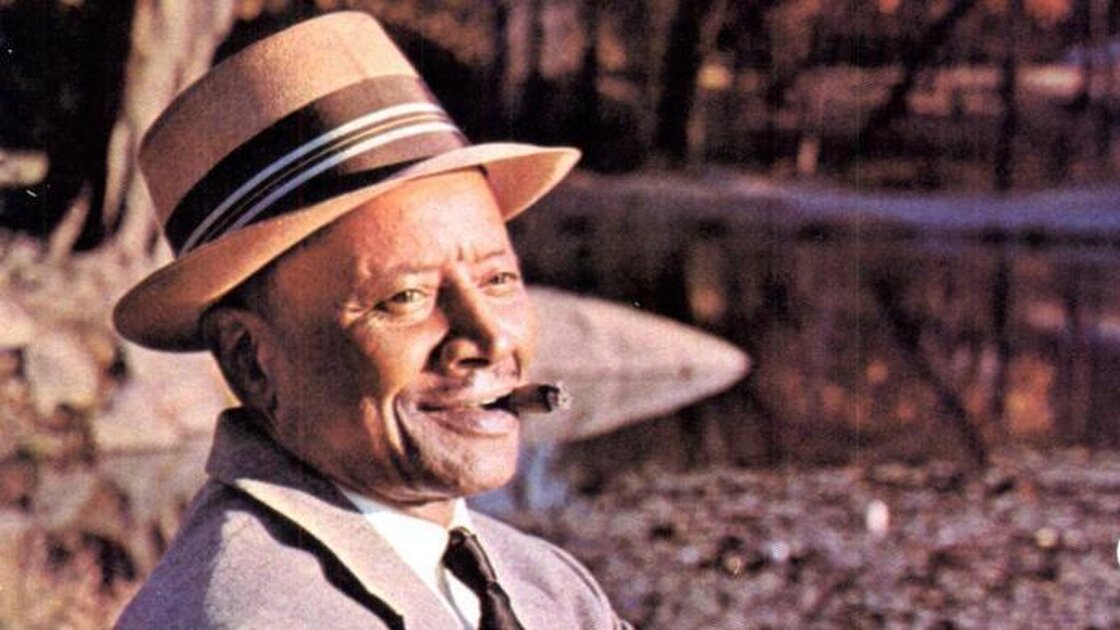
B. B. King, whose world-weary voice and wailing guitar lifted him from the cotton fields of Mississippi to a global stage and the apex of American blues, died Thursday in Las Vegas. He was 89.

It was reported on Mr. King’s website that he died in his sleep.

Mr. King married country blues to big-city rhythms and created a sound instantly recognizable to millions: a stinging guitar with a shimmering vibrato, notes that coiled and leapt like an animal, and a voice that groaned and bent with the weight of lust, longing and lost love.

“I wanted to connect my guitar to human emotions,” Mr. King said in his autobiography, “Blues All Around Me” (1996), written with David Ritz.

Related Coverage

 
Artists Respond to B. B. King’s Death on Social Media
MAY 15, 2015
 
Music Review: A Patriarch Holds Court at His Own Party (Aug. 9, 2007)
 
B. B. King Blues Festival: Along with Al Green, B. B. King performed at a one-night show at the WaMu Theater at Madison Square  Garden on Tuesday night.

In performances, his singing and his solos flowed into each other as he wrung notes from the neck of his guitar, vibrating his hand as if it were wounded, his face a mask of suffering. Many of the songs he sang — like his biggest hit, “The Thrill Is Gone” (“I’ll still live on/But so lonely I’ll be”) — were poems of pain and perseverance.

The music historian Peter Guralnick once noted that Mr. King helped expand the audience for the blues through “the urbanity of his playing,  the absorption of a multiplicity of influences, not simply from the blues, along with a graciousness of manner and willingness to adapt to new audiences and give them something they were able to respond to.”

B. B. stood for Blues Boy, a name he took with his first taste of fame in the 1940s. His peers were bluesmen like Muddy Waters and Howlin’  Wolf, whose nicknames fit their hard-bitten lives. But he was born a King, albeit in a sharecropper’s shack surrounded by dirt-poor laborers and wealthy landowners.

Mr. King went out on the road and never came back after one of his first recordings reached the top of the rhythm-and-blues charts in 1951. He began in juke joints, country dance halls and ghetto nightclubs, playing 342 one-night stands in 1956 and 200 to 300 shows a year for a half-century thereafter, rising to concert halls, casino main stages and international acclaim.

He was embraced by rock ’n’ roll fans of the 1960s and ’70s, who remained loyal as they grew older together. His playing influenced many of the most successful rock guitarists of the era, including Eric Clapton and Jimi Hendrix.

Mr. King considered a 1968 performance at the Fillmore West, the San Francisco rock palace, to have been the moment of his commercial breakthrough, he told a public-television interviewer in 2003. A few years earlier, he recalled, an M.C. in an elegant Chicago club had introduced him thus: “O.K., folks, time to pull out your chitlins and your collard greens, your pigs’ feet and your watermelons, because here is B. B. King.” It had infuriated him.

When he saw “long-haired white people” lining up outside the Fillmore, he said, he told his road manager, “I think they booked us in the wrong place.” Then the promoter Bill Graham introduced him to the sold-out crowd: “Ladies and gentlemen, I bring you the chairman of the board, B. B. King.”

“Everybody stood up, and I cried,” Mr. King said. “That was the beginning of it.”

By his 80th birthday he was a millionaire many times over. He owned a mansion in Las Vegas, a closet full of embroidered tuxedoes and smoking jackets, a chain of nightclubs bearing his name (including a popular room on West 42nd Street in Manhattan) and the personal and professional satisfaction of having endured.

Through it all he remained with the great love of his life, his guitar. He told the tale a thousand times: He was playing a dance hall in Twist, Ark., in the early 1950s when two men got into a fight and knocked over a kerosene stove. Mr. King fled the blaze — and then remembered his $30 guitar. He ran into the burning building to rescue it.

He learned thereafter that the fight had been about a woman named Lucille. For the rest of his life, Mr. King addressed his guitars — big Gibsons, curved like a woman’s hips — as Lucille.
 
He married twice, unsuccessfully, and was legally single from 1966 onward; by his own account he fathered 15 children with 15 women. But a Lucille was always at his side.

Riley B. King (the middle initial apparently did not stand for anything) was born on Sept. 16, 1925, to Albert and Nora Ella King, both sharecroppers, in Berclair, a Mississippi hamlet outside the small town of Itta Bena. His memories of the Depression included the sound of sanctified gospel music, the scratch of 78-r.p.m. blues records, the sweat of dawn-to-dusk work and the sight of a black man lynched by a white mob.

By early 1940 Mr. King’s mother was dead and his father was gone. He was 14 and on his own, “sharecropping an acre of cotton, living on a borrowed allowance of $2.50 a month,” wrote Dick Waterman, a blues scholar. “When the crop was harvested, Riley ended his first year of independence owing his landlord $7.54.”

In November 1941 came a revelation: “King Biscuit Time” went on the air, broadcasting on KFFA, a radio station in Helena, Ark. It was the first radio show to feature the Mississippi Delta blues, and young Riley King heard it on his lunch break at the plantation. A largely self-taught guitarist, he now knew what he wanted to be when he grew up: a musician on the air.

The King Biscuit show featured Rice Miller, a primeval bluesman and one of two performers who worked under the name Sonny Boy Williamson. After serving in the Army and marrying his first wife, Martha Denton, Mr. King, then 22, went to seek him out in Memphis, looking for work. Memphis and its musical hub, Beale Street, lay 130 miles north of his birthplace, and it looked like a world capital to him.

Mr. Miller had two performances booked that night, one in Memphis and one in Mississippi. He handed the lower-paying nightclub job to Mr. King. It paid $12.50.

Mr. King was making about $5 a day on the plantation. He never returned to his tractor.

He was a hit, and quickly became a popular disc jockey playing the blues on a Memphis radio station, WDIA. “Before Memphis,” he wrote in his autobiography, “I never even owned a record player. Now I was sitting in a room with a thousand records and the ability to play them whenever I wanted. I was the kid in the candy store, able to eat it all. I gorged myself.”

Memphis had heard five decades of the blues: country sounds from the Delta, barrelhouse boogie-woogie, jumps and shuffles and gospel shouts. He made it all his own. From records he absorbed the big-band sounds of Count Basie, the rollicking jump blues of Louis Jordan, the electric-guitar styles of the jazzman Charlie Christian and the bluesman T-Bone Walker.
 
On the air in Memphis, Mr. King was nicknamed the Beale Street Blues Boy. That became Blues Boy, which became B. B. In December 1951, two years after arriving in Memphis, Mr. King released a single, “Three O’Clock Blues,” which reached No. 1 on the rhythm-and-blues charts and stayed there for 15 weeks.

He began a tour of the biggest stages a bluesman could play: the Apollo Theater in Harlem, the Howard Theater in Washington, the Royal Theater in Baltimore. By the time his wife divorced him after eight years, he was playing 275 one-night stands a year on the so-called chitlin’ circuit.

There were hard times when the blues fell out of fashion with young black audiences in the early 1960s. Mr. King never forgot being booed at the Royal by teenagers who cheered the sweeter sounds of Sam Cooke.

“They didn’t know about the blues,” he said 40 years after the fact. “They had been taught that the blues was the bottom of the totem pole, done by slaves, and they didn’t want to think along those lines.”

Mr. King’s second marriage, to Sue Hall, also lasted eight years, ending in divorce in 1966. He responded in 1969 with his best-known recording, “The Thrill Is Gone,” a minor-key blues about having loved and lost. It was co-written and originally recorded in 1951 by another blues singer, Roy Hawkins, but Mr. King made it his own.

The success of “The Thrill Is Gone” coincided with a surge in the popularity of the blues with a young white audience. Mr. King began playing folk festivals and college auditoriums, rock shows and resort clubs, and appearing on “The Tonight Show.”

Though he never had another hit that big, he had more than four decades of the road before him. He eventually played the world — Russia and China as well as Europe and Japan. His schedule around his 81st birthday, in September 2006, included nine cities over two weeks in Denmark, Belgium, the Netherlands, Germany, France and Luxembourg. Despite health problems, he maintained a busy touring schedule until 2014.

In addition to winning more than a dozen Grammy Awards (including a lifetime achievement award), having a star on Hollywood Boulevard and being inducted in both the Rock and Roll and Blues Halls of Fame, Mr. King was among the recipients of the Kennedy Center Honors in 1995 and was given the Presidential Medal of Freedom in 2006, awards rarely associated with the blues. In 1999, in a public conversation with William Ferris, chairman of the National Endowment for the Humanities, Mr. King recounted how he came to sing the blues.

“Growing up on the plantation there in Mississippi, I would work Monday through Saturday noon,” he said. “I’d go to town on Saturday afternoons, sit on the street corner, and I’d sing and play.

“I’d have me a hat or box or something in front of me. People that would request a gospel song would always be very polite to me, and they’d say: ‘Son, you’re mighty good. Keep it up. You’re going to be great one day.’ But they never put anything in the hat.

“But people that would ask me to sing a blues song would always tip me and maybe give me a beer. They always would do something of that kind. Sometimes I’d make 50 or 60 dollars one Saturday afternoon. Now you know why I’m a blues singer.”


http://www.nytimes.com/…/bb-king-bluesman-of-distinction.ht…

B.B. King, Bluesman of Distinction:


All,

Don't pay too much attention to the silly, reductive, and predictably shallow editorial remarks that Jon Pareles makes in the following video clip about what blues artists in his ill-informed opinion were "scary" and who were not. The great B.B. King--like the rest of us who deeply love and cherish our truly great and enduring artists-- deeply loved and respected his fellow black geniuses and blues icons like Howlin' Wolf and Muddy Waters, and knew all too well that both their extraordinary art and their rich humanity were far beyond any clueless middlebrow critic's corny notions about them or their adoring and always supportive GLOBAL audiences...Unlike Pareles we who love and respect the music and the musicians who make it NEVER fear our artists or what they have to offer either on or off the bandstand...HOLLA!

Kofi


B.B. King performs "The Thrill Is Gone" in live televised performance introduced by Kenny Rogers on November 25, 1971


https://www.youtube.com/watch?v=pC4DDkye8FU


http://www.nytimes.com/…/bb-king-bluesman-of-distinction.ht…

B.B. King, Bluesman of Distinction:


Video - Embed Player" src="http://graphics8.nytimes.com/bcvideo/1.0/iframe/embed.html…


Jon Pareles reflects on the rawness and finesse of B.B. King, whose musical style made him approachable to audiences and propelled him to fame. By Natalia V. Osipova May 15, 2015. Photo by Doug Mills/The New York Times.

Tuesday, June 24, 2014

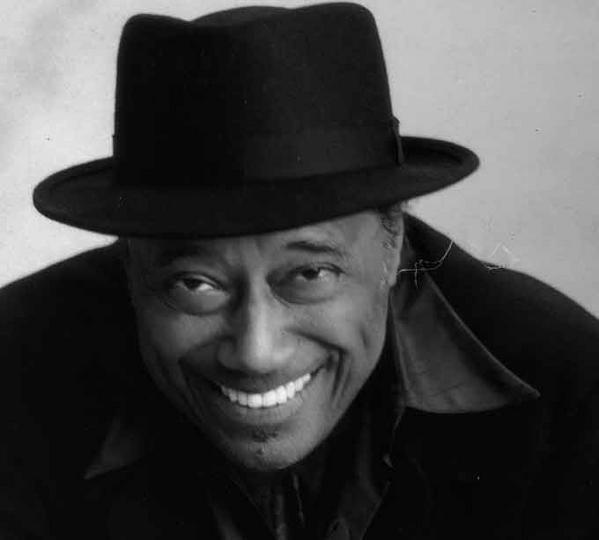
Horace Silver, 1928-2014: Legendary Pianist, Composer, and Ensemble Leader


HORACE SILVER
(b. September 2, 1928--d. June 18, 2014)
All,
Since January 9, 2014 we have lost the following GIANTS among us: Amiri Baraka,  Mabel Williams, Maya Angelou, Fred Ho, Chokwe Lumumba, Vincent Harding, Yuri Kochiyama, Ruby Dee, and now Horace Silver.  While these justly revered figures have peacefully made their respective transitions and we  are  now fortunate enough to fully embrace their inspiring  ancestral force in our lives,  it is indeed sobering and  truly humbling to remember and acknowledge just how profound and valuable the quality and depth of their  lives and the  creative legacies they have left have been and will continue to be for all of us. For they taught us what it really means to change and transform the world through the sheer force of one's personal contribution and courageous example in both Art and Life and for that we are and must remain eternally grateful.  Thank you Horace for your incredible music and the extraordinary lifeforce that it embodies and represents.  Rest in Peace and Power brother...
Kofi 

http://www.nytimes.com/2014/06/19/arts/music/horace-silver-85-master-of-earthy-jazz-is-dead.html?_r=0 MUSIC
 

Horace Silver, 85, Master of Earthy Jazz, Is Dead 
By Peter Keepnews
JUNE 18, 2014
New York Times


Horace Silver in 1997
Credit Alan Nahigian

Horace Silver, a pianist, composer and bandleader who was one of the most popular and influential jazz musicians of the 1950s and ’60s, died on Wednesday at his home in New Rochelle, N.Y. He was 85.

His death was announced by Blue Note Records, the company for which he recorded from 1952 to 1979.

After a high-profile apprenticeship with some of the biggest names in jazz, Mr. Silver began leading his own group in the mid-1950s and quickly became a big name himself, celebrated for his clever compositions and his infectious, bluesy playing. At a time when the refined, quiet and, to some, bloodless style known as cool jazz was all the rage, he was hailed as a leader of the back-to-basics movement that came to be called hard bop.

Hard bop and cool jazz shared a pedigree: They were both variations on bebop, the challenging, harmonically intricate music that changed the face of jazz in the 1940s. But hard bop was simpler and more rhythmically driven, with more emphasis on jazz’s blues and gospel roots. The jazz press tended to portray the adherents of cool jazz (most of them West Coast-based and white) and hard bop (most of them East Coast-based and black) as warring factions. But Mr. Silver made an unlikely warrior.

“I personally do not believe in politics, hatred or anger in my musical composition,” he wrote in the liner notes to his album “Serenade to a Soul Sister” in 1968. “Musical composition should bring happiness and joy to people and make them forget their troubles.”

And Mr. Silver’s music was never as one-dimensional as it was sometimes portrayed as being. In an interview early in his career he said he was aiming for “that old-time gutbucket barroom feeling with just a taste of the backbeat.” That approach was reflected in the titles he gave to songs, like “Sister Sadie,” “Filthy McNasty” and “The Preacher,” all of which became jazz standards. But his output also included gently melodic numbers like “Peace” and “Melancholy Mood” and Latin-inflected tunes like “Señor Blues.” “Song for My Father,” probably his best-known composition, blended elements of bossa nova and the Afro-Portuguese music of the Cape Verde islands, where his father was born.

His piano playing, like his compositions, was not that easily characterized. Deftly improvising ingenious figures with his right hand while punching out rumbling bass lines with his left, he managed to evoke boogie-woogie pianists like Meade Lux Lewis and beboppers like Bud Powell simultaneously. Unlike many bebop pianists, however, Mr. Silver emphasized melodic simplicity over harmonic complexity; his improvisations, while sophisticated, were never so intricate as to be inaccessible.

Horace Ward Martin Tavares Silver was born on Sept. 2, 1928, in Norwalk, Conn. His father, who was born John Silva but changed the family name to the more American-sounding Silver after immigrating to the United States, worked in a rubber factory. His mother, Gertrude, was a maid and sang in a church choir.


Although he studied piano as a child, Mr. Silver began his professional career as a saxophonist. But he had returned to the piano, and was becoming well known as a jazz pianist in Connecticut, by the time the saxophonist Stan Getz — soon to be celebrated as one of the leading lights of the cool school — heard and hired him in 1950.

“I had the house rhythm section at a club called the Sundown in Hartford,” Mr. Silver told The New York Times in 1981. “Stan Getz came up and played with us. He said he was going to call us, but we didn’t take him seriously. But a couple of weeks later he called and said he wanted the whole trio to join him.”

Mr. Silver worked briefly with Getz before moving to New York in 1951. He was soon in demand as an accompanist, working with leading jazz musicians like the saxophonists Coleman Hawkins and Lester Young. In 1953, Mr. Silver and the drummer Art Blakey formed a cooperative group, the Jazz Messengers, whose aggressive style helped define hard bop and whose lineup of trumpet, tenor saxophone, piano, bass and drums became the standard hard-bop instrumentation.

After two and a half years, during which Mr. Silver began his long and prolific association with Blue Note, he left the Jazz Messengers, which carried on with Blakey as the sole leader, and formed his own quintet. It became a showcase for his compositions.

Another album by Mr. Silver is “Further Explorations by the Horace Silver Quintet.”  Credit:  Blue Note Records


Those compositions, beginning with “The Preacher” in 1955 — which his producer, Alfred Lion of Blue Note, had tried to discourage him from recording because he considered it too simplistic — captured the ears of a wide audience. Many were released as singles and garnered significant jukebox play. By the early ’60s Mr. Silver’s quintet was one of the most popular nightclub and concert attractions in jazz, and an inspiration for countless other bandleaders.

Like Blakey, Miles Davis (with whom he recorded) and a few others, Mr. Silver was known for discovering and nurturing young talent, including the saxophonists Hank Mobley, Joe Henderson and Michael Brecker; the trumpeters Art Farmer, Woody Shaw, Tom Harrell and Dave Douglas; and the drummers Louis Hayes and Billy Cobham. His longest-lived ensemble, which lasted about five years in the late 1950s and early ’60s, featured Blue Mitchell on trumpet and Junior Cook on tenor saxophone.

As interest in jazz declined in the ’70s, Mr. Silver disbanded his quintet and began concentrating on writing lyrics as well as music, notably on a three-album series called “The United States of Mind,” his first album to feature vocalists extensively. He later resumed touring, but only for a few months each year, essentially assembling a new group each time he went on the road.

“I’m shooting for longevity,” he explained. “The road is hard on your body. I’m trying to get it all over with in four months and then recoup.” He said he also wanted to spend more time with his son, Gregory, who survives him.

In 1981, Mr. Silver formed his own label, Silveto. His recordings for that label featured vocalists and were largely devoted to what he called “self-help holistic metaphysical music” — life lessons in song with titles like “Reaching Our Goals in Life” and “Don’t Dwell on Your Problems” that left critics for the most part unimpressed.


Jon Pareles of The Times wrote in 1986 that Mr. Silver’s “naïvely mystical lyrics” made his new compositions sound like “near-miss pop songs.” On later albums for Columbia, Impulse and Verve, Mr. Silver returned to a primarily instrumental approach.

Mr. Silver was named a National Endowment for the Arts Jazz Master in 1995 and received a President’s Merit Award from the Recording Academy in 2005.

Many of his tunes became staples of the jazz repertoire — a development, he said, that surprised him. “When I wrote them,” he said in a 2003 interview for the website All About Jazz, “I would say to myself that I hope these at least withstand the test of time. I hope they don’t sound old in 10 years or something.”

Rather than sounding dated, his compositions continued to be widely performed and recorded well into the 21st century. And while he acknowledged that “occasionally I hear an interpretation of one of my tunes that I say that they sure messed that one up,” he admitted, “For the most part I enjoy all of it.”


FROM THE PANOPTICON REVIEW ARCHIVES

(Originally posted on September 2, 2013):

Monday, September 2, 2013

HAPPY 85th BIRTHDAY TO THE GREAT HORACE SILVER, LEGENDARY PIANIST AND COMPOSER

All,

The legendary pianist and composer Horace Silver (b. September 2, 1928), one of the seminal and crucial creative links between the black modernist musical styles known popularly as "bebop" and "hardbop" throughout the 1950s, '60s, '70s and beyond as well as one of the masters of developing a fresh and innovative synthesis of these dynamic post 1945 styles with black vernacular traditions in blues, funk, and gospel musics which became a very popular genre known widely as "Soul Jazz" which were represented by such major groups of the period as the original 'Jazz Messengers' an ensemble which Silver cofounded with the famed drummer Art Blakey in 1954 as well as various bands led by such important musicians and composers as Cannonball and Nat Adderley, the electrifying Clifford Brown-Max Roach Quintet, and many different trios, quartets, and larger ensembles led by a large and prominent number of pianists, organists, drummers, trumpet players, and saxophonists of so-called Modern Jazz in the elctrifying 1945-1980 era. What follows is a heartfelt tribute to one of the most creatively lyrical, soulful, and consistently compelling musicians and composers in post WW2 American music on his 85th birthday. ENJOY...

Kofi


HORACE SILVER AT THE PIANO IN 1968:
 

 MUSIC BY PIANIST/COMPOSER HORACE SILVER

"Song For My Father" (1964)


Horace Silver (born September 2, 1928), born Horace Ward Martin Tavares Silva in Norwalk, Connecticut, is an American jazz pianist. Silver is known for his distinctive humorous and funky playing style and for his pioneering compositional contributions to hard bop. Silver was influenced by a wide range of musical styles, notably gospel music, African music, and Latin American music and sometimes ventured into the soul jazz genre.

Song for My Father is a 1964 album by the Horace Silver Quintet, released on the Blue Note label. The album was inspired by a trip that Silver had made to Brazil. The cover artwork features a photograph of Silver's father, John Tavares Silver, to whom the title song was dedicated.

A jazz standard, "Song for My Father" is here in its original form. It is a Bossa Nova in F-minor with an AAB head. On the head, a trumpet and tenor saxophone play in harmony. The song has had a noticeable impact in pop music. The opening bass piano notes were borrowed by Steely Dan for their song "Rikki Don't Lose That Number", while the opening horn riff was borrowed by Stevie Wonder for his song "Don't You Worry 'Bout a Thing".

Horace Silver — piano
Carmell Jones — trumpet
Joe Henderson — tenor saxophone
Teddy Smith — bass
Roger Humphries — drums

"Senor Blues" (1964)--Composition by Horace Silver
The Horace Silver Quintet:

Horace Silver - piano
Blue Mitchell - trumpet
Junior Cook - tenor saxophone
Gene Taylor - bass
Louis Hayes - drums


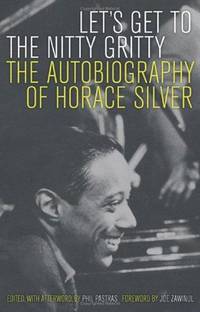
Let's Get to the Nitty Gritty: The Autobiography of Horace Silver by Horace Silver with Phil Pastras (Editor) , Steve Isoardi (Introduction), Joe Zawinul (Foreword)

University of California Press; First edition (hardcover), 2006; first edition (paperback), August, 2007


Horace Silver is one of the last giants remaining from the incredible flowering and creative extension of bebop music that became known as "hard bop" in the 1950s. This freewheeling autobiography of the great composer, pianist, and bandleader takes us from his childhood in Norwalk, Connecticut, through his rise to fame as a musician in New York, to his comfortable life “after the road” in California. During that time, Silver composed an impressive repertoire of tunes that have become standards and recorded a number of classic albums. Well-seasoned with anecdotes about the music, the musicians, and the milieu in which he worked and prospered, Silver’s narrative—like his music—is earthy, vernacular, and intimate. His stories resonate with lessons learned from hearing and playing alongside such legends as Art Blakey, Charlie Parker, and Lester Young. His irrepressible sense of humor combined with his distinctive spirituality make his account both entertaining and inspiring. Most importantly, Silver’s unique take on the music and the people who play it opens a window onto the creative process of jazz and the social and cultural worlds in which it flourishes.

Let’s Get to the Nitty Gritty also describes Silver’s spiritual awakening in the late 1970s. This transformation found its expression in the electronic and vocal music of the three-part work called The United States of Mind and eventually led the musician to start his own record label, Silveto. Silver details the economic forces that eventually persuaded him to put Silveto to rest and to return to the studios of major jazz recording labels like Columbia, Impulse, and Verve, where he continued expanding his catalogue of new compositions and recordings that are at least as impressive as his earlier work.

Let's Get to the Nitty Gritty: The Autobiography of Horace Silver by Horace Silver with Phil Pastras (Editor) , Steve Isoardi (Introduction), Joe Zawinul (Foreword)

University of California Press; First edition (hardcover), 2006; first edition (paperback), August, 2007:

http://alyoung.org/2014/06/19/horace-silver-september-2-1928-june-18-2014-in-memoriam/

HORACE SILVER | September 2, 1928 – June 18, 2014 | in memoriam
_______________________________________________

Courtesy Blue Note Records

Legendary jazz pianist, composer-arranger and poet-sculptor of funky hard bop, dies at age 85
Horace Silver was brilliant. A populist musician-performer. he loved and respected the audience he’d helped build for an earthy style of bebop deeply rooted in jazz’s blues and gospel origins. With drummer Art Blakey, Silver co-founded the conquering Jazz Messengers. I’m old enough to remember seeing his name listed as Stan Getz’s pianist on 78- and 45-rpm discs on the Royal Roost label when, at age 12, I began to collect records in earnest. I remember, too, the time I called to speak to him when Phil McKellar, a radio DJ at CKLW — a Canadian station in Windsor, Ontario, across the river from Detroit — was interviewing Silver right after Six Pieces of Silver, his first Blue Note album, came out.

A tuba player in Detroit’s Central High band, I was just beginning to play trumpet. In a live broadcast Horace asked: “Al, do you play?”

“Yes,” I said.

“What?”

“Trumpet.”

“Oh, yeah, all right! Come on down to the club, man — and bring your horn.”

I almost died. I’d just sarted taking lessons. By the time he reached his late teens, Horace Silver had moved from Connecticut to New York to play professionally.

Consider the titles of some of his classics: “Señor Blues,” “Opus de Funk,” “Quicksilver,” “The Preacher,” “Filthy McNasty ,” “Sister Sadie,” “Doodlin’,” “Opus de Funk,” “Nica’s Dream,” “Strollin,’” ‘The Tokyo Blues” “The Bagdhad Blues,” “Psychedelic Sally,” and “Song for My Father.”

Is there a price we can place on the treasury of pleasure Horace Silver has left to us?
– Al Young


Jazz Profiles from NPR
Horace Silver
Produced by Miyoshi Smith


Read and listen

Horace Silver is widely regarded as the father of hard bop piano. He places heavy emphasis on the blues and even gospel roots of jazz, while working in intricate, original improvisations. His energetic playing and infectious compositions never fail to get listeners moving to the rhythm.

Listen to trumpeter Randy Brecker, drummer Louis Hayes, and writer Gary Giddins talk about Horace's music

Born of African American and Portuguese parentage on September 3, 1928 in Norwalk, Connecticut, Horace's first introduction to music came in high school, where he played saxophone in the marching band and orchestra. He didn't get really serious about music until after he heard Jimmy Lunceford's band play.

Listen to Horace recall listening with his father to Jimmy Lunceford's band

Horace switched from saxophone to piano and immersed himself in jazz, teaching himself to play and jamming frequently with his teenage friends. His big break came when he was offered a job at the Sundown nightclub in Hartford, where he backed some of the most famous names in jazz, including saxophonist Stan Getz who was so impressed with him that he asked him to join him on the road.

Eventually, Horace settled in New York, finding steady work as a jazz recording session pianist. His remarkable solos on Miles Davis' 1954 Prestige album, Walkin', that caught the attention of many jazz musicians and critics.

A few months prior to Miles' Walkin' sessions, Horace teamed up with drummer Art Blakey and formed the Jazz Messengers. The first edition included trumpeter Kenny Dorham, tenor saxophonist Hank Mobley, and bassist Doug Watkins. Their soulful sound soon became synonymous with the group's label, Blue Note Records.

Listen to Giddins explain how Horace's music came to define the mid-1950s Blue Note sound
"I hope my stuff will be naturally commercial, but it has to be natural, you know. I'm not gonna do something that's not me. I've been myself my whole life, throughout my musical career."
-- Horace Silver

Horace left the Messengers in 1956, but he kept up a relationship with Blue Note that lasted over 25 years, recording some of the label's most treasured albums. His ensembles became hands-on training grounds for future jazz stars including Donald Byrd, Art Farmer, Joe Henderson, and many others.


Listen to saxophonist Joe Henderson and Brecker explain Silver's compositional and leadership style

Horace created signature compositional elements that would later be closely studied by both his contemporaries and those who followed in his footsteps. One was the way he would write unison parts for the bass player and his left-hand rhythmic figure on piano; another was the way he wrote bracing horn harmonies on top of rollicking rhythms.

Listen to Horace explain some of his compositional methods

Despite the immediate distinction of Horace's music, he doesn't adhere to any particular formula. He draws from a wide array of complex harmonies, rhythmic motifs, and codas.

Listen to Horace dismiss formulaic approach to compositon

As a pianist, Horace has never demonstrated the pyrotechnics of an Art Tatum or Oscar Peterson, becoming instead an artist who works brillantly within his means, especially when it comes accompanying other soloists.

Listen to Giddins and Horace talk about his piano playing

Horace's music always betrays his love for Latin music. He grew up listening to Cape Verdean folk songs from his father, who hailed from that region. On songs such as "The Cape Verdean Blues" and "Señor Blues," Horace pushes the Latin influences to the forefront.

Listen to Horace share his love for Latin music

After leaving Blue Note Records in 1979, Horace released material on his independent lables, Silverto and Emerald. He transitioned back to the major labels in the 1990s, releasing critically acclaimed CDs for Columbia and Impulse! Records. Now in his seventies, Horace is still thrilling audiences with his soulful playing.

Listen to Horace reflect on his music


SHOW PLAYLIST

View Horace Silver show playlist

NPR RESOURCES

Listen to the NPR Basic Jazz Record Library entry for Horace Silver' 1964 album Song For My Father

Browse the NPR Jazz Web site -- NPRJazz.org
_________________________________________________


1983 HORACE SILVER INTERVIEW
Three Audio Clips
Canadian Jazz Archive Online | FM 91 (Toronto)
_________________________________________________

© Blue Note Records

Listen to “Song for My Father,”(Canção para Meu Pai) just one of Horace Silver’s celebrated and much-played works.

Seasoned jazz lovers A.B. Spellman and Murray Horowitz revisit Horace Silver’s music to discuss in depth his deathless “Song for My Father.”
_______________________________________________

“Nica’s Dream”
(1956)

 
Horace Silver, composer and pianist; Donald Byrd, trumpet, Hank Mobley, tenor saxophone; Doug Watkins, bass; Art Blakey, drums

© Columbia Records
HORACE SILVER AT WORK

Horace Silver: 'Song for My Father'
by A. B. SPELLMAN and MURRAY HORWITZ
August 01, 2001

Horace Silver's father on the cover of Silver's classic Blue Note recording 'Song for My Father' in 1964

Hear the NPR Basic Jazz Record Library Entry

4 min 4 sec
Playlist

Web Resources

Horace Silver on the Web
 
[MUSIC]

A.B. SPELLMAN, National Endowment for the Arts: Murray Horwitz, this is Horace Silver playing "Song for My Father," one of his famous compositions. Why do you like this CD?

MURRAY HORWITZ, American Film Institute: I don't know if anybody, like me, can ever use the word mature in a sentence, and be taken seriously. But, it is a kind of a maturation of the hard-boppers, who sort of did a funkier thing than the straight bebop that was prevalent in the 1940s and early '50s. And by 1964, when this was recorded, it really is a kind of mature sound. These men know exactly what they are doing.

[MUSIC]

SPELLMAN: Horace Silver's own piano style is very syncopated and very heavily chorded.

HORWITZ: And for that reason, I think you put your finger onto something. It's deceptive. You know, because, it doesn't sound like he's doing much. But if you listen carefully, he's always building it, emotionally and intellectually, and therefore musically. He builds these wonderful solos in a way that you hardly notice that he's doing it.

SPELLMAN: Horace is as much recognized as a composer as he is for a soloist. So, what are your favorite compositions on this one?

HORWITZ: Right, A.B., he's written a lot of jazz standards, really, that have been recorded by the likes of Dizzy Gillespie and Art Blakey. On this record, the title tune, "Song for My Father," pays kind of an homage to his father, who came from the Cape Verde Islands. There's a gorgeous, piano trio ballad called, "Lonely Woman."

[MUSIC]

SPELLMAN: The musicians on this CD are a mixture of very well known soloists like Joe Henderson, Horace, Junior Cook, and Blue Mitchell, but also some lesser known musicians.

HORWITZ: There's a trumpet player named Carmell Jones. There's a drummer named Roger Humphries. And one of the delights of jazz music, I think, is that very often some people who you've never heard of can come up with some very satisfying, and very swinging performances. And all of these performances are swinging.

[MUSIC]

HORWITZ: This is actually an album that was kind of patched together back in the '60s at a moment when Horace Silver changed the personnel in his band, so you actually have two different bands playing on different sessions. And that gives a littler more excitement to the record, I think. That's one of the reason that I like it, I've decided, because it's exciting music. And there's a littler grittier texture to the new band, because maybe they aren't used to playing together as much.

[MUSIC]

SPELLMAN: So, for your NPR Basic Jazz Record Library, we're recommending Song for My Father by the pianist Horace Silver. It's on the Blue Note label. For NPR Jazz, I'm A.B. Spellman.

HORWITZ: And, I'm Murray Horwitz.


Horace Silver
From Wikipedia, the free encyclopedia


Background information
Birth name Horace Ward Martin Tavares Silva[1]
Born September 2, 1928 (age 84)
Norwalk, Connecticut, United States
Genres Jazz, hard bop, modal jazz, mainstream jazz, soul jazz, jazz fusion, post-bop
Occupations Pianist, composer, bandleader
Instruments Piano
Years active 1950–1999

Associated acts Art Blakey, Miles Davis, Stan Getz, Art Farmer, Gigi Gryce, Milt Jackson, Hank Mobley, Lee Morgan, Junior Cook, Blue Mitchell, Woody Shaw, Joe Henderson, Bob Cranshaw, Michael Brecker, Randy Brecker, Mickey Roker

Horace Silver (born Horace Ward Martin Tavares Silva, September 2, 1928, Norwalk, Connecticut, United States) is an American jazz pianist and composer.[1]

Silver is known for his distinctive humorous and funky playing style and for his pioneering compositional contributions to hard bop. He was influenced by a wide range of musical styles, notably gospel music, African music, and Latin American music and sometimes ventured into the soul jazz genre.[2][3]

Contents

1 Early life and career
2 Blue Note years
3 Influences
4 Later years
5 Legacy
6 Discography
6.1 As leader
6.2 As sideman
7 References
8 External links

Early life and career

His father, who was known as John Tavares Silva, was from the island of Maio in Cape Verde. His mother was born in New Canaan, Connecticut, and was of Irish-African descent.
Silver began his career as a tenor saxophonist but later switched to piano. His tenor saxophone playing was highly influenced by Lester Young, and his piano style by Bud Powell. Silver was discovered in the Sundown Club in Hartford, Connecticut in 1950 by saxophonist Stan Getz. Getz was playing as a guest star at the club with Silver’s trio backing him up.[4] Getz liked Silver’s band and brought them on the road, eventually recording three of Silver’s compositions. It was with Getz that Silver made his recording debut.

He moved to New York City in 1951, where he worked at the jazz club Birdland on Monday nights, when different musicians would come together and informally jam. During that year he met the executives of the label Blue Note while working as a sideman. He eventually signed with them, remaining there until 1980. It was in New York that he formed The Jazz Messengers, a cooperatively-run group with Art Blakey.

In 1952 and 1953 Silver recorded three sessions with his own trio, featuring Blakey on drums and Gene Ramey, Curly Russell and Percy Heath on bass. The drummer-pianist team lasted for four years; during this time, Silver and Blakey recorded at Birdland (A Night at Birdland Vol. 1) with Russell, Clifford Brown and Lou Donaldson, at the Bohemia with Kenny Dorham and Hank Mobley, and also in the studios. Silver was also a member of the Miles Davis All Stars, recording the influential Walkin' in 1954.
Blue Note years[edit source]

From 1956 onwards, Silver recorded exclusively for the Blue Note label, eventually becoming close to label boss Alfred Lion, who allowed him greater input on aspects of album production than was usual at the time. During his years with Blue Note, Silver helped to create the rhythmically forceful branch of jazz known as "hard bop", which combined elements of rhythm-and-blues and gospel music with jazz. Gospel elements are particularly prominent on one of his biggest hits, "The Preacher", which Lion thought corny, but Silver persuaded him to record it.

While Silver's compositions at this time featured surprising tempo shifts and a range of melodic ideas, they caught the attention of a wide audience. His own piano playing easily shifted from aggressively percussive to lushly romantic within just a few bars. At the same time, his sharp use of repetition was funky even before that word could be used in polite company. Along with Silver's own work, his bands often featured such rising jazz stars as saxophonists Junior Cook and Hank Mobley, trumpeter Blue Mitchell, and drummer Louis Hayes. Silver's key albums from this period include Horace Silver Trio (1953), Horace Silver and the Jazz Messengers (1955), 6 Pieces of Silver (1956) and Blowin' the Blues Away (1959), which includes his famous "Sister Sadie". He also combined jazz with a sassy take on pop through the 1961 hit "Filthy McNasty".
Influences[edit source]

Silver tended not to play up that he was proficient in Portuguese, nor draw directly on his rich Lusophone musical upbringing. His 1965 hit, "Cape Verdean Blues," is the only clear rhythmic reference to his childhood home where his father and friends jammed, with traditional Capeverdean morna and coladeira as the main fare. In the interview for the liner notes to 1964's Song for My Father (Cantiga Para Meu Pai), however, Silver remarked of the title track, "This tune is an original of mine, but it has a flavor of it that makes me think of my childhood days. Some of the family, including my father and my uncle, used to have musical parties with three or four stringed instruments; my father played violin and guitar. Those were happy, informal sessions." Silver melded additional Lusophone influences into his music directly after his February 1964 tour of Brazil. Referring to "Song for My Father," Silver said, "I was very much impressed by the authentic bossa nova beat. Not just the monotonous tick-tick-tick, tick-tick, the way it's usually done, but the real bossa nova feeling, which I've tried to incorporate into this number."

His early influences included the styles of boogie-woogie and the blues. It includes but is not limited to Art Tatum, Teddy Wilson, Nat “King” Cole, and Thelonious Monk. He liked to quote other musicians within his own work and would often recreate famous solos in his original pieces as something of a tribute to the greats who influenced him.
During Silver's time with Blakey he rarely recorded as a leader, but after splitting with him in 1956, formed his own hard bop quintet at first featuring the same line-up as Blakey's Jazz Messengers with 18-year-old Louis Hayes replacing Blakey. The quintet's more enduring line-up featured Blue Mitchell and Junior Cook.

In 1963 Silver created a new group featuring Joe Henderson on tenor saxophone and Carmell Jones on trumpet; this quintet recorded most of Silver's best-known album Song for My Father. When Jones left to settle in Europe, the trumpet chair was filled by a young Woody Shaw and Tyrone Washington replaced Henderson.

Silver's compositions, catchy and very strong harmonically, gained popularity while his band gradually switched to funk and soul. This change of style was not readily accepted by many long-time fans. The quality of several albums of this era, such as The United States of Mind (on which Silver himself provided vocals on several tracks), is to this day contested by fans of the genre. Silver's spirituality displayed on these albums also has a mixed reputation. However, many of these later albums featured many interesting musicians (such as Randy Brecker). Silver was the last musician to be signed to Blue Note in the 1970s before it went into temporary hiatus. In 1981 he formed his own short-lived labels, Silveto and Emerald.

Later years

After Silver's long tenure with Blue Note ended, he continued to create vital music. The 1985 album Continuity of Spirit (Silveto) features his unique orchestral collaborations.

In the 1990s, he directly answered the urban popular music that had been largely built from his influence on It's Got To Be Funky (Columbia, 1993). Now living surrounded by a devoted family in California, Silver has received much of the recognition due a venerable jazz icon. In 2005, the National Academy of Recording Arts and Sciences (NARAS) gave him its President's Merit Award. The SFJazz Collective focused on Horace Silver's music for their 2010 season.[5]

Legacy

Silver's music has been a major force in modern jazz. He was one of the first pioneers of the style known as hard bop, influencing such pianists as Bobby Timmons, Les McCann, and Ramsey Lewis. Second, the instrumentation of his quintet (trumpet, tenor sax, piano, double bass, and drums) served as a model for small jazz groups from the mid-1950s until the late 1960s.[citation needed] Further, Silver's ensembles provided an important training ground for young players, many of whom (such as Donald Byrd, Art Farmer, Blue Mitchell, Woody Shaw, Junior Cook, and Joe Henderson) later led similar groups of their own.

Silver's talent did not go unnoticed among rock musicians who bore jazz influences, either; Steely Dan sent Silver into the Top 40 in the early 1970s when they crafted their biggest hit single, "Rikki, Don't Lose That Number," off the bass riff that opens "Song for My Father."

As social and cultural upheavals shook the nation during the late 1960s and early 1970s, Silver responded to these changes through music. He commented directly on the new scene through a trio of records called The United States of Mind (1970–72) that featured the spirited vocals of Andy Bey. The composer got deeper into cosmic philosophy as his group, Silver 'N Strings, recorded Silver 'N Strings Play The Music of the Spheres (1979).

Discography

As leader:
Blue Note Records

1955: Horace Silver and the Jazz Messengers
1956: 6 Pieces of Silver
1957: The Stylings of Silver
1958: Further Explorations
1958: Live at Newport '58
1959: Finger Poppin'
1959: Blowin' the Blues Away
1960: Horace-Scope
1961: Doin' the Thing
1962: The Tokyo Blues
1963: Silver's Serenade
1965: Song for My Father
1965: The Cape Verdean Blues
1966: The Jody Grind
1968: Serenade to a Soul Sister
1969: You Gotta Take a Little Love
1970: That Healin' Feelin'
1971: Total Response
1972: All
1972: In Pursuit of the 27th Man
1975: Silver 'n Brass
1976: Silver 'n Wood
1977: Silver 'n Voices
1978: Silver 'n Percussion
1979: Silver 'n Strings Play the Music of the Spheres
Silverto Records/Emerald Records
1964: Live 1964
1965: The Natives are Restless Tonight
1981: Guides to Growing Up
1983: Spiritualizing the Senses
1984: There's No Need to Struggle
1985: The Continuity of Spirit
1988: Music to Ease Your Disease
Columbia Records
1956: Silver's Blue
1993: It's Got to Be Funky
1994: Pencil Packin' Papa
Impulse! Records
1996: The Hardbop Grandpop
1997: A Prescription for the Blues
Other labels
1962: Paris Blues (Pablo)
1991: Rockin' with Rachmaninoff (Bop City)
1999: Jazz Has a Sense of Humor (Verve)
Compilations
The United States of Mind (Blue Note) - compiles That Healin' Feelin', Total Response, and All
As sideman[edit source]
with Nat Adderley :
Introducing Nat Adderley (1955, EmArcy)
with Art Blakey :
A Night at Birdland Vol. 1 (1954, Blue Note)
A Night at Birdland Vol. 2 (1954, Blue Note)
A Night at Birdland Vol. 3 (1954, Blue Note)
At the Cafe Bohemia, Vol. 1 (1955, Blue Note)
At the Cafe Bohemia, Vol. 2 (1955, Blue Note)
Art Blakey with the Original Jazz Messengers (1956, Columbia)
Originally (1956, Columbia)
with Dee Dee Bridgewater :
Love and Peace: A Tribute to Horace Silver (1994, Verve)
with Kenny Burrell :
K. B. Blues (1957, Blue Note)
with Donald Byrd :
Byrd's Eye View (1955, Transition)
with Paul Chambers :
Whims of Chambers (1956, Blue Note)
with Kenny Clarke :
Bohemia After Dark (1955, Savoy)
with Al Cohn :
Al Cohn's Tones (1953, Savoy)
with Miles Davis :
Miles Davis Volume 1 (1954, Blue Note Records)
Blue Haze (1954, Prestige Records)
Walkin' (1954, Prestige Records)
Bags' Groove (1954, Prestige Records)
with Kenny Dorham :
Afro-Cuban (1955, Blue Note Records)
with Lou Donaldson :
Quartet/Quintet/Sextet (1952, Blue Note Records)
with Art Farmer :
Early Art (1954, Prestige)
The Art Farmer Septet (1954, Prestige)
with Leonard Feather :
Cats vs. Chicks (1954, MGM)
with Stan Getz :
The Complete Roost Recordings (1951, Blue Note Records)
Birdland Sessions (1952, Fresh Sound)
With Giants of Jazz
Giants of Jazz (1955, Mercury Records)
with Terry Gibbs :
Jazz USA (1951, Brunswick)
with Gigi Gryce :
When Farmer Met Gryce (1954, Prestige)
Nica's Tempo (1955, Savoy)
with Coleman Hawkins :
Disorder at the Border (1952, Spotlite)
with J. J. Johnson :
The Eminent Jay Jay Johnson Volume 2 (1955, Blue Note)
with Milt Jackson :
Milt Jackson Quartet/Quintet (1954, Prestige Records)
Milt Jackson Quartet (1955, Prestige Records)
Plenty, Plenty Soul (1957, Atlantic)
with Cliff Jordan & John Gilmore
Blowing in from Chicago (1957, Blue Note)
with Howard McGhee :
Howard McGhee, Volume 2 (1953, Blue Note)
with Hank Mobley :
Hank Mobley Quartet (1955, Blue Note)
The Jazz Message of Hank Mobley (1956, Savoy)
Hank Mobley Sextet (1956, Blue Note)
Hank Mobley and his All Stars (1957, Blue Note)
Hank Mobley Quintet (1957, Blue Note)
with J. R. Monterose :
J. R. Monterose (1956, Blue Note)
with Lee Morgan :
Lee Morgan Indeed! (1956, Blue Note)
Lee Morgan Sextet (1956, Blue Note)
with Clifford Jordan and John Gilmore :
Blowing in from Chicago (1957, Blue Note)
with Rita Reys :
The Cool Voice of Rita Reys (1956, Columbia)
with Sonny Rollins :
Sonny Rollins, Vol. 2 (1957, Blue Note)
with Sonny Stitt :
Arrangements by Richards (1953, Roost/Mosaic)
With Clark Terry:
Clark Terry (EmArcy, 1955)
with Phil Urso :
The Philosophy of Urso (1954, Savoy)
with Lester Young :
The Pres Box, Vol. 10-12 (1953, Jazz Up)
References[edit source]

^ a b "Distinguished Americans & Canadians of Portuguese Descent". Archived from the original on 2007-12-12. Retrieved 2008-01-09.
^ Allmusic
^ Du Noyer, Paul (2003). The Illustrated Encyclopedia of Music (1st ed.). Fulham, London: Flame Tree Publishing. p. 140. ISBN 1-904041-96-5.
^ Feather, Leonard. In New Faces - New Sounds [LP liner notes].
^ [1][dead link]
External links[edit source]

Official site

Horace Silver Discography at the Hard Bop Home Page
Horace Silver entry at the Jazz Discography Project
Listening In: An Interview with Horace Silver by Bob Rosenbaum, Los Angeles, December 1981 (PDF file)
"The Dozens: Twelve Essential Horace Silver Recordings" by Bill Kirchner (Jazz.com)

Horace Silver by Dmitri Savitski, 1989.

Horace Silver - Wikipedia, the free encyclopedia
en.wikipedia.org
Horace Silver (born Horace Ward Martin Tavares Silva, September 2, 1928, Norwalk, Connecticut, United States) is an American jazz pianist and composer

Posted by Kofi Natambu at 2:01 PM
Labels: 20th century Art, African American music, Hardbop, Horace Silver, Improvisation and composition, Jazz piano, Music History

Thursday, April 10, 2014

THE MUSICAL LEGACY OF AMIRI BARAKA: The Modern Jazz Critic As Cultural Historian, Creative Artist, Social Theorist, And Philosophical Visionary

BY KOFI NATAMBU
© 2014

This essay is dedicated to the memory and eternal presence of Amiri Baraka/Leroi Jones (1934-2014) who was not only a  great artist, mentor, friend, colleague, and comrade but  also-like he was for so many others around the world-a towering influence on my art and life

"Wailers"  (To Larry Neal and Bob Marley) by Amiri Baraka
David Murray--Tenor Saxophone
Steve McCall--Drums and Percussion
From the film "Poetry in Motion" (1982).  Directed by Ron Mann:


"Leroi Jones has learned--and this has been very rare in jazz criticism--to write about music as an artist."
--Nat Hentoff, Jazz & Pop magazine, 1966

“ ... Negro music is essentially the expression of an attitude, or a collection of attitudes, about the world, and only secondarily an attitude about the way music is made...Usually the critic's commitment was first to his appreciation of the music rather than to his understanding of the attitude that produced it. This difference meant that the potential critic of Jazz had only to appreciate the music, or what he thought was the music, and that he did not need to understand or even be concerned with the attitudes which produced it...The major flaw in this approach to Negro music is that it strips the music too ingenuously of its social and cultural intent. It seeks to define Jazz as an art (or a folk art) that has come out of no intelligent body of socio-cultural philosophy...”


--Leroi Jones, "Jazz and the White Critic," Downbeat magazine, 1963; later reprinted in his book of critical essays and reviews Black Music (William Morrow & Co. 1968)
 
“Jazz and the White Critic” was a challenge to jazz writers of all backgrounds to reckon with the lived experience of black Americans and to consider how this experience had been embedded in the notes, tones, and rhythms of the music.”
--John Gennari, Blowin’ Hot and Cool: Jazz and its Critics (University of Chicago Press, 2006)


In the name of sheer historical accuracy and perhaps even ultimately a triumphant kind of poetic justice the following emphatic statement bears repeating as often as possible: For fifty years from 1963-2013 Amiri Baraka (also known as Leroi Jones) wrote and published the most profound, influential, and strikingly original body of musical criticism in the United States, as well as some of the most significant--and enduring--cultural and social criticism generally that this country has produced since 1945. This is especially true of his stunning and groundbreaking work in the musical genre of 'Modern Jazz' and his extensive, dynamic, and typically incisive examination of the music's rapid evolution since 1900 in both its visionary "avant garde" modes as well as its more traditional vernacular styles and expressions.

An essential aspect of Baraka’s critical writing on jazz however is also rooted in a deep consciousness and visceral understanding and love of the rural and urban blues/rhythm and blues traditions not only in formal and aesthetic terms but as a complex and historically cumulative social and cultural statement about the ongoing meaning(s) of the content of these musics in both their structural and lyrical dimensions. Thus an appreciation and respect for the ideological complexities and contexts of African American culture as an important economic, social, and political reality as well as an essentially protean artistic force is integral to fully engaging and grasping what Baraka is primarily focused on and concerned with in his writing about the music.

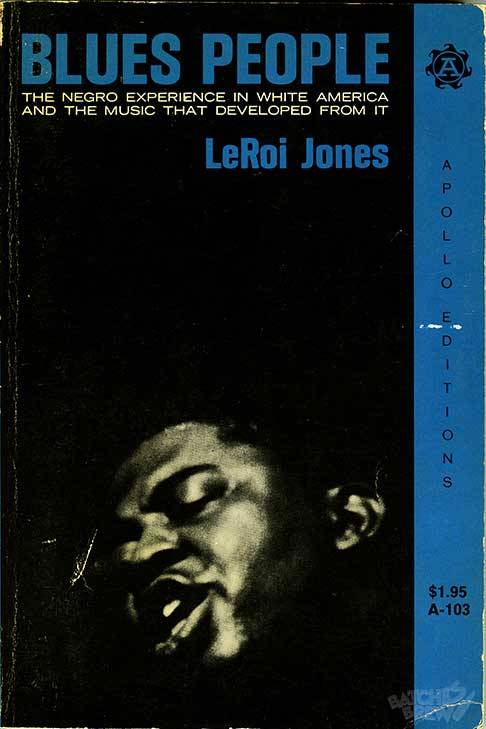
Thus it is not surprising that Baraka's first book about the music, originally entitled Blues People: Negro Music in White America became a seminal, widely acclaimed, and subsequently never out of print historical text. Published by the then 28-year-old writer in 1963, the book was also importantly subtitled in at least a few of its other many editions as "The Negro Experience in White America and the Music That Developed From It." Disdained and even dismissed in some quarters by some haughty and self-important highbrow critics, both white and black, as being too steeped in what they perceived as a fundamentally reductive sociological emphasis in Baraka's analysis of the blues as art and history (a highly inaccurate and quite dubious line of argument echoed in a particularly patronizing and intellectually self serving manner by the celebrated African American novelist and cultural critic Ralph Ellison) Blues People clearly marked a major new turning point in not only the history of Jazz and blues criticism in the United States but in its perception and intellectual appreciation and understanding by music critics generally. Not surprisingly this new consciousness was also beginning to be reflected to some degree in its public reception by audiences.

Despite its ill-informed detractors Blues People also firmly established Baraka as a major intellectual and literary force to be reckoned with because he was not afraid of expressing a strong and independently assertive viewpoint alongside a persistently sharp critical analysis of what the music has meant to black Americans from the standpoint of not only individual citizens or artists but of the mass culture generally. He insisted on an interpretive POV that saw class relations as well as "race" in terms that established a clear hierarchy and division of attitudes and values that informed one's deep affinity for or relative indifference to the various forms and expressions of the blues as creative/stylistic form and artistic identity as well as a distinct and thus substantive and independent sensibility in the larger society as a whole. Consequently Baraka declared that the purveyors of the blues sensibility and its primary cultural progenitors were not only the artists and the intellectual connoisseurs of the form (i.e. critics, academicians, and scholars) but the so-called 'ordinary citizens' who loved and represented and embodied the art themselves (the actual "Blues People" of the book's title). Therein, Baraka insisted, lay the music's true power and ultimate potential as both a creative and social/philosophical force.

In that light it is important to consider that as the great poet Langston Hughes and many other critics and commentators pointed out when the book made its initial appearance that Blues People was in many ways the intellectual and critical culmination of a contentious historical debate raging then (and even to a great extent today) within Black America as well as the larger society over the cultural and thus political and ideological value and meaning(s) of the African American experience and the role of its various artistic forms and artists who through their creative work publicly represent and embody this cultural history. In Baraka's analysis the music serves as both a crucial narrative record (literally as well as on vinyl) of what black people have experienced and an ongoing emotional and psychological register of the impact and effects this experience has had on them and their larger spiritual, existential, and philosophical conception of themselves. As he puts it in his original introduction to the book in 1963:

"In other words I am saying that if the Negro in America, in all its permutations, is subjected to a socio-anthropological as well as musical scrutiny, something about the essential nature of the Negro's existence in this country ought to be revealed, as well as something about the essential nature of this country, i.e. society as a whole...And the point I want to make most evident here is that I cite the beginning of blues as one beginning of American Negroes. Or, let me say, the reaction and subsequent relation of the Negro's experience in this country in his English is one beginning of the Negro's conscious appearance on the American scene...When America became important enough to the African to be passed on, in those formal renditions, to the young, those renditions were in some kind of Afro-American language..."

Baraka also was deeply concerned with how and why these specific musical traditions, techniques, and innovations took the various forms and stylistic identities that they did from the dialectical standpoint of their creators' dynamic, and critically informed engagement with their aesthetic material. One of Baraka's major strengths as a critic is his emphasis always on the process of the creative act in the course of expressing ideas and emotions via the integral elements of music making. This is a major even central aspect of Baraka's writing as a music critic that he strongly maintained and greatly enhanced in all future critiques and celebrations of Jazz, blues, and rhythm and blues following the publication of Blues People.

In Black Music (William Morrow, 1968), his second book devoted to the extraordinary social history and cultural identity of this musical art, Baraka lays out what amounts to a very erudite and casually elegant book-length manifesto on the most advanced, radical, and innovative developments in modern Jazz during the culturally and politically tumultuous 1960s. A trenchant and mesmerizing collection of many of the finest theoretical essays, feature articles, and music reviews that he had written for various national magazines and journals from 1959-1967, Baraka not only critically interprets the revolutionary music of this fascinating historical period but discusses its myriad meanings and values from the direct viewpoint of the individual musicians themselves. What results is a series of riveting, complex, and always critically challenging portraits of these musicians as dedicated cultural workers and the often visionary perspectives that these artists embodied and conveyed to their audiences. Baraka especially draws the readers' attention to the largely black working class and sometimes even more economically challenging (i.e. poor) social and cultural milieu that so many of these musicians and their peers and colleagues lived, created, and performed in. In doing so he reminds us that many of the most profound, lasting, and useful modern art expressions in the United States (and elsewhere) are not merely or exclusively the products of the academic “Ivory Tower” and foundation grant institutions nor are they dependent on the often fickle largesse of wealthy patrons. In fact as Baraka amply demonstrates in his analysis the evidence everywhere of the deep desire and demand for aesthetic, economic, and political self determination among this intrepid generation of musicians, composers, and improvisers is one of the major principles animating their work and overall vision. One of many brilliant examples of this analytical focus can be found in Baraka's intricate, detailed, and powerful dissection of the general aesthetics and cultural values of such legendary and even iconic musicians, composers, and improvisors of the post 1945 modern music era as John Coltrane, Albert Ayler, Thelonious Monk, Miles Davis, Sonny Rollins, Don Cherry, Ornette Coleman, Wayne Shorter, Cecil Taylor, Sun Ra, Archie Shepp, Marion Brown, Milford Graves, Don Pullen, Bobby Bradford, and Roy Haynes, among many others who emerged as a self consciously radical, innovative, visionary. and transformative force in the music since the late 1950s.

Dedicated to “John Coltrane, the heaviest spirit” Baraka's Black Music posed a tremendous intellectual and artistic challenge to a entire generation of artists, critics, and cultural/political activists (and I might add is still doing so some two generations and 45 years later!) to begin to seriously address and attempt to resolve many of the major structural and institutional problems and crises facing not only our creative artists in the realms of music, literature, dance, filmmaking, visual and media art, etc. but our larger communities as well. Toward that end the book provides an important ongoing subtextual narrative about the insidious political economy of the music business and its direct and indirect effects on the musicians themselves who not only have to withstand and tragically negotiate the oppressive and exploitive impositions of white supremacy/racism in all its guises but the even more comprehensive venality of corporate capitalism in the studios, clubs, theatres and general commercial venues where the music was being recorded and/or performed for various live audiences during an era when Jazz, despite its growing richness and vitality in a creative sense, especially was suffering greatly economically as a result of its clearly limited reception and appreciation by the larger society. This unfortunately also included the growing commercial interest in and support for pop, rhythm and blues, and rock musics (resulting in the increasing exclusion and marginalization of Jazz and blues) in the national black community.

Finally, the flagship essay of Black Music that opens the volume contains one of the most prescient, eloquent, historically significant, and intellectually honest essays ever written about the “Modern Jazz” dimension of African American music. Entitled "Jazz and the White Critic" the piece had originally appeared in Downbeat the largest national 'mainstream' Jazz magazine in the country in August, 1963 just before the appearance of his first book on the music Blues People later that year. What remains essential about this prophetic essay is its analytical insistence that the philosophical and cultural aspects of African American music like that of all major aesthetic traditions throughout the world is key to acquiring a genuine knowledge, understanding and appreciation of the art. As he states in his concluding paragraph:

“We take for granted the social and cultural milieu and philosophy that produced Mozart. As Western people the socio-cultural thinking of eighteenth-century Europe comes to us as a historical legacy that is a continuous and organic part of the twentieth-century West. The socio-cultural philosophy of the Negro in America (as a continuous historical phenomenon) is no less specific and no less important for any critical speculation about the music that came out of it...this is not a plea for narrow sociological analysis of Jazz, but rather that this music cannot be completely understood (in critical terms) without some attention to the attitudes which produced it. It is the philosophy of Negro music that is most important, and this philosophy is only partially the result of the sociological disposition of Negroes in America. There is, of course, much more to it than that.” (Italics mine)

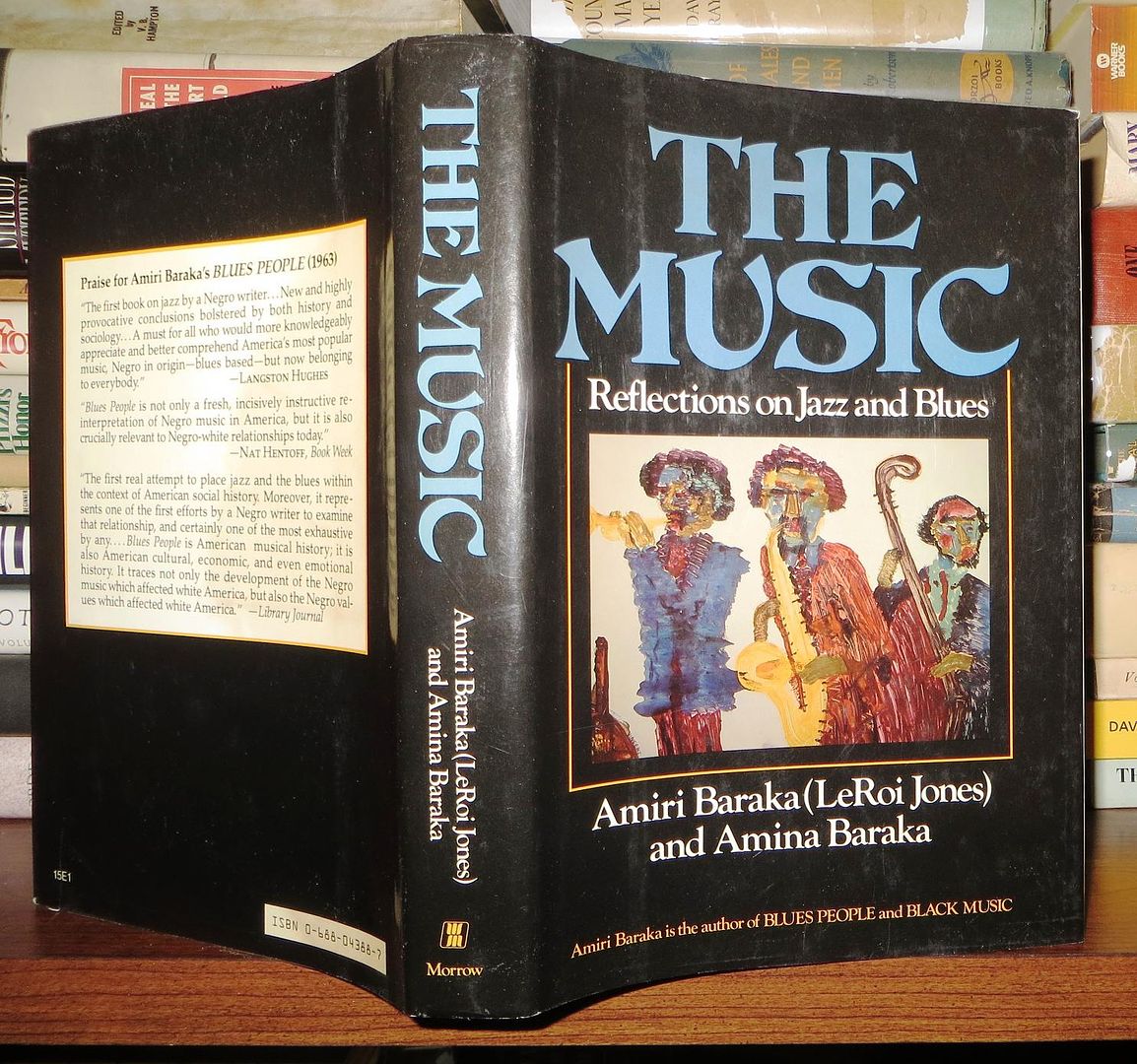
The Music: Reflections on Jazz and Blues  (William Morrow, 1987)

The long awaited arrival of Amiri's third full volume of music criticism in 1987 published some twenty years after Black Music and twenty-five years after Blues People was not only well worth the wait but added still more brilliant wrinkles to his long-term critique of the music, its artists, and the larger social, economic, and political contexts that it existed and persisted in. Both a dynamic synthesis and extension of previous writing about its historical identity as well as an celebratory examination of its contemporary expressions, The Music is divided between a series of poems that center on Jazz and the blues by both Amiri and his wife, Amina Baraka, which takes up a third of the text, an extraordinary political play entitled The Primitive World: An Anti-Nuclear Musical by Amiri that uses both “avant-garde” as well as more traditional Jazz and blues elements, techniques, and styles in an updated and innovative operatic context. Most of the actors in the production are the musicians themselves who both play and sing their parts. Such important and highly accomplished 'avant' Jazz musicians of the post-1970 era as the tenor saxophonist David Murray, drummer and percussionist Steve McCall, violinist Leroy Jenkins, and the pianist/organist Amina Claudine Myers.

The last third of the book features 26 virtuosic and typically incisive essays, reviews, liner notes, and feature articles by Baraka written for and published by various national magazines, journals, and newspapers in the 1975-1987 period as well as some new and important critical essays written specifically for the book. Covering everyone and everything from Miles Davis (in a masterful 1985 article for the New York Times) to the history of Jazz and other African American musics in Greenwich Village in NYC to a series of briliant book and music reviews of books and recordings about and by such major musicians as Dizzy Gillespie, Billie Holiday, Miles Davis, Charlie Parker, Woody Shaw, Cecil McBee, Gil Scott-Heron, Chico Freeman, Ricky Ford, and Craig Harris. There are also a scintillating collection of extremely informative, lyrically written, and politically astute theoretical and critical essays like "Where's the Music Going and Why?", "Jazz Writing: Survival in the Eighties", "The Phenomenon of Soul in African American Music". "Masters in Collaboration", "Blues, Poetry, and the New Music" "AfroPop", "The Class Struggle in Music" and "The Great Music Robbery." There is simply not enough space in this piece to do justice to the crackling intellectual firepower and truly impressive depth and scope of Baraka's writing here; suffice it to say for now that he (re)proves all over and once again exactly WHY he is the preeminent American music critic of the past half century by a very wide margin with virtually no real contenders in sight. Long out of print (and criminally never republished in paperback!) one MUST track down this 1987 hardcover classic and read what it says about a massive range of issues and concerns with respect to the music in not only aesthetic and ideological terms but from the equally profound standpoints of literature (and rhetoric), social theory, cultural history, and political analysis and journalism. One will not come away disappointed. If only the academic departments of 'American and African American Studies' (and all other so-called "ethnic", "humanities", and "cultural studies" programs generally) had professors, public intellectuals, and social activists of Baraka's caliber and clarity running them instead of the often pretentious, biased, and myopic fetishists of "language and culture" who too often ride herd in these fields in U.S. colleges and universities today, we would all be much better informed about the actual strength, beauty, and complex reality of the multiracial and multinational society that we all in fact inhabit. As Baraka makes clear in the essay "Blues, Poetry, and the New Music" from what is finally a GREAT book:

"Each generation adds to and is a witness to extended human experience, If it is honest it must say something new. But in a society that glorifies formalism, i.e. form over content, because content rooted in realistic understanding of that society must minimally be critical of it--the legitimately truthfully new is despised. Surfaces are shuffled , dresses are lengthened or shortened, hair is green or blond, but real change is opposed. The law keeps the order and the order is exploitive and oppressive! The new music reinforces the most valuable memories of a people but at the same time creates new forms, new modes of expression, to more precisely reflect contemporary experience!"

Digging: The Afro-American Soul of American Classical Music  (University of California Press, 2009)

After an astonishing forty five years of endlessly writing, teaching, and lecturing about African American music all over the world it was an absolutely thrilling and inspiring surprise to find yet another extraordinary volume of music criticism by Amiri in the 21st century. Digging: The Afro-American Soul of American Classical Music (University of California Press, 2009) is an epic 411 page text of 84 essays, reviews, liner notes, articles, and precise literary portraits of and about musicians and their art over a fifty year period.. Taking on a huge canvas of critical themes and musical personalities Baraka carries off one can only be described as a penultimate triumph of the art and craft of music criticism at its highest possible level. In a stunning display and critical synthesis that includes an encyclopedic knowledge of the music, a razor sharp attention to the historical nuances of the music and how it it has stylistically evolved and mutated over the years, and finally a thoroughly independent theoretical and critical perspective on the music in aesthetic, historical, and social/cultural terms, Baraka compiled and summed up what constitutes a comprehensive philosophical treatise on Jazz and blues music in U.S.--and by extension the world-- over the past century.

In this quest Digging joyously and fastidiously examines the work, philosophy, craft, and vision of such GIANTS as John Coltrane, Duke Ellington, Wayne Shorter, Miles Davis, Nina Simone, David Murray, Art Tatum, Max Roach, Abbey Lincoln, Billie Holiday, Albert Ayler, Eric Dolphy, Andrew Cyrille, Barry Harris, James Moody, Jackie McLean, Sarah Vaughan, Stevie Wonder, Roscoe Mitchell, Fred Hopkins, Pharoah Sanders, Charles Tolliver, Odean Pope,John Hicks, Von Freeman, Jimmy Scott, and Reggie Workman (WHEW!). Baraka also writes with great insight, intelligence, and passion about such exciting and important emerging musicians and composers of the past two decades as Vijay Iyer, Rodney Kendrick, Ralph Peterson, Jon Jang, and Ravi Coltrane,

Finally Digging is an intense, wide ranging, and deeply philosophical and scholarly meditation on, and relentless excavation of, the multidimensional aspects of the music's varied diasporic genealogies, and a celebration of its ongoing presence and importance on both a national and global level. Amiri incorporates everything he has learned and experienced in the both the music and his life (and their endless interconnections). This synergy of the personal and aesthetic gives the book an organic unity and focus that shapes and informs the text as the essays strive to fuse an understanding of politics, history, ideology, and art with a larger vision of "what it all means." Confronting this complicated task is handled beautifully in such sage and critical essays as "The 'Blues Aesthetic' and the 'Black Aesthetic: Aesthetics as the Continuing Political History of a Culture ', "Jazz Criticism and Its Effects On the Music", "Black Music As A Force for Social Change", "BoperaTheory", "Jazz and the White Critic: Thirty Years Later" , "Newark's "Coast" and the Hidden Legacy of Urban Culture", "Blues People: Looking Both Ways", "Miles Later" and "Griot/Djali: Poetry, Music, History, Mesage". "Cosby and the Music", and "The American Popular Song: The Great American Song Book" among others. In other words NO ONE has written about American music with a wider, deeper, and more informed LOVE, UNDERSTANDING and KNOWLEDGE than Amiri Baraka/Leroi Jones or what ithis music means to the artists who create it and the millions of blues people/citizens from all over the world who listen, dance, sing and live their lives to and with it. On this and much much more besides, Amiri has--as always-- the 'last word' (for now) on the subject:

"...So Digging means to present , perhaps arbitrarily, varied paradigms of this essentially Afro-American art. The common predicate, myself, the Digger. One who gets down, with the down, always looking above to see what is going out, and so check Digitaria, as the Dogon say, necessary if you are the fartherest Star, Serious. So this book is a microscope, a telescope, and being Black, a periscope. All to dig what is deeply serious. From a variety of places,,,the intention is to provide some theoretical and observed practice of the historical essence of what is clearly American Classical Music, no matter the various names it, and we, have been called. The sun is what keeps the planet alive, including the Music, like we say, the Soul of which is Black."

Kofi Natambu
Berkeley, California
April 9, 2014
(Paul Robeson's 106th birthday)


BIBLIOGRAPHY OF PUBLISHED MUSIC CRITICISM BY AMIRI BARAKA  (aka Leroi Jones): 1963-2009

Blues People: Negro Music in White Music. by Leroi Jones. William Morrow, 1963

Black Music. by Leroi Jones. William Morrow and Company, 1968

The Music: Reflections On Jazz and Blues. by Amiri Baraka and Amina Baraka. William Morrow and Company, 1987

Digging: The Afro-American Soul of American Classical Music. by Amiri Baraka. University of California