Discourse that allows us to express a wide range of ideas, opinions, and analysis that can be used as an opportunity to critically examine and observe what our experience means to us beyond the given social/cultural contexts and norms that are provided us.
Showing posts with label The Democratic Party. Show all posts
Showing posts with label The Democratic Party. Show all posts
PHOTO: Trump
raises a fist after being shot at a campaign rally in Pennsylvania. Source:
screenshot (Reuters)
The assassination of Trump would not remove the yearning of tens of
millions of people, many conditioned by the Christian right, for a cult leader.
Most of the leaders of the Christian right have built cult followings of their
own. These Christian fascists embraced magical thinking, attacked their enemies
as agents of Satan and denounced reality-based science and journalism long
before Trump did. Cults are a product of social decay and despair, and our
decay and despair are expanding, soon to explode in another financial crisis.
The efforts by the Democratic Party and much of the press, including CNN
and The New York Times, to discredit Trump, as if our problems are embodied in
him, are futile. The smug, self-righteousness of this crusade against Trump
only contributes to the national reality television show that has replaced
journalism and politics. This crusade attempts to reduce a social, economic and
political crisis to the personality of Trump. It is accompanied by a refusal to
confront and name the corporate forces responsible for our failed democracy.
This collusion with the forces of corporate oppression, which have impoverished
the working class, fostered endless war, militarized our police, created the
largest prison system in the world, licensed corporations to exploit the most
vulnerable and transferred wealth upwards into the hands of a billionaire
class, neuters the press, Trump’s critics and the Democratic Party.
Our only hope is
to organize the overthrow of the corporate state that vomited up Trump. Our
democratic institutions, including the legislative bodies, the courts and the
media, are hostage to corporate power. They are no longer democratic. We must,
like resistance movements of the past, engage in acts of sustained mass civil
disobedience, especially strikes, and non-cooperation. By turning our ire on
the corporate state, rather than Trump, we name the true sources of power and
abuse. We expose the absurdity of blaming our demise on demonized groups such
as undocumented workers, Muslims, African-Americans, Latinos, liberals,
feminists, gays and others. We give people an alternative to a bankrupt
Democratic Party — whose presidential candidate is in clear cognitive decline —
that is a full partner in corporate oppression and cannot be rehabilitated. We
make possible the restoration of an open society. If we fail to embrace this
resistance, which alone has the ability to destroy cult leaders, we will continue
the march toward tyranny.
ABOUT THE AUTHOR:
Chris Hedges is a
Pulitzer Prize-winning journalist who was a foreign correspondent for fifteen
years for The New York Times, where he served as the Middle East Bureau Chief
and Balkan Bureau Chief for the paper. He is the host of the Emmy
Award-nominated RT America show On Contact. His most recent book is “America:
The Farewell Tour” (2019).
AOC’s Revolt Against DCCC Is “Exactly What We Need,” Say Progressive Democrats by Jon Queally January 13, 2020 Common Dreams
PHOTO: Rep. Alexandria Ocasio-Cortez chants with housing and environmental advocates before a news conference outside the U.S.
Capitol on November 14, 2019, in Washington, D.C. Chip Somodevilla /
Getty Images
For bucking a key arm of the Democratic Party establishment that has
stood in the way of attracting and supporting progressive candidates,
Rep. Alexandria Ocasio-Cortez (D-NY) received applause over the weekend
after she announced the launch of a new political action committee
designed to directly challenge the power of the Democratic Congressional
Campaign Committee by helping insurgent, left-leaning challengers like
herself take on both Republican incumbents and centrist Democrats.
“The rumors are true,” Ocasio-Cortez tweeted Saturday. “Today we’re
announcing the Courage to Change PAC — and we need your help. We are
pushing the envelope in D.C. by rewarding those who reject lobbyist
money, fight for working families, and welcome newcomers.” According to the PAC’s first fundraising push: Alexandria Ocasio-Cortez✔ @AOC
I give quite a bit to fellow Dems - we’ve fundraised over $300,000 for
others (more than my “dues”), w/ over 50% going to swing seats.
DCCC made clear that they will blacklist any org that helps progressive
candidates like me. I can choose not to fund that kind of exclusion.
https://twitter.com/marisa_schul…/status/1215652173683531776 … Marisa Schultz @marisa_schultz
SCOOP: @AOC withholding $250,000 in "dues" from the Democratic party in
protest and building her own grassroots fundraising for progressives
instead AOC riles Dems by refusing to pay party dues, bankrolling colleagues' opponents
80K 12:22 PM - Jan 10, 2020 Twitter Ads info and privacy 20.3K people are talking about this
In an interview with Fox News, Ocasio-Cortez further defended her
decision by saying, “I don’t see the sense in giving a quarter-million
dollars to an organization that has clearly told people like me that
we’re not welcome.” AOC’s efforts to stand up the DCCC was championed by many of her fellow progressives:
Brand New Congress✔ @BrandNew535 🔥🔥The
DCCC requires outrageous "dues" while actively undermining primaries
and working against grassroots progressive candidates. We've seen it
firsthand. @AOC's candor and honesty is exactly what we need to see more
of in Congress!
I give quite a bit to fellow Dems - we’ve fundraised over $300,000
for others (more than my “dues”), w/ over 50% going to swing seats.
DCCC made clear that they will blacklist any org that helps
progressive candidates like me. I can choose not to fund that kind of
exclusion. https://twitter.com/marisa_schul…/status/1215652173683531776 … 585 2:37 PM - Jan 10, 2020 Twitter Ads info and privacy 188 people are talking about this
James J. Zogby✔ @jjz1600
Many reasons @AOC is right not to “pay dues” to the DCCC. 1. It’s
decisionmaking is opaque & undemocratic. 2. It’s a “pay for play”
scam -the more Members give, the better their assignments) 3. They
punish consultants who support challengers & only give “jobs” to
their buddies
View image on Twitter 552 10:55 AM - Jan 11, 2020 Twitter Ads info and privacy 181 people are talking about this
The Washington Post reported Sunday afternoon that Courage to Change
had raised more than $150,000 after approximately 24 hours of
fundraising, money that would go directly to help progressive House
candidates in the 2020 primaries and general election. “There is a
robust infrastructure set up to maintain and defend the Democratic
majority, and to support moderate Democrats, and often that
infrastructure is running against progressive in blue districts,” Corbin
Trent, a former staffer for Ocasio-Cortez and now a spokesperson for
the new PAC, told the Post. “So what we’re looking to do is to make sure
that progressive candidates and incumbents have the support that they
need to back policies that are going to improve the lives of everyday
Americans.” In a tweet on Sunday, Ocasio-Cortez said, “Thank you
to everyone contributing to this effort so far — this is a big deal.
Help us build a war chest to support progressive red-to-blue seats, bold
incumbents, and newcomers to Congress alike.” ABOUT THE AUTHOR: Jon Queally is senior editor and staff writer for Common Dreams.
PHOTO: Rep. Alexandria Ocasio-Cortez chants with housing and environmental advocates before a news conference outside the U.S.
Capitol on November 14, 2019, in Washington, D.C. Chip Somodevilla /
Getty Images
Republicans Are Using Shameless Tactics to Split Democrats Over BDS by Brant Rosen January 31, 2019 Truthout
PHOTO: A provision added to the new Senate bill by Sen.
Marco Rubio seeks to stifle support for the Boycott, Divestment and
Sanctions (BDS) movement against Israel. Chip Somodevilla / Getty
Images
With the Senate’s imminent passage of the grandiosely titled
Strengthening America’s Security in the Middle East Act of 2019, it’s
now official: Israel/Palestine will be a major political wedge issue in
the 116th Congress and the 2020 election season. And it’s not going to
be pretty. This new Senate bill is essentially a package of
previous bills that appears on the surface to be boilerplate Middle East
legislation. But with the addition of a provision by Sen. Marco Rubio
that seeks to stifle support for the Boycott, Divestment and Sanctions
(BDS) movement against Israel, this legislation is nothing short of a
Republican line drawn in the sand. BDS — the movement mobilized
in response to a Palestinian civil society call for economic activism in
support of Palestinian human rights — has long been a flash point for
advocacy on the issue of Israel/Palestine. Over the past several years,
there have been attempts on a state and federal level to fight BDS on a
legislative level. While this new Senate bill does not criminalize BDS
outright, it does encourage the passage of state laws that would require
government contractors to certify they don’t participate in boycotts.
More than two dozen states have passed such legislation in the past four
years — laws that clearly violate the First Amendment right of free
speech, as the ACLU and myriad other legal experts have pointed out.
In fact, the legality of these laws has already been successfully
challenged in court. In Arizona, a US District judge issued an
injunction blocking enforcement of its anti-BDS laws. Last December, a
lawsuit was filed in federal court on behalf of a speech pathologist in
Austin, Texas, after she was told that she could no longer work in the
school district for refusing to sign an oath vowing that she “does not”
and “will not” engage in a boycott of Israel. Of course, the
patently unconstitutional nature of these laws is immaterial to Senate
lawmakers, who know full well that this legislation will have precious
little impact on the “strength of America’s security in the Middle
East.” Rather, the bill is a clear attempt by Republicans to divide
Democrats over the politically fraught issue of Israel/Palestine, with
BDS as the ultimate litmus test.
This Senate legislation is also a
clear salvo at the new House of Representatives, which now includes the
first US politicians to publicly support BDS: Reps. Ilhan Omar of
Minnesota, a Somali refugee; Rashida Tlaib of Michigan, a
Palestinian-American; and Alexandria Ocasio-Cortez of New York. Not
surprisingly, Omar and Tlaib, both Muslim, have already been cynically
singled out by GOP politicians for accusations of anti-Semitism.
Republicans have made no secret of their intention to use divisions over
BDS as fodder for their divide-and-conquer tactics. Norm Coleman, the
national chairman of the Republican Jewish Coalition and a former
senator from Minnesota, openly stated to The New York Times, “I don’t
see much hope for changing where Tlaib and Omar are, but there is a
battle in the Democratic Party…. It is a message to Jews who still care
about Israel, to say, ‘You’ll be much more comfortable in the Republican
Party.’” Republicans have made no secret of their intention to use divisions over BDS as fodder for their divide-and-conquer tactics.
After yesterday’s vote, however, it’s far from certain that the GOP’s
strategy will succeed. It’s worth noting that every potential 2020
presidential candidate — Kamala Harris, Cory Booker, Sherrod Brown,
Kirsten Gillibrand, Elizabeth Warren and Bernie Sanders — voted against
the bill. Moreover, during Tuesday’s Senate debate, Sen. Chris Van
Hollen of Maryland delivered a long and passionate denunciation of the
bill. Liberal Zionist organizations, such as J Street and the rabbinical
organization T’ruah, have issued statements condemning the legislation
on free speech grounds. While these politicians and organizations still
use clearly Zionist talking points and take pains to mention that they
personally oppose BDS, their refusal to take the Republican bait is
noteworthy. In yet another sign of the increasing divide, a new
group calling itself Democratic Majority for Israel has now incorporated
in Washington, DC. According to its flashy new website, the group plans
to “maintain and strengthen support for Israel among Democratic leaders
including presidential and congressional candidates as well as with the
grassroots of progressive movements.” Suspiciously, however,
while it proudly touts its “progressive policy agenda,” the new
organization declines to identify any particular policy regarding
Israel/Palestine. On the contrary, according to its “guiding
principles,” Democratic Majority for Israel pointedly avoids any
position beyond states “celebrating Israeli democracy and the right of
the Israeli people to determine their own future without outside parties
imposing solutions.” This new project claims it is separate and
independent from AIPAC, the prominent and powerful pro-Israel lobbying
group. However, a recent article in the Forward points out that of
Democratic Majority for Israel’s “15 board members, 11 have either
worked or volunteered for [AIPAC], donated to it or spoken at its
events.” Moreover, the group’s president, Mark Mellman, has made it
clear that Democratic Majority for Israel is actively trying to build a
Democratic wing that will stand “unwaveringly” with Israel:
Most Democrats are strongly pro-Israel and we want to keep it that way.
There are a few discordant voices, but we want to make sure that what’s a
very small problem doesn’t metastasize into a bigger problem.
It’s not yet clear how many prominent Democrats will be attracted to
this new project, but it has already gained the support of Rep. Hakeem
Jefferies of New York, the fourth-ranking Democrat and a potential
future Speaker of the House. In announcing his fealty to Democratic
Majority for Israel, Jefferies praised the “special relationship between
the United States and Israel” that is “rooted in shared values, an
important strategic partnership in the Middle East, perhaps the world’s
toughest neighborhood,” concluding, “I look forward to working with the
Democratic Majority for Israel as it advances the unbreakable US-Israel
bond into the future.” It’s fair to view these new political
maneuvers as the tactics of a once-formidable Israel advocacy machine
that knows its power is on the wane. How to respond to the new
“divide-and-conquer” atmosphere currently sweeping the Democratic party?
As ever, it will come down to money versus people power. In the end,
it’s fair to view these new political maneuvers as the tactics of a
once-formidable Israel advocacy machine that knows its power is on the
wane. While it would certainly be foolhardy to underestimate the
strength of the Israel lobby, there is a certain air of desperation
surrounding these political efforts to stem the growth of the popular
movement responding to the Palestinian civil society call for BDS.
It is clear that the growing movement of support for Palestinian human
rights is increasingly popular with young people — including young Jews.
Additionally, we now have members of Congress showing solidarity with
Palestinians, and the first-ever congressional bill advocating for
Palestinian human rights will soon be reintroduced. Bottom line: those
who defend the oppressive policies of the state of Israel have every
reason to be concerned. It remains to be seen whether
Republicans’ new political wedge tactics will succeed in weakening the
Democratic Party. At the very least, they will force Democratic leaders
to come clean on precisely where they stand on the issue of
Israel/Palestine. With the 116th Congress now under way and the 2020
presidential campaign just out of the gate, the stakes could not be
higher.
Tourists walk
past trash laying on the ground of the National Mall as the partial
shutdown of the US government goes into the 12th day, on January 2,
2019, in Washington, D. C. Mark Wilson / Getty Images
The era of divided government began with the continuation of a
ridiculous and destructive government shutdown caused by a president who
seemingly cares only about impressing a hateful right-wing minority
obsessed with the symbolism of building a literal wall on the southern
border to keep out brown-skinned immigrants.
Happy New Year.
To this point, Democrats have been flexing their new leverage as
holders of the House majority by refusing to agree to Trump’s wall. It
feels a little better that at least one part of one branch of government
is controlled by someone other than the gutless Republicans who have
catered to Trump’s every destructive whim.
But what hasn’t changed is that, with the exception of a few
left-wing Democrats, the Democratic Party as a whole continues to stand
for nothing beyond opposing Trump — certainly not for the refugee
families in Tijuana who were teargassed on New Year’s Day as they approached a border wall that very much already exists.
Regardless of who ends up blinking first in this latest Trumpian
theater of the absurd, the shutdown has revealed some of the key
political dynamics that socialists can expect over the coming two years.
Number One: Trump Will Be Even More Off the Rails
It can’t be stated often enough: The most powerful office in the
world is occupied by a myopic egomaniac who wouldn’t be trusted by
anyone who knows him to take care of a pet or a houseplant.
Trump led an erratic and dysfunctional government when his party
controlled all parts of the federal government. When the Democrats won
control of the House in the midterm elections, Trump dialed his
instability up to 11.
Mattis and Kelly gone; tweets announcing a full withdrawal from Syria; threats to dismiss the Federal Reserve chair —
all these moves will rattle the billionaires and power brokers who
either supported or at least tolerated Trump, even when he pandered to
Charlottesville Nazis and built border concentration camps for refugee
children.
Now, House Democrats have the power to vote down legislation and
launch long-delayed investigations into the White House’s tangled web of
corruption. And with the Mueller investigation moving closer to Trump and his inner circle, the Republican rats have to start thinking about when to jump ship.
Trump’s last-minute decision to reject a spending bill if it didn’t
contain funding for his racist border wall, thus leading to a government
shutdown, surprised and frustrated most Senate Republicans, who don’t
see the logic to an unpopular government shutdown because of an
unpopular border wall.
But Trump governs not by logic but by crisis. The shutdown shows that
the more obstacles he faces in the coming months — whether it be from
Mueller, Democratic hearings or a sinking economy — the more destructive
he is going to be.
Number Two: It’s the People Who End Up Paying for Trump’s “Populist” Stunts
Some 800,000 federal workers have been impacted by the shutdown — half of them “nonessential” workers furloughed for the duration and half of them forced to work without pay.
In other words, the president who boasted (falsely) about saving 1,000 jobs at
an Indiana manufacturing plant on the campaign trail is now boasting
that he’s proud to steal paychecks from 800 times that number of people,
in the name of his racist campaign against migrants.
Then there’s the impact on the services those workers provide, and
not just at national parks and museums, as the media like to point out.
Case in point: food and drug inspections. That’s right, just weeks
after a horrific outbreak of E. Coli in lettuce — capping a year
considered the worst for food safety in recent memory — we’re all now in even greater danger of another deadly outbreak, all because Trump claims he’s keeping us safe from mythical diseases carried by immigrants.
But the most outrageous impact of the shutdown is probably the cutoff
of funds for Indigenous nations whose treaties called for federal money
for education, health care and other services, in exchange for vast
territorial concessions.
“We prepaid [for the services] with millions of acres of land,” said Chippewa leader Aaron Payment told the New York Times.
“We don’t have the right to take back that land, so we expect the
federal government to fulfill its treaty and trust responsibility.”
Among the many services considered “nonessential” by the government
is snow removal in rural areas. As a result, Navajo Nation president
Russell Begaye told the Times that many people
on the reservation are trapped in their homes, unable to drive the
dozens of miles to the nearest grocery store or pharmacy.
Number Three: The Democrats Remain the Party of the Status Quo
But Democrats aren’t using this national spotlight on immigration
policy to do anything other than scold Trump for shutting down the
government and continuing with the status quo.
House Democrats led by new Speaker Nancy Pelosi want to position
themselves as the party trying first and foremost to end the shutdown.
But that doesn’t mean they couldn’t also use this moment of national
crisis to expose ICE raids, for-profit prisons, family separation and
the other horrors of U.S. immigration policy.
Instead here’s the new head of the House Democratic Caucus, Rep.
Hakeem Jeffries: “We do have a broken immigration system that needs to
be fixed in a sustainable and bipartisan way. However, it’s impossible
to have a mature conversation about comprehensive immigration reform in
the midst of a reckless Trump shutdown sparked by his desire to build a
medieval border wall.”
By countering Trump with proposals to maintain “border security”
funding at current levels, Pelosi engaged in the classic Democratic
strategy of starting negotiations with a concession that can only lead
to further retreats toward the Republicans’ maximalist position.
Her proposal also captures exactly what her party stands for: continuing the status quo, which in this case includes children dying in detention centers and being teargassed by Border Patrol thugs.
But Pelosi didn’t just “play it safe” when it comes to border
politics. She also included in her proposal to reopen the government a “pay-as-you-go” provision
that requires new spending to be offset with equivalent savings. This
austerity measure beloved of conservatives would make it virtually
impossible to pass ambitious reforms like Medicare for All or Alexandria Ocasio-Cortez’s proposal for Green New Deal.
Pelosi’s stance during the shutdown follows the conservative agenda
that she and Senate Minority Leader Chuck Schumer have already laid out
for the coming two years.
Though rejection by the Senate or a Trump veto is probably assured,
the Democrats could push measures that lay out an agenda of bold popular
redistributive reforms, like taxing the rich to pay for universal
medical care and college tuition.
Instead, Democrats plan to think small — for example, proposals to
tinker with the Affordable Care Act or enact campaign finance reform
measures that are unobjectionable to their billionaire funders.
Party leaders are hoping they can reap the benefits of the “energy”
brought in by left-wing newcomers like Ocasio-Cortez — even as they bury
her proposal in a neutered climate change committee that won’t get behind the New Green Deal.
Number Four: Immigration Politics Needs a “Medicare for All”
On New Year’s Day, White House Press Secretary Sarah Huckabee Sanders said that Trump would reject Pelosi’s proposal to end the shutdown because it “fails to secure the border and puts the needs of other countries above the needs of our own citizens.”
As always, jingoistic nationalism is the last refuge of scoundrels.
Trump’s wall may not be popular, but this underlying “America First”
argument has a broader appeal — made relevant by the fact that neither
party has lifted a finger in many decades to help the majority on the
wrong end of increasing inequality.
That’s why immigrant-bashing is Trump’s go-to issue when he needs to
whip up his base — and it’s why the longer Democrats counter it with
nothing more than procedural scolding, the more of a chance it has to
take root.
The emergence of a new left both inside and outside the Democratic
Party has been marked by demands like Medicare for All, free college and
now the Green New Deal that have articulated the politics of working
class solidarity.
With Republican Sen. Lindsay Graham floating ideas for ending the standoff with an even weaker version of comprehensive immigration reform, this is an urgent task.
Number Five: The Key Question for the Left Will be Unity vs. Independence
We now have two political parties, but three identifiable broad
political bases: right-wing nationalists, neoliberal centrists and
social democrats crossed with New Deal Democrats.
It’s a trend that’s been developing for years, but it accelerated as
Trump brought the Republican Party under the control of its extreme
right wing, boosting the longtime Democratic strategy of becoming the
party of choice for U.S. capital and well-off suburban voters.
Schumer was widely mocked for
his 2016 prediction that Democrats would pick up two suburban moderate
votes for every blue-collar worker they lost, but in the midterms, the
strategy worked pretty well. The House majority contains democratic
socialists like Ocasio-Cortez and Rashida Tlaib, but also a lot of
incoming moderates.
But this isn’t just a question of math. For decades, the project of
the Democratic Party has been to subordinate its left flank behind a
centrist project. Schumer’s formula isn’t mathematical, but political:
There are far more workers than well-heeled suburbanites, but the latter
correspond more to the interests of capital that the Democrats are
actually interested in serving.
One key debate in the coming period will be whether left should work
toward independence from the Democratic Party — or make a priority out
of “unity” with the centrists to keep right-wing nationalists out of
power.
The question won’t be mainly about elections in the short term, but
about demands like Medicare for All and the Green New Deal — and it’s
important for everyone to understand that fear of independence is behind
the Democratic complaints that they are “too radical” or jeopardize
pushing the right wing out of power.
If movements reject the Democrats’ limitations, these political
battles can contribute to establishing the left practically in
organization and in struggle on the scale that the new socialist
movement has projected itself ideologically.
Some of the new left-wing Democrats in the House are off to a
promising start, from the Green New Deal, to Rashida Tlaib’s rejection
of the traditional Israel junket for new members of Congress, to the
rejection by Ocasio-Cortez and others of Pelosi’s pay-as-you-go
provision.
But just as it was telling that the challenge to Pelosi’s speakership
came not from the party’s left wing, but from its right, it’s also
telling how few Democrats joined the challenge to her austerity plan —
much less did other things like encouraging federal workers to take job
action against the shutdown or bringing delegations of Indigenous
leaders to the Capitol to protest.
That’s a reflection of the pressure on party members to stay united
in the shutdown fight. The shutdown will end eventually, but this
Trump-created crisis and the standoff that ensued give us an early
indication of how little the Democratic Party as a whole has changed.
Four writers consider the question dividing the Democratic Party by Walter Benn Michaels, Charles W. Mills, Linda Hirshman and Carla Murphy
Whose Identity Politics? by Charles W. Mills December 16, 2016 The Nation
Dr. CHARLES MILLS (b. January 3, 1951)
The causes of Donald Trump’s stunning electoral victory will be debated
for years: FBI director James Comey’s October 28 letter about Clinton’s
e-mails, her “basket of deplorables” comment, the Democratic campaign’s
neglect of the Rust Belt states, and so on. But the pernicious and
enduring role of identity politics was crucial.
I refer, of course, to the white racial identity politics that has shaped the United States from its birth.
Needless to say, this is neither the standard narrative nor the usual
framing. For the orthodox white left, now claiming a cheerless
we-told-you-so vindication, identity politics is their
politics—particularistic, pandering to special interests, balkanizing;
ours, of course, are supposedly very different—universalist,
general-interest, unifying. Not “recognition,” but redistribution; not
“identity” but material inequality; not “race,” but class. The
proletariat, Karl Marx informs us, is the universal class, subject to no
racial or gendered categorizations, whose emancipation is going to free
everybody. In a somewhat diluted non-revolutionary form
(social-democratic redistributivist capitalism), this vision still
informs white mainstream left-liberal thought today.
But if it
was wrong even in Marx’s time and Marx’s world, it is even more mistaken
in the United States of the 21st century. American capitalism (white
supremacist from the start) created heterogeneous structures of
subordination that had different effects on white workers than on black
and brown workers. White working-class identity politics—even as a
junior shareholder in the overarching system of white supremacy—would
pay off for its subscribers in multiple ways: not just in terms of
greater political input and civic/social recognition than their
non-white counterparts, but also in the form of material access to
better jobs, better (segregated) neighborhoods, a better education for
their children, and far greater wealth (through racially discriminatory
mortgages and state transfer payments, the racialized implementation of
the GI Bill, and so forth). The so-called identity politics of people of
color has always been reactive, recognizing whiteness as an illicit set
of entitlements to these political and economic advantages.
White working-class identity politics is a junior shareholder in the overarching system of white supremacy.
Doesn’t the white working class have legitimate grievances? Of course
it does. But these must be separated from illegitimate grievances about
diminished white privilege, both identitarian and economic. After all,
the non-white poor and working class are hurting worse, and (for the
most part) they didn’t vote for Trump. Achieving a genuine universalism
responsive to the interests of both the white and the non-white
disadvantaged will require an admission of whites’ differential historic
positioning in the political economy, and how the prism of race has
always refracted their perception of their group interests. As
plutocracy and the New Gilded Age of inequality consolidate themselves,
the white left needs to ask itself whose identity politics brought us to
this point in the first place.
ABOUT THE AUTHOR:
Charles
W. Mills is Distinguished Professor of Philosophy at the City University
of New York’s Graduate Center. He is the author of numerous books on
race and political theory, including The Racial Contract (1997),
Blackness Visible: Essays on Philosophy and Race (1998), and the
forthcoming Black Rights/White Wrongs: The Critique of Racial Liberalism
(2017).
Senator Jeff Sessions' spokesperson lashed
out at MoveOn today after nearly 200,000 MoveOn members signed a
petition supporting the Alabama State Conference of the NAACP and
national NAACP leaders in their peaceful sit-in at Sen. Sessions' office
in Mobile to protest against his nomination for attorney general.1
Sen. Sessions' bizarre attack against MoveOn and the NAACP is only the
latest in his history of attacks—over his career, he's attacked voting
rights and immigrants, women, LTBTQ Americans, and so much more.
Take a minute to watch this video MoveOn just released featuring civil
rights, immigrant rights, LGBTQ rights, and other advocacy leaders
talking about the danger Sen. Sessions poses as Trump's attorney general
pick.
Stop Jeff Sessions
Americans from all walks of life
are speaking out against Sen. Sessions, and it is for the same reasons
the Senate rejected his nomination to the federal judiciary decades ago:
his track record of racism, his avid opposition to civil rights and
human rights, and his false claims about his own history of civil rights
work to try to deflect criticism.2
As attorney general, Sen.
Sessions would be a threat to us all. Please take a moment to watch this
video and share it with your friends and family so they know what's at
stake. Thanks for all you do.
—Jamiah, Justin, Maria, Alex, and the rest of the team
P.S. If you haven't yet signed the petition from the Alabama State
Conference president of the NAACP, calling on Congress to reject
Sessions' nomination, you can add your name here.
2. "Jeff Sessions says he handled these civil rights cases. He barely touched them." The Washington Post, January 3, 2017https://act.moveon.org/go/7419…
Want to support our work? The MoveOn community will work every moment,
day by day and year by year, to resist Trump's agenda, contain the
damage, defeat hate with love, and begin the process of swinging the
nation's pendulum back toward sanity, decency, and the kind of future
that we must never give up on. And to do it we need your ongoing
support, now more than ever. Will you stand with us?
NAACP arrested in sit-in of Trump AG Jeff Sessions’ office amid rising opposition:
Six members of the NAACP were arrested during a sit-in at the Mobile,
Alabama, office of Senator Jeff Sessions, President-elect Donald Trump’s
pick for Attorney General. The organization’s president, Cornell
Brooks, who wrote a statement in November objecting to Sessions’
opposition to the Voting Rights Act, was among those arrested.
Meanwhile, 1,100 law school professors sent a letter urging Congress
to reject the nomination. To discuss this, ‘News With Ed’ is joined by
Larry Cohen, chair of the Democracy Initiative and a critic of Sessions.
Over 155 civil and human rights organizations led by The Leadership
Conference on Civil and Human Rights and joined by leaders from the
NAACP, National Council of La Raza, National LGBTQ Task Force, The
National Coalition on Black Civic Participation and Transformative
Justice Coalition—raise their collective voices against the nomination
of Senator Jeff Sessions as attorney general. These organizations
advocate for the rights of immigrants, LGBTQi, women and people of
color—they are deeply entrenched in the battle for voting rights and
criminal justice reform. Sessions' voting record demonstrates a clear
disregard for the civil and human rights of all Americans. Share this
video, call your senators today to voice your opposition, and sign this
petition: MoveOn.org/StopSessions#NoSessions
"I'm for truth, no matter who tells it. I'm for justice, no matter who it's for or against."
W.E.B. DuBois (1868-1963)
"There is but one coward on earth, and that is the coward that dare not know."
Dr. Martin Luther King, Jr. (1929-1968)
"Change does not roll in on the wheels of inevitability, but comes through continuous struggle. And so we must straighten our backs and work for our freedom. A man can't ride you unless your back is bent. "
James Baldwin (1924-1987)
"Precisely at the point when you begin to develop a conscience you must find yourself at war with your society."
Aimé Césaire (1913-2008)
"A civilization that proves incapable of solving the problems it creates is a decadent civilization. A civilization that chooses to close its eyes to its most crucial problems is a stricken civilization. A civilization that uses its principles for trickery and deceit is a dying civilization."
Nina Simone (1933-2003)
"There's no other purpose, so far as I'm concerned, for us except to reflect the times, the situations around us and the things we're able to say through our art, the things that millions of people can't say. I think that's the function of an artist and, of course, those of us who are lucky leave a legacy so that when we're dead, we also live on. That's people like Billie Holiday and I hope that I will be that lucky, but meanwhile, the function, so far as I'm concerned, is to reflect the times, whatever that might be."
Amilcar Cabral (1924-1973)
"Always bear in mind that the people are not fighting for ideas, for the things in anyone's head. They are fighting to live better and in peace, to see their lives go forward, to guarantee the future of their children ....Hide nothing from the masses of our people. Tell no lies. Expose lies whenever they are told. Mask no difficulties, mistakes, failures. Claim no easy victories..." .
Angela Davis (b. 1944)
"The idea of freedom is inspiring. But what does it mean? If you are free in a political sense but have no food, what's that? The freedom to starve?”
Duke Ellington (1899-1974)
“Jazz is the freest musical expression we have yet seen. To me, then, jazz means simply freedom of musical speech! And it is precisely because of this freedom that so many varied forms of jazz exist. The important thing to remember, however, is that not one of these forms represents jazz by itself. Jazz simply means the freedom to have many forms.”
Amiri Baraka (1934-2014)
"Thought is more important than art. To revere art and have no understanding of the process that forces it into existence, is finally not even to understand what art is."
Frederick Douglass (1817-1895)
"Power concedes nothing without a demand. It never did and it never will. Find out just what any people will quietly submit to and you have found out the exact measure of injustice and wrong which will be imposed upon them, and these will continue till they are resisted with either words or blows, or both. The limits of tyrants are prescribed by the endurance of those whom they oppress.” --August 3, 1857
Cecil Taylor (1929-2018)
“Musical categories don’t mean anything unless we talk about the actual specific acts that people go through to make music, how one speaks, dances, dresses, moves, thinks, makes love...all these things. We begin with a sound and then say, what is the function of that sound, what is determining the procedures of that sound? Then we can talk about how it motivates or regenerates itself, and that’s where we have tradition.”
Ella Baker (1903-1986)
"Strong people don't need strong leaders"
Paul Robeson (1898-1976)
"The artist must take sides. He must elect to fight for freedom or for slavery. I have made my choice. I had no alternative."
John Coltrane (1926-1967)
"I want to be a force for real good. In other words, I know there are bad forces. I know that there are forces out here that bring suffering to others and misery to the world, but I want to be the opposite force. I want to be the force which is truly for good."
Miles Davis (1926-1991)
"Jazz is the big brother of Revolution. Revolution follows it around."
C.L.R. James (1901-1989)
"All development takes place by means of self-movement, not organization by external forces. It is within the organism itself (i.e. within the society) that there must be realized new motives, new possibilities."
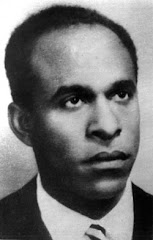
Frantz Fanon (1925-1961)
"Now, political education means opening minds, awakening them, and allowing the birth of their intelligence as [Aime] Cesaire said, it is 'to invent souls.' To educate the masses politically does not mean, cannot mean, making a political speech. What it means is to try, relentlessly and passionately, to teach the masses that everything depends on them."
Edward Said (1935-2003)
“I take criticism so seriously as to believe that, even in the midst of a battle in which one is unmistakably on one side against another, there should be criticism, because there must be critical consciousness if there are to be issues, problems, values, even lives to be fought for."
Antonio Gramsci (1891-1937)
“The challenge of modernity is to live without illusions and without becoming disillusioned. There must be pessimism of the intellect and optimism of the will.”
Susan Sontag (1933-2004)
"Do stuff. Be clenched, curious. Not waiting for inspiration’s shove or society’s kiss on your forehead. Pay attention. It’s all about paying attention. Attention is vitality. It connects you with others. It makes you eager. Stay eager."
Kofi Natambu, editor of The Panopticon Review, is a writer, poet, cultural critic, and political journalist whose poetry, essays, criticism, reviews, and journalism have appeared in many literary magazines, journals, newspapers, and anthologies. He is the author of a biography MALCOLM X: His Life & Work (Alpha Books) and two books of poetry: THE MELODY NEVER STOPS (Past Tents Press) and INTERVALS (Post Aesthetic Press). He was the founder and editor of SOLID GROUND: A NEW WORLD JOURNAL, a national quarterly magazine of the arts, culture, and politics and the editor of a literary anthology NOSTALGIA FOR THE PRESENT (Post Aesthetic Press). Natambu has read his work throughout the country and given many lectures and workshops at academic and arts institutions. He has taught American literature, literary theory and criticism, cultural history and criticism, film studies, political science, creative writing, philosophy, critical theory, and music history and criticism (Jazz, Blues, R&B, Hip Hop) at many universities and colleges. He was also a curator in the Education Department of Detroit’s Museum of African American History. Born in Detroit, Michigan, Natambu currently lives in Berkeley, California with his wife Chuleenan.