When
John F. Kennedy became president in 1961, African Americans faced
significant discrimination in the United States. Throughout much of the
South they were denied the right to vote, barred from public facilities,
subjected to violence including lynching, and could not expect justice
from the courts. In the North, Black Americans also faced discrimination
in housing, employment, education, and many other areas.
Progress and Protests: 1954-1960
In 1954, the Supreme Court ruled unanimously in Brown v. Board of
Education that racial segregation in public schools was
unconstitutional. Many southern political leaders invoked the tenth
amendment or “states’ rights” to justify segregation and claimed the
desegregation decision violated the rights of states to manage their
systems of public education. They responded with defiance, legal
challenges, delays, or token compliance. As a result, school
desegregation proceeded very slowly. By the end of the 1950s, fewer than
10 percent of Black children in the South were attending integrated
schools.
The pace of civil rights protests rose sharply in response to the
Supreme Court's decision. Martin Luther King Jr. led a boycott that
ended segregated busing in Montgomery, Alabama. In 1957, National Guard
troops under orders from President Dwight D. Eisenhower enforced the
desegregation of Little Rock Central High School in Arkansas. But, even
after Little Rock, school integration was painfully slow, and
segregation in general remained largely untouched.
In February 1960, four Black college students sat down at a
segregated Woolworth's lunch counter in Greensboro, North Carolina, and
asked to be served. They refused to leave their seats after being denied
service. Within days, more than 50 students had volunteered to continue
the sit-in, and within weeks the movement had spread to other college
campuses. Sit‑ins and other protests swept across the South in early
1960, touching more than 65 cities in 12 states. Roughly 50,000 young
people joined the protests that year.
The Election of 1960
By the 1960 presidential campaign, civil rights had emerged as a
crucial issue. Just a few weeks before the election, Martin Luther King
Jr. was arrested while leading a protest in Atlanta, Georgia. John
Kennedy phoned his wife, Coretta Scott King to express his concern,
while a call from Robert Kennedy to the judge helped secure her
husband's safe release. The Kennedys' personal intervention led to a
public endorsement by Martin Luther King Sr., the influential father of
the civil rights leader. The publicizing of this endorsement, combined
with other campaign efforts, contributed to increased support among
Black voters for Kennedy.
Across the nation, almost 70 percent of African Americans voted for
Kennedy, and these votes provided the winning edge in several key
states. When President Kennedy took office in January 1961, African
Americans had high expectations for the new administration.
But Kennedy's narrow election victory and small working margin in
Congress contributed to his cautious navigation of civil rights issues.
He was reluctant to lose southern support for legislation on many fronts
by pushing too hard on civil rights legislation. Instead, encouraged by
staff, he appointed unprecedented numbers of African Americans to
high-level positions in the administration and strengthened the Civil
Rights Commission. He spoke out in favor of school desegregation,
praised a number of cities for integrating their schools, and put Vice
President Lyndon Johnson in charge of the President's Committee on Equal
Employment Opportunity. Attorney General Robert Kennedy turned his
attention to voting rights, initiating five times the number of suits
brought during the previous administration.
The Freedom Rides
President Kennedy may have been reluctant to push ahead with civil
rights legislation, but millions of African Americans forged ahead.
Eventually, the administration was compelled to act.
For decades, seating on buses in the South had been segregated, along
with bus station waiting rooms, rest rooms, and restaurants. In May
1961, the Congress of Racial Equality (CORE), led by James Farmer,
organized integrated Freedom Rides to defy segregation in interstate
transportation. Freedom Riders were arrested in North Carolina and
beaten in South Carolina. In Alabama, a bus was burned, and the riders
attacked with baseball bats and tire irons. Attorney General Robert
Kennedy sent 400 federal marshals to protect the Freedom Riders and
urged the Interstate Commerce Commission to order the desegregation of
interstate travel.
James Meredith and the Integration of Ole Miss
In 1962, James H. Meredith Jr., an African American Air Force
veteran, applied for admission to the all-white University of
Mississippi, known as "Ole Miss." He attempted to register four times
without success.
Long telephone conversations between the president, the attorney
general, and Mississippi Governor Ross Barnett failed to produce a
solution. When federal marshals accompanied Meredith to campus in
another attempt to register for classes, rioting erupted by white
protesters. Two people died and dozens were injured. President Kennedy
mobilized the National Guard and sent federal troops to the campus.
Meredith registered the next day and attended his first class. This was
the first step in ending segregation at the University of Mississippi.
Martin Luther King Jr., Bull Connor, and the Demonstrations in Birmingham
In the spring of 1963, Martin Luther King Jr., and Reverend Fred
Shuttlesworth launched a campaign of mass protests in Birmingham,
Alabama, which King called the most segregated city in America.
Initially, the demonstrations had little impact. Then, on Good Friday,
King was arrested and spent a week behind bars, where he wrote one of
his most famous meditations on racial injustice and civil disobedience,
"Letter from Birmingham Jail." Meanwhile, James Bevel, another organizer
of the Birmingham Campaign, rallied Black youths to march in the
streets at the beginning of May. Birmingham City Commissioner Eugene
"Bull" Connor used police dogs and high-pressure fire hoses to put down
the peaceful demonstrations. Nearly a thousand young people were
arrested. The violence was broadcast on television to the nation and the
world.
Invoking federal authority, President Kennedy sent several thousand
troops to an Alabama air base, and his administration responded by
speeding up the drafting of a comprehensive civil rights bill.
Integrating the University of Alabama
Governor George Wallace had vowed at his inauguration to defend
"segregation now, segregation tomorrow, and segregation forever." In
June 1963, he upheld his promise to "stand in the schoolhouse door" to
prevent two Black students from enrolling at the University of Alabama.
To protect the students and secure their admission, President Kennedy
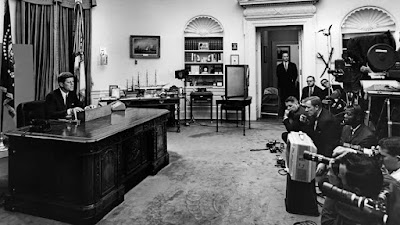
federalized the Alabama National Guard. And on the evening of June 11,
the president addressed the nation.
Kennedy defined the civil rights crisis as moral, as well as
constitutional and legal. He announced that major civil rights
legislation would be submitted to the Congress to guarantee equal access
to public facilities, to end segregation in education, and to provide
federal protection of the right to vote. A few hours later, Medgar
Evers, the best-known civil rights activist in Mississippi and a field
officer in the NAACP, was murdered outside his home.
The March on Washington
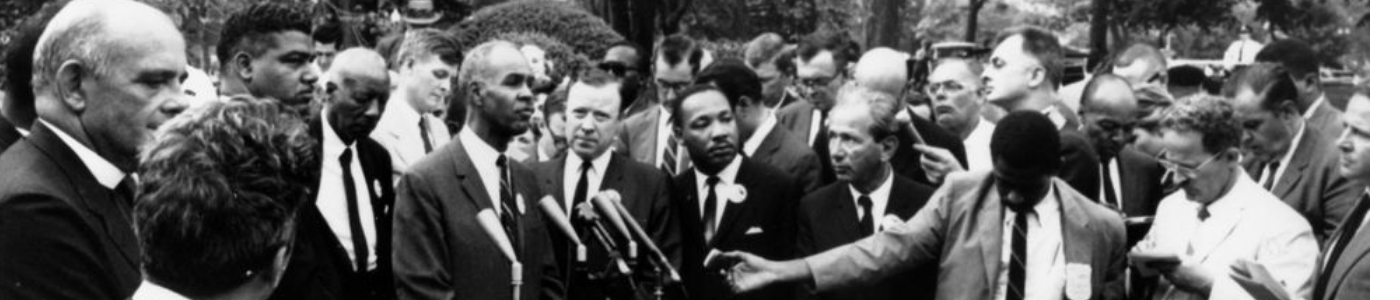
On August 28,1963, an interracial and interfaith crowd of more than
250,000 Americans demonstrated for social and economic justice in the
March on Washington for Jobs and Freedom. Key civil rights figures led
the march including A. Philip Randolph, Roy Wilkins, Bayard Rustin,
Whitney Young, and John Lewis. The most memorable moment came when
Martin Luther King Jr. delivered his "I Have a Dream" speech from the
steps of the Lincoln Memorial. President Kennedy, concerned about the
potential impact of the March on his pending civil rights legislation,
initially did not support the event. But, after the successful
conclusion of the March, he invited civil rights leaders to the White
House where they discussed the need for bi-partisan support of civil
rights legislation.
The Civil Rights Act of 1964
During the summer and fall of 1963, the Kennedy administration worked
to build bi-partisan support for the legislation. In late fall, the
comprehensive civil rights bill cleared several hurdles in Congress and
won the endorsement of House and Senate Republican leaders. It was not
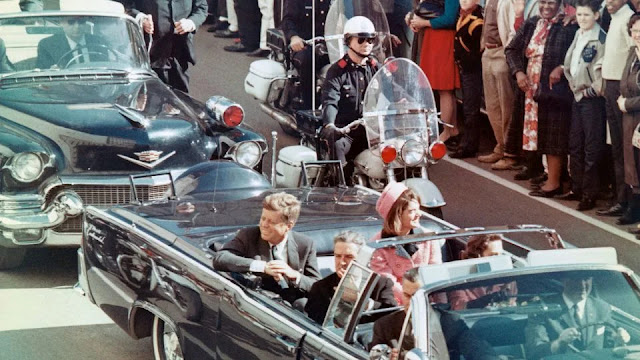
passed, however, before November 22, 1963, when President Kennedy was
assassinated. The bill was left in the hands of Lyndon B. Johnson.
Before becoming vice president, Johnson had served more than two decades
in Congress as a congressman and senator from Texas. He used his
substantial political acumen, the assistance of Robert Kennedy’s Justice
Department, and the outpouring of emotion after President Kennedy’s
assassination to generate passage of the Civil Rights Act.
Provisions of the legislation included: (1) protecting African
Americans against discrimination in voter qualification tests; (2)
outlawing discrimination in hotels, motels, restaurants, theaters, and
all other public accommodations engaged in interstate commerce; (3)
authorizing the US Attorney General's Office to file legal suits to
enforce desegregation in public schools; (4) authorizing the withdrawal
of federal funds from programs practicing discrimination; and (5)
outlawing discrimination in employment in any business exceeding 25
people and creating an Equal Employment Opportunity Commission to review
complaints.
Passed on July 2, 1964, the Civil Rights Act was a crucial step in
achieving the civil rights movement's initial goal: full legal
equality. Another milestone – the Voting Rights Act -- was passed in
1965. But more work has remained to be done. Although passage of these
laws were significant achievements in the 1960s, discriminatory
practices in many areas continue as civil rights activists strive for
equality in the 21st century.