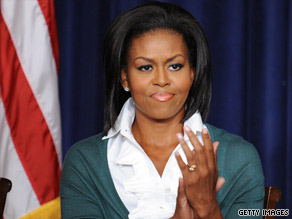
First lady Michelle Obama listens to remarks during a forum at the White House on Friday
 Hyungwon Kang/Reuters
Michelle Obama discussing women and health care at the White House on Friday
.
http://prescriptions.blogs.nytimes.com/2009/09/18/michelle-obama-health-care-overhaul-important-to-women/?nl=us&emc=politicsemailema3
Michelle Obama: Health Care Overhaul ‘Next Step’ for Women
By JEFF ZELENY
September 18, 2009
New York Times
First Lady Michelle Obama said Friday that overhauling the nation’s health care system was of critical importance to women and part of “the next step” in the long quest to assure full opportunities and equality for women.
“Women aren’t just disproportionately affected by this issue because of the roles that we play in families,” Mrs. Obama said. “Women are affected because of the jobs that we do in this economy.”
In a morning speech at the Eisenhower Executive Office Building on the grounds of the White House, the first lady took one of her biggest steps yet into the health care discussions under way in Congress. She urged women to pay attention and get involved in the debate, saying it should be of particular concern to them and their families.
“We all know that women are more likely to work part-time or to work in small companies or businesses that don’t provide any insurance at all,” Mrs. Obama said. “Women are affected because, as we heard, in many states, insurance companies can still discriminate because of gender. And this is still shocking to me.”
In some states across the country, she said, insurance companies can still discriminate because of gender. She recalled instances where women had been denied coverage because of a pre-existing condition – “like having a C-section, or having had a baby.”
“These are the kind of facts that still wake me up at night,” she said.
In her speech, Mrs. Obama also told the story of one of their daughters, Sasha, who would not stop crying when she was 4 months old. A doctor’s visit revealed that she might have meningitis, which she ultimately did not, but the illness produced a scare.
“It is that moment in our lives that flashes through my head every time we engage in this health-insurance conversation. It’s that moment in my life because I think about, what on earth would we had done if we had not had insurance?” Mrs. Obama said. “What would have happened to that beautiful little girl, if we hadn’t been able to get to a pediatrician, who was able to get us to an emergency room?”
In the first eight months of the Obama presidency, the first lady has only occasionally weighed in on policy discussions, a strategy intended to keep her away from controversial topics. But the speech on Friday, delivered to leaders of several women’s groups, signaled the beginnings of an increasing role for her in the health care debate.
“She’s obviously a very popular figure in America,” said Robert Gibbs, the White House press secretary. “If she can help out, we’re happy to have her.”
“Women aren’t just disproportionately affected by this issue because of the roles that we play in families,” Mrs. Obama said. “Women are affected because of the jobs that we do in this economy.”
In a morning speech at the Eisenhower Executive Office Building on the grounds of the White House, the first lady took one of her biggest steps yet into the health care discussions under way in Congress. She urged women to pay attention and get involved in the debate, saying it should be of particular concern to them and their families.
“We all know that women are more likely to work part-time or to work in small companies or businesses that don’t provide any insurance at all,” Mrs. Obama said. “Women are affected because, as we heard, in many states, insurance companies can still discriminate because of gender. And this is still shocking to me.”
In some states across the country, she said, insurance companies can still discriminate because of gender. She recalled instances where women had been denied coverage because of a pre-existing condition – “like having a C-section, or having had a baby.”
“These are the kind of facts that still wake me up at night,” she said.
In her speech, Mrs. Obama also told the story of one of their daughters, Sasha, who would not stop crying when she was 4 months old. A doctor’s visit revealed that she might have meningitis, which she ultimately did not, but the illness produced a scare.
“It is that moment in our lives that flashes through my head every time we engage in this health-insurance conversation. It’s that moment in my life because I think about, what on earth would we had done if we had not had insurance?” Mrs. Obama said. “What would have happened to that beautiful little girl, if we hadn’t been able to get to a pediatrician, who was able to get us to an emergency room?”
In the first eight months of the Obama presidency, the first lady has only occasionally weighed in on policy discussions, a strategy intended to keep her away from controversial topics. But the speech on Friday, delivered to leaders of several women’s groups, signaled the beginnings of an increasing role for her in the health care debate.
“She’s obviously a very popular figure in America,” said Robert Gibbs, the White House press secretary. “If she can help out, we’re happy to have her.”
http://edition.cnn.com/2009/POLITICS/09/18/michelle.obama.health.reform/
All,
Very important support and advocacy for healthcare reform by Michelle Obama...
Kofi
Michelle Obama could be secret weapon in health care reform
STORY HIGHLIGHTS
First lady Michelle Obama delivers remarks on health care reform Friday
Obama recalls personal health stories about her daughter and father
Analysts say her personal touch on the thorny issue could help her husband
WASHINGTON (CNN) -- She stood by her husband throughout the contentious 2008 presidential campaign and during heated health care reform debates during his presidency.
First lady Michelle Obama listens to remarks during a health care forum at the White House on Friday.
Now, as the debate is reaching a fever pitch, first lady Michelle Obama is weighing in on the issue by focusing on how health care can affect families.
"What she's doing is putting a personal and human face on the issue ... there's nothing more crucial," said Washington Post columnist Sally Quinn. "Everybody gets sick, and everybody has someone in the family that gets sick."
"I think if you can humanize it and personalize it, it suddenly brings it home to people -- especially those who are screaming and yelling about the government taking over," Quinn said.
On Friday, the first lady, a former hospital administrator, spoke about the issue to a crowd at the White House, highlighting her own family's experience with health care.
In one touching moment, Obama recalled when daughter Sasha exhibited signs of potentially deadly meningitis when she was 4 months old.
"We didn't know what, but he [the doctor] told us she could have meningitis, so we were terrified. He said get to the emergency room right away," she said. "Fortunately, things worked out."
"But it is that moment in our lives that flashes through my head every time we engage in this health insurance conversation. It's that moment in my life, because I think about what on earth would we have done if we had not had insurance."
Mrs. Obama not only faced the issue as a mother, but also as a daughter.
"My father had multiple sclerosis. He contracted it in his 20s. ... He was able to get up and go to work every day, even though it got harder for him as he got sicker and more debilitated. And I find myself thinking what would we had done as a family on the south side of Chicago if my father hadn't had insurance."
Quinn says that personal story is critical in the health care debate -- something that has been lacking in the president's message so far, which has often been deemed by pundits as too policy-oriented and too surgical in nature.
"What she's doing is she's humanizing the issue. And I think that has been missing in their [White House] campaign," she says. "He's been so focused on the details and the strategy and the money that the individual problems and issues have seemed to have gotten lost in the fray."
Gloria Borger, a CNN senior political analyst, agreed.
"I think she's always been a great asset to him," she said. "She can help in this health care debate by not getting involved in the minutiae of the bills, but essentially emphasizing the reason we need health care reform. And that's what she will stick to."
Michelle Obama was a lightning rod -- both good and bad -- throughout her husband's presidential campaign. Now, in her role as first lady, she has garnered greater support among American voters from both parties.
A national survey by the Pew Research Center for People and the Press in April found that the first lady's positive ratings have increased since her husband took office. The poll found that 76 percent of Americans had a favorable opinion of her, which is up from 68 percent in January.
"Much of the change has come among Republicans, especially Republican women," the organization noted. "About two-thirds of Republican women [67 percent] have a favorable impression of Michelle Obama, a gain of 21 points since January."
But a first lady's involvement in health care reform is nothing new.
In the early '90s, first lady Hillary Clinton spearheaded the Clinton administration's push for reform, holding meetings, testifying before congressional committees and, in general, taking charge of the issue.
"Hillary Clinton was the architect of health care reform," Borger said.
As for whether Michelle Obama is mirroring Clinton's role, the answer from both Borger and Quinn is absolutely not.
"I don't see any parallels at all. ... The Clintons came in, and they had run on the platform of buy one, get one free, a co-presidency and all of that. And she took over this huge thing herself. Bill wasn't doing it," Quinn said.
She said the president, not Michelle Obama, was the was the one who pushed health care reform in his early domestic agenda.
"He promised in his campaign, and then he's the one that did it. This is not Michelle's plan. She hasn't been doing the town meetings and the national press conferences," she added.
Borger said that the first lady is playing a completely different role.
"It's a much more supportive role, and it's a role out of the policy arena, but more in the arena of just why we ought to think we need reform."
All About Michelle Obama • Health Care Policy
All,
Very important support and advocacy for healthcare reform by Michelle Obama...
Kofi
Michelle Obama could be secret weapon in health care reform
STORY HIGHLIGHTS
First lady Michelle Obama delivers remarks on health care reform Friday
Obama recalls personal health stories about her daughter and father
Analysts say her personal touch on the thorny issue could help her husband
WASHINGTON (CNN) -- She stood by her husband throughout the contentious 2008 presidential campaign and during heated health care reform debates during his presidency.
First lady Michelle Obama listens to remarks during a health care forum at the White House on Friday.
Now, as the debate is reaching a fever pitch, first lady Michelle Obama is weighing in on the issue by focusing on how health care can affect families.
"What she's doing is putting a personal and human face on the issue ... there's nothing more crucial," said Washington Post columnist Sally Quinn. "Everybody gets sick, and everybody has someone in the family that gets sick."
"I think if you can humanize it and personalize it, it suddenly brings it home to people -- especially those who are screaming and yelling about the government taking over," Quinn said.
On Friday, the first lady, a former hospital administrator, spoke about the issue to a crowd at the White House, highlighting her own family's experience with health care.
In one touching moment, Obama recalled when daughter Sasha exhibited signs of potentially deadly meningitis when she was 4 months old.
"We didn't know what, but he [the doctor] told us she could have meningitis, so we were terrified. He said get to the emergency room right away," she said. "Fortunately, things worked out."
"But it is that moment in our lives that flashes through my head every time we engage in this health insurance conversation. It's that moment in my life, because I think about what on earth would we have done if we had not had insurance."
Mrs. Obama not only faced the issue as a mother, but also as a daughter.
"My father had multiple sclerosis. He contracted it in his 20s. ... He was able to get up and go to work every day, even though it got harder for him as he got sicker and more debilitated. And I find myself thinking what would we had done as a family on the south side of Chicago if my father hadn't had insurance."
Quinn says that personal story is critical in the health care debate -- something that has been lacking in the president's message so far, which has often been deemed by pundits as too policy-oriented and too surgical in nature.
"What she's doing is she's humanizing the issue. And I think that has been missing in their [White House] campaign," she says. "He's been so focused on the details and the strategy and the money that the individual problems and issues have seemed to have gotten lost in the fray."
Gloria Borger, a CNN senior political analyst, agreed.
"I think she's always been a great asset to him," she said. "She can help in this health care debate by not getting involved in the minutiae of the bills, but essentially emphasizing the reason we need health care reform. And that's what she will stick to."
Michelle Obama was a lightning rod -- both good and bad -- throughout her husband's presidential campaign. Now, in her role as first lady, she has garnered greater support among American voters from both parties.
A national survey by the Pew Research Center for People and the Press in April found that the first lady's positive ratings have increased since her husband took office. The poll found that 76 percent of Americans had a favorable opinion of her, which is up from 68 percent in January.
"Much of the change has come among Republicans, especially Republican women," the organization noted. "About two-thirds of Republican women [67 percent] have a favorable impression of Michelle Obama, a gain of 21 points since January."
But a first lady's involvement in health care reform is nothing new.
In the early '90s, first lady Hillary Clinton spearheaded the Clinton administration's push for reform, holding meetings, testifying before congressional committees and, in general, taking charge of the issue.
"Hillary Clinton was the architect of health care reform," Borger said.
As for whether Michelle Obama is mirroring Clinton's role, the answer from both Borger and Quinn is absolutely not.
"I don't see any parallels at all. ... The Clintons came in, and they had run on the platform of buy one, get one free, a co-presidency and all of that. And she took over this huge thing herself. Bill wasn't doing it," Quinn said.
She said the president, not Michelle Obama, was the was the one who pushed health care reform in his early domestic agenda.
"He promised in his campaign, and then he's the one that did it. This is not Michelle's plan. She hasn't been doing the town meetings and the national press conferences," she added.
Borger said that the first lady is playing a completely different role.
"It's a much more supportive role, and it's a role out of the policy arena, but more in the arena of just why we ought to think we need reform."
All About Michelle Obama • Health Care Policy