Thursday, March 11, 2010

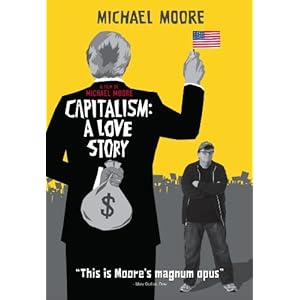
An Open Letter From Michael Moore Promoting 'Capitalism: A Love Story' And Other Related Matters


All,

I LOVE Michael Moore. Always have. I met him once personally in the early 1980s in Detroit when he wrote for and edited a very good muckraking radical weekly newspaper that he founded called The Michigan Voice (it was originally called The Flint Voice after his hometown of Flint, Michigan but he expanded the newspaper's reach to take in coverage of the entire state). He was very impressive when I met him in 1982-83 and I think he and his work still are. What I really like and deeply respect about the man and his work is that he's not another smug, cynical, and gliberal dilettante who thinks (and acts like) he's "above it all". In other words: He really gives a damn and actually puts his own ideas and principles on the line in his art and life. He's an actively engaged, critical, and caring artist and citizen in an era where far too often those things are simply dismissed, ignored, or ridiculed. That in itself doesn't make him perfect or flawless by any means of course but at least there is a fundamental core of real dedication, sincerity, and honesty in the man and his work that gives him genuine credibility and reliability in my book (unlike many of the sneering pseudointellectuals and passive-aggressive nihilistic pinheads who roam the halls of academia and hopelessly sectarian enclaves of "armchairville" where "revolutionaries" --hah!-- sit around allday talking infantile smack about whose politics and art are the "purest.") Dumbass Divas!

So let's hear it for the artists/activists/citizens who do far more than merely talk trash and vainly posture like it's all about them and their abstract "goals" for the rest of us...So continue to kick ass and take names Michael. I hear ya...

Kofi


Sell! Buy! Rebel! 'Capitalism: A Love Story' Is Out Today on DVD (...and what is up with Wal-Mart?)!

Tuesday, March 9th, 2010

Friends,

DVD-Day for "Capitalism: A Love Story" has finally arrived for all you good folks who just couldn't figure out how to fit in a trip to the movie theater between your three part-time jobs -- or simply weren't able to afford the $10 for the small popcorn at your local rip-off cine-mall when my film was released last fall.

What's with you people?! I make these movies for you to see on a big screen, in the dark, with 200 strangers who want to hoot and holler along with you. Those of you who did see it -- thank you!! You helped to make it the 8th-largest grossing documentary of all time (and, as of Sunday morning, "Capitalism" had sold more tickets than Best Picture winner, "The Hurt Locker").

But for those of you who didn't get to the theater, what's your excuse? Didn't want to sit through 20 minutes of TV ads up on the screen before the movie started? Don't like sitting next to people who have 6 important cell calls to make during the film? Feet get stuck to the floor after two hours of people spilling their 164 oz. sodas, thus preventing you from getting up when the film's over? Jeez, what babies!

Well, starting today, you can now OWN your very own DVD (or Blu-ray) copy of my latest action/romance/horror film, "Capitalism: A Love Story" -- and watch it in the comfort of your soon-to-be-foreclosed home! Get it cheap at Amazon, rent or stream it fast at Netflix, or go down to the local Wal-Mart that put your locally-owned mom & pop video store outta business and pick it up for pennies on the dollar. See! Something for everyone!

The fact that Wal-Mart is carrying this movie -- a movie that specifically exposes Wal-Mart's past practice of taking out secret "dead peasant" life insurance policies on its employees and naming itself as the lone beneficiary should the employee meet an "untimely" early death -- well, my friends, need you any further proof that Corporate America is so secure in its position as the ruler of our country, so sure of its infallible power that, yes, they can even sell a movie that attacks them because it poses absolutely no threat to them?

A sane person would think that Wal-Mart would never carry "Capitalism: A Love Story" because it's simply not in their best interests to inform their customers of their shady past. After all, many Wal-Mart stores wouldn't carry "Bowling for Columbine" back in 2003. That was *Kmart* I went after (for selling the ammo to the Columbine killers)! But I guess that was too Mart-y close for Wal-Mart -- so no DVDs were allowed of that film on the shelves of some of the world's biggest retail chain's stores (the movie studio estimated that cost them $2.5 million in sales).

But seven years later, it's a new day in America. The corporate coup is complete. Corporations like Wal-Mart now call all the shots, write all the laws, pay off almost all the congressmen and essentially (along with the other Fortune 500 companies and Wall Street) rule the nation. They've helped to eliminate consumer choice and the free market while convincing you they are all for "free enterprise" and the "U.S.A."

More importantly, they've snuffed out any criticism or opposition. They've even co-opted liberals, like the people who made the wonderful documentary, "Food, Inc." The last half-hour of this movie includes -- I kid you not -- an homage to Wal-Mart as the filmmakers swoon over this kinder, gentler company that has decided to -- bless them! -- put an organic food counter in their stores! Thank you, Wal-Mart! Kumbaya! (And hey, granolaheads, don't forget to flash a smile on the way out of the store at the "greeter" who can't afford to see a doctor.)

Yes, Wal-Mart, by selling "Capitalism," is saying to me: "Go ahead Mike and expose us all you want! Hahahhaha! We're so convinced that the public has either been dumbed down or made numb enough to not give a lick about whatever it is you're saying about us and capitalism. We can sell a million of these and it won't make a damn bit of difference about our ability to rule the world. So knock yourself out, big guy! Hehehehehehe. Go ahead and put your little movie on our shelves. It will never start a revolution."

Or so they think.

But what if they're wrong?

What if they and their brethren -- the banks, the insurance companies, the hedge fund sociopaths -- are too confident we won't fight to get our country back? They think that because they, the richest 1%, now own more financial wealth than 95% of all Americans COMBINED, that they can get away with anything. Perhaps they're right. Perhaps they're not.

I did ask someone at the studio why Wal-Mart was so willing to carry this movie.

"They're no dummies," he told me. "They know who shops in their stores -- working people, blue collar, the people hit hardest by the economy. They know your movie will resonate with them and that only means one thing -- ka-ching, ka-ching at the cash register!"

Happy now? Good. I thought I'd cheer you up on my big day!

Listen, let me cut right to it: I am passionate about this movie. It is not only my most personal film, it is the most vital and necessary film I've made in my 20 years as a filmmaker. Period. I told my crew at the start of this movie, "Let's make this film so brutally honest that NO ONE with any money will ever want to write us a check to make another movie!" And so we set off to make the most dangerous documentary we could.

As gloomy as our situation in the world looks these days, I refuse to give up. If there's even the slightest chance that we can turn this around, then I want to help, I want to be part of the fight along with you.

And I want you to see this movie. Not next week (by then, the health insurance companies will have won). Not next month (by then, the banks will have scuttled any new regulations). I need you to watch it right now and I need you to get as many of your friends and family to watch it as soon as possible -- and then I want you to do something.

That "something" can be found in the 80 new minutes of material and DVD extras I've put on this home video. It's 80 minutes of bold ideas and things we can do to get our country back. No one has seen these extras -- and today will be the first time they're available on the home video of this movie.

Well, that's the pitch. I get nothing $-wise from the sale of these DVDs. I just want you to see this movie because, if you haven't, I think you will not only be "entertained" for 2 hours, you'll be ready to rock-n-roll your way down to the local Citibank and create the nonviolent ruckus they need to see. THIS IS OUR COUNTRY -- not theirs. They have plundered and pillaged long enough. Homes in this country receive foreclosure filings every eight seconds! This must be stopped.

Let my movie be the tool you use to rise up and become the citizens I know you want to be. If not now, when?

Thank you for all your support over all these years. You must know by now that I honestly couldn't make these movies without you.

My absolute gratitude and best wishes for you and yours,
Michael Moore
MMFlint@aol.com
MichaelMoore.com

P.S. To order "Capitalism: A Love Story" from Amazon, http://www.amazon.com/Capitalism-Love-Story-Michael-Moore/dp/B0030Y11XS/ You can also add "Capitalism" to your Netflix and Blockbuster queues.

P.P.S. To see just how secure Wal-Mart feels in its place as King of the World, I'll take a spin around to some Wal-Marts this weekend and see if the DVD has been pulled off the shelves. I'll let you know!


Join Mike's Mailing List | Follow Mike on Twitter | Join Mike's Facebook Group | Become Mike's MySpace Friend


Sunday, February 28, 2010

Interview with Historian and Scholar Robin D. G. Kelley On Thelonious Monk, Jazz History, and the Cultural Politics of American Art

Left to Right: Thelonious Monk (in beret, ascot, and sunglasses), Howard McGhee, Roy Eldridge, and Teddy Hill in front of the legendary Minton's Playhouse in Harlem, NY 1947--Photograph by William Gottlieb


Dr. Robin D.G. Kelley

Robin Kelley at City Lights Bookstore in San Francisco, November 3, 2009
(photo by Chuleenan)


All,

The following interview with Dr. Robin D. G. Kelley was conducted by myself for The Panopticon Review and is a wide ranging discussion of Dr. Kelley's extraordinary and critically acclaimed new book Thelonious Monk:
The Life and Times of An American Original (New Press, 2009). Dr. Kelley is currently Professor of History and American Studies and Ethnicity at the University of Southern California (USC). He is a distinguished scholar and activist and the author of many books including Race Rebels: Culture, Politics, and the Black Working Class; Yo’ Mama’s Disfunktional!: Fighting the Culture Wars in Urban America; Hammer and Hoe: Alabama Communists During the Great Depression; Freedom Dreams: The Black Radical Imagination; To Make Our World Anew: A History of African Americans (with Earl Lewis); and, most recently, Black, Brown and Beige: Surrealist Writings from Africa and the Diaspora, University of Texas Press, 2009 (Edited by Franklin Rosemont and Robin D.G. Kelley).

Kofi

PR: Your text focuses a great deal of attention on the aesthetic and social relationship between the communal and collaborative ethos governing Monk's creative use, critical examination, and personal interpretation and revision of the African American 'Jazz' tradition in his work as both improvisor and composer. What is truly distinctive and idiosyncratic about Monk's singular approach to the innovative musics of the 1930s and '40s (i.e. 'Swing' and 'Bebop') and his own subsequent evolution as an independent musical stylist and innovator? Why in your view is Monk such an important composer of modern American music generally in the 1945-1965 period and what specific role does Monk's improvisational skills play in this development?

ROBIN: This is a very difficult question and I'm not sure I can do justice to it without writing a small book. As composer, no one was writing melodic lines like Monk. He often broke with the standard 16 and 32 bar song form and created a new metric and harmonic architecture for his music: “Introspection,” for example, has 36 bars and a wandering harmonic movement chock full of whole tone harmony, which very few jazz composers were building on in those days. Or take a song like “Brilliant Corners,” with its bizarre seven bar bridge, shifting tempos, melody with huge intervallic leaps. Or “Boo Boo’s Birthday,” a simple, swinging melody written in 20 bars. And of course, there is no song like “’Round Midnight,” with its insistent descending chromatic harmony, that haunting, startling melody, the sheer beauty derived from a minor tonality and rich dissonance. He also wrote many difficult songs, twisting, swift melodies that gave even the best musicians a run for their money: “ Gallop’s Gallop,” “Trinkle Tinkle,” “Work,” “Skippy.” These tunes proved so difficult, in fact, that they were often recorded once or twice and then dropped entirely.

Yet for all of Monk’s modernism, there was something very old fashioned about his playing. Indeed, I like to think of Monk as “Janus faced,” looking backward and forward simultaneously. He comes out of stride piano, his musical fathers being James P. Johnson, Willie “the Lion” Smith, Fats Waller, etc., and he appropriated many of the “tricks” these great pianists had up their sleeves—the ability to bend notes, suspend time, turn the beat around deliberately, among other things. I think Monk simply exaggerated some of these old tricks and rather than smooth out the jagged edges, like an Art Tatum, he lived in the jagged regions of the piano.

In a word, Monk occupied a category unto himself. Despite efforts to place him squarely within the “bebop school” (whatever that might be), unlike the beboppers, Monk was interested in slower tempos; in fusing older jazz ideas of improvising on the melody rather than chords; creating new architecture rather than run alternate changes over tin pan alley song form; interested more in making unique melodic statements than demonstrating virtuosity.

PR: In your examination of Monk's personal background as an artist and individual struggling with the limitations and problems imposed by the racial/social dynamics of the cultural, economic, and political doctrines of white supremacy as well as the psychological and emotional challenges of his bipolar disorder, you go to great pains to show how Monk personally succeeded and failed to address the complexities and tensions of these forces in his life. To what degree do you think Monk's music was affected either positively or negatively by these forces, and how did these factors impact his relations with his family and fellow artists and creative colleagues?

ROBIN: It is hard to speculate in hindsight because Monk left behind a body of work that many now consider genius. Some scholars have argued that manic depression, specifically the swings from highs to lows and back again, enhanced artistic vision and they cite as evidence the large number of artists who suffered from bipolar disorder. And then there is the argument that suffering and struggle are sources of great art—hence the African American musical tradition. I’m skeptical of both assertions because I think every artist must be understood in her or his specific context. For me, racism negatively affected Monk’s life and work by denying him opportunities to write, perform, and make a decent living (early on). On the other hand, the black community he grew up in, the efforts of his mother to encourage his playing, the kind of education he received – formal and informal – profoundly shaped both his music and his creative confidence to make the music he heard. So in this case, race, place and class isn’t a lack but an asset.

On the question of Monk’s mental illness, I come down on the side that it did not enhance or enrich his work or give him unique vision he would not have had otherwise. I think he still would have been “Monk” and, in fact, may have been a more prolific composer. However, I do think the kind of meds and medical treatment he received mattered more than the actual disease. Thorazine made his fingers stiff and it was often a struggle for him just to play. When he finally received lithium treatments, evidence suggests it deadened his creative drive (though it might have already diminished) and contributed to his decision to stop playing, though it successfully stabilized him. Most importantly, his approach to playing and composition were products of unceasing study and practice. He had a way of playing and writing that was labored over and I see no evidence that his manic phases contributed.

PR: In your book you go to great lengths to critically detail and expose the often oppressive and clearly exploitive working conditions and brutally capitalist political economy that black artists were forced to work in during the 20th century. How important, even central, do you think the intrusive role of agents, promoters, club owners, recording companies, and critics not only played in Monk' career but his specific generation of black musicians and composers in the 1940-1970 period?

ROBIN: One of the reasons I “followed the money,” if you will, had to do with the fact that Monk’s experience was typical of most musicians, not exceptional. Following his life exposes the music industry—especially the jazz industry—for what it was: a system of artistic production founded on exploitation. It is a system that crosses all generations of the 20th century and did not change much after so-called jazz migrated from popular culture to “high art.” But what I also document and think is equally important is the role musicians themselves played in trying to take control of their “business,” from Gigi Gryce’s efforts and musician-owned publishing, to the avant-garde’s attempt to escape the jazz club in favor of the community center, church basements, outdoor neighborhood venues. Monk wasn’t central to these movements but he was involved and his life provides a window into the constant struggle of musicians to wrestle over the means of distribution. Finally, I tried my best not to paint all musicians and all managers/owners/promoters/producers in stark terms. There were folks in the industry who believed in the music, sacrificed financially for the sake of art or in order to provide artists with more equitable terms, and the divisions between exploiter and exploited did not always cut across racial lines. If anything, I tried to provide a more complicated portrait of the jazz industry that, like capitalism itself, is wrought with contradiction and complexity and reveals not only the holes in this system but the role of human agency.

PR: What specific theoretical and scholarly implications and challenges do you think your biography of Monk holds for the future of historiography of 20th century African American artists and culture in general and Jazz musicians in particular? Why do you think your specific analytical and speculative approaches to the major questions of community and family as well as the different responses of various audiences to Monk's music as improvisor and composer is essential to any broader understanding of Monk's life and art?

ROBIN: Many, if not most, critics treat the book as primarily debunking common myths about Monk. While I did do that, even to the point of unearthing the process by which Monk was “invented,” the truth is I was less interested in what Monk was NOT than who he was, the nature of his creative process, how his family, community and the world that shaped his music and world view. To figure this out required different sources as well as a different framework for understanding the life and work of artists. First, I dug deeper into African American sources, especially the press and first-hand accounts from people who may not have been musicians but were connected the communities that shaped Monk. I found out, for example, that when most scholars assumed Monk wasn’t working (in the 1950s), black-owned clubs in the outer boroughs of New York hired him fairly regularly. There are many, many examples of what happens when we shift our purview from mainstream institutions to those that have been marginalized.

I also found that understanding Monk’s whole life—as a father, husband, uncle, brother, community member, school kid, etc.—opens a window into his creative process and says more about who he is as a man. While “context” in most modern biographies often means listing all the big historical events occurring around an artist, I found that for Monk (and most artists probably) it can often mean something seemingly “parochial” and local—his family relationships, what happened on his block, experiences that can only be located by seeing the larger world through his eyes rather than merely seeing the subject in a larger world, if that makes sense? Biographers of jazz musicians, in particular, should adopt similar approaches because it breaks the strange cycle of Birth/Genius/Addiction/Decline which seems to dominate so many books, often accompanied by a limited landscape that shifts easily from club to recording studio to concert hall to back alley. It also means treating these artists as complete (and developing) human beings who think about more than music and act in the world in relation to others.

Finally (and I don’t mean this is all I can say on the question), my book makes a somewhat provocative claim that it was hard even for Monk to “play Monk.” This is where the homemade rehearsal tapes and other unique sources come in. Biographers, in particular, have often took for granted or ignored how artists create, what kind of work it entails. I was fortunate to have access to these wonderful tapes which demonstrate just how much work went into Monk’s distinctive sound. Tied to this, of course, is the painstaking description of Monk’s “education.” Jazz is too often seen as an interior product of spontaneous genius, natural ability, even racially determined ability. My book exposes these claims as flawed conceits and restores to the music to the realm of creative intellectual activity.

PR: What is the larger cultural and social meaning of Monk's personal and creative quest for a truly independent and self sufficient musical identity and expression in the context of the constant pressures for commercial conformity and aesthetic commodification of his work as an artist in mid 20th century America and what does this intellectual , political, and psychological resistance to these pressures and demands on Monk's art and life tell us about both the Jazz tradition that informed and inspired Monk's creativity as a cultural worker and the larger U.S. musical, social, and cultural ethos that shaped the attitudes and values of American artists and audiences during the historical era that Monk participated in and contributed to?

ROBIN: This, too, is a difficult question to answer because I think both Monk and the jazz tradition of which he was a product and producer was always of two (or more) minds when it comes to broader pressures of commodification. On the one hand, he certainly went against the grain in terms of market pressures, dominant aesthetic values, not to mention the attitudes and demands of American audiences. Yes, he was a rebel, a disturber of the sonic peace, but as the context around him shifted—musically, politically, culturally—he ceased to be so disturbing and, in fact, to conservative critics who once thought he was worthless he became one of the last bastions of the “old” style music. On the other hand, neither Monk nor the majority of jazz musicians completely resisted the terms of the market. Monk always said he wanted “a hit.” The move from Harlem to 52nd Street was partly about making some money, getting some exposure, trying to make a living. Commodification of culture and art was a fact of life, and in the eyes of musicians who have few avenues to make a living, that alone wasn’t the problem. The problem was fairness, being heard, and convincing the industry that audiences would appreciate and buy good music without having to dumb down or mimic current trends. So there will be those who read my book who will come away surprised, if not disturbed, that Monk isn’t always resisting the market to travel his own path. Rather, he is CONFOUNDED by the market because in his view, to his ears, he makes music the people love, music that swings and sticks with the melody, music that ought to be a hit. After all, if Coleman Hawkins could record “Body and Soul” as a work of improvisation then why wouldn’t his songs fly off the shelf? But regarding the very last part of your question, let’s keep in mind that the period in which Monk operated in was full of flux and transition. The music changed to rapidly and yet Monk’s own aesthetic vision did not change one iota, even though his improvisations were always fresh and innovative. For me this means two things: 1) As scholars we must always pay attention to the “background noise” because it shapes how generations actually hear music. We can get caught up in the inherent qualities of a particular body of work but to hear it in 1960 rather than 1940 or 1980 can be fundamentally different experiences. 2) We need to do a better job of understanding musicians’ attitudes toward commodification and the cultural marketplace. Terms like cooptation, accommodation, resistance, even complicity, don’t always capture the complexity of these relationships. Following Monk’s path really shook up my own preconceptions and made me appreciate what it meant for black artists to desire “a hit.”

PR: What was the importance of Monk's relationship to his parent, siblings, wife, children, and other relatives as well as local community to his work as artist and citizen? To what degree did his wife Nellie specifically contribute to Monk's ability to function and prosper as a musician and composer in the crucial 1940-1960 period before global fame and critical acclaim began to give Monk a much higher profile publically and in the broader community of 20th century art and artists both here in the United States and in the rest of the world?

ROBIN: The first part of the question I think I answered above. His mother, Barbara Monk, and his wife Nellie, however, deserve special mention because it would have been impossible for Monk to sustain his career without their support. A good portion of the book documents their role and I don’t want to rehearse that here, but I can say that both women sacrificed a great deal to allow Monk to focus on music. He was never compelled to take a waged job, and both women worked and provided valuable income. Barbara, of course, not only left the South for NYC in order to ensure her children would enjoy a good education, but she paid for piano lessons, taught Thelonious hymns and provided a deep spiritual grounding, and encouraged him every step of the way. Nellie took many odd jobs to make ends meet, gave up certain career goals she harbored, and when Monk became ill she traveled with him frequently to care for him. More importantly, she knew the music and knew it well; she eventually became his road manager, business manager, hired and fired musicians, paid sidemen, took care of the taxes, gave advice about the music, and just become completely involved in the work. As I’ve written in the New York Times a few years ago (after Nellie died), I don’t think she was the exception. Indeed, there were many partners/wives, etc. who provided crucial support as well as musical and business knowledge to working musicians, but our biographers have not always done a good job documenting them. Certainly, a limited understanding of the male artist as creative, individual genius has put blinders on the role these women played and my book tries to rectify it. At the same time, I also suggest that Nellie struggled with this work and did not always like it. She had desires and dreams of her own that were sometimes dashed by her husband’s needs. I try to examine this, too.

PR: How did Monk negotiate the technical, spiritual, and expressive challenges of his art in his specific relationships and creative communication with other major, highly independent. and idiosyncratic artists in Jazz like Charlie Parker, Dizzy Gillespie, Miles Davis, Bud Powell, Charles Mingus, Sonny Rollins, Max Roach, Art Blakey, and John Coltrane etc.? How did this affect or inform how he worked with other important but lesser known musicians and composers like Gigi Gryce, Elmo Hope, Charlie Rouse, and the great Mary Lou Williams? How central was Ms. Williams role in Monk's development and evolution as a musician, improvisor, and composer, and what constituted the important and pivotal link between them as individuals, colleagues, and partners?

ROBIN: I don’t think how he worked with Dizzy, Bird, Miles, Mingus, ‘Trane, etc., was any different than how he worked with Gigi Gryce, Elmo Hope, Rouse or Mary Lou Williams. Each relationship was it’s own unique thing, and those relationships changed over time. With Miles, Monk began as a mentor figure, which ultimately evolved into a very contentious, almost competitive relationship. Monk also mentored Coltrane and Bud Powell, though the same might be said about Gryce and Hope—except that he also saw these “lesser-known” artists as his peers. Thelonious was very consistent in that he treated everyone the same irrespective of their caliber or reputation or how much money they made. He respected you if you did the work and committed to the music and were willing to “make mistakes” or stretch beyond the usual. And, when he was healthy, he was a very good friend – I was especially struck by his friendships with people like Randy Weston, David Amram, Sonny Rollins, Herbie Nichols, among others. And, of course, there was Mary Lou Williams. She constituted one of his longest lasting friendships since they met in Kansas City in 1935. If anything, she was more the mentor than he, though they had mutual respect for one another, exchanged music frequently in the 1940s and early 50s, and even tried their hand at a three-way piano collaboration with Bud Powell. In the book, I discuss some of their most important exchanges, borrowings, etc., notably Monk’s A-section of “Rhythm-a-ning” was appropriated from a few bars of her arrangement of “Walkin’ and Swingin’”; and how part of the melody for “Hackensack” was borrowed from an arrangement of “Lady Be Good” Mary Lou Williams did for Coleman Hawkins; and I talk about Monk’s home recording of Williams’s arrangement of “All God’s Chillun.” But these are just the musical exchanges; there was much more to their relationship and discussions, ranging from religion to style to fundamental questions of how to help struggling musicians. When Mary Lou put on benefits to help her Bel Canto Foundation, Monk was quick to show up and support her work. The feeling was mutual.

PR: What role did the Baroness Pannonica Koenigswarter ("Nica") really play in Monk's life and career as patron, friend, and confidant? How significant was her patronage and friendship to Monk as human being and artist and what was the nature of Pannonica's relationship to Nellie and the rest of Monk's family? How crucial do you think her role was in Monk's life and musical career and did their relationship impact how Monk viewed others outside his immediate family and community in terms of his art?

ROBIN: Nica played a crucial role in support of Monk’s life and work, though I do think it has been exaggerated and overblown in previous accounts. First, she comes into his life in 1954, and not so much as a patron but a friend. To Monk’s children and nieces and nephews, she was more like an eccentric aunt than a fount of financial support (the Monk’s continued to struggle through the 1950s). She did help out, especially when he was sick, incarcerated, or suffered from two severe fires in his apartment. And she provided a very extravagant gift in the form of a car (Buick Special). But she also struggled at times because of her divorce and at least once Monk loaned HER some money. When she decided to pursue her longstanding interest in painting, Monk encouraged her and came to her group show. Similarly, Nellie and Nica were very close. They supported each other and their link was not only Nellie’s husband, whom they both cared about, but the music, an interest in health food and vitamins, art, a fascination with France, the list goes on. My point here, of course, is that contrary to popular myths that Nica and Monk had a romantic relationship, or that he divided his time between Nica and Nellie, the three of them formed a very close bond. Moreover, Nica was well connected in the jazz world. When Monk needed a sideman at the last minute, he sometimes asked her for advice or summoned her to find someone who might fill in. Nica also traveled with Monk, both around the city and out of town sometimes, when Nellie could not. She was very involved in his physical and mental health, especially late in his life. She ended up paying some of his medical expenses and helped him find doctors (though in some cases her choices were problematic, as with Dr. Robert Freymann, her private physician, who administered amphetamines in the guise of ‘vitamin shots.’)

Their relationship became the stuff of gossip columns after Monk, Nica, and Charlie Rouse were arrested in Delaware in October of 1958. Rouse and Nica were charged with possession of narcotics because Nica had a trace amount of marijuana in her purse. Monk, the main victim, was charged with resisting arrest after he was badly beaten by cops. The story is documented in my book, but for now it is important to note that a common myth is that Nica took the “rap” for Monk by accepting the narcotics charge when it was allegedly his weed. The fact is, besides being held at the station along with Rouse and Monk, she never saw jail time. The reefer was seized illegally and the case overturned by the state supreme court. More importantly, while Nica suffered the indignity of the arrest and mistreatment—as they all did—it was Monk who was severely beaten. Afterward he suffered a breakdown and was hospitalized in Long Island.

So it is let’s be clear: Nica was no substitute for Nellie and she did not give up nearly as much.

PR: Could you compare and contrast Monk's reception as an artist in the United States, Europe, and Asia and how aware were the people of Africa, Latin America, and the Caribbean of Monk's music and persona during the post WWII era? Did Monk's many global travels affect his outlook on America and in what particular, specific ways? How importantly did Monk view the musical aesthetics and contributions of other cultures throughout the world in terms of both classical and folk/vernacular traditions, and what impact if any did his appreciation and knowledge of these other musics and traditions have on his musical conceptions, tastes, and interests?

ROBIN: Despite the fact that Monk did not travel beyond North America until 1954 (and his first European tour was not until 1961), he had become an international figure in the late 1940s. In 1948, the Romanian surrealist artist, Victor Brauner, did a powerful rendering of Monk titled simply “Thelonious Monk”; the Swiss jazz magazine, Jazz-Revue, published a lengthy and thoughtful analysis of Monk’s entire recorded output in the April 1949. By the 1960s, however, he made several tours of Europe, Japan, Australia and New Zealand, and the European and Japanese press carried several articles about, and interviews with, Monk. He also recorded most of the soundtrack to Roger Vadim’s film Les liaisons dangereuses. His impact on musicians and other artists around the world was significant, even if he did not travel to their respective country. One might cite the Ukrainian born, Dutch pianist Misha Mengelberg; or in Japan we might mention pianist Yagi Masao, who in 1960 made the first all-Monk LP outside of the U.S.

While Monk did not travel to either Africa or Latin America (except for a couple of gigs in Mexico), his impact clearly spread there. In the book I write about Guy Warren (Kofi Ghanaba), the brilliant drummer and composer from Ghana who befriended Monk during his sojourn in the U.S. and wrote one song dedicated to him (“The Talking Drum Looks Ahead”). Or in South Africa, we might talk about Abdullah Ibrahim (another pianist) and alto player Kippie Moeketsi. Monk to these artists in South Africa was both startling and familiar. Ibrahim once wrote: “Kippie would talk to me about Monk before I’d heard of any of his records. I was saying: ‘Monk? What’s this Monk thing?’ And then, man I heard the music and I said ‘aaaaaah! I can dig this . . . so this is Monk!’ Kippie would be screaming about how Monk was playing the same type of sound you could hear in so-called tribal music up in the Northern Transvaal. They (Monk, Coltrane, Ornette Coleman, etc.) were able to get into Africa as the source of music and we could get into their ‘American jazz’ and come right back to Africa. It’s a circle, an African circle of sound and spirit.”

Monk’s impact on Latin American pianists is indisputable, though the influence goes both ways. Monk grew up in a community where Afro-Latin rhythms—the clave, rhumba, etc.—were all around him in San Juan Hill (West Manhattan). You can hear these rhythms in Monks’ early tunes such as “Bemsha Swing” and “Bye-ya” and “Monk’s Dream.” At the same time, pianists like Gonzalo Rublcaba (Cuban); Danilo Perez (Panamanian), or other instrumentalists such as Jerry Gonzalez, recorded many Monk tunes because they heard the clave in them. An early example of a Latin American piano player taking up Monk’s challenge was Argentinian pianist Enrique Villegas, who recorded a Tribute to Monk in 1967. (In fact, Villegas had first recorded Monk’s music (“Blue Monk”) with his regular trio –Jorge Lopez Ruiz (bass) and Eduardo Casalla (drums) in 1964.)

But to take up the other part of your question, the best example I have of Monk’s drawing on and absorbing global cultural forms (though this cannot be called vernacular) was his adoption of a Japanese song titled “Kojo no Tsuki,” which roughly translates as “The Moon Over the Desolate Castle.” It was composed in 1901 by Rentaro Taki, one of Japan’s legendary Meiji-era modernist composers. Then a graduate student and teacher at the Tokyo Music School, a gifted young composer who had been selected to further his music studies in Leipzig, Germany, but within months of his arrival he fell ill and died soon after returning to Japan. He was twenty-three-years old. Taki’s premature death and the song’s haunting melody transformed “Kojo no Tsuki” into something of a national treasure, especially after poet Bansui Doi contributed lyrics. When Monk heard it, he was drawn to its minor tonality, the medium tempo, and the harmonic movement--which vaguely resembled “Softly, As in a Morning Sunrise.” He felt it swung naturally, and he loved the idea of playing music with which the Japanese could identify.

PR: How important do you think Monk was to the history of American music as instrumentalist and composer and do you think his contributions will survive and stand the test of time during and beyond the present century? Why do you think so in terms of the global histories of music and cultural expression?

ROBIN: I’m so happy you said “American music,” because African American artistic expression is at the core of American culture, as you know. And Monk stands among the very pinnacle of that culture; he is also one of the country’s most important composers—I’d place him up there with Charles Ives, John Cage, Gershwin, T. J. Anderson, Ruth Crawford Seeger, William L. Dawson, William Grant Still, Irving Berlin, Aaron Copland, Scott Joplin, among others. I would also place him among the global pantheon of original 20th century composers, along with Stravinsky, Bartok, Ravel, A. R. Rahman, Boulez, Milhaud, etc. Above I explain what I think is unique and important about Monk’s compositions. Why they will survive? Because they have become part of jazz’s global lexicon. Everyone and I mean everyone who is bold enough to play this music anywhere in the world must know some Monk. “’Round Midnight,” for example, has become an international standard and it is one of the most recorded songs in the world of improvised music.

PR: What has this intense 14 year experience with Monk's work and life as artist, citizen, and fellow African American taught you about music, history, scholarship, and life? What does it mean to you personally as a human being and historian?

ROBIN: Again, I can write another book just on what I learned from Monk, personally. Let me make just a few observations: First, his story challenges the tired idea of the individual, tortured artist—after all, he has all the elements: struggle, poverty, mental illness (and then the elements that are even more common with black rebellious artist, incarceration, police repression, exploitation). But these things don’t define Monk; it was his Village, one he loved and respected, and paid homage to in his music and actions. He survived and created largely because of this village and his family, for they provided a deep cultural foundation and fount of support. Monk was able to create this wonderful gift not because of tragedy and mental illness and incarceration, but in spite of it.Second, I think there are two things that Monk literally taught me directly about living in the now. One is that you should never be afraid of the truth. Whether or not he offended you, he always told you the truth. Even his manager said that in the whole time they worked together, only once did he catch Monk in a little lie. Otherwise, he was always going to speak truth no matter what the consequences were. More of that would certainly make our lives a lot better. The second thing is that Monk taught me the importance of slowing down. We live in a culture now that is built on sound bites. People don't even want to read a book from cover to cover—they'll go to the index to find out what they want to read about. Because in this computer world, it's Google, it's surfing, fishing for the little things, but not seeing the big picture. And Monk's whole thing was, look, slow down. Learn one bar at a time. Play the whole song. Don't skip the melody to go to the improvisation. Know the song. With Monk, there were no sound bites. Every moment in life was electric, and he made sure that we understood that. And so now, in my own life, in my writing, in my politics, I have to slow down and look at the big picture, and make sure that the whole story is told.

Saturday, February 27, 2010

Racist Jealousy Takes Down Desiree Rogers, Part Deux

Desiree Rogers


http://blacksnob.com/

All,

Just like I said in my earlier post on Desiree (see below): The omnipresent haters were out to get her from DAY ONE of her employment by the Obamas because "we all know" a black woman can't be "allowed" to shine in such a position in this "whiteman's country." The next thing you know one of "these people" will want to run for the Presidency of the United States... GASP! HORROR!

Kofi


The Haters Won: Desiree Rogers To Leave The White House
February 26, 2010

by Danielle Belton
The Black Snob


By now you probably know that everybody's favorite Zulu Queen, White House Social Secy. Desiree Rogers has announced that she's leaving her post. It might have had something to do with those famewhores who crashed a party and made everyone miserable for weeks. While I'm sure Desiree will be all delicate, graceful and classy about her exit three months after those famewhores ruined EVERYTHING, I don't have to be.

Boooo! Hissss! The HATERZ won!

As long-time readers know, I love Desiree Rogers. I love all Michelle's homies who rolled into D.C. wanting to set the world on fire in three inch heels. I think they're AWESOME. Look at this woman! Just look at her! She is fierce. Yeah, folks complained with there "Just WHO does that woman think she is?" She knows who she is! She's mutha frakkin' Desiree Rogers! The men all PAUSE when she walks into a room!

Folks complained that you didn't know who the Bushes' social secretary was or who the Clintons' social secretary was, but they probably weren't fierce so who cares? Nobody wanted to know who they were because they weren't interesting. Desiree cannot HELP that she is so fascinating that people are fascinated by her. My girl Dezzie just rolls out of a feather bed of opulent ridiculousness and strolls through life on a pair of Sparkle Ponies called "Brains" and "Sex Appeal." That's just her EVERYDAY. Yeah, you're looking at it and you're checking it out. She can't help she's a star and you just want to gaze upon her! Stars are supposed to shine like that!

So you wanted her to be humble and beg you to love her? I'm sorry. Zulu Queens don't DO that. They don't beg. They don't cry. They don't ask for permission. They don't play nice. They see something they like and they just take it and you hate them for it while secretly wishing you could just take it too. Gosh darn it, people! She can't help it that she blinks whimsy and coughs out lavishness when most people are lucky if they just cough up phlegm! So what if she farts Chopin and shits rainbows? Get over it! You'll be OK once you accept that you're a boring hot mess compared to her radiancy, Maureen Dowd.

Desiree, on the behalf of mere mortals everywhere I just want to say I'm sorry that the world could not handle such an incredible magnitude of New Orleans-by-the-way-of-Chitown black girl savvy. (Don't slap her, because she's NOT in the mood.) And I'm sorry that the awesome was so great that folks had to get all pearl clutchy and go "That WOMAN is TOUCHING our THINGS!" about you being in the White House. And I don't care what anyone has to say about Party Crasher-gate and how you think she was supposed to man the door because you thought she thought she was too good for that shit. Well, since I'm not classy and I don't give a rat's patootie I can just say "screw you." Folks just mad because you can't kick Michelle Obama out the house, so you'll just break out the long-knives on her long-time friend and associate and get all junior high on it. Fine. Are you happy now! She's leaving and taking all her fabulousness with her. Thanks, world! Thanks a lot! Watch the next social secretary be some boring hump who never says anything worth quoting and doesn't know her Kors from her Balenciaga. Yeah, you'll have your parties and they'll be blandly OK and maybe no famewhores will crash (if they're lucky). But you won't have Desiree Rogers to kick around anymore!

Team Desiree 4-Ever, haterzzzzzz!


You might also like:

Desiree Rogers: People Want to See Her Fail

Desiree Rogers On Cover of Michigan Avenue Magazine

Desiree Rogers: Voice of Power

Racist Jealousy Takes Down Desiree Rogers

http://news.yahoo.com/s/ap/20100226/ap_on_go_pr_wh/us_white_house_desiree_rogers

All,

This folks is how racism works and has always worked in the United Hates. A bunch of jealous rich white people consumed with envy, spite, and hatred go after a highly accomplished black person in public and then openly harass, pressure, and try to embarrass his or her employers--in this case the President and the First Lady of the country. These racist pricks tried to bury Van Jones and now they're trying to bury Desiree Rogers. The fact that Desiree is well educated, intelligent, independent, highly competent, stylish, and beautiful really sticks in their craw. This is a typical racist reaction to any black woman who "dares" to be as compelling as Ms. Rogers. Like always what these cretins want from black women is a servile maid not a professional woman of substance and accomplishment. That's what the doctrine of white supremacy and its millions of minions and acolytes "excel" in defiling and attacking and have always "excelled" in--and it NEVER changes. As my late beloved father used to say all the time: "THE BETTER YOU ARE, THE WORSE IT IS" and my father as usual wasn't even lying. These racist assholes make me sick...but when has it ever been any different.

To Desiree: Don't let these moronic scumbags defeat you sister. Come back even stronger like Van did...

Kofi


BREAKING NEWS:
Aide: W.H. Social Secretary Desiree Rogers to step down Reuters
White House social secretary Rogers resigning
By DARLENE SUPERVILLE, Associated Press Writer
February 26, 2010

WASHINGTON – White House social secretary Desiree Rogers is stepping down three months after an uninvited couple crashed the Obama administration's first state dinner and she was heavily criticized for her role in allowing the embarrassing episode to happen.

President Barack Obama and first lady Michelle Obama issued a statement Friday thanking their longtime friend from their days together in Chicago for the "terrific job she's done" organizing more than 330 events in little more than a year in the post.

They indicated no reason for the departure, effective sometime next month after a transition period.
White House press secretary Robert Gibbs said a short time later that Rogers was neither forced out nor asked to leave. He also said he didn't think the dustup over the state dinner factored into her decision.

"She's decided it's time to go back to doing other things that she loves," Gibbs said.

Rogers' handling of the Nov. 24 state dinner came under fire after a celebrity-seeking northern Virginia couple got into the exclusive South Lawn affair without a formal invitation, despite heavy White House security. As social secretary, Rogers was in charge of the event.

It was a huge embarrassment for the White House that Tareq and Michaele Salahi got into the dinner uninvited, let alone close enough to top officials to shake hands with Obama in the receiving line and take photos with Vice President Joe Biden, which they posted on Facebook.

Rogers later acknowledged not having staff from her office at security checkpoints to help identify guests, a departure from the practice in previous administrations. Lawmakers had demanded that she testify about her handling of the event, and one wanted to subpoena her. The White House would not allow her to testify, citing the constitutional separation of powers.

Secret Service Director Mark Sullivan told Congress that normal security protocols were not followed, and three officers were put on administrative leave following the breach in what normally is tight White House security.
Obama said weeks later that he was unhappy with everyone involved in what he described as a "screw-up" and said it would not happen again. Mrs. Obama also was said to be angry about the incident. The White House reviewed its policies and decided to station staff at its security checkpoints to help clear up discrepancies about guests.

Tall and glamorous, Rogers also was criticized for having a profile higher than the social secretaries before her. She gave interviews, appeared in glossy magazine photo spreads and dressed in high-end designer labels. She also had a front-row seat next to Vogue editor-in-chief Anna Wintour during New York Fashion Week last year.

Rogers, 50, told the Chicago Sun-Times on Friday that she was leaving because she had achieved a major goal of the Obamas: turning the White House into the "people's house" by opening it up to many of those who normally do not get to visit.

"My work was really to create this framework. I think I completed that work," she told her hometown newspaper. "Our office has been able to lay the foundation for what will be known as the 'people's house' and it has already taken shape."

Rogers said she planned to explore opportunities in the corporate world, where she worked before joining the administration. She arrived in Chicago after getting an MBA and has worked at AT&T and a gas and utilities company.

Gibbs said she personally informed the Obamas of her decision around the beginning of the year.

"When she took this position, we asked Desiree to help make sure that the White House truly is the people's house and she did that by welcoming scores of everyday Americans through its doors, from wounded warriors to local schoolchildren to NASCAR drivers," the Obamas said.


http://www.nytimes.com/2010/02/27/us/politics/27rogers.html?hpw

All,

Why is it that outstanding black staff working for Obama keep getting attacked and resigning? It's a rhetorical question of course...for ugly details read article below.

Kofi


White House Social Secretary to Resign

By JODI KANTOR
Published: February 26, 2010
New York Times

On Thursday evening, the White House social secretary, Desirée Rogers, presided over yet another glittering event, with luminaries like Sarah Jessica Parker sipping sparkling wine while Rita Moreno, star of the film “West Side Story,” danced to the Marine orchestra’s rendition of the score.


Jonathan Ernst/Reuters
Desirée Rogers, with the White House adviser David Axelrod, was criticized for her handling of the Obamas' first state dinner.


On Friday afternoon, Ms. Rogers said she would resign soon, after a year that was groundbreaking but grueling, filled with criticism of her statements, her handling of the Obamas’ first state dinner and even her designer outfits.

“It has nothing to do with being glamorous — that is all make-believe in the eyes of the press,” she said in a telephone interview. “I’ve always dressed this way. This is who I am.”

She added that she had planned to stay for only a year, that she had accomplished what she wanted and that she planned to return to the corporate world.

Ms. Rogers is the latest lead character in a familiar Washington tale: the outsider and presidential friend who comes to town to do things differently, and finds both great success and withering censure. She is the first social secretary with a master’s in business administration — from Harvard — and the first African-American in the role.

She has been proud to serve “a historic presidency for all Americans, but particularly for African-Americans,” she said. “That is part of the reason I came out to do the job.”

A Chicago executive, Ms. Rogers quickly became known for stylish, socially aware fun: a spoken-word poetry jam; a party for governors designed around a “Mad Men” theme, complete with a mixologist; and another that ended with a spontaneous conga line. In her office, she hung a picture of a weathered shotgun home in New Orleans, her hometown, and she shifted her guest lists away from official Washington and toward newcomers, including schoolchildren.

Valerie Jarrett, a senior adviser to Mr. Obama, said, “Both the president and first lady really wanted to open up the White House and make it the people’s house again,” adding that Ms. Rogers had done an “extraordinary” job.

Many established figures did not like being excluded, Ms. Rogers said. “I was symbolic of that change in many respects, and I took the hit,” she said, referring to many months of criticism.

Of all the Chicagoans in the Obama White House, few had made bigger leaps than Ms. Rogers. “She hadn’t worked on the campaign, she didn’t swim in the world of politics, she was coming to a different city, she was used to working more independently than the White House allows you to do,” said one colleague who requested anonymity to discuss a sensitive issue.

After gate-crashers made their way into the Obamas’ first state dinner in November, the Secret Service bore blame, but so did White House staff members, including Ms. Rogers. “We needed to do a better job to help manage the process,” Ms. Jarrett said.

Afterward, Ms. Rogers kept her head down, monitored lists and entrances more closely and delivered reports at the 8:30 a.m. senior staff meetings as usual, colleagues said. “You would never have guessed from her demeanor that she was under withering criticism,” one said. Even colleagues with whom she had experienced friction circled protectively around her.

But her job was relentless, with as many as five events a day, from bill signings to award ceremonies. Asked what she had learned in Washington, Ms. Rogers said she never saw it: “We were working around the clock. I never saw the cherry blossoms.”

Ms. Rogers made the decision to leave in January; the choice was her own, she and others said. “It’s a conversation with oneself,” she said. “Is that what I want to do, what is going to make me the happiest?”

One candidate to replace Ms. Rogers, those close to the administration said, is Juliana Smoot, finance director of Mr. Obama’s campaign and a longtime Democratic aide.


Thursday, February 25, 2010

Obama's Absurd National Healthcare Reform Summit: A Spectacle of Both Tragedy and Farce

http://www.nytimes.com/2010/02/26/health/policy/26health.html?nl=us&emc=politicsemailema1

All,

This is a complete and utter farce and an insult to the intelligence of anyone who knows and cares anything about real national healthcare reform. The President's publically televised dog and pony show featuring some of the most irresponsible, self serving, and corrupt politicians in America--from both the Republican and Democratic parties--is nothing but an open denial and evasion of the huge incompetent MESS both parties and President Obama have made of this major political and economic issue. The fact that it is now over one year since the White House and Democrats in Congress made their national legislative appeal for finally reforming and overhauling the biggest, most exploitive, and corrupt system of corporate criminality this side of the banks and Wall Street is a sad testimony to this government being both unable and unwilling to do what is necessary and right to actually reform the system. The massive insurance and pharmaceutical industries and their thousands of lobbyists are some of the most heinous corporate criminals in the country and have shown-- and continued to show-- a withering contempt for the average health needs and desires of the masses of working and poor people in this country. Meanwhile the President, the Democratic Party and the notoriously nihilistic reactionaries known as the Republican Party have continued to play empty, meaningless rhetorical games at our collective expense all the while falsely claiming that they are sincerely meeting or trying to meet our real needs for quality and affordable healthcare. NOTHING COULD BE FURTHER FROM THE TRUTH. As the Rolling Stone magazine's political journalist Matt Taibbi stated in his brilliant and groundbreaking analysis of the sordid politics and horrific economic realities of this entire issue in his article 'Sick and Wrong: How Washington is screwing up health care reform--and why it may take a revolt to fix it' originally published August 19, 2009 in Rolling Stone, reprinted on September 3, 2009 online:http://www.rollingstone.com/politics/story/29988909/sick_and_wrong and reprinted in The Panopticon Review magazine on September 12, 2009 http://panopticonreview.blogspot.com/search/label/Matt%20Taibbi:


"Let's start with the obvious: America has not only the worst but the dumbest health care system in the developed world. It's become a black leprosy eating away at the American experiment — a bureaucracy so insipid and mean and illogical that even our darkest criminal minds wouldn't be equal to dreaming it up on purpose.

The system doesn't work for anyone. It cheats patients and leaves them to die, denies insurance to 47 million Americans, forces hospitals to spend billions haggling over claims, and systematically bleeds and harasses doctors with the specter of catastrophic litigation. Even as a mechanism for delivering bonuses to insurance-company fat cats, it's a miserable failure: Greedy insurance bosses who spent a generation denying preventive care to patients now see their profits sapped by millions of customers who enter the system only when they're sick with incurably expensive illnesses.

The cost of all of this to society, in illness and death and lost productivity and a soaring federal deficit and plain old anxiety and anger, is incalculable — and that's the good news. The bad news is our failed health care system won't get fixed, because it exists entirely within the confines of yet another failed system: the political entity known as the United States of America.

Just as we have a medical system that is not really designed to care for the sick, we have a government that is not equipped to fix actual crises. What our government is good at is something else entirely: effecting the appearance of action, while leaving the actual reform behind in a diabolical labyrinth of ingenious legislative maneuvers...

...It's a joke, the whole thing, a parody of Solomonic governance. By the time all the various bills are combined, health care will be a baby not split in half but in fourths and eighths and fractions of eighths. It's what happens when a government accustomed to dealing on the level of perception tries to take on a profound emergency that exists in reality. No matter how hard Congress may try, though, it simply is not possible to paper over a crisis this vast.

Then again, some of the blame has to go to all of us. It's more than a little conspicuous that the same electorate that poured its heart out last year for the Hallmark-card story line of the Obama campaign has not been seen much in this health care debate. The handful of legislators — the Weiners, Kuciniches, Wydens and Sanderses — who are fighting for something real should be doing so with armies at their back. Instead, all the noise is being made on the other side. Not so stupid after all — they, at least, understand that politics is a fight that does not end with the wearing of a T-shirt in November."

Kofi


February 26, 2010

President Urges Focus on Common Ground
By SHERYL GAY STOLBERG and ROBERT PEAR
New York Times

WASHINGTON — If there was any question about how deeply divided Republicans and Democrats are about how to reshape the American health care system, consider that they spent the first few hours of President Obama’s much-anticipated health care forum on Thursday arguing over whether they were in fact deeply divided.

The forum played out with Mr. Obama serving as moderator, M.C. and chief defender of Democratic policy prescriptions. He and his fellow Democrats tried to make the case that the two parties were closer than they thought, with the implication that their bill was centrist and would be acceptable to mainstream voters.

Republicans countered that the gap was vast, the bill out of touch with what the country wanted, and that Mr. Obama should throw it out and start over. “A dangerous experiment,” warned Representative John A. Boehner of Ohio, the House Republican leader.

By day’s end, it seemed clear that the all-day televised session might have driven the parties even farther apart. Republicans said there was no way they would vote for Mr. Obama’s bill, and Democrats were talking openly about pushing it through Congress on a simple majority vote using a controversial parliamentary maneuver known as reconciliation.

As he wrapped up the session, Mr. Obama chided Republicans for advocating “baby steps” and rejected their call to start over, declaring Americans “don’t want us to wait.” He said that if he did not see any significant movement toward bipartisan cooperation, Democrats would push ahead on their own and leave it to voters to render their judgment.

“That’s what elections are for,” the president said.

The forum, at Blair House across the street from the White House, was in many respects an extraordinary sight — the president, with Vice President Joseph R. Biden Jr. at his side, engaging in a spirited and detailed policy debate with Republicans about one of the most compelling and ideologically polarizing issues facing the nation. Mr. Obama’s mastery of the intricacies of health policy was impressive even to some Republicans.

“It was sort of his classroom,” Senator Lamar Alexander, the Tennessee Republican who delivered his party’s opening statement, said in an interview. “I was glad we did it, because the president’s megaphone is the biggest one and when he shares it with Republicans like he did, that gives us several hours to make our case, and I thought we made it well.”

The session did produce hints of potential agreement on some issues, but in each case Democrats and Republicans differed over important details.

They agreed on the need for more regulation of insurers, for example, but clashed over the question of whether the federal government should replace states as the primary regulator. They agreed that the federal government should help individuals and small businesses pool their purchasing power to buy insurance, but disagreed over whether the government should specify minimum benefits, as Democrats proposed.

Beyond the question of government intervention in the private insurance market, their most profound disagreement was over expanding coverage to the uninsured. The Democrats want to cover more than 30 million people over 10 years; Republicans said the nation could not even afford the entitlement programs, like Medicare, that already exist, much less start new ones.

Amid the debate over insurance industry regulation, cost containment, medical malpractice lawsuits and other minutiae of health policy, there were also plenty of theatrics. At one point, Senator Mitch McConnell of Kentucky, the Republican leader, chastised Mr. Obama for allowing Democrats to run on, saying Republicans had spoken for 24 minutes while Democrats had had 52. (Republicans kept track of the dialogue; at the end of the day, they said Mr. Obama had spoken for 119 minutes, Democrats 114 and Republicans 110.)

At another point, Mr. Obama looked wryly at Representative Eric Cantor of Virginia, the Republican whip, who addressed the president with a stack of papers in front of him. “Let me just guess,” Mr. Obama said, barely containing his smirk, “that’s the 2,400-page bill.”

But the biggest clash of the day involved Mr. Obama’s 2008 Republican rival, Senator John McCain of Arizona. Reminding Mr. Obama that both of them had run for office “promising change in Washington,” Mr. McCain delivered a lengthy talk deriding the Democrats’ bill as being produced “behind closed doors” and stuffed with “unsavory deal-making.”

Mr. Obama finally tried to cut the senator off. “We’re not campaigning anymore,” the president said. “The election is over.”

Mr. McCain laughed and shot back, “I’m reminded of that every day.”

Later, though, Mr. Obama credited Mr. McCain with making a valid argument in a discussion over federal payments to private Medicare Advantage plans.

Mr. McCain criticized a provision of the Senate bill that would carve out special protections for people enrolled in the plans in Florida and a few other states, while people in his own state of Arizona would not benefit. The president called it a “legitimate point.”

Throughout the day, Mr. Obama skirmished with Republicans over the effects of the Democrats’ proposal on health insurance premiums. Republicans, citing a Congressional Budget Office analysis of the Senate bill, said the average premium for individual policies would be about 10 percent to 13 percent higher in 2016 than the average premium that year under current law.

Mr. Obama countered that under the Senate bill, the federal government would establish standards for “decent insurance,” and that the better benefits might be more costly. And in any event, most people buying individual policies would qualify for federal subsidies, which would substantially lower what they pay.

One of the sharpest areas of philosophical disagreement between Mr. Obama and the Republicans emerged when Senator John Barrasso, the Wyoming Republican who is also an orthopedic surgeon, contended that Americans would make better, less costly health care choices if they had catastrophic insurance coverage that required them to pay for most services out of pocket.

Mr. Obama asked if he would prefer that members of Congress have only catastrophic coverage; the senator said he would. “That’s right, because members of Congress make $176,000 a year,” Mr. Obama replied, adding that he wondered whether Mr. Barrasso would feel the same way if he earned only $40,000.

For the president, Thursday’s session was a kind of Hail Mary pass, a last-ditch effort to keep his top legislative priority from slipping out of his grasp.

He opened the session by calling on the two parties to search for common ground and implored them to “make sure that this discussion is actually a discussion and not just us trading talking points.”

Mr. Obama said he found considerable overlap in the two parties’ ideas, and Democrats like Senator Max Baucus of Montana, a chief author of the bill, spent much of their morning trying to back up that assertion.

Sounding optimistic, Mr. Baucus said, “We are on the verge and the cusp, with not too much effort, to try to bridge a lot of gaps here.”

David M. Herszenhorn contributed reporting.

Van Jones Returns To Public Life and the National Fight For Jobs, Freedom, and Environmental Justice

http://thecaucus.blogs.nytimes.com/2010/02/24/former-jobs-czar-lands-at-think-tank/?nl=us&emc=politicsemailema4


Van Jones in August 2009

Ethan Miller/Getty Images

All,

Van Jones is a real leader, a real activist, a real intellectual, a real organizer, and most importantly A REAL FIGHTER FOR JUSTICE, FREEDOM, AND EQUALITY--which of course is precisely why he is no longer working for the government. But that's no reflection on Van who sincerely thought he could contribute something important, necessary, and useful to Obama's administration despite its obvious limitations and their cowardly failure to properly support and protect him from vicious attacks, libel, and slander orchestrated by the lowly likes of far rightwing media cretins like Glenn Beck. It is however a serious indictment of a government and generally reactionary political system that fears the kind of intellectual and political honesty, integrity, vision, and genuine independence that Jones represents and epitomizes in his work and life. It's good to see Mr. Jones up and fighting again. We really need him.

Kofi


February 24, 2010

Former Jobs Czar Lands at Think Tank
By JOHN BRODER
New York Times

Van Jones, the charismatic advocate for environmental jobs who resigned from a White House post last September over a number of controversial past statements, has found a new job with the Center for American Progress in Washington.

Mr. Jones served in the Obama administration after years as a community organizer and “green jobs” activist in the San Francisco Bay Area. He will lead the center’s Green Opportunity Initiative, which will help promote investment and employment in clean energy and environmental restoration projects, officials there said.

Mr. Jones became a focus of criticism for conservative politicians and media figures over his signing of a petition in 2004 questioning if the Bush administration had allowed the terrorist attacks of September 2001 to provide a pretext for the war in Iraq.

He also used a vulgarity to refer to Republicans just before being appointed to his White House job last year and had been an outspoken supporter of Mumia Abu-Jamal, who is on death row for the killing of a police officer in Philadelphia.

John Podesta, the president of the Center for American Progress, called Mr. Jones “a pioneer in the effort to promote a clean, sustainable economy that works for all Americans.” He said the focus of his work at the center would mirror what he did at the White House and earlier in California — to help find environmentally friendly jobs for minority and low-income communities.

Mr. Podesta was White House chief of staff for former President Clinton and is a close adviser to President Obama. His center is something of a shadow Democratic cabinet and policy shop.

Mr. Jones had been a senior fellow at the center for 18 months before his brief White House stint last year.

The National Association for the Advancement of Colored People will honor Mr. Jones with its President’s Award at its annual Image Awards ceremony on Friday, the group said.

Benjamin Jealous, the N.A.A.C.P. president, called Mr. Jones “an American treasure.”

“He is quite simply one of the few Americans in recent years to have generated powerful new ideas that are creating more jobs here,” Mr. Jealous wrote in a column published on CNN.com.

He added that Mr. Jones might be “the most misunderstood man in America.”

“He resigned from the White House last year after some sought to discredit him for missteps, such as political statements made years ago,” Mr. Jealous wrote. “However, we can never afford to forget that a defining trait of our country is our collective capacity to practice forgiveness and celebrate redemption. This is a nation built on second chances.”

The Return of Van Jones--Community Organizer and Green Jobs Advocate

http://www.politico.com/click/stories/1002/van_jones_rejoins_group.html


Van Jones will lead a new project called the Green Opportunity Initiative. | Photo by AP


Van Jones to rejoin CAP
By: Patrick Gavin
February 24, 2010

The Center for American Progress announced Wednesday that Van Jones will rejoin the organization as a senior fellow. Jones will lead a new CAP project called the Green Opportunity Initiative.

Jones became a household name in 2009 when he became embroiled in a controversy regarding his past political statements and activities. As a result, Jones resigned from his position on President Barack Obama's White House Council on Environmental Quality in September.

"We are thrilled that Van Jones is joining us to spearhead a 'green opportunity' agenda to develop the policies and strategies that will ensure the clean-energy future brings not just climate stability and energy security, but also broadly shared economic prosperity," said Kate Gordon, vice president for energy policy at CAP.

Jones is slated to develop the think tank's agenda for "expanding investment, innovation, and opportunity through clean energy and environmental restoration, especially for low-income and minority communities."

"Van is a pioneer in the effort to promote a clean, sustainable economy that works for all Americans," said John Podesta, president and CEO of the Center for American Progress. "I'm proud that he's coming back to CAP to focus on creating economic opportunity in distressed communities through the Green Opportunity Initiative and that he will be giving voice to those issues once again."


© 2010 Capitol News Company, LLC