Tuesday, June 8, 2010

Massive Unemployment and Political Irresponsibility Continue To Cripple the Nation

http://www.nytimes.com/2010/06/08/opinion/08herbert.html?src=me&ref=homepage

All,

As political columnist Bob Herbert points out in his excellent article on the dismal state of national unemployment and general economic despair throughout the U.S. the appalling lack of progressive political leadership from not only the braindead and incompetent Obama administration but the massive irresponsibility and criminality of Congress --as well as a ruthless and rapacious financial and corporate system --have combined to destroy the lives of millions of workers and potential workers while we as a nation generally continue to sleepwalk our way through this huge national disaster and refuse to demand specific alternatives. What happened to "Change We Can Believe In"? At present all it is is just another empty and deceptive advertising slogan used by arrogant self serving politicians who value personal ambition and power over any larger socially transformative principles and values. Meanwhile, we all continue to suffer mightily for the blatant lack of accountability and speaking truth to power by not only our so-called "leaders" but ourselves...

Kofi


OP-ED COLUMNIST

‘A Very Deep Hole’

By BOB HERBERT
June 7, 2010
New York Times

I know the president has a lot on his mind, but the No. 1 problem facing the U.S. continues to fester, and that problem is unemployment.


Bob Herbert

The jobs report for May, released on Friday by the Labor Department, was grim. President Obama tried to put the best face on it, but it was undeniably bad news, which is why the stock markets tanked. The private sector created just 41,000 jobs in May, a dismal performance. The government hired 411,000 workers to help with the census, but those jobs are temporary and will vanish in a few months.

Unemployment is crushing families and stifling the prospects of young people. Given that reality, President Obama’s take on the May numbers seemed oddly out of touch. “This report,” he said, “is a sign that our economy is getting stronger by the day.”

The economy is sick, and all efforts to revive it that do not directly confront the staggering levels of joblessness are doomed. Even the meager job growth in the private sector last month was composed mostly of temporary work. Lawrence Mishel, the president of the Economic Policy Institute, had the right take when he said, “These new data do not present a picture of a healthy private sector and offer nothing even closely resembling the job growth we need to dig us out of a very deep hole.”

More than 15 million Americans are out of work, and nearly half have been jobless for six months or longer. New college graduates are having a terrible time finding work, and many are taking jobs that require only a high school education. Teachers are facing the worst employment market since the Depression.

Entire communities are going under. A remarkable article in The Times last week detailed what has happened in Memphis, where a majority of the residents are black. It said the city epitomizes “how rising unemployment and growing foreclosures in the recession have combined to destroy black wealth and income and erase two decades of slow progress.”

The median income of black homeowners in Memphis has dropped to a level below that of 1990.

It’s impossible to overstate the threat that this crisis of unemployment poses to the well-being of the United States. With so many people out of work and so much of the rest of the population deeply in debt, where is the spending going to come from to power a true economic recovery? The deficit hawks are forecasting Armageddon, but how is anyone going to get a handle on the federal deficits if we don’t get millions of people back to work and paying taxes?

Some inner-city neighborhoods, where joblessness is off the charts, are becoming islands of despair. Rural communities and rust belt cities and towns are experiencing their own economic nightmares.

There is no plan that I can see to get us out of this fix. Drastic cuts in government spending would only compound the crisis. State and local governments, for example, are shedding workers as we speak.

Policy makers have acted as if they are unaware of the magnitude of this crisis. They have behaved as though somehow, through some economic magic perhaps, or the power of prayer, this ocean of joblessness will just disappear. That’s a pipe dream.

Even if we somehow experienced a sudden, extraordinary surge in job growth (which no one is expecting), it would take a very long time just to get back to the level of employment that we had when the recession started in late-2007.

Heidi Shierholz, an economist with the Economic Policy Institute, addressed this. “In the boom of the late-1990s,” she said, “the fastest year of employment growth was 2.6 percent, in 1998. If, in the event we have that extremely strong level of growth from here on out, we would still not get down to pre-recession unemployment rates until January 2015.”

For all the money that has been spent so far, the Obama administration and Congress have not made the kinds of investments that would put large numbers of Americans back to work and lead to robust economic growth. What is needed are the same things that have been needed all along: a vast program of infrastructure repair and renewal; an enormous national investment in clean energy aimed at transforming the way we develop and use energy in this country; and a transformation of the public schools to guarantee every child a first-rate education in a first-rate facility.

This would be a staggeringly expensive and difficult undertaking and would entail a great deal of shared sacrifice. (It would also require an end to our insane waste of resources on mindless and endless warfare.) The benefits over the long term would be enormous.

Bold and effective leadership would have put us on this road to a sustainable future. Instead, we’re approaching a dead end.

Monday, June 7, 2010

The Real Crisis Facing the Obama Presidency And What Must Be Done About It

http://www.nytimes.com/2010/06/06/opinion/06rich.html?emc=eta1

All,

As usual Frank Rich--by far the finest and most insightful "mainstream" political journalist in the country--gets it 100% correct. If the President doesn't seriously listen to what he and millions of others are now saying about him and his administration in the wake of one massive crisis after another in this country then he is a much bigger fool than even his most profound and incisive critics already think he is. The relative 'success' or gigantic failure of Obama's presidency (and far more importantly our collective fate as citizens in a society being systematically destroyed and ravaged by a merciless corporate capitalism) hangs in the balance. Thus the old admonition about leadership still holds more than ever in Obama's case: LEAD, FOLLOW, OR GET OUT OF THE WAY...

Kofi


OP-ED COLUMNIST

Don’t Get Mad, Mr. President. Get Even.

By FRANK RICH
Published: June 4, 2010
New York Times

IT turns out there is something harder to find than a fix for BP’s leak: Barack Obama’s boiling point.

The frantic and fruitless nationwide search for the president’s temper is now our sole dependable comic relief from the tragedy in the gulf. Only The Onion could have imagined the White House briefing last week where a CBS News correspondent asked the press secretary, Robert Gibbs, if he had “really seen rage from the president” and to “describe it.” Gibbs came up with Obama’s “clenched jaw” and his order to “plug the damn hole.” (Thank God he hadn’t settled for “darn.”) This evidence did not persuade anyone, least of all Spike Lee, who could be found on CNN the next night begging the president, “One time, go off!”

Not going to happen. Obama will never unleash the anger of the antagonists in “Do the Right Thing” or match James Carville’s rebooted “ragin’ Cajun” shtick. That’s not who Obama is. If he tried to go off, he’d look ridiculous. But the debate over how to raise the president’s emotional thermostat is not an entirely innocuous distraction. It allows Obama to duck the more serious doubts about his leadership that have resurfaced along with BP’s oil.

Unlike his unflappable temperament, his lingering failings should and could be corrected. And they must be if his presidency is not just to rise above the 24/7 Spill-cam but to credibly seize the narrative that Americans have craved ever since he was elected during the most punishing economic downturn of our lifetime. We still want to believe that Obama is on our side, willing to fight those bad corporate actors who cut corners and gambled recklessly while regulators slept, Congress raked in contributions, and we got stuck with the wreckage and the bills. But his leadership style keeps sowing confusion about his loyalties, puncturing holes in the powerful tale he could tell.

His most conspicuous flaw is his unshakeable confidence in the collective management brilliance of the best and the brightest he selected for his White House team — “his abiding faith in the judgment of experts,” as Joshua Green of The Atlantic has put it. At his gulf-centric press conference 10 days ago, the president said he had “probably had more meetings on this issue than just about any issue since we did our Afghan review.” This was meant to be reassuring but it was not. The plugging of an uncontrollable oil leak, like the pacification of an intractable Afghanistan, may be beyond the reach of marathon brainstorming by brainiacs, even if the energy secretary is a Nobel laureate. Obama has yet to find a sensible middle course between blind faith in his own Ivy League kind and his predecessor’s go-with-the-gut bravado.

By now, he also should have learned that the best and the brightest can get it wrong — and do. His economic advisers predicted that without the stimulus the unemployment rate might reach 9 percent — a projection that was quickly exceeded even with the stimulus and that has haunted the administration ever since. Other White House geniuses persuaded the president to make his fateful claim in early April that “oil rigs today generally don’t cause spills” — a particularly specious (indeed false) plank in the argument for his spectacularly ill-timed expansion of offshore oil drilling. The Times reported last week that at the administration meetings leading to this new drilling policy the subject of the vast dysfunction at the Minerals Management Service, the agency charged with regulating the drilling, never even came up.

Obama’s excessive trust in his own heady team is all too often matched by his inherent deference to the smartest guys in the boardroom in the private sector. His default assumption seems to be that his peers are always as well-intentioned as he is. The single biggest mistake he has made in managing the gulf disaster was his failure to challenge BP’s version of events from the start. The company consistently understated the spill’s severity, overestimated the progress of the repair operation and low-balled the environmental damage. Yet the White House’s designated point man in the crisis, Adm. Thad Allen of the Coast Guard, was still publicly reaffirming his trust in the BP chief executive, Tony Hayward, as recently as two weeks ago, more than a month after the rig exploded.

This is baffling, and then some, given BP’s atrocious record prior to this catastrophe. In the last three years, according to the Center for Public Integrity, BP accounted for “97 percent of all flagrant violations found in the refining industry by government safety inspectors” — including 760 citations for “egregious, willful” violations (compared with only eight at the two oil companies that tied for second place). Hayward’s predecessor at BP, ousted in a sex-and-blackmail scandal in 2007, had placed cost-cutting (and ever more obscene profits) over safety, culminating in the BP Texas City refinery explosion that killed 15 and injured 170 in 2005. Last October The Times uncovered documents revealing that BP had still failed to address hundreds of safety hazards at that refinery in the four years after the explosion, prompting the largest fine in the history of the Occupational Safety and Health Administration. (The fine, $87 million, was no doubt regarded as petty cash by a company whose profit reached nearly $17 billion last year.)

No high-powered White House meetings or risk analyses were needed to discern how treacherous it was to trust BP this time. An intern could have figured it out. But the credulous attitude toward BP is no anomaly for the administration. Lloyd Blankfein of Goldman Sachs was praised by the president as a “savvy” businessman two months before the Securities and Exchange Commission sued Goldman. Well before then, there had been a flood of journalistic indicators that Goldman under Blankfein may have gamed the crash and the bailout.

It’s this misplaced trust in elites both outside the White House and within it that seems to prevent Obama from realizing the moment that history has handed to him. Americans are still seething at the bonus-grabbing titans of the bubble and at the public and private institutions that failed to police them. But rather than embrace a unifying vision that could ignite his presidency, Obama shies away from connecting the dots as forcefully and relentlessly as the facts and Americans’ anger demand.

BP’s recklessness is just the latest variation on a story we know by heart. The company’s heedless disregard of risk and lack of safeguards at Deepwater Horizon are all too reminiscent of the failures at Lehman Brothers, Citigroup and A.I.G., where the richly rewarded top executives often didn’t even understand the toxic financial products that would pollute and nearly topple the nation’s economy. BP’s reliance on bought-off politicians and lax, industry-captured regulators at the M.M.S. mirrors Wall Street’s cozy relationship with its indulgent overseers at the S.E.C., Federal Reserve and New York Fed — not to mention Massey Energy’s dependence on somnolent supervision from the Mine Safety and Health Administration.

Given Toyota’s recent game of Russian roulette with Americans’ safety and Anthem Blue Cross’s unconscionable insurance-rate increases in California, Obama shouldn’t have any problem riveting the country’s attention to this sorry saga. He has the field to himself, thanks to a political opposition whose hottest new star, Rand Paul, and most beloved gulf-state governor, Haley Barbour of Mississippi, both leapt to BP’s defense right after the rig exploded. The Wall Street Journal editorial page perfectly set forth the conservative establishment’s party line on May 26: “There is zero evidence so far that this blowout resulted from lax regulation or shoddy practices.” Or as BP’s Hayward asked indignantly, “What the hell did we do to deserve this?”

If Obama is to have a truly transformative presidency, there could be no better catalyst than oil. Standard Oil jump-started Progressive Era trust-busting. Sinclair Oil’s kickback-induced leases of Wyoming’s Teapot Dome oilfields in the 1920s led to the first conviction and imprisonment of a presidential cabinet member (Harding’s interior secretary) for a crime committed while in the cabinet. The Arab oil embargo of the early 1970s and the Exxon Valdez spill of 1989 sped the conservation movement and search for alternative fuels. The Enron scandal prompted accounting reforms and (short-lived) scrutiny of corporate Ponzi schemes.

This all adds up to a Teddy Roosevelt pivot-point for Obama, who shares many of that president’s moral and intellectual convictions. But Obama can’t embrace his inner T.R. as long as he’s too in thrall to the supposed wisdom of the nation’s meritocracy, too willing to settle for incremental pragmatism as a goal, and too inhibited by the fine points of Washington policy debates to embrace bold words and bold action. If he is to wield the big stick of reform against BP and the other powerful interests that have ripped us off, he will have to tell the big story with no holds barred.

That doesn’t require a temper tantrum. Nor does it require him to plug the damn hole, which he can’t do anyway. What he does have the power to fix is his presidency. Should he do so, and soon, he’ll still have a real chance to mend a broken country as well.

Sunday, May 30, 2010

Where is the Vision, Where is the Leadership, and Where is the Movement?: The Mutual Failure of the Obama Administration & The American Left

http://thecaucus.blogs.nytimes.com/2010/05/28/white-house-used-bill-clinton-to-ask-sestak-to-drop-out-of-race/?scp=2&sq=Bill Clinton&st=cse


All,

Oh No! This is yet another blatant political disaster for the Obama Administration which is sadly turning out to be one of the most strangely incompetent, inconsistent, and clueless administrations in modern American political history. I've never seen a so-called "liberal reform" administration grovel and consistently act as childishly defensive and petulant about its own policy/strategic positions on issues. It's nothing but rank political cowardice and WEAKNESS on Obama's part and it makes him look very bad. In fact he looks like a LOSER despite the fact that he won more popular votes and a higher percentage of the overall vote than ANY American president since 1984! It's really pathetic. I've never seen a national politician outright SQUANDER as many great opportunities to truly transform and change the direction of the country in practical, concrete terms than Obama. It's astonishing how many clear cut political advantages this man had when he came into office and yet he has WASTED every single one of them! There's NO EXCUSE for it whatsoever. It's certainly not courageous or even mediocre leadership. It's inexcusable FAILURE and not only is Obama and his cowering yet arrogant "we don't play to win, we play not to lose" strategists and advisors like Rahm Emanuel, David Axelrod, Timothy Geithner, Lawrence Summers, Valerie Jarrett responsible but a host of others in the Democratic Party who essentially either advises the President to "do less and avoid taking an independent stand on principle" or simply look away when the President allows his own self serving "caution" and timidity to substitute for bold vision and political/moral courage.

The bottomline is that like MANY progressives throughout the country (and millions of other now thoroughly disillusioned and disappointed young people who fought and voted for him) I am utterly DISGUSTED at the mealy-mouthed direction this presidency is going in as the vicious rightwing wolves and sharks sit back licking their bloody chops waiting to completely take this President and administration apart for good as he caves in and punks out on every major issue facing the American people. I know this all sounds harsh but it's the TRUTH and we all at least need to admit the obvious as we try to turn this way off course ship around before 2012. But until Obama himself learns how to be a REAL LEADER and not simply an opportunist CHUMP always begging for and demanding CONSENSUAL BIPARTISAN SUPPORT AND APPROVAL FROM EVERYBODY (how delusional can the President and his "advisors" be?) and we on the progressive left stop merely whining and petulantly complaining about the Obama administration's abysmal performance and actually begins the hard and crucial work of organizing, educating, and mobilizing millions of U.S, citizens in a national movement to demand political, social, and economic justice and real substantive change across the entire country I'm afraid things are only going to get much worse real soon. Stay tuned...

Kofi


White House Used Bill Clinton to Ask Sestak to Drop Out of Race
By PETER BAKER
New York Times


President Obama’s chief of staff used former President Bill Clinton as an intermediary to see if Representative Joe Sestak would drop out of Pennsylvania’s Democratic Senate primary if given a prominent, but unpaid, advisory position, the White House said on Friday.

Rahm Emanuel, the chief of staff, asked Mr. Clinton last summer to explore “options of service” on a presidential or senior government advisory board with Mr. Sestak, the White House said in a statement. Mr. Sestak said no and went on to win last week’s primary against Senator Arlen Specter.

The White House disputed Republican claims that the conversations might be illegal or improper. “There was no such impropriety,” Robert F. Bauer, the White House counsel, said in a memo released to reporters. “The Democratic Party leadership had a legitimate interest in averting a divisive primary fight and a similarly legitimate concern about the congressman vacating his seat in the House.”

Mr. Bauer went on to say that such horse-trading has been commonplace through history. “There have been numerous, reported instances in the past when prior administrations – both Democratic and Republican, and motivated by the same goals – discussed alternative paths to service for qualified individuals also considering campaigns for public office,” he wrote. “Such discussions are fully consistent with the relevant law and ethical requirements.”

Representative Darrell Issa of California, the senior Republican on the House Oversight and Government Reform Committee, said the interactions described by the White House “represent an illegal quid pro quo,” even if the position was unpaid. “It is abundantly clear that this kind of conduct is contrary to President Obama’s pledge to change ‘business as usual’ and that his administration has engaged in the kind of political shenanigans he once campaigned to end.”

Federal law makes it a crime for anyone “who directly or indirectly, promises any employment, position, compensation, contract, appointment, or any other benefit” to someone else “as consideration, favor, or reward for any political activity or for the support of or opposition to any candidate or any political party in connection with any general or special election to any political office.” It is also illegal for a government official to use “his official authority for the purpose of interfering with, or affecting, the nomination or the election of any candidate” for Senate.

While many have speculated that the White House offered to appoint Mr. Sestak as secretary of the Navy, Mr. Bauer said that was never the case. The White House did not offer Mr. Sestak a full-time paid position because Mr. Emanuel wanted him to stay in the House rather than risk losing his seat, so he considered “uncompensated advisory board options.”

The White House did not disclose what those options were, but people briefed on the matter said one option was an appointment to the president’s Intelligence Advisory Board, a panel of prominent Americans outside government who provide independent oversight of the nation’s spy apparatus and advise the president. But White House officials discovered that it would not work because Mr. Sestak could not serve on the board while still serving in Congress.

In a statement Friday, Mr. Sestak said Mr. Clinton had conveyed Mr. Emanuel’s suggestion that he join a “presidential board” while remaining in the House, but he declined. “I told President Clinton that my only consideration in getting into the Senate race or not was whether it was the right thing to do for Pennsylvania working families and not any offer,” Mr. Sestak said. “The former president said he knew I’d say that, and the conversation moved on to other subjects.”

Mr. Sestak first mentioned publicly in February that he had been offered a job but provided no details, and the White House for three months had refused to discuss it, generating intense criticism from Republicans who accused it of trying to bribe a congressman and deep consternation among Democrats who called on the administration to answer questions.

Mr. Emanuel was eager last summer to clear the way to this year’s Democratic Senate nomination for Mr. Specter, who had just left the Republican party, and to bolster Democrats’ majority in the Senate. Mr. Sestak, a retired admiral and two-term House member, was already planning a run.

In tapping Mr. Clinton as the go-between, Mr. Emanuel picked the party’s most prominent figure other than Mr. Obama and someone Mr. Sestak had worked for on the National Security Council in the 1990s. Mr. Sestak endorsed Hillary Rodham Clinton against Mr. Obama in the 2008 presidential primaries, and Mr. Clinton was one of the first to call to congratulate him on his Senate victory last week.

Mr. Clinton was at the White House on Thursday to have lunch with Mr. Obama and join him in greeting the American men’s World Cup soccer team heading to South Africa.

As chief of staff and previously as chairman of the Democratic Congressional Campaign Committee, Mr. Emanuel has not been shy about trying to steer party nominations to those he considers the stronger candidates. The White House under Mr. Emanuel has also leaned on Gov. David Paterson of New York to drop out of this year’s gubernatorial race, which he eventually did under a cloud of scandal. Mr. Emanuel’s deputy, Jim Messina, suggested a possible administration job to Andrew Romanoff to get him to not challenge Sen. Michael Bennet in a Colorado primary, The Denver Post has reported, citing unnamed sources.

Whether that constitutes ordinary political horse-trading or crosses a legal line has been debated in Washington for months. Democrats and some Republicans have said it is hardly unusual for presidents to offer political appointments to clear the way for allies. But Republicans have suggested such actions may constitute a crime.

Mr. Issa and all seven Republicans on the Senate Judiciary Committee have asked the Justice Department to appoint a special prosecutor. The Justice Department wrote Mr. Issa last week that it did not need a special prosecutor to investigate if it chose to do so. Government officials, who asked not to be identified discussing legal decisions, said that neither the Justice Department nor the Office of Special Counsel, an agency that looks at violations of the Hatch Act governing the political conduct of federal employees, is investigating.

While declining to discuss what happened, Mr. Obama on Thursday said, “I can assure the public that nothing improper took place.”

Michael Barbaro contributed to this post.

The Abject Failures of the Obama Administration and the American Left's sullen complicity in them

http://www.smirkingchimp.com/thread/robert-becker/28905/a-loser-white-house-guilty-by-association

A Loser White House, Guilty by Association
by Robert Becker
May 20, 2010
Smirking Chimp

Long before Year One ended, progressives understood President Obama's focus was routine wheeling and dealing, not regrowing the New Deal. Between victory and governance, Obama "reform" switched from promises to make government serve people to insure government serves business. The result is mounting guilt by association as Obama got himself entrenched only months into power, a speed record for a reform guy, now the establishment president defending every party incumbent. Does this White House think that's the reason it won?

This week's election miscues only reinforce Obama's larger dilemma, once captured perfectly by Naomi Klein, favoring "the grand symbolic gesture over deep structural change every time." As in the gesture tossed off to Diane Sawyer in January, "I'd rather be a really good one-term president," he said, "than a mediocre two-term president." If you can keep backing losers, Mr. President, with a tin ear and tinsmith staff work, you may end up a mediocre one-term president. Your allies, like Arlen Specter, are toast, and Blanche Lincoln teeters on the edge, a likely run-off loser.

Nor did many on the left imagine the Democratic Party would abandon its "play it safe, don't rock the boat" game plan. In retrospect, candidate Obama's "anti-war" credentials (vs. the "hawkish Hillary) look thin, like wishful thinking driven by spin: we're still waist deep in the big muddy. Ditto with business subsidies, repairing Constitutional violations, or systemic energy reform - no easy task when Obama touts ethanol, offshore drilling, and nuclear power. Yet, who imagined this "Anti-Bush" candidate, as Michael D. Green put it, would qualify in office as "one of the most conservative presidents of the last century."

Incompetence Inheritable, too

Yes, serious disasters came with the office, as my defensive Obama friends repeat, but how does that explain enduring White House incompetence - at times merging the worst of Bush's cockiness and fortress insularity with Pollyannish myopia. It's like Rose-colored, Rahm Emanuel Blue-Dogism dominates all tactics - and remember, Rahm came on board well AFTER a brilliant campaign ran its course.

So, excuse me, but I don't see how Obama defenders can explain away second-class performance, as distinct from strategy errors, say, over health insurance reform - the message, the timing, the compromises and the missed educational opportunities are now classic "what not to do" models. Puzzling indeed is how Obama's team 1) totally missed the Mass. senate fiasco, 2) weakly backed two losing governors' campaigns, and 3) now goes down in flames, as if White House endorsement is the kiss of death for vulnerable two senate incumbents.

Not only did Obama misread the Joe Sestek revolt, but stumbled trying to buy him off, despite Specter's utter weakness in the primary and vs. the Republican challenger. What made Rahm's White House imagine the aged, unhealthy, unprincipled Specter had any remaining constituency, having offended conservatives, independents and Democrats.

One senses, just as its campaign promises were so many words, this administration took the challenge of governance with the same wing and a prayer. Forget the policy disagreements and disappointments: despite fine speeches and being unsullied by scandal, Obama has offended millions of his most fervent supporters, with nothing progressive to show for it - PLUS infuriated the right, PLUS alienated the center. Now, that trifecta takes some doing by a politician dying to please everyone.

Like Bush, Unlike Bush

Reluctant to compromise, Bush drove away the center but never his base support, despite abandoning abortion, its most fervent issue. For six years, Bush-Cheney mastered political procedure, passing its key agenda (all but privatizing Social Security). However limited and unprepared, W. agreed to advisers, strategies and allies who made him appear a winner, garnering all the wars money can buy, concentrating executive power, abuse of law and agencies, wholesale deregulation and regressive, and budget-busting tax cuts for the rich.

For many, Obama peaked around inauguration, and my savvy Hyde Park, Chicago observer has given up, "Obama would lose in 2012 if the Republicans didn't have to name their candidate." Absolutely right: if Obama had to run only on his under-achievements, he's be underwater to any decent opponent. His main ploy will parlay his upbeat personality while targeting the designated rightwinger as a scary dinosaur who favors the rich, the banksters, and extremists keen still to privatize Social Security. Of course, in 2012, one can't count on a senile opponent self-destructing or another Sarah Palin outlier selection.

Nor do I question, echoing Professor Green, what Obama shares with Elena Kagan: well-protective covering, high ambition, and a deficiency of principles, both "bloodless careerists." But set Obama against a vacuous demagogue, like Palin, even more transparently ruthless, incompetent and unstable - and Obama gets a second term. However remote, painfully on display day after day as the Gulf get badly contaminated, Obama calm plays better than foaming-at-the-mouth Republicans coming across as predatory and blood-thirsty. Compared to an open-mouthed shark, a chicken hawk is reassuring. And Obama will still be a war president with Pentagon support, and who wants to switch chicken hawks in the middle of such endless streams.

Incompetence did in Bush

Recall what reduced Bush wasn't a repulsive ideology but massive incompetence, dismissing the tragedy of drown citizens swept off rooftops, even if poor and black. Two botched wars, atop incredibly deceptive explanations, ultimately defined a major league loser, here and overseas. Unrestrained by Congress, Bush extremists overplayed their hand, with Cheney alternating between from Darth Vader and Chicken Little, a curious mix. Whatever his flaws, Joe Biden is "likeable enough," though Obama would do well to find a more strategic V.P. choice the second time around.

Americans, above all, want to identify with winners, and Obama's dramatic election, persistent legislative wins and overseas gestures, however modest the results, will keep his popularity from hard descent. But misreading political earthquakes, or merely associating with Specter, is contaminating a cock-sure White House, screw ups and all. Like Bush's the Obama crew appears not to learn from failure. Passing unpopular bills is one thing but consistently offending your base and the center is even more serious. Note how Palin keenly avoids seeming the loser, blaming McCain's blunders, then quitting a bad scene rather than "lose." She's happily getting rich, running for nothing, the party's unelected prom queen.

So, as long as Obama has a real, readily attackable rightwing opponent in 2012 - and no major scandals or monumental failures occur, even a compromised, establishment president is re-electable. This week's election, especially with Dems holding John Murtha's seat, suggest no Midterm deluge. The cat-like Obama only has so many lives, yet Rahm's operatives keep backing losers, bad can go to worse. Political misgivings, even downright disappointments, are like oil leaking in the Gulf: what matters isn't how they got started but how long the disasters last and what tar balls stick to what shores. Even the Obama smile, his great asset, will fade, like the Cheshire cat, if people increasingly conclude there's no there there.


http://trueslant.com/matttaibbi/2010/04/19/whats-wrong-with-the-financial-reform-bill/

MATT TAIBBI
TAIBBLOG
Apr. 19 2010

What’s Wrong with the Financial Reform Bill

Senate Banking Committee Chairman Christopher Dodd’s financial “reform” proposal (Barney Frank’s wasn’t much better) won’t change the nature of anything Wall Street does. Dodd’s needless watering down of a proposal to create a new Consumer Financial Protection Agency has been well-documented, so here is a list of 10 other problems Dodd’s bill will not fix:

via Speculating Banks Still Rule — Ten Ways Dems and Dodd Are Failing on Financial Reform | Economy | AlterNet.

Friend Nomi Prins, who in a former life worked for Goldman, this weekend sent along a link to an article in which she outlines the gaps in the current version of the financial regulatory reform bill. Given that the bill is sometimes being pitched as the answer to some of the problems underlined by the Goldman case, it’s a very sobering read.

My favorite is the halting, incomplete attempt at a rollback of the Gramm-Leach-Bliley Act, i.e. the pseudo-restoration of the Glass-Steagall Act known as the Volcker rule. Nomi writes:

2) It won’t reduce the economic danger from rampant, overleveraged trading activities. The bill would restrict certain banks from having proprietary trading operations (trading with their own capital) under the “Volcker rule,” but it’s full of problematic exemptions:

a) Banks that claim they trade on behalf of their customers (which they all say they do) escape the rule.

b) Banks that trade for “market-making” purposes (i.e. Goldman Sachs betting against its own clients) are home-free.

c) Banks aren’t required to itemize their trading operations to regulators, so they get to decide what they consider trading for their customers and what they consider proprietary. I wonder how that will work out.

Then of course there’s the treatment of hedge funds, also relevant given the business with John Paulson:

5) It won’t contain the risk to the shadow banking system from hedge funds, private equity firms and venture capital funds. Venture capital and private equity advisers still won’t have to register or report to the SEC, though hedge funds with over $100 million in assets will. There’s also no statutory definition of what actually constitutes a hedge fund, and the bill doesn’t close the tax loophole that allows fund managers to be taxed at the lower capital-gains tax rate of 15 percent, rather than the higher income tax rate of 34 percent. If it sounds crazy to you that the richest people in America are being taxed at the lowest rates, it is: the loophole cost taxpayers about $5 billion this year alone.

There is some good stuff in the bill, but it is riddled with loopholes. Far more important than the actual bill is the effort to actually enforce existing laws. While it is true that the near-complete absence of a regulatory structure to oversee derivatives trading is problematic, there is a lot the government could have done still, if it had wanted to, to prevent catastrophes like AIG and Lehman Brothers.

Wednesday, May 19, 2010

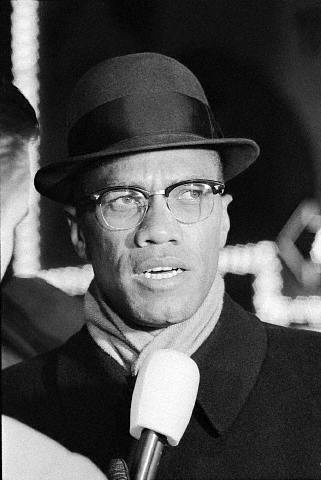
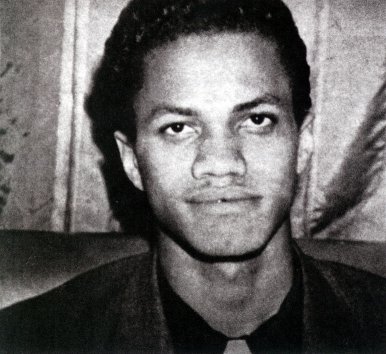
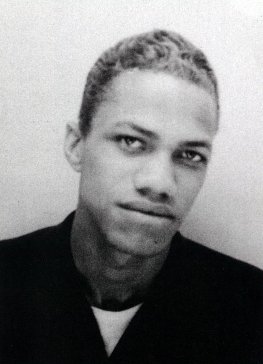
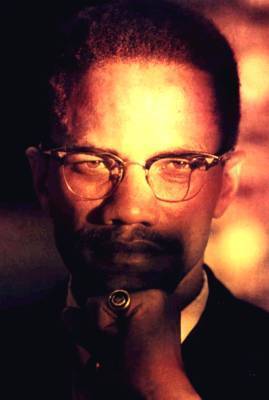
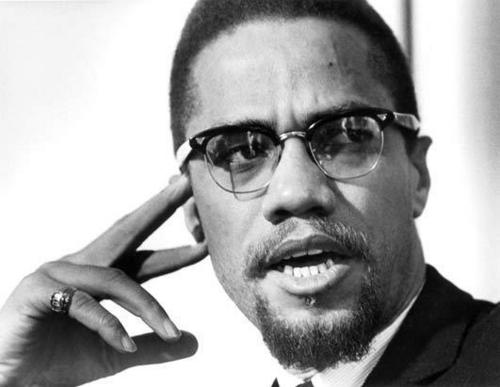
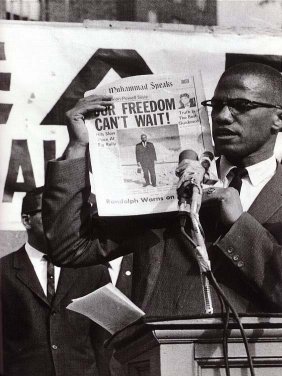
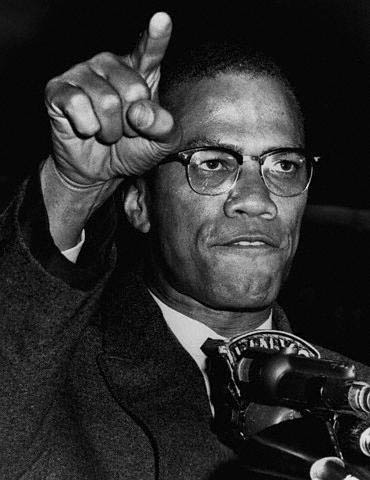
A Tribute to Malcolm X on His 85th Birthday


Malcolm X: 1925-1965


All, 

Malcolm X was born Malcolm Little on this day in Omaha, Nebraska in 1925 and was assassinated at the age of 39 on February 21, 1965 in New York's Harlem. In between those two events Malcolm lived one of the most complex, profound, dynamic, and iconic lives of the 20th century and had--as he continues to have--a tremendous impact and influence on millions of people throughout not only the United States but the entire globe. How he managed to accomplish this massive feat despite the severe and pervasive racist oppression and exploitation inflicted upon all African Americans of his generation-- and the decided lack of official social, economic, and cultural status especially accorded those like Malcolm who fiercely organized masses of people to oppose and resist such treatment--is one of the major accomplishments of modern African American history and marks Malcolm's revolutionary contributions to global political, spiritual, and cultural thought and activism as one of the most important and powerful legacies of any individual in the world during the 20th century. In my view Malcolm remains the most intellectually and socially significant, advanced, and innovative African American political leader since W.E.B. DuBois because he represented and embodied not only a deep, analytical understanding and insight into the myriad dialectical complexities and contradictions of African American life and culture, but he also understood and expressed in a particularly nuanced and organic manner just how the specific ideological and cultural dynamics of race and class in the United States affected the tone and identity of national liberation struggles both here and abroad. In addition Malcolm's deeply rooted disaporic connections to international Third World and Pan African movements in the colonial and postcolonial contexts of European and American hegemony over Africa, Latin America, and Asia--and the pervasive revolutionary anticolonial struggles against such domination and control in these societies--played a major role in also making Malcolm one of the leading global activists on behalf of anti- imperialist movements.In 2002 I published a historical and political biography on Malcolm entitled 'The Life and Work of Malcolm X.' What follows below is the introduction to that text. Further information and texts by and about Malcolm as well as videos of him speaking will also be featured. It is in the spirit of great love and solidarity that we make these gestures in celebration of Malcolm's 85th birthday. May his extraordinary work and stellar personal example continue to lead and inspire us all.

Kofi

THE TRUE GENIUS OF MALCOLM X
by Kofi Natambu

“I know that societies have often killed the people who have helped to change those societies. And if I can die having brought any light, having exposed any meaningful truth that will help to destroy the racist cancer that is malignant in the body of America--then, all the credit is due to Allah. Only the mistakes have been mine."
                       --The Autobiography of Malcolm X
                         (as told to Alex Haley), 1965

“It is incorrect to classify the revolt of the Negro as simply a racial conflict of Black against white, or as a purely American problem. Rather, we are today seeing a global rebellion of the oppressed against the oppressor, the exploited against the exploiter.”
                      --Malcolm X
                        Barnard College, February 18, 1965


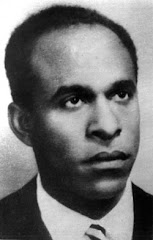
We live in an age of profound dishonesty, fear, hatred and timid equivocation. A dangerously facile cynicism, coupled with a soul-numbing infantilism has infected our society, rendering us seemingly powerless to productively affect or direct our lives. Too often ignorance and a smug reliance on easy orthodoxies of all kinds lend an illusory quality to our collective despair, lost as we often are on the beaches of loneliness and indecision. What’s worse is that so many of our so-called “leaders” lack any genuine intellectual, political, or moral energy to propose directions, methods, and ideas that require much more than adolescent posturing or punitive edicts. Opportunism and careerism rule the day, informed as they are by the insipid “pay me” principle, which ensures that ‘incidental’ things like integrity, discipline, compassion, generosity, and intelligence--the kind that gives one the opportunity to think, reflect, and act instead of foreclosing those possibilities—won’t inform and provide ballast for our insights and desires.Which brings me to Malcolm X, also known as Malcolm Little, ‘Detroit Red’, ‘Satan’ and finally, El Hajj Malik El-Shabazz. The black man with many names, green eyes and red hair who didn’t live to see the age of forty but who lived a multitude of lives anyway. The black man from Omaha, Lansing, Detroit, Boston, and New York who lived to befriend, work with, inspire, confound, educate, learn from, and transform people and cultures and political and economic and cultural and religious systems and values on three continents, and who lived to tell his/their/our stories. The black man who spoke a bewildering number of languages from African American swing, bebop, and blues tonalities, in all of their ultra hip vernacular modes and dimensions to the mellifluously flowing nuances & inflections of Arabic, Creole, Yoruba, and Chinese stews fermenting with the ancient elixirs of their myriad linguistic, spiritual, and cultural traditions.You see, Malcolm sought at all times and under every conceivable circumstance to know, and so knowledge returned the favor. Knowledge, whose handmaiden is faith, is something Malcolm “knew” well because experience was valuable to him, and he never took what it could reveal to him for granted. Even in the ugly basement of his own temporary confusions and stupidities, frustrations and disappointments, Malcolm always sought to know, to “truly understand and examine” that which he had been told was (or was not) “real.” He wasn’t content to find an easy niche and lie there, swatting flies and muttering everyday homilies. He understood, which is to say, appreciated the effort, time, and commitment that it took to “know” and “understand” anything, anyone, anywhere. He wanted always, to know more, and think more, and express more, and give more, and create more and expect more, and feel more, and experience more. It wasn’t enough for him to merely embrace an idea, action, or stance. He “knew” better. He had been taught by everyone and everything he had ever encountered to always critically question what he was “being told.” Not in order to checkmate some hapless opponent ‘Homer Simpson’ style, but to ask, endlessly and creatively, and forcefully, and quietly and loudly and gently and brusquely ASK not merely who, what, when, where, and how, but the “heavy duty” WHY(?)Malcolm realized it would always take more than he was able or willing to give but he freely gave anyway, knowing that his ego or his pain or his ignorance or his fear would be inadequate. But because he gave, and believed in giving, and knew the limitations of fame, money, “suckcess,” and “identity” he was able, always, to supplant his former achievements and establish, build, work for, and embody still higher and different accomplishments. Malcolm wasn’t ‘hemmed in’ by politics or religion or ideology. He understood that in order to “live what you teach” and aspire to learning more required that one become a student of life. What made Malcolm so important is that he never lost faith in his ability to change, and be changed by, the world. But not merely the world we inherit but the world(s) we make and change and know and then (re)make again and again. Malcolm represented what Amilcar Cabral, the West African revolutionary meant when he said “Tell no lies, claim no easy victories.” He also knew why Frantz Fanon added “Every generation must, out of relative obscurity, discover its mission, fulfill it or betray it.” And oh yeah, this one: “To whom much is given, much is expected.” Malcolm also knew that what is “true” is not necessarily “real” or vice versa. No “virtual realities” for him. No ‘Survivor’-induced lies from the jungles of corporate gangsters & advertising executive suites for him. Only the “true” and the “real” in an exquisitely dialectical and yes yall, dialogical dance would ever suffice for Malcolm X, the known, but unknown one. As Miles Davis once said “Hate is like Love--they both build momentum.” The ‘X’ in Malcolm’s life was the algebra of possibilities to know and then gradually, inevitably “not know” so that knowledge and activity could find some new and fresh ways to connect and reconnect, combine and recombine in finally more useful and interesting ways. The ‘X’ is the African American in the diaspora finding his/her way “back home” to the selves that were always already “black” and will be again and again no matter what ‘colors’ we’re compelled to be. That, for Malcolm and his ‘X’ is what made it possible for him to insist on the eternally real and true core of the matter, which was and is and always will be our ‘Human Rights’, our Human Being Hood. He didn’t mean this in any pollyanna, namby-pamby, let’s-all hold-hands-and pretend-we’re-all-the-same-suckers-singing-songs-together manner either. No. His aim was simultaneously much higher and deeper than that. ‘Freedom is for the Free’. Which is to say, for those willing to pay the price. The price is always our very lives as in “You know the stakes is high.” Malcolm told us over and over again. And no man or woman can possibly give or take that freedom--unless we “allow” them to.That is the TRUE genius of Malcolm X. He realized the sheer simplicity, which is to say, bone-crushing difficulty of what it means to be a “genius” and share that great capacity for love, thought, and action with the world/whirl. Malcolm looked & saw that genius is not something we are but something we do. That is his profound legacy to “his people” which is finally anyone who “really & truly” wants to be free & is more than willing to “pay the price.” The last words of his Autobiography quoted at the start of this soliloquy remind us so eloquently of his actual legacy to those of us who are not afraid to make a contribution to not merely the ‘concept’ of liberation, but the living, breathing necessity of it. That’s real & true...like Malcolm himself. This book is an attempt to recognize and express that fact.

Kofi Natambu
May 23, 2001
Oakland, California

http://www.malcolmxonline.com/malcolm-x-videos.html


MALCOLM X QUOTATIONS:Be peaceful, be courteous, obey the law, respect everyone; but if someone puts his hand on you, send him to the cemetery.

Education is the passport to the future, for tomorrow belongs to those who prepare for it today.

I believe in a religion that believes in freedom. Any time I have to accept a religion that won't let me fight a battle for my people, I say to hell with that religion.

I believe in human beings, and that all human beings should be respected as such, regardless of their color.

I don't even call it violence when it's in self defense; I call it intelligence.

I'm for truth, no matter who tells it. I'm for justice, no matter who it's for or against.

If you don't stand for something you will fall for anything.

If you have no critics you'll likely have no success.

If you're not ready to die for it, put the word 'freedom' out of your vocabulary.

In all our deeds, the proper value and respect for time determines success or failure.

My Alma mater was books, a good library... I could spend the rest of my life reading, just satisfying my curiosity.

Nobody can give you freedom. Nobody can give you equality or justice or anything. If you're a man, you take it.

Sitting at the table doesn't make you a diner, unless you eat some of what's on that plate. Being here in America doesn't make you an American. Being born here in America doesn't make you an American.

Malcolm X, Malcolm X Speaks, 1965


Time is on the side of the oppressed today, it's against the oppressor. Truth is on the side of the oppressed today, it's against the oppressor. You don't need anything else.

Malcolm X, Malcolm X Speaks, 1965

Usually when people are sad, they don't do anything. They just cry over their condition. But when they get angry, they bring about a change.

Malcolm X, Malcolm X Speaks, 1965

You can't separate peace from freedom because no one can be at peace unless he has his freedom.

Malcolm X, Malcolm X Speaks, 1965

BIBLIOGRAPHY OF BOOKS BY AND ABOUT MALCOLM XCarson, Clayborne (1991). Malcolm X: The FBI File. New York: Carroll & Graf. ISBN 0-88184-758-5.
Clarke, John Henrik, ed. (1990) [1969]. Malcolm X: The Man and His Times. Trenton, N.J.: Africa World Press. ISBN 0-86543-201-5.
Clegg III, Claude Andrew (1997). An Original Man: The Life and Times of Elijah Muhammad. New York: St. Martin's Griffin. ISBN 0-312-18153-1.
Cone, James H. (1991). Martin & Malcolm & America: A Dream or a Nightmare. Maryknoll, N.Y.: Orbis Books. ISBN 0-88344-721-5.
DeCaro, Jr., Louis A. (1996). On the Side of My People: A Religious Life of Malcolm X. New York: New York University Press. ISBN 0-8147-1864-7.
Dyson, Michael Eric (1995). Making Malcolm: The Myth and Meaning of Malcolm X. Oxford: Oxford University Press. ISBN 0-19-509235-X.
Evanzz, Karl (1992). The Judas Factor: The Plot to Kill Malcolm X. New York: Thunder's Mouth Press. ISBN 1-56025-049-6.
Helfer, Andrew; Randy DuBurke (2006). Malcolm X: A Graphic Biography. New York: Hill and Wang. ISBN 0-8090-9504-1.
Karim, Benjamin (1992). Remembering Malcolm. with Peter Skutches and David Gallen. New York: Carroll & Graf. ISBN 0-88184-881-6.
Kondo, Zak A. (1993). Conspiracys: Unravelling the Assassination of Malcolm X. Washington, D.C.: Nubia Press. ISBN 0-9618815-1-13.
Lincoln, C. Eric (1961). The Black Muslims in America. Boston: Beacon Press. OCLC 422580.
Lomax, Louis E. (1987) [1968]. To Kill a Black Man. Los Angeles: Holloway House. ISBN 0-87067-731-4.
Lomax, Louis E. (1963). When the Word Is Given. Cleveland: World Publishing. OCLC 1071204.
Malcolm X (1992) [1965]. The Autobiography of Malcolm X. with the assistance of Alex Haley. New York: One World. ISBN 0-345-37671-4.
Malcolm X (1989) [1970]. By Any Means Necessary: Speeches, Interviews, and a Letter by Malcolm X. George Breitman, ed. New York: Pathfinder Press. ISBN 0-87348-150-X.
Malcolm X (1989) [1971]. The End of White World Supremacy: Four Speeches by Malcolm X. Benjamin Karim, ed. New York: Arcade. ISBN 1-55970-006-8.
Malcolm X (1990) [1965]. Malcolm X Speaks: Selected Speeches and Statements. George Breitman, ed. New York: Grove Weidenfeld. ISBN 0-8021-3213-8.
Malcolm X (1991) [1968]. The Speeches of Malcolm X at Harvard. Archie Epps, ed. New York: Paragon House. ISBN 1-55778-479-5.
Marable, Manning (2009). "Rediscovering Malcolm's Life: A Historian's Adventures in Living History". in Marable, Manning; Aidi, Hishaam D. Black Routes to Islam. New York: Palgrave Macmillan. ISBN 1-4039-8400-X.
Natambu, Kofi (2002). The Life and Work of Malcolm X. Indianapolis: Alpha Books. ISBN 0-02-864218-X.
Perry, Bruce (1991). Malcolm: The Life of a Man Who Changed Black America. Barrytown, N.Y.: Station Hill. ISBN 0-88268-103-6.
Rickford, Russell J. (2003). Betty Shabazz: A Remarkable Story of Survival and Faith Before and After Malcolm X. Naperville, Ill.: Sourcebooks. ISBN 1-4022-0171-0.
Sales, William W. (1994). From Civil Rights to Black Liberation: Malcolm X and the Organization of Afro-American Unity. Boston: South End Press. ISBN 0-89608-480-9.
Terrill, Robert (2004). Malcolm X: Inventing Radical Judgment. Lansing, Mich.: Michigan State University Press. ISBN 0-87013-730-1.
Further reading

Alkalimat, Abdul. Malcolm X for Beginners. New York: Writers and Readers, 1990.
Asante, Molefi K. Malcolm X as Cultural Hero: and Other Afrocentric Essays. Trenton, N.J.: Africa World Press, 1993.
Baldwin, James. One Day, When I Was Lost: A Scenario Based On Alex Haley's "The Autobiography Of Malcolm X". New York: Dell, 1992.
Breitman, George. The Last Year of Malcolm X: The Evolution of a Revolutionary. New York: Pathfinder Press, 1967.
Breitman, George, and Herman Porter. The Assassination of Malcolm X. New York: Pathfinder Press, 1976.
Carew, Jan. Ghosts In Our Blood: With Malcolm X in Africa, England, and the Caribbean. Chicago: Lawrence Hill, 1994.
Cleage, Albert B., and George Breitman. Myths About Malcolm X: Two Views. New York: Merit, 1968.
Collins, Rodney P. The Seventh Child. New York: Dafina; London: Turnaround, 2002.
Davis, Thulani. Malcolm X: The Great Photographs. New York: Stewart, Tabon and Chang, 1992.
DeCaro, Louis A. Malcolm and the Cross: The Nation of Islam, Malcolm X, and Christianity. New York: New York University, 1998.
Doctor, Bernard Aquina. Malcolm X for Beginners. New York: Writers and Readers, 1992.
Friedly, Michael. The Assassination of Malcolm X. New York: Carroll and Graf, 1992.
Gallen, David, ed. Malcolm A to Z: The Man and His Ideas. New York: Carroll and Graf, 1992.
Gallen, David, ed. Malcolm X: As They Knew Him. New York: Carroll and Graf, 1992.
Goldman, Peter. The Death and Life of Malcolm X. Urbana: University of Illinois Press, 1979.
Jamal, Hakim A. From The Dead Level: Malcolm X and Me. New York: Random House, 1972.
Jenkins, Robert L. The Malcolm X Encyclopedia. Westport, Conn.: Greenwood Press, 2002.
Kly, Yussuf Naim, ed. The Black Book: The True Political Philosophy of Malcolm X (El Hajj Malik El Shabazz). Atlanta: Clarity Press, 1986.
Leader, Edward Roland. Understanding Malcolm X: The Controversial Changes in His Political Philosophy. New York: Vantage Press, 1993.
Lee, Spike, with Ralph Wiley. By Any Means Necessary: The Trials and Tribulations of The Making Of Malcolm X. New York: Hyperion, 1992.
Maglangbayan, Shawna. Garvey, Lumumba, and Malcolm: National-Separatists. Chicago, Third World Press 1972.
Marable, Manning. On Malcolm X: His Message & Meaning. Westfield, N.J.: Open Media, 1992.
Shabazz, Ilyasah. Growing Up X. New York: One World, 2002.
Strickland, William et al.. Malcolm X: Make It Plain. New York: Penguin Books, 1994.
Terrill, Robert, ed. The Cambridge Companion to Malcolm X. Cambridge: Cambridge University Press, 2010.
T'Shaka, Oba. The Political Legacy of Malcolm X. Richmond, Calif.: Pan Afrikan Publications, 1983.
Wolfenstein, Eugene Victor. The Victims of Democracy: Malcolm X and the Black Revolution. London: Free Association Books, 1989.
Wood, Joe, ed. Malcolm X: In Our Own Image. New York: St. Martin's Press, 1992.

External links

The Official Web Site of Malcolm X Malcolm X: Make It Plain malcolm-x.orgMalcolm X: A Profile The Malcolm X Project at Columbia University Malcolm X Reference Archive Malcolm X: A Research Site
Interviews
Interview with Louis Lomax, from When the Word Is Given (1963) Interview with Dr. Kenneth Clark, Spring 1963
Video interview with Herman Blake,
October 1963 Interview with A.B. Spellman, May 1964
CBC television interview, January 1965
Speeches
"By Any Means Necessary", June 1964 (Video) Other links Malcolm X's FBI file


MORE LINKS:

http://www.malcolmx.com/
http://www.brothermalcolm.net/

http://www.malcolmxonline.com/malcolm-x-videos.html

Sunday, May 16, 2010

Elena Kagan, President Obama, and the Dire Necessity of Integrity and Vision on the Supreme Court


Washington -- President Barack Obama has nominated Solicitor General Elena Kagan to the Supreme Court, saying she will demonstrate independence, integrity and passion for the law.

If confirmed by the Senate, Kagan will become the third woman on the high court. Obama introduced her today in the White House's East Room. He called her "my friend" and one of the nation's foremost legal minds.

The selection of Kagan came after nearly a monthlong process of consideration. Obama always had Kagan on his short list but still considered a broader group of candidates, interviewing four.

The president informed Kagan that she would a Supreme Court nominee on Sunday night. He then called the three federal judges he did not choose for the position, Diane Wood, Merrick Garland and Sidney Thomas.

Never a judge, Kagan is known as sharp and politically savvy and has enjoyed a blazing legal career. She was the first female dean of Harvard Law School, first woman to serve as the top Supreme Court lawyer for any administration, and now first in Obama's mind to succeed legendary liberal Justice John Paul Stevens.

At 50 years old, Kagan would be the youngest justice on the court, which would give her the opportunity to extend Obama's legacy for a generation.

Kagan must first win Senate confirmation. A source close to the selection process said a central element in Obama's choice was Kagan's reputation for bringing together people of competing views and earning their respect.

Republicans have shown no signs in advance that they would try to prevent a vote on Kagan, but they are certain to grill her in confirmation hearings over her experience, her thin record of legal writings and her objections to the military's policy about gays.
When she was confirmed as solicitor general in 2009, seven Republicans backed her: Sens. Tom Coburn of Oklahoma, Susan Collins of Maine, Judd Gregg of New Hampshire, Orrin Hatch of Utah, Jon Kyl of Arizona, Richard Lugar of Indiana and Olympia Snowe of Maine.

Kagan came to the fore as a candidate who had worked closely with all three branches of government, a legal mind with both a sense of modesty and sense of humor. The source spoke on condition of anonymity to discuss factors that led to Kagan's impending nomination.

Kagan has clerked for Thurgood Marshall, worked for Bill Clinton and earned a stellar reputation as a student, teacher and manager of the elite academic world. Her standing has risen in Obama's eyes as his government's lawyer before the high court over the last year.

Yet Kagan would be the first justice without judicial experience in almost 40 years. The last two were William H. Rehnquist and Lewis F. Powell Jr., both of whom joined the court in 1972.

All of the three other finalists she beat out for the job are federal appeals court judges, and all nine of the current justices served on the federal bench before being elevated.
Kagan's fate will be up to a Senate dominated by Democrats, who with 59 votes have more than enough to confirm her, even though they are one shy of being able to halt any Republican stalling effort.

For the second straight summer, the nation can expected an intense Supreme Court confirmation debate even though, barring a surprise, Kagan is likely to emerge as a justice.

Supreme Court justices wield enormous power over the daily life of Americans. Any one of them can cast the deciding vote on matters of life and death, individual freedoms and government power. Presidents serve four-year terms; justices have tenure for life.

Democrats went 15 years without a Supreme Court appointment until Obama chose federal appellate judge Sonia Sotomayor last year to succeed retiring Justice David Souter. Just 16 months in office, Obama has a second opportunity with Kagan, under different circumstances.

Obama's decision last year centered much on the compelling narrative of Sotomayor, the first Hispanic Supreme Court justice, who grew up in a housing project and overcame hardship.

This year, Obama particularly wanted someone who could provide leadership and help sway fellow justices toward a majority opinion. The president has grown vocal in his concern that the conservative-tilting court is giving too little voice to average people.

Kagan is known for having won over liberal and conservative faculty at the difficult-to-unite Harvard Law School, where she served as dean for nearly six years.

Her background, including time as a lawyer and a key domestic policy aide in President Clinton's White House, would give the court a different perspective.

The White House is expected to frame Kagan's lack of service as a judge in upbeat terms, underscoring that there are many qualified routes to the top of the judiciary.

Kagan, who is unmarried, was born in New York City. She holds a bachelor's degree from Princeton, a master's degree from Oxford and a law degree from Harvard.

She served as a Supreme Court clerk for one of her legal heroes, Justice Thurgood Marshall. And before that, she clerked for federal appeals court judge Abner Mikva, who later became an important political mentor to Obama in Chicago.

Kagan and Obama both taught at the University of Chicago Law School in the early 1990s.

In her current job, Kagan represents the U.S. government and defends acts of Congress before the Supreme Court and decides when to appeal lower court rulings.
Kagan has the high task of following Stevens, who leaves a legacy that includes the preservation of abortion rights, protection of consumer rights and limits on the death penalty and executive power. He used his seniority and his smarts to form majority votes.

Rick Garnett, a professor of law and associate dean of University of Notre Dame Law School, voiced the concern of many conservatives.

"Future elections might undo some of the president's policies, but his more liberal views about the Constitution, the powers of the national government, and the role of unelected federal judges, are now being locked in securely," Garnett said in a statement.

Kagan would be the fourth woman to serve on the Supreme Court, following current Justices Ruth Bader Ginsburg and Sonia Sotomayor and retired Justice Sandra Day O'Connor.

She would be the third Jewish justice along with six Catholics. With Stevens' retirement, the court will have no Protestants, the most prevalent denomination in the United States.

http://www.nytimes.com/2010/05/14/us/politics/14diversity.html?nl=us&emc=politicsemailema1

All,

Whoa folks...WAIT a damn minute here...let me get this straight: Does Obama and the African American supporters of Ms. Kagan who "just happen to be" some of the President's oldest black friends and colleagues at Harvard Law School (like Professor Charles Ogletree who taught Obama at the Law School during his time there as a student in the late 1980s) really, seriously think that they can get away with their strong and emphatic endorsements of Kagan's clearly abysmal record of hiring African American law professors for tenured positions at Harvard Law just because the President likes her and she too is a longtime friend and colleague of his? This position is absolutely bogus and quite absurd on its face. Kagan is on record of hiring ZERO African Americans (as well as Latinos) while Dean of Harvard Law School during her tenure there out of 32(!) positions. Nor did she hire any blacks of Latinos in her position of Solicitor General which she was selected for by Obama last year. NONE, NADA, ZILCH..C'mon! Let's get real--these numbers are atrocious and frankly indefensible. The President, his black cronies and associates at the Law School, and others who support her in her nomination for the Supreme court must be JOKING if they actually think this record is in any way acceptable. What kind of ludicrous standard for "diversity" is this? If a Republican or southern democratic nominee had this kind of insulting record of (not) hiring African Americans and Latinos at Harvard Law would we give that person a pass the way that the President and her personal friends are asking/demanding that we do on Kagan's behalf? Would this record be considered OK and worthy of support by Professors Ogletree and Kennedy? OF COURSE NOT! In fact they and Obama would be the first to publicly and quite justifiably raise very serious questions and objections if this were the case. So let's not play stupid little games here and give Ms. Kagan, the President, and their supporters at Harvard Law School a pass for pretending that this is fine just because the President is her personal friend...Nah... No way! That would not only be intellectually and morally dishonest but very irresponsible to say the least. Ms. Kagan and the President must be held publicly accountable for this serious problem and critical questions should and must be raised about this with regard to her general nomination, Merely refusing an endowed chair tainted with the blood money of slavery and taking one instead with the great Charles Hamilton Houston's name on it (the legendary Houston was Thurgood Marshall's mentor at Howard University and in his general legal career during the the 1930s and '40s) is simply not enough by a long shot.. Like both Houston and Marshall did during their extraordinary careers as courageous and stalwart legal protectors of social and economic justice Ms. Kagan AND President Obama must PUT UP OR SHUT UP on these crucial matters of genuine public diversity and equal employment opportunities for African Americans and Latinos in our higher education institutions and professions. In other words: NO ONE GETS A PASS ON THAT-- not even the President and a Supreme Court nominee. The ball (and the fate of the Supreme Court) is now in their hands...I sincerely hope they don't blow it...

Kofi


Nominee Scrutinized for Hiring on Race

By KATHARINE Q. SEELYE
May 13, 2010
New York Times

BOSTON — When Elena Kagan became dean of Harvard Law School in 2003, she could have taken the endowed chair named for Isaac Royall Jr. The Royall family had donated more than 2,100 acres to Harvard in the 1700s, but the family had earned its fortune on the backs of the slave trade.

Ms. Kagan declined to take the Royall professorship. Instead, she chose a new chair in the name of Charles Hamilton Houston, the first African-American on the Harvard Law Review and a crusader against Jim Crow laws.

Ms. Kagan’s history on race issues at Harvard has come under scrutiny since President Obama nominated her to the Supreme Court on Monday. Critics say that she did not create enough racial diversity at Harvard, and that in the absence of any writings or opinions, her hiring practices serve as a clue to her thinking. Her supporters counter that she demonstrated a commitment to equality; her claiming the chair in the name of Mr. Houston, they said, is but one example.

In the nearly six years that Ms. Kagan was dean, from 2003 to 2009, she hired a total of 43 permanent, full-time faculty members, 32 of whom were tenured and tenured-track. Of those, 25 were white men, 6 were white women and one was an Asian-American woman. Of the other 11, 6 were white men, 2 were women and 3 were minority men (2 black and one Indian), according to a law school official.

Law school officials said the numbers did not reflect the whole story because offers were made to other minority and women scholars; some were declined and some still open. But others said the record spoke for itself.

“Kagan’s performance as dean at Harvard raises doubts about her commitment to equality for traditionally disadvantaged groups,” Guy-Uriel Charles, a black law professor at Duke, wrote last month in an oft-cited post.

During roughly the same period that Ms. Kagan was at Harvard, Mr. Charles wrote, Yale Law School hired just 10 faculty members; 5 were women, and only one was a minority.

Ms. Kagan’s track record on diversity improved during the last year when she became solicitor general. In that office, she has hired six people — three women and three men (one white, one Asian and one Indian).

Lester K. Spence, a political scientist at Johns Hopkins University, wrote on theroot.com, a Web site devoted to black issues, that Ms. Kagan appeared to be more concerned with ideological diversity than with diversity of race or gender.

“President Obama wants us to support his choice not because she’s got a strong record, not even because she has a particularly visible record, but because he knows her,” Mr. Spence wrote. “I’m not buying it,” he added. “And even if Kagan ends up being the best justice this side of Thurgood Marshall, you shouldn’t either.”

After it was clear that Mr. Obama, the first black president, would nominate Ms. Kagan, several black women wrote to him saying they were disappointed that he had not nominated a black woman.

The women, who included Melanie Campbell of the National Coalition on Black Civic Participation, also said they wanted to learn more about Ms. Kagan’s record on civil rights.

The administration has been pushing back against any suggestion that Ms. Kagan has been insensitive on racial matters, as have some of her black supporters.

Ronald S. Sullivan, a black law professor whom Ms. Kagan recruited to Harvard, wrote on thegrio.com, another site devoted to black issues, that “no elite law school has done enough” with respect to minority hiring. But, he noted, her spurning of the Royall chair “was a significant statement made by the dean of one of the nation’s top law schools.“

And, he said, Ms. Kagan had expanded the clinical teaching program at Harvard so that “thousands of indigent and under-represented citizens received quality legal services that they otherwise would not have been able to afford.”

Randall L. Kennedy, another black professor at Harvard Law, also strongly defended Ms. Kagan’s hiring practices. He said in an article in The Huffington Post that no dean was solely responsible for hiring faculty, with each one requiring a majority if not a supermajority of votes. This, he said, gets to be a complicated proposition.

Still, he said, Ms. Kagan supported programs that have helped advance minorities, and she helped form a committee to identify promising racial minority candidates.

While she was dean, an average of about 30 percent of the entering classes were minorities, up from about 25 percent in the previous six years, according to a Harvard official.

One of Ms. Kagan’s strongest backers has been Charles J. Ogletree Jr., perhaps the most prominent black law professor at Harvard. He has noted in interviews and articles that she has been supportive of men and women of color among both students and faculty.

“If you look at her whole record, ” Mr. Ogletree said in an interview on Thursday with Essence.com, “I think it tells you that she worked diligently to make opportunities available for others. The questions about who she recommended and who was tenured are fair, and I think she’ll be able to respond to them.”


http://www.nytimes.com/2010/05/13/us/politics/13marshall.html?nl=us&emc=politicsemailema1


Kagan’s Link to Marshall Cuts 2 Ways
By CHARLIE SAVAGE
May 12, 2010
New York Times

WASHINGTON — In the spring of 1988, Justice Thurgood Marshall assigned a clerk, Elena Kagan, to write a first draft of his opinion in a case considering whether a school district could charge a poor family for busing a child to the nearest school, which was 16 miles away.


Associated Press


Thurgood Marshall at his Supreme Court confirmation hearings in 1967. Elena Kagan clerked for him 20 years later

A majority on the Supreme Court ruled that the busing fee was constitutional. Justice Marshall, who was 80, was incensed and wanted a fiery dissent. But the 28-year-old Ms. Kagan, now a Supreme Court nominee, thought her boss’s legal analysis was wrong.

Ms. Kagan, recalling the incident in a 1993 tribute after his death, wrote that after she told him that “it would be difficult to find in favor of the child” under legal doctrine, he called her a “knucklehead.” He “returned to me successive drafts of the dissenting opinion for failing to express — or for failing to express in a properly pungent tone — his understanding of the case,” she wrote.

Because Ms. Kagan has never been a judge and has produced only a handful of scholarly writings, clues to her philosophy are rare. In that vacuum, liberals and conservatives alike are attributing special significance to her clerkship year with Justice Marshall, who led the civil rights movement’s legal efforts to dismantle segregation before becoming a particularly liberal Supreme Court justice.

But while Ms. Kagan, a former board member for the Thurgood Marshall Scholarship Fund, clearly relished the experience and admired the justice as a historic figure, she appears to have had a far more ambivalent attitude toward his jurisprudence, according to a review of his papers at the Library of Congress, her comments over the years about him and interviews with her fellow clerks and colleagues.

In analyzing why Justice Marshall was adamant about siding with the poor family in the busing fee case, for example, Ms. Kagan explained in her tribute that he “allowed his personal experiences, and the knowledge of suffering and deprivation gained from those experiences, to guide him.”

But Ms. Kagan did not share those experiences, notes Charles J. Ogletree, a Harvard law professor who heads an institute named after Justice Marshall’s mentor, Charles Hamilton Houston, and who has talked over the years with Ms. Kagan, a former Harvard Law School dean, about her clerkship.

“It’s absurd to compare Elena Kagan’s judicial philosophy to Thurgood Marshall’s philosophy,” Professor Ogletree said. “Their times and life experiences are different. They lived in different worlds. The reality is that Elena Kagan learned a lot from Justice Marshall, but she will not be overly influenced by Marshall or anyone else. She is her own person.”

Some differences in the views of Justice Marshall — who once described his legal philosophy as, “You do what you think is right and let the law catch up” — and of his former clerk are striking. For example, he believed that the death penalty was always unconstitutional. But during the confirmation process when she was named solicitor general last year, Ms. Kagan said she had no quarrel with the death penalty.

“I am not morally opposed to capital punishment,” Ms. Kagan wrote to a senator, adding that she “accepted” the Supreme Court’s precedents upholding “the death penalty as constitutional in a wide variety of cases and circumstances.”

Nevertheless, the political dynamics of Ms. Kagan’s nomination have led figures on the left and the right to gloss over such differences.

After some liberal commentators questioned whether Ms. Kagan could be trusted, President Obama declared that Justice Marshall’s “understanding of law, not as an intellectual exercise or words on a page, but as it affects the lives of ordinary people, has animated every step of Elena’s career.”

Conservative critics, too, have sought to link Ms. Kagan closely to Justice Marshall. Among them, Curt Levey of the Committee for Justice has decried a supposed “Kagan/Marshall judicial philosophy,” noting that in her tribute she described as a “thing of glory” her former boss’s view that courts should show special solicitude for disadvantaged parties.

By 1987, as the Rehnquist court was moving to the right, Justice Marshall was “in his decline and alienated, marginalized” and, in hiring clerks like Ms. Kagan, “looking for really bright people to kind of put a new charge in him” and to help him write dissents, said Juan Williams, a Marshall biographer.

“She didn’t come to him because she was necessarily of like mind, although she was coming out of the same political milieu,” Mr. Williams said.

Justice Marshall nicknamed Ms. Kagan “Shorty” and sometimes referred to her as “Little Bits,” though they all got called “knucklehead” from time to time, recalled Harry Litman, another clerk that year. The musty chambers were crammed with books, African artifacts, red Naugahyde chairs and ungainly desks.

Justice Marshall did a lot of work in an anteroom to his main office. There, he sat in a comfortable chair across a large table from his clerks to discuss cases, sessions that inevitably digressed into stories the justice would tell about his life.

“You’re at the same time laughing because he’s such a great raconteur and also thinking it’s unbelievable that these things happened in the lifetime of this person in whose presence I’m sitting, and their life made such a difference in re-creating a South where he had to be out of town by sunset or his life was in danger,” recalled Carol Steiker, another clerk that year.

One task of the clerks was to write brief memorandums evaluating the thousands of cases appealed to the Supreme Court. Most written by Ms. Kagan are straightforward, but some caution against taking a case because of how the conservative justices might rule or elevate outcomes over the law.

For example, on Oct. 7, 1987, she analyzed a case in which a judge dismissed an immigrant’s guilty plea over a minor infraction because it could jeopardize his application for permanent residency. The Justice Department appealed, saying the district court had exceeded its authority.

Ms. Kagan wrote that the Justice Department’s view was “almost certainly correct.” Still, she recommended against taking the appeal because the judge had “ensured an equitable result” at “no great cost to the Republic.” Justice Marshall scrawled “D” for “deny” at the top of her memorandum.

In her hearing last year, Ms. Kagan distanced herself from those writings, saying her job was to “channel” Justice Marshall’s mind-set.

A clerk to a justice is “trying to facilitate his work, and to enable him to advance his goals and purposes as a justice,” she said, adding: “He knew what he thought about most issues. And for better or for worse, he was not really interested in engaging with his clerks on first principles.”

Indeed, while her 1993 tribute is couched in fond terms, the bulk of her remarks about cases that arose in her clerkship year concerned their disagreements.

In one case, he voted not to let a man pursue a discrimination claim because his lawyer, who was blind, accidentally left his name off an appeal, and a deadline expired. Ms. Kagan and fellow clerks sought to persuade Justice Marshall to change his vote until he grew annoyed and, pointing to his framed judicial commission on the wall, asked them whose name was on it.

But the case Justice Marshall cared about the most that year, she wrote, was the school bus dispute in which she had trouble justifying his dissent. The final draft seems to implicitly acknowledge that his vote rested less on legal doctrine than on his notion of social justice.

The case, it says, asked “whether a state may discriminate against the poor in providing access to education,” adding: “I regard this question as one of great urgency. As I have stated on prior occasions, proper analysis of equal protection claims depends less on choosing the formal label under which the claim should be reviewed than upon identifying and carefully analyzing the real interests at stake.”