All,
I hope you enjoyed the eleventh week issue (January 10-16) of SOUND PROJECTIONS, the new online quarterly music magazine which featured the legendary and iconic musician, composer, arranger, conductor, multi instrumentalist, music theorist, teacher, philosopher, and ensemble leader ORNETTE COLEMAN (b. March 9, 1930) Week #12 begins TODAY on Saturday, January 17, 2015 @10AM PST which is @1PM EST.
The featured artist for the upcoming week (January 17-January 23, 2015) is the legendary and iconic musician, composer, arranger, teacher, philosopher, and ensemble leader WAYNE SHORTER (b. August 25, 1933). So enjoy this week’s musical entry in SOUND PROJECTIONS, the online quarterly music magazine and please pass the word to your friends, colleagues, comrades, and associates that the magazine is now up and running at the following site. Please click on the link below:
Thanks. For further important details please read below…
Kofi
Sound Projections
A sonic exploration and tonal analysis of contemporary creative music in a myriad of improvisational/composed settings, textures, and expressions.
Welcome to Sound Projections
I'm your host Kofi Natambu. This online magazine features the very best in contemporary creative music in this creative timezone NOW (the one we're living in) as well as that of the historical past. The purpose is to openly explore, examine, investigate, reflect on, studiously critique, and take opulent pleasure in the sonic and aural dimensions of human experience known and identified to us as MUSIC. I'm also interested in critically examining the wide range of ideas and opinions that govern our commodified notions of the production, consumption, marketing, and commercial exchange of organized sound(s) which largely define and thereby (over)determine our present relationships to music in the general political economy and culture.
Thus this magazine will strive to critically question and go beyond the conventional imposed notions and categories of what constitutes the generic and stylistic definitions of 'Jazz', 'classical music', 'Blues', 'Rhythm and Blues', 'Rock 'n Roll', 'Pop', 'Funk', 'Hip Hop' etc. in order to search for what individual artists and ensembles do creatively to challenge and transform our ingrained ideas and attitudes of what music is and could be.
So please join me in this ongoing visceral, investigative, and cerebral quest to explore, enjoy, and pay homage to the endlessly creative and uniquely magisterial dimensions of MUSIC in all of its guises and expressive identities.
Saturday, January 17, 2015
Wayne Shorter (b. August 25, 1933):
Legendary and Iconic musician, composer, arranger, conductor, teacher, philosopher, and ensemble leader
SOUND PROJECTIONS
AN ONLINE QUARTERLY MUSIC MAGAZINE
EDITOR: KOFI NATAMBU
WINTER, 2015
VOLUME ONE NUMBER ONE
MILES DAVIS
Featuring the Musics and Aesthetic Visions of:
ANTHONY BRAXTON
November 1-7
CECIL TAYLOR
November 8-14
STEVIE WONDER
November 15-21
JIMI HENDRIX
November 22-28
GERI ALLEN
November 29-December 5
HERBIE HANCOCK
December 6-12
SONNY ROLLINS
December 13-19
JANELLE MONAE
December 20-26
GARY CLARK, JR.
December 27-January 2
NINA SIMONE
January 3-January 9
ORNETTE COLEMAN
January 10-January 16
WAYNE SHORTER
January 17-23
*[Special bonus feature: A celebration of the centennial year of musician, composer, orchestra leader, and philosopher SUN RA, 1914-1993]
January 24-30
Sunday, August 25, 2013
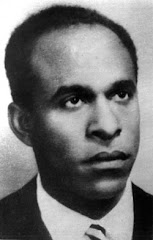
It's Time To Celebrate the Life and Work of a GIANT in Our Midst: Today Marks the 80th Birthday of Legendary Musician and Composer Wayne Shorter
WAYNE SHORTER IN 1964
All,
First, full disclosure: I am a flatout Wayne Shorter fanatic and a shamelessly devoted acolyte of him and his glorious music and have been for well over 40 years now. Widely considered by many musicians, composers, fans, and critics throughout the globe as one of the most captivating, significant, and downright inspiring artists of our time, Mr. Shorter has been active professionally for over six decades and has been recording since 1957. An absolutely essential and leading member of two of the most extraordinary ensembles in modern Jazz history Art Blakey and the Jazz Messengers (of which he was the major composer and musical director from 1959-1964) and Miles Davis's legendary "second great quintet" for which Wayne played and composed from 1964-1970, Shorter not only led and recorded with many outstanding groups of his own but also went on to be the cofounder with pianist/composer Joe Zawinul of the very popular Jazz fusion ensemble Weather Report (1971-1985). Since then Shorter has continued over the past 30 years to display his masterly and virtuosic talents in a wide range of musical styles and genres and has been a mentor and major influence for an entire generation of musicians and composers throughout the world. In loving tribute to this living legend whose music as both multi-instrumentalist and composer alike is as strong or stronger today as it has ever been (please see and hear his stunning critically acclaimed and bestselling 2013 recording "Without A Net" on the famed Blue Note label for the wonderful evidence of that fact), click on, check out and enjoy listening to and watching Wayne and his equally legendary colleagues in the following video links to a wide range of Shorter's music since the early 1960s...LONG LIVE THE MAN AND HIS MUSIC...
Kofi
Erin Baiano for The New York Times
The Wayne Shorter Quartet, with Danilo Pérez on piano, Mr. Shorter on saxophone, John Patitucci on bass and Brian Blade on drums, performing at Lincoln Center.
Alejandro Bolivar/European Pressphoto Agency
Wayne Shorter at a festival in January 2013
FROM THE PANOPTICON REVIEW ARCHIVES
(Originally posted on February 9, 2013):
Saturday, February 9, 2013
Wayne Shorter: The Living Legacy of a Great Musician, Composer, and Philosopher
"I knew Wayne Shorter first in Newark where we were both, malevolently, born. He was one of the two "weird" Shorter brothers that people mentioned occasionally, usually as a metaphorical reference, "...as weird as Wayne."
--Leroi Jones, "Introducing Wayne Shorter", Jazz Review, 1959
“We have to beware the trapdoors of the self. You think you’re the only one that has a mission, and your mission is so unique, and you expound this missionary process over and over again with something you call a vocabulary, which in itself becomes old and decrepit.”
--Wayne Shorter, 2013
All,
A Great Artist. A Great Musician. A Great Composer. A Great Human Being (And a Bad Muthafucka!). My eternal goal remains to be fortunate enough to become "as weird as Wayne"...
Kofi
Robert Yager for The New York Times
Wayne Shorter, the saxophonist and composer, is nearly 80 and remains driven and influential.
Major Jazz Eminence, Little Grise Wayne Shorter’s New Album Is ‘Without a Net’
By NATE CHINEN
January 31, 2013
New York Times
THE STANDARD LINE on Wayne Shorter is that he’s the greatest living composer in jazz, and one of its greatest saxophonists. He would like you to forget all of that. Not the music, or his relationship to it, but rather the whole notion of pre-eminence, with its granite countenance and fixed coordinates. “We have to beware the trapdoors of the self,” he said recently.
“You think you’re the only one that has a mission,” he went on, “and your mission is so unique, and you expound this missionary process over and over again with something you call a vocabulary, which in itself becomes old and decrepit.” He laughed sharply.
Mr. Shorter will turn 80 this year. Decrepitude hasn’t had a chance to catch up to him. Last week he appeared at Carnegie Hall as a featured guest with the Orpheus Chamber Orchestra, which played several of his compositions. On Tuesday “Without a Net,” easily the year’s most anticipated jazz album, will become his first release on Blue Note in more than four decades. And next Saturday he’ll be at the Walt Disney Concert Hall with the Los Angeles Philharmonic for the premiere of “Gaia,” which he wrote as a showcase for the bassist and singer Esperanza Spalding.
He hasn’t accrued this late-inning momentum alone. The vehicle for most of Mr. Shorter’s recent activity, including the orchestral work, is his superlative quartet with Danilo Pérez on piano, John Patitucci on bass and Brian Blade on drums. A band of spellbinding intuition, with an absolute commitment to the spirit of discovery, it has had an incalculable influence on the practice of jazz in the 21st century — and not necessarily for the same reasons that established Mr. Shorter’s legend in the 20th.
Since the emergence of the quartet, which released its first album on Verve in 2002, jazz’s aesthetic center has moved perceptibly: away from the hotshot soloist and toward a more collectivist, band-driven ideal. There has also been an unusual amount of dialogue between jazz’s tradition-minded base camp and its expeditionary outposts, where conventions exist to be challenged.
Mr. Shorter’s working band is far from the only one to embody these principles during the past decade, but it has been the most acclaimed and widely heard. Traces of its style can be detected in other groups, including those led by the saxophonist Chris Potter and the trumpeter Ambrose Akinmusire. Its slippery methodology has also taken root in the conservatory, and not just at the Berklee College of Music, where Mr. Pérez is on the faculty, or at the Thelonious Monk Institute of Jazz, where Mr. Shorter is a resident guru.
“The students are very familiar with that quartet,” said Doug Weiss, who teaches a popular Wayne Shorter ensemble class at the New School for Jazz and Contemporary Music. “They come in having heard the way that band plays together, and a lot of them have no idea what’s going on, and that’s why they’re there.”
So in addition to Mr. Shorter’s body of work — his terse and insinuative compositions, which have been closely studied by jazz musicians for decades — this newer generation has also had the opportunity to grapple with his elusive philosophy of play.
Once, in an interview, Mr. Shorter was asked to account for his pursuit of music above other art forms. He replied that music has an inherent sense of velocity and mystery. It would be hard to find a more concise distillation of his priorities as a bandleader.
“When we go out onstage we always start from nothing,” said Mr. Patitucci by phone from Mr. Pérez’s native Panama, where the quartet headlined a jazz festival last month. “So anybody can spin the wheels in a certain direction, and then we develop those themes.”
What follows isn’t free jazz, exactly, though it uses some of the same tools. “It’s spontaneous composition,” Mr. Patitucci said, “with counterpoint and harmony and lyricism. All of those values are still there. It’s just being pressurized into milliseconds.”
Mr. Shorter framed the idea as an image: “We don’t count how much water there is in a wave when we see the ocean.” He was on the couch of a hotel suite overlooking Central Park South, during one of his recent visits from Los Angeles, where he lives. That evening he would perform at a gala for the David Lynch Foundation, along with the pianist Herbie Hancock, his former partner in the Miles Davis Quintet. He wore dress loafers and a fleece pullover embroidered with the logo of Soka Gakkai International, the Nichiren Buddhist organization to which he and Mr. Hancock belong.
A scheduled interview began with an unscheduled interruption: Ms. Spalding — who won the Grammy for best new artist in 2011, and was also booked at the gala — dropped by with the Argentine pianist Leo Genovese. For all of her success Ms. Spalding still belongs to the demographic that grew up with the notion of Wayne as sage: she and Mr. Genovese were there simply to give him a hug.
Mr. Shorter is a notoriously elliptical conversationalist, prone to cosmic digression and quick-fire allusion. During a spirited two-hour interview he touched on modern art, social politics and science fiction — among the books he produced for inspection was the dystopian “Ready Player One” by Ernest Cline — as well as music and movies, and movie music. “I’m looking at a lot of old silent films now,” he said, “and I listen to the new, hip boy bands. I was checking out some Selena Gomez.” On the subject of jazz, he said pithily, “The word ‘jazz’ to me only means ‘I dare you.’ ”
But he also painted his own jazz narrative in precise strokes, whether it was hearing Charlie Parker at Birdland at the age of 18 — what stuck with him was a quotation of “Petrushka,” the Stravinsky ballet, that Parker sneaked into one solo — or sensing the mortal urgency that burned in John Coltrane, his fellow saxophonist, and in some ways a mentor. And Mr. Shorter made several references to the cryptic wisdom of Miles Davis, slipping each time into an unusually convincing imitation of that trumpeter’s throaty rasp.
Davis’s celebrated quintet of the mid-’60s was one of the most aerodynamically advanced in the history of jazz, and apart from Davis himself Mr. Shorter was its chief in-house designer. One of his signature contributions was “Nefertiti,” a slithery 16-bar tune ambiguously shaded with altered and half-diminished chords.
On record, as the title track to a 1968 album, the song features Davis and Mr. Shorter tracing and retracing its melody while the rhythm section improvises in the background, with all the supple intrigue of a shadow creeping across the landscape. It’s a useful precedent for Mr. Shorter’s current band, which derives much of its dynamism from rhythm-section cohesion within the loosest possible framework.
Another precedent, less obvious, is the transitional band that Davis led before his swerve into jazz-funk, a quintet with Mr. Shorter, the pianist Chick Corea, the bassist Dave Holland and the drummer Jack DeJohnette. A boxed set released last week on Columbia/Legacy, “Live in Europe 1969: The Bootleg Series Vol. 2,” illuminates just how much liberty that group took with its materials, even to the point of feverish abstraction. It never sounds freer than on a concert in Stockholm, attacking three of Mr. Shorter’s compositions: “Paraphernalia,” “Nefertiti” and “Masqualero.”
Two of those have surfaced on Mr. Shorter’s recent albums with the quartet, along with other pieces from a broad swath of his career. “Without a Net,” a compilation of live recordings from 2011, opens with “Orbits,” a theme from the Davis quintet era. It also includes a majestic take on “Plaza Real,” from the songbook of Weather Report, the epochal ’70s fusion band that Mr. Shorter led with Joe Zawinul.
But the provenance of the music takes a back seat to its process, which Mr. Shorter said was meant to herald an ideal of self-actualized communal leadership. “This kind of stuff I’m talking about is a challenge to play onstage,” he allowed, and chuckled. “When Miles would hear someone talking about something philosophical, he would say” — here came the rasp — “ ‘Well, why don’t you go out there and play that?’ One thing we talk about is that to ‘play that’ we have to maybe play music that doesn’t sound like music.”
If that sounds like a Zen riddle, comfort yourself with the knowledge that even Mr. Shorter’s band mates have had to warm to the uncertainty. “It was scary, to be honest,” Mr. Pérez said of his early experience in the quartet. “It was a shock to put myself into a situation where I had no idea what was happening. Even when I listened back, I felt like an outsider: ‘What is that? What key are we in?’ ” He gradually made adjustments, including one to his practice regimen: for two or three hours at a stretch he would watch Tom and Jerry cartoons with the sound muted, making up a score.
The band hasn’t relaxed its pursuit of revelation, which expresses itself in myriad ways: Mr. Pérez’s on-the-fly cadenzas, the unexpected thunderclap of Mr. Blade’s crash cymbal, the dartlike insistence of Mr. Shorter’s improvisational flights. All this remains true even as Mr. Shorter steps up his output as a composer. “He’ll bring in this 10-page piece of music, and it’s gorgeous,” Mr. Patitucci said. “And he’ll say, ‘Just this 16 bars.’ He’s not even attached to what he wrote.”
The center of gravity on “Without a Net” is “Pegasus,” designed to feature Imani Winds, a classical wind ensemble. Through much of that track’s 23 minutes, the woodwinds deftly frame the dramatic fluctuations of Mr. Shorter’s band; at times the two factions achieve a compelling synthesis, advancing a dramatic theme.
It’s horizon-scanning music, but it also features glimpses of the past, like the fanfare from “Witch Hunt,” which led off Mr. Shorter’s landmark 1965 Blue Note album “Speak No Evil.” During his solo in “Pegasus” Mr. Shorter also nods to the old Sonny Rollins tune “Oleo.” Elsewhere on the new album he drops a quotation of the Afro-Cuban bebop standard “Manteca,” and leads the band through a cubist recasting of “Flying Down to Rio,” a movie theme originally sung by Fred Astaire.
“To me there’s no such thing as beginning or end,” Mr. Shorter said. “I always say don’t discard the past completely because you have to bring with you the most valuable elements of experience, to be sort of like a flashlight. A flashlight into the unknown.”
Posted by Kofi Natambu at 2:50 AM
Labels: African American music, Improvisation, Jazz composition, Jazz history, social philosophy, Wayne Shorter
Wayne Shorter Quartet: Without a Net
Music Review
By JOHN KELMAN,
January 29, 2013
Wayne Shorter Quartet: Without a Net, Blue Note Records, 2013
Since convening a new quartet for the 2001 tour that resulted in Footprints Live! (Verve, 2002), soon-to-be-octogenarian saxophonist Wayne Shorter has found himself in the company of a group that's not just turned out to be, hands-down, his most exciting and exploratory acoustic ensemble in a career well into its sixth decade, but now, a dozen years later, his longest-running one as well. Weather Report, the fusion supergroup that Shorter co-founded with keyboardist Joe Zawinul, did, indeed, last longer, from the early 1970s through the mid-'80s, but with almost constant changes in personnel from album to album. Shorter's stable lineup may not release albums on a regular basis—it's been eight long years since the superb, also-live Beyond the Sound Barrier (Verve, 2005)—but the quartet continues to tour, almost every year. Without a Net captures performances from the quartet's 2011 European tour, as well as an extended piece from a live show in collaboration with the renowned Imani Winds.
Beyond being special because of the lengthy recording absence since Beyond, Shorter's return to Blue Note—on which he released a string of eleven exceptional, often groundbreaking albums beginning with Night Dreamer (1964) and ending with Odyssey of Iska (1970)—is another milestone, though it shouldn't be misconstrued as anything remotely nostalgic. If anything, Without a Net—a succinctly accurate description of this group's modus operandi—is even more uncompromising and unpredictable, reflecting the quartet's ever-growing empathic interrelationship on a set that, with the exception of one tune dating back to his days with trumpeter Miles Davis in the 1960s, one completely re-imagined Weather Report tune from 1983 and one rarely recorded song from the 1933 film Flying Down to Rio (actors/dancers/singers Fred Astaire and Ginger Rogers' first film together), is comprised of half a dozen new Shorter compositions.
Without a Net kicks off with "Orbits," also the opener to Miles Davis' Miles Smiles (Columbia, 1966), but completely revised, its theme becoming a foundational ostinato first introduced with pianist Danilo Perez's left hand, then joined by bassist John Patitucci. It's a method of compositional reduction that Shorter has employed on previous albums with this quartet, turning the tune into an even freer opportunity for Shorter and Pérez to indeed orbit around each other's extemporizations, occasionally conjoining in marvelous synchronicity, all driven by drummer Brian Blade's explosive approach. Shorter's "S.S. Golden Mean," too, is revised from the version on Beyond the Sound Barrier, its repetitive chord pattern a foundation for Shorter's soaring, searing soprano and Blade, who moves from full kit to hand percussion in the blink of an eye, completely altering the song's complexion.
But it's the 23-minute "Pegasus," from Shorter's Los Angeles performance where the quartet was expanded to a nonet with the five-piece Imani Winds, that is the album's centerpiece—and highlight. Not since Alegria (Verve, 2003), his most recent studio recording, has Shorter worked with a larger ensemble, and while that album was plenty ambitious, "Pegasus" trumps it in concept and execution, its powerful blend of form and freedom inspiring such powerful extrapolations from Shorter (again on soprano) that Blade can be heard, in the background, saying "Oh my god!"
Shorter also demonstrates a hitherto unknown talent, whistling at the start of Vincent Youmans' title song to the film Flying to Rio before switching back to soprano and, as Pérez and Patitucci slowly coalesce around another repetitive but continually expanding pattern, stepping back to let the pianist and bassist enter into an exchange as demonstrative of their growing chemistry as any on record. This is no by-rote arrangement of a classic song; instead, while ensuring its core melody is honored, this is another example of the kind of unfettered, uncompromising and freewheeling approach this quartet has taken since inception, but which has only strengthened and become more profound in the ensuing twelve years. Shorter also whistles at the beginning of his own "Zero Gravity," a tune that renders clear the saxophonist's multifaceted interests, with hints of Pérez's impossible to deny Latin leanings blending into harmonic and, at times, contrapuntal sophistication while nevertheless leaving huge, gaping holes for the quartet to spontaneously fill.
Shorter may be turning 80 in August, 2013, but rather than resting on his considerable laurels and resorting to replicating past successes, the saxophonist is as imaginative and conceptually forward-thinking as he's ever been—perhaps even more so. He's also playing at the absolute top of his game, his combination of head and heart never stronger. With this now-longstanding quartet he's truly capable of going anywhere he chooses—and, thanks to the individual and collective improvisational élan of Pérez, Patitucci and Blade, plenty of unexpected places he doesn't—whether it's in the context of detailed structure, absolute, composite freedom...or both. With each record only getting better, Without a Net is not just a new high watermark for Shorter and his stellar quartet, it's a truly masterful masterpiece to add to a discography already brimming with classic recordings that will further cement Shorter's inscription—and, as it evolves, his quartet's as well—in the rarefied upper echelon of jazz history.
Track Listing: Orbits; Starry Night; S.S. Golden Mean; Plaza Real; Myrrh; Pegasus; Flying Down to Rio; Zero Gravity; UFO.
Personnel: Wayne Shorter: soprano and tenor saxophones, whistling (7, 8); Danilo Pérez: piano; John Patitucci: bass; Brian Blade: drums; Valerie Coleman: flute (6); Toyin Spellman-Diaz: oboe (6); Mariam Adam: clarinet (6); Jeff Scott: French horn (6); Monica Ellis: bassoon (6).
Record Label: Blue Note Records
Style: Straight-ahead/Mainstream
Sunday, August 25, 2013
INTERVIEW WITH THE GREAT WAYNE SHORTER FROM 2002
TODAY IS THE 80TH BIRTHDAY OF ONE OF THE GREATEST MUSICIANS AND COMPOSERS ON THIS PLANET: WAYNE SHORTER, b. August 25, 1933
THE FOLLOWING INTERVIEW FROM 2002 WAS CONDUCTED BY BOSTON-BASED JAZZ CRITIC AND HISTORIAN BOB BLUMENTHAL
IN CONVERSATION WITH WAYNE SHORTER
by Bob Blumenthal
Of the many interviews that I have conducted in Burlington, Vermont at the city's Discover Jazz festival, none has proven more memorable than my conversation with Wayne Shorter in 2002. As is the case with a handful of artists (Ornette Coleman and the late Andrew Hill come to mind), Shorter is a thinker of substance who speaks in images all his own, images that can sometimes be tricky to follow. In addition, I had seen interviews by others where a focus on historic and technical specifics evoked terse responses from Shorter, at best.
As you will see, Shorter was relaxed, loquacious and humorous, often slipping into voices or following his own stream-of-consciousness leads, but always addressing the issue at hand. The only moment of discomfort occurred in the section of audience questions, when someone asked what needed to be done to save jazz; but even then, after scowling, Shorter made his point. Ive tried to retain as much of the flow and the flavor of the conversation as possible, and want to thank Shorter for his permission to publish our exchange.
A lot of musicians are identified with their home towns, and you often hear talk of all the greats from Philadelphia, Detroit. You come from a place that I suspect was also a hotbed of music, Newark, New Jersey. What was the music scene like growing up in Newark?
WS: I didn't pay any attention to what was going on, because I was not into music until about the age of 15. I had been drawing, majoring in Fine Arts. Knowing about music only meant, to me, what I heard in film scores, but we didnt use those words. We called it a soundtrack, or background. I had heard about the background stuff that the organ player played in the Twenties, behind silent films. My mother would tell me about how people sat in the theaters, listening, and would say, Uh oh, the organ player's drunk! They could really tell when they were doing that Follow the bouncing ball stuff. So my parents generation was really glad when sound came in (in films). But thats the earliest recollection of something staying inside of me. Id go to the Capitol Theatre and see Captive Wild Woman with John Carradine and the guy who played Doc on Gunsmoke
Milburn Stone?
WS: Yes, that guy. He was the lion tamer, and the actresss name was Aquanita. She only had one name, like Burgess Merediths wife, Margo. Those are the things I was noticing people with one name, and the music behind Bela Lugosi when he played Igor in Frankenstein [WS pronounces it Frankensteen], the Son of Frankenstein. Then The Wolf Man. Now The Wolf Man was the start of something, the first time we went to the movies at night. When you were eight years old, going with your parents at night was a big thing. And they had two films, The Wolf Man and a movie with Olivia De Haviland called To Each His Own. It was a soap opera, but she was good in it. But as kids, we were waiting for The Wolf Man.
I always identified your piece Children of the Night with Bela Lugosi and Dracula.
Yes, but then Children of the Night became astronauts, going out into the darkness of the unknown. But that film music, the backgrounds when Lon Chaney was changing into a werewolf, or The Mummy. It seemed like those composers had carte blanche. No one was leaning over their shoulder saying, We want a hit. Lets get my cousin to write a hit song. That kind of writing in those films got me interested about sound, and I just got curious and more curious.
Then I heard a lot of stuff on the radio, and I got really interested when I heard Dizzy Gillespie, Charlie Parker, Thelonious Monk, Bud Powell, Max Roach and all those guys. I remember one evening, just when I was turning sixteen, some of the guys saying You ever heard of Charles Christopher Parker? These three or four guys, they were hip. We were the only ones in the school who were paying attention to Charlie Parker. We went to this theater around the corner from school, the Adams Theatre, they would have a movie and a show there, and they had all the bands there: Stan Kenton, Woody Herman. I saw Jimmie Luncefords band there, and of course Dizzy Gillespie, Illinois Jacquet, his brother Russell Jacquet, Andy Kirk. And comedians like Timmie Rogers. He used to say Oh yeah! all the time, and wed say Oh no! So all of that, sight and sound, was getting to me.
I played hooky a lot my third year of high school, going to that theatre. They caught me because I wrote a bunch of notes falsifying my mothers signature. This was the first high school to have an intercom and an elevator; when they called you down on the intercom, the whole school heard it. Miisster Shhhorter [imitates a bad intercom], report to the Viice Prrincipalls offfice immediately." To me, the whole school stopped, because I was supposed to be one of the nice guys. He played hooky? See, I would skip one class to hear the band at the Adams, go back for another class, and then skip again later in the day when the band would come back on. I had 56 absences in a short period of time. So they called my parents in and the Vice Principal asked, Where do you go when you play hooky?
The Adams Theatre.
Oh, do you like movies?
Yes, but also the bands there.
Oh, do you like music?
So they called in the music teacher, Achilles DAmico and told me, Were going to put you in a music class, so you can study music from the ground up. But this is primarily disciplinary, because Mr. DAmico is a disciplinarian. And the first day I was in his class and this is the hook; this is the hit he stood up after we had listened to Mozarts G minor 40[th Symphony] and said, Musics going to go in three directions. Then he held up The Rite of Spring by Igor Stravinsky, another record that I had been hearing by Yma Sumac, Xtabay, and a third record, which was Charlie Parker. That was the stuff on the radio.
So I remember what Charlie Parker was doing, and I remember the bunny hop at the prom. The band would play the bunny hop, but I wasnt in the band. They have to play the bunny hop, and wear band uniforms? Get out of here, man.Then at 15 or 16, I started taking clarinet lessons, but I was checking out the college guys. They had the brown and white bucks, the seersucker jackets and suits. Some had cars, and some of the other guys, with the leather jackets, had motorcycles. This was around the time that The Wild One came out, with Brando. Our schoolyard had a whole section for motorcycles, and another for cars. They guys who didnt have cars or motorcycles walked home. I was walking home, carrying my saxophone and a bag of books, thinking The guys getting rich are the guys making hits; but this stuff bebop, progressive music, because I was interested in all modern music.
I used to listen to a program every Saturday afternoon, New Ideas in Music, about the evolution of classical music into contemporary and onward. Anyway, I knew that this was going to be a long, long struggle, a long road. Because everybody I knew, at the parties and the dances, if you brought a modern record and put it onThey wanted the slow drag stuff, so the guys could dance with the girls, hook up and make time. But put something interesting on and shhhhhhhh [imitates a needle dragged over vinyl], Take that off! My brother and myself and another guy, Pete Lonesome, made it a point to keep going straight ahead. At the universities, they [Alan Shorter and Pete] would crash the fraternity parties to get new ideas from the records they were playing there.
Thats the only way that I can talk about music. Playing music, to me, reflects whats happening and whats not happening. And what some people wish could happen. Sometimes you get in a fantasy place all by yourself, you can be self-contained. Get a little cash flow, just do music for yourself while not being selfish. Dont record, just make music at home and little videos, like that. An interviewer asked me what I would do if I didnt do music, and I said it didnt make any difference because everything is connected. But the way things are going now - what is considered top-drawer, what a lot of young people consider great in music, books and films, towering this and that.
Two thumbs up?
Yeah. I dont see a lot of people in the science fiction section of bookstores. The imagination thing. You dont have to be a bad person to use your imagination, but if you have an imagination you can be 10,000 steps ahead of a lot of bad people. And this country is the greatest country for having this open-door policy, open-end for thinking and ideas. Everything stopped with classical, modern contemporary, with Gershwin and Copland and Leonard Bernstein. Weve got to keep going, but now guys are writing for movies: John Willians, Goldsmith, James Horner. But we need more than that from Hollywood, with its closed-door policy. If its racism, to hell with racism. Weve got to keep moving. As far as the imagination, there are a lot of people slipping through the cracks who could be inspiration for the salvation of the whole planet. A lot of us will say, Oh, I wont do it, I cant do it. But go back into your little dream box that you were in as a kid, and hey.
I'm ready to kick ass. I'm going to be 70 in August 2004, and it feels like [in conspiratorial voice] theres a red door down there, waiting for me. But before I go through that door, Im going to go to the end of the line and stick with what Im doing. But Im bringing things in. My next record has music from the 13th Century, a Villa Lobos thing, something from Wales, something I wrote about Angola, something from Spain that Miles had given me the sheet music for in 1965 and said [imitating Davis] Do something with this. Also, music I did as an assignment in my modern harmony class in 1952. Maybe eight measures that I had put away and brought back out in 1997 and developed a little bit. Herbie and I recorded it. Its about the lady in I still call it Burma Aung San Suu Kyi. So when I talk about recording as I go to the end of the line, for me its to celebrate everybody, all humanity, and the eternity that we all possess.
If you can remember the first thing of consciousness when you were a baby, if you can remember and can put a word to it. Some people cant, but when I go back I can see the high chair. After that high chair theres nothing, but there is a word, and the word that comes back to me now is always. want to celebrate eternity. Celebrating eternity means to me to manifest all of the time as a human being. Eternity presents surprises. Im celebrating lifes adventure. I like that guy on Oprah Winfrey who said that life is the story of everyone's soul. Its a one-time story, meaning one-time to me; but there are billions of stories, and they are linked. To be original, to me, is to want to celebrate something so hard that you want to give it a present. The more original you get, the deeper your confirmation of eternity itself. To celebrate oneself selflessly, not selfishly; to say that life is the damn religion. The entire alphabet cant exist without A, a million dollars cant exist without one penny.
This is what I think about when Im talking to myself, when Im checking out movies, books. Theres a good book called Drinking Midnight Wine by Simon Green, another one I have. The guy, Glenn Kleier, wrote one book, what is its nameabout a woman wandering around in the desert who is the sister of Jesus. Shes called Jeza, and she goes to Rome and says, I come not to kiss the ring of St. Paul, but to reclaim it. Its called The Last Day, and its a damned good book. Some lawyers read it and said, Damn, if they make a movie out of this one, everybodys going to go to court.
I have fun, I dont get serious. [In haughty voice] Oh, you take a minor third, and I use a Rico #4, Im looking for a Mark VI. I cant get into that. I get into what is anything for? I dont talk about music like Me and my horn, me and my little saxophone. Im not the cellist who grows up hiding behind the cello, or some actors who hide behind their characters. Thats okay, you can hide behind them, because its never too late to come out. I think life is supposed to be a lot of fun. The reason for life is happening, its happening right now. I dont like words like beginning and end. We lean on them for our sanity, but they are artificial, and they create a lot of other artificial stuff in our head, boundaries that we can tear down. People who stutter and want to break that habit, or bite their nails or twitch. Im not making fun of that but they dont really stutter, its something they are determined to break through. I think playing music and hearing more variety of stories and celebration in music, instead of only seeing red, blue and yellow, or having just CBS and NBC, or people trying to control the internetIf we all had our own newspaper, how about that? It would be like Network, Im not going to take it anymore! The internet is one breakthrough, but there is going to be another breakthrough, I think, in home entertainment. Soon well have Laundromats in our homes, nursing homes with a robotic paramedic.
In the notes to Night Dreamer, you say that up to a point you created music out of your own experience, but now wanted to start connecting your experience to the world. I read that recently and was reminded of when Joe Zawinul told me that you were the first person he met with what he called the new thinking. Were there particular experiences that brought you to these turning points and revelations?
The first book I read when I was 13 was Charles Kingsleys The Water Babies. I just called London and talked to an old lady who has a shop near the Thames. I wanted an 18-something edition, and I got a book by Charles Kingsleys son. She said [in halting, old voice], I-have-a-1935-edition, but-I-think-I-have-an-older-one. I-just-have-to-look-in-the-cupboard. And I was thinking, Man, thats where I want to be with her, going into the cupboard. I have about five or six copies. The first one I read had nice pictures; it was for children. Its about what happens when the hero goes to the ocean to see whats happening. Theres some stuff in there, wow.
Then, at 15, I read Occams Razor. What a nice title, though now it would be considered too Middle-Eastern. That book is about slicing time and walking through it. Then I crawled through Dune. Then I came to a screeching halt with The Fountainhead. Ayn Rand came to my school, NYUI took a class in philosophy there, and the professor used to walk around, reach over you and put the final grade on your paper before you were finished. On the day of the final exam, he reached over my shoulder, put a mark on my paper Im not going to tell you what he gave me said Why dont you major in philosophy? and kept on going.
I really dig science fiction, or science reality. I did a record with a Japanese friend, and a friend of his used to escort Stephen Hawking around Tokyo. So when my friend did a record about galaxies, he got Stephen Hawking to open it, [imitating Hawking] There are at least two hundred million stars in our galaxy, and he goes on. Anyway, Hawking enjoyed the project so much that he sent my friend some lectures on quantum physics, and he opens one with a limerick:
There once was a lady from Wight Who could travel much faster than light She took off one day In a relative way And arrived on the previous night.
I read that and said, Stephen Hawking, my man! As to the lectures, I read them a line at a time, think about them, go back to a science fiction book or a movie. But thats whats going on. I seem to attract that kind of thing now. I was seeking it when I was 16. I used to stay in the library when it closed, back on the floor reading about Beethoven or something else.
With so many vivid interests, why did you choose to pursue music?
Music has a sense of velocity in it. Theres also a sense of mystery. But everything is really mysterious. I used to look at my hand and say, What is this? Everything in life is not down pat. With music, its another kind of meal, another dimension, not just a language but another miracle. Its a gift not to do music, but just that music is there. And what else is there, that were not harvesting? So move over Bill Gates and Albert Einstein.
[Question from the audience] What influence did your brother Alan have on you?
We were influencing each other from the beginning, hipping each other to something, checking things out while walking down the street. My brother just talked out and said what he thought. He saw constraints in life that he didnt want to deal with, like the dating thing. He just skipped through all of that, and said, Nobodys ready for me. He played an alto sax for a while, and he painted Doc Strange on the side of his case. People used to call us Strange and Weird, so I put on my clarinet case Mr. Weird. Then we had this band together, nine guys. Another band at the time in New Jersey had bandstands, uniforms, lights, girlfriends who would carry their instruments, everything. Wed go to the gig, and my brother would bring his horn in a shopping bag, and play it with gloves on. Hed wear galoshes when the sun was shining; and wed take the chairs and turn them around and start playing Emanon or Godchild or :Jeru by ear, with newspapers on our music stands, making fun of people who read music. We made sure our clothes were wrinkled, because if you played bebop you were raggedy, not smooth. You didnt go out on dates, you made it with your instrument.
[Question from the audience] What can we do to save jazz?
I think that taking chances is the beginning. Being unafraid of losing this and that, jobs, friends. You dont have to have the extreme you see in biographies of Van Gogh, always being by himself or arguing with others, but youve got a lot of leeway. Knowing the difference between what youre told and what you find out for yourself; starting as an individual, being alone. We dont have to preserve jazz; we have to start preserving the stuff that comes before all of that.
[Question from the audience] Can you talk about playing with Miles Davis?
I had the most fun playing with Miles Davis, and John Coltrane told me that, too. Now, the same kind of fun is happening with John Patitucci and Brian Blade and Danilo Perez, and over the years I had fun playing with Joe Zawinul and Herbie Hancock. But Miles was a source kind of guy. You know how Captain Marvel would go to Delphi, to get his shazam stuff together? Miles was like that, and he was a buddy, too.
I stay away from calling people best friends, because best friends are always becoming; but Herbie, Joe, were all becoming better and better friends. There's no end to this growth. Were older now, we talk from time to time. I talk to Sonny Rollins on the phone once or twice a year, Horace Silver, Benny Golson. Gil Evans came to my home, unannounced, just before he passed away. I guess I'd better do a book, and keep it straight.
Posted by Kofi Natambu at 8:06 PM
Labels: African American music, Bebop, Bob Blumenthal, Film scores, Jazz history, Quantum Physics, Science fiction, Steven Hawking, Wayne Shorter