Friday, March 1, 2024

In Tribute To the Art and Life of Bob Kaufman (1925-1986), Ossie Davis (1917-2005), and Ruby Dee (1922-2014)


Soul!: S1 E15 - Ruby Dee/Ossie Davis Soul!

Ruby Dee and Ossie Davis, aided by the music of composer-saxophonist Lucky Thompson, give dramatic readings of the poetry of a writer named Robert Garnell Kaufman (1925-1986)
 
Program aired on WNET-NY on March 28, 1972


Bob Kaufman: A Great American Poet
1925-1986
by Kofi Natambu
Solid Ground: A New World Journal
Spring, 1987


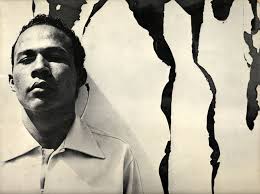
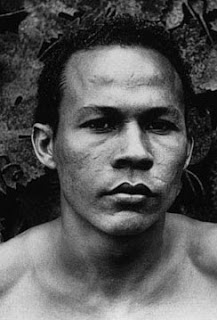
PHOTO: Bob Kaufman (1925-1986)
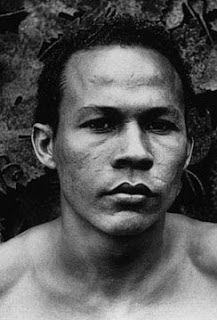


On January 13, 1986 one of the finest American poets since 1945 died in San Francisco after a long illness. His name was Robert Garnell Kaufman and he was 60 years of age. He was also an internationally acclaimed writer who was virtually unknown in the country of his birth. The story of how this happened is yet another blatant example of the tremendous ideological and social power of racial oppression, and its poisonous impact on American cultural life. In fact, it is a great testament to the artistic integrity and independence of Kaufman’s work that he was able to make such a significant contribution to American literature under such hostile conditions.

To fully appreciate the comprehensive scope of Kaufman’s oeuvre it is necessary to talk a bit about his personal biography. Born April 18, 1925, in New Orleans, Louisiana, Kaufman was one of 14 children born to a white Jewish father and Black (and Native American) mother. At the age of 13 Kaufman, a brilliant student yearning for adventure, left home to join the Merchant Marines. It was during his twenty year career as a seaman that Bob developed his lifelong love and fascination for books and writing. It was also where Kaufman first met an older seaman who introduced young Bob to the classic and modernist tradition in European and American literature: Shakespeare, Eliot, Pound, Whitman, Joyce, Williams, etc.

During this period Kaufman also became a widely respected shipmate who was well known for tackling the most dangerous jobs aboard ship. Later during the 1940s Kaufman became a Communist labor organizer for the Seaman’s Union. This political activity leads him to being barred from leaving port at the height of the repressive and reactionary McCarthy era in the early 1950s. However, this did not deter Kaufman from continuing his organizing forays into the south were he was often beaten and arrested by vicious racist mobs and local police authorities. At the time that Bob first met his future wife Eileen in Texas in 1958, she recounts that “Bob was so badly beaten in the chest and stomach that he literally could not eat any solid food for six months.”

After traveling all over the globe nine times with the Merchant Marines Kaufman finally settled down to live in San Francisco in the late 1950s after frequent stops there while on leave during the ’40s and early ’50s. Sandwiched in between all this activity Bob managed to take academic courses for two years in literature and sociology as well as labor history and politics at the famed New School for Social Research in New York City in the late 1940s, early ’5Os. It was during this time that Bob first met and established a long-term personal and artistic friendship with Jack Kerouac, the acknowledged “leader” of the still underground Beat literary movement. During the next 15 years Kaufman would go on to have a singularly powerful and seminal impact on the movement through his excoriating and lyrically captivating poetic style. His personal relationship with Kerouac is documented in the exhaustive 600-page biography on Kerouac by Gerald Nicosia entitled Memory Babe (Grove Press, 1984). Bob would go on in 1959 to start a legendary literary magazine with Allen Ginsberg and Bob Margolis called Beatitude, which just recently published its 33rd edition, and is the only non-academic journal from the Beat school still being published today.

So given all this information (which understandably only touches the bare surface of the complexity of Kaufman’s contributions) it would be more than a “fair” question to ask: “How is it that only two short articles have ever been published in the United States on this major literary figure?”

Furthermore, despite appearing in over 75 anthologies and having his poetry critically acclaimed and honored in Europe and Asia, and particularly in France where he was enthusiastically reviewed in all the major French literary journals and newspapers (and was so loved that he was known as the ‘Black American Rimbaud’), Kaufman was openly ignored (some say snubbed) by the tight coterie known as the Beats.

As a result, Kaufman was left out of many of the most well-known anthologies featuring the work of leading American ‘avant-garde’ writers, including Donald Allen’s New American Poetry (Grove Press, 1960), Seymour Krim’s The Beats (1961), and two books edited by LeroiJones/Amiri Baraka: The Moderns (1963) and the seminal anthology of African American writers Black Fire (William Morrow, 1968). Kaufman was also noticeably absent from the ground-breaking edition of Evergreen Review # 2 (Grove Press, 1957) which featured the work of Kenneth Rexroth, Jack Kerouac, Allen Ginsberg, Robert Duncan, Henry Miller, Gary Snyder, Michael McClure, Lawrence Ferlinghetti et al, and no Blacks, Native Americans, or Latinos at all! So much for truly progressive attitudes and values among the “radical wing” of American letters…


II. Kaufman The Poet


But what of the writer who so outraged local police authorities and staid newspaper columnists and academicians that he was often openly attached and/or ridiculed by them in the 1950s; and who so delighted and entranced brilliant Jazz musicians, poets and painters that he was just as openly revered as a heroic cultural figure setting the pace for a true revolution in American literary circles?


For insights into just how Kaufman was able to crack through the cultural somnolence of this country it is necessary to examine the broad range of his work. For Kaufman’s poetry is in many ways the very embodiment of 20th century modernism with one distinct and very significant difference: his work is at the same time a brilliant synthesis and extension of the many streams of African American poetics over the past sixty years. Which is to say that Kaufman is a master of Western and African American literary and oral traditions. Kaufman’s highly original use of the vernacular modes in American art (e.g. Blues, Jazz, urban argot-slang, and the ‘pop’ inno¬vations in painting, film, and cultural speech) had a considerable impact on his poetic stance, and is largely responsible for one of the most lyrically intense and highly imaginative poetic expressions in the post World War II period. What is of paramount importance to Kaufman’s vision and poetic practice is a flexible language form that will simultaneously allow for and reveal imagery, syntax, and rhythms that critically question or celebrate the vagaries of human existence as lived in social culture:


The whole of me

Is an unfurnished room

Filled with dank breath

Escaping in gasps to nowhere.

Before completely objective mirrors

I have shot myself with my eyes

But death refused my advances.

I have walked on my walls each night

Through strange landscapes in my head.

I have brushed my teeth with orange peel,

Iced with cold blood from the dripping faucets.

My face is covered with maps of dead nations...

“Would You Wear My Eyes”

(from: Solitudes Crowded With Loneliness)


Ray Charles is the black wind of Kilimanjaro

Screaming up-and-down blues,

Moaning happy on all the elevators of my time.

He burst from Bessie’s crushed black skull

One cold night outside of Nashville, shouting

And grows bluer from memory, glowing bluer, still...

“Blues Note”
(from Solitudes…)


Love tinted, beat angels,

Doomed to see their coffee dreams

Crushed on the floors of time, -

As they fling their arrow legs

To the heavens,

Losing their doubts in the beat.

Turtle-neck and angel guys, black-haired

dungaree guys,

Caesar-jawed, with synagogue eyes,

World travelers on the forty-one bus,

Mixing jazz with paint talk,

High rent, Bartok, classical murders,

The pot shortage and last night’s bust

Lost in a dream world

Where time is told with a beat…


“Bagel Shop Jazz”

(from: Solitudes…)


Five square miles of ultra-contemporary nymphomania,

Two dozen homos, to every sapiens, at last countdown,

Ugly Plymouths, swapping exhaust with red convertible buicks.

Twelve-year old mothers suing for child support,

Secondhand radios making it with widescreened TV sets,

Unhustling junkies shooting mothball fixes, insect junk,

Unemployed pimps living on neon backs of

Unemployed whores…


“Hollywood”
(From: Solitudes…)


Sweet beats of jazz impaled on slivers of wind

Kansas Black Morning/First Horn Eyes/

Historical sound pictures on New Bird wings

People shouts/boy alto dreams/Tomorrow’s

Gold belied pipe stops and future Blues Times

Lurking Hawkins/shadows of Lester/realization

Bronze fingers-grain extensions seeking trapped sounds

Ghetto thoughts/bandstand courage/solo flight…


“Walking Parker Home”
(from: Solitudes…)


The Poet Nailed On

The Hard Bone of the World

His Soul Dedicated to Silence

Is a Fish With Frog’s Eyes,

The Blood of a Poet Flows

Out With His Poems, Back

To the Pyramid of Bones

From Which He is Thrust

His Death is a Saving Grace

Creation is Perfect…


“I Am A Camera”
(from: The Ancient Rain)


Piano buttons, stitched on morning lights

Jazz wakes with the day,

As I awaken with jan, love lit the night:

eyes appear and disappear,

To lead me once more, to a green moon.

Streets paved with opal sadness,

Lead me counterclockwise, to pockets of joy,

And jazz.


“Morning Joy”
(from: The Ancient Rain)

In summation, part of Kaufman’s greatness lies in his absolute refusal to allow any external forces (academic or popular) to determine the form or content of his art. Kaufman was decidedly not interested in being a mascot-member of any literary/artistic club, clique, or “school.” He was always the authentic rebel and iconoclast who was never controlled by any literary sect. As a master craftsman of language who fused grand passion, a mad subversive sense of humor, and a cutting satirical intelligence in his work, Kaufman found new and innovative uses for late modernist poetics, as well as the ancient oral tradition of the griot, street troubadour, and bard. As the quintessential Jazz poet he prophesized the creative unity of text and sound that characterizes contemporary postmodernist writing and performance art. And as a consummate poet of the bittersweet ballad that stings and haunts Kaufman, an accomplished songwriter who influ¬enced Bob Dylan and a number of other folk and blues artists, was one of those poets responsible for bringing back lyricism as an effective method of expression.

Finally, the incredible range of Kaufman’s obvious intellectual and emotional references, sources, and influences: Modern American poetry, Modern Spanish and Latin American poetry (particularly Frederico Garcia Lorca), Walt Whitman, the Greeks, ancient Egyptian literature and history, the entire corpus of European “avant-garde” poetics and art, the Bible, the Harlem Renaissance writers (especially Langston Hughes and Sterling A. Brown), Eastern and Western religious iconography and philosophy, Native American literature and oral history, Blues and Jazz, not to mention American comedy, journalism and politics, is the mark of a great literary intellect with an extraordinary command of tradition.


During Kaufman’s life, his artistic talent and visionary spirit was able to survive drugs, imprisonment, racism, and even an unjust public obscurity. In death it is our responsibility to see to it that Bob receives the proper recognition for his prodigious efforts. I can’t think of a writer who deserves it more.


Kofi Natambu
Solid Ground: A New World Journal
Spring, 1987


Bibliography:


BOOKS:


The Ancient Rain: Poems 1956-1978, (New Directions Books, 1981)

Golden Sardine, (City Lights Books, 1967)

Solitudes Crowded With Loneliness, (New Directions Books, 1965)


BROADSIDES:

Second April

Abomunist Manifesto

Does The Secret Mind Whisper?

(All published by City Lights Books, 1959, 1960)


MAGAZINES:


Beatitude, (founded 1959)


Articles about Kaufman:


“Bob Kaufman: Hidden Master of the Beats” (by Steve Abbott; Poetry Flash, February, 1986)

“Whatever Happened to Bob Kaufman?” (by Barbara Christian; The Beats In Criticism, 1981-Lee Bartlett, Editor)

“Private Sadness: Notes on the Poetry of Bob Kaufman” (by Raymond Foye; Beatitude #29, 1979)


REFERENCES:


Literary San Francisco: A Pictorial History by Lawrence Ferlinghetti and Nancy J. Peters, City Lights Books and Harper & Row, 1981

Memory Babe: A Critical Biography of Jack Kerouac, by Gerald Nicosia, Grove Press, 1984

Kerouac And Friends: A Photographic History of the Beat Generation, by Fred McDarrah, William Morrow, 1985


PHOTO: Bob Kaufman (1925-1986)


Interview with Scholar, Political Theorist, Radical Activist, Critic, and Public Intellectual Angela Davis On Critical Theory and Political Praxis, 1960-Present

The Platypus Affiliated Society

    
Bridging theory and practice: An interview with Angela Davis

 
by Erin Hagood and Duyminh Tran

Platypus Review 138 | July-August 2021

PHOTO (L-R): Herbert Marcuse and Angela Davis in 1968

https://lithub.com/angela-davis-on-protest-1968-and-her-old-teacher-herbert-marcuse/

On December 7, 2020, Erin Hagood and Duyminh Tran interviewed Angela Davis via Zoom. Davis is a political activist, author, and academic whose work has focused on issues on race, class, and feminism. What follows is an edited version of their discussion.

Duyminh Tran: Could you give us a brief overview of how you became interested in Marxism?

Angela Davis: I can tell you that it seems that I was primed by the social environment of my childhood to be receptive to Marxism. My parents had a number of friends who were members of the Communist Party. As a very young child, I had no idea what that was, but I’m certain that the ideas that were instilled into me by my mother had something to do with that. I just can’t tell you exactly how.

I do know that when I attended high school in New York in Greenwich Village at The Little Red School House/Elisabeth Irwin High School, a good number of the teachers had been blacklisted because of their political affiliations and beliefs. As a matter of fact, because they were not allowed to teach in the public school system in New York, the teachers created a cooperative school based on the experiments in progressive education by a woman named Elisabeth Irwin.

My history teacher was a Marxist. At the age of 15, I seriously read The Communist Manifesto as a document we were studying in our class. Due to my parents’ connections, I was active in the youth organization of the Communist Party when I was very young. Embracing Marxism came rather naturally. It wasn’t a result of a prise de conscience, as one might say — it just happened organically.


Installation view "1 Million Rosen für Angela Davis"
with: Heinz Wodzicka, Angela Davis, 1972
© SKD, Foto: Laura Fiorio

DT: On the topic of your graduate studies, what were the reasons you decided to go to Germany to study with Adorno?

AD: I had been studying French literature as my undergraduate major. In the course of studying French literature, I came across quite a number of writers who were also philosophers such as Sartre and Camus. I realized that, while I was extremely interested in the literature and the aesthetic dimension, I was more interested in the philosophical underpinnings of the ideas. I didn’t realize this until I was a senior. I had spent a year in France studying at the Sorbonne. Marcuse, who was teaching at Brandeis University at the time, had been away my sophomore year, and I was away my junior year. I had heard him speak and was looking forward to taking classes with him during my senior year. When I explained my predicament to him, I told him that I was very interested in continental philosophy. At that point I was primarily interested in the existentialists. As a result of my studies in France, I had been reading a lot of Sartre and Camus, as well as other phenomenologists like Merleau-Ponty.

I told Marcuse that I was interested in philosophy but did not possess a foundation because I had never even taken an introductory course to the history of philosophy. And then, on the spot — I was in his office hours at the beginning of the first semester of my senior year — Marcuse said, “Well, let’s study philosophy!” For that entire quarter, I met with him weekly to discuss texts from the pre-Socratics, Plato, Aristotle, Schopenhauer, Locke, and others. He then told me that I would have to take his graduate seminar on Kant’s Critique of Pure Reason, which was quite frightening because I had only begun to study philosophy. How could I possibly participate in a class with graduate students who had probably been studying philosophy for many years? But I overcame my fear, took the seminar, and Marcuse called upon me to give the first paper of the seminar.

That is basically how I got hooked on philosophy, but I should point out that I was not really interested in the analytical philosophy that was most popular at that time. What captured my interest was critical theory, which was the approach taken by Marcuse and the Frankfurt School of philosophy — a philosophy applied in an interdisciplinary context as it might assist in the process of changing the world. Marcuse then suggested that I study with Adorno, Horkheimer, and Habermas, who was a young professor at the university at that time. It turned out that was exactly what I was looking for.

Erin Hagood: Oftentimes when young people read the history of this period in politics, the philosophy of people like Sartre or the members of the Frankfurt School is often counterposed to the Old Left communists. Those seem to have been two traditions that both influenced you. Could you speak to how what you learned in the Little Red School House and from the communists related to what you learned by reading Sartre and studying with Marcuse and Adorno?

AD: I don’t think that there was such a clear division at that time. Of course, there was the up-and-coming New Left as exemplified by the New Left Review, for example, which I read during the 1960s. At that particular time, even though I was close to people who were members of the Communist Party, I identified more with the emergent examples of Left theory, politics, and activism that the French intellectuals espoused.

One of the reasons I felt drawn to France was because of the political engagements of public intellectuals. I did not, at that time, consider myself a proponent of the so-called Old Left, but it was always a part of my environment due to my family and friends. I remember that, when I was studying in Frankfurt, I actually went to East Germany because James Jackson, a prominent figure in the U.S. Communist Party, was there for a meeting. He was a very close friend of my parents, and I continue to be friends with his children. His wife, Esther Jackson, was also a major figure. She’s still alive and is 104 now. She was the editor of Freedomways and did a lot of political work in the literary world. Politically, I was drawn to what I considered to be the more radical instantiations of Marxism than to the Communist Party, which I tended to associate with my parents and older generations.

EH: We would like to ask you about your experience with activism in the 1960s and eventual participation in the Communist Party. In your autobiography[1], you talk about your experience in the Black Panther Political Party and the criticisms you had of many groups with which you worked such as the Student Nonviolent Coordinating Committee (SNCC) and the Black Panther Party for Self-Defense. What ultimately brought you to the Communist Party? What did you learn from your experience in the Black Panther Political Party during that period?

AD: Initially I was a member of the Black Panther Political Party, one of the many organizations that took on the designation Black Panthers from the Lowndes County Freedom Democratic Party, whose symbol was the black panther. Then I was a member of LA SNCC. Finally, I joined the Communist Party and shortly thereafter the Black Panther Party for Self-Defense (the Black Panther Party with which we are all familiar today). My decision to join the Communist Party, first of all, had to do with a sense of an important lack in the other organizations that I had joined. While I was passionate about Black liberation, I’ve always sought a commitment that embodied interrelations and connections.

I can remember, even when I was growing up in Birmingham, that although white people were certainly racist, we had to be able to reach them because workers’ struggles were important. I suppose I absorbed some of these ideas from the Communists in my social environment. Therefore, having worked with so many black organizations such as the Black Youth Alliance, black student groups, and the Black Panther Political Party (which ran candidates at the time), I understood that black liberation had to be viewed in the context of a broader meaning of freedom.

Two of the people I became close with as I worked in the Black Panther Political Party and LA SNCC, Franklin Alexander and his wife, Kendra Alexander, were members of a formation within the Communist Party called the Che-Lumumba Club. This was a black club within the Communist Party that was not entirely accepted by the larger leadership structure in New York. However, it was accepted by the Communist Party leadership in California as an important way of participating in the black liberation movement while embracing the class struggle and developing a Marxist analysis.

It was actually related to a very specific experience I had as an activist, when SNCC was dismantled because of disagreements regarding the part that women should play in the struggle and specifically their eligibility for leadership roles. Women who were nominally in the leadership of LA SNCC but were not permitted to publicly represent the organization at press conferences, rallies, etc., demanded to be acknowledged because we were actually doing most of the actual work — as is usually the case in movement and other organizations. We also demanded to be recognized as spokespersons. This tension within the organization also had to do with who was a Marxist and who wasn’t. The internal tensions finally led to the demise of the organization.

I’ve always been someone who needs collective contexts, but my organization fell apart as a result of these internal struggles over gender and politics. Kendra, Franklin, and Franklin’s older sister Charlene Mitchell invited me to consider becoming a part of the Che-Lumumba Club in Los Angeles. I was so impressed by the work that they were doing that it seemed like an opportunity to have collective reflection and input. It was also an internationalist organization that addressed local, national, and global issues.

EH: You state in your autobiography that you reflected on how your philosophy was connected to your politics. In your essay “Marcuse’s Legacies,”[2] you note that the difference between Adorno and Marcuse seemed to hinge upon how their ideas related to the activism occurring during the 1960s. Could you tell us why you felt their disagreement was significant and what those ideas meant specifically for your politics during this period?

AD: That’s a very interesting question. I never quite thought about it in that way but thanks for posing it. I did learn a great deal about working within the context of contradictions. I really appreciated Adorno’s analysis. I loved his lectures, read his works voraciously, and had conversations with my student friends in Germany about his work. On the other hand, so many of us were utterly critical of him for his failure to recognize that it was possible at that moment to bridge the gap between theory and practice.

Marcuse was actually doing this. He was doing his philosophy and working within the realm of ideas, but also participated in the radical movements of that era. He spoke at rallies, advised activists, and engaged in reflections on activism in his writings of that era. By contrast, Adorno’s position was basically that the revolution we wanted should have already happened. However, it did not happen due to major flaws in the theory. He believed that our role at that time was to deeply immerse ourselves in theory so that we could generate a theoretical framework capable of producing successful revolutionary activism.

Many of us felt that this stance did not reflect the dialectical approach on which he himself always insisted. He saw his work as dialectical. How could one divorce theories and praxis, ideas and activism in that way? In Frankfurt, we had many conversations about the value of Adorno’s work that also helped us to develop an immanent critique of his stand with respect to activism.

I’m thankful for the fact that you posed the question in those terms, because I never quite thought about it that way. Your formulation of the question highlights what I now consider to be an important feminist method — working within the very tensions defined by relations of contradiction. Although I did not see myself as learning how to work within the context of contradictions, this is precisely what I was attempting to do. When I joined the Communist Party, I was extremely critical of a number of issues related to the party. However, based on the experience I had in Frankfurt, I realized that it was possible to be engaged and active while simultaneously remaining critical.

I see this as a feminist stance. The capacity to dwell within contradictions and render them productive is an important element of feminist methodologies. I’m recognizing now that I had encountered dilemmas that required that insight in the late 1960s when I was studying with Adorno.

EH: What do you mean by rendering contradictions productive? What might be an example of rendering a contradiction productive in political activism?

AD: As Audre Lorde wrote, “Difference must be not merely tolerated, but seen as a fund of necessary polarities between which our creativity can spark like a dialectic.” This methodology eschews the usual approach to contradiction, which is advocacy to choose one pole or the other. Let’s take a contemporary example. I’m extremely critical of Joe Biden and Kamala Harris for numerous reasons. They aren’t the candidates we need to lead the country in a radical direction, but I’m not going to wipe my hands of them and do nothing, an unfortunately popular position. I think that it’s possible to be critical while simultaneously recognizing how important it was during this last election to get rid of looming fascism by voting against its proponents. Biden and Harris definitely don’t represent the path we need to take in this country, but they do represent the possibility of creating a more open political terrain where activist support of more radical trajectories can play out, even in opposition to their political positions. If we learn how to work at the heart of this contradiction, we may be able to push for those changes that the Biden/Harris administration opposes.

EH: In a talk you gave in 2008, you noted that many of the collective demands of the 1960s have transformed into individual benefits in the present. In retrospect, did the New Left’s studies of Marx prove adequate to the task of grasping historical transformations in capital such as, for example, changes in the meaning of race, the economic decline of the black working class, and the post-industrialization of the Midwest, in order to effect political change?

AD: The impact of neoliberal ideology has tended to emphasize and further embed the already destructive idea that the individual is the primary unit of society. The paradigm is the individual on the capitalist market. I believe that, in that lecture, I spoke about how affirmative action was intended to uplift entire communities of color and women but was misconstrued as an individualistic solution.

The project was never about individuals. It was always about communities. It has been difficult to create a popular discourse that could help people realize the importance of distinguishing between the individual and the collective. At least, in 2020, perhaps half of the country finally acknowledges that we do need strategies that address structural and systemic racism. It’s not about a particular individual’s capacity to become the first to accomplish something. It’s about uplifting entire communities and attempting to extricate them from the structural problems that have persisted since the aftermath of slavery.

As socialists and the Left more broadly have developed over the past few decades, there has been a pervasive tendency towards reductionism. One might look, for example, at Bernie Sanders and his notion during the previous election that racism can be addressed by attending to its economic dimensions. Jobs for all will end racism. To a certain extent, I think he is right, and we have to embrace these solutions. At the same time, Sanders fails to recognize the particular dynamic of race and racism. Cedric Robinson pointed out that capitalism, from its outset, has always been racial capitalism as a result of colonialism and slavery.

Those inheritances are still with us. Over the last period, the reductionism of what came to be called the New Left has abated somewhat, but there are still vestiges of this tendency to declare that the overarching problem is capitalism, while ignoring the urgency of opposing racism and misogyny. There is an assumption that all one has to do is solve the problems of capitalism in order to fix racism, misogyny, and many other issues that continue to be inaccurately characterized as special interests. Criticisms stating that attempts to address racial or gender issues are divisive have proven to be absolutely incorrect. We are in the process of reimagining what it means to challenge racial capitalism and struggle for a socialist future. Questions of race, gender, and ability all have to be centered.

We could have a very long conversation about this, but I just want to point out that the longstanding failure to embrace a feminist analysis of capitalism and the role of reproductive labor disarmed a great number of traditional Marxists who didn’t want to disturb the notion that the (white) male proletariat is the incontestable agent of change in history. Nowadays, we are seeing an entirely different global economy with women and girls participating in the manufacturing sector. Some of the most progressive unions have recognized that they have to change their approaches. The failure to acknowledge these material changes signals a need to rethink the theoretical framework.

This is one of the things I really appreciate about critical theory. One not only uses these conceptual methods to try to understand the world but must also constantly question the conceptual apparatus. One must ask: why am I using this tool, this concept, this particular theory, this method? How does that change the outcome of what I am trying to learn? How do changes in the material world have an impact on my theoretical framework? 


NOTES:

[1] Angela Davis, Angela Davis: An Autobiography (New York: International Publishers, 2013).

[2] Angela Davis, “Marcuse’s Legacies,” in Herbert Marcuse: A Critical Reader, ed. John Abromeit and W. Mark Cobb (New York: Routledge, 2004), 43-50.

Thursday, February 29, 2024

How the Progressive Legacy and Liberatory History of Black American Internationalism Is An Ongoing Factor in the Struggle for Freedom and Self Determination in Palestine

https://truthout.org/articles/uncensored-black-history-offers-lessons-in-global-struggles-for-liberation/

Uncensored Black History Offers Lessons in Global Struggles for Liberation

Unearthing Black internationalism’s legacy can inform our fight for liberation in Palestine — and beyond.

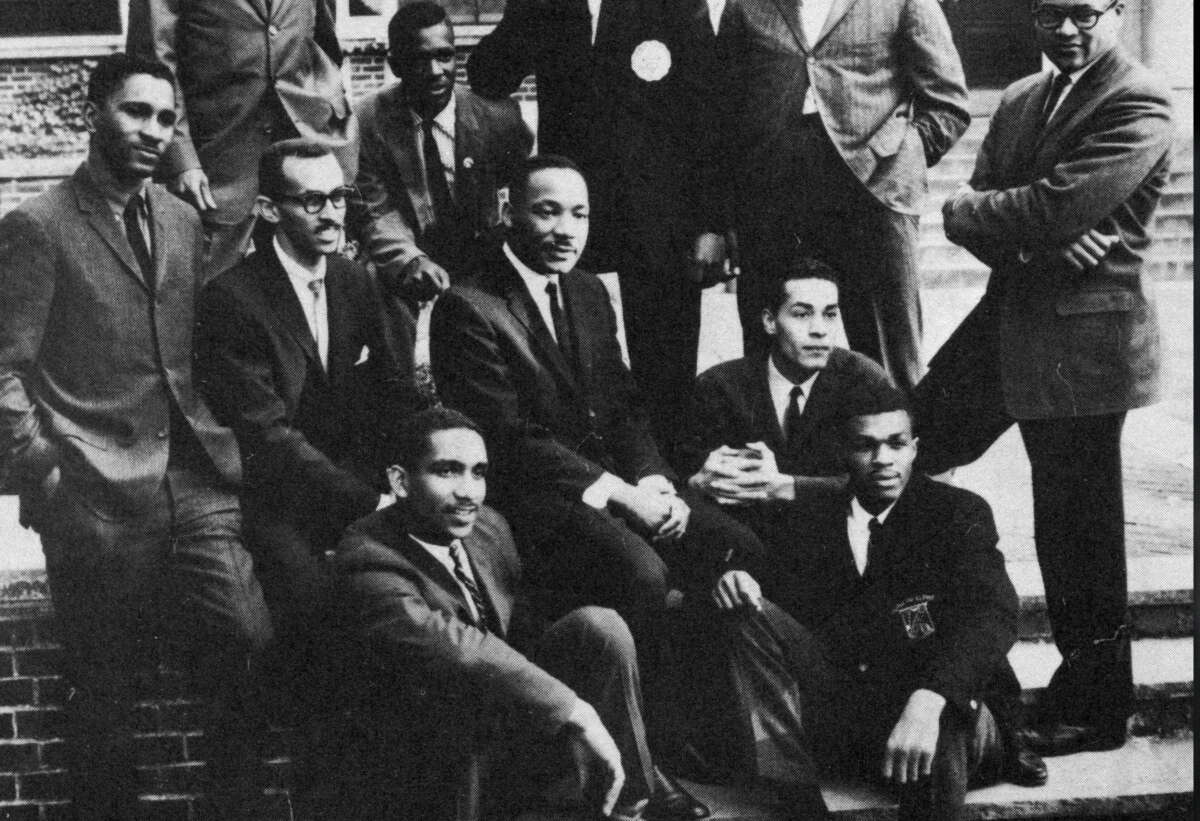
PHOTO:  Martin Luther King Jr. (center) poses with members of the Student Nonviolent Coordinating Committee. Afro American Newspapers / Gado / Getty Images

Our time is shaped by Israel’s genocidal assault in Gaza. But it is also shaped by the largest mobilization of opposition to U.S. support for Israel in this country’s history, and within this wave of protest, we see — among other things — the inescapable connections between Black America and people who are oppressed and marginalized around the world.

Indeed, today’s outpouring of protest for Gaza is the largest and most sustained since the 2020 Black-led uprisings in response to the police-perpetrated murders of George Floyd and Breonna Taylor, and this is not a coincidence. On one hand, decades of steadfast organizing to bring awareness to Israeli apartheid and U.S. complicity — led by Palestinians and their supporters — laid the foundation for the mass action for Gaza that we are seeing now. Campaigns to boycott Israeli products and divest from Israeli institutions and educational events — particularly on campuses across North America — have led to a situation where Americans are far more informed about Palestine than during Israel’s previous bombardments of Gaza and other violence throughout its history.

But it is also the case that more than 10 years of protest, political education and national conversation under the banner “Black lives matter” has primed the U.S. population for a clear look at Israel’s actions and a deep interrogation of the histories and structures that inform them. After all, the movement for Black lives not only has produced sharp scrutiny of U.S. policing, but has also forced a reckoning with institutional racism — particularly rooted in the enslavement of Black Americans — and the ways in which it informs every aspect of U.S. society.

When, in May 2021, Israeli police cracked down on Palestinians in Jerusalem who were worshiping at the Al Aqsa Mosque, forced Palestinians from their homes in that city and elsewhere, and escorted far right Israeli marches, people in the U.S. observed with eyes that had been shaped by the Black-led uprisings of the previous year. Israeli apartheid on the other side of the world suddenly looked very familiar. It is unsurprising that Israeli police in Jerusalem behaved similarly to cops who repressed the 2020 protests in Brooklyn, Philadelphia, Los Angeles and Portland, because the police in those cities train with Israeli forces. That moment stands as a precursor to the mass opposition to Israeli violence that we are seeing now.

In fact, the time stretching from the early days of the movement for Black lives through now has included a contemporary wave of Black-Palestinian solidarity. The year 2014 in particular was seminal: The Ferguson Uprising in response to the police murder of Michael Brown in the St. Louis suburb coincided with Israel’s 2014 bombardment of Gaza. As these events unfolded, Palestinians voiced solidarity with Ferguson and famously took to social media to offer advice on dealing with tear gas.

In the wake of summer 2014, Black American activists deepened solidarity with Palestinians — from Florida’s Dream Defenders’s delegation to Palestine, to more than 1,100 Black activists, artists and writers signing a statement that said, among other things, that “we continue to see connections between the situation of Palestinians and Black people.”

This is not the first time that connections between the struggle against anti-Black racism in the U.S. and freedom struggles around the world informed a Black internationalist consciousness here in the United States. We are at the end of Black History Month, which offers an annual set of conversations about Black history, the unfinished Black freedom struggle, and the ways in which these things have shaped this place and its broader history. While typically official celebrations in February minimize the radical content of Black history and narrow the conversation to within the borders of the United States, an honest look at the full breadth of Black politics over time points to thought and movements that push against the very foundations of the United States — and to a consciousness that extends well beyond its borders.

While Martin Luther King Jr. Day tends to offer a sanitized, innocuous version of the civil rights leader, for example, King’s transnational, anti-colonial vision is usually omitted entirely. In his 1963 “Letter from Birmingham Jail,” for example, King laments the conservatism of the United States by contrasting the time taken to dismantle Jim Crow segregation with the pace at which victorious anti-colonial struggles were sweeping the colonized world. King wrote, “the nations of Asia and Africa are moving with jetlike speed toward the goal of political independence, and we still creep at horse and buggy pace toward the gaining a cup of coffee at a lunch counter.”

“Black lives matter” has primed the U.S. population for a clear look at Israel’s actions and a deep interrogation of the histories and structures that inform them.

King saw the civil rights movement not as a struggle isolated to the American South, but in the context of a broader world struggle against racism and colonization. He studied and spoke extensively about the Indian fight against British colonialism, and was present in Accra at the inauguration of Ghana as an independent nation in 1957.

King was not alone. For the most forward leadership of the Black Power era — and many of its participants — linking the struggle in the U.S. to the global struggle for a freer world was not the exception, but the rule. The Student Nonviolent Coordinating Committee (SNCC), the key organization of the civil rights movement, spoke out against Israeli colonization of Palestine in 1967 — the year in which Israel seized several territories that it would settle, including Gaza. That same year, SNCC’s James Forman spoke in Zambia at the International Seminar on Apartheid, Racial Discrimination, and Colonialism in South Africa, saying, “SNCC has never visualized the struggle for human rights in America in isolation from the worldwide struggle for human rights.” SNCC’s words and actions against Israeli apartheid and colonization throughout Africa were among the many aspects of the organization’s rich engagement with struggles against war and for liberation throughout the world.

Other Black Power organizations of this era had similar commitments. The Black Panther Party for Self Defense had an international section of its newspaper from the first issue. The party opened an office in Algiers in 1970 to coordinate relationships between the organization and newly independent countries and revolutionary leaders (including the Palestinian Liberation Organization) around the world in what it called “people’s diplomacy.” The League of Revolutionary Black Workers, which was centered in the Detroit area, worked extensively with Arab coworkers in the auto plants to campaign against U.S. support for Israel, and used the South End newspaper to educate and agitate for Palestine — even facing an arson attack for doing so.

Israel’s — and Washington’s — catastrophe in Gaza is ushering in a new era of awareness of Palestine in particular, and the U.S.’s violent activities abroad in general, from which there is no going back. Today, Black clergy are speaking out against the genocide in Gaza and students at historically Black colleges and universities are interrogating their campuses’ connections with Israel and promoting solidarity with Palestinians. As we work to construct a new time of anti-militarism and internationalism, we should know that we have a rich inheritance of Black internationalist history. We should unearth this knowledge and the lessons it holds as we do our urgent work today. 


ABOUT THE AUTHOR: 


Khury Petersen-Smith is the Michael Ratner Middle East Fellow at the Institute for Policy Studies.

Part of the Series


Struggle and Solidarity: Writing Toward Palestinian Liberation

https://truthout.org/series/struggle-and-solidarity-writing-toward-palestinian-liberation/

Struggle and Solidarity: Writing Toward Palestinian Liberation

We can't look away from Israel’s genocidal violence against Palestinians — or the movement for a free Palestine.

Struggle and Solidarity: Writing Toward Palestinian Liberation

Series Introduction

The horror and heartbreak in Gaza is reaching new proportions each minute, as Israel continues its brutal genocide. The death toll in Gaza is shooting upward daily, and Israel’s violence is also mounting in the West Bank, even as Palestinians and those in solidarity with them — including powerful mobilizations of Jewish protesters saying “not in our name” — are marching and rallying worldwide in urgent protests.

Truthout started this series on “Struggle and Solidarity” years ago to cover the struggle for Palestinian liberation in all its forms, from protests within Palestine to international solidarity efforts and intersections with other movements. Over the years we’ve delved into the context and history of Israel’s settler-colonial violence, and possibilities for a liberated future built on foundations of equity and justice. Through news articles, analyses and firsthand accounts, we are committed to reporting on the ongoing violence of Israeli colonization, occupation and apartheid — and the U.S.’s complicity in the genocide that is now unfolding against Palestinians.


THE FIX IS IN: Brilliant Lawyer, Activist, Critic, Public Intellectual, and Fearless Advocate For Justice Elie Mystal On Exactly How and Why the Truly Heinous and Criminally Rightwing Supreme Court is 100% In The Bag For the Fascist MAGA GOP Leader and Former President Donald J. Trump

DEFEAT FASCISM BEFORE FASCISM DEFEATS YOU

https://www.msnbc.com/the-beat-with-ari/watch/n-ari-mystal-240228-205139013789

SCOTUS under fire for ‘trying to make Trump win’

The Supreme Court agreed to decide whether former President Donald Trump can claim presidential immunity over criminal election interference charges. MSNBC’s Ari Melber is joined by former RNC Chair Michael Steele and The Nation correspondent Elie Mystal, who says SCOTUS is “trying to make Trump win.”

The Supreme Court agreed to decide whether former President Donald Trump can claim presidential immunity over criminal election interference charges. MSNBC’s Ari Melber is joined by former RNC Chair Michael Steele and The Nation correspondent Elie Mystal, who says SCOTUS is “trying to make Trump win.”

https://podcasts.apple.com/us/podcast/trump-coup-trial-delayed-as-supreme-court-agrees-to/id1314172351?i=1000647482638

Trump coup trial delayed as Supreme Court agrees to hear ‘presidential immunity’ case The ReidOut with Joy Reid

MSNBC

February 28, 2024 

    • Politics

Joy Reid leads this episode of The ReidOut on MSNBC with breaking news from the Supreme Court. The 6-3 conservative majority has decided to hear the case of Trump vs. the United States on whether Donald Trump can claim presidential immunity over his criminal election interference charges. Plus, Mitch McConnell is stepping down as the Senate Republican leader in November. “But the fact remains--no individual has done more damage to the Senate than Mitch McConnell,” Joy says. Joy gives her analysis of what she calls McConnell’s "shameful legacy." All this and more in this edition of The ReidOut on MSNBC.


IMPORTANT NEW BOOKS:

I Dare Say: A Gerald Horne Reader
by Gerald Horne
OR Books, 2024

Edited by Tionne Alliyah Parris

[Publication date: February 27, 2024]

I Dare Say: A Gerald Horne Reader is a timely and essential collection of the many works of Professor Gerald Horne―a historian who has made an indelible impact on the study of US and international history.

Horne approaches his study of history as a deeply politically engaged scholar, with an insightful and necessarily partisan stance, critiquing the lasting reverberations of white supremacy and all its bedfellows―imperialism, colonialism, fascism and racism―which continue to wreak havoc in the United States and abroad to this day.

Drawing on a career that spans more than four decades, The Gerald Horne Reader will showcase the many highlights of Horne’s writings, delving into discussions of the United States and its place on the global stage, the curation of mythology surrounding titans of 20th Century African American history like Malcolm X, and Horne’s thoughts on pressing international crises of the 21st Century including the war in Afghanistan during the early 2000s, and the war in Ukraine which erupted in February 2022.

As we continue to observe the chaos of our current times, I Dare Say: A Gerald Horne Reader foregrounds a firmly rooted, consistent analysis of what has come to pass―and provides illuminating insight that better informs where we may be headed, and outlines what needs to be done to stem the tide of growing fascism across the Western world.


REVIEWS: 


“A tour de force of historical excavation.”
—Michael Eric Dyson, author of The Black Presidency: Barack Obama and the Politics of Race in America

“One of the great historians of our time . . . his revolutionary fervor is undeniable.”
—Cornel West, public intellectual, author of Race Matters

“[Gerald Horne] demystifies and reveals History as a concentrated storyline of social struggles and transformative results.”

—Danny Glover, citizen-artist, actor

“Reverberating with the cries of revolution.”
—Claudine Michel, Editor, Journal of Haitian Studies

Praise for Race to Revolution:

“One cannot possibly understand the journey from bondage to freedom in America without wrestling with its consequences for the people of African descent in Cuba. Their story is our story, and thanks to Horne, we can now study its flow in a single, and profound, narrative.”
—Henry Louis Gates, Jr., Alphonse Fletcher University Professor, Harvard University

"[A] comprehensive introduction to Horne’s work that demonstrates why he is the greatest radical historian living today."

—The Black Agenda Report


ABOUT THE AUTHOR:


Gerald Horne is Moores Professor of History and African American Studies at the University of Houston. His research has addressed issues of racism in a variety of fields including labor, politics, civil rights, international relations and war. Dr. Horne is the author of more than thirty books, including The Counter Revolution of 1836: Texas slavery & Jim Crow and the roots of American Fascism and The Apocalypse of Settler Colonialism: The Roots of Slavery, White Supremacy, and Capitalism in 17th Century North America and the Caribbean.


ABOUT THE EDITOR:


Tionne Alliyah Parris is a PhD candidate at the University of Hertfordshire who received a 1st Class Undergraduate degree and a Masters degree from the University of Dundee in Scotland. She is a specialist in African American history, and specifically in the Black Power Movement of the 1960s and 1970s. Her research is focused on American society’s response to race-based political protests―as well as Communist ideology within Black Radical protests.


The Trump Indictments: The Historic Charging Documents With Commentary
by Melissa Murray and Andrew Weissmann
W. W. Norton & Company. 2024
 
[Publication date: February 27, 2024]

Collecting the four unprecedented indictments against Donald Trump, this essential volume features extensive commentary by NYU law professors and MSNBC contributors Melissa Murray and Andrew Weissmann.

In the long span of American history, Donald Trump is the first former president to face criminal indictment. He is the subject of a series of explosive charges across four cases: the January 6 case brought by Special Counsel Jack Smith; the election interference case in Georgia; the classified documents case also brought by Special Counsel Jack Smith; and the "hush money" case in New York. The Trump Indictments includes:

• An introduction offering historical background and international comparisons for criminal charges against a former political leader.
• The four indictments with annotations throughout, including insider notes from an eminent scholar (Murray) and a former federal prosecutor (Weissmann).
• A cast of characters, from Trump and his alleged co-conspirators to notable Proud Boys and Oath Keepers who face prison sentences as a result of related January 6 cases.
• A timeline that brings together in one place the critical events that led to the four indictments.

A necessary handbook for anyone following the trials in 2024, The Trump Indictments will endure as an indispensable record of a democracy at the crossroads.


ABOUT THE AUTHORS:


Melissa Murray is the Frederick I. and Grace Stokes Professor of Law Faculty and the director of the Birnbaum Women’s Leadership Center at New York University School of Law, where she teaches constitutional law. She previously served as the Alexander F. and May T. Morrison Professor of Law and interim dean of Berkeley Law. She is a cohost of the podcast Strict Scrutiny and a regular commentator on MSNBC. Murray has written for a range of legal and lay publications, including the Harvard Law Review, the Yale Law Journal, the New York Times, the Washington Post, Newsweek, and the Nation, and offered commentary for numerous media outlets, including NPR, CNN, ABC, and PBS. Murray clerked for Sonia Sotomayor, then a judge of the US Court of Appeals for the Second Circuit, and Stefan Underhill of the US District Court for the District of Connecticut.

Andrew Weissmann is a professor of practice at New York University School of Law. His distinguished Department of Justice career encompasses serving as a lead prosecutor in Robert S. Mueller’s Special Counsel’s Office, the FBI general counsel, director of the Enron Task Force, chief of the DOJ’s Fraud Section, and chief of the Criminal Division in the Eastern District of New York. He is a regular commentator on MSNBC and cohost of the podcast Prosecuting Donald Trump. He is the author of the New York Times bestseller Where Law Ends: Inside the Mueller Investigation.