LISTEN: Justice Jackson uses history to reject ‘race-neutral’ argument in major voting rights case
Ketanji Brown Jackson
Justice Ketanji Brown Jackson, the first Black woman to serve on the Supreme Court, on Tuesday pushed back against the notion that states should not consider race when drawing electoral lines to comply with the Voting Rights Act. At the heart of the Merrill v. Milligan case is Alabama’s 2021 congressional map. A three-judge district court ruled that the map violated Section 2 of the Voting Rights Act because it diluted the votes of Black Alabamians by packing those voters into one district, even though about 27 percent of Alabamians are Black and only make up a majority in one of the state’s seven congressional districts. The district court agreed with challengers of the map, who argued that those voters deserved a second congressional district based on their proportion of the population. However, the Supreme Court, in a 5-4 vote, allowed the map to take effect. During oral arguments Tuesday in the redistricting case, Alabama Solicitor General Edmund LaCour said the state’s legislature drew the map “in a lawful race-neutral manner” – an argument that Jackson rejected. “I understood that we looked at the history and traditions of the Constitution, at what the framers and the founders thought about. And when I drilled down to that level of analysis, it became clear to me that the framers themselves adopted the equal protection clause, the 14th, the 15th Amendment, in a race-conscious way,” Jackson said. “That we were, in fact, trying to ensure that people who had been discriminated against, the Freedman, during the Reconstruction period, were actually brought equal to everyone else in society.” Voting rights advocates worry that the conservative majority on the high court is prepared to once again cut back the Voting Rights Act, considered the crown jewel of the civil rights movement.

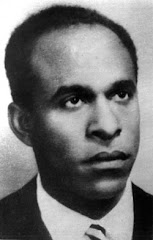
Charles
Hamilton Houston (September 3, 1895-April 22, 1950) was a legendary
black lawyer and teacher who helped play a major role in dismantling the
national Jim Crow laws and helped train and mentor future Supreme Court
justice Thurgood Marshall. Known as “The Man Who Killed Jim Crow”, he
played a role in nearly every civil rights case before the Supreme Court
between 1930 and Brown v. Board of Education (1954). Houston’s
brilliant plan to attack and defeat Jim Crow segregation by using the
inequality of the “separate but equal” doctrine (from the Supreme
Court’s Plessy v. Ferguson decision) as it pertained to public education
in the United States was the master stroke that brought about the
landmark Brown decision.
“This fight for equality of educational
opportunity (was) not an isolated struggle. All our struggles must tie
in together and support one another. . .We must remain on the alert and
push the struggle farther with all our might.”
Born in
Washington, D.C., Houston prepared for college at Dunbar High School in
Washington, then matriculated to Amherst College, graduating Phi Beta
Kappa in 1915.
From 1915 to 1917, Houston taught English at
Howard University. From 1917 to 1919, he was a First Lieutenant in the
United States Infantry, based in Fort Meade, Maryland. Houston later
wrote:
“The hate and scorn showered on us Negro officers by our
fellow Americans convinced me that there was no sense in my dying for a
world ruled by them. I made up my mind that if I got through this war I
would study law and use my time fighting for men who could not strike
back.”
In the fall of 1919, he entered Harvard Law School,
earning his Bachelor of Laws degree 1922 and his Doctor of Laws degree
in 1923. In 1922, he became the first African American to serve as an
editor of the Harvard Law Review.
After studying at the
University of Madrid in 1924, Houston was admitted to the District of
Columbia bar that same year and joined forces with his father in
practicing law. Beginning in the 1930s, Houston served as the first
special counsel to the National Association for the Advancement of
Colored People, and therefore was involved with the majority of civil
rights cases from then until his death on April 22, 1950.
He
later joined Howard Law School’s faculty, establishing a long-standing
relationship between Howard and Harvard law schools. While at Howard, he
was a mentor to Thurgood Marshall, who argued Brown v. Board of
Education and was later appointed to the Supreme Court.
Houston
used his post at Howard to recruit talented students into the NAACP’s
legal efforts (among them Marshall and Oliver Hill, the first- and
second-ranked students in the class of 1933, both of whom were drafted
into organization’s legal battles by Houston).
By the mid-1930s,
two separate anti-lynching bills backed by the NAACP had failed to gain
passage, and the organization had won a landmark victory against
restrictive housing covenants that excluded blacks from particular
neighborhoods only to see the achievement undermined by subsequent legal
precedents.
Houston struck upon the idea that unequal education
was the Achilles heel of Jim Crow. By demonstrating the failure of
states to even try to live up to the 1896 rule of “separate but equal,”
Houston hoped to finally overturn the Plessy v. Ferguson ruling that had
given birth to that phrase.
His target was broad, but the
evidence was numerous. Southern states collectively spent less than half
of what was allotted for white students on education for blacks; there
were even greater disparities in individual school districts. Black
schools were equipped with castoff supplies from white ones and built
with inferior materials. Black facilities appeared to be part of a crude
segregationist satire – a design to make black education a
contradiction in terms.
Houston designed a strategy of attacking
segregation in law schools – forcing states to either create costly
parallel law schools or integrate the existing ones. The strategy had
hidden benefits: since law students were predominantly male, Houston
sought to neutralize the age-old argument that allowing blacks to attend
white institutions would lead to miscegenation, or “race-mixing”. He
also reasoned that judges deciding the cases might be more sympathetic
to plaintiffs who were pursuing careers in law. Finally, by challenging
segregation in graduate schools, the NAACP lawyers would bypass the
inflammatory issue of miscegenation among young children.
The successful ruling handed down in the Brown decision was testament to the master strategy formulated by Houston.
Houston was a member of Alpha Phi Alpha, the first intercollegiate Greek-letter fraternity established for African Americans.
Houston
was posthumously awarded the NAACP’s Spingarn Medal in 1950 and, in
1958, the main building of the Howard University School of Law was
dedicated as Charles Hamilton Houston Hall. His importance became more
broadly known through the success of Thurgood Marshall and after the
1983 publication of Genna Rae McNeil’s Groundwork: Charles Hamilton
Houston and the Struggle for Civil Rights.
Houston is the
namesake of the Charles Houston Bar Association and the Charles Hamilton
Houston Institute for Race and Justice at Harvard Law School, which
opened in the fall of 2005. In addition, there is a professorship at
Harvard Law named after him