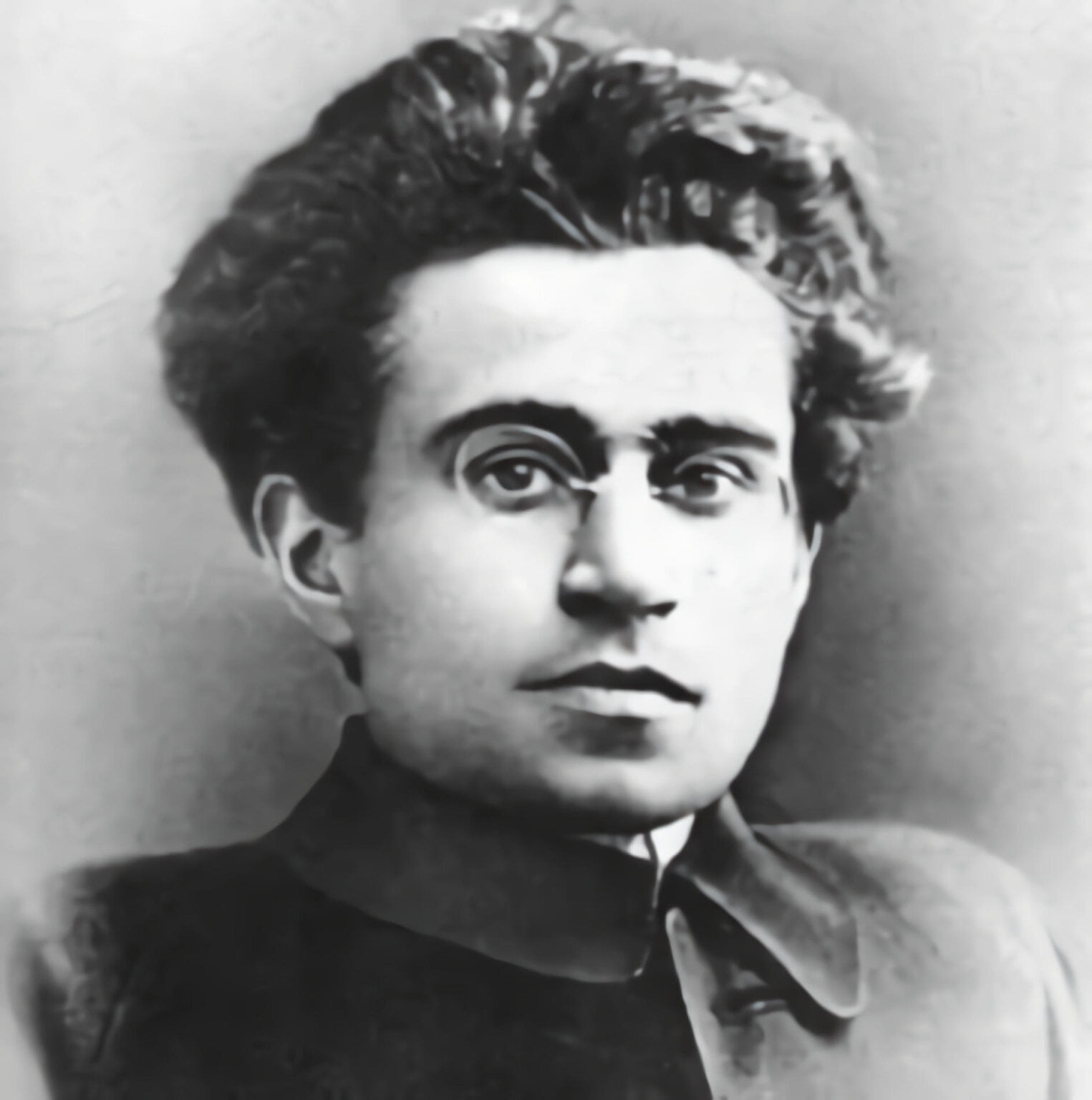
Tyrone Williams
In memory of Tyrone Williams, we celebrate a visionary poet and scholar whose words and wisdom forever illuminate the paths of creativity and contemplation.
Tyrone Williams, a poetry editor of Obsidian: Literature & Arts in the African Diaspora, co-edited Inciting Poetics (University of New Mexico Press, 2019) and published eight books of poetry and a prose eulogy, Pink Tie (Hooke Press, 2010).
A limited mail art project, Trump l’oeil, was published by Hostile Books in 2017. Omnidawn published two of his books of poetry, As Iz (2018) and On Spec (2008). His other books include washpark (with Pat Clifford) (Delete Press, 2021), Howell (Atelos Books, 2011), Adventures of Pi (Dos Madres Books, 2011), “the Hero Project of the Century” (The Backwaters Press, 2009) and c.c. (Krupskaya Books, 2002). His chapbooks are Between Red and Green: Narrative of the Black Brigade (Dos Madres Books, 2016), Red Between Green (Portable Press @ Yo-Yo-Labs, 2014), Musique Noir (Overhere Press, 2006), Futures, Elections (Dos Madres Press, 2004), AAB (Slack Buddha Press, 2004), and Convalescence (Ridgeway Press, 1987; 1989; 1995).
Individual poems have appeared in a number of anthologies, including Best American Experimental Writing, Great American Prose Poems: From Poe to The Present, Rainbow Darkness: An Anthology of African American Poetry and What I Say.

His poems have also been published in national magazines and journals like Caliban, Callaloo, Chicago Review, Cincinnati Poetry Review, Colorado Review, Combo, Damn the Caesars, Denver Quarterly, First Intensity, Hambone, Kenyon Review, Kiosk, River Styx, Smartish Pace, The Nation, and xcp: cross-cultural poetics. He taught at Xavier University and most recently was the David Gray Chair of Poetry & Letters at SUNY Buffalo.
https://www.flummoxedpoet.com
https://www.buffalo.edu/cas/english/graduate/poetics/PoeticsFaculty/tyrone-williams.html
Tyrone Williams
In Memorium: Professor Tyrone Williams, David Gray Chair of Poetry and Letters
Professor Tyrone Williams, David Gray Chair of Poetry and Letters, passed away on March 11, 2024, a short time after a cancer diagnosis. He was 70.
Professor Williams is widely regarded as one of the leading American poets of the late-twentieth and early twenty-first centuries. Embodying a rare combination of extraordinary brilliance and generosity, he is beloved and admired by his contemporaries, and served as an influential, adored mentor to many younger poets.
Born in Detroit, Michigan, Williams received his B.A., M.A., and Ph.D. degrees in English from Wayne State University and taught at Xavier University in Cincinnati for decades, serving as chair of its English department 2000-06.
He joined UB English in Spring 2022, appointed as the David Gray Chair, a position as core faculty in the Poetics Program. Author of eight volumes of poetry and many critical articles, Williams was an exemplary poet-scholar, a practitioner of and a leading academic expert in experimental poetry and poetics, as well as a specialist in African American literature and aesthetics and literary theory. Williams was highly active presenting papers at academic conferences and giving poetry readings internationally. He was awarded numerous literary fellowships, including a Baltic Writer Residency and residencies at Djerassi, Casa Libre de Solana, Headlands Center for the Arts, and Fundacion Valparaiso, while he also served as Poet-in-Residence at the Center for African American Poetics at the University of Pittsburgh. In 2020, he received the Stephen Henderson Award for Outstanding Achievement in Literature and Poetry, from the African American Literature and Culture Society. In his significant service to the profession, he wrote innumerable reviews for books by both new and established authors, while he also acted as judge for prizes and publications.
In his short time in Buffalo, Professor Williams had already made a profound impact on graduate and undergraduate students and on poets in the larger Buffalo community. He is and will be profoundly missed as professor, colleague, mentor, and friend, as we continue to study his groundbreaking artistic and scholarly work.
Tyrone, you are greatly loved and admired. Thank you.
Selected Bibliography
Archive
Professor Williams’s papers are archived in the Poetry Collection, University at Buffalo.
Finding aid: https://findingaids.lib.buffalo.edu/repositories/3/resources/1256
Poetry
Stilettos in a Rifle Range (Detroit: Wayne State University Press, 2022)
washpark, with Pat Clifford (Delete Press, 2021)
Line 9, Part I (Oakland: Compline, 2020)
As Iz (Oakland: Omnidawn, 2018)
Trump l’oeil (Buffalo: Hostile Press 2017)
Between Red & Green: Narrative of the Black Brigade: a storytelling poem (Loveland: Dos Madres, 2016)
Howell (Berkeley: Atelos, 2011)
Adventures of Pi: Poems 1980-1990 (Loveland: Dos Madres, 2011)
Pink tie (Oakland: Hooke Press, 2011)
The Hero Project of the Century (Omaha: Backwaters press, 2009)
On Spec (Richmond: Omnidawn, 2008)
c.c. (San Francisco: Krupskaya, 2002)
Criticism
Inciting Poetics: Thinking and Writing Poetry (U of New Mexico Press, 2019). Co-edited with Jeanne Heuving.
“A Petite Book, A Little Exile,” Where The Wanting Leads Us: Reading the Poetry of Norman Finkelstein. Ed: J. Peter Moore (Madhat Books, 2021), 31-42.
“Alongside and With: Lorenzo Thomas, the Lower East Side and Umbra,” Paideuma: Modern and Contemporary Poetry and Poetics, Vol. 45 (2021), 129-144.
“Circumambulation: Cowrie Shells, Bottle Caps and Balloons in Nathaniel Mackey’s From a Broken Bottle Traces of Perfume Still Emanate.” A Forest on Many Stems: The Poet’s Novel. Ed. Laynie Browne (Nightboat Books, 2021), 411-21.
“Incidents: Baraka, Cullen, Trethewey,” Some Other Blues: New Perspectives on Amiri Baraka (Ohio State Press, 2021), 47-54.
“‘The Changing Same’: Value in Marx and Amiri Baraka,” Communism and Poetry: Writing Against Capital. Ed. Ruth Jennison and Julian Murphet (Palgrave McMillan, 2019), 75-107.
“Sentimental Educations: Gil Scott-Heron’s The Last Holiday and Ralph Ellison’s Juneteenth,” Old Pal 2 (2019).
“Deconstructing the Public Sphere: African American ‘Slaves’ in Autobiography and Fiction,” A Perfect Vacuum (February 2019).
“Bounded and Unbounded Field Functions in Russell Atkins and Charles Olson,” Journal of Foreign Languages and Literature 2:1 (June 2018), 63-68.
“Detroit (En)closures: After Fordism and Gordyism,” COAST/NoCOAST, No.1 (2018), 111-119.
“The Uncertainties of Michael Heller.” The Poetry and Poetics of Michael Heller: A Nomad Memory (Fairleigh Dickinson University Press, 2015), 35-48.
“The Authenticity of Difference as ‘curious thing[s]’: Carl Phillips, Ed Roberson and Erica Hunt,” boundary 2 42:4 (November 2015), 123-138.
“Radical Mimesis: Conceptual Dialectics and the African Diaspora,” Postmodern Culture (2017).
“Death of Maidens: Birth of Precariats: The Poetry of Jose Felipe Alvergue and Brenda Iijima,” Tzak (October 2015).
“Reginald and Me.” The Force of What’s Possible: Writers on Accessibility & The Avant-Garde. Ed. Lily Hoang and Joshua Marie Wilkinson. (Nightboat Books, 2014), 336-38.
“’To Be Set to Music’: The Rhetorical-Aural Poetry-Dramas of Russell Atkins.” Russell Atkins: On the Life & Work of an American Master (Pleiades Press/Unsung Masters Series, 2013), 160-182.
“The Radical and Bourgeois Leftism of Harold Cruse,” Black Writers and the Left. Ed. Kristin Moriah (Cambridge Scholars Publishing, 2013), 189-208.
“A ‘Minor’ Opus: The Friend-Specific Art of Wendy (Dee Dee) Kramer,” Northside Review 1 (2012), 52-64.
“Disaster Suites: The Present Poetics of Rob Halpern,” Crisis Inquiry: A Special Edition Of Damn the Caesars (2012), 115-121.
“The Pan African Americanism of Melvin B. Tolson,” Flashpoint 14 (Spring 2012).
“Before the Laws: The Secular, Sacred and Aesthetic Cases of Lawrence Joseph,” Jacket2 (February 2012).
“A=B=l=a=c=k=W=o=m=a=n Poetics: The Prose Poetry of Erica Hunt,” ON: A Journal of Poetics 2 (2010), 145-54.

Between Red & Green: Narrative of the Black Brigade
by Tyrone Williams (Author) Format: Paperback
Poetry. African & African American Studies.
On September 2, 1862, Cincinnati's mayor, fearing an imminent invasion by Confederate forces, ordered police to draft men to build forts across the Ohio River in northern Kentucky. The police forcefully rounded up three hundred free black men in the city, brought them to the riverfront and placed them in cages. The next day Federal officer William Dickson, in charge of building the fortifications, ordered the men released, informing them they could, if they wanted to, volunteer to assist in the building of the forts. The next morning more than seven hundred black men showed up. Shortly after the forts were completed, a regiment of confederate forces approached the city but, noticing how well-armed and fortified it was, swung east, avoiding all contact with the volunteer Union conscripts.
https://poets.org/poet/tyrone-williams
Tyrone Williams

1954 –2024
Tyrone Williams was born in Detroit on February 24, 1954. He earned his BA, MA, and PhD in English at Wayne State University.
Williams is the author of eight poetry collections, including Stilettos in a Rifle Range (Wayne State University Press, 2022); As Iz (Omnidawn, 2018); Line 9, Part I (Compline, 2020), and the coauthor of washpark (Delete Press, 2021) with fellow poet Pat Clifford.
Williams began teaching at Xavier University in 1983, eventually becoming a professor then, from 2000 to 2006, served as chair of the university’s English department. In 2023, he retired from Xavier and served as the David Gray Chair of Poetry and Letters in the English department of SUNY at Buffalo.
Williams died on March 11, 2024.
Kofi,
Oh man--talk about glory days! Thanks for reminding me of this piece. And thanks for keeping us all on our toes (not that any black, Latino/a or person not "white" can get complacent in these last days of empire). As you have pointed out repeatedly, the unprecedented violence (physical and verbal) we are witnessing and experiencing is just the tip of the iceberg as the USA, like the Roman Empire, lashes out with fury as it descends into the annals of has-beens.....
Tyrone
Dr. Tyrone Williams
English Department
Xavier University
Cincinnati OH 45207-4446
From: Kofi Natambu
Sent: Wednesday, May 27, 2015 5:26 PM
To: Williams, Tyrone
Subject: A Review of Miles Davis and American Culture by Tyrone Williams--A book edited by Gerald Early; Forward by Clark Terry--Missouri Historical Society Press, 2002
Tyrone,
I was digging through some old material from my email archives and—behold!—I found this gem of a review by you which I now have every intention of reprinting in this week’s entry of my online music magazine Sound Projections which features Miles Davis from May 23-29, 2015 which can be found here:
https://soundprojections.blogspot.com/2015/05/miles-davis-1926-1991-legendary-iconic_23.html
The review is augmented by a brief note that I sent to Al Young praising you and your piece—see below…Ya see brother: SOMEBODY CARES…and I didn’t even have to make it up...smile…
Kofi
Al,
This review is by a very good friend of mine whom I’ve known for many years. He is also from Detroit. A great poet, brilliant critic and essayist, and Professor of English at Xavier University in Ohio (since 2001 he has also been Chair of the English Department there), you might already be familiar with his work (he also has a new book of poetry out). Anyway, I thought you might be interested in this so I passed it along from the online mag called ‘The New Journal.” Again, thank you for the sumptuous meal and sparkling conversation at Skates yesterday. C and I thoroughly enjoyed it. We look forward to seeing/talking to you real soon. Take care.
Kofi
A Review of Miles Davis and American Culture
A book edited by Gerald Early; Forward by Clark Terry
(Missouri Historical Society Press-- 228 pages)

by Tyrone Williams
The New Journal
October, 2002
As Eric Porter demonstrates in his overview of the jazz criticism on Miles Davis, "'It's About That Time': The Response To Miles Davis's Electric Turn," the paradoxes, contradictions and conundrums that riddle, if not define, the life and music of Miles Davis have generated a voluminous body of criticism that mirror his musical, cultural and ethical tensions. Thus it is not surprising that Miles Davis and American Culture, a commemorative catalog to the first major museum exhibition of Davis's work, is a microcosm of the conflicting assessments of both the musician and human being, not only between but also, in certain cases, within the essays, memoirs and interviews that comprise this book. Although there is little that is new here in terms of the critical debates over Davis's relationships and contributions to the American music problematically called "jazz," (Davis himself was notorious for his scorn of the term) cool jazz, hard bop and "fusion" (even more problematic a term), this collection does feature a number of interesting essays, at least two of which warrant extended discussion: the introductory essay by Gerald Early and the critical assessment by Martha Bayles. Eric Porter's essay is also valuable reading, but as he is primarily interested in summarizing the critical debates around Davis's music, particularly the post-1969 material, I will limit most of my comments to the contributions of Early and Bayles. But first, the other contributions.
The essays by William Howland Kenney, Eugene Redmond and Benjamin Cawthra situate Davis's music within the cultural and economic history of East St. Louis, Missouri. Specifically, Kenney and Cawthra attempt to account for why Miles Davis is known as someone only "from" East St. Louis, why Davis both chose and had to leave for New York in 1944. Kenney's essay, "Just Before Miles: Jazz in St. Louis, 1926-1944," discusses Davis's formative years as a musician in "hot-dance" riverboat bands in Missouri and Illinois. Kenney argues that the demise of these riverboat bands--due to the advent of air conditioning, interstate highways, federal regulations, and the aging boats themselves--was as crucial a factor in Davis's decision to leave the Midwest as his desire to play with Dizzy Gillespie and Charlie Parker in New York. Cawthra's contribution, "Remembering Miles in St. Louis: A Conclusion," argues that the erosion of East St. Louis's economic and cultural infrastructures, due to deep-seated racism and political expediency, was and is as great a factor in the city's inability to retain its cultural talent as is the obvious attractions of the East and West coasts. More optimistic is Eugene Redmond's celebratory poem/prose, "'So What'(?)...It's 'All Blues' Anyway: An Anecdotal/Jazzological Tour of Milesville." Unlike Kenney and Cawthra, Redmond reads Davis's "from East St. Louis" as, at worst, mere description, at best, something to be proud of since, Redmond suggests, Davis's legacy might serve as a cornerstone of the foundation on which East St. Louis rebuilds itself.
The book also features interviews with record industry a & r impresario George Avakian and musicians Quincy Jones, Ron Carter, Ahmad Jamal, and Joey DeFrancesco. It concludes with a reprint of Davis's 1962 Playboy interview with Alex Haley. Other contributors include Quincy Troupe, Farah Jasmine Griffin, John Gennari, Ingrid Monson and Waldo Martin, Jr.
As noted above, the essays by Gerald Early, Eric Porter and Martha Bayles attempt comprehensive overviews of the twists and turns of Davis's career: from a "Newer Negro" (Early) playing black music (hard bop) and a black man playing Negro music (cool) to, after 1969, a black man playing black-and-white music (fusion and pop) and, finally, a black man playing African-American music (hip-hop). The intersection between ethnicity, race and gender in the preceding reflects concerns that orient almost all the writings here.
Gerald Early's introductory essay, "The Art of the Muscle: Miles Davis as American Knight and American Knave," begins from the premise that the key to understanding Miles Davis as a man and musician lies in the relationship between his ascendancy as a major force in jazz at the very moment that the music's commercial appeal was in decline. About the latter, Early writes: "No music can eschew its own commercial dimension, and if it does, as jazz sometimes has...it only winds up, paradoxically, trying to sell itself on the basis that it is noncommercial...." (4) Early argues that Davis attempted to solve this dilemma by embracing elitism while repositioning himself within the marketplace.
The decline of jazz as a popular music due, in part, to its own pretensions is an issue taken up later by Martha Bayles, but the theme is a familiar one in the arguments of Stanley Crouch, Wynton Marsalis, Ralph Ellison, Albert Murray and others. The common target is bebop, held responsible, to varying degrees, for jazz's demise as a popular music. The target behind the target is the modernist conception of "art" and the "artist," perceived as intrinsically antipopulist, self-indulgent and formalistic to the point of narcissism. In all its forms this argument leads to problematic, if not contradictory, positions, as we will see in Bayles's essay.
Gerald Early, for one, understands the pitfalls of the antiart argument and the rest of his essay dances around its implications. He acknowledges that any contradictions one might perceive in Davis wanting to have it "both ways" depend on prior presumptions about the inviolability of musical genres - which the musician may not share: "In a sense, what Davis wanted to do was transcend jazz and simply embody musical improvisation." (5) However, this generous reading of Davis's motivations will not, as Early knows, sustain scrutiny. Early is merely setting the ground for his own reading of Davis as the quintessential ever-searching, ever-restless romantic figure of jazz. This is Miles Davis through a European lens (to adopt one of Bayles's more useful strategies of reading jazz history). This is Miles Davis as a white man, which might explain why Early writes, with a straight face: "Miles Davis is the American bad boy of jazz, our Huckleberry Finn...."
Early does not neglect the "black" Miles Davis, the would-be homeboy, "Jim." Most illuminating in this regard is his discussion of Davis's fascination with boxing in general and his hero-worship of Sugar Ray Robinson in particular. Davis saw in Robinson's - and, earlier, Jack Johnson's - celebration of the "sporting life" (the indulgence in women, gambling, drugs, etc.) - a model and challenge to the "straight" life, not from the point of view of "hipness" but on the assumption (right or wrong) that black bourgeois culture was largely a form of accommodation to white racism. In particular, as Early makes clear, Davis viewed some - but not all - middle-class mores as attempts to police the "black body," strategies in concert with white modes of control. As a black male secularist and musician dedicated to the pleasures of the body, Davis could no more stomach "Crow Jim" attitudes among Negroes than he could Jim Crow white law. And just as Jack Johnson had, by virtue of his exploits in and out of the ring, become a "New Negro" worthy of the accolades of the Harlem Renaissance literary elite, so too, later, Miles Davis would become a "Newer Negro." Early points out that Davis saw himself as a part of a "black male heroic tradition," but whereas Johnson and Robinson - six years older than Davis - operated as New Negroes in spite of white American hostility, Davis, simply because he was in the right place at the right time, benefitted from the "white Negro"/Newer Negro phenomenon. His on- and off-stage antics thrilled the young, hip, white jazz aficionados (among them, of course, the Beats) of the 1950s. In this context, as Early makes clear, Davis's resentment, however heartfelt, was, like Lionel Hampton's accommodationism, based on the same premise: the audience for jazz, traditional or avant-garde, was overwhelmingly white.
Just as Davis is, for Early, a figure of the romantic artist and opportunistic businessman, benefitting the historical period in which he lived - the rise of the music industry - he is likewise, for Martha Bayles, a latter-day Ulysses, a straight man in an epic tale of pretension and slapstick. Its theme: "the day the music died." Bayles's largely laudatory essay, "Miles Davis and the Double Audience," links the modernist divide between technique and accessibility in modern European music (e.g., serialism) and American music (bebop) to the growing belief in progress and science in the early 20th century. For Bayles, the result is "no audience" for European modernism (she cites Milton Babbitt's famous essay, "Who Cares If You Listen?") and "two audiences" for American modernism. Aside from exasperating class differences and polarizing blacks and whites, the elevation of technique, Bayles argues, has resulted in the debasement of "traditional" musical values (especially melody). Miles Davis is thus the exception that proves the rule, negotiating the Scylla and Charbydis of crass commercialism (accessibility) and artistic isolation (technique): "to the yang of hard bop Davis brought stillness, melodic beauty, and understatement; to the yin of cool he brought rich sonority, blues feeling, and an enriched rhythmic capacity that moved beyond swing to funk." (155). This is, of course, a gloss on Gary Giddins's more pithy observation - cited by two other authors in this book - that Davis was the "Midwestern parent" of both West Coast cool and East Coast bop. These two modes of jazz quickly became color-coded as white and black in the late Fifties and early Sixties. As Gerald Early implied with his Huckleberry Finn-Sugar Ray Robinson metaphors, Davis is, for Bayles, a figure of musical and racial reconciliation despite his occasional posturing.
Bayles's essay stands alone in this volume in its attempt to not only bracket but also criticize the extramusical forces that influenced Davis's music, particularly after 1969 when he helped popularize fusion. In relation to music criticism, these forces function as "contexts." Bayles begins by noting, pace Porter et al, Davis's interracial audiences and the resulting discomfiture for this son of a "race man." (149) But audience, too, is a "context," and Bayles will privilege this particular context - for whom is this music? - and oppose other "contextual" approaches for being, of all things, insufficiently contextual. Especially, it seems, the political context(s). Yet what surprises one is the insufficient attention Bayles pays to historical contexts, a failure which results in misreadings and distortions of the historical record. Bayles, thinking of Gary Tomlinson (cited by Eric Porter), asserts that notions of "dialogue," like that of "contestation," do not provide "genuine insight" into Davis's music and its significance. Those terms, of course, not only imply "contexts" but, more important, they presuppose separate black and white cultures and traditions. This is what Bayles must reject as "significant," much less "positive," influences on Davis's music. And though she concedes the limitations of a purely "formal analysis" of Davis's music, Bayles proceeds to place into abeyance all contextual factors except "audience." Of course, this makes perfect sense since to invoke formalism sans audience would mean a retreat into modernist isolation.
I do not have the space to discuss the ways Bayles distorts the relationship between modernism, science and "progress" (in this respect she misreads Babbitt's essay) vis-a-vis serialism and aleatory music (though her distinction between aleatory music and free jazz is illuminating). Instead I will conclude by focusing on what Bayles has to say about American jazz and pop. It is perhaps a little fussy to note that Davis's infamous turning of his back to the audience is read by Bayles as contempt (she tries to distinguish gradations of contempt in Davis's behavior) when he himself claimed that his stage movements were a rejection of the jazz musician as "entertainer." As already noted in Gerald Early's essay, Davis came onto the stage of history when a black musician could not only be tolerated for rejecting the mask that Louis Armstrong had to wear but could, in fact, be lionized for doing so. This rejection of the entertainer role preceded Davis (as Bayles notes), but she can only see it in extremes, in polarized terms as either contempt or "a clever marketing device." She quotes Davis gleefully reveling in his "bad boy" role without sufficiently attending to its significance as a "role."
More egregious is Bayles's reading of Davis's "electric turn." Effusing over the 1960s in terms of "crossover" audiences, Bayles writes, "The seemingly miraculous spectacle of the double audience blending into one attracted Davis." Not according to almost everyone else in this volume and elsewhere. It was not race that mattered to Davis in this context but age - he wanted to go after the youth market, and the youth market was rock 'n roll and r&b. Had these audiences already been 'blending into one" fusion would have already been popular. Moreover, the term "crossover" was and is equivalent to "integration," largely a one-way street in popular music and social history. Black music was and is more popular with white audiences than the reverse just as black people move into white neighborhoods more often than the reverse.
So what "genuine insight" does Bayles offer in lieu of "dialogue" and "contestation"? Contemplating Davis's turn to fusion, she writes: "With the popular audience Davis shared an appreciation for the primary capacities of music: the power of rhythm to move the body (dance) and the power of melody to move his emotions (song). Perhaps fusion should be judged by these standards." (161) I could not agree more, but that's not to say that these are more profound criteria than the "simplistic notions of 'dialogue' and 'contestation.'" On the contrary, Bayles has simply withdrawn Davis's music from one "context" (political and social forces) and inserted it in another context (audience reception) on the basis of traditional musical values (melody, rhythm). Which really means: certain kinds of melodic treatment, certain kinds of rhythmic measure.
As I hope my extended - if incomplete - analyses of Early's and Bayles's essays - and there are other good ones here - imply, Miles Davis and American Culture is a worthy addition to the collection of anyone still fascinated by the enigma that was - and is - Miles Davis.
All contents copyright The New Journal, 2002