DEFEAT FASCISM BEFORE FASCISM DEFEATS YOU
https://www.thenation.com/article/politics/democracy-race-power/
All,
This is yet another outstanding and typically incisive article by Steve Phillips, one of the finest and most intellectually honest as well as truly reliable progressive journalists and activists in this country. Thank you Steve…
Kofi
“What’s Past is Prologue…"
https://www.thenation.com/article/politics/democracy-race-power/
Republicans
Democrats
Voter suppression
The Party of White Grievance Has Never Cared About Democracy
From the Democrats of the Civil War era to the Republicans of the Trump years, the white party has always posed the greatest threat to our political system.
by Steve Phillips
May 26, 2021
The Nation
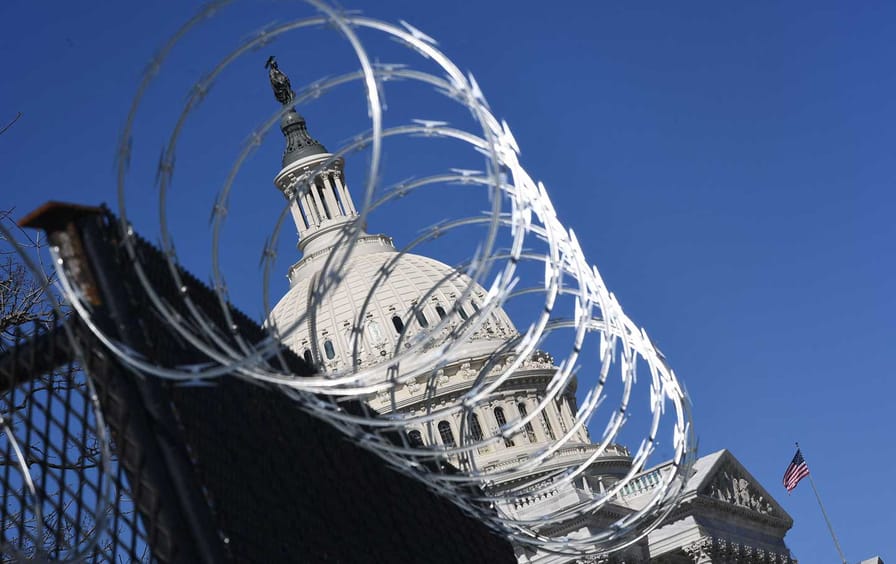
IMAGE: Capitol building.
(Eric Baradat / AFP via Getty Images)
Alarm bells are ringing about the dangerous implications of the behavior of the Republican Party. By doubling down on defense of the Big Lie that the 2020 election was stolen, punishing any members who reject that lie, refusing to support an investigation into the January 6 insurrection at the Capitol, and unleashing a fusillade of voter suppression legislation across the country, many see these actions as an ominous new trend in American politics that threatens the foundations of our democracy itself.
Viewed through the lens of history, however, none of this is new. The hard truth is that whichever United States political party has been most rooted in the fears, anxieties, and resentments of white people has never cared much about democracy or the Constitution designed to preserve it. Those who do want to make America a multi-racial democracy must face this fact with clear eyes and stiff spines to repel the ever-escalating threats to the nation’s most cherished institutions and values.
Contemporary analysis of domestic politics is obscured by the historical fact that white Americans fearful of the ramifications of equality for people of color have moved their political home from the Democratic Party, which was their preferred vehicle at the time of the Civil War, to the Republican Party, where they reside today. In the 19th century, Democrats dominated the South, led 11 states to secede from the Union, and waged a murderous multiyear war against their fellow Americans. Today, it is the Republicans who are the standard-bearers of the modern-day Confederate cause.
Whatever the label, the party that prioritized protecting white rights has always been more willing to destroy the country than accept a situation where people of color are equal and can participate in the democratic process.
Donald Trump was not the first politician to refuse to accept the results of a presidential contest. After Abraham Lincoln and the anti-slavery Republican Party won the election of 1860, the Confederates did not waste time filing lawsuits and trying to bully state election officials into overturning their state’s election results. They simply severed their ties with the United States of America, seceded from the union with the defiant 1861 Cornerstone Speech by Confederate Vice President Alexander Stephens declaring that “the negro is not equal to the white man,” and quickly organized an army that killed hundreds of thousands of their formerly fellow countrymen.
The violence, bloodshed, and contempt for America’s democratic institutions did not end with the conclusion of the Civil War. Just five days after the Confederates formally conceded defeat and surrendered on April 9, 1865, Confederate sympathizer John Wilkes Booth shot the president of the United States in the back of the head, having told colleagues that Lincoln’s speech in support of allowing Black people to vote “means nigger citizenship,” with Booth vowing, “That is the last speech he will ever make.”
Even passage of constitutional amendments ending slavery, securing equal protection of the laws to people of all races, and guaranteeing the right to vote (the 13th, 14th, and 15th amendments) meant little to the political leaders committed to the concept that America is, first and foremost, a white nation. Much as Southern leaders in the past few months have passed a blizzard of voter suppression legislation in states across the former Confederacy, so too did their predecessors furiously draft laws designed to accomplish with pens and ink what they could not achieve with guns and bullets.
In her book One Person, No Vote, Carol Anderson outlines the “dizzying array of poll taxes, literacy tests, understanding clauses, newfangled voter registration rules” adopted in 1890, all designed to evade and undermine the 15th Amendment’s provision prohibiting laws restricting voting “on account of race.” The antidemocratic motivation behind these new laws was cheerily articulated at the time by Virginia State Representative Carter Glass, who explained in 1890 that that era’s election law reform was designed to ““eliminate the darkey as a political factor.”
A hundred years after the end of the Civil War, the Confederates continued the crusade of doing everything in their power to stop America from becoming a multiracial democracy. As the civil rights movement gained momentum in the 1950s and 1960s, public officials and party leaders across the old Confederacy openly defied and actively undermined the pillars of American democracy.
In response to the Supreme Court’s 1954 Brown v. Board of Education decision desegregating public schools, public officials in Virginia’s Prince Edward County shut down the entire school district for five years. After civil rights activists James Chaney, Andrew Goodman, and Michael Schwerner were murdered in Philadelphia, Mississippi, in 1964 for helping register Black people to vote, the state’s leaders essentially sided with the white nationalist domestic terrorists responsible for the killings by refusing to investigate or prosecute the murderers (some of whom were public officials themselves).
The partisan political migration of the defenders of the Confederacy began as the Black demands for the constitutionally-mandated rights of equality and democracy began to reach a crescendo in the South in the 1960s. After Democrat Lyndon Johnson unequivocally embraced the cause of multiracial democracy declaring in a 1965 nationally television address that “their cause is our cause…and we shall overcome,” fearful whites felt betrayed and abandoned, and Republicans swooped in to offer their party as the home for white racial resentment.
What has been dubbed the Southern strategy began in the 1960s with South Carolina segregationist Senator Strom Thurmond striking a deal with Richard Nixon to rally white support for Nixon against Alabama’s segregationist governor George Wallace’s more naked appeals to aggrieved whites. It worked like a charm, building to the point where Ronald Reagan sealed the deal by offering the unmistakable symbolic solidarity of beginning his 1980 presidential candidacy with a pro “states’ rights” speech to a massive crowd “almost entirely made up of whites” in the very county where Goodman, Cheney, and Schwerner were murdered.
More recently, the reaction to the election and governance of a Black president mirrored prior periods of contempt for the Constitution and resistance to public policies designed to benefit a multiracial electorate. Echoing the actions of those who shut down school districts rather than provide public education to students of all colors, contemporary Confederates shut down the entire federal government in 2013 in attempt to stop the government from providing health care through the Affordable Care Act to Americans. It is no accident that the 11 states of the Confederacy were the leaders in rejecting funding for Medicaid.
Today, 82 percent of Republican voters are white, and the party has comfortably won the white vote in every single presidential election since Johnson signed the Voting Rights Act in 1965. The political home of the defenders of the Confederacy and white power has shifted, but the strategies and tactics of that constituency and its leaders has not.
While none of this is new, fortunately the efforts to defend and expand democracy also extend back over a century, offering important lessons about how to repel efforts to destroy our democratic institutions.
The primary strategy that has worked—and we now have 160 years of empirical evidence to back this up—has been putting the full force of the federal government on the side of equality, justice, and democracy for people of all racial backgrounds, not just white people.
What hasn’t worked is seeking compromise with those contemptuous of democracy, the Constitution, and the social contract underlaying it. Compromise only works when all parties are operating in good faith and subscribing to the same set of core values. How do you compromise with people who identify more with lynchers than with those being lynched?
The most dramatic example of deploying federal power, of course, is the Civil War itself. Also instructive is that after the military conflict, clear-eyed congressional leaders recognized the fragility of the victory and the ferocity of the vanquished and made sure to pass constitutional amendments to entrench equality in the country’s governing document in the form of the 13, 14th, and 15th amendments (and even those were fiercely resisted, barely mustering enough votes in Congress).
In the aftermath of the violent and bloody attacks on peaceful protesters in the 1960s, who thought that the 15th Amendment did in fact apply to them, Lyndon Johnson and Congress passed the Voting Rights Act to, as Johnson said, “establish a simple, uniform standard which cannot be used, however ingenious the effort, to flout our Constitution.”
In 2021, the imperative of the hour is to pass similar legislation as was advanced in prior periods of intense conflict with the enemies of equality. Specifically, HR 1, the For the People Act, and HR 4, the John Lewis Voting Rights Act, will both protect the democratic process and advance the cause of expanding democracy that the Republicans are working so feverishly to obstruct.
In addition to the voting rights legislation, President Biden can use the full force of the bully pulpit of the presidency. More than 100 corporate executives have expressed concern about the viral spread of voter suppression litigation, and he should rally all of them behind a national crusade for democracy where every corporate, entertainment, and sports leader uses their platform to aggressively promote and support voting. Every Amazon package, for example, could come with an 800 number on it on how to vote. Google could provide easy searching for how to vote just as it’s doing for vaccines. iPhones could facilitate voter registration.
Failure to meet this moment would be catastrophic. From the January 1861 start of Confederate secession from the Union to the January 6, 2021, attempted insurrection and failed coup supported by 147 Republican members of Congress, the political party fueled by white fear has scoffed at the Constitution and mocked the notion of fidelity to country over Caucasians. The result after the Civil War was nearly 100 years of Jim Crow voter suppression, widespread domestic racial terrorism, and raging inequality and injustice. None of this is new. The question is, do the current political leaders recognize what is happening, and, if so, do they have the courage to do something about it?
ABOUT THE AUTHOR:
Steve Phillips is the host of Democracy in Color with Steve Phillips, a color-conscious podcast about politics. He is a senior fellow at the Center for American Progress and is the author of Brown Is the New White: How the Demographic Revolution Has Created a New American Majority. He is a regular contributor to The Nation.
“What’s Past is Prologue…”
November 9, 2016
All,
For some very odd, stubbornly evasive, and clearly self deluding reason far too many people in the United States today (the overwhelming majority of whom are white American citizens both in terms of their aggregate numbers and baseline percentage of the national population) continue to cling to the glaringly false, utterly bizarre and even willfully perverse notion that the rancid outcome of the presidential election last tuesday night was somehow a historical anomaly, and was not merely a determined continuation and extension of a very longstanding tradition in American politics generally over the past 150 years and especially in the modern post 1945 era.
That tradition of course is the pervasive all encompassing role of racial ideology in voting generally in this country and especially in national federal elections for the Presidency and Congress. That racial ideology of course is the structural, institutional, and systemic doctrine and practice of White Supremacy. For the past four years on this facebook site and for the past eight years in the online pages of the Panopticon Review website I have been constantly pointing this out in a very broad array of articles, commentary, editorials, and historical essays by not only myself but many other professional journalists, historians, political theorists, cultural critics, and social activists.
One of those essays is an excerpted piece of a much longer essay in progress on modern American politics since 1945 by myself that I have run on two previous occasions on this facebook page since its first appearance online on the Panopticon Review site on March 2, 2016. I am reprinting this excerpt here a third time because it continues to be a source of great frustration and even angry annoyance that so many people even in the wake of Trump's horrific victory on November 8, 2016 still insist on clinging to and even actively promoting an intellectually bankrupt notion about the actual theoretical, strategic, and tactical reasons for the abject failure of far too many liberal and even more significantly neoliberal pundits, operatives, activists, and theorists from the Democratic Party (and even among some left leaning ideological "independents") to properly organize, educate, mobilize, and advance the genuine interests and needs of the U.S. citizenry in both philosophically rooted and radically activist terms that would not only uphold the banner of political, economic, and cultural democracy in general terms, but would actively combat and oppose the social and ideological forces of racial, class, gender, and sexual oppression, exploitation, and discrimination in the public sphere. The protofascist rightwing forces led by Trump won the presidential and congressional elections for clearly defined reasons that we all have to be intellectually, morally, and ethically honest about. For without this honesty and clarity we cannot proceed to seriously address what is really wrong, dysfunctional, and destructive in our national politics and why...Stay tuned and pass the word...
Kofi
http://panopticonreview.blogspot.com/…/the-central-role-of-…
FROM THE PANOPTICON REVIEW ARCHIVES
(Originally posted on March 2, 2016):
Wednesday, March 2, 2016
The Central Role of Mythology, White Supremacy, Capitalist Hegemony and Ideological Hubris in Modern American Politics Since 1945
NOTE: The following piece is an excerpt from a much longer forthcoming essay-in-progress on the cumulative societal effects of Modern American Political History since 1945:
THE NEW CONFEDERACY IS EXACTLY LIKE THE OLD ONE (PLUS IT TOO HAS ACCESS TO SOCIAL MEDIA...)
by Kofi Natambu
The Panopticon Review
"...There are many debilitating myths about American history in general and American politics in particular. In fact it could be said that the widespread intellectual and social reliance, even obsessive dependency, on this enormous cobweb of lies, distortions, half truths, misrepresentations, and fallacies have contributed to an atmosphere of social discourse that is often drowning in a cesspool of rhetorical evasions and blatantly false assertions. One of the most dangerous and paralyzing of these myths has to do with the alleged progressive attitudes and values of the national white American electorate—especially in the so-called modern era since the end of World War II. One of the persistent articles of faith of this mythology has it that since the popular notion of the ‘American Century’ (which we now often rather arrogantly refer to as the recent history of ‘Amercian exceptionalism’) emerged as a slogan following the collective defeat by the Allies of the United States, Europe, (and ironically by the then Soviet Union) of the global forces of fascism led of course by the German Nazi Party, there has been an endless promotion in the media, popular culture, and in academia of the idea that the United States is fundamentally a progressive, forward looking nation that deeply loves and supports democracy and is a firm believer in the systemic eradication of all forms and vestiges of such virulently anti-democratic, repressive, and reactionary ideas and practices as institutional and structural racism, sexism, class oppression and exploitation, homophobia, and imperial militarism. However even a cursory examination of the actual history of the U.S. since 1945 indicates that this reading of a substantial majority of the white American electorate is not merely inaccurate and off the mark but delusional.
For a stark and very significant example consider what the national voting record of white Americans in presidential elections has been since 1948. It was in that year that former Vice President Harry Truman first ran for the office as the Democratic Party candidate following the untimely death of his predecessor President Franklin Delano Roosevelt in April of 1945 (who in November 1944 had won the presidency for an unprecedented fourth term—a future possibility that was eliminated by the passage of the twenty second amendment to the constitution in 1947 which stated that no presidential incumbent could henceforth serve more than two terms). However despite this new ruling and the fact that both the far left and far rightwing segments of the national Democratic Party bolted from Truman candidacy and ran their own independent campaigns (i.e. former Vice President in Roosevelt’s last administration in 1944 Henry Wallace of the Progressive Party and then Democratic Senator Strom Thurmond of the openly racist and segregationist “Dixiecrat” Party) Truman was still able to garner 53% of the white vote nationally, that along with the heavily truncated 71% of the black (male) vote was barely enough to provide Truman with a surprising but very narrow victory over his Republican opponent New York Governor Thomas Dewey, whom the media and most political pundits had erroneously predicted would easily beat Truman.
What’s also significant about the national presidential election of 1948 is that except for only ONE other occasion in the past 64 years(!) the Democratic candidate for President (whether he was an incumbent or not) has failed to receive anywhere near a majority of the national white vote. Please allow me to repeat this harrowing statistic: In the last 16 presidential elections following Truman’s victory in 1948 and going back 64 years to the next presidential election in 1952, a substantial majority of white American voters have voted for the Republican candidate--again whether he was the incumbent or not--15 times. The ONLY exception in the past six decades is 1964 when former Vice President Lyndon Johnson, who assumed the presidency following John F. Kennedy’s assassination in November of 1963, ran on his own for the office a year later vs. arch conservative and rightwing political reactionary Barry Goldwater. Clearly, in what was essentially a national sympathy vote for the successor of the slain President Kennedy, Johnson received a whopping 60% of the national white vote, a figure that hasn’t been reached by any presidential candidate in the Democratic Party in the fifty years since; one would have to go back 70 years to 1944 in Franklin’s Roosevelt’s last presidential victory to find any Democratic Party candidate who won as large of a percentage of the white vote. In fact in the last 16 presidential elections Democratic Party candidates have only won a cumulative national average of 38% of the white vote.
So the obvious question looms: What do these dramatic statistics tell us about the modern white American electorate since 1945? Well for starters it clearly tells us that the average white voter in general since 1945 has not supported and does not currently support a progressive social and economic agenda by the government. Of course this may change at some point in the near future (say in a decade from now) but I highly doubt it will change anytime soon in the foreseeable future (i.e. the next two national presidential election cycles leading up to and probably including 2020)…"
https://www.nytimes.com/2016/11/10/us/politics/donald-trump-voters.html
Donald Trump’s Victory Was Built on Unique Coalition of White Voters

PHOTO: Patrons at Fred’s Divot, a bar in Ambridge, Pa., watching election returns. Ambridge is in a county won by Donald J. Trump. Credit: Hilary Swift for The New York Times
by Nicholas Confessore and Nate Cohn
November 9, 2016
New York Times
Donald J. Trump’s America flowered through the old union strongholds of the Midwest, along rivers and rail lines that once moved coal from southern Ohio and the hollows of West Virginia to the smelters of Pennsylvania.
It flowed south along the Mississippi River, through the rural Iowa counties that gave Barack Obama more votes than any Democrat in decades, and to the Northeast, through a corner of Connecticut and deep into Maine.
And it extended through the suburbs of Cleveland and Minneapolis, of Manchester, N.H., and the sprawl north of Tampa, Fla., where middle-class white voters chose Mr. Trump over Hillary Clinton.
One of the biggest upsets in American political history was built on a coalition of white voters unlike that of any other previous Republican candidate, according to election results and interviews with voters and demographic experts.
Mr. Trump’s coalition comprised not just staunchly conservative Republicans in the South and West. They were joined by millions of voters in the onetime heartlands of 20th-century liberal populism — the Upper and Lower Midwest — where white Americans without a college degree voted decisively to reject the more diverse, educated and cosmopolitan Democratic Party of the 21st century, making Republicans the country’s dominant political party at every level of government.
Mr. Trump spoke to their aspirations and fears more directly than any Republican candidate in decades, attacking illegal immigrants and Muslims and promising early Wednesday to return “the forgotten men and women of our country” to the symbolic and political forefront of American life. He electrified the country’s white majority and mustered its full strength against long-term demographic decay.
“A lot of stuff he’s talking about is just God-given common sense, which I think both parties have lost,” said Tom Kirkpatrick, 51, a Trump supporter who used to work in an industrial laundry plant and is now on disability. He stood near the Florida State Capitol on Tuesday, holding an American flag. “Let’s put him in. And if he doesn’t do what he says, I’ll help you vote him out.”
But Mr. Trump also won over millions of voters who had once flocked to President Obama’s promise of hope and change, and who on Tuesday saw in Mr. Trump their best chance to dampen the most painful blows of globalization and trade, to fight special interests, and to be heard and protected. Twelve percent of Mr. Trump’s supporters approved of Mr. Obama, according to the exit polls.
Mrs. Clinton won by a greater margin than Mr. Obama among affluent whites, particularly those living in the Democratic Party’s prosperous coastal strongholds: Washington and Boston, Seattle and New York. In Manhattan, where Mr. Trump lives and works — and where his fellow citizens mocked and jeered him as he voted on Tuesday — Mrs. Clinton won by a record margin, amassing 87 percent of the vote to Mr. Trump’s 10 percent. Around the country, she won a majority of voters over all, harvesting the country’s growing and densely packed big cities and a plurality of the suburbs.
But Mr. Trump won low-income white voters to the Republican ticket, reversing a partisan divide along class lines that is as old as the Democratic and Republican Parties — a replay of the “Brexit” vote in June, when the old bastions of England’s Labor-left voted decisively to leave the European Union. His breakthrough among white working-class voters in the North not only erased the Democratic advantage but reversed it, giving him a victory in the Electoral College while he lost the national popular vote.
Most strikingly, Mr. Trump won his biggest margins among middle-income white voters, according to exit polls, a revolt not only of the white working class but of the country’s vast white middle class. He did better than past Republicans in the sprawling suburbs along Florida’s central coasts, overwhelming Mrs. Clinton’s gains among Hispanic voters. He held down Mrs. Clinton’s margins in the Philadelphia suburbs, defying expectations that Mrs. Clinton would outperform Mr. Obama by a wide margin.
Magnified by the constitutional design of the Electoral College, and aided by Republican-led efforts to dampen black and Latino voting in states like North Carolina, Mr. Trump’s America proved the larger on Election Day. It smashed through the Democrats’ supposed electoral “blue wall” — the 18 states carried by Democrats in every election since 1992, such as Michigan and Pennsylvania, plus the diverse and well-educated parts of the country that Mr. Obama attracted in his two races, like New Mexico, Nevada, Virginia and Colorado.
Starting Wednesday, you could walk from the Vermont border through Appalachian coal country to the outskirts of St. Louis without crossing a county Mr. Trump did not win decisively. You could head south through rural and suburban Georgia all the way to South Florida, or northwest through the Upper Midwest, or make a beeline for the West Coast, skirting only the rising Democratic communities of Colorado and the booming multicultural sprawl of Las Vegas before finally reaching Mrs. Clinton’s part of the country.
“It’s not that he was the most polished of politicians,” said Justin Channell, 36, of Brewer, Me., who works at a health insurance company. “I liked the message of the anti-establishment, that corruption in D.C. is so prevalent.”
Mrs. Clinton won the America of big, racially diverse cities and centers of the new economy, from Silicon Valley to the Silicon Slopes of Utah, where many traditionally Republican voters rejected Mr. Trump. But lining up for Mr. Trump was a parallel urban America of smaller cities — places like Scranton, Pa.; Youngstown, Ohio; and Dubuque, Iowa — that boomed during the industrial era, and are still connected by the arteries of the old American economy.
She had hoped for a surge of voting by Latinos, immigrants and African-Americans, a manifestation of the rising American electorate long predicted by liberal strategists and feared by the Republican elite in Washington. But exit polls suggest that Mr. Trump — despite his attacks on immigrants, Muslims and Mexicans, and his clumsy invocation of black neighborhoods mired in chaos and decay — did not fare worse among the African-American and Latino voters who showed up to the polls than Mitt Romney did four years ago.
In Miami-Dade County, where Mr. Trump had more room to lose ground among Hispanic voters than anywhere else in the country, Mrs. Clinton inched up to only 64 percent from Mr. Obama’s 62 percent of the Hispanic vote. Turnout dropped considerably in black communities across the country, from the rural South to Cleveland, Milwaukee and Detroit.
By Wednesday, the notion of a Democratic electoral map advantage bolstered by rising Hispanic power seemed distant. Even if Mrs. Clinton had won Florida, Mr. Trump would have powered to victory through the new Republican heartland, in states like Pennsylvania, Wisconsin and Michigan, where Hispanic voters represent just a fraction of the electorate.
Nor was the growing Hispanic vote — and Mrs. Clinton’s strength among well-educated voters — enough to pull her especially close in either Arizona or Texas, the only two heavily Hispanic states that could have plausibly joined Florida to put her over the top.
Even where Democratic-leaning Hispanics are growing as a force, Mr. Trump’s supporters were waiting on Tuesday.
Anthony Brdar, 42, stood in front of his West Miami polling station, holding a handmade “Vote Trump” sign, and waved a T-shirt of Mr. Obama’s face made to look like the Joker. It called him a tyrant. An out-of-work lawyer who lives in a heavily Hispanic neighborhood in Miami, Mr. Brdar said he had never felt so compelled to vote.
“I feel our country is on the verge of becoming a third world country,” he said. “Our children are not going to have a future. We are not going to have a future.”
Alan Blinder, Jess Bidgood and Frances Robles contributed reporting.
Find out what you need to know about the 2016 presidential race today, and get politics news updates via Facebook, Twitter and the Morning Briefing newsletter.
A version of this article appears in print on Nov. 9, 2016, on Page A1 of the New York edition with the headline: White Voters in Broad Bloc Shaped Upset. Order Reprints | Today’s Paper
—In the three major special senatorial and gubernatorial elections in Alabama, Virginia, and New Jersey in November and December of 2017 an astounding 62% of white female voters voted for the Republican pedophile and sexual predator Roy Moore and the Republican candidates for Governor in both Virginia and New Jersey received well over 50% of the white female vote as well
—53% of white female voters voted for Donald Trump in the presidential election in 2016 (only 43% of white female voters voted for Hillary Clinton)
—In the past 13 straight presidential elections going back 50 years to and including 1968, white female voters have voted for the white male Republican candidate every single time; in the past 17 presidential elections going back 66 years to and including 1952 white female voters have voted for the white male Republican every single time except ONCE (the lone exception was in 1964 when following the assassination of the Democratic Party president John F. Kennedy the majority of white female voters voted for Kennedy’s successor Lyndon Johnson. this of course turned out to be a one-off because in the next 13 elections after 1964 white female voters went right back to Republican male candidates only)
by Nicholas Confessore and Nate Cohn
November 9, 2016
New York Times
Donald J. Trump’s America flowered through the old union strongholds of the Midwest, along rivers and rail lines that once moved coal from southern Ohio and the hollows of West Virginia to the smelters of Pennsylvania.
It flowed south along the Mississippi River, through the rural Iowa counties that gave Barack Obama more votes than any Democrat in decades, and to the Northeast, through a corner of Connecticut and deep into Maine.
And it extended through the suburbs of Cleveland and Minneapolis, of Manchester, N.H., and the sprawl north of Tampa, Fla., where middle-class white voters chose Mr. Trump over Hillary Clinton.
One of the biggest upsets in American political history was built on a coalition of white voters unlike that of any other previous Republican candidate, according to election results and interviews with voters and demographic experts.
Mr. Trump’s coalition comprised not just staunchly conservative Republicans in the South and West. They were joined by millions of voters in the onetime heartlands of 20th-century liberal populism — the Upper and Lower Midwest — where white Americans without a college degree voted decisively to reject the more diverse, educated and cosmopolitan Democratic Party of the 21st century, making Republicans the country’s dominant political party at every level of government.
Mr. Trump spoke to their aspirations and fears more directly than any Republican candidate in decades, attacking illegal immigrants and Muslims and promising early Wednesday to return “the forgotten men and women of our country” to the symbolic and political forefront of American life. He electrified the country’s white majority and mustered its full strength against long-term demographic decay.
“A lot of stuff he’s talking about is just God-given common sense, which I think both parties have lost,” said Tom Kirkpatrick, 51, a Trump supporter who used to work in an industrial laundry plant and is now on disability. He stood near the Florida State Capitol on Tuesday, holding an American flag. “Let’s put him in. And if he doesn’t do what he says, I’ll help you vote him out.”
But Mr. Trump also won over millions of voters who had once flocked to President Obama’s promise of hope and change, and who on Tuesday saw in Mr. Trump their best chance to dampen the most painful blows of globalization and trade, to fight special interests, and to be heard and protected. Twelve percent of Mr. Trump’s supporters approved of Mr. Obama, according to the exit polls.
Mrs. Clinton won by a greater margin than Mr. Obama among affluent whites, particularly those living in the Democratic Party’s prosperous coastal strongholds: Washington and Boston, Seattle and New York. In Manhattan, where Mr. Trump lives and works — and where his fellow citizens mocked and jeered him as he voted on Tuesday — Mrs. Clinton won by a record margin, amassing 87 percent of the vote to Mr. Trump’s 10 percent. Around the country, she won a majority of voters over all, harvesting the country’s growing and densely packed big cities and a plurality of the suburbs.
But Mr. Trump won low-income white voters to the Republican ticket, reversing a partisan divide along class lines that is as old as the Democratic and Republican Parties — a replay of the “Brexit” vote in June, when the old bastions of England’s Labor-left voted decisively to leave the European Union. His breakthrough among white working-class voters in the North not only erased the Democratic advantage but reversed it, giving him a victory in the Electoral College while he lost the national popular vote.
Most strikingly, Mr. Trump won his biggest margins among middle-income white voters, according to exit polls, a revolt not only of the white working class but of the country’s vast white middle class. He did better than past Republicans in the sprawling suburbs along Florida’s central coasts, overwhelming Mrs. Clinton’s gains among Hispanic voters. He held down Mrs. Clinton’s margins in the Philadelphia suburbs, defying expectations that Mrs. Clinton would outperform Mr. Obama by a wide margin.
Magnified by the constitutional design of the Electoral College, and aided by Republican-led efforts to dampen black and Latino voting in states like North Carolina, Mr. Trump’s America proved the larger on Election Day. It smashed through the Democrats’ supposed electoral “blue wall” — the 18 states carried by Democrats in every election since 1992, such as Michigan and Pennsylvania, plus the diverse and well-educated parts of the country that Mr. Obama attracted in his two races, like New Mexico, Nevada, Virginia and Colorado.
Starting Wednesday, you could walk from the Vermont border through Appalachian coal country to the outskirts of St. Louis without crossing a county Mr. Trump did not win decisively. You could head south through rural and suburban Georgia all the way to South Florida, or northwest through the Upper Midwest, or make a beeline for the West Coast, skirting only the rising Democratic communities of Colorado and the booming multicultural sprawl of Las Vegas before finally reaching Mrs. Clinton’s part of the country.
“It’s not that he was the most polished of politicians,” said Justin Channell, 36, of Brewer, Me., who works at a health insurance company. “I liked the message of the anti-establishment, that corruption in D.C. is so prevalent.”
Mrs. Clinton won the America of big, racially diverse cities and centers of the new economy, from Silicon Valley to the Silicon Slopes of Utah, where many traditionally Republican voters rejected Mr. Trump. But lining up for Mr. Trump was a parallel urban America of smaller cities — places like Scranton, Pa.; Youngstown, Ohio; and Dubuque, Iowa — that boomed during the industrial era, and are still connected by the arteries of the old American economy.
She had hoped for a surge of voting by Latinos, immigrants and African-Americans, a manifestation of the rising American electorate long predicted by liberal strategists and feared by the Republican elite in Washington. But exit polls suggest that Mr. Trump — despite his attacks on immigrants, Muslims and Mexicans, and his clumsy invocation of black neighborhoods mired in chaos and decay — did not fare worse among the African-American and Latino voters who showed up to the polls than Mitt Romney did four years ago.
In Miami-Dade County, where Mr. Trump had more room to lose ground among Hispanic voters than anywhere else in the country, Mrs. Clinton inched up to only 64 percent from Mr. Obama’s 62 percent of the Hispanic vote. Turnout dropped considerably in black communities across the country, from the rural South to Cleveland, Milwaukee and Detroit.
By Wednesday, the notion of a Democratic electoral map advantage bolstered by rising Hispanic power seemed distant. Even if Mrs. Clinton had won Florida, Mr. Trump would have powered to victory through the new Republican heartland, in states like Pennsylvania, Wisconsin and Michigan, where Hispanic voters represent just a fraction of the electorate.
Nor was the growing Hispanic vote — and Mrs. Clinton’s strength among well-educated voters — enough to pull her especially close in either Arizona or Texas, the only two heavily Hispanic states that could have plausibly joined Florida to put her over the top.
Even where Democratic-leaning Hispanics are growing as a force, Mr. Trump’s supporters were waiting on Tuesday.
Anthony Brdar, 42, stood in front of his West Miami polling station, holding a handmade “Vote Trump” sign, and waved a T-shirt of Mr. Obama’s face made to look like the Joker. It called him a tyrant. An out-of-work lawyer who lives in a heavily Hispanic neighborhood in Miami, Mr. Brdar said he had never felt so compelled to vote.
“I feel our country is on the verge of becoming a third world country,” he said. “Our children are not going to have a future. We are not going to have a future.”
Alan Blinder, Jess Bidgood and Frances Robles contributed reporting.
Find out what you need to know about the 2016 presidential race today, and get politics news updates via Facebook, Twitter and the Morning Briefing newsletter.
A version of this article appears in print on Nov. 9, 2016, on Page A1 of the New York edition with the headline: White Voters in Broad Bloc Shaped Upset. Order Reprints | Today’s Paper
—In the three major special senatorial and gubernatorial elections in Alabama, Virginia, and New Jersey in November and December of 2017 an astounding 62% of white female voters voted for the Republican pedophile and sexual predator Roy Moore and the Republican candidates for Governor in both Virginia and New Jersey received well over 50% of the white female vote as well
—53% of white female voters voted for Donald Trump in the presidential election in 2016 (only 43% of white female voters voted for Hillary Clinton)
—In the past 13 straight presidential elections going back 50 years to and including 1968, white female voters have voted for the white male Republican candidate every single time; in the past 17 presidential elections going back 66 years to and including 1952 white female voters have voted for the white male Republican every single time except ONCE (the lone exception was in 1964 when following the assassination of the Democratic Party president John F. Kennedy the majority of white female voters voted for Kennedy’s successor Lyndon Johnson. this of course turned out to be a one-off because in the next 13 elections after 1964 white female voters went right back to Republican male candidates only)