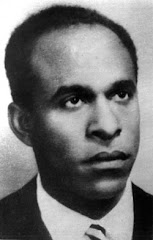
JOE HENDERSON
(b. April 24, 1937--d. June 30, 2001)
(b. April 24, 1937--d. June 30, 2001)
Biography
Joe Henderson (tenor saxophonist) was born on April 24, 1937 in Lima, Ohio and passed away on June 30, 2001 in San Francisco, California.
Born in the small city of Lima Ohio between Dayton and Toledo, he spent his childhood and adolescence years in a family of 15 children where he was exposed to a variety of musical styles, and was encouraged by his parents and older brother James T. to study music. He dedicated his first album to them for being so understanding and tolerant during his formative years.
By the time he was a high school student he was already arranging and writing music for the school band and other local outfits. It was in high school that a music teacher introduced him to the tenor saxophone. After graduation he enrolled first at the Kentucky State College to study music and then moved on to Wayne State University in Detroit. There he had as classmates several future jazz greats such as Yusef Lateef and Donald Byrd. From 1960-1962 he enlisted in the US army where he led several small jazz groups and won first place in a musical competition and was sent on a tour to entertain the troops all over Japan and Europe where he met a few of the expatriate musicians.
The Blue Note Years
After being discharged from the army he traveled to New York and sat in at Birdland with Dexter Gordon and other local musicians. During one of these sessions he was introduced to the trumpeter Kenny Dorham who was so impressed by his musicianship that he arranged for Joe Henderson’s first recording session as a leader with Blue Note Records. This resulted in the record Page One (1963) which to this day remains one of his most critically acclaimed albums. This recording also spawned the standard Blue Bossa.
During the following 4 years he led four other sessions for Blue Note and recorded as sideman on over to two dozen albums for the same label. Some of these records are today classics of not only the label but also of jazz music. Andrew Hill’s Point of Departure, Larry Young’s Unity, Horace Silver’s Song For My Father and Lee Morgan’s Sidewinder are just a few examples of those fruitful years. In addition to creating timeless music Joe Henderson’s style also evolved during this period to incorporate all genres of jazz, from hard bop to avant garde, from latin to soul-jazz.
The Milestone / Verve Years
From 1967-1979 he recorded primarily for the Milestone label with occasional sessions as a leader for the Verve label and one, sorely underappreciated, record for the Enja label called Barcelona. Over this “middle period” of his career his style gradually evolved from the powerful acoustic style of post bop to fusion, electric music, avant garde and back to post-bop. Through all the changes, however, his virtuosity remained intact even when the some of the later records from this period were overall not as creative as his other works. During these years he also composed prolifically and co-led groups with Freddie Hubbard and Herbie Hancock. His forays outside of the realm of jazz led him to play with Blood Sweat and Tears and other rock and R & B groups. In the early seventies Joe Henderson became involved in teaching as well and moved to San Francisco.
The Latter Years: 80s & 90s
The highlight of the 80s in Joe Henderson’s career was the recording of the phenomenal live session at the Village Vanguard released on a two disc set as The State of the Tenor Live at the Village Vanguard. It is a live trio set with bass and drums similar to Sonny Rollins’ landmark recordings of over 2 decades before. Despite garnering critical accolades the record remains underappreciated and not as well known as it should be.
During the 90s Joe Henderson recorded 3 tribute sessions for Verve that were not only critically acclaimed but were also commercially highly successful. He won multiple Down Beat music awards in 1992, including the international critics and readers polls, was named jazz musician of the year and top tenor saxophonist. The first of the tribute albums Lush Life: The Music of Billy Strayhorn, named album of the year and went on to sell more than 450,000 worldwide in one year (1992); 100,000 copies of it in the United States. The success of those records launched his international career and he performed at many an international jazz festival and concert hall. The second of these albums So Near So Far: Musings for Miles won him a Grammy for best jazz performance. The decade also saw him recording as a sideman with a number of up and coming jazz musicians such as Renee Rosnes, Rebecca Coupe Franks, Stephen Scott and Holy Cole just to name a few.
In 1997 he recorded his last album Porgy and Bess and a year later he suffered a stroke that kept him from performing and in poor health. The world of jazz lost one of its great composers and most accomplished musicians on June 30th 2001 when Joe Henderson passed away from emphysema in San Francisco.
Joe Henderson (tenor saxophonist) was born on April 24, 1937 in Lima, Ohio and passed away on June 30, 2001 in San Francisco, California.
Born in the small city of Lima Ohio between Dayton and Toledo, he spent his childhood and adolescence years in a family of 15 children where he was exposed to a variety of musical styles, and was encouraged by his parents and older brother James T. to study music. He dedicated his first album to them for being so understanding and tolerant during his formative years.
By the time he was a high school student he was already arranging and writing music for the school band and other local outfits. It was in high school that a music teacher introduced him to the tenor saxophone. After graduation he enrolled first at the Kentucky State College to study music and then moved on to Wayne State University in Detroit. There he had as classmates several future jazz greats such as Yusef Lateef and Donald Byrd. From 1960-1962 he enlisted in the US army where he led several small jazz groups and won first place in a musical competition and was sent on a tour to entertain the troops all over Japan and Europe where he met a few of the expatriate musicians.
The Blue Note Years
After being discharged from the army he traveled to New York and sat in at Birdland with Dexter Gordon and other local musicians. During one of these sessions he was introduced to the trumpeter Kenny Dorham who was so impressed by his musicianship that he arranged for Joe Henderson’s first recording session as a leader with Blue Note Records. This resulted in the record Page One (1963) which to this day remains one of his most critically acclaimed albums. This recording also spawned the standard Blue Bossa.
During the following 4 years he led four other sessions for Blue Note and recorded as sideman on over to two dozen albums for the same label. Some of these records are today classics of not only the label but also of jazz music. Andrew Hill’s Point of Departure, Larry Young’s Unity, Horace Silver’s Song For My Father and Lee Morgan’s Sidewinder are just a few examples of those fruitful years. In addition to creating timeless music Joe Henderson’s style also evolved during this period to incorporate all genres of jazz, from hard bop to avant garde, from latin to soul-jazz.
The Milestone / Verve Years
From 1967-1979 he recorded primarily for the Milestone label with occasional sessions as a leader for the Verve label and one, sorely underappreciated, record for the Enja label called Barcelona. Over this “middle period” of his career his style gradually evolved from the powerful acoustic style of post bop to fusion, electric music, avant garde and back to post-bop. Through all the changes, however, his virtuosity remained intact even when the some of the later records from this period were overall not as creative as his other works. During these years he also composed prolifically and co-led groups with Freddie Hubbard and Herbie Hancock. His forays outside of the realm of jazz led him to play with Blood Sweat and Tears and other rock and R & B groups. In the early seventies Joe Henderson became involved in teaching as well and moved to San Francisco.
The Latter Years: 80s & 90s
The highlight of the 80s in Joe Henderson’s career was the recording of the phenomenal live session at the Village Vanguard released on a two disc set as The State of the Tenor Live at the Village Vanguard. It is a live trio set with bass and drums similar to Sonny Rollins’ landmark recordings of over 2 decades before. Despite garnering critical accolades the record remains underappreciated and not as well known as it should be.
During the 90s Joe Henderson recorded 3 tribute sessions for Verve that were not only critically acclaimed but were also commercially highly successful. He won multiple Down Beat music awards in 1992, including the international critics and readers polls, was named jazz musician of the year and top tenor saxophonist. The first of the tribute albums Lush Life: The Music of Billy Strayhorn, named album of the year and went on to sell more than 450,000 worldwide in one year (1992); 100,000 copies of it in the United States. The success of those records launched his international career and he performed at many an international jazz festival and concert hall. The second of these albums So Near So Far: Musings for Miles won him a Grammy for best jazz performance. The decade also saw him recording as a sideman with a number of up and coming jazz musicians such as Renee Rosnes, Rebecca Coupe Franks, Stephen Scott and Holy Cole just to name a few.
In 1997 he recorded his last album Porgy and Bess and a year later he suffered a stroke that kept him from performing and in poor health. The world of jazz lost one of its great composers and most accomplished musicians on June 30th 2001 when Joe Henderson passed away from emphysema in San Francisco.


Jazz Profiles
Focused profiles on Jazz and its makers.
Tuesday, September 17, 2013
Joe Henderson – Revelatory
© -Steven Cerra, copyright protected; all rights reserved.
For nearly thirty years, Henderson has possessed his own sound and has developed his own angles on swing, melody, timbre and harmony, while constantly expanding his own skill at playing in uncommon meters and rhythms. In his playing you hear an imposing variety of harmonic, rhythmic and melodic choices; you also hear his personal appropriation of the technical victories for his instrument achieved by men such as Sonny Stitt, Stan Getz, Sonny Rollins, Warne Marsh, Paul Gonsalves, Johnny Griffin and John Coltrane.
His, then, is a style informed by enormous sophistication, not limited by insufficient study or dependence on eccentric clichés brought into action for the purpose of masking the lack of detailed authority. In this tenor playing there's a relaxation in face of options that stretch from Coleman Hawkins, Lester Young and Charlie Parker to all of the substantial innovations since. So the music of Joe Henderson contains all of the components that make jazz so unique and so influential woven together with the sort of feeling, imagination, soul and technical authority that do the art proud.
- Stanley Crouch, Jazz author and critic
In connection with Joe Henderson’s music, “revelatory” has as it’s meaning so much that is eloquent, expressive and significant that it is difficult to understand how often it is often overlooked, let alone, taken for granted by Jazz fans in general.
Names such as Coleman Hawkins, Chu Berry, Lester Young, Stan Getz, Sonny Rollins and John Coltrane are often mentioned as great tenor saxophonists, but Joe Henderson’s name is rarely among them.
It should be.
Joe’s sound and approach to improvisation are as distinctive and unique as any of the great tenor masters and his influence on generations of Jazz musicians has been huge.
Take for example this assessment of Joe’s significance by guitarist John Scofield:
"Joe Henderson is the essence of jazz ….He embodies musically all the different elements that came together in his generation: hard-bop masterfulness plus the avant-garde. He's a great bopper like Hank Mobley or Sonny Stitt, but he also plays out. He can take it far harmonically, but still with roots. He's a great blues player, a great ballads player. He has one of the most beautiful tones and can set as pretty as Pres or Stan Getz. He's got unbeliev able time. He can float, but he can also dig in. He can put the music wherever he wants it. He's got his own vocabu lary, his own phrases he plays all dif ferent ways, like all the great jazz players. He plays songs in his improv isations. He'll play a blues shout like something that would come from Joe Turner, next to some of the fastest, outest, most angular, atonal music you've ever heard. Who's playing bet ter on any instrument, more interest ingly, more cutting edge yet complete ly with roots than Joe Henderson? He's my role model in jazz."
And Joe is also no secret to the tenor saxophonists who evolved under his influence in the generation following his such as Joe Lovano and Branford Marsalis.
"Joe Henderson and Wayne Shorter emerged at the same time with their own sounds and rhythms and tunes. They inspired me as a young player …. He's always had his own voice. He's developed his own concepts with the inspirations of the people he dug but without copying them. I hear Joe in other tenor players. I hear not only phrases copped from Joe, but lately I hear younger cats trying to cop his sound. That's who you are as a player: your sound. It's one thing to learn from someone, but to copy his sound is strange. Joe's solo development live is a real journey — and you can't cop that! He's on an adventure whenever he plays." - Joe Lovano
"Joe Henderson is one of the most influential saxophone players of the 20th century …. I learned all the solos on Mode for Joe and the records he did with McCoy Tyner, a lot of the stuff he's on, like The Prison er. He was one of the few saxophone players who could really play what I call the modern music, that really came from the bebop tradition but extended the harmonic tradition fur ther. There's a small group of guys in that pantheon: Coltrane, Wayne Shorter, Warne Marsh, Lucky Thompson, Sonny and Ornette, and Joe Hen. He's an amazing musician. I'm really jaded. I don't really go to the clubs anymore. There's not really anything I want to hear — except when Joe's in town. And when Joe's in town, I'm there every night!"
– Branford Marsalis
I got to know Joe a bit after the time of his interview with Michael Bourne for Downbeat [March, 1992; see below]. He had just finished the Lush Life [Verve/Polygram 314 511 779-2] tribute to Bill Strayhorn and was working on the charts that would appear a few years later on the Joe Henderson Big Band CD [Verve/Polygram 314 533 451-2].
He and I lived on either side of Divisadero Street in central San Francisco. Divisadero is a north-south traffic throughway that cuts through several neighborhoods, including Lower Haight, Alamo Square, Pacific Heights, and the Marina and offers a kaleidoscopic mix of dining, grocery, and merchant fronts that serve each neighborhood.
The first time we met, Joe was sitting in a barbecue ribs place on Divisadero called The Brothers and while I waited for my take-out order I spotted him sitting quietly in a window seat reading some music scoring sheets.
For years, Joe wore a straw-hat version of Lester Young’s pork-pie hat and big suspenders that adorned shirts with thick, colorful stripes. This garb along with his salt and pepper beard was a dead give-away so I sauntered up to him and said: “You’re Kenny Dorham aren’t you?" [Joe was close friends with trumpeter and composer Dorham and made his recording debut on Kenny’s Una Mas Blue Note LP.]
He looked up from his scores with a momentary, puzzled look that quickly turned into a smile once he saw that I was wearing one too.
Motioning me to sit down at the table next to him he asked: “And what would you know about Kenny Dorham?”
That conversation in various forms took on a life of its own for a number of years in a variety of Divisadero locations ranging from coffee shops to pizzerias.
During this period, Joe often talked about his big band disc which was issued on Verve in 1996 [314 533 451-2].
I didn’t see him very much after the Joe Henderson Big Band CD was released as by then I had moved to the West Portal area of the city.
Joe died in 2001 at the much-too-young-age of sixty-four [64].
The editorial staff at JazzProfiles wanted to remember Joe on these pages with this interview which is followed by a video playlist of Joe’s original compositions and/or solos by Joe in other settings.
© -Michael Bourne/Downbeat, copyright protected; all rights reserved.
He's not Pres-like or Bird-like, not 'Trane-ish or Newk-ish. None of the stylistic adjec tives so convenient for critics work for tenor saxist Joe Henderson. It's evident he's listened to the greats: to Lester Young, Charlie Parker, John Coltrane, Sonny Rollins — to them and all the others he's enjoyed. But he doesn't play like them, doesn't sound like them. Joe Henderson is a master, and, like the greats, unique.
When he came along in the '60s, jazz was happening every which way, from mainstream and avant-garde to blues, rock and then some, and everything that was happening he played. Henderson's saxo phone became a Triton's horn and trans formed the music, whatever the style, whatever the groove, into himself. And he's no different (or, really, always different) today. There's no "typical" Joe Henderson album, and every solo is, like the soloist, original and unusual, thoughtful and always from the heart.
"I think playing the saxophone is what I'm supposed to be doing on this planet," says Joe Henderson. "We all have to do some thing. I play the saxo phone. It's the best way I know that I can make the largest number of people happy and get for myself the largest amount of happiness."
Joe was born April 24, 1937, in Lima, Ohio. When he was nine he was tested for musical aptitude. "I wanted to play drums. I'd be making drums out of my mother's pie pans. But they said I'd gotten a high enough score that I could play anything, and they gave me a saxophone. It was a C melody. I played that about six months and went to the tenor. I was kind of born on the tenor." Even before he played, Joe was fasci nated by his brother's jazz records. "I lis tened to Lester Young, Flip Phillips, Stan Getz, Charlie Parker, all the people associ ated with Jazz at the Philharmonic.
This stuff went into my ears early on, so when I started to play the saxophone I had in my mind an idea of how that instrument was supposed to sound. I also heard the rhythm-and-blues saxophone players when they came through my hometown."
Soon he was playing dances and learn ing melodies with his friends. "I think of playing music on the bandstand like an actor relates to a role. I've always wanted to be the best inter preter the world has ever seen. Where a preco cious youngster gets an idea like that is beyond me, but somehow improv isation set in on me pretty early, probably before I knew what improvisation was, really. I've always tried to re-create melodies even better than the composers who wrote them. I've always tried to come up with something that never even occurred to them. This is the challenge: not to rearrange the intentions of the composers but to stay within the parameters of what the composers have in mind and be creative and imaginative and meaningful."
One melody that's become almost as much Henderson's as the composer's is Ask Me Now by Thelonious Monk. He's recorded it often, each performance an odyssey of sounds and feelings.
"I play it 75 percent of the time because I like it and the other 25 percent because it's demanded that I play it. I sometimes have to play it twice a night, even three times. That tune just laid around for a while. Monk did an incredible job on it, but other than Monk I don't think I heard anyone play it before I recorded it. It's a great tune, very simple. There are some melodies that just stand by themselves. Gershwin was that kind of writer. You don't even have to improvise. You don't have to do anything but play the melody and people will be pleased. One of the songs like that is Lush Life. That's for me the most beautiful tune ever written. It's even more profound knowing that Hilly Strayhorn wrote it, words and music, when he was 17 or 18. How does an 18-year-old arrive at that point of feeling, that depth'"
Lush Life is the title song of Henderson's new album of Strayhorn's music. "Musicians have to plant some trees—and replant some trees to extend the life of these good things. Billy Strayhorn was one of the people whose talent should be known. Duke Ellington knew about him, so that says something. There are still a lot of peo ple who haven't heard Strayhorn's music, but if I can do something to enable them to become aware of Strayhorn's genius. I'd feel great about that."
Lush Life is the first of several projects he'll record for Verve. Don Sickler worked with Henderson selecting and arranging some of Strayhorn's classics and, with Polygram Jazz VP Richard Seidel, pro duced the album. Henderson plays Lush Life alone, and, on the other songs he's joined for duets to quintets by four of the brightest young players around, pianist Stephen Scott, bassist Christian McBride, drummer Gregory Hutchinson, and trum peter Wynton Marsalis. That the interplay of generations is respectful, inspirational and affectionate is obvious.
"I think this was part of it, to present some of the youngsters with one of the more established voices. This is the natural way that it happens. This is the way it hap pened for me. I wouldn't have met the peo ple I met if it hadn't been for Kenny Dorham, Horace Silver, Miles Davis, peo ple I've been on the bandstand with. They introduced me to their audience. We have to do things like this. When older musicians like me find people who can continue the tradition, we have to create ways to bring these people to the fore."
Henderson came to the fore in the '60s. He'd studied for a year at Kentucky State, then four years at Wayne State in Detroit, where he often gigged alongside Yusef Lateef, Barry Harris, Hugh Lawson and Donald Byrd. He was drafted in 1960 and played bass in a military show that traveled the world. While touring in 1961, he met and played with Bud Powell and Kenny Clarke in Paris. Once he was dis charged in 1962, he settled in New York, where so many of his friends from Detroit were already regulars, and where trum peter Kenny Dorham became a brother.
"Kenny Dorham was one of the most important creators in New York, and he's damn near a name you don't hear any more. That's a shame. How can you over look a diamond in the rough like him? There haven't been that many people who have that much on the ball creatively as Kenny Dorham."
Henderson's first professional record ing was Dorham's album Una Mas, the first of many albums he recorded through the '60s as a sideman or a leader for Blue Note. This was the classic time of Blue Note, and what's most remarkable is the variety of music Henderson played, from the grooves of Lee Morgan's The Sidewinder to the avant-garde sounds of Andrew Hill's Point of Departure. Whatever was happening musically, Joe Henderson was a natural.
"That's part of what I wanted to do early on — be the best interpreter I could pos sibly be. I wanted to interpret Andrew Hill's music better than he could write it, the same with Duke Pearson and Horace Silver. I'd study and try to find ways of being imagina tive and interesting for this music without changing the music around. I didn't want to make Horace Silver's music different from what he had in mind. I wanted to make it even more of what he had in mind."
He joined the Horace Silver band for several years and fronted a big band with
Kenny Dorham — music he'll re-create and record this year at Lincoln Center. He worked with Blood, Sweat and Tears for a minute in 1969, but quit to work with Miles Davis.
"Miles, Wayne Shorter and I were the only constants in the band. I never knew who was going to show up. There'd be a different drummer every night—Tony Williams, Jack De Johnette, Billy Cobham. Ron Carter would play one night, next night Miroslav Vitous or Eddie Gomez. Chick Corea would play one night, next night Herbie Hancock. It never settled. We played all around but never recorded. This was previous to everyone having Walkman recorders. Miles had a great sense of humor. I couldn't stop laughing. I'd be on the bandstand and I'd remember some thing he said in the car to the gig, and right in the middle of a phrase I'd crack up!"
Henderson's worked more and more as a leader ever since, and recorded many albums, like Lush Life, with particular ideals. He recorded "concept" albums like The Elements with Alice Coltrane and was among the first to experiment with the new sounds of synthesizers. He composed tunes like Power to the People with a more social point of view. "I got politically involved in a musical way. Especially in the '60s, when people were trying to effect a cure for the ills that have beset this country for such a long time, I thought I'd use the music to convey some of my thoughts. I'd think of a title like Black Narcissus, and then put the music together. I'd try to create a nice melody, but at the same time, when people heard it on the radio, a title like Afro-Centric or Power to the People made a statement."
Words have always inspired Joe Hen derson. "I try to create ideas in a musical way the same as writers try to create images with words. I use the mechanics of writing in playing solos. I use quotations. I use com mas, semicolons. Pepper Adams turned me on to a writer, Henry Robinson. He wrote a sentence that spanned three or four pages before the period came. And it wasn't a stream of consciousness that went on and on and on. He was stopping, pausing in places with hyphens, brackets around things. He kept moving from left to right with this thought. I can remember in Detroit trying to do that, trying to play the longest meaningful phrase that I could pos sibly play before I took the obvious breath."
Henderson names Truman Capote, Norman Mailer, Herman Hesse and the Bible among his favorites. "I think the creative faculties are the same whether you're a musician, a writer, a painter. I can appre ciate a painter as if he were a musician playing a phrase with a stroke, the way he'll match two colors together the same as I'll match two tones together."
He tells a story uniquely as a soloist and composer, and he's inspired many musicians through the years. But what sometimes bothers Henderson is when oth ers imitate his strokes and his colors, but don't name the source. He heard a popular tenor saxist a while ago and was staggered. "I heard eight bars at a time that I know I worked out. I can tell you when I worked the music out. I can show you the music when I was putting it together. But when guys like this do an interview they don't acknowledge me. I'm not about to be bitter about this, but I've always felt good about acknowledging people who've had some thing to do with what I'm about. I've played the ideas of other people—Lester Young, Charlie Parker, John Coltrane, Sonny Rollins, Lee Konitz, Stan Getz — and I mention these guys whenever I do an interview. But there are players who are putting stuff out as if it's their music and they didn't create it. I did."
He's nonetheless happy these days and amused about some of the excitement about Lush Life, that the new album, like every new album from Joe Henderson, feels like a comeback. "I have by no means vanished from the scene. I've never stopped playing. I'm very much at home in the trenches. I'm right out there on the front line. That's where I exist. I've been inspired joining the family at Polygram in a way I haven't been inspired in a long time. I'm gonna get busy and do what I'm supposed to do."
Focused profiles on Jazz and its makers.
Tuesday, September 17, 2013
Joe Henderson – Revelatory
© -Steven Cerra, copyright protected; all rights reserved.
For nearly thirty years, Henderson has possessed his own sound and has developed his own angles on swing, melody, timbre and harmony, while constantly expanding his own skill at playing in uncommon meters and rhythms. In his playing you hear an imposing variety of harmonic, rhythmic and melodic choices; you also hear his personal appropriation of the technical victories for his instrument achieved by men such as Sonny Stitt, Stan Getz, Sonny Rollins, Warne Marsh, Paul Gonsalves, Johnny Griffin and John Coltrane.
His, then, is a style informed by enormous sophistication, not limited by insufficient study or dependence on eccentric clichés brought into action for the purpose of masking the lack of detailed authority. In this tenor playing there's a relaxation in face of options that stretch from Coleman Hawkins, Lester Young and Charlie Parker to all of the substantial innovations since. So the music of Joe Henderson contains all of the components that make jazz so unique and so influential woven together with the sort of feeling, imagination, soul and technical authority that do the art proud.
- Stanley Crouch, Jazz author and critic
In connection with Joe Henderson’s music, “revelatory” has as it’s meaning so much that is eloquent, expressive and significant that it is difficult to understand how often it is often overlooked, let alone, taken for granted by Jazz fans in general.
Names such as Coleman Hawkins, Chu Berry, Lester Young, Stan Getz, Sonny Rollins and John Coltrane are often mentioned as great tenor saxophonists, but Joe Henderson’s name is rarely among them.
It should be.
Joe’s sound and approach to improvisation are as distinctive and unique as any of the great tenor masters and his influence on generations of Jazz musicians has been huge.
Take for example this assessment of Joe’s significance by guitarist John Scofield:
"Joe Henderson is the essence of jazz ….He embodies musically all the different elements that came together in his generation: hard-bop masterfulness plus the avant-garde. He's a great bopper like Hank Mobley or Sonny Stitt, but he also plays out. He can take it far harmonically, but still with roots. He's a great blues player, a great ballads player. He has one of the most beautiful tones and can set as pretty as Pres or Stan Getz. He's got unbeliev able time. He can float, but he can also dig in. He can put the music wherever he wants it. He's got his own vocabu lary, his own phrases he plays all dif ferent ways, like all the great jazz players. He plays songs in his improv isations. He'll play a blues shout like something that would come from Joe Turner, next to some of the fastest, outest, most angular, atonal music you've ever heard. Who's playing bet ter on any instrument, more interest ingly, more cutting edge yet complete ly with roots than Joe Henderson? He's my role model in jazz."
And Joe is also no secret to the tenor saxophonists who evolved under his influence in the generation following his such as Joe Lovano and Branford Marsalis.
"Joe Henderson and Wayne Shorter emerged at the same time with their own sounds and rhythms and tunes. They inspired me as a young player …. He's always had his own voice. He's developed his own concepts with the inspirations of the people he dug but without copying them. I hear Joe in other tenor players. I hear not only phrases copped from Joe, but lately I hear younger cats trying to cop his sound. That's who you are as a player: your sound. It's one thing to learn from someone, but to copy his sound is strange. Joe's solo development live is a real journey — and you can't cop that! He's on an adventure whenever he plays." - Joe Lovano
"Joe Henderson is one of the most influential saxophone players of the 20th century …. I learned all the solos on Mode for Joe and the records he did with McCoy Tyner, a lot of the stuff he's on, like The Prison er. He was one of the few saxophone players who could really play what I call the modern music, that really came from the bebop tradition but extended the harmonic tradition fur ther. There's a small group of guys in that pantheon: Coltrane, Wayne Shorter, Warne Marsh, Lucky Thompson, Sonny and Ornette, and Joe Hen. He's an amazing musician. I'm really jaded. I don't really go to the clubs anymore. There's not really anything I want to hear — except when Joe's in town. And when Joe's in town, I'm there every night!"
– Branford Marsalis
I got to know Joe a bit after the time of his interview with Michael Bourne for Downbeat [March, 1992; see below]. He had just finished the Lush Life [Verve/Polygram 314 511 779-2] tribute to Bill Strayhorn and was working on the charts that would appear a few years later on the Joe Henderson Big Band CD [Verve/Polygram 314 533 451-2].
He and I lived on either side of Divisadero Street in central San Francisco. Divisadero is a north-south traffic throughway that cuts through several neighborhoods, including Lower Haight, Alamo Square, Pacific Heights, and the Marina and offers a kaleidoscopic mix of dining, grocery, and merchant fronts that serve each neighborhood.
The first time we met, Joe was sitting in a barbecue ribs place on Divisadero called The Brothers and while I waited for my take-out order I spotted him sitting quietly in a window seat reading some music scoring sheets.
For years, Joe wore a straw-hat version of Lester Young’s pork-pie hat and big suspenders that adorned shirts with thick, colorful stripes. This garb along with his salt and pepper beard was a dead give-away so I sauntered up to him and said: “You’re Kenny Dorham aren’t you?" [Joe was close friends with trumpeter and composer Dorham and made his recording debut on Kenny’s Una Mas Blue Note LP.]
He looked up from his scores with a momentary, puzzled look that quickly turned into a smile once he saw that I was wearing one too.
Motioning me to sit down at the table next to him he asked: “And what would you know about Kenny Dorham?”
That conversation in various forms took on a life of its own for a number of years in a variety of Divisadero locations ranging from coffee shops to pizzerias.
During this period, Joe often talked about his big band disc which was issued on Verve in 1996 [314 533 451-2].
I didn’t see him very much after the Joe Henderson Big Band CD was released as by then I had moved to the West Portal area of the city.
Joe died in 2001 at the much-too-young-age of sixty-four [64].
The editorial staff at JazzProfiles wanted to remember Joe on these pages with this interview which is followed by a video playlist of Joe’s original compositions and/or solos by Joe in other settings.
© -Michael Bourne/Downbeat, copyright protected; all rights reserved.
He's not Pres-like or Bird-like, not 'Trane-ish or Newk-ish. None of the stylistic adjec tives so convenient for critics work for tenor saxist Joe Henderson. It's evident he's listened to the greats: to Lester Young, Charlie Parker, John Coltrane, Sonny Rollins — to them and all the others he's enjoyed. But he doesn't play like them, doesn't sound like them. Joe Henderson is a master, and, like the greats, unique.
When he came along in the '60s, jazz was happening every which way, from mainstream and avant-garde to blues, rock and then some, and everything that was happening he played. Henderson's saxo phone became a Triton's horn and trans formed the music, whatever the style, whatever the groove, into himself. And he's no different (or, really, always different) today. There's no "typical" Joe Henderson album, and every solo is, like the soloist, original and unusual, thoughtful and always from the heart.
"I think playing the saxophone is what I'm supposed to be doing on this planet," says Joe Henderson. "We all have to do some thing. I play the saxo phone. It's the best way I know that I can make the largest number of people happy and get for myself the largest amount of happiness."
Joe was born April 24, 1937, in Lima, Ohio. When he was nine he was tested for musical aptitude. "I wanted to play drums. I'd be making drums out of my mother's pie pans. But they said I'd gotten a high enough score that I could play anything, and they gave me a saxophone. It was a C melody. I played that about six months and went to the tenor. I was kind of born on the tenor." Even before he played, Joe was fasci nated by his brother's jazz records. "I lis tened to Lester Young, Flip Phillips, Stan Getz, Charlie Parker, all the people associ ated with Jazz at the Philharmonic.
This stuff went into my ears early on, so when I started to play the saxophone I had in my mind an idea of how that instrument was supposed to sound. I also heard the rhythm-and-blues saxophone players when they came through my hometown."
Soon he was playing dances and learn ing melodies with his friends. "I think of playing music on the bandstand like an actor relates to a role. I've always wanted to be the best inter preter the world has ever seen. Where a preco cious youngster gets an idea like that is beyond me, but somehow improv isation set in on me pretty early, probably before I knew what improvisation was, really. I've always tried to re-create melodies even better than the composers who wrote them. I've always tried to come up with something that never even occurred to them. This is the challenge: not to rearrange the intentions of the composers but to stay within the parameters of what the composers have in mind and be creative and imaginative and meaningful."
One melody that's become almost as much Henderson's as the composer's is Ask Me Now by Thelonious Monk. He's recorded it often, each performance an odyssey of sounds and feelings.
"I play it 75 percent of the time because I like it and the other 25 percent because it's demanded that I play it. I sometimes have to play it twice a night, even three times. That tune just laid around for a while. Monk did an incredible job on it, but other than Monk I don't think I heard anyone play it before I recorded it. It's a great tune, very simple. There are some melodies that just stand by themselves. Gershwin was that kind of writer. You don't even have to improvise. You don't have to do anything but play the melody and people will be pleased. One of the songs like that is Lush Life. That's for me the most beautiful tune ever written. It's even more profound knowing that Hilly Strayhorn wrote it, words and music, when he was 17 or 18. How does an 18-year-old arrive at that point of feeling, that depth'"
Lush Life is the title song of Henderson's new album of Strayhorn's music. "Musicians have to plant some trees—and replant some trees to extend the life of these good things. Billy Strayhorn was one of the people whose talent should be known. Duke Ellington knew about him, so that says something. There are still a lot of peo ple who haven't heard Strayhorn's music, but if I can do something to enable them to become aware of Strayhorn's genius. I'd feel great about that."
Lush Life is the first of several projects he'll record for Verve. Don Sickler worked with Henderson selecting and arranging some of Strayhorn's classics and, with Polygram Jazz VP Richard Seidel, pro duced the album. Henderson plays Lush Life alone, and, on the other songs he's joined for duets to quintets by four of the brightest young players around, pianist Stephen Scott, bassist Christian McBride, drummer Gregory Hutchinson, and trum peter Wynton Marsalis. That the interplay of generations is respectful, inspirational and affectionate is obvious.
"I think this was part of it, to present some of the youngsters with one of the more established voices. This is the natural way that it happens. This is the way it hap pened for me. I wouldn't have met the peo ple I met if it hadn't been for Kenny Dorham, Horace Silver, Miles Davis, peo ple I've been on the bandstand with. They introduced me to their audience. We have to do things like this. When older musicians like me find people who can continue the tradition, we have to create ways to bring these people to the fore."
Henderson came to the fore in the '60s. He'd studied for a year at Kentucky State, then four years at Wayne State in Detroit, where he often gigged alongside Yusef Lateef, Barry Harris, Hugh Lawson and Donald Byrd. He was drafted in 1960 and played bass in a military show that traveled the world. While touring in 1961, he met and played with Bud Powell and Kenny Clarke in Paris. Once he was dis charged in 1962, he settled in New York, where so many of his friends from Detroit were already regulars, and where trum peter Kenny Dorham became a brother.
"Kenny Dorham was one of the most important creators in New York, and he's damn near a name you don't hear any more. That's a shame. How can you over look a diamond in the rough like him? There haven't been that many people who have that much on the ball creatively as Kenny Dorham."
Henderson's first professional record ing was Dorham's album Una Mas, the first of many albums he recorded through the '60s as a sideman or a leader for Blue Note. This was the classic time of Blue Note, and what's most remarkable is the variety of music Henderson played, from the grooves of Lee Morgan's The Sidewinder to the avant-garde sounds of Andrew Hill's Point of Departure. Whatever was happening musically, Joe Henderson was a natural.
"That's part of what I wanted to do early on — be the best interpreter I could pos sibly be. I wanted to interpret Andrew Hill's music better than he could write it, the same with Duke Pearson and Horace Silver. I'd study and try to find ways of being imagina tive and interesting for this music without changing the music around. I didn't want to make Horace Silver's music different from what he had in mind. I wanted to make it even more of what he had in mind."
He joined the Horace Silver band for several years and fronted a big band with
Kenny Dorham — music he'll re-create and record this year at Lincoln Center. He worked with Blood, Sweat and Tears for a minute in 1969, but quit to work with Miles Davis.
"Miles, Wayne Shorter and I were the only constants in the band. I never knew who was going to show up. There'd be a different drummer every night—Tony Williams, Jack De Johnette, Billy Cobham. Ron Carter would play one night, next night Miroslav Vitous or Eddie Gomez. Chick Corea would play one night, next night Herbie Hancock. It never settled. We played all around but never recorded. This was previous to everyone having Walkman recorders. Miles had a great sense of humor. I couldn't stop laughing. I'd be on the bandstand and I'd remember some thing he said in the car to the gig, and right in the middle of a phrase I'd crack up!"
Henderson's worked more and more as a leader ever since, and recorded many albums, like Lush Life, with particular ideals. He recorded "concept" albums like The Elements with Alice Coltrane and was among the first to experiment with the new sounds of synthesizers. He composed tunes like Power to the People with a more social point of view. "I got politically involved in a musical way. Especially in the '60s, when people were trying to effect a cure for the ills that have beset this country for such a long time, I thought I'd use the music to convey some of my thoughts. I'd think of a title like Black Narcissus, and then put the music together. I'd try to create a nice melody, but at the same time, when people heard it on the radio, a title like Afro-Centric or Power to the People made a statement."
Words have always inspired Joe Hen derson. "I try to create ideas in a musical way the same as writers try to create images with words. I use the mechanics of writing in playing solos. I use quotations. I use com mas, semicolons. Pepper Adams turned me on to a writer, Henry Robinson. He wrote a sentence that spanned three or four pages before the period came. And it wasn't a stream of consciousness that went on and on and on. He was stopping, pausing in places with hyphens, brackets around things. He kept moving from left to right with this thought. I can remember in Detroit trying to do that, trying to play the longest meaningful phrase that I could pos sibly play before I took the obvious breath."
Henderson names Truman Capote, Norman Mailer, Herman Hesse and the Bible among his favorites. "I think the creative faculties are the same whether you're a musician, a writer, a painter. I can appre ciate a painter as if he were a musician playing a phrase with a stroke, the way he'll match two colors together the same as I'll match two tones together."
He tells a story uniquely as a soloist and composer, and he's inspired many musicians through the years. But what sometimes bothers Henderson is when oth ers imitate his strokes and his colors, but don't name the source. He heard a popular tenor saxist a while ago and was staggered. "I heard eight bars at a time that I know I worked out. I can tell you when I worked the music out. I can show you the music when I was putting it together. But when guys like this do an interview they don't acknowledge me. I'm not about to be bitter about this, but I've always felt good about acknowledging people who've had some thing to do with what I'm about. I've played the ideas of other people—Lester Young, Charlie Parker, John Coltrane, Sonny Rollins, Lee Konitz, Stan Getz — and I mention these guys whenever I do an interview. But there are players who are putting stuff out as if it's their music and they didn't create it. I did."
He's nonetheless happy these days and amused about some of the excitement about Lush Life, that the new album, like every new album from Joe Henderson, feels like a comeback. "I have by no means vanished from the scene. I've never stopped playing. I'm very much at home in the trenches. I'm right out there on the front line. That's where I exist. I've been inspired joining the family at Polygram in a way I haven't been inspired in a long time. I'm gonna get busy and do what I'm supposed to do."
Joe Henderson
From Wikipedia, the free encyclopedia
Background information
Born April 24, 1937
Lima, Ohio, United States
Died June 30, 2001 (aged 64)
San Francisco, California, United States
Genres Hard bop
Post-bop
Soul-jazz
Mainstream jazz
Jazz fusion
Years active 1960–1998
Labels Blue Note, Verve, Milestone
Associated acts Kenny Dorham, Andrew Hill, Grant Green, Freddie Hubbard, Herbie Hancock, McCoy Tyner, Horace Silver, Charlie Haden, Ron Carter, Elvin Jones, Bobby Hutcherson, Lee Morgan, Richard Davis, Chick Corea, John Scofield, Flora Purim, Bob Cranshaw, Wynton Marsalis
Website http://home.ica.net/~blooms/hendersonhome.html
Notable instrument:
Tenor saxophone
From Wikipedia, the free encyclopedia
Background information
Born April 24, 1937
Lima, Ohio, United States
Died June 30, 2001 (aged 64)
San Francisco, California, United States
Genres Hard bop
Post-bop
Soul-jazz
Mainstream jazz
Jazz fusion
Years active 1960–1998
Labels Blue Note, Verve, Milestone
Associated acts Kenny Dorham, Andrew Hill, Grant Green, Freddie Hubbard, Herbie Hancock, McCoy Tyner, Horace Silver, Charlie Haden, Ron Carter, Elvin Jones, Bobby Hutcherson, Lee Morgan, Richard Davis, Chick Corea, John Scofield, Flora Purim, Bob Cranshaw, Wynton Marsalis
Website http://home.ica.net/~blooms/hendersonhome.html
Notable instrument:
Tenor saxophone

Joe Henderson (April 24, 1937 – June 30, 2001) was an American jazz tenor saxophonist. In a career spanning more than forty years Henderson played with many of the leading American players of his day and recorded for several prominent labels, including Blue Note.
Contents
1 Biography
1.1 Early life
1.2 Early career
1.3 Blue Note
1.4 Milestone
1.5 Later career and death
2 Discography
2.1 As leader
2.2 As sideman
3 References
4 External links
Biography:
Early life
From a very large family with five sisters and nine brothers, Henderson was born in Lima, Ohio, and was encouraged by his parents and older brother James T. to study music. He dedicated his first album to them "for being so understanding and tolerant" during his formative years. Early musical interests included drums, piano, saxophone and composition. According to Kenny Dorham, two local piano teachers who went to school with Henderson's brothers and sisters, Richard Patterson and Don Hurless, gave him a knowledge of the piano.[1] He was particularly enamored of his brother's record collection. It seems that a hometown drummer, John Jarette, advised Henderson to listen to musicians like Lester Young, Stan Getz, Dexter Gordon and Charlie Parker.[1] He also liked Flip Phillips, Lee Konitz and the Jazz at the Philharmonic recordings. However, Parker became his greatest inspiration. His first approach to the saxophone was under the tutelage of Herbert Murphy in high school. In this period of time, he wrote several scores for the school band and rock groups.
By eighteen, Henderson was active on the Detroit jazz scene of the mid-'50s, playing in jam sessions with visiting New York stars. While attending classes of flute and bass at Wayne State University, he further developed his saxophone and compositional skills under the guidance of renowned teacher Larry Teal at the Teal School of Music. In late 1959, he formed his first group.[1] By the time he arrived at Wayne State University, he had transcribed and memorized so many Lester Young solos that his professors believed he had perfect pitch. Classmates Yusef Lateef, Barry Harris and Donald Byrd undoubtedly provided additional inspiration.[2] He also studied music at Kentucky State College.
Shortly prior to his army induction in 1960, Henderson was commissioned by UNAC to write some arrangements for the suite "Swings and Strings", which was later performed by a ten-member orchestra and the local dance band of Jimmy Wilkins.[1]
Early career
He spent two years (1960–1962) in the U.S. Army: firstly in Fort Benning, where he even competed in the army talent show and won the first place, then in Fort Belvoir, where he was chosen for a world tour, with a show to entertain soldiers. While in Paris, he met Kenny Drew and Kenny Clarke. Then he was sent to Maryland to conclude his draft. In 1962, he was finally discharged and promptly moved to New York. He first met trumpeter Kenny Dorham, an invaluable guidance for him, at saxophonist Junior Cook's place. That very evening, they went see Dexter Gordon playing at Birdland. Henderson was asked by Gordon himself to play something with his rhythm section; needless to say, he happily accepted.[1]
Although Henderson's earliest recordings were marked by a strong hard-bop influence, his playing encompassed not only the bebop tradition, but R&B, Latin and avant-garde as well. He soon joined Horace Silver's band and provided a seminal solo on the jukebox hit "Song for My Father". After leaving Silver's band in 1966, Henderson resumed freelancing and also co-led a big band with Kenny Dorham. His arrangements for the band went unrecorded until the release of Joe Henderson Big Band (Verve) in 1996.
Blue Note
From 1963 to 1968, Joe appeared on nearly thirty albums for Blue Note, including five released under his name. The recordings ranged from relatively conservative hard-bop sessions (Page One, 1963) to more explorative sessions (Inner Urge and Mode for Joe, 1966). He played a prominent role in many landmark albums under other leaders for the label, including most of Horace Silver's swinging and soulful Song for My Father, Herbie Hancock's dark and densely orchestrated The Prisoner, Lee Morgan's hit album The Sidewinder and "out" albums with pianist Andrew Hill (Black Fire 1963 and Point of Departure, 1964) and drummer Pete La Roca (Basra, 1965).
In 1967, there was a notable, but brief, association with Miles Davis's quintet featuring Herbie Hancock, Wayne Shorter, Ron Carter and Tony Williams, although the band was never recorded. Henderson's adaptability and eclecticism would become even more apparent in the years to follow.
Milestone
Signing with Orrin Keepnews's fledgling Milestone label in 1967 marked a new phase in Henderson’s career. He co-led the Jazz Communicators with Freddie Hubbard from 1967-1968. Henderson was also featured on Hancock's Fat Albert Rotunda for Warner Bros. It was during this time that Henderson began to experiment with jazz-funk fusion, studio overdubbing, and other electronic effects. Song and album titles like Power to the People, In Pursuit of Blackness, and Black Narcissus reflected his growing political awareness and social consciousness, although the last album was named after the Powell and Pressburger film of 1947.
After a brief association with Blood, Sweat & Tears in 1971, Henderson moved to San Francisco and added teaching to his résumé.
Later career and death
Though he occasionally worked with Echoes of an Era, the Griffith Park Band and Chick Corea, Henderson remained primarily a leader throughout the 1980s. An accomplished and prolific composer, he began to focus more on reinterpreting standards and his own earlier compositions. Blue Note attempted to position the artist at the forefront of a resurgent jazz scene in 1986 with the release of the two-volume State of the Tenor recorded at the Village Vanguard in New York City. The albums (with Ron Carter on bass and Al Foster on drums) revisited the tenor trio form used by Sonny Rollins in 1957 on his own live Vanguard albums for the same label. Henderson established his basic repertoire for the next seven or eight years, with Monk's "Ask Me Now" becoming a signature ballad feature.
It was only after the release of An Evening with Joe Henderson, a live trio set (featuring Charlie Haden and Al Foster) for the Italian independent label Red Records that Henderson underwent a major career change: Verve took notice of him and in the early 1990s signed him. That label adopted a 'songbook' approach to recording him, coupling it with a considerable marketing and publicity campaign, which more successfully positioned Henderson at the forefront of the contemporary jazz scene. His 1992 'comeback' album Lush Life: The Music of Billy Strayhorn was a commercial and critical success and followed by tribute albums to Miles Davis, Antonio Carlos Jobim and a rendition of the George Gershwin opera Porgy and Bess.
On June 30, 2001, Joe Henderson died due to heart failure after a long battle with emphysema.[3]
Discography
As leader
Blue Note Records:
1963: Page One
1963: Our Thing
1964: In 'n Out
1964: Inner Urge
1966: Mode for Joe
1985: The State of the Tenor: Live at the Village Vanguard, Vols. 1 & 2
Milestone Records
1967: The Kicker
1968: Tetragon
1969: Power to the People
1970: If You're Not Part of the Solution, You're Part of the Problem
1971: In Pursuit of Blackness
1971: Joe Henderson in Japan
1972: Black Is the Color
1973: Multiple
1974: The Elements
1975: Canyon Lady
1976: Black Miracle
1976: Black Narcissus
Verve Records
1968: Four
1968: Straight, No Chaser
1992: Lush Life: The Music of Billy Strayhorn
1992: So Near, So Far (Musings for Miles)
1994: Double Rainbow: The Music of Antonio Carlos Jobim
1996: Big Band
1997: Porgy & Bess
Red Records
1987: Evening with Joe Henderson - with Charlie Haden, Al Foster
1991: The Standard Joe - with Rufus Reid, Al Foster
2009: More from an Evening with Joe Henderson
Jazz Door
1973: 6tet/4tet - with Kenny Barron, Cedar Walton
1994: Live - with Bheki Mseleku, George Mraz, Al Foster
2001: Sunrise in Tokyo: Live in 1971 - with Terumasa Hino, Masabumi Kikuchi
Other labels
1977: Barcelona (Enja) - with Wayne Darling, Ed Soph
1979: Relaxin' at Camarillo (Contemporary) - with Chick Corea, either Tony Dumas or Richard Davis on bass, Peter Erskine or Tony Williams drums
1980: Mirror, Mirror (Pausa) - with Chick Corea, Ron Carter, Billy Higgins
1999: Warm Valley (West Wind) - with Tony Martucci, Tommy Cecil, Louis Scherr
As sideman
Year indicates (latest) recording date; releases were usually in the same year or at least the following, otherwise noted. Albums without available recording dates are placed at the end of presumed year of recording.[4]
1963: Kenny Dorham - Una Mas (Blue Note)
1963: Grant Green - Am I Blue (Blue Note)
1963: Antonio Diaz "Chocolaté" Mena - Eso Es Latin Jazz...Man!
1963: Johnny Coles - Little Johnny C (Blue Note)
1963: Blue Mitchell - Step Lightly (Blue Note, released 1980)
1963: Grant Green- Idle Moments (Blue Note)
1963: Andrew Hill - Black Fire (Blue Note)
1963: Lee Morgan - The Sidewinder (Blue Note)
1963: Bobby Hutcherson - The Kicker (Blue Note, released 1999)
1964: Freddie Roach - Brown Sugar (Blue Note)
1964: Andrew Hill - Point of Departure (Blue Note)
1964: Grant Green- Solid (Blue Note, released 1979)
1964: Kenny Dorham - Trompeta Toccata (Blue Note)
1964: Horace Silver - Song for My Father (Blue Note)
1964: Duke Pearson - Wahoo! (Blue Note)
1965: Freddie Hubbard - Blue Spirits (Blue Note)
1965: Andrew Hill - Pax (Blue Note, released in part 1975, as a whole 2006)
1965: Pete La Roca - Basra (Blue Note)
1965: Horace Silver - The Cape Verdean Blues (Blue Note)
1965: Larry Young - Unity (Blue Note)
1965: Woody Shaw - In the Beginning (Muse, 1983, expanded release in 1989 as Cassandranite)
1966: Nat Adderley - Sayin' Somethin' (Atlantic)
1966: Joe Zawinul - Money in the Pocket (Atlantic)
1966: Bobby Hutcherson - Stick-Up! (Blue Note)
1966: Nat Adderley - Live at Memory Lane (Atlantic)
1966: Herbie Hancock - Blow-Up (soundtrack) (MGM)
1966: Duke Pearson - Sweet Honey Bee (Blue Note)
1966: Roy Ayers - Virgo Vibes (Atlantic)
1967: McCoy Tyner - The Real McCoy (Blue Note)
1968: Nat Adderley - The Scavenger (Milestone)
1969: Herbie Hancock - The Prisoner (Blue Note)
1969: George Benson - Tell It Like It Is (A&M/CTI)
1969: Miroslav Vitouš - Mountain in the Clouds (Atlantic, released 1972)
1969: Herbie Hancock - Fat Albert Rotunda (Warner)
1970: Alice Coltrane - Ptah, the El Daoud (Impulse!)
1970: Freddie Hubbard - Red Clay (CTI)
1970: Freddie Hubbard - Straight Life (CTI)
1971: Blue Mitchell - Vital Blue (Mainstream)
1971: Luis Gasca - For Those Who Chant (Blue Thumb)
1971: Bill Cosby - Bill Cosby Presents Badfoot Brown and the Bunions Bradford Funeral Marching Band (Uni)
1972: Bill Evans / George Russell Orchestra - Living Time (Columbia)
1973: David Amram - Subway Night (RCA Victor)
1973: Babatunde Olatunji - Soul Makossa (Paramount)
1973: Ron Carter - All Blues (CTI)
1973: Johnny Hammond - Higher Ground (Kudu)
1973: Flora Purim - Butterfly Dreams (Milestone)
1973: Charles Earland - Leaving This Planet (Prestige)
1974: Luis Gasca - Born to Love You (Fantasy)
1974: Patrice Rushen - Prelusion (Prestige)
1975: Kenny Burrell - Ellington Is Forever, Ellington Is Forever Volume Two (Fantasy)
1976: Coke Escovedo - Comin' at Ya! (Mercury)
1976: Roy Ayers - Daddy Bug & Friends (Atlantic)
1976: Rick Laird - Soft Focus (Timeless Muse)
1977: Flora Purim - Encounter (Milestone)
1977: Richard Davis - Way Out West, Fancy Free
1977: Woody Shaw - Rosewood (Columbia)
1978: Freddie Hubbard - Super Blue (Columbia)
1979: Roy Haynes - Vistalite (Galaxy)
1979: Jerry Rusch - Rush Hour (Jeru/Inner City)
1979: Ron Carter - Parade (Milestone)
1979: Art Farmer - Yama (CTI)
1979: J. J. Johnson - Pinnacles (Milestone)
1980: George Gruntz Concert Jazz Band - Live at the "Quartier Latin" Berlin (MPS)
1980: Joanne Brackeen - Ancient Dynasty (Tappan Zee)
1980: James Leary - Legacy (Blue Collar)
1980: (All-Star Band) - Aurex Jazz Festival: Jazz of the 80's (Eastworld)
1981: Chick Corea - Live in Montreux (Stretch, released 1994)
1981: Freddie Hubbard - A Little Night Music (Fantasy, released 1983)
1981: Lenny White - Echoes of an Era (Elektra Musician)
1981: Stanley Clarke, Chick Corea, Joe Henderson, Freddie Hubbard, Lenny White - The Griffith Park Collection (Elektra Musician)
1982: Mal Waldron - One Entrance, Many Exits (Palo Alto)
1982: Lenny White - The Griffith Park Collection 2: In Concert (Elektra Musician)
1982: Lenny White - Echoes of an Era 2: The Concert (Elektra Musician)
1983: Dave Friesen - Amber Skies (Palo Alto)
1986: Randy Brecker - In the Idiom (Denon)
1986: The Paris Reunion Band - For Klook (Gazell)
1987: Wynton Marsalis - Thick in the South: Soul Gestures in Southern Blue, Vol. 1 (Columbia, released 1991)
1987: Neil Swainson - 49th Parallel (Concord)
1987: Akio Sasajima - Akio with Joe Henderson (Muse)
1987: George Gruntz Concert Band '87 - Happening Now! (HatART)
1987: The Paris Reunion Band - Hot Licks (Sonet)
1988: Frank Morgan - Reflections (Contemporary)
1988: Arnett Cobb, Jimmy Heath, Joe Henderson - Tenor Tribute (Soul Note)
1988: The Paris Reunion Band - Jazzbühne Berlin '88 (Amiga)
1988: Mulgrew Miller - The Countdown (Landmark)
1988: Akio Sasajima - Humpty Dumpty (BRC Jam)
1988: Jon Ballantyne - Sky Dance (Justin Time)
1989: Charlie Haden / Joe Henderson / Al Foster - The Montreal Tapes: Tribute to Joe Henderson (Verve, released 2004)
1989: Donald Byrd - Getting Down to Business (Landmark)
1990: Renee Rosnes - For the Moment (Blue Note)
1990: Ernie Wilkins - Kaleido Duke (Birdology)
1990: Kevin Hays - El matador (Evidence)
1990: Bruce Hornsby - A Night on the Town (BMG, Henderson on two tracks)
1991: Donald Byrd - A City Called Heaven (Landmark)
1991: Rebecca Coupe Franks - Suite of Armor (Justice)
1991: McCoy Tyner - New York Reunion (Chesky)
1991: Donald Brown - Cause and Effect (Muse)
1991: Valery Ponomarev - Profile (Reservoir)
1991: Walter Norris - Sunburst (Concord)
1991: Todd Coolman - Lexicon (Double-Time)
1991: James Williams - James Williams Meets the Saxophone Masters (DIW/Columbia)
1991: Joe Gilman - Treasure Chest (Timeless)
1991: Rickie Lee Jones - Pop Pop (Geffen, Henderson on two tracks)
1992: Kenny Garrett - Black Hope (Warner Bros.)
1992: [Bruce Forman {guitar}] - "Forman on the Job" (Kamei Records7004CD), Henderson on four tracks
1992: Mulgrew Miller - Hand in Hand (Novus)
1993: Bheki Mseleku - Timelessness (Verve, Henderson on one track)
1994: Kitty Margolis - Evolution
1994: Roy Hargrove - With the Tenors of Our Time (Verve, Henderson on two tracks)
1995: Shirley Horn - The Main Ingredient (Verve, Henderson on two tracks)
1998: Terence Blanchard - Jazz in Film (Sony)
References:
^ Jump up to: a b c d e Original liner notes to Page One by Kenny Dorham
Jump up ^ Mel Martin Interview with Joe Henderson published in The Saxophone Journal, March/April 1991. Retrieved on 24 April 2007.
Jump up ^ Scott Yanow, Allmusic Biography Retrieved on 25 June 2009.
Jump up ^ Cf. Joe Henderson Discography & Chronology at Jazz Discography. Retrieved 25 November 2012
External links[edit]
The Joe Henderson Discography Shut down as of 25 November 2012
Joe Henderson Discography & Chronology. Retrieved on 25 November 2012
Twelve Essential Joe Henderson Tracks by S. Victor Aaron (Jazz.com)
Joe Henderson "Lush Life" solo: Transcription and analysis
Contents
1 Biography
1.1 Early life
1.2 Early career
1.3 Blue Note
1.4 Milestone
1.5 Later career and death
2 Discography
2.1 As leader
2.2 As sideman
3 References
4 External links
Biography:
Early life
From a very large family with five sisters and nine brothers, Henderson was born in Lima, Ohio, and was encouraged by his parents and older brother James T. to study music. He dedicated his first album to them "for being so understanding and tolerant" during his formative years. Early musical interests included drums, piano, saxophone and composition. According to Kenny Dorham, two local piano teachers who went to school with Henderson's brothers and sisters, Richard Patterson and Don Hurless, gave him a knowledge of the piano.[1] He was particularly enamored of his brother's record collection. It seems that a hometown drummer, John Jarette, advised Henderson to listen to musicians like Lester Young, Stan Getz, Dexter Gordon and Charlie Parker.[1] He also liked Flip Phillips, Lee Konitz and the Jazz at the Philharmonic recordings. However, Parker became his greatest inspiration. His first approach to the saxophone was under the tutelage of Herbert Murphy in high school. In this period of time, he wrote several scores for the school band and rock groups.
By eighteen, Henderson was active on the Detroit jazz scene of the mid-'50s, playing in jam sessions with visiting New York stars. While attending classes of flute and bass at Wayne State University, he further developed his saxophone and compositional skills under the guidance of renowned teacher Larry Teal at the Teal School of Music. In late 1959, he formed his first group.[1] By the time he arrived at Wayne State University, he had transcribed and memorized so many Lester Young solos that his professors believed he had perfect pitch. Classmates Yusef Lateef, Barry Harris and Donald Byrd undoubtedly provided additional inspiration.[2] He also studied music at Kentucky State College.
Shortly prior to his army induction in 1960, Henderson was commissioned by UNAC to write some arrangements for the suite "Swings and Strings", which was later performed by a ten-member orchestra and the local dance band of Jimmy Wilkins.[1]
Early career
He spent two years (1960–1962) in the U.S. Army: firstly in Fort Benning, where he even competed in the army talent show and won the first place, then in Fort Belvoir, where he was chosen for a world tour, with a show to entertain soldiers. While in Paris, he met Kenny Drew and Kenny Clarke. Then he was sent to Maryland to conclude his draft. In 1962, he was finally discharged and promptly moved to New York. He first met trumpeter Kenny Dorham, an invaluable guidance for him, at saxophonist Junior Cook's place. That very evening, they went see Dexter Gordon playing at Birdland. Henderson was asked by Gordon himself to play something with his rhythm section; needless to say, he happily accepted.[1]
Although Henderson's earliest recordings were marked by a strong hard-bop influence, his playing encompassed not only the bebop tradition, but R&B, Latin and avant-garde as well. He soon joined Horace Silver's band and provided a seminal solo on the jukebox hit "Song for My Father". After leaving Silver's band in 1966, Henderson resumed freelancing and also co-led a big band with Kenny Dorham. His arrangements for the band went unrecorded until the release of Joe Henderson Big Band (Verve) in 1996.
Blue Note
From 1963 to 1968, Joe appeared on nearly thirty albums for Blue Note, including five released under his name. The recordings ranged from relatively conservative hard-bop sessions (Page One, 1963) to more explorative sessions (Inner Urge and Mode for Joe, 1966). He played a prominent role in many landmark albums under other leaders for the label, including most of Horace Silver's swinging and soulful Song for My Father, Herbie Hancock's dark and densely orchestrated The Prisoner, Lee Morgan's hit album The Sidewinder and "out" albums with pianist Andrew Hill (Black Fire 1963 and Point of Departure, 1964) and drummer Pete La Roca (Basra, 1965).
In 1967, there was a notable, but brief, association with Miles Davis's quintet featuring Herbie Hancock, Wayne Shorter, Ron Carter and Tony Williams, although the band was never recorded. Henderson's adaptability and eclecticism would become even more apparent in the years to follow.
Milestone
Signing with Orrin Keepnews's fledgling Milestone label in 1967 marked a new phase in Henderson’s career. He co-led the Jazz Communicators with Freddie Hubbard from 1967-1968. Henderson was also featured on Hancock's Fat Albert Rotunda for Warner Bros. It was during this time that Henderson began to experiment with jazz-funk fusion, studio overdubbing, and other electronic effects. Song and album titles like Power to the People, In Pursuit of Blackness, and Black Narcissus reflected his growing political awareness and social consciousness, although the last album was named after the Powell and Pressburger film of 1947.
After a brief association with Blood, Sweat & Tears in 1971, Henderson moved to San Francisco and added teaching to his résumé.
Later career and death
Though he occasionally worked with Echoes of an Era, the Griffith Park Band and Chick Corea, Henderson remained primarily a leader throughout the 1980s. An accomplished and prolific composer, he began to focus more on reinterpreting standards and his own earlier compositions. Blue Note attempted to position the artist at the forefront of a resurgent jazz scene in 1986 with the release of the two-volume State of the Tenor recorded at the Village Vanguard in New York City. The albums (with Ron Carter on bass and Al Foster on drums) revisited the tenor trio form used by Sonny Rollins in 1957 on his own live Vanguard albums for the same label. Henderson established his basic repertoire for the next seven or eight years, with Monk's "Ask Me Now" becoming a signature ballad feature.
It was only after the release of An Evening with Joe Henderson, a live trio set (featuring Charlie Haden and Al Foster) for the Italian independent label Red Records that Henderson underwent a major career change: Verve took notice of him and in the early 1990s signed him. That label adopted a 'songbook' approach to recording him, coupling it with a considerable marketing and publicity campaign, which more successfully positioned Henderson at the forefront of the contemporary jazz scene. His 1992 'comeback' album Lush Life: The Music of Billy Strayhorn was a commercial and critical success and followed by tribute albums to Miles Davis, Antonio Carlos Jobim and a rendition of the George Gershwin opera Porgy and Bess.
On June 30, 2001, Joe Henderson died due to heart failure after a long battle with emphysema.[3]
Discography
As leader
Blue Note Records:
1963: Page One
1963: Our Thing
1964: In 'n Out
1964: Inner Urge
1966: Mode for Joe
1985: The State of the Tenor: Live at the Village Vanguard, Vols. 1 & 2
Milestone Records
1967: The Kicker
1968: Tetragon
1969: Power to the People
1970: If You're Not Part of the Solution, You're Part of the Problem
1971: In Pursuit of Blackness
1971: Joe Henderson in Japan
1972: Black Is the Color
1973: Multiple
1974: The Elements
1975: Canyon Lady
1976: Black Miracle
1976: Black Narcissus
Verve Records
1968: Four
1968: Straight, No Chaser
1992: Lush Life: The Music of Billy Strayhorn
1992: So Near, So Far (Musings for Miles)
1994: Double Rainbow: The Music of Antonio Carlos Jobim
1996: Big Band
1997: Porgy & Bess
Red Records
1987: Evening with Joe Henderson - with Charlie Haden, Al Foster
1991: The Standard Joe - with Rufus Reid, Al Foster
2009: More from an Evening with Joe Henderson
Jazz Door
1973: 6tet/4tet - with Kenny Barron, Cedar Walton
1994: Live - with Bheki Mseleku, George Mraz, Al Foster
2001: Sunrise in Tokyo: Live in 1971 - with Terumasa Hino, Masabumi Kikuchi
Other labels
1977: Barcelona (Enja) - with Wayne Darling, Ed Soph
1979: Relaxin' at Camarillo (Contemporary) - with Chick Corea, either Tony Dumas or Richard Davis on bass, Peter Erskine or Tony Williams drums
1980: Mirror, Mirror (Pausa) - with Chick Corea, Ron Carter, Billy Higgins
1999: Warm Valley (West Wind) - with Tony Martucci, Tommy Cecil, Louis Scherr
As sideman
Year indicates (latest) recording date; releases were usually in the same year or at least the following, otherwise noted. Albums without available recording dates are placed at the end of presumed year of recording.[4]
1963: Kenny Dorham - Una Mas (Blue Note)
1963: Grant Green - Am I Blue (Blue Note)
1963: Antonio Diaz "Chocolaté" Mena - Eso Es Latin Jazz...Man!
1963: Johnny Coles - Little Johnny C (Blue Note)
1963: Blue Mitchell - Step Lightly (Blue Note, released 1980)
1963: Grant Green- Idle Moments (Blue Note)
1963: Andrew Hill - Black Fire (Blue Note)
1963: Lee Morgan - The Sidewinder (Blue Note)
1963: Bobby Hutcherson - The Kicker (Blue Note, released 1999)
1964: Freddie Roach - Brown Sugar (Blue Note)
1964: Andrew Hill - Point of Departure (Blue Note)
1964: Grant Green- Solid (Blue Note, released 1979)
1964: Kenny Dorham - Trompeta Toccata (Blue Note)
1964: Horace Silver - Song for My Father (Blue Note)
1964: Duke Pearson - Wahoo! (Blue Note)
1965: Freddie Hubbard - Blue Spirits (Blue Note)
1965: Andrew Hill - Pax (Blue Note, released in part 1975, as a whole 2006)
1965: Pete La Roca - Basra (Blue Note)
1965: Horace Silver - The Cape Verdean Blues (Blue Note)
1965: Larry Young - Unity (Blue Note)
1965: Woody Shaw - In the Beginning (Muse, 1983, expanded release in 1989 as Cassandranite)
1966: Nat Adderley - Sayin' Somethin' (Atlantic)
1966: Joe Zawinul - Money in the Pocket (Atlantic)
1966: Bobby Hutcherson - Stick-Up! (Blue Note)
1966: Nat Adderley - Live at Memory Lane (Atlantic)
1966: Herbie Hancock - Blow-Up (soundtrack) (MGM)
1966: Duke Pearson - Sweet Honey Bee (Blue Note)
1966: Roy Ayers - Virgo Vibes (Atlantic)
1967: McCoy Tyner - The Real McCoy (Blue Note)
1968: Nat Adderley - The Scavenger (Milestone)
1969: Herbie Hancock - The Prisoner (Blue Note)
1969: George Benson - Tell It Like It Is (A&M/CTI)
1969: Miroslav Vitouš - Mountain in the Clouds (Atlantic, released 1972)
1969: Herbie Hancock - Fat Albert Rotunda (Warner)
1970: Alice Coltrane - Ptah, the El Daoud (Impulse!)
1970: Freddie Hubbard - Red Clay (CTI)
1970: Freddie Hubbard - Straight Life (CTI)
1971: Blue Mitchell - Vital Blue (Mainstream)
1971: Luis Gasca - For Those Who Chant (Blue Thumb)
1971: Bill Cosby - Bill Cosby Presents Badfoot Brown and the Bunions Bradford Funeral Marching Band (Uni)
1972: Bill Evans / George Russell Orchestra - Living Time (Columbia)
1973: David Amram - Subway Night (RCA Victor)
1973: Babatunde Olatunji - Soul Makossa (Paramount)
1973: Ron Carter - All Blues (CTI)
1973: Johnny Hammond - Higher Ground (Kudu)
1973: Flora Purim - Butterfly Dreams (Milestone)
1973: Charles Earland - Leaving This Planet (Prestige)
1974: Luis Gasca - Born to Love You (Fantasy)
1974: Patrice Rushen - Prelusion (Prestige)
1975: Kenny Burrell - Ellington Is Forever, Ellington Is Forever Volume Two (Fantasy)
1976: Coke Escovedo - Comin' at Ya! (Mercury)
1976: Roy Ayers - Daddy Bug & Friends (Atlantic)
1976: Rick Laird - Soft Focus (Timeless Muse)
1977: Flora Purim - Encounter (Milestone)
1977: Richard Davis - Way Out West, Fancy Free
1977: Woody Shaw - Rosewood (Columbia)
1978: Freddie Hubbard - Super Blue (Columbia)
1979: Roy Haynes - Vistalite (Galaxy)
1979: Jerry Rusch - Rush Hour (Jeru/Inner City)
1979: Ron Carter - Parade (Milestone)
1979: Art Farmer - Yama (CTI)
1979: J. J. Johnson - Pinnacles (Milestone)
1980: George Gruntz Concert Jazz Band - Live at the "Quartier Latin" Berlin (MPS)
1980: Joanne Brackeen - Ancient Dynasty (Tappan Zee)
1980: James Leary - Legacy (Blue Collar)
1980: (All-Star Band) - Aurex Jazz Festival: Jazz of the 80's (Eastworld)
1981: Chick Corea - Live in Montreux (Stretch, released 1994)
1981: Freddie Hubbard - A Little Night Music (Fantasy, released 1983)
1981: Lenny White - Echoes of an Era (Elektra Musician)
1981: Stanley Clarke, Chick Corea, Joe Henderson, Freddie Hubbard, Lenny White - The Griffith Park Collection (Elektra Musician)
1982: Mal Waldron - One Entrance, Many Exits (Palo Alto)
1982: Lenny White - The Griffith Park Collection 2: In Concert (Elektra Musician)
1982: Lenny White - Echoes of an Era 2: The Concert (Elektra Musician)
1983: Dave Friesen - Amber Skies (Palo Alto)
1986: Randy Brecker - In the Idiom (Denon)
1986: The Paris Reunion Band - For Klook (Gazell)
1987: Wynton Marsalis - Thick in the South: Soul Gestures in Southern Blue, Vol. 1 (Columbia, released 1991)
1987: Neil Swainson - 49th Parallel (Concord)
1987: Akio Sasajima - Akio with Joe Henderson (Muse)
1987: George Gruntz Concert Band '87 - Happening Now! (HatART)
1987: The Paris Reunion Band - Hot Licks (Sonet)
1988: Frank Morgan - Reflections (Contemporary)
1988: Arnett Cobb, Jimmy Heath, Joe Henderson - Tenor Tribute (Soul Note)
1988: The Paris Reunion Band - Jazzbühne Berlin '88 (Amiga)
1988: Mulgrew Miller - The Countdown (Landmark)
1988: Akio Sasajima - Humpty Dumpty (BRC Jam)
1988: Jon Ballantyne - Sky Dance (Justin Time)
1989: Charlie Haden / Joe Henderson / Al Foster - The Montreal Tapes: Tribute to Joe Henderson (Verve, released 2004)
1989: Donald Byrd - Getting Down to Business (Landmark)
1990: Renee Rosnes - For the Moment (Blue Note)
1990: Ernie Wilkins - Kaleido Duke (Birdology)
1990: Kevin Hays - El matador (Evidence)
1990: Bruce Hornsby - A Night on the Town (BMG, Henderson on two tracks)
1991: Donald Byrd - A City Called Heaven (Landmark)
1991: Rebecca Coupe Franks - Suite of Armor (Justice)
1991: McCoy Tyner - New York Reunion (Chesky)
1991: Donald Brown - Cause and Effect (Muse)
1991: Valery Ponomarev - Profile (Reservoir)
1991: Walter Norris - Sunburst (Concord)
1991: Todd Coolman - Lexicon (Double-Time)
1991: James Williams - James Williams Meets the Saxophone Masters (DIW/Columbia)
1991: Joe Gilman - Treasure Chest (Timeless)
1991: Rickie Lee Jones - Pop Pop (Geffen, Henderson on two tracks)
1992: Kenny Garrett - Black Hope (Warner Bros.)
1992: [Bruce Forman {guitar}] - "Forman on the Job" (Kamei Records7004CD), Henderson on four tracks
1992: Mulgrew Miller - Hand in Hand (Novus)
1993: Bheki Mseleku - Timelessness (Verve, Henderson on one track)
1994: Kitty Margolis - Evolution
1994: Roy Hargrove - With the Tenors of Our Time (Verve, Henderson on two tracks)
1995: Shirley Horn - The Main Ingredient (Verve, Henderson on two tracks)
1998: Terence Blanchard - Jazz in Film (Sony)
References:
^ Jump up to: a b c d e Original liner notes to Page One by Kenny Dorham
Jump up ^ Mel Martin Interview with Joe Henderson published in The Saxophone Journal, March/April 1991. Retrieved on 24 April 2007.
Jump up ^ Scott Yanow, Allmusic Biography Retrieved on 25 June 2009.
Jump up ^ Cf. Joe Henderson Discography & Chronology at Jazz Discography. Retrieved 25 November 2012
External links[edit]
The Joe Henderson Discography Shut down as of 25 November 2012
Joe Henderson Discography & Chronology. Retrieved on 25 November 2012
Twelve Essential Joe Henderson Tracks by S. Victor Aaron (Jazz.com)
Joe Henderson "Lush Life" solo: Transcription and analysis