“What’s Past is Prologue…”
(Originally posted on December 7, 2020):
Monday, December 7, 2020
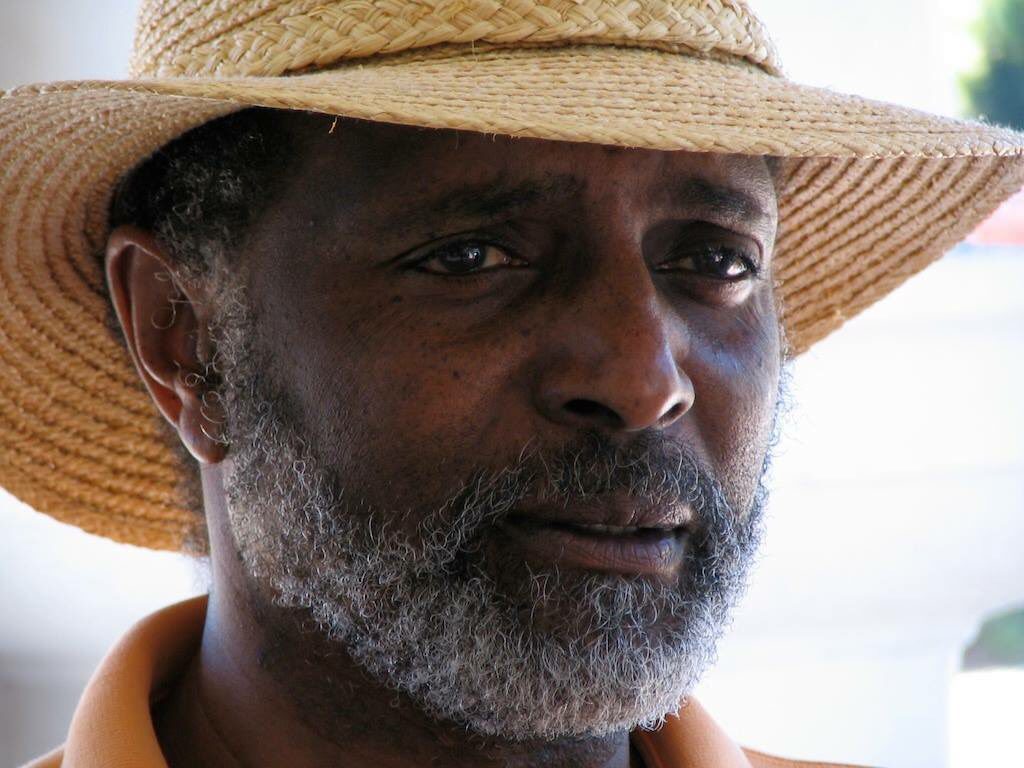
Dr. Robin D.G. Kelley On The Real Meaning of the 2020 National Presidential Election and the Profound Intellectual and Political Legacy of Dr. Cedric Robinson (1940-2016)
DR. CEDRIC J. ROBINSON (1940-2016)


by Robin D. G. Kelley
November 5, 2020
Boston Review
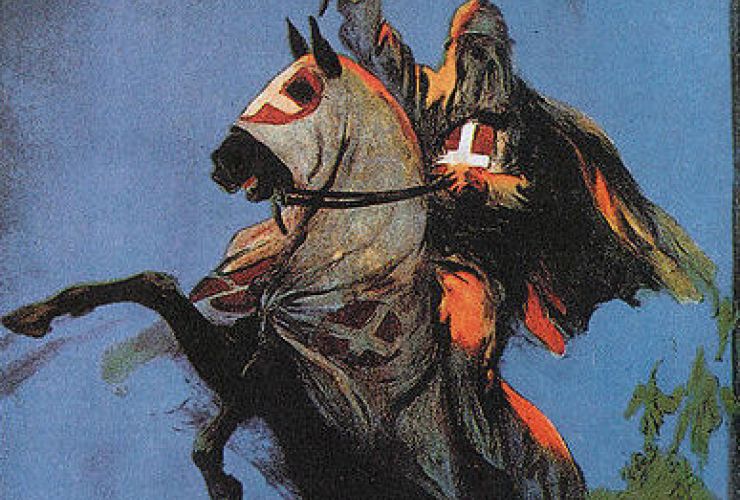
IMAGE: A promotional poster for the film 'Birth of a Nation' (1915)
I wrote the following essay, “Births of a Nation: Surveying Trumpland with Cedric Robinson,” in the wake of Trump’s 2016 victory, but it could have been written today—two days into a still unsettled presidential election; two days of witnessing frenzied, nail-biting, soul-searching Democrats wondering what happened to the blue wave and why 68 million people actually voted for Trump; two days of threats from the White House that they will fight in the courts and in the streets before giving up power. And today Cedric Robinson, pioneering scholar of what he called the “Black Radical Tradition,” would have celebrated his eightieth birthday.
Today Cedric Robinson would have celebrated his eightieth birthday. What Robinson identified as “the rewhitening of America” a century ago is what we’re seeing play out today.
The lessons I took from Cedric in the aftermath of Trump’s election still stand: our problem is not polling, or the failure of Democrats to mobilize the Black and Latinx vote (they came out, often at great risk to their health and safety), or a botched effort to reach working-class whites with a strong, colorblind class-based agenda. What Robinson identified as “the rewhitening of America” a century ago is what we’re seeing play out today.
But before reviving the tired race-versus-class debate, pay attention: Robinson was making an argument about racial regimes as expressions of class power and how racism undergirds class oppression. As I quoted Robinson before: “White patrimony deceived some of the majority of Americans, patriotism and nationalism others, but the more fugitive reality was the theft they themselves endured and the voracious expropriation of others they facilitated. The scrap which was their reward was the installation of Black inferiority into their shared national culture. It was a paltry dividend, but it still serves.” (The emphasis is mine.)
What we’ve seen is the consolidation of a racial regime based—as are all racial regimes—on “fictions” “masquerading as memory and the immutable.” Trump is saving white suburban women from Black rapists and drug dealers who want to take their Section 8 vouchers out to gated communities. He’s protecting our borders from “illegals” who have no claims whatsoever to this white man’s country. He’s shielding the nation from wicked critical race theorists and Howard Zinn with “patriotic education.” He responds to the assault on white supremacist mythologies by defending Confederate monuments. He dispatches federal military forces to crush antiracist protests and declares Kyle Rittenhouse a patriot for killing two unarmed Black Lives Matter protesters. And he dusts off the tried and true strategy of labeling all challengers to the regime “communists and socialists.” (When Biden brags “I beat the socialists!” and “I am the Democratic Party,” he plays right into the regime’s fictions—he is the neoliberal moderate taking back the country from rioters, fascists, and socialists.)
We keep telling ourselves that Trump was elected as a backlash to a Black president, but really he was elected as a backlash to a Black movement. President Obama presided during the killing of Mike Brown, Tamir Rice, Tanisha Anderson, Philando Castile, Alton Sterling, Freddie Gray, Sandra Bland—ad infinitum. It was the mass rebellion against the lawlessness of the state—in Ferguson, in Baltimore, in Chicago, in Dallas, in Baton Rouge, in New York, in Los Angeles, and elsewhere—that prompted Trumpian backlash.
We keep telling ourselves that Trump was elected as a backlash to a Black president, but really he was elected as a backlash to a Black movement. Fear and racism feed off of insecurity.
The massive vote for Trump and his fascist law-and-order rhetoric should also be seen as a backlash to a movement. Some of us believed Black Spring rebellion in the wake of the murders of George Floyd, Breonna Taylor, and Ahmad Arbery signaled a national reckoning around racial justice. But rather than reverse the rewhitening of America, our struggles catalyzed and concretized the racial regime’s explicit embrace of white power. Once again, an unstable ruling class drapes itself in white sheets, puts on its badge and brings out its guns. Fear and racism feed off of insecurity. And in the face of a global pandemic, joblessness, precarity, and an economy on the verge of collapse, this paltry dividend still serves.
If we’d paid attention, we wouldn’t have expected a Biden landslide or a blue wave ripping the Senate from Kentucky’s Mitch McConnell grip. It is not a coincidence that Louisville is on fire over the murder of Breonna Taylor and countless others who died at the hands of police in McConnell’s state. Kentucky has always been a battleground. California is too, and we’re not necessarily winning. Voters just defeated affirmative action, rent control, and the labor rights of gig workers. And despite some important victories, California delivered a lot of votes to Trump. We need to face the fact that our entire country, and the world, is a battleground. Trump and McConnell have succeeded in packing the Supreme Court with reactionaries. Trump’s backers still run the Senate. Gun-toting men and women in red hats stand outside vote-tabulating centers, threatening to do whatever is needed to secure a Trump victory. They yell “stop the count.”
Even with a Biden victory, the failure of the blue wave will be attributed in part to a certain kind of identity politics—Black and Latinx voter turnout less than what was expected—or to the militancy of antiracist protests, or to left-leaning candidates who scared off white moderates by pushing for single-payer healthcare and a Green New Deal. We should not see these as problems for legitimate Democrats. We’ve been witnessing authentic small-d democracy in action. In the streets we’ve seen a movement embrace Black, Brown, and Indigenous people, queer feminism, and a horizontal leadership model that emphasizes deliberative, participatory democracy.
We have an electoral college, battleground states, and voter suppression because the U.S. political order was built on anti-democracy.
This is the democracy Cedric Robinson insisted we embrace. He reminded us that the U.S. political order was built on anti-democracy, a theory of so-called enlightened governance that excludes the popular classes. This is why we have an electoral college, why we have battleground states, and why voter suppression was built into our country’s DNA. As I wrote three years ago, “today’s organized protests in the streets and other places of public assembly portend the rise of a police state in the United States. For the past five years, the insurgencies of the Movement for Black Lives and its dozens of allied organizations have warned the country that unless we end racist state-sanctioned violence and the mass caging of black and brown people, we are headed for a fascist state.”
We’re already here. And there is no guarantee that a Biden-Harris White House will succeed in completely reversing this trend. Nor should we expect presidents and their cabinets to do this work. That would put us back where we started—with tacit acceptance of the principles of anti-democracy.
Cedric’s words from exactly twenty years ago still haunt: “For the moment . . . an unelected government has seized illegal powers. That must be opposed with every democratic weapon in our arsenal.”
Happy Birthday, Dr. Robinson.
March 6, 2017
Cedric Robinson was fond of quoting his friend and colleague Otis Madison: “The purpose of racism is to control the behavior of white people, not Black people. For Blacks, guns and tanks are sufficient.” Robinson used the quote as an epigraph for a chapter in Forgeries of Memory and Meaning (2007), titled, “In the Year 1915: D. W. Griffith and the Rewhitening of America.” When people ask what I think Robinson would have said about the election of Donald Trump, I point to these texts as evidence that he had already given us a framework to make sense of this moment and its antecedents.
Robinson’s work—especially his lesser-known essays on democracy, identity, fascism, film, and racial regimes—has a great deal to teach us about Trumpism’s foundations, about democracy’s endemic crises, about the racial formation of the white working class, and about the significance of resistance in determining the future.
"Through the intervention of film, a new American social order was naturalized."
—Cedric J. Robinson
In 1915 William Joseph Simmons, an ex-preacher who made his income selling memberships in fraternal organizations, led a group of his friends atop Stone Mountain, just outside of Atlanta, burned a giant cross, and launched the revival of the Ku Klux Klan. His inspiration: seeing The Birth of a Nation, D. W. Griffith’s three-hour paean to the original Klan. Simmons believed the new Klan could make America great again by purging it of un-American influences: Negroes, immigrants (except for those of Anglo and Scandinavian stock), Catholics, and Jews. Under the slogan “100 percent Americanism,” the Klan pursued a program of severe immigration restriction, allegiance to the American flag, anti-communism, protecting white womanhood (and “correcting” wayward women who transgressed gender conformity, Protestant values, and the color line), better government, and law and order, while also engaging in lynching and open acts of terrorism against black people. The second Klan appears to be a ball of contradictions—antagonistic to both big business and industrial unions, contemptuous of both elites and a huge swath of the working class (the non-white and foreign-born). But as historian Sarah Haley recently argued, the Klan—whose membership rolls swelled to four million by 1924—mobilized a precarious middle class of small entrepreneurs, white-collar workers, and farmers facing the prospect of downward mobility and seeking hope in the elimination of the most marginalized segments of society.
Cedric Robinson has a great deal to teach us about Trumpism and the significance of resistance in determining the future.
In Forgeries of Memory and Meaning, Robinson explains why Griffith’s film catalyzed this movement. This was no ordinary film. Based on Thomas Dixon’s novel The Clansman (1905), it consolidated and circulated old racial fabulations and new fictions in the service of capitalist expansion and modern white supremacy—in the United States and abroad. The Birth of a Nation was historical alchemy, turning terrorists into saviors, rapists into chivalrous protectors of white women and racial purity, and courageous and visionary blacks into idle, irresponsible ignoramuses, rapists, and jezebels. Black people were not only unfit for democracy but they threatened social order. President Woodrow Wilson (who screened Griffith’s film at the White House) praised it as American history written with lightning—and like lightning, its historical reworking had an obliterating effect on truth. Robinson identified it as a “rewhitening of America,” a gallant effort to obliterate all vestiges of the black struggle for social democracy during Reconstruction.
For Robinson, 1915 marked the formation of a new “racial regime.” With the term, Robinson meant:
"Constructed social systems in which race is proposed as a justification for the relations of power. . . . [T]he covering conceit of a racial regime is a makeshift patchwork masquerading as memory and the immutable. Nevertheless, racial regimes do possess history, that is, discernible origins and mechanisms of assembly. But racial regimes are unrelentingly hostile to their exhibition. This antipathy exists because a discoverable history is incompatible with a racial regime . . . [and its] claims of naturalism.”
Racial regimes, in other words, are fictions. As such, they are unstable, fragile, and contested. The scramble to prove black inferiority and buttress white racial democracy in the era of Jim Crow was no cakewalk. The previous era had unleashed the possibility of radical change in the United States, and that struggle continued well into the twentieth century, when armed insurrection, political assassination, lynching, disfranchisement, imperialism, and federal complicity in the triumph of white supremacy destroyed the last sigh of black-led biracial democratic, populist, and radical movements.
Robinson lays out in great detail all the sites of contestation in 1915, and all the operations the new racial regime masked in the process. He reminds us that Griffith’s champion, Wilson, had opened the far Western Front of World War I when the United States invaded Haiti in 1915, long before the declaration of war on Germany. That intervention and long occupation (until 1934)—driven by U.S. finance capital—also required historical alchemy. The United States, the cause of much of Haiti’s political and economic instability, had to see itself as the country’s rescuing white knight. In the white American imagination, Haitians—like those blackface brutes in The Birth of a Nation—were seen as coons, niggers, and malevolent witchdoctors incapable of self-governance.
That May, W. E. B. Du Bois published “The African Roots of War” in Atlantic Monthly, a brilliant, prescient essay overshadowed by his folly three years later when he exhorted blacks to “close ranks” behind America’s official entry into World War I. The essay not only reveals a global racial regime in which “the white workingman has been asked to share the spoil of exploiting ‘chinks and niggers,’” but argues that we will never rid the world of war nor achieve democracy until we eradicate racism and colonialism. And who could lead the struggle to topple this rapacious system? None other than the descendants of “the European slave trade . . . the ten million black folk of the United States, now a problem, then a world salvation.”
The stage was set: D. W. Griffith’s New Nation versus the New Negroes. The latter resisted with pickets and boycotts, speeches and editorials, scholarship and art, and outright rebellion. They exposed the racial regime for what it was, the tyranny of white supremacy masquerading as enlightened democracy. The former, backed by finance capital and the academy, manufactured the Negro as Problem, a campaign accelerated through newer technologies of mass media. Film—whether newsreel footage of U.S. Marines entering Port-au-Prince or Griffith’s robed Klansmen saving the virginal Elsie Stoneman from the clutches of a rapacious mulatto—can mask and reorder social reality, turning victims into perpetrators and transforming imperialism into a rescue operation.
Robinson demonstrates that the post-Reconstruction order was not a return to the antebellum but a new racial and economic order that deployed a reinvention of the past in the service of a new regime. If new media played a key role, print was also crucial to this campaign. In 1916 The Passing of the Great Race, eugenicist Madison Grant’s chilling case for racial cleansing, became a national bestseller. Adolf Hitler praised the book as foundational to his own thinking. Grant’s book had plenty of company in the decade, including Robert W. Shufeldt’s America’s Greatest Problem: The Negro (1915) and Lothrop Stoddard’s The Rising Tide of Color Against White World Supremacy (1920). White supremacy traverses the ideological spectrum, even now. Many foundational texts of the Progressive Era’s racial regime were penned by liberal social scientists obsessed with the challenges of race and empire for American democracy. Many shared the eugenicists’ presumption that democracy’s survival depends on the suppression of difference.
Racial regimes are fictions, unstable, fragile, and contested.
Franklin H. Giddings, in his 1901 book Democracy and Empire, coined the phrase “democratic empire” to suggest that imperial expansion was itself a democratizing project. It was more than just the introduction of modern infrastructure, Western education, and civilization. It was the creation of social cohesion through the rapid assimilation of subject peoples. Giddings insisted that social cohesion or some sense of solidarity is a precondition of democracy, and racial difference renders such solidarity improbable if not impossible. Sociologist John Moffatt Mecklin, a self-proclaimed Progressive liberal, published Democracy and Race Friction: A Study in Social Ethics the year before the release of The Birth of a Nation. He argues that racism and discrimination undermine democracy, but at the same time puts much of the blame on the cultural differences and “hereditary instincts” of non-whites (e.g., weak powers of inhibition, criminality, inability to control sexual impulses). Thus, while recognizing racism as a fetter on democracy, he nonetheless apologizes for white supremacy, arguing that blacks and whites have very different value systems. White supremacy is therefore a “form of self-preservation.” (He is silent on whether lynching and rape were “moral” elements of self-preservation.) The solution? Mecklin believed “industrial competition” will allow the laws of natural selection to determine the fate of non-whites, producing the “ethnic homogeneity” necessary for “an efficient democracy.”
While these texts were influential, Griffith’s masterwork and films that followed in its wake proved indispensable for installing the modern racial regime. The consequences, however fragile, were devastating—not just for African Americans but for working-class whites. As Robinson writes, Griffith and this emergent film industry constituted the social and cultural platform for a robust economic and political agenda; an agenda in the process of seizing domestic and international labor, land, and capital. . . . White patrimony deceived some of the majority of Americans, patriotism and nationalism others, but the more fugitive reality was the theft they themselves endured and the voracious expropriation of others they facilitated. The scrap which was their reward was the installation of Black inferiority into their shared national culture. It was a paltry dividend, but it still serves.
• • •
"I love the poorly educated."
—Donald J. Trump
The dividend still serves. Many who voted for him, including those of the alt-right, flocked to Trump because he villainized immigrants, black people, and anti-patriotic business moguls who sent jobs overseas. Most pundits insist that Trump appeals not to white racism but to working-class populism driven by class anger. If this were true, why didn’t Trump win over droves of black and brown voters, since they make up the lowest rungs of the working class and suffered disproportionately more than whites during the financial crisis of 2008? Instead Trump’s victory inspired a wave of racist attacks and emboldened white nationalists to flaunt their allegiance to the president-elect.
The response on the part of high-profile liberals and leftists has been to blame “identity politics” for undermining the potential for working-class solidarity. Mark Lilla’s New York Times screed, “The End of Identity Liberalism,” is a case in point. “In recent years,” writes Lilla, “American liberalism has slipped into a kind of moral panic about racial, gender and sexual identity that has distorted liberalism’s message and prevented it from becoming a unifying force capable of governing.” The result is a “generation of liberals and progressives narcissistically unaware of conditions outside their self-defined groups, and indifferent to the task of reaching out to Americans in every walk of life.” In other words, people of color, queer folks, feminist-minded women, and liberal Democrats alienated the white working class, driving it into the arms of Trump.
Movements associated with “identity liberalism” are not exclusionary, they are serious efforts to interrogate the sources and structures of inequality.
The argument is both inept and confused. The movements associated with “identity liberalism” have not been obsessed with narrow group identities but with forms of oppression, exclusion, and marginalization. And these movements are not exclusionary—not Black Lives Matter, not prison abolitionists, not movements for LGBTQ, immigrant, Muslim, and reproductive rights. They are serious efforts to interrogate the sources of persistent inequality, the barriers to equal opportunity, and the structures and policies that do harm to some groups at the expense of others.
Of course, Lilla’s arguments are hardly new. At the height of the culture wars, conservatives such as Gertrude Himmelfarb, William Bennett, and Lynne Cheney; liberals such as Arthur Schlesinger and Allan Bloom; and self-styled leftists such as Todd Gitlin and Michael Tomasky argued that identity politics had undermined a unified America founded on Enlightenment principles of individualism, liberty, and secularism. A number of pundits have called Richard Rorty’s Achieving Our Country (1998) prophetic because it warns that continued downward mobility of the white working class and growing income inequality would lead to the rise of a strongman with authoritarian tendencies. Rorty’s thesis was not a critique of neoliberal policies, however, but a critique of the academic left and its love affair with identity politics. “Nobody is setting up a program in unemployed studies, homeless studies, or trailer-park studies,” Rorty laments, “because the unemployed, the homeless, and the residents of trailer parks are not ‘other’ in the relevant sense.” Anyone who works on these issues at the university—then and now—will find Rorty’s assertion laughable.
Rorty, a brilliant philosopher with genuine concern for working people, nevertheless mistook ideology—a categorical opposition to racism, sexism, homophobia, institutional oppression, and marginalization based on difference—for “identity politics,” while presuming that the white working class is operating purely out of race- and gender-neutral economic interests.
More conservative critics of identity politics sought to rescue Western culture from its anti-racist, feminist, and post-colonial critics. In his famous attack on multiculturalism, Arthur Schlesinger writes, “it was the West, not the non-Western cultures, that launched the crusade to abolish slavery. . . . Those many brave and humane Africans who are struggling these days for decent societies are animated by Western, not by African, ideals. White guilt can be pushed too far.” So far, in fact, that “political correctness” has been perceived as an attack on intellectual freedom and American virtues.
Robinson likened such antinomies to Christian attacks on heresy during the Middle Ages. In a short essay titled “Multiculturalism and Manichaeism,” he acknowledges what many critics of so-called “political correctness” understood: that the Schlesingers and Blooms and their compatriots across the ideological spectrum are holding on to “an imaginary transcendent universal culture—the West,” a nostalgia for a university that never was, and a mythic American identity presumably forged through an enlightened process of deracination. But Robinson knew there was more at stake. “They wish to erase the exposed seam,” he writes, “the nexus between power and regimes of knowledge so forcefully articulated by Michel Foucault. How else can one defend their specious histories of knowledge, which invoke some pristine mythical moment in the life of the American academy?”
This is not to say that Robinson’s defense of multiculturalist discourse was uncritical. He pointed to the dangers of an essentialism that reduces complex, historical experiences to fixed, discrete racial, ethnic, and gender identities. And to the left’s claim that Marxism is our way out of the Manichean world of fixed difference versus false universalism, Robinson politely demurred, citing arguments he made in Black Marxism a decade earlier. What he proposes instead is that a radical impulse in multiculturalism constitutes both a critique of the absences and an appropriation of the positive contributions of Marxism. We are not the subjects or the subject formations of the capitalist world-system. It is merely one condition of our being. . . . Multiculturalism, then, is a site of discursive resistance, and emblem of articulation of several trajectories of ‘objective’ opposition (religious, nationalist, feminist, etc.) mounted by our peoples in the everyday world.
• • •
"Democratic philosophy was subverted by plutocracy . . . whose rulers depended on the preservation of a slave economy, the exploitation of ‘white’ laborers (male and female), the severe restriction of women’s political rights, and the expropriation of Native Americans."
—Cedric J. Robinson
Opponents of Trumpism—and what it portends for the future of our democratic system—are scrambling to find both “the seed of opposition” and the roots of the crisis. Locating the elusive seed of opposition is a daunting task, but it seems that most people agree that repairing our broken democracy ought to be our priority.
Cedric Robinson had a lot to say about democracy—as a theory, an aspiration, and a fiction. As a child of World War II who came of age with the Cold War and the civil rights movement, he encountered the word “democracy” at every turn. Democracy was bandied about as an explanation for America’s frequent military excursions abroad, while at home it was an elusive dream for which black people were arrested, beaten, even killed.
Critics of so-called political correctness are holding on to an imaginary transcendent universal culture—the West.
Robinson studied democracy at the University of California, Berkeley, and fought for it as a leader of the campus naacp and as an activist in slate, a forerunner of the Berkeley Free Speech Movement. In the summer of 1962, he witnessed firsthand a struggle to create a multiethnic democracy in Southern Rhodesia crushed by the state. He was there under the auspices of Operation Crossroads—a precursor to the Peace Corps that sent student volunteers to Africa to help build libraries, schools, and community centers.
Founded by Harlem Presbyterian minister James H. Robinson and backed by the Rockefeller Brothers Fund, Operation Crossroads was also a Cold War project designed to combat communism and spread American democracy to the continent. During his month-long stay, Cedric watched the U.S.-backed regime led by the fascist Rhodesian Front violently repress and ultimately outlaw the Zimbabwe African People’s Union (zapu). Upon his return to Berkeley, Robinson enrolled in three political science courses, including one on African politics, in his quest to comprehend democracy, and he would go on to do graduate work in political science at San Francisco State University and at Stanford.
In an essay titled “African Politics: Progression or Regression?” written for a Stanford graduate seminar taught by David Abernethy (then a young scholar who wrote on popular education in Africa), Robinson argued that the newly “decolonized” territories in Africa were not yet nations. For him the “birth” of decolonialized African states required shedding Western political structures and creating their own political institutions. More provocatively, he suggests that the modern nation-state is, in fact, “a regression or step backward from the stateless societies of some earlier African history.” Here he begins to reveal the seeds of his argument in Black Marxism (1983) that the black petit bourgeoisie was disconnected from the political and cultural traditions that sustained anti-colonial movements in the past. He writes that those living in exile or European educated “have betrayed the heritage of their predecessors in the 19th and early 20th centuries,” indigenous leaders “who were committed through their own particular missions to the recovery of life with integrity for the mass of African people.” The alternative path he imagines is not based on modernization theory or industrialization but something different:
Perhaps what is needed are new political organisations without single or even multiple leaders, but with no leaders at all. . . . That is a sophisticated social organization; a primitive organization is one where the courts are filled with defendants bound and gagged or where its citizens must be shot down in the streets and terrorized in to fitful conformity.
Robinson never abandoned this radical utopian vision of democracy, although as the promise of the 1960s and ’70s faded into the revanchism of the 1980s and ’90s, he turned to the genesis of the “primitive organization” that became the U.S. political system. He traced the ideological roots of U.S. democracy back to the profoundly anti-democratic strain in Plato and Aristotle. For Robinson the “crisis” of democracy was not simply the result of the corrosive forces of neoliberalism but endemic from its very inception. His provocative essay “Slavery and the Platonic Origins of Anti-Democracy” (1995) locates the genesis of anti-democracy in The Republic, which accepts slavery and proposes a theory of enlightened governance that excludes the popular classes. Slavery in Plato’s politics was an immutable fact, the slave an inferior being bereft of reason and thus incapable of participating in democracy, let alone governing. “Plato’s political theory,” writes Robinson, “thus repressed the history of popular rebellion and with it the recognition that social agency might have its genesis from the general populace. Even in his ‘treatment’ of the degeneracy of democracy to tyranny, the demos is denied true agency through the selection of a demagogue.” Robinson wryly concludes, “In its antidemocratic plutocratic prejudice, the Republic provides an authority rich in intellectual strategems a propos to the political discourse embedded in the American political order. Plato survives because if he had not existed, he would have to be invented.”
It should come as no surprise that the founding fathers were avid readers of Plato and Aristotle, who were—along with Homer—the pillars of classical philosophy in the eighteenth and nineteenth centuries. Distrust of democracy was widespread. James Madison even positively described the new state as an “oligarchy.” Landholding, Madison insisted, had to be a requirement for participation in the body politic “as to protect the minority of the opulent against the majority.” The result, besides property requirements for voting, was the Electoral College. For some proponents, the Electoral College would be the enlightened check against the threat of an ignorant populace backing a demagogue as president. But it also guaranteed a pro-slavery White House. Basic to the college’s architecture was the Three-Fifths Compromise, the rule that congressional representation in the slave states would be apportioned by counting the white population along with 60 percent of enslaved people. The number of electors was to be equal to the number of representatives and senators from each state. This gave the slaveholding South an edge in presidential elections compared to other states, and that advantage lasted well after slavery ended, since the vast majority of black southerners were disfranchised after Reconstruction.
Ironically, critics of the Electoral College who believe Hillary Clinton should be president based on the popular vote are now invoking Alexander Hamilton’s idea of the “conscientious” elector who will buck party affiliation in order to make the enlightened choice. Hence, an anti-democratic institution is invoked as both the problem and solution, fueling the myth of American democracy’s singular genius while remaining “openly hostile to the periodic outbreaks of what it redundantly terms ‘participatory’ or ‘direct’ democracy.”
• • •
"When the performance of charismatic leadership stands in for building movements and relationships, for grassroots political education, and for a practiced commitment to disassembling social hierarchies, the promise of social justice and political empowerment is endangered by a formation of authority that limits our capacities to remake the world."
—Erica R. Edwards
In 2016, on the heels of the centennial celebration of D. W. Griffith’s The Birth of a Nation, the Sundance Film Festival screened a new film bearing the same title. Nate Parker, the young African American actor who wrote, directed, and starred in the film appropriated the title from Griffith as a deliberate provocation. His historical epic is about Nat Turner, the Virginia slave-turned-minister who led the bloodiest slave revolt in U.S. history. Like Griffith, Parker simultaneously revised history while reflecting and refracting current political realities. It is impossible to watch Parker’s The Birth of a Nation without recalling the recent wave of police killings and rage and resistance it has generated. Yet whereas Griffith’s racist epic made history, Parker’s film flopped. Revelations of Parker’s involvement in a sexual assault twenty years earlier dampened ticket sales, and cinematic representations of black rebellion tend to do poorly at the box office. But neither adequately explains the film’s epic failure.
In both Births, women are territory to be fought over, attacked, and defended. Whereas the Klan avenged the nation and their manhood by rooting out alleged black rapists, Turner and his men avenged their nation and their manhood for the rape of their women by white masters and overseers. As critic and historian Salamishah Tillett observed, Parker’s film thus silences black women, turning them into mute victims. “In denying these women their revolutionary gestures, Mr. Parker risks making them objects that he, and only he, can freely move around the screen.” Noting the film’s appearance during the height of black resistance to police violence, she adds that its emphasis on the male charismatic leader is “out of step” with the Movement for Black Lives and its largely black female leadership. I would add that the movement’s embrace of black queer feminism, its horizontal leadership model, and emphasis on deliberative, participatory democracy counter the film’s central vision.
For the past five years Black Lives Matter warned the country that unless we end racist state-sanctioned violence, we are headed for a fascist state.
Robinson understood the charismatic figure in insurgent movements as “the expression of a people focused onto one of their members . . . the responsive instrument of a people,” rather than the force or agent directing the people forward. This is certainly not how Parker portrayed Turner, which suggests that Robinson may have been sympathetic to Tillet’s reading of the film. But he would have also insisted that the female-led, horizontal formations resisting state violence today are not aberrations but consistent with the black radical tradition. H. L. T. Quan reminds us of the centrality women in Robinson’s historical archeology of black revolt. “Indeed,” Quan writes, “the women who people Robinson’s imagination are not the anorexic two-dimensional (mainstream) feminist heroines whom we often encounter in gender-related texts, but the plotters of history. They are women of substance, of imagination, of formidable social force, women who would kill and wage revolutions against the state and the world economy.”
Just as Nat Turner’s rebellion portended chattel slavery’s violent demise, today’s organized protests in the streets and other places of public assembly portend the rise of a police state in the United States. For the past five years, the insurgencies of the Movement for Black Lives and its dozens of allied organizations have warned the country that unless we end racist state-sanctioned violence and the mass caging of black and brown people, we are headed for a fascist state.
Others argue that fascism is already here. Refusing to play politics, they criticize both Democrats and Republicans. They have angered cops by insisting that no law officer is above reproach. Skeptical of courtroom justice, they have taken to the streets, social media, the press, and even the United Nations, placing the moral, ethical, and legal question about the value of black lives before the world court of opinion. The movement has also proposed a plan to divest from a society of punishment, inequality, environmental degradation, and white supremacy and invest in a future built on free education, healthcare, housing, living-wage jobs, decriminalization, restorative justice in lieu of caging, food justice, and green energy. We need to remember this before more angry liberals—forgetting the misogynist strain in white identity politics—blame the Movement for Black Lives for Clinton’s defeat and for mau-mauing white folks into the arms of Trump.
Those of us who lived through the Reagan era have seen these dynamics before, though on a smaller scale. Ronald Reagan’s election not only owed much to white working-class resentment and middle-class white homeowners seeking tax relief, but his ascent to office coincided with heightened police and vigilante violence. In 1979 in Greensboro, North Carolina, the Ku Klux Klan assassinated five members of the Communist Workers Party in broad daylight. In Mississippi in 1980, at least twelve African Americans were lynched. The same year at least forty racially motivated murders occurred in cities as diverse as Buffalo, Atlanta, and Mobile. Across the country, police killings and non-lethal acts of brutality generated protests, notably a massive urban rebellion in Liberty City, Florida. And during Reagan’s eight years in office, the number of hate crimes reported annually in the United States grew threefold. Faced with a dramatic rise in racism, unemployment, and homelessness, followed by deep cuts in social programs and increases in military spending, black resistance ramped up. The late historian and activist Manning Marable had even referred to 1980 as “The Red Year,” a revolutionary moment similar to 1919.
Robinson shared some of Marable’s optimism. It was, after all, the period in which he wrote Black Marxism, which compelled him to undertake a substantive study of fascism since the book’s three main subjects—W. E. B. Du Bois, C. L. R. James, and Richard Wright—were all radicalized during the 1930s. The dark times under Reagan resonated with his reading of the history of America’s support of fascism. For example, the American capitalist class was sympathetic to Benito Mussolini’s fascist regime. J. P. Morgan loaned Italy in excess of $100 million in 1926, and Fortune Magazine, the Saturday Evening Post, Business Weekly, and the New Republic all ran admiring spreads on Italian fascism up until the mid-1930s. Robinson’s central point was that the black masses not only anticipated the rise of fascism, they resisted before it was considered a crisis. Robinson called them “premature antifascists,” noting that they had stood in stark opposition to those elites enamored with fascism, “which gave primacy to the interests of the State as an instrument of racial ‘destiny.’”
Trump’s election does not signal the strengthening and consolidation of U.S. power but its decline. Contemporary resistance movements did not ensure Clinton’s defeat, but they did reveal the regime’s fragility. The Movement for Black Lives, Black Lives Mater, the Dream Defenders, Black Youth Project 100, We Charge Genocide, Million Hoodies, the Moral Mondays Movement, the uprisings in Baltimore and Ferguson—not to mention the immigrant rights movement, and the ongoing struggle in Standing Rock in defense of Native sovereignty and against the war on the planet—all presaged and accelerated the current crisis of the state.
Robinson teaches us that racial regimes are unstable. They can be disassembled, though that is easier said than done. In the meantime, we need to be prepared to fight for our collective lives. I can hear Cedric’s timely counsel in the aftermath of George W. Bush’s “fraudulent” defeat of Al Gore in 2000: “For the moment . . . an unelected government has seized illegal powers. That must be opposed with every democratic weapon in our arsenal.”
Robin D. G. Kelley
ABOUT THR AUTHOR:
Robin D. G. Kelley, Gary B. Nash Professor of American History at UCLA, is author many books including Africa Speaks, America Answers: Modern Jazz in Revolutionary Times and Freedom Dreams: The Black Radical Imagination.
TAGS: Politics Race Capitalism Justice Trump
IMAGE: A promotional poster for the film 'Birth of a Nation' (1915)