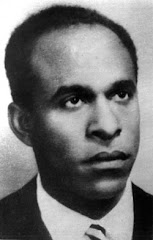
Discourse that allows us to express a wide range of ideas, opinions, and analysis that can be used as an opportunity to critically examine and observe what our experience means to us beyond the given social/cultural contexts and norms that are provided us.
President Biden delivered his second campaign speech of the year Monday at the historic Mother Emanuel AME Church in Charleston, South Carolina, where a white supremacist gunman killed nine people in 2015. Biden remembered the victims, spoke of the "poison of white supremacy" and assailed his Republican rivals for not taking racism seriously, but Biden's speech was interrupted at one point by protesters demanding a ceasefire in Gaza, where Israel's U.S.-backed war has killed over 23,000 people. "There's no way we're fighting white supremacy … in the midst of genocide," says artist and activist Bree Newsome Bass, who criticizes Biden for using the Black church as a political prop. "The last thing that we need is to carry on business as usual."
In 2015, Newsome Bass climbed a 30-foot flagpole outside the South Carolina Capitol to remove the Confederate flag following the church massacre. Democracy Now! is an independent global news hour that airs on over 1,500 TV and radio stations Monday through Friday. Watch our livestream at democracynow.org Mondays to Fridays 8-9 a.m. ET.
"You come against me in the name of hatred, repression, and violence. I come against you in the name of God. This (confederate) flag comes down today..It's time for a new chapter where we are sincere about dismantling white supremacy and building toward true racial justice and equality.”
—Bree Newsome, June 27, 2015
PHOTO: Ms. Newsome scaled a flagpole to remove the Confederate battle flag from the State Capitol in Columbia, S.C., in 2015. Credit: Adam Anderson Photo/Reuters
[UPDATE: Democracy Now! has confirmed Bree Newsome and James Tyson have been released.]
Cornell William Brooks, NAACP President and CEO released this statement:
For 15 years, the NAACP has called for
the removal of the Confederate battle flag and has maintained economic
sanctions against the state of South Carolina. The NAACP,
Governor Nikki Haley, a bipartisan coalition of policymakers, an
expanding number of American businesses, and a courageous young woman
named Bree Newsome are all united in opposition to the Confederate flag.
Ms. Newsome temporarily removed the flag flying in front of South
Carolina’s state house. As well as supporting the permanent removal of
the flag legislatively, we commend the courage and moral impulse of Ms.
Newsome as she stands for justice like many NAACP
activists including Henry David Thoreau, Dr. Martin Luther King Jr. and
numerous Americans who have engaged in civil disobedience. The NAACP
calls on state prosecutors to consider the moral inspiration behind the
civil disobedience of this young practitioner of democracy. Prosecutors
should treat Ms. Newsome with the same large-hearted measure of justice
that inspired her actions. The NAACP stands
with our youth and behind the multigenerational band of activists
fighting the substance and symbols of bigotry, hatred and intolerance.”
Around 5:30am this morning Bree Newsome climbed to the top of the
flagpole flying the Confederate battle flag on the grounds of the South
Carolina state capitol, unhooked the flag, and brought it down as police
waited to arrest her.
Calls to remove the flag intensified after last week’s mass shooting
of nine African-American worshipers at the historic Emanuel AME
Church. The flag has been the source of controversy for decades in
South Carolina, but a growing number of politicians, including South
Carolina Governor Nikki Haley, are calling for its removal after photos
were published online showing the accused gunman, Dylann Roof, posing
with the flag.
Newsome and others calling themselves “concerned citizens” released a
statement explaining, “Deciding to do what the SC Legislature has thus
far neglected to do, the group took down the symbol of white supremacy
that inspired the massacre, continued to fly at full mast in defiance of
South Carolina’s grief, and flew in defiance of everyone working to
actualize a more equitable Carolinian future.”
The state Bureau of Protective Services confirmed Newsome and one
other person were arrested. They are charged with defacing a monument,
which is a violation of state law 10-11-315. The law has not been used
since it was passed in 2000 during another push to remove the flag from
the capitol. They face three years in jail and a $5,000 fine.
“At about 7:45 a.m., a maintenance worker and a state security
officer, neither of whom would give their names or comment, raised a new
banner after removing it from a plastic sheet. The two state employees
who arrived on the State House grounds to put the flag back up were
African-Americans.”
Watch all of Democracy Now!’s coverage of the Charleston church shooting and push to remove the confederate flag.
In the interview
below, Kevin Alexander Gray, a South Carolina civil rights activist and
community organizer says, “People’s tax dollars ought not go into
supporting the idea of the Confederate States of America.” As former
president of the state ACLU, he argued, “the
flag flying on the statehouse dome was compelled speech. You were
compelling people to support an ideology of white supremacy.”
ABOUT THE HOST/PRODUCER:
Amy Goodman is the host and executive producer of Democracy Now!,
a national, daily, independent, award-winning news program airing on
more than 1,100 public television and radio stations worldwide. Time Magazine named Democracy Now! its “Pick of the Podcasts,” along with NBC’s “Meet the Press.”
Why are so many politicians and much of the media afraid to call the
mass shooting an act of terrorism? We discuss the double standards in
coverage of shootings …
The church attacked in the Charleston, South Carolina, massacre that
left nine people dead is home to the oldest black congregation south of
Baltimore.
All, REMEMBER: The same vicious society and culture that produced Dylann Roof also produced Jeff Sessions and the raving billionaire sociopath and neofascist who will enter the White House on January 20, 2017.WHAT DOES THIS TELL YOU ABOUT NOT ONLY WHERE WE ARE AND WHERE WE ARE GOING, BUT WHO AND WHAT IS RESPONSIBLE FOR IT?...
Kofi
BREAKING NEWS
A jury has sentenced Dylann Roof to die. The white supremacist showed no remorse for killing 9 at a black church in South Carolina.
Tuesday, January 10, 2017
4:54 PM EST
The jury of nine whites and three blacks, who last month found Mr. Roof guilty of 33 counts for the attack at Emanuel African Methodist Episcopal Church in downtown Charleston, S.C., returned their unanimous verdict after a heart-rending and often legally confounding trial.
Jury condemns Dylann Roof to death for Charleston, S.C., church shooting that killed 9
by Jenny Jarvie Reporting from Charleston, S.C. January 10, 2017 Los Angeles Times
Dylann Roof's two death penalty trials
The 22-year-old man charged with killing nine black worshipers at the historic Emanuel AME Church in Charleston, S.C. faces two death penalty trials, a first in U.S. history.
The 22-year-old man charged with killing nine black worshipers at the historic Emanuel AME Church in Charleston, S.C. faces two death penalty trials, a first in U.S. history.
A federal jury on Tuesday condemned unrepentant white supremacist Dylann Roof to death for the June 2015 massacre of nine black parishioners at a South Carolina Bible study class.
Roof stood stone-faced, showing no emotion, as U.S. District Judge Richard Gergel announced the jury's unanimous verdict, which came after about three hours of deliberation.
Relatives and friends of the victims were quiet. Some left court smiling and embracing.
"Today we had justice for my sister," Melvin Graham, the brother of slain churchgoer Cynthia Hurd, said outside the courthouse. "This is a very hollow victory because my sister is still gone."
Demand respect at every corner. From its bold exterior to its sporty interior, Camry seamlessly combines style, comfort and aerodynamics. Check out the features that make Camry a great ride.
Graham said the death penalty was fitting for Roof, who last month was convicted of the killings, because his act was so brutal and he showed no remorse.
"He just took them away from us because he wanted to," Graham said. "He decided the day, the hour, the moment that my sister was going to die. And now someone is going to do the same for him.... He's in God's hands now."
Before the jury of nine whites and three blacks began deliberating, Roof, who decided to represent himself during the sentencing phase of the trial, offered the panel no explanation or apologies for the shooting. He said only that he felt he had to do it.
In his last words to jurors before they decided whether to punish him with death or life in prison without parole, Roof said he was misunderstood. Yet he ultimately declined to give jurors any explanation for the massacre or a single reason to spare his life.
Roof acknowledged that he told FBI investigators after he was arrested that he had to do it. “But obviously that’s not really true,” he told the jury. “I didn’t have to do it. I didn’t have to do anything.… What I meant when I said that was that I felt that I had to do it, and I still do feel like I had to do it.
“Anyone, including the prosecution, who thinks that I’m filled with hatred has no idea what real hate is,” Roof said awkwardly, his face flushed as he read haltingly from notes. “They don’t know anything about me. They don’t know what real hatred looks like. They think they do, but they don’t really.”
9 people were killed in the Charleston church shooting: Who they were
Prosecutors, in turn, told jurors that Roof was a cold and calculated racist who dismissed a whole class of people as “brute animals” and continued to believe the shootings were worth it, even after hearing of the “immeasurable loss” of his victims’ loved ones.
“He wants you to believe that you have been misled and that indeed he was justified,” Assistant U.S. Atty. Julius “Jay” Richardson told the panel. “He wants you to believe he was justified in committing a modern-day lynching. Don’t let that be.… Render the full measure of justice for this defendant. Sentence this defendant to death.”
Last month, the same jurors found Roof guilty of all 33 charges against him, including multiple counts of committing a hate crime against black victims, obstructing the exercise of religion and using a firearm to commit murder.
On Tuesday, prosecutors provided the jury with a lengthy list of aggravating factors that they said justified the death penalty rather than life in prison.
Not only had Roof killed multiple victims and endangered others, Richardson said, but he also conducted substantial planning, was motivated by racial prejudice and hoped to incite others. Roof, the prosecutor said, showed “not one ounce of remorse.”
After the verdict, Roof’s family, which remained mostly silent since the shooting at the historical Emanuel African Methodist Episcopal Church, issued a short statement.
“We will always love Dylann,” the statement said. “We will struggle as long as we live to understand why he committed this horrible attack, which caused so much pain to so many good people.”
Roof’s defense lawyers, who served as standby counsel during the sentencing phase of the trial, said in a statement that the decision to impose the death penalty meant the case would not be over for a long time.
“We are sorry that, despite our best efforts, the legal proceedings have shed so little light on the reasons for this tragedy," the defense statement said.
Gergel set Roof's formal sentencing for Wednesday morning. Roof, who has developed a tense relationship with his defense team, asked the judge whether he would appoint new lawyers to help file a request for a new trial.
Gergel told Roof, who faces a separate death penalty trial in state court, that he was "strongly disinclined" to appoint new attorneys but would listen to any motions Roof made Wednesday.
Anyone, including the prosecution, who thinks that I’m filled with hatred has no idea what real hate is. — Dylann Roof
In closing arguments, the trial’s lead prosecutor offered a window into each of the nine victims’ lives, showing jurors family photos of them at ballgames, weddings, vacations and graduations.
“You now know the last moments this last group of 12 spent together,” Richardson told the jury, reminding them the nine victims were among a dozen who had gathered together that muggy June evening to study the gospel of gospel of the Book of Mark’s Parable of the Sower. “You also now know how extraordinarily good these people were.
“They welcomed the defendant with a kind word, a Bible, a handout and a chair,” he said. Yet Roof “had come not to learn, not to receive the word.… He’d come with a hateful heart and a Glock.”
After showing images of Roof posing with a pistol and a Confederate flag, and engaged in target practice in his backyard, Richardson argued that the defense had failed to show any possibility that Roof was capable of any meaningful change or redemption.
“We may indeed wish it to be true, but there’s no evidence to support it,” Richardson said.
On Tuesday, Roof did not offer jurors any reason for forgiveness.
“From what I’ve been told, I have a right to ask for forgiveness on my sentence, but I’m not sure what good that will do anyway,” Roof told jurors before they deliberated. “But what I do know is that only one of you has to disagree with the other jurors.”
The 22-year-old high school dropout also addressed the jury at the beginning of the death penalty hearing last week — only to insist he was not mentally ill.
“Other than the fact that I trust people that I shouldn’t, there is nothing wrong with me psychologically,” he told the jury, referring to his attorneys’ attempts to present evidence of mental health problems.
At the beginning of the penalty phase of the trial, jurors learned that Roof had continued to show no remorse weeks after the crime.
“I would like to make it crystal clear I do not regret what I did,” Roof wrote in a journal found in his jail cell six weeks after his arrest. “I am not sorry. I have not shed a tear for the innocent people I killed.”
Roof added that he did feel sorry for the “innocent white children forced to live in this sick country” and “I have shed a tear of self-pity for myself. I feel pity that I had to do what I did in the first place.”
Usually during the sentencing phase of a death penalty case, the defense tries to mitigate the prosecution’s case by presenting evidence about background issues, such as childhood upbringing and mental health problems, in an effort to encourage jurors to be more lenient.
Yet from the beginning, Roof has resisted any idea of mounting a defense on the premise that he is mentally ill.
“I am morally opposed to psychology,” he scrawled in a journal that investigators found in his car after the massacre. “It is a Jewish invention, and does nothing but invent diseases and tell people they have problems when they don’t.”
In his statement to the jury Tuesday, as he spoke about how he felt the need to commit the killings, Roof said, “I think that it’s safe to say that no one in their right mind wants to go into a church and kill people.”
Over the last week, Roof declined to cross-examine any of the prosecution’s 25 witnesses or present any witnesses of his own. Yet he filed several motions last week objecting that the prosecutor’s victim impact testimony was excessive.
South Carolina killer Dylann Roof tells jurors: 'Nothing wrong with me psychologically'
Outside the courthouse, as Graham spoke of the loss of his sister, he said he hoped that Roof might at some point turn his life around and make a humble confession to God.
“When he gets there, he can join my sister and the other eight in heaven.… For God said, ‘I will forgive you. For no matter what you do, I will forgive you,’” he said.
Asked whether he had forgiven Roof, he paused.
“I’m a work in progress,” he said. “I think that, in time, that will come. I can’t live in hate.… But right now, no.”
“...To a number of Talladega alumni, the Dec. 30 announcement that the
band would march in the parade was an insult to the very principles of
the college, which was established two years after the end of the Civil
War. The school is affiliated with the United Church of Christ, a
liberal Protestant denomination that was deeply involved in the civil
rights movement, and for decades it served as an incubator for theories
and practices of social justice.
Nikky Finney, a poet and
Talladega graduate who is now a professor at the University of South
Carolina, said in a statement this week that the band should not help
celebrate Mr. Trump, who, she said, has maligned women and Mexican
immigrants and has proposed barring all Muslims from entering the
country. In an interview on Thursday, Ms. Finney, channeling a James
Brown lyric, said the college had “sold out the history of Talladega
College for chicken change” and “maybe a tin star on a hatemonger’s
parade route.
As of Thursday afternoon, an online petition
calling for the band to withdraw from the inaugural parade had attracted
more than 1,900 signers, some of them supporters of the college who
have threatened to withhold future contributions..."
...Up the
street at a real estate office near the 1830s-era courthouse, Randy and
Heather Roberts, a white couple who voted for Mr. Trump, raved about the
Talladega College band and its performance at the Dec. 5 Christmas
parade. Ms. Roberts showed a video of the band on her phone. “They were
phenomenal,” Ms. Roberts said..."
U.S.
Ending Speculation, Black College Says Band Will Play at Inaugural Parade
by RICHARD FAUSSET January 5, 2017 New York Times
The marching band at
Talladega College featured on the front page of a local newspaper in
Talladega, Ala. The school has become the subject of an impassioned
national outcry.Credit
Kevin D. Liles for The New York Times
TALLADEGA, Ala. — For a band at a tiny, little-known, historically
black college, it seems in some ways to be the gig of a lifetime: a
chance to march and perform at the Jan. 20 presidential inaugural parade
in Washington. Some of the musicians at Talladega College have been
excited to see the capital for the first time.
But because the
president-elect is Donald J. Trump, the school has become the subject of
an impassioned national outcry, with online petitions, threats to end
donations and a flurry of how-could-yous from alumni who feel that
performing in the parade would betray the values of an institution
founded by newly freed slaves 150 years ago.
On Thursday, after
days of speculation that the college administration might bow to the
pressure and remove the band from the parade roster, the president of
Talladega College, Billy Hawkins, issued a statement confirming the
participation of the band, the Marching Tornadoes, and argued, in
essence, that the 58th presidential inauguration is about something
bigger than Mr. Trump.
“We respect and appreciate how our
students and alumni feel about our participation in this parade,” Dr.
Hawkins said. “As many of those who chose to participate in the parade
have said, we feel the inauguration of a new president is not a
political event but a civil ceremony celebrating the transfer of power.”
Similar issues have been raised about other entertainers scheduled to
perform, among them the Radio City Rockettes and the Mormon Tabernacle
Choir. But because of Talladega’s history, the issues have been
especially intense here, with calls for the college to reverse its
decision to take part in the festivities.
And beyond Talladega,
the controversies raise tough questions for Mr. Trump’s most ardent
critics as his presidency dawns: What is the proper response to a
president as polarizing as Mr. Trump? Should the office of the president
be honored, no matter who fills it? Or should there be four years of
pure rejection and defiance?
And if Mr. Trump’s opponents refuse
to participate in his presidency, can critics on the right do the same
thing to some other president-elect in the future?
To a number of
Talladega alumni, the Dec. 30 announcement that the band would march in
the parade was an insult to the very principles of the college, which
was established two years after the end of the Civil War. The school is
affiliated with the United Church of Christ, a liberal Protestant
denomination that was deeply involved in the civil rights movement, and
for decades it served as an incubator for theories and practices of
social justice.
Nikky Finney, a poet and Talladega graduate who
is now a professor at the University of South Carolina, said in a
statement this week that the band should not help celebrate Mr. Trump,
who, she said, has maligned women and Mexican immigrants and has
proposed barring all Muslims from entering the country. In an interview
on Thursday, Ms. Finney, channeling a James Brown lyric, said the
college had “sold out the history of Talladega College for chicken
change” and “maybe a tin star on a hatemonger’s parade route.”
As
of Thursday afternoon, an online petition calling for the band to
withdraw from the inaugural parade had attracted more than 1,900
signers, some of them supporters of the college who have threatened to
withhold future contributions.
The campus of Talladega College on
Wednesday. To a number of alumni, the announcement last month that the
band would march in the parade was an insult to the principles of the
college. Credit Kevin D. Liles for The New York Times
But a
second petition, which had nearly 300 supporters, argued that the parade
was not about politics but “about seeing firsthand the process of a
transition” and giving the students a chance to be a part of history.
“We are not one-track thinkers and believe everyone is entitled” to
their own beliefs, it stated. “However, we are in support of the United
States of America.”
As the debate heated up this week in online
forums for students and alumni, the leadership at the private, four-year
college hunkered down to consider how best to proceed. The campus
police ordered reporters off the 50-acre campus.
Brief interviews with a few band members on Tuesday evening revealed a group divided.
Jerome Haynes, 18, a freshman who plays the snare drum, said he hoped
politics would not get in the way of an exciting opportunity for the
band.
In contrast, Ronald Peterson, 21, a sophomore who plays
cymbals, said he was going to talk to the director about staying home.
“I feel that those who are not Republicans should not have to play for
it,” he said.
On Thursday afternoon, some students said the administration had done the right thing, despite the protests from alumni.
Antonio Phillips, 24, a senior and a drum major, welcomed the exposure.
“We’re musicians, so this is a good platform for us to showcase our
talent in front of the world,” he said.
His friend Ken Randolph,
20, a junior who is not in the band, said the concerns of alumni like
Ms. Finney “weigh heavily on the students of Talladega.” But he said Mr.
Trump might benefit from the exposure to a black art form. “This is a
part of our culture,” Mr. Randolph said. “With it being on his front
doorstep, he might be able to apprehend the vibe and the culture.”
That drama in Talladega, a city of 15,000 about an hour’s drive east of
Birmingham, played out as black activists, including the N.A.A.C.P.
president, Cornell William Brooks, were arrested on Tuesday in Mobile in
a civil-disobedience action at the office of Senator Jeff Sessions, the
Alabama Republican nominated to be attorney general in the Trump
administration. Mr. Sessions, who is white, was rejected by the Senate
for a federal judgeship in 1986 after he was accused of making racially
insensitive statements.
To some Talladega alumni, the possibility
that policies long opposed by African-Americans could now be enacted by
a Republican-dominated Congress and executive branch was what made the
notion of a black band marching for Mr. Trump seem so distasteful.
“There’s a great deal of fear in this country that the Voting Rights
Act is going to be abolished, that the Affordable Care Act is going to
be abolished, that Planned Parenthood is going to be cut off from
funding, that Medicaid is going be cut off from funding,” said J. Mason
Davis, a Birmingham lawyer who graduated from the college in 1956.
“Don’t you understand why we have a fear of the man?”
“I don’t
think they should go,” said Curt Welch, owner of a barbershop. “They
might get shot at.” Credit Kevin D. Liles for The New York Times
Donavon Jackson, 24, a former trumpet player in the band who graduated
last year, said performing as part of the inauguration would be
particularly special for a college of about 1,000 students whose band
program is only about five years old. The school does not have a
football team, which makes parade invitations all the more important.
“I’m honored to go to a school that can say they marched in an
inauguration parade,” said Mr. Jackson, who received a chemistry degree
and now lives in Houston. “Not necessarily for the person — and that’s
not necessarily saying he’s a bad person.”
In the statement on
Thursday, school officials said they still faced the “challenge” of
raising more than $60,000 to cover expenses for the trip.
The
population of the city of Talladega is divided about evenly between
blacks and whites, and to a visitor, it can feel like a place where
racial harmony and discord coexist on seemingly parallel planes. Whites
speak with pride about the historic black college downtown — though one
white person was overheard on Wednesday warning of a liberal plot to
foment a “race war” so that President Obama might declare martial law
before the inauguration.
While some residents said the band
should stay home, and others said it should attend the event in
Washington, a few spoke harshly of Mr. Trump while hoping the
inauguration would help the band get noticed — something the city, which
was bypassed by the interstate highway system, has struggled with in
recent decades.
Bonquita McClellan, 26, manages her father’s
restaurant, Big Mac’s Open Pit BBQ, near campus. Ms. McClellan, who is
black, said the disdain for Mr. Trump among her African-American peers
was universal. “If anybody would have had us in concentration camps,”
she said, “it’d be him.”
But she also said the band should go and
make a name for itself in the nation’s capital. “How often,” she asked,
“does Talladega College get a chance to play for the president?”
Up the street at a real estate office near the 1830s-era courthouse,
Randy and Heather Roberts, a white couple who voted for Mr. Trump, raved
about the Talladega College band and its performance at the Dec. 5
Christmas parade. Ms. Roberts showed a video of the band on her phone.
“They were phenomenal,” Ms. Roberts said.
Ms. Roberts, 41, said
she grew up with black and white friends. Mr. Roberts, 48, said he and
his wife were pleased to cater to their multiracial clientele.
But when they spoke about politics, the couple sounded like people who
knew something was broken but did not know how it might be fixed.
“It is not going to be pleasant for the next four years,” Ms. Roberts said. “It is going to be a battle.”
No Regrets From Dylann Roof in Jailhouse Manifesto
Officers with the Department
of Homeland Security on Thursday outside the courthouse in Charleston,
S.C., during the sentencing phase for Dylann S. Roof.Credit
Leroy Burnell/The Post and Courier, via Associated Press
DYLANN ROOF
CHARLESTON,
S.C. — More than six weeks after killing nine members of a black
congregation here in 2015, Dylann S. Roof wrote extensively in a journal
about his purpose, emphasizing that he hoped to incite others to join
him in fomenting a race war.
“I
did what I thought would make the biggest wave,” the then 21-year-old
white supremacist wrote, “and now the fate of our race is in the hands
of my brothers who continue to live freely.”
Page
after page from the journal was read aloud on Thursday afternoon in
Federal District Court here, where jurors will decide, perhaps as early
as next week, whether to sentence Mr. Roof to death. The journal
provided a startling extension of the manifestoes Mr. Roof wrote before
he opened fire in the fellowship hall of Emanuel African Methodist
Episcopal Church on June 17, 2015.
Seemingly
aware that he faced the likelihood of at least a life term in prison,
Mr. Roof wrote that he “would rather live in prison knowing I took
action for my race than live with the torture of sitting idle.”
Mr.
Roof’s choice to represent himself in the penalty phase of his trial,
and to reject a defense based on mental incapacity, has raised questions
about his desire to avoid execution. But in the aftermath of the
attack, at least, he saw a continued purpose for his life.
“I
want to live now,” he wrote in the journal, most of which was read from
the witness stand by a Charleston County Sheriff’s Office official,
Lauren M. Knapp. “I want to see a future. I want to help make the way.”
He
began by explaining that he wanted to complete the rambling racist
thoughts included in an online manifesto that he began before the
massacre, which he said he “was unable to finish before because I was in
a hurry to get to Charleston.”
In
a dizzying blitz of insults and stereotypes, predictions and perceived
problems, Mr. Roof railed against Jews, Hispanics, African-Americans,
gays and Muslims. He said that Adolf Hitler would someday “be inducted
as a saint,” and he warned that unless white people “take violent
action, we have no future.”
Prosecutors
used the writings, which were confiscated by jail officials on Aug. 3,
2015, to bolster their contention that he had opened fire with
“substantial planning and premeditation,” which the authorities argue is
an aggravating factor in Mr. Roof’s capital case.
The
reading of Mr. Roof’s journal and Ms. Knapp’s accompanying testimony
took less than an hour on a day that was otherwise focused on four of
the shooting’s victims: the Rev. DePayne Middleton Doctor, 49; the Rev.
Sharonda Coleman-Singleton, 45; the Rev. Daniel Lee Simmons Sr., 74; and
Myra Thompson, 59.
Family
members and friends of the dead repeatedly walked to the witness stand
and recounted anecdotes of vacations and holiday meals, final
conversations and funerals.
“DePayne
was a stickler for the truth, and she was a stickler for rules and
order,” said Bethane Middleton-Brown, a sister of Ms. Middleton Doctor.
“She governed her life according to the word.”
Mr. Roof and his court-appointed lawyers have grown frustrated with the hours of testimony about the victims of the shootings.
“If
I don’t present any mitigation evidence, the victim-impact evidence
will take over the whole sentencing trial and guarantee that I get the
death penalty,” Mr. Roof wrote in a motion that was unsealed on
Thursday.
One
of Mr. Roof’s lawyers, David I. Bruck, argued that some witness
testimony had been improper for the trials’ sentencing phase. “This is
sentencing,” Mr. Bruck told Judge Richard M. Gergel on Thursday morning.
“It is not a memorial service.”
Although
Judge Gergel rejected Mr. Bruck’s request that he be allowed to object
to testimony, he cautioned prosecutors against calling an excessive
number of witnesses. Julius N. Richardson, a prosecutor, said that the
government expected to rest its case on Monday.
Mr. Roof has said that he does not plan to call any witnesses.
Dylann Roof, Addressing Court, Offers No Apology or Explanation for Massacre January 4, 2017
Dylann Roof Himself Rejects Best Defense Against Execution
"I'm for truth, no matter who tells it. I'm for justice, no matter who it's for or against."
W.E.B. DuBois (1868-1963)
"There is but one coward on earth, and that is the coward that dare not know."
Dr. Martin Luther King, Jr. (1929-1968)
"Change does not roll in on the wheels of inevitability, but comes through continuous struggle. And so we must straighten our backs and work for our freedom. A man can't ride you unless your back is bent. "
James Baldwin (1924-1987)
"Precisely at the point when you begin to develop a conscience you must find yourself at war with your society."
Aimé Césaire (1913-2008)
"A civilization that proves incapable of solving the problems it creates is a decadent civilization. A civilization that chooses to close its eyes to its most crucial problems is a stricken civilization. A civilization that uses its principles for trickery and deceit is a dying civilization."
Nina Simone (1933-2003)
"There's no other purpose, so far as I'm concerned, for us except to reflect the times, the situations around us and the things we're able to say through our art, the things that millions of people can't say. I think that's the function of an artist and, of course, those of us who are lucky leave a legacy so that when we're dead, we also live on. That's people like Billie Holiday and I hope that I will be that lucky, but meanwhile, the function, so far as I'm concerned, is to reflect the times, whatever that might be."
Amilcar Cabral (1924-1973)
"Always bear in mind that the people are not fighting for ideas, for the things in anyone's head. They are fighting to live better and in peace, to see their lives go forward, to guarantee the future of their children ....Hide nothing from the masses of our people. Tell no lies. Expose lies whenever they are told. Mask no difficulties, mistakes, failures. Claim no easy victories..." .
Angela Davis (b. 1944)
"The idea of freedom is inspiring. But what does it mean? If you are free in a political sense but have no food, what's that? The freedom to starve?”
Duke Ellington (1899-1974)
“Jazz is the freest musical expression we have yet seen. To me, then, jazz means simply freedom of musical speech! And it is precisely because of this freedom that so many varied forms of jazz exist. The important thing to remember, however, is that not one of these forms represents jazz by itself. Jazz simply means the freedom to have many forms.”
Amiri Baraka (1934-2014)
"Thought is more important than art. To revere art and have no understanding of the process that forces it into existence, is finally not even to understand what art is."
Frederick Douglass (1817-1895)
"Power concedes nothing without a demand. It never did and it never will. Find out just what any people will quietly submit to and you have found out the exact measure of injustice and wrong which will be imposed upon them, and these will continue till they are resisted with either words or blows, or both. The limits of tyrants are prescribed by the endurance of those whom they oppress.” --August 3, 1857
Cecil Taylor (1929-2018)
“Musical categories don’t mean anything unless we talk about the actual specific acts that people go through to make music, how one speaks, dances, dresses, moves, thinks, makes love...all these things. We begin with a sound and then say, what is the function of that sound, what is determining the procedures of that sound? Then we can talk about how it motivates or regenerates itself, and that’s where we have tradition.”
Ella Baker (1903-1986)
"Strong people don't need strong leaders"
Paul Robeson (1898-1976)
"The artist must take sides. He must elect to fight for freedom or for slavery. I have made my choice. I had no alternative."
John Coltrane (1926-1967)
"I want to be a force for real good. In other words, I know there are bad forces. I know that there are forces out here that bring suffering to others and misery to the world, but I want to be the opposite force. I want to be the force which is truly for good."
Miles Davis (1926-1991)
"Jazz is the big brother of Revolution. Revolution follows it around."
C.L.R. James (1901-1989)
"All development takes place by means of self-movement, not organization by external forces. It is within the organism itself (i.e. within the society) that there must be realized new motives, new possibilities."
Frantz Fanon (1925-1961)
"Now, political education means opening minds, awakening them, and allowing the birth of their intelligence as [Aime] Cesaire said, it is 'to invent souls.' To educate the masses politically does not mean, cannot mean, making a political speech. What it means is to try, relentlessly and passionately, to teach the masses that everything depends on them."
Edward Said (1935-2003)
“I take criticism so seriously as to believe that, even in the midst of a battle in which one is unmistakably on one side against another, there should be criticism, because there must be critical consciousness if there are to be issues, problems, values, even lives to be fought for."
Antonio Gramsci (1891-1937)
“The challenge of modernity is to live without illusions and without becoming disillusioned. There must be pessimism of the intellect and optimism of the will.”
Susan Sontag (1933-2004)
"Do stuff. Be clenched, curious. Not waiting for inspiration’s shove or society’s kiss on your forehead. Pay attention. It’s all about paying attention. Attention is vitality. It connects you with others. It makes you eager. Stay eager."
Kofi Natambu, editor of The Panopticon Review, is a writer, poet, cultural critic, and political journalist whose poetry, essays, criticism, reviews, and journalism have appeared in many literary magazines, journals, newspapers, and anthologies. He is the author of a biography MALCOLM X: His Life & Work (Alpha Books) and two books of poetry: THE MELODY NEVER STOPS (Past Tents Press) and INTERVALS (Post Aesthetic Press). He was the founder and editor of SOLID GROUND: A NEW WORLD JOURNAL, a national quarterly magazine of the arts, culture, and politics and the editor of a literary anthology NOSTALGIA FOR THE PRESENT (Post Aesthetic Press). Natambu has read his work throughout the country and given many lectures and workshops at academic and arts institutions. He has taught American literature, literary theory and criticism, cultural history and criticism, film studies, political science, creative writing, philosophy, critical theory, and music history and criticism (Jazz, Blues, R&B, Hip Hop) at many universities and colleges. He was also a curator in the Education Department of Detroit’s Museum of African American History. Born in Detroit, Michigan, Natambu currently lives in Berkeley, California with his wife Chuleenan.