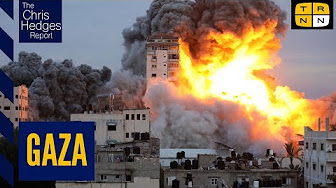
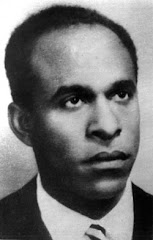
Discourse that allows us to express a wide range of ideas, opinions, and analysis that can be used as an opportunity to critically examine and observe what our experience means to us beyond the given social/cultural contexts and norms that are provided us.
In Palestine, the law has been used as a tool of oppression to legitimize and advance the dispossession of the Palestinian people for more than a century. From the theft of Palestinian land by legal mechanisms to the non-recognition of Palestinians as a people with the inalienable right of self-determination, the law is yet another weapon wielded against the Palestinian people by Israel and its patrons. Activist, attorney, and Rutgers University professor Noura Erakat joins The Chris Hedges Report to discuss the use of lawfare against Palestine and her new book, Justice for Some: Law and the Question of Palestine.
This talk by Chris Hedges was recorded by Skalli Events at The Islamic Society of Central New Jersey on January 18, 2024.
Chris Hedges is a Pulitzer Prize–winning journalist who was a foreign correspondent for fifteen years for The New York Times, where he served as the Middle East Bureau Chief and Balkan Bureau Chief for the paper. He previously worked overseas for The Dallas Morning News, The Christian Science Monitor, and NPR. He is the host of show The Chris Hedges Report.
He was a member of the team that won the 2002 Pulitzer Prize for Explanatory Reporting for The New York Times coverage of global terrorism, and he received the 2002 Amnesty International Global Award for Human Rights Journalism. Hedges, who holds a Master of Divinity from Harvard Divinity School, is the author of the bestsellers American Fascists: The Christian Right and the War on America, Empire of Illusion: The End of Literacy and the Triumph of Spectacle and was a National Book Critics Circle finalist for his book War Is a Force That Gives Us Meaning. He writes an online column for the website ScheerPost. He has taught at Columbia University, New York University, Princeton University and the University of Toronto.
The International Court of Justice has just issued preliminary measures against Israel for the crime of genocide in Gaza. The ruling follows weeks of anticipation and months of international outcry for Israel to face accountability from the UN. While much remains undetermined, this is a critical development in a time when the integrity of international institutions has been thrown into crisis by their ineffectiveness in the face of Israel's slaughter.
Former director of the New York Office of the High Commissioner for Human Rights Craig Mokhiber, who resigned from his position last fall in protest of what he called the UN's "failure" to protect Palestinians, joins The Chris Hedges Report for a discussion on the weaknesses of the UN in the face of US and Israeli impunity.
Editor's note: This interview was recorded prior to the Jan. 26 ICJ ruling.
Studio Production: Cameron Granadino
Post-Production: Cameron Granadino
Watch The Chris Hedges Report live YouTube premiere on The Real News Network every Friday at 12PM ET: https://therealnews.com/chris-hedges-...
Listen to episode podcasts and find bonus content at The Chris Hedges Report
Best-selling author, foreign correspondent, Pulitzer Prize-winning journalist Chris Hedges addressed the Middle East crisis with a talk titled "The Genocide in Gaza" on December 6, 2023 at The Sanctuary for Independent Media in North Troy NY.
www.mediasanctuary.org
Chris Hedges, the former Middle East Bureau Chief for The New York Times, spent seven years covering the conflict between Israel and Palestine. He is the author of numerous books including the New York Times bestsellers War is a Force That Gives Us Meaning, American Fascists: The Christian Right and the War on America and Days of Destruction, Days of Revolt, which he co-authored with the cartoonist Joe Sacco. He has taught at Columbia University, New York University, Princeton University and the University of Toronto. He has also taught students in the college degree program offered by Rutgers University in the New Jersey prison system for a decade, the subject of his book Our Class: Trauma and Transformation in an American Prison.
This talk was co-sponsored by Jewish Voice for Peace, Albany Chapter; Muslim Solidarity Committee and Project SALAM; Bethlehem Neighbors for Peace; Palestinian Rights Committee-Upper Hudson Peace Action; RPI Muslim Student Association; UAlbany Muslim Student Association; Women Against War.
The presentation was made possible by volunteer labor and thousands of small donations from patrons of The Sanctuary for Independent Media.
The Sanctuary for Independent Media is a telecommunications production facility dedicated to community media arts, located in an historic former church at 3361 6th Avenue in North Troy, NY.
The Sanctuary hosts screening, production and performance facilities, training in media production and a meeting space for artists, activists and independent media makers of all kinds.
Eleanor Stein, Moderator
CREW
Branda Miller, Director
Troy Pohl, Audio
Dave Publow, Pre-production and camera
Jill Malouf, Editor and camera
Karsen Cowan, Camera
Eee Pee, Camera
Eleanor Goldsmith, Post-production and web
Mark Dunlea,
Promotion
Jon Flanders
Photography
Jillian Hirsch
House manager
Ri Sandel
Door
Mid-Hudson Security Consultants
Audience services
Victor Max Valentine, Inner Sanctum
Jonathan Segol, KitchenSanctuary
All too often, the question of Palestine is framed as an eternal conflict arising from ancient ethnic or religious hatreds, with questions regarding the origins of the state of Israel and the legitimacy of land claims reduced to matters of scriptural interpretation. Such views entirely omit the actual history of Palestine and the Zionist movement. The colonization of Palestine, a process still playing out before our eyes to this day, has definite historical origins at the turn of the 20th century, when Zionism was born and the encroachment of Palestinian land began. Historian Rashid Khalidi, author of The Hundreds' Year War on Palestine: A History of Settler Colonialism and Resistance, 1917- 2017, joins The Chris Hedges Report for a look into this essential history, and how it can help us frame Israel's present war on Gaza.
Rashid Khalidi is the Edward Said Professor of Modern Arab Studies at Columbia University, and the author of several books.
Studio Production: David Hebden, Adam Coley, Cameron Granadino
Post-Production: Adam Coley
Norman Finkelstein explains Israel’s 17-year blockade of Gaza and the context of the war currently underway.
by Chris Hedges October 18, 2023 The Real News Network
PHOTO: Israeli airstrike in Gaza, Palestine on October 7, 2023. Photo by Majdi Fathi/NurPhoto via Getty Images
Israel has unleashed a horrific war of
collective punishment against the people of Gaza, the latest in a long
history of anti-Palestinian oppression. As corporate media shamelessly
provides cover for what is undoubtedly a genocide unfolding in real
time, the need to ground our understanding of the conflict in its proper
history is more important than ever. Norman Finkelstein joins The Chris Hedges Report to discuss Israel’s 17 year blockade of Gaza and its crucial significance to understanding the events of the past two weeks.
Studio Production: Adam Coley, Cameron Granadino Post-Production: David Hebden
Israel's long war on Gaza w/Norman Finkelstein | The Chris Hedges Report
Israel has unleashed a horrific war of collective punishment against the people of Gaza, the latest in a long history of anti-Palestinian oppression. As corporate media shamelessly provides cover for what is undoubtedly a genocide unfolding in real time, the need to ground our understanding of the conflict in its proper history is more important than ever. Norman Finkelstein joins The Chris Hedges Report to discuss Israel's 17 year blockade of Gaza and its crucial significance to understanding the events of the past two weeks.
Listen to episode podcasts and find bonus content at The Chris Hedges Report Substack: https://chrishedges.substack.com/
The Real News is an independent, viewer-supported, radical media network.
The following is a rushed transcript and may contain errors. A proofread version will be made available as soon as possible.
Chris Hedges:
On October 7, Hamas fighters broke through the security barrier
separating Gaza from Israel. They attacked army outposts, villages, and
outdoor concert venues, and kibbutz. Some 1300 Israelis, many of them
civilians, were killed. Almost 200 Israelis, including women, children,
and the elderly, were taken as hostages and transported back to Gaza.
Israel says 1,500 Hamas militants, most young men who most likely had
never been out of Gaza, were killed. Israel has now ordered some 1.1
million Palestinians in northern Gaza to evacuate. The north includes
Gaza City, the most densely populated part of the strip, with 750,000
residents. It also includes Gaza’s main hospital, the Jabalia, and
Al-Shati refugee camps. Gaza is one of the most heavily populated spots
on the planet. Its borders are sealed by Egypt and Israel.
There is no sanctuary; With a tiny landmass, 25 miles long, and only
about five miles wide. Israel has cut off food, fuel, water, and
electricity, provoking an appalling humanitarian crisis. Joining me to
discuss the crisis in Israel and the occupied Palestinian Territories is
the Middle East scholar Norman Finkelstein. Norman has written numerous
books on the Middle East, including Gaza: An Inquest Into Its
Martyrdom. Let’s set the stage before the October 7 attack. Israel has
carried out five murderous assaults against Gaza. But explain what life
was like. Or is like. But of course, now it’s changing with this on the
eve of what will be an incursion into Gaza by the IDF. But explain what
it was like to be in Gaza.
Norman Finkelstein:
There are several facts that need to be known. First of all, you
described Gaza as 25 miles long and about 5 miles wide. For those of you
listeners who need to envisage it, Gaza is about the length of a
marathon, and it’s, speaking on a personal basis, the distance I jog
every morning at Coney Island: 5 miles. It’s among the most densely
populated areas in the world. Beginning in 2006, there were elections
held in the West Bank in Gaza, elections that were urged upon the
Palestinians by the US administration. The results of the elections
unexpectedly brought Hamas, or its civilian party, into power. At that
moment, the Israelis, followed by the EU and the US, imposed a brutal
blockade on Gaza. I should note that Jimmy Carter was in the occupied
Palestinian Territories at the time, and he pronounced the elections
completely honest and fair.
Now let’s speak first to the blockade. With the rarest of exceptions,
nobody can go into Gaza. Nobody can leave Gaza. The population of Gaza
consists overwhelmingly of about 70% of refugees from the 1948 war and
the descendants of those refugees, about half the population, comprises
children. So when you think about Gaza, you should fix, in your mind,
we’re talking about a population that’s overwhelmingly refugees and at
least half children. Since the blockade was imposed on Gaza, nobody can
go in with the rarest exceptions and nobody can leave with the rarest
exceptions. Gaza has endured roughly, it fluctuates with time. So let’s
bring it up to the present. About 50% of the population of Gaza is
unemployed, 60% of the youth are unemployed. My memory is it has the
highest unemployment rate of any area in the world.
The other facts I would want to bring to bear on Gaza are the
humanitarian crisis. The international humanitarian organizations have
over time repeatedly described Gaza as suffering from “severe food
insecurity.” Now, if you take all of these discreet facts and you try to
come up with a comprehensive picture, it fluctuates or vacillates
between two images, or hovers between two images: One was the one
pronounced by the UK’s conservative Prime Minister David Cameron. He
described Gaza as an open-air prison. That would be one pole of the
spectrum. The other pole of the spectrum would be Baruch Kimmerling, the
eminent Hebrew University sociologist who described Gaza as the largest
concentration camp ever. So it’s fair to say that situation has been
endured for approximately 20 years, with variations. There was a period
when Gaza wouldn’t let in virtually any civilian products. Chocolate was
prohibited, potato chips were prohibited, baby chickens were
prohibited.
There was a period when Israel calibrated, literally calibrated, the
number of calories each Gazan needed above the starvation level, what
you might call starvation plus, and didn’t allow in any food beyond that
starvation plus calibration. As I said, with minor fluctuations over
time, that’s been the situation that the people of Gaza have had to
endure these past 20 years. But that’s only half the picture. That’s
what you might call the flora and fauna of Gaza, as it used to be called
in encyclopedia entries when they wanted to describe an area of the
world. But then you have to add in another element. And the other
element is the periodic massacres Israel launches on Gaza. Now, it’s
been a lot more than five, but I’ll tell you the truth, Chris, I can’t
even remember them because there are so many. There are tries I’ve made
to commit them to memory. I’m unable to.
So I’ll limit myself to two of the massacres. The ones which are best
known. First is Operation Cast Lead which ran from December 26, 2008,
to January 17, 2009. When Amnesty International, in the course of the
operation, called in a voluminous report it issued, “The 22 days of
death and destruction.” In the course of those 22 days, Israel killed
about 1,400 Palestinians, of whom 350 were children. It flattened about
6,000 homes and destroyed all of the vital infrastructure in Gaza: the
cement factories, the chicken factories. Targeted and flattened the
vital infrastructure. Then, fast-forwarding past several massacres, one
was the massacre in the Mavi Marmara, the humanitarian ship that was
heading towards Gaza. Then there was the massacre and Operation Pillar
of Defense in 2012, and then there was in July-August, 2014, there was
Operation Protective Edge. And in the course of Operation Protective
Edge, Israel killed about 2,200 Palestinians, 550 children, and
committed such dramatic destruction in the infrastructure of Gaza. It
destroyed about 18,000 homes.
But beyond the 18,000 homes, Peter Maurer — Who at the time was the
president of the International Committee of the Red Cross — Went to Gaza
after the Israeli assault, and he then said that in his entire
professional career… Now, bear in mind, this is the president of the
ICRC, so his job is to tour combat zones. He said in his entire
professional career, he had never seen such destruction as was visited
on Gaza during Operation Protective Edge. And then we’ll get to one more
massacre, not because it stands out in terms of numbers killed, but
because it speaks to one claim that’s constantly made against the people
of Gaza and the Hamas leadership. In 2018, March 31 it began, but it
could be wrong. I think it was March 31st. In 2018, the Palestinians in
Gaza, despairing but also responsive to the exhortations of the
international community, attempted a nonviolent Gandhi-like civil rights
movement, like resistance in Gaza, what came to be called the Great
March of Return.
And Palestinians overwhelmingly nonviolently… Now, I’m referring to
the first six weeks because a major massacre occurred. Israel committed a
major massacre on May 14, and that changed the character of that
nonviolent resistance. So what did the Palestinians who attempted to
follow the exhortations of the international community to try
nonviolence, what was the result of it? Well, there was several human
rights reports. The most exhaustive was carried out by a distinguished
committee commissioned by the United Nations. It was the Human Rights
Council. And it found that — And now I’m calling it pretty much
verbatim. I have not looked at it in quite a while — Remember, we’re
talking about nonviolent demonstrators. Israel targeted children, it
targeted medical personnel, it targeted journalists, and it targeted
disabled people; Palestinians who were in wheelchairs and suffering from
other physical disabilities. And not surprisingly, after the massacre
on May 14t 2018, the nonviolence quickly, though not entirely, petered
out.
So if we fast-forward till today or till October 7, the fair thing to
say — Not engaging in hyperbole or exaggeration, and I try not to
because the truth speaks for itself — The Palestinians in Gaza were left
there to languish and die. I had a lot of respect for Bernie Sanders
and I still retain that respect because you have to judge a person as a
whole. Otherwise, everybody fails the test of pristine morality. But his
last statement, he described this international community as
assiduously committed to bring justice to the Palestinians and Gaza, and
then along came Hamas and messed up everything. Well, with all due
regards to Bernie Sanders, that’s a complete fantasy and fabrication.
Nobody was doing anything the last few years for the people of Gaza. And
I’ve said it before and I’m going to say it again. Including myself, by
2020, I had given up. I wasn’t happy about that fact, and I was
privately criticized for that fact.
But I had reached a point where I was so minutely documenting each
and every crime that Israel has committed, that it seemed absolutely
pointless and purposeless. My last book that I published on the subject,
I Accuse!, it sold 374 copies of which half I purchased because I was
trying to convince the international criminal court to pursue a case
based on that book against Israel. So without elevating myself to
sainthood, I’m simply saying it’s a factual matter. And contrary to what
Bernie Sanders said, I began my involvement in June 1982 when Israel
invaded Lebanon. So that was 40 years as my entire adult life and I had
given up by 2020. I hadn’t written anything for the next three years up
until today on the subject, and I barely posted anything on my website.
So the Palestinians in Gaza, it was as if the people housed at Gaza
were confined to a game preserve and they were left there to die. They
were left there to languish and to die. So when the event of October 7
occurred, first of all, on the first days, it was very unclear what had
happened. We knew there was a breakthrough and the numbers originally
were about 50 on that morning of Israelis who were killed. Exactly how
they were killed in those circumstances, it was not known. And then the
dilemma became, as the events unfolded, it was not the question of the
factual side. The factual side, slowly but surely, it did become known.
The biggest dilemma was the moral dimension. How do you judge what
happened?
And now at the risk of self-indulgence for a second time, you’ll
forgive me if I point to my own moral dilemma. And that was the
following: For most of my adult life, I’ve been a pretty assiduous,
fastidious researcher and feel confident about my factual findings.
However, I’ve never been particularly confident of my moral judgment.
Moral judgment, it’s a discipline. It’s a faculty and it’s a faculty
that needs to be refined by serious immersion in a vast field called
moral philosophy. And I take the life of the mind seriously. And there
is a difference between what you might call snap judgments and having
that deep immersion, which is all a long way of saying I’ve relied or
deferred to Professor Chomsky, his moral judgment, in most
circumstances, and unlimited myself to, as I said, the factual side of
these issues that have arisen. Well, this time I was unable to defer to
Professor Chomsky’s judgment because he wasn’t available. So I was
thrust in a personal crisis. I felt there was a lot of weight on me now
to figure this out effectively on my own.
So what do you do? I thought about it. Of course, I thought a lot
about what my parents’ judgment would be because they had refined moral
faculties, not the deep immersion, but there was something there. They
were smart. But that only got me so far. And then I sat down and I
thought, okay, let me go back to what the abolitionists said when there
were the slavery votes in the US. The slavery votes here in other places
were quite ugly affairs if we’re talking about the targeting of
civilians and things like that. And I don’t hold it personally but I did
know that Frederick Douglass and W.E.B. Du Bois, they held the
abolitionists in very high regard. Charles Sumner, Wendell Phillips,
William Lloyd Garrison. When you read Douglass and when you read the Du
Bois, they will not brook any criticism of those abolitionists and the
heights they soared, S-O-A-R-E-D, in their defense of African Americans,
Blacks who were enslaved.
So I looked at the Nat Turner Rebellion, which was the largest slave
rebellion in the US and of course, when you look at it, there are some
eerie similarities. Nat Turner was a religious fanatic. Incidentally,
often forgotten, so was John Brown. Each of them, but we’ll stick now to
Nat Turner, each of them was convinced that they were acting on God’s
word, that they were agents of God and they were doing God’s will, and
their actions were sanctioned by God. You might call them premature
jihadis. That’s what they were. And it’s reported in Stephen Oates’
account — He’s a very respected historian, still among us — The Nat
Turner Rebellion, that Nat Turner gave the order to his federates, kill
all whites. Part of it was revenge, for sure, but part of it, he wanted
to create a moral crisis to force the country, the confront, and the
reality of slavery.
He was, by the way, a very smart guy like Frederick Douglass, very
literate and constantly acknowledged by whites for his intelligence. So
he was a zealot, but also very smart. And by the way, so was John Brown.
There was very few in academic that could write probes like those folks
could back then because they were schooled in the Bible and everything.
So they knew the English language. In any event, as I said, they said
to kill all whites. In the case of Nat Turner Rebellion, they killed
about three score whites, by the current term, innocent civilians, men,
women, and children.
So I was reading about Nat Turner — I will mention in passing but
I’ll get back to Nat Turner — When I read John Brown, I was very curious
because he killed civilians too. He hacked to death civilians. I was
very interested in what was both… Frederick Douglass gave this
absolutely breathtaking speech on John Brown. And he had come to grips
with the question of killing civilians. And the boys wrote a biography
of John Brown, not very good, but there weren’t many resources to draw
from. He too, in the last chapter, confronts the question of John Brown
and the killing of civilians. Neither of them condemned Brown. They
circled around it. They recognized they had to confront this question
but they wouldn’t condemn John Brown for killing civilians.
So when it came to Nat Turner, I was curious what the abolitionists
had to say about that. You can imagine it created complete hysteria in
Nat Turner Rebellion. The whites in the South went on a murderous… The
sameness was happening now in Gaza, but obviously on a smaller scale
because of relative population. So I was curious to read what William
Lloyd Garrison had to say. And I’ll tell you, it was so important for me
to read that because I refused — and I’m going to be perfectly honest
about it — I refused to condemn Hamas. It was too easy. It was too easy
to condemn them.
And I looked to Garrison. What did he do? And I’ll tell you now, my
regard for the abolitionists went through the roof when I read what
Garrison wrote. He acknowledged the horror had occurred. But he very
studiously carefully would not condemn the Nat Turner rebellion. He
condemned all the hypocrites who are condemning the rebellion. And he
said, “We told you so. We told you so. We warned you. We warned you. We
warned you that you were going to drive these people mad and they’re
going to do something horrible.” I read it and I reread it. And I reread
it.
And then in the past couple of days, I had to refresh my memory of my
own book, and I started to reread my book, the Gaza book, The Inquest
into Its Martyrdom. And I’m telling you, honest to God, I began to get
so filled with rage as it went through each detail of what was done to
those people. That two things: number one, I understood now why Garrison
did not condemn the rebellion, because he saw day in and day out.
Unlike Gaza, slavery was not out of sight. He saw, day in and day out,
the humiliation, the degradation, the physical assault on the people,
the African American slaves, and he realized he could not in good
conscience-
He could not in good conscience condemn them for what they did. And
then after I started to read my own book and the rage, the rage inside
of me… I was sitting in a restaurant yesterday because I didn’t want to
sit at home doing it because I lose it, so I started to read it. And
then as I read it, I said, Norman, I’m very unpopular because of what I
said in those first couple of days. And I lost a couple of close friends
over it, but I determined Garrison was right. I don’t know what
Professor Chomsky would have said. I know right after 9/11, he called it
an atrocity of a large magnitude. And then he went on to focus on what
caused the magnitude. As a journalist says the background story of why
they did what they did or might have done what they did. Would he have
condemned it? I’m not sure, but I’m 70 years old. I’m my own person now.
I have my own distinct family history and I find it very hard to
condemn people who were born into a concentration camp.
I know this is not going to sound like what people want to say, but
whatever they do, I can understand being driven mad. Driven mad by being
born into a concentration camp, never seeing anything except it was 25
miles by five miles. No hope at all. Everybody had abandoned them on
October 7th, be it remembered, the US administration and Israel were
cobbling together in agreement with Saudi Arabia to end the Arab-Israeli
conflict and leave the Palestinians in particular in Gaza to languish
and die. That’s where we stood. That’s what Bernie Sanders left out, and
in my opinion, misrepresented. And I find it very difficult, as I said,
because of my family history, I find it very difficult and I felt a lot
of consolation that Garrison effectively took the same position as me.
Although with a lot more eloquence, on the abolitionists they can write.
Chris Hedges:
I want to stop you there, Norman. You talked about your family
situation. Both of your parents were in concentration camps. Your mother
was in the Warsaw Ghetto and Auschwitz, right?
Norman Finkelstein:
Both of my parents were in the Warsaw Ghetto when the Warsaw Ghetto
uprising was repressed in April 1943, those who survived and estimates
are about 20 to 40,000 were deported to Majdanek concentration camp.
Both of my parents who didn’t know each other at the time were deported
to Majdanek concentration camp. My mother ended up in two slave labor
camps afterwards. And my father, I never discussed it with him, but my
mother told me he was in eight concentration camps. He ended up in
Auschwitz and he was in the Auschwitz death march. And every member of
the family on both sides, except for my mother and father were
exterminated during the war.
Chris Hedges:
I want to talk a little bit about uprisings. This is actually
characteristic, this kind of mass killing. You look back on the Haitian
slave revolt, they killed thousands of French planters. C. L. R. James
in his great book, The Black Jacobins acknowledges, writes in detail
about the same kinds of killings that Hamas carried out. He writes, “The
cruelties of property and privilege are always more ferocious than the
revenges of poverty and oppression for the one aims at perpetuating
resented injustice. The other is merely a momentary passion soon
appeased.” If you look also at Native Americans, I’m actually descended
from a man who has a boy hid in the chimney in remote part of Maine,
while the the entire family, the rest of the family were killed by
Native Americans. Red Cloud made a profession of wiping out white
settlements. Now we’ve romanticized Native American society and
forgotten this.
The French Revolution, if you were a clergy, if you were part of the
aristocratic class or even suspected of supporting the aristocratic
class, you were wiped out. This isn’t to condone it as I think none of
us would, but it is to begin to try and understand it and understand
where it has come from. And I think that’s why your voice is so
important. I want to talk about where we’re going. It certainly looks to
me that we are about to embark on a campaign of massive ethnic
cleansing. It looks to me, I’m guessing, I want to know what you think,
that Israel will occupy the northern part of Gaza, including Gaza City.
And this tiny area, as you said, one of the most densely populated spots
on the planet will be reduced, more densely populated and people living
who have been existing at a subsistence level will… I think the goal is
essentially to force them into flee south over the Rafah border into
Egypt, and then they will never come back.
And I will just add that I covered the massive ethnic cleansing
campaigns of ethnic Serbs in Croatia and saw a very similar reaction by
the international community, basically passive. And the Croats did it
fast enough without images to get it done, and those people never came
back. But I’ll let you comment on what you think Israel’s goal is. And
we should be clear that this is an extremely right wing government
filled with bigots and racists who when I was reporting from Israel,
were all gathered around Hamir Kalyani and were denounced within Israeli
society.
Norman Finkelstein:
Well, first of all, I wonder if I can ask you a question. I was going
to pick up C.L.R. James’s book because I’ve not read it. Did he render a
moral judgment or he just described?
Chris Hedges:
No, I think like you, he explained it and to a certain extent,
inevitable. I had read that the people in Gaza could actually hear the
music from the rave that was happening. Imagine, and I’ve spent a lot of
time in Gaza, so these young men, they can’t find work. They’re
sleeping 10 to a floor and if they can’t find work, they can’t get
married. And what I found in Gaza, and I knew Rantisi and Nisarah and
all sorts of leaders of Hamas. And what I found is that the only thing
that gave them any kind of continuity or structure in their life was
this form of Islam, number one. And number two, the only option left by
which they could affirm themselves was to become a shahid or a martyr.
That’s it. That was really the only route open to them. And we have to
remember, most of them were killed, certainly 1500 according to Israel.
And I suspect most of them knew they probably wouldn’t be coming back.
Norman Finkelstein:
About that I’m certain. Okay. You can never say it with certainty.
What I think happened was, and I know this might sound like a movie
script, but I think it’s true. I think the night before, October 7th,
they went over to their mother, their father, they hugged them, they
kissed them, and they knew it was goodbye. And inside of them, inside of
them, they thought about their sister who was killed, their grandfather
who was killed, their cousin who was killed, their nephew who was
killed in those murderous Israeli assaults. And then they reflect on all
the despair, despondency, depression of having been born into a
concentration camp. And they resolved to vindicate and avenge. And
exactly what you said about the music outside the camp, these folks
enjoying a joyous, carefree life. You may recall it was the movie about
the Nazi concentration, about the Nazi Holocaust called Shoah. And one
of the things the filmmaker did was he interviewed the people who were
right outside living normal lives, right outside the concentration
camps.
And it filled the viewer with such moral disgust. How could you carry
on a normal life knowing or suspecting or intuiting what’s going on
inside those camps? And I imagine those folks who broke out were
thinking the same thing. I remember, I once asked my late mother, I
asked her, “Well, what did you think about those terror bombings on the
German cities during World War II?” It’s often forgotten. I’m just
giving you statistics. I’m not passing moral judgment, but it’s often
forgotten. Roughly 27, 30 million Russians were killed. About 20, 25
million Chinese were killed. The third-largest figure is the Germans, it
was nine million. They were the third-largest population which
suffered. And I remember my mother’s reaction was quote, “Our feeling
was if we’re going to die, we’re going to take some of them with us.”
Now, my mother was a very moral person, very strict morality, but she
had no compunction about saying that. In fact, even 30 years later, I
was at the trial in Dusseldorf, Germany for the last major trial at the
time, 1979. I don’t know what transpired afterwards of the last major
trial of concentration camp guards. And this was the trial of the
concentration camps from Majdanek. And my mother was one of the
witnesses because one of the guards actually lived in Maspeth, Queens in
New York City. And my mother had her deported, or she was a witness in
the deportation trial. And I went with my mother to Germany and there
were the guards. You could imagine that scene. There were the guards.
And at one point we were exiting the courthouse in the evening. We
weren’t aware that the guards were released on their own recognizance
each night. And so we were walking in the street and right on my right
shoulder, there was one of the guards, Ragita was her name. And on my
left shoulder was my mother.
I looked at the guard and I looked at my mother. It was totally
surreal. And this guard was notorious for being the most brutal in the
camp. I held my breath. I waited until Ragita was about, let’s say a
block ahead of us, the distance of a block. And I turned to my mother
and I said, “Mom, do you know who that is?” And my mother squinted and
then her eyes lit up, “Ragita.” And I said, “Yeah.” I said to her, “What
do you want me to do?” She just went into a complete rage, “Get her.
Get her. They think we’re sheep. Get her.” .. think we’re sheep. Get
her. Well, as somebody pointed out for all the horrors, the Jews during
World War II, and I’m not going any way ever diminish what they endured,
it lasted roughly six years, the people in Gaza, for 70%. It started in
1948. It’s very long time. And for those young people who broke free,
they’ve never seen anything except a concentration count or a gain
preserve or an open hair prison. So are you shocked by the rage? No. You
want me to apply moral categories, condemn? I go with Garrison. I’ll
describe my reaction. I will acknowledge by a dictionary definition, it
constituted a very large atrocity. That’s a dictionary definition, and
it’s accurate. However, when you want me to apply a moral category to
what happened, you lose me. I mean, at that point, we take separate
paths. I won’t do it.
As to what’s happening now, a young colleague of mine, Jamie Stern
Minor, he posted a quite detailed account of the statements coming out
of Israel now. And it’s quite clear that however you want to configure
it all together, they’re talking about a very large ethnic cleansing. It
could be or one half of Gaza. But once the gate to Rafah opens up, I
don’t see how you can close it. And if Israel is depriving the people of
Gaza, as you said, food, fuel, electricity, and water, though now the
Biden administration has put pressure on Israel to provide some water.
It’s unclear whether Israel has accommodated that pressure from the
Biden administration. It’s hard to imagine that everybody won’t flee
once that gate is open, Rafah crossing, and then what happens next?
That’s very easy to predict. That’s very easy to predict. You know what
will happen next? Nothing. After each of Israel’s quote, unquote
operations in Gaza, there were promises made about lifting the blockade,
especially after 2009. Even people like Hillary Clinton were chiming
in. The blockade is untenable. The blockade has to end. Did it end? No.
What happened to Ukraine during this current? It vanishes and the
people in Gaza will be left to die in the Sinai desert because there’s
no possibility whatsoever, none, that the Egyptian head of state, Sisi,
will allow them to integrate with Egyptian life for political reasons.
For various political reasons, it will never happen. They will be just
left to die. Now, you might say that’s dramatic. What happened after all
the Israeli operations? Anybody remember? Anybody remember Protective
Edge, nothing. It was all just quickly forgotten. And so they’ll be left
to languish and die and nobody will do anything. So in many ways what
happened in Gaza, you could say it had an instrumental aspect to it. The
same instrumental aspect, or I should say what happened on October 7th.
It had an instrumental aspect to it, namely to, as Matt Turner said, to
force the world outside to reckon with this fact of slavery.
But there was also, it was the last goodbye. In the case of the
Warsaw Ghetto Uprising, nobody expected a handful of Jews to defeat the
German army. I mean, for Christ’s sake, the Red Army couldn’t defeat the
[inaudible 00:47:17], so a handful of Jews with a handful of weapons.
It was a last hurrah to die with dignity, to die as the expression has
it, the die fighting. Now, they took a lot of civilians with them, but
you’ll forgive me for quoting my mother. Our feeling was if we’re going
to die, we’re going to take some of them with us. And that comes from a
very humane human being. So I think that’s the plan. Will it succeed?
Politics is a very complicated business, and I think predictions are
generally worthless. It does not seem that the Hezbollah will accept it.
And first of all, because of a feeling of solidarity, but also
because it will completely discredit it as an organization. If Hezbollah
allows Israel to carry on what’s called a second [inaudible 00:48:35]
expulsion, they lose all credibility, then they’re just win backs. So
just from the point of view, as you can use the expression, just from
the organizational point of view, they have to do something and then all
bets are off. I don’t know if the reports are accurate, but it’s been
reported that they have 100,000 rockets. And they have said that they
can target certain factories in Tel Aviv. I think it’s either the
chlorine or ammonia factory, which if they targeted, you don’t want to
even have to imagine.
And then there is Israel, for the past week, there has been a lot of
talk of using the events of the past week to finally dispatch with Iran
if they attempt that. The fact of the matter is, and I’m not saying this
in a pejorative sense, I’m just saying it factually, Israel is no
longer able to fight a ground war. That’s what we learned in 2006 in
Lebanon, where they amassed huge numbers of troops on the border with
Lebanon, but didn’t want to tangle with the party of God. The Hezbollah,
they wade to the last three days before they quote, unquote launched
the ground invasion, which was just a photo up of Israeli troops going
to the border. So you could see that they launched the ground invasion
and same thing happened in 2014, the Operation Protective Edge, when
they finally did launched the ground invasion and they lost about 70 or
80 combatants, which is a very high number for Israel.
And now it seems pretty clear they’re doing the same thing. They’re
very wary of launching that ground invasion because of the revenge in
the hearts of those Hamas fighters. So it’s quite possible. And by the
time this is aired, we’ll probably know they won’t launch the ground
invasion. They will do to Gaza City what the Nazis did to the village of
[inaudible 00:51:08]. They will flatten the whole city, Gaza City, just
pulverize it into rumble and then celebrate it as their victory. But my
point was they’re not even capable of invading Gaza. So I do not
believe, but bear in mind, I know nothing about military matters. And I
say that very proudly. It’s possible they will use a tactical nuclear
weapon against Iran. I think that’s a realistic possibility. So that’s
my way of saying there’s a huge chasm that separates what Israel wants
to do versus what will actually unfold.
Chris Hedges:
Great. That was Middle East Scholar, Norman Finkelstein, author of
Gaza: An Inquest Into Its Martyrdom. I want to thank the Real News
Network and its production team, Cameron Granadino, Adam Coley, David
Hebden, and Kayla Rivara. You can find me at chrishedges.substack.com.
ABOUT THE AUTHOR AND INTERVIEWER:
Chris Hedges is a Pulitzer Prize–winning journalist who was a foreign correspondent for 15 years for The New York Times, where he served as the Middle East bureau chief and Balkan bureau chief for the paper. He previously worked overseas for The Dallas Morning News, The Christian Science Monitor, and NPR. He is the host of show The Chris Hedges Report.
It’s No Mystery Why Racists Have Fallen in Love With Trump’s Republican Party
The KKK did
not choose to support Donald Trump because he was a Republican—but
because they agreed with the ideas that he and other far-right
politicians spout.
by Clarence Lusane
October 11, 2023
The Nation
Donald Trump at the Republican National Convention on July 21, 2016, in Cleveland, Ohio.
(Dennis Van Tine / STAR MAX via AP Photo)
[This article originally appeared at TomDispatch.com. To stay on top of important articles like these, sign up to receive the latest updates from TomDispatch.com.]
In 2020, TheDaily Show ran a segment in
which statements by Republican leaders, including Donald Trump,
Representative Marjorie Taylor Greene (R-Ga.A), Senator Ted Cruz
(R-Tex.), and various Fox News personalities were juxtaposed with those
made by Ku Klux Klan leaders like former grand wizard David Duke and
former imperial wizard Bill Wilkerson. Fired Fox News commentator Tucker
Carson, for instance, screeches manically that, because of immigration,
“eventually there will be no more native-born Americans.” Immediately
following that comment comes former grand wizard Duke saying, “We’ve got
to start protecting our race.”
Donald Trump is then shown at a rally (with several Black people
behind him wearing “Blacks for Trump” T-shirts) saying about Covid
treatments, “If you’re white, you have to go to the back of the line.
Discriminating against white people!” Again, there’s a cut to Duke
stating, “There is racial discrimination going on right now in this
country against massive numbers of white Americans.”
All too sadly, it didn’t take much effort then, nor would
it now, to demonstrate that the racist “great replacement theory” that
contends white Americans are being radically displaced by immigrants
underlies an ever-fiercer defense of so-called Christian nationalist
identity. And in our time, that defense has been essential to the rise
of what has become the Trumpublican Party and the fierce growth of white
racism that’s gone with it.
That Daily Show segment ended with the ultimate irony of Ted Cruz claiming that “the Democrats are the party of the Ku Klux Klan.”
No surprise there. Despite the all-too-obvious convergence of the
perspectives of the Republican far right and the white supremacists of
the Klan, as well as other avowed racists, Republican party leaders
continue to vehemently deny any identification with the KKK or its
views. In the process, they regularly issue obligatory statements
rejecting bigotry, racism, and anti-Semitism, while passionately
disavowing Duke and others like him—all disingenuous and empty gestures
of the first order.
Recent Republican behavior paints a very different picture. Earlier
this year, for instance, Senator Tommy Tuberville (R-Ala.) got
thoroughly twisted in knots trying to defend his statement
that “my opinion of a white nationalist, if somebody wants to call them
a white nationalist, to me, is an American.” Eventually, he had little
choice but to (largely) retreat from that stance—at least officially.
Typically though, whatever they may claim, Representatives Greene and Paul Gosar
(R-AZ) had no problem hanging out with racists and neo-Nazis—until, at
least, they got caught doing so. In February 2022, they both spoke at
the America First Political Action Conference that brought together
Islamophobes, hardline nativists, and others on the far right. The
gathering was organized by prominent white nationalist and Holocaust
denier Nick Fuentes.
Yeah, the very same Fuentes who would have dinner with Donald Trump and Kanye “Ye” West at Mar-a-Lago that November.
Like Trump after that feast, when busted, Greene
stated, “I do not know Nick Fuentes. I have never heard him speak. I
have never seen a video. I do not know what his views are, so I am not
aligned with anything that is controversial.” Despite Trump’s dubious
assertation that he didn’t know Fuentes either, he certainly knew his
old pal Ye and the controversies generated by a number of his antisemitic statements.
Endorsed by Duke
In 2021, it was Gosar and Greene along with
Representatives Matt Gaetz (R-Fla.) and Louie Gohmert (R-Tex.) who
attempted to launch an America First Caucus that would champion
“uniquely Anglo-Saxon political traditions.” A secret paper,
uncovered by Punchbowl News, discussed the forming of that caucus and
the rationale behind it (addressing the supposed threat of “mass
immigration” to “the long-term existential future of America as a unique
country with a unique culture and a unique identity”). No need even to
say “white,” of course. After the document was revealed and some
Republican leaders criticized the initiative, all parties involved
backed down (at least in public).
Time after time, key Republican figures have leaned into the ethos
and ideological aims of white nationalism. It’s no wonder that America’s
racists, including the KKK, have fallen in love with the modern
Trumpublican version of the Republican Party. Once upon a time, of
course, and for decades thereafter, the Klan was deeply linked to the
Southern wing of the Democratic Party—the Dixiecrats,
as they were then known—but began to switch to the GOP as presidential
candidate Barry Goldwater and then presidents Richard Nixon (with his
infamous “Southern strategy”) and Ronald Reagan exploited white feelings
of resentment toward the civil rights movement and the national
Democratic Party’s support for racial equality.
In a research paper published by the American Sociological Review,
David Cunningham, Justin Farrell, and Rory McVeigh argue that the Klan
played a small but meaningful role in the transition of the Democratic
South from blue to red. In a number of areas, there was a correlation
between the rise of Klan activity and the Southern shift to the
Republican Party.
It should be noted that, from 1989 to 1992, David Duke even served as a Republican
in the Louisiana State Legislature. Like most white Southerners then,
he had been a registered Democrat until, in the late 1980s, he joined a
regional shift to the GOP. National party leaders did denounce Duke, but
local Republicans were far more ambiguous in their dealings with him.
He also ran for the U.S. Senate as a Republican and for president in the
1988 campaign, first on the Democratic and then the Populist Party
line. That year, he formally switched to the Republican Party, clearly
showing which party at any moment best reflected his white nationalist
ideology.
The day after Donald Trump accepted the Republican nomination for
president in 2016, Duke announced a run for the Senate in Louisiana, saying,
“I believe my time has come. The people of this country, the patriotic,
decent, God-fearing people of this country are now right with me.” He
promptly also backed Trump, claiming that voting for anyone but him for
president would be “treason to your heritage.” And Trump would prove to
be in no rush to disavow him (though, in the end, he finally did).
Duke’s time, of course, hadn’t come and he got few votes. Still, more
recently, the Klan and the GOP got new life when Republican
presidential candidate Vivek Ramaswamy thought it a good idea to liken
African American Representative Ayanna Pressley (D-Mass.) and Black
scholar Ibram Kendi to what he called “the modern grand wizards of the
modern KKK.” Klan leaders, he added, would be “proud” of her. He claimed
that all he wanted to do was “provoke an open and honest discussion in
this country,” presumably about race, a subject in which he had
previously never shown the slightest interest.
Ramaswamy is Hindu and of Indian background. His color and his faith
put him at odds with the hardcore evangelicals and white nationalists of
the GOP base who have supported Trump. He has tried to argue, aware of that constituency’s prejudices, that he also adheres to Christian values and believes in Jesus.
He now claims that he’s personally never met a white supremacist and
that racism in the United States mainly comes from the political left.
Like other conservatives, he contends that racism is an individual flaw,
rather than systemic, structural, and institutional. Despite a plethora
of public rallies by avowed racists, a horrifying series of
racist-driven mass murders, and a Homeland Security Department report
forecasting that white supremacist extremists “will remain the most
persistent and lethal threat to the Homeland,” Ramaswamy dismisses the
danger of white supremacy as a kind of myth. As he put it,
“I’m sure the boogeyman white supremacist exists somewhere in America.
I’ve just never met him. Never seen one, never met one in my life,
right? Maybe I’ll meet a unicorn sooner. And maybe those exist, too.”
Sorry, Vivek. For the Black people who were gunned down in Charleston, S.C., Buffalo, N.Y., and Jacksonville, Fla.; the Jews murdered in Pittsburgh, Pa.; and Latinos slaughtered in El Paso, Tex., white supremacy is no joke.
While being roundly criticized
by Democrats and civil rights leaders, Ramaswamy mostly heard crickets
from fellow Republicans. In interviews, no one ever seems to have asked
him about how his pledge to support Donald Trump, should the latter
become the Republican presidential nominee, puts him in the position of
offering his stamp of approval to a candidate who was actually endorsed
by Duke (twice!).
In 2016, Duke infamously announced his fierce support for just one
presidential candidate—Donald Trump, of course. In a CNN interview with
Jake Tapper on February 28, 2016, Trump initially pretended,
all too unconvincingly, that he had never heard of him. (“I don’t know
anything about David Duke.”) The next day, after coming under fire, he
claimed that he had been wearing “a very bad earpiece” and had misheard
the exchange. He then stated, “I disavowed David Duke.”
Trump knew just who Duke was, having discussed him in other interviews in previous years. As early as 1991, he told CNN’s Larry King
that support for Duke’s run for governor of Louisiana was “an angry
vote,” even if he then failed to address the racism at the heart of
Duke’s campaign. In 2000, he did call Duke “a bigot, a racist” on NBC.
At the time, Trump was flirting with running
for president on the ticket of the Reform Party but blanched when he
decided it was too extremist for him to be successful. He clearly
grasped that it was in his political interest to distance himself from
Duke’s toxicity, but he’s never been aggressively challenged to explain
why Duke would have endorsed him in the first place.
“Some Very Fine People on Both Sides”
In 2017, Duke was one of the star attendees
of that infamous “Unite the Right” rally in Charlottesville, Va., that
brought together hundreds of neo-Nazis, white supremacists,
anti-Semites, and far-right extremists from around the nation. The
gathering, which turned violent, leading to the murder
of protester Heather Heyer and injuries to many others, was initially
called to protest the removal of a statue of Confederate Gen. Robert E.
Lee.
Trump also opposed
that statue’s removal. After Heyer’s murder by a white nationalist in a
car, he was forced to make a statement in which he voiced distinctly
contradictory views, both condemning and praising the extremists. The
president famously denounced
the “egregious display of hatred, bigotry, and violence on many sides”
and added that “you also had some very fine people on both sides.” By
creating such a false equivalency, he clearly meant to assuage those in
his base who also didn’t want monuments and memorials to Confederates
removed.
Duke was thrilled by Trump’s initial statements. He said
that the president “was the only person in the entirety of the U.S.
government who pointed out that all the fault was not with the people
who came there to defend the Robert E. Lee statue, and those who came to
defend the right and heritage of white people.”
Duke also endorsed Trump in 2020
(and will likely do so in 2024). Perhaps predicting Trump’s future
fallout with Vice President Mike Pence, and seeing Tucker Carlson for
who he truly is, he tweeted, “Trump & Tucker is the only way to stop
the commie Bolsheviks! It is the only path to beat them!
#TrumpTucker2020.”
Duke did not make a mistake. He took in Trump’s attacks on immigrants
(of color) and his view that whites are victimized by racism. He
undoubtedly felt all too comfortable with the president’s suggestions
that Black-led cities are dirty and dangerous places. While Republicans
might dance around or denounce the very idea that they were in any way
linked to white supremacists, no less the Klan itself, those groups are
all too clear on where they stand in relation to the two parties.
Unfortunately for Trump, the party’s Klan troubles go further than
just a rhetorical convergence. In August 2023, special counsel Jack
Smith charged Trump
with four counts related to the January 6th insurrection under a series
of laws written during the post–Civil War Reconstruction
era—specifically, Section 241
of Title 18 of the U.S. Code, which was originally adopted as part of
the 1870 Enforcement Act to combat the Klan and other white terrorist
organizations. Those laws were put in place to protect the voting rights
and civil rights of newly free African Americans including, as Reuters
reporter Hassan Kanu noted, “the right to have one’s vote counted,” the very right that Trump and his criminal enterprise sought to deny.
In the end, the KKK did not choose to support Donald Trump because he
was a Republican but because they agreed with the ideas that he (and
other far-right Republicans) spout. It is finally time to face the rise
in the twenty-first century of a new form of white nationalism and its
alignment with many leaders of the Republican Party, including Trump.
"This is not to defend the
war crimes by either side. It is not to rejoice in the attacks. I have
seen enough violence in the Israeli occupied territories, where I
covered the conflict for seven years, to loathe violence. But this is
the familiar denouement to all settler-colonial projects. Regimes
implanted and maintained by violence engender violence."--Chris Hedges
The indiscriminate shootings of Israelis by Hamas and other Palestinian resistance organizations, the kidnapping of civilians, the barrage of rockets into Israel, drone attacks on a variety of targets from tanks to automated machine gun nests, are the familiar language of the Israeli occupier. Israel has spoken this blood-soaked language of violence to the Palestinians since Zionist militias seized more than 78 percent of historic Palestine, destroyed some 530 Palestinian villages and cities and killed about 15,000 Palestinians in more than 70 massacres. Some 750,000 Palestinians were ethnically cleansed between 1947 and 1949 to create the state of Israel in 1948.
Israel’s response to these armed incursions will be a genocidal assault on Gaza. Israel will kill dozens of Palestinians for every Israeli killed. Hundreds of Palestinians have already died in Israel air assaults since the launch of “Operation Al-Aqsa Flood” on Saturday morning, which left 700 Israelis dead.
Prime Minister Netanyahu warned Palestinians in Gaza on Sunday to “leave now,” because Israel is going to “turn all Hamas hiding places into rubble.”
But where are Palestinians in Gaza supposed to go? Israel and Egypt blockade the land borders. There is no exit by air or sea, which are controlled by Israel.
The collective retribution against innocents is a familiar tactic employed by colonial rulers. We used it against Native Americans and later in the Philippines and Vietnam. The Germans used it against the Herero and Namaqua in Namibia. The British in Kenya and Malaya. The Nazis used it in the areas they occupied in the Soviet Union, Eastern and Central Europe. Israel follows the same playbook. Death for death. Atrocity for atrocity. But it is always the occupier who initiates this macabre dance and trades piles of corpses for higher piles of corpses.
This is not to defend the war crimes by either side. It is not to rejoice in the attacks. I have seen enough violence in the Israeli occupied territories, where I covered the conflict for seven years, to loathe violence. But this is the familiar denouement to all settler-colonial projects. Regimes implanted and maintained by violence engender violence. The Haitian war of liberation. The Mau Mau in Kenya. The African National Congress in South Africa. These uprisings do not always succeed, but they follow familiar patterns. The Palestinians, like all colonized people, have a right to armed resistance under international law.
Israel never had any interest in an equitable settlement with the Palestinians. It built an apartheid state and has steadily absorbed larger and larger tracts of Palestinian land in a slow motion campaign of ethnic cleansing. It turned Gaza in 2007 into the world’s largest open air prison.
What does Israel, or the world community, expect? How can you trap 2.3 million people in Gaza, half of whom are unemployed, in one of the most densely populated spots on the planet for 16 years, reduce the lives of its residents, half of whom are children, to a subsistence level, deprive them of basic medical supplies, food, water and electricity, use attack aircraft, artillery, mechanized units, missiles, naval guns and infantry units to randomly slaughter unarmed civilians and not expect a violent response? Israel is currently carrying out waves of aerial assaults on Gaza, preparing a ground invasion and has cut the power to Gaza, which usually only operates two to four hours per day.
Many of the resistance fighters who infiltrated into Israel undoubtedly knew they would be killed. But like resistance fighters in other wars of liberation they decided that if they could not choose how they would live, they would choose how they would die.
I was a close friend of Alina Margolis-Edelman who was part of the armed resistance in the Warsaw Ghetto uprising in World War II. Her husband, Marek Edelman, was the deputy commander of the uprising and the only leader to survive the war. The Nazis had sealed 400,000 Polish Jews inside the Warsaw Ghetto. The trapped Jews died in the thousands, from starvation, disease and indiscriminate violence. When the Nazis began to transport the remaining Jews to the extermination camps the resistance fighters fought back. None expected to survive.
Edelman, after the war, condemned Zionism as a racist ideology used to justify the theft of Palestinian land. He sided with the Palestinians, supported their armed resistance and met frequently with Palestinians leaders. He thundered against Israel’s appropriation of the Holocaust to justify its repression of the Palestinian people. While Israel dined out on the mythology of the ghetto uprising, it treated the only surviving leader of the uprising, who refused to leave Poland, as a pariah. Edelman understood that the lesson of the Holocaust and the ghetto uprising was not that Jews are morally superior or eternal victims. History, Edelman said, belongs to everyone. The oppressed, including the Palestinians, had a right to fight for equality, dignity and liberty.
“To be a Jew means always being with the oppressed and never the oppressors,” Edelman said.
The Warsaw uprising has long inspired the Palestinians. Representatives of the Palestine Liberation Organization (PLO) used to lay a wreath at the annual commemoration of the uprising in Poland at the Warsaw Ghetto monument.
The more violence the colonizer expends to subdue the occupied, the more it transforms itself into a monster. The current government of Israel is populated by Jewish extremists, fanatic Zionists and religious bigots who are dismantling Israeli democracy and calling for the wholesale expulsion or murder of Palestinians, including those who live inside Israel.
The Israeli philosopher Yeshayahu Leibowitz, whom Isiah Berlin called “the conscience of Israel,” warned that if Israel did not separate church and state it would give rise to a corrupt rabbinate that would warp Judaism into a fascistic cult.
“Religious nationalism is to religion what National Socialism was to socialism,” said Leibowitz, who died in 1994.
He understood that the blind veneration of the military, especially after the 1967 war that captured Egypt’s Sinai, Gaza, the West Bank (including East Jerusalem) and Syria’s Golan Heights, was dangerous and would lead to the ultimate destruction of Israel, along with any hope of democracy.
“Our situation will deteriorate to that of a second Vietnam, to a war in constant escalation without prospect of ultimate resolution,” he warned.
He foresaw that “the Arabs would be the working people and the Jews the administrators, inspectors, officials, and police — mainly secret police. A state ruling a hostile population of 1.5 million to 2 million foreigners would necessarily become a secret-police state, with all that this implies for education, free speech and democratic institutions. The corruption characteristic of every colonial regime would also prevail in the State of Israel. The administration would have to suppress Arab insurgency on the one hand and acquire Arab Quislings on the other. There is also good reason to fear that the Israel Defense Force, which has been until now a people’s army, would, as a result of being transformed into an army of occupation, degenerate, and its commanders, who will have become military governors, resemble their colleagues in other nations.”
He saw that prolonged occupation of the Palestinians would inevitably spawn “concentration camps.”
“Israel,” he said, “would not deserve to exist, and it will not be worthwhile to preserve it.”
The next stage of this struggle will be a massive campaign of industrial slaughter in Gaza by Israel, which has already begun. Israel is convinced greater levels of violence will finally crush Palestinian aspirations. Israel is mistaken. The terror Israel inflicts is the terror it will get.
NOTE TO SCHEERPOST READERS FROM CHRIS HEDGES: There is now no way left for me to continue to write a weekly column for ScheerPost and produce my weekly television show without your help. The walls are closing in, with startling rapidity, on independent journalism, with the elites, including the Democratic Party elites, clamoring for more and more censorship. Bob Scheer, who runs ScheerPost on a shoestring budget, and I will not waver in our commitment to independent and honest journalism, and we will never put ScheerPost behind a paywall, charge a subscription for it, sell your data or accept advertising. Please, if you can, sign up at chrishedges.substack.com so I can continue to post my now weekly Monday column on ScheerPost and produce my weekly television show, The Chris Hedges Report.
"I'm for truth, no matter who tells it. I'm for justice, no matter who it's for or against."
W.E.B. DuBois (1868-1963)
"There is but one coward on earth, and that is the coward that dare not know."
Dr. Martin Luther King, Jr. (1929-1968)
"Change does not roll in on the wheels of inevitability, but comes through continuous struggle. And so we must straighten our backs and work for our freedom. A man can't ride you unless your back is bent. "
James Baldwin (1924-1987)
"Precisely at the point when you begin to develop a conscience you must find yourself at war with your society."
Aimé Césaire (1913-2008)
"A civilization that proves incapable of solving the problems it creates is a decadent civilization. A civilization that chooses to close its eyes to its most crucial problems is a stricken civilization. A civilization that uses its principles for trickery and deceit is a dying civilization."
Nina Simone (1933-2003)
"There's no other purpose, so far as I'm concerned, for us except to reflect the times, the situations around us and the things we're able to say through our art, the things that millions of people can't say. I think that's the function of an artist and, of course, those of us who are lucky leave a legacy so that when we're dead, we also live on. That's people like Billie Holiday and I hope that I will be that lucky, but meanwhile, the function, so far as I'm concerned, is to reflect the times, whatever that might be."
Amilcar Cabral (1924-1973)
"Always bear in mind that the people are not fighting for ideas, for the things in anyone's head. They are fighting to live better and in peace, to see their lives go forward, to guarantee the future of their children ....Hide nothing from the masses of our people. Tell no lies. Expose lies whenever they are told. Mask no difficulties, mistakes, failures. Claim no easy victories..." .
Angela Davis (b. 1944)
"The idea of freedom is inspiring. But what does it mean? If you are free in a political sense but have no food, what's that? The freedom to starve?”
Duke Ellington (1899-1974)
“Jazz is the freest musical expression we have yet seen. To me, then, jazz means simply freedom of musical speech! And it is precisely because of this freedom that so many varied forms of jazz exist. The important thing to remember, however, is that not one of these forms represents jazz by itself. Jazz simply means the freedom to have many forms.”
Amiri Baraka (1934-2014)
"Thought is more important than art. To revere art and have no understanding of the process that forces it into existence, is finally not even to understand what art is."
Frederick Douglass (1817-1895)
"Power concedes nothing without a demand. It never did and it never will. Find out just what any people will quietly submit to and you have found out the exact measure of injustice and wrong which will be imposed upon them, and these will continue till they are resisted with either words or blows, or both. The limits of tyrants are prescribed by the endurance of those whom they oppress.” --August 3, 1857
Cecil Taylor (1929-2018)
“Musical categories don’t mean anything unless we talk about the actual specific acts that people go through to make music, how one speaks, dances, dresses, moves, thinks, makes love...all these things. We begin with a sound and then say, what is the function of that sound, what is determining the procedures of that sound? Then we can talk about how it motivates or regenerates itself, and that’s where we have tradition.”
Ella Baker (1903-1986)
"Strong people don't need strong leaders"
Paul Robeson (1898-1976)
"The artist must take sides. He must elect to fight for freedom or for slavery. I have made my choice. I had no alternative."
John Coltrane (1926-1967)
"I want to be a force for real good. In other words, I know there are bad forces. I know that there are forces out here that bring suffering to others and misery to the world, but I want to be the opposite force. I want to be the force which is truly for good."
Miles Davis (1926-1991)
"Jazz is the big brother of Revolution. Revolution follows it around."
C.L.R. James (1901-1989)
"All development takes place by means of self-movement, not organization by external forces. It is within the organism itself (i.e. within the society) that there must be realized new motives, new possibilities."
Frantz Fanon (1925-1961)
"Now, political education means opening minds, awakening them, and allowing the birth of their intelligence as [Aime] Cesaire said, it is 'to invent souls.' To educate the masses politically does not mean, cannot mean, making a political speech. What it means is to try, relentlessly and passionately, to teach the masses that everything depends on them."
Edward Said (1935-2003)
“I take criticism so seriously as to believe that, even in the midst of a battle in which one is unmistakably on one side against another, there should be criticism, because there must be critical consciousness if there are to be issues, problems, values, even lives to be fought for."
Antonio Gramsci (1891-1937)
“The challenge of modernity is to live without illusions and without becoming disillusioned. There must be pessimism of the intellect and optimism of the will.”
Susan Sontag (1933-2004)
"Do stuff. Be clenched, curious. Not waiting for inspiration’s shove or society’s kiss on your forehead. Pay attention. It’s all about paying attention. Attention is vitality. It connects you with others. It makes you eager. Stay eager."
Kofi Natambu, editor of The Panopticon Review, is a writer, poet, cultural critic, and political journalist whose poetry, essays, criticism, reviews, and journalism have appeared in many literary magazines, journals, newspapers, and anthologies. He is the author of a biography MALCOLM X: His Life & Work (Alpha Books) and two books of poetry: THE MELODY NEVER STOPS (Past Tents Press) and INTERVALS (Post Aesthetic Press). He was the founder and editor of SOLID GROUND: A NEW WORLD JOURNAL, a national quarterly magazine of the arts, culture, and politics and the editor of a literary anthology NOSTALGIA FOR THE PRESENT (Post Aesthetic Press). Natambu has read his work throughout the country and given many lectures and workshops at academic and arts institutions. He has taught American literature, literary theory and criticism, cultural history and criticism, film studies, political science, creative writing, philosophy, critical theory, and music history and criticism (Jazz, Blues, R&B, Hip Hop) at many universities and colleges. He was also a curator in the Education Department of Detroit’s Museum of African American History. Born in Detroit, Michigan, Natambu currently lives in Berkeley, California with his wife Chuleenan.