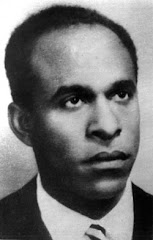
ALL,
THE FOLLOWING STATEMENT FROM 1857 IS AS ALWAYS A POWERFUL REMINDER TO ALL OF US WHAT THIS ENTIRE SITUATION IS REALLY ALL ABOUT AND WHAT THE STAKES REALLY ARE IN THIS CONFLICT...AND IN THE FINAL ANALYSIS IT AIN'T GOT A DAMN THING TO DO WITH WHETHER OR NOT ANYONE IS NOMINATED FOR OR RECEIVES AN AWARD:
Kofi
http://www.nytimes.com/…/oscars-diversity-academy-voting-ru…
Academy Board Endorses Changes to Increase Diversity in Oscar Nominees and Itself
by MICHAEL CIEPLY
January. 22, 2016
New York Times
LOS ANGELES — Confronting a fierce protest over a second straight year
of all-white Oscar acting nominations, the Academy of Motion Picture
Arts and Sciences said on Friday that it would make radical changes to
its voting requirements, recruiting process and governing structure,
with an aim toward increasing the diversity of its membership.
The changes were approved at an unusual special meeting of the group’s 51-member governing board Thursday night. The session ended with a unanimous vote to endorse the new processes, but action on possible changes to Oscar balloting was deferred for later consideration. The board said its goal was to double the number of female and minority members by 2020.
Related in Opinion:
Contributing Op-Ed Writer: The Oscars and Hollywood’s Race Problem
January. 22, 2016
“The academy is going to lead and not wait for the industry to catch up,” the academy’s president, Cheryl Boone Isaacs, said in a statement. Ms. Isaacs referred to an often-repeated complaint that the academy, in its lack of diversity, reflects the demographics of a film industry that for years has been primarily white and male.
The most striking of the changes is a requirement that the voting status of both new and current members be reviewed every 10 years.
Voting status may be revoked for those who have not been active in the film business in a decade. But members who have had three 10-year terms will have lifetime voting rights, as will those who have won or been nominated for an Academy Award.
The academy’s membership is made up of roughly 6,200 movie professionals around the world, and it was not immediately clear how many would be purged from the voting rolls by the new rule.
The changes, and possible balloting adjustments, will not affect this year’s awards, which will be presented on Feb. 28.
Related Coverage:
Oscars So White? Or Oscars So Dumb? Discuss.
January 15, 2016
The Carpetbagger: Charlotte Rampling Says Oscars ‘Boycott’ Is ‘Racist Against Whites’
January 22, 2016
In the short term, the new rules and processes may tamp down some of the criticism that resulted when no film focusing primarily on minority characters was among this year’s eight best picture nominees, and all 20 acting nominees were white.
Ava DuVernay, who was not nominated last year for her direction of the best picture nominee “Selma,” declined to comment on the changes, but tweeted the academy’s letter, and added, “One good step in a long, complicated journey for people of color + women artists.”
But the moves by the academy, which aims to replace older members with a younger, more diverse group, are certain to be met with some criticism, and perhaps resistance. Academy voting rights rank among Hollywood’s more coveted marks of status, not least because of the screening invitations and flattering attention that come with them.
“I’m squarely in what I would call the mentorship phase of my life,” said Sam Weisman, a member of the academy’s directors’ branch since 1998. While working steadily in television, he has not had a feature directing credit since “Dickie Roberts: Former Child Star” in 2003.
“I judge the Nicholl fellowships and the Student Academy Awards, but am I not qualified to vote?” asked Mr. Weisman, referring to academy mentorship programs in which he has been involved.
The academy will also expand its governing board by adding three new seats. Those are to be filled by the group’s president with an eye toward increasing the number of women and minorities on the board. Currently, about a third of the board members are women and Ms. Isaacs is its only African-American.
In a parallel move, the academy will add new members from diverse backgrounds to its various committees.
Stephanie Allain, a producer of “Beyond the Lights” (2014) and “Hustle & Flow” (2005) and a member of the academy, said she was elated, especially with the addition of three members to Board of Governors who, she assumed, would be women or people of color.
“The world is watching, basically, so what are we going to do?” said Ms. Allain, who is black. “Are we going to do the right thing? And I think that we have.”
Many in the industry say that especially in the studio world, opportunities have been slower to come to female filmmakers, an imbalance that the academy’s proposed expansion is unlikely to fix.
“The academy is the endgame,” Ms. Allain said. “But the beginning of the game is the industry responding to the curated talent that comes through programs like Film Independent, the folks that go through the Sundance Film Festival and the LA Film Festival. They just need jobs. That’s how we’re really going to solve the problem — not by more programs or committees, but by jobs.”
Without providing details, the academy’s statement also said it would “supplement the traditional process” by which members are recruited — an invitation process meant to focus on achievement — with “an ambitious, global campaign to identify and recruit qualified new members who represent greater diversity.”
One person briefed on the changes, who spoke on condition of anonymity because of confidentiality strictures, said the supplemental recruiting would be a year-round process, and would be heavily influenced by staff and officers rather than traditional membership committees. While Will Smith, who was overlooked as a nominee for his role in “Concussion,” has said he will not attend this year’s ceremony, Charlotte Rampling, who was nominated for best actress for “45 Years,” condemned much of the protest on Friday as being “racist against whites.”
“One can never really know, but perhaps the black actors did not deserve to make the final list,” Ms. Rampling said in an interview with the French radio network Europe 1 that was done before the academy made its announcement.
Still far from certain is whether the voting changes, and further possible tweaks to the Oscar ballot — for instance a return to the 10-film field of best picture nominees used in 2010 and 2011 — will restore the more diverse set of nominations that prevailed in the decade leading to the choice of “12 Years a Slave” as best picture in 2014.
In those 10 years, 24 of the 200 acting nominees were black, approximately matching the proportion of blacks in the North American movie audience and population, according to statistics compiled by the Motion Picture Association of America.
Black actors who won Oscars during that period included Octavia Spencer for “The Help,” Mo’Nique for “Precious: Based on the Novel ‘Push’ by Sapphire,” Jennifer Hudson for “Dreamgirls” and Jamie Foxx for “Ray.” When Mr. Foxx won, in 2005, he was also nominated for best supporting actor for his role in “Collateral.”
In 2014, Lupita Nyong’o was named best supporting actress for her role in “12 Years a Slave,” John Ridley won an Oscar for writing its adapted screenplay, and Steve McQueen, who is also black, was nominated as the film’s director, but lost to Alfonso Cuarón, who is Mexican. Last year’s best director, Alejandro González Iñárritu, is also Mexican.
Last year, however, along with Ms. DuVernay being left out, David Oyelowo was not nominated for his critically acclaimed role as Martin Luther King Jr. in “Selma.”
This year’s shutout of minority actors caused particular outrage among those who had believed Mr. Smith might be nominated, or perhaps Michael B. Jordan for his role in “Creed” or Idris Elba as a supporting actor for “Beasts of No Nation.” The director of “Creed,” Ryan Coogler, who is black, was also overlooked.
“Straight Outta Compton” faced a tougher climb in the acting categories, because its young cast was an ensemble, with no obvious leads. But the film has been nominated for a Screen Actors Guild ensemble award, and for a best film award from the Producers Guild of America.
“I think it’s completely ridiculous to bring in ethnicity to the evaluation of creative performances and filmmaking and acting,” said Kieth Merrilll, 75, who won an Oscar in 1974 for his documentary “The Great American Cowboy” and was nominated in 1998 for best documentary short. He also noted that he had an adopted black daughter and four black grandchildren. “We’re supposed to be evaluating talent in categories, and one of the categories is ‘What is their ethnicity?’ To make it one of the categories is ridiculous.”
The speed and breadth of the board’s Thursday night action surprised even some academy insiders, who at midweek were predicting no action until a regularly scheduled board meeting on Tuesday, and who were strongly playing down any steps to trim the voting rights of older members.
How the academy deals with the intricacies of “activity” in the film business may raise complex questions, said Mr. Weisman, the director. If, like Mr. Weisman, a director has had development deals that did not result in a film, will he be ruled inactive? Will writers who have generated scripts that were not bought, or made, likewise lose privileges? Might a cagey executive put a dormant publicist on low-cost retainer during Oscar season, protecting and perhaps influencing that member’s vote?
In its statement on Friday, the academy said those members who are moved to emeritus status because they have not met the new activity criteria would not pay dues, but would continue to enjoy the privileges of membership other than voting.
Correction: January 22, 2016
An earlier version of this article misidentified the Oscar-winning director in 2014, It was Alfonso Cuarón, not Alejandro González Iñárritu.
Cara Buckley contributed reporting from Park City, Utah; Rachel Donadio from Paris; and Lorne Manly from New York.
A version of this article appears in print on January 23, 2016, on page A1 of the New York edition with the headline: Oscars to Lead By Example On Diversity.
THE FOLLOWING STATEMENT FROM 1857 IS AS ALWAYS A POWERFUL REMINDER TO ALL OF US WHAT THIS ENTIRE SITUATION IS REALLY ALL ABOUT AND WHAT THE STAKES REALLY ARE IN THIS CONFLICT...AND IN THE FINAL ANALYSIS IT AIN'T GOT A DAMN THING TO DO WITH WHETHER OR NOT ANYONE IS NOMINATED FOR OR RECEIVES AN AWARD:
"Power concedes nothing without a demand. It never did and it never will. Find out just what any people will quietly submit to and you have found out the exact measure of injustice and wrong which will be imposed upon them, and these will continue till they are resisted with either words or blows, or both. The limits of tyrants are prescribed by the endurance of those whom they oppress.” -- --FREDERICK DOUGLASS, August 3, 1857
Kofi
http://www.hollywoodreporter.com/…/oscars-academy-president…
All,
This feeble “response” by the token black president of the Academy of Motion Picture Arts and Sciences is absolutely PATHETIC, isn’t it? Not to mention utterly predictable. After all It's no coincidence that here we find yet another black token president of a white supremacist institution (this time in Hollyweird instead of Washington D.C.) crying crocodile tears over the brazenly obvious fact that she is the head resident custodian of an institution that despises and has no human, social, economic, political, moral, or ethical regard for not only her but anyone who even looks like her (i.e. “ the nonwhites"). But the much larger and far more important question is this: WHEN WILL THE MORE THAN 100 MILLION PEOPLE OF COLOR IN THE UNITED HATES ACTUALLY FIGHT FOR, DEMAND, ORGANIZE, CREATE, AND SUSTAIN VIABLE ALTERNATIVES TO THE PRESENT WHITE SUPREMACIST INSTITUTIONS THAT CURRENTLY OPPRESS AND EXPLOIT US WITH OUR IMPLICIT/COMPLICIT CONSENT?…OR HASN’T ANYONE HERE EVER HEARD OF A LITTLE PRINCIPLE CALLED SELF DETERMINATION?…
Kofi
Academy President Issues Lengthy Statement on Lack of Oscars Diversity
#OscarsSoWhite Creator Endorses Oscar Boycott
by Stephen Galloway.
1/18/2016
In the wake of Spike Lee and Jada Pinkett Smith announcing they will
not be attending this year's Oscars, Cheryl Boone Isaacs says she was
"heartbroken and frustrated" by the nominations, which did not include
any performers of color.
Cheryl Boone Isaacs, president of the Academy of Motion Picture Arts and Sciences, on Monday issued a lengthy statement on the lack of diversity in this year's Oscar nominations, which has become the subject of mounting criticism.
"I’d like to acknowledge the wonderful work of this year’s nominees," she said. "While we celebrate their extraordinary achievements, I am both heartbroken and frustrated about the lack of inclusion. This is a difficult but important conversation, and it’s time for big changes.
"The Academy is taking dramatic steps to alter the makeup of our membership. In the coming days and weeks we will conduct a review of our membership recruitment in order to bring about much-needed diversity in our 2016 class and beyond," Boone Isaacs said in what amounted to a rare and unusual move on the part of the Academy.
"As many of you know," she continued, "we have implemented changes to diversify our membership in the last four years. But the change is not coming as fast as we would like. We need to do more, and better and more quickly."
"This isn’t unprecedented for the Academy," added Boone Isaacs. "In the ‘60s and ‘70s, it was about recruiting younger members to stay vital and relevant. In 2016, the mandate is inclusion in all of its facets: gender, race, ethnicity and sexual orientation. We recognize the very real concerns of our community, and I so appreciate all of you who have reached out to me in our effort to move forward together."
Read More David Oyelowo Goes Off on Oscars: "I Am an Academy Member and It Doesn't Reflect Me"
Speaking to The Hollywood Reporter earlier Monday evening just before she was honored with the Rosa Parks Humanitarian Award at the King Legacy Awards, presented at the Sheraton Gateway Hotel in Los Angeles, Boone Isaacs said that “there’s been enough conversation” and that it is time for the entertainment industry to take action to improve diversity.
She said that she was “disappointed” that, for the second year in a row, the Oscar nominations, announced last week, failed to include any performers of color. Academy CEO Dawn Hudson, who was also in attendance, added that she was "devastated" by the nominations.
The Academy again finds itself the focus of criticism over the lack of opportunities for minorities within the film industry. Earlier on Monday, Spike Lee, who received an honorary Oscar from the Academy at its Board of Governors Awards in November, announced in an Instagram post that he and his wife Tonya Lewis Lee “cannot support it” and would not attend the upcoming Oscars on Feb. 28.
"Mean No Disrespect To My Friends, Host Chris Rock and Producer Reggie Hudlin, President Isaacs And The Academy," Lee wrote. "But, How Is It Possible For The 2nd Consecutive Year All 20 Contenders Under The Actor Category Are White? And Let's Not Even Get Into The Other Branches. 40 White Actors In 2 Years And No Flava At All. We Can't Act?! WTF!!"
Read More Oscars: Jada Pinkett Smith Says She Won't Attend Awards, Contemplates Appropriate Response to Lack of Nonwhite Nominees
The Academy president said she had not heard from Lee about his decision, but that she remained a strong supporter of his in general.
Boone Isaacs, who is African-American, said she herself has experienced racism, but declined to go into detail.
At the same time, she said even if it is the industry that is to blame for not creating more diverse product, it would be wrong for the Academy to avoid responsibility in a year when there has been at least a handful of movies with actors of color that she found worthy of nomination.
'There've been four or five wonderful movies,' she said, citing Lee’s own Chi-Raq, Concussion, Creed, Beasts of No Nation and Straight Outta Compton.
Boone Isaacs noted that the Academy has formed a committee, made up of members of the industry, to explore how to improve diversity. She announced earlier at the Governors Awards that the Academy is developing a five-year plan called A2020 with an eye toward improving diversity within the Academy itself and the industry at large.
All,
This feeble “response” by the token black president of the Academy of Motion Picture Arts and Sciences is absolutely PATHETIC, isn’t it? Not to mention utterly predictable. After all It's no coincidence that here we find yet another black token president of a white supremacist institution (this time in Hollyweird instead of Washington D.C.) crying crocodile tears over the brazenly obvious fact that she is the head resident custodian of an institution that despises and has no human, social, economic, political, moral, or ethical regard for not only her but anyone who even looks like her (i.e. “ the nonwhites"). But the much larger and far more important question is this: WHEN WILL THE MORE THAN 100 MILLION PEOPLE OF COLOR IN THE UNITED HATES ACTUALLY FIGHT FOR, DEMAND, ORGANIZE, CREATE, AND SUSTAIN VIABLE ALTERNATIVES TO THE PRESENT WHITE SUPREMACIST INSTITUTIONS THAT CURRENTLY OPPRESS AND EXPLOIT US WITH OUR IMPLICIT/COMPLICIT CONSENT?…OR HASN’T ANYONE HERE EVER HEARD OF A LITTLE PRINCIPLE CALLED SELF DETERMINATION?…
Kofi
Academy President Issues Lengthy Statement on Lack of Oscars Diversity
#OscarsSoWhite Creator Endorses Oscar Boycott
by Stephen Galloway.
1/18/2016

Cheryl Boone Isaacs, president of the Academy of Motion Picture Arts and Sciences, on Monday issued a lengthy statement on the lack of diversity in this year's Oscar nominations, which has become the subject of mounting criticism.
"I’d like to acknowledge the wonderful work of this year’s nominees," she said. "While we celebrate their extraordinary achievements, I am both heartbroken and frustrated about the lack of inclusion. This is a difficult but important conversation, and it’s time for big changes.
"The Academy is taking dramatic steps to alter the makeup of our membership. In the coming days and weeks we will conduct a review of our membership recruitment in order to bring about much-needed diversity in our 2016 class and beyond," Boone Isaacs said in what amounted to a rare and unusual move on the part of the Academy.
"As many of you know," she continued, "we have implemented changes to diversify our membership in the last four years. But the change is not coming as fast as we would like. We need to do more, and better and more quickly."
"This isn’t unprecedented for the Academy," added Boone Isaacs. "In the ‘60s and ‘70s, it was about recruiting younger members to stay vital and relevant. In 2016, the mandate is inclusion in all of its facets: gender, race, ethnicity and sexual orientation. We recognize the very real concerns of our community, and I so appreciate all of you who have reached out to me in our effort to move forward together."
Read More David Oyelowo Goes Off on Oscars: "I Am an Academy Member and It Doesn't Reflect Me"
Speaking to The Hollywood Reporter earlier Monday evening just before she was honored with the Rosa Parks Humanitarian Award at the King Legacy Awards, presented at the Sheraton Gateway Hotel in Los Angeles, Boone Isaacs said that “there’s been enough conversation” and that it is time for the entertainment industry to take action to improve diversity.
She said that she was “disappointed” that, for the second year in a row, the Oscar nominations, announced last week, failed to include any performers of color. Academy CEO Dawn Hudson, who was also in attendance, added that she was "devastated" by the nominations.
The Academy again finds itself the focus of criticism over the lack of opportunities for minorities within the film industry. Earlier on Monday, Spike Lee, who received an honorary Oscar from the Academy at its Board of Governors Awards in November, announced in an Instagram post that he and his wife Tonya Lewis Lee “cannot support it” and would not attend the upcoming Oscars on Feb. 28.
"Mean No Disrespect To My Friends, Host Chris Rock and Producer Reggie Hudlin, President Isaacs And The Academy," Lee wrote. "But, How Is It Possible For The 2nd Consecutive Year All 20 Contenders Under The Actor Category Are White? And Let's Not Even Get Into The Other Branches. 40 White Actors In 2 Years And No Flava At All. We Can't Act?! WTF!!"
Read More Oscars: Jada Pinkett Smith Says She Won't Attend Awards, Contemplates Appropriate Response to Lack of Nonwhite Nominees
The Academy president said she had not heard from Lee about his decision, but that she remained a strong supporter of his in general.
Boone Isaacs, who is African-American, said she herself has experienced racism, but declined to go into detail.
At the same time, she said even if it is the industry that is to blame for not creating more diverse product, it would be wrong for the Academy to avoid responsibility in a year when there has been at least a handful of movies with actors of color that she found worthy of nomination.
'There've been four or five wonderful movies,' she said, citing Lee’s own Chi-Raq, Concussion, Creed, Beasts of No Nation and Straight Outta Compton.
Boone Isaacs noted that the Academy has formed a committee, made up of members of the industry, to explore how to improve diversity. She announced earlier at the Governors Awards that the Academy is developing a five-year plan called A2020 with an eye toward improving diversity within the Academy itself and the industry at large.
http://www.nytimes.com/…/oscars-diversity-academy-voting-ru…
Academy Board Endorses Changes to Increase Diversity in Oscar Nominees and Itself
by MICHAEL CIEPLY
January. 22, 2016
New York Times

“The academy is going to lead and
not wait for the industry to catch up,” said Cheryl Boone Isaacs, the
academy’s president. Credit Kevin Winter/Getty Images
The changes were approved at an unusual special meeting of the group’s 51-member governing board Thursday night. The session ended with a unanimous vote to endorse the new processes, but action on possible changes to Oscar balloting was deferred for later consideration. The board said its goal was to double the number of female and minority members by 2020.
Related in Opinion:
Contributing Op-Ed Writer: The Oscars and Hollywood’s Race Problem
January. 22, 2016
“The academy is going to lead and not wait for the industry to catch up,” the academy’s president, Cheryl Boone Isaacs, said in a statement. Ms. Isaacs referred to an often-repeated complaint that the academy, in its lack of diversity, reflects the demographics of a film industry that for years has been primarily white and male.
The most striking of the changes is a requirement that the voting status of both new and current members be reviewed every 10 years.
Voting status may be revoked for those who have not been active in the film business in a decade. But members who have had three 10-year terms will have lifetime voting rights, as will those who have won or been nominated for an Academy Award.
The academy’s membership is made up of roughly 6,200 movie professionals around the world, and it was not immediately clear how many would be purged from the voting rolls by the new rule.
The changes, and possible balloting adjustments, will not affect this year’s awards, which will be presented on Feb. 28.
Related Coverage:
Oscars So White? Or Oscars So Dumb? Discuss.
January 15, 2016
The Carpetbagger: Charlotte Rampling Says Oscars ‘Boycott’ Is ‘Racist Against Whites’
January 22, 2016
In the short term, the new rules and processes may tamp down some of the criticism that resulted when no film focusing primarily on minority characters was among this year’s eight best picture nominees, and all 20 acting nominees were white.
Ava DuVernay, who was not nominated last year for her direction of the best picture nominee “Selma,” declined to comment on the changes, but tweeted the academy’s letter, and added, “One good step in a long, complicated journey for people of color + women artists.”
But the moves by the academy, which aims to replace older members with a younger, more diverse group, are certain to be met with some criticism, and perhaps resistance. Academy voting rights rank among Hollywood’s more coveted marks of status, not least because of the screening invitations and flattering attention that come with them.
“I’m squarely in what I would call the mentorship phase of my life,” said Sam Weisman, a member of the academy’s directors’ branch since 1998. While working steadily in television, he has not had a feature directing credit since “Dickie Roberts: Former Child Star” in 2003.
“I judge the Nicholl fellowships and the Student Academy Awards, but am I not qualified to vote?” asked Mr. Weisman, referring to academy mentorship programs in which he has been involved.
The academy will also expand its governing board by adding three new seats. Those are to be filled by the group’s president with an eye toward increasing the number of women and minorities on the board. Currently, about a third of the board members are women and Ms. Isaacs is its only African-American.
In a parallel move, the academy will add new members from diverse backgrounds to its various committees.
Stephanie Allain, a producer of “Beyond the Lights” (2014) and “Hustle & Flow” (2005) and a member of the academy, said she was elated, especially with the addition of three members to Board of Governors who, she assumed, would be women or people of color.
“The world is watching, basically, so what are we going to do?” said Ms. Allain, who is black. “Are we going to do the right thing? And I think that we have.”
Many in the industry say that especially in the studio world, opportunities have been slower to come to female filmmakers, an imbalance that the academy’s proposed expansion is unlikely to fix.
“The academy is the endgame,” Ms. Allain said. “But the beginning of the game is the industry responding to the curated talent that comes through programs like Film Independent, the folks that go through the Sundance Film Festival and the LA Film Festival. They just need jobs. That’s how we’re really going to solve the problem — not by more programs or committees, but by jobs.”
Without providing details, the academy’s statement also said it would “supplement the traditional process” by which members are recruited — an invitation process meant to focus on achievement — with “an ambitious, global campaign to identify and recruit qualified new members who represent greater diversity.”
One person briefed on the changes, who spoke on condition of anonymity because of confidentiality strictures, said the supplemental recruiting would be a year-round process, and would be heavily influenced by staff and officers rather than traditional membership committees. While Will Smith, who was overlooked as a nominee for his role in “Concussion,” has said he will not attend this year’s ceremony, Charlotte Rampling, who was nominated for best actress for “45 Years,” condemned much of the protest on Friday as being “racist against whites.”
“One can never really know, but perhaps the black actors did not deserve to make the final list,” Ms. Rampling said in an interview with the French radio network Europe 1 that was done before the academy made its announcement.
Still far from certain is whether the voting changes, and further possible tweaks to the Oscar ballot — for instance a return to the 10-film field of best picture nominees used in 2010 and 2011 — will restore the more diverse set of nominations that prevailed in the decade leading to the choice of “12 Years a Slave” as best picture in 2014.
In those 10 years, 24 of the 200 acting nominees were black, approximately matching the proportion of blacks in the North American movie audience and population, according to statistics compiled by the Motion Picture Association of America.
Black actors who won Oscars during that period included Octavia Spencer for “The Help,” Mo’Nique for “Precious: Based on the Novel ‘Push’ by Sapphire,” Jennifer Hudson for “Dreamgirls” and Jamie Foxx for “Ray.” When Mr. Foxx won, in 2005, he was also nominated for best supporting actor for his role in “Collateral.”
In 2014, Lupita Nyong’o was named best supporting actress for her role in “12 Years a Slave,” John Ridley won an Oscar for writing its adapted screenplay, and Steve McQueen, who is also black, was nominated as the film’s director, but lost to Alfonso Cuarón, who is Mexican. Last year’s best director, Alejandro González Iñárritu, is also Mexican.
Last year, however, along with Ms. DuVernay being left out, David Oyelowo was not nominated for his critically acclaimed role as Martin Luther King Jr. in “Selma.”
This year’s shutout of minority actors caused particular outrage among those who had believed Mr. Smith might be nominated, or perhaps Michael B. Jordan for his role in “Creed” or Idris Elba as a supporting actor for “Beasts of No Nation.” The director of “Creed,” Ryan Coogler, who is black, was also overlooked.
“Straight Outta Compton” faced a tougher climb in the acting categories, because its young cast was an ensemble, with no obvious leads. But the film has been nominated for a Screen Actors Guild ensemble award, and for a best film award from the Producers Guild of America.
“I think it’s completely ridiculous to bring in ethnicity to the evaluation of creative performances and filmmaking and acting,” said Kieth Merrilll, 75, who won an Oscar in 1974 for his documentary “The Great American Cowboy” and was nominated in 1998 for best documentary short. He also noted that he had an adopted black daughter and four black grandchildren. “We’re supposed to be evaluating talent in categories, and one of the categories is ‘What is their ethnicity?’ To make it one of the categories is ridiculous.”
The speed and breadth of the board’s Thursday night action surprised even some academy insiders, who at midweek were predicting no action until a regularly scheduled board meeting on Tuesday, and who were strongly playing down any steps to trim the voting rights of older members.
How the academy deals with the intricacies of “activity” in the film business may raise complex questions, said Mr. Weisman, the director. If, like Mr. Weisman, a director has had development deals that did not result in a film, will he be ruled inactive? Will writers who have generated scripts that were not bought, or made, likewise lose privileges? Might a cagey executive put a dormant publicist on low-cost retainer during Oscar season, protecting and perhaps influencing that member’s vote?
In its statement on Friday, the academy said those members who are moved to emeritus status because they have not met the new activity criteria would not pay dues, but would continue to enjoy the privileges of membership other than voting.
Correction: January 22, 2016
An earlier version of this article misidentified the Oscar-winning director in 2014, It was Alfonso Cuarón, not Alejandro González Iñárritu.
Cara Buckley contributed reporting from Park City, Utah; Rachel Donadio from Paris; and Lorne Manly from New York.
A version of this article appears in print on January 23, 2016, on page A1 of the New York edition with the headline: Oscars to Lead By Example On Diversity.
Media
Academy Members Respond to Swift Changes for Board
By THE NEW YORK TIMES
By THE NEW YORK TIMES
January 22, 2016
The reaction to the Academy of Motion Picture Arts and Sciences saying
on Friday that it was taking steps to double the number of female and
minority members by 2020 was varied.
Some members lauded the
move, saying it was necessary in the wake of a second straight year in
which no minority actors were cited among the 20 acting nominees. Other
members were critical and wondered how older members of the academy
would be affected.

“I think it’s great they responded so quickly. I think, just from my cursory read of it, it is a really great way to go.”
She said she was especially impressed with the addition of three
members to the Board of Governors who would, she assumed, would be women
or people of color.
“We’re so visible that we should play a leadership role,” she said,
adding, “The world is watching, basically, so what are we going to do?
Are we going to do the right thing? And I think that we have.”
She also said, “The Academy is the endgame. But the beginning of the
game is the industry responding to the curated talent that comes through
programs like Film Independent, the folks that go through the Sundance
Film Festival and the LA Film Festival. They just need jobs. That’s how
we’re really going to solve the problem — not by more programs or
committees, but by jobs.”
Kieth Merrill, who won an Oscar in 1974
for his documentary “The Great American Cowboy” and was nominated for
best documentary short in 1997
Mr. Merrill, 75, said he found the changes and the logic behind them outlandish.
“I’m sure I’ll sound racist, I’m sure I’ll sound prejudiced, and I’m
not. I think it’s completely ridiculous to bring in ethnicity to the
evaluation of creative performances and filmmaking and acting,” Mr.
Merrill said, noting several times that he had an adopted black daughter
and four black grandchildren.
“We’re supposed to be evaluating
talent in categories, and one of the categories is ‘what is their
ethnicity?’ ” he said. “To make it one of the categories is ridiculous.”
Michael Moore, Oscar winner in 2003 for best documentary for “Bowling for Columbine”
“These are good changes, but what’s amazing is how swiftly the Academy
has reacted,” Mr. Moore said in an email. “A change like this in the old
days would’ve taken years (if at all), not days. Now let’s hope that
the real culprit in keeping Hollywood so white and male — the industry
itself — will make similar changes.”
Photo: Michael Moore,
documentary filmmaker: “These are good changes, but what’s amazing is
how swiftly the Academy has reacted,” Credit Dog Eat Dog Films
He
added that six years ago, “doubling the number of African-Americans in
the doc branch would have meant doubling the number zero to ... zero. I
and others began an effort to change this in 2010 and now we have around
a dozen in our branch. I’m going to propose at the next meeting we
double that number THIS year, not by 2020.”
Sam Weisman, director of films like “George of the Jungle” and “Bye Bye Love”
“I judge the Nicholl fellowships and the student Academy Awards, but am
I not qualified to vote?” asked Mr. Weisman, referring to academy
mentorship programs in which he has been involved.
How the
academy deals with the intricacies of “activity” in the film business,
he noted, may raise complex questions. Mr. Weisman’s last feature credit
was “Dickie Roberts: Former Child Star” in 2003, though he has done
extensive television work since then. If, like Mr. Weisman, a director
has had development deals that did not result in a film, will he be
ruled out?
“This is a way to get this off their plates in advance
of the awards show,” Mr. Weisman said, referring to the controversy
over the lack of diversity among this year’s nominees.