In the wake of the 2016 election, public
intellectuals latched onto the new administration’s organic and
ideological links with the alt- and far right. But a mass civic
insurgency against racial terror—and the federal government’s authoritarian response—has pushed hitherto cloistered academic debates about fascism into the mainstream, with Peter E. Gordon, Samuel Moyn, and Sarah Churchwell taking to the pages of the New York Review of Books
to hash out whether it is historically apt or politically useful to
call Trump a fascist. The F-word has also been making unusual forays
into CNN, the New York Times, and mainstream discourse. The increasing prospect that any transfer of power will be fraught—Trump has hinted he will not accept the results
if he loses—has further intensified the stakes, with even the
dependable neoliberal cheerleader Thomas Friedman conjuring up specters
of civil war.
What if our talk of fascism were not dominated by the question of analogy?
Notwithstanding the changing terrain, talk of fascism has generally
stuck to the same groove, asking whether present phenomena are analogous
to those familiar from interwar European dictatorships. Sceptics of
comparison underscore the way that the analogy of fascism can either
treat the present moment as exceptional, papering over the history of
distinctly American forms of authoritarianism, or be so broad as to fail
to define what is unique about our current predicament. Analogy’s
advocates point to the need to detect family resemblances with past
despotisms before it’s too late, often making their case by advancing
some ideal-typical checklist, whether in terms of the elements of or the steps toward fascism. But what if our talk of fascism were not dominated by the question of analogy?
Attending to the long history of Black radical thinking about fascism
and anti-fascist resistance—to what Cedric Robinson called a “Black
construction of fascism” alternative to the “historical manufacture of
fascism as a negation of Western Geist”—could serve to dislodge
the debate about fascism from the deadlock of analogy, providing the
resources to confront our volatile interregnum.
Long before Nazi violence came to be conceived of as beyond analogy,
Black radical thinkers sought to expand the historical and political
imagination of an anti-fascist left. They detailed how what could seem,
from a European or white vantage point, to be a radically new form of
ideology and violence was, in fact, continuous with the history of
colonial dispossession and racial slavery.
Black radical thinkers have long sought to expand the historical and political imagination of an anti-fascist left.
Pan-Africanist George Padmore, breaking with the Communist
International over its failure to see the likenesses between
“democratic” imperialism and fascism, would write in How Britain Rules Africa (1936)
of settler-colonial racism as “the breeding-ground for the type of
fascist mentality which is being let loose in Europe today.” He would go
on to see in South Africa “the world’s classic Fascist state,” grounded on the “unity of race as against class.” Padmore’s “Colonial Fascism” thus anticipated Aimé Césaire’s memorable description of fascism as the boomerang effect of European imperialist violence.
African American anti-fascists shared the anti-colonial analysis that
the Atlantic world’s history of racial violence belied the novelty of
intra-European fascism. Speaking in Paris at the Second International
Writers Congress in 1937, Langston Hughes declared: “We Negroes in
America do not have to be told what fascism is in action. We know. Its
theories of Nordic supremacy and economic suppression have long been
realities to us.” It was an insight that certainly would not have
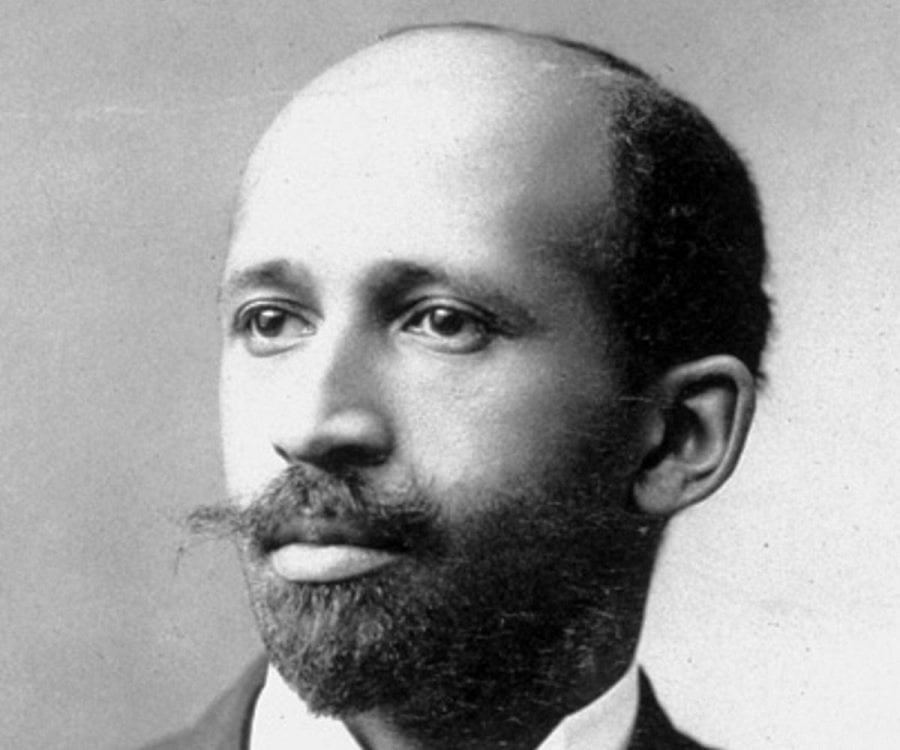
surprised any reader of W. E. B. Du Bois’s monumental reckoning with the
history of U.S. racial capitalism, Black Reconstruction in America (1935). As Amiri Baraka would suggest much later,
building on Du Bois’s passing mentions of fascism, the overthrow of
Reconstruction enacted a “racial fascism” that long predated Hitlerism
in its use of racial terror, conscription of poor whites, and
manipulation of (to quote the famous definition of fascism by Georgi
Dimitrov) “the most reactionary, most chauvinistic, and most imperialist
sector of finance capital.”
In this view, a U.S. racial fascism could go unremarked because it
operated on the other side of the color line, just as colonial fascism
took place far from the imperial metropole. As Bill V. Mullen and
Christopher Vials have suggested in their vital The US Antifascism Reader (2020):
For people of color at various historical moments, the
experience of racialization within a liberal democracy could have the
valence of fascism. That is to say, while a fascist state and a white
supremacist democracy have very different mechanisms of power, the
experience of racialized rightlessness within a liberal democracy can
make the distinction between it and fascism murky at the level of lived
experience. For those racially cast aside outside of liberal democracy’s
system of rights, the word ‘fascism’ does not always conjure up a
distant and alien social order.
Or, as French writer Jean Genet observed on May 1, 1970, at a rally in New Haven
for the liberation of Black Panther Party chairman Bobby Seale:
“Another thing worries me: fascism. We often hear the Black Panther
Party speak of fascism, and whites have difficulty accepting the word.
That’s because whites have to make a great effort of imagination to
understand that blacks live under an oppressive fascist regime.”
It was largely thanks to the Panthers that the term “fascism”
returned to the forefront of radical discourse and activism in the late
1960s and early 1970s. The United Front Against Fascism conference
held in Oakland in 1969 brought together a wide swathe of the Old and
New Lefts, as well as Asian American, Chicano, Puerto Rican (Young
Lords), and white Appalachian (Young Patriots Organization) activists
who had developed their own perspectives on U.S. fascism—for instance,
by foregrounding the experience of Japanese internment during World War
II. In a striking indication of the peculiarities and continuities of
U.S. anti-fascist traditions, among the chief planks of the conference
was the notionally reformist demand for community or decentralized policing—to remove racist white officers from Black neighborhoods and exert local checks on law enforcement.
Political prisoners close to the Panthers theorized specifically about what we could call “late fascism”
(by analogy with “late capitalism”) in the United States. At the same
time that debates about “new fascisms” were polarizing radical debate
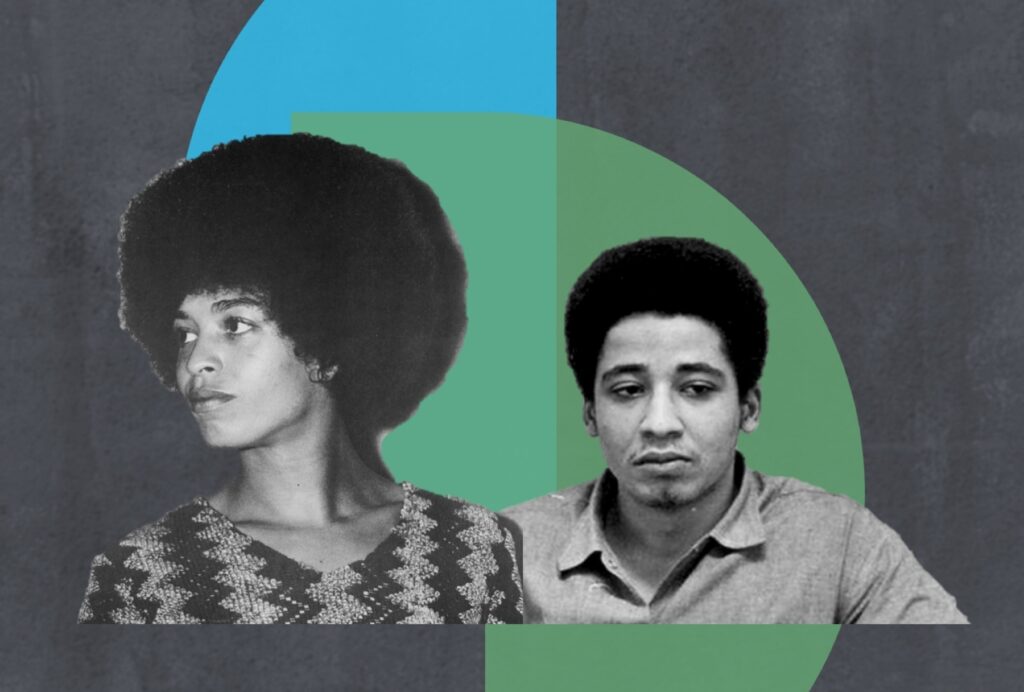
across Europe, the writing and correspondence of Angela Y. Davis and
George Jackson generated a theory of fascism from the lived experience
of the violent nexus between the carceral state and racial capitalism.
Davis, the Black Marxist and feminist scholar, needs little
introduction, her 1970 imprisonment on trumped-up conspiracy charges
having rocketed her to the status of household name in the United States
and an icon of solidarity worldwide. Fewer remember that the conspiracy
charge against Davis arose from an armed courtroom attack by her
seventeen-year-old bodyguard, Jonathan Jackson, with the goal of forcing
the release of the Soledad Brothers, three African American prisoners
facing the death penalty for the killing of a white prison guard. Among
them was Jonathan’s older brother, the incarcerated Black revolutionary
George Jackson, with whom Davis corresponded extensively. Jackson was
killed by a prison sniper during an escape attempt on August, 21, 1971, a
few days before the Soledad Brothers were to be tried.
In one of his prison letters on fascism, posthumously collected in Blood in My Eye (1972), Jackson offered the following reflection:
When I am being interviewed by a member of the old guard
and point to the concrete and steel, the tiny electronic listening
device concealed in the vent, the phalanx of goons peeping in at us, his
barely functional plastic tape-recorder that cost him a week’s labor,
and point out that these are all manifestations of fascism, he will
invariably attempt to refute me by defining fascism simply as an
economic geo-political affair where only one party is allowed to exist
aboveground and no opposition political activity is allowed.
Jackson encourages us to consider what happens to our conceptions of
fascism if we take our bearings not from analogies with the European
interwar scene, but instead from the materiality of the
prison-industrial complex, from the “concrete and steel,” from the
devices and personnel of surveillance and repression.
In their writing and correspondence, marked by interpretive
differences alongside profound comradeship, Davis and Jackson identify
the U.S. state as the site for a recombinant or even consummate form of
fascism. Much of their writing is threaded through Marxist debates on
the nature of monopoly capitalism, imperialism and capitalist crises, as
well as, in Jackson’s case, an effort to revisit the classical
historiography on fascism. On these grounds, Jackson and Davis stress
the disanalogies between present forms of domination and European
exemplars, but both assert the privileged vantage point provided by the
view from within a prison-judicial system that could accurately be described as a racial state of terror.
For Angela Y. Davis and George Jackson, fascism originated from liberal democracy itself.
This both echoes and departs from the Black radical theories of
fascism, such as Padmore’s or Césaire’s, which emerged from the
experience of the colonized. The new, U.S. fascism that Jackson and
Davis strive to delineate is not an unwanted return from the “other
scene” of colonial violence, but originates from liberal democracy
itself. Indeed, it was a sense of the disavowed bonds between liberal
and fascist forms of the state which, for Davis, was one of the great
lessons passed on by Herbert Marcuse, whose grasp of this nexus in 1930s
Germany allowed him to discern the fascist tendencies in the United
States of his exile.
Both Davis and Jackson also stress the necessity to grasp fascism not
as a static form but as a process, inflected by its political and
economic contexts and conjunctures. Checklists, analogies, or
ideal-types cannot do justice to the concrete history of fascism.
Jackson writes of “the defects of trying to analyze a movement outside
of its process and its sequential relationships. You gain only a
discolored glimpse of a dead past.” He remarks that fascism “developed
from nation to nation out of differing levels of traditionalist capitalism’s dilapidation.”
Where Jackson and Davis echo their European counterparts is in the
idea that “new” fascisms cannot be understood without seeing them as
responses to the insurgencies of the 1960s and early 1970s. For Jackson,
fascism is fundamentally a counterrevolutionary form, as evidenced by
the violence with which it represses any consequential threat to the
state. But fascism does not react immediately against an ascendant
revolutionary force; it is a kind of delayed counterrevolution,
parasitic on the weakness or defeat of the anti-capitalist left, “the
result of a revolutionary thrust that was weak and miscarried—a
consciousness that was compromised.” Jackson argues that U.S.-style
fascism is a kind of perfected form—all the more insidiously hegemonic
because of the marriage of monopoly capital with the (racialized)
trappings of liberal democracy. As he declared:
Fascism has established itself in a most disguised and
efficient manner in this country. It feels so secure that the leaders
allow us the luxury of a faint protest. Take protest too far, however,
and they will show their other face. Doors will be kicked down in the
night and machine-gun fire and buckshot will become the medium of
exchange.
In Davis’s concurrent theorizing, the carceral, liberationist
perspective on fascism has a different inflection. For Davis, fascism in
the United States takes a preventive and incipient form. The terminology is adapted from Marcuse, who remarked, in an interview from 1970,
“In the last ten to twenty years we’ve experienced a preventative
counterrevolution to defend us against a feared revolution, which,
however, has not taken place and doesn’t stand on the agenda at the
moment.” Some of the elements of Marcuse’s analysis still resonate
(particularly poignant, in the wake of Breonna Taylor’s murder by
police, is his mention of no-knock warrants):
The question is whether fascism is taking over in the
United States. If by that we understand the gradual or rapid abolition
of the remnants of the constitutional state, the organization of
paramilitary troops such as the Minutemen, and granting the police
extraordinary legal powers such as the notorious no-knock law which does
away with the inviolability of the home; if one looks at the court
decisions of recent years; if one knows that special troops—so-called
counterinsurgency corps—are being trained in the United States for
possible civil war; if one looks at the almost direct censorship of the
press, television and radio: then, as far as I’m concerned, one can
speak with complete justification of an incipient fascism. . . .
American fascism will probably be the first which comes to power by
democratic means and with democratic support.
Davis was drawn to Marcuse’s contention that “fascism is the
preventive counter-revolution to the socialist transformation of
society” because of how it resonated with racialized communities and
activists. In the experience of many Black radicals, the aspect of their
revolutionary politics that most threatened the state was not the
endorsement of armed struggle, but rather the “survival programs,” those
enclaves of autonomous social reproduction facilitated by the Panthers
and more broadly practiced by Black movements. While nominally mobilized
against the threat of armed insurrection, the ultimate target of
counterinsurgency were these experiments with social life outside and
against the racial state—especially when they edged toward what Huey P.
Newton named “revolutionary intercommunalism.”
Race, gender, and class determine how fascist the country might seem to any given individual.
What can be gleaned from Davis’s account
is the way that fascism and democracy can be experienced very
differently by different segments of the population. In this regard,
Davis is attuned to the ways in which race and gender, alongside class,
can determine how fascist the country seems to any given individual. As
Davis puts it, fascism is “primarily restricted to the use of the
law-enforcement-judicial-penal apparatus to arrest the overt and latent
revolutionary trends among nationally oppressed people, tomorrow it may
attack the working class en masse and eventually even moderate
democrats.” But the latter are unlikely to fully perceive this
phenomenon because of the manufactured invisibility of the site of the state’s maximally fascist presentation, namely, prisons with their “totalitarian aspirations.”
The kind of fascism diagnosed by Davis is a “protracted social
process,” whose “growth and development are cancerous in nature.” We
thus have the correlation in Davis’s analysis between, on the one hand,
the prison as a racialized enclave or laboratory and, on the other, the
fascist strategy of counterrevolution, which flow through society at
large but are not experienced equally by everyone everywhere. As Davis
has written more recently:
The dangerous and indeed fascistic trend toward
progressively greater numbers of hidden, incarcerated human populations
is itself rendered invisible. All that matters is the elimination of
crime—and you get rid of crime by getting rid of people who, according
to the prevailing racial common sense, are the most likely people to
whom criminal acts will be attributed.
The lived experience of state violence by Black political prisoners
such as Davis and Jackson grounded a theory of U.S. fascism and racial
capitalism that interrupted what Robinson called the “euphonious recital
of fascism” in mainstream political thought. It can still serve as an
antidote to the lures and limits of the analogies that increasingly
circulate in mainstream debate.
As the Black Lives Matter movement has made clear, the threat is not
of a “return of the 1930s” but the ongoing fact of racialized state
terror. This is the ever-present danger that animates present-day
anti-fascist energies in the United States—and it cannot be boiled down
to the necessary but insufficient task of confronting only those who
self-identify as fascists.
Stuart Hall once castigated the British left for its passionate
attachment to the frame of anti-fascism, for gravitating to the
seemingly transparent battle against organized fascism while ignoring
new modalities of authoritarianism. There were indeed fascists (the
National Front), but Thatcherism was not a fascism. Conversely, Davis
and Jackson glimpsed a fascist process that didn’t need fascists.
Fascists without fascism, or fascism without fascists—do we have to
choose?
The threat is not a return to the 1930s, but the ongoing fact of racialized terror.
To bridge this antinomy, we need to reflect on the connection between
the features of “incipient fascism”—in the U.S. case, the normalization
of forms of racial terror and oppression—and the emergence of
explicitly fascist movements and ideologies. We need to think about the
links between the often extreme levels of classed and racialized
violence that accompany actually-existing liberal democracies (think,
for instance, of the anti-migrant militarization of the U.S. and E.U.
borders) and the emergence of movements that espouse a host of extreme
positions that invert this reality: these include the belief that the
state and culture have been occupied by the “radical” left (by “Cultural
Marxism,” by critical race theory), that racism is now meted out
against formerly dominant ethnic majorities, and that deracinated elites
have conspired with the wretched of the earth to destroy properly
“national” populations that can only be rescued by a revanchist politics
of security and protectionism.
Our “late” fascism is an ideology of crisis and decline. It depends, in the words of abolitionist scholar Ruth Wilson Gilmore,
on enlisting supporters on the basis of “the idea and enactment of
winning, of explicit domination set against the local reality of
decreasing family wealth, fear of unemployment, threat of homelessness,
and increased likelihood of early, painful death from capitalism’s many
toxicities.” Its psychological wages and racial dividends do
considerable political economic work, perpetuating a brutally unequal
regime of accumulation by enlisting bodies and psyches into endless
culture wars.
But what is this late fascism trying to prevent? Here is where the
superstructure sometimes seems to overwhelm the base, as though forces
and fantasies once functional to the reproduction of a dominant class
and racial order have now attained a kind of autonomy. No imminent
threat to the reproduction of capitalism is on the horizon (at least no external
one), so that contemporary fascist trends manifest the strange
spectacle of what, in a variation on Davis and Marcuse, we could call a preventive counterreform.
This politics is parasitic, among other things, on resuscitating the
racialized anti-communism of a previous era, now weaponizing it against
improbable targets such as Kamala Harris, while treating any mildly
progressive policy as the harbinger of the imminent abolition of all
things American, not least the suburbs.
But, drawing on the archive of Black radical theories
of fascism, we can also start to see the present in a much longer
historical arc, one marked by the periodic recurrence of racial fascism
as the mode of reaction to any instance of what Du Bois once called
“abolition democracy,” whether against the First Reconstruction, the
Second Reconstruction, or what some have begun, hopefully, to identify
as the Third.
ABOUT THE AUTHOR:
Alberto Toscano is Reader in Critical Theory and Co-Director of the
Centre for Philosophy and Critical Thought at Goldsmiths, University of
London. He’s the author of Fanaticism: On the Uses of an Idea and of the forthcoming Late Fascism.