Showing posts with label literary criticism. Show all posts

Saturday, February 28, 2015

A Review of 'The Sellout' by Acclaimed Novelist and Poet Paul Beatty: White Supremacy, American Literature, and the Cultural Politics of Gliberalism

 
https://www.facebook.com/pages/The-Panopticon-Review/342702882479366

All,

Dwight “Yokum” Garner that pompously gliberal white supremacist literary critic from the NY Times is at it again, pretending that he actually knows what he’s ‘talking ‘bout (FAT CHANCE folks!). In the meantime it’s ominously clear that this boy ain’t no more up to the task of competently reviewing the work of Paul Beatty than he was with his truly execrable pseudohip doodling over the work of Amiri Baraka a couple weeks ago.  Garner still reminds me of those cocky white boys and girls who first learned to dance by fervently watching and imitating all the moves they appropriated from"raucous yet undeniably sexy" black videos produced on the new cable program YO! MTV RAPS after the black megastars Michael Jackson, Prince, and Rick James had their respective very wealthy record companies successfully threaten to SUE the new ambitiously apartheid network for ignoring/banning the work of black artists way back in the early ‘80s when Garner himself was in college and no doubt tuned in to see what the “fuss” was all about (and how much you wanna bet that many of them tuning in later inexplicably became acclaimed “urban choreographers”, turntabalists, 'rap journalists', and “hiphop curators”?) When I see Paul again (who not so ironically I actually hung out with back in the mid/late ‘80s in NYC) I’m going to remind him that cultural and political GLIBERALISM (a deadly accurate term that I first saw/heard Ishmael Reed use) became really popular (and depressingly useful) among white intellectuals in the mid to late 1970s AFTER the ugly dust had cleared following all the assassinations, riots, rebellions, and intellectual /activist trench warfare of the wildly subversive and tragically lethal 1963-1973 period.  Then we’ll have a drink, sarcastically lift our glasses in a loud and lusty toast to the inevitable Yokum Garners in this world and laugh really, really hard until our eyeballs actually fall out of their sockets.  So much for the power of litcrit these daze, huh?…

Kofi 
    
Books

Review: ‘The Sellout,’ Paul Beatty’s Biting Satire on Race in America
By DWIGHT GARNER
FEBRUARY 26, 2015
NEW YORK TIMES

Credit Sonny Figueroa/The New York Times

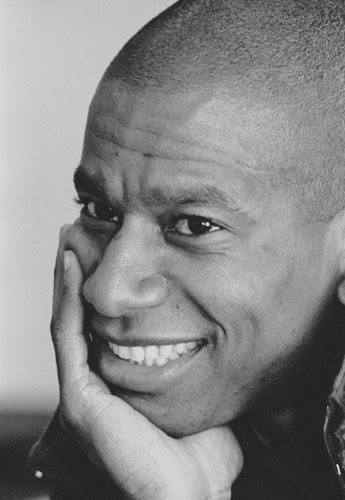
PAUL BEATTY
(b. June 9, 1962)

Paul Beatty is the author of four novels and two books of poetry, all of them worthwhile. But the book of his that I return to most is one he edited. It’s called “Hokum: An Anthology of African-American Humor” (2006).
In his introduction to “Hokum,” Mr. Beatty speaks about reading the canonical black writers as a young man and “welcoming the rhetoric but over time missing the black bon mot, the snap, the bag, the whimsy upon which” — I am working around a perfectly detonated vulgarity here — both righteous anger and freedom take flight. “It was as if the black writers I’d read,” he declared, “didn’t have any friends.”

Mr. Beatty ended his introduction by making a kind of promise, one his anthology kept. “I hope ‘Hokum’ beats you down like an outclassed club fighter,” he wrote. “Each blow plastering that beaten boxer smile on your face, that ear-to-ear grin you flash to the crowd to convince them that if you’re laughing, then you ain’t hurt.”

Mr. Beatty’s introduction was audacious on many levels, one of them being that he writes funny himself. His declarations in “Hokum” can’t help but read, in part, like Babe Ruth pointing to the bleachers in anticipation of pounding a ball straight out there. They read like the declarations of a man intent on standing, chuckling and delivering.

Deliver Mr. Beatty has. The first 100 pages of his new novel, “The Sellout,” are the most caustic and the most badass first 100 pages of an American novel I’ve read in at least a decade. I gave up underlining the killer bits because my arm began to hurt.

“Badass” is not the most precise critical term. What I mean is that the first third of “The Sellout” reads like the most concussive monologues and interviews of Chris Rock, Richard Pryor and Dave Chappelle wrapped in a satirical yet surprisingly delicate literary and historical sensibility.

Mr. Beatty impastos every line, in ways that recall writers like Ishmael Reed, with shifting densities of racial and political meaning. The jokes come up through your spleen.

So much happens in “The Sellout” that describing it is like trying to shove a lemon tree into a shot glass. It’s also hard to describe without quoting the nimble ways Mr. Beatty deals out the N-word. This novel’s best lines, the ones that either puncture or tattoo your heart, are mostly not quotable here.

Most basically “The Sellout” is about a young black man born in the “agrarian ghetto” of Dickens, a neighborhood on the southern outskirts of Los Angeles, who becomes an artisanal watermelon and weed dealer. One of the finer pot strains he develops is called Anglophobia.

He ends up before the Supreme Court because he is — wait for it — reinstating slavery, at least in his own house, and segregating the local middle school, boxing whites out. His sidekick and erstwhile chattel is an old man named Hominy, the last surviving Little Rascal. Hominy says things like, “You know, massa, Bugs Bunny wasn’t nothing but Br’er Rabbit with a better agent.”

Broad satirical vistas are not so hard for a novelist to sketch. What’s hard is the close-up work, the bolt-by-bolt driving home of your thoughts and your sensibility. This is where Mr. Beatty shines.

“Like most black males raised in Los Angeles, I’m bilingual only to the extent that I can sexually harass women of all ethnicities in their native languages,” our narrator deposes. He’s bluffing, mostly.

He’s a sensitive soul, attuned to the way the sunlight floods over his girlfriend, “turning the edges of her frizzy undone hair into a flaming corona of split ends and shame.” His favorite color is “the soft light-blue of a pool lit up at night.”

The son of a single father, who is a maniacal social scientist (the narrator’s absent mother was once “beauty of the week” in Jet magazine), he had a weird childhood. His allowance was called restitution. He was the subject of odd experiments.

“When I was seven months,” he tells us, “Pops placed objects like toy police cars, cold cans of Pabst Blue Ribbon, Richard Nixon campaign buttons, and a copy of The Economist in my bassinet, but instead of conditioning me with a deafening clang, I learned to be afraid of the presented stimuli because they were accompanied by him taking out the family .38 Special and firing several window-rattling rounds into the ceiling, while shouting, ‘Nigger, go back to Africa!’ loud enough to make himself heard over the quadraphonic console stereo blasting ‘Sweet Home Alabama’ in the living room.”

His dad takes him to the regular meetings of the Dum Dum Donut Intellectuals, held in a local doughnut shop, meetings that are a gift to an author primed to send up the pretensions of some black intellectuals. His dad never does get around to writing the best-selling memoir he hopes to write, which he considered calling “I’m Ai’ight. You’re Ai’ight.”

Prick the satire in “The Sellout,” and real blood emerges. The narrator’s father is shot dead by Los Angeles police officers for, basically, driving while black. There’s a surreal but aching scene in which the narrator drapes his father’s body over the horse he keeps on his urban farm and clops home through the streets, a pageant I’d love to see filmed by Charles Burnett.

Almost the entirety of black American culture and stereotypes are carved up under this novel’s microscope: Tiger Woods, Clarence Thomas (given a memorable line), Oreo cookies, fairy tales (“Rapunzel, Rapunzel, let down your weave!”), Bill Cosby, cotton picking, penis size, Saturday morning cartoons, George Washington Carver, lawn jockeys, Mike Tyson. The “do-gooder condescension” of Dave Eggers comes in for a hazing. The American liberal agenda is folded into origami.

A bowdlerized version of “Middlemarch” for black students is retitled, “Middlemarch Middle of April, I’ll Have Your Money — I Swear.” A television crew asks a rioter if the looting and madness will change anything. The response, when it arrives: “Well, I’m on TV, ain’t I, bitch?”

The riffs don’t stop coming in this landmark and deeply aware comic novel. About Stevie Wonder, the narrator says his Latin motto should be, “Cogito, ergo Boogieum. I think, therefore I jam.” Ditto this book.

“The Sellout,” I am sad to say, falls into a holding pattern in its final two-thirds. Mr. Beatty still writes vividly, and you’re already up there at 30,000 feet. But the sense of upward thrust is mostly absent.

Yet this slashing novel puts you down in a place that’s miles from where it picked you up. It suggests, as the narrator’s father tells him one night, half-wasted on Scotch whisky, “The real question is not where do ideas come from but where do they go.” That’s not hokum at all.

THE SELLOUT
By Paul Beatty
288 pages. Farrar, Straus and Giroux. $26.

Saturday, February 14, 2015

Kofi Natambu On SOS: Poems 1961-2013 by Amiri Baraka, Grove Press, 2015

A Critical  Review of a "Review":
The White Supremacist Incompetence of New York Times "literary critic" Dwight Garner vs. the literary and cultural WORK and achievements of Amiri Baraka from 1961-2013
by Kofi Natambu
The Panopticon Review

DWIGHT GARNER
(b. 1965)
NEW YORK TIMES LITERARY CRITIC 

“We know that the war against intelligence is always waged in the name of common sense.”
― Roland Barthes, Mythologies

As U.S. History—social, cultural, economic, and political—notoriously and repeatedly reveals to us, the sustained relentless brutality and perversely willful ignorance and self serving arrogance of White Supremacy (forever masked in this country by the always handy and rhetorically vague euphemism called “racism") is simultaneously conscious, subconscious, and unconscious behavior no matter who is engaging in it. Moreover, in the living ideological and empirical context of a society and culture eyebrow deep in the vast and thoroughly rancid ocean of lies, distortions, aporias, evasions and denials intrinsic to the white supremacist intellectual mindset (and practice), the knee-jerk default position that one takes is nearly always one of an insistently dismissive and rank condescension toward the black subject/object/target of one’s middlebrow contempt and patronizing indifference. Thus instead of an intelligently considered and even minimally rational and focused critical analysis of the actual range and scope of the black object’s actual work and contributions we inevitably  are subjected instead to an outrageously myopic reductionism and lazy simpleminded a priori rejection of the work in favor of a smugly self satisfied and mindless incompetence buttressed by an utterly defensive witlessness masquerading as “insight.” The result is the idiotic pseudo psychoanalytic bile and corny extraliterary judgment and moral posturing that Mr. Garner has conjured here instead of a mature, even minimally competent critical review of the actual “gift and achievements” of Amiri Baraka’s WORK over a half century. For example as Garner conveniently refuses to even acknowledge, let alone responsibly engage, regardless of what anyone thinks otherwise nearly every major writer or artist in history worth even a modicum of our attention and regard is necessarily and by definition a raft of internal and external contradictions and unresolved tensions that one may like or dislike, understand or are clueless about, identify with or disdain. But what pray tell does any of that have to do with the actual “gift and achievements” of their work? Far more relevant here is what does any of that has to do with a genuine critical assessment and engagement of this work? T.S. Eliot and Ezra Pound (just to name two of the endless number of famously white “mainstream" canonical examples one could cite) were both notoriously racist, sexist, and fascist minded snobs steeped in religious bigotry and secular hatreds whose highly contentious relationship to a wide array of people and cultures deeply rankles, upsets, offends, and horrifies many to this day (and largely for very good and substantive reasons) but in the FINAL ANALYSIS what does that have to do with determining whether or not Pound and Eliot were great poets and critics whose actual “gifts and achievements” were still extremely important and of immense artistic and intellectual value creatively to the theory and practice of poetry and literary expression whether one “liked” or “identified” with them or not.

In the case of Amiri Baraka my point is that even if Garner foolishly but honestly thought Baraka’s work overall was somehow unworthy of his or our collective attention he would still have to make the intellectual and analytical EFFORT at minimum to seriously and critically investigate and thus intelligently ascertain exactly what he thought Baraka’s work did and didn’t do in his literary career in order to share his opinions and ideas about the relative value (or lack thereof) of Baraka’s work for his criticism to have any kind of useful validity. But Garner does not come anywhere close to that basic level or standard of competency as a literary critic or even disinterested academic observer of Baraka’s fifty year oeurve. The reasons Garner utterly fails to do that is because he’s such a willfully smug, arrogant, condescending, and absurdly patronizing literary policeman who simply pretends he always already “knows” who and what Baraka is and isn’t as a writer and cultural force that he clearly thought/felt it was beneath his station or position (status?) to do what is REQUIRED of him toas a critic. In its place we get instead some silly infantile bullshit about Baraka’s “personality" (or what is absurdly construed by Garner to be Baraka’s personal psychology). Talk about rhetorical dishwater. It sounds to me like Garner has been drinking it! By dismissively reducing Baraka’s poetry to being “full of tantrums and sophistries” and Baraka himself to a mere “malcontent” who wore his “id on his sleeve” and was “ tightly wound” and who “wanted to slice up "the white man" (could Garner possibly mean himself?) like a spiral ham” what we decidedly don’t get is a real literary critic capable of explicating and expressing ideas and opinions worth reading and (gasp!) actually thinking seriously about one way or the other. Instead we get the pompous adolescent blurtings of a junior/bush league pop psychologist. Anything else that Baraka has to offer as a major poet and intellectual Garner assures us without a hint of evidentiary information or analysis is nothing but “many, many deficiencies of coherence” that Garner couldn’t or didn’t want to grasp because it’s relatively unimportant or meaningless to him. Further as Baraka embraced a series of differing ideological positions we are told by Garner the presumptuous self proclaimed sage that Baraka's “political voice ran over his poetic one” (a falsely dichotomous theoretical split of political ideology and poetics if there ever was one) and that  process in turn introduced some truly bad and contemptible things to emerge in his poetry. What an insufferable intellectual fraud! As Roland Barthes pointed out so eloquently in his early literary and critical theory opus Mythologies (1956) Garner is the very embodiment of that creepy species of narcissistic sophistry known as “blind and dumb criticism.” By way of a concluding sortie on this rampant tendency by far too many white American “critics” like Mr. Garner to blithely and unjustly condescend to, marginalize, and patronize various literary personas and “public personalities" rather than genuinely analyze and critique their actual literary production and output --and especially as it is pervasively and rather routinely applied to black writers in the United State--Barthes strikingly prescient views are still quite germane:

"Why do critics thus periodically proclaim their helplessness or their lack of understanding? It is certainly not out of modesty: no one is more at ease than one critic confessing that he understands nothing about existentialism; no one more ironic and therefore more self-assured than another admitting shamefacedly that he does not have the luck to have been initiated into the philosophy of the Extraordinary; and no one more soldier-like than a third pleading for poetic ineffability. All this means in fact that one believes oneself to have such sureness of intelligence that acknowledging an inability to understand calls in question the clarity of the author and not that of one's own mind. One mimics silliness in order to make the public protest in one's favour, and thus carry it along advantageously from complicity in helplessness to complicity in intelligence. It is an operation well known to salons like Madame Verdurin's: 'I whose profession it is to be intelligent, understand nothing about it; now you wouldn't understand anything about it either; therefore, it can only be that you are as intelligent as I am…"

"...In fact, any reservation about culture means a terrorist position. To be a critic by profession and to proclaim that one understands nothing about existentialism or Marxism (for as it happens, it is these two philosophies particularly that one confesses to be unable to understand) is to elevate one’s blindness or dumbness to a universal rule of perception, and to reject from the world Marxism and existentialism: 'I don’t understand, therefore you are idiots.’ But if one fears or despises so much the philosophical foundations of a book, and if one demands so insistently the right to understand nothing about them and to say nothing on the subject, why become a critic? To understand, to enlighten, that is your profession, isn’t it? You can of course judge philosophy according to common sense; the trouble is that while 'common sense' and ‘feeling' understand nothing about philosophy, philosophy, on the other hand, understands them perfectly. You don't explain philosophers,but they explain you. You don't want to understand the play by Lefebvre the Marxist, but you can be sure that Lefebvre the Marxist understands your incomprehension perfectly well, and above all (for I believe you to be more wily than lacking in culture) the delightfully 'harmless' confession you make of it.”

http://www.nytimes.com/2015/01/28/books/s-o-s-poems-1961-2013-works-by-amiri-baraka.html?ref=topics&_r=0


Books

Poetic Voice Wrapped Tight in Its Shifting Politics

S O S: Poems 1961-2013
By Amiri Baraka
531 pages. Grove Press. February, 2015. $30.


JANUARY 27, 2015
Books of The Times
By DWIGHT GARNER
New York Times
 
There are two ways to rank writers, the poet John Berryman said, “in terms of gift and in terms of achievement.”

Amiri Baraka (1934-2014) had a bold gift. His best poems are cynical, impolite, acid in their wit’s rain. He tapped easily into the suspicion and resentment that linger below the promise of American life. He was the keeper of a certain vinegary portion of the African-American imagination. He declared, over and over, that he would not be fooled again.

You can open to nearly anywhere in the first third of “S O S: Poems 1961-2013,” a career-spanning new collection of his work, and find fresh evidence of his capacities. In a poem called “Three Modes of History and Culture,” from 1969, a kind of updated Muddy Waters blues, he caught the faces of those in “trains/leaning north, catching hellfire in windows, passing through/the first ignoble cities of missouri, to illinois, and the panting/Chicago.”

What’s best about Baraka’s verse is that this historical sensibility and sense of historical dread bump elbows with anarchic comedy. “I have slept with almost every mediocre colored woman/on 23rd St,” he declares in a poem from “Preface to a Twenty Volume Suicide Note” (1961), his first collection of verse. In another poem from that collection, he asks:

What can I say?
It is better to have loved and lost
Than to put linoleum in your living room?

You were never sure what Baraka was going to say next, and for a writer, that’s not an insignificant gift to possess.

Baraka’s achievements, “S O S” makes plain, were only rarely equal to his talents. He went from beatnik to black nationalist to Marxist, and his political voice slowly ran over his poetic one, his dogma over his karma, to reverse the joke. Misogyny and anti-Semitism began to filter into his work.

In The Village Voice in 1980, he published an essay called “Confessions of a Former Anti-Semite.” But a poem titled “Somebody Blew Up America,” written shortly after Sept. 11, contains these lines:

Who knew the World Trade Center was gonna get bombed

Who told 4,000 Israeli workers at the Twin Towers

To stay home that day

Why did Sharon stay away?

The funny thing about “Somebody Blew Up America” is that much of the rest of it is terrifically clarifying in its anger. It’s a vernacular poem, meant for the ear perhaps more than the eye, and it asks the oldest and juiciest questions about inequality:

Who own them buildings

Who got the money

Who think you funny

Who locked you up

Who own the papers

Who owned the slave ship

Who run the army

Who the fake president

Who the ruler

Who the banker

Who? Who? Who?

 
Now there’s a pop quiz for every sentient soul. Here is your blue book. You have 15 seconds.

“S O S” is the best overall selection we have thus far of Baraka’s work, but he is served poorly by it. The introduction by Paul Vangelisti, the volume’s editor, is an anthology of unforced errors.

Mr. Vangelisti neglects to provide the most basic details of Baraka’s life, so these poems are shorn of context. He also writes academic jargon of the sort Baraka despised, referring to one poem as “driven by the nuances of shifting, heterogeneous cadences, often spoken, often collaged, and always relentlessly material and public.”

This is the kind of rhetorical dishwater that can just as easily apply to a Meghan Trainor song or a Fox News segment.

Mr. Vangelisti provides only the vaguest sense of how the poems in this volume were selected and misses a crucial opportunity to set the entirety of Baraka’s oeuvre in necessary context. What were the criteria? What exactly was left out? We do learn that “S O S” comprises the contents of two earlier selections of Baraka’s work, selections the poet oversaw.

You would not know from this introduction, for example, that one of the poems Baraka left out included this line: “I got the extermination blues, jewboy.” The poems in the last section of “S O S” were selected by Mr. Vangelisti after the poet’s death.

Baraka knew he was wound tight. “I am a mean hungry sorehead,” he writes. “Do I have the capacity for grace??” He long had the sense he’d been “undesirably discharged/From America.” His internal struggles — he wore his id on his sleeve — are rarely less than interesting. “I wanted to know myself,” he writes, “and found this was a lifetime’s work.”

The pleasures in “S O S” tend to be mean or pointed, and funny and very real. He asks in one short poem,

If Elvis Presley/is

King

Who is James Brown,

God?

Another reads in its entirety,

How amazed the crazed

negro looked informed

that Animal Rights had

a bigger budget

than the N.A.A.C.P.!

He had little time for organized religion. A poem from 1972 begins,

We’ll worship Jesus

When jesus do

Somethin

When jesus blow up

the white house

or blast Nixon down

when jesus turn out congress

or bust general motors to

yard bird motors.

 
Baraka’s poems are filled with tantrums and sophistries, stances and dances. There are many, many deficiencies of coherence. Some make only the dead, clicking sound cars make in the frost. But others plant a hatchet in your skull that you won’t be able to pull out for weeks. Especially the ones in which he seems to want to slice up the white man like a spiral ham.

Baraka, who can almost be viewed as an intense and wary reverse image of Whitman, was a malcontent who contained multitudes. “Get your pitch forks ready,” he writes in a late poem collected here. “Strike Hard and True. You get them or they get you.”

S O S
Poems 1961-2013
By Amiri Baraka
531 pages. Grove Press. $30.


Dwight Garner (critic)
From Wikipedia, the free encyclopedia

 
Born January 8, 1965 (age 50)
Fairmont, West Virginia, United States
Occupation Writer, journalist
Genre Criticism, nonfiction

Dwight Garner (born 1965) is an American journalist, now a literary critic for The New York Times. Prior to that he was senior editor at the New York Times Book Review, where he worked from 1999 to 2009. He was also the founding books editor of Salon.com,[1] where he worked from 1995 to 1998.

His essays and journalism have appeared in The New York Times Magazine, Harper's Magazine, The Times Literary Supplement, the Oxford American, Slate, the Village Voice, the Boston Phoenix, The Nation,[1] and elsewhere. He has served on the board of the National Book Critic's Circle. In a January 2011 column for Slate, the journalist Timothy Noah called Garner a "highly gifted critic" who had reinvigorated the New York Times's literary coverage, and likened him to Anatole Broyard and John Leonard.[2]

He is the author of Read Me: A Century of Classic American Book Advertisements, and he is at work on a biography of James Agee.

Dwight Garner was born in West Virginia[3] and graduated from Middlebury College.[4] He lives in Frenchtown, New Jersey. He is married to the cookbook writer Cree LeFavour.[5]


http://heatstrings.blogspot.com/2015/02/save-our-stanzas-selecting-amiri-baraka.html

Saturday, February 07, 2015
Save Our Stanzas - Selecting Amiri Baraka
by Aldon Lynn Nielsen
Heartstrings

AMIRI BARAKA
(1934-2014)

For many years I have complained loudly and often about the lack of a readily available major gathering of Amiri Baraka's poetry. It would be  hard to think of another late career poet of his importance who was not the subject of a Collected as well as a Selected. (The Complete generally awaits the poet's demise -- but even then . . .. Recollect that one of Frank O'Hara's friends asked, following the publication of both the Collected and Poems Retrieved, whether a Complete was even a possible thing. Looking at the masses of Baraka's work, I have often wondered the same thing.)

Long out of print, the Selected Poetry of Amiri Baraka/LeRoi Jones, published in 1979, was advertised as "containing those poems which the author most wants to preserve," and that has long been the most substantial collection of Baraka's verse we had - 339 pages running from Preface to a Twenty Volume Suicide Note through to Poetry for the Advanced. (This was the only volume in which many of us could find that second collection from Baraka's Marxist epoch.) There was no editor named in the book, so one assumes the selections are indeed Baraka's own.

A quarter century on, Marsilio published Transbluesency: Selected Poems 1961-1995, edited by Paul Vangelisti in consultation with the poet. I loved the cover of that book the minute I saw it, and began reading with the highest hopes, but I was already concerned just picking up the volume. The 1979 Selected ran to 339 pages; the 1995 Transbluesency, taking in decades more work to choose from, was 271 pages long.

Shortly after the publication, a retrospective symposium on Baraka's life and work was held at the Schomburg Library. One of the standout events of that weekend was a reading Baraka gave during which, at the suggestion of Kalamu ya Salaam, Baraka read poems from the entire breadth of his career, something I had never seen him do before and that I never again witnessed. Picking up Transbluesency, Baraka paused over the first poem on the first page and remarked, "there's a mistake here." That was just the beginning of it -- Transbluesency was badly marred by obvious typos and substantive errors. Any selection, like any anthology, is open to criticism for what has been omitted (or what perhaps should have been). I remember Kalamu asking Baraka why the book didn't include such powerful works as "I Investigate the Sun." But selection criteria aside, those of us who hope to teach from such books also hope to have reliable editions. Since 1995, Transbluesency has been the only easily acquired and adopted collection of Baraka's work spanning his writing life, and so I have often begun classes by issuing a corrections kit to my students so that we can all be on the same page with some assurance we are on a page Baraka wrote. Learning that the new SOS: Poems 1961-2013 was also being edited by Vangelisti, and that it was to be an expansion of Transbluesency, I harbored a wish that those many errors would be corrected.

And some of them have been -- That first poem, "Preface to a Twenty Volume Suicide Note" has been corrected, but the fifth section of "Hymn for Lannie Poo" still contains lines that read "The preacher's / conning eyes / filed when he saw /the way I walked to- / wards him;" lines that don't really make much sense. "Conning eyes filed"? Readers of earlier editions know the word was supposed to be "fired." A pretty bad typo in "Wise I" has been corrected, but the opening page of "In the Tradition" retains a significant error. The current edition has the lines "the White Shadow / gives advice on how to hold our homes / together, tambien tu, Chicago Hermano" -- I imagine any number of readers have been wondering who this Chicago hermano is and why Baraka is addressing him in Spanish. Those of us who first heard the poem on the stunning LP New Music - New Poetry, accompanied by Fred Hopkins, Steve McCall and David Murray, know that the line goes "tu tambien, Chicano hermano." Chicano/Chicago -- not really a typo, and a world of difference.

Again, any of us might well have made a different selection. Why no "Why Is We Americans"? Why no "Something in the Way of Things," no "I Liked Us Better"? Was the decision to repeat exactly the selections from Transbluesency Baraka's choice? For the foreseeable future, we will have to live and work with these decisions. A proposed Collected was put on hold by Baraka's agents in favor of letting SOS have the field to itself for a time.

But it's not just copy editing that is a problem. The editor's introduction adds some new counterfactuals to those already circulating. Baraka's parents did not capitalize the "R" when they named him Everett Leroy Jones. It is simply not true that following 1973 Baraka "would only be published by smaller or alternative presses." That 1979 Selected (still a book to get on the used book market if you can't get all the original volumes)? That was published by Morrow, and it includes the Marxist period books Hard Facts and Poetry for the Advanced, the very sorts of work Vangelisti argues rendered Baraka unpublishable by the larger, commercial houses. Baraka often observed that it had been easier to get published with "hate whitey" than with "hate capitalism," and that is true enough. But that's a far cry from the claim advanced in the introduction to the new book. Morrow also published Baraka's Selected Plays and Prose and Daggers and Javelins, a major collection of essays from the Marxist period. It was also Morrow who published the first substantial collection of Baraka's later plays, The Motion of History. None of this is to take anything away from the story of Baraka's difficulties in the publishing world (part of why we haven't seen another major collection of the poems in all these years from a larger press), and we all owe a tremendous debt to Third World Press and the many small literary presses who continued to make Baraka's works available. Still, it's better to get the motion of history right when writing history, when you're editing the only large collection of Baraka's poetry that we're going to have for the foreseeable future.

There are questionable interpretations as well. Can we really make the case that Baraka's "lyrical realism" "sounds in counterpoint to his Beat contemporaries, steeped as they were in the egocentric idealism of nineteenth-century Anglo-American literature"? Take another look at Baraka's brilliant introduction to The Moderns and let his comments on the relationship of his contemporaries among the Beats to, say, Melville and Twain, sink in and then think carefully about this argument. And is it really defensible to claim that Baraka's writing is "both American (i.e., African American, of the 'New World') and firmly outside Anglo-American culture"?

On the other hand, Vangelisti is on much firmer ground with his observation that "up through the last poems, there remained above all a critical, often restless lyricism . . . " I think one of the greatest services this new volume will perform is forcing, or at least encouraging, a much more nuanced understanding of Baraka's later writings. The anthologies have tended to repeat the same few poems, and many readers, aided and abetted by America's publishing world, simply have no clue what Baraka's late poems are like. The image of a screaming, hate-filled nationalist was simply replaced in the national media imaginary by the image of a screaming, hate-filled communist (see the press controversy surrounding "Somebody Blew Up America" for a sense of what I'm getting at) and all too many critics and general readers alike simply didn't bother reading any poetry Baraka wrote over the past four decades. Those who did lay hands on copies of Funk Lore or Wise or any of the many chapbooks over the years knew that Baraka continued to write poetry easily the equal of anything done in his youth. How hard could it have been for anyone to know that? Still, it could have been a whole lot easier if he'd had the kind of book publication an Adrienne Rich or a Kevin Young or a Mark Strand seemed to find without quite so much trouble.

The final section of the new SOS, titled "Fashion This," is selected from work published after 1996 and is in itself cause for celebration, a truly important event in American poetry. Many familiar elements are in place. Where the young LeRoi Jones recollected the Green Lantern, the old Baraka at several points remembers the little devil cartoon character created by Gerald 2X in the pages of Muhammad Speaks. (Has anybody ever gathered those cartoons in one place?) The lyric reflections on Monk and Trane continued to Baraka's dying day. The scathing satire continued unabated. The wild experimentation with language went on (see "John Island Whisper"). The collection provides a new context for reading poems we've nearly talked to death in the past. Reread "Somebody Blew Up America?" next to Baraka's earlier poem written after the bombing in Oklahoma City.

There are few places in the work as deeply moving and lyrically intense as the poems for and about Amina Baraka, the former Sylvia Robinson. "What beauty is not anomalous / And strange"

If we ever do get a Collected Baraka (and let's hope it's also a corrected Baraka) I suspect it will need to be in two very large volumes, rather  like the two volumes of the Creeley Collected we now have. There are at least 236 pages of uncollected poems just from the beginning of Baraka's publishing to 1966. Add to that all the uncollected poems since 1966 and whatever of the unpublished poetry can be coralled and you'd probably have another entire book at least as long as SOS. We need these books, but for now this is what we have. To the good, there is plenty here for us to reread and think over for a good long while.

The saddest lines in the entire 528 pages of SOS come in a late poem reflecting on late Auden: "What poetry does / is leave you when you stop needing it!" Poetry never left Amiri Baraka, and we will never stop needing his.


Tender Arrivals
by Amiri Baraka

 
Where ever something breathes
Heart beating the rise and fall
Of mountains, the waves upon the sky
Of seas, the terror is our ignorance, that’s
Why it is named after our home, earth
Where art is locked between
Gone and Destination
The destiny of some other where and feeling

The ape knew this, when his old lady pulled him up
Off the ground. Was he grateful, ask him he’s still sitting up there
Watching the sky’s adventures, leaving two holes for his own. Oh sing
Gigantic burp past the insects, swifter than the ugly Stanleys on the ground
Catching monkey meat for Hyenagators, absolute boss of what does not
Arrive in time to say anything. We hear that eating, that doo dooing, that
Burping, we had a nigro mayor used to burp like poison zapalote
Waddled into the cave of his lust. We got a Spring Jasper now, if
you don’t like that

woid, what about courtesan, dreamed out his own replacement sprawled
Across the velvet cash register of belching and farting, his knick names when they
let him be played with. Some call him Puck, was love, we thought, now a rubber
Flat blackie banged across the ice, to get past our Goli, the Africannibus of memory.
Here. We have so many wedged between death and passivity. Like eyes that collide
With reality and cannot see anything but the inner abstraction of flatus, a
biography, a car, a walk to the guillotine, James the First, Giuliani the Second
When he tries to go national, senators will stab him, Ides of March or Not. Maybe
Both will die, James 1 and Caesar 2, as they did in the past, where we can read about
The justness of their assassinations

As we swig a little brew and laugh at the perseverance
Of disease at higher and higher levels of its elimination.
We could see anything we wanted to. Be anything we knew how to be. Build
anything we needed. Arrive anywhere we should have to go. But time is as stubborn
as space, and they compose us with definition, time place and 
condition.
The howlees the yowlees the yankees the super left streamlined post racial ideational
chauvinists creeep at the mouth of the venal cava. They are protesting 
fire and
Looking askance at the giblets we have learned to eat. “It’s nobody’s heart,” they
say, and we agree. It’s the rest of some thing’s insides. Along with the flowers, the
grass, the tubers, the river, pieces of the sky, earth, our seasoning, baked
throughout. What do you call that the anarchist of comfort asks,
Food, we say, making it up as we chew. Yesterday we explained language.

 
“Tender Arrivals” printed in S O S: POEMS 1961–2013 © 2014 by The Estate of Amiri Baraka; collection edited by Paul Vangelisti; used with the permission of the publisher, Grove Press, an imprint of Grove Atlantic, Inc.

Source: Poetry (February 2015).           

Thursday, July 24, 2014

NATHANIEL MACKEY: Outstanding Poet, Critic, Scholar, Editor, Teacher, and Literary Innovator Wins Prestigious Ruth Lilly Poetry Prize


NATHANIEL MACKEY
(b. 1947)

http://www.washingtonpost.com/blogs/style-blog/wp/2014/05/07/nathaniel-mackey-wins-100000-ruth-lilly-poetry-prize/

Nathaniel Mackey wins $100,000 Ruth Lilly Poetry Prize
By Ron Charles
May 7, 2014
Washington Post
(Photo credit:  Nina Subin. Courtesy of New Directions)


Nathaniel Mackey has won this year’s Ruth Lilly Poetry Prize. The $100,000 lifetime achievement award — one of the richest literary prizes is the world — is given annually by the Poetry Foundation, which publishes Poetry magazine.

Mackey, 66, has served as chancellor of the Academy of American Poets and now teaches creative writing at Duke. For decades he has been publishing poetry and prose, including a series of novels under the title “From A Broken Bottle Traces of Perfume Still Emanate.” His 2006 collection “Splay Anthem” won a National Book Award.

In a statement released Tuesday, Poetry magazine editor Don Share said, “The poetry of Nathaniel Mackey continues an American bardic line that unfolds from Whitman’s ‘Leaves of Grass’ to H.D.’s ‘Trilogy’ to Olson’s ‘Maximus’ poems, winds through the whole of Robert Duncan’s work and extends beyond all of these. In his poems, but also in his genre-defying serial novel (which has no beginning or end) and in his multifaceted critical writing, Mackey’s words always go where music goes: a brilliant and major accomplishment.”

Mackey described himself as “shocked” at the news. “I was at a skate park watching my 10-year-old son skateboarding,” he said. “The last thing I expected was to get news of winning a literary award. And then the surprise, a kind of disbelief, gave way to feeling very happy, of course, about the appreciation and the recognition of my work the award represents.”

Leading poets and scholars in America were quick to celebrate Mackey’s recognition.

U.S. Poet Laureate Natasha Trethewey said, “It’s wonderful to see Nathaniel Mackey receive this award. It is evidence of the great diversity in American poetry — and a sure sign that it’s thriving.”

The poet Edward Hirsch, who serves as president of the Guggenheim Foundation, called Mackey “a leading African American experimental writer, who has developed a dramatic improvisational style, a poly-vocal lyricism.” Praising the way he “blurs generic boundaries,” Hirsch said, “I would call him a poet of ongoingness involved in a kind of spiritualist or cosmic pursuit.”

Robert Casper, head of the Poetry and Literature Center at the Library of Congress, described Mackey as “one of our country’s great lyric experimenters, able to weave a multiplicity of phrases and voices into a song of spiritual reckoning.”

New Directions, a small, august press in New York, has published four of Mackey’s books, including his most recent collection, “Nod House” (2011). A new poetry collection called “Blue Fasa” will be published next May.

Jeffrey Yang, an editor at New Directions, said, “Mackey’s work is like putting a quarter in a jukebox, and the song that emerges is like nothing you’ve ever heard. His poetry feels like it exists in a parallel universe. The influence of the deep history and rhythms of jazz and world music jumps out at you immediately, but then the many other levels of his poems sink in and take you into a very unique poetic space that is in conversation with other cultures and arts. To me, he’s like a revered elder (but is too young to be one!) and carries on the modernist tradition of pushing the boundaries of the art.”

Mackey will officially receive the Ruth Lilly Prize at a ceremony at the Poetry foundation in Chicago on June 9.

(Photo credit Nina Subin. Courtesy of New Directions)


NEW DIRECTIONS PRESS

Nathaniel Mackey
AUTHOR
Contemporary American poet

Nathaniel Mackey was born in Miami, Florida, in 1947, and grew up, from age four, in California. He is the author of five chapbooks of poetry, Four for Trane (Golemics, 1978), Septet for the End of Time (Boneset, 1983), Outlantish (Chax Press, 1992), Song of the Andoumboulou: 18-20 (Moving Parts Press, 1994), and Four for Glenn (Chax Press, 2002); five books of poetry, Eroding Witness (University of Illinois Press, 1985), School of Udhra (City Lights Books, 1993), Whatsaid Serif (City Lights Books, 1998), Splay Anthem (New Directions, 2006), and Nod House (New Directions, 2011); and an ongoing prose work, From a Broken Bottle Traces of Perfume Still Emanate, of which four volumes have been published: Bedouin Hornbook (Callaloo Fiction Series, 1986; second edition: Sun & Moon Press, 1997), Djbot Baghostus’s Run (Sun & Moon Press, 1993), Atet A.D. (City Lights Books, 2001), and Bass Cathedral (New Directions, 2008); the first three of these have been published together as From a Broken Bottle Traces of Perfume Still Emanate: Volumes 1-3 (New Directions, 2010). He is also the author of two books of criticism, Discrepant Engagement: Dissonance, Cross-Culturality, and Experimental Writing (Cambridge University Press, 1993; paper edition: University of Alabama Press, 2000) and Paracritical Hinge: Essays, Talks, Notes, Interviews (University of Wisconsin Press, 2005). Strick: Song of the Andoumboulou 16-25, a compact disc recording of poems read with musical accompaniment (Royal Hartigan, percussion; Hafez Modirzadeh, reeds and flutes), was released in 1995 by Spoken Engine Company. He is editor of the literary magazine Hambone and coeditor, with Art Lange, of the anthology Moment’s Notice: Jazz in Poetry and Prose (Coffee House Press, 1993). His awards and honors include the selection of Eroding Witness for publication in the National Poetry Series, a Whiting Writer’s Award in 1993, election to the Board of Chancellors of the Academy of American Poets in 2001, the National Book Award for Splay Anthem in 2006, an Artist’s Grant from the Foundation for Contemporary Arts in 2007, the Roy Harvey Pearce/Archive for New Poetry Prize in 2007, the Stephen Henderson Award from the African American Literature and Culture Society in 2008, and a Guggenheim Fellowship in 2010. He lives in Durham, North Carolina, and teaches at Duke University, where he is the Reynolds Price Professor of English.

More Praise…

“He is the Balanchine of the architecture dance.”

— David Hajdu, The New York Times Book Review on Nathaniel Mackey

“In both Song of the Andoumboulou and 'Mu,' Mackey describes the music he hears––its history, players, sounds. But more often than not he transposes the music he hears into words, channeling the spirit, re-incarnating it into the English language.”
— Travis Nichols, Stop Smiling on Nathaniel Mackey's Nod House


Whatsaid Serif
by Nathaniel Mackey
City Lights Books, 1999


BOOK REVIEW
by Kofi Natambu
Ishmael Reed's KONCH magazine
February, 2000

As we know from both ancient and contemporary lore the gift of song is our greatest link to the massive forcefield we call music. Its material agent is sound and its expressive/structural foundation is language--that always powerful and redemptive reminder of the human capacity for the transformation as well as transmutation of existential being. Intimately aligned with language is the medium of poetry which derives its energy and sense of identity from the frontiers of language itself bringing those who read and listen to it heavily encoded messages from the frontlines of consciousness. It is this consciousness that extraordinary poets evoke when they literally and figuratively weave and interweave their markings with that of past encrypted forms and symbols. A consciousness not of origins but of memories and desires tracing and tracking their myriad narratives thru the broken and spiralling corridors of time. These poets provide us with tangible histories of that which cannot be eclipsed but often remains both tantalizingly elusive and mundane. At this intersection of the quotidian and the sublime lies the concrete magic of poetry.

One of our most useful and profound guides to this consciousness that seeks and speaks the language of philosophical possibility as melodic song and rhythmic grace is Nathaniel Mackey, a writer of astonishing clarity and precision who never sacrifices the visceral yet subtle emotion that the struggle for the minute "nuances of truth" always brings. Mackey, a critically acclaimed and much respected literary editor (Hambone) as well as writer of poetry and prose fiction forms, is a veteran professor of literature at the University of California, Santa Cruz, who has for the past two decades been engaged in an epic, painstaking and exhilarating quest for a simultaneously mythic, gnostic and historical understanding of how we, "a rough draft of human being" as Mackey puts it, are inextricably linked to the Andoumboulou, a failed earlier form of human being in Dogon (West African) cosmology. In Mackey's view of this mythology we are in fact the Andoumboulou or rough draft.

Through the textural renderings of this experience as inscribed and encoded in words transformed by short line positionings and rhythmic displacements Mackey works to return language 'back' to the rasps and outpourings of tonality found in Dogon funeral rituals where rebirth, renewal and thus the eternal possibilities of redemption and reconciliation can flower and assert themselves. In Mackey's creative and imaginative ruminations this on-going quest contains the seeds of fulfillment, a quenching of the thirst for existential awareness and social community--but not without recognizing the historically informed, hardwon and bluesbased nature of this struggle. This is where harmony attempts to enter the musical and linguistic universe (omniverse?) for Mackey. Consider this section from 'Song of the Andoumboulou: 20':

I was the what-sayer.
Whatever he said I would
say so what.
Boated whether
we came by train or by
bus, green light
loomed on the horizon.
Where we were might've
been the moon...

Bleak
survival egged us on, a
bird made of tin
pressing its beak
to the smalls of our
backs. Spectral
advance,
peripatetic
spur...
This while on our
way to Ouadada,
vowed we'd
let nobody turn us
around, thought we
saw Dadaoua. To the outer
principalities of Onem we were
brought, bought,
sold
on blocks, auctioned
off.

It was a train we were on,
peripatetic tavern we
were in, mind unremittingly
elsewhere, words meaning
more
than the world they
pointed at, asymptotic
tangent, Atht it was called...
Sophic rail we
stood at listening.
Expression
was on the jukebox, "To Be"
Spooked flutes hollowed
us out,
sophic not-ness...South, more
news of slaughter. Something
we saw we hoped we only
imagined we saw. "They
kill us,"
Mbizo yelled...

It is precisely in such stark and spectral circumstances that narratives, narrators and metaphysical wanderings become linked to a much broader and panaromic perception and even understanding(s) of the 'meaning of experience.' What Mackey provides is a linguistic and graphic mapping of the journey across the interior and exterior terrains of history as consciousness. In the spaces between utterance and 'communication' lies one's own rendezvous with destiny-- a destiny that we make as it is shaping and transforming us. Through this portal of reality, language allows us to glimpse how and why passages of time and space are both created and accessed. What the poet does is to speak and write that which remains unspoken and unwritten but is nevertheless alive. In this way gnosis, semiosis, and mythos meet and crossfertilize each other in order that humanity (the Andoumboulou) can make itself heard, seen and known. This is the crossroads that the blues singers and Jazz musicians speak of and express thru the languages of their particular mediums. Mackey's epistemology is steeped in this notion of tradition-as-contemporary function. As a result what comes through in his work are intensely lyrical evocations of this epistemological approach in motion:

Song of the Andoumboulou: 23
--rail band--


Another cut was on
the box as we pulled
in. Fall back though we
did once it ended,
"Wings
of a Dove" sung so
sweetly we flew...
The Station Hotel came
into view. we were in
Bamako. The same scene
glimpsed again and
again said to be a
sign...
As of a life sought
beyond the letter,
preached of among those
who knew nothing but,
at yet
another "Not yet" Cerno
Bokar came aboard, the
elevens and the twelves locked
in jihad at each other's
throats, bracketed light
lately revealed, otherwise
out...

Ultimately these poetic holographs of life culled from markings and inscribed gestures found in the signage of Time are on-going intertextural evidence of our collective existence on the shores of memory and desire. From this centered space the Andoumboulou re-discover that earth which they have been told about many times in the past. It is Mackey's musical rendering of language that allows them (us?) to be both seen and heard. So sayeth the eternal practice of the poet as what-sayer.


Bio Note

Online Works
 
MACKEY @ PennSound

poets.org
 

poetry foundation

Nathaniel Mackey at MLA: Audio and photos from Mackey's December 2002 reading and discussion at the MLA
"Cante Moro" (essay)

Poems:


Song of the Andoumboulou: 23 from Postmodern Culture, 1995
Phrenological Whitman from Conjunctions, 1997
Song of the Andoumboulou: 48 from Web Del Sol/Facture
Sound and Severance from Callaloo, 2008
Nathaniel Mackey Reading on UCtelevision, 2008
About the Author:
Chris Funkhouser on Nathaniel Mackey's Recent Work, Winter 1994
Peter O'Leary's "Some Ecstatic Elsewhere," EBR, 1995
Paul Naylor's "The 'Mired Sublime' of Nathaniel Mackey's Song of the Andoumboulou," Postmodern Culture, May 1995
An Interview with Nathaniel Mackey conducted by Chris Funkhouser, 1995
Special Issue of Callaolo on Nathaniel Mackey, Spring 2000
J. Edward Mallot's "Sacrifical Limbs, Lams, Iambs, and I Ams: Nathaniel Mackey's Mythology of Loss," Contemporary Literature, 2004
Luke Harley's"Music as prod and precedent: Nathaniel Mackey's niggling at the limits of language," in Jacket 32, 2007
Norman Finkelstein's "Nathaniel Mackey and the Unity of All Rites,"Contemporary Literature, 2008
On Strick: Song of the Andoumboulou 16-25 (CD, with Hafez Modirzadeh

EPC page by Katie Price, June 2010


Nathaniel Mackey
b. 1947


Born in Miami and raised in Southern California, poet, novelist, editor, and critic Nathaniel Mackey earned his BA from Princeton University and his PhD from Stanford University.

Mackey cites poets William Carlos Williams and Amiri Baraka, in addition to jazz musicians John Coltrane and Don Cherry, as early influences in his exploration of how language can be infused and informed by music. In a 2006 interview with Bill Forman for MetroActive magazine, Mackey addressed the relationship he seeks between music and his own poetry: “I try to cultivate the music of language, which is not just sounds. It’s also meaning and implication. It’s also nuance. It’s also a kind of angular suggestion.”

Mackey is the author of numerous books of poetry, including Nod House (2011), the National Book Award-winning Splay Anthem (2006), Whatsaid Serif (1998), and Eroding Witness (1985), which was chosen for the National Poetry Series. He has published several book-length installments of his ongoing prose work, From a Broken Bottle Traces of Perfume Still Emanate, beginning with Bedouin Hornbook in 1986. David Hajdu described the prose project as “not simply writing about jazz, but writing as jazz” in a 2008 New York Times Book Review piece on the fourth volume in Mackey’s series, Bass Cathedral (2007). Hajdu characterized the movement of language in the volumes as “kinetic and also contemplative, elegiac and mercurial, sometimes volatile.” The first three volumes of Mackey’s series were published together by New Directions in 2010. A recording of Mackey’s work Strick: Song of the Andoumboulou 16-25 was released in 1995 by Spoken Engine Company, with musical accompaniment by Royal Hartigan and Hafez Modirzadeh.

Mackey coedited Moment’s Notice (1993) with Art Lange, and American Poetry: The Twentieth Century (2000) with Robert Hass, John Hollander, Carolyn Kizer, and Marjorie Perloff. Mackey has broadcast jazz and world music as a DJ on local noncommercial radio since the late 1970s, an endeavor he describes as similar to that of bringing together journal issues during his long tenure as the editor of Hambone magazine: “You segue, you juxtapose, you mix,” he noted in the MetroActive interview. Mackey’s critical work includes Discrepant Engagement: Dissonance, Cross-Culturality, and Experimental Writing (1993) and Paracritical Hinge: Essays, Talks, Notes, Interviews (2005). His many honors and awards include fellowships from the Guggenheim Foundation and the Foundation for Contemporary Arts; the Roy Harvey Pearce/Archive for New Poetry Prize; and the Stephen Henderson Award from the African American Literature and Culture Society. From 2001 to 2007, he served as a chancellor of the Academy of American Poets.

Mackey taught for many years at the University of California, Santa Cruz and is currently the Reynolds Price Professor of Creative Writing at Duke University.

POEMS, ARTICLES, and MORE
Discover this poet’s context and related poetry, articles, and media.


POEMS BY NATHANIEL MACKEY:


As If It Were “This Is Our Music”
Day After Day of the Dead
Eye on the Scarecrow
More poems by Nathaniel Mackey

http://www.poets.org/poetsorg/poet/nathaniel-mackey

Nathaniel Mackey
Miami , FL
Chancellor 2001-2007


Poet and novelist Nathaniel Mackey was born in 1947 in Miami, Florida. He received a BA degree from Princeton University and a PhD from Stanford University.

His books of poetry include Nod House (New Directions, 2011); Splay Anthem (2006), which won the 2006 National Book Award in Poetry; Whatsaid Serif (1998); Song of the Andoumboulou: 18-20 (1994); School of Udhra (1993); Outlantish (1992); Eroding Witness (1985), which was selected for the National Poetry Series; Septet for the End of Time (1983); and Four for Trane (1978).

He is also the author of an ongoing prose work, From A Broken Bottle Traces of Perfume Still Emanate, of which four volumes have been published: Bass Cathedral (New Directions, 2008), Atet A. D. (2001), Djbot Baghostus’s Run (1993), and Bedouin Hornbook (1986), the first three of which are collected in From a Broken Bottle Traces of Perfume Still Emanate: Volumes 1-3 (2010).

The poet Robin Blaser has called Mackey’s work “a brilliant renewal of and experiment with the language of our spiritual condition and a measure of what poetry gives in trust—‘heart’s/meat’ and the rush of language to bear it.”

Also a critic and literary theorist, Mackey is the author of Discrepant Engagement: Dissonance, Cross-Culturality, and Experimental Writing (1993). He is the editor of American Poetry: The Twentieth Century (2000, with Carolyn Kizer, John Hollander, Robert Hass, and Marjorie Perloff) and Moment’s Notice: Jazz in Poetry and Prose (1993, with Art Lange). He also edits the magazine Hambone. In 1995, Strick: Song of the Andoumboulou 16-25, a compact disc recording of poems read with musical accompaniment, was released.

Nathaniel Mackey has received numerous awards including a Whiting Writer’s Award and a 2010 Guggenheim fellowship. He is the Reynolds Price Professor of English at Duke University and served as a Chancellor of the Academy of American Poets from 2001 to 2007. Mackey currently lives in Durham, North Carolina.

http://www.nationalbook.org/nbaacceptspeech_nmackey.html#.U85rdmK9KSM

ACCEPTANCE SPEECH BY NATHANIEL MACKEY

NATIONAL BOOK AWARD WINNER
2006 POETRY AWARD FOR 'SPLAY ANTHEM'
Well now we know. I’d like to thank the judges for honoring my work with this award. To be chosen by such a distinguished group makes it all the more an honor. I’d also like to thank my publisher, New Directions, for publishing the book, in particular my editors, Barbara Epler and Jeffrey Yang for their enthusiastic, indeed rhapsodic response to the manuscript two years ago. Further, I’d like to thank Jeffrey for the extraordinary care he gave the book through every phase of production.

For me, it’s an especially resonant pleasure to be selected for an award of which William Carlos Williams was the first recipient. Williams was my first initiator into modern poetry and he became an abiding influence and presence, beginning with Pictures from Brueghel and Patterson, which I read as a teenager in the 1960s. His insistence that we have to go back to the beginning, find ground, and correlate on a new ground, has long stayed with me.

If I may, I’d like to read a passage from the end of Splay Anthem:

This award allows me to think that the poem’s “we” is more inclusive than I thought. I appreciate that. So again, my thanks to the panel of judges, and the National Book Foundation, and all of you. Thank you.

http://en.wikipedia.org/wiki/Nathaniel_Mackey

Nathaniel Mackey
From Wikipedia, the free encyclopedia


Born    1947
Miami, Florida
Citizenship    American
Alma mater    Princeton University;
Stanford University
Genres    Poetry

Nathaniel Mackey is an American poet, novelist, anthologist, literary critic and editor. He is Professor of English at Duke University and a Chancellor of The Academy of American Poets. Mackey is currently teaching a poetry workshop at Duke University.

He has been editor and publisher of Hambone since 1982 and he won the National Book Award for Poetry in 2006.[1] In 2014, he was awarded a Ruth Lilly Poetry Prize.[2]

Contents

1 Biography
2 Poetry
3 Fiction
4 Criticism and editing
5 Awards
6 Resources
7 External links

Biography

Nathaniel Mackey was born in 1947 in Miami, Florida. He obtained his B.A. from Princeton University and his PhD from Stanford University. He taught and lived in Santa Cruz from 1979 to 2010. He is currently a professor at Duke University.

Poetry

Mackey's books of poetry include Four for Trane (1978); Septet for the End of Time (1983); Eroding Witness (1985), which was selected for the National Poetry Series; Outlandish (1992); School of Udhra (1993); Song of the Andoumboulou: 18-20 (1994); Whatsaid Serif (1998); Splay Anthem (2006) and a chapbook Outer Pradesh (2014).

"...Mackey's series of improvisatory jazz-inspired fictions locates a ground between invention and listening that he defines as the source of culture itself. All culture, for Mackey, is a form of listening to what "we" are collectively improvising."
Barrett Watten[3]

Mackey's poetry combines African mythology, African-American musical traditions, and Modernist poetic experiment. His several ongoing serial projects explore the relationship of poetry and historical memory, as well as the ritual power of poetry and song.

Fiction

Mackey has published four volumes of an ongoing prose project entitled, From A Broken Bottle Traces of Perfume Still Emanate: Bass Cathedral (2008), Atet A. D. (2001), Djbot Baghostus's Run (1993) and Bedouin Hornbook (1986).

Criticism and editing

Mackey is the author of Discrepant Engagement: Dissonance, Cross-Culturality, and Experimental Writing (1993), an influential book of literary theory, and more recently of Paracritical Hinge: Essays, Talks, Notes, Interviews (2004). He has edited the avant-garde literary journal Hambone for more than 15 years, and co-edited Moment's Notice: Jazz in Poetry and Prose with Art Lange(1993).

Awards

2006 National Book Award, Poetry, for Splay Anthem[1]
2007 Foundation for Contemporary Arts Grants to Artists Award
2010 Guggenheim Fellowship

Resources

^ Jump up to: a b "National Book Awards – 2006". National Book Foundation. Retrieved 2012-04-08.

(With acceptance speech by Mackey, essay by Megan Snyder-Camp from the Awards 60-year anniversary blog, and other materials.)

Jump up ^ Charles, Ron (May 7, 2014). "Nathaniel Mackey wins $100,000 Ruth Lilly Poetry Prize". The Washington Post. Retrieved 10 May 2014.

Jump up ^ One Year Plan: Post 36: 7/17/07 Watten's piece is called: "Great Books 1–10 + 2: Thumbnail Algorithms"

External links

Mackey's page at The Academy of American Poets
Mackey's EPC author page
Groovedigit's Mackey page
Author Page at Internationales Literatufestival Berlin Mackey was a Guest of the ILB ( Internationales Literatufestival Berlin / Germany ) in 2005
"Add-Verse" a poetry-photo-video project Mackey participated in