Showing posts with label Melissa Harris-Perry. Show all posts

Friday, July 19, 2013

Paul Campos, and Melissa Harris-Perry On What the Trayvon Martin Case Means To the Nation

http://www.salon.com/2013/07/14/zimmerman_saga_was_all_about_race/

SATURDAY, JULY 13, 2013

Zimmerman saga was all about race
Let's get real
by Paul Campos
SALON


Because it happened in America, the trial of George Zimmerman for shooting and killing Trayvon Martin was all about race. And because it happened in America, the people who benefit politically from the same invidious forces that led both to Trayvon Martin’s killing, and the acquittal of his killer, will deny that race had anything to do with either the killing or the verdict.

Suppose Trayvon Martin had been a 230-pound 30-year-old black man, with a loaded gun in his jacket. Suppose Zimmerman had been a 150-pound 17-year-old white kid, who was doing nothing more threatening than walking back from a convenience store to his father’s condo.

Suppose Martin had stalked Zimmerman in his car, until Zimmerman became afraid and tried to elude him. Suppose Martin had gotten out of his car and pursued Zimmerman. Suppose this led to some sort of altercation in which the big scary black man ended up with a bloody nose and some scratches on the back of his head, and the scared skinny (and unarmed) white kid had ended up with a bullet in his heart.

How do you suppose the big scary black man’s claim of “self-defense” would have gone over with a jury made up almost entirely of white women?  But of course this is America, which means that the scary figure in this story is the skinny unarmed teenager, because in America pretty much any black male over the age of 12 in this sort of situation is going to be presumed  to be the ”aggressor,” the “thug” – in short,” the real criminal,” until he’s proved innocent, which he won’t be, even if he’s now a dead, still unarmed teenager. And his killer is a grown man who provokes a fight with an otherwise harmless kid, starts losing it, and then shoots the kid dead.

Because this is America, pointing out that a black boy can be shot with impunity by a more or less white man because many white Americans are terrified by black boys and men is called “playing the race card.”  The race card is what the people who benefit politically from the fact that many white Americans are terrified by black boys and men call any reference to the fact that race continues to play an overwhelmingly important, and overwhelmingly invidious, role in American culture in general. And in the criminal justice system in particular.

Trayvon Martin was stalked by George Zimmerman because he was black. Trayvon Martin is dead because he was black. George Zimmerman was acquitted of killing Trayvon Martin because the boy Zimmerman killed was black.

If you deny these things, you are either a liar or an idiot, or possibly both.

Nothing above requires the conclusion that the jury’s verdict was wrong as a matter of law. Florida’s laws, in their majestic equality, extend to people of all races the right to engage in vigilante killing that eliminates the sole witness to that killing.  To point this out is neither a defense of those laws, nor a claim that they will in fact be applied equally.  In other words, to blame this jury in this situation is to miss the point.

Paul Campos is a professor of law at the University of Colorado at Boulder.


http://www.nytimes.com/2013/07/15/us/debate-on-race-and-justice-is-renewed.html?_r=0&pagewanted=all
http://nyti.ms/1beuXrt


Protests Follow Zimmerman Acquittal: The fallout over the acquittal of George Zimmerman in the shooting death of Trayvon Martin was felt across the country on Sunday

Prayer, Anger and Protests Greet Verdict in Florida Case
By ADAM NAGOURNEY
July 14, 2013
New York Times


The acquittal of George Zimmerman in the death of Trayvon Martin reverberated from church pulpits to street protests across the country on Sunday in a renewed debate about race, crime and how the American justice system handled a racially polarizing killing of a young black man walking in a quiet neighborhood in Florida.
Lawmakers, members of the clergy and demonstrators who assembled in parks and squares on a hot July day described the verdict by the six-person jury as evidence of a persistent racism that afflicts the nation five years after it elected its first African-American president.

“Trayvon Benjamin Martin is dead because he and other black boys and men like him are seen not as a person but a problem,” the Rev. Dr. Raphael G. Warnock, the senior pastor at Ebenezer Baptist Church in Atlanta, told a congregation once led by the Rev. Dr. Martin Luther King Jr.

Dr. Warnock noted that the verdict came less than a month after the Supreme Court voted 5 to 4 to void a provision of the Voting Rights Act of 1965. “The last few weeks have been pivotal to the consciousness of black America,” he said in an interview after services. “Black men have been stigmatized.”

Mr. Zimmerman, 29, a neighborhood watch volunteer, had faced charges of second-degree murder and manslaughter — and the prospect of decades in jail, if convicted — stemming from his fatal shooting of Mr. Martin, 17, on the night of Feb. 26, 2012, in Sanford, a modest Central Florida city. Late Saturday, he was acquitted of all charges by the jurors, all of them women and none black, who had deliberated more than 16 hours over two days.

President Obama, calling Mr. Martin’s death a tragedy, urged Americans on Sunday to respect the rule of law, and the Justice Department said it would review the case to determine if it should consider a federal prosecution.

As dusk fell in New York, a modest rally that had begun hours earlier in Union Square grew to a crowd of thousands that snaked through Midtown Manhattan toward Times Square in an unplanned parade. Onlookers used cellphones to snap pictures of the chanting protesters and their escort by dozens of police cars and scores of officers on foot. Hundreds of bystanders left the sidewalks to join the peaceful demonstration, which brought traffic to a standstill.

In Sanford, the Rev. Valarie J. Houston drew shouts of support and outrage at Allen Chapel A.M.E. as she denounced “the racism and the injustice that pollute the air in America.”

“Lord, I thank you for sending Trayvon to reveal the injustices, God, that live in Sanford,” she said.

Mr. Zimmerman and his supporters dismissed race as a factor in the death of Mr. Martin. The defense team argued that Mr. Zimmerman had acted in self-defense as the 17-year-old slammed Mr. Zimmerman’s head on a sidewalk. Florida law explicitly gives civilians the power to take extraordinary steps to defend themselves when they feel that their lives are in danger.

Mr. Zimmerman’s brother, Robert, told National Public Radio that race was not a factor in the case, adding: “I never have a moment where I think that my brother may have been wrong to shoot. He used the sidewalk against my brother’s head.”

Mr. Obama, who had said shortly after Mr. Martin was killed that if he had a son, “he’d look like Trayvon,” urged the nation to accept the verdict.

“The death of Trayvon Martin was a tragedy,” Mr. Obama said in a statement. ”Not just for his family, or for any one community, but for America. I know this case has elicited strong passions. And in the wake of the verdict, I know those passions may be running even higher. But we are a nation of laws, and a jury has spoken.”

Mayor Michael R. Bloomberg of New York, one of the country’s leading advocates of gun control, said the death of Mr. Martin would continue to drive his efforts. “Sadly, all the facts in this tragic case will probably never be known,” he said. “But one fact has long been crystal clear: ‘Shoot first’ laws like those in Florida can inspire dangerous vigilantism and protect those who act recklessly with guns.”

The reactions to the verdict suggested that racial relations remained polarized in many parts of this country, particularly regarding the American justice system and the police.

“I pretty well knew that Mr. Zimmerman was going to be let free, because if justice was blind of colors, why wasn’t there any minorities on the jury?” said Willie Pettus, 57, of Richmond, Va.

Maxine McCrey, attending services at Abyssinian Baptist Church in New York, said the verdict was a reminder of the failure of the justice system. “There’s no justice for black people,” she said. “Profiling and targeting our black men has not stopped.”

Ms. McCrey dabbed at her eyes as she recalled the moment she learned of the verdict. “I cried,” she said. “And I am still crying.”

Many blacks, and some whites, questioned whether Mr. Zimmerman, who is part Hispanic, would have been acquitted if he were black and Mr. Martin were white.

“He would have been in jail already,” Leona Ellzy, 18, said as she visited a monument to Mr. Martin in Sanford. “The black man would have been in prison for killing a white child.”

Jeff Fard, a community organizer in a black neighborhood in Denver, said Mr. Martin would be alive today if he were not black. “If the roles were reversed, Trayvon would have been instantly arrested and, by now, convicted,” he said. “Those are realities that we have to accept.”

But even race’s role in the case became a matter of a debate. One of Mr. Zimmerman’s lawyers, Mark O’Mara, said he also thought the outcome would have been different if his client were black — but for reasons entirely different from those suggested by people like Mr. Fard.

“He never would have been charged with a crime,” Mr. O’Mara said.

“This became a focus for a civil rights event, which again is a wonderful event to have,” he said. “But they decided that George Zimmerman would be the person who they were to blame and sort of use as the creation of a civil rights violation, none of which was borne out by the facts. The facts that night were not borne out that he acted in a racial way.”

In Atlanta, Tommy Keith, 62, a white retired Cadillac salesman, rejected any contention that this was anything more than a failed murder case presented by the state. “The state’s got to prove their case, O.K.?” he said. “They didn’t. Stand Your Ground law is acceptable with me, and these protests are more racial than anything else. In my opinion, it’s not a racial thing.”

Within moments of the announcement of the verdict Saturday night and continuing through Sunday, demonstrations, some planned and some impromptu, arose in neighborhoods in Chicago, Los Angeles, Washington, New York and Atlanta. There were no reports of serious violence or arrests as the day went on, a contrast with the riots that swept Los Angeles after the verdict in another race-tinged case, the 1992 acquittal of white Los Angeles police officers in the beating of Rodney King, a black construction worker.

In downtown Oakland, dozens of protesters filled the streets to denounce the verdict shortly after it was announced. Some of the protesters set fire to trash cans, broke the windows of businesses and damaged police patrol cars.

About 40 people in Atlanta, carrying sodas and Skittles to underscore the errand to a store that Mr. Martin was completing when he was shot, marched to Woodruff Park on Saturday night. In Washington, about 250 marchers protested the verdict late Saturday and early Sunday as police cruisers trailed them.

A few hundred protesters gathered at a rally in downtown Chicago on Sunday, some wearing signs showing Mr. Martin wearing a hoodie.

“I’m heartbroken, but it didn’t surprise me,” said Velma Henderson, 65, a retired state employee who lives in a southern suburb of Chicago. “The system is screwed. It’s a racist system, and it’s not designed for African-Americans.”

A similar sense of resignation flowed through St. Sabina, a Catholic church on the South Side of Chicago, where many parishioners are black. They gathered in the sanctuary holding signs that read, “Trayvon Martin murdered again by INjustice system.”

“Like many of you, I’m angered, I’m disappointed, I’m disgusted,” said the Rev. Michael Pfleger, who is white, told his congregation at St. Sabina. “And yet like many of you, I’m not shocked. ’Cause unfortunately, this is the America that we know all too well. Yesterday, we watched the justice system fail miserably again.”

As blacks and whites struggled with the racial implications of the debate, many called for prayer and peace and urged that there be no escalation of violence.

“My heart is heavy,” said Milton Felton, a cousin of Mr. Martin’s, outside Antioch Missionary Baptist Church in Miami Gardens, Fla., where members of the family had gathered. “But that’s our justice system. Let’s be peaceful about it.”

At Abyssinian Baptist Church in Harlem, parishioners seemed stricken by what many described as a reminder of how far the nation still needed to go to resolve its racial differences. “I felt he was going to get off,” said Helen Corley, attending services there. “He knew he could do it and get away with it.”

“It crushed my spirit,” she said.


Reporting was contributed by Michael Schwirtz, Michaelle Bond and Whitney Richardson from New York; Cara Buckley from Sanford, Fla.; Kim Severson and Alan Blinder from Atlanta; Monica Davey and Steven Yaccino from Chicago; Jack Healy from Denver; Ian Lovett from Los Angeles; Nick Madigan from Miami; Jon Hurdle from Philadelphia; John Eligon from Kansas City, Mo.; Norimitsu Onishi from San Francisco; and Trip Gabriel from Washington.

This article has been revised to reflect the following correction:

Correction: July 14, 2013

An earlier version of this article misstated the given name of a pastor in Sanford, Fla. She is Valarie J. Houston, not Valerie. It also misstated the city where Jeff Fard is a community organizer. It is Denver, not Detroit.


Melissa Harris-Perry On George Zimmerman Verdict:
'I Live In A Country That Makes Me Wish My Sons Away' (VIDEO)
 
http://www.youtube.com/watch?v=lioLQAn2524


http://www.youtube.com/watch?v=z2T29AhTXII


http://www.youtube.com/watch?v=kfJMtAbY0Io&feature=youtube_gdata


Melissa Harris-Perry shared a very personal response to the George Zimmerman verdict on Sunday, telling viewers that she felt "relief" at her ultrasound when she found out she was giving birth to a daughter instead of a son.

On Saturday, Zimmerman was cleared of all charges in the death of Trayvon Martin. The MSNBC host devoted her show on Sunday to the verdict. "I will never forget... the relief I felt at my 20 week ultrasound when they told me it was a girl," Harris-Perry recalled on Sunday. "And last night, I thought, I live in a country that makes me wish my sons away, wish that they don't exist, because it's not safe."

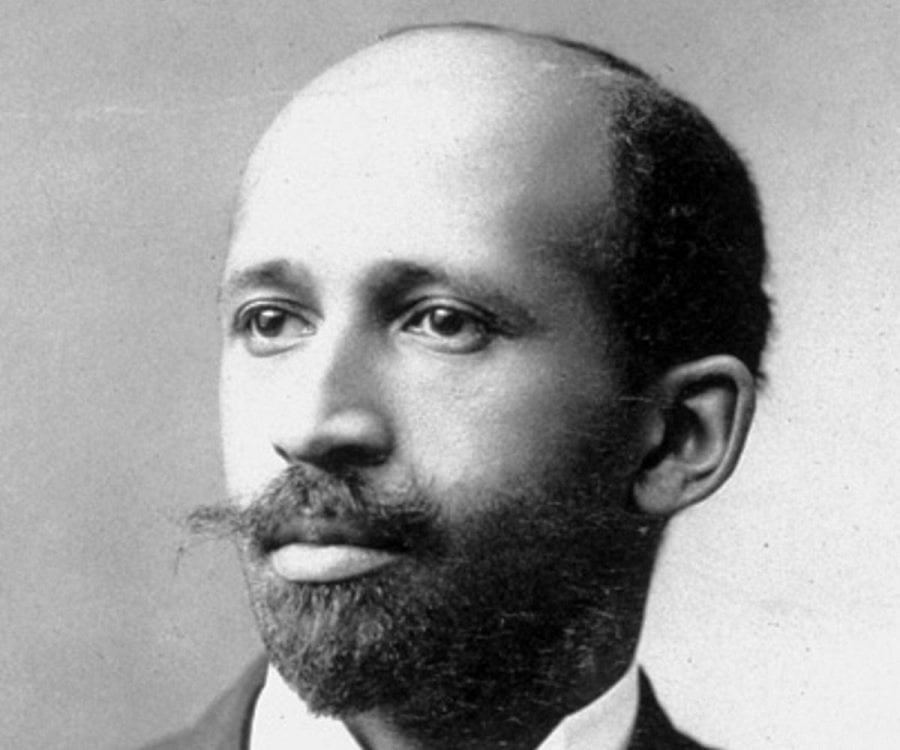
Panelists Jelani Cobb and Joy Reid nodded in agreement. Later, Harris-Perry quoted W.E.B. Du Bois in a monologue, asking, "How does it feel to be a problem? To have your very body and the bodies of your children to be assume to be criminal, violent, malignant."

The MSNBC host has spoken out about Trayvon Martin, an unarmed 17-year-old who was shot and killed by Zimmerman, numerous times since last February. She reacted to the news of Zimmerman's verdict when it broke on Saturday night. "In this moment, black families are holding their sons and daughters closer to them," she said. "A verdict which... feels very much as though it is saying it is acceptable, it is ok, to kill an unarmed African-American child who has committed no crime."

Saturday, February 18, 2012

The Value And Clarity of Melissa Harris-Perry On MSNBC


Fred R. Conrad/The New York Times
Melissa Harris-Perry last week on the set of her MSNBC show, which has its debut on Saturday.

http://www.nytimes.com/2012/02/13/business/media/host-of-msnbcs-melissa-harris-perry-is-a-professor.html?_r=1&pagewanted=all

All,

I've been closely following and admiring Melissa's work in a number of different formats for over a decade now. She's VERY smart, really knows her stuff politically inside and out and is a genuine and truly forward thinking progressive in every sense of that often badly misunderstood word. A brilliant academic with a strong activist consciousness and deep public commitment is always welcome anywhere but is especially very much needed and appreciated in television which, as we all know, is far too often a notoriously racist and sexist medium when it comes to political journalism, cultural critique, and social thought. Ms. Harris-Perry is a very refreshing change in the right direction for once and I seriously urge all of you to tune in to her show on MSNBC at 10am (EASTERN STANDARD TIME) AND 7AM out here on the west coast. I promise you won't be disappointed and you will definitely learn a lot. MSNBC is to be commended for this move which was long overdue on many levels. Kick ass and take names Melissa (I know you will sister!)...

Her program started today February 18 and will air for two hours every saturday and sunday morning for two hours on MSNBC. In fact I'm watching and digging her program at this very moment as I type this missive to you. Please check her out when you get a chance (if you haven't already)...ENJOY...

Kofi

At MSNBC, a Professor as TV Host
By BRIAN STELTER
February 12, 2012
New York Times

Week seven of Melissa Harris-Perry’s introductory course in African-American studies at Tulane University includes a lecture about “the hollow prize” — a theory that African-Americans tend to be elected as mayor only after a city has tipped into economic decline.

One day last summer, when Ms. Harris-Perry was filling in for Rachel Maddow on MSNBC, she recast the class lecture as a television segment, invoking Detroit; her adopted home, New Orleans; President Obama; and tax policy.

“I’ve given that lecture a million times — a million times,” Ms. Harris-Perry said in a recent interview. “But I do it once on Rachel’s show, and it was everywhere the next day. It was up on Web sites, people were e-mailing me — that, for me, was a really clear indication of how powerful television is.”

Now, MSNBC is about to introduce a progressive talk show called “Melissa Harris-Perry” on Saturday and Sunday mornings. Ms. Harris-Perry will be the only tenured professor in the United States — and one of a very small number of African-American women — who serves as a cable news host.

Is this a sign of the rise of the academic on TV? Though cable news is still stereotyped by some as a 24-7 screaming match, there are now pockets of intellectual stimulation that did not exist a decade ago.

The significance of cable news is growing. A survey released last week by the Pew Research Center found that cable news channels have, for the first time, eclipsed local television newscasts as a regular source of campaign news for the American people.

At MSNBC, “Morning Joe” with Joe Scarborough and Mika Brzezinski has become must-see television for politicians and journalists, while Ms. Maddow, a Rhodes scholar, has been lauded for her long, carefully argued essays. Recently, the channel has added several shows with similarities to those two, including “Now With Alex Wagner” at noon on weekdays and “Up w/ Chris Hayes” on the weekends. Ms. Harris-Perry’s show is set to start on Saturday morning and run from 10 to noon.

“Today, our audience thrives on being smart,” said Phil Griffin, the president of MSNBC. He said he used to worry about outsmarting the audience, but does not anymore, because MSNBC has moved from being “all things to all people” to being “a much more specific channel.” That change was propelled by the popularity of its left-leaning programs.

“TV answers to the audience,” said Rick Shenkman, author of “Just How Stupid Are We? Facing the Truth About the American Voter,” which blames television in part for dumbing down the American political process. He said MSNBC had been branding itself “as a partisan network to draw a partisan crowd, following the Fox model.”

“That’s proving to be a successful model,” he said. “It’s the Huffington Post model.”

The newest hosts at MSNBC, Mr. Hayes and Ms. Harris-Perry, like to say they are Harry Potter and Hermione. Both were groomed by Ms. Maddow and her 9 p.m. program, first as unpaid guests, then as paid contributors and finally as substitute hosts.

Mr. Hayes, an editor for the liberal newsmagazine The Nation, started hosting the unapologetically specialized “Up” in September, in MSNBC’s first expansion of point-of-view programming on the weekends. “Up” has averaged about 375,000 total viewers, 25 percent more than the newscast shown previously in the time slot, and about 130,000 viewers ages 25 to 54, on par with the previous newscast.

Mr. Hayes said last week: “The postbroadcast universe is incredibly liberating. The show I’m doing now, I can’t imagine a universe in which it would get two million viewers. But we can beat CNN. And increasingly, we are.”

And so Mr. Hayes has spent 25 minutes on the subject of mass incarceration, and 30 minutes on Internet antipiracy legislation, and two hours on the consequences of the war in Iraq — topics that are rarely tackled at length elsewhere on television.

Sometimes it has taken five minutes, he said, to get past the talking points that are familiar to any cable news viewer. “But we have the luxury of time,” he said. In one recent segment, he and his guests stopped assessing the possible electoral effects of a reignited national debate about abortion and tried to answer something more fundamental: is a fetus a person?

“When we get it right, it’s in making the subtext the text,” Mr. Hayes said.

A typical hour of “Up” features a panel of four, and at least some of the panel members are people rarely seen on other TV shows — another benefit of the postbroadcast news universe Mr. Hayes describes.

With more hours of political talk comes more on-air time for guests of diverse backgrounds. During a Feb. 3 visit to Ms. Harris-Perry’s windowless office at Rockefeller Center, a whiteboard bearing unfamiliar names gave evidence of that. In an interview that day, she recounted numerous times when she had watched political strategists on TV and wondered why political scientists had not been booked instead.

“Part of the way I end up here is, I think the ivory tower has a ton of brilliant information that doesn’t show up for ordinary people,” she said. She has studied media stereotypes in the past, including for a book about black political thought.

Ms. Harris-Perry herself has had little trouble getting booked on TV throughout the years, first on the Chicago station WGN while teaching at the University of Chicago and later on CNN, “Democracy Now” and “Bill Moyers Journal” while teaching at Princeton.

Although she had attained tenure at Princeton, the Center for African American Studies there declined to promote her to full professor — a vote of no confidence that led her to leave for Tulane in 2010. Her second husband, James Perry, who ran for mayor of New Orleans in 2010, already lived there. She plans to spend Monday to Thursday in New Orleans and fly to New York for her show on the weekends.

Ms. Harris-Perry never used a teleprompter until she was asked to fill in for Ms. Maddow for a week in July. (She practiced with an iPad teleprompter application during a trip beforehand, “which led to hilarity on the part of my then 9-year-old,” she said.)

Mr. Griffin and his MSNBC colleagues were immediately impressed, and talk began about a regular TV show for Ms. Harris-Perry. But she had ruled out a five-day-a-week show commitment until her daughter, now 10, was in college.

Then Mr. Hayes’s program began. “When Chris blew open the weekends, I thought, ‘Oh, well I’m not doing anything on Saturdays and Sundays,’ ” she said jokingly. Her husband and daughter plan to join her in New York each weekend.

Ms. Harris-Perry says she wants to be very careful not to let her television voice — one of nearly instant opinion — affect her academic writing. But she does want to bring the academic world to television, and even imagines showing portions of her classes on her show someday.

Mr. Griffin’s advice, she said, was straightforward: “You have to earn the trust of your audience.”

Rephrasing it her way, Ms. Harris-Perry said, “They’ll go with you to nerdland, but you have to earn their trust.”


Wednesday, September 28, 2011

President Obama, the Republican/Tea Party Right, and the Historical Persistence of Electoral Racism in the United States

http://www.thenation.com/article/163544/black-president-double-standard-why-white-liberals-are-abandoning-obama?rel=emailNation


"President Obama has experienced a swift and steep decline in support among white Americans—from 61 percent in 2009 to 33 percent now. I believe much of that decline can be attributed to their disappointment that choosing a black man for president did not prove to be salvific for them or the nation. His record is, at the very least, comparable to that of President Clinton, who was enthusiastically re-elected. The 2012 election is a test of whether Obama will be held to standards never before imposed on an incumbent. If he is, it may be possible to read that result as the triumph of a more subtle form of racism.'

"The 2012 election is a test of whether Obama will be held to standards never before imposed on an incumbent. If he is, it may be possible to read that result as the triumph of a more subtle form of racism."

--Melissa Harris-Perry

All,

Generally I have a lot of respect for Melissa Harris-Perry and have stated as much many times in the past but the glaringly feeble "argument" she makes here about President Obama is not merely wrong but pure bullshit. For example, the deceptively false comparisons to Bill Clinton--no matter what one may think of his administration's actual policies and programs (and I was never enthusiastic about Clinton any more than I am "enthusiastic" about Obama now)--obscures the fact that neither man ever got more than 43% of the national white vote (contrary to the rather misleading and odd assertion by Harris-Perry in this article that 61% "supported" Obama in 2009 and that this number has now "declined" to a 33% approval rate). It's also patently false that Clinton was, in the words of Harris-Perry, "enthusiastically re-elected" by the (white) American electorate. Clinton received a mere 43% of the overall national vote in 1992 but won because a conservative third party candidate (Ross Perot) won 20% of the national vote and thus successfully undermined and sabotaged George H.W. Bush's chances for re-election, and in the re-election year of 1996 Clinton received a mere 49% of the national vote overall and Ross Perot's conservative third party candidacy still received 8.4% of the national vote (and over 8 million popular votes!) to the 40% that Republican candidate Bob Dole received. Thus Clinton's re-election was hardly "enthusiastic" by any measure. Clinton barely squeaked by with a paper-thin 1% margin.

In fact without the great majority of the black and Latino vote in 1996 Clinton would have LOST his bid for re-election (just as Obama would have LOST his first time around in 2008 when he received only 43% of the white vote to McCain/Palin's whopping 55% of that same national vote demographic). Once again the HUGE black and Latino vote of 81% overall (and a stunning 95% of the national black vote!) SAVED Obama from certain defeat--and by an electoral landslide at that-- if McCain had somehow managed to get at least a mere 35% of the national black and Latino vote (he wound up with a feeble 19%!).

My purpose then in all this is to point out that neither of Harris-Perry's main premises in this article are fundamentally relevant or significant. The "electoral racism" that she refers to is still very much intact at ALL times in American politics generally despite Obama's win against another black candidate for Senate in 2004 and his Presidential victory in 2008 obscures and even distorts a very important and disturbing fact. Obama is in every sense of the word a complete anomaly and utter exception in the history of American politics and here's the obvious historical proof: Only three (3) African Americans have ever been elected Senators in the entire history of the United States and only (2) have ever been elected Governors; Obama is the ONLY black person ever to be NOMINATED by a major party for President in the United States-- let alone win. An even more revealing fact about contemporary American politics and race is the fact that the national white vote is and has been for over 60 years now overwhelmingly conservative and Republican no matter who's running

(OMINOUS FACTOID: Since 1952--a period of 15 national elections for the Presidency--white Americans have voted for the Republican candidate 14 times or a jawdropping 93% of the time!). This means that whatever color the Democratic Party candidate or any other "liberal" or "progressive" was or is white folks in general ain't voting for them. The fact that Obama received virtually the exact same percentage of white votes as Kerry in 2004, Gore, in 2000 or Clinton in '92 and '96 doesn't indicate that there is a significant decrease in electoral racism at all--quite the contrary. It just means that in real terms the white conservative/reactionary vote is as racist now as it was in 1952. In this case the lone exception in 150 years of a victorious black candidate (Obama) only winds up once again proving the rule since if not for the overwhelming black and Latino vote in 2008 Obama would have lost in a landslide because a rock solid 57% of the national white vote went to his Republican opponents or someone else on the ballot. This means that the great majority of white voters openly preferred that SARAH PALIN be only one heartbeat from the Presidency rather than elect "the black guy."
THINK about that absolutely chilling prospect for a moment and tell me that "electoral racism" has significantly diminished or "changed" in this country! So ultimately whatever happens in 2012 it won't be because Obama is held to a "different racial double standard" than he was in 2008. Not at all. Rather, the 'racial standard' will be the exact same one as before--AND if the overall black, Latino, and Asian American vote for him is not at least 85% this time around--only a slight increase from 2008--Obama will most certainly lose in 2012 because we all know for damn sure that he is NOT gonna get MORE than the 43% of the national white vote he received in 2008. Very likely the chances are the national white vote for Obama will probably be even LESS than 43% in 2012. Freak anomaly or not...

Kofi


Black President, Double Standard: Why White Liberals Are Abandoning Obama
by Melissa Harris-Perry
September 21, 2011
The Nation

Electoral racism in its most naked, egregious and aggressive form is the unwillingness of white Americans to vote for a black candidate regardless of the candidate’s qualifications, ideology or party. This form of racism was a standard feature of American politics for much of the twentieth century. So far, Barack Obama has been involved in two elections that suggest that such racism is no longer operative. His re-election bid, however, may indicate that a more insidious form of racism has come to replace it.

The 2004 Illinois Senate race between Obama and Alan Keyes, two African-Americans, was a unique test of the persistence of old-fashioned electoral racism. For a truly committed electoral racist, neither Obama nor Keyes would have been acceptable—regardless of policy positions, biography or qualification—because both were black.

One way to determine how many people felt this way is to measure the “roll-off.” In presidential election years, a small percentage vote for the president, but then “roll off” by not casting ballots for state and local offices. A substantial increase in roll-off—larger than usual numbers of voters who picked John Kerry or George Bush but declined to choose between Obama and Keyes—would have been a measure of the unwillingness of some to vote for any black candidate. I tested this in 2004 and found no increase, statistical or substantive, in roll-off in Illinois. Faced with two black candidates, white voters were willing to choose one of them.

The 2008 general election was another referendum on old-fashioned electoral racism—this time among Democratic voters. The long primary battle between Hillary Clinton and Obama had the important effect of registering hundreds of thousands of Democrats. By October 2008, it was clear that Obama could lose the general election only if a substantial portion of registered Democrats in key states failed to turn out or chose to cross party lines. For Democrats to abandon their nominee after eight years of Bush could be interpreted only as an act of electoral racism.

Not only did white Democratic voters prove willing to support a black candidate; they overperformed in their repudiation of naked electoral racism, electing Obama with a higher percentage of white votes than either Kerry or Gore earned. No amount of birther backlash can diminish the importance of these two election results. We have not landed on the shores of postracial utopia, but we have solid empirical evidence of a profound and important shift in America’s electoral politics.

Still, electoral racism cannot be reduced solely to its most egregious, explicit form. It has proved more enduring and baffling than these results can capture. The 2012 election may be a test of another form of electoral racism: the tendency of white liberals to hold African-American leaders to a higher standard than their white counterparts. If old-fashioned electoral racism is the absolute unwillingness to vote for a black candidate, then liberal electoral racism is the willingness to abandon a black candidate when he is just as competent as his white predecessors.

The relevant comparison here is with the last Democratic president, Bill Clinton. Today many progressives complain that Obama’s healthcare reform was inadequate because it did not include a public option; but Clinton failed to pass any kind of meaningful healthcare reform whatsoever. Others argue that Obama has been slow to push for equal rights for gay Americans; but it was Clinton who established the “don’t ask, don’t tell” policy Obama helped repeal. Still others are angry about appalling unemployment rates for black Americans; but while overall unemployment was lower under Clinton, black unemployment was double that of whites during his term, as it is now. And, of course, Clinton supported and signed welfare “reform,” cutting off America’s neediest despite the nation’s economic growth.

Today, America’s continuing entanglements in Iraq and Afghanistan provoke anger, but while Clinton reduced defense spending, covert military operations were standard practice during his administration. In terms of criminal justice, Obama signed the Fair Sentencing Act, which decreased judicial disparities in punishment; by contrast, federal incarceration grew exponentially under Clinton. Many argue that Obama is an ineffective leader, but the legislative record for his first two years outpaces Clinton’s first two years. Both men came into power with a Democratically controlled Congress, but both saw a sharp decline in their ability to pass their own legislative agendas once GOP majorities took over one or both chambers.

These comparisons are neither an attack on the Clinton administration nor an apologia for the Obama administration. They are comparisons of two centrist Democratic presidents who faced hostile Republican majorities in the second half of their first terms, forcing a number of political compromises. One president is white. The other is black.

In 1996 President Clinton was re-elected with a coalition more robust and a general election result more favorable than his first win. His vote share among women increased from 46 to 53 percent, among blacks from 83 to 84 percent, among independents from 38 to 42 percent, and among whites from 39 to 43 percent.

President Obama has experienced a swift and steep decline in support among white Americans—from 61 percent in 2009 to 33 percent now. I believe much of that decline can be attributed to their disappointment that choosing a black man for president did not prove to be salvific for them or the nation. His record is, at the very least, comparable to that of President Clinton, who was enthusiastically re-elected. The 2012 election is a test of whether Obama will be held to standards never before imposed on an incumbent. If he is, it may be possible to read that result as the triumph of a more subtle form of racism.


Friday, June 3, 2011

Black Public Intellectuals Cornel West and Melissa Harris-Perry Debate the Policies of the Obama Administration on the 'Ed Schultz Program' on MSNBC


http://www.thenation.com/authors/melissa-harris-perry

All,

Ever heard of being able to chew gum and talk/walk/gawk at the same damn time?...Yeah, yeah I thought you had...Me too!...Which is all the more reason why these endless tirades about the personal and political behavior of (black and white) public intellectuals by other (black and white) intellectuals are so often utterly bizarre and hopelessly and hilariously DUMB--especially when the real major subtext of and reason for these rhetorical jibes and jabs have far more to do with what the Obama Administration is or is not doing and whether one generally supports or is actively critical of the actual performance of the President of the United States vis-a-vis U.S. corporate elites, The Republican and Tea parties, Wall Street, the massive imperialist war machine (ever heard of Iraq, Afghanistan, Libya, Pakistan folks?), not to mention chronic structural unemployment, the dire need for major education, Health care, and financial reform, and transparency in government (just for starters)...

In the following scathing, witty, and highly lucid piece Melissa Harris-Perry eloquently and judiciously takes her Princeton colleague Cornel West to task for stupidly conflating silly personal motives with serious political ones in his most recent critique of the President in his interview with Chris Hedges and does a fine, wicked job of exposing the fundamental hypocrisy of West's friend Tavis Smiley's own fawning public relationship with the corporate elites of Wal-Mart, Wells Fargo, and McDonald's, among others in their ongoing contradictory claims to "speak truth to power" in the current national economic crisis. Perry goes on to also point out that tenured university professors with large salaries and considerable access to material resources and institutional support that the "average citizen" could not possibly equal puts them both in a privileged position that must be honestly confronted, acknowledged, and accounted for in their own publicly critical assessments of the meaning of events and issues facing the national body politic--especially as it relates to the actual policy positions and programs of the President. Perry's clear-eyed ability to cut through the fog of personal ego and self serving grandstanding is thus important and timely and generally can't or shouldn't be dismissed...

Yet at the same time it must also be said that despite whatever obvious flaws, shortcomings, weaknesses, and contradictions of public intellectuals from academia it's very important that one not lose sight of whatever substantive critical analyses by West and Perry can be and have been made of President Obama and the national government as well as the wealthy elite economic and political institutions and interests that they far too often service and privilege above the masses of people. So that even though West has had a bitter and contentious 'personal' relationship with the former major Obama economic advisor Lawrence Summers in the past when Summers was still the President of Harvard and Cornel still taught there, it is still important to recognize that his intrepid critique of Summers goes far beyond their own personal acrimony and speaks directly to West detailing and exposing the reactionary economic policy 'advice' Summers gave to the President that he and the Democratic Party later implemented. Given these larger realities one must not lose sight of the far bigger and vastly more important responsibility of truly speaking truth to power and publicly advocating and fighting for radical grassroots change via the instruments of mass organizations and actual political involvement and participation. In other words there is ample room and a great necessity for real useful knowledge that even privileged academics and intellectuals can and must provide if their commitment is to a much broader vision that goes far beyond that of mere ego reinforcement and taking idle 'personal' potshots at professional colleagues and associates who also seek a forum that exceeds that of the corrupt and cynical soundbite obsessed media and the lucrative financial and head expanding lures, temptations, and traps of the national lecture circuit...

Kofi


Cornel West v. Barack Obama
by Melissa Harris-Perry
May 17, 2011
The Nation

Professor Cornel West is President Obama’s silenced, disregarded, disrespected moral conscience, according to Chris Hedges’s recent Truthdig column, “The Obama Deception: Why Cornel West went Ballistic.” In a self-aggrandizing, victimology sermon deceptively wrapped in the discourse of prophetic, Professor West offers thin criticism of President Obama and stunning insight into the delicate ego of the self-appointed black leadership class that has been largely supplanted in recent years.

West begins with a bit of historical revision. West suggests that the president discarded him without provocation after he offered the Obama for America campaign his loyal service and prayers. But anyone with a casual knowledge of this rift knows it began during the Democratic primary, not after the election. It began, not with a puffed-up president but when Cornel West’s “dear brother” Tavis Smiley threw a public tantrum because Senator Obama refused to attend Smiley’s annual State of Black America. Smiley repeatedly suggested that his forum was the necessary black vetting space for the Democratic nominees. He needed to ask Obama and Clinton tough questions so that black America could get the answers it needed. But black America was doing a fine job making up its own mind in the primaries and didn’t need Smiley’s blessing to determine their own electoral preferences. Indeed, when Smiley got a chance to hold candidate Clinton “accountable” he spent more time fawning over her than probing about her symbolic or substantive policy stances that impacted black communities. Fiercely loyal to his friend, Professor West chose sides and began to undermine candidate Obama in small and large ways. Candidate Obama ceased calling West back because he was in the middle of a fierce campaign and West’s loyalties were, at best, divided. I suspect candidate Obama did not trust his “dear brother” to keep the campaign secrets and strategies. I also suspect he was not inaccurate in his hesitancy.

West may have had principled, even prophetic reasons, for choosing this outsider position relative to Obama, but it is dishonest to later frame that choice as a betrayal on the part of the president. After what I had written about Senator Clinton during the campaign I wasn’t expecting an offer from the State Department.

Furthermore, West’s sense of betrayal is clearly more personal than ideological. In Hedges’s article West claims that a true progressive would always put love of the people above concern with the elite and privileged. Then he complains, “I couldn’t get a ticket [to the inauguration] with my mother and my brother. I said this is very strange. We drive into the hotel and the guy who picks up my bags from the hotel has a ticket to the inauguration…. We had to watch the thing in the hotel.” Let me get this straight—the tenured, Princeton professor who collects five figures for public lectures was relegated to a hotel television while an anonymous hotel worker got tickets to the inauguration! What kind of crazy, mixed-up class politics are these? Wait a minute…

What exactly is so irritating to West about inaugural ticket-gate? It can’t be a claim that the black, progressive intellectual community was unrepresented. Yale’s Elizabeth Alexander was the poet that cold morning. It can’t be that the “common man” was shut out because the Neighborhood Ball was reserved for the ordinary women and and men who worked to make Obama ’08 possible. It must be a simple matter of jealous indignation. While I appreciate the humanness in such a reaction, it hardly counts as a prophetic critique.

Since the inaugural snub, Professor West has made his personal animosity and political criticism of the president his main public talking point. There was that hilariously bad documentary with Tavis Smiley and the rest of the Soul Patrol in 2009. There is the tiresome repetitiveness with which West invokes the name of his erstwhile Harvard nemesis Lawrence Summers as indicative of President Obama’s failed economic vision. And just a few weeks ago there was the eminently watchable screaming match on MSNBC where love-the-people West called Rev. Al Sharpton a “mascot” for the Obama administration. Add to this three-year screed the current Hedges article and it looks more like a pissing match than prophecy.

Take for example West’s ad hominem attack on the president’s racial identity.

“I think my dear brother Barack Obama has a certain fear of free black men.… It’s understandable. As a young brother who grows up in a white context, brilliant African father, he’s always had to fear being a white man with black skin. All he has known culturally is white. He is just as human as I am, but that is his cultural formation.”

This comment is utter hilarity coming from Cornel West who has spent the bulk of his adulthood living in those deeply rooted, culturally rich, historically important black communities of Cambridge, Massachusetts, and Princeton, New Jersey. And it is hard to see his claim that Obama is “most comfortable with upper middle-class white and Jewish men who consider themselves very smart, very savvy and very effective in getting what they” as anything other than a classic projection of his own comfortably ensconced life at Harvard and Princeton Universities. Harvard and Princeton are not places that are particularly noted for their liberating history for black men.

Let me be clear, being an Ivy League professor does not mean that one has no room to offer critical engagement on issues of race. Like Professor West, I too make my living at elite, predominantly white institutions. For the past five years we were on the same payroll at Princeton. Like Professor West I supplement my income by giving lectures about race, politics and history. Like West, I hope to influence policy, inspire individuals and intervene in public conversations about race. My criticism of West is his seeming unwillingness to acknowledge how our structural positions within the academy and in public intellectual life can be just as compromising to our position vis-à-vis black communities as is President Obama’s.

As tenured professors Cornel West and I are not meaningfully accountable, no matter what our love, commitment or self-delusions tell us. President Obama, as an elected official, can, in fact, be voted out of his job. We can’t. That is a difference that matters. As West derides the president’s economic policies he remains silent on his friend Tavis Smiley’s relationship with Wal-Mart, Wells Fargo and McDonald’s—all corporations whose invasive and predatory actions in poor and black communities have been the target of progressive organizing for decades. I have never heard him take Tavis Smiley to task for helping convince black Americans to enter into predatory mortgages. I’ve never heard him ask whether Tavis’s decision to publish R. Kelley’s memoirs might be a less than progressive decision. He doesn’t hold Tavis accountable because Tavis is his friend and he is loyal. I respect that, but I also know that if he were in elected office the could not get off so easily. Opposition research would point out the hypocrisy in his public positions in a way that would make him vulnerable come election time. As a media personality and professor he is safely ensconced in a system that can never vote him off the island. I think an honest critique of Obama has to begin by acknowledging his own privileges.

Instead, West seems determined to keep black politics tethered to a patronage model of politics. He tells Hedges:

“Our last hope is to generate a democratic awakening among our fellow citizens. This means raising our voices, very loud and strong, bearing witness, individually and collectively. Tavis [Smiley] and I have talked about ways of civil disobedience, beginning with ways for both of us to get arrested…”

God help us if Cornel West and Tavis Smiley getting arrested is our last chance at a democratic awakening.

I have many criticisms of the Obama administration. I wrote angrily about his choice of Rick Warren to deliver a prayer at the inauguration. I have spoken on television about my disagreement with drone attacks in Pakistan and been critical of the administration’s initial choice to prosecute DADT cases. I worked for more progressive health care reform legislation and supported organizations that resisted the reproductive rights “compromises” in the bill. I’ve been scathing in public remarks and writings about the President’s education policy. My husband leads a nonprofit that is suing HUD for its implementation of a discriminatory formula in the post-Katrina Road Home program. The president has never called me. I got my ticket to the inauguration from Canada! (Because Canadian Broadcast Television who gave me a chance to narrate the day’s events.) But I can tell the difference between a substantive criticism and a personal attack. It is clear to me that West’s ego, not the health of American democracy, is the wounded creature in this story.


About the Author:

Melissa Harris-Perry
COLUMNIST
The Nation

Melissa Harris-Perry, an associate professor of politics and African-American studies at Princeton University, is completing her latest book, Sister Citizen: A Text for Colored Girls Who've Considered Politics When Being Strong Isn't Enough. She is a contributor to MSNBC.

Tuesday, April 5, 2011

Melissa Harris-Perry On The Blackening of America

Melissa Harris-Perry

http://www.thenation.com/article/159597/are-we-all-black-americans-now?page=full

All,

An insightful analysis and commentary by The Nation columnist and Princeton University African American Studies professor and activist Melissa Harris-Perry...

Kofi


Are We All Black Americans Now?
Melissa Harris-Perry
March 30, 2011

This article appeared in the April 18, 2011 edition of The Nation.

In the months following September 11, my colleague Cornel West offered this insight: national political elites used the devastating attacks to promote the “niggerization of the American people.” West understood that long before 9/11, African-Americans were intimately familiar with terrorism. Through the Jim Crow century, they were routinely and randomly brutalized and murdered by well-organized groups of whites acting beyond the confines of the official state but with the tacit consent of their society. Under the shadow of lynching, black Americans learned what it meant to feel, as West describes, “unsafe, unprotected, subject to random violence, and hated for who they are.” After 9/11 far too many Americans, unaccustomed to this sense of collective intimidation, felt helpless to halt an unjustified war or the erosion of civil liberties. Thus, whether or not they were black, Americans were “niggerized” by the attacks.

In recent months, I have been reminded of Professor West’s analysis because one way to read our current moment is as a blackening of America. The social, economic and political conditions that have long defined African-American life have descended onto a broader population, and it has been instructive to watch how the nation has responded.

Initially, conservatives argued that Tea Party activists had every right to be disgusted with national leadership and to demand swift economic intervention to combat the near 10 percent unemployment rate. Since the mid-1970s, except for a brief dip between 1998 and 2002, unemployment among African-Americans has routinely exceeded 10 percent, yet African-Americans were rarely encouraged to blame systems or organize collectively. Instead blacks were stereotyped as lazy and undeserving. This characterization has been an effective ideological tool for politicians intent on limiting social programs, cutting welfare, ignoring cities, slashing job training and neglecting housing.

Within months, the Tea Party shifted its focus to the deficit. As it did, policy debates about the poor and unemployed came to mirror decades of discourse about black Americans. Extensions of unemployment insurance were decried as “creeping socialism.” Echoing theories of dependency leveled against African-Americans for decades, one conservative blogger suggested that extending unemployment benefits would create “a permanent entitlement and would perpetuate unemployment.” Perhaps, in this moment, Americans understood how dangerously corrosive the characterization of the poor as “idle” is for black people.

This past November the TSA introduced screening procedures that many Americans—liberals and conservatives alike—deemed intrusive, random and demeaning. But for decades urban police forces have regularly employed race-based traffic stops and pedestrian stop-and-frisks in African-American communities. These policing practices have done little to make neighborhoods safer, but they have contributed to massive incarceration rates for black men. Justifying their racially punitive behavior as a reasonable response to potential crime, police forces have acted largely with the consent of white Americans, some of whom later decried the TSA’s new procedures. Perhaps, for a moment, they felt the stinging humiliation that routinely accompanies black life.

Few events more clearly demonstrated the blackening of America than the standoff in Wisconsin. Like the nineteenth-century leaders of Southern states who stripped black citizens of voting rights, public accommodation and civic associations, Wisconsin’s Republican majority dismantled the hard-won basic rights of Wisconsin workers. Like those Confederate leaders, the Wisconsin GOP used intimidation, threats and even the police against demonstrators and rival officials. As the saga unfolded, many Wisconsin citizens felt stunned that their once-secure rights might be eliminated. For a moment, perhaps, they glimpsed the experience of black men and women who watched the shadow of Jim Crow blot out the promises of emancipation.

The 1880s were also the decade when efforts to create corporate personhood were initiated by wealthy railroad barons. In a 2010 article, James and Tomilea Allison (psych professor at Indiana University and former mayor of Bloomington, respectively) traced how these corporate interests misrepresented past cases so that the Supreme Court eventually relied on nonexistent precedent to twist Fourteenth Amendment protections intended for newly freed slaves to instead offer shelter for profiteering corporations. More than a century later, these arguments were crucial to the Citizens United decision, which putatively endowed extraordinarily wealthy corporations with an “equal” right to electoral influence but in practice gave them breathtakingly unequal representation. Perhaps, as they are reduced to a fraction of a citizen, other Americans now catch a glimpse of what it means to be codified as only three-fifths of a person.

Today corporate greed, conservative ideology, manufactured right-wing populism and progressive complicity are making more and more Americans into, as Professor West might characterize them, “niggers.” Rather than try to escape the pain of experiencing some small familiarity with blackness, Americans could choose to learn from generations of African-Americans who resisted dehumanizing processes of domination and inequality. During the 2008 election Obama’s detractors tried to smear him by suggesting that “Hussein” was a terrorist’s moniker. As a demonstration of solidarity, thousands of Americans informally declared that they too would be known by the middle name Hussein. It was purely symbolic, but it rested on a belief in the power to change meaning by embracing rather than eschewing that which is labeled subordinate, alien, dangerous and shameful. By embracing our collective blackness, perhaps we can find the fortitude and creativity necessary to face the continuing erosion of our national social safety net in the face of a persistent economic crisis.


Melissa Harris-Perry
COLUMNIST
The Nation

Melissa Harris-Perry, an associate professor of politics and African-American studies at Princeton University, is completing her latest book, Sister Citizen: A Text for Colored Girls Who've Considered Politics When Being Strong Isn't Enough. She is a contributor to MSNBC.