Showing posts with label Great singers. Show all posts

Monday, January 30, 2012

The Magnificent and Indefatigable Etta James, 1938-2012

Etta James, 1938-2012


via Michael Ochs Archives/Getty Images
Etta James in the studio in Chicago with the Chess Records founder Phil Chess, left, and the producer Ralph Bass in 1960


http://www.nytimes.com/2012/01/21/arts/music/etta-james-singer-dies-at-73.html

“A lot of people think the blues is depressing,” she told The Los Angeles Times in 1992, “but that’s not the blues I’m singing. When I’m singing blues, I’m singing life. People that can’t stand to listen to the blues, they’ve got to be phonies.”

--Etta James

All,

This woman was the absolute greatest blues singer of the past half century and one of the most profound, mesmerizing and enduring artists in U.S. history. It's hard to know where to properly begin with such an iconic and legendary figure whose work is as inspiring, influential, and significant to any true understanding and appreciation of 20th century popular song as Etta James. A pure and towering musical force of nature, Ms. James's extraordinary and endlessly expressive voice, profound depth of feeling and emotion, and an enormous musical and vocal range encompassed every single major creative tradition in African American culture from blues and Gospel to R & B, Rock and Roll, and Jazz. As one of the immortal titans of our music and songcraft Etta, like so many other legendary black female GIANTS who happened to be Ms. James's contemporaries and elders (Billie Holiday, Ella Fitzgerald, Sarah Vaughan, Betty Carter, Abbey Lincoln, Nina Simone, Dinah Washington Aretha Franklin, Mavis Staples, Clara Ward, Mahalia Jackson, Alberta Hunter, Bessie Smith, Victoria Spivey, et al ) completely revolutionized the genre of vernacular and popular song and made it into one of the greatest, inspiring, and most beloved artforms of our epoch.

So thank you Ms. Etta James for sending any and everyone who was fortunate enough to hear your incredibly moving and arresting voice into sheer ectasy. Likle so many other couples throughout the globe my wife and I was blessed to have your ever enduring classic song "At Last" grace our wedding. And while Beyonce did an adequate job covering what was indisputably your song at the inauguration of President and First Lady Barack and Michelle Obama in 2009, EVERYBODY with ears to hear in the world KNOWS that your eternally captivating version of that song could never possibly be approached let alone duplicated by ANYONE on this planet. Rest in Peace sister. You changed the world with your voice and spirit and we who hyave been privileged to hear and embrace it will always be eternally grateful that you came along to show us what great art and great singing was REALLY all about. The following outpouring of words, sounds, and video is a humble tribute to that beautiful, very powerful, and haunting legacy that you've left us and will never be eclipsed. You were a national treasure Etta. Thank You...

Kofi


Etta James Dies at 73; Voice Behind ‘At Last 

by PETER KEEPNEWS
January 20, 2012
New York Times


Etta James, whose powerful, versatile and emotionally direct voice could enliven the raunchiest blues as well as the subtlest love songs, most indelibly in her signature hit, “At Last,” died on Friday morning in Riverside, Calif. She was 73.

Her manager, Lupe De Leon, said that the cause was complications of leukemia. Ms. James, who died at Riverside Community Hospital, had been undergoing treatment for some time for a number of conditions, including leukemia and dementia. She also lived in Riverside.

Ms. James was not easy to pigeonhole. She is most often referred to as a rhythm and blues singer, and that is how she made her name in the 1950s with records like “Good Rockin’ Daddy.” She is in both the Rock and Roll Hall of Fame and the Blues Hall of Fame.

She was also comfortable, and convincing, singing pop standards, as she did in 1961 with “At Last,” which was written in 1941 and originally recorded by Glenn Miller’s orchestra. And among her four Grammy Awards (including a lifetime-achievement honor in 2003) was one for best jazz vocal performance, which she won in 1995 for the album “Mystery Lady: Songs of Billie Holiday.”

Regardless of how she was categorized, she was admired. Expressing a common sentiment, Jon Pareles of The New York Times wrote in 1990 that she had “one of the great voices in American popular music, with a huge range, a multiplicity of tones and vast reserves of volume.”

For all her accomplishments, Ms. James had an up-and-down career, partly because of changing audience tastes but largely because of drug problems. She developed a heroin habit in the 1960s; after she overcame it in the 1970s, she began using cocaine. She candidly described her struggles with addiction and her many trips to rehab in her autobiography, “Rage to Survive,” written with David Ritz (1995).

Etta James was born Jamesetta Hawkins in Los Angeles on Jan. 25, 1938. Her mother, Dorothy Hawkins, was 14 at the time; her father was long gone, and Ms. James never knew for sure who he was, although she recalled her mother telling her that he was the celebrated pool player Rudolf Wanderone, better known as Minnesota Fats. She was reared by foster parents and moved to San Francisco with her mother when she was 12.

She began singing at the St. Paul Baptist Church in Los Angeles at 5 and turned to secular music as a teenager, forming a vocal group with two friends. She was 15 when she made her first record, “Roll With Me Henry,” which set her own lyrics to the tune of Hank Ballard and the Midnighters’ recent hit “Work With Me Annie.” When some disc jockeys complained that the title was too suggestive, it was changed to “The Wallflower,” although the record itself was not.

“The Wallflower” rose to No. 2 on the rhythm-and-blues charts in 1954. As was often the case in those days with records by black performers, a toned-down version was soon recorded by a white singer and found a wider audience: Georgia Gibbs’s version, with the title and lyric changed to “Dance With Me, Henry,” was a No. 1 pop hit in 1955. (Its success was not entirely bad news for Ms. James. She shared the songwriting royalties with Mr. Ballard and the bandleader and talent scout Johnny Otis, who had arranged for her recording session. Mr. Otis died on Tuesday.)

In 1960 Ms. James was signed by Chess Records, the Chicago label that was home to Chuck Berry, Muddy Waters and other leading lights of black music. She quickly had a string of hits, including “All I Could Do Was Cry,” “Trust in Me” and “At Last,” which established her as Chess’s first major female star.

She remained with Chess well into the 1970s, reappearing on the charts after a long absence in 1967 with the funky and high-spirited “Tell Mama.” In the late ’70s and early ’80s she was an opening act for the Rolling Stones.

After decades of touring, recording for various labels and drifting in and out of the public eye, Ms. James found herself in the news in 2009 after BeyoncĂ© Knowles recorded a version of “At Last” closely modeled on hers. (Ms. Knowles played Ms. James in the 2008 movie “Cadillac Records,” a fictionalized account of the rise and fall of Chess.) Ms. Knowles also performed “At Last” at an inaugural ball for President Obama in Washington.

When the movie was released, Ms. James had kind words for Ms. Knowles’s portrayal. But in February 2009, referring specifically to the Washington performance, she told an audience, “I can’t stand BeyoncĂ©,” and threatened to “whip” the younger singer for doing “At Last.” She later said she had been joking, but she did add that she wished she had been invited to sing the song herself for the new president.

Ms. James’s survivors include her husband of 42 years, Artis Mills; two sons, Donto and Sametto James; and four grandchildren.

Though her life had its share of troubles to the end — her husband and sons were locked in a long-running battle over control of her estate, which was resolved in her husband’s favor only weeks before her death — Ms. James said she wanted her music to transcend unhappiness rather than reflect it.

“A lot of people think the blues is depressing,” she told The Los Angeles Times in 1992, “but that’s not the blues I’m singing. When I’m singing blues, I’m singing life. People that can’t stand to listen to the blues, they’ve got to be phonies.”


Selected Videos of Etta James


Sunday, September 11, 2011

Eugene McDaniels (1935-2011): Legendary Singer, Songwriter, and Musician Who Pioneered in the Political Radicalization of Popular Music in the U.S.


Eugene McDaniels in 1961


Revolutionary album "Outlaw" (1970) --Atlantic Records label All music and songs written by Eugene McDaniels


Eugene McDaniels in 1994
John Ewing/Portland Newspapers, via Associated Press
http://www.nytimes.com/2011/08/02/arts/music/eugene-mcdaniels-singer-songwriter-of-soul-and-blues-hits-dies-at-76.html


All,

Last night I was playing a deeply cherished and recently purchased ALBUM (as in real VINYL folks) of a revolutionary 1970 recording by one of my all time favorite musical artists and singer/songwriters of the 1960-1980 era, the legendary Eugene McDaniels (popularly known as 'the Left Reverend Mac D' in honor of both his radical politics and fiery and dynamic downhome delivery of his amazing lyrics). The author of such original, highly influential and profound song classics (and hits!) of the '60s and '70s as 'Compared To What', 'Feel Like Making Love', 'A Hundred Pounds of Clay', and 'Tower of Strength' among many others, McDaniels was a formidable musical composer, arranger, song stylist, producer, and songwriter whose diverse and eclectic mastery of Jazz, Classical, Folk, Blues, R and B, and Gospel forms and styles made him a highly esteemed member of an absolutely extraordinary Golden Age of musicians who also happened to be singers and songwriters of the 1960s and '70s period which included such iconic peers and giants as Bob Dylan, Joni Mitchell, Sly Stone, Curtis Mayfield, Bill Withers, Carole King, Sam Cooke, Gil-Scott Heron, Terry Callier, Aretha Franklin, Laura Nyro, Jimi Hendrix, Marvin Gaye, Stevie Wonder, Nina Simone, Smokey Robinson, Paul Simon, and Janet Ian (!)...

Anyway as I was lovingly taking the classic 1970 album by McDaniels entitled 'OUTLAW' out of its jacket I casually remarked to my wife "I wonder whatever happened to Eugene McDaniels. He was a ****genius!" So after listening once again transfixed to a recording that I was originally so fascinated and delighted by in college when it first appeared that I wore out three different copies of it over the next decade, I decided out of now intense curiosity that I would google his name on my computer and I immediately came across the news that he had just died last month in Los Angeles on August 1 at the age of 76. Initially shocked I went on to read his obit and saw that he had lived a long, satisfying, and creatively productive life well beyond the much deserved but temporary fame and adulation that he found in the 1960s and '70s, and that he was survived by a loving wife, six children (one named Dylan), a sister, and nine grandchildren and I felt even more elated and proud that I had always been and remained such an enthralled fan and dedicated listener to his timeless music and song lyrics, many of which I have reprinted below along with a discography and inspiring videos of his outstanding performances on YouTube. So Enjoy!

Oh...and one more thing: I would like to publicly thank the famed retail music store AMOEBA RECORDS here in Berkeley, California for once again making the 'Left Reverend Mac D's' classic recordings on the Atlantic label generally available once again. I am especially gratified personally because I did not still own and had not heard a complete recording of OUTLAW in over 20 years until I purchased it again some six months ago at AMOEBA. I remain humbly in their debt and especially that of Mr. McDaniels whose magnificent music and songs will thankfully never die...So RIP brotherman Mac D. We love you...

Kofi

http://www.youtube.com/watch?v=GC6LdIcmDQs


Songwriter Eugene McDaniels (1935-2011) talks about his hit song "Compared to What" Recorded by Les McCann and Eddie Harris in 1969. Recently recorded in 2010 by John Legend and The Roots, with 278 different recorded versions in between. Imaged and edited by Dennis Collins Johnson and Grace Peirce.


COMPARED TO WHAT?
by Eugene McDaniels
1969

[First recorded and immortalized on the LP Swiss Movement (1970) by Les McCann and Eddie Harris]


Love the lie and lie the love
Hanging on, with push and shove

Possession is the motivation

That is hangin' up the goddamn nation
Looks like we always end up in a rut

Everybody now!

Tryin' to make it real, compared to what?
Come on baby, now

Slaughter houses are killin' hogs
Twisted children are killin' frogs
Poor dumb rednecks rollin' logs
Tired old ladies, kissin' dogs
I hate the human love of that stinkin' mutt

I can't use it!

Tryin' to make it real, compared to what
Come on baby, now

The President, he's got his war
Folks don't know just what it's for
Nobody gives us rhyme or reason
Have one doubt, they call it treason
We chicken feathers all without one gut

Goddammit!
Tryin' to make it real, compared to what?
Sock it to me!

Church on Sunday, sleep and nod
Trying to duck the wrath of God
Preachers fillin' us with fright
They all trying to teach us with what they think is right
They really got to be some kind of stupid nut

I can't use it!

Tryin' to make it real, compared to what
Lover, baby, hey

Where's that bee and where's that honey
Where's my god and where's my money
Unreal values, a crass distortion
Unwed mothers need abortion
Kinda brings to mind ol' young King Tut

(He did it now)

Tryin' to make it real, compared to what?


August 1, 2011
Eugene McDaniels, Singer-Songwriter of Soul and Blues, Dies at 76
By DENNIS HEVESI
New York Times

Eugene McDaniels, whose mellifluous voice brought him high onto the Billboard charts several times in the early 1960s, and who wrote “Feel Like Makin’ Love,” which Roberta Flack took to the top of the charts in 1974, died on Friday at his home in Kittery Point, Me. He was 76.

He died after a brief illness, his wife, Karen, said.

With his four-octave range, Gene McDaniels, as he was first professionally known, hit No. 3 in the spring of 1961 with “A Hundred Pounds of Clay” and No. 5 later that year with “Tower of Strength.” He last hit the Top 40 with “Spanish Lace” in late 1962.

Mr. McDaniels’s songs, including those he wrote for other artists later in his career, jumped from jazz to blues to ballads to gospel and could be peppered with cultural criticism and political protest.

The lyrics of his bluesy up-tempo song “Compared to What,” recorded live at the Montreux Jazz Festival in 1969 by the pianist and singer Les McCann and the saxophonist Eddie Harris, include:

“The president, he’s got his war

Folks don’t know just what it’s for

Nobody gives us rhyme or reason

Have one doubt, they call it treason”

After hitting No. 1 in 1974, Ms. Flack’s rendition of Mr. McDaniels’s swooning “Feel Like Makin’ Love” (“Strollin’ in the park, watchin’ winter turn to spring/Walking in the dark, seein’ lovers do their thing”) was nominated for a Grammy. It has since been covered by numerous artists.

Eugene Booker McDaniels was born in Kansas City, Kan., on Feb. 12, 1935, to Booker and Louise McDaniels. The family later moved to Omaha, where his father was a minister.

Gene sang in the church choir, became enthralled by jazz, attended the Omaha Conservatory of Music and moved to Los Angeles when he was 19. There he began as a solo singer before meeting and performing with his jazz idol, Mr. McCann. That led to his signing with Liberty Records.

Later in his career Mr. McDaniels became a producer for, among others, the organist Jimmy Smith and the singers Nancy Wilson and Merry Clayton.

Mr. McDaniels’s first two marriages ended in divorce. Besides his wife, the former Karen Thompson, he is survived by five sons, London McDaniels, Christopher McDaniels, Django McDaniels, Mateo McDaniels and Dylan Patterson; a daughter, Dali McDaniels; a sister, Patricia Nichols; and nine grandchildren.

Although Mr. McDaniels was absent from the charts as a performer after the early 1960s, his writing continued to leave its mark. His songs “have substantial melodies and rich, useful harmonies,” Don Heckman wrote in The New York Times in 1970, adding that it was “difficult to think of any other composer since Bob Dylan who has managed so well to find musical expression for the swirling cultural currents that envelop us.”

"Love Letter To America" by Eugene McDaniels, 1970


"Welfare City" by Eugene McDaniels, 1970
http://articles.latimes.com/2011/aug/02/local/la-me-gene-mcdaniels-20110802 Gene McDaniels dies at 76; pop singer and songwriter

The pop star first found fame as a singer and later, as a producer and songwriter for other artists. He continued to work in the music industry throughout his life and was recently in the process of creating another album.


August 02, 2011|
By Dennis McLellan,
Los Angeles Times


Gene McDaniels, who emerged as a pop singing star in the early 1960s with hits such as "A Hundred Pounds of Clay" and "Tower of Strength" and a decade later wrote Roberta Flack's No. 1 hit "Feel Like Makin' Love," has died. He was 76. McDaniels, whose career included many years as both a songwriter and a record producer, died Friday at his home in Kittery Point, Maine, after a short illness, said his wife, Karen "I put him as the second-greatest thing I ever heard," jazz musician and vocalist Les McCann told The Times on Monday. The greatest, he said, is Aretha Franklin. McCann hired McDaniels as the first singer in his band in Los Angeles in the late 1950s. "I couldn't believe we had someone that good, that young, in our band," McCann said. "We were all young and being creative and developing our talents. Someone picked him out and said, 'Let's make you a star.' " After signing with Liberty Records, McDaniels scored his first major hit in 1961 with "A Hundred Pounds of Clay," which reached No. 3 on the Billboard chart. Liberty reportedly wasn't quite prepared for the single's immediate success and did not release publicity photos of McDaniels for about six months. Many fans initially had no idea he was black until they saw him performing on stage. "People were amazed. That really tickled me," McDaniels recalled in a 1994 interview with the Los Angeles Sentinel. At the time of the record's release, he said, having throngs of teenage white girls swooning over a black singer would not have been tolerated. "If I had been white, I could have been a matinee idol," he said. "But being black, that was taboo." McDaniels' other '60s hits included "Tower of Strength," "Chip Chip," "Point of No Return" and "Spanish Lace." By the late '60s, McDaniels' pop stardom had diminished, but by then he was carving out a reputation as a songwriter. McCann had a big hit with the McDaniels-written "Compared to What," a song on McCann and Eddie Harris' 1969 album "Swiss Movement." McCann had recorded the song, an up-tempo social commentary, a few years earlier, but it had made no impact. Not so the second time around. "When it was really a hit, we'd walk on stage, and they'd yell out 'Compared to What!' One night I said, 'Let's see if we can get by not playing it,' and we got booed. It's an amazing song. I do that song at least twice a night, and I still love it. All of his songs were fantastic." "Compared to What" has shown up in eight movies, including "Casino," and was featured in an international Coca-Cola campaign. More recently, it was included on the 2010 John Legend and the Roots album "Wake Up!" In the early '70s, Atlantic Records released McDaniels' albums "Outlaw" and "Headless Heroes of the Apocalypse," for which he wrote or co-wrote the songs. "They were very political albums, and they got him kicked off his label," his wife said. Flack's 1974 recording of McDaniels' "Feel Like Makin' Love" reached No. 1 on the Billboard chart and was nominated for two Grammys. McDaniels wrote many songs for Flack. McDaniels' songs have been recorded by singers including Aretha Franklin, Nancy Wilson, Donny Hathaway, Gladys Knight & the Pips, Johnny Mathis and Ray Charles. He also produced for artists, including Flack, Knight, Lenny Williams and Melba Moore. The son of a minister, Eugene B. McDaniels was born Feb. 12, 1935, in Kansas City, Kan., and grew up in Omaha, where he began singing in his father's church as a young boy. He formed a gospel quartet in junior high school and, while idolizing jazz singers, including Billy Eckstine and Sarah Vaughan, launched his career after graduating from high school. Karen McDaniels said her husband recently had been working on a new CD, "Humans Being." Retirement wasn't on his agenda. "Never," she said. "He couldn't retire because he was always writing music. Everything was about the music, always. It was his soul, his essence completely." In addition to Karen, his third wife, McDaniels is survived by his sons, London, Christopher, Mateo, Django and Dylan; his daughter, Dali; his sister, Pat Nichols; and nine grandchildren. dennis.mclellan@latimes.com

http://denisesullivan.com/2011/07/31/the-outlaw-the-left-rev-mcd-and-musical-warrior-eugene-mcdaniels-rip-1935-2011/


Keep On Pushing: Black Power Music From Blues to Hip-Hop
by Denise Sullivan
Lawrence Hill Books, 2011


Headless Heroes of the Apocalypse by Eugene McDaniels (1971)--Atlantic Records
JULY 31, 2011

The Outlaw, The Left Rev. McD, and Musical Warrior, Eugene McDaniels, RIP 1935-2011

A Tribute by Denise Sullivan
The music of Gene McDaniels was a big inspiration to me before, during and after the writing of Keep on Pushing: In many ways he and his largely untold story was the motivation to write a book that provides not only an overview of intersections between music and social and political movement, but takes a close look at some of the artists/activists who were undermined by a climate and culture ultimately unequipped to support their visionary work. And yet, rare groove chasers know well the name Eugene McDaniels; his 1971 album for Atlantic, Headless Heroes of the Apocalypse is a standard-bearer for psychedelic soul/funk/jazz rhythms and is borrowed frequently for its samples (most famously by the Beastie Boys in “Get It Together”). The album is a fierce statement of black pride, anger, and frustration, equally powered by a super-soul fever, peace, and ultimately love. It’s a showcase for McDaniels breadth as a composer, from folky singer-songwriter styles (“Susan Jane”) to proto-rap (“Supermarket Blues”); McDaniels’s strongest words are demonstrations of righteous indignation, though he also offers spiritual ideas.

The Lord is black, his mood is in the rain,

The people have called he’s coming to make corrections

You can hear his voice blowin’ in the wind

McDaniels is the composer of “Compared to What,” the 1969 jazz-soul wartime protest made famous by Les McCann and Eddie Harris: “Possession is the motivation that’s hangin’ up the goddam nation.” McDaniels was born in Kansas City in 1935, studied at the Omaha Conservatory of Music, and graduated from Omaha University. After forming a band in the 1950s, he signed with Liberty Records and hit in 1961 with “A Hundred Pounds of Clay,” followed by five more Top 40 hits, including “Tower of Strength.” All in all, McDaniels had six Top 40 records in 1961 and 1962 before he turned his focus to writing (he worked closely with Roberta Flack and ultimately wrote her hit “Feel Like Making Love,” among others). By the time he attempted to launch his solo career as a singing and songwriting artist, McDaniels had had the time to chew on what he wanted to say and had an intensely unique way of saying it. He was fearless with his melodies and in his verses. The instrumentation was a wild combination of folk-funk: electric and acoustic bass rubbed against guitar, drums, and piano, and they all combined with lyrics that strike chords of deep recognition. With the fascist-fighting folker’s impeccable style of oration, he injects the song with theatrical and emotional soul power. As he sings, he evokes images of a man increasingly incensed and so confused by injustice that he’s stretched to the point of losing his mind. His elegy for the red man, “The Parasite (For Buffy),” dedicated to Sainte-Marie, is a shining example of his dramaturgical song style that places his subjects in a social, political and psychological context. But McDaniels’s revolution of the mind is a peaceful one; though he paints pictures of hell and all hell breaking loose, his narrator does not advocate use of violence as a solution. Rather, violence is portrayed as the problem. “Supermarket Blues” describes a situation in which a man demands his money back for a can of peas marked as pineapple and ends up with a beating. Somehow he even finds a way to inject dark humor into the mess: “I wish I’d stayed home and got high instead of coming into the street and having this awful fight.” Whatever darkness he’s describing, McDaniels’s point of view remains poised and unique; his higher consciousness and keep-on-pushing spirit bleeds between the notes of each slyly rendered gospel-laced track. Years later, the white-rapping, Tibetan-Freedom-loving Beastie Boys would turn to McDaniels, nicknamed the Left Rev McD, for a sample, as would the Afro-centric, conscious hip-hoppers, A Tribe Called Quest. Last year, John Legend and the Roots brought back a version of “Compared to What.”

During the course of the five years I was writing and researching Keep on Pushing, I attempted to reach McDaniels a number of times, hoping he would answer some of my questions about his early ’70s work and the mysterious stories of conspiracy and suppression that surround it, though my requests remained unanswered. In the book, I attempted to unravel his story the best I could, the facts based on bits and pieces from pre-existing interviews, including information passed on by Pat Thomas who reissued Headless Heroes of the Apocalypse and its predecessor, The Outlaw. With little information available to me, in the end, I came to my own conclusions about McDaniels and his exceptional work, the kind of music that reaches inside, touches the soul, and alters it. The Left Rev. McD made a difference, and mercifully the music remains, though his presence will be missed: Eugene McDaniels made it real—no comparison.

"Silent Majority" by Eugene McDaniels, 1970


COMMENT ON EUGENE MCDANIELS BY CLOSE PERSONAL FRIEND AND COLLEAGUE CARRI COLTRANE:Gene and I were partners in every aspect of music for 30 years. He produced my 3 CD’s in 1997 and 1998. I co-produced his CD “Screams and Whispers”. He and I wrote the classic hit, “Meet Me On The Moon”, recorded by the late great Phyllis Hyman and wonderful Kimiko Itoh. He was my dearest friend and I will miss him very much. I was with him the eve before he passed. He was lucid and elegant. His marvelous spirit was ‘moving on’ as he wrote in a song. He told me he wasn’t afraid and was ready. He died peacefully with his wife Karen and closest loved ones around him. He leaves behind a vast catalog of incredible songs containing lyrics that we can all hold in our hearts and sing to the melodies that he and collaborative writers such as Mike Melvoin, Terry Silverlight, Ted Brancato, myself, Paul Anderson, Thomas Snow, Ron Carter, Eddie Gomez, Charlie Ernst, Dennis C. Johnson, Mark Lucas, his own sons, London, Christopher, Django, Mateo, Al Sylvestri and many more, composed. Gene wrote poignant and clever lyrics to Miles’ solos, Bill Evans, Wayne Shorter, John Coltrane, Oliver Nelson, David Sanborn, John Lewis, to name a few. McD also wrote lyrics to Classical composers such as Chopin and Beethoven. Any time we want to hear Gene’s ‘voice’ we can all re-listen to his hit music recorded and sung by himself, Roberta Flack, Les Mc Cann, Melba Moore, Nancy Wilson, Merry Clayton, BB King, Terry Lauber, Kimiko Itoh, Carri Coltrane, Diane Schuur, Joe WIlliams, Gladys Knight, Aretha Franklin. God Bless Eugene McDaniels and thank you for such an incredible human being.
Carri Coltrane email: nostwo@comc

Not many people know who Eugene McDaniels is but they surely would recognize his music. He produced and wrote songs for various soul and r&b artists on heavy-hitter labels such as Motown and Atlantic as well as maintained a fairly successful solo career. While he crooned pop chart-toppers in the 50′s and 60′s, most hip hop heads know him for his controversial and socially conscious album of 1971, Headless Heroes of the Apocalypse. Headless… became, and still remains, sample fodder for many artists including The Beastie Boys, Tribe, Pete Rock, 9th Wonder, and countless others. The tried and true formula of electric bass, guitar, keys, and drums never fails to inspire. But McDaniels’ tales of buying canned food with government money to the tragic plight of Native Americans to, obviously, the coming of the apocalypse makes this album one of my favorites of all time as well as a must listen to anybody reading this right now. The 1970 album Outlaw, while not as jazzy, is just as funky and ridiculously overlooked. So here’s a salute to one of the greatest songwriters, who, with his talents, spread knowledge to some and will continue to be an inspiration to many.


TO HEAR EXCERPTS OF THE FOLLOWING GREAT SONGS BY McDANIELS PLEASE CLICK ON THE FOLLOWING LINKS

Sung by Eugene McDaniels – Headless Heroes

Sung by Eugene McDaniels – Sagittarius Red (from Outlaw)

Sung by Roberta Flack – Feel Like Makin’ Love


"Feel Like Makin' Love" by Eugene McDaniels--sung by McDaniels


"UnSpoken Dreams of Light" by Eugene McDaniels, 1970


http://flabbergasted-vibes.blogspot.com/2011/02/eugene-mcdaniels-outlaw-1970.html
Review of "Outlaw" posted at Flabbergasted Vibes: A Music Blog; Author unknown

February 23, 2011

Eugene McDaniels
"Outlaw"
Released on Atlantic (SD 8259) 1970


1 Outlaw 5:00
2 Sagitarius Red 3:03
3 Welfare City 2:52
4 Silent Majority 4:10
5 Love Letter To America 3:57
6 Unspoken Dreams Of Light 6:40
7 Cherrystones 3:08
8 Reverend Lee 6:31
9 Black Boy 2:59

PERSONNEL:

Bass - Ron Carter
Drums - Ray Lucas
Engineer - Bob Liftin , Dean Evenson
Guitar - Eric Weissberg , Hugh McCracken
Percussion - Buck Clarke
Piano - Mother Hen
Producer - Joel Dorn

Recorded at Regent Sound Studios, NYC

With special thanks to
Les McCann

******************************

"She's a nigger in jeans, she's an outlaw, she don't wear a bra."

With opening lines like these, you know you are in for a weird trip.

Eugene McDaniels may be famous (or infamous) for `Headless Heroes of the Apocalypse` but for my money (which isn't much these days), THIS album has the songs! Also, while that album has the reputation for being the one that prompted Spiro Agnew to tap his phone, I have a strong feeling the spying started with "Outlaw". I mean, they're holding a rifle on the album cover, and "Love Song to America" declares him an enemy of the state (albeit unwilling).


Eugene McDaniels may be famous (or infamous) for `Headless Heroes of the Apocalypse` but for my money (which isn't much these days), THIS album has the songs! One of the weirdest career trajectories in music, McDaniels had gone from an early 60s R&B hit maker, as Gene McDaniels, with songs like "100 lbs of Clay", then seemingly taken a few years away from music, and reemerged with this militant, bizarre, and utterly seductive music. If I remember correctly he had begun working on this album while in the studio with Bobby Hutcherson recording the amazing album "Now!" Only one of the tunes on this album is really reminiscent of that masterpiece, "Unspoken Dreams of Light", loaded with jazz intervals and trippy, convoluted lyrics about a coming bloody revolution sweeping the country. It's a rock-funk-folk arrangement, I suppose, but the refrain sounds like it was left over from "Now."

Every song on here is very literally great. McDaniels' vocals are amazing, both emotionally stirring and also full of swagger and attitude. There is a twang to some of the tunes and especially Hugh McCracken's and Eric Weissberg's guitar licks that might invite comparisons to the Rolling Stones of this era. You can say that if you like, McDaniels probably would have not have objected to the comparison, but in a profound way these two albums of McDaniels are everything the Stones wanted to be in 1970. Black, for one thing, but incendiary, funky, roots-laden, gospel-tinged soul and rock music that truly must have made the so-called "Silent Majority" tremble in their straight-laced shoes with its scathing social criticisms, dark ironic humor, and sharply articulated anger. How is the listener supposed to react to the folk strumming of "Welfare City" whose chorus is, "la la la, la la la la la, la la, la la la la la, smoke a joint" ?? Well, just sing along I guess. By the end of the tune, with layered vocal harmonies, it sounds as catchy as "I'd Like To Give The World a Coke."

"Silent Majority" is sadly as relevant today as it was in 1970. For those too young to know the history of that phrase, it was what the reactionary Nixon-era conservatives called themselves during the "cultural revolution" of leftist politics, free love, drugs, and rock and roll. McDaniels calls them out on their hypocrisy and also makes the astute observation that they weren't really all that 'silent.' Unfortunately these same types of people are even more organized now, and still claim to speak for the "majority" of Americans, representing true patriotism, and calling anyone who disagrees with them a communist. These days, they call themselves The Tea Party.

McDaniels would never again make records like this one and "Headless Heroes". It seems as if he has never said much publicly about them (silenced by the Kissinger-blessed majority??). It almost seems as if he is not aware, or simply uninterested, in the profound influence this music had on the relatively few people who have had the privilege of hearing it. These are underground classics loved by fans of rock, soul, and funk, have been name-checked by all kinds of hipsters. There was an article devoted to Daniels in the respectable magazine (I mean that sincerely) Wax Poetics, but I don't remember what it said. Also can't figure out what issue it was in but it seems to have been included in the second `anthology` in book form. Anyone who wants to scan it and post it here, be my guest. The guy is kind of a mystery to me in a lot of ways.

McDaniels was a good friend and colleague of Roberta Flack during this period, and wrote classic tunes in her repertoire like "Compared to What?" and "Reverend Lee" (his version of this latter tune is MUCH stranger, and longer), both of which became stables of Flack's repertoire during the early 70s. McDaniels also penned one of her huge hits, "Feel Like Making Love", which won him a Grammy. Again, ....what the fuck? How does one go from making THIS record, to winning a Grammy for a love song just a few years later??? He has also written material for Aretha Franklin.

Gene McDaniels is still around, he has a website, a Facebook account, and a You Tube channel. He has even released some music recently, about which I knew nothing until yesterday when researching for this upload.


This was one of my first vinyl rips, made on my Music Hall turntable, a Parasound preamp, and recorded using a Tascam digital recorder at 24/96 resolution. I think it sounds warm and musical, but someday I may rip it with my new setup, after I get the album out of storage from my bunker in the Kayman Islands. Apparently this was released on CD by Water Records but I never knew that until yesterday and have never come across it. I find their mastering to be cold and harsh on everything I have by them -- although they usually release amazing, essential music - so I am quite happy with this for the moment.

I photographed the album with my Nikon D80 but.. I have no idea what I did with the files. So I have included some album cover scans I found on an interesting blog devoted to vinyl album art. ENJOY!!

Discography

Studio albumsIn Times Like These - Liberty (1960)
Sometimes I'm Happy, Sometimes I'm Blue - Liberty (1960)
A Hundred Pounds Of Clay - Liberty (1961)
Gene McDaniels Sings Movie Memories - Liberty (1962)
Hit After Hit - Liberty (1962)
Tower Of Strength - Liberty (1962)
Spanish Lace - Liberty (1963)
The Wonderful Word Of Gene McDaniels - Liberty (1963)
Outlaw - Atlantic (1970)
Headless Heroes of the Apocalypse - Atlantic (1971)
Natural Juices - Ode (1975)
Screams & Whispers - Sky Forest Music (2005)

Produced by Eugene McDanielsThe First Time - Carri Coltrane, 1999
Flamenco Sketches - Carri Coltrane, 1998

Murrells, Joseph (1978). The Book of Golden Discs (2nd ed.). London: Barrie and Jenkins Ltd. p. 136. ISBN 0-214-20512-6.
Biography by Bruce Eder at Allmusic.com
Obituary by Richard Williams, The Guardian, 15 August 2011
Roberts, David (2006). British Hit Singles & Albums (19th ed.). London: Guinness World Records Limited. p. 338 & 583. ISBN 1-904994-10-5.
http://cashboxcanada.ca/2017/gene-macdaniels-passes-away
Whitburn, Joel (2003). Top Pop Singles 1955-2002 (1st ed.). Menomonee Falls, Wisconsin: Record Research Inc.. p. 458. ISBN 0-89820-155-1.
Whitburn, Joel (1996). Top R&B/Hip-Hop Singles: 1942-1995. Record Research. p. 296.
Betts, Graham (2004). Complete UK Hit Singles 1952-2004 (1st ed.). London: Collins. p. 477. ISBN 0-00-717931-6.


Friday, August 20, 2010

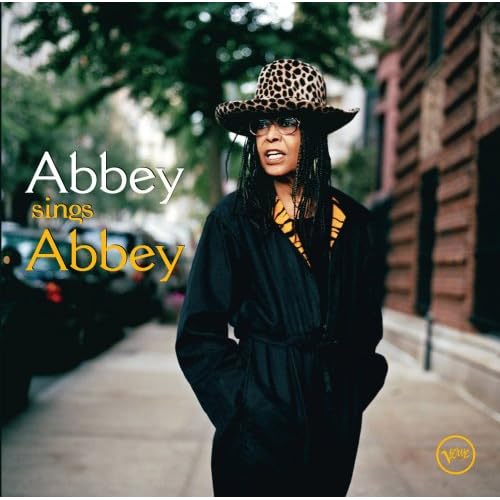
THE GREAT ABBEY LINCOLN (1930-2010)--"Throw It Away" (1980 and 2007)


"You can never lose a thing if it belongs to you..."

Abbey Lincoln (born Anna Marie Wooldridge on August 6, 1930 in Chicago, Illinois) was a jazz vocalist, songwriter, and actress. In 2003 she was awarded the National Endowment for the Arts' (NEA) Jazz Masters Award.

With Ivan Dixon, she co-starred in Nothing But a Man (1964), an independent film written and directed by Michael Roemer. She also co-starred with Sidney Poitier and Beau Bridges in 1968's For Love of Ivy. She was nominated for a Golden Globe Award for For Love of Ivy in 1969. Abbey Lincoln also appears in the 1956 film The Girl Can't Help It, for which she interpreted the theme song, working with Benny Carter. She sang on the 60's landmark jazz civil rights recording, We Insist! - Freedom Now Suite (1960) by jazz musician Max Roach and was married to him from 1962 to 1970.

She worked with many other great jazz musicians like Sonny Rollins, Eric Dolphy, Coleman Hawkins, Jackie McLean, Clark Terry, Stanley Turrentine, Wynton Kelly, Cedar Walton, Joe Lovano, Pat Metheny, Ron Carter, and Miles Davis and made albums with Stan Getz, Mal Waldron and Archie Shepp as well as her own groups.


From the 1980 album "Painted Lady" which was recorded in Paris, France with Archie Shepp:


The following version of Abbey's magisterial song "Throw It Away" was recorded in 2007 and released on her CD "Abbey Sings Abbey". It was her final recording:


Tuesday, August 17, 2010

Abbey Lincoln, 1930-2010: Groundbreaking Singer, Songwriter, Actor, and Activist


http://www.nytimes.com/2010/08/15/arts/music/15lincoln.html

All,

Abbey Lincoln was an iconic cultural figure and one of the most important and creatively profound singers--and later songwriters--of the past half century. Belonging to an elite and exclusive pantheon of truly original and innovative song stylists and expressive vocal artists in the Jazz tradition like such towering and legendary figures as Billie Holiday (1915-1959), Sarah Vaughan (1924-1990), Ella Fitzgerald (1917-1996), Betty Carter (1929-1998), Dinah Washington (1924-1963), and Nina Simone (1933-2003), Lincoln (born Anna Marie Wooldridge) was an extraordinary and highly gifted individual who not only excelled as a singer and songwriter (and painter) but was also a very fine actress. She was also a deeply committed and progressive social activist who with her late husband the legendary Jazz drummer and composer Max Roach (1924-2007) played a pivotal and dynamic role in the radical African American political and cultural movements of the 1960s and '70s. To say that Lincoln's magnificent and lasting contributions will be sorely missed is a great understatement. She was simply one of the short list of absolutely major and indispensable American artists of our time and like her phenomenal mentors and contemporaries in music, acting, and the visual arts her legacy has been and will continue to be felt wherever great art is being created and shared in this society and culture...

Kofi


Abbey Lincoln, Bold and Introspective Jazz Singer, Dies at 80

By NATE CHINEN
August 14, 2010
New York Times


Abbey Lincoln, a singer whose dramatic vocal command and tersely poetic songs made her a singular figure in jazz, died on Saturday in Manhattan. She was 80 and lived on the Upper West Side.


Chester Higgins Jr./The New York Times
Singer-composer Abbey Lincoln at her home in Manhattan in 2002.
Related


Cinerama Releasing
Ms. Lincoln in the 1968 film “For Love of Ivy.”


Jack Vartoogian/FrontRowPhotos
Ms. Lincoln, 1991.

Her death was announced by her brother David Wooldridge.

Ms. Lincoln’s career encompassed outspoken civil rights advocacy in the 1960s and fearless introspection in more recent years, and for a time in the 1960s she acted in films, including one with Sidney Poitier.

Long recognized as one of jazz’s most arresting and uncompromising singers, Ms. Lincoln gained similar stature as a songwriter only over the last two decades. Her songs, rich in metaphor and philosophical reflection, provide the substance of “Abbey Sings Abbey,” an album released on Verve in 2007. As a body of work, the songs formed the basis of a three-concert retrospective presented by Jazz at Lincoln Center in 2002.

Her singing style was unique, a combined result of bold projection and expressive restraint. Because of her ability to inhabit the emotional dimensions of a song, she was often likened to Billie Holiday, her chief influence. But Ms. Lincoln had a deeper register and a darker tone, and her way with phrasing was more declarative.

“Her utter individuality and intensely passionate delivery can leave an audience breathless with the tension of real drama,” Peter Watrous wrote in The New York Times in 1989. “A slight, curling phrase is laden with significance, and the tone of her voice can signify hidden welts of emotion.”

She had a profound influence on other jazz vocalists, not only as a singer and composer but also as a role model. “I learned a lot about taking a different path from Abbey,” the singer Cassandra Wilson said. “Investing your lyrics with what your life is about in the moment.”

Ms. Lincoln was born Anna Marie Wooldridge in Chicago on Aug. 6, 1930, the 10th of 12 children, and raised in rural Michigan. In the early 1950s, she headed west in search of a singing career, spending two years as a nightclub attraction in Honolulu, where she met Ms. Holiday and Louis Armstrong. She then moved to Los Angeles, where she encountered the accomplished lyricist Bob Russell.

It was at the suggestion of Mr. Russell, who had become her manager, that she took the name Abbey Lincoln, a symbolic conjoining of Westminster Abbey and Abraham Lincoln. In 1956, she made her first album, “Affair ... a Story of a Girl in Love” (Liberty), and appeared in her first film, the Jayne Mansfield vehicle “The Girl Can’t Help It.” Her image in both cases was decidedly glamorous: On the album cover she was depicted in a dĂ©colletĂ© gown, and in the movie she sported a dress once worn by Marilyn Monroe.

For her second album, “That’s Him,” released on the Riverside label in 1957, Ms. Lincoln kept the seductive pose but worked convincingly with a modern jazz ensemble that included the tenor saxophonist Sonny Rollins and the drummer Max Roach. In short order she came under the influence of Mr. Roach, a bebop pioneer with an ardent interest in progressive causes. As she later recalled, she put the Monroe dress in an incinerator and followed his lead.

The most visible manifestation of their partnership was “We Insist! Max Roach’s Freedom Now Suite,” issued on the Candid label in 1960, with Ms. Lincoln belting Oscar Brown Jr.’s lyrics. Now hailed as an early masterwork of the civil rights movement, the album radicalized Ms. Lincoln’s reputation. One movement had her moaning in sorrow, and then hollering and shrieking in anguish — a stark evocation of struggle. A year later, after Ms. Lincoln sang her own lyrics to a song called “Retribution,” her stance prompted one prominent reviewer to deride her in print as a “professional Negro.”

Ms. Lincoln, who married Mr. Roach in 1962, was for a while more active as an actress than a singer. In 1964 she starred with Ivan Dixon in “Nothing but a Man,” a tale of the Deep South in the 1960s, and in 1968 she was the title character opposite Mr. Poitier in the romantic comedy “For Love of Ivy,” playing a white family’s maid. She also acted on television in guest-starring roles in the ’60s and ’70s.

But with the exception of “Straight Ahead” (Candid), on which “Retribution” appeared, she released no albums in the 1960s. And after her divorce from Mr. Roach in 1970, she took an apartment above a garage in Los Angeles and withdrew from the spotlight for a time. She never remarried.

In addition to Mr. Wooldridge, Ms. Lincoln is survived by another brother, Kenneth Wooldridge, and a sister, Juanita Baker.

During a visit to Africa in 1972, Ms. Lincoln received two honorary appellations from political officials: Moseka, in Zaire, and Aminata, in Guinea. (Moseka would occasionally serve as her surname.) She began to consider her calling as a storyteller and focused on writing songs.

Moving back to New York in the 1980s, Ms. Lincoln resumed performing, eventually attracting the attention of Jean-Philippe Allard, a producer and executive with PolyGram France. Ms. Lincoln’s first effort for what is now the Verve Music Group, “The World Is Falling Down” (1990), was a commercial and critical success.

Eight more albums followed in a similar vein, each produced by Mr. Allard and enlisting top-shelf jazz musicians like the tenor saxophonist Stan Getz and the vibraphonist Bobby Hutcherson. In addition to elegant originals like “Throw It Away” and “When I’m Called Home,” the albums featured Ms. Lincoln’s striking interpretations of material ranging from songbook standards to Bob Dylan’s “Mr. Tambourine Man.”

For “Abbey Sings Abbey” Ms. Lincoln revisited her own songbook exclusively, performing in an acoustic roots-music setting that emphasized her affinities with singer-songwriters like Mr. Dylan. Overseen by Mr. Allard and the American producer-engineer Jay Newland, the album boiled each song to its essence and found Ms. Lincoln in weathered voice but superlative form.

When the album was released in May 2007, Ms. Lincoln was recovering from open-heart surgery. In her Upper West Side apartment, surrounded by her own paintings and drawings, she reflected on her life, often quoting from her own song lyrics. After she recited a long passage from “The World Is Falling Down,” one of her more prominent later songs, her eyes flashed with pride. “I don’t know why anybody would give that up,” she said. “I wouldn’t. Makes my life worthwhile.”


http://www.washingtonpost.com/wp-dyn/content/article/2010/08/14/AR2010081403178.html


Jazz singer, actress Abbey Lincoln dies at 80


Abbey Lincoln simplified her singing style. "It isn't about showing how good your voice is," she said. "It's about saying something." (Brad Barket/getty Images)


By Matt Schudel Washington Post Staff Writer Sunday, August 15, 2010

Abbey Lincoln, a jazz singer and actress of unshakable integrity who transformed her image from that of a slinky chanteuse to an oracle of hard-won wisdom, died Aug. 14 in New York. She had been in precarious health since having open-heart surgery in 2007, but the precise cause of death could not be learned. She was 80.

Ms. Lincoln found early fame as a sex-kitten supper-club singer and made a cameo appearance in the campy 1956 teen film "The Girl Can't Help It," starring Jayne Mansfield. After meeting and later marrying jazz drummer Max Roach, she became one of the first entertainers to make civil rights and racial pride an overt cause. She was a noted film actress in the 1960s, then retreated to obscurity before staging a remarkable comeback in the 1990s as a singer, songwriter and spiritual elder.

"Certain people inside the African-American experience . . . act as griots, bearers of the culture," singer Cassandra Wilson told Newsweek magazine in 1992. "Paul Robeson was something like that. And so is she."

Soon after making "The Girl Can't Help It," in which she appeared in a sparkly dress previously worn by Marilyn Monroe, Ms. Lincoln abandoned her come-hither style and the form-fitting gowns that went with it. She even burned the dress in an incinerator, she said, as a symbol of personal emancipation.

She stopped straightening her hair and in 1959 released one of her most memorable early albums, "Abbey Is Blue." In 1960, she and Roach made the then-radical recording "We Insist! Max Roach's Freedom Now Suite," which has been called the first outright protest album. It included Roach's thundering drums and Ms. Lincoln's occasional shrieks and moans, representing oppression and hardship.

"That was one of the most thrilling experiences I ever had," the album's producer, Nat Hentoff, said Saturday. "Everything was at a high level of intensity."

Other critics, however, derided Ms. Lincoln for introducing a political element to jazz, and her opportunities to record began to dwindle. Turning to acting, she starred with Ivan Dixon in the 1964 racial drama "Nothing But a Man" and as a maid opposite Sidney Poitier in "For Love of Ivy" (1968). The films were among the first Hollywood depictions of mature, loving relationships between black women and black men.

After her eight-year marriage to Roach ended, Ms. Lincoln spent the 1970s caring for her mother in Los Angeles. She taught acting, traveled in Africa and concentrated on writing songs. In the early 1980s, she settled in New York and returned to performing, with a distinctly fresh approach.

"I don't scream anymore," she said. "I sing about my life."

She drew inspiration from one of her idols, Billie Holiday, paring her singing to an unembellished minimum. Unlike many jazz singers, Ms. Lincoln indulged in little improvisation or scatting, the singing of wordless syllables in rapid sequence.

"I learned from Billie," she told The Washington Post in 2006. "It isn't about showing how good your voice is. It's about saying something."

Lacking the elastic vocal range of her early years, Ms. Lincoln found a new emotional depth in such later recordings as "The World Is Falling Down" (1990), "Devil's Got Your Tongue" (1993), "A Turtle's Dream" (1995) and "Who Used to Dance" (1996).

CONTINUED

Page 2 of 2

Her 1991 album, "You Gotta Pay the Band," featured original songs as well as a haunting rendition of the 1930s standard "Brother, Can You Spare a Dime?" The recording gained much of its lyrical poignancy from some the final performances of saxophonist Stan Getz, who died of cancer soon after.

"Stan helped save my career," Ms. Lincoln said in 1999. "Whenever a great musician works with you, it's an endorsement."

Ms. Lincoln performed at the Kennedy Center during the 2006 Mary Lou Williams Women in Jazz Festival and released her final album, "Abbey Sings Abbey," in 2007.

"She was always moving ahead," Hentoff said. "She had a presence. She was always so individual."

She was born Anna Marie Wooldridge in Chicago on Aug. 6, 1930, and grew up in rural Michigan as the tenth of 12 children. Drawn to music at an early age, she moved to Los Angeles at 19 and modeled her early career after Lena Horne.

From 1952 to 1954, she performed in Honolulu under the stage name Anna Marie, then returned to Los Angeles, where she adopted the name Gaby Lee. In 1956, she came up with Abbey Lincoln -- a combination of Westminster Abbey and Abraham Lincoln.

After meeting Roach in 1957, Ms. Lincoln became friends with other jazz musicians, including Thelonious Monk, who encouraged her in her first efforts as a songwriter.

Ms. Lincoln spent more than a month in a psychiatric hospital after her divorce from Roach in 1970 and never remarried. Survivors include two brothers and a sister.

In 1990, Ms. Lincoln returned to acting with a small role in Spike Lee's "Mo' Better Blues" but had mixed feelings about the film and about black artists who held African American life up to ridicule. She was particularly critical of Michael Jackson and his physical transformation: "He's brilliant; he can sing and dance in the tradition of his African ancestors, but he curses them by erasing them from his face and hair."

In her later years, through her majestic performances and her uncompromising integrity, Ms. Lincoln came to be seen as something of the guiding conscience of jazz.

"Sing a song correctly," she said, "and you live forever."


http://articles.latimes.com/2010/aug/15/local/la-me-abbey-lincoln-20100815

Jazz singer championed civil rights ABBEY LINCOLN, 1930 - 2010
by Keith Thursby
August 15, 2010
Los Angeles Times

Abbey Lincoln, an acclaimed jazz singer, songwriter and actress who evolved from a supper-club singer into a strong voice for civil rights, has died. She was 80.

Lincoln died Saturday in a nursing home in New York, said Evelyn Mason, her niece. No cause was given, but she had been in failing health.

Lincoln built a career as an actress and singer in the late 1950s through the turbulent 1960s, then stepped away during the 1970s and, years later, returned to prominence as a singer praised for her songwriting abilities.

"There was a passion to what she did," said jazz critic Don Heckman, who noted that Lincoln's songwriting made her a rarity among jazz singers. "She was not someone who was just singing a song. She had an agenda, and a lot of it had to do with civil rights.... She expressed herself in dramatic and impressive fashion in what she said and how she sang."

Her voice was a "special instrument, producing a sound that is parched rather than pure or perfect," wrote the New York Times' Peter Watrous in 1996. "But her limitations infuse her singing with honesty. More important, she understands the words she sings, declaiming them with a flare of memory that seems to illuminate all the lost love and sadness people experience."

She was often compared to Billie Holiday, one of her early influences. Times jazz writer Leonard Feather, writing after a Lincoln performance in 1986, said he could see glimpses of Holiday. "Not so much vocally as visually -- a slight toss of the head, a jutting of the jaw," he wrote. "As Lincoln said, 'We all stand on the shoulders of those who preceded us.' "

And Lincoln made an impact on the next generation.

"She opened up doors, not just in the sense of career possibilities but as empowerment to be myself when I sang," singer Cassandra Wilson told the Wall Street Journal in 2007.

Lincoln was born Anna Marie Wooldridge on Aug. 6, 1930, in Chicago, the 10th of 12 children. The family soon moved to rural Michigan.

She moved to California in 1951 and performed in local clubs, then spent two years singing in Honolulu before coming back to Los Angeles. And she became Abbey Lincoln, inspired by Westminster Abbey and Abraham Lincoln. Her manager, songwriter Bob Russell, thought of the name.

(Page 2 of 2)

Lincoln had a role in the 1956 film "The Girl Can't Help It," in which she wore a dress once worn by Marilyn Monroe. The appearance, coupled with her first album, "Abbey Lincoln's Affair: A Story of a Girl in Love," gave her a glamorous image. That
changed when she started working with jazz drummer Max Roach, whose music would reflect the coming civil rights struggle. They married in 1962.

"I started out being a sexy young thing in a Marilyn Monroe dress," she told The Times in 2000, "And Max Roach freed me from that." The 1960 release "We Insist! Freedom Now Suite" included Lincoln's wordless, sometimes screaming duet with Roach and was a landmark musical statement of the civil rights movement. Lincoln "was like an OK supper singer," critic and producer Nat Hentoff told The Times in 1993. "Then I went down to the Village Gate here in New York where Max and she were doing the 'Freedom Now Suite.' It was just extraordinary, the power of it." Critics were divided. "We all paid a price, but it was important to say something," she told the Wall Street Journal in 2007. "It still is." Movie roles followed, including "Nothing But a Man" in 1964 and "For Love of Ivy" in 1968, in which she starred with Sidney Poitier. Lincoln "was a really gifted person and a truly wonderful actress. She was the kind of person you expected to live forever," Poitier told The Times on Saturday. "She was gifted in so many ways. She was quite productive, and it was quite rewarding for those of us who heard her sing and watched her act."

Lincoln and Roach divorced in 1970, and she returned to California to "cleanse her spirit," she told The Times in 1993. She taught at what is now Cal State Northridge, did some television work and performed only occasionally.

Her career took off again in the late 1980s, with works including two 1987 albums paying tribute to Holiday.

Living in New York, she moved to the Verve Music Group and had commercial and artistic success with "The World Is Falling Down" in 1990 and "You Gotta Pay the Band" in 1991, in which she performed with saxophone great Stan Getz.

Her final new release was "Abbey Sings Abbey" in 2007.

Lincoln is survived by brothers David and Kenneth Wooldridge and a sister, Juanita Baker.

keith.thursby@latimes.com