Showing posts with label Noam Chomsky. Show all posts

Sunday, December 10, 2023

The Fundamental Crisis and Foundational Contradiction Facing the United States During the Upcoming Presidential Election Year of 2024: Fascism guided, informed, and enabled by the Doctrines and Practices of White Supremacy and Global Capitalism--PART ONE

DEFEAT FASCISM BEFORE FASCISM DEFEATS YOU
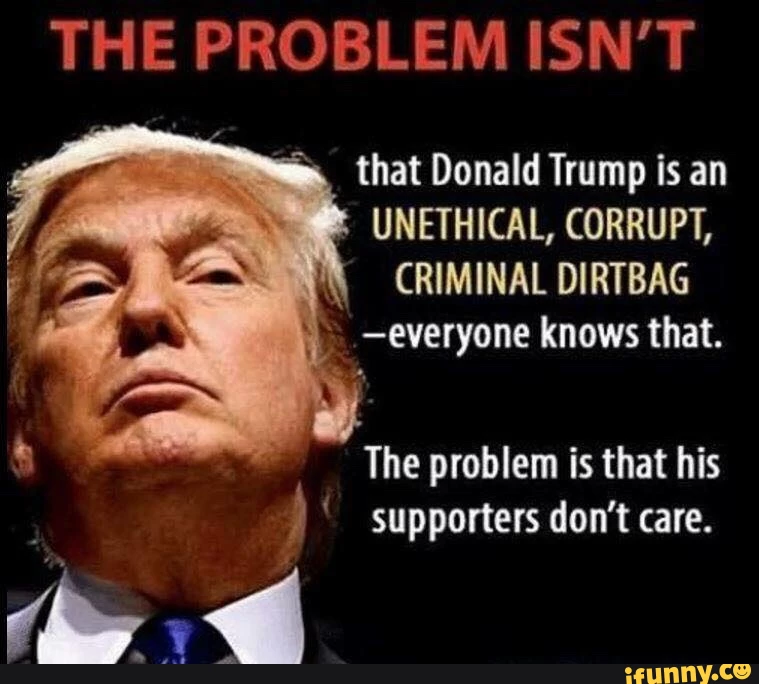
THE PROBLEM ISN'T that Donald Trump is an UNETHICAL, CORRUPT, CRIMINAL DIRTBAG .-everyone knows that. The problem is that his supporters don't care.

FROM TIMOTHY MCVEIGH TO DONALD TRUMP: The Modern Ideological, Cultural, and Economic Turn of White Supremacy Towards Fascism in American Politics,  1995-Present:

"The most deadly, dangerous, and powerful enemy of African Americans, Latino Americans, Asian Americans, and Native Americans in general, Women in general, the poor in general, the working class in general, children in general, Freedom in general and Democracy in general in American society today is the truly heinous Republican Party and their endless number of severely bigoted and demagogic minions, mentors, sponsors, and supporters. Anyone who doesn't know or believes this blatantly obvious fact is not only a hopeless FOOL but ultimately deserves their "fate.”
—Kofi Natambu, July 15, 2009

"The Republican Party is the most dangerous organisation in human history. 'Has there ever been an organisation in human history that is dedicated, with such commitment, to the destruction of organised human life on Earth?' Not that I'm aware of."
--Noam Chomsky, April 24, 2017

"Trump is not just an ethically dead aberration. Rather, he is the successor of a long line of fascists who shut down public debate, attempt to humiliate their opponents, endorse violence as a response to dissent and criticize any public display of democratic principles. The United States has reached its endpoint with Trump, and his presence should be viewed as a stern warning of the nightmare to come. Trump is not an isolated figure in US politics; he is simply the most visible and popular expression of a number of extremists in the Republican Party who now view democracy as a liability."
--Henry A. Giroux, "Fascism in Donald Trump's United States", December 8, 2015

"Like all fundamentally authoritarian and fascist expressions the political, social, economic, and cultural triumph of sheer hatred, greed, stupidity, cruelty, resentment, corruption, ignorance, paranoia, indifferance, psychosis, sadism, cowardice, hypocrisy, cultism, idolatry, and various forms of racial, gender, and class based violence promoted AS PUBLIC POLICY AND IDEOLOGICAL PLATFORM is what the Scumbag-in-Chief fully embodies and represents, and most importantly is what the great overwhelming majority of his over 63 million voters from 2016 most love, respect, encourage, endorse, and support about their very own national zombie cult "leader”. This is the clear and present danger on both an empirical and existential level that we are all up against and absolutely must defeat and remove from power in 2020 and beyond at all cost.”
—Kofi Natambu, December 22, 2019

"Alarm bells are ringing about the dangerous implications of the behavior of the Republican Party. By doubling down on defense of the Big Lie that the 2020 election was stolen, punishing any members who reject that lie, refusing to support an investigation into the January 6 insurrection at the Capitol, and unleashing a fusillade of voter suppression legislation across the country, many see these actions as an ominous new trend in American politics that threatens the foundations of our democracy itself.

Viewed through the lens of history, however, none of this is new. The hard truth is that whichever United States political party has been most rooted in the fears, anxieties, and resentments of white people has never cared much about democracy or the Constitution designed to preserve it. Those who do want to make America a multi-racial democracy must face this fact with clear eyes and stiff spines to repel the ever-escalating threats to the nation’s most cherished institutions and values.

Contemporary analysis of domestic politics is obscured by the historical fact that white Americans fearful of the ramifications of equality for people of color have moved their political home from the Democratic Party, which was their preferred vehicle at the time of the Civil War, to the Republican Party, where they reside today. In the 19th century, Democrats dominated the South, led 11 states to secede from the Union, and waged a murderous multiyear war against their fellow Americans. Today, it is the Republicans who are the standard-bearers of the modern-day Confederate cause. “ 
—Steve Phillips, May 26, 2021

"What's Past is Prologue..."

"...It is often said that Trump has no real ideology, which is not true—his ideology is white supremacy, in all its truculent and sanctimonious power...In Trump, white supremacists see one of their own. Only grudgingly did Trump denounce the Ku Klux Klan and David Duke, one of its former grand wizards—and after the clashes between white supremacists and counterprotesters in Charlottesville, Virginia, in August, Duke in turn praised Trump’s contentious claim that “both sides” were responsible for the violence...

Trump’s political career began in advocacy of birtherism. But long before that, he had made his worldview clear...
 
To Trump, whiteness is neither notional nor symbolic but is the very core of his power. In this, Trump is not singular. But whereas his forebears carried whiteness like an ancestral talisman, Trump cracked the glowing amulet open, releasing its eldritch energies. The repercussions are striking: Trump is the first president to have served in no public capacity before ascending to his perch. But more telling, Trump is also the first president to have publicly affirmed that his daughter is a “piece of ass.” The mind seizes trying to imagine a black man extolling the virtues of sexual assault on tape (“When you’re a star, they let you do it”), fending off multiple accusations of such assaults, immersed in multiple lawsuits for allegedly fraudulent business dealings, exhorting his followers to violence, and then strolling into the White House. But that is the point of white supremacy—to ensure that that which all others achieve with maximal effort, white people (particularly white men) achieve with minimal qualification. Barack Obama delivered to black people the hoary message that if they work twice as hard as white people, anything is possible. But Trump’s counter is persuasive: Work half as hard as black people, and even more is possible..."
--Ta-Nehisi Coates, "The First White President",
The Atlantic, September 11, 2017


His Ideology Is White Supremacy': Ta-Nehisi Coates On Donald Trump
Heard on Morning Edition
by Jeffrey Pierre
September 7, 2017
NPR


PHOTO: Author Ta-Nehisi Coates says of Trump voters: "I think if you say, 'Well yeah, Donald Trump ran a racist campaign, but I voted for him despite that,' that is to say that having somebody who runs that type of campaign is not a disqualifier to you." Paul Marotta/Getty Images

"[Trump's] ideology is white supremacy, in all its truculent and sanctimonious power," Coates writes in an essay for The Atlantic, adapted from his upcoming book, We Were Eight Years in Power: An American Tragedy.

Coates spoke to Rachel Martin of Morning Edition on National Public Radio (NPR) about that essay, which will be featured in the Atlantic's October issue. The conversation focuses on why Coates thinks that Trump's election was a direct response to having a black man occupy an office that was, up until Barack Obama, "reserved for white men."

The interview has been edited and condensed.

NPR: You don't buy the argument that Donald Trump's election was about the white working class in America feeling marginalized from a globalized workforce, from a globalized economy that had left them behind — and that that's what was animating that demographic.

TA-NEHISI COATES: Well, you know, it's certainly true that the white working class feels that way. But anybody who wants to make a class-based argument must explain why the black working class, the Latino working class, didn't break the same way. They are just as afflicted by forces of globalization and economic change, deindustrialization, et cetera. And yet they didn't break to Trump. The other thing that has to be explained is why Trump was dominant across nearly every socio-economic sector of white America. It was not simply that he rose on the strength of the white working class. He rose on the strength of all of white America.

NPR: Some people look at those sectors that you just talked about and say, "Well, they weren't motivated by race in this" or "They were OK electing and supporting a presidential candidate, whom many believe was propagating racist policies." Weren't they just voting on their interests, which do not include race relations in this country?

COATES: Yeah. I would definitely agree with that. And I would argue, I think there's something behind even saying that "race relations" aren't their interest. I think that's a statement itself. Race relations are interested in them, whether they're interested in it or not.

NPR: Well, I guess that's what I'm pointing out, is that race would be something that would be more at the forefront of the people who are being marginalized by what are called "racist policies," and so maybe that's a problem. But it is the world we live in that whites don't recognize racism in this country as something that would be an animating force in their electoral decisions.

I would agree with that. I would just add that I don't think that's exonerating. For instance, I think if you say, "Well yeah, Donald Trump ran a racist campaign, but I voted for him despite that," that is to say that having somebody who runs that type of campaign is not a disqualifier to you.

NPR: You don't let anyone off the hook in this piece. You and I have talked before about how you think even President Obama, to a degree, downplayed racial divides and talked instead about economic injustices that face all Americans regardless of race. But you also in this piece call out Bernie Sanders, and to a lesser degree Hillary Clinton, for doing the same thing. You believe the political left in this country is also complicit.

COATES: I do. I think there is a long tradition in this country of evasion. I mean, David Duke, a former Klansman who was running for office in Louisiana, was very, very successful. And folks say they say the exact same thing about that, that they say today: "Oh, it's economic distress."

Clearly a lot of people here felt left behind economically. That's why folks were so moved to be represented by a Klansman.

And there's a broad agreement, I would say, across the Democratic Party from folks who are more centrist like Obama and Clinton, and folks who are further left like Bernie Sanders, that the real issue is actually economics — that there isn't some bastion of racism to be found in the white working class. And I don't think there's a particular one to be found in a white working class. I think there's a particular one to be found in white America in general.

NPR: So you've outlined a situation in which there don't seem to be any saviors. No existing party or movement that gets us out of this situation to rescue us, essentially, from the racial divides that seem to be deepening. That is a sad indictment. How do you — because it is human nature to try to look toward some kind of light — where do you see the light? Where do you see a moment, or a way out?

COATES: I don't think I do.

We have some you know some 400 years of history weighing down on us, going all the way back to colonial times when black folks first arrived here in 1619. We have not figured out a way to really pay down that debt to get that history up off of us. And so I think the expectation at some moment will happen now is, forgive me, a bit naive.

NPR: How do you raise kids in that? I mean you've written an entire book dedicated to your son addressing this very issue; but how do you — I mean when the future is that bleak when the present and the future are that bleak?

COATES: I think quite easily. Life is always a problem. The fact that I'm on the radio saying that I don't necessarily see hope does not relieve people, does not relieve my son, does not relieve children, of the responsibility to struggle. Folks struggled in much bleaker times than this. So to me, the answer to that is the same answer to how we got here in the first place. It's history. If you look at how human beings have been throughout history, during bleak times, they've struggled. Why would it be any different this time?”
—Rachel Martin, "'His Ideology Is White Supremacy': Ta-Nehisi Coates On Donald Trump”, National Public Radio (NPR), September 7, 2017

Wednesday, January 8, 2020

Noam Chomsky Says the U.S. Is a Rogue State and Suleimani’s Assassination Confirms It

"What's Past is Prologue..."

NATAMBU’S LAW states: “No matter how bad things are or appear to be one can rest assured, upon further investigation, that in reality things are FAR WORSE than anything one could possibly imagine”

REPEAT...(from 3 days ago)...

All,

We desperately need at least 2 million citizens to actively participate in a massive march on the white house and the Pentagon NOW...TODAY. It's absolutely imperative that we seriously marshall all of our antiwar strength throughout the entire country to engage in a colossal and ongoing civil disobedience campaign to stop the vile sinister criminal known forevermore as our very own IMPEACHED SCUMBAG-IN-CHIEF from dragging this country and the rest of the world down into the bloody sewer that is this maniac's most heartfelt desire. It's time to stop fucking around and PRETENDING that this unhinged monster and international disgrace is even sane let alone capable of resolving global conflict via rational political decisions and state diplomacy.

Ultimately we must not fail in our collective effort to remove this malevolent human malady from office and to aggressively oppose and resist with everything within us his clearly diabolical plans to use us all as cannon fodder in his neofascist fantasy of maintaining and extending the tyrannical madness that currently passes for "politics" in this rapidly disintegrating empire masquerading as a democratic Republic. Stay tuned and remain vigilant no matter what happens. Trust me: We're really gonna need it now, more than ever...

Kofi

https://truthout.org/…/noam-chomsky-us-is-a-rogue-state-and…

Interview
War And Peace


Noam Chomsky: US Is a Rogue State 
and Suleimani’s Assassination Confirms It
by C.J. Polychroniou
January 7, 2020
Truthout


PHOTO: Antiwar activists protest in front of the White House in Washington, D.C., on January 4, 2020. Andrew Caballero-Reynolds / AFP via Getty Images
Trump’s decision to assassinate one of Iran’s most prominent and highly respected military leaders, Maj. Gen. Qassim Suleimani, has added yet another name to the list of people killed by the U.S. — which many rightly see as the world’s biggest rogue state.

The assassination has escalated hostilities between Tehran and Washington and created an even more explosive situation in the politically volatile Middle East. As was to be expected, Iran has vowed to retaliate on its own terms for the killing of its general, while also announcing that it will withdraw from the Iran nuclear deal. Iraq’s parliament, in turn, has voted to expel all U.S. troops, but Trump has responded with threats of sanctions if the U.S. is forced to remove its troops from the country.

As world-renowned public intellectual Noam Chomsky points out in this exclusive interview for Truthout, the primary aim of U.S. foreign policy in the Middle East has been to control the region’s energy resources. Here Chomsky — a university professor emeritus at MIT and laureate professor of linguistics at the University of Arizona who has published more than 120 books on linguistics, global affairs, U.S. foreign policy, media studies, politics and philosophy — offers his analysis of Trump’s reckless act and its possible effects.

C.J. Polychroniou: Noam, the U.S. assassination of Iran’s Quds Force commander Qassim Suleimani has reaffirmed Washington’s long-held obsession with Tehran and its clerical regime, which goes all the way back to the late 1970s. What is the conflict between U.S. and Iran all about, and does the assassination of Suleimani constitute an act of war?

Noam Chomsky: Act of war? Perhaps we can settle on reckless international terrorism. It seems that Trump’s decision, on a whim, appalled high Pentagon officials who briefed him on options, on pragmatic grounds. If we wish to look beyond, we might ask how we would react in comparable circumstances.

Suppose that Iran were to murder the second-highest U.S. official, its top general, in the Mexico City international airport, along with the commander of a large part of the U.S.-supported army of an allied nation. Would that be an act of war? Others can decide. It is enough for us to recognize that the analogy is fair enough, and that the pretexts put forth by Washington collapse so quickly on examination that it would be embarrassing to run through them.

Suleimani was greatly respected — not only in Iran, where he was a kind of cult figure. This is recognized by U.S. experts on Iran. One of the most prominent experts, Vali Nasr (no dove, and who detests Suleimani), says that Iraqis, including Iraqi Kurds, “don’t see him as the nefarious figure that the West does, but they see him through the prism of defeating ISIS.” They have not forgotten that when the huge, heavily armed U.S.-trained Iraqi army quickly collapsed, and the Kurdish capital of Erbil, then Baghdad and all of Iraq were about to fall in the hands of ISIS [also known as Daesh], it was Suleimani and the Iraqi Shia militias he organized that saved the country. Not a small matter.

As for what the conflict is all about, the background reasons are not obscure. It has long been a primary principle of U.S. foreign policy to control the vast energy resources of the Middle East: to control, not necessarily to use. Iran has been central to this objective during the post-World War II period, and its escape from the U.S. orbit in 1979 has accordingly been intolerable.

The “obsession” can be traced to 1953, when Britain — the overlord of Iran since oil was discovered there — was unable to prevent the government from taking over its own resources and called on the global superpower to manage the operation. There is no space to review the course of the obsession since in detail, but some highlights are instructive.
Suppose that Iran were to murder the second-highest U.S. official, its top general, in the Mexico City international airport.


Britain called on Washington with some reluctance. To do so meant surrendering more of its former empire to the U.S. and declining even more to the role of “junior partner” in global management, as the foreign office recognized with dismay. The Eisenhower administration took over. It organized a military coup that overthrew the parliamentary regime and re-installed the Shah, restoring the oil concession to its rightful hands, with the U.S. taking over 40 percent of the former British concession. Interestingly, Washington had to force U.S. majors to accept this gift; they preferred to keep to cheaper Saudi oil (which the U.S. had taken over from Britain in a mini war during World War II). But under government coercion, they were forced to comply: one of those unusual but instructive incidents revealing how the government sometimes pursues long-term imperial interests over the objections of the powerful corporate sector that largely controls and even staffs it — with considerable resonance in U.S.-Iran relations in recent years.
The Shah proceeded to institute a harsh tyranny. He was regularly cited by Amnesty International as a leading practitioner of torture, always with strong U.S. support as Iran became one of the pillars of U.S. power in the region, along with the Saudi family dictatorship and Israel. Technically, Iran and Israel were at war. In reality, they had extremely close relations, which surfaced publicly after the overthrow of the Shah in 1979. The tacit relations between Israel and Saudi Arabia are surfacing much more clearly now within the framework of the reactionary alliance that the Trump administration is forging as a base for U.S. power in the region: the Gulf dictatorships, the Egyptian military dictatorship and Israel, linked to Modi’s India, Bolsonaro’s Brazil and other similar elements. A rare semblance of a coherent strategy in this chaotic administration.

The Carter administration strongly supported the Shah until the last moment. High U.S. officials — [Henry] Kissinger, [Dick] Cheney, [Donald] Rumsfeld — called on U.S. universities (mainly my own, MIT, over strong student protest but faculty acquiescence) to aid the Shah’s nuclear programs, even after he made clear that he was seeking nuclear weapons. When the popular uprising overthrew the Shah, the Carter administration was apparently split on whether to endorse the advice of de facto Israeli Ambassador Uri Lubrani, who counselled that “Tehran can be taken over by a very relatively small force, determined, ruthless, cruel. I mean the men who would lead that force will have to be emotionally geared to the possibility that they’d have to kill ten thousand people.”
It didn’t work, and soon Ayatollah Khomeini took over on an enormous wave of popular enthusiasm, establishing the brutal clerical autocracy that still reigns, crushing popular protests.

Shortly after, Saddam Hussein invaded Iran with strong U.S. backing, unaffected by his resort to chemical weapons that caused huge Iranian casualties; his monstrous chemical warfare attacks against Iraqi Kurds were denied by Reagan, who sought to blame Iran and blocked congressional condemnation.

Finally, the U.S. pretty much took over, sending naval forces to ensure Saddam’s control of the Gulf. After the U.S. guided missile cruiser Vincennes shot down an Iranian civilian airliner in a clearly marked commercial corridor, killing 290 passengers and returning to port to great acclaim and awards for exceptional service, Khomeini capitulated, recognizing that Iran cannot fight the U.S. President Bush then invited Iraqi nuclear scientists to Washington for advanced training in nuclear weapons production, a very serious threat against Iran.

Conflicts continued without a break, in more recent years focusing on Iran’s nuclear programs. These conflicts ended (in theory) with the Joint Comprehensive Plan of Action (JCPOA) in 2015, an agreement between Iran and the five permanent members of the UN, plus Germany, in which Iran agreed to sharply curtail its nuclear programs — none of them weapons programs — in return for Western concessions. The International Atomic Energy Agency, which carries out intensive inspections, reports that Iran fully lived up to the agreement. U.S. intelligence agrees.

The topic elicits much debate, unlike another question: Has the U.S. observed the agreement? Apparently not. The JCPOA states that all participants are committed not to impede in any way Iran’s reintegration into the global economy, particularly the global financial system, which the U.S. effectively controls. The U.S. is not permitted to interfere “in areas of trade, technology, finance and energy” and others.

While these topics are not investigated, it appears that Washington has been interfering steadily.

President Trump claims that his effective demolition of the JCPOA is an effort to negotiate an improvement. It’s a worthy objective, easily realized. Any concerns about Iranian nuclear threats can be overcome by establishing a nuclear weapons-free zone (NWFZ) in the Middle East, with intensive inspections like those successfully implemented under the JCPOA.

As we have discussed before, this is quite straightforward. Regional support is overwhelming. The Arab states initiated the proposal long ago, and continue to agitate for it, with the strong support of Iran and the former nonaligned countries (G-77, now 132 countries). Europe agrees. In fact, there is only one barrier: the U.S., which regularly vetoes the proposal when it comes up at the review meetings of the Non-Proliferation Treaty countries, most recently by Obama in 2015. The U.S. will not permit inspection of Israel’s enormous nuclear arsenal, or even concede its existence, though it is not in doubt. The reason is simple: under U.S. law (the Symington Amendment), conceding its existence would require terminating all aid to Israel.

So the simple method of ending the alleged concern about an Iranian threat is ruled out and the world must face grim prospects.

Since these topics are scarcely mentionable in the U.S., it is perhaps worthwhile to reiterate another forbidden matter: The U.S. and U.K. have a special responsibility to work to establish a NWFZ in the Middle East. They are formally committed to do so under Article 14 of UN Security Council Resolution 687, which they invoked in their effort to concoct some thin legal basis for their invasion of Iraq, claiming that Iraq had violated the Resolution with nuclear weapons programs. Iraq hadn’t, as they were soon forced to concede. But the U.S. continues to violate the Resolution to the present in order to protect its Israeli client and to allow Washington to violate U.S. law.

Interesting facts, which, unfortunately, are apparently too incendiary to see the light of day.

There’s no point reviewing the years that followed in the hands of the man “sent by God to save Israel from Iran,” in the words of the serious figure of the administration, Secretary of State Mike Pompeo.

Returning to the original question, there’s quite a lot to contemplate about what the conflict is about. In a phrase, primarily imperial power, damn the consequences.

The term “rogue state” (used widely by the U.S. State Department) refers to the pursuit of state interests without regard to accepted standards of international behavior and the basic principles of international law. Given that definition, isn’t the U.S. a star example of a rogue state?

State Department officials are not the only ones to use the term “rogue state.” It has also been used by prominent American political scientists — referring to the State Department. Not Trump’s, Clinton’s.

During the era between Reagan’s murderous terrorist atrocities in Central America and Bush’s invasion of Iraq, they recognized that for much of the world, the U.S. was “becoming the rogue superpower,” considered “the single greatest external threat to their societies,” and that, “In the eyes of much of the world, in fact, the prime rogue state today is the United States” (Harvard professor of the science of government and government adviser Samuel Huntington; President of the American Political Science Association Robert Jervis. Both in the main establishment journal, Foreign Affairs, 1999, 2001).
After Bush took over, qualifications were dropped. It was asserted as fact that the U.S. “has assumed many of the very features of the ‘rogue nations’ against which it has … done battle.” Others outside the U.S. mainstream might think of different words for the worst crime of the millennium, a textbook example of aggression without credible pretext, the “supreme international crime” of Nuremberg.


We are supposed to revere the U.S. Constitution. We must therefore revere Article VI, which declares that valid treaties shall be “the supreme law of the land.”
And others sometimes express their opinions. Gallup runs regular polls of international opinion. In 2013 (the Obama years), it asked for the first time, which country is the greatest threat to world peace. The U.S. won; no one else even came close. Far behind in second place was Pakistan, presumably inflated by the Indian vote. Iran — the greatest threat to world peace in U.S. discourse — was scarcely mentioned.

That was also the last time the question was asked, though there needn’t have been much concern. It does not seem to have been reported in the U.S.
We might ponder these questions a little further. We are supposed to revere the U.S. Constitution, especially conservatives. We must therefore revere Article VI, which declares that valid treaties shall be “the supreme law of the land” and officials must be bound by them. In the post-war years, by far the most important such treaty is the UN Charter, instituted under U.S. initiative. It bans “the threat or use of force” in international affairs; specifically, the common refrain that “all options are open” with regard to Iran. And all cases of resort to force unless explicitly authorized by the Security Council or in defense against armed attack (a narrowly construed notion) until the Security Council, which must be immediately notified, is able to act to terminate the attack.

We might consider what the world would look like if the U.S. Constitution were considered applicable to the U.S., but let’s put that interesting question aside — not, however, without mentioning that there is a respected profession, called “international lawyers and law professors,” who can learnedly explain that words don’t mean what they mean.

Iraq has struggled since the U.S. invasion in 2003 to maintain a balanced situation with both Washington and Tehran. However, the Iraqi parliament has voted after Suleimani’s assassination to expel all U.S. troops. Is this likely to happen? And, if it does, what impact would it have on future U.S.- Iraq-Iran relations, including the fight against ISIS?
We don’t know whether it will happen. Even if the Iraqi government orders the U.S. to leave, will it do so? It’s not obvious, and as always, public opinion in the U.S., if organized and committed, can help provide an answer.

As for ISIS, Trump has just given it another lease on life, just as he gave it a “get out of jail free” card when he betrayed Syrian Kurds, leaving them to the mercy of their bitter enemies Turkey and Assad after they had fulfilled their function of fighting the war against ISIS (with 11,000 casualties, as compared with half-dozen Americans). ISIS organized at first with jail breaks and is now free to do so again.

ISIS has been given a welcome gift in Iraq as well. The eminent Middle East historian Ervand Abrahamian observes:

The killing of Soleimani … has actually provided a wonderful opportunity for ISIS to recover. There will be a resurgence of ISIS very much in Mosul, northern Iraq. And that, paradoxically, will help Iran, because the Iraqi government will have no choice but to rely more and more on Iran to be able to contain ISIS [which led the defense of Iraq against the ISIS onslaught, under Suleimani’s command] … Trump has pulled out of north Iraq, of the area where ISIS was, pulled the rug out from the Kurds, and now he’s declared war on the pro-Iranian militias. And the Iraqi Army has not been in the past capable of dealing with ISIS. So, the obvious thing is now, the Iraqi government, how are they going to deal with the revival of ISIS? … they will have no choice but to actually rely more and more on Iran. So, Trump has actually undermined his own policy, if he wants to eliminate Iran’s influence in Iraq.

Much as W. Bush did when he invaded Iraq.

We shouldn’t forget, however, that enormous power can recover from muddle-headedness and failure — if the domestic population permits it to.

Putin appears to have outmaneuvered the U.S. not only on Syria, but almost everywhere else on the Middle East front. What is Moscow after in the Middle East, and what’s your explanation for the often infantile diplomacy displayed by the United States in the region and in fact around the world?

One goal, substantially achieved, was to gain control of Syria. Russia entered the conflict in 2015 after advanced weapons provided by the CIA to the mostly jihadi armies had stopped Assad’s forces. Russian aircraft turned the tide, and without concern for the incredible civilian toll, the Russian-backed coalition has taken control of most of the country. Russia is now the external arbiter.

Elsewhere, even among Washington’s Gulf allies, Putin has presented himself, apparently with some success, as the one trustworthy outside actor. Trump’s bull-in-a-China-shop diplomacy (if that is the right word) is winning few friends outside of Israel, on which he is lavishing gifts, and the other members of the reactionary alliance taking shape. Any thought of “soft power” has been pretty much abandoned. But U.S. reserves of hard power are enormous. No other country can impose harsh sanctions at will and compel third parties to honor them, at cost of expulsion from the international financial system. And, of course, no one else has hundreds of military bases around the world or anything like Washington’s advanced military power and ability to resort to force at will and with impunity. The idea of imposing sanctions on the U.S., or anything beyond tepid criticism, borders on ludicrous.

And so, it is likely to remain even as “in the eyes of much of the world, in fact, the prime rogue state today is the United States,” considerably more so than 20 years ago when these words were uttered, unless and until the population compels state power to pursue a different course.

This interview has been lightly edited for clarity and length. 

ABOUT THE INTERVIEWER:

C.J. Polychroniou is a political economist/political scientist who has taught and worked in universities and research centers in Europe and the United States. His main research interests are in European economic integration, globalization, the political economy of the United States and the deconstruction of neoliberalism’s political and economic project. He is a regular contributor to Truthout as well as a member of Truthout’s Public Intellectual Project. He has published several books and his articles have appeared in a variety of journals, magazines, newspapers and popular news websites. Many of his publications have been translated into several foreign languages, including Croatian, French, Greek, Italian, Portuguese, Spanish and Turkish. He is the author of Optimism Over Despair: Noam Chomsky On Capitalism, Empire, and Social Change, an anthology of interviews with Chomsky originally published at Truthout and collected by Haymarket Books.

PHOTO: Antiwar activists protest in front of the White House in Washington, D.C., on January 4, 2020. Andrew Caballero-Reynolds / AFP via Getty Images

Wednesday, January 30, 2019

Noam Chomsky On Social Reality in the United States, Capitalist Ideology and Global Politics In the Oligarchic Era of Trump

https://truthout.org/…/chomsky-ocasio-cortez-and-other-new…/

Interview
Politics & Elections


Noam Chomsky: Ocasio-Cortez and Other Newcomers Are Rousing the Multitudes
by C.J. Polychroniou
January 30, 2019
Truthout 

PHOTO: US linguist and political activist Noam Chomsky is pictured during a press conference after visiting former Brazilian President Luiz Inácio Lula da Silva at the Federal Police Superintendence in Curitiba, Brazil, after Lula was arrested on corruption charges, on September 20, 2018.  Heuler Andrey / AFP / Getty Images

A quick glance around the world today reveals that politics almost everywhere — from the federal government shutdown in the US to the power struggle in Venezuela and from Macron’s crisis in France and UK’s Brexit nightmare to the Israeli-Iranian rivalry – are engulfed in a state of uncertainty and turmoil. Meanwhile, oligarchy is replacing democracy as the widening social and economic gap between rich and poor continues unabated. So, who rules the world now? The US is in a state of relative decline, but neither Russia nor China has the capacity to control global developments. How do the super-rich and corporations factor into this equation? In this exclusive interview, world-renowned linguist and social critic Noam Chomsky provides penetrating insights into some of the most critical developments going on in the world today.

C.J. Polychroniou: After 35 days of a partial government shutdown, Trump signed a three-week funding bill but without securing money for the border wall. Leaving aside for the moment the surrealist nature of contemporary US political life, do you detect some hidden political strategy behind Trump’s funding conflict over the border wall with the Democrats?

Noam Chomsky: There’s a political strategy, but I’m not convinced that it’s hidden. With Trump, everything is pretty much on the surface. There have been constant efforts by political analysts to discern some deep geostrategic or sociopolitical thinking behind his performances, but they seem to me unconvincing. What he does seems readily explained simply on the well-grounded assumption that his doctrine is simple: ME!

Trump understands that he has a primary constituency — extreme wealth and corporate power — and that he has to serve its interests or he’s finished. That task has largely been assigned to the Ryans and McConnells, who have performed it admirably. Profits are skyrocketing, real wages are barely increasing despite low unemployment, regulations that might limit greed (and help mere people) are being dismantled, and the one legislative achievement — the tax scam — put lots of dollars in the right pockets and created a deficit that can be used as a pretext to undermine benefits. All is working smoothly — with analogues worldwide.

But Trump must maintain enough of a voting base to stay in power. That requires posturing as the defender of the ordinary guy against hated “elites” (always suppressing the true “masters of mankind,” to borrow Adam Smith’s phrase for the merchants and manufacturers who were “the principal architects” of policy). This act is helped along by such figures as Rush Limbaugh, who instructs his tens of millions of followers that they should beware of “the four corners of deceit: government, academia, science and media,” institutions that “are now corrupt and exist by virtue of deceit.” So, he argues, just listen to ME.

Meanwhile Trump must rise to the defense of the masses from awesome threats, chief among them now the hordes of “rapists,” “murderers” and “Islamic terrorists” he says are being mobilized down south to storm across the border and slaughter decent law-abiding white Christian Americans. We must therefore have a “beautiful wall” — which they will pay for. Trump promised that, and to back down would not only betray the trembling masses but also be a defeat, which his ego cannot tolerate.

The game is not really new. After all, the revered Ronald Reagan bravely donned his cowboy uniform and declared a National Emergency to protect the country from the Nicaraguan army, supposedly poised to destroy us all only two days’ drive from Harlingen, Texas. Trump is only carrying it further, helped by the fading of such infantile notions as “truth” — or “false realities,” to borrow Jared Kushner’s innovation. Former Secretary of State Dean Acheson’s admonition that policymakers must be “clearer than truth” has long passed into obsolescence. They can do far better in the atmosphere of “alternative facts” for those liberated from the four pillars of deceit.

I doubt that there is any deeper political strategy.

Trump understands that he has a primary constituency — extreme wealth and corporate power — and that he has to serve its interests or he’s finished.


Furthermore, such performances are rather natural, perhaps even necessary. As both parties have drifted to the right during the neoliberal assault on the population, the Democrats abandoned the working class and became pretty much what used to be called “moderate Republicans” (something that is beginning to change now in promising ways) while Republicans climbed so deeply into the pockets of the super-rich and corporate power that it became impossible for them to gain anywhere near enough votes on their actual policies. Antics of the Trump style fit the requirements, along with a variety of measures to suppress voting and increased reliance on the many regressive aspects of the constitutional system, which by now make it possible for a small minority of white Christian traditional rural older citizens to have effective control of the government. The tendency is increasing and may soon lead to a major political crisis since it is virtually ineradicable given the structure of the Senate, designed by the Framers so that the small states would ratify the mostly unpopular Federal Constitution. A topic for another day.

Responding to Alexandria Ocasio-Cortez’s call for measures to tackle climate change, press secretary Sarah Huckabee Sanders made the incredible statement that climate change should be left to God. Don’t you find it utterly mysterious and indeed dangerous that such thinking still prevails among US public officials in the 21st century? And, really, how well do you think that such messages resonate with the American public today?

Sanders’s insight is not new. She is in good company. After all, the former chair of the Senate Committee on Environment and Public Works, James Inhofe, condemned efforts to address global warming as sacrilege: “God’s still up there,” he proclaimed, and “the arrogance of people to think that we, human beings, would be able to change what He is doing in the climate is to me outrageous.” It seems to work, at least in Oklahoma, where the senior senator has been in office since 1994. Doubtless well beyond Oklahoma, in a society with fundamentalist religious commitments that are far beyond the norm.

Yes, mysterious and dangerous — as is the fact that half of Republicans deny that global warming is even taking place, and of the rest, barely more than half think that humans have some responsibility for it. But there’s good news too. Trump’s new acting administrator of the EPA, former coal industry lobbyist Andrew Wheeler, agrees that global warming is probably happening — a problem he considers to be an “eight or nine” on a one-to-10 scale of concern, he informed Congress at his confirmation hearings.
Washington is intensifying its intervention, imposing new sanctions and selecting the egregious Elliott Abrams to join Bolton and Pompeo in what has been called “Trump’s axis of evil.”

Venezuela seems to be in the throes of a civil war. The US backs Juan Guaidó as interim president, in turn forcing Nicolás Maduro to consider expelling US diplomats, a decision he eventually backed away from, all while the leaders of China, Russia and Turkey slam Trump’s stance in Venezuela. First, what’s your assessment of what’s happening in Venezuela, and, second, why is it that much of the left worldwide continues to support Maduro when it is obvious that he has been a complete disaster?

Maduro has been a disaster, and the best the opposition has to offer is the self-declared President Juan Guaidó. About him little is known, apart from his great admiration for the neo-fascist Brazilian president Jair Bolsonaro, whom Guaidó praised for his commitment to “democracy [and] human rights,” as illustrated, for example, by his criticism of Brazil’s military dictatorship — because it … didn’t murder 30,000 people as in neighboring Argentina, the worst of the vicious military dictatorships that swept across South America from the ‘60s.

The roots of the Venezuelan disaster go back to failures of the Chavez administration, including its failure to diversify the economy, which is still almost entirely reliant on oil export. Venezuelan opposition economist Francisco Rodríguez, former chief Andean economist for the Bank of America, notes the failure of the government to set aside reserves during the period of high oil prices so it was at the mercy of international financial markets when prices dropped sharply in 2014 — and has been blocked from access to credit by harsh US sanctions, which have exacerbated the effects of what Rodríguez describes as the “atrocious” mismanagement of the economy under Maduro. Writing in Foreign Policy, Rodríguez observes that the policy of “Starving the Venezuelan economy of its foreign currency earnings risks turning the country’s current humanitarian crisis into a full-blown humanitarian catastrophe.” Arguably that is the purpose, following the Nixon-Kissinger script of “making the economy scream” to undermine the Allende regime. (That was the soft track; the hard track, soon implemented, was brutal military dictatorship.)

The drift toward civil war, with outside interference, is all too apparent. There is still room for negotiations among the contending parties, but it diminishes daily as the crisis deepens. Maduro is digging and Washington is intensifying its intervention, imposing new sanctions and selecting the egregious Elliott Abrams to join Bolton and Pompeo in what has been called “Trump’s axis of evil.” If skeletons can shudder, many must be doing so in the Central American countries that Abrams helped to ravage during Reagan’s terrorist wars.

Israel and Iran seem to be moving ever further closer toward a full-blown war. Why are they clashing in Syria?
Iran joined Russia in ensuring Assad’s victory in Syria, along with Iran’s Lebanese ally Hezbollah. Israel has been bombing Syria regularly. Four months ago the IDF reported over 200 strikes against Iranian targets since 2017, and they have been increasing since.

Iran is not under US control and is therefore an enemy.


Israel, of course, has overwhelming military dominance in the Middle East, even apart from its close alliance with the US, which lavishly funds its military with the most advanced weapons in the US arsenal and even uses Israel to pre-position US weapons. And, of course, Israel is the region’s sole nuclear power, the reason why Washington has regularly blocked international efforts, led by the Arab states and Iran, to establish a nuclear weapons-free zone (furthermore, WMD-free) in the Middle East. That would end any imagined Iran nuclear threat, but it is unacceptable because the primary US client state in the region would have to open its nuclear arsenal to inspection, and those who regard US law as having some force would have to stanch the flood of military support for Israel.

Iran is not under US control and is therefore an enemy. Furthermore, the US and Israel recognize that Iran is a deterrent to their free resort to force in the region. The same is true of Hezbollah, whose Iranian-supplied missiles target large parts of Israel. The US and Israel have been threatening to attack Iran for years (“all options are open”) in radical violation of the UN Charter (hence the US Constitution), but that is a matter of no concern for lawless states with overwhelming power. And Trump has, of course, escalated the confrontation by withdrawing from the Iran nuclear agreement. An actual invasion of Iran would be too costly and dangerous, but the US-Israel might consider attacking from a distance after somehow neutralizing Hezbollah (which would mean destroying much of Lebanon). The consequences could be devastating.

In Davos, the multibillionaires expressed annoyance at and even fear of the presence of radical Democrats in the US Congress and their talk of “soaking the rich” on taxes. Has a global financial oligarchy replaced democracy in today’s advanced capitalist world?

It’s impossible to replace something that has never really existed, but it’s true that the partial democracies of the West have been undermined further by the financialization of the international economy during the neoliberal years. That’s a large part of the reason for the bitterness, anger and resentment, mislabeled “populism,” that is shaking the foundations of the western democracies, where the centrist political parties that have run the political system are crumbling in election after election.

Many analysts have to account for the rise of such “populism” throughout the neoliberal capitalist world on the basis of psychic disorders — in one respected version, impulses “deep in our psyches and bodies beyond matters of fact: physical pain, fear of the future, a sense of our own mortality.” It is, however, not really necessary to appeal to an epidemic of irrationality and “emotional appeals” somehow spreading over the domains subjected to the neoliberal assault of the past generation, including the enormous growth of largely predatory financial institutions with its deleterious impact on democratic systems of governance.

Fear that the “rascal multitude” will threaten the property of the self-designated “men of best quality” traces back to the first modern democratic revolution in 17th century England, and was a major concern of the framers of the US Constitution in its successor a century later. It reappears constantly when there is even a minor threat to overwhelming power, as in the famous Powell memorandum of 1971, which warned that the world is practically coming to an end because of the slight infringement on overwhelming business domination of the society. The influential manifesto, sent to the US Chamber of Commerce, helped set off the harsh counterattack in the years since.

It’s not surprising that these fears are surfacing in Davos as a few young Democratic representatives are arousing the rascal multitude again.

For many years, a considerable majority of the US population has favored higher taxes on the rich, while they regularly decline. And now, a few recently elected members of Congress are advocating what the public wants, most vocally Alexandria Ocasio-Cortez, who even went so far as to suggest tax rates at a level regarded as optimal for the economy by the most prominent specialists (Nobel laureate Peter Diamond, Emmanuel Saez, among others). Scandalous indeed.

What else can one expect when 26 people now have as much wealth as half the world’s population, according to the latest of the regular Oxfam reports on inequality?
No wonder the “masters of mankind” are trembling.

ABOUT THE INTERVIWER:

C.J. Polychroniou is a political economist/political scientist who has taught and worked in universities and research centers in Europe and the United States. His main research interests are in European economic integration, globalization, the political economy of the United States and the deconstruction of neoliberalism’s politico-economic project. He is a regular contributor to Truthout as well as a member of Truthout’s Public Intellectual Project. He has published several books and his articles have appeared in a variety of journals, magazines, newspapers and popular news websites. Many of his publications have been translated into several foreign languages, including Croatian, French, Greek, Italian, Portuguese, Spanish and Turkish. He is the author of Optimism Over Despair: Noam Chomsky On Capitalism, Empire, and Social Change, an anthology of interviews with Chomsky originally published at Truthout and collected by Haymarket Books.

ABOUT THE INTERVIEW SUBJECT:

Noam Chomsky (b. December 7, 1928) is institute professor emeritus in the Department of Linguistics and Philosophy at Massachusetts Institute of Technology. Among his many books are Hegemony or Survival and Failed States. His newest book is Who Rules the World? (Metropolitan Books, the American Empire Project, 2016). His website is www.chomsky.info.

Thursday, January 29, 2015

Noam Chomsky On the film 'American Sniper' and the History Of the Civil Rights Movement in the U.S.

Noam Chomsky (2015) --"The Civil Rights Movement”-- [FULL INTERVIEW]

The Chomsky Lectures:  January 9, 2015
A videoconference with petroc students in England


http://www.alternet.org/watch-chomsky-blasts-american-sniper-and-media-glorifies-it#.VMapAWV--go.email

During a public conversation prompted by the beginning of the Tsarnaev trial in Boston, Noam Chomsky discussed the larger issue of society's growing tolerance for violence and willingness to overlook questionable acts carried out by government agencies. He refers to a review of the 2014 film, American Sniper as a way into the conversation about what we define as terror, when we feel justified in protecting ourselves and what the fallout is for taking violent action.

Hosted at The Lilypad in Cambridge, MA by The Baffler Magazine, featuring the ACLU's Kade Crockford and linguist Noam Chomsky.

WATCH:  Chomsky Blasts 'American Sniper' and the Media that Glorifies It:


The famed professor draws a disturbing parallel between "Sniper" and our "global assassination program."

 
By Janet Allon 
AlterNet
January 26, 2015


Noam Chomsky had some choice words about the popularity of "American Sniper," its glowing New York Times review, and what the worship of a movie about a cold-blooded killer says about the American people.

It's not good.

During a Cambridge, Massachusetts event hosted by The Baffler, Chomsky first read the glowing recent review the New York Times gave the movie. That review begins inauspiciously by insulting, “America’s coastal intelligentsia, which has busied itself with chatter over little-seen art dramas while everyday Americans showed up en masse for a patriotic, pro-family picture which broke all attendance records in its opening days.”

So, Chomsky wonders aloud: “What was the patriotic, pro-family film that so entranced everyday Americans? It’s about the most deadly sniper in American history, a guy named Chris Kyle, who claims to have used his skills to have killed several hundred people in Iraq.”

Kyle's first kill was a woman who apparently walked into the street with a grenade in her hand as the Marines attacked her village. Here's how Kyle describes killing her with a single shot:

“‘I hated the damn savages I’d been fighting,’” Chomsky said, quoting Kyle. “‘Savage, despicable, evil — that’s what we were fighting in Iraq. That’s why a lot of people, myself included, called the enemy savages. There was really no other way to describe what we encountered there.’”

Chomsky also pointed out that The New Yorker loved the film, saying, "it was great, kept to the cinematic values, said it was well done." On the other hand, Newsweek's Jeff Stein, a former US intelligence officer, deferred, calling it appalling. In that review, Chomsky says, Stein remembered a visit he had made to a “clubhouse for snipers, where to quote him, ‘the barroom walls featured white-on-black Nazi SS insignia, and other Wehrmacht regalia. The Marine shooters clearly identified with the marksmen of the world’s most infamous killing machine, rather than regular troops.”

“Getting back to Chris Kyle,” Chomsky said, arriving at his larger point. “He regarded his first kill as a terrorist — this woman who walked in the street — but we can’t really attribute that to the mentality of a psychopathic killer, because we’re all tarred by the same brush insofar as we tolerate or keep silent about official policy.”

“Now, that [sniper] mentality helps explain why it’s so easy to ignore what is most clearly the most extreme terrorist campaign of modern history, if not ever — Obama’s global assassination campaign, the drone campaign, which officially is aimed at murdering people who are suspected of maybe someday planning to harm us.”

Chomsky recommends reading some of the transcripts with drone operators, calling them "harrowing" in their dehumanizing treatment of people who are targeted.

The implication is clear and chilling. Are we all, at least tacitly, American snipers?

Here's Chomsky via WGBH below.:


Thursday, December 11, 2014

Leading Public Intellectuals And Activists Noam Chomsky and Robin D.G. Kelley On Speaking Truth to Power And Holding the Government Fully Accountable For Its Domestic And Foreign Policy Decisions--Or Lack Thereof

All,

One of the major leading public intellectuals and activists in this country who, as I previously said about Noam Chomsky, "consistently and eloquently speaks truth to power and has the intellectual, moral, and political honesty, integrity, courage, and commitment that it takes to reveal at all times and under all circumstances what is really happening in this society and clearly identify exactly who and what is responsible for it--and most importantly WHY" is the always dynamic courageous and brilliantly effective Robin D.G. Kelley who never fails to go straight to the very essence of what is wrong in this society and puts forward the kind of clarity, discipline, compassion, and KNOWLEDGE that is essential to addressing and ultimately solving these immense social, economic, and political problems. What follows is a video of an interview by Laura Flaunders of GritTV with Dr. Kelley on what Ferguson actually represents for all of us--and especially the national black population. Thanks as always are due to Dr. Kelley who understands that speaking truth to power and acting on that consciousness requires something much more from all of us than merely "sympathizing" with the constant victims of injustice and oppression...

Kofi


DR. ROBIN D.G. KELLEY


Robin D. G. Kelley on Ferguson:
We asked Dr. Robin D.G. Kelley about the upcoming grand jury decision in Ferguson. It isn't just about Mike Brown - it is about an endemic system, he says.

VIDEO OF INTERVIEW:

https://www.youtube.com/watch?v=i0mYrn7TjIU


All,

The great and always inspiring Noam Chomsky, one of the very few public intellectuals left in the United States who consistently and eloquently speaks truth to power and has the intellectual, moral, and political honesty, integrity, courage, clarity, and commitment that it takes to reveal at all times and under all circumstances what is really happening in this society and clearly identify exactly who and what is responsible for it--and most importantly WHY.  Astonishingly, Chomsky turned 86 on sunday December 7 and as usual he puts most people five and six decades younger than he is to shame. I think we are very fortunate to still have him in a society that is becoming increasingly bereft of people in the public sphere who will unapologetically TELL THE TRUTH no matter what. As always, thank you Noam…

Kofi
Noam Chomsky discusses the recent climate agreement between the US and China, the rise of the Islamic State and the movement in Ferguson against racism and police violence. (Screen grab via GRITtv)

Noam Chomsky Talks US Militarism and Capitalism, at Home and Abroad
Tuesday, 09 December 2014
By Laura Flanders, Truthout | Interview


[Noam Chomsky discusses the recent climate agreement between the US and China, the rise of ISIL, and the the movement in Ferguson against racism and police violence. Chomsky is the author of more than a hundred books and the subject of several films about his ideas. He is a political theorist and philosopher who has dissected the contradictions of US empire and inspired several generations of activists. This episode also features a special report on successful worker organizing among low-wage workers in New York City.
]

VIDEO OF INTERVIEW:

https://www.youtube.com/watch?v=5meC4Z61qGg


In Syria and Iraq, the "US sledgehammer" of war is having its usual effect says professor and author Noam Chomsky in his latest appearance on "The Laura Flanders Show":

"The US bombings are, in the usual and predictable way, eliciting anger from the civilians that were under attack. They don't like ISIS. They hate it, but they don't want to be attacked by American bombs."

Atrocities that US media hail as great victories; a US "war on terror" that's the best imaginable recruiting tool for terrorists. The "official" story of today's foreign policy is as upside-down as the mythology around the founding values of the United States itself.

From the policing of slavery, to the policing of Ferguson, Chomsky has a knack for seeing through the propaganda to turn reality back right-side up. And he asks the critical questions: like, why does it take him 90 minutes longer today to travel by train from Boston to New York than it did in 1970? What else could have been done with the money that was spent on crooked banks?

All that and a discussion of worker-owned cooperatives, some answers to viewers' questions, and Chomsky's take on the US-China emissions deal:

"Notice that this is a US-China agreement. It could turn out that this is going to undercut the international agreements, and it's not impossible that that was the purpose."

This conversation was recorded November 14 in New York City.

Laura Flanders: President Obama chose the 10th anniversary of the (2004) Battle of Fallujah to announce the doubling of the US troop presence in Iraq. Some of those troops are going back to Anbar Province where Fallujah is situated. People talk about the crisis posed by ISIS, and [the West's] lack of good options. Is this how you see it?

Noam Chomsky: It's interesting to look at it carefully. Fallujah, first of all, was one of the worst atrocities of the 21st century. The Iraq war itself was the worst crime of the 21st century, easily. Fallujah was probably the worst war crime carried out during that war.

Seven thousand Marines attacked Fallujah, probably killed everyone who was there. They called them insurgents - whatever that means. On the first day of the invasion of Fallujah, The New York Times had a front page photograph of Marines breaking into the general hospital, which is a war crime, and throwing all the patients and doctors on the floor and shackling them. It was hailed as a triumph.

When the high command was asked why they broke into the hospital, they said it was a propaganda center for the insurgents. [They said that the hospital] was releasing casualty figures, and therefore it's legitimate to carry out a major war crime.

Apparently pretty exotic weapons were used there, and there's evidence, which international agencies don't want to look at, of high levels of cancer and other effects of maybe depleted uranium, maybe something else.

It's a major atrocity, but it's hailed here as a victory. The only way it is referred to now is as a tragedy because the Marines fought so hard to liberate Fallujah, and now ISIS is in control of it.

So what would you do if you were president?

First of all ISIS is a monstrosity. There isn't a conceivable way of dealing with it. It's kind of hard to imagine following the law (I say that cautiously because it's such an outrageous idea), but there are laws, and we're bound by them. The [US] Constitution requires that we adhere to them; of course we never do.

One of them is the UN Charter. A way of dealing with ISIS following the law would be to approach the UN Security Council and request that they declare a threat to peace, which of course they would do, and organize a way to respond to it. And then follow the will of the international community. Out of that there might come a reasonable response.

The unilateral US response - mainly to hit everything with a sledgehammer - makes absolutely no sense. The correspondent who's followed this most closely and has been right all along, Patrick Cockburn, simply describes it as an Alice in Wonderland strategy.

The major ground forces that are fighting ISIS are apparently the [Kurdistan Workers' Party] PKK and its allies in Syria. They're barred because we call them a terrorist group, so they're under attack. Our ally, Turkey, attacks them and we bar them support.

But they're apparently the ones who saved the Yazidis and blocked the ISIS attack on Iraqi Kurdistan. They're out. The major regional state that could confront ISIS is Iran. In fact, they could probably wipe them out. And they're influential in Iraq. In fact, [they're] the victors of the Iraq war. They're out for ideological reasons.

A more complex case, which Patrick Cockburn has actually talked about, is what to do with Assad. That has all kinds of complexities, but anyway they're out.

And the sledgehammer has its usual effect. The US bombings are, in the usual and predictable way, eliciting anger from the civilians that were under attack. They don't like ISIS. They hate it, but they don't want to be attacked by American bombs.

There was very interesting insight into this in The New York Times, maybe a week ago. The lead article should have had the headline: "The United States declares itself to be the world's leading terrorist state and is proud of it." That was the content of the article, but of course it didn't have that headline. But it was very revealing. Also, the lack of response to it.

The lead story was a report of a CIA study that had just come out on US intervention and the study was concerned with when they worked and when they didn't work and why. They quoted Obama saying that he commissioned some such studies. He was kind of disappointed they didn't work so much. Then you take a look at the examples, first paragraph of the story, three examples: Cuba, Angola, Nicaragua. Each one a major terrorist war carried out by the United States, not even ambiguous.

So here we take three major terrorist wars with horrible consequences; we investigate: Did they work? Didn't they work? We're disappointed that they didn't work. And the president says we have better ways. Again, the headline should be: "Yes, we declare ourselves to be the world's  leading terrorist state. We're proud of it."

It goes to a much bigger question. You talk often about the conventional wisdom being reality on its head. That goes back to the founding story of the United States.

It sure does.

Can you talk about the principles on which this country is supposedly founded versus the ones you think it might actually be founded on? I've been reading Edward Baptist's extraordinary book, The Half Has Never Been Told: Slavery and the Making of American Capitalism.

Well, take Baptist's book and compare it with The New York Times this morning. There's a description in The New York Times of the horrible treatment of the Yazidi by ISIS. Now go back to Baptist's book. That's what he's describing. He's describing the treatment of the slaves for half of American history, and in fact it continues. And it's almost identical. That's the way they were treated.

It's not just kind of bad people in Georgia; Boston financiers were involved in it. They didn't say they were in favor of slavery but they were happy to become wealthy by exporting commodities that were produced by the leading resource of the 19th century, which was cotton. Cotton was kind of like oil.

So, the oil - the cotton gets exported and they make a ton of money and the banks, they have enough money to import. The country grows and becomes rich, and in fact as Baptist says, the economy was built on the backs of African slaves.

So is capitalism - RECD as you call it - real existing capitalist democracy - in the United States. Is it redeemable, reformable?

Well, this is a good illustration of how remote our system is from capitalism. It's hard to think of any greater violation of capitalist and market principles than slavery. But the country was based on two basic commitments: one, slavery, which was, as Baptist points out, was all the source, pretty much the source of the growing economy, including the industrial economy. The other is the extermination of the indigenous population by state power. What's that got to do with capitalism?

In effect, it goes right to the present. If you have an iPhone and you take a look at the components in it, practically all of them were developed through the state sector, government funding, research and development, often for decades.

Public sector. We paid for it.

Yeah, we paid for it. And notice there is a principle of capitalism. Say we imagine we're in a capitalist society. And you invest money in something, and it's a risky investment, and you keep investing in it for decades. And finally, something comes out that makes a profit - well, in a capitalist society you're supposed to get the profit. That's not what happens here.

If I'm the US taxpayer . . .

You pay for decades, usually under the pretext that the Russians are coming or something. You're paying for the kind of research and development and creative work that yields the IT revolution, computers, the internet, your iPhone, all the rest of it. Do you get anything back?

I haven't noticed it.

It goes to Steve Jobs and Bill Gates.

But, we work a lot with people these days who are interested in trying to develop work around co-ops and cooperative regions of solidarity economics. Is that hopeless?

No, I think that makes sense. In fact, there are interesting things happening. The person who's done the most writing about this is Gar Alperovitz, and it's interesting work. Throughout the northern Middle West, like in northern Ohio, there is a spread of work around enterprises - not huge but not small either - which could be the basis of a different kind of society. And notice that these could be substantial if there was enough popular support.

So, go back a couple of years - Obama virtually nationalized the auto industry. It was collapsing, so it had to be kind of built up by the taxpayers. So he took over most of the auto industry. There were a few possibilities. One possibility, of course, was the one that was followed. Bail out the owners, bail out the banks, give it back to the same people, or other people with different faces but essentially the same roles in society, and have it continue to produce what it had always been producing - automobiles. There was another possibility.

Give it to the work force. Subsidize them to develop and have it produce what we need. What do we need? I can give you a personal example.

My wife and I came to New York by train from Boston. The train took only an hour and a half longer than when I took it in 1950 for the first time. Either it was standing still or it was going slower than the trucks on the Connecticut Turnpike.

There isn't a country in the world where this happens. And that's just a symbol of the country. This is the richest country in the world that has incomparable advantages and it's just falling apart.

Were you encouraged by the news that was hailed as a breakthrough of the US-China accord around emissions, for the first time China committing to cap emissions?

Look, it's better than nothing, but it doesn't really amount to much. And it has potential dangers that we'd better keep our eye on. Notice that this is a US-China agreement. It could turn out that this is going to undercut the international agreements, and it's not impossible that that was the purpose.

When we talk about Chinese emissions, remember they're our emissions. China manufactures, say, your iPad, and there is pollution, but that's for the American markets. So, it's a mixed story.

Well, so that goes to the questions that we received from our Facebook friends. We invited them to pose questions for Professor Chomsky and they posed very many. They fell into several camps: How did we get into this mess? How would you describe this mess? And how do we get out of this mess? I think at the "how do you describe this mess?" situation.

One quick question in particular, was "How do you assess the strengths and weaknesses of the US movements for social justice, and how would you advise we try to maximize the strengths and minimize the weaknesses?"

The labor movement has traditionally been in the forefront of progressive social change, and for that reason and others it's under severe attack. Partly it's the fault of labor bureaucrats, but partly it's just fierce attack from the business world, which pretty much runs the country.

And by now the labor movement is a shadow of what it once was. It could come back. There have been earlier periods of American history when the labor movement was destroyed - 1920s, it was partially wiped out, 1930s it rose again, so it could happen.

But with the labor movement seriously weakened and independent political parties almost gone, there's a lack of, a fundamental lack of, continuity in activist politics.

So everything starts from - as if nothing ever happened before. So, if you take Occupy, which was important but it came out of nowhere, no institutional memory, no recollection of the history. Not even remembering how to run a demonstration. You know, all of this kind of institutional memory is gone. There's a lot of activism, but it's very separated.

One of the things that I spend a lot of time doing is just giving talks around the country. And one of the major positive contributions is it just brings people together in the same community. People may be doing the same thing in different neighborhoods and don't know each other. And that extends across the country. What's happening here nobody knows about there. That's a serious weakness.

One of the other questions we had from our Facebook page was from people asking about the prospects for a movement growing out of the conflict in Ferguson and the role of police and the militarization of police in our society. Do you see any prospects for a broad anti-racist social justice movement coming out of that mobilization?

There are prospects, but it's going to be very hard. This is a very racist society. I mean it's pretty shocking. What has happened in the last, roughly 30 years, with regard to African-Americans, actually is very similar to what Baptist describes in the late 19th century. Remember what happened - the constitutional amendments during and after the Civil War were supposed to free African-American slaves.

It did something for about 10 years then there was a North-South compact, which essentially granted the former slave-owning states the right to do whatever they wanted. And what they did was criminalize black life in all kinds of ways. That created a kind of a slave force.

In fact, one of the most interesting books on it [is] Douglas Blackmon's Slavery by Another Name. It threw mostly black males, but also women, into jail where they became a perfect labor force, much better than slaves. If you're a slave owner you have to keep your capital alive. If the state does it for you, it's terrific. No strikes, no disobedience, the perfect labor force.

A lot of the American Industrial Revolution in the late 19th, early 20th century, is based on that. And that actually pretty much lasted until World War II when there was a need for what's called free labor in the war industry. After that came about two decades in which African-Americans had kind of a shot at entering this society. A black worker could get a job at an auto plant; the unions were still functioning; maybe he could buy a small house and send his kid to college or something.

By the 1970s or '80s, it's going back to criminalization of black life. It's called the drug war, which is a racist war. Ronald Reagan was an extreme racist and denied it. And the whole drug war is designed, from policing up to eventual release from prison to make it impossible, for the black male community, and more and more women and more and more Hispanics, to be part of the society.

If you look at American history, the first slaves came in 1619, and that's half a millennium. There have been about three or four decades in which African-Americans had a limited degree of freedom, not entirely, but at least some.

And of course, for black elites there are some privileges, but I'm talking about the mass of the population, which has been re-criminalized and also turned into a slave labor force (prison labor for example). This is American history. To break out of that is no small trick.

If you take a look at the elections, say the last election, in many ways it's a civil war. The red states are the confederacy. That extent is a little bit beyond, but that's pretty much what it is. This is a real battle. These two founding crimes, slavery and extermination of the indigenous population, are very much with us. Take a look at Indian reservations today. It's not a pretty sight.

People could talk a lot about what to do, but I do have to ask you one other important question that came out of Democracy Now! yesterday. I don't know whether you heard, but rumors were spread of unseemly behavior by yourself at summer camp with Amy Goodman's father.

I read it. I didn't read - somebody sent it to me.

Russell Brand, the British actor/comedian wants to know, did you bite Amy Goodman's father's ear?

I'm afraid not. He was a friend. We were campers at a camp, and we were in the same bunk. And we were friends, and we knew each other for a couple of years but never got as close as biting his ear I'm afraid.

So, to be clear, not to put too fine a point on it, but this whole question of Chomsky cannibalism . . .

Not true. Sorry. It's a nice story.

But maybe 'chompers' isn't bad.

Yea, it sounds good.

Pretty good.

But we were friends.

What do you think of Russell Brand?

Actually, I don't know much about popular culture.

Sounds like he should pay you a visit.

Actually, Amy's father was one of the best quarter milers in camp. I don't know if he knew that.

And were you a runner?

No, no. I stayed and watched.

Noam, thank you so much. It's great to have you.

Noam Chomsky's latest book is Masters of Mankind: Essays and Lectures, 1969-2013, from Haymarket Books. Watch his interview in full on "The Laura Flanders Show," now seen every week on TeleSUR English and starting this month, on KCET/Link TV. Find out more at GRITtv.org.
Copyright, Truthout. May not be reprinted without permission.

Laura Flanders

Best-selling author and broadcaster Laura Flanders is the "strong local economies" fellow at Yes! Magazine and a contributing writer to The Nation. She hosts "The Laura Flanders Show" on GRITtv, an independent source for in-depth interviews with forward thinking people. Sign up to receive the latest at GRITtv.org or facebook.com/grittv. On Twitter, she's @GRITlaura.

Related Stories
Noam Chomsky On Occupy Wall Street's Anniversary and the Upcoming Election
By Matthew Filipowicz, The Matthew Filipowicz Show | Interview
Noam Chomsky Post-Election: We Need More Organization, Education, Activism
By Keane Bhatt, Truthout | Interview
Noam Chomsky on Education and How "Manufacturing Consent" Brought Attention to East Timor Massacres
By Amy Goodman, Democracy Now! | Video Interview
Noam Chomsky Inspires and Invigorates
By Jeff Cohen, Consortium News | Op-Ed
Noam Chomsky at United Nations: It Would Be Nice if the United States Lived up to International Law
By Amy Goodman, Democracy Now! | Video Report


A Brutal "Torture Report," but No Accountability
Tuesday, 09 December 2014
By Mike Ludwig, Truthout | Report

President George W. Bush and CIA Director George Tenet stand on the agency's seal at CIA headquarters in Langley, Virginia, March 20, 2001. In more than 500 pages, the Senate Intelligence Committee’s summary, released on Tuesday, paints a devastating picture of a CIA ill-equipped to take on the task of questioning al Qaeda suspects, bungled the job and then misrepresented the results. (Photo: David Burnett / Pool via The New  York Times)

The long-awaited "torture report" released today by the Senate Intelligence Committee on the CIA's top secret, post-9/11 torture program is certainly brutal, and the Obama administration does not deny that. The administration is, however, refusing to hold anyone publicly accountable.

Yes, it's brutal. Some detainees were placed in "ice water baths" and at least five were subjected to "rectal feeding without documented medical necessity." Detainees were forced to stand on injured limbs and kept awake for up to 180 hours, "at times with their hands shackled above their heads." CIA torturers threatened to kill one detainee's mother and sexually abuse another's.

In one notorious torture facility, where untrained CIA officers tortured prisoners before President George W. Bush even authorized the formal "enhanced" interrogation program, detainees were shackled in isolated cells in complete darkness amidst constant noise, with only a bucket to collect human waste. They were forced to walk around naked and shackled. The chief of interrogations described this facility as a "dungeon." Another official likened the facility itself to a torture device. In 2002, a detainee who was held partially naked reportedly froze to death there.

"The Bush administration's torture program and the Obama administration's long battle to keep the truth from coming out are among the most shameful chapters in our nation's history," said Elizabeth Goitein, co-director of the Liberty and National Security Program at the Brennan Center for Justice. "Will we make excuses and try to defend the indefensible? Or will we finally acknowledge that our nation crossed a terrible line, and start talking about accountability?"

The political accusations are also damning. The report claims the CIA repeatedly gave inaccurate information about the program to the Justice Department, which had given the agency legal permission to use torture. (The Justice Department never attempted to independently verify the CIA's information on the program.) The CIA impeded oversight of the program in Congress, at the White House and by its own inspector general, and the agency provided policy makers with inaccurate claims to justify the program's effectiveness.

In the end, the report states, the program was not effective. The committee's analysis of the CIA's supposed "counterterrorism successes" resulting from the program found no actual relationship between intelligence gathered through torture and thwarted terrorist attacks.

Former top Bush administration officials are already brushing the report aside as a partisan attack, and former Vice President Dick Cheney even told The New York Times that it was "the right thing to do, and if I had to do it over again, I would do it."

President Obama, who banned the program in 2009, is taking a more even-handed approach to the fallout from the report. In a statement released today, the president called the interrogation program "troubling" and said it "did significant damage to America's standing in the world and made it harder to pursue our interests with allies and partners."

Still, his administration has made it clear that no one from the intelligence community will be held responsible, at least not in public.

"While we recognize that there are strong emotions raised by the release of this report, the one thing that we want to also be clear is that the men and woman who continue to protect this country have the respect of this government and the American people," said one senior administration official, referring to the US intelligence community. He spoke to reporters on background and asked not to be named.

Both the CIA and the Obama administration admit that "serious mistakes" were made, especially during the early days of the torture program, but the Justice Department decided not to prosecute anyone connected to the program in the CIA and Bush administration after closing two criminal investigations into the program long before the torture report was released.

On Tuesday, senior Obama administration officials would not comment on the Justice Department's decision, and would not say whether or not a single employee of the CIA had lost their job over the program.

"All of this activity predates this administration," said one senior official, who also spoke to reporters on background. "I think as a matter of practice, particularly with our intelligence community, agencies do not publicly discuss certain activities that are classified."

The officials echoed the CIA's own response to the report, saying 9/11 posed a serious challenge to the US intelligence community, and the CIA was not prepared to take on an unprecedented program of detaining and interrogating terrorism suspects.

Despite the findings of the report, the CIA also claims that valuable intelligence was gleaned through torture, and senior Obama administration officials are backing the agency's position that there is no way to know if other interrogation techniques could have had the same results.

"We can not know . . . what other interrogation methods may have [yielded]," said a senior official.

Other interrogation methods may not have yielded a decade-old controversy over brutal cruelty that has caused an embarrassing disruption in US diplomatic relations with countries across the world. If anyone has taken the fall for this embarrassment, it has happened behind closed doors.

The report is publicly available here.

Copyright, Truthout. May not be reprinted without permission.

Mike Ludwig

Mike Ludwig is a Truthout reporter. Follow Mike on Twitter @ludwig_mike.


Related Stories:

Senate Amendment Calls for a Return to Bush-Era Torture
By Jeffrey Kaye, Truthout | Report
CIA Admits to Spying on Senate but No Prosecutions to Follow
By Jessica Desvarieux, The Real News Network | Video Interview
CIA's Torturous Maneuvers on Torture
By Ray McGovern, Consortium News | News Analysis
Torture Report: Mark Udall's Historic Moment to Rescue CIA Oversight
By Robert Naiman, Truthout | Op-Ed
Torture Has No Place in US Society
By The Daily Take Team, The Thom Hartmann Program | Op-Ed