Showing posts with label Mass incarceration. Show all posts

Friday, March 6, 2015

Michelle Alexander on Mass Incarceration, Slavery, the History of Jim Crow Apartheid in the U.S. and the Rise of the New Jim Crow in the 21st Century

http://billmoyers.com/2015/03/05/michelle-alexander-speaks-legalized-discrimination/

Perspectives

Michelle Alexander Speaks Out on “The New Jim Crow"


At New York’s Union Theological Seminary Wednesday evening, legal scholar and civil rights advocate Michelle Alexander, author of the best selling The New Jim Crow: Mass Incarceration in the Age of Colorblindness, spoke to a capacity crowd and invited everyone there “to explore the meaning of race and justice at a particularly critical moment in our nation’s history, a time when it seems as though we may be once again at a fork in the road.”

She began, “A nation founded with lofty ideals of freedom and equality but extending those ideals to wealthy white men only is the founding paradox of our nation to this day… Even now, as a black man sits in the Oval Office. For years now I have been obsessed with this paradox — not its theoretical existence but its concrete manifestation in the brutal system of mass incarceration, a penal system unlike anything the world has ever seen.”

Alexander described a society in which one third of black American men spend time behind bars, a figure that jumps to 60 percent for those without a high school diploma. They experience “legalized discrimination for the rest of their lives… Once branded a criminal or felon you are ushered into a parallel social universe in which the basic civil and human rights that apply to others no longer apply to you.”
Alexander’s appearance, hosted by Union’s Institute for Women, Religion and Globalization was the Fifth Annual Judith Davidson Moyers Women of Spirit Lecture, a public forum to discuss the most pressing global issues faced by present day women leaders of faith — issues including environmental justice, poverty, war and women’s education.

Judith Davidson Moyers is CEO of Public Affairs Television.

https://www.youtube.com/watch?v=T79I1PLT5Ks&feature=youtu.be

Michelle Alexander on The New Jim Crow, at Union Theological Seminary

March 4, 2015


http://www.truth-out.org/news/item/29471-michelle-alexander-roots-of-today-s-mass-incarceration-crisis-date-to-slavery-jim-crow


Michelle Alexander:  Roots of Today's Mass Incarceration Crisis Date to Slavery, Jim Crow


Thursday, 05 March 2015 
By Amy Goodman and Juan González, Democracy Now!

Video Interview:

As the Justice Department sheds new light on the racist criminal justice system in Ferguson, legal scholar Michelle Alexander looks at the historical roots of what she describes as "the new Jim Crow." From mass incarceration to police killings to the drug war, Alexander explores how the crisis is a nationwide issue facing communities of color. "Today we see millions of poor people and folks of color who are trapped, yet again, in a criminal justice system which are treating them like commodities, like people who are easily disposable," Alexander says. "We are not on the right path. … It’s not about making minor reforms and plodding along in the same direction. No, its about mustering the courage to have a major reassessment of where we are as America, reckon with our racial history as well as our present, and build a broad-based movement rooted in the awareness of the dignity and humanity of us all."

TRANSCRIPT:

AMY GOODMAN: Our guest for the hour is Michelle Alexander. Her book is called The New Jim Crow: Mass Incarceration in the Age of Colorblindness. It actually came out a few years ago, but it has taken this country by storm. San Francisco Chronicle called it "the bible of a social movement"; Cornel West, "an instant classic." Even Forbes magazine called it "devastating." And The New York Review of Books said, "Alexander deserves to be compared to Du Bois in her ability to distill and lay out as mighty human drama a complex argument and history." This is a transformative book. Juan?

JUAN GONZÁLEZ: Well, part of the Justice Department’s investigation in Ferguson focused on traffic stops and found African Americans, who account for about two-thirds of the city’s population, made up 85 percent of traffic stops, 90 percent of citations, 93 percent of arrests and 88 percent of cases in which police used force. African-American drivers were twice as likely as whites to be searched, but were less likely to be found with drugs or guns than whites. And in all 14 incidents in which a police dog bit the suspect and the person’s race is known, the person bitten was African-American. The findings reinforce details of a class-action lawsuit filed by Ferguson residents, who accuse local officials of creating a "modern debtors’ prison scheme" that targets African Americans with arrest and fines, and then locks them up when they can’t pay. Here on Democracy Now!, we spoke with Herbert Nelson Jr., a plaintiff in the lawsuit, who has been arrested multiple times. He was asked how his experience made him feel about the police.
HERBERT NELSON JR.: That’s a good question, because the last time I was arrested, the officer said I shouldn’t be afraid of officers. But that same officer, he actually—he was like, "Yes!" He was so excited to arrest me. And that alone made me afraid, because a lot of my friends and family won’t even come to see me because I live in Jennings. They’re scared to come into the county of North St. Louis, North County St. Louis, because of the police and how quick they are to arrest you over a minor, minor, minor traffic ticket.
AARON MATÉ: Herbert, when we were there, there was some hope among some residents that we spoke to that things might get better in the aftermath of these protests, of this organizing in Ferguson and the surrounding areas. Has anything improved in the six months since Michael Brown was killed?
HERBERT NELSON JR.: Far as the policing, no, it hasn’t. It hasn’t. And I wouldn’t honestly say it improved. No, actually, it began—it got worse, because it seems like the crime has went up, and the police are really—the jails are just running in an out, like they’re way more packed than they were before Mike Brown was shot. The jails are way more packed. So it hasn’t improved at all.
AMY GOODMAN: So that’s Herbert Nelson Jr., who is a plaintiff in this lawsuit, who’s been arrested multiple times. He was sitting next to his sister, Allison. One of her arrests—it’s their mother who comes constantly to the jail to give money. One of her arrests was being in the car with a suspended license. The problem was she was in her backyard in a parked car just sitting inside. And for that, she was taken away. So, Michelle Alexander, broaden this story, from arrests to what they’re calling "modern-day debtors’ prisons."

MICHELLE ALEXANDER: Yes, you know, I think this is part of the story that many people are unaware of, the ways in which poor people, particularly poor folks of color, are targeted by our criminal justice system, arrested for extremely minor offenses, the very sorts of crimes that occur with equal frequency in middle-class communities or on college campuses but go largely ignored—targeted, arrested or cited, and then saddled with fines and fees that are nearly impossible for them to pay back. Then warrants are issued for their arrest, for failure to appear in court or to pay back their fees or fines in a timely manner, leading them into a system from which they have little hope of ever truly escaping.

And, you know, we can look back in history and see this is not the first time we’ve done something like this. Slavery by Another Name is an important book that I think all Americans should read, about how, following the end of slavery, a new system of racial and social control was born, known as "convict leasing." You know, after the end of slavery, African-American men were arrested in mass, and they were arrested for extremely minor crimes like loitering, standing around, vagrancy or the equivalent of jaywalking—arrested and then sent to prison and then leased to plantations. And the idea was they were supposed to earn their freedom, but they could never pay back the plantation owners or the corporations the costs of their clothing and shelter, and so they were effectively re-enslaved, you know, sometimes for the rest of their lives. And today we see millions of poor people and folks of color who are trapped yet again in a criminal justice system, you know, which are treating them like commodities and like people who are easily disposable.

JUAN GONZÁLEZ: And the impact of this not only for those who, let’s say, are jailed and then lose their voting rights for a period of time, but even for those who are arrested and then this stays on their record, and then the issue of being able to get a job with your arrest record, available to employers now with databases being able to locate any kind of information—the impact of this on the ability of African Americans and other people of color to be able to have some kind of social mobility and move forward?

MICHELLE ALEXANDER: That’s absolutely right. You know, I hear people often say, "Oh, come on, it’s just a misdemeanor. It’s not that big of a deal. It’s not like they have a felony." Well, today, a misdemeanor can show up on your record, through a few keystrokes on the computer by an employer, and it can be the reason that you’re denied an opportunity to work. It can also be the reason you’re denied access to housing. Public housing officials are free to discriminate against you on the basis of criminal records, including arrest records. And so, you know, what you find is that even for these extremely minor offenses, people find themselves trapped in a permanent second-class status and struggling to survive. So I think it’s critically important that we not dismiss these kinds of charges that are being brought against folks as being minor and shrug them off. No, they can actually alter the course of one’s life.

AMY GOODMAN: Michelle, I was wondering if you can read the first paragraph of your book. This is a stunning story that goes back to slavery that I think is so important, that leads us right into this weekend, the 50th anniversary of Bloody Sunday in Selma, Alabama, people marching 50 years ago for voting rights, but where we are today, 50 years later.

MICHELLE ALEXANDER: "Jarvious Cotton cannot vote. Like his father, grandfather, great-grandfather, and great-great-grandfather, he has been denied the right to participate in our electoral democracy. Cotton’s family tree tells the story of several generations of black men who were born in the United States but who were denied the most basic freedom that democracy promises—the freedom to vote for those who will make the rules and laws that govern one’s life. Cotton’s great-great-grandfather could not vote as a slave. His great-grandfather was beaten to death by the Ku Klux Klan for attempting to vote. His grandfather was prevented from voting by Klan intimidation. His father was barred from voting by poll taxes and literacy tests. Today, Jarvious Cotton cannot vote because he, like many black men in the United States, has been labeled a felon and is currently on parole."

AMY GOODMAN: So, where are we today, 50 years after Selma, not to mention how many years after slavery?

MICHELLE ALEXANDER: Well, you know, I think it’s common today for people to say, particularly on Martin Luther King Day, you know, that we’ve come a long way, but we still have a long, long way to go. And, you know, I think the events of recent months, as well as the astonishing rates of incarceration and the existence of this permanent second-class status that entraps millions, shows us that, no, we’re not on the right path. It’s not a matter of having a long, long way to go. We’ve taken a U-turn and are off course entirely. You know, that’s why I say over and over again it’s not about, you know, making minor reforms and plodding along in the same direction. No, it’s about mustering in the courage to have a major reassessment of where we are as America, reckon with our racial history as well as our present, and build a broad-based movement rooted in the awareness of the dignity and humanity of us all, no matter who we are, where we came from or what we may have done.

JUAN GONZÁLEZ: And yet, we have a Supreme Court that only recently eviscerated the Voting Rights Act in a decision. I’m wondering your reaction when you heard that decision.

MICHELLE ALEXANDER: Well, I think it’s a reflection of where we are at this particular moment. You know, I believe the U.S. Supreme Court, as well as a very large swath of the American population, really wants to imagine that race and racial inequality is something we don’t have to think about anymore, don’t have to worry about anymore. Colorblindness in the United States today means being blind to racial inequality, does not mean being blind to race itself. And that’s the moment we’re in. And the question is: How do we respond? And so, I am thrilled by the protests that we’ve seen, the creative, courageous, nonviolent protests, but now the question is: How do we transition from protest politics to long-term movement building?

AMY GOODMAN: You know, just recently John Legend and rapper Common won the Oscar for best original song for "Glory," which was featured in the movie Selma. Legend paid tribute to protesters from the civil rights era to today.
JOHN LEGEND: Nina Simone said it’s an artist’s duty to reflect the times in which we live. We wrote this song for a film that was based on events that were 50 years ago, but we say that Selma is now, because the struggle for justice is right now.
COMMON: Yeah.
JOHN LEGEND: We know that the Voting Rights Act that they fought for 50 years ago is being compromised right now in this country today. We know that right now the struggle for freedom and justice is real. We live in the most incarcerated country in the world. There are more black men under correctional control today than were under slavery in 1850. When people are marching with our song, we want to tell you we are with you, we see you, we love you, and march on. God bless you.
AMY GOODMAN: That was John Legend standing next to Common. They both won the Oscar for best song in Selma. Of course, Selma, though it was nominated for best film, it didn’t win. And Ava DuVernay, who was hailed as the director of this film, a young African-American woman, was not nominated for best director. Neither was David Oyelowo for best actor. In fact, there were no black actors or directors who were nominated this year, leading to that hashtag, #OscarsSoWhite. But after John Legend spoke, many commentators said he was actually citing your work, Michelle Alexander. If you can talk about the significance of this? I mean, tens of millions of people saw this. Of course, culture is so important in getting out information.

MICHELLE ALEXANDER: Yeah, I was just so proud of John Legend for using his moment on that stage to speak to the crisis of mass incarceration in the United States and to raise awareness of the toll that it has taken on the African-American community. And I am hopeful that more celebrities and people who have a big microphone will follow his lead and begin speaking up and speaking out, because, you know, we are not going to be able to engage in this movement building if we remain asleep and in denial about its existence, because, you know, unlike the old Jim Crow, there are no signs alerting us to the existence of this new caste system. And if you’re not directly impacted, if you yourself have not been branded a felon or are cycling in and out of prison or forced to check the box on employment applications, if this doesn’t actually affect you directly, you can go your whole life and have no idea what is really going on. And so, if we are going to build this movement, we’re going to have to pull back the curtain, speak courageous truths, like John Legend did, and help to inspire a much broader awakening, so that the work of real movement building can get underway.

JUAN GONZÁLEZ: I wanted to ask you about another tragic shooting and the aftermath of that shooting, the Tamir Rice shooting, the 12-year-old boy who was shot by police, holding a toy gun. And the mayor of Cleveland recently apologized because the attorneys for the city of Cleveland argued in a legal brief that Tamir was responsible for his own death.

MICHELLE ALEXANDER: Yes.

JUAN GONZÁLEZ: And just wondering again about the way that the legal system convolutes its own reasoning just to be able to come up with justifications for what happens.

MICHELLE ALEXANDER: Well, I thought, you know, what transpired there, where, in papers filed in court, they blame that boy for the fact that the police showed up and killed him within two seconds of their arrival, and said it was his fault, that somehow he had brought this police response upon him, in so many ways, that is an illustration of the larger system of mass incarceration, where those who are targeted and who find themselves behind bars are blamed, and said, "Well, it’s your fault. You brought all of this on yourself." And, in fact, you know, over the last few decades, I think many in the African-American community have been seduced by the argument that, well, this is all our fault. Somehow we’ve brought mass incarceration upon ourselves. If only we would pull up our pants or stay in school or not experiment with drugs, if only somehow we could be perfect and never make a mistake, that none of this would be happening. But, of course, you know, young white kids who make mistakes, commit misdemeanors and jaywalking and smoke weed, they are able to go off to college if they’re middle-class. But if you’re poor or you live in the hood, the kinds of mistakes that people of all colors and classes make actually cost them their lives. And yet, then we turn around and blame them and say, "This is all your fault."

AMY GOODMAN: We have to break, and then we’re going to come back to this discussion with Michelle Alexander, author of The New Jim Crow: Mass Incarceration in the Age of Colorblindness. Stay with us.

[break]
AMY GOODMAN: John Legend and Common singing "Glory," the Oscar-winning song from the film Selma. This is Democracy Now!, democracynow.org, The War and Peace Report. I’m Amy Goodman, with Juan González. We’re with Michelle Alexander, professor of law at Ohio State University in Columbus. She’s a civil rights advocate. She’s author of the best-selling book, [The New] Jim Crow: Mass Incarceration in the Age of Colorblindness. Michelle, talk about your own transformation. And then let’s talk about what you feel needs to change mass incarceration in this country. But what happened to you?

MICHELLE ALEXANDER: Oh, yes, what happened to me? You know, when I began working as a civil rights lawyer and advocate, I understood, I got, that our criminal justice system was biased in many ways, and I assumed that it was biased just like every institution in our society is infected, to some degree or another, with conscious or unconscious bias and stereotyping. And so I thought, well, it’s my job just to join with other advocates and lawyers to root out racial bias whenever, wherever it might rear its ugly head in the criminal justice system. And it really wasn’t, you know, until after years of representing victims of racial profiling and police brutality, and investigating patterns of drug law enforcement in poor communities of color, and attempting to assist people who had been released from prison, you know, "re-enter," only to have one closed door in their face after another, that I had a series of experiences that really began my own awakening. And I came to see that our criminal justice system isn’t just another institution in our society infected with racial bias, but, you know, really a different beast entirely.

And, you know, at that time, there were activists who were saying that. You know, at the beginning of the book, I talk about how I saw posted on a telephone pole a sign that said, "the drug war is the new Jim Crow," and I just dismissed that as nonsense. You know, yeah, our system is biased, but you can’t compare it to Jim Crow or slavery. You know, that’s absurd. But I had a number of experiences that began to open my eyes. And one of them included a young man who came to me with a story of being framed by the police and drugs being planted on him, and I didn’t believe him. And it was only after I came to see that he was telling the truth about vast corruption that was happening in the Oakland Police Department, and that my own biases and stereotypes and my own class privilege had prevented me from hearing him, acknowledging the truth and seeing the reality of what was hidden in plain sight. And that’s really what began my journey of doing an enormous amount of research and trying to listen much more carefully to the stories of those cycling in and out of prison.

JUAN GONZÁLEZ: Well, we’re going through, here in New York City right now, this startling number of cases that are now being reviewed, and especially in Brooklyn, that were at the height of the crack epidemic, and scores of people who were sentenced to prison with false testimony, with police coercion witnesses, and now, one after another, people are being released after spending years in prison because it was all false testimony that was put together by police officers against African Americans and Latinos. It’s become a huge scandal. But it’s precisely that the people could not believe that the system was this corrupt—

MICHELLE ALEXANDER: Yes.

JUAN GONZÁLEZ: —that it was doing this on a massive scale.

MICHELLE ALEXANDER: That’s exactly right. No, who do we believe? Who do we listen to? Who do we hear from? Who do we believe? You know, and over the last few decades, we’ve heard from the police, we’ve heard from politicians, we’ve heard from prosecutors. But very rarely do we hear the stories, you know, in the media, of the people who have been targeted and demonized. And even when we do, how often do we disbelieve them and think, "Oh, it must be exaggeration. It must be over the top"? But what we’ve seen with the Justice Department report, what we see with the overwhelming evidence that I tried to put in my book, is that we need to pay a lot more attention to the stories and the lived experiences of people who have been trapped in the system of mass incarceration.

JUAN GONZÁLEZ: I wanted to ask you about another aspect of mass incarceration that has obviously been mushrooming in recent years. About 50 percent of all federal prosecutions these days are actually immigration-related prosecutions.

MICHELLE ALEXANDER: Yes.

JUAN GONZÁLEZ: And you’re having the growth of these private prisons and the mass incarceration of immigrants. Congress, just in attempting to fund Homeland Security, is insisting that everybody who comes in from Central America be jailed while—if they’re caught coming across the border. This whole issue of this expansion of mass incarceration to the immigrant and largely Latino population in the country?

MICHELLE ALEXANDER: That’s exactly right. You know, what we see is that this system of mass incarceration, in order to continue to grow, is adapting and is looking for new populations to bring under its control. And particularly the profit motive in the private prison industry is helping to drive much of that impulse. And so, when we talk about ending mass incarceration, we must, in the same breath, talk about ending mass deportation and the criminalization of immigrant communities in the United States today. You know, we see that the same racially divisive politics that gave rise to the war on drugs and the "get tough" movement, those same racially divisive politics are now taking aim at immigrant communities and helping to ensure the continued expansion of the prison-industrial complex, you know, by including immigrants under its control.

AMY GOODMAN: Your book, The New Jim Crow: Mass Incarceration in the Age of Colorblindness, came out under President Obama. What is your assessment? Has President Obama, being the first African-American president, made any difference? Has it made things better? When it comes to the whole issue of mass incarceration, have things gotten worse?

MICHELLE ALEXANDER: It’s better and worse. It’s better and worse, you know. I mean, there are—I think having an African-American president has been a beautiful, wonderful thing in many ways. I know that I’m grateful that my children know a world where a black man can be president of the United States. It makes a difference to them to know that that’s possible, that such a thing is possible. But I think there’s also been real difficulties as a result of his presidency. One of them is the reluctance, I think, among African Americans to be as courageous in their criticism and their critique of the drug war and mass incarceration and, you know, many of the policies that we see continuing under the Obama administration than they might otherwise be.

You know, the reality is that the rhetoric has changed in the Obama administration, but when you take a look at the policies, they’ve been much, much slower to change. So, you know, under the Obama administration, we’ve heard consecutive drugs czars say that we should no longer be at war with our own people, you know, saying we don’t like the language of the drug war. But then when you look at the drug war budget, basically the same ratio of dollars is invested in enforcement, as opposed to treatment and prevention, as under the Bush administrations and earlier administrations. And so, you know, I think that it’s very tempting to imagine that more progress has been achieved when there is an African American in the White House and a black attorney general saying all the right things, but I think we have to not be so easily seduced by the imagery and insist upon the kind of large-scale policy reform and structural reform and in end to the actual war on drugs, not the language.

JUAN GONZÁLEZ: Well, in February, FBI Director James Comey called for police nationwide to confront what he said is unconscious racial bias in the wake of a spate of killings of unarmed African Americans. In the speech, Comey said the nation’s endemic racism must be addressed.
JAMES COMEY: Much research points to the widespread existence of unconscious bias. Many people in our white-majority culture have unconscious racial biases and react differently to a white face than a black face. … Police officers on patrol in our nation’s cities often work in environments where a hugely disproportionate percentage of street crime is committed by young men of color. Something happens to people of goodwill working in that environment. After years of police work, officers often can’t help but be influenced by the cynicism they feel. A mental shortcut becomes almost irresistible, and maybe even rational by some lights. … We need to come to grips with the fact that this behavior complicates the relationship between police and the communities they serve.
JUAN GONZÁLEZ: That was FBI Director James Comey talking about unconscious bias, not institutionalized use of racial discrimination. But I’m wondering your reaction to his pretty unusual comments for an FBI director.

MICHELLE ALEXANDER: Well, you know, I have to applaud him for acknowledging that, you know, there is both conscious and unconscious bias that pervades law enforcement today. You know, he tends to attribute it to police officers being in constant contact with black and brown criminals, and that that jades them. I think that that—you know, that that tells only a very small part of the larger story. The reality is we have been at war with certain communities. Our elected officials declared wars on crime and wars on drugs, which really were not wars on either of those things, but were wars on communities defined by race and class. And that war mentality has infected law enforcement in ways that, you know, seem nearly irreparable. And so, I think it’s important for us to recognize that these biases and stereotypes that exist within law enforcement isn’t simply a product of having to deal with a lot of bad guys on the streets, but it’s the product of a war mentality that has been adopted and institutionalized throughout law enforcement agencies in the United States.

AMY GOODMAN: What needs to happen? You talk about a movement that has to happen. But also, as you’ve looked particularly at mass incarceration, what has to change?

MICHELLE ALEXANDER: Well, I think a number of things have to change. You know, there’s a whole laundry list of reforms that need to be adopted. But I think we really need to come from the perspective not how do we tinker with this thing or tweak it, but what would a truly just system look like? Would we criminalize the simple possession of drugs for personal use? Would we do that? Or would we treat drug use and drug addiction as a public health problem rather than a crime? Would we follow the lead of a country like Portugal, which has decriminalized all drugs across the board and stopped caging people who may be in the need of help, and investing in drug treatment and education and support for the communities from which they come? So, we need to end the war on drugs and the war mentality that we have, which means ending zero-tolerance policies. It means transforming our criminal justice system from one that is purely punitive to one that is based on principles of restorative and transformative justice, you know, systems that take seriously the interests of the victim, the offender and the community as a whole. We need to abolish all of the laws that authorize legal discrimination against people who have criminal records, legal discrimination that denies them basic human rights—to work, to shelter, to education, to food. You know, we have to decriminalize—

AMY GOODMAN: To vote?

MICHELLE ALEXANDER: Yes—immigration. We have to grant the right to vote not just to people upon release from prison. You know, so I have trouble with the framing of this as being a movement to end disenfranchisement laws, and say we should be allowing people in prison to vote, like many other Western democracies do. There are often voting drives within prisons in other Western democracies. And here in the United States, we deny people the right to vote not only when they’re in prison, but often when they’re out, and sometimes for the rest of their lives. So, there is so much work to be done in transitioning from a war mentality to a mentality where we extend care, compassion and concern to poor people and people of color, and not respond with a purely punitive impulse.

AMY GOODMAN: Well, Michelle Alexander, we thank you so much for being with us. The conversation continues. Her book, The New Jim Crow: Mass Incarceration in the Age of Colorblindness. She is a law professor at Ohio State University in Columbus. She’ll be speaking tonight at Union Theological Seminary, the Judith Moyers lecture, and on Friday night at the Columbia University conference, "Beyond the Bars: Transforming (In)Justice."

This piece was reprinted by Truthout with permission or license. It may not be reproduced in any form without permission or license from the source.

Juan González

Juan González co-host's Democracy Now! with Amy Goodman. González has been a professional journalist for more than 30 years and a staff columnist at the New York Daily News since 1987. He is a two-time recipient of the George Polk Award.

Amy Goodman

Amy Goodman is the host and executive producer of Democracy Now!, a national, daily, independent, award-winning news program airing on over 1,100 public television and radio stations worldwide. Time Magazine named Democracy Now! its "Pick of the Podcasts," along with NBC's Meet the Press.
 
Juan González co-host's Democracy Now! with Amy Goodman. González has been a professional journalist for more than 30 years and a staff columnist at the New York Daily News since 1987. He is a two-time recipient of the George Polk Award.

Amy Goodman

Amy Goodman is the host and executive producer of Democracy Now!, a national, daily, independent, award-winning news program airing on over 1,100 public television and radio stations worldwide. Time Magazine named Democracy Now! its "Pick of the Podcasts," along with NBC's Meet the Press.

Monday, December 23, 2013

Michelle Alexander On Mass Incarceration, the Criminal Justice System, and the Ongoing Racist Legacy of Jim Crow in the United States Today

https://www.facebook.com/pages/The-Panopticon-Review/342702882479366

Michelle Alexander on Bill Moyers:
Locked Out of the American Dream
22 December 2013
By Bill Moyers, Moyers & Company | Video Interview


After civil rights lawyer Michelle Alexander published her book The New Jim Crow in 2010 on our dehumanizing system of incarceration, she ignited a national conversation about justice in America and sparked a movement. In her book, Alexander explores how the war on drugs, “get-tough” sentencing policies and racism has created a caste system similar to that of our segregationist past.

Since then, Alexander has traveled the country to meet advocates and everyday Americans working to end mass incarceration in America — home to 25 percent of the world’s prisoners, despite representing only five percent of the world’s population.

She tells Bill that she has seen a grassroots movement brewing in communities across the country, “There are enormous victories that are being achieved precisely because the people whom we have written off and viewed as disposable are reclaiming their voice, standing up, speaking out, organizing even as they struggle to survive.”

TRANSCRIPT:

BILL MOYERS: Welcome. Last month in Sydney, Australia, they threw an annual event called the Festival of Dangerous Ideas. One of the main speakers was David Simon, the writer and producer who created “The Wire” and “Treme,” two television series that vividly portray the vast gap between rich and poor. Nothing drives that great divide home, he said, like our prison system.

DAVID SIMON: You're seeing the underclass hunted through a war on dangerous drugs allegedly that is in fact merely a war on the poor and has turned us into the most incarcerative state in the history of mankind, at this point. In terms of just the sheer numbers of people we've put in American prisons […] No other country on the face of the earth jails people at the number and rate that we are.

BILL MOYERS: He’s right, of course. During the past 30 years, the number of inmates in federal custody has grown by 800 percent, and half of them are serving sentences for drug offenses. According to The Sentencing Project, an advocacy group dedicated to changing how we think about crime and punishment, “more than 60 percent of the people in prison are now racial and ethnic minorities.” This book woke people up. “The New Jim Crow: Mass Incarceration in the Age of Colorblindness,” by Michelle Alexander. She was my guest more than three years ago when the book was first published.

An outstanding work of scholarship on how our war on drugs, our harsh mandatory minimum sentencing, and racism have converged to create a caste system in this country very much like the one under Jim Crow segregation laws. None of us at the time anticipated the powerful impact her book would have.

It became a best-seller, spurred an even wider conversation about justice and inequality, and transformed Michelle Alexander from attorney and professor to an activist and advocate for an end to our dehumanizing penal system.
Michelle Alexander, welcome.

MICHELLE ALEXANDER: Thank you. Thanks for having me.

BILL MOYERS: When the book came out one reviewer called it the bible of a social movement. Have you seen the apostles and the disciples and the church spreading? Have you seen the signs of a movement?

MICHELLE ALEXANDER: Yes. And it has me so encouraged. As I travel from city to city, and I've been speaking in churches and at universities, I've been speaking inside prisons and reentry centers, just an incredible range of venues, I see over and over again people who are dedicating their lives now to ending the system of mass incarceration, to raising consciousness. People of faith who are organizing their church communities, organizing within mosques, holding study circles, holding film festivals and then organizing and mobilizing their memberships. Or their congregations.

I'm especially encouraged by formerly incarcerated people who are finding their voice and organizing to man the restoration of their basic civil and human rights. Organizations like All of Us or None which has successfully, you know, achieve Ban the Box legislation.

BILL MOYERS: Ban the Box?

MICHELLE ALEXANDER: Ban the Box on employment applications, the, you know, box on employment applications that asks that dreaded question, "Have you ever been convicted of a felony?" And of course it doesn't matter whether you've been convicted of a felony a few weeks ago or 40 years ago, for the rest of your life, you're labeled a felon and then subject to legal discrimination, for the rest of your life.

BILL MOYERS: What do those ex-felons, what have they been telling you about what it's like to come out and try to get back into the society to which they have paid for their sins?

MICHELLE ALEXANDER: I think it's just an extraordinary challenge. And I think most people have this sense that when you're released from prison, well, yeah, life is hard. But if you really dedicate yourself, pull yourself up by the bootstraps, you know, knock on enough doors, you'll get that job, you'll get your life back together. It may be hard but if you really try, you can do it.

But what I've learned, you know, over the years from working with many formerly incarcerated people, and forming close friendships with many people who have been released from prison, is that it's not just hard, it's often impossible. You're released from prison, often with, you know, maybe $20 in your pocket. Have nowhere to sleep.

You try to return home, maybe to your family who lives in public housing. Your family risks eviction in many places if they just even allow you to come home. Felons can be excluded from public housing. Whole families can risk eviction if they allow people with felonies to come home to them.

Trying to get a job can be next to impossible. You know, people say, "Well, they could get a job at, you know, Burger King or some, you know, minimum wage job." No actually, you know, many low-wage jobs are, for all practical purposes, off-limits to people who have felonies. Hundreds of professional licenses are off-limits to people who have felonies.

In my state in Ohio, until just recently, you couldn't even get a license to be a barber if you'd been convicted of a felony. Food stamps may be off-limits to you if you've been convicted of a drug felony. You know, what are people released from prison expected to do? Apparently what we expect them to do is to pay hundreds or thousands of dollars in fees, fines, court costs, accumulative back child support, which continues to accrue while you're in prison.

And in a growing number of states you're actually expected to pay back the cost of your imprisonment. And paying back all these fees, fines and court costs may be a condition of your probation or parole. And then if you're one of the lucky few, the very few who even manages to get a job straight out of prison, up to 100 percent of your wages can be garnished to pay back all those fees, fines, court costs.

BILL MOYERS: How do you explain this, given the fact that this is a society that celebrates second chances, for politicians in particular, a society that is built around the theme of renewal, born again and yet, doesn't extend that same act of forgiveness to people who have paid for their sins.

MICHELLE ALEXANDER: Well, we say we're a society that supports second chances. But in reality, we're not. And I think the reason-- to fully understand what's happened in this country, with respect to mass incarceration, you have to look back at least 40 years to the law and order movement that was born in the midst of the Civil Rights movement.

You know, when Civil Rights advocates were beginning to violate segregation laws and sit-in at lunch counters and desegregate trains and busses violating what they believed were unjust laws-- segregationists said, you know, "This is leading to the breakdown of the respect for law. We need law and order in this country." And the call for law and order was in direct response to the Civil Rights movement and the non-violent, civil disobedience the protesters were engaged in.

But this law and order movement began to take on a life of its own as crime rates began to rise in urban areas and some politicians began to say, you know, "This rise in crime is a symptom of this attitude of lawlessness that is spreading through the nation. We need to get tough. We need to crack down. We need law and order."

And as I've documented at great lengths in the book, and many other political scientists and historians have as well, the get tough movement and the war on drugs really is traceable to a backlash against the gains of African-Americans in the Civil Rights movement and a radical shift in mentality that occurred where as a nation we ended the war on poverty and declared the war on drugs. A wave of punitiveness really swept the nation on the heels of the Civil Rights movement. And this attitude-- has infected not only our criminal justice system but our education system that now has a zero tolerance policy for school discipline infractions. And has led to this prison building boom unlike anything the world has ever seen.

BILL MOYERS: How have mandatory minimum sentences contributed to that?

MICHELLE ALEXANDER: Well, mandatory minimum sentences ensures that you will get the harshest possible sentence under law. The mandatory minimum sentence. And so it shifts power to the prosecutor so the prosecutors can then say to you, "Well, you take this plea or else you're going to get this harsh mandatory minimum sentence." And it gives prosecutors the power to, you know, encourage plea deals, you know, in a federal system. I think 97 to 98 percent of all, you know, charged cases result in a plea, not a trial because people are terrified of facing these harsh mandatory minimum sentences. And it ensures that it's up to the prosecutor, not the judge, you know, what kind of sentence you receive. And mandatory minimum sentences has a lot to do with the exponential increase in our prison population in the United States.

And today, you know, even in this era of Obama, in this time of supposed-color blindness, we now have created a system of mass incarceration, a penal system unprecedented in world history. We have the highest rate of incarceration in the world, dwarfing the rates of even highly-repressive regimes like Russia or China or Iran. And the majority of the increase in incarceration in the United States have been among impoverished people of color who, once they're swept into the system, are then stripped of the very rights supposedly won in the Civil Rights movement. And yet, the topic of mass incarceration has been one, you know, that has been rarely raised.

BILL MOYERS: Is there research that confirms that the backlash is against black criminals or against criminals, just crime?

MICHELLE ALEXANDER: Well, there is. There's an enormous amount of research that suggests that the backlash and the punitive impulse was not simply in response to crime but was much more deeply connected to racial attitudes, racial fears and anxieties. And in fact, you know, the political strategist who conceived of the get tough movement and the war on drugs quite deliberately used not so subtle racial appeals and racial code language with the purpose of trying to exploit both conscious and unconscious racial biases and stereotypes for political gain. The Southern strategy.

BILL MOYERS: By which Richard Nixon was elected president.

MICHELLE ALEXANDER: Yes, yes. The basis of the Southern strategy was using these kind of racially coded get tough appeals on issues of crime and welfare to appeal to poor and working class whites particularly in the South who were anxious about, threatened by, resentful of many of the gains of African-Americans in the Civil Rights movement.

And to be fair, I think we have got to acknowledge that poor and working class whites really had their world rocked by the Civil Rights movement. You know, wealthy whites could send their kids to private schools, give their kids all of the advantages that wealth has to offer. But poor and working class whites in the South, many of whom were themselves struggling for survival, who are desperately poor, often illiterate. They were the ones who might have to ship their kids across town to go to a school they believed were inferior. It was they who were suddenly forced to compete on equal times for limited jobs with this whole group of people they've been taught their whole lives to believe were inferior to them. And this state of affairs did create an enormous amount of fear, resentment and anxiety and an enormous political opportunity.

BILL MOYERS: What about now? How do you see that playing out?

MICHELLE ALEXANDER: Well, I see it most obviously in the immigration debate. Today we see that this fear of immigrants coming across the border to take jobs and to take educational resources and who are going to drain the tax base of your county. These fears that they are coming to take from you is leading and has led to another for get tough movement. Get tough on them, those immigrants who have violated the law by crossing over. And this wave of punitiveness now directed towards immigrants is leading to the same kind of indifference towards their basic humanity that we have seen in the war on drugs and the get tough movement that led to the rise of mass incarceration. I mean, race has been used as a wedge again and again throughout American history to divide the lower classes, if you will. And to create an environment in which poor and working class people are pit against one another.

But that does not mean that, you know, all or even most poor or working class white folks are harboring any conscious racial resentments. I know that there are those folks out there, for sure. But I think much of it lies in the unconscious, stereotypes and fears and biases that we all have within us that get exploited in these moments where groups are scapegoated and fears are stoked, resulting in, you know, the emergence of these new systems. I mean, we are having mass deportation today at the same time as we are having mass incarceration.

BILL MOYERS: Mass deportation, I must say, by a black president.

MICHELLE ALEXANDER: Absolutely. It's one of the great ironies. Just as it's, you know, an irony that the greatest escalation of the drug war was under President Clinton who, you know, many African-Americans called our first black president.

BILL MOYERS: I remember that.

MICHELLE ALEXANDER: And it was President Clinton, you know, a Democrat, who escalated the drug war far beyond what President Reagan or President Nixon had even dreamed possible. And it was the Clinton administration that championed laws banning drug offenders even from federal financial aid for schooling upon their release. Banning drug offenders and people with criminal convictions from, you know, public housing. You know, to a large extent many of the rules, laws, policies and practices that now constitute this caste-like system were championed by a Democratic president administration desperate to win back those so-called white swing voters. The folks who had defected from the Democratic party in the wake of the Civil Rights movement.

BILL MOYERS: I was going to ask you what do you think is the dynamic that drove Clinton and now drives Obama? Is it to satisfy the base they think most hostile to them?

MICHELLE ALEXANDER: I think so. And, you know, what I find most unfortunate though, of the politics that have developed over the years, the politics of trying to appease, you know, poor and working class whites not by building explicitly multiracial, multi-ethnic, you know, coalitions and alliances that encourage solidarity across racial and class lines. But instead by kind of tossing these symbolic bones, you know, saying, "Well, we're escalating the drug war. We're getting tough on them. Don't you feel better now? We're willing to get tough by deporting even more immigrants than ever have been deported before. Don't you feel better now?"

We fall into the trap of really playing to people's, you know, baser fears and instincts rather than risking perhaps some short-term losses, but building the kind of unity and the kind of solidarity across race and class lines which I believe would help to ensure a much more stable foundation for the kind of multi-racial, multi-ethnic, inclusive democracy that I would hope for. Which is why my great hope does not lie with President Obama or our elected politicians no matter how well-meaning or well-intentioned they may be.

BILL MOYERS: You have talked recently in a way different from how you were talking three and a half years ago. You've been talking about moving out of your own lane. What are you suggesting?

MICHELLE ALEXANDER: Yeah, well, you know, right around the anniversary of the march on Washington I found myself doing a fair amount of internal reflection about my own role at this time in building the kind of movement that I would hope for, for social justice.

And what I had to admit to myself is that for the last few years, you know, I have spent all of my working hours talking about mass incarceration and trying to raise consciousness about what has happened in this country, how we've managed to birth a caste-like system again. You know, that there are more African-Americans under correctional control today, in prison or jail, on probation or parole than were enslaved in 1850.

That we've created this vast new system again. And to try to raise consciousness so that people would wake up to this reality. And I realize that as well-intentioned as all that work was it was leading me to a place of relatively narrow thinking.

That I wasn't connecting the dots between other kinds of social injustices that are occurring here in the United States and abroad to the work that I was committed to and the cause that I had been committed to over the years.

BILL MOYERS: It was a larger breakdown of democracy that affected more people than African-Americans in prison or immigrants being deported. You're saying that the system has broken down.

MICHELLE ALEXANDER: Absolutely. The entire system has been broken down. And it's really I think, at its root about a failure on our part to develop a moral consensus about how we treat one another. You know, for me, I have to care. If I care about a young man serving, you know, 25 years to life for a minor drug crime. If I care about him and care about his humanity, ought I not also care equally about a young woman who's facing deportation back to a country she hardly knows and had lived in only as a child and can barely speak the language? And ought I not be as equally concerned about her fate as well?

Ought I not be equally concerned about a family whose loved ones were just killed by drones in Afghanistan? Ought I not care equally for all? And that really was Dr. King's insistence at the end of his life. That we ought to care about the Vietnamese as much as we care and love our people at home.

So, I think we ought to commit ourselves to building a human rights movement in this country, a human rights movement for education, not incarceration, for jobs, not jails. A movement that will end all these forms of legal discrimination against people released from prison, discrimination that denies them basic human rights to work, to shelter, to education, to food.

BILL MOYERS: You don't think practical politics leads you where you want to go?

MICHELLE ALEXANDER: No. I think that the system, as it is designed today, with the amount of money that influences who gets elected and who even has a shot of holding office in the United States today. I think that the way the system is currently designed does not allow for that kind of policy change to occur. We're going to have to build a movement that changes the nature of politics itself, that takes money and the profound influence of money out of politics and is one that is not, you know, a win/lose, winner take all kind of system. Today we have Democrats and Republicans battling it out with people joining camps and thinking that somehow through this war demonizing the opposition we're going to come up with solutions that genuinely benefit all. I think that's deeply misguided. We're going to have to become more creative about how we do democracy in the United States. But it begins I believe, with people in their communities organizing around the issues that matter most to them
  
BILL MOYERS: Aren't you talking in some instances about ghettoized communities that, where unemployment is high, families are in distress, schools are falling apart and there are very few life support systems. How do they organize?

MICHELLE ALEXANDER: It's incredibly difficult. Incredibly difficult. But it's not impossible. I'm inspired by people like Susan Burton, for example. She's executive director of an organization in Los Angeles called A New Way of Life. And Susan is an African-American woman who became addicted to crack-cocaine after a Los Angeles Police Department Officer ran over her five-year-old boy. And if Susan, you know, had been middle class, upper-middle class, she might have had a good health care plan and might've been able to get good legal drugs to help her cope with her depression and her grief. 
                                   
But things were different for Susan. She became addicted to crack-cocaine and spent 15 years cycling in and out of prison and jail. Every time, tossed out onto the street, unable to get work or even access to drug treatment, cycling in and out for 15 years. Finally she gets access to a private drug treatment program, becomes clean, is given a job and decides to dedicate her life to ensuring that no other woman would ever have to go through what she has gone through.

And now Susan runs five safe homes for formerly incarcerated women in Los Angeles, providing them desperately needed shelter, support, finding work, reunifying with their families. But beyond that, she is part of All of Us or None and is organizing formally incarcerated people in California and nationwide to demand the restoration of their basic civil and human rights. 

BILL MOYERS: So they--

MICHELLE ALEXANDER: And what's happening is phenomenal.

BILL MOYERS: So they could become full citizens again.

MICHELLE ALEXANDER: And with the leadership of organizations like All of Us or None, they've succeeded in banning the box on employment applications in the entire state of California. You know, there're enormous victories that are being achieved precisely because the people who we have written off and viewed as disposable are reclaiming their voice, standing up, speaking out, organizing even as they struggle to survive.

And so, you know, my own view is that in building this movement we've got to be able to do a number of things simultaneously. We've got to be able and committed to building an underground railroad for people who are released from prison, people who need desperate help finding shelter and food as they try to make a break for real freedom. But we've also got to be willing to work for abolition at the same time. Abolition of the system of mass incarceration as a whole.

And I see people like Susan Burton and so many others miraculously managing to do these things at the same time. And so I hope that, you know, people will donate generously to these organizations which often don't receive the level of funding from foundations they deserve and also find ways to donate their time and their energy to this work and be part of this movement in a direct way.

BILL MOYERS: Aren't there some signs of progress on the issues that concern you?

Attorney General Eric Holder has begun to advocate for some reform of our mandatory minimum sentences. Here he is speaking to the American Bar Association. Take a listen.

ATTORNEY GENERAL ERIC HOLDER: I have today mandated a modification of the Justice Department's charging policies so that certain low-level, non-violent drug offenders who have no ties to large scale organizations, gangs or cartels will no longer be charged with offenses that impose draconian mandatory minimum sentences. They--

MICHELLE ALEXANDER: It's a very encouraging sign. It suggests that at least for a small category of cases, mandatory minimum sentences will no longer be automatically sought by federal prosecutors. And it's a positive step in the right direction.

It doesn't go all the way. Mandatory sentences are still on the books and will still apply to thousands of people who, you know, may be dubbed as having some kind of gang-related connections and of course those kind of connections do not have to be proven beyond a reasonable doubt.

And, you know, in a number of states across the United States in recent years mandatory minimum sentences for drug crimes, non-violent drug crimes have been reduced. And we've seen for the first time in 40 years state prison populations beginning to decline. The federal prison population is still rising. And most of the people who are incarcerated in federal prisons are there due to drug offenses and immigration violations.

So we still see, you know, the federal prison population rising. But the state prison population's beginning to decline. And that is reason for hope. But my concern is that the primary reason that legislatures have begun to ease up some of their harsh mandatory minimum sentences is not because of genuine concern for the people whose lives have been destroyed or the communities that have been decimated by the drug war. But instead these changes have been motivated largely because of the fiscal crisis.

BILL MOYERS: They can't afford these prisons anymore

MICHELLE ALEXANDER: Yes. These states find that there's no way to maintain these massive prison systems without raising taxes on the predominately white middle class. So they've been willing to downsize a bit.

BILL MOYERS: Well, take California. Former Governor Schwarzenegger said they had been investing too much in prisons and not enough in schools. But ultimately it turns out that what he was proposing wasn't altogether downsizing. It was privatizing the prison so that the responsibility for them was transferred to for-profit corporations. And I ask you what happens when there's a profit motive to send people to prison?

MICHELLE ALEXANDER: Well, when there's a profit motive it ensures that more and more people will be locked up and remain locked up in order for companies to maintain their profit margins. You know, the largest prison company, private prison company in the United States, The Corrections Corporation of America, sent a letter to 48 governors basically with an offer: we will buy your state-run prisons in exchange for a promise, a guarantee, that you will keep these prisons filled at least 90 percent capacity.

You know, these kinds of agreements and incentives are not in the public interest. You know, what would be in the public interest is, you know, a commitment to reducing crime so that our prison's empty. But instead, private prisons want a commitment from state governors that these prisons will be kept filled by any means necessary which virtually ensures a high-level of commitment by politicians to these get tough measures, mandatory sentences, war on drugs, to keep prison beds filled, so.

BILL MOYERS: In fact, Arizona, Oklahoma, Louisiana and I believe Virginia all have privatized prisons that are kept at 95 to 100 percent occupancy because they have guaranteed that occupancy to the private industry. Even if the crime rate falls.

MICHELLE ALEXANDER: Absolutely. Absolutely. And, you know, that's what's most worrisome is that they will insist and have insisted on keeping their beds full even if crime rates are relatively low. And today, you know, crime rates nationally are at historical lows. But incarceration rates are higher than they ever have been.

BILL MOYERS: Well, some people argue, as you know, that the crime rate nationally is down because we've been locking up the people who commit the crimes.

MICHELLE ALEXANDER: Yes, which has been proven to be demonstrably false. You know, if you look at the data it shows that, you know, states that have been on an incarceration binge do not necessarily have lower crime rates than states that have incarcerated people at a lower rate. There is no clear connection between incarceration rates and crime rates. And in fact, in cities like Chicago and in New Orleans, New Orleans is the incarceration capital of the world, you know, they have some of the highest violent crime rates in the country as well.

And the same can be said for Chicago. In fact, you know, a growing number of researchers and sociologists now believe that incarceration rate, high levels of incarceration, actually can be a contributor to high crime rates because you’re incarcerating such a large percentage of a community or a population, you're ensuring that people are going to be locked out of work and locked out of housing and living, you know, in a state of desperation for the rest of their lives.

So I would hope that as we build this movement to end mass incarceration, we will not be tempted to make purely fiscal arguments about the need for reform but ensure that the way we engage in our advocacy helps to inspire much greater care, compassion and concern for the very people who have been locked up, locked out and that we have been taught to despise.

BILL MOYERS: But when you look back historically at slavery, condoned by many people who quoted the bible, when you look at what happened after the Civil War. It took the Civil War to free the slaves and then they were put back into a form of slavery with a coerced labor, forced labor.

And use of Jim Crow laws, you referred to. You look at the racial violence that extended right on through our time. Where do you get any hope that this ideal of compassion, that we can create a society, such as you describe, given our conflicted, often savage past?

MICHELLE ALEXANDER: I get my hope from this revolutionary idea that doesn't seem to die in the United States. This idea that all people are created equal with certain inalienable rights, including life, liberty and the pursuit of happiness. That was a revolutionary idea in the Declaration of Independence. And it was wholly incomplete. It was all men are created equal and implicitly slaves were left out, you know, poor people were left out.

BILL MOYERS: Women were left out.

MICHELLE ALEXANDER: Women were left out. Right. But it was a revolutionary idea then and it remains a revolutionary idea today. This idea that keeps changing and growing and expanding as our consciousness changes and grows and expands that all human beings are created equal and have certain inalienable rights, it won't die. It didn't die with slavery, you know, a war was necessary to end slavery. But this idea has continued to survive and it's continued to grow. And we see now that in the United States we do believe that women are equal. We have an idea that people of all races are created equal. We are now beginning to see that depending on, regardless of your sexual orientation, you are equal.

This idea itself has not died. And so I think the worst thing we can do is to fall into a sort of cynicism where we imagine nothing can ever be done. You know, these new systems of control just keep being born. This is just part of human nature. Well, it may be part of human nature to fear one another. But there is also a part of human nature I believe that wants to see the equality, even divinity, in each other and to honor it. And that spirit remains alive in the United States today. And if we give up on it then I think we're giving up on the dream of truly thriving equitable multiracial, multiethnic democracy.

BILL MOYERS: Michelle Alexander, thank you very much for being with me.

MICHELLE ALEXANDER: Thank you for having me.

BILL MOYERS
 

A broadcast journalist for more than four decades, Bill Moyers has been recognized as one of the unique voices of our times, one that resonates with multiple generations. In 2012, at the age of 77, Moyers begins his latest media venture with the launch of "Moyers & Company." With his wife and creative partner, Judith Davidson Moyers, Bill Moyers has produced such groundbreaking public affairs series as "NOW with Bill Moyers" (2002-2005) and "Bill Moyers Journal" (2007-2010).

For his work, Moyers has received more than 30 Emmys, two prestigious Alfred I. duPont-Columbia University Awards, nine Peabodys, and three George Polk Awards. Moyers' most recent book, "Bill Moyers Journal: The Conversation Continues," was published in May 2011. He currently serves as president of the Schumann Media Center, a nonprofit organization that supports independent journalism.

 
RELATED STORIES

Michelle Alexander on the Irrational Race Bias of the Criminal Justice and Prison Systems

By Mark Karlin, Truthout | Interview

Tuesday, September 27, 2011

Troy Davis is Going To Be Murdered by the State of Georgia Today!

TROY DAVIS
1968-2011


http://www.thenation.com/blog/163498/tomorrow-georgia-murders-troy-davis?rel=emailNation

All,

From Chattel Slavery to Jim Crow terrorism to 21st century mass incarceration and from Dred Scott to the Scottsboro Boys to Mumia Abu-Jamal; from the over 500 INNOCENT black men freed from many years of unjust American imprisonment over the last decade ALONE as a result of DNA evidence and the endless recantation of false "witnesses" who have been systematically terrorized, beaten, manipulated, and paid off by white police and prosecutors (see previous email article on Cornelius Dupree, Jr. who was freed in January earlier this year in Texas after 31 years of racist trumped up charges and incarceration) AND the present vicious STATE MURDER OF TROY DAVIS in Georgia later today NOTHING HAS CHANGED. REPEAT: NOTHING HAS CHANGED. NOTHING AT ALL...

Kofi


Tomorrow, Georgia Murders Troy Davis
by Dave Zirin
September 20, 2011

The Nation


It’s with shock that I report that the Georgia Board of Pardons and Paroles on Tuesday denied clemency for Troy Anthony Davis. The 42-year-old Davis is now due to be executed tomorrow, Wednesday September 21, at 7 pm. For those unfamiliar with the case, let’s be clear: Davis’s execution is little more than a legal lynching. This is a demonstrably innocent man that the state is about to execute in the premeditated manner of a murder.

The facts speak for themselves. Back in 1989, nine people testified that they saw Troy Davis kill Officer Mark MacPhail. Since that time, seven have recanted their testimony. Please allow me to repeat: of the nine people who testified that Troy killed Officer Mark MacPhail, seven have recanted their testimony. Beyond the eyewitnesses, there was no physical evidence linking Troy to Officer MacPhail’s murder. None. Three jurors have signed affidavits saying that if they had all the information about Troy, they would not have voted to convict. One juror even arrived in person to the Board of Pardons and Paroles to say to their faces that she would not have voted to convict if she’d had the facts. Another woman has even come forward to say that a different man on the scene that night, Sylvester “Redd” Coles, bragged afterward about doing the shooting. Of the two witnesses who still maintain that Troy was the triggerman, one is Sylvester “Redd” Coles.

From day one, Troy has maintained his innocence. But he was the wrong color, in the wrong place, at the wrong time, with the wrong bank account and the wrong legal team, so he was thrown into the death house with little fanfare. Yet the tireless work of Troy’s family, particularly his sister Martina, brought international attention to the case. From former President Jimmy Carter, to Archbishop Desmond Tutu, to Georgia Supreme Court Chief Justice Norman Fletcher, to Pope Benedict XVI, to Reagan’s former FBI Director, William Sessions, to the more than one million people who signed petitions, the call has gone out to spare Troy’s life. But the Board of Pardons and Paroles didn’t care. Previously the Board issued a statement that they would only allow the execution to go through, if there was “no doubt” as to his guilt. They lied.

As Brian Kammer, one of Davis’s attorneys, said Tuesday after the decision was announced, “I am utterly shocked and disappointed at the failure of our justice system at all levels to correct a miscarriage of justice.” He’s correct. Demonstrations have been planned for today in cities around the country. I know that Washington, DC, will see people come out at 6 pm at 14th and Park Rd. NW. I know the Supreme Court could still intervene or the board could withdraw its death warrant. These are slim options, but I also know that this isn’t over until they send the poison into Troy’s veins. Troy himself has refused a “last meal,” choosing to fight until his last breath. We owe him nothing less.

Please take a moment and call District Attorney Larry Chisolm at 912-652-7308 and ask that he withdraw the death warrant.

http://news.blogs.cnn.com/2011/01/04/innocent-man-jailed-since-1979-likely-to-be-freed/

Innocent man jailed in Texas since 1979 now free


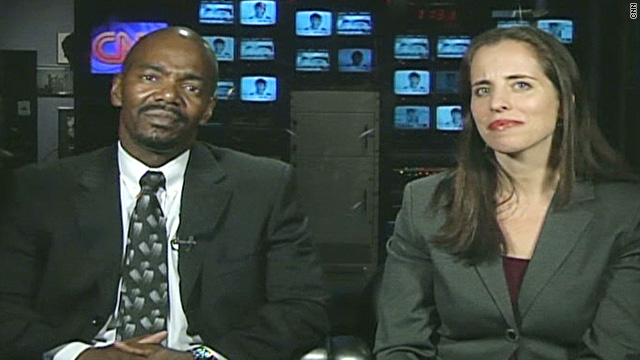
Cornelius Dupree Jr., left, and Innocence Project lawyer Nina Morrison talk to CNN after Dupree became a free man.

January 4th, 2011
CNN

A Texas man imprisoned 30 years ago on aggravated robbery charges had his conviction overturned on Tuesday after DNA evidence exonerated him.

Dallas County Judge Don Adams overturned Cornelius Dupree Jr.’s conviction Tuesday, clearing his name officially.

"It's a joy to be free," Dupree, 51, said outside court.

Dupree has served more years in a Texas prison for a crime he did not commit than anyone else in the state who was later exonerated by DNA evidence. Only two other people exonerated by DNA have spent more time in prison in the entire country, the Innocence Project said. Texas has freed 41 wrongly convicted prisoners because of DNA testing since 2001, more than any other state.

Dupree told CNN after becoming a free man that he had "mixed emotions" about the hearing considering how long he had been incarcerated.

"I must admit there is a bit of anger, but there is also joy, and the joy overrides the anger," he told CNN. "I'm just so overwhelmed with the joy of being free."

The judge's decision followed comments from Dallas County District Attorney Craig Watkins, who said the DNA testing shows Dupree "did not commit this crime."

Dupree is trying not to be too angry, despite having 30 years of his life taken away.

"I think that could have happened to anyone," he told CNN. "It's just unfortunate that it happened to me. The system needs to be corrected somehow."

That system he refers to includes Dallas specifically, where a record 21 people have been exonerated on DNA evidence, and Texas as a whole.

"Cornelius Dupree spent the prime of his life behind bars because of mistaken identification that probably would have been avoided if the best practices now used in Dallas had been employed,” Barry Scheck, co-director of the Innocence Project, said in a press release. "Let us never forget that, as in the heartbreaking case of Cornelius Dupree, a staggering 75% of wrongful convictions of people later cleared by DNA evidence resulted from misidentifications.”

Nina Morrison, senior staff attorney at the Innocence Project, told CNN "an enormous number" of the wrongly accused people convicted in Dallas and around the country were convicted on the basis of mistaken witness identification.

But she said that big improvements in those procedures have been made "so that what happened to Mr. Dupree doesn't happen to anyone else."

Morrison attributed Dupree's exoneration also to the work of the district attorney who has been examining previous convictions closely - and to Dallas County's saving of evidence.

"Dallas has been a leader in saving evidence," she said, noting that even though the policy was evidence had to be saved from cases from 1981 and later, evidence from Dupree's case in 1979 still existed.

"So it was something of a small miracle" that it was preserved, she said.

Watkins, the district attorney, said there were really no standards in place about how to keep evidence, but when he came into office he made it his job to do whatever he could to "not just to seek convictions but to seek justice."

"We created a unit that specifically looked at claims of innocence," he said. "And unfortunately it shows people who made those claims were truly innocent."

Watkins works with Morrison and others at the Innocence Project now, hoping to right wrongs from the past, and bring trust back to a system that has been brought into question.

"It gives us credibility now," he said. "[Residents] actually believe in what we're doing, that we're here not just to seek convictions but to seek justice and seek the truth."

Dupree was paroled six months ago after DNA tests results came back. He was declared innocent on Monday, the Innocence Project said.

Dupree was accused of being one of two men who forced a 26-year-old woman and another male into a car at gunpoint in 1979, forcing them to drive the car and robbing them in the process, according to court documents. The two men also were accused of raping the female, court documents said. But, prosecutors did not pursue rape charges in the case because it would not result in additional jail time, according to the Innocence Project.

The female victim initially identified Dupree from a photo line-up, but the male was unable to do so, according to court documents. At trial, however, both victims said Dupree and his co-defendant Anthony Massingill were the ones who committed the crime. They were convicted, and Dupree was sentenced to 75 years. Massingill, who is also serving time for a separate rape charge, is expected to also have his conviction set aside, the Innocence Project said.

Dupree has been fighting for his innocence since the day he was arrested, and for years following his conviction claiming he was mistakenly identified as the suspect. The Court of Criminal Appeals turned him down three times.

“Mistaken identification has always plagued the criminal justice system, but great strides have been made in the last three decades to understand the problem and come up with fixes like those being considered by the state Legislature that help minimize wrongful convictions,” Morrison said in a press release. “We hope state lawmakers take note of the terrible miscarriage of justice suffered by Cornelius. When the wrong person is convicted of a crime, the real perpetrator goes free, harming everyone.”