Discourse that allows us to express a wide range of ideas, opinions, and analysis that can be used as an opportunity to critically examine and observe what our experience means to us beyond the given social/cultural contexts and norms that are provided us.
"...Tabassum, who said she has
participated in pro-Palestinian activism at USC but “not taken a public
role,” said the controversy has made her more strident in her views on
the Israel-Hamas war and student activism.
“It’s no longer about
free speech. It’s no longer about me. It is about when the university
silences me, they are silencing all these people,” she said, referring
to pro-Palestinian activists at USC and outside the campus.
“When
you silence us, you make us louder. You make louder the aims of
imparting hope and commitment to human rights and the responsibilities
of graduates to use our education ... to make the world a better place,”
said Tabassum, 21.
A hijab-wearing Muslim who grew up in San
Bernardino County in an Indian American family, Tabassum said she feels
singled out by critics for her race and faith.
“I’m not ignorant
of who I am or what I believe in and the time we are in or the place we
are in,” she said. “I am not ignorant of the context or environment, at
the end of the day.”
Tabussam, who minored in “resistance to genocide,” suggested her opponents were mistaken about her views and her studies.
The
program, an official minor at USC, requires students to enroll in five
courses from a list that includes several on the Holocaust as well as on
the Armenian genocide and other genocides, such as targeted killings of
Tutsis in Rwanda in 1994.
Tabussam said she “studied the
Holocaust extensively in multiple classes” but “did not take a class
exclusively on the Holocaust.”
She tied the minor to her major in biomedical engineering.
“I
see my work as using health technologies that could preserve access to
health for all people who have been subjugated to evil. That includes,
at its most extreme, genocide,” Tabussam said."
--"USC valedictorian’s grad speech is canceled": ‘The university has betrayed me’, by Jaweed Kaleem Los Angeles Times, April 16, 2024
USC valedictorian’s grad speech is canceled: ‘The university has betrayed me’
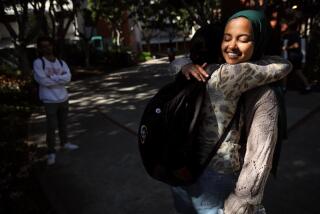
PHOTO: Asna Tabassum, a graduating senior at USC, was selected as valedictorian and offered a traditional slot to speak at the 2024 graduation. After on-and-off campus groups criticized the decision and the university said it received threats, it pulled her from the graduation speakers schedule. Tabassum, photographed on the USC campus on April 16, 2024, opposes the decision. (Genaro Molina / Los Angeles Times)
When Asna Tabassum learned that USC had barred her from speaking at next month’s graduation, she hadn’t yet planned what she would say in her remarks, beyond that she would convey a message of hope.
University leaders who announced the decision Monday, after pro-Israel groups criticized a link on Tabassum’s Instagram page as evidence of her being antisemitic, didn’t know the theme of her speech because she hadn’t shared it with them, the class valedictorian said an interview with the Times on Tuesday.Tabassum, a biomedical engineering major, said that in addition to hope, she was thinking of touching on “how we must continue to use our education as a privilege to inform ourselves and ultimately make a change in the world.
In barring Tabassum from giving a three to five minute speech in front of 65,000 people during the May 10 ceremony, USC Provost Andrew T. Guzman cited the need to “maintain campus safety and security.” The university alluded to unnamed threats but has not publicly detailed them.
The move was unprecedented for a ceremony where students regularly make political and cultural statements through written message on their graduation caps and sashes, as well as through the traditional valedictory speech.
The backlash against Tabassum, who was chosen as valedictorian by a university committee from nearly 100 applicants with GPAs of 3.98 or above, was unusual, even at a time of intense campus strife between pro-Palestinian and pro-Israel activists, because it didn’t involve anything she said or did. The opposition appeared to stem mostly from a link on her Instagram profile to a website she did not create.
The site, “Free Palestine Carrd,” features a photo of a woman raising a Palestinian flag above plumes of smoke during a 2018 protest near the Israel-Gaza border. A series of links explains how to “learn about what’s happening in Palestine.”
The links include statements that Zionism is a “racist settler-colonialist ideology” and that founders of Zionism thought “Palestinians needed to be ethnically cleansed from their homes.” The website explains proposals for two-state and one-state solutions to the Israeli-Palestinian conflict.
“One Palestinian state would mean Palestinian liberation, and the complete abolishment of the state of Israel,” it says, adding that “both Arabs and Jews can live together.”
Speaking to The Times on Tuesday, Tabassum defended herself, saying she is not antisemitic. She said she supports the pro-Palestinian cause that has grown at college campuses since the Oct. 7 Hamas attack on Israel, which killed 1,200 people and took more than 240 hostage before Israel’s retaliatory war in Gaza, which health authorities there say has killed more than 33,000 Palestinians and the United Nations says has left 2 million Gazans in near-famine conditions.
“The university has betrayed me and caved into a campaign of hatred,” Tabassum said of online attacks against her demanding that the university rescind its invitation for her to speak at the graduation.
She said the university did not share any details with her about its security concerns and that it did not offer her an alternative method of participating in the commencement, such as a video appearance.
In an interview Monday, Guzman said he did not consult Tabassum before rescinding the invitation and that he saw the decision as solely a safety issue and not a free speech issue.
On Tuesday, Joel Curran, USC’s senior vice president of communications, said the “final decision” on the matter rested with University President Carol Folt.
Folt was not available for an interview.
“Whenever there is a question of safety and security of the campus, the president always makes the final decision,” Curran said. “This decision was made in the best interests of campus security. There has been no change from the Provost’s letter on Monday.”
Tabassum, who said she has participated in pro-Palestinian activism at USC but “not taken a public role,” said the controversy has made her more strident in her views on the Israel-Hamas war and student activism.
“It’s no longer about free speech. It’s no longer about me. It is about when the university silences me, they are silencing all these people,” she said, referring to pro-Palestinian activists at USC and outside the campus.
“When you silence us, you make us louder. You make louder the aims of imparting hope and commitment to human rights and the responsibilities of graduates to use our education ... to make the world a better place,” said Tabassum, 21.
A hijab-wearing Muslim who grew up in San Bernardino County in an Indian American family, Tabassum said she feels singled out by critics for her race and faith.
“I’m not ignorant of who I am or what I believe in and the time we are in or the place we are in,” she said. “I am not ignorant of the context or environment, at the end of the day.”
Tabussam, who minored in “resistance to genocide,” suggested her opponents were mistaken about her views and her studies.
The program, an official minor at USC, requires students to enroll in five courses from a list that includes several on the Holocaust as well as on the Armenian genocide and other genocides, such as targeted killings of Tutsis in Rwanda in 1994.
Tabussam said she “studied the Holocaust extensively in multiple classes” but “did not take a class exclusively on the Holocaust.”
She tied the minor to her major in biomedical engineering.
“I see my work as using health technologies that could preserve access to health for all people who have been subjugated to evil. That includes, at its most extreme, genocide,” Tabussam said.
She said she is interested in going to graduate school but, for now, is focused on her final exams the first week of May.
Tabussam, who wrote a statement about the matter, declined to say whether she will still attend the graduation ceremony
USC
has barred valedictorian Asna Tabassum from speaking at commencement
next month. The school’s reasoning: safety concerns after groups
criticized her pro-Palestinean views.
Keep KCRW Independent.
KCRW is here to provide you with local news, music discovery, and
cultural connection. Stay up to date with all things KCRW by signing up
for our newsletters! And, if you can support our efforts, make a
donation today.
Is This The End of Academic Freedom April 5, 2024 New York Times
By Paula Chakravartty and Vasuki Nesiah
[Dr. Chakravartty is a professor of media, communication and culture at New York University, where Dr. Nesiah is a professor of practice in human rights and international law.]
At New York University, the spring semester began with a poetry reading. Students and faculty gathered in the atrium of Bobst Library. At that time, about 26,000 Palestinians had already been killed in Israel’s horrific war on Gaza; the reading was a collective act of bearing witness.
The last poem read aloud was titled “If I Must Die.” It was written, hauntingly, by a Palestinian poet and academic named Refaat Alareer who was killed weeks earlier by an Israeli airstrike. The poem ends: “If I must die, let it bring hope — let it be a tale.”
Soon after those lines were recited, the university administration shut the reading down. Afterward, we learned that students and faculty members were called into disciplinary meetings for participating in this apparently “disruptive” act; written warnings were issued.
We have both taught at N.Y.U. for over a decade and believe we are in a moment of unparalleled repression. Over the past six months, since the start of Israel’s war on Gaza, we have seen the university administration fail to adequately protect dissent on campus, actively squelching it instead. We believe what we are witnessing in response to student, staff and faculty opposition to the war violates the very foundations of academic freedom.
While N.Y.U. says that it remains committed to free expression on campus and that its rules about and approach to protest activity haven’t changed, students and faculty members in solidarity with the Palestinian people have found the campus environment alarmingly constrained.
About a week after Hamas’s attacks in October, the Grand Staircase in the Kimmel student center, a storied site of student protests, closed indefinitely; it has yet to reopen fully. A graduate student employee was reprimanded for putting up fliers in support of Palestinians on the student’s office door and ultimately took them down; that person is not the only N.Y.U. student to face some form of disciplinary consequence for pro-Palestinian speech or action. A resolution calling for the university to reaffirm protection of pro-Palestinian speech and civic activity on campus, passed by the elected Student Government Assembly in December, has apparently been stuck in a procedural black hole since.
The New York Police Department has become a pervasive presence on campus, with over 6,000 hours of officer presence added after the war broke out. Hundreds of faculty members have signed onto an open letter condemning the university’s “culture of fear about campus speech and activism.”
Such draconian interventions are direct threats to academic freedom.
At universities across the country, any criticism of Israel’s policies, expressions of solidarity with Palestinians, organized calls for a cease-fire or even pedagogy on the recent history of the land have all emerged as perilous speech. In a letter to university presidents in November, the A.C.L.U. expressed concern about “impermissible chilling of free speech and association on campus” in relation to pro-Palestinian student groups and views; since then, the atmosphere at colleges has become downright McCarthyite.
The donors, trustees, administrators and third parties who oppose pro-Palestinian speech seem to equate any criticism of the State of Israel — an occupying power under international law and one accused of committing war crimes — with antisemitism. To them, the norms of free speech are inherently problematic, and a broad definition of antisemitism is a tool for censorship. Outside funding has poured into horrifying doxxing and harassment campaigns. Pro-Israel surveillance groups like Canary Mission and CAMERA relentlessly target individuals and groups deemed antisemitic or critical of Israel. Ominous threats follow faculty and students for just expressing their opinions or living out their values.
To be clear, we abhor all expressions of antisemitism and wholeheartedly reject any role for antisemitism on our campuses. Equally, we believe that conflating criticism of Israel or Zionism with antisemitism is dangerous. Equating the criticism of any nation with inherent racism endangers basic democratic freedoms on and off campus. As the A.C.L.U. wrote in its November statement, a university “cannot fulfill its mission as a forum for vigorous debate” if it polices the views of faculty members and students, however much any of us may disagree with them or find them offensive.
In a wave of crackdowns on pro-Palestinian speech nationwide, students have had scholarships revoked, job offers pulled and student groups suspended. At Columbia, protesters have reported being sprayed by what they said was skunk, a chemical weapon used by the Israeli military; at Northwestern, two Black students faced criminal charges, later dropped, for publishing a pro-Palestinian newspaper parody; at Cornell, students were arrested during a peaceful protest. In a shocking episode of violence last fall, three Palestinian students, two of them wearing kaffiyehs, were shot while walking near the University of Vermont.
Many more cases of student repression on campuses are unfolding.
Academic freedom, as defined by the American Association of University Professors in the mid-20th century, provides protection for the pursuit of knowledge by faculty members, whose job is to educate, learn and research both inside and outside the academy. Not only does this resonate with the Constitution’s free speech protections; international human rights law also affirms the centrality of academic freedom to the right to education and the institutional autonomy of educational institutions.
Across the United States, attacks on free speech are on the rise. In recent years, right-wing groups opposed to the teaching of critical race theory have tried to undermine these principles through measures including restrictions on the discussion of history and structural racism in curriculums, heightened scrutiny of lectures and courses that are seen to promote dissent and disciplinary procedures against academics who work on these topics.
What people may not realize is that speech critical of Israel’s occupation and apartheid policies has long been censored, posing persistent challenges to those of us who uphold academic freedom. Well before Oct. 7, speech and action at N.Y.U. in support of Palestinians faced intense and undue scrutiny.
Our students are heeding Refaat Alareer’s call to bear witness. They are speaking out — writing statements, organizing protests and responding to a plausible threat of genocide with idealism and conviction. As faculty members, we believe that college should be a time when students are encouraged to ask big questions about justice and the future of humanity and to pursue answers however disquieting to the powerful.
Universities must be places where students have access to specialized knowledge that shapes contemporary debates, where faculty members are encouraged to be public intellectuals, even when, or perhaps especially when, they are expressing dissenting opinions speaking truth to power. Classrooms must allow for contextual learning, where rapidly mutating current events are put into a longer historical timeline.
This is a high-stakes moment. A century ago, attacks on open discussion of European antisemitism, the criminalization of dissent and the denial of Jewish histories of oppression and dispossession helped create the conditions for the Holocaust. One crucial “never again” lesson from that period is that the thought police can be dangerous. They can render vulnerable communities targets of oppression. They can convince the world that some lives are not as valuable as others, justifying mass slaughter.
It is no wonder that students across the country are protesting an unpopular and brutal war that, besides Israel, only the United States is capable of stopping. It is extraordinary that the very institutions that ought to safeguard their exercise of free speech are instead escalating surveillance and policing, working on ever more restrictive student conduct rulesand essentially risking the death of academic freedom.
From the Vietnam War to apartheid South Africa, universities have been important places for open discussion and disagreement about government policies, the historical record, structural racism and settler colonialism. They have also long served as sites of protest. If the university cannot serve as an arena for such freedoms, the possibilities of democratic life inside and outside the university gates are not only impoverished but under threat of extinction.
Paula Chakravartty is a professor of media, communication and culture at New York University, where Vasuki Nesiah is a professor of practice in human rights and international law. Both are members of the executive committee of the N.Y.U. chapter of the American Association of University Professors and members of N.Y.U.’s Faculty for Justice in Palestine.
The Times is committed to publishing a diversity of letters to the editor. We’d like to hear what you think about this or any of our articles. Here are some tips. And here’s our email: letters@nytimes.com.
A version of this article appears in print on April 8, 2024, Section A, Page 18 of the New York edition with the headline: Political Dissent Is Under Attack on Campus. Order Reprints | Today’s Paper
[Mr. Beinart is the editor at large of Jewish Currents and a journalist and writer who has written extensively on the Middle East, Jewish life and American foreign policy.]
March 22, 2024
New York Times
For the last decade or so, an ideological tremor has been unsettling American Jewish life. Since Oct. 7, it has become an earthquake. It concerns the relationship between liberalism and Zionism, two creeds that for more than half a century have defined American Jewish identity. In the years to come, American Jews will face growing pressure to choose between them.
They will face that pressure because Israel’s war in Gaza has supercharged a transformation on the American left. Solidarity with Palestinians is becoming as essential to leftist politics as support for abortion rights or opposition to fossil fuels. And as happened during the Vietnam War and the struggle against South African apartheid, leftist fervor is reshaping the liberal mainstream. In December, the United Automobile Workers demanded a cease-fire and formed a divestment working group to consider the union’s “economic ties to the conflict.” In January, the National L.G.B.T.Q. Task Force called for a cease-fire as well. In February, the leadership of the African Methodist Episcopal Church, the nation’s oldest Black Protestant denomination, called on the United States to halt aid to the Jewish state. Across blue America, many liberals who once supported Israel or avoided the subject are making the Palestinian cause their own.
This transformation remains in its early stages. In many prominent liberal institutions — most significantly, the Democratic Party — supporters of Israel remain not only welcome but also dominant. But the leaders of those institutions no longer represent much of their base. The Democratic majority leader, Senator Chuck Schumer, acknowledged this divide in a speech on Israel on the Senate floor last week. He reiterated his longstanding commitment to the Jewish state, though not its prime minister. But he also conceded, in the speech’s most remarkable line, that he “can understand the idealism that inspires so many young people in particular to support a one-state solution” — a solution that does not involve a Jewish state. Those are the words of a politician who understands that his party is undergoing profound change.
The American Jews most committed to Zionism, the ones who run establishment institutions, understand that liberal America is becoming less ideologically hospitable. And they are responding by forging common cause with the American right. It’s no surprise that the Anti-Defamation League, which only a few years ago harshly criticized Donald Trump’s immigration policies, recently honored his son-in-law and former senior adviser, Jared Kushner.
Mr. Trump himself recognizes the emerging political split. “Any Jewish person that votes for Democrats hates their religion,” he said in an interview
published on Monday. “They hate everything about Israel, and they
should be ashamed of themselves because Israel will be destroyed.” It’s
typical Trumpian indecency and hyperbole, but it’s rooted in a political
reality. For American Jews who want to preserve their country’s
unconditional support for Israel for another generation, there is only
one reliable political partner: a Republican Party that views standing
for Palestinian rights as part of the “woke” agenda.
The
American Jews who are making a different choice — jettisoning Zionism
because they can’t reconcile it with the liberal principle of equality
under the law — garner less attention because they remain further from
power. But their numbers are larger than many recognize, especially
among millennials and Gen Z. And they face their own dilemmas. They are
joining a Palestine solidarity movement that is growing larger, but also
more radical, in response to Israel’s destruction of Gaza. That growing
radicalism has produced a paradox: A movement that welcomes more and
more American Jews finds it harder to explain where Israeli Jews fit
into its vision of Palestinian liberation.
The
emerging rupture between American liberalism and American Zionism
constitutes the greatest transformation in American Jewish politics in
half a century. It will redefine American Jewish life for decades to
come.
Credit: Drew Angerer/Getty Images
“American
Jews,” writes Marc Dollinger in his book “Quest for Inclusion: Jews and
Liberalism in Modern America,” have long depicted themselves as
“guardians of liberal America.” Since they came to the United States in
large numbers around the turn of the 20th century, Jews have been wildly
overrepresented in movements for civil, women’s, labor and gay rights.
Since the 1930s, despite their rising prosperity, they have voted
overwhelmingly for Democrats. For generations of American Jews, the
icons of American liberalism — Eleanor Roosevelt, Robert Kennedy, Martin
Luther King Jr., Gloria Steinem — have been secular saints.
The American Jewish love affair with
Zionism dates from the early 20th century as well. But it came to
dominate communal life only after Israel’s dramatic victory in the 1967
war exhilarated American Jews eager for an antidote to Jewish
powerlessness during the Holocaust. The American Israel Public Affairs
Committee, which was nearly bankrupt on the eve of the 1967 war, had
become American Jewry’s most powerful institution by the 1980s. American
Jews, wrote
Albert Vorspan, a leader of Reform Judaism, in 1988, “have made of
Israel an icon — a surrogate faith, surrogate synagogue, surrogate God.”
Given the depth of these twin
commitments, it’s no surprise that American Jews have long sought to
fuse them by describing Zionism as a liberal cause. It has always been a
strange pairing. American liberals generally consider themselves
advocates of equal citizenship irrespective of ethnicity, religion and
race. Zionism — or at the least the version that has guided Israel since
its founding — requires Jewish dominance. From 1948 to 1966, Israel
held most of its Palestinian citizens under military law; since 1967 it
has ruled millions of Palestinians who hold no citizenship at all. Even
so, American Jews could until recently assert their Zionism without
having their liberal credentials challenged.
The
primary reason was the absence from American public discourse of
Palestinians, the people whose testimony would cast those credentials
into greatest doubt. In 1984, the Palestinian American literary critic
Edward Said argued
that in the West, Palestinians lack “permission to narrate” their own
experience. For decades after he wrote those words, they remained true. A
study
by the University of Arizona’s Maha Nassar found that of the opinion
articles about Palestinians published in The New York Times and The
Washington Post between 2000 and 2009, Palestinians themselves wrote
roughly 1 percent.
But in recent years, Palestinian voices, while still embattled and even censored,
have begun to carry. Palestinians have turned to social media to combat
their exclusion from the press. In an era of youth-led activism, they
have joined intersectional movements forged by parallel experiences of
discrimination and injustice. Meanwhile, Israel — under the leadership
of Benjamin Netanyahu for most of the past two decades — has lurched to
the right, producing politicians so openly racist that their behavior
cannot be defended in liberal terms.
Many
Palestine solidarity activists identify as leftists, not liberals. But
like the activists of the Occupy Wall Street and Black Lives Matter
movements, they have helped change liberal opinion with their radical
critiques. In 2002, according to Gallup,
Democrats sympathized with Israel over the Palestinians by a margin of
34 points. By early 2023, they favored the Palestinians by 11 points.
And because opinion about Israel cleaves along generational lines, that
pro-Palestinian skew is much greater among the young. According to a Quinnipiac University poll in November, Democrats under the age of 35 sympathize more with Palestinians than with Israelis by 58 points.
Given this
generational gulf, universities offer a preview of the way many liberals
— or “progressives,” a term that straddles liberalism and leftism and
enjoys more currency among young Americans — may view Zionism in the
years to come. Supporting Palestine has become a core feature of
progressive politics on many campuses. At Columbia, for example, 94
campus organizations — including the Vietnamese Students Association,
the Reproductive Justice Collective and Poetry Slam, Columbia’s “only
recreational spoken word club” — announced in November
that they “see Palestine as the vanguard for our collective
liberation.” As a result, Zionist Jewish students find themselves at
odds with most of their politically active peers.
Accompanying
this shift, on campus and beyond, has been a rise in Israel-related
antisemitism. It follows a pattern in American history. From the hostility toward German Americans
during World War I to violence against American Muslims after Sept. 11
and assaults on Asian Americans during the Covid pandemic, Americans
have a long and ugly tradition of expressing their hostility toward
foreign governments or movements by targeting compatriots who share a
religion, ethnicity or nationality with those overseas adversaries.
Today, tragically, some Americans who loathe Israel are taking it out on
American Jews. (Palestinian Americans, who have endured multipleviolenthate crimes
since Oct. 7, are experiencing their own version of this phenomenon.)
The spike in antisemitism since Oct. 7 follows a pattern. Five years
ago, the political scientist
Ayal Feinberg, using data from 2001 and 2014, found that reported
antisemitic incidents in the United States spike when the Israeli
military conducts a substantial military operation.
Attributing
the growing discomfort of pro-Israel Jewish students entirely to
antisemitism, however, misses something fundamental. Unlike
establishment Jewish organizations, Jewish students often distinguish
between bigotry and ideological antagonism.In a 2022 study,
the political scientist Eitan Hersh found that more than 50 percent of
Jewish college students felt “they pay a social cost for supporting the
existence of Israel as a Jewish state.” And yet, in general, Dr. Hersh
reported, “the students do not fear antisemitism.”
Surveys since Oct. 7 find something similar. Asked in November in a Hillel International poll
to describe the climate on campus since the start of the war, 20
percent of Jewish students answered “unsafe” and 23 percent answered
“scary.” By contrast, 45 percent answered “uncomfortable” and 53 percent
answered “tense.” A survey that same month
by the Jewish Electorate Institute found that only 37 percent of
American Jewish voters ages 18 to 35 consider campus antisemitism a
“very serious problem,” compared with nearly 80 percent of American
Jewish voters over the age of 35.
While
some young pro-Israel American Jews experience antisemitism, they more
frequently report ideological exclusion. As Zionism becomes associated
with the political right, their experiences on progressive campuses are
coming to resemble the experiences of young Republicans. The difference
is that unlike young Republicans, most young American Zionists were
raised to believe that theirs was a liberal creed. When their parents
attended college, that assertion was rarely challenged. On the same
campuses where their parents felt at home, Jewish students who view
Zionism as central to their identity now often feel like outsiders.
In 1979, Mr. Said observed
that in the West, “to be a Palestinian is in political terms to be an
outlaw.” In much of America — including Washington — that remains true.
But within progressive institutions one can glimpse the beginning of a
historic inversion. Often, it’s now the Zionists who feel like outlaws.
Given
the organized American Jewish community’s professed devotion to liberal
principles, which include free speech, one might imagine that Jewish
institutions would greet this ideological shift by urging pro-Israel
students to tolerate and even learn from their pro-Palestinian peers.
Such a stance would flow naturally from the statements establishment
Jewish groups have made in the past. A few years ago, the
Anti-Defamation League declared
that “our country’s universities serve as laboratories for the exchange
of differing viewpoints and beliefs. Offensive, hateful speech is
protected by the Constitution’s First Amendment.”
But
as pro-Palestinian sentiment has grown in progressive America,
pro-Israel Jewish leaders have apparently made an exception for
anti-Zionism. While still claiming to support free speech on campus, the
ADL last October asked
college presidents to investigate local chapters of Students for
Justice in Palestine to determine whether they violated university
regulations or state or federal laws, a demand that the American Civil
Liberties Union warned
could “chill speech” and “betray the spirit of free inquiry.” After the
University of Pennsylvania hosted a Palestinian literature festival
last fall, Marc Rowan, chair of the United Jewish Appeal-Federation of New York and chair of the board of advisers of Penn’s Wharton business school, condemned the university’s president for giving the festival Penn’s “imprimatur.” In December, he encouraged trustees to alter university policies in ways that Penn’s branch of the American Association of University Professors warned could “silence and punish speech with which trustees disagree.”
In
this effort to limit pro-Palestinian speech, establishment Jewish
leaders are finding their strongest allies on the authoritarian right.
Pro-Trump Republicans have their own censorship agenda: They want to
stop schools and universities from emphasizing America’s history of
racial and other oppression. Calling that pedagogy antisemitic makes it
easier to ban or defund. At a much discussed congressional hearing in
December featuring the presidents of Harvard, Penn and M.I.T., the
Republican representative Virginia Foxx noted
that Harvard teaches courses like “Race and Racism in the Making of the
United States as a Global Power” and hosts seminars such as “Scientific
Racism and Anti-Racism: History and Recent Perspectives” before
declaring that “Harvard also, not coincidentally but causally, was
ground zero for antisemitism following Oct. 7.”
Ms.
Foxx’s view is typical. While some Democrats also equate anti-Zionism
and antisemitism, the politicians and business leaders most eager to
suppress pro-Palestinian speech are conservatives who link such speech
to the diversity, equity and inclusion agenda they despise. Elise
Stefanik, a Trump acolyte who has accused Harvard of “caving to the woke left,” became the star of that congressional hearing by demanding that Harvard’s president,
Claudine Gay, punish students who chant slogans like “From the river to
the sea, Palestine will be free.” (Ms. Gay was subsequently forced to
resign following charges of plagiarism.) Elon Musk, who in November said that the phrase “from the river to the sea” was banned from his social media platform X (formerly Twitter), the following month declared, “D.E.I. must die.” The first governor to ban Students for Justice in Palestine chapters at his state’s public universities was Florida’s Ron DeSantis, who has also signed legislation that limits what those universities can teach about race and gender.
This
alignment between the American Jewish organizational establishment and
the Trumpist right is not limited to universities. If the ADL has
aligned with Republicans who want to silence “woke” activists on campus,
AIPAC has joined forces with Republicans who want to disenfranchise
“woke” voters. In the 2022 midterm elections, AIPAC endorsed
at least 109 Republicans who opposed certifying the 2020 election. For
an organization single-mindedly focused on sustaining unconditional U.S.
support for Israel, that constituted a rational decision. Since
Republican members of Congress don’t have to mollify pro-Palestinian
voters, they’re AIPAC’s most dependable allies. And if many of those
Republicans used specious claims of Black voter fraud to oppose the
democratic transfer of power in 2020 — and may do so again — that’s a
price AIPAC seems to be prepared to pay.
Credit: Leah Millis/Reuters
For
the many American Jews who still consider themselves both progressives
and Zionists, this growing alliance between leading Zionist institutions
and a Trumpist Republican Party is uncomfortable. But in the short
term, they have an answer: politicians like President Biden, whose views
about both Israel and American democracy roughly reflect their own. In
his speech last week, Mr. Schumer called these liberal Zionists American Jewry’s “silent majority.”
For
the moment he may be right. In the years to come, however, as
generational currents pull the Democratic Party in a more
pro-Palestinian direction and push America’s pro-Israel establishment to
the right, liberal Zionists will likely find it harder to reconcile
their two faiths. Young American Jews offer a glimpse into that future,
in which a sizable wing of American Jewry decides that to hold fast to
its progressive principles it must jettison Zionism and embrace equal
citizenship in Israel and Palestine, as well as in the United States.
For
an American Jewish establishment that equates anti-Zionism with
antisemitism, these anti-Zionist Jews are inconvenient. Sometimes,
pro-Israel Jewish organizations pretend they don’t exist. In November,
after Columbia suspended two anti-Zionist campus groups, the ADL thanked
university leaders for acting “to protect Jewish students” — even
though one of the suspended groups was Jewish Voice for Peace. At other
times, pro-Israel leaders describe anti-Zionist Jews as a negligible
fringe. If American Jews are divided over the war in Gaza, Andrés
Spokoiny, the president and chief executive of the Jewish Funders
Network, an organization for Jewish philanthropists, declared in December, “the split is 98 percent/2 percent.”
Among
older American Jews, this assertion of a Zionist consensus contains
some truth. But among younger American Jews, it’s false. In 2021, even
before Israel’s current far-right government took power, the Jewish
Electorate Institute found
that 38 percent of American Jewish voters under the age of 40 viewed
Israel as an apartheid state, compared with 47 percent who said it’s
not. In November, it revealed
that 49 percent of American Jewish voters ages 18 to 35 opposed Mr.
Biden’s request for additional military aid to Israel. On many campuses,
Jewish students are at the forefront of protests for a cease-fire and
divestment from Israel. They don’t speak for all — and maybe not even
most — of their Jewish peers. But they represent far more than 2
percent.
These progressive Jews are,
as the U.S. editor of The London Review of Books, Adam Shatz, noted to
me, a double minority. Their anti-Zionism makes them a minority among
American Jews, while their Jewishness makes them a minority in the
Palestine solidarity movement. Fifteen years ago, when the liberal
Zionist group J Street was intent on being the “blocking back”
for President Barack Obama’s push for a two-state solution, some
liberal Jews imagined themselves leading the push to end Israel’s
occupation of the West Bank and the Gaza Strip. Today, the prospect of
partition has diminished, and Palestinians increasingly set the terms of
activist criticism of Israel. That discourse, which is peppered with
terms like “apartheid” and “decolonization," is generally hostile to a
Jewish state within any borders.
There’s
nothing antisemitic about envisioning a future in which Palestinians
and Jews coexist on the basis of legal equality rather than Jewish
supremacy. But in pro-Palestine activist circles in the United States,
coexistence has receded as a theme. In 1999, Mr. Said argued
for “a binational Israeli-Palestinian state” that offered
“self-determination for both peoples.” In his 2007 book, “One Country,”
Ali Abunimah, a co-founder of The Electronic Intifada, an influential
source of pro-Palestine news and opinion, imagined one state whose name
reflected the identities of both major communities that inhabit it. The
terms “‘Israel’ and ‘Palestine’ are dear to those who use them and they
should not be abandoned,” he argued. “The country could be called
Yisrael-Falastin in Hebrew and Filastin-Isra’il in Arabic.”
In
recent years, however, as Israel has moved to the right,
pro-Palestinian discourse in the United States has hardened. The phrase
“From the river to the sea, Palestine will be free,” which dates from
the 1960s but has gained new prominence since Oct. 7, does not
acknowledge Palestine and Israel’s binational character. To many
American Jews, in fact, the phrase suggests a Palestine free of Jews. It
sounds expulsionist, if not genocidal. It’s an ironic charge, given
that it is Israel that today controls the land between the river and the
sea, whose leaders openly advocate the mass exodus of Palestinians and that the International Court of Justice says could plausibly be committing genocide in Gaza.
Palestinian scholars like Maha Nassar and Ahmad Khalidi
argue that “From the river to the sea, Palestine will be free” does not
imply the subjugation of Jews. It instead reflects the longstanding
Palestinian belief that Palestine should have become an independent
country when released from European colonial control, a vision that does
not preclude Jews from living freely alongside their Muslim and
Christian neighbors. The Jewish groups closest to the Palestine
solidarity movement agree: Jewish Voice for Peace’s Los Angeles chapter
has argued
that the slogan is no more anti-Jewish than the phrase “Black lives
matter” is anti-white. And if the Palestine solidarity movement in the
United States calls for the genocide of Jews, it’s hard to explain why
so many Jews have joined its ranks. Rabbi Alissa Wise, an organizer of
Rabbis for Cease-Fire, estimates that other than Palestinians, no other
group has been as prominent in the protests against the war as Jews.
Piers Morgan Uncensored is joined by host and creator of The Young Turks and Presidential hopeful Cenk Uygur to discuss the ongoing war between Israel, Hamas and Palestine and a passionate and emotive debate over whether Israel's treatment and occupation of Palestine is just as bad as Hamas' attack on Israel.
Cenk says that he has "had enough of the bigotry against Muslims and Palestinians", explaining that there is far more coverage and public condemnation of the atrocities committed by Hamas than there are the atrocities committed by Israel. He questions why people do not call the Israeli government terrorists when they've killed three times as many civilians as a terrorist group.
"I'm for truth, no matter who tells it. I'm for justice, no matter who it's for or against."
W.E.B. DuBois (1868-1963)
"There is but one coward on earth, and that is the coward that dare not know."
Dr. Martin Luther King, Jr. (1929-1968)
"Change does not roll in on the wheels of inevitability, but comes through continuous struggle. And so we must straighten our backs and work for our freedom. A man can't ride you unless your back is bent. "
James Baldwin (1924-1987)
"Precisely at the point when you begin to develop a conscience you must find yourself at war with your society."
Aimé Césaire (1913-2008)
"A civilization that proves incapable of solving the problems it creates is a decadent civilization. A civilization that chooses to close its eyes to its most crucial problems is a stricken civilization. A civilization that uses its principles for trickery and deceit is a dying civilization."
Nina Simone (1933-2003)
"There's no other purpose, so far as I'm concerned, for us except to reflect the times, the situations around us and the things we're able to say through our art, the things that millions of people can't say. I think that's the function of an artist and, of course, those of us who are lucky leave a legacy so that when we're dead, we also live on. That's people like Billie Holiday and I hope that I will be that lucky, but meanwhile, the function, so far as I'm concerned, is to reflect the times, whatever that might be."
Amilcar Cabral (1924-1973)
"Always bear in mind that the people are not fighting for ideas, for the things in anyone's head. They are fighting to live better and in peace, to see their lives go forward, to guarantee the future of their children ....Hide nothing from the masses of our people. Tell no lies. Expose lies whenever they are told. Mask no difficulties, mistakes, failures. Claim no easy victories..." .
Angela Davis (b. 1944)
"The idea of freedom is inspiring. But what does it mean? If you are free in a political sense but have no food, what's that? The freedom to starve?”
Duke Ellington (1899-1974)
“Jazz is the freest musical expression we have yet seen. To me, then, jazz means simply freedom of musical speech! And it is precisely because of this freedom that so many varied forms of jazz exist. The important thing to remember, however, is that not one of these forms represents jazz by itself. Jazz simply means the freedom to have many forms.”
Amiri Baraka (1934-2014)
"Thought is more important than art. To revere art and have no understanding of the process that forces it into existence, is finally not even to understand what art is."
Frederick Douglass (1817-1895)
"Power concedes nothing without a demand. It never did and it never will. Find out just what any people will quietly submit to and you have found out the exact measure of injustice and wrong which will be imposed upon them, and these will continue till they are resisted with either words or blows, or both. The limits of tyrants are prescribed by the endurance of those whom they oppress.” --August 3, 1857
Cecil Taylor (1929-2018)
“Musical categories don’t mean anything unless we talk about the actual specific acts that people go through to make music, how one speaks, dances, dresses, moves, thinks, makes love...all these things. We begin with a sound and then say, what is the function of that sound, what is determining the procedures of that sound? Then we can talk about how it motivates or regenerates itself, and that’s where we have tradition.”
Ella Baker (1903-1986)
"Strong people don't need strong leaders"
Paul Robeson (1898-1976)
"The artist must take sides. He must elect to fight for freedom or for slavery. I have made my choice. I had no alternative."
John Coltrane (1926-1967)
"I want to be a force for real good. In other words, I know there are bad forces. I know that there are forces out here that bring suffering to others and misery to the world, but I want to be the opposite force. I want to be the force which is truly for good."
Miles Davis (1926-1991)
"Jazz is the big brother of Revolution. Revolution follows it around."
C.L.R. James (1901-1989)
"All development takes place by means of self-movement, not organization by external forces. It is within the organism itself (i.e. within the society) that there must be realized new motives, new possibilities."
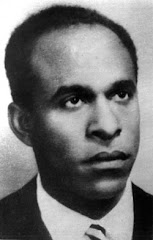
Frantz Fanon (1925-1961)
"Now, political education means opening minds, awakening them, and allowing the birth of their intelligence as [Aime] Cesaire said, it is 'to invent souls.' To educate the masses politically does not mean, cannot mean, making a political speech. What it means is to try, relentlessly and passionately, to teach the masses that everything depends on them."
Edward Said (1935-2003)
“I take criticism so seriously as to believe that, even in the midst of a battle in which one is unmistakably on one side against another, there should be criticism, because there must be critical consciousness if there are to be issues, problems, values, even lives to be fought for."
Antonio Gramsci (1891-1937)
“The challenge of modernity is to live without illusions and without becoming disillusioned. There must be pessimism of the intellect and optimism of the will.”
Susan Sontag (1933-2004)
"Do stuff. Be clenched, curious. Not waiting for inspiration’s shove or society’s kiss on your forehead. Pay attention. It’s all about paying attention. Attention is vitality. It connects you with others. It makes you eager. Stay eager."
Kofi Natambu, editor of The Panopticon Review, is a writer, poet, cultural critic, and political journalist whose poetry, essays, criticism, reviews, and journalism have appeared in many literary magazines, journals, newspapers, and anthologies. He is the author of a biography MALCOLM X: His Life & Work (Alpha Books) and two books of poetry: THE MELODY NEVER STOPS (Past Tents Press) and INTERVALS (Post Aesthetic Press). He was the founder and editor of SOLID GROUND: A NEW WORLD JOURNAL, a national quarterly magazine of the arts, culture, and politics and the editor of a literary anthology NOSTALGIA FOR THE PRESENT (Post Aesthetic Press). Natambu has read his work throughout the country and given many lectures and workshops at academic and arts institutions. He has taught American literature, literary theory and criticism, cultural history and criticism, film studies, political science, creative writing, philosophy, critical theory, and music history and criticism (Jazz, Blues, R&B, Hip Hop) at many universities and colleges. He was also a curator in the Education Department of Detroit’s Museum of African American History. Born in Detroit, Michigan, Natambu currently lives in Berkeley, California with his wife Chuleenan.