Showing posts with label Occupy Wall Street. Show all posts

Thursday, May 17, 2012

Chris Hedges on the Legacy of the Corporate State in the United States and the Deeper  Meaning of the Organized Revolt Against It

Protesters with the Occupy Wall Street movement during a march in New York, May 1, 2012. (Photo: Ozier Muhammad / The New York Times)

http://truth-out.org/opinion/item/9112-why-the-occupy-movement-frightens-the-corporate-elite

All,

Chris Hedges continues to relentlessly and eloquently speak Truth to Power in a very disturbing historical period where far too many Americans remain paralyzed, consumed, and demoralized by fear, inertia, hypocrisy, fatalism, despair, hatred, ignorance, cowardice, indifference and narcissism. By staunchly refusing to fetishize alienation and cynicism or to indulge in the handy evasions and lazy infantalism that is so dominant in much of our public discourse today Hedges both asks and demands of us that we aspire to and practice a much higher and far more informed level of social critique and political action...

Kofi


Why the Occupy Movement Frightens the Corporate Elite
Monday, 14 May 2012
By Chris Hedges, Truthdig | Op-Ed

In Robert E. Gamer's book "The Developing Nations" is a chapter called "Why Men Do Not Revolt." In it Gamer notes that although the oppressed often do revolt, the object of their hostility is misplaced. They vent their fury on a political puppet, someone who masks colonial power, a despised racial or ethnic group or an apostate within their own political class. The useless battles serve as an effective mask for what Gamer calls the "patron-client" networks that are responsible for the continuity of colonial oppression. The squabbles among the oppressed, the political campaigns between candidates who each are servants of colonial power, Gamer writes, absolve the actual centers of power from addressing the conditions that cause the frustrations of the people. Inequities, political disenfranchisement and injustices are never seriously addressed. "The government merely does the minimum necessary to prevent those few who are prone toward political action from organizing into politically effective groups," he writes.

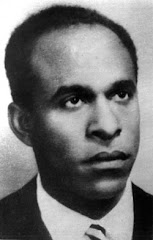
Gamer and many others who study the nature of colonial rule offer the best insights into the functioning of our corporate state. We have been, like nations on the periphery of empire, colonized. We are controlled by tiny corporate entities that have no loyalty to the nation and indeed in the language of traditional patriotism are traitors. They strip us of our resources, keep us politically passive and enrich themselves at our expense. The mechanisms of control are familiar to those whom the Martinique-born French psychiatrist and writer Frantz Fanon called "the wretched of the earth," including African-Americans. The colonized are denied job security. Incomes are reduced to subsistence level. The poor are plunged into desperation. Mass movements, such as labor unions, are dismantled. The school system is degraded so only the elites have access to a superior education. Laws are written to legalize corporate plunder and abuse, as well as criminalize dissent. And the ensuing fear and instability—keenly felt this past weekend by the more than 200,000 Americans who lost their unemployment benefits—ensure political passivity by diverting all personal energy toward survival. It is an old, old game.

A change of power does not require the election of a Mitt Romney or a Barack Obama or a Democratic majority in Congress, or an attempt to reform the system or electing progressive candidates, but rather a destruction of corporate domination of the political process—Gamer's "patron-client" networks. It requires the establishment of new mechanisms of governance to distribute wealth and protect resources, to curtail corporate power, to cope with the destruction of the ecosystem and to foster the common good. But we must first recognize ourselves as colonial subjects. We must accept that we have no effective voice in the way we are governed. We must accept the hollowness of electoral politics, the futility of our political theater, and we must destroy the corporate structure itself.

The danger the corporate state faces does not come from the poor. The poor, those Karl Marx dismissed as the Lumpenproletariat, do not mount revolutions, although they join them and often become cannon fodder. The real danger to the elite comes from déclassé intellectuals, those educated middle-class men and women who are barred by a calcified system from advancement. Artists without studios or theaters, teachers without classrooms, lawyers without clients, doctors without patients and journalists without newspapers descend economically. They become, as they mingle with the underclass, a bridge between the worlds of the elite and the oppressed. And they are the dynamite that triggers revolt.

This is why the Occupy movement frightens the corporate elite. What fosters revolution is not misery, but the gap between what people expect from their lives and what is offered. This is especially acute among the educated and the talented. They feel, with much justification, that they have been denied what they deserve. They set out to rectify this injustice. And the longer the injustice festers, the more radical they become.

The response of a dying regime—and our corporate regime is dying—is to employ increasing levels of force, and to foolishly refuse to ameliorate the chronic joblessness, foreclosures, mounting student debt, lack of medical insurance and exclusion from the centers of power. Revolutions are fueled by an inept and distant ruling class that perpetuates political paralysis. This ensures its eventual death.

In every revolutionary movement I covered in Latin America, Africa and the Middle East, the leadership emerged from déclassé intellectuals. The leaders were usually young or middle-aged, educated and always unable to meet their professional and personal aspirations. They were never part of the power elite, although often their parents had been. They were conversant in the language of power as well as the language of oppression. It is the presence of large numbers of déclassé intellectuals that makes the uprisings in Spain, Egypt, Greece and finally the United States threatening to the overlords at Goldman Sachs, ExxonMobil and JPMorgan Chase. They must face down opponents who understand, in a way the uneducated often do not, the lies disseminated on behalf of corporations by the public relations industry. These déclassé intellectuals, because they are conversant in economics and political theory, grasp that those who hold power, real power, are not the elected mandarins in Washington but the criminal class on Wall Street.

This is what made Malcolm X so threatening to the white power structure. He refused to countenance Martin Luther King's fiction that white power and white liberals would ever lift black people out of economic squalor. King belatedly came to share Malcolm's view. Malcolm X named the enemy. He exposed the lies. And until we see the corporate state, and the games it is playing with us, with the same kind of clarity, we will be nothing more than useful idiots.

"This is an era of hypocrisy," Malcolm X said. "When white folks pretend that they want Negroes to be free, and Negroes pretend to white folks that they really believe that white folks want 'em to be free, it's an era of hypocrisy, brother. You fool me and I fool you. You pretend that you're my brother and I pretend that I really believe you believe you're my brother."

Those within a demoralized ruling elite, like characters in a Chekhov play, increasingly understand that the system that enriches and empowers them is corrupt and decayed. They become cynical. They do not govern effectively. They retreat into hedonism. They no longer believe their own rhetoric. They devote their energies to stealing and exploiting as much, as fast, as possible. They pillage their own institutions, as we have seen with the newly disclosed loss of $2 billion within JPMorgan Chase, the meltdown of Chesapeake Energy Corp. or the collapse of Enron and Lehman Brothers. The elites become cannibals. They consume each other. This is what happens in the latter stages of all dying regimes. Louis XIV pillaged his own nobility by revoking patents of nobility and reselling them. It is what most corporations do to their shareholders. A dying ruling class, in short, no longer acts to preserve its own longevity. It becomes fashionable, even in the rarefied circles of the elite, to ridicule and laugh at the political puppets that are the public face of the corporate state.

"Ideas that have outlived their day may hobble about the world for years," Alexander Herzen wrote, "but it is hard for them ever to lead and dominate life. Such ideas never gain complete possession of a man, or they gain possession only of incomplete people."

This loss of faith means that when it comes time to use force, the elites employ it haphazardly and inefficiently, in large part because they are unsure of the loyalty of the foot soldiers on the streets charged with carrying out repression.

Revolutions take time. The American Revolution began with protests against the Stamp Act of 1765 but did not erupt until a decade later. The 1917 revolution in Russia started with a dress rehearsal in 1905. The most effective revolutions, including the Russian Revolution, have been largely nonviolent. There are always violent radicals who carry out bombings and assassinations, but they hinder, especially in the early stages, more than help revolutions. The anarchist Peter Kropotkin during the Russian Revolution condemned the radical terrorists, asserting that they only demoralized and frightened away the movement's followers and discredited authentic anarchism.

Radical violent groups cling like parasites to popular protests. The Black Panthers, the American Indian Movement, the Weather Underground, the Red Brigades and the Symbionese Liberation Army arose in the ferment of the 1960s. Violent radicals are used by the state to justify harsh repression. They scare the mainstream from the movement. They thwart the goal of all revolutions, which is to turn the majority against an isolated and discredited ruling class. These violent fringe groups are seductive to those who yearn for personal empowerment through hyper-masculinity and violence, but they do little to advance the cause. The primary role of radical extremists, such as Maximilien Robespierre and Vladimir Lenin, is to hijack successful revolutions. They unleash a reign of terror, primarily against fellow revolutionaries, which often outdoes the repression of the old regime. They often do not play much of a role in building a revolution.

The power of the Occupy movement is that it expresses the widespread disgust with the elites, and the deep desire for justice and fairness that is essential to all successful revolutionary movements. The Occupy movement will change and mutate, but it will not go away. It may appear to make little headway, but this is less because of the movement's ineffectiveness and more because decayed systems of power have an amazing ability to perpetuate themselves through habit, routine and inertia. The press and organs of communication, along with the anointed experts and academics, tied by money and ideology to the elites, are useless in dissecting what is happening within these movements. They view reality through the lens of their corporate sponsors. They have no idea what is happening.

Dying regimes are chipped away slowly and imperceptibly. The assumptions and daily formalities of the old system are difficult for citizens to abandon, even when the old system is increasingly hostile to their dignity, well-being and survival. Supplanting an old faith with a new one is the silent, unseen battle of all revolutionary movements. And during the slow transition it is almost impossible to measure progress.

"Sometimes people hold a core belief that is very strong," Fanon wrote in "Black Skin, White Masks." "When they are presented with evidence that works against that belief, the new evidence cannot be accepted. It would create a feeling that is extremely uncomfortable, called cognitive dissonance. And because it is so important to protect the core belief, they will rationalize, ignore and even deny anything that doesn't fit in with the core belief."

The end of these regimes comes when old beliefs die and the organs of security, especially the police and military, abandon the elites and join the revolutionaries. This is true in every successful revolution. It does not matter how sophisticated the repressive apparatus. Once those who handle the tools of repression become demoralized, the security and surveillance state is impotent. Regimes, when they die, are like a great ocean liner sinking in minutes on the horizon. And no one, including the purported leaders of the opposition, can predict the moment of death. Revolutions have an innate, mysterious life force that defies comprehension. They are living entities.

The defection of the security apparatus is often done with little or no violence, as I witnessed in Eastern Europe in 1989 and as was also true in 1979 in Iran and in 1917 in Russia. At other times, when it has enough residual force to fight back, the dying regime triggers a violent clash as it did in the American Revolution when soldiers and officers in the British army, including George Washington, rebelled to raise the Continental Army. Violence also characterized the 1949 Chinese revolution led by Mao Zedong. But even revolutions that turn violent succeed, as Mao conceded, because they enjoy popular support and can mount widespread protests, strikes, agitation, revolutionary propaganda and acts of civil disobedience. The object is to try to get there without violence. Armed revolutions, despite what the history books often tell us, are tragic, ugly, frightening and sordid affairs. Those who storm Bastilles, as the Polish dissident Adam Michnik wrote, "unwittingly build new ones." And once revolutions turn violent it becomes hard to speak of victors and losers.

A revolution has been unleashed across the globe. This revolution, a popular repudiation of the old order, is where we should direct all our energy and commitment. If we do not topple the corporate elites the ecosystem will be destroyed and massive numbers of human beings along with it. The struggle will be long. There will be times when it will seem we are going nowhere. Victory is not inevitable. But this is our best and only hope. The response of the corporate state will ultimately determine the parameters and composition of rebellion. I pray we replicate the 1989 nonviolent revolutions that overthrew the communist regimes in Eastern Europe. But this is not in my hands or yours. Go ahead and vote this November. But don't waste any more time or energy on the presidential election than it takes to get to your polling station and pull a lever for a third-party candidate—just enough to register your obstruction and defiance—and then get back out onto the street. That is where the question of real power is being decided.


This piece was reprinted by Truthout with permission or license.


CHRIS HEDGES

Chris Hedges spent nearly two decades as a foreign correspondent in Central America, the Middle East, Africa and the Balkans. He has reported from more than 50 countries and has worked for The Christian Science Monitor, National Public Radio, The Dallas Morning News and The New York Times, for which he was a foreign correspondent for 15 years.

Tuesday, May 8, 2012

David Harvey On the Modern City, the Occupy Wall Street Movement, Social Revolution, and the Political Economy of Capitalism


http://truth-out.org/opinion/item/8914-david-harvey-taking-back-the-streets-for-anti-capitalist-struggles

"One of the definitions of 'urban' is a contested site where there is a war going on, and where there has been a war going on forever, over the future identity of the United States. When we talk about political economy and the global capitalist economic system that rules us all, what we're really talking about--when we talk about all these racial and sexual identities and the conflicts and problems between classes and between men and women--is the urban as a site for the attempted resolution of those questions."
--Kofi Natambu, "The Urban Context"
Black Popular Culture Conference, December 8-10, 1991
Studio Museum of Harlem & Dia Center for the Arts (SoHo) NYC

All,

Great interview with David Harvey! I just purchased his new book last week. I have always been a huge fan of Harvey's work in general and I can't wait to read it...Check out the interview below and all of Harvey's outstanding published work if/when you get a chance...

Kofi

David Harvey: Taking Back the Streets for Anti-Capitalist Struggles
Friday, 04 May 2012
By Aaron Leonard, Rabble | Interview

David Harvey's latest explores how to organize cities to create a more just world.

Rebel Cities: From the Right to the City to the Urban Revolution
by David Harvey (Verso Press, 2012; $21.00)

David Harvey, anthropology professor, geographer and authority on Karl Marx's work Capital, has just published Rebel Cities: From the Right to the City to the Urban Revolution. The book addresses the state of inequality in capitalist society, the role of the city as concentration point of struggle around that, and the prospects for a different world.

Aaron Leonard spoke with him recently in his office at the City University of New York Graduate Center.

Aaron Leonard: Why do you call the book, Rebel Cities?

David Harvey: One of the questions I'm asking is what is the role of the city in anti-capitalist struggle. Clearly a lot of struggles against capitalism occur in the cities, but there is a lot of struggle going on about cities which are actually about the capitalist mode of urbanization. So it seemed to me, putting that all together, we ought to be rebelling against this through urban struggles as well as the struggles which we often hear talked, everything from peasant rebellions, to classical class-struggles around labor organizing and the like.

I am saying there is another terrain of struggle, which is over the city. In the same way there is a long history of peasant rebellions, there is a long history of rebellions going on in cities, general strikes and such. If you look at the American Revolution, while it ended up being fairly rural, it began in the port cites -- in the taverns where people would argue and debate -- that is where much of the thought of getting rid of the British came from. I thought that it would be a striking thing to insert that theme into the political dialogue right now.

AL: In the first part of your book, in discussing the concept of fictitious capital, you quote Karl Marx.

"All connection with the actual process of capital's valorization is lost, right down to the last trace, confirming the notion that capital is automatically valorized by its own powers." (Capital, Vol. III p. 597)

It seems that description gets at the nub of a number of points of confusion -- that somehow value, wealth, economic health, or whatever you wish to call it, gets ascribed to something other than what actually determines it. Could you talk about what this means and why Marx such an important reference in understanding our present circumstances?

DH: I have taught and written about Marx for many years and have a bit of a project to make Marx comprehensible to people. In my view Marx has one of the most sophisticated understandings of how capitalism works -- and the problems that are attached to the ways in which it works -- of any writer who has ever tried to really dissect capitalism.

You've got 11,000 economists in the United States and none of them saw the crisis coming. In Marx's theory you can see exactly where the tensions build up, in his words, where the contradictions come from. One thing I try to do is make it as comprehensible as I can while at the same time redirect people, to say you may want to go back and read Marx because he has these wonderful understandings.

For example, before the current [financial] mess, we would put our money in a savings bank and expect it to grow by three per cent. We put money in a pension fund and expect it to grow by four or five per cent per year. We don't ask, where did that four or five per cent come from? It seems magical, disconnected entirely from the people in the factories, fields and mines who made it. What Marx does is to connect the two and say look if there is an increase of some kind, then somebody's making it somewhere. Who's making it? Labour is making it down in the mine, out in the field and in the factories... and when you take it further in the home.

What then happens is in the financial system, banks lend to banks, they leverage on each other and magically they become incredibly richer. Hedge fund managers can get three billion dollars personal renumeration in one year. Where does that wealth come from? Marx is always asking that type of question. But we live in a world where this category of fictitious capital has really taken off, and much of Wall Street functions in a form of fictitious capital where nobody knows what really grounds it. It's magical, yet it produces this vast rate of return for all the people who are managing it. That is the kind of world that Marx is very good at penetrating and depicting. I am saying that we have to understand how that works, but by the way, Marx understood this very well. To the degree I understand it comes from my studies of Marx.

AL: You ask in the book: "Where is our '68?, or even more dramatically our version of the Commune?" [the Paris Commune of 1871]. What do you mean?

DH: I am struck by the enormous disparities and inequalities that exist in society. To give you a simple case study about New York City. The top one per cent earns on average something like $3.7 million dollars a year. That means that they are earning about $10,000 a day. There are a million people in New York City who are trying to live on $10,000 a year. Half of the population of the City are earning less than $30,000 a year. We haven't seen such disparities since the 1920s.

In the past, these inequalities have generated, at some point, a revolt and I have been looking for the last few years to see, where is the revolt? We saw some of it in the anti-globalization movement in Seattle and Montreal and now we have such things as Occupy Wall Street. But we haven't seen a mass of the population rising up and saying, "Enough is enough! Stop it." Part of the reason is politics is entirely ruled by money power. The top one percent dominate all political discourse, the media and [exercise control] through Congressional influence.

I think underneath it there is this sort of volcano waiting to explode. I am waiting for it to happen and am surprised it hasn't. Where is our '68, Where is our Paris Commune? It hasn't come. We are beginning to see signs of it coming in various parts of the world.

The place where it has really come big time, is in Chile. The Chilean student movement has occupied all the universities. They are attacking Pinochetism. Here we've got to get rid of Reaganism -- Reagan's gone, the Republican party however, now looks much worse than Reagan. The same is true in Britain, Thatcher is gone but Thatcherism remains. I think at some point there has to be a coherent counterattack upon the tremendous concentration of political and economic power that now exists all around the world.

It is going to have to be by using the only power that we have, which is to take back the streets and take back the cities. Which is why I get into the question of how can we organize whole cities to create a more just world, a different and alternative form of society? That is the question I am very interested in posing in the book. The answer is I don't really know quite how to do it, but let's talk about it and let's think about it
AL: Zbigniew Brzezinski -- a friend of U.S. global domination -- in his book, Strategic Vision writes, "If America continues to put off instituting a serious reform plan that simultaneously reduces spending and increases revenue, the United States will likely face a fate similar to previous fiscally crippled great powers, whether ancient Rome or 20th-century Great Britain."

How do you see the implications of the 2007-08 crisis in terms of its more far-reaching global ramifications?

DH: Look at the data. The United States has been stuck with massive unemployment, stuck with very low growth. What has China been doing? China lost 30 million jobs in the crash, but the end of the year they had recuperated 27 million of them and they were growing again at 10 per cent. There is a tremendous shift of wealth and power to the Far East. It used to be the West was draining the East now its the other way around. Giovannia Arrighi has this thesis about hegemonic shifts which occur and they usually occur after periods of rapid financialization.

The shift from Dutch hegemony to British hegemony was preceded by a certain financial expansion. The shift from British to U.S. hegemony was preceded by a financial expansion. The financial expansion of the United States in the last 30 years was complicitous in the deindustrialization of the United States and the shift of economic power in many ways toward the Far East. So yes we are seeing those shifts. Saying that, I don't belong to that particular group that would say this is the end of America at all. In fact one of the problems is the United States still has a preeminent military power, even as its economic power and moral influence and all the rest of its is considerably on the wane.

But look at the urban side of that. Go to a place like Shanghai or some of these new cities that are being entirely built in China, the urbanization of China is phenomenal. The urban dimension to it is very significant. Then the question rises, what urban model is being followed. For instance in the Chinese case, sadly in many ways, its a version of what happened in the United States in the 1950s and 1960s. The Chinese are building gated communities, they are building suburbs, the automobile is going everywhere. It's an environmental disaster, and social inequality is escalating. There is a real set of problems there that is creating a good deal of unrest. I wouldn't be at all surprised if people don't see urban rebellions going on in China. In other words there's much talk about what's happening differently between nation states, but to shift the conversation a bit, let's talk about what's going on in the cities.

AL: Is it enough to just be "anti-capitalist?" Isn't a different paradigm of organizing society going to require a much bigger break than we might imagine, at once, more audacious and more visionary -- with all the risk involved in that?

DH: Yes it will take a radical break. To be anti-capitalist is to talk about finding a way to displace the fundamental ways that breakfast gets put on your table; which is through the market system, through corporate power, corporate agriculture, advertising and all the rest of it. So to be anti-capitalist is to be anti all of that.

This then says we have to find an alternative way in which we can figure out how to feed the seven billion people on planet earth; how do they get housed, how do they have a reasonable standard of living without resort to capital accumulation, without resort to market processes of the sort we now utilize? I can't see that just being engineered by going on the barricades or storming the Winter Palace. We have to talk about a whole generation which is going to actually work through creating this entirely different configuration in the world economy.

We have reached this point in capitalist history, and I have argued elsewhere, I think we are at an inflection point where capital cannot continue to accumulate at its compounding rate of growth and be sustainable in a social or political way. There are a lot of stresses inside it and what we are seeing is now the last gasp of traditional capitalism going on in the Far East and stagnation effectively hitting North America and Europe. This means an alternative is going to have to be found. We have to collectively start to think about it.

The trouble right now is that we have universities dominated by neoliberal ideology, a managerial corporatist ideology, and most of the media is dominated by all of that. We cannot even have a conversation about what it would would mean to be anti-capitalist, or a broad discussion amongst intelligent people about how are we going to change this system so that seven billion people can have a reasonable lifestyle without the inequality I mentioned earlier, in New York and in fact every American [and other] city.

Yes it's going to be a radical break, but one that will take a whole generation to accomplish. We have to start thinking about organizational alternatives. There are many organizations out there who are trying to do such things; creating solidarity economies, communes... little bits and pieces of organization out there. The difficulty is to scale them up from local solutions to a mass global solution, which is going to be a real challenge.

This piece was reprinted by Truthout with permission or license.

Aaron Leonard is a writer and freelance journalist and regular contributor to the History News Network. His writings can be found at www.aaronleonard.net.


http://truth-out.org/opinion/item/8829


Ahead of May Day, David Harvey Details Urban Uprisings From Occupy Wall Street to the Paris Commune
By Amy Goodman, Democracy NOW! | Video


On Tuesday, May 1st, known as May Day or International Workers' Day, Occupy Wall Street protesters hope to mobilize tens of thousands of people across the country under the slogan, "General Strike. No Work. No Shopping. Occupy Everywhere." Events are planned in 125 cities. We speak with leading social theorist David Harvey, distinguished professor of anthropology at the Graduate Center of the City University of New York, about how Occupy Wall Street compares to other large-scale grassroots movements throughout modern history. "It's struck a chord," Harvey says of the Occupy movement. "I hope tomorrow there will be a situation in which many more people will say, 'Look, things have got to change. Something different has to happen.'" Harvey's most recent book is "Rebel Cities: From the Right to the City to the Urban Revolution."

Rush Transcript:

AMY GOODMAN: Tuesday is May Day, May 1st, also known as International Workers' Day, a holiday that celebrates workers' rights and achievements of organized labor, such as the eight-hour workday. This year, the Occupy Wall Street campaign is hoping to mobilize tens of thousands of people across the country under the general slogan, "General Strike. No Work. No Shopping. Occupy Everywhere". Events are planned in 125 cities. The Occupy campaign plans to protest in 99 targets alone in Midtown Manhattan, including the offices of JPMorgan Chase and Bank of America.

Activists gathered last Thursday in New York City's Union Square to announce plans for the massive May Day protest that will include immigrant groups, workers' unions, members of Occupy Wall Street. Chris Silvera is Secretary-[Treasurer] of Teamsters Local 808.

CHRIS SILVERA: We want the immigrant community. We want Teamsters. We want laborers. We want the RSDWU. We want the United Food and Commercial Workers. This is a day that should be represented by hundreds of thousands marching like they did in 1886. We have to turn back the clock on Mr. Romney, on Mr. Obama, on the Congress, on Mario Cuomo, on Bloomberg. And the 99 percent has to get their share.

AMY GOODMAN: Well, to talk more about May Day and the Occupy campaign, we're joined by leading social theorist, David Harvey, distinguished professor of anthropology at the Graduate Center of City University of New York. He has been teaching Karl Marx's Capital for nearly 40 years, is the author of a number of books, including The Limits to Capital and A Brief History of Neoliberalism_. His most recent book is called Rebel Cities: From the Right to the City to the Urban Revolution_ Explain, David Harvey.

DAVID HARVEY: I'm trying to look at the history of urban uprisings. And actually, if you look at the situation around the world right now, you see examples in Berlin. You see them in Cairo. You see them going on with the indignados movement in Spain, and of course in Greece. And you see them in Chile. And in recent years, we've seen uprisings in places like Los Angeles 20 years ago. And so, this—and I'm interested in the sort of political significance of these movements. And I think, in some ways, Occupy Wall Street is in that tradition.

And tomorrow's actions, which are going to be decentralized all over the city, in a way is saying, "Let's take back the city and call it our city, instead of being the city that belongs to the 1 percent." And so, it's a bit like saying, "Let's have our city, and we'll make it our city." And, of course, one of the instances where that happened most emphatically was back in the Paris Commune of 1871. And so, I wanted—

AMY GOODMAN: What was the Paris Commune of 1871?

DAVID HARVEY: The Paris Commune was an uprising against the government in an attempt to create an alternative form of urban governance in Paris in 1871 under conditions of war and the like. And, of course, it was ruthlessly suppressed, as we see going on in Syria right now, in Homs, in fact, so that—so these urban movements can sometimes work, and sometimes they get savagely repressed.

AMY GOODMAN: Moving forward from the Paris Commune, you talk about the right to the city. What does that mean?

DAVID HARVEY: The right to the city means—who has the right to New York City? Who can affect things here? Who can really change life here? And when we talk about the power of the 1 percent, we're talking about an extremely powerful group that actually dominates much of investment in the city, much of rebuilding of the city. We have a billionaire mayor who allies with them. But it's hardly a city that is run by Picture the Homeless or the impoverished population. So, in claiming the right—in reclaiming the right to the city, what we're really trying to talk about is the way in which ordinary people can affect urban life and define a different kind of urban environment in which they're going to live.

AMY GOODMAN: Earlier this month, New York City Mayor Michael Bloomberg compared the city council's living wage bill to communism. The bill would raise workers' wages at city-subsidized developments. Bloomberg made the comment in an interview on WOR radio.

MAYOR MICHAEL BLOOMBERG: If you think about it, the last time you really had a big managed economy was the USSR, and that didn't work out so well. You cannot stop the tides from coming in. We need jobs in the city. It would be great if all jobs in the city paid a lot of money and had great benefits for the workers—not good for the employers—but if you force that, you will just drive businesses out of the city.

AMY GOODMAN: That was Mayor Bloomberg. David Harvey?

DAVID HARVEY: That's the usual story. But look at the situation. The top 1 percent in New York City earns—on income tax returns, earns something like $3.75 million a year. That's what the top 1 percent earns, on average. There are 34,000 households, nearly 100,000 people, who are trying to live in the city on $10,000 a year. Half of the population of New York City is trying to live on $30,000 a year. This is—the levels of inequality in the city are absolutely stunning, and they've increased immensely since the 1970s.

And then [inaudible] say, who dominates urban life? Who dominates the decisions? Well, it's the 1 percent. And so, I think what Occupy Wall Street and the rest is saying is that we only have one form of power, which is people on the streets, actions in the streets. We don't have the power to dominate the media. We don't have the power, the money power, to dominate politics. And this is the situation we are in. So Occupy Wall Street is trying to give a different mode of political expression to politics as usual.

AMY GOODMAN: The Occupy movement has faced increasingly brutal police responses. In November, Democracy Now! spoke to Stephen Graham, who wrote Cities Under Siege: The New Military Urbanism, which looks at the increasing influence of military technology on domestic police forces.

STEPHEN GRAHAM: Well, there's been a longstanding shift in North America and Europe towards paramilitarized policing, using helicopter-style systems, using infrared sensing, using really, really heavy militarized weaponry. That's been longstanding, fueled by the war on drugs and other sort of explicit campaigns. But more recently, there's been a big push since the end of the Cold War by the big defense and security and IT companies to sell things like video surveillance systems, things like geographic mapping systems, and even more recently, drone systems, that have been used in the assassination raids in Afghanistan and in Pakistan and elsewhere, as sort of a domestic policing technology.

AMY GOODMAN: That's Stephen Graham, who wrote Cities Under Siege: The New Military Urbanism. You know, we have a law, Posse Comitatus, that says soldiers can't march in the streets, but it seems the way authorities get around this is simply by militarizing the police. Professor Harvey?

DAVID HARVEY: Yes, this is—but I take this as a sign of how nervous the 1 percent is. I mean, we've gone through this crisis, and effectively, the 1 percent has done very well out of this crisis. Nobody has gone to jail for all of the things that we know went wrong. And I think the 1 percent is rather terrified that actually people will start listening to the rhetoric of Occupy Wall Street. And to some degree, people already have, because the conversation has shifted a little bit towards the question of social inequality and poverty. And I think that the repressive moves of the police are not just simply in New York City, but across the nation. It seems almost to be coordinated, seems to me to be almost a direct line of instruction from, you know, the JPMorgans of this world and all of the rich folk to kind of say, "You've got to keep these people quiet, you've got to squash it in the bud. In the bud."

AMY GOODMAN: And the police did end all of the encampments.

DAVID HARVEY: And the police have been doing it. And I think Occupy Wall Street is taking some inspiration, it seems to me, from the courage of the people in Tahrir Square or in Bahrain and all the rest of it, to say, "Look, things have to change. And we're going to try to make this change come about in a peaceful way." I mean, this is, again, one of the signal things it's about. This is a peaceful form of demonstration, and it has been ruthlessly sometimes turned into a police riot.

AMY GOODMAN: You talk about the creation of the urban commons.

DAVID HARVEY: Yes. Well, amazing thing about New York City, for example, is there are all these public spaces, but is there a public space where we can set up the equivalence of the Athenian Agora and have a political discussion? And the answer to that is no. You have to apply for, you know, all kinds of permits, and it's highly regulated. So the public space is not really open to the public. A lot of it is now, of course, turned into flower beds, and so we have a great place for the assemblage of tulips and so on, but we don't have a place where people can assemble. And so, one of the things we're going to try to do tomorrow is to set up places of assembly where we can talk about things. So there's a sort of a free university in Madison Square Park. I'm going to be participating in that. Then many other actions of that kind, one aim of which is to try to liberate spaces in the city where we can have political discussions and where we can have open political dialogue.

AMY GOODMAN: You talk about the party of Wall Street meeting its nemesis.

DAVID HARVEY: Well, I think Occupy Wall Street has really been onto something. It's struck a chord. And the big—and I talked about the repression of it, but—and I think the chord it struck is, in effect, measured by the speed and fierceness of the repressive moves that have been taken. So I think it's beginning to be listened to, and I hope tomorrow there will be a situation in which many more people will say, "Look, things have got to change. Something different has to happen."

AMY GOODMAN: Finally, the art of rent. There is a big anti-foreclosure movement all over this country. In Minneapolis, there is a protest right now—

DAVID HARVEY: Right.

AMY GOODMAN: —happening to prevent another foreclosure. Why do refer to the "art of rent"?

DAVID HARVEY: Well, one of the things that's happened is the attempt to turn cultural activities into industries to try to commodify history, and you get a sort of commodified form of history. And that allows people to claim that this is a very unique configuration. So, there's an attempt to create something very, very special, to which tourists are drawn, and then that gives you what I call "monopoly rent," that the uniqueness of cultural configuration is being commodified. But as you know, with the environmental—

AMY GOODMAN: Five seconds.

DAVID HARVEY: —commons and everything else, the tendency is for the uniqueness actually to be destroyed by commercialization.

AMY GOODMAN: Professor David Harvey, thank you for joining us.

DAVID HARVEY: Thank you.

AMY GOODMAN: We'll put part two on our website. Rebel Cities: From the Right to the City to the Urban Revolution.

This piece was reprinted by Truthout with permission or license.


Tuesday, January 10, 2012

Naomi Klein and Occupy Wall Street Organizer Yotam Marom Discuss the Future Direction of the Occupy Movement

http://www.thenation.com/article/165530/why-now-whats-next-naomi-klein-and-yotam-marom-conversation-about-occupy-wall-street?page=full

All,

This is a very important ongoing discussion about where any genuine mass movement in this country today worth its name should be going and what is necessary for its survival, growth, and expansion. Klein and Marom incisively engage the real issues and fundamental concerns facing us all in the following conversation on the crucial future direction of the Occupy Wall Street movement...

Kofi


Why Now? What's Next?
Naomi Klein and Yotam Marom in Conversation About Occupy Wall Street

by Naomi Klein and Yotam Marom | January 9, 2012
The Nation

Naomi Klein is a journalist, activist and author of The Shock Doctrine: The Rise of Disaster Capitalism and No Logo. She writes a syndicated column for The Nation and The Guardian. Yotam Marom is a political organizer, educator, and writer based in New York. He has been active in the Occupy Wall Street Movement, and is a member of the Organization for a Free Society [1]. This conversation was recorded in New York City.

Naomi Klein: One of the things that’s most mysterious about this moment is “Why now?” People have been fighting austerity measures and calling out abuses by the banks for a couple of years, with basically the same analysis: “We won’t pay for your crisis.” But it just didn’t seem to take off, at least in the US. There were marches and there were political projects and there were protests like Bloombergville, but they were largely ignored. There really was not anything on a mass scale, nothing that really struck a nerve. And now suddenly, this group of people in a park set off something extraordinary. So how do you account for that, having been involved in Occupy Wall Street since the beginning, but also in earlier anti-austerity actions?

Yotam Marom: Okay, so the first answer is, I have no idea, no one does. But I can offer some guesses. I think there are a few things you have to pay attention to when you see moments like these. One is conditions—unemployment, debt, foreclosure, the many other issues people are facing. Conditions are real, they’re bad, and you can’t fake them. Another sort of base for this kind of thing is the organizing people do to prepare for moments like these. We like to fantasize about these uprisings and big political moments—and we like to imagine that they erupt out of nowhere and that that’s all it takes—but those things come on the back of an enormous amount of organizing that happens every day, all over the world, in communities that are really marginalized and facing the worst attacks.

So those are the two kind of prerequisites for a moment like this to take place. And then you have to ask, What’s the third element that makes it all come together, what’s the trigger, the magic dust? Well, I’m not sure what the answer is, but I know what it feels like. It feels like something has been opened up, a kind of space nobody knew existed, and so all sorts of things that were impossible before are possible now. Something just got kind of unclogged. All sorts of people just started to see their struggles in this, started being able to identify with it, started feeling like winning is possible, there is an alternative, it doesn’t have to be this way. I think that’s the special thing here.

NK: Do you feel that there is an organic discussion happening about fundamentally changing the economic system? I mean we know that there is a strong, radical, angry critique of corruption, and of the corporate takeover of the political process. There’s a really powerful calling out happening. What’s less clear is the extent to which people are getting ready to actually build something else.

YM: Yeah, I definitely think we’re in a unique moment in the development of a movement that’s not only a protest movement against something but also an attempt to build something in its place. It is potentially a very early version of what I would call a dual-power movement, which is a movement that’s—on the one hand—trying to form the values and institutions that we want to see in a free society, while at the same time creating the space for that world by resisting and dismantling the institutions that keep us from having it. Occupation in general, as a tactic, is a really brilliant form of a dual-power struggle because the occupation is both a home where we get to practice the alternative—by practicing a participatory democracy, by having our radical libraries, by having a medical tent where anybody can get treatment, that kind of thing on a small level—and it’s also a staging ground for struggle outwards. It’s where we generate our fight against the institutions that keep us from the things that we need, against the banks as a representative of finance capitalism, against the state that protects and propels those interests.

It’s surprising and it’s really encouraging because that’s something that has been missing in a lot of struggles in the past. You usually have one or the other. You have alternative institutions, like eco-villages and food coops and so on—and then you have protest movements and other counter-institutions, like anti-war groups or labor unions. But they very rarely merge or see their struggle as shared. And we very rarely have movements that want to do both of those things, that see them as inseparable—that understand that the alternatives have to be fighting, and that fighting has to be done in a way that represents the values of the world we want to create. So I do think there’s something really radical and fundamental in that, and an enormous amount of potential.

NK: I absolutely agree that the key is in the combination of resistance and alternatives. A friend, the British eco-and arts activist John Jordan, talks about utopias and resistance being the double helix of activist DNA, and that when people drop out and just try to build their utopia and don’t engage with the systems of power, that’s when they become irrelevant and also when they are extremely vulnerable to state power and will often get smashed. And at the same time if you’re just protesting, just resisting and you don’t have those alternatives, I think that that becomes poisonous for movements.

But I’m still wondering about the question of policy—of making the leap from small-scale alternatives to the big policy changes that allow them to change the culture. A lot of people have come to the realization that the system is so busted that it really isn’t about who you get into office. But one of the ways of responding to that is to say, “Okay, we’re not going to form a political party and try to take power, but we are going to look at this system and try to identify the structural barriers to real change, and advocate for political goals that might begin to mend those structural flaws.” So that means things like the way corporations are able to fund elections and the role of corporate media and the whole issue of corporate personhood in this country. It is possible to find a few key policy fights that could conceivably create a situation where, ten years down the road, people might not feel so completely cynical about the idea of change within the political system. What do you think about that?

YM: Well, I think you’re right that we have to find ways to do that, but ways that don’t compromise what’s been so successful about this movement and this moment so far, which is that it’s so broad that so many different people can find themselves in it.

I think that within the broader movement, we do have different roles, and there is a particular role for Occupy Wall Street. I personally don’t want to have anything to do with people lobbying or running for office right now, nor do I want to focus all of my time winning small policy changes, and I don’t think that’s the role of Occupy Wall Street. But I sure as hell hope the people whose terrain that is do go and do it. I hope that they can recognize that what’s happening now is the creation of a climate where it’s possible for them to push left and win more. I’m not going to be happy with all the compromises those people have to make, and I don’t think we’re going to survive on reforms alone, but we need that too. If we want a real, meaningful social transformation, we need to win things along the way, because that’s how we provides people the foundations on top of which they can continue to struggle for the long haul, and it’s how we grow to become a critical mass that can ultimately make a fundamental break with this system.

And in the meantime, our role as Occupy Wall Street should be to dream bigger than that. I think it’s our job to look far ahead, to assert vision, to create alternatives and to intervene in the political and economic processes that govern people’s lives. We need to recognize that the institutions that govern our lives really do have power, but we don’t necessarily need to participate in them according to their rules. I think Occupy Wall Street’s role is to step in the way of those processes to prevent them from using that power, and to create openings for the alternatives we are trying to build. And then if politicians or others who consider themselves in solidarity with this movement want to go get on that, then they should use this moment to win the things that will help make us stronger in the long run, and they have a chance now to do that.

NK: You know, I’m torn about this. On one hand, OWS is so broad that a huge range of people has found a place in the tent. And there is certainly value in just having a very broad movement that is able to intervene in the political narrative at key junctures. Particularly because, looking at what is happening in Europe at the moment, I think we have to brace for the next economic shock. It’s a very big deal that when the next round of austerity measures comes down in the US, there will be a mass movement ready to say: “No way. We won’t pay—if you need money, tax the 1 percent and cut military spending, don’t cut education and food stamps.”

But we should be clear: that’s not making things better, it’s just trying to keep things from getting a whole lot worse. To make things better, there has to be a positive demand.

Look at the Chilean student protests, for instance. That’s a remarkable movement, and it’s historically hugely significant, because this is really the end of the Chilean dictatorship more than twenty years after it actually ended. Pinochet was in power for so long, and so many of his policies were locked in during the negotiated transition, that the left in Chile really did not recover until this generation of young people took to the streets. And they took to the streets sparked by austerity measures that were hitting education hard. But rather than just say, “Okay, we’re against these latest austerity cuts,” they said, “We are for free public education and we want to reverse the entire privatization agenda.” And that may seem like a narrow demand, but they were able to make it about inequality much more broadly. They did it by showing how the privatization of education in Chile, and the creation of a brutal two-tiered education system, deepened and locked in inequality, giving poor students no way out of poverty. The protests lit the country up, and now it’s not just a student movement. So that’s a completely different circumstance from OWS because it started with a demand. But it shows how, if the demand is radical enough, it can open up a much broader debate about what kind of society we want.

I think it’s more about vision than it is about demands. My worry is that there are so many groups trying to co-opt this movement, and trying to raise money off of its efforts, that the movement risks defining itself by what is not, rather by what it is or, more importantly, might become. If the movement is constantly put in a position of saying, “No, we’re not your pawn. We’re not this. We’re not that,” the danger is getting boxed into a defensive identity that was really imposed from the outside. I think some of that happened to the movement opposing corporate globalization post-Seattle, and I’d hate to see those mistakes repeated.

YM: I think you’re right about that. And you’re right about the question of demands versus vision. We don’t have demands in the way that other people want to hear them. But of course we have demands, of course we want things. When we reclaim a foreclosed home for a foreclosed-on family, or organize students to do flash mobs at the banks keeping them in debt, or environmental activists to do die-ins at banks that invest in coal, these are ways of speaking our demands in a new language of resistance. Occupy Wall Street is a really big tent that doesn’t have one voice, but that doesn’t mean all of our other groupings disappear when we enter it. There are still housing rights groups demanding an end to foreclosure, or labor unions demanding good jobs, and so on. We are trying to build a movement where individuals and groups have the autonomy to do what they need to do and pick the battles they need to pick, while being in solidarity with something much broader and far-reaching, something radical and visionary. And that’s part of the reason vision is so important, since it connects all those struggles.

But I do think we have to win things, you’re absolutely right about that. I guess the way I look at it is that we’re now about to make a transition, hopefully, from the symbolic to the real, both in the realms of creating the alternatives and fighting back. We need to reclaim homes, not just as symbols, but for people to live in them. Open the shut-down hospitals and put doctors in them. And same with the fighting: to actually disrupt business as usual, to move from protest to resistance. We’ll have an actual impact when Congress cannot pass those bills because there’s too much resistance, because there are people in the streets. We’ll have a real impact when it’s not only bank branch lobbies that we’re dancing around in but when we’ve blockaded the doors of the headquarters where they make their policies. We need to force policy-makers to re-evaluate their decisions, and we need to build power to eventually replace them altogether, not only in content but in form. If this is just about changing the narrative and it stops there, then we’re going to end up having missed an incredible opportunity to really affect people’s lives in a meaningful ways. This is not a game. A society where there are empty homes but people who don’t have homes is a fundamentally revolting thing and it’s unacceptable, can’t be allowed. You can say that for all the other things: for war, or for patriarchy, racism. We have an incredible responsibility.

NK: And nobody knows how to do what we’re trying to do. You can point to Iceland or something that happened in Argentina. But these are national struggles, somewhat on the economic periphery. No movement has ever successfully challenged hyper-mobile global capital at its source. So what we’re talking about is so new that it’s terrifying. I think people should admit that they’re terrified and that they don’t know how to do what they dream of doing, because if they don’t, then their fear—or rather our fear—will subconsciously shape our politics and you can end up in a situation where you’re saying, “No, I don’t want any structure,” or, “No, I don’t want to be making any kind of policy demands or have anything to do with politics,” when really it’s that you’re just completely scared shitless of the fact that you have no idea how to do this. So maybe if we all admit we are on unmapped territory, that fear loses some of its power.

YM: Yeah, that’s really important. We’re all just making it up. What you just said kind of reminded me of this moment that we had that was really a turning point for me. About three weeks in, sitting and talking with a bunch of people I had only just met, we were thinking about the movement and where it might be headed, and I remember this crazy moment when it hit me: “Oh, we’re winning.” It was surreal. And then that thought was immediately followed by the question: “So what do we want?” You know, we hadn’t won much, and we still haven’t, and we’re nowhere near the society we want to live in, but it was still that feeling—that the narrative was shifting, that the whole world was watching, that there was a lot of possibility before us. It was the first time that I’ve ever experienced that and I think probably the first time that a lot of people who are alive today have. And that was an incredibly empowering moment, really changed my life, but it was also an unbelievably terrifying moment, because, holy shit, that means it’s real, this is high stakes, this is no joke.

So, then, following that thread of what’s possible: all of this was impossible a few months ago. All of this was inconceivable. And I felt that very personally and I was cynical and I learned a lot from that. Turns out we know very little about what is possible. And that’s really humbling and important and it opens a lot of doors. What do you think is possible?

NK: First of all, it’s a moment of possibility like I’ve never seen because we never had as many people on our side as this moment does. I mean in the Seattle moment, we didn’t. We were marginal. We always were because we were in an economic boom. Now, the system has been breaking its own rules so defiantly that its credibility is shot. And there’s a vacuum. There’s a vacuum for other credible voices to fill that, and it’s very exciting.

Personally, I think the greatest possibility lies in bringing together the ecological crisis and the economic crisis. I see climate change as the ultimate expression of the violence of capitalism: this economic model that fetishizes greed above all else is not just making lives miserable in the short term, it is on the road to making the planet uninhabitable in the medium term. And we know, scientifically, that if we continue with business as usual, that is the future we are heading towards. I think climate change is the strongest argument we’ve ever had against corporate capitalism, as well as the strongest argument we’ve ever had for the need for alternatives to it. And the science puts us on a deadline: we need to have begun to radically reduce our emissions by the end of the decade, and that means starting now. I think that this science-based deadline has to be part of every discussion about what we’re going to do next, because we actually don’t have all the time in the world.

We should also be aware that this kind of existential urgency could be a very regressive force if the wrong people harness it. It’s easy to imagine autocrats using the climate emergency to sa, “We don’t have time for democracy or participation, we need to impose it all from the top.” Right now, the way the urgency is used within the mainstream environmental movement is to say, “This problem is so urgent that we can only ask for these compromised cap-and-trade deals, since that’s all we can hope to achieve politically.” Talking about the links between economic growth and climate change is pretty much off the table because, supposedly, we don’t have time to make those kinds of deep changes.

But that was a pre-OWS political calculation. And as you pointed out, OWS is in the business of changing what is possible. So what I’ve been saying when I speak to environmental groups is: start to imagine what would be possible if the climate movement were not out there on its own but part of a much broader political uprising fighting a greed-based economic model. Because in that context, it is practical to talk about changing this system. It’s much more practical, in fact, than pushing corrupt plans like cap-and-trade, which we know don’t stand a chance of getting us where science tells us we need to go.

I’m also excited about the fact that, over the past ten years since the peak of the so-called anti-globalization movement, a lot of work has been done that proves that economic re-localization and economic democracy are both feasible and desirable. Look at the explosion of the local food movement, of community-supported agriculture and farmers markets. Or the green co-op movement. Or community-based wind and solar energy projects. And then you have cities like Detroit, Portland or Bellingham, which are working on multiple fronts to re-localize their economies. The point is that there are living examples that we can point to now of communities that have weathered the economic crisis better than those places that are still dependent on a few large multinational corporations, and could just be leveled overnight when those corporations shut their doors. Most importantly: many of these models address both the economic and ecological crises simultaneously, creating work, rebuilding community, while lowering emissions and reducing dependence on fossil fuels.

Coming back to the idea of resistance and alternatives being the twin strands of DNA, I see a possible future where the resistance side of OWS could start to support the policies these economic alternatives need to get to the next level.

So, yeah, that’s where I see a lot of potential—both potential strength and also potential loss, lost opportunities. You?

YM: I think there is more possibility right now than I could have ever imagined. I think in the not-so-distant future, we can win a lot of things that actually improve people’s lives, we can continue to change the political landscape, and we can grow into a mass movement with the strength to propose another kind of world and also fight for it. I think we’re only in the beginning of that, and I think there is a ton of potential. And I also see that kind of possibility in the long term. I think we can win a truly free society. I think it’s totally possible to have a political and economic system that we have a genuine say in, that we democratically control, that we participate in, that is equitable and liberating, where we have autonomy for ourselves and our communities and our families, but are also in solidarity with one another. I think it’s possible, and necessary. That’s kind of the amazing thing about this moment and this movement, I guess. Right now, sitting here, I can’t even imagine the limits of possibility.


[1] http://www.afreesociety.org/

Thursday, December 15, 2011

How To Sustain and Expand the Occupy Wall Street Movement

http://www.thenation.com/article/165117/ten-things-you-can-do-sustain-occupy-movement


All,

Excellent and important advice for grassroots organizers and regular citizens alike. Useful and necessary...

Kofi


Ten Things You Can Do to Sustain the Occupy Movement
The Nation
Editorial
December 13, 2011

[Conceived by Walter Moseley and co-edited by Rae Gomes]

Alice Walker has noted that one of the failures in our collective memory of the 1963 bombing of a church in Birmingham is that we have forgotten the names and activist leanings of the four girls—Carole, Denise, Addie Mae and Cynthia—who are often merely reported to be four black girls who died in the bombings. In fact, the burgeoning activists were preparing to give a presentation about civil rights at the church’s annual Youth Day program. Rosa Parks, before she refused to give up her seat on a bus in Montgomery, had just finished a course on nonviolent action [1]. To neglect the activist background and intention of these women is to believe falsely that historic moments like the civil rights movement “just happen.” In fact, years of organizing and strategizing bring about their birth. Travis Holloway [2], a poet, political philosopher and activist at Occupy Wall Street, believes this movement has the potential to go beyond mere words and slogans (though, he writes in a recent piece [3], these help), and like the civil rights movement, to effect real change. Along with suggestions from a wide range of activists, here are “Ten Things” to keep the Occupy movement going and build a foundation for long-term change.

1. We are the 99 percent. A movement of the 99 percent must be inclusive in its makeup and its goals. “The issues of the bottom of the 99 percent have to move to the top of the agenda [4],” writes Elias Holtz. Be sure that the movement involves those of all backgrounds, sexual orientations, religious and cultural affiliations and work towards representing the movement through women and people of color. Engage community leaders and ask them what are the most pressing issues they’re facing and fight alongside them. Read organizer Paulina Gonzalez’s experience at Occupy LA [5].

2. Whose streets? Our streets! Crackdowns on encampments means the movement shifts from holding a space to major public events, actions on the street, and horizontal, online organizing forums. Join a working group [6] according to your interest and stay updated on major days of action [7].

3. Imagine all the people. Rallies aren’t the only form of protest. Be creative and don’t forget to surprise. If your opponent is counting on noisy drum circles or big signs, try a silent march or vigil (like the students at UC Davis [8]) or looking like your opponent by walking the streets in business suits [9]. For ideas and inspiration, read Gene Sharp’s 198 Methods of Nonviolent Action [10]. Some ideas include boycotts, mock awards, mock elections, mock funerals, prayer and worship (as a symbolic public act), silence, teach-ins, refusal of public support, etc. Get more creative action ideas from the YesLab [11].

4. This is what democracy looks like. The value of top-down organization is no longer self-evident—not only in government, given the lack of trust in political representatives [12], but also in our everyday jobs and institutions. Consider adopting a horizontal decision-making structure. Here are the principles of workplace democracy [13] and some people who practice it. [14]

5. Occupy the future. Set major, future events now to define the agenda and the permanence of the movement, then use the winter to network in order to better mobilize in the spring. Community organizations, churches and labor have real connections with the community and add support and energy to existing movements. Go to OrganizingUpgrade [15]for ideas on how to build and maintain connections. And don’t let Facebook leave out your grandma.

6. Occupy your life. Everyone has an opportunity to act out the ideals and goals of the Occupiers in his/her everyday life. We may not be able to leave jobs that are inconsistent with our values, but reflecting on our own feelings and opinions can make us stronger and influence others. Check out Occupy Yourself [16]for the holiday season and beyond. Read this article [17]and watch this video [18] to rethink your allegiance to popular brands.

7. Boycott the 1 percent. Take on a corporation or person that in their actions embody the worst of greed Whoarethe1percent [19]. If you are in a non-union workplace, consider the benefits of worker solidarity when confronting unfair wages or work conditions. Many union organizers are willing and prepared to help you form a union with your fellow workers [20].

8. Study. Winter is a time to learn more about economic inequality and real strategies for resistance. Schedule a teach-in [21] at an Occupy event or consider attending one (schedule of NYC teach-ins here [22]). Read “There Are Realistic Alternatives [10]” for a crash course on nonviolent resistance and browse the OWS Library [23].

9. Nonviolent resistance is five parts organizing, four parts media and one part action. One of the major challenges and successes of organizing is to get media to report on an event. Designate a media person whose sole goal is to pitch to reporters, build relationships, update them on actions, and report back to members. Just keep reiterating the main themes of the movement. You may feel like a broken record, but few things are more powerful than an idea whose time has come. Go to Pitching to news outlets [24] for more suggestions.

10. Occupy education. Occupy the DOE [25] was a great way the movement showed it could shift from the streets to strategic action by protesting the lack in the structures that instruct. Identify student loan corporations [26] and colleges with the most atrocious tuition hikes. If you are a public university student, connect and collaborate with other schools within your network to protest tuition hikes that most state schools are undergoing. Go to Occupy Student Debt Campaign [27] to learn more.

A Couple More Things:

11. Exit Strategy Always have one. Be imaginative enough to see possible outcomes of the movement and always have a plan for anything that arises.

12. Occupy “Other Things.” Think we missed out on a fundamental piece of advice or suggested action? Think we were utterly wrong about one of them? Send your suggestions, corrections and slams to nationtenthings@gmail.com [28].

Conceived by Walter Moseley and co-edited by Rae Gomes.


Links:

[1] http://www.nonviolent-conflict.org/index.php/what-is-icnc

[2] http://sbsuny.academia.edu/TravisHolloway/About
[3] http://www.guernicamag.com/blog/3307/travis_holloway_performing_art/
[4] http://dissidentvoice.org/2011/12/next-step-for-the-occupy-movement-uniting-labor-and-the-dispossessed/
[5] http://www.narconews.com/nntv/video.php?vid=43
[6] http://www.nycga.net/
[7] http://www.nycga.net/events/
[8] http://www.youtube.com/watch?v=8775ZmNGFY8&feature=player_embedded
[9] http://commons.wikimedia.org/wiki/File:Airlinepilotswallstreet.jpeg
[10] http://www.aeinstein.org/organizations/org/TARA.pdf
[11] http://www.yeslab.org/projects
[12] http://www.nytimes.com/2011/09/28/world/as-scorn-for-vote-grows-protests-surge-around-globe.html?pagewanted=all
[13] http://en.wikipedia.org/wiki/Workplace_democracy
[14] http://workplacedemocracy.com/
[15] http://www.organizingupgrade.com/
[16] http://www.huffingtonpost.com/dylan-ratigan/this-thanksgiving-occupy-_b_1110246.html
[17] http://www.alternet.org/rights/152043/10_faux_progressive_companies_..._with_some_dirty_secrets?page=entire
[18] http://www.youtube.com/watch?v=hpAMbpQ8J7g
[19] http://whoarethe1percent.com/
[20] http://www.aflcio.org/joinaunion/how/
[21] http://www.nycga.net/groups/education-and-empowerment/contact/
[22] http://www.nycga.net/groups/education-and-empowerment/events/
[23] http://www.librarything.com/catalog/OWSLibrary
[24] http://occupywinning.files.wordpress.com/2011/11/pitching-news-outlets1.pdf
[25] http://www.youtube.com/watch?v=YbmjMickJMA&feature=share
[26] http://www.alternet.org/story/153200/meet_5_big_lenders_profiting_from_the_ percent241_trillion_student_debt_bubble_ percent28hint percent3A_you_know_some_of_them_already percent29/
[27] http://www.occupystudentdebtcampaign.org/our-principles/
[28] mailto:nationtenthings@gmail.com

Friday, December 9, 2011

Robert Reich On What We All Need To Know and Understand About The U.S. Political Economy Right Now

All,

The truly progressive and brilliant former Secretary of Labor and presently Professor of Public Policy at UC Berkeley (and 2011 Mario Savio Memorial Lecturer) Robert Reich on What Everybody Really Needs To Know About The U.S. Economy RIGHT NOW...

Kofi


Thursday, December 1, 2011

Arundhati Roy On the Occupy Wall Street Movement and the Renewed Fight for a New Political Imagination and Language

Arundhati Roy, speaking at a Harvard conference in April, 2010. (Photo: jeanbaptisteparis)

http://www.truth-out.org/arundhati-roy-people-who-created-crisis-will-not-be-ones-come-solution/1322765555

All,

Arundhati Roy is one of the most important, creatively dynamic, and consistently courageous public intellectuals, writers, and radical activists of our time in the world and a major personal political and intellectual hero of mine. Roy never fails to address in a very lucid, eloquent, and independent manner the major concerns, issues, and crises facing our planet today and she is a tireless and relentless force in the global struggle to defeat the contemporary ravages of capitalism, racism, sexism, and imperialism. She is also one of the finest WRITERS--period--of the late 20th/early 21st centuries...

Kofi


Arundhati Roy: "The People Who Created the Crisis Will Not Be the Ones That Come Up With a Solution"
Wednesday 30 November 2011

by Arun Gupta
The Guardian UK | Op-Ed


The prize-winning author of The God of Small Things talks about why she is drawn to the Occupy movement and the need to reclaim language and meaning.

Sitting in a car parked at a gas station on the outskirts of Houston, Texas, my colleague Michelle holds an audio recorder to my cellphone. At the other end of the line is Arundhati Roy, author of the Booker Prize-winning The God of Small Things, who is some 2,000 miles away, driving to Boston.

"This is uniquely American," I remark to Roy about interviewing her while both in cars but thousands of miles apart. Having driven some 7,000 miles and visited 23 cities (and counting) in reporting on the Occupy movement, it's become apparent that the US is essentially an oil-based economy in which we shuttle goods we no longer make around a continental land mass, creating poverty-level dead-end jobs in the service sector.

This is the secret behind the Occupy Wall Street movement that Roy visited before the police crackdowns started. Sure, ending pervasive corporate control of the political system is on the lips of almost every occupier we meet. But this is nothing new. What's different is most Americans now live in poverty, on the edge, or fear a descent into the abyss. It's why a majority (at least of those who have an opinion) still support Occupy Wall Street even after weeks of disinformation and repression.

In this exclusive interview for the Guardian, Roy offers her thoughts on Occupy Wall Street, the role of the imagination, reclaiming language, and what is next for a movement that has reshaped America's political discourse and seized the world's attention.

AG: Why did you want to visit Occupy Wall Street and what are your impressions of it?

AR: How could I not want to visit? Given what I've been doing for so many years, it seems to me, intellectually and theoretically, quite predictable this was going to happen here at some point. But still I cannot deny myself the surprise and delight that it has happened. And I wanted to, obviously, see for myself the extent and size and texture and nature of it. So the first time I went there, because all those tents were up, it seemed more like a squat than a protest to me, but it began to reveal itself in a while. Some people were holding the ground and it was the hub for other people to organise, to think through things. As I said when I spoke at the People's University, it seems to me to be introducing a new political language into the United States, a language that would be considered blasphemous only a while ago.

AG: Do you think that the Occupy movement should be defined by occupying one particular space or by occupying spaces?

AR: I don't think the whole protest is only about occupying physical territory, but about reigniting a new political imagination. I don't think the state will allow people to occupy a particular space unless it feels that allowing that will end up in a kind of complacency, and the effectiveness and urgency of the protest will be lost. The fact that in New York and other places where people are being beaten and evicted suggests nervousness and confusion in the ruling establishment. I think the movement will, or at least should, become a protean movement of ideas, as well as action, where the element of surprise remains with the protesters. We need to preserve the element of an intellectual ambush and a physical manifestation that takes the government and the police by surprise. It has to keep re-imagining itself, because holding territory may not be something the movement will be allowed to do in a state as powerful and violent as the United States.

AG: At the same, occupying public spaces did capture the public imagination. Why do you think that is?

AR: I think you had a whole subcutaneous discontent that these movements suddenly began to epitomise. The Occupy movement found places where people who were feeling that anger could come and share it – and that is, as we all know, extremely important in any political movement. The Occupy sites became a way you could gauge the levels of anger and discontent.

AG: You mentioned that they are under attack. Dozens of occupations have been shut down, evicted, at least temporarily, in the last week. What do you see as the next phase for this movement?

AR: I don't know whether I'm qualified to answer that, because I'm not somebody who spends a lot of time here in the United States, but I suspect that it will keep reassembling in different ways and the anger created by the repression will, in fact, expand the movement. But eventually, the greater danger to the movement is that it may dovetail into the presidential election campaign that's coming up. I've seen that happen before in the antiwar movement here, and I see it happening all the time in India. Eventually, all the energy goes into trying to campaign for the "better guy", in this case Barack Obama, who's actually expanding wars all over the world. Election campaigns seem to siphon away political anger and even basic political intelligence into this great vaudeville, after which we all end up in exactly the same place.

AG: Your essays, such as "The Greater Common Good" and "Walking with the Comrades", concern corporations, the military and state violently occupying other people's lands in India. How do those occupations and resistances relate to the Occupy Wall Street movement?

AR: I hope that that the people in the Occupy movement are politically aware enough to know that their being excluded from the obscene amassing of wealth of US corporations is part of the same system of the exclusion and war that is being waged by these corporations in places like India, Africa and the Middle East. Ever since the Great Depression, we know that one of the key ways in which the US economy has stimulated growth is by manufacturing weapons and exporting war to other countries. So, whether this movement is a movement for justice for the excluded in the United States, or whether it is a movement against an international system of global finance that is manufacturing levels of hunger and poverty on an unimaginable scale, remains to be seen.

AG: You've written about the need for a different imagination than that of capitalism. Can you talk about that?

AR: We often confuse or loosely use the ideas of crony capitalism or neoliberalism to actually avoid using the word "capitalism", but once you've actually seen, let's say, what's happening in India and the United States – that this model of US economics packaged in a carton that says "democracy" is being forced on countries all over the world, militarily if necessary, has in the United States itself resulted in 400 of the richest people owning wealth equivalent [to that] of half of the population. Thousands are losing their jobs and homes, while corporations are being bailed out with billions of dollars.

In India, 100 of the richest people own assets worth 25% of the gross domestic product. There's something terribly wrong. No individual and no corporation should be allowed to amass that kind of unlimited wealth, including bestselling writers like myself, who are showered with royalties. Money need not be our only reward. Corporations that are turning over these huge profits can own everything: the media, the universities, the mines, the weapons industry, insurance hospitals, drug companies, non-governmental organisations. They can buy judges, journalists, politicians, publishing houses, television stations, bookshops and even activists. This kind of monopoly, this cross-ownership of businesses, has to stop.

The whole privatisation of health and education, of natural resources and essential infrastructure – all of this is so twisted and so antithetical to anything that would place the interests of human beings or the environment at the center of what ought to be a government concern – should stop. The amassing of unfettered wealth of individuals and corporations should stop. The inheritance of rich people's wealth by their children should stop. The expropriators should have their wealth expropriated and redistributed.

AG: What would the different imagination look like?

AR: The home minister of India has said that he wants 70% of the Indian population in the cities, which means moving something like 500 million people off their land. That cannot be done without India turning into a military state. But in the forests of central India and in many, many rural areas, a huge battle is being waged. Millions of people are being driven off their lands by mining companies, by dams, by infrastructure companies, and a huge battle is being waged. These are not people who have been co-opted into consumer culture, into the western notions of civilisation and progress. They are fighting for their lands and their livelihoods, refusing to be looted so that someone somewhere far away may "progress" at their cost.

India has millions of internally displaced people. And now, they are putting their bodies on the line and fighting back. They are being killed and imprisoned in their thousands. Theirs is a battle of the imagination, a battle for the redefinition of the meaning of civilisation, of the meaning of happiness, of the meaning of fulfilment. And this battle demands that the world see that, at some stage, as the water tables are dropping and the minerals that remain in the mountains are being taken out, we are going to confront a crisis from which we cannot return. The people who created the crisis in the first place will not be the ones that come up with a solution.

That is why we must pay close attention to those with another imagination: an imagination outside of capitalism, as well as communism. We will soon have to admit that those people, like the millions of indigenous people fighting to prevent the takeover of their lands and the destruction of their environment – the people who still know the secrets of sustainable living – are not relics of the past, but the guides to our future.

AG: In the United States, as I'm sure you're aware, political discourse is obsessed with the middle class, but the Occupy movement has made the poor and homeless visible for the first time in decades in the public discourse. Could you comment on that?

AR: It's so much a reversal of what you see in India. In India, the poverty is so vast that the state cannot control it. It can beat people, but it can't prevent the poor from flooding the roads, the cities, the parks and railway station platforms. Whereas, here, the poor have been invisibilised, because obviously this model of success that has been held out to the world must not show the poor, it must not show the condition of black people. It can only the successful ones, basketball players, musicians, Condoleezza Rice, Colin Powell. But I think the time will come when the movement will have to somehow formulate something more than just anger.

AG: As a writer, what do you make of the term "occupation", which has now somehow been reclaimed as a positive term when it's always been one of the most heinous terms in political language?

AR: As a writer, I've often said that, among the other things that we need to reclaim, other than the obscene wealth of billionaires, is language. Language has been deployed to mean the exact opposite of what it really means when they talk about democracy or freedom. So I think that turning the word "occupation" on its head would be a good thing, though I would say that it needs a little more work. We ought to say, "Occupy Wall Street, not Iraq," "Occupy Wall Street, not Afghanistan," "Occupy Wall Street, not Palestine." The two need to be put together. Otherwise people might not read the signs.

AG: As a novelist, you write a lot in terms of motivations and how characters interpret reality. Around the country, many occupiers we've talked to seem unable to reconcile their desires about Obama with what Obama really represents. When I talk to them about Obama's record, they say, "Oh, his hands are tied; the Republicans are to blame, it's not his fault." Why do you think people react like this, even at the occupations?

AR: Even in India, we have the same problem. We have a right wing that is so vicious and so openly wicked, which is the Baratiya Janata party (BJP), and then we have the Congress party, which does almost worse things, but does it by night. And people feel that the only choices they have are to vote for this or for that. And my point is that, whoever you vote for, it doesn't have to consume all the oxygen in the political debate. It's just an artificial theatre, which in a way is designed to subsume the anger and to make you feel that this is all that you're supposed to think about and talk about, when, in fact, you're trapped between two kinds of washing powder that are owned by the same company.

Democracy no longer means what it was meant to. It has been taken back into the workshop. Each of its institutions has been hollowed out, and it has been returned to us as a vehicle for the free market, of the corporations. For the corporations, by the corporations. Even if we do vote, we should just spend less time and intellectual energy on our choices and keep our eye on the ball.

AG: So it's also a failure of the imagination?

AR: It's walking into a pretty elaborate trap. But it happens everywhere, and it will continue to happen. Even I know that if I go back to India, and tomorrow the BJP comes to power, personally I'll be in a lot more trouble than with the Congress [party] in power. But systemically, in terms of what is being done, there's no difference, because they collaborate completely, all the time. So I'm not going to waste even three minutes of my time, if I have to speak, asking people to vote for this one or for that one.

AG: One question that a lot of people have asked me: when is your next novel coming out?

AR: I have no answer to that question … I really don't know. Novels are such mysterious and amorphous and tender things. And here we are with our crash helmets on, with concertina wire all around us.

AG: So this inspires you, as a novelist, the movement?

AR: Well, it comforts me, let's just say. I feel in so many ways rewarded for having done what I did, along with hundreds of other people, even the times when it seemed futile.

• Michelle Fawcett contributed to this article. She and Arun Gupta are covering the Occupy movement nationwide for Salon, Alternet and other outlets. Their work is available at occupyusatoday.com


ARUN GUPTA
Arun Gupta is the editor of The Indypendent.