Showing posts with label The Corporate state. Show all posts

Wednesday, January 30, 2019

Noam Chomsky On Social Reality in the United States, Capitalist Ideology and Global Politics In the Oligarchic Era of Trump

https://truthout.org/…/chomsky-ocasio-cortez-and-other-new…/

Interview
Politics & Elections


Noam Chomsky: Ocasio-Cortez and Other Newcomers Are Rousing the Multitudes
by C.J. Polychroniou
January 30, 2019
Truthout 

PHOTO: US linguist and political activist Noam Chomsky is pictured during a press conference after visiting former Brazilian President Luiz Inácio Lula da Silva at the Federal Police Superintendence in Curitiba, Brazil, after Lula was arrested on corruption charges, on September 20, 2018.  Heuler Andrey / AFP / Getty Images

A quick glance around the world today reveals that politics almost everywhere — from the federal government shutdown in the US to the power struggle in Venezuela and from Macron’s crisis in France and UK’s Brexit nightmare to the Israeli-Iranian rivalry – are engulfed in a state of uncertainty and turmoil. Meanwhile, oligarchy is replacing democracy as the widening social and economic gap between rich and poor continues unabated. So, who rules the world now? The US is in a state of relative decline, but neither Russia nor China has the capacity to control global developments. How do the super-rich and corporations factor into this equation? In this exclusive interview, world-renowned linguist and social critic Noam Chomsky provides penetrating insights into some of the most critical developments going on in the world today.

C.J. Polychroniou: After 35 days of a partial government shutdown, Trump signed a three-week funding bill but without securing money for the border wall. Leaving aside for the moment the surrealist nature of contemporary US political life, do you detect some hidden political strategy behind Trump’s funding conflict over the border wall with the Democrats?

Noam Chomsky: There’s a political strategy, but I’m not convinced that it’s hidden. With Trump, everything is pretty much on the surface. There have been constant efforts by political analysts to discern some deep geostrategic or sociopolitical thinking behind his performances, but they seem to me unconvincing. What he does seems readily explained simply on the well-grounded assumption that his doctrine is simple: ME!

Trump understands that he has a primary constituency — extreme wealth and corporate power — and that he has to serve its interests or he’s finished. That task has largely been assigned to the Ryans and McConnells, who have performed it admirably. Profits are skyrocketing, real wages are barely increasing despite low unemployment, regulations that might limit greed (and help mere people) are being dismantled, and the one legislative achievement — the tax scam — put lots of dollars in the right pockets and created a deficit that can be used as a pretext to undermine benefits. All is working smoothly — with analogues worldwide.

But Trump must maintain enough of a voting base to stay in power. That requires posturing as the defender of the ordinary guy against hated “elites” (always suppressing the true “masters of mankind,” to borrow Adam Smith’s phrase for the merchants and manufacturers who were “the principal architects” of policy). This act is helped along by such figures as Rush Limbaugh, who instructs his tens of millions of followers that they should beware of “the four corners of deceit: government, academia, science and media,” institutions that “are now corrupt and exist by virtue of deceit.” So, he argues, just listen to ME.

Meanwhile Trump must rise to the defense of the masses from awesome threats, chief among them now the hordes of “rapists,” “murderers” and “Islamic terrorists” he says are being mobilized down south to storm across the border and slaughter decent law-abiding white Christian Americans. We must therefore have a “beautiful wall” — which they will pay for. Trump promised that, and to back down would not only betray the trembling masses but also be a defeat, which his ego cannot tolerate.

The game is not really new. After all, the revered Ronald Reagan bravely donned his cowboy uniform and declared a National Emergency to protect the country from the Nicaraguan army, supposedly poised to destroy us all only two days’ drive from Harlingen, Texas. Trump is only carrying it further, helped by the fading of such infantile notions as “truth” — or “false realities,” to borrow Jared Kushner’s innovation. Former Secretary of State Dean Acheson’s admonition that policymakers must be “clearer than truth” has long passed into obsolescence. They can do far better in the atmosphere of “alternative facts” for those liberated from the four pillars of deceit.

I doubt that there is any deeper political strategy.

Trump understands that he has a primary constituency — extreme wealth and corporate power — and that he has to serve its interests or he’s finished.


Furthermore, such performances are rather natural, perhaps even necessary. As both parties have drifted to the right during the neoliberal assault on the population, the Democrats abandoned the working class and became pretty much what used to be called “moderate Republicans” (something that is beginning to change now in promising ways) while Republicans climbed so deeply into the pockets of the super-rich and corporate power that it became impossible for them to gain anywhere near enough votes on their actual policies. Antics of the Trump style fit the requirements, along with a variety of measures to suppress voting and increased reliance on the many regressive aspects of the constitutional system, which by now make it possible for a small minority of white Christian traditional rural older citizens to have effective control of the government. The tendency is increasing and may soon lead to a major political crisis since it is virtually ineradicable given the structure of the Senate, designed by the Framers so that the small states would ratify the mostly unpopular Federal Constitution. A topic for another day.

Responding to Alexandria Ocasio-Cortez’s call for measures to tackle climate change, press secretary Sarah Huckabee Sanders made the incredible statement that climate change should be left to God. Don’t you find it utterly mysterious and indeed dangerous that such thinking still prevails among US public officials in the 21st century? And, really, how well do you think that such messages resonate with the American public today?

Sanders’s insight is not new. She is in good company. After all, the former chair of the Senate Committee on Environment and Public Works, James Inhofe, condemned efforts to address global warming as sacrilege: “God’s still up there,” he proclaimed, and “the arrogance of people to think that we, human beings, would be able to change what He is doing in the climate is to me outrageous.” It seems to work, at least in Oklahoma, where the senior senator has been in office since 1994. Doubtless well beyond Oklahoma, in a society with fundamentalist religious commitments that are far beyond the norm.

Yes, mysterious and dangerous — as is the fact that half of Republicans deny that global warming is even taking place, and of the rest, barely more than half think that humans have some responsibility for it. But there’s good news too. Trump’s new acting administrator of the EPA, former coal industry lobbyist Andrew Wheeler, agrees that global warming is probably happening — a problem he considers to be an “eight or nine” on a one-to-10 scale of concern, he informed Congress at his confirmation hearings.
Washington is intensifying its intervention, imposing new sanctions and selecting the egregious Elliott Abrams to join Bolton and Pompeo in what has been called “Trump’s axis of evil.”

Venezuela seems to be in the throes of a civil war. The US backs Juan Guaidó as interim president, in turn forcing Nicolás Maduro to consider expelling US diplomats, a decision he eventually backed away from, all while the leaders of China, Russia and Turkey slam Trump’s stance in Venezuela. First, what’s your assessment of what’s happening in Venezuela, and, second, why is it that much of the left worldwide continues to support Maduro when it is obvious that he has been a complete disaster?

Maduro has been a disaster, and the best the opposition has to offer is the self-declared President Juan Guaidó. About him little is known, apart from his great admiration for the neo-fascist Brazilian president Jair Bolsonaro, whom Guaidó praised for his commitment to “democracy [and] human rights,” as illustrated, for example, by his criticism of Brazil’s military dictatorship — because it … didn’t murder 30,000 people as in neighboring Argentina, the worst of the vicious military dictatorships that swept across South America from the ‘60s.

The roots of the Venezuelan disaster go back to failures of the Chavez administration, including its failure to diversify the economy, which is still almost entirely reliant on oil export. Venezuelan opposition economist Francisco Rodríguez, former chief Andean economist for the Bank of America, notes the failure of the government to set aside reserves during the period of high oil prices so it was at the mercy of international financial markets when prices dropped sharply in 2014 — and has been blocked from access to credit by harsh US sanctions, which have exacerbated the effects of what Rodríguez describes as the “atrocious” mismanagement of the economy under Maduro. Writing in Foreign Policy, Rodríguez observes that the policy of “Starving the Venezuelan economy of its foreign currency earnings risks turning the country’s current humanitarian crisis into a full-blown humanitarian catastrophe.” Arguably that is the purpose, following the Nixon-Kissinger script of “making the economy scream” to undermine the Allende regime. (That was the soft track; the hard track, soon implemented, was brutal military dictatorship.)

The drift toward civil war, with outside interference, is all too apparent. There is still room for negotiations among the contending parties, but it diminishes daily as the crisis deepens. Maduro is digging and Washington is intensifying its intervention, imposing new sanctions and selecting the egregious Elliott Abrams to join Bolton and Pompeo in what has been called “Trump’s axis of evil.” If skeletons can shudder, many must be doing so in the Central American countries that Abrams helped to ravage during Reagan’s terrorist wars.

Israel and Iran seem to be moving ever further closer toward a full-blown war. Why are they clashing in Syria?
Iran joined Russia in ensuring Assad’s victory in Syria, along with Iran’s Lebanese ally Hezbollah. Israel has been bombing Syria regularly. Four months ago the IDF reported over 200 strikes against Iranian targets since 2017, and they have been increasing since.

Iran is not under US control and is therefore an enemy.


Israel, of course, has overwhelming military dominance in the Middle East, even apart from its close alliance with the US, which lavishly funds its military with the most advanced weapons in the US arsenal and even uses Israel to pre-position US weapons. And, of course, Israel is the region’s sole nuclear power, the reason why Washington has regularly blocked international efforts, led by the Arab states and Iran, to establish a nuclear weapons-free zone (furthermore, WMD-free) in the Middle East. That would end any imagined Iran nuclear threat, but it is unacceptable because the primary US client state in the region would have to open its nuclear arsenal to inspection, and those who regard US law as having some force would have to stanch the flood of military support for Israel.

Iran is not under US control and is therefore an enemy. Furthermore, the US and Israel recognize that Iran is a deterrent to their free resort to force in the region. The same is true of Hezbollah, whose Iranian-supplied missiles target large parts of Israel. The US and Israel have been threatening to attack Iran for years (“all options are open”) in radical violation of the UN Charter (hence the US Constitution), but that is a matter of no concern for lawless states with overwhelming power. And Trump has, of course, escalated the confrontation by withdrawing from the Iran nuclear agreement. An actual invasion of Iran would be too costly and dangerous, but the US-Israel might consider attacking from a distance after somehow neutralizing Hezbollah (which would mean destroying much of Lebanon). The consequences could be devastating.

In Davos, the multibillionaires expressed annoyance at and even fear of the presence of radical Democrats in the US Congress and their talk of “soaking the rich” on taxes. Has a global financial oligarchy replaced democracy in today’s advanced capitalist world?

It’s impossible to replace something that has never really existed, but it’s true that the partial democracies of the West have been undermined further by the financialization of the international economy during the neoliberal years. That’s a large part of the reason for the bitterness, anger and resentment, mislabeled “populism,” that is shaking the foundations of the western democracies, where the centrist political parties that have run the political system are crumbling in election after election.

Many analysts have to account for the rise of such “populism” throughout the neoliberal capitalist world on the basis of psychic disorders — in one respected version, impulses “deep in our psyches and bodies beyond matters of fact: physical pain, fear of the future, a sense of our own mortality.” It is, however, not really necessary to appeal to an epidemic of irrationality and “emotional appeals” somehow spreading over the domains subjected to the neoliberal assault of the past generation, including the enormous growth of largely predatory financial institutions with its deleterious impact on democratic systems of governance.

Fear that the “rascal multitude” will threaten the property of the self-designated “men of best quality” traces back to the first modern democratic revolution in 17th century England, and was a major concern of the framers of the US Constitution in its successor a century later. It reappears constantly when there is even a minor threat to overwhelming power, as in the famous Powell memorandum of 1971, which warned that the world is practically coming to an end because of the slight infringement on overwhelming business domination of the society. The influential manifesto, sent to the US Chamber of Commerce, helped set off the harsh counterattack in the years since.

It’s not surprising that these fears are surfacing in Davos as a few young Democratic representatives are arousing the rascal multitude again.

For many years, a considerable majority of the US population has favored higher taxes on the rich, while they regularly decline. And now, a few recently elected members of Congress are advocating what the public wants, most vocally Alexandria Ocasio-Cortez, who even went so far as to suggest tax rates at a level regarded as optimal for the economy by the most prominent specialists (Nobel laureate Peter Diamond, Emmanuel Saez, among others). Scandalous indeed.

What else can one expect when 26 people now have as much wealth as half the world’s population, according to the latest of the regular Oxfam reports on inequality?
No wonder the “masters of mankind” are trembling.

ABOUT THE INTERVIWER:

C.J. Polychroniou is a political economist/political scientist who has taught and worked in universities and research centers in Europe and the United States. His main research interests are in European economic integration, globalization, the political economy of the United States and the deconstruction of neoliberalism’s politico-economic project. He is a regular contributor to Truthout as well as a member of Truthout’s Public Intellectual Project. He has published several books and his articles have appeared in a variety of journals, magazines, newspapers and popular news websites. Many of his publications have been translated into several foreign languages, including Croatian, French, Greek, Italian, Portuguese, Spanish and Turkish. He is the author of Optimism Over Despair: Noam Chomsky On Capitalism, Empire, and Social Change, an anthology of interviews with Chomsky originally published at Truthout and collected by Haymarket Books.

ABOUT THE INTERVIEW SUBJECT:

Noam Chomsky (b. December 7, 1928) is institute professor emeritus in the Department of Linguistics and Philosophy at Massachusetts Institute of Technology. Among his many books are Hegemony or Survival and Failed States. His newest book is Who Rules the World? (Metropolitan Books, the American Empire Project, 2016). His website is www.chomsky.info.

Wednesday, April 9, 2014

Henry Giroux On Neoliberalism, Corporate Dominance, the Rise of Authoritarianism, and the Modern Surveillance State in the U.S.


Neoliberalism and the Machinery of Disposability
08 April 2014
By Henry A Giroux, Truthout | Op-Ed

 (Image: Jared Rodriguez / Truthout)

Under the regime of neoliberalism, especially in the United States, war has become an extension of politics as almost all aspects of society have been transformed into a combat zone. Americans now live in a society in which almost everyone is spied on, considered a potential terrorist, and subject to a mode of state and corporate lawlessness in which the arrogance of power knows no limits. The state of exception has become normalized. Moreover, as society becomes increasingly militarized and political concessions become relics of a long-abandoned welfare state hollowed out to serve the interest of global markets, the collective sense of ethical imagination and social responsibility toward those who are vulnerable or in need of care is now viewed as a scourge or pathology.

What has emerged in this new historical conjuncture is an intensification of the practice of disposability in which more and more individuals and groups are now considered excess, consigned to zones of abandonment, surveillance and incarceration. Moreover, this politics of disappearance has been strengthened by a fundamental intensification of increasing depoliticization, conducted largely through new modes of spying and the smothering, if not all-embracing, market-driven power of commodification and consumption.
Citizens are now reduced to data, consumers, and commodities and as such inhabit identities in which they increasingly "become unknowables, with no human rights and with no one accountable for their condition."[1] Within this machinery of social death, not only does moral blindness prevail on the part of the financial elite, but the inner worlds of the oppressed are constantly being remade under the force of economic pressures and a culture of fear. According to João Biehl, as the realpolitik of disposability "comes into sharp visibility . . . tradition, collective memory, and public spheres are organized as phantasmagoric scenes, [that] thrive on the "energies of the dead," who remain unaccounted for in numbers and law."[2]

Economists such as Paul Krugman and Robert Reich have argued that we are in a new Gilded Age, one that mimics a time when robber barons and strikebreakers ruled, and the government and economy were controlled by a cabal that was rich, powerful and ruthless.[3] And, of course, blacks, women and the working class were told to mind their place in a society controlled by the rich. What is often missing in these analyses is that what is new in the second Gilded Age is not just about the moral sanctioning of greed, the corruption of politics by big money, and the ruthlessness of class power.

What is unique is the rise of a brutal punishing-incarceration state that imposes its power on the dispossessed, the emergence of a surveillance state that spies on and suppresses dissenters, the emergence of vast cultural apparatuses that colonize subjectivity in the interests of the market, and a political class that is uninterested in political concessions and appears immune from control by nation states. The second Gilded Age is really a more brutal form of authoritarianism driven by what psychologist Robert Jay Lifton rightly calls a "death-saturated age," in which matters of violence, survival and trauma now infuse everyday life. [4]

... life has become completely unbearable for over half of the American public living in or near poverty.

Discarded by the corporate state, dispossessed of social provisions and deprived of the economic, political and social conditions that enable viable and critical modes of agency, expanding populations of Americans now find themselves inhabiting zones of abandonment marked by deep inequalities in power, wealth and income. Such zones are sites of rapid disinvestment, places marked by endless spectacles of violence, and supportive of the neoliberal logics of containment, commodification, surveillance, militarization, cruelty and punishment.

These zones of hardship and terminal exclusion constitute a hallmark signature and intensification of a neoliberal politics of disposability that is relentless in the material and symbolic violence it wages against the 99% for the benefit of the new financial elite. Borrowing from Hannah Arendt, one could say that capitalist expropriation, dispossession and disinvestment has reached a point where life has become completely unbearable for over half of the American public living in or near poverty.[5]

Evidence of such zones can be seen in the war against immigrants, poor minorities, the homeless, young people living in debt, the long-term unemployed, workers, the declining middle class, all of whom have been pushed into invisible communities of control, harassment, security and the governing-through-punishment complex.

The promises of modernity regarding progress, freedom and hope have not been eliminated; they have been reconfigured, stripped of their emancipatory potential and subordinated to the logic of a savage market instrumentality and individualization of the social. Dispossession and disinvestment have invalidated the promises of modernity and have turned progress into a curse for the marginalized and a blessing for the super-financial elite. Modernity has reneged on its undertaking to fulfill the social contract, however disingenuous or limited, especially with regards to young people. Long-term planning and the institutional structures that support them are now weakened, if not eliminated, by the urgencies of privatization, deregulation, flexibility and short-term investments. Social bonds have given way under the collapse of social protections and the welfare state and are further weakened by the neoliberal insistence that there are only "individual solutions to socially produced problems." [6]

"There’s simply the reluctance ever to imagine what the other person is experiencing."

Neoliberalism’s disposability machine is relentlessly engaged in the production of an unchecked notion of individualism that both dissolves social bonds and removes any viable notion of agency from the landscape of social responsibility and ethical considerations. Absorbed in privatized orbits of consumption, commodification and display, Americans vicariously participate in the toxic pleasures of a mode of authoritarianism characterized by the reactionary presence of the corporate state, the concentration of power and money in the upper 1% of the population, the ongoing militarization of all aspects of society, and the ongoing, aggressive depoliticization of the citizenry.

In its current historical conjuncture, the authoritarian state is controlled by a handful of billionaires (eg., the Koch Brothers), their families (eg., the Waltons) and a select class of zombie-like financial and corporate elite who now control the commanding economic, political and cultural institutions of American society.

Mechanisms of governance have been transformed into instruments of war. Violence has become the organizing force of a society driven by a toxic notion of privatization in which it becomes difficult for ideas to be lifted into the public realm. Under such circumstances, politics is eviscerated because it now supports a market-driven view of society that has turned its back on the idea that "Humanity is never acquired in solitude." [7] That is, society has come undone in terms of the social contract and in doing so has turned its back on most Americans whose lives and futures are no longer determined by social spaces that give them a voice and provide the conditions for autonomy, freedom and equality. This violence against the social mimics is not just the death of the radical imagination, but also a notion of banality made famous by Hannah Arendt, who argued that at the root of totalitarianism was a kind of thoughtlessness, an inability to think, and a type of outrageous stupidity in which, "There’s simply the reluctance ever to imagine what the other person is experiencing."[8]

The plight of disposable populations can be seen in the fact that millions of Americans are unemployed and are receiving no long-term benefits. Shockingly, the only source of assistance for one in 50 Americans "is nothing but a food stamp card." [9] Close to half of all Americans live on or beneath the poverty line while "more than a million public school students are homeless in the United States; 57 percent of all children are in homes considered to be either low-income or impoverished; and half of all American children will be on food stamps at least once before they turn 18 years old." [10] At the same time, the 400 richest Americans "have as much wealth as 154 million Americans combined, that’s 50 percent of the entire country [while] the top economic 1% of the US population now has a record 40 percent of all wealth and more wealth than 90 percent of the population combined." [11]

Within this system of power and disposability, the ethical grammars that draw our attention to the violence of such suffering disappear while dispossessed populations lose their dignity, bodies, and material goods and homes. The fear of losing everything, the horror of the engulfing precarity, the quest to merely survive, and the impending reality of social and civil death have become a way of life for the 99% in the United States. Under the politics of disposability, the grammars of suffering, cruelty, and punishment have replaced the value of compassion, social responsibility and civic courage.

Young people are not seen as troubled but viewed as a source of trouble; rather than viewed as being "at risk," they are the risk and subject to a range of punitive policies.
The severity of the consequences of this shift in modernity under neoliberalism among youth is evident in the fact that this is the first generation, as Zygmunt Bauman argues, in which the "plight of the outcast may stretch to embrace a whole generation." [12] He rightly argues that today’s youth have been "cast in a condition of liminal drift, with no way of knowing whether it is transitory or permanent." [13] Youth no longer occupy the hope of a privileged place that was offered to previous generations. They now inhabit a neoliberal notion of temporality marked by a loss of faith in progress along with the emergence of apocalyptic narratives in which the future appears indeterminate, bleak and insecure. Heightened prospects and progressive visions pale and are smashed next to the normalization of market-driven government policies that wipe out pensions, eliminate quality health care, raise college tuition, and produce a harsh world of joblessness, while giving millions to banks and the military. Students, in particular, now find themselves in a world in which heightened expectations have been replaced by dashed hopes and a world of onerous debt. [14]

What has changed about an entire generation of young people includes not only neoliberal society’s disinvestment in youth and the permanent fate of downward mobility but also the fact that youth live in a commercially carpet-bombed and commodified environment that is unlike anything experienced by those of previous generations. Nothing has prepared this generation for the inhospitable and savage new world of commodification, privatization, joblessness, frustrated hopes, surveillance and stillborn projects. [15] The present generation has been born into a throwaway society of consumers in which both goods and young people are viewed increasingly as redundant and disposable or they are merely valued as consumers and commodities. In this discourse, young people are not seen as troubled but viewed as a source of trouble; rather than viewed as being "at risk," they are the risk and subject to a range of punitive policies.

The structures of neoliberal modernity do more than disinvest in young people and commodify them, they also transform the protected space of childhood into a zone of disciplinary exclusion and cruelty, especially for those young people further marginalized by race and class who now inhabit a social landscape in which they are increasingly disparaged as flawed consumers. With no adequate role to play as consumers, many youth are forced to inhabit "zones of social abandonment," extending from bad schools to bulging detention centers to prisons. [16] Youth have become a marker for a mode of disposability in which their fate is defined largely through the registers of a society that throws away resources, people and goods. These are zones where the needs of young people are not only ignored, but where many young people, especially poor minority youth, are subjected to conditions of impoverishment and punishment that underserve them and often criminalize their behavior. For example, with the hollowing out of the social state and the rise of the punishing state, the circuits of state repression, surveillance and disposability increasingly "link the fate of blacks, Latinos, Native Americans, poor whites, and Asian Americans" to a crime youth complex, which now serves as the default solution to major social problems. [17] Within these "zones of abandonment" and social death, poor minority and low-income youth are viewed as out of step, place, and time and defined largely as "pathologies feeding on the body politic," exiled to spheres of "terminal exclusion." [18]

As the welfare state is hollowed out, a culture of compassion is replaced by a culture of violence, cruelty and atomization. Within the existing neoliberal historical conjuncture, there is a merging of violence and governance and the systemic disinvestment in, and breakdown of, institutions and public spheres that have provided the minimal conditions for democracy. A generalized fear now shapes American society - one that thrives on insecurity, precarity, dread of punishment, and a perception of constant lurking threats. Americans occupy a historical conjuncture in which everything that matters politically, ethically and culturally is being erased - either ignored, turned into a commodity or simply falsified.

In the United States and many other countries, the state monopoly on the use of violence has not only intensified since the 1980s, but is unashamedly sanctioned by the new extremists in power. Under the regime of neoliberalism, this new-found embrace of social Darwinism and the culture of violence has been directed against young people, poor minorities, immigrants and, increasingly, women.

Abandoned by the existing political system, young people are placing their bodies on the line, protesting peacefully across the globe while trying to produce a new language, politics, long-term institutions, and "community that manifests the values of equality and mutual respect that they see missing in a world that is structured by neoliberal principles." [19] Such movements are not simply about reclaiming space but also about producing new ideas, generating new conversations, and introducing a new political language. While there has been considerable coverage in the progressive media since 2001 given to the violence being waged against the movement protesters in Brazil, the United States, Greece and elsewhere, it is important to situate such violence within a broader set of categories that enables a critical understanding of not only the underlying social, economic and political forces at work in such assaults, but also makes it possible to reflect critically on the distinctiveness of the current historical period in which they are taking place. For example, it is difficult to address such state-sponsored violence against young people without analyzing the devolution of the social state, emergence of a politics of disposability, and the corresponding rise of the warfare and punishing state.
The merging of the military-industrial-academic-cultural complex and unbridled corporate power points to the need for strategies that address what is specific about the current warfare state and the neoliberal project and how different interests, modes of power, social relations, public pedagogies, and economic configurations come together to shape its politics of domestic terrorism, cruelty, and zones of disposability. Such a conjuncture is invaluable politically in that it provides a theoretical opening for making the practices of the neoliberal revolution visible to organize resistance to its ideologies, policies and modes of governance. It also points to the conceptual power of making clear that history remains an open horizon that cannot be dismissed through appeals to the end of history or end of ideology.[20] It is precisely through the indeterminate nature of history that resistance becomes possible and politics refuses any guarantees and remains open.

As a mode of public pedagogy, a state of permanent war needs willing subjects to abide by its values, ideology and narratives of fear and violence.

A number of neoliberal societies, including the United States, have become addicted to violence. War provides jobs, profits, political payoffs, research funds, and forms of political and economic power that reach into every aspect of society. As war becomes a mode of sovereignty and rule, it erodes the distinction between war and peace. Increasingly fed by a moral and political frenzy, warlike values produce and endorse shared fears as the primary register of social relations. Shared fears and the media-induced panics that feed them produce more than a culture of fear. Such hysteria also feeds the growing militarization of the police, who increasingly use their high-tech scanners, surveillance cameras and toxic chemicals on anyone who engages in peaceful protests against the warfare and corporate state. Images abound in the mainstream media of such abuses.
 
As a mode of public pedagogy, a state of permanent war needs willing subjects to abide by its values, ideology and narratives of fear and violence. Such legitimation is largely provided through a market-driven culture addicted to production of consumerism, militarism, and organized violence, largely circulated through various registers of popular culture that extend from high fashion and Hollywood movies to the creation of violent video games and music concerts sponsored by the Pentagon. The market-driven spectacle of war demands a culture of conformity, quiet intellectuals and a largely passive republic of consumers. But it also needs subjects who find intense pleasure in the spectacle of violence.

As the pleasure principle is unconstrained by a moral compass based on a respect for others, it is increasingly shaped by the need for intense excitement and a never-ending flood of heightened sensations. In this instance, unfamiliar violence such as extreme images of torture and death become banally familiar, while familiar violence that occurs daily is barely recognized and relegated to the realm of the unnoticed and unnoticeable. As an increasing volume of violence is pumped into the culture, yesterday’s spine-chilling and nerve-wrenching violence loses its shock value. As the need for more intense images of violence accumulates, the moral indifference and desensitization to violence grows, while matters of cruelty and suffering are offered up as fodder for sports, entertainment, news media, and other outlets for seeking pleasure.

Marked by a virulent notion of hardness and aggressive masculinity, a culture of violence has become commonplace in a society in which pain, humiliation and abuse are condensed into digestible spectacles endlessly circulated through extreme sports, reality TV, video games, YouTube postings, and proliferating forms of the new and old media. But the ideology of hardness and the economy of pleasure it justifies are also present in the material relations of power that have intensified across the globe since the 1970s. Conservative and liberal politicians alike now spend millions waging wars around the globe, funding the largest military state in the world, providing huge tax benefits to the ultra-rich and major corporations, and all the while draining public coffers, increasing the scale of human poverty and misery, and eliminating all viable public spheres—whether they be the social state, public schools, public transportation, or any other aspect of a formative culture that addresses the needs of the common good. State violence, particularly the use of torture, abductions, and targeted assassinations are now justified as part of a state of exception that has become normalized. A "political culture of hyper punitiveness" has become normalized and accelerates throughout the social order like a highly charged electric current. [21]

A symptomatic example of the way in which violence has saturated everyday life can be seen in the growing acceptance of criminalizing the behavior of young people in public schools. Behaviors that were normally handled by teachers, guidance counselors, and school administrators are now dealt with by the police and the criminal justice system. The consequences have been disastrous for young people. Not only do schools resemble the culture of prisons, but young children are being arrested and subjected to court appearances for behaviours that can only be termed as trivial. This is not merely barbarism parading as reform - it is also a blatant indicator of the degree to which sadism and the infatuation with violence have become normalized in a society that seems to take delight in dehumanizing itself.
 
As the social is devalued along with rationality, ethics, and any vestige of democracy, spectacles of war, violence, and brutality now merge into forms of collective pleasure that constitute an important and new symbiosis between visual pleasure, violence, and suffering. The control/punishing society is now the ultimate form of entertainment as the pain of others, especially those considered disposable and powerless, has become the subject not of compassion but of ridicule and amusement. My emphasis here is on the sadistic impulse and how it merges spectacles of violence and brutality with forms of collective pleasure that often lend support and sway public opinion in favor of social policies and "lawful" practices that create zones of abandonment for youth. No society can make a claim to being a democracy as long as it defines itself through shared fears rather than shared responsibilities, especially in regards to young people. Widespread violence now functions as part of an anti-immune system that turns the economy of genuine pleasure into a mode of sadism that creates the foundation for sapping democracy of any political substance and moral vitality that might counter a politics of disposability more generally.

The prevalence of violence throughout American society suggests the need for a politics that not only negates the established order and the proliferating zones of disappearance and dispossession of subjects rendered useless or burdensome, but also imagines new radical visions in which the future diverges from the dark conditions of the present. [22] In this discourse, critique merges with a sense of realistic hope, and individual struggles merge into larger social movements.
At the heart of the oppression experienced by young people and others are ideologies, modes of governance, and policies that embrace a pathological individualism, a distorted notion of freedom, and a willingness both to employ state violence to suppress dissent and abandon those suffering from a collection of social problems ranging from dire poverty and joblessness to homelessness. In the end, these are stories about disposability in which growing numbers of young people are considered dispensable and a drain on the body politic, the economy, and the sensibilities of the rich and powerful. Rather than work for a more dignified life, most young people now work simply to survive - that is, if they can find work - in a survival-of-the-fittest society in which getting ahead and accumulating capital, especially for the ruling elite, is the only game in town. In the past, public values have been challenged and certain groups have been targeted as superfluous or redundant. But what is new about the politics of disposability that has become a central feature of contemporary American politics is the way in which such antidemocratic practices have become normalized in the existing neoliberal order. A politics of inequality and ruthless power disparities is now matched by a culture of cruelty soaked in blood, humiliation and misery. Private injuries are not only separated from public considerations by such narratives, but accounts of poverty and exclusion have become objects of scorn. Similarly, all noncommercial public spheres where such stories might get heard are viewed with contempt, a perfect supplement to the chilling indifference to the plight of the disadvantaged and disenfranchised.
HENRY GIROUX

As politics is disconnected from its ethical and material moorings, it becomes easier to punish and imprison young people than to educate them. From the inflated rhetoric of the political right to market-driven media peddling spectacles of violence, the influence of these criminogenic and death-saturated forces in everyday life is undermining our collective security by justifying cutbacks to social supports and restricting opportunities for democratic resistance. Saturating mainstream discourses with anti-public narratives, the neoliberal machinery of social death effectively weakens public supports and prevents the emergence of much-needed new ways of thinking and speaking about politics in the 21st century.

As Noam Chomsky has pointed out, the biggest threat to the Gilded Age autocrats is solidarity . . .

Before this dangerously authoritarian mindset has a chance to take hold of our collective imagination and animate our social institutions, it is crucial that all Americans think critically and ethically about the coercive forces shaping US culture - and focus our energy on what can be done to change them. It will not be enough only to expose the falseness of the propaganda pumped out by the commanding neoliberal cultural apparatuses. We also need to create alternative narratives about what the promise of democracy might be for our children and ourselves. This demands a break from established political parties, the creation of alternative public spheres in which to produce democratic narratives and visions, and a notion of politics that is educative, one that takes seriously how people interpret and mediate the world, how they see themselves in relation to others, and what it might mean to imagine otherwise in order to act otherwise.

At stake here is more than a call for reform. The American public needs to organize around a revolutionary ideal that enables people to hold power, participate in the process of governing, and create public institutions and discourses capable of explaining and reversing chronic injustices and power relations evident everywhere in society. This is a revolution that not only calls for structural change, but for a transformation in the ways in which subjectivities are created, desires are produced, and agency itself is safeguarded as crucial to any viable notions of community and freedom. Democracy requires, at the very least, a type of education that fosters a working knowledge of citizenship and the development of individuals with the capacity to be self-reflective, passionate about the collective good, and able to defend the means by which ideas are translated into the worldly space of the public realm. It is not enough to wait for the Occupy Movement to revitalize itself. [23] That is important, but is too limited a call for change. Such a struggle is impossible without an alliance among unions, working people, students, youth, educators, feminists, environmentalists and intellectuals. In particular, organized labor, students, educators, and youth have to provide the base of a broader organization and social movement designed to dismantle casino capitalism.

Such an alliance has to be built around defending the common good, public values, economic and racial justice and environmental sustainability. As Noam Chomsky has pointed out, the biggest threat to the Gilded Age autocrats is solidarity and rightly so. The time has come for a surge of opposition in the name of democracy, one designed to save the planet from destruction and for a social order in which economic justice is matched with a reverence for care for the other. Politics becomes meaningless without a vision, a willingness to develop a radical collective imagination rooted in a formative culture that nourishes a vibrant sense of critique, civic courage, and sustained collective struggle. Any struggle that matters will have to reimagine and fight for a society in which it becomes possible once again to dream the project of a substantive democracy. This means, as Ulrich Beck has pointed out, looking for politics in new spaces and arenas outside of traditional elections, political parties, and "duly authorized agents." [24] It suggests developing public spaces outside of the regime of predatory corporatism and engaging in a type of counter politics that shapes society from the bottom up.


1. João Biehl, Vita: Life in A Zone of Social Abandonment, (Los Angeles, CA: University of California Press, 2005), p. 4
2. Ibid., Biehl, Vita: Life in A Zone of Social Abandonment, p. 10.
3. See: Robert B. Reich, “McCutcheon took us back in time, but it might just birth the next Occupy,” The Guardian (April 6, 2014). Doug Henwood, “Our Gilded Age” The Nation, (June 30, 2008), pp. 14, 17.
4. Robert Jay Lifton, Death in Life: Survivors of Hiroshima (Chapel Hill: University of North Carolina Press, 1987), p. 479.
5. As indicated by a report from "the Corporation for Enterprise Development, nearly half of Americans are living in a state of "persistent economic insecurity," that makes it "difficult to look beyond immediate needs and plan for a more secure future." The CFED . . . report finds that 44 percent of Americans are living with less than $5,887 in savings for a family of four. Christopher Matthews, "Nearly Half of America Lives Paycheck-to-Paycheck," Time Magazine (June 30, 2014).
6. Zygmung Bauman, Liquid Times: Living in an Age of Uncertainty (Cambridge: Polity Press, 2007), p. 14.
7. The quote by Karl Jaspers is cited in Hannah Arendt, The Last Interview and Other Conversations, (Brooklyn, N.Y.: Melville House Publishing, 2013), p. 37.
8. Ibid., p. 48.
9. Jason Deparle and Robert M. Gebeloff, "Living on Nothing but Food Stamps," The New York Times (January 3, 2010), p. A1.
10. Editor, "75 Economic Numbers From 2012 That Are Almost Too Crazy To Believe," The Economic Collapse Blog (December 20, 2012). Online:
11. David DeGraw, "Meet the Global Financial Elites Controlling $46 Trillion in Wealth," Alternet (August 11, 2011).
12. Zygmunt Bauman, "Downward mobility is now a reality," The Guardian (May 31, 2012). Bauman develops this theme in detail in both Zygmunt Bauman, On Education, (Cambridge, UK: Polity Press, 2012) and Zygmunt Bauman, This Is Not A Diary, (Cambridge, UK: Polity Press, 2012).
13. Zygmunt Bauman, Wasted Lives (London: Polity, 2004), p. 76.
14. See Steve Fraser, "The Politics of Debt in America: From Debtor’s Prison to Debtor Nation," TomDispatch.com (January 29, 2013). On the history of debt, see David Graeber, Debt: The First 5,000 Years (New York: Melville House, 2012).
15. Ibid., Bauman, On Education, p. 47.
16. I have borrowed the term "zones of social abandonment" from Joäo Biehl, Vita: Life in a Zone of Social Abandonment (Berkeley: University of California Press, 2005); see also Henry A. Giroux, Disposable Youth (New York: Routledge, 2012) and Michelle Alexander, The New Jim Crow (New York: The Free Press, 2012).
17. Angela Y. Davis, "State of Emergency," in Manning Marable, Keesha Middlemass and Ian Steinberg, Eds. Racializing Justice, Disenfranchising Lives (New York: Palgrave, 2007), p. 324.
18. Joao Biehl, Vita: Life in a Zone of Social Abandonment (Berkeley: University of California Press, 2005), p.14
19. Kyle Bella, "Bodies in Alliance: Gender Theorist Judith Butler on the Occupy and SlutWalk Movements," TruthOut (December 15, 2011).
20. Daniel Bell, The End of Ideology: On the Exhaustion of Political Ideas in the Fifties (New York: Free Press, 1966) and the more recent Francis Fukuyama, The End of History and the Last Man (New York: Free Press, 2006) .
21. Steve Herbert and Elizabeth Brown, "Conceptions of Space and Crime in the Punitive Neoliberal City," Antipode (2006), p. 757.
22. John Van Houdt, "The Crisis of Negation: An Interview with Alain Badiou," Continent, 1.4 (2011): 234-238.
23. This position has been taken up recently by former labor secretary, Robert Reich, see: Robert B. Reich, "McCutcheon took us back in time, but it might just birth the next Occupy," The Guardian (April 6, 2014).
24. Ulrich Beck, Democracy without Enemies (London: Polity Press, 1998), p. 38.

 
Copyright, Truthout. May not be reprinted without permission.

HENRY A GIROUX:

Henry A. Giroux currently holds the Global TV Network Chair Professorship at McMaster University in the English and Cultural Studies Department and a Distinguished Visiting Professorship at Ryerson University. His most recent books include: On Critical Pedagogy (Continuum, 2011), Twilight of the Social: Resurgent Publics in the Age of Disposability (Paradigm 2012), Disposable Youth: Racialized Memories and the Culture of Cruelty (Routledge 2012), Youth in Revolt: Reclaiming a Democratic Future (Paradigm 2013), and The Educational Deficit and the War on Youth (Monthly Review Press, 2013), America's Disimagination Machine (City Lights) and Higher Education After Neoliberalism (Haymarket) will be published in 2014). Giroux is also a member of Truthout's Board of Directors. His web site is www.henryagiroux.com.

RELATED STORIES

Neoliberalism and the Politics of Higher Education: An Interview With Henry A. Giroux
By CJ Polychroniou, Truthout | Interview
Neoliberalism, "Just Desserts" and the Post-Climate Crisis Economy
By Gaius Publius, America Blog | News Analysis
Neoliberalism as Social Necrophilia: The Case of Greece
By Panayota Gounari, Truthout | News Analysis

Thursday, May 17, 2012

Chris Hedges on the Legacy of the Corporate State in the United States and the Deeper  Meaning of the Organized Revolt Against It

Protesters with the Occupy Wall Street movement during a march in New York, May 1, 2012. (Photo: Ozier Muhammad / The New York Times)

http://truth-out.org/opinion/item/9112-why-the-occupy-movement-frightens-the-corporate-elite

All,

Chris Hedges continues to relentlessly and eloquently speak Truth to Power in a very disturbing historical period where far too many Americans remain paralyzed, consumed, and demoralized by fear, inertia, hypocrisy, fatalism, despair, hatred, ignorance, cowardice, indifference and narcissism. By staunchly refusing to fetishize alienation and cynicism or to indulge in the handy evasions and lazy infantalism that is so dominant in much of our public discourse today Hedges both asks and demands of us that we aspire to and practice a much higher and far more informed level of social critique and political action...

Kofi


Why the Occupy Movement Frightens the Corporate Elite
Monday, 14 May 2012
By Chris Hedges, Truthdig | Op-Ed

In Robert E. Gamer's book "The Developing Nations" is a chapter called "Why Men Do Not Revolt." In it Gamer notes that although the oppressed often do revolt, the object of their hostility is misplaced. They vent their fury on a political puppet, someone who masks colonial power, a despised racial or ethnic group or an apostate within their own political class. The useless battles serve as an effective mask for what Gamer calls the "patron-client" networks that are responsible for the continuity of colonial oppression. The squabbles among the oppressed, the political campaigns between candidates who each are servants of colonial power, Gamer writes, absolve the actual centers of power from addressing the conditions that cause the frustrations of the people. Inequities, political disenfranchisement and injustices are never seriously addressed. "The government merely does the minimum necessary to prevent those few who are prone toward political action from organizing into politically effective groups," he writes.

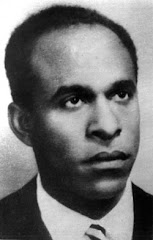
Gamer and many others who study the nature of colonial rule offer the best insights into the functioning of our corporate state. We have been, like nations on the periphery of empire, colonized. We are controlled by tiny corporate entities that have no loyalty to the nation and indeed in the language of traditional patriotism are traitors. They strip us of our resources, keep us politically passive and enrich themselves at our expense. The mechanisms of control are familiar to those whom the Martinique-born French psychiatrist and writer Frantz Fanon called "the wretched of the earth," including African-Americans. The colonized are denied job security. Incomes are reduced to subsistence level. The poor are plunged into desperation. Mass movements, such as labor unions, are dismantled. The school system is degraded so only the elites have access to a superior education. Laws are written to legalize corporate plunder and abuse, as well as criminalize dissent. And the ensuing fear and instability—keenly felt this past weekend by the more than 200,000 Americans who lost their unemployment benefits—ensure political passivity by diverting all personal energy toward survival. It is an old, old game.

A change of power does not require the election of a Mitt Romney or a Barack Obama or a Democratic majority in Congress, or an attempt to reform the system or electing progressive candidates, but rather a destruction of corporate domination of the political process—Gamer's "patron-client" networks. It requires the establishment of new mechanisms of governance to distribute wealth and protect resources, to curtail corporate power, to cope with the destruction of the ecosystem and to foster the common good. But we must first recognize ourselves as colonial subjects. We must accept that we have no effective voice in the way we are governed. We must accept the hollowness of electoral politics, the futility of our political theater, and we must destroy the corporate structure itself.

The danger the corporate state faces does not come from the poor. The poor, those Karl Marx dismissed as the Lumpenproletariat, do not mount revolutions, although they join them and often become cannon fodder. The real danger to the elite comes from déclassé intellectuals, those educated middle-class men and women who are barred by a calcified system from advancement. Artists without studios or theaters, teachers without classrooms, lawyers without clients, doctors without patients and journalists without newspapers descend economically. They become, as they mingle with the underclass, a bridge between the worlds of the elite and the oppressed. And they are the dynamite that triggers revolt.

This is why the Occupy movement frightens the corporate elite. What fosters revolution is not misery, but the gap between what people expect from their lives and what is offered. This is especially acute among the educated and the talented. They feel, with much justification, that they have been denied what they deserve. They set out to rectify this injustice. And the longer the injustice festers, the more radical they become.

The response of a dying regime—and our corporate regime is dying—is to employ increasing levels of force, and to foolishly refuse to ameliorate the chronic joblessness, foreclosures, mounting student debt, lack of medical insurance and exclusion from the centers of power. Revolutions are fueled by an inept and distant ruling class that perpetuates political paralysis. This ensures its eventual death.

In every revolutionary movement I covered in Latin America, Africa and the Middle East, the leadership emerged from déclassé intellectuals. The leaders were usually young or middle-aged, educated and always unable to meet their professional and personal aspirations. They were never part of the power elite, although often their parents had been. They were conversant in the language of power as well as the language of oppression. It is the presence of large numbers of déclassé intellectuals that makes the uprisings in Spain, Egypt, Greece and finally the United States threatening to the overlords at Goldman Sachs, ExxonMobil and JPMorgan Chase. They must face down opponents who understand, in a way the uneducated often do not, the lies disseminated on behalf of corporations by the public relations industry. These déclassé intellectuals, because they are conversant in economics and political theory, grasp that those who hold power, real power, are not the elected mandarins in Washington but the criminal class on Wall Street.

This is what made Malcolm X so threatening to the white power structure. He refused to countenance Martin Luther King's fiction that white power and white liberals would ever lift black people out of economic squalor. King belatedly came to share Malcolm's view. Malcolm X named the enemy. He exposed the lies. And until we see the corporate state, and the games it is playing with us, with the same kind of clarity, we will be nothing more than useful idiots.

"This is an era of hypocrisy," Malcolm X said. "When white folks pretend that they want Negroes to be free, and Negroes pretend to white folks that they really believe that white folks want 'em to be free, it's an era of hypocrisy, brother. You fool me and I fool you. You pretend that you're my brother and I pretend that I really believe you believe you're my brother."

Those within a demoralized ruling elite, like characters in a Chekhov play, increasingly understand that the system that enriches and empowers them is corrupt and decayed. They become cynical. They do not govern effectively. They retreat into hedonism. They no longer believe their own rhetoric. They devote their energies to stealing and exploiting as much, as fast, as possible. They pillage their own institutions, as we have seen with the newly disclosed loss of $2 billion within JPMorgan Chase, the meltdown of Chesapeake Energy Corp. or the collapse of Enron and Lehman Brothers. The elites become cannibals. They consume each other. This is what happens in the latter stages of all dying regimes. Louis XIV pillaged his own nobility by revoking patents of nobility and reselling them. It is what most corporations do to their shareholders. A dying ruling class, in short, no longer acts to preserve its own longevity. It becomes fashionable, even in the rarefied circles of the elite, to ridicule and laugh at the political puppets that are the public face of the corporate state.

"Ideas that have outlived their day may hobble about the world for years," Alexander Herzen wrote, "but it is hard for them ever to lead and dominate life. Such ideas never gain complete possession of a man, or they gain possession only of incomplete people."

This loss of faith means that when it comes time to use force, the elites employ it haphazardly and inefficiently, in large part because they are unsure of the loyalty of the foot soldiers on the streets charged with carrying out repression.

Revolutions take time. The American Revolution began with protests against the Stamp Act of 1765 but did not erupt until a decade later. The 1917 revolution in Russia started with a dress rehearsal in 1905. The most effective revolutions, including the Russian Revolution, have been largely nonviolent. There are always violent radicals who carry out bombings and assassinations, but they hinder, especially in the early stages, more than help revolutions. The anarchist Peter Kropotkin during the Russian Revolution condemned the radical terrorists, asserting that they only demoralized and frightened away the movement's followers and discredited authentic anarchism.

Radical violent groups cling like parasites to popular protests. The Black Panthers, the American Indian Movement, the Weather Underground, the Red Brigades and the Symbionese Liberation Army arose in the ferment of the 1960s. Violent radicals are used by the state to justify harsh repression. They scare the mainstream from the movement. They thwart the goal of all revolutions, which is to turn the majority against an isolated and discredited ruling class. These violent fringe groups are seductive to those who yearn for personal empowerment through hyper-masculinity and violence, but they do little to advance the cause. The primary role of radical extremists, such as Maximilien Robespierre and Vladimir Lenin, is to hijack successful revolutions. They unleash a reign of terror, primarily against fellow revolutionaries, which often outdoes the repression of the old regime. They often do not play much of a role in building a revolution.

The power of the Occupy movement is that it expresses the widespread disgust with the elites, and the deep desire for justice and fairness that is essential to all successful revolutionary movements. The Occupy movement will change and mutate, but it will not go away. It may appear to make little headway, but this is less because of the movement's ineffectiveness and more because decayed systems of power have an amazing ability to perpetuate themselves through habit, routine and inertia. The press and organs of communication, along with the anointed experts and academics, tied by money and ideology to the elites, are useless in dissecting what is happening within these movements. They view reality through the lens of their corporate sponsors. They have no idea what is happening.

Dying regimes are chipped away slowly and imperceptibly. The assumptions and daily formalities of the old system are difficult for citizens to abandon, even when the old system is increasingly hostile to their dignity, well-being and survival. Supplanting an old faith with a new one is the silent, unseen battle of all revolutionary movements. And during the slow transition it is almost impossible to measure progress.

"Sometimes people hold a core belief that is very strong," Fanon wrote in "Black Skin, White Masks." "When they are presented with evidence that works against that belief, the new evidence cannot be accepted. It would create a feeling that is extremely uncomfortable, called cognitive dissonance. And because it is so important to protect the core belief, they will rationalize, ignore and even deny anything that doesn't fit in with the core belief."

The end of these regimes comes when old beliefs die and the organs of security, especially the police and military, abandon the elites and join the revolutionaries. This is true in every successful revolution. It does not matter how sophisticated the repressive apparatus. Once those who handle the tools of repression become demoralized, the security and surveillance state is impotent. Regimes, when they die, are like a great ocean liner sinking in minutes on the horizon. And no one, including the purported leaders of the opposition, can predict the moment of death. Revolutions have an innate, mysterious life force that defies comprehension. They are living entities.

The defection of the security apparatus is often done with little or no violence, as I witnessed in Eastern Europe in 1989 and as was also true in 1979 in Iran and in 1917 in Russia. At other times, when it has enough residual force to fight back, the dying regime triggers a violent clash as it did in the American Revolution when soldiers and officers in the British army, including George Washington, rebelled to raise the Continental Army. Violence also characterized the 1949 Chinese revolution led by Mao Zedong. But even revolutions that turn violent succeed, as Mao conceded, because they enjoy popular support and can mount widespread protests, strikes, agitation, revolutionary propaganda and acts of civil disobedience. The object is to try to get there without violence. Armed revolutions, despite what the history books often tell us, are tragic, ugly, frightening and sordid affairs. Those who storm Bastilles, as the Polish dissident Adam Michnik wrote, "unwittingly build new ones." And once revolutions turn violent it becomes hard to speak of victors and losers.

A revolution has been unleashed across the globe. This revolution, a popular repudiation of the old order, is where we should direct all our energy and commitment. If we do not topple the corporate elites the ecosystem will be destroyed and massive numbers of human beings along with it. The struggle will be long. There will be times when it will seem we are going nowhere. Victory is not inevitable. But this is our best and only hope. The response of the corporate state will ultimately determine the parameters and composition of rebellion. I pray we replicate the 1989 nonviolent revolutions that overthrew the communist regimes in Eastern Europe. But this is not in my hands or yours. Go ahead and vote this November. But don't waste any more time or energy on the presidential election than it takes to get to your polling station and pull a lever for a third-party candidate—just enough to register your obstruction and defiance—and then get back out onto the street. That is where the question of real power is being decided.


This piece was reprinted by Truthout with permission or license.


CHRIS HEDGES

Chris Hedges spent nearly two decades as a foreign correspondent in Central America, the Middle East, Africa and the Balkans. He has reported from more than 50 countries and has worked for The Christian Science Monitor, National Public Radio, The Dallas Morning News and The New York Times, for which he was a foreign correspondent for 15 years.

Wednesday, November 16, 2011

On the Creative Clarity and Vision of the Occupy Wall Street Movement

Occupy Wall Street, November 6th. (Photo: [clint] [4])

http://www.truth-out.org/originality-occupy-wall-street/1321203807

All,

An excellent analysis by Mr. Wolff of the OWS movement. I thoroughly agree...

Kofi


The Originality of Occupy Wall Street
13 November 2011

by Richard D. Wolff, RDWolff.com [3] | Op-Ed


The political movements of the left that I have participated in over many decades were almost always focused on or prioritized particular issues (wars, civil liberties, civil rights, poverty, collective bargaining, etc.) and/or particular subsections of the population (African-Americans, women, gay people, immigrants, etc.). The authorities almost always took advantage of that focus to separate and isolate the movement from society generally. They were often successful. Even when the authorities failed to provoke general hostility to the movement, they were able to prevent the development of more than a general sympathy for it.

In the short history of OWS and its spread to date, I am struck by its impressive insistence on remaining a movement around a very general and inclusive critique of an unjust economy (99% against 1%) that has corrupted much of US politics and culture. The net result is a built-in systemic critique, sometimes explicit (remarkably often named as capitalism) and almost always implicit. The hesitation to choose among and focus on specific demands reflects the wisdom of maintaining the broad, systemic critique. The taboo against systemic critique – a legacy of post-war anti-communism – seems to be broken. Nonetheless, the struggle to select and prioritize specific demands needs to take time and great care, especially if that struggle is to be accomplished without losing the invaluable systemic critique and demand for change. Most other movements of the left could not accomplish that to their detriment and often destruction.

In its short history, OWS seems already well along in discovering and instituting a new kind of leadership system and organization. The task is daunting and its accomplishment has likewise eluded most left movements in the past. The polarities to avoid are (1) purely horizontal collectives lacking the coordination and shared focus without which massive duplications and wastes of energy and effort breed disorientation and demoralization, and (2) conflict-ridden power concentrations that dissipate and de-energize general initiative and enthusiasm. Here too, interesting explorations of how to navigate between these polarities are underway in OWS. The US left is littered with the debris of movements that crashed on these polarities and/or atrophied from settling into one or the other.

OWS is rooted in the mass disaffection felt about the basic political economy of the US. Those dominating economics, politics and culture seem determined to keep the society moving in just those directions that will deepen that disaffection and thereby strengthen OWS. Income and wealth inequality, alienation from politics, deteriorating job, educational and retirement opportunities all conspire to recruit for OWS. The increased stresses and strains of personal life and relationships do likewise. OWS has already managed to exert combined political and personal attractions on a broad public.

Since 2007, the US has been engaged in this sequence of social events: a capitalist crisis, a trickle-down economic recovery program (that helped the top but never trickled down to anyone else), and an austerity program to pay for that trickle down program. Europe experienced a parallel engagement. However, Europe had much more viable and in-tact labor unions and anti-capitalist political parties and party factions. They enabled the mobilization of Europeans against austerity programs and in some cases also against the trickle-down policies and crisis-ridden capitalism that produced austerity programs. They also reaffirmed and reinforced existing organizational patterns that did not attract much of the new energy emerging on the left.

In contrast, the US has taken longer to react and respond. Yet therein lies an important dialectic of opposites. Precisely because the US has long-declining and therefore weak labor unions and no significantly influential anti-capitalist parties, opposition to the crisis-trickle-down-austerity sequence takes much longer to form and mobilize. People in the US have to rebuild old shells of organization from the bottom up or build altogether new organizations. Yet with this difficulty comes a certain distance from and relative freedom to consider, evaluate and pick carefully among the many old habits, presumptions, organizational forms and styles that have demonstrated their strengths and weaknesses in and for left movements.

In Europe, those oppositional forces that seek to start afresh and independent of the older movements – for example, the various “indignant” groupings – slip quickly into disunity and tension with the existing left organizations. This weakens and divides the left just when the opposite is needed most. In the US, OWS may well be able to avoid that problem precisely because of the old left’s long period of decline and demoralization.

The stunning growth and social influence of OWS in its few weeks of existence augur well for its survival and maturation.


Links:

[1] http://www.truth-out.org/print/8973
[2] http://www.truth-out.org/printmail/8973
[3] http://rdwolff.com/content/originality-occupy-wall-street
[4] http://www.flickr.com/photos/clintw/6320547357/
[5] http://www.truth-out.org/printmail
[6] http://www.truth-out.org/content/richard-d-wolff
[7] http://org2.democracyinaction.org/o/6694/p/salsa/web/common/public/signup?signup_page_KEY=2160
[8] https://members.truth-out.org/donate
[9] http://www.truth-out.org/?q=lessons-original-occupation-madisons-sheriff-dave-mahoney/1319735448
[10] http://www.truth-out.org/?q=occupy-obama-could-turn-heat-democracy/1319313907

Saturday, October 29, 2011

The Pivotal Role of Race, Class, and the Corporate State in the Occupy Wall Street Movement

Occupy Wall Street: Day 14, September 30, 2011. (Photo: ©wendyannibell photos [4])


http://www.truth-out.org/occupiers-have-convince-other-99-percent/1319466407

All,

As usual the always politically insightful, morally courageous, and truly provocative Chris Hedges cuts through all the bullshit, lies, and cowardly equivocations to properly identify and talk about what really matters. This is another excellent and very necessary piece that deals directly and honestly with the eternally brutal contradictions of race and class in this society and culture--especially as they pertain to political mass struggle and grassroots organizing. The crucial issues he raises and discusses here can't be addressed too often...

Kofi


Occupiers Have to Convince the Other 99 Percent
by Chris Hedges
24 October 2011
Truthdig
News Analysis


The occupation movement’s greatest challenge will be overcoming the deep distrust of white liberals by the poor and the working class, especially people of color.

Marginalized people of color have been organizing, protesting and suffering for years with little help or even acknowledgment from the white liberal class. With some justification, those who live in these marginalized communities often view this movement as one dominated by white sons and daughters of the middle class who began to decry police abuse and the lack of economic opportunities only after they and their families were affected. This distrust is not the fault of the movement, which has instituted measures within its decision-making process to make sure marginalized voices are heard before white males. It is the fault of a bankrupt liberal class that for decades has abandoned the core issue of economic justice for the poor and the working class and busied itself with the vain and self-referential pursuits of multiculturalism and identity politics.

The civil rights movement, after all, achieved a legal victory, not an economic one. And for the bottom two-thirds of African-Americans, life is worse today than it was when Martin Luther King marched in Selma in 1965. King, like Malcolm X, understood that racial equality was impossible without economic justice. The steady impoverishment of those in these marginal communities, part of the Faustian deal worked out between the Democratic Party and its corporate sponsors, has been accompanied by draconian forms of police control, from stop-and-frisk to militarized police raids to the establishment of our vast complex of prison gulags. More African-American men, as Michelle Alexander [5] has pointed out, are in prison or jail or on probation or parole than were enslaved [6] in 1850, before the Civil War began. The corporate state keeps some two-thirds of poor people of color in the United States trapped in internal colonies—either in the impoverished inner city or behind bars. And the abject failure on the part of the white liberal establishment to stand up for the rights of the poor, as well as its decision to throw its support behind Democratic politicians such as Bill Clinton and Barack Obama, who abet this institutionalized and economic racism, has left many in these marginal communities disdainful of protesters from the newly dispossessed white middle class.

“The black community and the community of color have been dealing with these issues for decades,” the Rev. Raymond Blanchette, an African-American preacher from Queens, said in Zuccotti Park in Manhattan one day last week as we closed our jackets against a chilly wind whipping down the canyons of the financial district. “Now the white community around the country is beginning to see it and experience it firsthand. It’s pretty shocking to them. The African-American community and other communities of color are saying, ‘Welcome to the world I live in.’ That’s why you don’t see that many of those [nonwhite] faces here. It’s like, OK, now you decided you are going to speak up because now you’re the one that’s affected by it. One of the reasons I’m here is because I see the viability of this movement. I want to bring those communities together.”

The power elite have desperately tried to tar the movement with a series of calumnies, branding protesters as hippies, anti-Semites, drug addicts, leftists, anarchists and communists. They have so far been unable to blunt the fundamental truth the movement imparts: We have undergone a corporate coup. It has to be reversed. But this truth has yet to resonate among those who for decades have been betrayed and ignored by white liberals.

The decision by protesters from Occupy Wall Street to join Cornel West in Harlem last Saturday to protest the New York City Police Department’s stop-and-frisk policy was an important step in taking the message of the occupy movement to our impoverished internal colonies. West, who led the protest outside the 28th Precinct at West 123rd Street and Frederick Douglass Boulevard and who was arrested along with about 30 others, was part of a crowd that chanted: “Stop-and-frisk don’t stop the crime. Stop-and-frisk is the crime.”

The power elite are frantically searching for the ideological weapon that will discredit the movement. But the clarity of the protests, the painful personal stories of dislocation that are the heart of its message, and, most important, the self-discipline, despite police provocation, which has kept these protests nonviolent have advanced the movement and discredited the forces of control. The power elite, held together by the glue of force and fraud, are seeking ways to communicate in the only language they know they can master—unrestrained force. And as we enter the second month of demonstrations, the power elite fear that the core message and the calls for resistance, which resonate with a majority of Americans, will lead to a direct confrontation with the corporate state. If the movement starts to pull hundreds of thousands of people together, if it leaps across class lines, as I saw during the peaceful revolutions in East Germany and Czechoslovakia, then the corporate state is probably finished. Our corporate overlords know this. And they are doing everything in their power to make sure this does not come to pass.

The divisions between the poor and the working class on the one hand and the white, liberal middle class on the other reach back to the Vietnam anti-war movement. The New Left in the 1960s was infused with the same deadly doses of hedonism that corrupted earlier 20th century counterculture movements such as the bohemians and the beats. The antagonism between the New Left during the Vietnam War and the working class and the poor, whose sons were shipped to Vietnam while the sons of the white middle class were usually handed college deferments, was never bridged. Working-class high schools, including many high schools with large numbers of African-Americans, sent 20 to 30 percent of their graduates to Vietnam every year while college graduates made up only 2 percent of all troops sent to Vietnam in 1965 and 1966. Anti-war activists were seen by those locked out of the white middle class as spoiled children of the rich who advocated free love, drug use, communism and social anarchy.

The unions and the white working class remained virulently anti-communist. They spoke in the language of militarism and the Cold War and were unsympathetic to the anti-war movement as well as the civil rights movement. When student activists protested at the AFL-CIO’s 1965 convention, chanting “Get out of Vietnam!” the delegates taunted them by shouting “Get a haircut.” AFL-CIO leader George Meany ordered the security to “clear the Kookies out of the gallery.” United Automobile Workers President Walter Reuther, once the protesters were escorted out, announced that “protesters should be demonstrating against Hanoi and Peking … [who] are responsible for the war.” The convention passed a resolution that read: “The labor movement proclaim[s] to the world that the nation’s working men and women do support the Johnson administration in Vietnam.”

Those that constituted the hard-core New Left, groups like Students for a Democratic Society, found their inspiration in the liberation struggles in Vietnam and the Third World and figures such as Mao and Leon Trotsky rather than the labor movement, which they considered bought off by capitalism. They saw the working class as part of the problem. Many came to embrace the cult of violence. The Black Panthers, the Nation of Islam and the Weather Underground Organization became as poisoned by this lust for blood, quest for ideological purity, crippling paranoia and internal repression as the state system they defied.

The bulk of the white protesters in the 1960s found their ideological roots not in the moral imperatives of King or Malcolm X but the disengagement championed earlier by beats such by Jack Kerouac, Allen Ginsburg and William Burroughs. It was a movement that, while it incorporated a healthy dose of disrespect for authority, focused on self-indulgent schemes for inner peace and fulfillment. The use of hallucinogenic drugs, advocated by Timothy Leary in books such as “The Politics of Ecstasy,” and the rise of occultism that popularized transcendental meditation, Theosophy, Hare Krishna, Zen and the I-Ching were trends that would have dismayed older radical movements such as the Wobblies [8] and the Communist Party. The counterculture of the 1960s, like the commodity culture, lured adherents inward. It set up the self as the primary center of concern. It offered affirmative, therapeutic remedies to social problems and embraced vague, undefined and utopian campaigns to remake society. There was no real political vision. Hermann Hesse’s novel “Siddhartha [9]” became emblematic of the moral hollowness of the New Left. These movements and the celebrities who led them, such as the Yippie leader Abbie Hoffman, catered to the stage set for them by television cameras. Protests and court trials became street theater. Dissent became another media spectacle. Anti-war protesters in Berkeley switched from singing “Solidarity Forever” to “We All Live in a Yellow Submarine.”

The power of the Occupy Wall Street movement is that it has not replicated the beliefs of the New Left. Rather, it is rooted in the moral imperatives of justice and self-sacrifice, what Dwight Macdonald [10] called nonhistorical values, values closer to King than Abbie Hoffman. It seeks to rebuild the bridges to labor, the poor and the working class. The movement eschews the hedonism of the New Left; indeed it does not permit drugs or alcohol in Zuccotti Park. It denounces the consumer culture and every evening shares its food with the homeless, who also often sleep in the park. But, most important, it eschews, through a nonhierarchical system of self-governance, the deadly leadership cults that plagued and ultimately destroyed the movements of the 1960s. The political and moral void within the New Left meant that, like the counterculture of the beats or the bohemians, it was seamlessly integrated into the commercial culture. At its core the New Left shared the same hedonism, entrancement with mass entertainment, love of spectacle and preoccupation with the self. And the degeneration of the New Left is personified by politicians such as Clinton, who mouthed the usual platitudes about the poor and working men and women while he and both major political parties, awash in corporate dollars, betrayed and impoverished them.

Murray Bookchin wrote [11]: “Radical politics in our time has come to mean the numbing quietude of the polling booth, the deadening platitudes of petition campaigns, carbumper sloganeering, the contradictory rhetoric of manipulative politicians, the spectator sports of public rallies and finally, the knee-bent, humble plea for small reforms—in short, the mere shadows of the direct action, embattled commitment, insurgent conflicts, and social idealism that marked every revolutionary project in history. … What is most terrifying about present-day ‘radicalism’ is that the piercing cry for ‘audacity’—‘L’audace! L’auduce! Encore l’auduce!’—that Danton voiced in 1793 on the high tide of the French revolution would simply be puzzling to the self-styled radicals who demurely carry attaché cases of memoranda and grant requests into their conference rooms … and bull horns to their rallies.”

Macdonald argued that those who wanted change had to base all actions on the nonhistorical and more esoteric values of truth, justice and love. They had to retain Danton’s call for audacity. Once any class bows to the practical dictates required by effective statecraft and legislation, as well as the call to protect the nation, it loses its moral authority and its voice. The naive belief in human progress through science, technology and mass production, which this movement understands is a lie, erodes these nonhistorical values by placing faith in state power and fantasy. The choice is between serving human beings or serving history, between thinking ethically or thinking strategically. Macdonald excoriated Marxists for the same reason he excoriated the liberal class: They subordinated ethics to another goal. They believed the ends justified the means. The liberal class, like the Marxists, by serving history and power capitulated to the state in the end. This capitulation by the liberal class, as Irving Howe noted, “bleached out all political tendencies.” Liberalism, he wrote, “becomes a loose shelter, a poncho rather than a program; to call oneself a liberal one doesn’t really have to believe in anything.”

In line with the occupy movement, we must not extol the power of the state as an agent of change or define progress by increased comfort, wealth, imperial expansion or consumption. The trust in the beneficence of the state—which led most liberal reformers to back the wars in Vietnam and Iraq at their inceptions, as well as place faith in electoral politics long after electoral politics had been hijacked by corporate power—ceded uncontested power to the corporate state. Liberals and liberal groups, such as MoveOn, which urge us to appeal to formal structures of power that no longer concern themselves with the needs or rights of citizens have become forces of disempowerment.

The only effective tool for change will come through movements such as those that stand in direct opposition to state power and seek through the sheer force of numbers and civil disobedience to discredit and weaken the corporate state. The corporate state cannot be the repository of our hopes and dreams. And the liberal establishment has, by making concession after concession, merged itself into the corporate apparatus and has nothing left to say to us. It is part of the elaborate and hollow political theater that has replaced genuine political participation. The dismantling of our radical social and political movements in the early and even middle part of the 20th century in the name of anti-communism left the liberal class, as well as the wider society, without a repository of new ideas. The utopian fantasies of globalism and naive acceptance that the dictates of the marketplace should be permitted to determine human behavior became not just the creed of the corporatists but finally the creed of liberal apologists such as Thomas Friedman and most professors in university economic departments. And the strength of the new movements is that they have exposed this lie.

What we are witnessing in parks and squares across the United States is not simply widespread revulsion over the greed and cruelty of corporate capitalism, but the articulation of a new and potent radicalism. This radicalism challenges the right of corporations to poison our ecosystem and turn greed and self-promotion into the highest good at the expense of human life. If this movement can cross class lines, if it can articulate its vision to those in marginalized communities, especially poor people of color, it can tap into a force and power that was never part of the New Left. It can make possible the shaking of the foundations and, let us hope, the toppling of the corporate state.


Links:


[1] http://www.truth-out.org/print/7945
[2] http://www.truth-out.org/printmail/7945
[3] http://www.truthdig.com/report/item/occupiers_have_to_convince_the_other_99_percent_20111024/
[4] http://www.flickr.com/photos/longislandrose/6201197721/
[5] http://moritzlaw.osu.edu/faculty/bios.php?ID=2
[6] http://www.huffingtonpost.com/2011/10/12/michelle-alexander-more-black-men-in-prison-slaves-1850_n_1007368.html
[7] https://members.truth-out.org/donate/monthly-recurring-donation
[8] http://www.thefreedictionary.com/Wobblies
[9] http://en.wikipedia.org/wiki/Siddhartha_%28novel%29
[10] http://www.nytimes.com/2006/04/16/books/review/16wolcott.html?pagewanted=all
[11] http://dwardmac.pitzer.edu/Anarchist_Archives/bookchin/bio1.html
[12] http://www.truth-out.org/printmail
[13] http://www.truth-out.org/content/chris-hedges
[14] http://org2.democracyinaction.org/o/6694/p/salsa/web/common/public/signup?signup_page_KEY=2160
[15] https://members.truth-out.org/donate