Showing posts with label Malcolm X. Show all posts

Wednesday, February 7, 2024

Dr. Peniel E. Joseph On the Ongoing Historical and Political Significance of 1963 in the United States

"What's Past is Prologue...
Opinion
Three days in 1963 that are still changing America
by Peniel E. Joseph
November 22, 2023
CNN


16 comments

[Editor’s note: Peniel E. Joseph is the Barbara Jordan chair in ethics and political values and founding director of the Center for the Study of Race and Democracy at the LBJ School of Public Affairs at the University of Texas at Austin, where he is a professor of history. He is the author of “The Third Reconstruction: America’s Struggle for Racial Justice in the Twenty-First Century.” The views expressed here are his own.]

John F. Kennedy’s abbreviated presidency, while often overshadowed by his successor’s on this front, was a crucial component of America’s second Reconstruction.


PHOTO:  Dr. Peniel E. Joseph - Kelvin Ma/Tufts University/Kelvin Ma/Tufts University

As the world acknowledges the somber occasion, 60 years ago this week, of Kennedy’s assassination in Dallas on November 22, 1963, it’s important to reflect on Kennedy’s pivotal role in the civil rights revolution. Kennedy’s death stunned the world and shook our nation’s foundation — but his life, punctuated by three days in June 1963, was instrumental to a transformation of American democracy.

Kennedy’s death was the end of one era and the beginning of another. Although we popularly remember his presidency and its end as closing the door on a purported age of American innocence, this is untrue.

Kennedy entered office as a young president with the firm belief that his most consequential role would be as a commander in chief, waging a global war for freedom and democracy on the world stage against the Soviet Union. Instead, Kennedy presided over the early years of the nation’s most crucial period of Reconstruction since the end of the Civil War. This new reality jarred Kennedy’s moral sensibilities, tested his political nerve and emboldened his personal will. He became a more passionate speaker, interested reader and public champion of freedom at home and abroad based on the changing domestic and global landscape. Kennedy never stood still or remained static in his conception of America.

Kennedy’s tragic death came near the end of the most tumultuous year of his presidency. The youngest man ever elected president in 1960 at the age of 43, Kennedy had a vision of a “New Frontier” that would see the nation conquer space, defeat the tyranny of Soviet Union communism and export America’s dreams of freedom to Africa and the developing world, but it was complicated by the most significant domestic crisis in our history: the Civil Rights Movement.

During Kennedy’s first two years in office, civil rights leaders such as the Rev. Martin Luther King Jr. criticized the young president and his younger brother and closest political adviser, Attorney General Robert Kennedy, for shortcomings in the pursuit of racial justice. The Kennedy administration’s allyship in the struggle had been cautious: at its best, exemplified by efforts in ending the mob violence against interracial Freedom Riders in 1961 and deploying federal marshals to help integrate the University of Mississippi in 1962.

The year that changed everything

When the racial crisis in Birmingham, Alabama, in the spring of 1963 galvanized America’s second Reconstruction, it prompted a decisive personal and political moment for Kennedy. The movement’s efforts to racially integrate the declining industrial steel city in Alabama met racist opposition from its commissioner of public safety, Eugene “Bull” Connor, a former sports radio announcer turned full-time segregationist terror. The state of Alabama was so hostile to civil rights that it had outlawed the NAACP.

King and local leader the Rev. Fred Shuttlesworth organized a series of demonstrations in April and May that landed them and fellow activist Ralph Abernathy in jail. There, King wrote his famous “Letter From Birmingham Jail,” which would not be published until after the crisis ended.

Meanwhile, the “Children’s Crusade,” launched by civil rights worker Jim Bevel, drew thousands of children as young as 7 to serve as shock troops of a peaceful movement to eradicate White supremacy in Birmingham. Connor’s police incarcerated thousands, unleashed dogs on nonviolent protesters and used water hoses from the fire department that were powerful enough to strip the bark from trees.

On Mother’s Day 1963, racial terrorists in Birmingham exploded bombs at the hotel of the city’s most successful Black business leader and movement supporter, AG Gaston, in an attempt to assassinate King. The blasts ignited a full-blown Black uprising that took hundreds of Alabama state troopers to quell and forced Kennedy to place the National Guard on alert. The violence also threatened to destroy a public truce between civil rights leaders and city officials that resulted in the formation of a biracial commission, the planned integration of public accommodations and the hiring of Black workers in department stores.

Kennedy faced another crisis when Alabama Gov. George Wallace, in defiance of a federal court order, vowed to prevent two Black students from entering the University of Alabama. Wallace’s infamous stand at the schoolhouse door made him a national hero to racial segregationists, far-right conservatives and believers in the Lost Cause. It propelled him to run for president in Democratic primaries the following year. It fueled an astonishingly successful campaign in 1968 that helped pave the way for more contemporary demagogues in the manipulation of White anger and resentment.

Kennedy’s pivotal words


Having tracked these violent developments from the White House, Kennedy responded to the spring crisis with a momentous set of statements and actions. Over three days in June, Kennedy embraced a vision of Black citizenship and dignity as the beating heart of American democracy.

He first did so in Hawaii on June 9 at a conference of mayors. Kennedy outlined that, for all the attention paid to the South, Northern race relations stood at a critical inflection point. Black Americans suffered double the unemployment rates as Whites, and the millions who migrated North and west to escape racial oppression found themselves living in racially segregated and economically depressed neighborhoods with poor schools, practically no social services and unaffordable, substandard housing. Kennedy challenged America’s mayors in Honolulu to offer summer jobs for Black youth and rid their local cities of racial injustice and ordinances that prevented access to equal opportunity.

The next day, Kennedy delivered the commencement address at American University. In a speech whose primary topic was world peace and finding common ground with Soviet adversaries, it’s impossible not to read into Kennedy’s words a deeper understanding of his growing consciousness about matters of race, especially lines such as his call: “Let us not be blind to our differences — but let us also direct attention to our common interests and to the means by which those differences can be resolved.”

June 11 was Kennedy’s finest hour. That evening, after Vivian Malone and James Hood successfully enrolled at the University of Alabama, Kennedy delivered an 8 p.m. televised address to the American people.
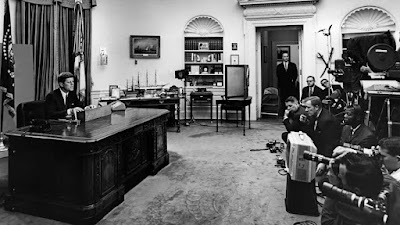

PHOTO:  On June 11, 1963, in his finest hour as president, Kennedy gives a televised address to the nation, vowing to send civil rights legislation to Congress. - Abbie Rowe/The White House/John F. Kennedy Presidential Library and Museum

For nearly 17 minutes, Kennedy discussed the Civil Rights Movement the way King had urged him to do over the past two years. “We are confronted primarily with a moral issue,” Kennedy told the nation. He juxtaposed, throughout his address, the divergent life chances between Blacks and Whites from birth to death, pointing out that both groups served in the military, irrespective of race. Kennedy characterized the hundreds of demonstrations around the country supporting civil rights as “a revolution,” which could be violent or peaceful, depending on the country’s leadership. Kennedy vowed to bring comprehensive civil rights legislation to Congress within the week.

It was a bravura speech, the best of his presidency, certainly the most politically and morally significant. It left a legacy of a president who, despite being pushed in various directions by activists, his brother Bobby and the crisis of Birmingham, seized the time and stood on the right side of history.

An unfinished legacy

Early the following day, Medgar Wiley Evers, a charismatic 37-year-old military veteran and married father of three who served as the NAACP field secretary in Mississippi, was assassinated by a White supremacist. Evers’ murder triggered national waves of protests, mourning and outrage. Kennedy greeted Medgar’s wife, Myrlie, brother Charles, son Darrell Kenyatta and daughter Reena Denise at the White House after the funeral service at Arlington Cemetery.

Over the next five months, Kennedy would, at times reluctantly, fully embrace the struggle for civil rights as part of his legacy. Kennedy met with civil rights leaders after the August 28 March on Washington, hosting them with tea, coffee and sandwiches. “I have a dream,” he said to King as he shook his hand, offering congratulations for a timeless speech against the backdrop of the Lincoln Memorial.

Progress for Kennedy would always mean something other than perfection. After the September 15, 1963, bombing of the 16th Street Baptist Church in Birmingham, Kennedy, to the disappointment of King and many others, refused to attend the funeral services for any of the six children killed that day. Carole Robertson, Addie Mae Collins, Cynthia Wesley, and Denise McNair all perished in the dynamite blast that ripped through the basement of the church. Three of the girls were 14, and one 11. Two other young people died in Birmingham that day. Two White Eagle Scouts murdered “Peanut” Ware as he rode on the handlebars of his brother’s bike, and police fired a shotgun in the back of Johnny Robinson in Birmingham during the unrest that came after the bombing.
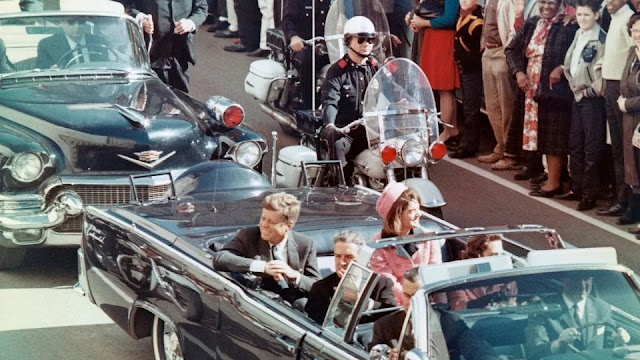

PHOTO: The president rides with first lady Jacqueline Kennedy in Dallas on November 22, 1963. Bullets put an end to his evolution on matters of racial justice. - Bettmann Archive/Getty Images

Bullets put a brutal end to Kennedy’s evolution on matters of racial justice. He was shot to death in Dallas while riding in a convertible next to first lady Jacqueline Kennedy in an act of violence that also wounded then-Texas Gov. John Connally. The shock of Kennedy’s murder brought the world up short, sparking endless conspiracy theories — especially after the accused killer, Lee Harvey Oswald, was then shot and killed by Jack Ruby, himself a figure with underworld connections. While a presidential commission later identified Oswald as a lone shooter, questions remain, even six decades later.

His killing also placed him in a pantheon with the year’s other less celebrated victims— Medgar Evers and the Birmingham Six. Malcolm X, the revolutionary leader who embodied the Black resistance and parried with King over the meaning of democracy, infamously characterized Kennedy’s death as “chickens coming home to roost,” which resulted in his suspension and eventual departure from the Nation of Islam.

Though less well-known, writer James Baldwin’s response to the assassination is particularly instructive. Baldwin found himself too angry to mourn only Kennedy. He lashed out against the country that, in his estimation, did not sufficiently express grief for Medgar Evers or the lost children of Birmingham. “Evers was put to death by the southern oligarchy to preserve the southern power structure,” Baldwin said. “That’s why he died and that’s why nobody cares.” He continued. “That’s why six children died in Birmingham and nobody cares.”

The best compliment that can be paid to Kennedy’s unfinished legacy is that he evolved. That political evolution helped lay the groundwork for his successor, Lyndon Baines Johnson, and the magnificent achievements of the Great Society, including landmark civil rights legislation Kennedy proposed that was passed under Johnson. The ultimate lesson we can learn from Kennedy, 60 years after his death, is that this nation remains a work in progress. Kennedy’s vision, at its best, continues today in the pursuit of progress, the restless and relentless effort to achieve freedom and citizenship for all Americans so that the power of our example can reverberate hopefully throughout the world.

Sunday, December 24, 2023

Malcolm X, the Black Radical Tradition, Human Rights, The Necessity of Resistance, and the Arduous Struggle of Palestinians in Gaza For Liberation From Massive State Violence Inflicted by Israel and the United States

Interview
Racial Justice

What Would Malcolm X Say About Gaza and Black Resistance in the US Today?

Scholar Michael Sawyer brings the political philosophy of Malcolm X to bear on the horrors taking place in Gaza.

by George Yancy
December 23, 2023
Truthout


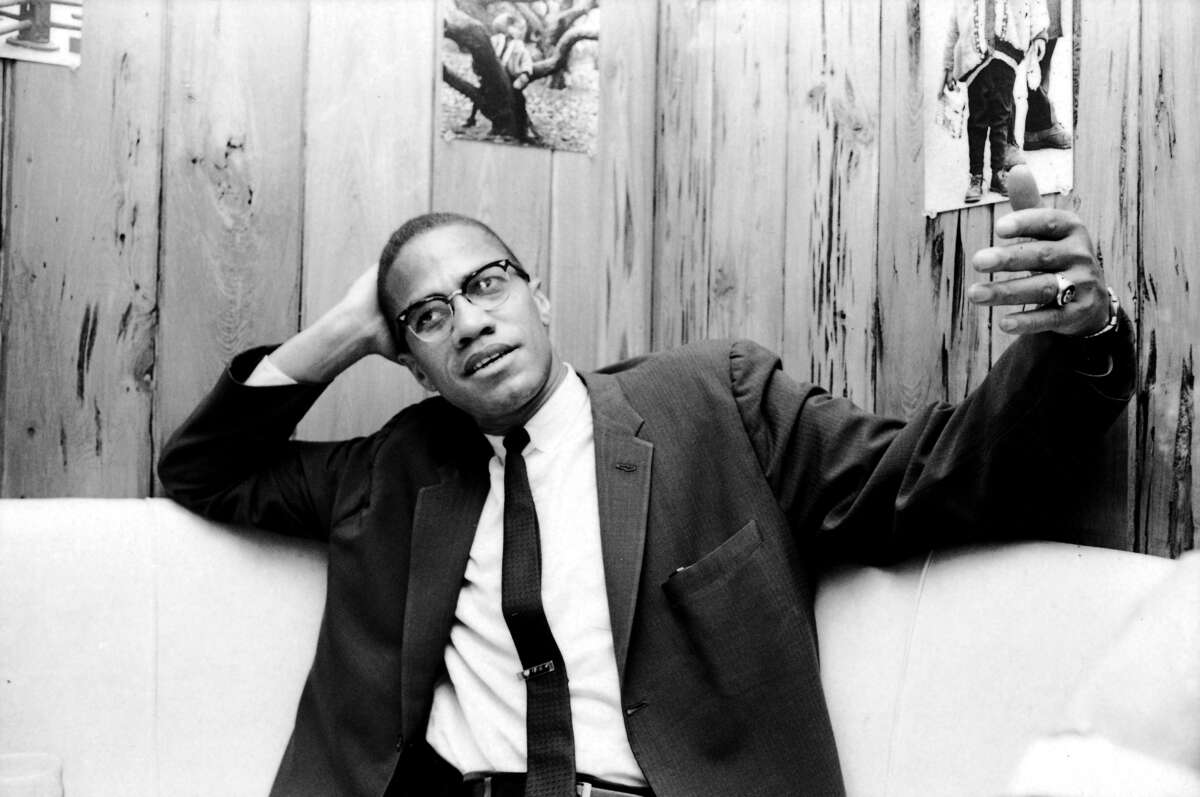
Malcolm X pictured on March 1, 1964.
Truman Moore / Getty Images

In deep times of sorrow and catastrophe, some of us flee. We flee either because we don’t want to face the weight and ugliness of the horror — willed ignorance — or we flee because we need a reprieve. I find myself needing a reprieve, though I’m by no means beyond the trappings of the former. There are other times when I seek out the wisdom of those human beings who refused to turn their faces from forms of social terror and found strength to endure. Think here of Ida B. Wells-Barnett and her powerful fight against the lynching of Black people as forms of white, twisted desire and an attempt to control Black freedom.

I recall as a teenager lying back on the floor listening to Malcolm X speeches on vinyl records that my father had collected. Malcolm X’s powerful and articulate voice encouraged me to read the dictionary, to embody the sting of his discourse, the truth that he spoke. I wanted to be like Malcolm X. I didn’t want to be a milquetoast person afraid to speak the truth. Many years later, I would read as much as I could get my hands on by and about Malcolm X. I found that many people were more interested in donning the X as opposed to understanding the complexity of the man. In 1991, I had the good fortune to meet Malcolm’s wife, Betty Shabazz, who also happily signed my copy of The Autobiography of Malcolm X. I also had the deep honor of meeting Malcolm’s youngest brother, Robert Little, in 1993. He and I spent deep quality time discussing Malcolm.

As I was thinking about the horrors taking place in Gaza, the Black Lives Matter movement, and so much more, I thought of Malcolm, his wisdom and his indefatigable courage. Wondering what Malcolm thought about the crucible of this moment, while understanding the potential mistakes involved in presentism, or where we judge the past using dominant attitudes from the present, I turned to scholar Michael Sawyer. Sawyer is an associate professor of African American Literature and Culture, a faculty affiliate of Africana Studies and the Director of Graduate Studies of the Department of English at the University of Pittsburgh, as well as the author of the groundbreaking book, Black Minded: The Political Philosophy of Malcolm X. We discussed what Malcolm X means to us today and why his thought continues to be powerfully germane. The interview that follows has been lightly edited for clarity and length.

George Yancy: When I say the name of Malcolm X (who later took the name El-Hajj Malik El-Shabazz) in the context of the college classroom, I find that many students mistakenly associate him with advocacy for wanton violence. But in Malcolm X Speaks (edited by George Breitman), Malcolm X is clear about how he understands violence. He says, “I have never advocated any violence. I have only said that Black people who are the victims of organized violence perpetrated upon us by the Klan, the Citizens’ Councils, and many other forms, should defend ourselves. And when I say we should defend ourselves against the violence of others, they use their press skillfully to make the world think that I am calling for violence, period.” Black self-defense — to take a stand against Black brutalization and oppression — for Malcolm X, is not the same as white terrorism, which is predicated upon the hatred of Black people, their dehumanization and disposability. Malcolm X reminds me of the distinction made between terrorism and the collective struggle against oppression maintained by the Palestinian American activist and scholar Edward Said.

Said is clear that terrorism or the emphasis on armed struggle that is indiscriminate and “sometimes foolishly and in a political sense stupidly relied on” is unacceptable. Said would not accept the killing of innocent civilians. But he was supportive of the struggle against oppression. It is not lost on me that Patrick Henry, who was one of the “founding fathers” of the United States and a famous orator, was against the hegemonic British rule over the American colonies. Indeed, he is known as saying, “Give me liberty, or give me death!” I imagine that the Black people that he enslaved would have been killed had they made such a fiery and insurrectionist claim against slavery and their so-called white masters. That brings me to my main question. Black people continue to live under conditions of anti-Black racism. Yet, when we resist, we are seen as violent. We can’t fight against anti-Blackness in the name of liberty where this might mean deciding to die in the process.

Talk about how Malcolm X would frame the contradictions that I’m suggesting. How might he propose that we collectively think about resisting anti-Black racism in the U.S. in the 21st century? And how might he propose Black people support other collective groups that have been negatively racialized and othered under colonial and oppressive conditions? I’m thinking here specifically of Palestinians. Malcolm X was critical of the dispossession of Palestinians, writing: “Did the Zionists have the legal or moral right to invade Arab Palestine, uproot its Arab citizens from their homes and seize all Arab property for themselves just based on the ‘religious’ claim that their forefathers lived there thousands of years ago? Only a thousand years ago the Moors lived in Spain. Would this give the Moors the legal and moral right to invade the Iberian Peninsula, drive out its Spanish citizens, and then set up a Moroccan nation where Spain used to be, as the European Zionists have done to our Arab brothers and sisters in Palestine?”

Michael E. Sawyer: First, George, I want to thank you for the opportunity to be in dialogue with you on this platform, especially as we prepare for the 100th anniversary of the birth of Malcolm X on May 19, 2024. The thrust of your question is timely and provocative in that it deals with the unspeakable violence we are all witness to in the conflict between Israel and putatively Hamas. I say putatively because the carnage we have witnessed is, in toto, skewed towards those we understand to be non-combatants. As we situate ourselves to deal with this question through the thinking of Malcolm X, we will have to develop some abstract understandings of several terms: violence vs. nonviolence, resistance, and something that approximates the right (or perhaps the necessity) to resist regimes of oppression, whether they be state-sanctioned or not.

Abstractly, Malcolm X insists upon a very careful, what I will call a “distinct-indistinction,” between violence and nonviolence as forms of resistance on the part of oppressed subjects. Broadly, he forces us to realize that as far as systems of power are concerned, any activity that is designed to destabilize structures of power are deemed “violent.” Meaning that all technologies of resistance — say, for instance, speech acts against a regime — are reacted to, or at least categorized, in the same manner as an armed insurgency. This means that as a practical matter, the telos [or end goal] of any form of protest — let’s use the term “disruptive activity” — will almost universally first be characterized as violent and then reacted to in violent fashion. That is, the abstraction I referenced above that needs to be further glossed as also distinct from acts of self-defense against violence which Malcolm X understands as required to be violent. That abstraction allows us to deal with the specificity of your question that I take to situate, and I believe this to be correct, the plight of Palestinians as inextricably related to the denial of liberty to Black people in this country.

That linkage is, in my estimation, one of the foundational advances provided by the philosophical system (if you will allow me that) Malcolm X developed in that he understands “Black” to reference aggrieved subjects wherever and whoever they might be; a form of global transnational and trans-subjective Blackness. What that means, returning to the abstraction developed above, is that resistance to the occupation of Gaza or the West Bank by anyone will necessarily be seen as violent by the state of Israel. And I want to take care to acknowledge that there are actors within that government who do not subscribe to this view, and are reacted to violently. That means that a terror attack like that on October 7 by Hamas and others will be understood as a kind of capstone in a logic of violence, whether individual acts in that chain of events can be characterized as violent or not.

What this seems to assert is that the answer to the totality of your question regarding what is to be done to effectively oppose systems of state-sanctioned oppression is to mount a structural/systemic response to the structural/systemic refraction of all protest into acts of violence that necessarily tend to blur and, at the same time, magnify actual acts of violence. What Malcolm X endeavors to do through his transnational and trans-subjective understanding of Black(ness) was to create a type of super-citizenship that enjoyed the protection of recognized states for those situated within crucibles of oppression wherever that might be. This becomes Black Panther Party orthodoxy in that oppressed African Americans were deemed to be substantively existing in colonies and therefore colonized. Here, “super” is in great measure meant to be something like “greater than” but also shorthand for “superseding” in that it is an overarching understanding that invalidates typologies of citizenship that are designed only to render subjects objects in terms of the law: acted upon rather than protected by. This would be the kinetic realization of the dormant or potential power of the United Nations Universal Declaration of Human Rights and other prohibitions against apartheid, etc. Aggrieved parties would have the ability, or more accurately already be understood to be protected and if necessary, dynamically so by international peace-keepers dedicated to a realization of the term “liberty” that hovers over this discussion. We are disconcertingly far from realizing that goal.

Part of how I think about anti-Black racism is through the lens of white supremacy, though I don’t limit my understanding of anti-Blackness to white groups such as Christian Identity, neo-Nazis or “alt-right” Republicans. Whiteness is not limited to overt hatred or conscious racial discrimination or the use of the N-word. White hegemony, white power and white privilege are systemic. Even poor white people get to benefit ontologically from being racially defined as white. In fact, to define white supremacy exclusively in terms of white hatred would exclude those white people who continue to reap the benefits from a system that dehumanizes Black people and other racially minoritized people. Whiteness functions to conceal its power through mundane processes that are structured as “normal.” To challenge white supremacy, one has to challenge the commonplace ways in which whiteness continues to operate and accrue a sense of safety for white people — being able to drive while white and feel no anxiety about being pulled over because one is white, shopping while white and not being racially profiled, and never needing to teach one’s white children about how to behave in the presence of police officers for fear that one is immediately suspected of being a “criminal.” As white educator Peggy McIntosh says, “In my class and place, I did not see myself as racist because I was taught to recognize racism only in individual acts of meanness by members of my group, never in invisible systems conferring unsought racial dominance on my group from birth.”

I find that when my white students discuss white supremacy, they limit their critiques to forms of discrete hatred or meanness. Encouraging them to rethink white supremacy through a systemic lens, where anti-Blackness is indissociable from whiteness as a structure, they become almost nihilistic or fatalistic, which is never my aim. I do want them to lean into the conundrum of what it means to be white and yet ethical under a system of anti-Blackness where they are complicit. That is crucial. For me, to undo the system of white supremacy would entail undoing whiteness as a site of hegemony and privilege.

On March 19, 1964, Black jazz critic A. B. Spellman asked Malcolm X about his use of the term “revolution” and if such a thing was occurring in the U.S. at that time. Malcolm X responded, “There hasn’t been. The people who are involved in a revolution don’t become a part of the system — they destroy the system; they change the system. The genuine word for a revolution is Umwälzung which means a complete overturning and a complete change.” As we grapple with white supremacy at this moment in the U.S., especially in terms of the unabashed white nationalist ethos that Donald Trump has explicitly galvanized, how might the words of Malcolm X instigate more radical thinking amongst white people themselves in terms of what it would take to rid the U.S. or even the world of white supremacy? What would Malcolm X require of white people when it comes to radically undoing/overthrowing the system that underwrites their whiteness; indeed, white ontology?

As I mention in my book, Black Minded, which is the impetus for this discussion, for Malcolm X, all roads lead to revolution. What this requires is that the spirit of your insightful reference to Malcolm X’s use of the term Umwälzungbe unpacked. We first must disabuse ourselves of the predisposition to characterize all forms of disruption as revolutionary or revolution. So, to situate revolution as the genus of radical activity rather than a species of it is to make a categorical error that comes with dire consequences.

Briefly, if you think of a Lamborghini as the genus of car rather than a species of car, at least two bad things can happen. First, you won’t recognize other cars, or second, you might expect all things called “cars” to perform like Lamborghinis. So, if I think that all modalities of radicalism or radical activity — or perhaps more accurately, forms of disruption — are revolutionary, then I can miss things that don’t look like what I require them to look like that are in fact revolutionary and/or expect things like demonstrations to perform like revolution. Circling back and refining what I said about Malcolm X understanding all roads to lead to revolution is to understand just that. The road from Chicago to LA isn’t in LA when you first pull onto Route 66. There are miles to cover and things that have to happen and you may not make it, but these are steps in a particular direction. Any step toward the telos of revolution is understood to always already be revolutionary or violent and is thus obstructed. All of this is ably though incompletely taken up in Bernard Yack’s The Longing for Total Revolution: Philosophic Sources of Social Discontent from Rousseau to Marx and Nietzsche, which basically asserts that a preoccupation with a romanticized understanding of the French Revolution makes it impossible for us, in the aftermath of that chaos, to accurately characterize acts of protest against structured power; and here I want “characterize” to do a lot of work. I need it to mean the ability to properly plan, execute, witness, categorize and manage expectations. So, to me, what Malcolm X is saying is: Don’t expect a demonstration to upend a system and don’t be surprised when an actual act of revolution causes complete upheaval, which may not necessarily be what people are hoping for: colloquially, everyone wants to have a revolution, but nobody wants to clean up afterwards.

So, getting back to where you started, what you are describing to me with respect to students’ disaggregating commonplace complicity with white supremacy and anti-Blackness as unrelated from more dynamic forms of racial hatred is the result of another categorical error. So, if we understand whiteness and everything that comes with it as the genus, complicity with those benefits as well as actively functioning as a racist are species of whiteness that can be interrogated separately but understood to be related to one another in that whiteness understood in this fashion is the threshold condition for things that fall under it and to your point “where anti-Blackness is indissociable from whiteness as a structure.”

To get to the closing moments of this question, which is what needs to be done to begin to develop a program for the eradication of white supremacy globally, would first require that we have an informed reexamination of events. I mean something as basic as perhaps being willing to understand that the American Revolution was not a revolution, but rather something that approximates a civil war that was predicated upon refining the functioning of white supremacy outside of continental Europe. That continued with the Civil War in the 19th century, and Trumpism represents an attempt to revitalize essential elements of that practice that had been suppressed in the late 20th century. This reasserts that anti-Blackness that begins as chattel slavery and reverberates and evolves is the engine of white supremacy. To dismantle or render inoperative anti-Blackness would impair white supremacy. What that means is that white people must necessarily be willing to address the genus of whiteness that would be evacuated of its force by actively first understanding something as basic as that Black people exist outside of the necessity of what Toni Morrison understands as the “white gaze.”

Malcolm X also said that “the Negro Revolution is no revolution because it condemns the system and then asks the system that it has condemned to accept them into their system.” While I don’t see myself as a revolutionary (unless to be a revolutionary means that I am prepared to fight for love of the whole of humanity and the Earth), how might we as Black academics rethink ways in which we uncritically accept aspects of the system of white racial capitalism? For example, as professors, how might we change the system when we are in many ways part of the professional managerial class? I’m trying to be honest here, taking Malcolm X at his word.

This formulation on the part of Malcolm X that refines the term “Revolution” with the modifier “Negro” is, in many ways, Malcolm X at his best. I say that to mean the way Malcolm turns to Black people and endeavors for us to redefine ourselves as the first step toward something that I want to call Self-Authorized Blackness. Malcolm X understands the term Negro to be more than pejorative but to represent the verbalization of the debasement of Black identity that unmoors it from referents that aren’t dictated by white supremacy. You see this most exemplified by his refusal in multiple public forums to allow white people to force him to utter what he understood as his “slave name.” That’s something that Negros do, not Black People, and as a necessary product of that claim, revolution that seeks to find subjects welcomed by the very system that made the revolution necessary in the first place is a waste of time, and worse, tends to reify the problem. So, to get at your really difficult question, what we need to do as Black academics as distinct from what Malcolm X would pejoratively understand as Negro academics is to exhibit the type of bravery, intellectual and otherwise, that he exemplified. That means — and this is to mechanically adopt everything we have been talking about here — calling things what they are, and in so doing, having the proper expectations for them. For me, that means the work we do within the structure of the university itself that I’m using as a master signifier for the business of Western thought, not necessarily the substance of it, can be disruptive, demonstrative and provocative, but probably not revolutionary. I don’t think it’s an accident that so many important movements begin on campuses and then find themselves facing outward but never forgetting that beginning. I think that it is incumbent upon actors within the academy who are serious about the kind of disruption we are understanding Malcolm X to be demanding of us to be diligent about maintaining a relationship to what I want to call The Black Commons. Not as a hierarchical referent but to understand that space as the place where the theory of revolutionary disruption of the status quo can be put into practice.

Malcolm X stressed the importance of the necessity of Black people loving themselves. He understood the importance of the complex and toxic ways in which Black people had internalized what I have theorized as the white gaze. It is a gaze that is part of a larger epistemic structure that refuses to see Black people as human and deserving of respect. His love for Black people didn’t just end after he parted ways with the Nation of Islam. He continued to teach Black people the importance of decolonizing their minds, of freeing themselves from the lies and myths that were designed to keep them oppressed. Philosophically, Malcolm X emphasized a counter-narrative that uplifts Black dignity and Black existential and cultural vibrancy. He spoke unambiguously about the ineradicable value of Black life. Malcolm X’s message predates the contemporary manifestation of the Black Lives Matter (BLM) movement. In what ways do you see Malcolm X’s political and cultural philosophy as a precursor to BLM?

Ishmael Reed, during an event memorializing Max Roach’s We Insist!: Freedom Now Suite at Harlem Stage, proposed that Black Studies became necessary in the wake of the assassination of Malcolm X. I don’t disagree with that, but want to use your question to further pull that thread and say that the mirror that Malcolm X held up to the world generally and Black folks in particular was meant to position us to study Blackness from a perspective of the kind of love you are drawing our attention to with this question. I think your marshaling of your theorization of the white gaze resonates with what I gestured at with bringing Morrison to the conversation. What I mean by putting you in conversation with Morrison and Malcolm X is to propose that the eradication of the white gaze is to resolve the deleterious effects of the misapprehension of true identity (self-consciousness) that W. E. B. Du Bois begins with when he insists that double consciousness “…only lets [Black people] see [themselves] through the revelation of the other world.” Malcolm, Morrison and you want to do (when I say “do” I mean “be” in the philosophical sense of “Being”) different. When I say different, I mean to move beyond a definition of Being that has been hijacked by white supremacy and anti-Blackness. Instead, the three of you start from a perspective of Love for Black people rather than hate.

This is important for a bunch of reasons, but significantly I want to lean into the notion of Malcolm X as beginning and ending with Love to deal with the misapprehension of him as angry and violent; a minister of hate as he was often labeled. To Love Black People in the context of negatively framed Blackness in what I have called the coercive crucible of white supremacy and anti-Blackness is disruptive and deemed violent. This is why the concept of Black Life “Mattering” was met at best with derision and at worst with violence. That is the substance, violence, of the Blue Lives Matter response to the slogan Black Lives Matter. It’s a threat, and one that has to be taken seriously in that it isn’t a meta threat but a physical one. So, in the same way that Reed sees Malcolm X’s death as the necessary and sufficient catalyst for Black Studies, I would propose that his notion of Black Love for the Black Self is the framework upon which BLM, the concept, hangs. Malcolm’s call to love your Black self is necessarily a presupposition of the fact that Black people matter in positive ways and not to matter in only being demonstrated to not matter, resonating with Giorgio Agamben’s consideration of the homo sacer.

What becomes clear to me is that Malcolm X’s aim — which was certainly impacted by the teachings of the honorable Elijah Muhammad — was to rethink the semiotics of Blackness, to rethink the political, economic and ideological rendering of the Black body as slavish. In a talk that Malcolm X gave at the University of Ghana on May 13, 1964, he said, “Either you are a citizen or you are not a citizen at all. If you are a citizen, you are free; if you are not a citizen, you are a slave.” As I thought about this quote, I wondered what Malcolm X would think about Afropessimism. Despite the power of his message, its legacy, it is certainly clear that many Black people continue to doubt their status as “citizens” given the continued anti-Black practices within the U.S. Clearly, George Floyd died at the hands of an empire that regards Black life on the cheap. Black people continue to be exposed to gratuitous violence, are subjected to general dishonor, and their children are taken from them through so many death-dealing ways (shot and murdered unarmed, incarcerated, rendered abject through medical racism and child welfare). How might Malcolm X sustain a conceptualization of Blackness as freedom through such pervasive anti-Black hydraulics, especially given the challenging and powerful claim articulated by scholar Frank Wilderson that “Blackness is coterminous with slaveness.”

I want to begin at the end of your question with Professor Wilderson’s assertion that “Blackness is coterminous with slaveness.” I really need to gloss this, and I want to do that through everything we have been saying about Malcolm X’s love for Black people and being Black. If by that assertion, Wilderson means that Blackness as framed by white supremacy — and here I’m thinking of what Du Bois says about the inability to know the self when viewing the self through the framework of those dedicated to your destruction — then I would agree that Blackness as such under those conditions can appear to be coterminous with slaveness. I believe Malcolm X and I also want to do something different and say that what I would call Negatively Framed Blackness is conterminous with “slaveness” and Blackness qua Blackness is the interruption of that binary without the necessity of dialectical interaction. This is the mirror that Malcolm holds up for the use of Black people. A mirror that allows self-reflection and authorization that meets that Black subject at the point of their own positive eruption that happens beyond the boundary of, back to your term, the white gaze. I agree with Wilderson in that so long as we countenance the capturing of important terms like Being, Subject, Human, Ontology, etc. by white supremacists, then we are indeed trapped in that semiotic funhouse. This is the rethinking of semiotics of Blackness that you put into play. This is the substance of your provocation in the question above that deals with the difference between Negro Revolution and Black Revolution.

I would say that for me, participating in a linguistic regime that refuses the existence of Blackness as a positive vibration is to accept the totalizing nature of the system of white supremacy and I refuse that. I insist that there was Blackness as a positive way of Being before the Middle Passage and Malcolm X’s loving on Black people in order to insist on us loving ourselves is Black Revolution then, now, and in the future. I love the phrase “pervasive anti-Black hydraulics” because it speaks to the mechanical way I see the world, and linguistically insists that there is a pervasive Black hydraulic pulsing away that, again, I want to assert is not designed, constructed, operated or maintained in dialectical congress with white supremacy or anti-Blackness.

To that end — and this is a part of your question I don’t want to miss dealing with — I think Malcolm X would see Afropessimism as an essential step in the long march toward the type of Revolutionary Blackness he insists upon that is not preoccupied with but fully aware of the framework that discourse so accurately maps. I don’t believe that Negatively Framed Blackness or Negative Black Being is either ontologically or the telos of Blackness, and I don’t want to have that sound Pollyannaish but rather a position of aspiration informed by the dogged durability of Black people under the dire conditions of threat that you have referenced here. That’s why I get up in the morning. To me, that is why you put in the effort to produce these conversations and why I took the time to try to participate in a manner that is I hope useful. Thank you so much for this opportunity.


ABOUT THE INTERVIEWER:


George Yancy is the Samuel Candler Dobbs professor of philosophy at Emory University and a Montgomery fellow at Dartmouth College. He is also the University of Pennsylvania’s inaugural fellow in the Provost’s Distinguished Faculty Fellowship Program (2019-2020 academic year). He is the author, editor and co-editor of over 20 books, including Black Bodies, White Gazes; Look, A White; Backlash: What Happens When We Talk Honestly about Racism in America; and Across Black Spaces: Essays and Interviews from an American Philosopher published by Rowman & Littlefield in 2020.

Tuesday, February 24, 2015

Malcolm X is Remembered by His Daughter Illyasah Shabazz and Friend and Movement Comrade A. Peter Bailey On the 50th anniversary of His Tragic Assassination of February 21, 1965


50 Years After Murder, Malcolm X Remembered by Daughter Ilyasah Shabazz & Friend A. Peter Bailey

Tuesday, February 24, 2015
Democracy Now!
 
As Democracy Now! continues to mark the 50th anniversary of the assassination of Malcolm X, we are joined by his daughter, Ilyasah Shabazz, and friend, A. Peter Bailey. Both were inside the Audubon Ballroom on Feb. 21, 1965, the day Malcolm X was shot dead. Shabazz was just two years old, while Bailey was among the last people to speak with Malcolm X that day. Shabazz is a community organizer, motivational speaker and author of several books, including the young adult-themed "X: A Novel" and a memoir, "Growing Up X." Bailey is a journalist, author and lecturer who helped Malcolm X found the Organization of Afro-American Unity and served as one of the pallbearers at his funeral. Bailey is the author of several books, including "Witnessing Brother Malcolm X, the Master Teacher." Shabazz and Bailey discuss the circumstances surrounding Malcolm X’s killing and share personal reflections on his life and legacy.

Watch Part 2 of the discussion here.

Transcript

This is a rush transcript. Copy may not be in its final form.

AARON MATÉ: As Democracy Now! continues to mark the 50th anniversary of the assassination of Malcolm X, today we spend the rest of the show with his daughter, Ilyasah Shabazz, and his friend, A. Peter Bailey. They were both inside the Audubon Ballroom on February 21st, 1965, the day Malcolm was shot dead. Ilyasah was just two years old.

AMY GOODMAN: Ilyasah Shabazz is a community organizer, a motivational speaker, activist and author. She recently co-wrote a young adult book called X: A Novel. Her previous books include Malcolm Little: The Boy Who Grew Up to Become Malcolm X and The Diary of Malcolm X: El-Hajj Malik El-Shabazz. Her 2003 memoir is called Growing Up X. Her latest piece for The New York Times was headlined "What Would Malcolm X Think?" She joins us here in New York.

And from Silver Spring, Maryland, we’re joined by A. Peter Bailey, journalist, author, lecturer, helped Malcolm X found the Organization of Afro-American Unity and edited its newsletter, Blacklash. Bailey was one of the last people to speak with Malcolm X on the day of his assassination. He served as one of the pallbearers at Malcolm’s funeral. He’s the author of Witnessing Brother Malcolm X, the Master Teacher.

We want to welcome you both to Democracy Now! Ilyasah, let’s begin with you, although I’m sure it’s hard to remember this day. You were in the Audubon Ballroom on February 21st, 1965?

ILYASAH SHABAZZ: I was. I was there. My two older sisters, Attallah and Qubilah, and my mother, we were there to hear our father’s confederation on the OAAU. And I don’t—

AMY GOODMAN: What row were you in, or did your mother tell you after that you were in?

ILYASAH SHABAZZ: Yeah, yeah, we were stage right, in the front. Yeah. And—

AMY GOODMAN: Do you have any recollection?

ILYASAH SHABAZZ: I don’t have any recollection. But, you know, I wasn’t quite three years old, and I—when I was writing Growing Up X, I remembered my uncle Wilfred visiting, and I remembered being at the Malcolm X College in Chicago, and I remember when he was leaving. And I was about a little over three. And I remember just crying at the top of my lungs. And my mother, later, she had this story that I used to wake up looking for my father. And, you know, she would replace this with cookies, because we used to share cookies late at night. And so, I used to wake up, when we stayed at Peter Bailey’s—I mean, not Peter Bailey, at Sidney Poitier’s house, and looking for my father, and so she started putting cookies at the door. So I sort of made the correlation that even though I was so young, I’m sure, you know, the chaos, the loud noise, had some sort of effect, and just remembering that your father never came home, you know, that missing.

AMY GOODMAN: Peter Bailey, your recollection of that day—where you were, what happened—at the Audubon Ballroom in Harlem, February 21st, 1965?

A. PETER BAILEY: Well, I was at the Audubon, and Brother Malcolm, when he came in, asked me to come backstage, which I did. And we talked about several things while I was back there. And then he asked which one of us—there was about five of us back there—recognized a New York City minister, who had been very involved in the school battles in New York. He was coming to the Audubon that day to make a pitch for support for clothing for Brother Malcolm’s children, which had been burned up in the firebombing of his home the previous weekend. So I said, well, I recognized him, so he asked me to go out front to the little lobby area before you came into the main ballroom—and the ballroom was huge—and wait for Reverend Galamison and bring him backstage.

So I was sitting there facing the entrance, and I heard Malcolm say, "Assalamu alaikum." And the next thing I heard, you know, was shots. It sounded to me like hundreds of shots. Later, I found out there weren’t that many, but it sounded like hundreds of shots. And I, with a few of us that were out there, we ran into this bathroom that was off to the side, and when the shooting stopped, we ran back. I came back and ran through the swinging doors into the main ballroom. And people were yelling and screaming and crying and cursing, and chairs were all knocked over, tables knocked over. And I ran down, and I jumped upon the stage. And Mary Kochiyama, a Japanese American who was very close to us, had him cradled in her arms. And his shirt was open, and I saw the bullet holes in his body. And I remember thinking to myself, "He’s going to die. He’s going to die. He’s going to die." And then the brothers came in with a rolling stretcher and put him on the stretcher and wheeled him over across the street, which was Columbia Presbyterian Hospital at that time. And I still remember that no doctor  from the hospital would come to the Audubon.

AARON MATÉ: Mr. Bailey, can you—

A. PETER BAILEY: It was right across the street.

AMY GOODMAN: No doctor would come?

A. PETER BAILEY: No.

AMY GOODMAN: Why not?

A. PETER BAILEY: I assume because they were afraid.

AARON MATÉ: Well, on that point—

A. PETER BAILEY: So the brothers literally—they literally had to bogard and just take a stretcher and roll it through the streets back over to the Audubon and put Brother Malcolm on it. Now, when I jumped upon stage, he had not died, because he was gasping. I was watching as he was gasping. And then they put him on the stretcher and rolled the stretcher across the street to the Columbia Presbyterian Hospital.

AARON MATÉ: Mr. Bailey, can you talk about the climate for Malcolm at that time? You mentioned the firebombing of his house. He had recently broken with the Nation, living under constant threat, undergone what we believe to be a sort of political evolution in some of his views, or at least changing his views publicly. What was life like for him at that time?

A. PETER BAILEY: He was under constant threats from the Nation. There were elements in the Nation of Islam who were out to get him. And there was also the federal government. See, most people want to talk just about the thing between him and the Nation of Islam. But the federal government, the FBI, the CIA, were very concerned, because Brother Malcolm was on a mission to internationalize the movement. That’s why the organization that he founded, the Organization of Afro-American Unity, of which I was a member and editor of its newsletter, we called ourselves a human rights organization, not a civil rights organization. And Brother Malcolm was planning to take the United States government before the U.N. Commission on Human Rights for being either unable or unwilling to protect the lives or property of black people. And he spent most of the last year of his life, you know, moving towards that goal. And because of what he was doing, he was getting—being threatened by elements in the Nation of Islam and by U.S. government agencies. And I think that the assassination was a willing collaboration between these two factions.

AMY GOODMAN: And for young people especially, Peter Bailey, when you talk about the rift with the Nation of Islam, who might not be familiar with what happened, how Malcolm X left the Nation of Islam?

A. PETER BAILEY: Well, Brother Malcolm—I think it really got down to the fact that there were elements in the leadership of the Nation of Islam who wanted to keep—you know, like it’s better to control a small—what is it? You know, a small pond than to be—have a larger thing to deal with. And they did not like the fact that he was making outreach to the traditional civil rights organizations. And, by the way, this happened before he even got out. In 1963, he had a rally in Harlem that he invited all the major civil rights leaders to come to. They didn’t come. And at that time, he was still in the Nation of Islam. So, they did not want—they didn’t like what he was doing in terms of the outreach. They did not like what he was doing in terms of being more involved actively in making some connection with the civil rights movement. They wanted to keep themselves isolated, and many of them resented that.

And so they began to try to undermine him with Elijah Muhammad, who was the leader of the Nation of Islam. And I’ve always believed that if Elijah Muhammad had not been ill at the time, where people can take advantage of a leader who’s ill, he might have just called Brother Malcolm in and said, "Listen, what’s going on here? Let’s sit down and talk." But when I read a book called Pathology of Leadership, that sometimes when a leader is ill, it can have a major effect on events.

And so, those—and then, of course, again, government agencies were helping to promote this. They would call Brother Malcolm’s people and say, "You better watch out for Elijah Muhammad’s people." They would call Elijah Muhammad’s people and say, "You better watch out for Malcolm X’s people." So they were kind of trying to keep the rift going. And there were elements in the Nation leadership who were working, who were collaborating with this effort. And that’s the way I have to come to realize it and see it after all these years.

AARON MATÉ: Ilyasah, can you reflect on this time for Malcolm? One of the big revelations in the movie Selma that surprised many people is that your father goes to Selma to meet with Coretta Scott King while Dr. King is in jail.

ILYASAH SHABAZZ: Right, that’s correct. First, you know, both of our families were very close—Dr. King’s family and Malcolm’s family. And both were seeking solutions to this human condition that would oppress its fellow man. It’s just an unfortunate situation.

AMY GOODMAN: Ilyasah, while at the time, of course, you were too young, you have written extensively about your dad. You’ve written—you co-wrote, with Herb Boyd—you co-edited The Diary of Malcolm X in that last year. In 1964, your father went to Africa, went to Mecca. Talk about the significance of that period. And then, how interesting that your families knew each other—Dr. King’s family and yours—yet a lot has been made of the rift between your father and Dr. King. But you’re saying there was something else going on.

ILYASAH SHABAZZ: Well, yes, our families were very close. But, you know, it had to have been quite challenging for my father to discover that the Nation of Islam wasn’t what he thought it was, that he had sacrificed so much of his life, that he had dedicated so much to this organization that he felt was the best kind of organization to help black people reliberate themselves, reclaim their history and so forth. And so, you know, to find that it wasn’t the organization that he thought had to have been quite devastating. And he was fortunate to go and make his pilgrimage and, you know, be treated as a human being. And many times, you know, we forget what the social climate was like in the 1960s. And so, that he was able to go to this holy place and be treated as an equal, you know, to be treated as a man, which was not the case here in America. And I think that that’s really one of the things that we—we seem to forget that, the social climate that was in the 1960s, that my father and Dr. King and so many others fought against.

AMY GOODMAN: What do you tell young people? Now, you wrote the novel; it’s called X: A Novel. Why did you choose to make it a novel?

ILYASAH SHABAZZ: Historical fiction to bring the young reader in, you know, along into Malcolm’s journey of self-discovery. He was evidently in pain by the loss of his father, by—

AMY GOODMAN: What happened to his dad?

ILYASAH SHABAZZ: His father—you know, his father was a great activist—both of his parents. And he was a Garveyite. He was the president—

AMY GOODMAN: Follower of Marcus Garvey.

ILYASAH SHABAZZ: Yes. He was the president, actually, of the Milwaukee chapter where they lived in the Midwest. And he wrote a letter to President Coolidge when Marcus Garvey was arrested. And, I mean, when you read this letter that he wrote to the president, you can see his son, Malcolm X, you know, where he said, "I suggest that you let this dear man out of jail. He did not commit any crimes. And if you do let him out, you will be in good graces with God and the people and history." And not too long after, President Coolidge released him from jail. So you see the kind of father that Malcolm had, you know, the two parents who contributed to this development, the foundation of Malcolm. And so I thought it was important to write first the children’s book, because it promotes self-love and leadership for young children, and then to write X: The Novel, which would bring the young reader along the journey of Malcolm in this time of pain, sometimes living a life of self-destruction, self-destructive behavior. And so, young people, challenged, can see that ultimately he would grow to become one of the greatest political strategists of our time.

AARON MATÉ: Mr. Bailey, the place where Malcolm X was killed, the Audubon Ballroom, is now a center in his name and that of his wife, Betty Shabazz. Looking back 50 years later, how do you want us to remember Malcolm X?

A. PETER BAILEY: I want him to be remembered as a wise leader; as a man who at a time when white supremacy terrorism rampant, between 1955 and 1965, was courageous enough to stand up to that; as a man who advocated the gaining of knowledge; as a man who understood that we were part of a world, not just the United States, but that we were part of a world, so he was reaching out to kind of internationalize the movement and connect the movement against white supremacist terrorism to the movement against colonialism, especially on the African continent. I mean, he was a teacher. That’s why when I talk about him to young people especially, I always refer to him as a master teacher. And there’s no more important a member of a community than a master teacher. He taught us. People say, "What did he do?" I say he changed minds. He gave us a perception on how to view the world, and the country and the world. He taught us the importance of doing research and speaking, and not just off the top of your head, of actually getting the facts. He used to say, "I know when I go out and speak at various places that there are people in the audience whose sole reason of being there is to catch me with my facts wrong. So I don’t give them that opportunity."

AMY GOODMAN: Peter Bailey, we have to break now, but we’re going to do part two of this discussion with you and Ilyasah Shabazz, and we’ll post it online at democracynow.org.

Sunday, February 22, 2015

Re: Malcolm X and James Brown--RAP Since 1960: From Political Ideology To Popular Culture + Three New Loku Poems by Kofi Natambu

FROM THE KN ARCHIVES:
Re: Malcolm X and James Brown


RAP Since 1960: 
From Political Ideology To Popular Culture
by Kofi Natambu
St. Mark’s Poetry Project Newsletter (NYC)
April-May, 1992


What’s truly significant about RAP as a form of public discourse in the United States over the past three decades is the fact of its transition from a pop culture context (e.g. radio broadcasting, novelty recording and vernacular communication within the community) to a more formal and intellectualized political format during the mid and late 1960s, and its even more complex evolution into a form that today encompasses both social ideology and popular culture. From Malcolm X, Stokely Carmichael and H. ‘Rap’ Brown to Richard Pryor, Gil Scott-Heron and the Last Poets in little over a decade (ca. 1963-1976) is quite a leap even for the extraordinary pace of most black cultural change in the U.S. during the 20th century. That these major innovations in the form and content of language use have taken place in a social context that has been as strained and tension-filled as the explosive cultural terrain of American life since the 1950s only highlights the intense aesthetic seriousness and commitment of RAP to social and cultural transformation. This examination of the “modernist” roots of RAP in the period before the seemingly “unprecedented” appearance of the New Wave of rappers since 1980 also helps to clarify just how integral and profoundly influential these pioneers from the 1960s and 1970s have been.

A good place to begin this investigation would be the political styles and behavior of the leading advocates of ‘Black Power’ thinking and activity during the volatile 1960s. What is distinctive about the public rhetoric of such important political figures and activists as Malcolm X, H. ‘Rap’ Brown (dig the nick-name!), Stokely Carmichael and Bobby Seale (as just four representative examples) is that they all consciously used and in­cluded in their public speech and writings, phrasings, cadences, tropes, rhythms and stances that come directly out of the RAP tradition. These particular techniques and values also characterized the cultural aesthetics and politics of such leading African-American writers and intellectuals as Amiri Baraka (aka Leroi Jones), Henry Dumas, Larry Neal, Sonia Sanchez, Jayne Cortez, Don L. Lee, Etheridge Knight, David Henderson, Quincy Troupe, and lshmael Reed.

A very good case can be made that the widespread public appeal of these political and cultural figures in the black community was precisely their perceived ability to communicate in the vernacular mode as well as use the “King’s English.” This double-voiced quality of black verbal and cultural expression is characteristic of rappers who rely heavily on innuendo, irony, satire, inversion of tropes and what is known as the “put-on” (and “put-down”) to subvert and manipulate conventional significations. This highly creative and innovative ap­proach to language allows these speakers and writers to connect with their audiences on a visceral level that often enhances and gives deeper social-cultural resonance to what they say.

As Henry Gates points out in The Signifying Monkey, this double-voiced discourse is designed to critically examine and question the mainstream as it simultaneously celebrates (again in a critical or “negative” sense) an alternative vision. Much of the so-called “boasting” done by black male and female rappers alike is derived from ancient African rituals of verbal expression that invokes a playful yet highly serious response to the complexities of human behavior. In this way parody, ridicule, in-jokes, punning and double-entendre serve to create and sustain an independent universe of social and linguistic communication. The act of refiguration in language leads to a fundamental revision and transformation of what is received or given. Thus black vernacu­lar modes like RAP actively seek to intervene on and thereby revise previous texts or modes of expression. The very idea of sampling is concerned with just this kind of implied celebration and critique of the past since as a method it consciously “brings back” the past while commenting ironically on its presence in the present. This is accom­plished through using melodic and rhythmic material from earlier songs as an integral part of the rap’s struc­ture. Through the textual manipulation and restructuring of the sound-text we encounter an understanding of the actual root meaning of the word “text” which is derived from the ancient Latin root-word textus and the past participle texere which means “to weave.” In a major study by the distinguished linguist and cultural histo­rian Walter J. Ong, entitled Orality and Literacy: The Technologizing of the Word (Methuen, 1982), we get a defini­tion of the significance of this etymology:
‘Text’ from a root meaning ‘to weave’ is, in absolute terms, more compatible etymologically with oral utterance than is ‘literature,’ which refers to letters etymologically/ (literae) of the alpha­bet. Oral discourse has commonly been thought of even in oral milieus as weaving or stitching ­rhapsodien, ‘to rhapsodize,’ basically means in Greek to “stitch songs together.”1
In any event, it is the intersecting dimensions of orality and literacy that constitutes the real form and content of all rapping regardless of context. This is what characterizes the speech and writing styles of African ­American cultural and political figures who are compelled to be fluent in both areas because of their heavy involvement in public media. But what is fascinating in this synthesis of writing and oral expression is that they are used to not only “communicate” certain ideas and feelings, but to involve the listener (or reader) in a total experience that allows them to respond in a direct, visceral way to the information being presented to them. This transmitter/receiver relationship in black cultural settings is crucial to any examination of these language modes as both expression and critique. For the fundamental purpose of most black discourse in this context of social media is precisely to engage in critical theory about what (and how) meaning is conveyed. In fact, much of the often vociferous white academic and media response to the use of these methods of black “signifyin (g)” is a result of them not understanding or liking what is being said/written. This is important to acknowledge in as much as one of the major codes of the ideology of racism is that blacks are intellectually incapable of just this kind of subtle parody, satire, and critical analysis, especially of the sacred philosophical and aesthetic cows of the (white) Western tradition.

Masters of this (re)codifying strategy include the RAP group PUBLIC ENEMY and their extraordinary wordsmiths CHUCK D and FLAVOR-FLAV, as well as LL COOLJ, KRS-One, ICE-T, A TRIBE CALLED QUEST, ERIC B & RAKIM, QUEEN LATIFAH, DE LA SOUL, MC LYTE, ICE CUBE, and RUN DMC, all of whom have emerged as leading cultural figures in the past five to seven years(!). In a later chapter we will examine just why they are so important to this development.

But suffice it to say, for now, that these “new” rappers (as distinct from the previous generation of the 1960s and ‘70s) represent a decided leap forward in the complex semiology of figuration and (re) figuration that characterizes innovation in language use during this epoch. In the 1960s the black cultural nationalist and revolutionary nationalist movements as represented say, by the Black Panther Party and the Republic of New Africa; the Nation of Islam and SNCC, as well as such fundamentally black Marxist groups as Detroit’s League of Revolutionary Black Workers, all used rapping strategies to translate and express complex political ideas and philosophies about the dialectics of “race,” class, gender and political economy to a popular audience of blacks (and even some radical whites) who were well-versed in the signifying traditions of Afro-America where mean­ing is derived from historical experience and the myriad ways in which this experience is inscribed (figured, translated, interpreted, expressed) in language. The importance of italicizing this idea is that much too often critics and theorists mistake or substitute sociology and (pseudo) psychology for linguistic and cultural phe­nomena when dealing with black cultural reality. This is the result of venal racial mythology which attempts to reduce the “identity” of African-American culture to extremely narrow, predetermined essences of authenticity and ‘naturalism.’ What this acknowledgment foregrounds is the awareness of the signifier as being integral to any on-going, indeterminate conception of the signified in black culture. This is accomplished of course at the level of a creative and signifying challenge to the sign of meaning itself as encoded in the conventional English word signification. In other words, the black use of the word “signifyin (g) signifies on (that is, revises and trans­forms) the very term signification (i.e. meaning) itself.

Thus in the rapping tradition we find a different conception of how and why any particular meaning is conveyed through language. In the context of black political and cultural activists like Carmichael, Brown, Huey Newton, Kenny Cockrel, Baraka, Cortez and Scott-Heron, we encounter the continually creative (re) appropriation of conventional English words and phrases that are consciously revised, transformed and rede­fined to construct an entirely new or fresh approach to projecting meaning in society. The classic model for this kind of quick-witted revision and dynamic use of language was the great Malcolm X whose speeches, writings, and public statements are suffused with copious references to, and modern take-offs on, traditional folk expressions, tales, tropes and values. The highly personalized ‘spin’ that Malcolm would put on these modal elements was the adaptation of the urban hipster persona who through inside knowledge (the very defi­nition of the word ‘hip’) and a razor-sharp manipulation of irony, paradox, and innuendo laced with a wicked sense of humor could slyly redefine and frame the terms of discourse in any given situation.

As a past master at the subtle and sometimes brutal art of signifying, Malcolm X excelled at the droll practice of what the English call “one-up-manship.” One of his favorite ploys was asking a seemingly innocent question, then when the person he was addressing couldn’t come up with an answer (and of course any response that they gave would be the ‘wrong’ one) he would delight in what in African-American culture is called “smacking someone upside the head” by giving the devastating ‘right’ answer to his own question. One question that he often asked of stuffy, pretentious black intellectuals (or any black authority figure) he was debating in a public forum would be the following:

Malcolm: Sir, what do they call a black man with a Ph.D.?
Respondent: I don’t know (or some other response)
Malcolm: A Nigger!


The point of this exchange would be to frame the very terms of the discourse by establishing immediately that racism was an ideological and social force that didn’t go away or become less destructive merely because an individual black person had ‘succeeded’ at something in the general society. Malcolm’s discursive strategy here was to foreground  his critique of American society by including even the person(s) he was debating as an example of that which he was indicting. The fact that he did this equally with black and white men and women (either to make a negative orpositive point) meant that he was highly conscious of, and adept at, using the power of language to tell complex truths about the society and culture. That this was largely accomplished through the practice of signifying only made Malcolm’s ideas and perspective more accessible to the largely young audience that he was trying to reach.

The rapping aspects of Malcolm’s oratorical style were most clearly demonstrated in the syncopated cadences and staccato phrasings that he often used. Alternating with a sly, sometimes sinister sounding chuckle and highly dramatic, almost ominous silent pauses, Malcolm would often keep an audience spellbound by deftly weaving a pastiche of historical allusions, folk proverbs and admonitions, ironic jokes, satirical puns, the inversions of tropes and indirect discourse (a prime element as we’ve noted in the art of signifying). He was also a brilliant storyteller whose allegorical tales epitomized the innovative use of the rapping tradition. As the linguist Mitchell-Kernan points out: “Signifying does not always have negative valuations attached to it; it is clearly thought of as a kind of art—a clever way of conveying messages.”2

In Malcolm’s most famous collection of speeches MALCOLM X SPEAKS (Grove Press, 1965), we find many examples of just this sort of artful “cleverness.” In fact, this book and the world famous AUTOBIOGRAPHY published in 1965 after his death by assassination, (and now in its 40th printing!), are classic texts that clarify exactly why Malcolm is revered as a major sampling source for the current generation of rappers. A few examples of his singularly innovative style follows (all taken from Malcolm X Speaks and his Autobiography):

“I’m the man you think you are. ..If you want to know what I’ll do, figure out what you’ll do. I’ll do the same thing—only more of it”

I’m not going to sit at your table and watch you eat, with nothing on my plate,and call myself a diner...Being here in America doesn’t make you an American.”

“I’m speaking as a victim of this American system. And I see America through the eyes of the victim. I don’t see any American dream; I see an American night­mare.”8

“Shorty would take me to groovy, frantic scenes in different chicks’ and cats’ pads, where with the lights and juke down mellow, everybody blew gage and juiced back and jumped. I met chicks who were fine as May wine, and cats who were hip to all happenings.’4

“You get your freedom by letting your enemy know that you’ll do anything to get your freedom, then you’ll get it. It’s the only way you’ll get it.”


What is impossible to convey with these written examples is the subtle nuances of inflection, tone, cadence and phrasing that characterized Malcolm’s speaking style and how it directly affects his ability to signify in the terms we have already outlined. What most impresses the current generation of RAP artists is precisely Malcolm’s ability to transgress cultural and political sacred cows through his mastery of the verbal modes of parody, satire, circumlocution and mockery. Many of Malcolm’s speeches consciously set out to revise and transform conventional ideas about the nature and meaning of American history through the art of troping. By (re)figuring standard notions of what constitutes historical and social reality in the United States we get a critical narrative of the content of race relations, cultural expression, political philosophy and economic theory through a withering investigation into the mythology of these structures within the institutional parameters of the larger society. Malcolm was extremely adept at using indirect discourse and the implied or highly suggestive statement or phrase in lieu of literal minded posturing. The emphasis would always be on foregrounding the actual reality of conflict and contradiction in American culture vis-a-vis the given or received myth of how things “should be.” The result was often provocative and insightful.

The inspiring example of Malcolm X in the glaringly public arena of national and world politics led the next generation of African-American activists to base their oratorical and writing styles in the tradition of the vernacular. The bold, brash and scathing verbal expressions of such well-known figures as Stokely Carmichael, H. Rap Brown, Bobby Seale and the great boxer/poet Muhammad Ali were the very epitome of the rapping tradition in that humor, irony, parody, troping, and ingenious turns-of-phrase were the very content of their “messages.” The fact that rhyming, repetition, riffing, and indirect discourse (as well as scatology, insults, and folklore) were so integral to their cultural speech put them and others (like the comedian/philosophers Richard Pryor, Redd Foxx, and Bill Cosby and the legendary singer/musician/dancer James Brown) right into the ‘mainstream’ of the signifying styles so widely used and expressed in the general black community.

In the cultural work of Richard Pryor for example, one finds a particularly ingenious use of the official mythology of African-American identity in the United States as it confronts or contradicts the historical reality of actual cultural experience. Most of Pryor’s brilliant routines of the period from 1973-1983 (his era of greatest influence as an artist and as a cultural icon) concern themselves with signifying on or about America’s most treasured and insidious myths and lies about racial relations as they were connected to matters of political economy, sex, social consciousness, sports and everyday life. In his stand-up monologues Pryor spent a great deal of time having a discourse with his various characters as they related to the mass audience. These charac­ters were drawn largely from the black working and lower middle class who were struggling to maintain a tenuous connection to their society despite the brutalizing and patronizing aspects of economic exploitation, political corruption, racial discrimination and street crime. The role of rapping in this context was to allow the audience to perceive, as in a Brechtian drama, just how and why their real lives served as a social counterpoint to the personas being “acted out” by Pryor in often tragicomic terms.

In all of these performances on records, concert stages, television, and film, Pryor was able to bring pathos and humor to the utterly idiosyncratic languages that his characters would use to engage the audience in an on-going psychodrama with the dilemmas of being human in a context that tried to deny cultural difference through crudely reductive appeals to “racial” myths that obscured how relations between people were grounded in the material conditions of their lives. The RAP aesthetic served to arm Pryor with the linguistic tools of signifying and vernacular expression necessary to cut through official lies (or ignorance) advanced by the general culture. Once again it is impossible to convey the incredible range of verbal signifiers encoded in a dazzling collection of voices, inflections, accents, cadences, and phrasings. A great place to begin an inves­tigation into the hilarious and poignant world of Pryor’s imagination would be his award-winning recordings That Nigger’s Crazy (1974), Is It Something I Said? (1975), and Bicentennial Nigger (1976), three of the truly radical masterpieces in modern comedic history.

What the RAP tradition has learned from Pryor is that linear narrative styles can be used to tell cautionary tales in the folkloric tradition or that it can be seen as a structural foundation for highly improvisational strategies of critique or celebration. Thus specific methods of signifying can be revised, inverted or extended to make a point or deliver a message while using humor and laughter as a “weapon” in the war against racial ideology. Allusive language, allegory, scatological imagery, and cultural analysis/criticism can all be included in the density of effects (or “mix) that make up the environmental theater that is contemporary RAP. The seminal role of sound in this particular process can’t be underestimated since it is an element that so closely corresponds to the role of inflection, accent, and phrasing in the RAP-oriented poetic styles of such ‘70s figures as Ali, the Last Poets, and Scott-Heron (who was also a singer and musician). Many of the finest, most creative rappers today have mastered this synthetic/syncretic unity of persona, voice, and sonic mix, particularly the PUBLIC ENEMY crew (Chuck D, Flavor Flav and Terminator X), as well as LL Cool J (and his DJ, the amazing ‘Cut Creator’), Eric B & Rakim, Paris, Ice-T, Ice Cube, Queen Latifah (and her extremely versatile posse called ‘The Flavor Unit’), and the political activist/philosopher/poet/storyteller KRS-One.

It’s no coincidence then that this generation of RAP artists have listened so closely and carefully to the great ‘70s artists. The pervasive influence of Scott-Heron, the Last Poets, Pryor, and Ali can be heard very clearly in nearly every major (and minor) RAP album, CD and cassette-tape since the first recordings began to appear on the open market in 1977. However, the most important and seminal influence on the present generation, and a man whose entire career since the early 1950s embodies a highly sophisticated synthesis of music, language, performance, and social activism is the one and only “Mr. Please, Please, Please, the Godfather of Soul, The Inventor of funk, and the hardest working man in show business, Mr. Dynamite Jaaaammmess Brown!”

What makes James Brown (1933- ) so important is his profound understanding and use of the myriad African-American folk traditions in music (e.g. Blues, Gospel and Jazz), language (e.g. rapping, signifying, melisma, narrative, metanarrative), performance art (e.g. historical rituals of dress, stagecraft, public rites of communion and testimony, confession and mass participation); as well as a commitment to the principles of social justice, political and personal freedom, economic self-determination and independent cultural expression). What Brown represents so deeply and embodies so clearly in his very life is an elegant embrace of his own “blackness.” This is a blackness not of a contrived or fake essentialism but a cultural identity and philosophy forged out of an agonizing and joyous struggle with the vicissitudes of living. The idea of what the writer/poet/playwright/ critic Amiri Baraka calls “the verb force”8 dominates Brown’s aesthetic. The recurring preoccupation with history that permeates Brown’s massive collection of songs and performance (e.g. “There was a Time,” “I’m Black and I’m Proud,” “Money Won’t Change You,” “Think”); the fearless political statement (“I Don’t Want Nobody To Give Me Nothing—Open Up the Door and I’ll Get Myself,” “Soul Power,” “It’s A New Day,” “Get Up, Get Into It and Get Involved,” “New Breed”); the fervent celebrations of sex (“Cold Sweat,” “I Can’t Stand Myself When You Touch Me,” “Give It Up or Turnit a Loose,” “Sex Machine,” “Sexy, Sexy, Sexy”); the brash, bold (so-called) ‘boasting’ songs that celebrate the sheer art of living (“Superbad, “Ain’t It Funky Now,” “Let a Man Come In and Do the Popcorn,” “You Got To Have a Mother For Me,” Papa’s Got a Brand New Bag,” “I Got the Feelin’,” “Mother Popcorn”); and his overtly educational or “message’ songs which provide the major transitional link between current RAP and the Rhythm and Blues tradition that Brown pioneered (“King Heroin,” “Brother Rapp,” “Don’t Be A Drop Out,” “Get On the Good Foot,” “Talkin’ Loud and Sayin’ Nothin,” ‘The Payback,” “There It Is,” “Ain’t That a Groove”); not to mention the hard driving rhythmic dance music that revolutionized what could be done with beats in popular music (“Get It Together,” “Funky Drummer,” ‘The Popcorn,” “Let Yourself Go,” “Licking Stick,” “Cold Sweat,” “There Was A Time,” “Make it Funky,” “I Got Ants in My Pants,” “Mother Popcorn,” “Papa Don’t Take No Mess”). All these monster hits and many, many more (Brown has over 50 platinum records to his credit!) have established Brown as the biggest single influence on the new rappers whose age group (largely 21-30) were only small children or pre-adolescents when Brown was in his glorious prime (1965-1975).

What’s fascinating about Brown’s impact however, is how every aspect of his act from singing to dancing to his tireless community activism off the stage has been lionized, emulated, copied and incorporated into the form and content of contemporary RAP. His influence has been so great that he is the only artist whom all sectors and factions of today’s rappers readily agree on. This particular fact accounts for the legendary status that his music, language (from lyrics to oral sounds), performance sensibility, and fidelity to certain political and moral stances regarding his social and personal identity continues to have among the leading aesthetic and political forces in the RAP world. As a result, Brown provides an excellent point of departure for clarifying our understanding of the history of RAP in the 20th century.


Bibliography

 
The Death of Rhythm and Blues. Nelson George. Pantheon Books, 1988.

The Signifying Monkey: A Theory of Afro-American Literary Criticism. Henry Louis Gates, Jr., Oxford University Press, 1988

Orality and Literacy: The Technologizing of the Word. Walter J. Ong. Methuen, 1962.

Malcolm X Speaks. Malcolm X (Edited by George Brietman). Grove Press, 1965.

The Autobiography of Malcolm X. Malcolm X and Alex Haley. Grove Press, 1965.

The Beer Can By The Highway. John Kouwenhoven. Doubleday, 1961.

“Repetition As A Figure of Black Culture.” Black Literature and Literary Theory. James Snead Edited by Henry Louis Gates, Jr. Methuen, 1984.

Fresh: Hiphop Don’t Stop. Nelson George, Sally Banes, Susan Flinker and Patty Romanowski. Ran­dom House, 1985.

Black Music. Leroi Jones (Amiri Baraka). William Morrow, 1968.

Signifying Rappers: Rap and Race in the Urban Present. Mark Costello and David Foster Wallace. Ecco Press, 1990.

Mikhail Bahktin. Katerina Clark and Michael Holquist. Harvard University Press, 1984.

The Dialogic Imagination. Mikhail Bahktin. Edited by Michael Holquist. University of Texas Press, 1981.


NOTES

1 Gates, Page 45

2 Ibid.

3 Malcolm, Page 56

4 Autobiography of Malcolm, Page 57

5 FRESH, Page 81

6 Kouwenhoven, Page 142

7 Ibid.

8 Ibid.


"When I was a young boy, I used to read Chinese and Japanese poetry, and I loved the form the Japanese created called the haiku. So I created an Afro-American form called the loku, which is just short. We don't have time to count the syllables.”
--Amiri Baraka (1934-2014)

Three Loku Poems by Kofi Natambu:

American Exceptionalism

Only one country in the
history of the world
has ever used an atomic bomb


In the Age of Obama

If it appears that reality
is actually changing
it only means that
appearances are
deceiving


Grand Old Perversions

Welcome to the land of the spree and home of the knave
this eternal domain of the 3H Club
hatred hubris and hypocrisy