http://thinkprogress.org/justice/2015/05/12/3657271/no-charges-madison-police-robinson/
BREAKING: Madison Cop Who Shot Tony Robinson Will Not Face Charges
by Alice Ollstein
May 12, 2015
ThinkProgress
"BREAKING: Madison Cop Who Shot Tony Robinson Will Not Face Charges"
Officer
Matt Kenny, left, and shooting victim Tony Robinson. CREDIT: (Madison
Police Department/Wisconsin Department of Corrections via AP)
Dane
County District Attorney Ismael Ozanne announced Tuesday that he will
not bring criminal charges against Madison, Wisconsin police officer
Matt Kenny for shooting and killing 19-year-old Tony Robinson Jr. on
March 6.
“I conclude that this was lawful use of deadly police
force,” he said, pausing frequently to mop sweat from his face. He
added: “My decision is not based on emotion. Rather, it is the facts as
they have been investigated. My decision will not bring Tony Robinson
back. My decision will not end racial disparities that exist in our
justice system.”
Ozanne, Wisconsin’s first ever black district
attorney, said Officer Kenny was responding to three 911 calls about
Robinson, who had punched holes in the wall of his apartment and was
running in traffic after taking psychedelic mushrooms, Xanax and
marijuana — substances confirmed in a later toxicology report.
Ozanne
said Officer Kenny claimed Robinson attacked with his fists in the
stairwell of his home, and he feared he would fall down the stairs,
allowing Robinson to grab his gun. Kenny then fired seven shots in
approximately three seconds, which all hit the front of Robinson’s body
at close range. Robinson, who later died from his gunshot wounds at a
nearby hospital, was unarmed.
Leading up to the announcement,
some community members demanded that Officer Kenny be fired and charged
with homicide, and even called for the United Nations to investigate the
incident, arguing that a domestic justice system that almost never
indicts police officers for deadly force cannot be trusted.
The
Young, Gifted and Black Coalition, who have led protests in Madison
since Robinson was killed, is holding a “mass action” on Wednesday that
will include a march, school walk-outs, and the disruption of business
and traffic. A statement on the group’s Facebook page said they would
not be demonstrating on Tuesday “out of respect for Tony’s family.”
Madison
native Matthew Braunginn, a member of the Young, Gifted and Black
Coalition, told ThinkProgress that the protests hope to connect the dots
between the physical and economic violence he sees in his community.
“We
are paying our respect to this awful tragedy and Tony’s family, but the
ultimate goal is to make sure there are no more Tony Robinsons,” he
said. “No matter what happens, this is an individual case that’s a
symptom of structural issues.”
Braunginn described some of those
structural issues, which he says have made his home state “one of the
worst places in the country to live if you’re black.”
Wisconsin has some of the largest racial disparities in the country, including the highest incarceration rate for black men.
Statewide,
African Americans are six times more likely to be arrested than people
of other races, and black residents of Madison’s Dane County were found
to be more than 97 times more likely to go to jail for a drug crime than
a white resident.
Economically, the picture is equally grim.
The
state has the highest rate in the country of black unemployment, while
African American children in Wisconsin are far more likely to be living
in poverty and struggling in school.
“The unemployment rate for
people of color is absolutely unacceptable. We can’t invest in our own
country, but we can invest in killing black and brown people on the
other side of the world,” said Braunginn. “We need investments right now
in black entrepreneurship and affordable housing. Basically, we need a
Black New Deal.”
Noting that African Americans have historically
been excluded from federal economic programs, including the first New
Deal and the GI Bill, Braunginn said, “Now we need something as massive,
as substantial.”
It is not yet known whether Department of
Justice will investigate the case or whether Robinson’s family will file
civil charges.
Speaking to a crowd of demonstrators at the
recent Mother’s Day “Million Moms March” against police violence,
Robinson’s grandmother Sharon Irwin railed against how police are
“trained to shoot to kill, trained how to murder a person and get away
with it.”
“If you wear a badge, you’re supposed to protect us.
But we don’t have that happening here,” she said. “Everybody’s lives
matter, but they target young black men. They targeted my grandson and
thought it would be okay. Well, it’s not.”
Robinson was one of
more than 100 people killed by police across the US in March alone, the
vast majority of them people of color. Irwin told demonstrators in DC
that ending such an ongoing tragedy will require solidarity and
sustained protest.
“If one of us is attacked, all of us are
attacked. You have to find it in your heart to know that,” she said.
“Otherwise, all of us are going to go down. And I don’t want anyone to
feel what I feel. Every day I cry.”
Tags:
Black Lives Matter
Police Brutality
Wisconsin
http://abcnews.go.com/…/madison-police-officer-shot-…/story…
Madison Police Officer Who Shot Tony Robinson Will Not Face Charges
May 12, 2015
By MEGHAN KENEALLY
ABC News
The
Madison, Wisconsin, police officer who fatally shot a 19-year-old will
not be criminally charged for the shooting since the district attorney
announced today that it was a "lawful use of deadly police force."
Officer
Matt Kenny fatally shot Robinson on March 6 after police received a
disturbance call. Robinson had allegedly been running in traffic and
Kenny forced himself into an apartment that Robinson had run into.
Robinson and Kenny got into an altercation inside the home and Kenny
shot Robinson in his head, torso and right arm, authorities said.
"My
decision is not based on emotion. Rather this decision is based on the
facts as they have been investigated and reported to me," Dane County
District Attorney Ismael Ozanne said at a news conference this
afternoon.
Ozanne
detailed the evidence that he reviewed before making his decision and
then described the three 911 calls that were made prior to police being
called to the scene. He described how the callers said that Robinson was
"tweaking, chasing everybody" and, in another, the caller said that he
had been punched in the face by Robinson.
Ozanne said that it was
understood that Robinson was believed to be unarmed when he broke into
the apartment building, though they believed at the time that Robinson
had taken hallucinogenic mushrooms or some other drug. Toxicology tests
determined that he had mushrooms, THC or marijuana and Xanax in his
bloodstream, Ozanne said.\PHOTO: Dane County District Attorney
Ismael Ozanne announces his decision regarding possible criminal charges
for the police officer who fatally shot Tony Robinson, May 12, 2015.
During Kenny's interview with
investigators, he said that he began to lose his balance when he came
face to face with Robinson in the building's stairwell, and he feared
that "his firearm would be taken and used to shoot him and possibly the
other person in the apartment," Ozanne said.
He also noted that Kenny called in the shooting on his radio and began administering aid because Robinson was still breathing.
Some of Robinson's relatives spoke out about an hour after the decision was announced, expressing their dissatisfaction.
"This is politics, not justice," Robinson's grandmother Sharon Irwin said.
A
family spokesman said that while they "fully support the community to
express frustration if there is frustration," they "feel strongly that
protests should not be violent."
Robinson's death sparked statewide protests in March and some crowds have already gathered in Madison this evening.
The decision not to charge Kenny comes after officers in two other states are facing charges for other fatal altercations.
The
South Carolina police officer who killed Walter Scott was charged with
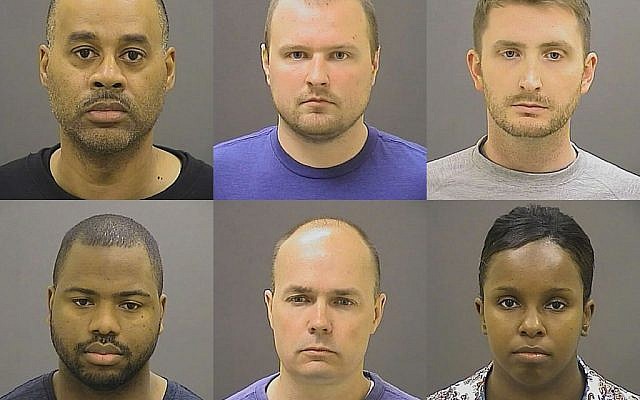
first-degree murder and the six police officers connected to the death
of Freddie Gray in Baltimore are all facing multiple criminal charges,
the most serious of which was one count of second-degree depraved heart
murder.
Officers in other high-profile cases such as the deaths
of Michael Brown in Missouri and Eric Garner in New York City were not
charged, and the decision whether or not to charge the officers who
fatally shot Tamir Rice in Cleveland has not yet been determined.
That's What You Get for Filming the Police
Thursday, 07 May 2015
by Sam Adler-Bell
Truthout | News Analysis
A
man walks past the site of Walter Scott’s death in North Charleston,
S.C., April 8, 2015. Feidin Santana - who filmed the video that led to
the arrest of Officer Michael Slager for killing Walter Scott - says he
initially considered deleting the footage and leaving town for fear of
retaliation from the police. (Gabriella Demczuk/The New York Times)
One evening in September 2014, John Prince heard a scream through his window.
He
went outside. On the sidewalk in front of his home, a first-floor
apartment on Elmwood Avenue in Providence, Rhode Island, two male
plainclothes police officers were aggressively questioning a pair of
young women.
"The cops were being really rude," Prince said,
"asking intimidating questions like, 'What's in your handbag?' and
'Where are you coming from?'"
They ordered the women to sit on
the curb. Prince says he saw one of the officers put his hands inside
the waistband of one of the women's sweatpants.
"You're not
supposed to do that," Prince called to the officer. The officer turned,
told him to mind his own business and shove off.
"There is a widespread, continuing pattern of police ordering people to stop taking photos or video in public places."
But
John Prince, who's lived in Providence for 45 years, did not shove off.
He's a Black community organizer with Direct Action for Rights and
Equality (DARE). (Note: The author has volunteered at DARE, where he met
Prince a few years ago.) He and his neighbors have fought for decades
to confront a criminal legal system that, in his words, "treats people
of color as if they've always already done something wrong."
Instead
of "shoving off," Prince did what more and more people in heavily
policed communities are doing when they witness what looks like police
misconduct. He went inside, got his cell phone and came back out
filming.
"Why are you doing that?" one officer asked, angry now.
"I
don't like the way you're treating those women," Prince said. The cop
told Prince that he and his fellow officers were undercover and
instructed Prince to stop recording. Prince insisted that he had a right
to film them. The officer demanded Prince's identification.
"Why do you want it?" Prince asked.
"I want to know who's filming me," said the cop. Prince knew he didn't have to show the cop his ID. He refused.
As
they argued, another officer arrived on the scene. Seeing that Prince
was wearing a Barack Obama hat, the third cop called out, "Hey, Obama!"
The joke did not lighten the mood.
The first officer asked for
Prince's ID again, more forcefully. At that moment, Prince felt a prick
of fear. He took a few steps back.
As he did so, the commanding
officer yelled, "Get that phone!" and the two others cops leaped over
the fence between the sidewalk and the yard, charging at Prince. He
turned and ran toward his house.
According to Prince, the cops
caught up to him in the entranceway. One of them slammed him against the
wall, badly injuring his neck. As he reached for the doorway to his
apartment, one or two of the cops tackled him. His pants fell below his
knees as they pushed his face against the ground. Someone grabbed the
phone from his hand.
The real problem is not the law, but cops' willingness - and apparent license - to ignore it.
In
their statements to internal affairs, the officers admit to jumping the
fence and chasing Prince. They don't say what they intended to do if
they caught him. The police claim that Prince tripped up the stairs to
his house and fell into the entranceway. Detectives Francisco Guerra and
Louis Gianfrancesco, the officers giving chase, say they stopped at the
threshold of the building and turned around. Gianfrancesco says he
found Prince's phone on the steps and placed it on the trunk of Guerra's
car. They deny tampering with it.
However, Lisa Reels, who was
inside Prince's apartment when all this happened, says she heard the
officers tackling Prince. When she came out to see what was happening,
Prince was on the floor with his pants around his ankles. The cops were
out the door.
Determined to find his phone - and the video -
Prince went back outside. There, he says he saw one of the cops delete
the video and throw his phone into the bushes.
"That's what you get for interfering with police business," another cop said.
***
Reporters
speak of an "epidemic" of police violence in Black communities. But
there isn't one, at least not in the dictionary sense of a disease that
breaks out at a particular time. What we have is an old, deadly sickness
suddenly subject to an unprecedented degree of exposure. The idea of a
sudden "outbreak" of police violence - beginning with the killing of
Michael Brown in 2014 or Ramarley Graham in 2012 or Oscar Grant in 2009 -
mistakes the moment many White Americans were forced to start paying
attention to this crisis for the moment it emerged.
Police
violence isn't new - nor is the impunity with which it's treated by the
legal system - but the current level of public concern over its
prevalence is. And individual acts of filming the police have played a
big role in that change.
"There's some newfound awareness because
of social media and video cameras," said President Obama on April 28,
in his characteristically cautious tone, "that there are problems and
challenges when it comes to how policing and our laws are applied in
certain communities, and we have to pay attention to it and respond."
The
protests in Baltimore were fueled, in part, by video captured by a
bystander of cops dragging a handcuffed Freddie Gray into their police
van. The 25-year-old can be heard screaming in pain. He was unresponsive
when they arrived at the station and died a week later.
"There's no incentive for the cops not to fuck with us in the first place."
Walter
Scott Sr., whose son was shot in the back by Officer Michael Slager in
North Charleston, South Carolina, weeks earlier, said, "I fell to my
feet and my heart was broken," when he first saw footage of his son's
death. But he "thanked God" that someone took the video. Without it, the
real circumstances of his son's death, he said, "would never have come
to light. They would have swept it under the rug, like they did so many
others."
William Murphy, Freddie Gray's family's lawyer, echoed
that sentiment on April 27. "Thank God for cellphone video cameras," he
said, "because now the truth is finally coming out. And it's ugly."
For
decades, said American Civil Liberties Union (ACLU) senior policy
analyst Jay Stanley, "It's been the word of uniformed police officers
against the word of accused criminals - who are usually poor, Black or
other minorities. Judges, prosecutors and the public have historically
taken the side of the police." But videos - usually captured by
camera-equipped cell phones - are beginning to change that. "There's a
shift," Stanley added, "in what people are willing to believe."
***
Largely
unaddressed in the mainstream celebration of video as a bulwark against
police brutality, however, is how the act of pointing a camera at a cop
is sometimes itself met with brutality - especially when, as in John
Prince's case, the person behind the camera is Black.
Prince's
story is a familiar one to Aidge Patterson, who coordinates a Cop Watch
program for People's Justice in New York City, training individuals and
organizing groups of residents to patrol their neighborhoods and record
police encounters.
"When we roll out as a team, it's rare we
observe any police violence. It usually puts them on their best behavior
to see us in our matching shirts, disciplined and organized," Patterson
told Truthout.
And that's the point. "The priority is to deter anything from happening in the first place," he added.
But
that's not always how it works when residents film the police by
themselves. Individual cop watchers often get arrested and charged with
minor offenses - disorderly conduct, obstruction of justice or
trespassing. "It's intimidation," Patterson said. "They know folks don't
want to go to jail, even if they'll beat the charge later."
"The public servant should be subject to the public eye. Private individuals should be able to maintain our privacy."
The
website "Photography Is Not a Crime" collects and maintains an archive
of police brutality videos, many of which show cops harassing the person
wielding the camera. In a recent video from Vineland, New Jersey, cops
can be seen siccing a police dog on 32-year-old Phillip White, who had
already been beaten and appears to be subdued. One officer then
approaches the person with the camera and says, "Did you see what
happened here? All of it? Okay, I'm going to need your information, and
I'm going to take your phone." Phillip White died from injuries he
sustained during the encounter.
Ramsey Orta - who filmed New York
City Police Department (NYPD) Officer Daniel Pantaleo choking Eric
Garner to death - has been arrested twice since Garner's murder in July
2014. His mother, brother and wife have all been arrested as well.
Orta's aunt, Lisa Mercado, told Democracy Now! that after Garner's
death, police cruisers regularly drove by their house in the middle of
the night, shining floodlights through their windows. Orta was released
from Rikers in April, after prosecutors withdrew a challenge that would
have blocked him from posting bail with money raised by supporters
online. He believes he and his family have been targeted by the NYPD as
retaliation for filming Garner's murder.
And Feidin Santana - who
filmed the video that led to the arrest of Officer Michael Slager for
killing Walter Scott - says he initially considered deleting the footage
and leaving town for fear of retaliation from the police. "The first
thing he said to me ... was, how can I get protection," Santana's lawyer
told NBC News. "What does he do when the people that are supposed to
protect us are the ones that are turned against us?"
***
Their
fears are well founded. Jay Stanley of the ACLU said, "There is a
widespread, continuing pattern of law enforcement officers ordering
people to stop taking photographs or video in public places and
harassing, detaining and arresting those who fail to comply." The ACLU
has helped people sue departments in Boston, Portland, Philadelphia and
other cities for violating their right to film police.
Stanley
says the law itself is "crystal clear": You have a constitutionally
protected right to film the police in public as long as you don't
interfere with their activities. The US Justice Department agrees. As
they wrote in a 2012 statement of interest:
The right to record
police officers while performing duties in a public place, as well as
the right to be protected from the warrantless seizure and destruction
of those recordings, are not only required by the Constitution. They are
consistent with our fundamental notions of liberty, promote the
accountability of our governmental officers, and instill public
confidence in the police officers who serve us daily.
Although
only four federal courts have explicitly recognized a constitutional
right to film police, legal scholars tend to agree with the Justice
Department that recording a police encounter is protected under the
First Amendment. "Speech about how public officials are conducting their
duties lies at the core of the First Amendment's protections," said
Evan Bernick and Paul Larkin of the conservative Heritage Foundation,
"and filming should therefore be given a wide berth."
The real problem, Stanley suggests, is not the law, but cops' willingness - and apparent license - to ignore it.
Aidge
Patterson agrees. "The law and the rights people are supposed to have
are different from the realities of how things play out. When the cops
arrest our people for filming, they get off. But they still get
arrested, still get thrown in jail. There's no incentive for the cops
not to fuck with us in the first place."
This problem - that cops
rarely face any serious consequences for interfering with a civilian's
right to film - is one legislators in Colorado are trying to address
with a new bill, part of what has been dubbed the "Rebuilding Trust"
package of police reform laws moving through their state legislature.
"If it weren't for people like Ramsey Orta, nobody would know Eric Garner's name."
The
bill would create a "private right of action" for Coloradans to sue
police for $15,000 in civil damages when an officer interferes with them
lawfully filming a police encounter, or when an officer destroys or
seizes a recording without consent or a court order. The bill's sponsor,
Rep. Joe Salazar of Thornton, said the bill is a response to reports of
Colorado police forcing citizens to give up their cameras, which
Salazar, a civil rights lawyer, says is "unacceptable conduct."
Denis
Maes, a public policy director of the Colorado ACLU who testified in
support of the bill, said its penalties are designed to "get the police
departments to pay attention and train police about what they are and
aren't allowed to do."
The bill has received some pushback from
local police and prosecutors, who say it's unnecessarily punitive. Anne
Marie Jensen, a lobbyist for the Colorado Association of Chiefs of
Police, said the union "does not believe that the people who put their
lives at risk every day should have different standards of liability
than anyone else in government."
Tom Raynes of the Colorado
District Attorneys' Council agreed that officers need to be better
trained, but insisted that "accountability through lawsuits is a pretty
cynical approach to getting this done."
Maes, who served in the
Obama administration before joining the ACLU, sees some irony here.
"It's always in the name of law enforcement that we, the public, are
subject to rampant surveillance, but somehow when the surveillance
shifts to us watching law enforcement, there's an immediate, 'Hey wait a
minute, not cool.'"
She says today's surveillance paradigm needs
to be flipped. "The public servant should be subject to the public eye.
Whereas, we private individuals should be able to maintain our
privacy."
***
A few days after his assault, John Prince
filed a complaint with the Providence Police Department's Internal
Affairs Bureau, at the insistence of an acquaintance in the department.
Neither of the women the police detained that night were arrested. They
elected not to file their own complaints.
A series of hearings
followed in November, and in early April, Prince and his lawyer were
informed that two of the three officers named in his complaint were
found guilty of violating departmental policies. Sgt. Roger Aspinall -
who ordered the others to seize Prince's phone - received a one-day,
unpaid suspension, a disciplinary letter and mandatory retraining.
Francisco Guerra - one of the officers who chased Prince - also got a
letter and retraining, but no suspension. Louis Gianfrancesco, the
officer who called Prince "Obama," was not found guilty, but will also
undergo retraining.
The department was evasive, however, about the reasoning behind these penalties.
Providence
Police Department spokeswoman Lindsay Lague told Truthout that because
of the "Police Officer's Bill of Rights," she could not confirm the
names of the disciplined officers. She admitted that Prince "was chased
by an officer in the hallway," and that the "supervisory officer on
scene who gave the orders to do so was appropriately disciplined."
However,
she said, "It has not been confirmed if an officer did delete the video
off of Prince's phone that evening," and neither Prince's injuries nor
the tackling allegations were acknowledged by the Internal Affairs
Bureau.
It seems worth noting that "he tripped and fell" is
something of a go-to explanation for cops accused of brutality. Indeed,
former NYPD Detective Bo Dietl recently offered it as a possible
explanation for Freddie Gray's severed spinal cord on Fox News.
The
internal affairs process doesn't address whether the police department
bears any fault for the violations. However, on October 3, 2014, just
two weeks after Prince filed his complaint, the department posted a new
"community relations" general order stating:
It is the policy of
the Providence Police Department to recognize that members of the public
have the right to record police officers in public places as long as
the actions of those recording do not interfere with the officer's
official duties or with the safety of officers or others.
Lague says this policy was already in development when the incident happened.
Prince says the punishments meted out by internal affairs are not enough.
"One
day without pay. Retraining. Some kind of ceremony where they sit
around in a circle and talk about what they did - it's not enough," he
said. "These men ran up in my house, tackled me, took my phone, deleted
shit from it and told me 'that's what you get.'"
If Prince's
account is true, the officers may be guilty of First and Fourth
Amendment rights violations. An Albuquerque officer was charged with
felony evidence tampering for deleting a cellphone video of alleged
police misconduct. The City of Baltimore settled a civil suit over a
deleted video for $250,000.
"They treated me like I didn't matter," Prince said, "and all they got was a slap on the wrist."
***
Video
will not solve the problem of police violence. Nor can it ensure that
victims get "justice" - whatever form that may take. Video may have
helped inspire massive demonstrations in Baltimore, but it remains to be
seen whether charges filed on May 1 against the six Baltimore police
officers who arrested Freddie Gray will stick in court.
And yet,
as Aidge Patterson says, "If it weren't for people like Ramsey Orta,
nobody would know Eric Garner's name." The same can be said for Walter
Scott, for Oscar Grant, for Rodney King.
When you film cops, you
take away some of their control over the narrative. As Jay Stanley
recently said, "Photography is a form of power, and people are loath to
give up power, including police officers."
Cameras - particularly
those wielded by regular people and not cops - have helped to address
what has always been among the greatest impediments to combating police
brutality in the United States: the unwillingness of the criminal legal
system to acknowledge Black suffering or believe a story of Black
victimhood.
It's yet another cruelty of White supremacy that a
movement as beautiful and humane as Black Lives Matter must trade in
images of brutalized Black bodies in order to legitimize its grievances
in the face of White incredulity. It should not be so. But for now, it
is.
Thus, we need to make sure people are safe to film the police
in their neighborhoods without being harassed, arrested or assaulted.
We need more bills like the one in Colorado - which has been sent to
Gov. John Hickenlooper's desk - and more severe penalties for cops like
Aspinall, Guerra and Gianfrancesco.
Filming cops, Patterson says, is not only about accountability. "It's also about empowering communities to protect themselves.
"We
see it as an act of love," he added, "a way of showing up and letting
people know, 'Look, I care about you, and I'm here to try and make sure
you go home safe tonight.'"
Copyright, Truthout. May not be reprinted without permission.
Sam Adler-Bell
Sam
Adler-Bell is a New York-based writer. He researches privacy and
surveillance issues at the The Century Foundation. Follow him on Twitter
@SamAdlerBell.
Related Stories:
Police Departments Retaliate Against Organized "Cop Watch" Groups Across the US
By Candice Bernd, Truthout | Report
Film the Police!
By Lucy McKeon, Dissent | Op-Ed
Texas Wants to Outlaw Filming the Police
By Kevin Mathews, Care2 | Report
WASHINGTON
— The Justice Department will investigate whether the Baltimore Police
Department engaged in a pattern of unconstitutional policing, law
enforcement officials said on Thursday, a day after the mayor asked for
an inquiry.
The request by Mayor Stephanie Rawlings-Blake came
days after the state’s attorney for Baltimore filed criminal charges
against six officers involved in the arrest of Freddie Gray, who died
April 19 after being injured while in police custody. His death set off
large demonstrations, arson and looting.
At a policing conference
earlier on Thursday, the Baltimore police commissioner, Anthony W.
Batts, said he did not object to an outside investigation, adding that
he was committed to reforming the Police Department. He said he
recognized that Baltimore residents did not trust the city to make
changes voluntarily.
“I am willing to do anything it takes to win that trust back,” he said. “If it’s D.O.J., whatever it takes.”
RELATED COVERAGE:
Mayor Stephanie Rawlings-Blake said Wednesday that “I’m willing to do what it takes to reform my department.”
Baltimore Mayor, After Freddie Gray Death, Seeks Justice Dept. Police Inquiry
MAY 6, 2015
A frame grab from video showing Freddie Gray being put into a police van during his arrest on April 12.
6 Baltimore Police Officers Charged in Freddie Gray Death
MAY 1, 2015
Protesters
said the unrest set off by Mr. Gray’s death was the culmination of
years of police mistreatment. The turmoil has dominated Attorney General
Loretta E. Lynch’s first days in office.
“The situation in
Baltimore involves a core responsibility of the Department of Justice —
not only to combat illegal conduct when it occurs, but to help prevent
the circumstances that give rise to it in the first place,” Ms. Lynch
said on Capitol Hill on Thursday.
There was no immediate reaction
from Ms. Rawlings-Blake. Earlier Thursday, the mayor convened business,
religious and philanthropic leaders at the intersection of West North
and Pennsylvania Avenues, near a CVS store that was looted and burned in
last week’s riots, to announce a public-private partnership to improve
areas devastated by the unrest. She called it a “once-in-a-generation
effort to tackle inequality.”
Ms. Lynch, who took office a week
after Mr. Gray died, was in Baltimore this week to meet with community,
religious and political leaders about whether to conduct a “pattern or
practice” review, which would look into whether police officers used
excessive force, carried out street stops based on race or arrested
people without probable cause.
Representative Elijah E. Cummings,
a Democrat who represents Baltimore — and who lives four blocks from
the CVS that was burned — said there was uniform agreement.
“She
asked them, ‘How many of you all think we should have a patterns and
practices review investigation?’ ” Mr. Cummings recalled in an interview
Thursday. “If I remember correctly, all of them raised their hands;
there were about 40 of them. And I raised mine too.”
Mr. Cummings
said that even before that meeting, he and other members of Congress
from Maryland had a conference call with Ms. Lynch shortly after she
took office in which he asked for such a review.
The decision by
the Justice Department was welcome news to civil rights advocates who
had been pressing for a review for a long time. “A range of people and
organizations have been asking for this for years,” said Sonia Kumar, a
staff attorney with the American Civil Liberties Union of Maryland, “but
really, I think those calls became louder and more forceful in the wake
of the death of Freddie Gray.”
Civil rights investigations often
end with court settlements and independent oversight of police
departments. They can be powerful agents of change, but they are not
immediate, and the Baltimore investigation could take a year or more. A
similar investigation into the Police Department in Ferguson, Mo., took
seven months, an extraordinarily fast timeline for such cases.
Mr.
Batts and the mayor had already asked the Justice Department’s
community-policing experts to conduct a voluntary review of the
department. The preliminary results of that review will most likely be
released in the coming weeks and are expected to recommend changes to
training and use-of-force policies. Those recommendations would not be
binding, but Mr. Batts said he planned to work with the
community-policing experts to make changes to the department regardless
of what civil rights investigators did.
A version of this
article appears in print on May 8, 2015, on page A14 of the New York
edition with the headline: Justice Dept. Will Examine Baltimore’s Police
Patterns.
U.S.
Inquiry to Examine Racial Bias in the San Francisco Police
By TIMOTHY WILLIAMS
MAY 7, 2015
New York Times
Greg
Suhr, the city’s police chief, moved in April to fire seven officers who
sent racist messages. Credit Carlos Avila Gonzalez/San Francisco
Chronicle
The
case began when racist and homophobic text messages between 14 officers
were found and will be broadened to determine if systemic bias exists
within the San Francisco Police Department...nytimes.com
First
came disclosures of racist and homophobic text messages exchanged by
officers of the San Francisco Police Department. That was followed by
the discovery that sheriff’s deputies had been gambling on forced
fighting matches between inmates at a city jail.
Then on
Thursday, the San Francisco district attorney announced that he was
expanding the investigation of the city’s police and sheriff’s
departments to examine whether those agencies have a deep-seated culture
of systemic bias that has led to unlawful arrests or prosecutions.
In
a year in which many of the nation’s major cities have been rocked by
protests after the fatal police shootings of unarmed African-Americans,
the broadened inquiry made clear that even a city known for its liberal
politics can be buffeted by accusations that its officers behaved in a
racially biased manner.
Related Coverage:
Justice Department Will Investigate Baltimore Police Practices
MAY 7, 2015
A Baltimore police officer outside the Western District police station in April.
News Analysis: Police Struggle With Loss of Privileged Position
MAY 5, 2015
Lt.
Sekou Millington of the Oakland Police Department trained with a video
simulation. He used his Taser to respond to a scenario where a woman
stepped away from a man who was holding a large knife.
Police Rethink Long Tradition on Using Force
MAY 4, 2015
Officers Facing Charges Find Themselves on an Unfamiliar Side of the Law
MAY 1, 2015
Demonstrators marched in Baltimore on Thursday in protest of the death of Freddie Gray.
Police Killings Rise Slightly, Though Increased Focus May Suggest Otherwise
APRIL 30, 2015
African-Americans
in San Francisco have complained for years about harassment and the use
of excessive force by the police. And while African-Americans make up
about 5 percent of the city’s population, they account for half of its
arrests and jail inmates, and more than 60 percent of the children in
juvenile detention, according to city statistics.
In Baltimore on
Wednesday, Mayor Stephanie Rawlings-Blake acknowledged a “fractured
relationship between the police and the community” in her predominantly
black city and asked the Justice Department to conduct a civil rights
investigation of the Police Department to determine whether officers had
engaged in unconstitutional patterns of abuse or discrimination.
At
a news conference in San Francisco announcing the expanded inquiry, the
district attorney, George Gascón, acknowledged that the racist text
messages had particularly undermined public confidence in both his
office and the local criminal justice system.
He also said he
believed that the city’s tradition of inclusiveness would allow it to
avoid the tumult in Ferguson, Mo., and other cities where racial bias
has been found to have played a role in the actions of police officers.
“In
the last few months, we have seen city after city where police use of
force or other police activity is coming to the light and indicating
that racial animosity and other types of biases play a significant
role,” he said. “I think at one point we felt we would be immune from
that type of activity.”
Concerns that the San Francisco Police
Department may be rife with racial bias were reignited in March when
racially inflammatory text messages sent between 14 police officers
became public as part of the federal corruption trial of two San
Francisco officers.
Mr. Gascón, a former San Francisco police
chief, said Thursday that a task force of prosecutors had already been
scrutinizing some 3,000 cases — including about 1,600 convictions —
related to contacts or arrests made by the 14 police officers during the
last decade to determine if biases had led to any unlawful arrests or
wrongful prosecutions.
The investigation by the panel, which will
add three former judges as investigators, will now be broadened to
include an examination of whether entrenched biases exist in the
2,000-member department.
“If just one individual was wrongly
imprisoned because of bias on the part of these officers, that’s one too
many,” Mr. Gascón said. “What is the potential impact in our justice
system when a juror in a criminal trial questions the credibility of the
arresting officer on the evidence that is being presented because they
believe that this process may have been influenced by racial or
homophobic bias? Can justice prevail under such conditions? Probably
not.”
The text messages the officers exchanged discussed lynching
African-Americans and proposing that African-Americans “should be
spayed.” One text read “White Power.” Some referred to African-Americans
using a racial slur.
Other texts contained denigrating comments
about gays, Mexicans and Filipinos, who make up a significant number of
residents in one of the nation’s most culturally diverse cities.
Interactive Graphic: The Race Gap in America’s Police Departments
In
recent months, there have also been a number of cellphone videos posted
online of San Francisco police officers apparently mistreating citizens
— many of them African-American — including one in which an officer
nearly tipped a disabled man out of his wheelchair onto the street.
“Shame,
shame, shame on San Francisco,” Rev. Amos C. Brown, president of the
San Francisco office of the N.A.A.C.P., said at the news conference. “We
cannot claim with integrity and honesty that we are first-class,
inclusive, loving.”
Greg Suhr, the police chief, had no immediate
comment Thursday, but he has moved to fire seven officers who sent and
received the racist text messages. An eighth officer has resigned.
“We
have cooperated with the district attorney and handed them the
requested documents so they could conduct their audit,” the police
department said in a statement. “The D.A. has to review the cases and
it’s their responsibility to determine if there is any bias in those
cases.”
In addition to the text messages, the task force is also
investigating gladiator-style fights among San Francisco jail inmates
that the city’s public defender, Jeff Adachi, has said were arranged by
sheriff’s deputies. The jail guards, according to a report by Mr.
Adachi, bet on the fights and threatened inmates with violence or
withheld food if they did not take part.
A third area being
examined is the possibility that hundreds of convictions in criminal
cases may have been compromised by analysts at the police laboratory who
appear to have improperly handled DNA samples.
The broadening of
the panel’s focus was met with relief by residents who have long
questioned police behavior and arrests made in Bayview-Hunters Point and
other African-American neighborhoods.
“Fighting for civil rights
is really part of the San Francisco culture and legacy and so it only
makes sense that we move forward on this,” said Malia Cohen, a member of
the city’s Board of Supervisors who has urged a similar inquiry in the
past.
The text messages were disclosed in March as part of a
federal corruption case against Ian Furminger, the former sergeant who
sent many of the messages.
Mr. Furminger, a 20-year veteran
convicted in December 2014 of stealing money and property from suspects,
has been sentenced to 41 months in prison. As part of the case,
prosecutors revealed that he had sent and received a number of the text
messages.
The expanded district attorney’s task force will now
include Cruz Reynoso, a former California Supreme Court justice; Dickran
Tevrizian, a retired federal court judge; and LaDoris Cordell, a former
Superior Court judge, who was once a vice provost at Stanford
University. The panel is expected to conclude the investigation by the
end of the year, officials said.
A version of this article
appears in print on May 8, 2015, on page A13 of the New York edition
with the headline: Inquiry to Examine the Extent of Racial Bias in the
San Francisco Police.