http://www.nytimes.com/2013/12/25/arts/music/yusef-lateef-innovative-jazz-saxophonist-and-flutist-dies-at-93.html?_r=0
Yusef Lateef, Innovative Jazz Saxophonist and Flutist, Dies at 93
Yusef Lateef, Innovative Jazz Saxophonist and Flutist, Dies at 93

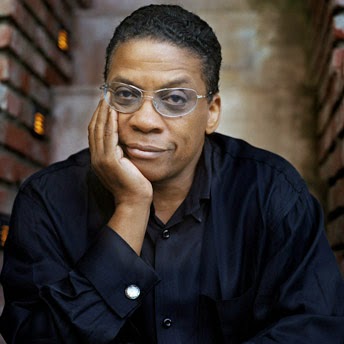
Yusef Lateef in April. He sought inspriation well beyond the Western Hemisphere and anticipated cross-cultural fusions. Alan Nahigian
By PETER KEEPNEWS
December 24, 2013
New York Times
Yusef Lateef, a jazz saxophonist and flutist who spent his career crossing musical boundaries, died on Monday at his home in Shutesbury, Mass., near Amherst. He was 93.
His death was announced on his website.
Mr. Lateef started out as a tenor saxophonist with a big tone and a bluesy style, not significantly more or less talented than numerous other saxophonists in the crowded jazz scene of the 1940s. He served a conventional jazz apprenticeship, working in the bands of Lucky Millinder, Dizzy Gillespie and others. But by the time he made his first records as a leader, in 1957, he had begun establishing a reputation as a decidedly unconventional musician.
He began expanding his instrumental palette by doubling on flute, by no means a common jazz instrument in those years. He later added oboe, bassoon and non-Western wind instruments like the shehnai and arghul. “My attempts to experiment with new instruments grew out of the monotony of hearing the same old sounds played by the same old horns,” he once told DownBeat magazine. “When I looked into those other cultures, I found that good instruments existed there.”
Those experiments led to an embrace of new influences. At a time when jazz musicians in the United States rarely sought inspiration any farther geographically than Latin America, Mr. Lateef looked well beyond the Western Hemisphere. Anticipating the cross-cultural fusions of later decades, he flavored his music with scales, drones and percussion effects borrowed from Asia and the Middle East. He played world music before world music had a name.
In later years he incorporated elements of contemporary concert music and composed symphonic and chamber works. African influences became more noticeable in his music when he spent four years studying and teaching in Nigeria in the early 1980s.
Mr. Lateef professed to find the word “jazz” limiting and degrading; he preferred “autophysiopsychic music,” a term he invented. He further distanced himself from the jazz mainstream in 1980 when he declared that he would no longer perform any place where alcohol was served. “Too much blood, sweat and tears have been spilled creating this music to play it where people are smoking, drinking and talking,” he explained to The Boston Globe in 1999.
Still, with its emphasis on melodic improvisation and rhythmic immediacy, his music was always recognizably jazz at its core. And as far afield as his music might roam, his repertoire usually included at least a few Tin Pan Alley standards and, especially, plenty of blues.
He was born on Oct. 9, 1920, in Chattanooga, Tenn. Many sources give his birth name as William Evans, the name under which he performed and recorded before converting to Islam in the late 1940s (he belonged to the reformist Ahmadiyya Muslim Community) and changing his name to Yusef Abdul Lateef. But according to Mr. Lateef’s website, he was born William Emanuel Huddleston.
When he was 5 his family moved to Detroit, where he went on to study saxophone at Miller High School. After spending most of the 1940s on the road as a sideman with various big bands, he returned to Detroit in 1950 to care for his ailing wife and ended up staying for a decade.
While in Detroit he became a popular and respected fixture on the local nightclub scene and a mentor to younger musicians. He also resumed his studies, taking courses in flute and composition at Wayne State University and later studying oboe as well.
In the later part of the decade he began traveling regularly from Detroit to the East Coast with his working band to record for the Savoy and Prestige labels. By 1960 he had settled in New York, where he worked with Charles Mingus, Cannonball Adderley and the Nigerian percussionist Babatunde Olatunji before forming his own quartet in 1964.
He was soon a bona fide jazz star, with successful albums on the Impulse and Atlantic labels and a busy touring schedule. But he also remained a student, and he eventually became a teacher as well.
He received a bachelor’s and a master’s degree from the Manhattan School of Music, and taught both there and at Borough of Manhattan Community College in the 1970s. He earned a doctorate in education from the University of Massachusetts, Amherst, in 1975 (his dissertation: “An Overview of Western and Islamic Education”) and later taught there and elsewhere in New England.
The more he studied, the more ambitious Mr. Lateef grew as a composer. He recorded his seven-movement “Symphonic Blues Suite” in 1970 and his “African-American Epic Suite,” a four-part work for quintet and orchestra, two decades later. His album “Yusef Lateef’s Little Symphony,” on which he played all the instruments via overdubbing, won a Grammy Award in 1988, though not in any of the jazz or classical categories; it was named best New Age performance. Mr. Lateef said at the time that, while he was grateful for the award, he didn’t know what New Age music was.
In 2010 he was named a Jazz Master by the National Endowment for the Arts.
Mr. Lateef is survived by his wife, Ayesha; a son, Yusef; a granddaughter; and several great-grandchildren. His first wife, Tahira, died before him, as did a son and a daughter.
His creative output was not limited to music. He painted, wrote poetry and published several books of fiction. He also ran his own record company, YAL, which he established in 1992.
He remained musically active until a few months before his death. In April he appeared at Roulette in Brooklyn in a program titled “Yusef Lateef: Celebrating 75 Years of Music,” performing with the percussionist Adam Rudolph and presenting the premieres of two works, one for string quartet and the other for piano.
Yusef Lateef
From Wikipedia, the free encyclopedia
Background information
Birth name William Emanuel Huddleston
Also known as Yusef Lateef
Born October 9, 1920
Chattanooga, Tennessee
United States
Died December 23, 2013 (aged 93)
Shutesbury, Massachusetts
United States
Genres New Age music, jazz, post-bop, jazz fusion, swing, hard bop, third stream, autophysiopsychic music, world music
Occupations Musician, composer, educator, spokesman, author
Instruments Tenor saxophone, flute, oboe, bassoon, bamboo flute, shehnai, shofar, arghul, koto
Years active 1957 – 2013
Labels Savoy, Prestige, Verve, Riverside, Impulse, Atlantic, CTI, YAL Records
Associated acts Cannonball Adderley, Elvin Jones, Adam Rudolph, Dizzy Gillespie, Curtis Fuller, Grant Green, Donald Byrd, Art Farmer
Website www.yuseflateef.com
Yusef Abdul Lateef (born William Emanuel Huddleston, October 9, 1920 – December 23, 2013) was an American jazz multi-instrumentalist, composer and educator for the Ahmadiyya Muslim Community after his conversion to the Ahmadiyya sect of Islam in 1950.
Although Lateef's main instruments were the tenor saxophone and flute, he also played oboe and bassoon, both rare in jazz, and also used a number of non-western instruments such as the bamboo flute, shanai, shofar, xun, arghul and koto. He is known for having been an innovator in the blending of jazz with "Eastern" music.[1]
Peter Keepnews, in his New York Times obituary of Lateef, wrote that the musician "played world music before world music had a name."[2]
From Wikipedia, the free encyclopedia
Background information
Birth name William Emanuel Huddleston
Also known as Yusef Lateef
Born October 9, 1920
Chattanooga, Tennessee
United States
Died December 23, 2013 (aged 93)
Shutesbury, Massachusetts
United States
Genres New Age music, jazz, post-bop, jazz fusion, swing, hard bop, third stream, autophysiopsychic music, world music
Occupations Musician, composer, educator, spokesman, author
Instruments Tenor saxophone, flute, oboe, bassoon, bamboo flute, shehnai, shofar, arghul, koto
Years active 1957 – 2013
Labels Savoy, Prestige, Verve, Riverside, Impulse, Atlantic, CTI, YAL Records
Associated acts Cannonball Adderley, Elvin Jones, Adam Rudolph, Dizzy Gillespie, Curtis Fuller, Grant Green, Donald Byrd, Art Farmer
Website www.yuseflateef.com
Yusef Abdul Lateef (born William Emanuel Huddleston, October 9, 1920 – December 23, 2013) was an American jazz multi-instrumentalist, composer and educator for the Ahmadiyya Muslim Community after his conversion to the Ahmadiyya sect of Islam in 1950.
Although Lateef's main instruments were the tenor saxophone and flute, he also played oboe and bassoon, both rare in jazz, and also used a number of non-western instruments such as the bamboo flute, shanai, shofar, xun, arghul and koto. He is known for having been an innovator in the blending of jazz with "Eastern" music.[1]
Peter Keepnews, in his New York Times obituary of Lateef, wrote that the musician "played world music before world music had a name."[2]

Lateef performing in 2007 at the Detroit Jazz Festival
Contents
1 Biography
1.1 Early life and career
1.2 Prominence
1.3 Later career
2 Educator
3 Awards and honors
4 Discography
4.1 As leader
4.2 As sideman
5 References
6 External links
Biography[edit]
Early life and career
Lateef was born in Chattanooga, Tennessee. His family moved, in 1923, to Lorain, Ohio and again in 1925, to Detroit, Michigan, where his father changed the family's name to "Evans".
Throughout his early life Lateef came into contact with many Detroit-based jazz musicians who went on to gain prominence, including vibraphonist Milt Jackson, bassist Paul Chambers, drummer Elvin Jones and guitarist Kenny Burrell. Lateef was a proficient saxophonist by the time of his graduation from high school at the age of 18, when he launched his professional career and began touring with a number of swing bands.
In 1949, he was invited by Dizzy Gillespie to tour with his orchestra. In 1950, Lateef returned to Detroit and began his studies in composition and flute at Wayne State University. It was during this period that he converted to Islam as a member of the Ahmadiyya Muslim Community.[3]
Prominence
Lateef began recording as a leader in 1957 for Savoy Records, a non-exclusive association which continued until 1959; the earliest of Lateef's album's for the Prestige subsidiary New Jazz overlap with them. Musicians such as Wilbur Harden (trumpet, flugelhorn), bassist Herman Wright, drummer Frank Gant, and pianist Hugh Lawson were among his collaborators during this period.
By 1961, with the recording of Into Something and Eastern Sounds, Lateef's dominant presence within a group context had emerged. His 'Eastern' influences are clearly audible in all of these recordings, with spots for instruments like the rahab, shanai, arghul, koto and a collection of Chinese wooden flutes and bells along with his tenor and flute. Even his use of the western oboe sounds exotic in this context; it is not a standard jazz instrument. Indeed the tunes themselves are a mixture of jazz standards, blues and film music usually performed with a piano/bass/drums rhythm section in support. Lateef made numerous contributions to other people's albums including his time as a member of saxophonist Cannonball Adderley's Quintet during 1962–64.
Lateef's sound has been claimed to have been a major influence on the saxophonist John Coltrane, whose later period free jazz recordings contain similarly 'Eastern' traits. For a time (1963–66) Lateef was signed to Coltrane's label, Impulse. He had a regular working group during this period, with trumpeter Richard Williams and Mike Nock on piano.
In the late 1960s he began to incorporate contemporary soul and gospel phrasing into his music, still with a strong blues underlay, on albums such as Detroit and Hush'n'Thunder.
Lateef expressed a dislike of the terms "jazz" and "jazz musician" as musical generalizations. As is so often the case with such generalizations, the use of these terms do understate the breadth of his sound. For example, in the 1980s, Lateef experimented with new age and spiritual elements.
Later career
His 1987 album Yusef Lateef's Little Symphony won the Grammy Award for Best New Age Album.[4][5] His core influences, however, were clearly rooted in jazz, and in his own words: "My music is jazz."[6]
In 1992, Lateef founded YAL Records, his own label for which he recorded until the end of his life. In 1993, Lateef was commissioned by the WDR Radio Orchestra Cologne to compose The African American Epic Suite, a four-part work for orchestra and quartet based on themes of slavery and disfranchisement in the United States. The piece has since been performed by the Atlanta Symphony Orchestra and the Detroit Symphony Orchestra.
Lateef died on the morning of December 23, 2013 at the age of 93 after suffering from prostate cancer.[7]
Educator
In 1960, Lateef again returned to school, studying flute at the Manhattan School of Music in New York City. He received a Bachelor's Degree in Music in 1969 and a Master's Degree in Music Education in 1970. Starting in 1971, he taught courses in autophysiopsychic music at the Manhattan School of Music, and he became an associate professor at the Borough of Manhattan Community College in 1972.
In 1975, Lateef completed his dissertation on Western and Islamic education and earned a Ed.D. in Education from the University of Massachusetts Amherst.
In the early 1980s Lateef was a Senior Research Fellow at the Center for Nigerian Cultural Studies at Ahmadu Bello University in the city of Zaria, Nigeria. Returning to the US in 1986 he took teaching positions at the University of Massachusetts and Amherst College. To the end of his life, he continued to teach at the University of Massachusetts Amherst and Hampshire College in western Massachusetts.
Lateef wrote and published a number of books including two novellas entitled A Night in the Garden of Love and Another Avenue, the short story collections Spheres and Rain Shapes, also his autobiography, The Gentle Giant, written in collaboration with Herb Boyd.[8]
Along with his record label YAL Records, Lateef owned Fana Music, a music publishing company. Lateef published his own work through Fana, which includes Yusef Lateef's Flute Book of the Blues and many of his own orchestral compositions.
Autophysiopsychic Music, Lateef's term, refers to music which comes from one's physical, mental, and spiritual self. Lateef wrote extensively on the topic and included it in his book Method To Perform Autophysiopsychic Music. In this view, it should be the goal of every musician to combine their theoretical knowledge with their life experience, and to offer to and accept knowledge from their personal source of strength, inspiration and knowledge.
Awards and honors
In 2010 he received lifetime the Jazz Master Fellowship Award from NEA, National Endowment for the Arts which is an independent federal agency.[9][5]
National Endowment for the Arts Jazz Masters is the highest honor given in Jazz established in 1982.[10]
WGBH Boston aired a special-documentary program for Lateef, titled A portrait of saxophonist Yusef Lateef in his own words and music.[11]
Manhattan School of Music, where Lateef earned a bachelor's and a master's degree, awarded him a Distinguished Alumni Award in 2012.
Discography
Lateef performing in Hamburg, 1971
As leader[edit]
Savoy 1957-1959
Jazz for the Thinker (1957)
Jazz Mood (1957)
Jazz and the Sounds of Nature (1957)
Prayer to the East (1957)
The Dreamer (1959)
The Fabric of Jazz (1959)
Impulse! 1963-1966
Jazz 'Round the World (1963)
Live at Pep's (1964)
1984 (1965)
Psychicemotus (1965)
A Flat, G Flat and C (1966)
The Golden Flute (1966)
Atlantic 1967 -1991
The Complete Yusef Lateef (1967)
The Blue Yusef Lateef (1968)
Yusef Lateef's Detroit (1969)
The Diverse Yusef Lateef (1969)
Suite 16 (1970)
The Gentle Giant (1971)
Hush 'N' Thunder (1972)
Part of the Search (1973)
10 Years Hence (1974)
The Doctor is In... and Out (1976)
Yusef Lateef's Little Symphony (1987)
Concerto for Yusef Lateef (1988)
Nocturnes (1989)
Meditations (1990)
Yusef Lateef's Encounters (1991)
YAL Records 1992-2002
Tenors of Yusef Lateef and Von Freeman (1992)
Heart Vision (1992)
Yusef Lateef Plays Ballads (1993)
Tenors of Yusef Lateef and Archie Shepp (1993)
Woodwinds (1993)
Tenors of Yusef Lateef & Ricky Ford (1994)
Yusef Lateef's Fantasia for Flute (1996)
Full Circle (1996)
CHNOPS: Gold & Soul (1997)
Earth and Sky (1997)
9 Bagatelles (1998)
Like the Dust (1998)
Live at Luckman Theater (2001)
Earriptus (2001)
So Peace (2002)
A Tribute Concert for Yusef Lateef: YAL's 10th Anniversary (2002)
Meta Records
The World at Peace (1997)
Beyond the Sky (2000)
Go: Organic Orchestra: In the Garden (2003)
Towards the Unknown (2010)
Voice Prints (2013)
Other labels
Before Dawn: The Music of Yusef Lateef (Verve, 1957)
The Sounds of Yusef (Prestige, 1957)
Other Sounds (New Jazz, 1957)
Lateef at Cranbrook (Argo, 1958)
Cry! - Tender (New Jazz, 1959)
The Three Faces of Yusef Lateef (Riverside, 1960)
The Centaur and the Phoenix (Riverside, 1960)
Lost in Sound (Charlie Parker, 1961)
Eastern Sounds (Moodsville, 1961)
Into Something (New Jazz, 1961)
Autophysiopsychic (1977, CTI Records)
In a Temple Garden (1979, CTI Records)
Yusef Lateef in Nigeria (Landmark, 1983)
Influence with Lionel and Stéphane Belmondo (2005)
Roots Run Deep (Rogue Art, 2012)
As sideman
With Cannonball Adderley
The Cannonball Adderley Sextet in New York (Riverside, 1962)
Cannonball in Europe! (Riverside, 1962)
Jazz Workshop Revisited (Riverside, 1962)
Autumn Leaves (Riverside, 1963)
Nippon Soul (Riverside, 1963)
With Nat Adderley
That's Right! (Riverside, 1960)
With Ernestine Anderson
My Kinda Swing (1960)
With Art Blakey
The African Beat (1962)
With Donald Byrd
Byrd Jazz (Transition, 1955)
First Flight (1957)
With Paul Chambers
1st Bassman (1961)
With Art Farmer
Something You Got (CTI, 1977)
With Curtis Fuller
Images of Curtis Fuller (Savoy, 1960)
Boss of the Soul-Stream Trombone (Warwick, 1960)
Gettin' It Together (1961)
With Grant Green
Grantstand (Blue Note, 1961)
With Slide Hampton
Drum Suite (1962)
With Louis Hayes
Louis Hayes featuring Yusef Lateef & Nat Adderley (1960)
With Les McCann
Invitation to Openness (1972)
With Don McLean
Homeless Brother (1973)
With Charles Mingus
Pre-Bird (aka, Mingus Revisited, 1960)
With Babatunde Olatunji
Drums of Passion (1960)
With Sonny Red
Breezing (Jazzland, 1960)
With Leon Redbone
Double Time (Warner Bros., 1976)
With Clark Terry
Color Changes (1960)
With Doug Watkins
Soulnik (New Jazz, 1960)
With Randy Weston
Uhuru Afrika (Roulette, 1960)
With Frank Wess
Jazz Is Busting Out All Over (1957)
References[
Jump up ^ Encyclopedia of Jazz Musicians – Lateef, Yusef Abdul (William Evans). Retrieved 2013-04-06.
Jump up ^ Peter Keepnews "Yusef Lateef, Innovative Jazz Saxophonist and Flutist, Dies at 93", New York Times, 24 December 2013
Jump up ^ "About Yusef Lateef". Yuseflateef.com. FANA Music/YAL Records. Retrieved December 5, 2012.
Jump up ^ Lateef Wins Grammy Award For Best New Age Album in 1987. books.google.com.br. Retrieved 2010-11-11.
^ Jump up to: a b "About Yusef Lateef". Official website. 2013. Retrieved 11 June 2013.
Jump up ^ A Fireside Chat With Yusef Lateef
Jump up ^ http://www.gazettenet.com/home/9933070-95/yusef-lateef-grammy-winning-musician-composer-dies-at-93
Jump up ^ "Yusef Lateef Comes to Grace Cathedral". Beyondchron.org. Retrieved 2010-11-11.
Jump up ^ "Lateef Being Honored With Jazz Master Fellowship Award in 2010". Arts.endow.gov. Retrieved 2010-11-10.
Jump up ^ "Jazz Master Fellowship Award Winners Through 1982–2011". Arts.endow.gov. Retrieved 2010-11-10.
Jump up ^ "A portrait of saxophonist Yusef Lateef in his Own Words And Music". wgbh.org. Retrieved 2010-11-10.
External links[edit]
www.yuseflateef.com
Yusef Lateef at AllMusic
Billboard Discography – Billboard's complete discography of Yusef Lateef
Jazz Portraits from the WGBH Archives: Yusef Lateef a radio documentary from WGBH Radio Boston
Lateef performing in 2007 at the Detroit Jazz Festival