Showing posts with label Robin D. G. Kelley. Show all posts

Sunday, May 19, 2024

Historian, Scholar, and Activist Robin D.G. Kelley On the Real Story Of What is Actually Happening and Why at UCLA In the Student Activist response to the Genocidal Israeli War in Gaza

https://www.bostonreview.net/articles/uclas-unholy-alliance/
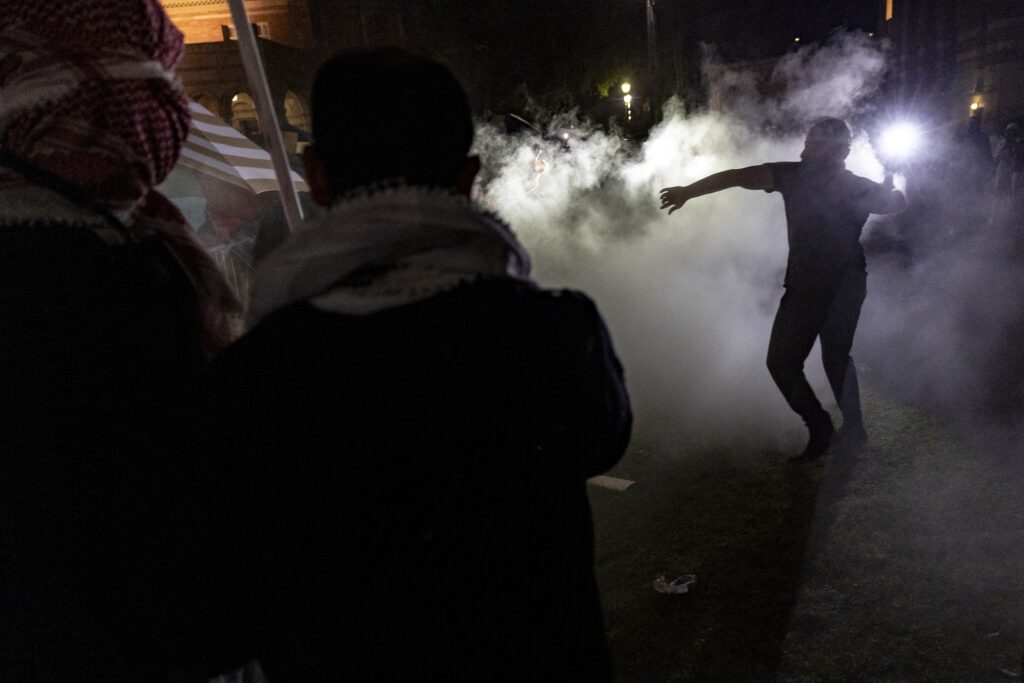
PHOTO:  Getty Images

UCLA’s Unholy Alliance

House Republicans accuse student protesters of vicious anti-Semitism, but it is administrators who are courting violence. 

In December the House Committee on Education and the Workforce held a hearing on anti-Semitism on college campuses that forced University of Pennsylvania president Liz McGill and Harvard University president Claudine Gay to resign in its wake. In April the committee held another hearing, reducing Columbia University President Minouche Shafik, keen to avoid the fate of her counterparts, to a groveling mess. On May 23 it will hold yet another, under the title “Calling for Accountability: Stopping Antisemitic College Chaos.”

This time the committee has summoned Michael Schill, president of Northwestern University; Jonathan Holloway, president of Rutgers University; and Gene Block, Chancellor of the University of California, Los Angeles. We expect another show trial, where committee chair Virginia Foxx (Republican of North Carolina), Elise Stefanik (Republican of New York), and their friends pressure “liberal” university leaders into confessing that anti-Semitism has run amok on college campuses, that Jewish students are the real victims of a Hamas-backed genocide being plotted in Gaza solidarity encampments and the classrooms of tenured radicals, and that the source of Jew hatred is critical race theory. The committee has promised that it will not sit idly by. In a press release, Foxx warned “mealy-mouthed, spineless college leaders” that “College is not a park for playacting juveniles or a battleground for radical activists. Everyone affiliated with these universities will receive a healthy dose of reality: actions have consequences.”

The House Committee hearings chose only to summon college presidents for a public tongue-lashing and dressing-down. This is because House Republicans are less interested in anti-Semitism than racking up “gotcha” soundbites for their fundraising campaigns, advancing the right-wing assault on DEI and what they define as “critical race theory,” and attacking the university as a whole. According to Inside Higher Ed, Foxx confirmed that “the inquiries could broaden to include the universities’ diversity, equity and inclusion politics.” If Foxx, Stefanik, and fellow House Republicans were genuinely concerned about anti-Semitism, they would investigate the white nationalists, neo-Nazis, and QAnon conspiracy theorists who make up part of their base and participated in the January 6 insurrection. Parroting Donald Trump, Stefanik referred to the men and women convicted on charges ranging from obstruction to assaulting a law enforcement officer as “hostages.” Foxx not only voted against certifying the 2020 election but, like Stefanik and fellow House Republicans, vehemently opposed the commission to investigate the capitol riot.

The charges Chancellor Block will face exonerate those responsible for the worst incident of anti-Semitic violence in UCLA’s history.

Unlike the January 6 hearings, Foxx’s committee has produced very little evidence of anti-Semitism outside of words and slogans either taken out of context or misinterpreted. Stefanik, for example, managed to turn “intifada,” which literally means “shaking off” or “uprising,” into “genocide of Jews.” But Chancellor Block’s testimony will be different. It will give the committee an opportunity to investigate not only a verifiable and egregious incident of anti-Semitism, but one involving white nationalists and neo-Nazis.

Between April 25 and May 2, UCLA experienced the worst episode of both anti-Semitic and anti-Palestinian/Islamophobic/racist violence in the university’s century-long history. White nationalists and neo-Nazis joined forces with Zionists (including some saying they were Israelis) to attack UCLA’s Palestine Solidarity Encampment, whose residents included a large number of Jewish students. The assailants were not affiliated with the university. One neo-Nazi was heard shouting, “we’re here to finish what Hitler started,” without any apparent protest from the self-identified Zionists. At least one person present has been identified as an associate of the Proud Boys. Using metal pipes, wooden planks, fists, knives, bricks, noise, chemical weapons, and incendiary fireworks, the mob sent at least twenty-five students to the hospital for broken bones, head trauma, and severe lacerations, while police stood by and watched for hours, electing to neither detain nor interrogate the perpetrators. No arrests took place that night. The following day, only students and faculty defending the encampment were arrested.

Although Block has promised to launch a full investigation, reporting from various media outlets (including outstanding coverage by our student paper, The Daily Bruin), along with hundreds of hours of video captured by students, faculty and observers, prove beyond a shadow of a doubt that the Palestine Solidarity Encampment—a nonviolent occupation erected to protest U.S. support for the genocide in Gaza and to demand that UCLA divest from companies that fuel Israel’s war and occupation, exercise financial transparency, break ties with Israeli universities, and acknowledge the loss of Palestinian life—came under brutal attack from its very inception and the administration did nothing to protect our students.

Given Block’s fervent opposition to anti-Semitism and his unwavering defense of Israel and Zionism, why are House Republicans going after him? Are they really concerned about the assault on the encampment and the health and safety of our students? To the contrary, Foxx has crafted an indictment designed to shield white nationalists from accountability and prosecution for their rabid anti-Semitism by magically recasting neo-Nazis as encampment defenders rather than assailants, and by twisting information, repeating misinformation, and conveying outright falsehoods fed to the committee by Israel advocacy organizations such as the AMCHA Initiative, the Anti-Defamation League (ADL), American Israel Public Affairs Committee (AIPAC), and Stand With Us; right-wing media outlets such as Campus Reform, Legal Insurrection, and Fox News; and isolated tweets and Instagram posts. Foxx’s letter notifying Block of the charges against him makes the wildly specious claim that “a van displaying the Star of David inside a Nazi swastika, as well as antisemitic writing referring to Jews as ‘puppet masters,’ was parked on UCLA’s campus in support of the encampment.” It repeats false claims that journalists who tried to enter the encampment were “assaulted,” but never mentions the documented fact that in the wee hours of May 1, four student journalists with the Daily Bruin were tracked down, maced, and severely beaten by members of the mob —sending one, Catherine Hamilton, to the hospital. The letter also repeats the thoroughly debunked rumor that “anti-Israel activists shoved a Jewish student counter-protestor . . . kicked her in the head, and stepped on her. The assault left her bleeding and caused her to lose consciousness and to be rushed to the hospital.” Immediately after the story began circulating on social media, the Los Angeles Times interviewed the woman in question who explained that she had been accidentally shoved by a fellow counterprotester “while attempting to retrieve her fallen [Israeli] flag.”

The letter never mentions that self-proclaimed Zionists took part in the attacks, nor does it acknowledge that the encampment had actually been attacked. Instead, Foxx labels the victims of mob and police violence “antisemitic rioters.” She finds evidence of rampant anti-Semitism in the Undergraduate Student Association Council’s (USAC) resolution calling for amnesty for those arrested, the elimination of police on campus, and, in her words, “a “permanent ceasefire” and an end to what they allege is a “genocide in Palestine.” Finally, she makes the absurd claim that the resolution asks professors to hold Muslim and Palestinian students “to lower academic standards.” In actuality, it asks for temporary academic leniency “and to take into account the needs of all students during this time, but especially those of Palestinian and Muslim identities who are the most unsafe and targeted individuals on campus right now.”

There are many more examples of misinformation that I will address below. My point is that the list of charges Chancellor Block will face on May 23 performs double duty in that it defends Israel’s genocidal war and exonerates white supremacists and Zionists responsible for the worst incident of anti-Semitic violence in UCLA’s history. Foxx and Stefanik will undoubtedly demand Block’s resignation. A large proportion of the faculty and students at UCLA is also calling for Block’s resignation, but for very different reasons.

UCLA’s Task Force on Anti-Palestinian, Anti-Muslim, and Anti-Arab Racism, of which I am a member, conducted its own investigation, and released a report with its findings earlier this week. The report holds Block and his administration, along with various branches of law enforcement, responsible for failing to protect our students. UCLA’s administration, it finds, not only failed to direct law enforcement to arrest and remove the armed mob but indirectly incited the violence by inviting “counter protesters” to come on to our campus, hold inflammatory rallies a few feet from the encampment, and allow them to remain in the name of protecting “free speech” and upholding their responsibility as a “public university” to grant the “community” access to campus. It seems clear in hindsight that permitting hostile groups to harass and attack the encampment is one strategy to avoid the optics of sending in the police to attack students. If that was the strategy, it didn’t work. The administration probably did not anticipate an unholy alliance of neo-Nazis and Zionists working together, but those of us who spent more than a decade criticizing Chancellor Block’s unremitting hostility toward critics of Israel and his fervent defense of Zionism could have predicted this outcome—especially after October 7.

The following account draws on findings from our report and provides a broader context but does not purport to speak for the entire task force.


Intolerance and its Discontents

As I write, UAW Local 4811, representing some forty-eight thousand postdocs, teaching assistants, academic and student researchers, tutors, and readers across the University of California system, is preparing to strike over the administration’s conduct with respect to the encampment. The union is demanding, among other things, amnesty for all academic employees, students, faculty, and staff facing criminal or disciplinary charges for protesting; the right to free speech; divestment from UC’s known investments in weapons manufacturers, military contractors, and companies profiting from Israel’s war on Palestine; and disclosure of all funding sources and investments. UCLA faculty are pushing for a vote of no confidence, or at minimum, “censure” of Chancellor Block for failing to keep our students safe. Some argue that the vote is merely symbolic, both because the faculty do not have the power to remove the Chancellor and because Block is just two months from retirement.

The administration probably did not anticipate an unholy alliance of neo-Nazis and Zionists working together.

By most standards, his seventeen-year tenure has been a success. Under his leadership, UCLA rose in the U.S. News and World Report rankings from the twenty-sixth best public university in the country to the first, and its endowment swelled from $2.2 billion to $7.7 billion. The grandson of working-class Eastern European Jews, Block proudly identifies as a liberal who believes in diversity and racial equity. He often speaks of his experiences as an undergraduate at Stanford (1966–70) when he opposed the war in Vietnam. He is way too liberal for House Republicans, who are poised to make him their latest punching bag. But his liberalism ends when it comes to Palestine.

Since I joined the UCLA faculty in 2011, I’ve seen colleagues targeted for teaching critical perspectives on Israel, and Muslim and Arab students profiled by campus police and subject to racist epithets and graffiti. In 2012 a UC “President’s Advisory Council” issued a report on the campus climate asserting that Students for Justice in Palestine (SJP) and “anti-Zionism and Boycott, Divestment and Sanctions (BDS) movements and other manifestations of anti-Israel sentiment” created a hostile environment for Jewish students. It warned faculty that criticizing Israel or Israeli policies in the classroom was tantamount to using “the academic platforms to denounce the Jewish state and Jewish nationalist aspirations.” The report recommended, among other things, suspending support for Palestine Awareness Week from any university sponsorship and adopting a hate speech policy that would not only mute criticisms of Israel but prohibit outside speakers deemed advocates of hate.  The report was so extreme and biased that over two thousand faculty signed a petition asking the UC Regents to reject its findings. Ultimately, UC President Mark Yudof rejected the report, since its recommendations violated the First Amendment. But while we succeeded in pressing the UC Regents, students and faculty at UCLA could not persuade Chancellor Block to openly denounce it.

In 2014 students seeking to divest student council funds from companies doing business in the Palestinian occupied territories learned that some members of student government had accepted paid-for trips to Israel sponsored by the ADL, AIPAC, Hasbara Fellowships, and other organizations that not only lobbied on behalf of Israel but promoted “discriminatory and Islamophobic positions.” SJP argued before the student judicial council that the members who accepted these trips had a conflict of interest in any government resolutions regarding divestment, since the organizations furnishing them were firmly opposed to campus divestment movements. They also asked candidates running for student government to take an ethics pledge committing to decline free trips to Israel paid for by those organizations—provoking a vicious backlash from the AMCHA Initiative, who accused the students raising these issues of “intimidation,” “harassment,” and making Jewish students feel unsafe.

In reality, pro-Zionist retaliation made pro-divestment students actually unsafe. Zionist organizations not affiliated with the university came on campus, filmed students without their consent, engaged in online harassment, and arranged visits by Israeli soldiers in full military uniform. Rather than condemn these intimidation tactics, Block chastised the students for proposing divestment in the first place. He stated flatly that the UC Regents “does not support divestment in companies that engage in business with Israel” and that “divestment decisions should not hold any one organization or country to a different standard than any other.” He refused to meet with SJP, but he did meet with representatives of the AMCHA Initiative to hear their demands to investigate SJP. The divestment campaign also triggered a resolution from the Los Angeles City Council condemning SJP’s actions as “bullying” and “harassment” and requesting that UC administrators “refer cases of ‘intimidation or harassment’ to ‘the proper law enforcement agencies.’” And while Block’s administration was busy painting campus divestment advocates as closed-minded and intolerant, it was the other side who was moving to shut down  opposing speech. That same year, UCLA Hillel worked with a public relations firm to “‘isolate’ SJP on campus and to paint the group as ‘unrepresentative,’” in the words of a leaked email.

Despite these tactics, in November 2014 a coalition of more than thirty student groups passed a resolution calling on student government “to divest from companies engaged in violence against Palestinians.” In response, the David Horowitz Freedom Center (DHFC)—which has been designated a hate group by the Southern Poverty Law Center—plastered posters all over campus and in the surrounding neighborhood accusing SJP and individual faculty members of terrorism and anti-Semitism. The names of individual students and faculty were printed on posters under the slogan “Combat Jew Hatred on College Campuses.” At the time, only the Vice Chancellor of Diversity, Equity, and Inclusion, Jerry Kang, issued a strong campuswide statement condemning the posters as racist fear-mongering. Chancellor Block was silent.

Student council remained a contested terrain over Israel and divestment. In 2015 three students unaffiliated with SJP questioned Rachel Beyda, a nominee for USAC’s Judicial Board, about her ability to remain objective on the “Israeli-Palestinian conflict” because of her Jewish identity. Foxx resurrects this incident as evidence of USAC’s “deeply concerning history of retribution against students who speak against anti-Jewish bigotry on campus.” What she omits from the story is that the students who opened the line of questioning were swiftly censured and offered apologies, and that Beyda was unanimously appointed to the committee. SJP also condemned “the questioning of Beyda or anyone else based on their identity,” adding that its members “believe in the inherent equality and right to freedom for all people, a stance that inspires us to both support the Palestinian call for BDS as well as to oppose incidents like that which befell Beyda.”

We can point to many more examples, such as Block’s November 2018 Los Angeles Times op-ed explaining why he “allowed” SJP to hold its National Conference at UCLA. After claiming that “some” feared the conference “will be infused with anti-Semitic rhetoric” expressed by people who embrace “a double standard that demonizes the world’s only Jewish state while other countries receive less condemnation for dreadful behavior,” Block invoked the principle of free speech to justify his decision to let it proceed. But the damage had been done.  

Block was silent when a hate group plastered posters all over campus accusing SJP and individual faculty members of anti-Semitism.

This decade-long trail of evidence indicates that Block has maintained a consistent anti-Palestinian bias, giving Zionist and pro-Israeli groups such as AMCHA Initiative outsized influence over university policy and carte blanche to come onto campus and intimidate students and faculty without consequence. The mere fact that DHFC could access our campus under the cynical guise of protecting Jewish students presaged the crisis we now face.


The Winds of October

Our students were deeply affected by the events of October 7. The nearly 350 students enrolled in my lecture course on the history of neoliberalism were genuinely shell-shocked, saddened by the immediate loss of life. When a couple of Jewish students told me they felt unsafe on campus, I encouraged them to stay home and listen to the recorded lectures. We mourned the loss of life—not just the 695 Israeli civilians, but the 26 Arab-Israeli citizens (mostly Bedouin), the 71 Thai and Nepalese migrant workers, and even the 373 police and soldiers who were official combatants.

But before the official death toll and hostage count were complete, Israel had begun its breathtaking war of extermination. As the death toll in Gaza rose exponentially, students and colleagues told of losing dozens of family members, including cousins they had never gotten the chance to meet. They felt betrayed when Block and UC President Michael Drake spoke on behalf of the university, affirming that “we” stand with Israel but saying nothing about the slaughter of Palestinians, the leveling of universities, schools, hospitals, and homes, and the displacement of more than 75 percent of Gaza’s population. When students and faculty began to criticize the war and deploy the word “genocide,” many were threatened, doxxed, and subjected to investigation by colleagues who weaponized Title VI complaints and the university grievance process to attack anyone critical of Israel or Zionism. Statements decrying the loss of Palestinian life, Israeli war crimes, and U.S. complicity were deemed anti-Semitic and “pro-Hamas.”

Unfazed by these patently false accusations, SJP and the UC Divest Coalition organized a mass march and rally on campus on October 25, calling for an immediate ceasefire and divestment. Unsurprisingly, Block found the speakers’ rhetoric “hateful” and “antisemitic,” cherry-picking a few ill-informed and unsanctioned actions unrepresentative of the spirit or intent of the march. More significant is the fact that the administration ignored the Undergraduate Students Association Council’s Cultural Affairs Commission (CAC) warning that

Zionists who do not attend this school are being allowed entry into UCLA to freely harass students. It speaks volumes of the level of unsafety that our students are facing. . . . Various attacks like these have been happening on campus for weeks and UCLA has not done a sufficient job to intervene or even condemn harm against students who support Palestine.

They made a direct appeal to UC leaders to

protect students from the violence that is waged by both students and non-students on your own campuses. We call on campus resources to be more accessible to students facing imminent and indirect danger from islamophobic, zionist, and anti-Palestinian violence. It is unacceptable that agitators, especially non-students, are able to access student-led spaces like Kerckhoff [Hall] to harass and threaten students.

The attacks on faculty and students ramped up when a group calling itself “UCLA Faculty Against Terror,” led by Professor Judea Pearl, branded the student antiwar movement as anti-Semitic and “incitement.” Pearl himself labeled these students “pro-Hamas,” endangering antiwar students, faculty, and staff and putting a chilling effect on speech as well as on the urgent effort to secure a ceasefire. In response, well over 250 of our colleagues signed a letter expressing our concerns over the attack on academic freedom, the safety of our students, and the administration’s indifference to Palestinian suffering. A meeting with Chancellor Block and Executive Vice Chancellor and Provost Darnell Hunt in November ultimately led to the creation of our group, the Task Force on Anti-Palestinian, Anti-Muslim, and Anti-Arab Racism, along with a Task Force on Antisemitism and Anti-Israeli Hostility. Our taskforce’s goals were to inform campus leadership of the hostile climate faced by Arab and Muslim students as well as student groups protesting Israel’s assault on Gaza; to urge Block to affirm the value of Palestinian life publicly and unequivocally, to make a clear statement rejecting the conflation of anti-Zionism with anti-Semitism; and to back up any statement with action. To date, none of our objectives have been met.


A Beautiful Experiment Under Siege

Five months later, the UCLA Palestine Solidarity Encampment was up. Erected on Royce Quad on Thursday morning, April 25, it was one of the greatest examples of principled protest, nonviolent civil disobedience, collective education, and political resistance I have ever seen. The encampment was a multiracial, multinational, and gender-diverse assembly, composed of undergraduate and graduate students from across campus. Residents were required to sign a community agreement outlining shared principles and behavior, and those who were willing to risk arrest or assume security duties underwent training in de-escalation tactics. All faiths were welcome, and so were families with children. The encampment fed everyone, thanks to donations, volunteers, and the labor of Strike Kitchen—an autonomous student-run outfit formed during last year’s historic UC-wide graduate student workers’ strike.

Protesters took special care to ensure everyone’s safety. One member of the community had a banana allergy, so signs were posted prohibiting bananas in the encampment. They made art, created a People’s Library, watched and discussed films, organized reading groups and teach-ins on a range of topics:  Kashmir, Frantz Fanon’s The Wretched of the Earth, local tenants’ rights struggles, and of course, Palestine. They never lost sight of why they were: to stop the genocide in Gaza, divest, and fight for a free Palestine. The encampment offered a more enriching and interdisciplinary learning space than what many students found in their classrooms. As one fourth-year student explained to me, “My time in the encampment was actually a very positive experience. Yes, the shit was scary. I’m not going to lie. . . . I loved the community, and I felt safer in the encampment than I felt on any other part of the campus.” Another young woman, a first-year student of mine, was awestruck by people’s eagerness to share with and care for one another, and the fact that she could eat without having to pull out her meal card or wallet. “Is this communism?” she asked.

As with any experiment, the encampment was hardly perfect. Managing security, food, hygiene, health, space, negotiations, personalities, and political disagreements while establishing a certain level of discipline among hundreds of young people is hard enough. I don’t doubt that there have been tensions, divisions, and missteps within the ranks, but encampment leaders created a system of accountability to address and redirect these disruptions critically and empathetically.

One agitator shouted at students, “We’re not American Jews! We’re Israelis! You stand up against us, we’ll fucking slit your throat.”

They soon had to operate under a state of siege. Counterprotesters who identified as Zionists began trickling into the camp around noon on the first day. They heckled people with racial and homophobic slurs and comments: “You’re cool with rape?”, “You’re a jihadist,” “You’re a terrorist,” “Hamas would kill you fags.” Some entered the encampment without authorization and physically attacked the students. On April 25 a man walked through the encampment carrying a sign that read “Israel is not apartheid. Come talk,” and proceeded to steal a student’s keffiyeh, pour water over chalk art, and assault a Black woman who tried to take his sign. Even as the harassment intensified, lead security organizers urged students to stand down. “By engaging with them we’re only opening the risk for the community to get hurt,” one organizer texted me. “I understand they make really heinous comments, but we need to keep in mind that these people should not be the focus, we should be the focus, our community should be the focus, and sustaining this encampment until we reach FULL DIVESTMENT is our focus.”

The agitators showed up around 4:00 a.m. the next morning, shouting “Death to Hamas,” “Wake up commies, it’s time to work,” and “Fuck Allah” and spraying students with bear spray and other chemical agents. As their numbers grew over the next couple of days, the mob became more aggressive. They sexually harassed women in the encampment, blasted loud music, screamed throughout Muslim prayer times, and brought bunches of bananas to throw into the encampment—which terrified and drove out the student with the allergy. Instead of barring the agitators from campus and providing more security, the UCLA administration granted counterprotesters a permit to assemble a Jumbotron adjacent to the encampment for a pro-Israel rally on Sunday, April 28. The massive concert-grade flat-screen TV equipped with powerful speakers was paid for by a GoFundMe account that had raised over $70,000, and was protected by private security guards employed by the Apex Security Group. Supporters of the encampment regarded the university’s decision to permit outside groups to rally against a peaceful student-run assembly, which the administration refused to recognize or authorize, as a hostile act of incitement.

The rally, sponsored by the Israeli American Council, attracted between eight hundred and one thousand people. Speakers included State Assembly member Rick Chavez Zbur, Hillel at UCLA executive director Dan Gold, student council candidate Eli Tsives (who had been photographed shaking hands with a UCLA Police Department (UCPD) officer), regional Consul General of Israel Israel Bachar, and ADL CEO Jonathan Greenblatt. In between speeches denouncing the encampment as anti-Semitic and defending Israel’s aggression, the Jumbotron blasted the U.S. national anthem and clips about the October 7 attacks, and counterprotesters carrying Israeli flags verbally and physically attacked our students. They were pushed, punched, spat upon, called “dogs,” “whores” (sharmuta in Hebrew), “bitch-ass n—,” and told to “listen to your master” and that “Hamas would rape and murder you for what you’re wearing, sweetheart.” One agitator shouted, “We’re not American Jews! We’re Israelis! You stand up against us, we’ll fucking slit your throat.” The attacks continued well into the night. At around 1:30 a.m. someone emptied a backpack full of mice injected with an unknown substance into the encampment.

The permit for the Jumbotron expired Sunday afternoon, but the university allowed it to remain, where it continued to be weaponized against the encampment. All students passing by the quad, whether or not they had anything to do with the encampment, endured near-continuous video loops of the October 7 attacks, audio clips with graphic descriptions of rape and sexual violence, sounds of gunshots and screaming babies, clips of President Biden pledging unconditional support for Israel, and loud music, including the children’s song “Mamtera Im Matara,” which Israeli soldiers and West Bank settlers have been documented playing on hours-long loops for captive Palestinians. The taunts and harassment continued throughout the day. One inebriated agitator harassed several Black women and femmes working security, calling them “slaves” and threatening rape. Later that night, several agitators broke through the encampment barriers and attacked students and pepper sprayed one of the security guards hired by UCLA.

Students complained about the attacks to UCPD, administrators, and trusted faculty. Several filed reports to our office of Equity, Diversity, and Inclusion. Campus security’s failure to protect our students prompted a faculty walkout on Monday, April 29. The next day Block issued a statement calling the encampment “unauthorized” and condemning tactics he found “shocking and shameful.” He did not mention the violence committed by the Zionists, the slurs and epithets, the Jumbotron, or the mice attack. Instead, he only identifies reports that “students on their way to class have been physically blocked from accessing parts of the campus. . . . These incidents have put many on our campus, especially our Jewish students, in a state of anxiety and fear.”

The problem is, it wasn’t true. All buildings and classrooms remained accessible. Campus security closed off particular entrances to buildings facing the quad, but that decision was authorized by the administration. Student-appointed security leads asked passers-by to go around the encampment in order to limit congestion and the risk of Covid infection (masks were required). Nevertheless, a video taken by a Jewish student demanding to pass through the encampment rather than walk around went viral. The student’s mother circulated the video as evidence that Jews were being denied access to classrooms. This was Block’s smoking gun. Soon it would become Virginia Foxx’s as well, evidence that Jewish students were subject to “pervasive civil rights violations and harassment.”

If Block’s statement was intended to quell potential violence, it had the opposite effect. The video and the message paved the way for the April 30 assault. That night Zionist agitators, alongside neo-Nazis, came armed with bear mace and other chemical irritants, hammers, knives, stink bombs, high-grade fireworks, metal and wooden rods, and, according to some reports, a gun. The attack began with loud recordings of screaming babies, followed by a fusillade of fireworks shot directly into the encampment. Men in full-faced white masks broke down the barriers and began attacking students with metal rods, chunks of wood, stink bombs, bear mace and tear gas. One student recalled seeing “planks of wood come sailing into the camp and strike some girl in the back of the head and she just fell to the ground.” Another student was struck in the back of the head by fireworks and had to be hospitalized. The medics were simply overwhelmed, forcing students with little experience to attend to wounds. “People were crying and being like, ‘Can you call my mom, I need to call my mom, please help me’. . . . We were trying to do the best that we could but we ran out of saline needed to flush the chemicals out of people’s eyes,” one told me.

As of this writing, not a single assailant has been arrested or questioned.

As objects rained down on them, the leads shouted “Don’t throw back! Don’t engage!” and implored campus security to intervene. They refused, choosing instead to retreat inside of Royce Hall. UCLA alumnus Ismael Sindha, who was later treated for chemical burns, heard attackers shout, “I’ll kill you,” “I’ll rape your sister,” and “What Israel does to Gaza, we’ll do to you.” Students under siege and their family and friends inundated UCPD with calls for help, only to be told that the situation was “under control” and for the operators to hang up on them. The California Highway Patrol and LAPD showed up just before midnight but sat idle for three hours watching the violence unfold. People inside the encampment were left on their own to care for the wounded and protect the barricades.

One student was rushed to the hospital by his classmates after being struck twice in the head. His injuries were serious enough to require stitches and staples. “I thought I was going to die. I thought I’d never see my family again,” the student recalled. “The only thing that kept me moving forward was my . . . classmates who were brave enough to protect the encampment from these terrorists.” What also kept him going was remembering why they were there in the first place: “I had the luxury of getting sedated as they stapled my head back together. Currently, in Gaza, there are zero fully functioning hospitals.”

It was nearly 3:00 a.m. when CHP officers began moving in to quell the violence. They permitted the mob to leave without questioning or arresting a single assailant. The next day, Block issued a statement bemoaning the violent attack on the encampment by “a group of instigators.” While acknowledging that the students and faculty protecting the encampment were the victims of violence, he refused to link the pro-Israel rally that the university authorized to the attack or to recognize that the attacks had been ongoing since April 25. “Physical violence ensued,” he declared, “and our campus requested support from external law enforcement agencies to help end this appalling assault, quell the fighting and protect our community.” The administration issued all sorts of excuses for the failure of campus security and the UCPD to act. But we were especially outraged by the inaction of our Chancellor, who, along with the Executive Vice Chancellor and Provost Darnell Hunt, watched the violence unfold in real time via a security camera. Members of our Task Force texted back and forth with Hunt into the early morning hours. He was responsive and seemed genuinely concerned, but explained that once the police are called in there is nothing they can do. The claim strained credulity; if it is indeed true, then it exposes a dangerous imbalance in university-police relations.

In yet another statement, issued on May 1, Block condemned the attacks, acknowledged the trauma our students experienced, and expressed “sympathy” for those injured. He called for an investigation, urging “those who have experienced violence to report what they encountered to UCPD, and those who have faced discrimination to contact the Civil Rights Office.” Students and faculty not only found Block’s concern to be disingenuous but suspected that by declaring the encampment “unauthorized” he actually emboldened the mob. Our suspicions were confirmed when, shortly after issuing his statement, he announced plans to clear the encampment by 6:00 p.m. that day. The timing is important: UC Divest and SJP were scheduled to begin negotiations with Hunt at 4:00 p.m. The meeting was doomed to fail, in part because the administration did not try to negotiate in good faith and gave students no time to recover from the horrific violence they had suffered just hours before. Angry and disenchanted, organizers refused to give up.

With the encampment slated for destruction, the mob grew, as did the number of police officers. The encampment population also grew, as faculty showed up in significant numbers in an effort to protect students. One colleague was shocked to see assailants viciously attacking students in front of the police. “Not one of the attackers was detained or arrested. Some of the attackers were older—definitely not students. Some of them looked like they had militia training.” When police finally intervened, LAPD snipers on the roof of Royce Hall trained their guns on the people defending the encampment, and California Highway Patrol officers in riot gear moved within close range and allowed the mob, once again, to pass by unmolested. Once in formation, they fired stun grenades and rubber bullets at students and faculty, hitting them in the face, head, legs, and chest. The police command blocked EMS from entering the encampment to aid the injured. The medics were already overwhelmed, leaving the remaining students and faculty to administer first aid.

Police arrested over two hundred people, the vast majority of them students. As of this writing, not a single assailant has been arrested or questioned.


Aftermath

If Chancellor Block believed clearing the camp would restore order and balance, allowing him to enjoy a hero’s retirement, he was mistaken. UC Divest, SJP, and Faculty for Justice in Palestine continue to push for divestment and focus on ending the genocide in Gaza.

Our students did not pitch tents and risk arrest to save the university; they’re trying to save lives.

On May 6 students attempted what has long been an effective strategy of university-based civil disobedience by occupying Moore Hall, a large building at the center of campus that houses the School of Education and Information Studies—but with an expanded police presence on campus, the administration has ramped up repression. The LA County Sheriff and the LAPD arrested some forty-three students as well as legal observers, confiscated their cell phones, and plan to charge them with conspiracy to commit burglary. Block also announced plans to expand and reorganize UCPD under a newly created Office of Campus Safety. The proposal is wildly unpopular, as is the expanded police presence on UCLA’s campus right now. As we state in our report:

With such a heavy police presence, students and faculty reported feeling unsafe and on high alert. As visibly armed police patrol near classrooms and student centers, immigrant, undocumented, and formerly incarcerated students have reported feeling afraid to be on campus. Staff have also expressed reluctance to report to work. UCLA has become a militarized space, where peaceful protest and the right to free speech have become pervasively criminalized. They have alienated and isolated students from their right to learn and from each other.

Chancellor Block represents the status quo in U.S. higher education, which not only has a record of stifling criticism of Israel and initiatives in support of Palestinian freedom but is also heavily invested in firms with ties to Israel and weapons manufacturers fueling the ongoing war in Gaza. The rise of the Palestine solidarity encampments, a UC-wide graduate workers strike, and the proliferation of acts of civil disobedience led by organizations such as Jewish Voice for Peace and If Not Now are proof that the status quo is no longer tenable. But rather than reinvent higher education—modeled for us by the encampments as a free space of deep learning, dissent, and experimentation, divested of all ties to militarism and state violence and genocide—our universities are becoming police states. Policing is not just armed uniformed officers. Policing entails monitoring our communications and classrooms, doxxing, intimidation, curtailing academic freedom, maintaining the Palestine exception, and refusing to grant amnesty for those arrested for trying to stop a genocide. Chancellor Block’s right-wing inquisitors encourage the repressive turn; they want to lock up our students, crush dissent, and replace the university with fortresses of “patriotic” Christian education.  

But our students did not pitch tents and risk arrest to save the university; they’re trying to save lives. Their eyes are trained of the people of Palestine, on the rubble where universities and schools and libraries and homes once stood, on the young people who continue to believe liberation is possible. Our students refuse to be complicit with their own universities in the unimaginable death and destruction occurring in Gaza right now. They have challenged all of us in the academy to ask the question Noam Chomsky posed in 1967 in the face of America’s war on Vietnam: “As for those of us who stood by in silence and apathy as this catastrophe slowly took shape over the past dozen years—on what page of history do we find our proper place?”


Correction: An earlier version of this article stated that a member of the Proud Boys was present at the UCLA encampment. While Proud Boys founder Gavin McInnes was spotted trying to enter the encampment at Columbia, it has not been confirmed that a Proud Boys member was present at UCLA. According to the Guardian, at least one person present at UCLA has associated with Proud Boys in southern California.


ABOUT THE AUTHOR:


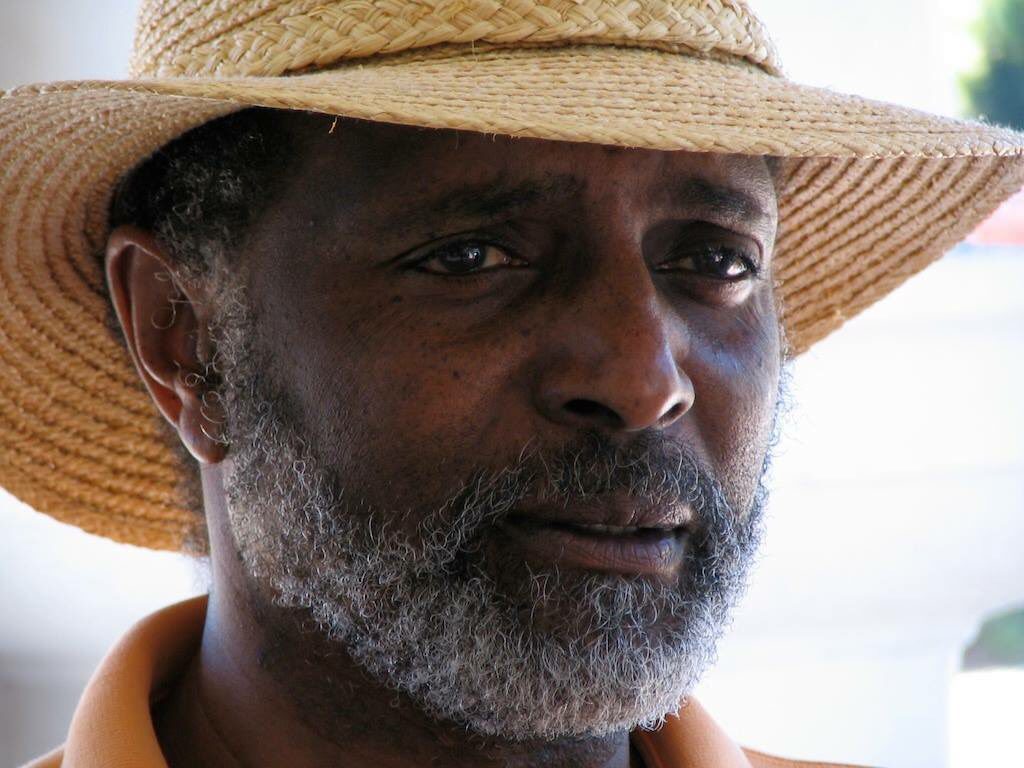
Robin D. G. Kelley is Gary B. Nash Professor of American History at UCLA and a contributing editor at Boston Review. His many books include Freedom Dreams: The Black Radical Imagination.

 

Monday, February 19, 2024

The Fundamental Crisis and Foundational Contradiction Facing the United States During the Upcoming Presidential Election Year of 2024: Fascism guided, informed, and enabled by the Doctrines and Practices of White Supremacy and Global Capitalism--PART 17

 
“What’s Past is Prologue…”

(Originally posted on December 7, 2020):

Monday, December 7, 2020


Dr. Robin D.G. Kelley On The Real Meaning of the 2020 National Presidential Election and the Profound Intellectual and Political Legacy of Dr. Cedric Robinson (1940-2016)
 
robinson
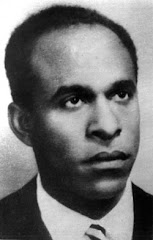
DR. CEDRIC J. ROBINSON (1940-2016)


https://bostonreview.net/.../robin-d-g-kelley-births-nation/

Politics
Race

Births of a Nation, Redux

Surveying Trumpland with Cedric Robinson

by Robin D. G. Kelley
November 5, 2020
Boston Review


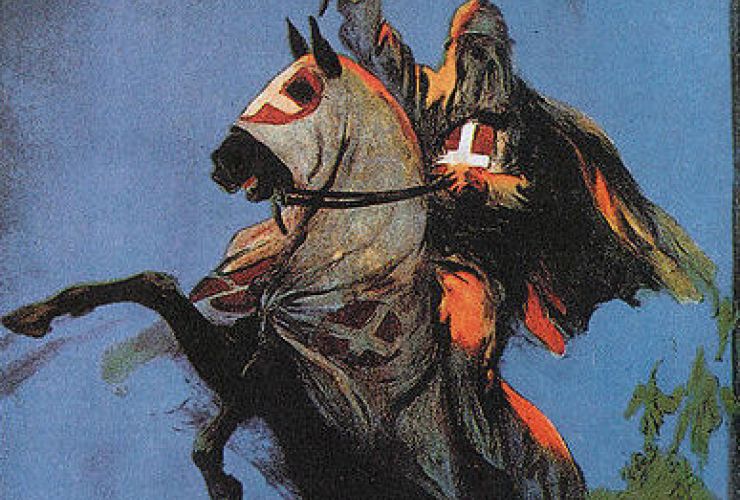
IMAGE: A promotional poster for the film 'Birth of a Nation' (1915)

I wrote the following essay, “Births of a Nation: Surveying Trumpland with Cedric Robinson,” in the wake of Trump’s 2016 victory, but it could have been written today—two days into a still unsettled presidential election; two days of witnessing frenzied, nail-biting, soul-searching Democrats wondering what happened to the blue wave and why 68 million people actually voted for Trump; two days of threats from the White House that they will fight in the courts and in the streets before giving up power. And today Cedric Robinson, pioneering scholar of what he called the “Black Radical Tradition,” would have celebrated his eightieth birthday.

Today Cedric Robinson would have celebrated his eightieth birthday. What Robinson identified as “the rewhitening of America” a century ago is what we’re seeing play out today.

The lessons I took from Cedric in the aftermath of Trump’s election still stand: our problem is not polling, or the failure of Democrats to mobilize the Black and Latinx vote (they came out, often at great risk to their health and safety), or a botched effort to reach working-class whites with a strong, colorblind class-based agenda. What Robinson identified as “the rewhitening of America” a century ago is what we’re seeing play out today.

But before reviving the tired race-versus-class debate, pay attention: Robinson was making an argument about racial regimes as expressions of class power and how racism undergirds class oppression. As I quoted Robinson before: “White patrimony deceived some of the majority of Americans, patriotism and nationalism others, but the more fugitive reality was the theft they themselves endured and the voracious expropriation of others they facilitated. The scrap which was their reward was the installation of Black inferiority into their shared national culture. It was a paltry dividend, but it still serves.” (The emphasis is mine.)

What we’ve seen is the consolidation of a racial regime based—as are all racial regimes—on “fictions” “masquerading as memory and the immutable.” Trump is saving white suburban women from Black rapists and drug dealers who want to take their Section 8 vouchers out to gated communities. He’s protecting our borders from “illegals” who have no claims whatsoever to this white man’s country. He’s shielding the nation from wicked critical race theorists and Howard Zinn with “patriotic education.” He responds to the assault on white supremacist mythologies by defending Confederate monuments. He dispatches federal military forces to crush antiracist protests and declares Kyle Rittenhouse a patriot for killing two unarmed Black Lives Matter protesters. And he dusts off the tried and true strategy of labeling all challengers to the regime “communists and socialists.” (When Biden brags “I beat the socialists!” and “I am the Democratic Party,” he plays right into the regime’s fictions—he is the neoliberal moderate taking back the country from rioters, fascists, and socialists.)

We keep telling ourselves that Trump was elected as a backlash to a Black president, but really he was elected as a backlash to a Black movement. President Obama presided during the killing of Mike Brown, Tamir Rice, Tanisha Anderson, Philando Castile, Alton Sterling, Freddie Gray, Sandra Bland—ad infinitum. It was the mass rebellion against the lawlessness of the state—in Ferguson, in Baltimore, in Chicago, in Dallas, in Baton Rouge, in New York, in Los Angeles, and elsewhere—that prompted Trumpian backlash.

We keep telling ourselves that Trump was elected as a backlash to a Black president, but really he was elected as a backlash to a Black movement. Fear and racism feed off of insecurity.

The massive vote for Trump and his fascist law-and-order rhetoric should also be seen as a backlash to a movement. Some of us believed Black Spring rebellion in the wake of the murders of George Floyd, Breonna Taylor, and Ahmad Arbery signaled a national reckoning around racial justice. But rather than reverse the rewhitening of America, our struggles catalyzed and concretized the racial regime’s explicit embrace of white power. Once again, an unstable ruling class drapes itself in white sheets, puts on its badge and brings out its guns. Fear and racism feed off of insecurity. And in the face of a global pandemic, joblessness, precarity, and an economy on the verge of collapse, this paltry dividend still serves.

If we’d paid attention, we wouldn’t have expected a Biden landslide or a blue wave ripping the Senate from Kentucky’s Mitch McConnell grip. It is not a coincidence that Louisville is on fire over the murder of Breonna Taylor and countless others who died at the hands of police in McConnell’s state. Kentucky has always been a battleground. California is too, and we’re not necessarily winning. Voters just defeated affirmative action, rent control, and the labor rights of gig workers. And despite some important victories, California delivered a lot of votes to Trump. We need to face the fact that our entire country, and the world, is a battleground. Trump and McConnell have succeeded in packing the Supreme Court with reactionaries. Trump’s backers still run the Senate. Gun-toting men and women in red hats stand outside vote-tabulating centers, threatening to do whatever is needed to secure a Trump victory. They yell “stop the count.”

Even with a Biden victory, the failure of the blue wave will be attributed in part to a certain kind of identity politics—Black and Latinx voter turnout less than what was expected—or to the militancy of antiracist protests, or to left-leaning candidates who scared off white moderates by pushing for single-payer healthcare and a Green New Deal. We should not see these as problems for legitimate Democrats. We’ve been witnessing authentic small-d democracy in action. In the streets we’ve seen a movement embrace Black, Brown, and Indigenous people, queer feminism, and a horizontal leadership model that emphasizes deliberative, participatory democracy.

We have an electoral college, battleground states, and voter suppression because the U.S. political order was built on anti-democracy.

This is the democracy Cedric Robinson insisted we embrace. He reminded us that the U.S. political order was built on anti-democracy, a theory of so-called enlightened governance that excludes the popular classes. This is why we have an electoral college, why we have battleground states, and why voter suppression was built into our country’s DNA. As I wrote three years ago, “today’s organized protests in the streets and other places of public assembly portend the rise of a police state in the United States. For the past five years, the insurgencies of the Movement for Black Lives and its dozens of allied organizations have warned the country that unless we end racist state-sanctioned violence and the mass caging of black and brown people, we are headed for a fascist state.”

We’re already here. And there is no guarantee that a Biden-Harris White House will succeed in completely reversing this trend. Nor should we expect presidents and their cabinets to do this work. That would put us back where we started—with tacit acceptance of the principles of anti-democracy.

Cedric’s words from exactly twenty years ago still haunt: “For the moment . . . an unelected government has seized illegal powers. That must be opposed with every democratic weapon in our arsenal.”

Happy Birthday, Dr. Robinson.
March 6, 2017

Cedric Robinson was fond of quoting his friend and colleague Otis Madison: “The purpose of racism is to control the behavior of white people, not Black people. For Blacks, guns and tanks are sufficient.” Robinson used the quote as an epigraph for a chapter in Forgeries of Memory and Meaning (2007), titled, “In the Year 1915: D. W. Griffith and the Rewhitening of America.” When people ask what I think Robinson would have said about the election of Donald Trump, I point to these texts as evidence that he had already given us a framework to make sense of this moment and its antecedents.

Robinson’s work—especially his lesser-known essays on democracy, identity, fascism, film, and racial regimes—has a great deal to teach us about Trumpism’s foundations, about democracy’s endemic crises, about the racial formation of the white working class, and about the significance of resistance in determining the future.

"Through the intervention of film, a new American social order was naturalized."
—Cedric J. Robinson

In 1915 William Joseph Simmons, an ex-preacher who made his income selling memberships in fraternal organizations, led a group of his friends atop Stone Mountain, just outside of Atlanta, burned a giant cross, and launched the revival of the Ku Klux Klan. His inspiration: seeing The Birth of a Nation, D. W. Griffith’s three-hour paean to the original Klan. Simmons believed the new Klan could make America great again by purging it of un-American influences: Negroes, immigrants (except for those of Anglo and Scandinavian stock), Catholics, and Jews. Under the slogan “100 percent Americanism,” the Klan pursued a program of severe immigration restriction, allegiance to the American flag, anti-communism, protecting white womanhood (and “correcting” wayward women who transgressed gender conformity, Protestant values, and the color line), better government, and law and order, while also engaging in lynching and open acts of terrorism against black people. The second Klan appears to be a ball of contradictions—antagonistic to both big business and industrial unions, contemptuous of both elites and a huge swath of the working class (the non-white and foreign-born). But as historian Sarah Haley recently argued, the Klan—whose membership rolls swelled to four million by 1924—mobilized a precarious middle class of small entrepreneurs, white-collar workers, and farmers facing the prospect of downward mobility and seeking hope in the elimination of the most marginalized segments of society.

Cedric Robinson has a great deal to teach us about Trumpism and the significance of resistance in determining the future.

In Forgeries of Memory and Meaning, Robinson explains why Griffith’s film catalyzed this movement. This was no ordinary film. Based on Thomas Dixon’s novel The Clansman (1905), it consolidated and circulated old racial fabulations and new fictions in the service of capitalist expansion and modern white supremacy—in the United States and abroad. The Birth of a Nation was historical alchemy, turning terrorists into saviors, rapists into chivalrous protectors of white women and racial purity, and courageous and visionary blacks into idle, irresponsible ignoramuses, rapists, and jezebels. Black people were not only unfit for democracy but they threatened social order. President Woodrow Wilson (who screened Griffith’s film at the White House) praised it as American history written with lightning—and like lightning, its historical reworking had an obliterating effect on truth. Robinson identified it as a “rewhitening of America,” a gallant effort to obliterate all vestiges of the black struggle for social democracy during Reconstruction.

For Robinson, 1915 marked the formation of a new “racial regime.” With the term, Robinson meant:

"Constructed social systems in which race is proposed as a justification for the relations of power. . . . [T]he covering conceit of a racial regime is a makeshift patchwork masquerading as memory and the immutable. Nevertheless, racial regimes do possess history, that is, discernible origins and mechanisms of assembly. But racial regimes are unrelentingly hostile to their exhibition. This antipathy exists because a discoverable history is incompatible with a racial regime . . . [and its] claims of naturalism.”

Racial regimes, in other words, are fictions. As such, they are unstable, fragile, and contested. The scramble to prove black inferiority and buttress white racial democracy in the era of Jim Crow was no cakewalk. The previous era had unleashed the possibility of radical change in the United States, and that struggle continued well into the twentieth century, when armed insurrection, political assassination, lynching, disfranchisement, imperialism, and federal complicity in the triumph of white supremacy destroyed the last sigh of black-led biracial democratic, populist, and radical movements.

Robinson lays out in great detail all the sites of contestation in 1915, and all the operations the new racial regime masked in the process. He reminds us that Griffith’s champion, Wilson, had opened the far Western Front of World War I when the United States invaded Haiti in 1915, long before the declaration of war on Germany. That intervention and long occupation (until 1934)—driven by U.S. finance capital—also required historical alchemy. The United States, the cause of much of Haiti’s political and economic instability, had to see itself as the country’s rescuing white knight. In the white American imagination, Haitians—like those blackface brutes in The Birth of a Nation—were seen as coons, niggers, and malevolent witchdoctors incapable of self-governance.

That May, W. E. B. Du Bois published “The African Roots of War” in Atlantic Monthly, a brilliant, prescient essay overshadowed by his folly three years later when he exhorted blacks to “close ranks” behind America’s official entry into World War I. The essay not only reveals a global racial regime in which “the white workingman has been asked to share the spoil of exploiting ‘chinks and niggers,’” but argues that we will never rid the world of war nor achieve democracy until we eradicate racism and colonialism. And who could lead the struggle to topple this rapacious system? None other than the descendants of “the European slave trade . . . the ten million black folk of the United States, now a problem, then a world salvation.”

The stage was set: D. W. Griffith’s New Nation versus the New Negroes. The latter resisted with pickets and boycotts, speeches and editorials, scholarship and art, and outright rebellion. They exposed the racial regime for what it was, the tyranny of white supremacy masquerading as enlightened democracy. The former, backed by finance capital and the academy, manufactured the Negro as Problem, a campaign accelerated through newer technologies of mass media. Film—whether newsreel footage of U.S. Marines entering Port-au-Prince or Griffith’s robed Klansmen saving the virginal Elsie Stoneman from the clutches of a rapacious mulatto—can mask and reorder social reality, turning victims into perpetrators and transforming imperialism into a rescue operation.

Robinson demonstrates that the post-Reconstruction order was not a return to the antebellum but a new racial and economic order that deployed a reinvention of the past in the service of a new regime. If new media played a key role, print was also crucial to this campaign. In 1916 The Passing of the Great Race, eugenicist Madison Grant’s chilling case for racial cleansing, became a national bestseller. Adolf Hitler praised the book as foundational to his own thinking. Grant’s book had plenty of company in the decade, including Robert W. Shufeldt’s America’s Greatest Problem: The Negro (1915) and Lothrop Stoddard’s The Rising Tide of Color Against White World Supremacy (1920). White supremacy traverses the ideological spectrum, even now. Many foundational texts of the Progressive Era’s racial regime were penned by liberal social scientists obsessed with the challenges of race and empire for American democracy. Many shared the eugenicists’ presumption that democracy’s survival depends on the suppression of difference.

Racial regimes are fictions, unstable, fragile, and contested.

Franklin H. Giddings, in his 1901 book Democracy and Empire, coined the phrase “democratic empire” to suggest that imperial expansion was itself a democratizing project. It was more than just the introduction of modern infrastructure, Western education, and civilization. It was the creation of social cohesion through the rapid assimilation of subject peoples. Giddings insisted that social cohesion or some sense of solidarity is a precondition of democracy, and racial difference renders such solidarity improbable if not impossible. Sociologist John Moffatt Mecklin, a self-proclaimed Progressive liberal, published Democracy and Race Friction: A Study in Social Ethics the year before the release of The Birth of a Nation. He argues that racism and discrimination undermine democracy, but at the same time puts much of the blame on the cultural differences and “hereditary instincts” of non-whites (e.g., weak powers of inhibition, criminality, inability to control sexual impulses). Thus, while recognizing racism as a fetter on democracy, he nonetheless apologizes for white supremacy, arguing that blacks and whites have very different value systems. White supremacy is therefore a “form of self-preservation.” (He is silent on whether lynching and rape were “moral” elements of self-preservation.) The solution? Mecklin believed “industrial competition” will allow the laws of natural selection to determine the fate of non-whites, producing the “ethnic homogeneity” necessary for “an efficient democracy.”

While these texts were influential, Griffith’s masterwork and films that followed in its wake proved indispensable for installing the modern racial regime. The consequences, however fragile, were devastating—not just for African Americans but for working-class whites. As Robinson writes, Griffith and this emergent film industry constituted the social and cultural platform for a robust economic and political agenda; an agenda in the process of seizing domestic and international labor, land, and capital. . . . White patrimony deceived some of the majority of Americans, patriotism and nationalism others, but the more fugitive reality was the theft they themselves endured and the voracious expropriation of others they facilitated. The scrap which was their reward was the installation of Black inferiority into their shared national culture. It was a paltry dividend, but it still serves.

• • •

"I love the poorly educated."
—Donald J. Trump

The dividend still serves. Many who voted for him, including those of the alt-right, flocked to Trump because he villainized immigrants, black people, and anti-patriotic business moguls who sent jobs overseas. Most pundits insist that Trump appeals not to white racism but to working-class populism driven by class anger. If this were true, why didn’t Trump win over droves of black and brown voters, since they make up the lowest rungs of the working class and suffered disproportionately more than whites during the financial crisis of 2008? Instead Trump’s victory inspired a wave of racist attacks and emboldened white nationalists to flaunt their allegiance to the president-elect.

The response on the part of high-profile liberals and leftists has been to blame “identity politics” for undermining the potential for working-class solidarity. Mark Lilla’s New York Times screed, “The End of Identity Liberalism,” is a case in point. “In recent years,” writes Lilla, “American liberalism has slipped into a kind of moral panic about racial, gender and sexual identity that has distorted liberalism’s message and prevented it from becoming a unifying force capable of governing.” The result is a “generation of liberals and progressives narcissistically unaware of conditions outside their self-defined groups, and indifferent to the task of reaching out to Americans in every walk of life.” In other words, people of color, queer folks, feminist-minded women, and liberal Democrats alienated the white working class, driving it into the arms of Trump.

Movements associated with “identity liberalism” are not exclusionary, they are serious efforts to interrogate the sources and structures of inequality.

The argument is both inept and confused. The movements associated with “identity liberalism” have not been obsessed with narrow group identities but with forms of oppression, exclusion, and marginalization. And these movements are not exclusionary—not Black Lives Matter, not prison abolitionists, not movements for LGBTQ, immigrant, Muslim, and reproductive rights. They are serious efforts to interrogate the sources of persistent inequality, the barriers to equal opportunity, and the structures and policies that do harm to some groups at the expense of others.

Of course, Lilla’s arguments are hardly new. At the height of the culture wars, conservatives such as Gertrude Himmelfarb, William Bennett, and Lynne Cheney; liberals such as Arthur Schlesinger and Allan Bloom; and self-styled leftists such as Todd Gitlin and Michael Tomasky argued that identity politics had undermined a unified America founded on Enlightenment principles of individualism, liberty, and secularism. A number of pundits have called Richard Rorty’s Achieving Our Country (1998) prophetic because it warns that continued downward mobility of the white working class and growing income inequality would lead to the rise of a strongman with authoritarian tendencies. Rorty’s thesis was not a critique of neoliberal policies, however, but a critique of the academic left and its love affair with identity politics. “Nobody is setting up a program in unemployed studies, homeless studies, or trailer-park studies,” Rorty laments, “because the unemployed, the homeless, and the residents of trailer parks are not ‘other’ in the relevant sense.” Anyone who works on these issues at the university—then and now—will find Rorty’s assertion laughable.

Rorty, a brilliant philosopher with genuine concern for working people, nevertheless mistook ideology—a categorical opposition to racism, sexism, homophobia, institutional oppression, and marginalization based on difference—for “identity politics,” while presuming that the white working class is operating purely out of race- and gender-neutral economic interests.

More conservative critics of identity politics sought to rescue Western culture from its anti-racist, feminist, and post-colonial critics. In his famous attack on multiculturalism, Arthur Schlesinger writes, “it was the West, not the non-Western cultures, that launched the crusade to abolish slavery. . . . Those many brave and humane Africans who are struggling these days for decent societies are animated by Western, not by African, ideals. White guilt can be pushed too far.” So far, in fact, that “political correctness” has been perceived as an attack on intellectual freedom and American virtues.

Robinson likened such antinomies to Christian attacks on heresy during the Middle Ages. In a short essay titled “Multiculturalism and Manichaeism,” he acknowledges what many critics of so-called “political correctness” understood: that the Schlesingers and Blooms and their compatriots across the ideological spectrum are holding on to “an imaginary transcendent universal culture—the West,” a nostalgia for a university that never was, and a mythic American identity presumably forged through an enlightened process of deracination. But Robinson knew there was more at stake. “They wish to erase the exposed seam,” he writes, “the nexus between power and regimes of knowledge so forcefully articulated by Michel Foucault. How else can one defend their specious histories of knowledge, which invoke some pristine mythical moment in the life of the American academy?”


This is not to say that Robinson’s defense of multiculturalist discourse was uncritical. He pointed to the dangers of an essentialism that reduces complex, historical experiences to fixed, discrete racial, ethnic, and gender identities. And to the left’s claim that Marxism is our way out of the Manichean world of fixed difference versus false universalism, Robinson politely demurred, citing arguments he made in Black Marxism a decade earlier. What he proposes instead is that a radical impulse in multiculturalism constitutes both a critique of the absences and an appropriation of the positive contributions of Marxism. We are not the subjects or the subject formations of the capitalist world-system. It is merely one condition of our being. . . . Multiculturalism, then, is a site of discursive resistance, and emblem of articulation of several trajectories of ‘objective’ opposition (religious, nationalist, feminist, etc.) mounted by our peoples in the everyday world.

• • •

"Democratic philosophy was subverted by plutocracy . . . whose rulers depended on the preservation of a slave economy, the exploitation of ‘white’ laborers (male and female), the severe restriction of women’s political rights, and the expropriation of Native Americans."
—Cedric J. Robinson

Opponents of Trumpism—and what it portends for the future of our democratic system—are scrambling to find both “the seed of opposition” and the roots of the crisis. Locating the elusive seed of opposition is a daunting task, but it seems that most people agree that repairing our broken democracy ought to be our priority.

Cedric Robinson had a lot to say about democracy—as a theory, an aspiration, and a fiction. As a child of World War II who came of age with the Cold War and the civil rights movement, he encountered the word “democracy” at every turn. Democracy was bandied about as an explanation for America’s frequent military excursions abroad, while at home it was an elusive dream for which black people were arrested, beaten, even killed.

Critics of so-called political correctness are holding on to an imaginary transcendent universal culture—the West.

Robinson studied democracy at the University of California, Berkeley, and fought for it as a leader of the campus naacp and as an activist in slate, a forerunner of the Berkeley Free Speech Movement. In the summer of 1962, he witnessed firsthand a struggle to create a multiethnic democracy in Southern Rhodesia crushed by the state. He was there under the auspices of Operation Crossroads—a precursor to the Peace Corps that sent student volunteers to Africa to help build libraries, schools, and community centers.

Founded by Harlem Presbyterian minister James H. Robinson and backed by the Rockefeller Brothers Fund, Operation Crossroads was also a Cold War project designed to combat communism and spread American democracy to the continent. During his month-long stay, Cedric watched the U.S.-backed regime led by the fascist Rhodesian Front violently repress and ultimately outlaw the Zimbabwe African People’s Union (zapu). Upon his return to Berkeley, Robinson enrolled in three political science courses, including one on African politics, in his quest to comprehend democracy, and he would go on to do graduate work in political science at San Francisco State University and at Stanford.

In an essay titled “African Politics: Progression or Regression?” written for a Stanford graduate seminar taught by David Abernethy (then a young scholar who wrote on popular education in Africa), Robinson argued that the newly “decolonized” territories in Africa were not yet nations. For him the “birth” of decolonialized African states required shedding Western political structures and creating their own political institutions. More provocatively, he suggests that the modern nation-state is, in fact, “a regression or step backward from the stateless societies of some earlier African history.” Here he begins to reveal the seeds of his argument in Black Marxism (1983) that the black petit bourgeoisie was disconnected from the political and cultural traditions that sustained anti-colonial movements in the past. He writes that those living in exile or European educated “have betrayed the heritage of their predecessors in the 19th and early 20th centuries,” indigenous leaders “who were committed through their own particular missions to the recovery of life with integrity for the mass of African people.” The alternative path he imagines is not based on modernization theory or industrialization but something different:

Perhaps what is needed are new political organisations without single or even multiple leaders, but with no leaders at all. . . . That is a sophisticated social organization; a primitive organization is one where the courts are filled with defendants bound and gagged or where its citizens must be shot down in the streets and terrorized in to fitful conformity.

Robinson never abandoned this radical utopian vision of democracy, although as the promise of the 1960s and ’70s faded into the revanchism of the 1980s and ’90s, he turned to the genesis of the “primitive organization” that became the U.S. political system. He traced the ideological roots of U.S. democracy back to the profoundly anti-democratic strain in Plato and Aristotle. For Robinson the “crisis” of democracy was not simply the result of the corrosive forces of neoliberalism but endemic from its very inception. His provocative essay “Slavery and the Platonic Origins of Anti-Democracy” (1995) locates the genesis of anti-democracy in The Republic, which accepts slavery and proposes a theory of enlightened governance that excludes the popular classes. Slavery in Plato’s politics was an immutable fact, the slave an inferior being bereft of reason and thus incapable of participating in democracy, let alone governing. “Plato’s political theory,” writes Robinson, “thus repressed the history of popular rebellion and with it the recognition that social agency might have its genesis from the general populace. Even in his ‘treatment’ of the degeneracy of democracy to tyranny, the demos is denied true agency through the selection of a demagogue.” Robinson wryly concludes, “In its antidemocratic plutocratic prejudice, the Republic provides an authority rich in intellectual strategems a propos to the political discourse embedded in the American political order. Plato survives because if he had not existed, he would have to be invented.”


It should come as no surprise that the founding fathers were avid readers of Plato and Aristotle, who were—along with Homer—the pillars of classical philosophy in the eighteenth and nineteenth centuries. Distrust of democracy was widespread. James Madison even positively described the new state as an “oligarchy.” Landholding, Madison insisted, had to be a requirement for participation in the body politic “as to protect the minority of the opulent against the majority.” The result, besides property requirements for voting, was the Electoral College. For some proponents, the Electoral College would be the enlightened check against the threat of an ignorant populace backing a demagogue as president. But it also guaranteed a pro-slavery White House. Basic to the college’s architecture was the Three-Fifths Compromise, the rule that congressional representation in the slave states would be apportioned by counting the white population along with 60 percent of enslaved people. The number of electors was to be equal to the number of representatives and senators from each state. This gave the slaveholding South an edge in presidential elections compared to other states, and that advantage lasted well after slavery ended, since the vast majority of black southerners were disfranchised after Reconstruction.

Ironically, critics of the Electoral College who believe Hillary Clinton should be president based on the popular vote are now invoking Alexander Hamilton’s idea of the “conscientious” elector who will buck party affiliation in order to make the enlightened choice. Hence, an anti-democratic institution is invoked as both the problem and solution, fueling the myth of American democracy’s singular genius while remaining “openly hostile to the periodic outbreaks of what it redundantly terms ‘participatory’ or ‘direct’ democracy.”


• • •


"When the performance of charismatic leadership stands in for building movements and relationships, for grassroots political education, and for a practiced commitment to disassembling social hierarchies, the promise of social justice and political empowerment is endangered by a formation of authority that limits our capacities to remake the world."
—Erica R. Edwards


In 2016, on the heels of the centennial celebration of D. W. Griffith’s The Birth of a Nation, the Sundance Film Festival screened a new film bearing the same title. Nate Parker, the young African American actor who wrote, directed, and starred in the film appropriated the title from Griffith as a deliberate provocation. His historical epic is about Nat Turner, the Virginia slave-turned-minister who led the bloodiest slave revolt in U.S. history. Like Griffith, Parker simultaneously revised history while reflecting and refracting current political realities. It is impossible to watch Parker’s The Birth of a Nation without recalling the recent wave of police killings and rage and resistance it has generated. Yet whereas Griffith’s racist epic made history, Parker’s film flopped. Revelations of Parker’s involvement in a sexual assault twenty years earlier dampened ticket sales, and cinematic representations of black rebellion tend to do poorly at the box office. But neither adequately explains the film’s epic failure.


In both Births, women are territory to be fought over, attacked, and defended. Whereas the Klan avenged the nation and their manhood by rooting out alleged black rapists, Turner and his men avenged their nation and their manhood for the rape of their women by white masters and overseers. As critic and historian Salamishah Tillett observed, Parker’s film thus silences black women, turning them into mute victims. “In denying these women their revolutionary gestures, Mr. Parker risks making them objects that he, and only he, can freely move around the screen.” Noting the film’s appearance during the height of black resistance to police violence, she adds that its emphasis on the male charismatic leader is “out of step” with the Movement for Black Lives and its largely black female leadership. I would add that the movement’s embrace of black queer feminism, its horizontal leadership model, and emphasis on deliberative, participatory democracy counter the film’s central vision.


For the past five years Black Lives Matter warned the country that unless we end racist state-sanctioned violence, we are headed for a fascist state.


Robinson understood the charismatic figure in insurgent movements as “the expression of a people focused onto one of their members . . . the responsive instrument of a people,” rather than the force or agent directing the people forward. This is certainly not how Parker portrayed Turner, which suggests that Robinson may have been sympathetic to Tillet’s reading of the film. But he would have also insisted that the female-led, horizontal formations resisting state violence today are not aberrations but consistent with the black radical tradition. H. L. T. Quan reminds us of the centrality women in Robinson’s historical archeology of black revolt. “Indeed,” Quan writes, “the women who people Robinson’s imagination are not the anorexic two-dimensional (mainstream) feminist heroines whom we often encounter in gender-related texts, but the plotters of history. They are women of substance, of imagination, of formidable social force, women who would kill and wage revolutions against the state and the world economy.”


Just as Nat Turner’s rebellion portended chattel slavery’s violent demise, today’s organized protests in the streets and other places of public assembly portend the rise of a police state in the United States. For the past five years, the insurgencies of the Movement for Black Lives and its dozens of allied organizations have warned the country that unless we end racist state-sanctioned violence and the mass caging of black and brown people, we are headed for a fascist state.


Others argue that fascism is already here. Refusing to play politics, they criticize both Democrats and Republicans. They have angered cops by insisting that no law officer is above reproach. Skeptical of courtroom justice, they have taken to the streets, social media, the press, and even the United Nations, placing the moral, ethical, and legal question about the value of black lives before the world court of opinion. The movement has also proposed a plan to divest from a society of punishment, inequality, environmental degradation, and white supremacy and invest in a future built on free education, healthcare, housing, living-wage jobs, decriminalization, restorative justice in lieu of caging, food justice, and green energy. We need to remember this before more angry liberals—forgetting the misogynist strain in white identity politics—blame the Movement for Black Lives for Clinton’s defeat and for mau-mauing white folks into the arms of Trump.


Those of us who lived through the Reagan era have seen these dynamics before, though on a smaller scale. Ronald Reagan’s election not only owed much to white working-class resentment and middle-class white homeowners seeking tax relief, but his ascent to office coincided with heightened police and vigilante violence. In 1979 in Greensboro, North Carolina, the Ku Klux Klan assassinated five members of the Communist Workers Party in broad daylight. In Mississippi in 1980, at least twelve African Americans were lynched. The same year at least forty racially motivated murders occurred in cities as diverse as Buffalo, Atlanta, and Mobile. Across the country, police killings and non-lethal acts of brutality generated protests, notably a massive urban rebellion in Liberty City, Florida. And during Reagan’s eight years in office, the number of hate crimes reported annually in the United States grew threefold. Faced with a dramatic rise in racism, unemployment, and homelessness, followed by deep cuts in social programs and increases in military spending, black resistance ramped up. The late historian and activist Manning Marable had even referred to 1980 as “The Red Year,” a revolutionary moment similar to 1919.


Robinson shared some of Marable’s optimism. It was, after all, the period in which he wrote Black Marxism, which compelled him to undertake a substantive study of fascism since the book’s three main subjects—W. E. B. Du Bois, C. L. R. James, and Richard Wright—were all radicalized during the 1930s. The dark times under Reagan resonated with his reading of the history of America’s support of fascism. For example, the American capitalist class was sympathetic to Benito Mussolini’s fascist regime. J. P. Morgan loaned Italy in excess of $100 million in 1926, and Fortune Magazine, the Saturday Evening Post, Business Weekly, and the New Republic all ran admiring spreads on Italian fascism up until the mid-1930s. Robinson’s central point was that the black masses not only anticipated the rise of fascism, they resisted before it was considered a crisis. Robinson called them “premature antifascists,” noting that they had stood in stark opposition to those elites enamored with fascism, “which gave primacy to the interests of the State as an instrument of racial ‘destiny.’”

Trump’s election does not signal the strengthening and consolidation of U.S. power but its decline. Contemporary resistance movements did not ensure Clinton’s defeat, but they did reveal the regime’s fragility. The Movement for Black Lives, Black Lives Mater, the Dream Defenders, Black Youth Project 100, We Charge Genocide, Million Hoodies, the Moral Mondays Movement, the uprisings in Baltimore and Ferguson—not to mention the immigrant rights movement, and the ongoing struggle in Standing Rock in defense of Native sovereignty and against the war on the planet—all presaged and accelerated the current crisis of the state.


Robinson teaches us that racial regimes are unstable. They can be disassembled, though that is easier said than done. In the meantime, we need to be prepared to fight for our collective lives. I can hear Cedric’s timely counsel in the aftermath of George W. Bush’s “fraudulent” defeat of Al Gore in 2000: “For the moment . . . an unelected government has seized illegal powers. That must be opposed with every democratic weapon in our arsenal.”


Robin D. G. Kelley


ABOUT THR AUTHOR:


Robin D. G. Kelley, Gary B. Nash Professor of American History at UCLA, is author many books including Africa Speaks, America Answers: Modern Jazz in Revolutionary Times and Freedom Dreams: The Black Radical Imagination.


TAGS: Politics Race Capitalism Justice Trump


IMAGE: A promotional poster for the film 'Birth of a Nation' (1915)