https://zeteo.com/p/a-student-rebellion-against-the-hypocrisy
[Zeteo is a new media organization that seeks to answer the questions that really matter, while always striving for the truth. Founded by Mehdi Hasan, Zeteo is a movement for media accountability, unfiltered news and bold opinions.]
[Zeteo is a new media organization that seeks to answer the questions that really matter, while always striving for the truth. Founded by Mehdi Hasan, Zeteo is a movement for media accountability, unfiltered news and bold opinions.]
"A Student Rebellion Against the Hypocrisy of Their Elders" - USC Prof & Pulitzer Prize-Winning Author Viet Thanh Nguyen
The students protesting against Israel's genocidal war in Gaza are on the right side of history, as other student movements were in the past.
by Viet Thanh Nguyen
May 1, 2024
Zeteo

Student and other protesters calling for a ceasefire in Gaza gather at the University of Southern California's Alumni Park on April 24, 2024. Photo by David Swanson/Reuters
The violent crackdown on students protesting against Israel’s genocidal war on Gaza reveals the stark hypocrisy of political and academic leaders at our colleges and universities, including my own. Instead of first turning to dialogue and debate – the very skills and values universities should promote – school administrators have turned to police, extreme discipline, and complying with a mainstream consensus that seems more interested in suppressing criticism of Israeli and American policy than protecting students.
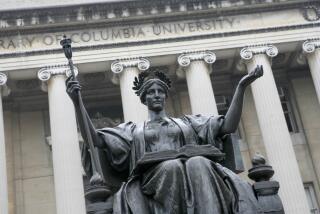
From Columbia University to my own University of Southern California, peaceful student encampments in common university areas have been dismantled by city police, with hundreds of students arrested. Some have been suspended, evicted from dormitories, and threatened with expulsion and criminal conviction. At UT Austin, state troopers threw a Fox cameraman to the ground and arrested him. At Emory University, the chair of philosophy, Noelle McAfee, was arrested by a police officer wearing a balaclava, as if he were conducting an antiterrorism raid. Another Emory professor, Caroline Fohlin, who sought to protect students being arrested, was wrestled to the ground by two police officers, handcuffed, and charged with battery.
These student protests against a war that has killed over 34,000 Palestinians, at least two-thirds of whom are women and children, are what professors and administrators love to call a “teachable moment.” Unfortunately, most universities and colleges are failing their academic principles, their students, and their faculty. I wish I could say I was surprised, but after three decades in academia, I am not.
I was arrested twice in college for political protests more than 30 years ago. Along with other Asian Americans and our allies, I participated in sit-ins and occupied the chancellor's office, calling for a more diversified curriculum and faculty that better represented our community. I graduated with four misdemeanors – two each for resisting arrest and trespassing. I was lucky I was not expelled or suspended, but I was also at UC Berkeley at a time when the administration understood that these were not appropriate punishments for young people who were committed to the very principles of truth, justice, debate, and open-mindedness that universities represent. I wish I could say the same for the administrators at universities and colleges today, including my own. But too many administrators have chosen to deploy police clad in riot gear and wielding tear gas, tasers, sniper rifles, and armored vehicles against students.

(Viet Thanh Nguyen at UC Berkeley. Courtesy of Viet Thanh Nguyen)
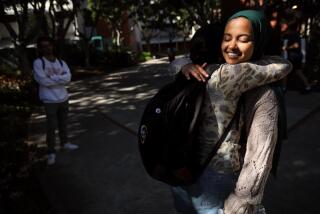
On my own campus, the USC administration canceled the speech of its valedictorian, Asna Tabassum, after pro-Israel groups on and off campus labeled her antisemitic for including a link on her Instagram to a website that called for the abolition of Israel. Tabassum minored in resistance to genocide, offered through the Advanced Center for Genocide Research. The center’s founding director, Wolf Gruner, called Tabassum one of the most empathetic students he had ever taught. Tabassum said she planned to speak to the commencement audience about hope and human rights. She might or might not have brought up Gaza and Palestine, war and genocide, but even if she did, should that have been a reason to cancel her?
The university administration offered unspecified threats to safety so severe that it felt it could not protect Tabassum or the commencement ceremony, even though former President Barack Obama had attended the commencement the year before and presumably required heightened safety measures. It is difficult not to believe that safety was a pretext for the university to avoid controversy that might antagonize pro-Israel students, family members, and outsiders. But the real consequences of such a controversy would not have been community protest; instead, it would have been political blowback from Congress, donors, and trustees.
viet_t_nguyen
This strategy of avoidance and appeasement is doomed to failure. Columbia University president Minouche Shafik submitted completely to Republican demands to discipline her faculty and students, but this did not prevent Rep. Elise Stefanik and House Speaker Mike Johnson from demanding her resignation.
Republicans will not be satisfied until students are being clubbed and tear-gassed in a law-and-order spectacle that will please Benjamin Netanyahu and the GOP base. But the right-wing reaction against student protesters is not only about their stance on Israel and Gaza, which includes their willingness to declare the war a genocide and to demand divestment from Israel and the ending of further military aid. Instead, the right wing is stirring a moral panic around antisemitism, using Jewish students and their feelings of being uncomfortable and threatened as a reason to crack down on protesting students.
Racist and antisemitic threats are wrong and should be treated appropriately, which is to say, through academic disciplinary and legal methods targeted at the individuals who issue such threats, not through the deployment of riot police against masses of peaceful protesters. But a big difference exists between being threatened and being uncomfortable, and critics of the protesters – and the anti-war movement in general – blur the two.
This happens by conflating criticism of Israel with antisemitism, even though many student protesters are themselves Jewish. It’s what some have called a “weaponized antisemitism,” which places more value on how some Jewish students feel uncomfortable than how Palestinians are actually being killed en masse by an Israel whose weapons are supplied by the U.S.
Being uncomfortable is not necessarily a problem, and certainly not enough of a problem to shut down free speech and academic debate. Discomfort can be useful, and is even necessary, for us to argue and question our assumptions and those of others, leading to greater intellectual, moral, and political clarity. These are the things that are supposed to happen on college campuses and what Tabassum’s speech at USC might have provoked.
 Police confront a pro-Palestine protester at the University of Southern California on April 24, 2024. Photo by Robert Hanashiro/USA TODAY/Reuters
The suppression of student protests today should worry all of us, including those who might support Israel but who are otherwise convinced about the need for free speech and the mission of universities. This is because the moral panic over antisemitism being stoked by the right is only the latest manifestation of a decades-long campaign to discipline and possibly capture academia.
Over the last few decades, American academia has undergone a painful transformation. Tenured faculty have been replaced in ever-greater numbers by faculty without job security. The humanities and social sciences have been depleted. Tuition and loan debt has spiraled rapidly. University presidents – who are increasingly CEOs, politicians, and generals instead of academics – have become ever more beholden to boards of trustees that are often composed of the wealthy and politically connected. Meanwhile, the right has fought to eliminate affirmative action for racial diversity but sought to demand the equivalent of affirmative action for ideological diversity.
In universities, the lack of democracy and transparency is more of a norm than an exception. Faculty and students are routinely ignored by university administrations when it comes to the most serious issues, which is to say those that involve money. This is perhaps why students have felt that their only recourse when it comes to demanding divestment and the end of military aid to Israel was through protest, carried out in public spaces, rather than the futile road of privately appealing to administrators.
The student protesters are on the right side of history, as they were in the 1960s and 1970s, demonstrating against the immoral and racist war the U.S. was waging in Viet Nam, Laos, and Cambodia. The students were right again in the 1980s, campaigning against apartheid and forcing universities to divest from South Africa.
It is amazing how institutions teach idealism, including these cases of opposition to war and apartheid, and are then astonished that students are idealists. We are now witnessing a student rebellion against the hypocrisy of their elders and the powerful, who tell them they have to accept the lesser of two evils, and who weaponize antisemitism to justify genocide.
Student protesters face real penalties in terms of their reputations and job prospects, as well as their physical and emotional well-being. School administrators who stand up for academic principles and defend their students and faculty may lose their positions, but they would return to the ranks of the faculty, and with tenured security. This is the choice the university leaders face, and it is quite different in consequence to what the students face, which makes their cowardice even more disturbing.
The saying “those who can’t do, teach” seems all too true now in this moment. Instead, it is the students who are teaching their professors and the public at large. Through their actions, the students are showing what idealism and conviction actually look like.

This strategy of avoidance and appeasement is doomed to failure. Columbia University president Minouche Shafik submitted completely to Republican demands to discipline her faculty and students, but this did not prevent Rep. Elise Stefanik and House Speaker Mike Johnson from demanding her resignation.
Republicans will not be satisfied until students are being clubbed and tear-gassed in a law-and-order spectacle that will please Benjamin Netanyahu and the GOP base. But the right-wing reaction against student protesters is not only about their stance on Israel and Gaza, which includes their willingness to declare the war a genocide and to demand divestment from Israel and the ending of further military aid. Instead, the right wing is stirring a moral panic around antisemitism, using Jewish students and their feelings of being uncomfortable and threatened as a reason to crack down on protesting students.
Racist and antisemitic threats are wrong and should be treated appropriately, which is to say, through academic disciplinary and legal methods targeted at the individuals who issue such threats, not through the deployment of riot police against masses of peaceful protesters. But a big difference exists between being threatened and being uncomfortable, and critics of the protesters – and the anti-war movement in general – blur the two.
This happens by conflating criticism of Israel with antisemitism, even though many student protesters are themselves Jewish. It’s what some have called a “weaponized antisemitism,” which places more value on how some Jewish students feel uncomfortable than how Palestinians are actually being killed en masse by an Israel whose weapons are supplied by the U.S.
Being uncomfortable is not necessarily a problem, and certainly not enough of a problem to shut down free speech and academic debate. Discomfort can be useful, and is even necessary, for us to argue and question our assumptions and those of others, leading to greater intellectual, moral, and political clarity. These are the things that are supposed to happen on college campuses and what Tabassum’s speech at USC might have provoked.

The suppression of student protests today should worry all of us, including those who might support Israel but who are otherwise convinced about the need for free speech and the mission of universities. This is because the moral panic over antisemitism being stoked by the right is only the latest manifestation of a decades-long campaign to discipline and possibly capture academia.
Over the last few decades, American academia has undergone a painful transformation. Tenured faculty have been replaced in ever-greater numbers by faculty without job security. The humanities and social sciences have been depleted. Tuition and loan debt has spiraled rapidly. University presidents – who are increasingly CEOs, politicians, and generals instead of academics – have become ever more beholden to boards of trustees that are often composed of the wealthy and politically connected. Meanwhile, the right has fought to eliminate affirmative action for racial diversity but sought to demand the equivalent of affirmative action for ideological diversity.
In universities, the lack of democracy and transparency is more of a norm than an exception. Faculty and students are routinely ignored by university administrations when it comes to the most serious issues, which is to say those that involve money. This is perhaps why students have felt that their only recourse when it comes to demanding divestment and the end of military aid to Israel was through protest, carried out in public spaces, rather than the futile road of privately appealing to administrators.
The student protesters are on the right side of history, as they were in the 1960s and 1970s, demonstrating against the immoral and racist war the U.S. was waging in Viet Nam, Laos, and Cambodia. The students were right again in the 1980s, campaigning against apartheid and forcing universities to divest from South Africa.
It is amazing how institutions teach idealism, including these cases of opposition to war and apartheid, and are then astonished that students are idealists. We are now witnessing a student rebellion against the hypocrisy of their elders and the powerful, who tell them they have to accept the lesser of two evils, and who weaponize antisemitism to justify genocide.
Student protesters face real penalties in terms of their reputations and job prospects, as well as their physical and emotional well-being. School administrators who stand up for academic principles and defend their students and faculty may lose their positions, but they would return to the ranks of the faculty, and with tenured security. This is the choice the university leaders face, and it is quite different in consequence to what the students face, which makes their cowardice even more disturbing.
The saying “those who can’t do, teach” seems all too true now in this moment. Instead, it is the students who are teaching their professors and the public at large. Through their actions, the students are showing what idealism and conviction actually look like.
ABOUT THE AUTHOR:
Zeteo contributor Viet Thanh Nguyen is the Aerol Arnold Chair of English and a professor of English, American Studies and Ethnicity, and Comparative Literature at the University of Southern California. His novel, The Sympathizer, won the Pulitzer Prize for Fiction and numerous other awards. Subscribe to Zeteo to get more from Viet and other Zeteo contributors straight to your inbox.