Showing posts with label Palestinian children. Show all posts

Sunday, December 31, 2023

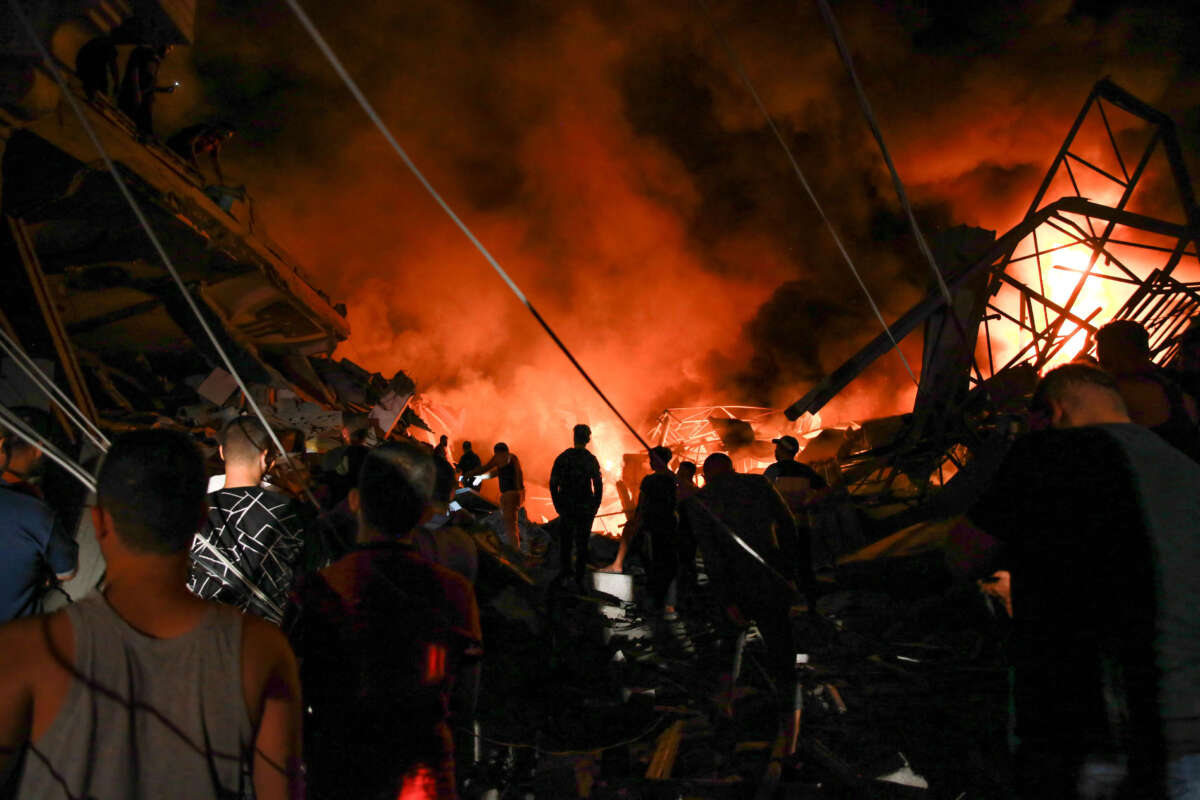
The Horrific Death Toll in Gaza Has Been Enormous and Has Now Reached Unprecedented Levels with No End in Sight. Over 20,000 Gazans Are Dead, including over 8,000 Children


Gaza Deaths Surpass Any Arab Loss in Wars With Israel in Past 40 Years

The death toll reported in Gaza has surpassed 20,000, according to officials in the territory, the heaviest loss on the Arab side in any war with Israel since the 1982 Lebanon invasion.

 
by Liam Stack
December 21, 2023
New York Times

People gather around a row of white body bags outside of a building.
PHOTO:  Palestinians bidding farewell to relatives killed in the war at Nasser hospital in Khan Younis this month. Credit: Yousef Masoud for The New York Times

The number of Gaza residents reported killed during Israel’s 10-week-old war in the territory has already surpassed the toll for any other Arab conflict with Israel in more than 40 years and perhaps any since Israel’s founding in 1948.

The Gaza Health Ministry said on Thursday that the death toll had exceeded 20,000 for the first time, putting it just above one of the most authoritative estimates of those killed in Lebanon by Israel’s 1982 invasion.

And though Gaza officials have said counting the dead has become increasingly challenging, most experts say the figure is likely an undercount and express shock at the enormity of the loss. Some military experts said more people had been killed more quickly in this war than during the deadliest stages of the U.S.-led wars in Afghanistan or Iraq.

Azmi Keshawi, the Gaza analyst for the International Crisis Group think tank, said this war was “more horrifying” than any he had experienced before. He said he and his family had fled his home in northern Gaza and moved six times so far. They now live in a tent near a U.N. shelter in the southern city of Rafah.

The Gaza Health Ministry has said that about 70 percent of those killed in the war are believed to be women and children. Credit:  Yousef Masoud for The New York Times

The Israeli military has engaged in an intense air and ground campaign to eliminate Hamas, the armed Palestinian group that rules Gaza and led the Oct. 7 attack that officials say killed about 1,200 people in Israel — the majority of them civilians but also including hundreds of soldiers. The assailants still hold scores of hostages.

The high death toll reflects how Israel has chosen to wage the war, using thousands of airstrikes, heavy bombs and artillery in a small territory densely packed with civilians who cannot escape. Israel has said Hamas built an extensive tunnel network underground to shield its fighters and weapons, putting civilian infrastructure and people on the ground in the line of fire.

The Gaza war was already thought to be the deadliest conflict for Palestinians in the 75 years since Israel was established. According to the Palestinian Central Bureau of Statistics, an estimated 15,000 Palestinians were killed during the war surrounding Israel’s creation in 1948.

The deaths in the current conflict, if the figures from Gaza are accurate, have also exceeded the most widely cited estimate of the toll for the initial three months of the 1982 invasion of Lebanon. But as in Gaza today, researchers say the number killed in Lebanon may never be known with confidence because of the fog of war, even four decades later.

Palestinian women looking for the bodies of relatives in the Sabra refugee camp in West Beirut in 1982. Credit: Bettmann, via Getty Images

That estimate comes from an analysis of police and hospital records compiled in 1982 by the newspaper An Nahar, which at the time was among the Arab world’s most respected. It put the death toll at 17,825. But the paper said that tally was most likely an undercount, and in 1982, The Times reported that “numbering the dead correctly is virtually impossible” in Lebanon.

In the 1967 Middle East war, nearly 19,000 Egyptians, Syrians and others were estimated to have been killed fighting Israel, while a similar number — mostly Syrians and Egyptians — died in the 1973 war, according to The Associated Press. As in the Gaza and Lebanon wars, the exact tolls for these wars are also not known, but most of the dead were believed to be combatants.

In contrast, the Gaza Health Ministry, which is part of the Hamas-run government there, has said that about 70 percent of those killed are women and children. On Thursday, the ministry said the death toll had reached 20,057 but the Gaza authorities never give breakdowns for how many of those killed are combatants.

Israel claims it has killed some 7,000 Hamas fighters, but has not explained how it arrived at that number.

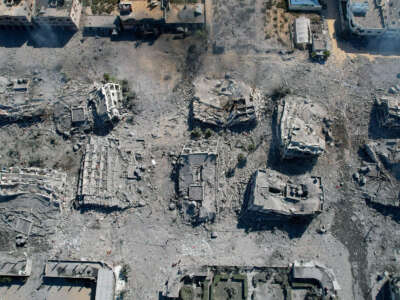
The toll in Gaza is expected to rise significantly when Palestinians are able to dig out of the vast destruction that the war has wrought. A Gazan government spokesman said Wednesday that in addition to the dead, 6,700 people are missing. Many are believed to still be buried in the rubble.

“The likelihood is that many people who are missing under the rubble will be determined to have been killed,” said Omar Shakir, the Israel and Palestine director for Human Rights Watch. For that reason, the death toll is “likely to increase even if the bombing were to stop today,” he added.


Gaza officials say thousands of people are still missing and presumed dead, believed to be buried under the rubble amid the vast destruction across Gaza. Credit: Yousef Masoud for The New York Times


No independent organizations have been able to verify the Gaza death toll because of the difficulties of operating in the territory. And as the conflict has ground on, the casualty numbers have become more difficult to collect.


The Gaza Health Ministry compiles death toll data from the records of local hospitals and morgues, officials in the territory have said. But in recent weeks, the government media office said it had stepped in to help gather the figures after the Health Ministry’s facilities were bombed and 27 of the 36 hospitals in Gaza were rendered unusable by airstrikes amid an Israeli siege that has tightly restricted food, water, fuel and medicine from entering.

Frequent disruptions in communications caused by Israeli attacks on telecommunication towers, Israeli control of the enclave’s communication lines and fuel shortages have also made gathering information very difficult.

Mahmoud al-Farra, a spokesman for the government media office, said the people collecting the data had to make the most of the “available possibilities” amid the fighting. “It’s hard to count them because the number of martyrs is large,” he added.


An estimated 85 percent of Gaza’s population of more than 2 million have left their homes in an attempt to flee Israel’s airstrikes and ground invasion. Credit:  Samar Abu Elouf for The New York Times

Throughout the war, the Gaza Health Ministry has released updated death tolls that have been called broadly reliable by the U.N., humanitarian groups and a study published this month in The Lancet, a British medical journal.

This month, when the ministry said the death toll had passed 15,000, some Israeli officials said they believed that figure to be roughly accurate. However, the Israeli military has also said the death toll reported in Gaza could not be trusted because the territory is run by Hamas.

On Oct. 26, the ministry released a list of the names and ID numbers of 6,747 people it said had been killed up to that point by Israeli bombing — an accounting that enhanced the credibility of its numbers.

The ministry’s staff includes many civil servants that predate the Hamas takeover of Gaza in 2007, and humanitarian groups have defended its record. They say it has a history of good faith reporting and has provided reliable information.

But the ministry came under criticism after an Oct. 17 explosion at Al-Ahli Arab Hospital in Gaza City, when the government almost instantaneously released casualty figures that ranged from 500 to 833 dead. Days later, it announced a final count of 471.

After the explosion, John F. Kirby, a White House spokesman, called the ministry “a front for Hamas,” and President Biden told reporters he had “no notion that the Palestinians are telling the truth about how many people are killed.”

Mr. Biden then added: “I’m sure innocents have been killed, and it’s the price of waging a war.”


Palestinians buried 111 bodies in a mass grave at a cemetery in Khan Younis, in southern Gaza, in November. The bodies were brought to Khan Younis from northern Gaza. Credit:  Yousef Masoud for The New York Times

The war has posed myriad other complications for compiling accurate casualty counts.

An estimated 85 percent of Gaza’s population of more than two million have fled their homes, after Israel ordered the evacuation of much of the territory, to try to escape Israel’s airstrikes and ground invasion. Its largest population center, Gaza City, has been reduced to rubble. Thousands sleep on the street, and others live in overcrowded shelters that teem with disease.

There has been virtually no electricity for more than two months. Food and clean water are scarce. The U.N. says half the population is at risk of starvation, and 90 percent regularly go without food for a whole day.


Palestinians from the Abu Namous family searched for the freshly dug graves of their relatives who were killed and buried in the Deir al-Balah cemetery in November. Credit:  Samar Abu Elouf for The New York Times
 

Ahmed Fouad Alkhatib, a vocal critic of Hamas who grew up in Gaza but now lives in California, said Israeli airstrikes have so far killed more than 30 members of his family, including people in their 70s and cousins between the ages of 3 months and 9 years old.


Early in the war, he said, his childhood home was bombed, killing one young cousin. And last week, his aunt and uncle’s home was bombed, killing at least 31 people. Sitting in California, he watched video of their destroyed home on his phone. None of the people there were affiliated with Hamas, he said.

“It was a family home,” he said.

Iyad Abuheweila, Adam Sella and Isabel Kershner contributed reporting.


ABOUT THE AUTHOR:


Liam Stack is a Times reporter who covers the culture and politics of the New York City region. More about Liam Stack

 
A version of this article appears in print on Dec. 22, 2023, Section A, Page 8 of the New York edition with the headline: Gaza Deaths Surpass Any Arab War Losses in 40 Years. Order Reprints | Today’s Paper
"Absolutely Unimaginable": Children in Gaza Face Amputations Without Anesthesia, Death & Disease


Democracy Now!

December 28, 2023

 
VIDEO: 

Israel has killed more than 8,200 children in Gaza, which the U.N. now calls the most dangerous place in the world to be a child.

We speak with Steve Sosebee of the Palestine Children's Relief Fund, which provides medical and humanitarian aid to Palestinian children in Gaza and the West Bank, about how at least six Palestinians the organization had brought to the United States for free medical care have now been killed in Gaza. Sosebee shares the stories of Izzeddin Nawasra and Mohammed Al-Ajouri, two young men who were shot by Israeli snipers during the Great March of Return protests in 2018 and received medical care in the U.S. from PCRF. Both were killed alongside their families by Israeli airstrikes on and after Christmas Day. Sosebee also describes the state of medical care in Gaza, where patients are being forced to undergo amputations without anesthesia and forgo life-saving medications amid Israel's ongoing blockade.


Latest Shows


Monday, November 20, 2023

The Real Cost of Genocidal Death and Destruction in Gaza

https://www.nytimes.com/2023/11/18/world/middleeast/gaza-children-israel.html

The War Turns Gaza Into a ‘Graveyard’ for Children

A child, surrounded by adults wearing anguished looks, reaches out to a baby wrapped in a sheet.
Khaled Joudeh, 9, mourning over the body of his baby sister, Misk, last month in Deir al Balah, Gaza. Credit:  Samar Abu Elouf for The New York Times

Thousands of children have been killed in the enclave since the Israeli assault began, officials in Gaza say. The Israeli military says it takes “all feasible precautions” to avoid civilian deaths.

Samar Abu Elouf and 

New York Times

Barefoot and weeping, Khaled Joudeh, 9, hurried toward the dozens of bodies wrapped in white burial shrouds, blankets and rugs outside the overcrowded morgue.

“Where’s my mom?” he cried next to a photographer for The New York Times. “I want to see my mom.”

“Where is Khalil?” he continued, barely audible between sobs as he asked for his 12-year-old brother. A morgue worker opened a white shroud, so Khaled could kiss his brother one final time.

Then, he bid farewell to his 8-month-old sister. Another shroud was pulled back, revealing the blood-caked face of a baby, her strawberry-red hair matted down. Khaled broke into fresh sobs as he identified her to the hospital staff. Her name was Misk, Arabic for musk.

“Mama was so happy when she had you,” he whispered, gently touching her forehead, tears streaming down his face onto hers.

She was the joy of his family, relatives later said — after three boys, his parents were desperate for a girl. When she was born, they said, Khaled’s mother delighted in dressing Misk in frilly, colorful dresses, pinning her tiny curls in bright hair clips.


A baby in a white dress with butterflies and red flowers.
Misk Joudeh. Credit via Joudeh family

Through his tears, Khaled bid farewell to his mother, father, older brother and sister, their bodies lined up around him. Only Khaled and his younger brother, Tamer, 7, survived what relatives and local journalists said was an airstrike on Oct. 22 that toppled two buildings sheltering their extended family.

A total of 68 members of the Joudeh family were killed that day as they slept in their beds in Deir al Balah, in central Gaza, three of Khaled’s relatives recounted in separate interviews.

Several branches and generations of the Joudehs, a Palestinian family, had been huddling together before the strike, relatives said, including some who had fled northern Gaza, as Israel had ordered residents to do. The Israeli military said it could not address questions about a strike on the family.

In the end, members of the family were buried together, side by side in a long grave, relatives said, showing footage of the burial and sharing a picture of Misk before she was killed.

Gaza, the United Nations warns, has become “a graveyard for thousands of children.”

Determining the precise number of children killed in Gaza — in the midst of a fierce bombing campaign, with hospitals collapsingchildren missing, bodies buried under rubble and neighborhoods in ruins — is a Sisyphean task. Health officials in Gaza say that 5,000 Palestinian children have been killed since the Israeli assault began, and possibly hundreds more. Many international officials and experts familiar with the way death tolls are compiled in the territory say the overall numbers are generally reliable.

If the figures are even close to accurate, far more children have been killed in Gaza in the past six weeks than the 2,985 children killed in the world’s major conflict zones combined — across two dozen countries — during all of last year, even with the war in Ukraine, according to U.N. tallies of verified deaths in armed conflict.

A doctor points as a rescue worker with a headlamp and fluorescent jacket carries a child covered in dust and blood through a crowd of onlookers.
A wounded child arriving at Al-Nasr Hospital in Khan Younis, Gaza. Credit:  Yousef Masoud for The New York TimesImage
A child covered in dust lies in a white sheet being carried over rubble.
The body of a child pulled from rubble in Khan Younis. Credit:  Yousef Masoud for The New York TimesImage
A man crouches with a white sheet, stained red in places, which is wrapped around and fully covering a small body.
The funeral of a child in Khan Younis on Oct. 26. Credit:  Yousef Masoud for The New York TimesThe Israeli military says that, unlike the “murderous assault against women, children, elderly and the disabled” by Hamas on Oct. 7, Israeli forces take “all feasible precautions” to “mitigate harm” to civilians.

Hamas, the military said, deliberately caused “the maximum amount of harm and brutality possible to civilians.” During the attack on Israel, parents and their children were gunned down inside their homes, witnesses and officials say, with children taken as hostages.

In response, the Israeli military says, it is waging a war “forcefully to dismantle Hamas military and administrative capabilities.” It notes that Israeli forces have told residents to flee to southern Gaza, and says that they issue warnings before airstrikes “when possible.”

But the furious pace of the strikes — more than 15,000 to date, according to the Israeli military, including in southern Gaza as well — makes the Israeli bombing campaign on the Palestinian territory one of the most intense of the 21st century. And it is happening in a dense urban enclave under siege with high concentrations of civilians, particularly children, setting off mounting global alarm, even from some of Israel’s closest allies.

After initially questioning the death toll reported by health officials in Gaza, the Biden administration now says that “far too many” Palestinians have been killed, conceding that the true figures for civilian casualties may be “even higher than are being cited.”

So many children are brought into the morgue at Al-Aqsa Hospital in Deir al Balah that the morgue director, Yassir Abu Amar, says he has to cut his burial shrouds into child-size fragments to handle the influx of corpses.

“The children’s bodies come to us broken and in pieces,” he said. “It’s chilling.”

“We’ve never seen this number of children killed,” he added. “We cry every day. Every day, we cry while we’re working to prepare the children.”

During previous wars, parents in Gaza, a crowded strip with more than two million people, sometimes put their children to bed in different rooms of their homes. If an airstrike damaged one part of the house, the other children might live.

Given the scale of the bombardment this time — which many Gazans describe as indiscriminate and without warning — some parents have put much greater distances between their children, splitting them up and sending them to relatives in different parts of the Gaza Strip to try to increase their odds of survival. Others have taken to scrawling names directly onto their children’s skin, in case they are lost, orphaned or killed and need to be identified.

In the emergency room of Al-Shifa Hospital in Gaza City, Dr. Ghassan Abu-Sittah said that many children had been brought in alone and in shock, with burns, shrapnel wounds or severe injuries from being crushed by rubble. In many cases, he said, no one knew who they were.


A child, covered in dust stares vacantly ahead. An older child, with a bloodied face and also dust-covered is alongside. They both sit on a stretcher on the floor of a medical facility.
Waiting for treatment at Al-Shifa Hospital in Gaza City. Credit: Samar Abu Elouf for The New York Times
A medic crouches to treat a child on a mat on the floor. The child’s head is wrapped in a bandage. Blood is spattered on the child’s clothes and skin. Bloody wads of material are strewn around the mat and on the floor.
A wounded child was treated at Al-Aqsa Hospital in Deir al Balah. Credit: Samar Abu Elouf for The New York Times Image
A child sits with head in hands, covered in dust and debris and with a bloody forehead, among other wounded people
PHOTO:  Waiting for treatment at Al-Shifa Hospital in GazaCity.Credit: Samar Abu Elouf for The New York Times

“They are given a designation — ‘Unknown Trauma Child’ — until someone recognizes them,” he said. “The crippling thing is that some of them are the sole survivors of their family, so no one ever comes.”

“More and more, it seems like a war against children,” said Dr. Abu-Sittah.

Two weeks ago, the emergency room at Al-Shifa registered “Unknown Trauma Child 1,500,” Dr. Abu-Sittah said.

Then, in recent days, Israeli forces stormed the hospital, where thousands of Gazans had been sheltering, saying that the facility sat above an underground Hamas command center. United Nations officials warned that the raid put Gaza’s most vulnerable in even greater jeopardy.

International experts who have worked with health officials in Gaza during this and other wars say that hospitals and morgues in the enclave gather and report the names, ID numbers and other details of people who have been killed in the territory. While the experts urged caution around public statements about the specific number of people killed in a particular strike — especially in the immediate aftermath of a blast — they said the aggregate death tolls reported by health workers in Gaza have typically proven to be accurate.

The Israeli military says it “regrets any harm caused to civilians (especially children),” adding that it is examining “all its operations” to ensure that it follows its own rules and adheres to international law.

But a growing number of human rights groups and officials contend that Israel has already broken that law.

After condemning the “heinous, brutal and shocking” attacks by Hamas as war crimes, Volker Türk, the United Nations high commissioner for human rights, said this month, “The collective punishment by Israel of Palestinian civilians amounts also to a war crime, as does the unlawful forcible evacuation of civilians.”

“The massive bombardments by Israel have killed, maimed and injured in particular women and children,” he added. “All of this has an unbearable toll.”

Some international officials warn that children are in danger no matter where they go. “There is nowhere safe for Gaza’s one million children to turn,” said Catherine Russell, the director of UNICEF.

On Oct. 15, Dr. Mohammad Abu Moussa said that he was on a 24-hour shift at Al-Nasr Hospital in Khan Younis — south of the evacuation line drawn by Israel — when he heard a loud explosion nearby. He called his wife at home, but when she answered, he said, all he heard were screams.

Soon, he said, his wife, 12-year-old daughter and 9-year-old son were brought into the emergency room, bloodied, hysterical and covered in dust from rubble. He tried to comfort them, but panicked when he noticed that his youngest son, 7-year-old Yousef, was not with them.

“Where’s Yousef?” he recalled asking.

No one would answer.

When he pressed again about his son, he said a neighbor simply responded, “May God have mercy on his soul.”

I
A child with curly hair smiles at the camera.
Yousef Abu Moussa.  Credit via Mohammad Abu MoussaDr. Abu Moussa didn’t want to believe it. Video from journalists at the hospital shows him frantically searching for Yousef. Dr. Abu Moussa recounted how he had asked other departments, including the intensive care unit, whether his son had been rushed there instead.

Then, he said, a journalist showed him pictures of their demolished home. Dr. Abu Moussa said he recognized the gray clothing Yousef had been wearing when he kissed him goodbye before leaving the house.

With dread, Dr. Abu Moussa walked from the emergency room to the hospital morgue. That’s where he said he finally found Yousef, a jokester with a cheeky smile who stuck out his tongue in photographs. Now, his lifeless body was lying on a gurney.

The shock was too much to bear. Dr. Abu Moussa recalled looking away before a colleague embraced him.

Multiple relatives said that airstrikes had hit their home without warning, and that Dr. Abu Moussa’s family had been pulled from the rubble. The Israeli military said it could not address questions about a strike on the family.

“Yousef was a very loved child,” said his mother, Rawan, a fitness instructor. “He was always smiling. He loved to laugh and make people laugh.”

At home, the boy had wanted to eat every meal next to his father, or in his lap, sometimes even sharing the same spoon.

“He would emulate me in everything I did,” Dr. Abu Moussa said, adding that his son had wanted to become a doctor as well.

Yousef was not the only one killed. Dr. Abu Moussa’s brother, Jasir Abu Moussa, lost both of his sons and his wife, family members said.

Dr. Abu Moussa’s nephew Hmaid, 18, had recently graduated from high school with high marks, the family said. He got his love of cars from his father and, from his mother, a love of poetry and art. He had hopes of studying mechanical engineering in Europe, relatives said, and had begun studying German even as he was studying for his high school exams.

His younger brother, Abdulrahman, 8, was even smarter, the family said. He was killed, too.

“He was a handful,” Jasir Abu Moussa said of his younger son. “But he was also very smart, and delightful.”

Death colors the living, as well.

Many children are showing clear signs of trauma, including night terrors, said Nida Zaeem, a mental health field officer with the International Committee of the Red Cross in Gaza.


A child is carried away from a building at night amid other children and adults.
Families in Khan Younis leaving their homes to seek shelter after an explosion. Credit:  Yousef Masoud for The New York TimesImage
Children, two of whom are crying, covered in dust and sitting side by side in a hospital.
Wounded children in Khan Younis. Credit:  Samar Abu Elouf for The New York TimesImage
Two children in a wrecked room with sofas, debris and a blown out window.
Children inspecting their family’s home after a blast in Gaza City. Credit:  Samar Abu Elouf for The New York Times

“They are waking up shouting, screaming,” Ms. Zaeem said from a Red Cross shelter in Rafah, in the south, where she is staying with her family, including four children. Each night, she added, children in the shelter yell, “We’re going to die, we’re going to die.”

“They are shouting, pleading, ‘Please protect me, please, please hide me. I don’t want to die,’” she added.

In an encampment sheltering thousands of people around a United Nations center, Hammoud Qadada, 4, tried to focus on a video game inside a tent as the thundering sound of strikes were close enough to shake the ground beneath him.

When the soccer players on the screen scored, everyone in the tent — his siblings, cousins and other children from the makeshift encampment — yelled “goooaaal” so loudly that people in nearby tents thought a cease-fire had been announced.

Their parents had hooked up a television to a solar panel and, when it seemed safe enough, people played real soccer outside between the tents — trying to distract the children.

It wasn’t enough.

The next morning, Hammoud’s grandmother said he woke up and said, “I’m going to die.”

“I told him no,” said his grandmother, Hanaan Jaber, 53. “God willing, you will grow up and you will get married and tell your children what happened with us here, like a story.”

Hammoud’s vocabulary has already been shaped by the war. Soon after it started, he asked his parents what “martyrdom” meant. When asked what is happening around him, he answers without hesitation: “Airstrikes. Airstrikes and war.”

Gaza, a coastal strip where cabanas and food shacks line the Mediterranean, once had a lively beach culture. Yasser Abou Ishaq, 34, recalled how he used to teach his three young daughters how to swim.

“They were always asking me to go to the beach, to the amusement park, to the parks,” he said. “I loved watching them play.”

Amal, his oldest, 7, was named after his mother. At school, she was a good student with excellent penmanship, he recalled. At home, she became the teacher who made her younger sister Israa, a 4-year-old who loved chocolate and Kinder toys, play along as the student.


Three girls sitting on the grass, all wearing mustard yellow, white and black clothing.
From left: Habiba Abou Ishaq, 1, and her sisters, Israa, 4, and Amal, 7. Credit via Yasser Abou Isha

When his home was destroyed by what he said was an airstrike, he lost them both, he said. His wife was killed as well, he said.

In all, 25 members of his family, 15 of them children, have been killed, he said. Local journalists reported a strike and shared footage of bodies in burial shrouds — members of the Abou Ishaq family, they said — lined up on the ground as relatives cried over them. The Israeli military said it could not address questions about a strike on the family.

Mr. Abou Ishaq said that he and his 1-year-old daughter, Habiba, had been wounded and taken to the hospital. Most of his family, including his wife and Amal, were pulled from the rubble the same day and buried by relatives, he said, while he was still being treated. He never got the chance to say goodbye, he said.

The next day, Israa’s body was pulled from the rubble, he said. He was able to see her in the hospital’s morgue and hold her one last time.

“I hugged and kissed her. I said goodbye and I cried,” he said. “God only knows how much I cried.”

A crowd of people, including adults and children, hold each other as some cry and hold their heads in their hands.
Mourning relatives outside the morgue of Al-Aqsa Hospital in Deir al Balah. Credit:  Samar Abu Elouf for The New York TimesReporting was contributed by Alan Yuhas, Samar Abu Elouf, Ameera Harouda and Abu Bakr Bashir
A version of this article appears in print on Nov. 19, 2023, Section A, Page 1 of the New York edition with the headline: Smoldering Gaza Becomes A Graveyard for Children. Order Reprints | Today’s Paper


Palestinians File Emergency Motion to Block US Aid for Israel’s Genocide in Gaza

A federal lawsuit accuses Biden, Blinken and Austin of failure to prevent genocide and complicity in genocide.