Showing posts with label Bill Moyers. Show all posts

Tuesday, November 4, 2014

Progressive Senator Bernie Sanders On Breaking the Domination Of Big Money in American Politics And Zoe Carpenter On the Mega-Donor Class and the Oligarchic Role of Super PACs in Elections


http://www.truth-out.org/news/item/27197-bernie-sanders-on-breaking-big-money-s-grip-on-elections

https://www.facebook.com/pages/The-Panopticon-Review/342702882479366

Bernie Sanders on Breaking Big Money's Grip on Elections

Monday, 03 November 2014
By Bill Moyers, Moyers & Company | Video Interview


http://vimeo.com/110546752: 
  
Video of interview with progressive Senator Bernie Sanders


Bernie Sanders, Vermont’s independent senator, is angry about what he sees as big money’s wholesale purchase of political power. It’s a grave threat, he believes, not only to our electoral process but to democracy itself.

Two weeks ago, Sanders visited a town hall meeting in Richmond, California, to fire up supporters of Mayor Gayle McLaughlin and a slate of progressive city council candidates. They’re running against a ticket backed by the energy giant Chevron, the third largest corporation in the United States. Chevron owns an enormous refinery in Richmond and is spending $3 million to defeat the progressives, who have charged the oil company with damaging the city’s economy and environment.


Bernie Sanders. (Photo: Moyers & Company)

Chevron’s Richmond money – they’re spending more than $100 per voter – is just a fraction of the billions being spent this year on the most expensive midterm elections in history, money unleashed by Citizens United, McCutcheon and other court decisions that have turned voting into what feels more like an auction than ‘one person, one vote.’ Because the Supreme Court says money is speech and big business can buy all it wants, corporations are trying to drown out the voice of anyone trying to speak out against them, whether in Congress or a state legislature, on a judge’s bench or in city hall.


TRANSCRIPT:

BILL MOYERS: Welcome. This just in from the prophetic Andy Borowitz: With midterm elections a few days away, “a new poll indicates that billionaires are likely to retain control of the United States government…proxy candidates of billionaires are likely to win ninety-eight per cent of next Tuesday’s races, with the remaining two per cent leaning billionaire.”

Now Andy Borowitz is one of our leading humorists and I figured he was joking. But now I’m not so sure. And neither, I’d guess, is United States Senator Bernie Sanders. Because a couple of weeks ago, Bernie Sanders was in Richmond, California, a small city of just over 100,000 in the Bay Area of San Francisco. He was speaking out against the energy giant Chevron and the big money it’s spending to influence the local elections there.

SENATOR BERNIE SANDERS in Richmond, CA: And if Chevron can roll over you, they and their buddies will roll over every community in America. If you can stand up and beat them with all of their money, you're going to give hope to people all over America that we can control our destinies.

BILL MOYERS: Chevron’s the Fortune 500 company that has a big refinery in Richmond and acts like it owns the place. After that refinery erupted in fire two years ago, the city, led by Mayor Gayle McLaughlin, sued Chevron for what it alleges is a long history of negligence. Chevron’s fighting back, spending an incredible $3 million plus to beat McLaughlin and her allies and replace them with a more pliable city council that will protect the oil company’s interests.

All that cash for one small election – but it’s just part of a spending frenzy of perhaps $4 billion all across the country, making this the most expensive midterms in history; money unleashed by a series of Supreme Court decisions allowing millionaires and billionaires to drown out the voice of anyone who tries to speak against them.

And that’s why Bernie Sanders is with me now. He’s not a Democrat. He’s not a Republican. He’s an independent in his second senate term, after 16 years in the House of Representatives, and eight as the mayor of Burlington, Vermont. Welcome back.

BERNIE SANDERS: Great to be with you.

BILL MOYERS: It's a long way from Burlington, Vermont, to Richmond, California. And there's a lot of other places you could've been going. Why did you go there?

BERNIE SANDERS: Because it disgusts me and angers me to see a huge, multinational corporation like Chevron try to destroy a local government, which is standing up for the working people and standing up for the environment. The idea that just because they have unlimited sums of money, they can toss aside and defeat people who are trying to do the right thing. It's not what America is supposed to be about and it upset me very much.

BILL MOYERS: You were very upset. Let me play you another excerpt from the speech.

BERNIE SANDERS: Unlimited sums of money from one of the largest corporation in America who says, 'How dare you ordinary people, working class people, people of color, young people, how dare you think you have a right to run your city government? Who do you think you are? We're going to teach you a lesson. We're going to tell you who owns this community, who controls this community.' And that's what this fight is about here in Richmond. And you damn well better win that fight.

BILL MOYERS: So what is the fight?

BERNIE SANDERS: The fight is for the future of democracy in America. What you're seeing in Richmond is one small part of what's going on in this country today, Bill. And let me just say this. If people think the situation is bad now, and it is horrendous, the chairman of the Republican Party now, he wants to take it further. He thinks Citizens United did not go far enough. So the Koch brothers and he want to eliminate all campaign finance legislation, all regulations, and have a situation where the billionaires will say to somebody, 'You want to run for governor of California? Here's a check of a half a billion dollars. You work for me. No longer independent expenditures, we own you completely.'

BILL MOYERS: I read one account that says Chevron is spending over $150 for every, quote, "likely” voter. What do they get back for their investment?

BERNIE SANDERS: Well, what they're going to get back, clearly, is a city council which will be less attentive to the environmental needs of that community. They are the largest employer. They have, as you've mentioned a moment ago, there was a terrible fire there a couple of years ago. People there are very concerned about the environmental impacts of Chevron, and they will get a much more docile city council if they win.

BILL MOYERS: Chevron would tell you they're just protecting those interests they have there. And that they will also tell you that they create jobs and pay taxes there for public services.

BERNIE SANDERS: Do they create jobs? Of course they create jobs. But the point is, corporations all over this country create jobs. But they cannot run and dominate our democracy.

BILL MOYERS: I wager that just about everybody watching this show knows what you and I think about this issue. And yet, while you're speaking and I'm reporting, those folks are out there creating a reality on the ground with their money. And things get worse.

BERNIE SANDERS: Things are getting worse. You know, when you look at this campaign, and you realize the enormously serious issues this country faces, right, we got a collapsing middle class. We have more wealth and income inequality today than we've had since the 1920s. We have all of these enormous issues. And what big money can do is put an unbelievable amount of TV and radio ads out there to deflect attention from the real issues facing the American people.

BILL MOYERS: Well, that's interesting. Because, you know, I've seen you quite recently on television. It’s always the same questions and always the same five headlines. What's the story that the corporate press is not letting you tell?

BERNIE SANDERS: Oh, my God. You see, this is the issue. I mean, I've been on a million of these shows. They say, 'Here's the story of the day. What do you think about the Secret Service? What do you think about this? What do you think about Ebola?' All of those issues are important.

But the issues that impact ordinary people, is they’re asking why, despite all of the productivity, people are working longer hours for lower wages. Have we had that discussion, Bill? Have you ever heard anybody talking about it? They're asking how come we've had this unfettered free-trade policies that have resulted in the loss of millions of good-paying jobs and you got both parties still saying, well, that's pretty good.

And this issue of income and wealth inequality, wow. One percent owning 37 percent of the wealth in America. Bottom 60 percent owning 1.7 percent. One family, the Walton family of Wal-Mart, owning more wealth than the bottom 40 percent. Do you think we should be talking about that issue? You can't get the discussion going on TV.

BILL MOYERS: Why?

BERNIE SANDERS: Because it's not in the interest of the corporations who own the networks to actually be educating the American people so that are debating the real issues. It's much better to deflect attention away from those issues and get into the story of the day.

There was some guy who was a football fan who walked halfway across the country. Boy, that's a really big story. Or, Chris Christie yelled at somebody. History will certainly remember this as one of the important issues of the 21st century.

BILL MOYERS: This, to me, is this fundamental question facing Bernie Sanders. How do you get your message directly to those who need it most? And you know who they are. They're conservative working people, who don't realize that their party has been sold all these years to the financial and business interests that are rigging the rules against them. How do you reach those people?

BERNIE SANDERS: Well, believe me, I wish I had the magic answer. You're asking exactly the right question. There are parts of this country, Bill, where the only information people get is on radio. You got Rush Limbaugh. 95 percent of talk radio is extreme right wing. You got Fox Television, which does an extraordinary job of deflecting attention away from the real issues.

The idea that you have these working-class people who are voting for candidates who refuse to raise the minimum wage, who refuse to provide health care for their kids, who want to send their jobs to China, who want to give tax breaks to corporations, it blows my mind. And that is the issue that we have to figure out.

BILL MOYERS: But is there no way to make a concerted effort to reach out conservative working people, people who share, I think, a populous bias in behalf of government by, and for the people. Wouldn't you bolster your credentials as someone willing to really shake things up, get beyond this distracting tedium of left and right and horserace mentalities that you're asked about all the time on the radio. Is there a way to make a campaign out of that?

BERNIE SANDERS: This is something that I'm thinking about hard. When they ask Tea Party people, and I've seen some of the polls, do you think we should cut Social Security? You know what they say overwhelmingly? No. Should you cut Medicare? No. Tea Party working-class people will be shocked to know that the people who founded the Tea Party, the Koch brothers, want to eliminate Social Security, Medicare, the concept of minimum wage. In other words, the ideology of the Koch brothers, who put the initial money in to found the Tea Party, is very different from the average, working-class person. And you're saying how do we reach out to get to work in coalition with those folks is something that we have got to do.

BILL MOYERS: I heard Morning Joe ask you if you're going to run for president. And you've been asked that everywhere. And I don't want to beat a dead horse. I particularly don't want to beat a dead dark horse. But if you were to do it, and I'm not going to play games with you about saying, are you, or are you not? If you were to do it, would you run as a Democrat or an Independent?

BERNIE SANDERS: I haven't resolved that yet. There are advantages and disadvantages of both. There is strong contempt now for both the Democratic and Republican parties. All of the elections that I have won in Vermont have been as an independent.

So, that speaks to running as an independent. The problem is that the deck is really stacked against independents. You would have to spend an enormous amount of time, money, energy just getting on the damn ballot in 50 states in this country. And then, the media would probably marginalize you. And you may not be able to get into some of the debates.

That's what I'm kind of weighing. But the main issue that I'm trying to figure out, and I'm going around the country talking to people, is there support for a candidacy which is really prepared to take on the billionaire class? Is it, in fact, possible to do what you just said?

It's easy to talk about, let's reach out to working-class tea party people. Can you do it? How do you do it? How do you get the resources to do it? How do you build the grassroots organization? This is what I do believe from the bottom of my heart. In this election coming up right now, the estimate is that 60 percent of the people are not going to vote, 60 percent.

BILL MOYERS: Midterm election?

BERNIE SANDERS: Yes. 80 percent of low-income, working people are not going to vote. Bill, what I am absolutely sure of is that we do not change this country unless there is a political revolution, there is a radical change in consciousness where working people are not only voting, they're participating in the political process, they understand how important politics and government is for the future of this country and for their kids.

BILL MOYERS: So, what's your strategy? I mean--

BERNIE SANDERS: The strategy--

BILL MOYERS: I know you care about, I know you want to make a difference. But I know the system is against your making a difference.

BERNIE SANDERS: You have to bring people together who may not agree on every issue, but who understand that the middle class is collapsing and we are moving toward an oligarchic form of society, where the billionaires will control the economy and the political life of this country.

So, that means reaching out to people from different walks of life and say, you got to overcome this difference and that difference. So, I think what we have to do, Bill, is lay out an agenda which says we are going to take on the billionaire class. You know what? We're going to overturn Citizens United. We're going to move to public funding of elections so these guys don't buy elections.

BILL MOYERS: Are you going to ask them to join a third party?

BERNIE SANDERS: That's a question we have--

BILL MOYERS: It's a difficult question.

BERNIE SANDERS: It's a difficult question. You know, I have, that's been my life, as an independent. And that's one I'm wrestling with, Bill. But given, I, the answer is I just don't know. But what I do know is you need a strong progressive agenda which says, you know, why is it that in a country like Denmark, everybody has health care as a right?

Why is it that higher education is free? Why is it they have a great childcare system? Why is it that they're leading the world in terms of environmental protection and fighting global warming? Can we do that in this country? The answer is we can. But you're not going to do it when 60 percent of the people don't vote in an off presidential election.

BILL MOYERS: How do you make the Hillary wing of the Democratic Party pay attention to the power of a populist message unless you're in the debates in 2016, when most of the public is paying attention to political messages?

BERNIE SANDERS: This has been my political experience. When you rally the grassroots of the country or the city or of your state, when people begin to stand up and say, 'Enough is enough. We want to do well by our kids. We want to protect the environment. We believe we should join the rest of the world in terms of having health care for all, single-payer health care for all, et cetera, et cetera.'

When people begin to move, the people on top will follow them. So, whether it's Hillary or anybody else, what we have got to do is mobilize the American people in a way that we have not seen in recent history around a progressive agenda. Bill, every poll that I have seen, when they ask the American people, what is the most important issue that you're concerned about? You know what they say? Jobs and the economy.

How come we are not investing heavily in rebuilding our crumbling infrastructure. $1 trillion invested in rebuilding roads, bridges, water systems, rail creates 13 million decent-paying jobs. You know what? The American people want us to do that. They want us to raise the minimum wage. So, you need a very strong agenda. You need a mechanism. And you've asked a hard question. Easier to say than to do, to rally people around that agenda. And once you do that, things will take care of itself.

BILL MOYERS: This is what Barack Obama did in 2008. He asked people to take over the Democratic Party, progressives and populists, everyday people that you describe in your speech out in Richmond. He asked those people to come in and, elect me and we'll do just exactly what Bernie Sanders would do if he were president. Hasn't happened.

BERNIE SANDERS: I have lot of respect for Barack Obama. But, his biggest mistake is that, after running a brilliant campaign in 2008, where millions of people in fact were galvanized, young people, people of color came out and said, 'Hey, we're going to make some real change.' The day after the election he said, okay, thank you very much. Now I'm going to work inside the Beltway and we're going to start negotiating with Republicans and all that stuff. The simple truth is, in my view, nothing gets done unless millions and millions of people will demand it. Politics is 365 days a year.

BILL MOYERS: Not just voting?

BERNIE SANDERS: Exactly. And anyone, you can have the best person in the world as president of the United States, that person will accomplish nothing unless millions of people are standing behind him or her. Just an example, Bill, everybody, all the young people in this country are worried about student debt. The fact that hundreds of thousands of young people can't even afford to go to college.

You have a million people, a million young people marching on Washington saying, there's a vote coming up. And if you vote the wrong way, we know who you are. We actually are paying attention. You aren’t going to get reelected. We will lower the cost of college substantially and deal with the student debt crisis. It will not happen. It will not happen unless millions of people are activated.

BILL MOYERS: The practical issue is how do you get millions of people mobilized if in fact both parties are on the side of money? You know, you're making the right argument, I know, and people are responding. But they don't know what to do. If they do what they did with Barack Obama and come out for the Democratic Party, they stand to get betrayed again. If the independent party, third party is difficult to organize and get on the ballot, what do they do?

They're frustrated. You know, even your own wife says she gets depressed when she hears you make another speech like you did in Richmond. And people write me and say, 'I'm depressed watching your show because I don't know what to do.'

BERNIE SANDERS: Number one, we are, in fact, a very, very difficult moment. But let's also look back on history. Bill, if you and I were chatting here 30 years ago and we would say, you said to me, you know, 'I think that the United States, people of our country are going to overcome the deep racism in this country and elect an African American,' you said that 30 years ago, people would say, 'Bill, you're crazy. That'll never happen.'

Thirty years ago we had two women in the United States Senate. Today we have 20 and that number is certainly going to go up. In terms of gay rights. If you and I were sitting here ten years ago and you were to say to me, 'Bernie, you know, I think in conservative states in 2014, they're going to be passing gay marriage.' Would you have dreamed of that ten years ago? You wouldn't have. I would not have, okay?

Right now, we're engaged in a huge fight. It is the economic struggle against the billionaire class who wants it all. They want to kill Social Security, Medicare, Medicaid, the whole thing. Can we beat them? We can. Now, here's some good news. I know, in the middle of all the bad news. I'll never forget this as long as I live. I was elected mayor of Burlington in 1981. I made promises to the people of my city. Two years later, Bill, we doubled, almost doubled voter turnout.

How's that? And you know why? Because I kept my word and people said, you know what? He is making a difference. He didn't lie to us. So if you have leadership which delivers, or at least says, Franklin Delano Roosevelt, remember what he said? He said, 'These are the economic royalists. They hate my guts and I welcome their hatred because I'm on your side.' That's the kind of policy and language we need.

BILL MOYERS: I apologize for being tedious but you're right, you know? We-- a lot of changes. Black rights, women's rights, gay rights. But here in New York, we have a governor who's been really good on gay rights and he's a handmaiden of Wall Street. I mean, Hillary Clinton, Chuck Schumer, their constituency is Wall Street. So people who want to come out and do what you want to do, are led by people who say, well, we'll go only so far because our loyalty remains to money.

BERNIE SANDERS: Yes. The only point, there is a difference between social issues and the economic issues. And I will not deny for one moment that taking on the ruling class of this country and the billionaire class, it's tough stuff. It is tough stuff. So I don't have any magical solutions. But what I do know is that if we do not create an economy that works for ordinary people, if we do not end the fact that 95 percent of all new income now goes to the top one percent. We've got to end it, and the only way I know to do that is to rally ordinary people around the progressive agenda. So our job is to create a 50 state, grassroots movement around a progressive agenda.

BILL MOYERS: And then would the purpose be, as the tea party's purpose was to take over the Republican Party, would the purpose be to take over the Democratic Party?

BERNIE SANDERS: That is certainly one of the options. I mean, the options are to--

BILL MOYERS: Because I don't see how you could do it just as an independent outside, stiff-armed by both parties, ignored by the press.

BERNIE SANDERS: Well, let's be very clear. Now, the Tea Party has been enormously successful. Enormously successful. They've taken kind of a center right party and made it a right wing extremist party. If you had a grassroots movement, if you had the trade union people, if you had the environmental community, the women's community and ordinary working class people standing up, can you take the Democratic party and make it into a progressive party? I think there's a chance you can.

BILL MOYERS: But to do that. You have to have some way to respond to neutralize Citizens United. Is there a form of, and I know people's eyes go dead when I say campaign finance reform, but is there an answer to Citizens United that you think is achievable?

BERNIE SANDERS: Well, people's eyes should not go dead when you talk about campaign finance reform because if they're concerned about any issue, they've got to be concerned about campaign finance. Give you an example. State of Vermont, we have our candidate for lieutenant governor right now getting public funding running for election. It's not a huge sum of money, but he's running a credible campaign. So I think the alternative has got to be to do everything that we can to overturn Citizens United. But move to a public funding of elections. States can do some of that.

BILL MOYERS: There's a recent poll. More than half of all people in this country do not believe the American dream is real. 59 percent of the people polled in June agreed, quote, the American dream has become impossible for most of us to achieve. And more and more Americans believe, quote, "there's not much opportunity to get ahead. " A living wage, retirement security, the opportunity for your children to get ahead are increasingly out of reach. Why aren't people furious about this?

BERNIE SANDERS: I would say they are furious and Republicans take that anger and channel it against people who are even worse off than working class people. And I think also people don't see an option, they've kind of given up in seeing, yeah, I'm working longer hours for lower wages. Yeah, my kid can't afford to go to college. Yeah, my aunt does not have any health insurance. What can I do about it?

And also there has not been, because of media, because of weak politics on the part of the Democratic Party, the kind of focus that we need to say, you know where the problem is? These guys are getting richer and richer. You're getting poorer and poorer. Have you heard that kind of discussion? Have you heard that type of focus? I don't think so.

BILL MOYERS: What's wrong, what's gone wrong with the Democratic Party?

BERNIE SANDERS: In one answer I'd say money. Time after time we see a hesitancy on the part of the Democratic Party to stand up to the billionaire class because you can't do that when you're out hustling campaign contributions.

So whether the issues are disastrous trade policy, lowering the cost of prescription drugs, all of these special interests have enormous power and influence to the Democratic Party. Instead of having public meetings with people, you have Democratic candidates running all over the place, trying to raise money to keep up with the Koch brothers. So I would say, you know, money is corrupting, certainly has taken over the Republican Party, has significantly impacted the Democrats.

BILL MOYERS: How do we get money out of politics?

BERNIE SANDERS: Well, first thing is we need a massive grassroots movement to have state after state, and we have, I think, 16 of them already onboard saying, we support a constitutional amendment to overturn Citizens United. I think there's something like 500 communities around America saying the same thing. Then when we do that, we move to public funding of elections. You want to run? I will not be able to outspend you.

BILL MOYERS: Senator Bernie Sanders, thank you for being with me.

BERNIE SANDERS: Great to be here.

BILL MOYERS: At our website, BillMoyers.com, there’s a web exclusive interview with Gayle McLaughlin, the mayor of Richmond, California, where Chevron is spending those millions trying to defeat her and other progressive candidates.

And we have a guide to everything you need to know to cast your ballot on Tuesday. And what to do if someone tries to keep you from exercising your right.

That’s all at BillMoyers.com. I’ll see you there and I’ll see you here, next time.

ANNOUNCER: Funding is provided by:

Anne Gumowitz, encouraging the renewal of democracy.

Carnegie Corporation of New York, supporting innovations in education, democratic engagement, and the advancement of international peace and security at Carnegie.org.

The Ford Foundation, working with visionaries on the front lines of social change worldwide.

The Herb Alpert Foundation, supporting organizations whose mission is to promote compassion and creativity in our society.

The John D. and Catherine T. MacArthur Foundation, committed to building a more just, verdant, and peaceful world. More information at Macfound.org.

Park Foundation, dedicated to heightening public awareness of critical issues.

The Kohlberg Foundation.

Barbara G. Fleischman.

And by our sole corporate sponsor, Mutual of America, designing customized individual and group retirement products. That’s why we’re your retirement company.

Producer: Gina Kim. Segment Producer: Robert Booth. Editor: Rob Kuhns. Intro Editor: Sikay Tang. 


Who's Buying the Midterm Elections? A Bunch of Old White Guys
By Zoë Carpenter
Monday, 03 November 2014
The Nation | Report 


Paul Singer, a New York hedge fund manager, as he exits a vehicle in New York, Nov. 1, 2007. (Photo: Rob Bennett / The New York Times)


This is the year of the mega-donor: just forty-two people are responsible for nearly a third of Super PAC spending in the 2014 election cycle. Super PACs, meanwhile, are outspending the national parties. The list of would-be kingmakers includes Tom Steyer, the former hedge-fund manager who’s poured out $73 million to elect environmentally friendly Democrats; Michael Bloomberg, who’s distributed upwards of $20 million on behalf of both sides; and Paul Singer, the “vulture-fund billionaire” and powerful Republican fundraiser.

Take a look at the list of top donors. They might have distinctly different political agendas, but they have one thing irrefutably in common: they’re almost exclusively old white guys. Only seven women made it into the forty-two, and not a single person of color.

One of the things highlighted in the aftermath of Michael Brown’s death in Ferguson, Missouri, is how poorly America’s political leadership, from city councils to the US Senate, reflects the diversity of the country. According to data compiled by the Reflective Democracy Campaign, white men make up 65 percent of elected officials—more than twice their proportion in the general population. Only 4 percent of our political leaders are women of color. As Jelani Cobb writes in The New Yorker, the midterm elections won’t right this imbalance between demographics and political representation, no matter which party wins the Senate.

In fact, the midterms suggest that white men are gaining clout, at least behind the veil. As campaign-finance laws erode, political power is increasingly concentrated among the billionaires playing the strings of the electoral marionette—a pool that looks less diverse even than Congress. (Given the prominence of dark-money groups, it’s likely that some of the biggest individual players in the midterms are anonymous. But there’s no indication that secret donors are any more diverse than others.)

It’s shrinking, too. Between 1990 and 2010, the number of individual donors increased each election cycle. This year, the pool contracted from 817,464 individual contributors in 2010 to 666,773 as of late October, according to a new analysis from CRP. “Despite only a slight increase in the cost of the election, outside groups, which are overwhelmingly fueled by large donors, are picking up more of the tab, candidates are cutting back on their spending, and there are fewer large (over $200) individual donors contributing overall to candidates and parties,” reads the report.

Politicians should be accountable to the electorate, which is growing more diverse. But the fact that candidates are growing more dependent on a narrow group of contributors means that they may be responsive to a limited set of concerns. There are many factors blunting the political impact of demographic changes, but certainly laws that amplify a less diverse group of people’s voices over others’ in an election is one of them.

The unfettering of big money also makes it harder to elect minority candidates. “Why is it that the Congress we have right now doesn’t look anything like the rest of the country? A lot of it has to do with our campaign-finance laws and the fact that there’s so much money in the system and you need so much money to run for office,” said Lawrence Norden, deputy director of the Democracy Program and the Brennan Center for Justice. “There’s no question that it makes it more difficult for people who aren’t connected to these very wealthy donors to run for office.”

Candidates raise money from people they know, Norden explained, and American social circles are deeply segregated. Three-quarters of white Americans, for example, don’t have any non-white friends. Neighborhoods remain segregated by race and class. “If you don’t have a lot of money to begin with, you’re not interacting with the people who can provide that money,” said Norden.

A number of structural changes have been proposed to right lopsided representation, many of them focused on increasing turnout among minority voters. Those suggestions are particularly salient in response to the GOP’s campaign to pass laws that make it more difficult for low-income people and people of color to vote. But turnout won’t affect the diversity of elected officials if the pool of candidates isn’t diverse to begin with. As long as the financial bar for running a viable campaign keeps rising, it’s going to be more difficult for people of color, women and low-income people to appeal for votes at all.

There’s some evidence that public campaign financing increases proportional representation. Connecticut implemented a voluntary public-financing system in 2008, which provides a fixed amount of funding to candidates who rely on small donors. A study by Demos found that the program led to a more diverse state legislature and increased Latino and female representation. Another study found that the percentage of women elected in five states with public financing was significantly higher than the national average. Unfortunately, in several states recently politicians have set to dismantling, not strengthening, public financing.

“It’s really clear that that’s a major barrier to women and people of color, in particular, that can happen on all levels, even the local level,” said Brenda Carter, director of the Reflective Democracy Campaign, about the growing power of outside money. Still, she noted that there’s been little research into the specific ways in which the influence of money in politics has a disproportionate effect on minority candidates. “Adding a race and gender lens to the money-in-politics conversation is a really important thing,” she said.

Monday, February 14, 2011

Bill Moyers On the Critical Relationship Between Language, Media, and Truth

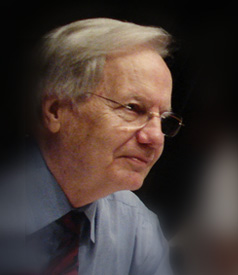
Bill Moyers. (Photo: Grahamtastic; Edited: Jared Rodriguez / t r u t h o u t)


http://www.truth-out.org/bill-moyers-facts-still-matter67571

All,

In an increasingly mad and maddening world and in a hopelessly vain and so-called "exceptional" country where literally tens of millions of people have happily forfeited any desire for or access to sanity and reason on behalf of rank stupidity, ignorance, paranoia, and hatred, it is more than inspiring to know that there still exist courageous individuals like Bill Moyers who continue to educate, challenge, and encourage us to demand of ourselves that we keep pursuing knowledge and information in the name of truth and justice. Bill is a national treasure whose incisive intelligence, moral clarity, mature compassion, and relentless pursuit of truth and knowledge in his work and life has been a beacon for those of us who insist on "speaking truth to power" in the U.S. media and politics for over 50 years. The following speech delivered January 27, 2011 to the influential national group of journalists, broadcasters, and media producers known as "The History Makers" is yet another sterling example of the power, insight, and dedication to facts, truth, and genuine social change that has marked Moyers's entire legendary career. Please read and pass it on...

Kofi

"George Orwell had warned six decades ago that the corrosion of language goes hand in hand with the corruption of democracy. If he were around today, he would remind us that "like the rattling of a stick inside a swill bucket," this kind of propaganda engenders a "protective stupidity" almost impossible for facts to penetrate.

But you, my colleagues, can't give up. If you do, there's no chance any public memory of everyday truths - the tangible, touchable, palpable realities so vital to democracy - will survive. We would be left to the mercy of the agitated amnesiacs who "make" their own reality, as one of them boasted at the time America invaded Iraq, in order to maintain their hold on the public mind and the levers of power. You will remember that in Orwell's novel "1984," Big Brother banishes history to the memory hole, where inconvenient facts simply disappear. Control of the present rests on obliteration of the past. The figure of O'Brien, who is the personification of Big Brother, says to the protagonist, Winston Smith: "We shall squeeze you empty and then we shall fill you with ourselves." And they do. The bureaucrats in the Ministry of Truth destroy the records of the past and publish new versions. These in turn are superseded by yet more revisions. Why? Because people without memory are at the mercy of the powers that be; there is nothing against which to measure what they are told today. History is obliterated."
--Bill Moyers


Bill Moyers: "Facts Still Matter ..."
Monday 14 February 2011
by: Bill Moyers, t r u t h o u t | Speech

History Makers is an organization of broadcasters and producers from around the world concerned with the challenges and opportunities faced by factual broadcasting. Bill Moyers was the keynote speaker at the 2011 convention on January 27, 2011, in New York City.

Thanks to all of you for your welcome - and for the chance to be here among so many kindred spirits. Your dedication to factual broadcasting, to our craft and calling; your passion for telling stories that matter; for connecting the present to the past, has created a community whose work is essential in this disquieting time when "what is happening today, this hour, this very minute, seems to be our sole criterion for judgment and action." It is a sad world that exists only in the present, unaware of the long procession that brought us here. As Milan Kundera’s insight reminds us, the struggle against power "is the struggle of memory against forgetting."

I talked about this gathering when I was in California this past weekend and spent time with a good friend and supporter of my own work on television, Paul Orfalea. He's the maverick entrepreneur who founded Kinko's in a former hamburger stand with one small rented Xerox copier and turned it into a business service empire with more than two billion dollars a year in revenue. After selling Kinko's, Paul became one of the most popular, if unorthodox, teachers of undergraduates at the University of California/ Santa Barbara. When I told him what I would be doing today he applauded and understood immediately the importance of what you do. He described to me how he teaches history "backwards" to college students who have learned little about the past in high school, don't know that the past is even alive, much less that it lives in them and question its value today. He hands his students a contemporary story from some daily news source, tells them to begin with the "now" of it and to then walk the trail back down the chronology to trace the personalities, circumstances and choices that made it today's news. Their assignment, in effect, is to begin at the entrance to the cave and rewind Ariadne's thread in the opposite direction, back to the deep origins of the story. In an era marked by the lack of continuity and community between the generations, this strikes me as an inspired way to stretch young imaginations across the time zones of human experience.

And it's, of course, what you do so often in your work. No one I know does it more effectively than "Frontline." and I was pleased to learn that you are honoring its executive director, David Fanning, who is a genius, in my book, at story telling grounded in fact and presented with perspective. Over the past quarter century, I have been privileged to collaborate occasionally with David. But beyond my own personal and professional gratitude to him, all of us who produce current affairs and history programming know that he has kept the bar high while producing a body of work unequaled since Fred Friendly. Most of you are too young to have seen the whole arc of David's extraordinary career or to have known Fred Friendly's work. But some of us can never forget we're standing on the shoulder of those two giants.

I also had the privilege of witnessing Fred in action. When he was president of "CBS News" and I was the White House press secretary, he would come down from New York on the shuttle and slip in the back door of the White House and along the hall past the Cabinet Room to the private entrance to my office for an hour-or-so chat. I had done some preliminary work at the Office of Education on the future of public television in 1964, and we were soon talking about the medium's future; he was a true believer in television "that dignifies instead of debases" and of the importance "of at least one channel free of commercials and commercial values." Little did we know at the time that he would soon quit the job he relished as president of the news division that he and Edward R. Murrow had built. The two of them created "See It Now" and "CBS Reports," which set the standard for investigative reporting and documentaries of unprecedented power and impact. One of their collaborations was the famous documentary on the demagogic and dangerous Senator Joseph McCarthy. They made the brilliant decision to let McCarthy speak for himself, an entire broadcast's worth of his bullying words and techniques. McCarthy obligingly hanged himself on national television, far more effectively and fatally than anyone else's words could. His own words had turned Americans against his demagoguery - something for which the right to this day has never forgiven what they denounced as the "Communist Broadcasting System." Watching that documentary over and again, I realized that it is through such unhurried honoring of reality that we can approach the myriad and messy truths of human experience. For lasting effect, those truths cannot be forced into the mind of the public; they must be nurtured.

Fred never wanted to leave CBS, but in 1966, when the network refused to carry Senate hearings on the Vietnam War, choosing instead to run a repeat of "I Love Lucy," he resigned, became the media adviser to the Ford Foundation and was the prime mover in the creation of the Corporation for Public Broadcasting. He became our Johnny Appleseed, persuading the foundation to put its money - millions of dollars - where his mind was.

I had left the White House by then to be publisher of Newsday and would soon join public television as anchor of a weekly broadcast. Fred's first teaching assistant, Martin Clancy, was my star producer. It was usually one of Fred's people who taught me the most about our craft - how it was possible through the coupling of word and image to come close to the verifiable truth and an honest accounting of reality. Fred played a critical role in my life when, after stints at both CBS and PBS, I had to choose between the two. I had found it increasingly difficult at the network to do the work I most wanted to do, but was reluctant to take off the golden handcuffs and leap into the world of independent production. I went over to see Fred at the foundation and there was nothing subtle in his advice. He said, "You're never going to do the work you most want to do until you do it for yourself." So, I followed him overboard.

Fred was right, as he so often was: independence meant the best hope for me to pursue journalism as a mission. Perhaps, we were naïve, but in those days many of us still assumed that an informed public is preferable to an uninformed one. Hadn't Thomas Jefferson proclaimed that, "Whenever the people are well-informed, they can be trusted with their own government"? And wasn't a free press essential to that end?

Maybe not. As Joe Keohane reported last year in The Boston Globe, political scientists have begun to discover a human tendency "deeply discouraging to anyone with faith in the power of information." He was reporting on research at the University of Michigan, which found that when misinformed people, particularly political partisans, were exposed to corrected facts in new stories, they rarely changed their minds. In fact, they often became even more strongly set in their beliefs. Facts were not curing misinformation. "Like an underpowered antibiotic, facts could actually make misinformation even stronger." You can read the entire article online.

I won't spoil it for you by a lengthy summary here. Suffice it to say that, while "most of us like to believe that our opinions have been formed over time by careful, rational consideration of facts and ideas and that the decisions based on those opinions, therefore, have the ring of soundness and intelligence," the research found that actually "we often base our opinions on our beliefs ... and rather than facts driving beliefs, our beliefs can dictate the facts we chose to accept. They can cause us to twist facts so they fit better with our preconceived notions."

These studies help to explain why America seems more and more unable to deal with reality. So many people inhabit a closed belief system on whose door they have hung the "Do Not Disturb" sign, that they pick and choose only those facts that will serve as building blocks for walling them off from uncomfortable truths. Any journalist whose reporting threatens that belief system gets sliced and diced by its apologists and polemicists (say, the fabulists at Fox News, Rush Limbaugh and the yahoos of talk radio.) Remember when Limbaugh, for one, took journalists on for their reporting about torture at Abu Ghraib? He attempted to dismiss the cruelty inflicted on their captives by American soldiers as a little necessary "sport" for soldiers under stress, saying on air: "This is no different than what happens at the Skull and Bones initiation ... you [ever] heard of need to blow some steam off?" As so often happens, the Limbaugh line became a drumbeat in the nether reaches of the right-wing echo chamber. So, it was not surprising that in a nationwide survey conducted by The Chicago Tribune on First Amendment issues, half of the respondents said there should be some kind of press restraint on reporting about the prison abuse. According to Charles Madigan, the editor of the Tribune's Perspective section, 50 or 60 percent of the respondents said they "would embrace government controls of some kind on free speech, particularly when it has sexual content or is heard as unpatriotic."

No wonder many people still believe Obama was born in Kenya, not Hawaii, as his birth certificate shows; or that he is a Muslim, when in fact he is a Christian; or that he is a socialist when day by day he shows an eager solicitude for corporate capitalism. Partisans in particular - and the audiences for Murdoch's Fox News and talk radio - are particularly susceptible to such scurrilous disinformation. In a Harris survey last spring, 67 percent of Republicans said Obama is a socialist; 57 percent believed him to be a Muslim; 45 percent refused to believe he was born in America; and 24 percent said he "may be the antichrist."

The bigger the smear, the more it sticks. And there is no shortage of smear artists. Last year, Forbes Magazine, obviously bent on mischief, allowed the right-wing fantasist Dinesh D'Souza to tar Obama with a toxic brew so odious it triggered memories of racist babble - a perverted combination of half-baked psychology, biology and sociology - that marked the heyday of the Ku Klux Klan. Seizing upon the anti-colonial views of Obama's Kenyan father, who had deserted the family when the boy was two years old and whose absence from his life Obama meditated upon in his best-selling book "Dreams of My Father," D'Souza wrote that, "Incredibly, the US is being ruled according to the dreams of a Luo tribesman of the 1950s. This philandering, inebriated African socialist, who raged against the world for denying him the realization of his anticolonial ambitions, is now setting the nation's agenda through the reincarnation of his dreams in his son."

In a sane political world, you might think at least a few Republican notables would have denounced such hogwash by their own kind for what it was. But no. Newt Gingrich, once their speaker of the House, whose own fantasies include succeeding Obama in the White House, set the tone by praising D'Souza's claptrap as the "most profound insight I have read in the last six years about Barack Obama." D'Souza, said Gingrich, has made a "stunning insight" and had unlocked the mystery of Obama. I could find only one conservative who stood up against this trash. David Frum, the former speechwriter for George W. Bush, wrote on his blog: "The argument that Obama is an infiltrating alien, a deceiving foreigner - and not just any kind of alien, but specifically a Third World alien - has been absorbed to the very core of the Republican platform for November 2010." Once again, the right-wing media machine had popularized a false narrative and made of it a destructive political weapon.

Disinformation is not unique to the right, of course. Like other journalists, I have been the object of malevolent assaults from the "9/11 truthers" for not reporting their airtight case proving that the Bush administration conspired to bring about the attacks on the World Trade Center. How did they discover this conspiracy? As the independent journalist Robert Parry has written, "the truthers" threw out all the evidence of al-Qaeda's involvement, from contemporaneous calls from hijack victims on the planes to confessions from al-Qaeda leaders both in and out of captivity that they had indeed done it. Then, recycling some of the right's sophistry techniques, such as using long lists of supposed evidence to overcome the lack of any real evidence, the "truthers" cherry-picked a few supposed "anomalies" to build an "inside-job" story line. Fortunately, this Big Lie never took hold in the public mind. These truthers on the left, if that is where GPS can find them on the political map, are outgunned, outmatched and outshouted by the media apparatus on the right that pounds the public like drone missiles loaded with conspiracy theories and disinformation and accompanied by armadas of outright lies.

George Orwell had warned six decades ago that the corrosion of language goes hand in hand with the corruption of democracy. If he were around today, he would remind us that "like the rattling of a stick inside a swill bucket," this kind of propaganda engenders a "protective stupidity" almost impossible for facts to penetrate.

But you, my colleagues, can't give up. If you do, there's no chance any public memory of everyday truths - the tangible, touchable, palpable realities so vital to democracy - will survive. We would be left to the mercy of the agitated amnesiacs who "make" their own reality, as one of them boasted at the time America invaded Iraq, in order to maintain their hold on the public mind and the levers of power. You will remember that in Orwell's novel "1984," Big Brother banishes history to the memory hole, where inconvenient facts simply disappear. Control of the present rests on obliteration of the past. The figure of O'Brien, who is the personification of Big Brother, says to the protagonist, Winston Smith: "We shall squeeze you empty and then we shall fill you with ourselves." And they do. The bureaucrats in the Ministry of Truth destroy the records of the past and publish new versions. These in turn are superseded by yet more revisions. Why? Because people without memory are at the mercy of the powers that be; there is nothing against which to measure what they are told today. History is obliterated.

Fight the lies and misinformation; support truth! Please make a tax-deductible donation to Truthout today and keep real independent journalism strong.

The late scholar Cleanth Brooks of Yale thought there were three great enemies of democracy. He called them "The Bastard Muses": Propaganda, which pleads sometimes unscrupulously, for a special cause at the expense of the total truth; sentimentality, which works up emotional responses unwarranted by, and in excess of, the occasion; and pornography, which focuses upon one powerful human drive at the expense of the total human personality. The poet Czeslaw Milosz identified another enemy of democracy when, upon accepting the Noble Prize for Literature, he said "Our planet that gets smaller every year, with its fantastic proliferation of mass media, is witnessing a process that escapes definition, characterized by a refusal to remember." Memory is crucial to democracy; historical amnesia, its nemesis.

Against these tendencies it is an uphill fight to stay the course of factual broadcasting. We have to keep reassuring ourselves and one another that it matters and we have to join forces to defend and safeguard our independence. I learned this early on.

When I collaborated with the producer Sherry Jones on the very first documentary ever about the purchase of government favors by political action committees, we unfurled across the Capitol grounds yard after yard of computer printouts listing campaign contributions to every member of Congress. The broadcast infuriated just about everyone, including old friends of mine who a few years earlier had been allies when I worked at the White House. Congressmen friendly to public television were also outraged, but, I am pleased to report, PBS took the heat without melting.

But shining the spotlight on political corruption is nothing compared to what can happen if you raise questions about corporate power in Washington, as my colleague Marty Koughan and I discovered when we produced a program for David Fanning and "Frontline" on pesticides and food. Marty had learned that industry was attempting behind closed doors to dilute the findings of the American Academy of Sciences study on the effects of pesticide residues on children. Before we finished the documentary, the industry somehow purloined a copy of our draft script - we still aren't certain how - and mounted a sophisticated and expensive campaign to discredit our program before it aired. Television reviewers and editorial pages of key newspapers were flooded with propaganda. Some public television managers were so unnerved by the blitz of misleading information about a film they had not yet broadcast that they actually protested to PBS with letters that had been prepared by the industry.

Here's what most perplexed us: the American Cancer Society - an organization that in no way figured in our story - sent to its 3,000 local chapters a "critique" of the unfinished documentary claiming, wrongly, that it exaggerated the dangers of pesticides in food. We were puzzled. Why was the American Cancer Society taking the unusual step of criticizing a documentary that it had not seen, that had not aired and that did not claim what the Society alleged? An enterprising reporter named Sheila Kaplan later looked into those questions for the journal Legal Times. It turns out that the Porter Novelli public relations firm, which had worked for several chemical companies, also did pro bono work for the American Cancer Society. Kaplan found that the firm was able to cash in some of the goodwill from that "charitable" work to persuade the compliant communications staff at the Society to distribute some harsh talking point about the documentary before it aired - talking points that had been supplied by, but not attributed to, Porter Novelli. Legal Times headlined the story "Porter Novelli Plays All Sides." A familiar Washington game.

Others also used the American Cancer Society's good name in efforts to tarnish the journalism before it aired, none more invidiously than the right-wing polemicist Reed Irvine, who pumped his sludge through an organization with the Orwellian name Accuracy in Media. He attacked our work as "junk science on PBS" and demanded Congress pull the plug on public broadcasting. Fortunately, PBS once again stood firm. The documentary aired, the journalism held up and the publicity liberated the National Academy of Sciences to release the study that the industry had tried to cripple.

However, there's always another round; the sharks are always circling. Sherry Jones and I spent more than a year working on another PBS documentary called "Trade Secrets," a two-hour investigative special based on revelations - found in the industry's own archives - that big chemical companies had deliberately withheld from workers and consumers damaging information about toxic chemicals in their products. These internal industry documents are a fact. They exist. They are not a matter of opinion or point of view. They state what the companies knew, when they knew it and what they did with what they knew (namely to deep-six it) at peril to those who worked with and consumed the potentially lethal products.

The revelations portrayed deep and pervasive corruption in a major American industry and raised critical policy implications about the safety of living under a regulatory system manipulated by the industry itself. If the public and government regulators had known what the industry knew about the health risks of its products when the industry knew it, America's laws and regulations governing chemical manufacturing would have been far more protective of human health. But the industry didn't want us to know. That's what the documents revealed and that was the story the industry fought to keep us from telling.

The industry hired as an ally a public relations firm in Washington noted for using private detectives and former CIA, FBI and drug enforcement officers to conduct investigations for corporations under critical scrutiny. One of the company's founders acknowledged that corporations may need to resort to "deceit" and other unconventional resources to counter public scrutiny. Given the scurrilous campaign that was conducted to smear our journalism, his comments were an understatement. To complicate matters, the Congressman, who for years had been the single biggest recipient of campaign contributions from the chemical industry, was the very member of Congress whose committee had jurisdiction over public broadcasting's appropriations. As an independent production firm, we had not used public funds to produce the documentary. But even our independence didn't stop the corporate mercenaries from bringing relentless pressure on PBS not to air the broadcast. The then president of PBS, Pat Mitchell, stood tall in resisting the pressure and was vindicated: one year later, The National Academy of Television Arts and Sciences awarded "Trade Secrets" an Emmy for outstanding investigative journalism.

Now, you can understand how it is that journalism became for me a continuing course in adult education. It enabled me to produce documentaries like "Trade Secrets" and out-of-the-box series like "Joseph Campbell and the Power of Myth." It enabled me to cover the summits of world leaders and the daily lives of struggling families in Newark. It empowered me to explain how public elections are subverted by private money, and to how to make a poem. Journalism also provided me a passport into the world of ideas, which became my favorite beat, in no small part because I never met anyone - philosopher or physicist, historian, artist, writer, scientist, entrepreneur or social critic - who didn't teach me something I hadn't known, something that enlarged my life.

Here's an example: One of my favorite of all interviews was with my sainted fellow Texan, the writer and broadcaster John Henry Faulk, who had many years earlier, been the target of a right-wing smear campaign that resulted in his firing by CBS from his job as a radio host here in New York, one of the low moments in that network's history. But John Henry fought back in court and won a landmark legal victory against his tormentors. After he returned home to Texas, I did the last interview with him before his death in 1990. He told me the story of how he and his friend Boots Cooper were playing in the chicken coop when they were about 12 years old. They spied a chicken snake in the top tier of nests, so close it looked like a boa constrictor. As John Henry put it, "All our frontier courage drained out our heels - actually it trickled down our overall legs - and Boots and I made a new door through that henhouse wall." Hearing all the commotion Boots' momma came out and said, "Don't you boys know chicken snakes are harmless? They can't harm you." And Boots, rubbing his forehead and behind at the same time, said, "Yes, Mrs. Faulk, I know that, but they can scare you so bad, it'll cause you to hurt yourself." John Henry Faulk told me that's a lesson he never forgot. Over and again I've tried to remember it, too, calling on it to restore my resolve and my soul.

I've had a wonderful life in broadcasting, matriculating as a perpetual student in the school of journalism. Other people have paid the tuition and travel and I've never really had to grow up and get a day job. I think it's because journalism has been so good to me that I am sad when I hear or read that factual broadcasting is passé - that television as a venue for forensic journalism is on its way out and that trying to find out "what really happened" - which is our mandate - is but a quaint relic in an age of post-structuralism and cyberspace. But despite all our personal electronic devices, people are watching more television than ever. Much of this programming is posted online; I believe at least half the audience for my last two weekly series on Friday night came over the weekend via streaming video, iPods and TIVO. I was pleased to discover that the web sites most frequented by educators are those of PBS and that our own sites were among the most popular destinations. That's what keeps us going, isn't it? The knowledge that all the bias and ignorance notwithstanding, facts still matter to critical thinking, that if we respect and honor, even revere them, they just might help us right the ship of state before it rams the iceberg.

That's why, on balance, I count WikiLeaks a plus for democracy. Whatever side you take on the controversy, whether or not you think this information should be disclosed, all parties - those who want it released and those who don't - acknowledge that information matters. Partly because I grew up in the south and partly because of my experience in the Johnson White House, I'm on the side of disclosure, even when it hurts. The truth about slavery had been driven from the pulpits, newsrooms and classrooms during the antebellum days; it took a bloody civil war to drive the truth home. At the Johnson White House, we circled the wagons and grew intolerant of news that didn't conform to our hopes, expectations and strategies for Vietnam, with terrible, tragic results for Americans and Vietnamese, north and south. I say: "Never again!"

Here's a sidebar: I remember vividly the day President Johnson signed the Freedom of Information Act (FOIA): July 4, 1966. He signed it "with a deep sense of pride," declaring in almost lyrical language "that the United States is an open society in which the people's right to know is cherished and guarded." That's what he said. The truth is, the president had to be dragged kicking and screaming to the signing ceremony. He hated the very idea of journalists rummaging in government closets, hated them challenging the authorized view of reality, hated them knowing what he didn't want them to know. He dug in his heels and even threatened to pocket veto the bill after it reached the White House. Only the courage and political skill of a Congressman named John Moss got the bill passed at all and that was after a 12-year battle against his Congressional elders, who blinked every time the sun shined on the dark corners of power. They managed to cripple the bill Moss had drafted and, even then, only some last-minute calls to LBJ from a handful of influential newspaper editors overcame the president's reluctance. He signed "the f------ thing," as he called it and then, lo and behold, went out to claim credit for it.

It's always a fight to find out what the government doesn't want us to know. The official obsession with secrecy is all the more disturbing today because the war on terrorism is a war without limits, without a visible enemy or decisive encounters. We don't know where the clandestine war is going on or how much it's costing and whether it's in the least effective. Even in Afghanistan, most of what we know comes from official, usually military, sources.

Thus, a relative handful of people have enormous power to keep us in the dark. And when those people are in league with their counterparts in powerful corporations, the public is hit with a double whammy. We're usually told the issue is national security, but keeping us from finding out about the danger of accidents at chemical plants is not about national security; it's about covering up an industry's indiscretions and liabilities. Locking up the secrets of meetings with energy executives is not about national security; it's about hiding confidential memos sent to the White House showing the influence of oil companies on policies of global warming We only learned about that memo from the Bush White House, by the way, thanks to the Freedom of Information Act.

Consider WikiLeaks, then, to be one big FOIA dump. Were some people in high places embarrassed? Perhaps. They did squeal, but I don't think they were stuck.

And even so, we learned some important things from WikiLeaks. For example, as Reza Alsan writes in The Atlantic, the president of Iran, Mahmoud Ahmadinejad, may not be as fanatical as we think he is; the diplomatic cables released by WikiLeaks portray him as "a moderate reformer who'd like to cut deals with the West, but can't because hard-liners are calling the shots." One of them even slapped Ahmadinejad across the face when, at a high-level meeting. he proposed that the government allow more personal and press freedom at the height of the 2009 public protests in Iran. Such information can help us evaluate the incessant demands of neoconservative warmongers - the very people who rode the circuit with news of "weapons of mass destruction" in an effort to build support for invading Iraq - that we use military force against Iran to eliminate its nuclear capacity.

There are other uses of the disclosures from WikiLeaks admirably compiled by Greg Mitchell in the current edition of The Nation, where the one-time editor of Editor and Publisher performed an important public service by culling the gold from the dust.

I will close with an urgent appeal to you about one fight we won't win unless all of us join it. I'm sure everyone here agrees that we will eventually be moving to the web, all of us and that "free, instant, worldwide connectivity" is the future. But I'm sure you know that this incredible, free, open Internet highway is at risk, that corporations are on the brink of muscling their way to the front of the line. Media companies want the power to censor Internet content they don't like, to put toll booths on the web so they can charge more for the privilege of driving in the fast lanes, to turn it into a private preserve.

You may have heard that last month the FCC decided to protect free/open Internet access only on landline connections, not wireless - which is to say, there's no net neutrality in most of the online world. As Jenn Ettinger of the nonpartisan, nonprofit Free Press reported in Yes! magazine just two days ago:

The rules that the FCC passed in December are vague and weak. The limited protections that were placed on wired connections, the kind you access through your home computer, leave the door open for the phone and cable companies to develop fast and slow lanes on the Web and to favor their own content or applications.

Worse, the rules also explicitly allow wireless carriers ... to block applications for any reason and to degrade and de-prioritize websites you access using your cell phone or a device like an iPad.

Perhaps the FCC is biding its time, waiting to see how things develop technologically, with the current FCC chair seemingly more open to citizen input than was his predecessor. Or, again, maybe the landline regulation was meant simply to get media reformers off the commission's back. We can't relax our vigilance. In Ettinger's words:

The FCC still has the opportunity to put in place a solid framework that would put the public interest above the profit motive of the phone and cable companies that it is supposed to regulate. And the FCC should take immediate steps to close the loopholes it created, to strengthen its rules and to include wireless protections. The fight is far from over. We can work to change the rules, demand better oversight and consumer protections and make sure that the big companies can't pad their bottom lines on the backs of their customers.

In this effort, we have a strong ally in FCC commissioner Michael Copps, who. on my broadcast last year, spelled out how "our future is going to ride on broadband. How we get a job is going to ride on broadband. How we take care of our health. How we educate ourselves about our responsibilities as citizens ... And it's absolutely imperative that we have a place, that we have a venue to go to, to make sure that that Internet is kept open ... That's our decision to make as a people, as citizens: who's going to control this ultimately?"

With all the media consolidation that's happening today, the web may be the last stand of independent factual broadcasters like you. The stakes are high and we have come to the decisive round. I'll leave you with a story Joseph Campbell told me years ago for my series "The Power of Myth." It seems a fellow rounding the corner saw a fight break out down the block. Running up to one of the bystanders, he shouted: "Is this a private fight or can anyone get in it?"

The Internet fight for democracy is a public fight. Come on in!