Showing posts with label American Labor. Show all posts

Sunday, February 17, 2013

The Crucial Coalition Of Immigrants and African Americans in the Pivotal Struggle of Labor Vs. Capital in the United States Today


All,

There is a wonderful and endlessly profound proverb from the historical depths of the inspiring and extraordinary African American collective experience in the United Hates and it has been passed down in countless intimate conversations and liberatory gatherings and blues and rhythm and blues and gospel and Jazz songs and it goes like this:  "No matter what happens always remember that GOOD NEWS IS COMING so you better be ready to receive and embrace it when it gets here."  The article below conjures up yet another shining dynamic example of this boundless and eternal truth--and like always the news comes NOT A MINUTE TOO SOON.  Can I get a witness?   YES!!

Kofi
"Politics is an activity," C.L.R. James famously said. "It is not a lecture room where the people are supposed to listen to all the government has done for them. The more active the people are, the more active the government can be."

Charging Through the Archway of History: Immigrants and African-Americans Unite to Transform the Face of Labor and the Power of Community
Saturday, 16 February 2013
By Paul Ortiz, Truthout | Op-Ed


Francisco Martinez, 17, protests policies of President Barack Obama that have deported record numbers of Latinos, during a protest outside President Obama's campaign headquarters, at One Prudential Plaza in Chicago, August 16, 2011. (Photo: Peter Hoffman / The New York Times)

A budding coalition of immigrants and African-Americans - modeled on the outstanding community- and labor-organizing example of Culinary Workers Union Local 226 - is potentially the largest progressive force in America - one capable of transforming the trajectory of US history.

"I was taught that justice wears a blindfold, so as not to be able to distinguish between the colors, and thus makes everyone equal in the eyes of the law. I propose we remove the blindfold from the eyes of Lady Justice, so that for the first time she can really see what's happening and check out where the truth lies and the lies hide. That would be a start. Viva the children of all colors! Punto!"
- Piri Thomas, Down These Mean Streets

Part I: A Tale of Two Speeches

Why did President Obama travel to Las Vegas to make a speech on immigration? Las Vegas is a union town. The city is the home of one most powerful unions in the Americas, an organization built and led largely by Latina, African-American and Asian-American women who work as maids, housekeepers and food service workers on the Las Vegas Strip and beyond.

Many of the rank-and-file members of the 60,000-member Culinary Workers Union Local 226 are single mothers, and without their support Obama would not be President of the United States. The president understands this and herein lays the symbolic power of his speech, as well as the transformations in American life that it reveals. The new president of Local 226 is the brilliant organizer Geoconda Arguello-Kline. She was a picket captain during the epic Frontier Hotel Strike (1991-1998) where not a single one of the 550 hotel workers crossed the picket line. The strike "showed us all what unity and perseverance are," she recalled. Arguello-Kline originally hails from Managua, Nicaragua and is a former hotel housekeeper.


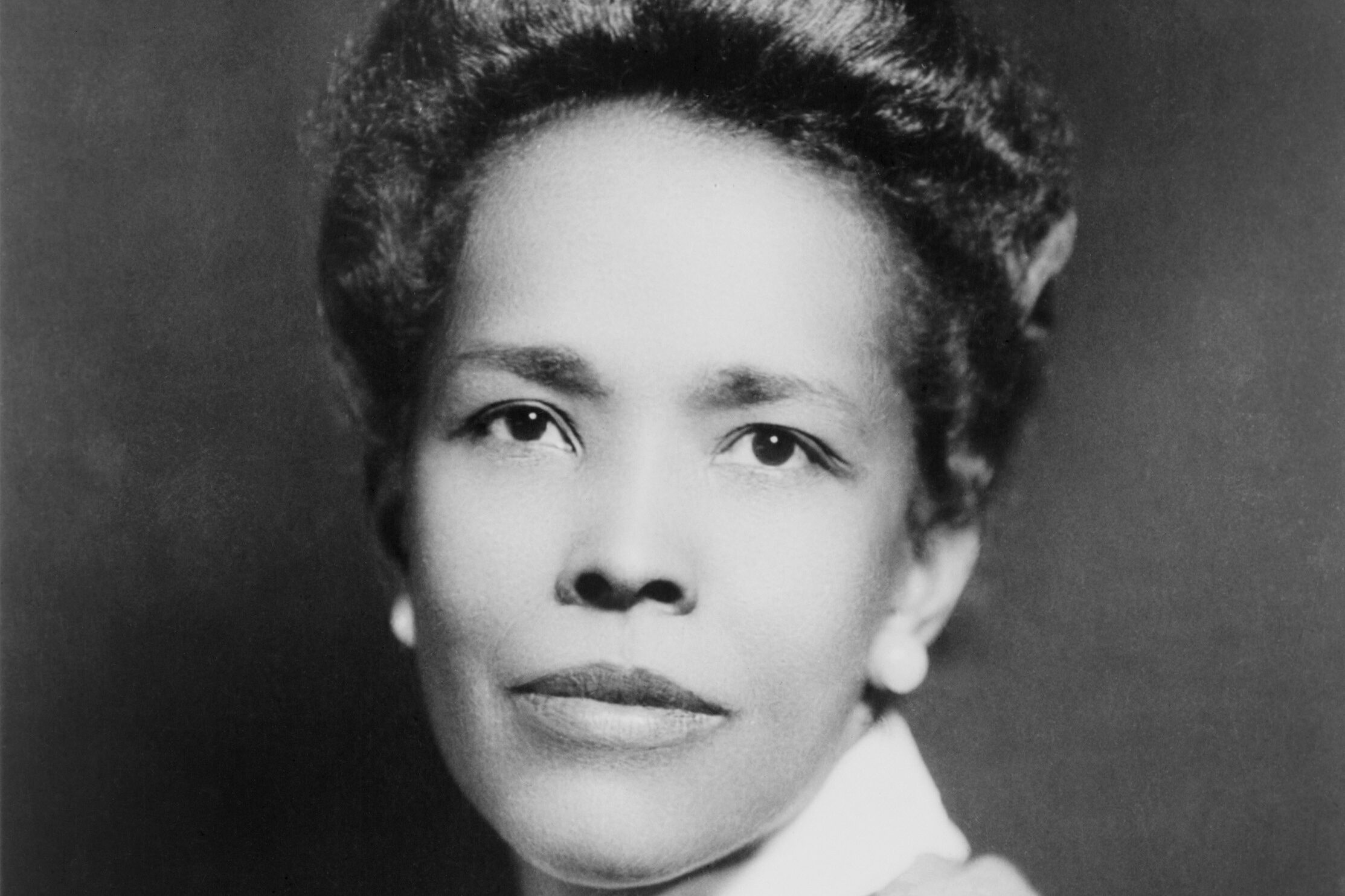
Black and white photograph of Hattie Canty marching with other women during a union strike.

In the 1990s, Local 226 became the fastest-growing private sector union in the United States. It was led by the legendary African-American unionist Hattie Canty, who migrated to Las Vegas from rural Alabama. In contrast to the AFL-CIO's George Meany, who bragged that he had never been on a picket line, Canty was one of the greatest strike leaders in US history. Her patient leadership helped knit together a labor union made up of members from 84 nations. "Coming from Alabama," Canty observed, "this seemed like the civil rights struggle ... the labor movement and the civil rights movement, you cannot separate the two of them."

Whether they hail from Alabama, Thailand, Central America or someplace else, the members of Local 226 represent the future promise of the Americas. This is not about demographics; it is about corazón (heart), the willingness to struggle together and the courage to challenge corporate America when others have surrendered.

The place where a president chooses to deliver a major address is important. In 1980, Ronald Reagan traveled to Neshoba County, Mississippi - the least unionized state in the country - to make a speech on "states' rights." He was trying to build a base of white southern support pursuant to the 1980 Presidential Election.

He gave his speech a few miles away from the place where three civil rights activists had been murdered in 1964. James Chaney, Andrew Goodman, and Michael Schwerner were killed by people who held the doctrine of "states rights" to be a sacred part of their Confederate heritage. While Reagan may have been ignorant of the civil rights movement, he was well aware of the role that the Republican Party's "Southern Strategy" played in his electoral chances. The goal was to play upon white pride and to undermine the Democratic Party in the South. In the short term, it worked.

Analysts are saying that the re-election of Obama may signal the end of the Reagan Era.

But elections decide nothing. The zombie-like grip that policies implemented by cohorts of Reagan/Ayn Rand acolytes will only be broken by collective action. The Student Nonviolent Coordinating Committee and the United Farm Workers did not wait for John F. Kennedy or Lyndon B. Johnson to do for them what they could do for themselves. Freedom schools, strikes, boycotts and voter registration campaigns were engines of social change in the 1960s and yes, they were sometimes timed to push Washington, DC to action.

The 2006 General Strike of Latinos on International Workers' Day made the election of Barack Obama possible. The mass walkouts demonstrated the ability of Latinos to shut the economy down in defense of social justice and equality. It taught us that the real strength in our communities is in our custodians, manual laborers and service workers - not in our intellectuals, executives or experts who garner corporate endorsements for interpreting "Latin culture" for Madison Avenue. In the 1960s, we learned, much to our surprise, that the future of Latino aspirations rested on the creative energies of farm workers. In turn, the Grape Boycott awakened and trained a new generation of young community organizers who went on to play pivotal roles in rebuilding progressive politics through vehicles such as the Rainbow Coalition, the Los Angeles County Federation of Labor, and finally, the "Obama ground game."

The general strike signaled a renaissance of working-class culture in the US that we have yet to fully understand. It reminded the nation that politics is not the property of the rich; it occurs on soccer fields, in union halls, in churches and in tiendas where immigrant workers gather to share information on the latest activities of US Immigration and Customs Enforcement (ICE) in the neighborhood. In both 2008 and 2012, a significant amount of the electoral ground game hinged on the energy of local labor councils in canvassing, multi-lingual phone-banking and other outreach activities. Many of these activists had been rejuvenated by, or even earned their organizers' stripes, during International Workers' Day, 2006. In south Florida, an epicenter of the General Strike, Latinos were a decisive part of Election Day. According to Gihan Perera, "In Homestead, undocumented workers who couldn't even vote pitched in with a mariachi band and barbecue," to encourage thousands of African-Americans, Latinos, and progressive whites to stay in line and vote. Black and brown power made the difference in Florida.

"Politics is an activity," C.L.R. James famously said. "It is not a lecture room where the people are supposed to listen to all the government has done for them. The more active the people are, the more active the government can be." Nearly 300,000 Latinos, African-Americans, and Asian-American workers joined unions in the months leading up to the general election. Even the mainstream media noted that strike activity increased significantly around the time of the election campaign. "The number of union-related work stoppages involving more than 1,000 workers, which reached an all-time low of just five in 2009, rose to 13 this year as of October. And unions aren't done yet," reported the Los Angeles Times.

People are on the move.

I believe the president's Las Vegas speech is a microcosm of a larger movement that may create an expansion of democracy. Everything hinges on the next act of this drama. If a US president is pushed by grassroots pressure to create an opening for social change to occur and he engages in flowery rhetoric to facilitate the process, one doesn't pause at the archway of history to criticize the rhetoric: One charges through the damn door.

African-Americans did not wait in 1863 to see if Abraham Lincoln was serious about the Emancipation Proclamation. A quarter of a million of them enlisted in the US Army in order to drive the Confederate States of America into oblivion.

Is President Obama deeply committed to immigration reform? That's the wrong question to ask. We know that he promised Helen Chavez, the widow of United Farm Workers' co-founder César Chávez, to "do something" about the issue. A better question to ask is: What are we willing to do to welcome millions of struggling workers into our polity? Immigrants traveled to the United States from all over the world during the past two decades and contributed to one of the greatest economic booms in history. They are the solution to an aging Baby Boom generation; they are replenishing tax coffers and they are bringing much-needed changes to our archaic, monolingual culture. What will we do to make them fully empowered citizens of the republic?

Immigrant energy is contributing to a revival of progressive American political culture. It finds its echoes in the heroic DREAMista activists (who have pushed the federal government hard on immigration reform), the Florida Dream Defenders, who organized in the wake of the murder of Trayvon Martin, as well as the Occupy insurgencies. All of these initiatives are part of the rising tide of new social movements that we must nurture, support and sustain.

In a recent newspaper poll taken in the college town of Gainesville, Florida, where I live, 62 percent of the respondents voted against the premise that people "currently in the US illegally" should have a path to citizenship. This is going to be a battle.

Part II:  A New Century

Tens of millions of immigrants with lineages from Latin America, Asia, Africa and the Middle East voted in significant majorities to re-elect Barack Obama. The choices that first- and second-generation immigrant voters made in this election may signal a turning point in American history. In line with their early 20th century predecessors, these voters could have settled for the tragic bargain of whiteness that Toni Morrison has so eloquently critiqued. In her essay, "On the Backs of Blacks," Morrison observed that, "In race talk, the move into mainstream America always means buying into the notion of American blacks as the real aliens. Whatever the ethnicity or nationality of the immigrant, his nemesis is understood to be African-Americans."

The phenomenon of "whiteness," as scholars call it, meant the country's newcomers often alienated themselves from the democratic legacies of the anti-slavery movement as well as from freedom fighters such as Frederick Douglass, Ida B. Wells Barnett and Mary McCleod Bethune, in favor of assimilation to Jim Crow/Juan Crow segregation before the 1950s.

Scholars have long been predicting a massive "turn towards whiteness" among late-20th century immigrants, but it has not happened yet. In fact, we may have broken the old curse. Recent immigrants, such as those who have become members of Local 226 in Las Vegas, are increasingly aligning their politics, trade union membership and their ballots with African-Americans. In the run-up to the 2012 Presidential Election, everyone who had access to radio, television or the internet understood that 90 percent of African-Americans were going to be voting for Obama. As novelist Ishmael Reed observed in Going Too Far: Essays About America's Nervous Breakdown:

"Though progressives still cling to a fantasy to which they've been attached since at least the 1920s - that class determines one's status in American society - to millions of whites, we are all underclass. Notice how images hostile to the president show him as an underclass hoodlum, or associate him with food stamps, or fast foods like KFC, or an email circulated by a candidate for governor of New York, a pimp and his wife a whore."

It isn't as if newer generations of immigrants are completely immune to the virus of racism (and frankly, many of us brought racist attitudes from our mother countries). However, the ballots have been counted: Latinos, Asian-Americans and Americans of Middle Eastern descent rejected two solid years of race-baiting, heavy petting and courting from the Republican Party to stand in solidarity with the black electorate.

In Florida, we were given innumerable opportunities to assimilate to this country's older, miserable norms on race, to "become white" so to speak. Mitt Romney's boosters bombarded our airwaves with racial propaganda. We were warned via the notorious "Chinese Professor" video spot of an imminent Asian takeover of the US should Obama win re-election. We were encouraged to believe that African-Americans were lazy, but this is always a hard sell given slavery, and a century of the Jim Crow labor system. The fact that one cannot travel from one side of this country to the other without relying on black and brown workers to handle one's baggage, prepare one's meals or to clean up one's mess makes the "minorities need to work harder and lift themselves up by their bootstraps" argument ridiculous and insulting.

Other "softer" versions of racism or national discrimination were trotted out. A few days before Election Day, Sen. Marco Rubio bungled a play for the Latino vote by telling a Florida audience that people had fled "corrupt" countries to find freedom in the US only to discover to their dismay that Obama was plotting to import these same policies here. Rubio helpfully clarified that he was referring to Mexico and Latin America as the corrupt places in question. Rubio's gaffe illustrates a fundamental reason why the Republican Party stumbles with Latino voters: Most Mexican-Americans have a nuanced understanding of our mother country. We understand its shortcomings, but we also take pride in the accomplishments of the early 19th century Mexican War of Independence, and the fact that the abolition of slavery in Mexico preceded abolition in the United States by approximately four decades. Most of us also know that the United States invaded Mexico in order to expand slavery, steal land and rob resources from Native Americans. So, which country is more corrupt? Until the GOP drops its devotion to American Exceptionalism, the idea that the United States is as pure as the driven snow, and all other countries are lacking in the character department, the party will continue to shrink in relevance.

Hailing from Africa, Latin America, Europe, Asia and the great centers of world population, this may be the most remarkable cohort of immigrants that has ever journeyed to the United States. They believe in hard work and self-help, but because of the places they come from and the traditions they pay homage to, many of them deeply believe in tenets of equality, social democracy and mutual aid.

Of course, these are just the kind of overarching generalizations that social critics rightly distrust, but I would argue that generations of anti-colonial struggles, experiences with post-colonial letdowns and an abiding distrust of the Washington Consensus make this generation of world citizens more worldly wise than their storied Ellis Island ancestors.

For example, more than a few recent immigrants from the Korean peninsula are importing militant trade union practices to the US, and they have a direct knowledge of the mischief that IMF-style policies wreak on workers. Highland Maya bring organizing experiences with Liberation Theology from Guatemala, and Mexican migrants are steeped in the egalitarian (if unrealized) traditions of the Mexican Revolution.

These cohorts of immigrants are less likely to grasp at the straw of racism that so many of their predecessors did because they arrive with a much more critical understanding of US society and a greater capacity to change the world without exploiting others.

What all of this might mean in political terms is not yet quite clear. However, one thing is certain. If community organizers allow this incipient coalition - potentially the largest progressive force in US history - to slip away, we are missing the opportunity that only comes once in a generation to change the trajectory of American politics.
Culinary Workers Union Local 226 presents us with an outstanding model of community and labor organizing. This is a union where members stay active, and this energy drew President Obama to Las Vegas.

Many of the people who are rank-and-file activists of Local 226 are dishwashers, fry cooks and maids. They labor in what is known in Las Vegas parlance at "the back of the house," an apt metaphor for the position of the American working class since the 1980s. With women such as Canty, the union's founder, and Arguello-Kline, its new president, these workers have moved to the forefront of social change. They marched by the thousands in honor of Martin Luther King Jr.'s holiday last month with banners reading "Labor Rights Are Civil Rights," even as they organized another picket against an unfair employer in the Vegas Strip.

Arguello-Kline and Richard Trumka, the president of the AFL-CIO, appeared on local television immediately following Obama's speech on immigration. Both vowed to mobilize members of the house of labor to support immigration reform. The waiting is over. It is now possible to imagine a new social movement where labor organizing, mariachi music and MLK celebrations become integral to the rejuvenation of this nation. It's time to get busy.

Copyright, Truthout. May not be reprinted without permission.


RELATED STORIES:

Immigrant Rights Activists Are Obama's Freedom Riders
By Henry Fernandez, New America Media | Op-Ed
DREAM Act Could Add $329 Billion to US Economy
By Amanda Peterson Beadle, ThinkProgress | News Analysis
Immigrants and Unions Work To Oust Notorious Arizona Sheriff
By Jenny Brown, LaborNotes | Report

Thursday, September 8, 2011

The Republican and Tea Party Right Continue To Wage War on Public Employees and Their Unions--Just Ask The U.S. Postal Service

http://www.nytimes.com/2011/09/05/business/in-internet-age-postal-service-struggles-to-stay-solvent-and-relevant.html?pagewanted=all

All,

Yet another blatant example of the Republicans trying to destroy the country through the relentless destruction of workers and their unions...Like I said earlier this country is definitely "on the brink/and about to sink"...So Be Afraid. Be Very Afraid...

Kofi


Postal Service Is Nearing Default as Losses Mount
By STEVEN GREENHOUSE
September 4, 2011
New York Times

The United States Postal Service has long lived on the financial edge, but it has never been as close to the precipice as it is today: the agency is so low on cash that it will not be able to make a $5.5 billion payment due this month and may have to shut down entirely this winter unless Congress takes emergency action to stabilize its finances.

“Our situation is extremely serious,” the postmaster general, Patrick R. Donahoe, said in an interview. “If Congress doesn’t act, we will default.”

In recent weeks, Mr. Donahoe has been pushing a series of painful cost-cutting measures to erase the agency’s deficit, which will reach $9.2 billion this fiscal year. They include eliminating Saturday mail delivery, closing up to 3,700 postal locations and laying off 120,000 workers — nearly one-fifth of the agency’s work force — despite a no-layoffs clause in the unions’ contracts.

The post office’s problems stem from one hard reality: it is being squeezed on both revenue and costs.

As any computer user knows, the Internet revolution has led to people and businesses sending far less conventional mail.

At the same time, decades of contractual promises made to unionized workers, including no-layoff clauses, are increasing the post office’s costs. Labor represents 80 percent of the agency’s expenses, compared with 53 percent at United Parcel Service and 32 percent at FedEx, its two biggest private competitors. Postal workers also receive more generous health benefits than most other federal employees.

The Senate Homeland Security and Governmental Affairs Committee will hold a hearing on the agency’s predicament on Tuesday. So far, feuding Democrats and Republicans in Congress, still smarting from the brawl over the federal debt ceiling, have failed to agree on any solutions. It doesn’t help that many of the options for saving the postal service are politically unpalatable.

“The situation is dire,” said Thomas R. Carper, the Delaware Democrat who is chairman of the Senate subcommittee that oversees the postal service. “If we do nothing, if we don’t react in a smart, appropriate way, the postal service could literally close later this year. That’s not the kind of development we need to inject into a weak, uneven economic recovery.”

Missing the $5.5 billion payment due on Sept. 30, intended to finance retirees’ future health care, won’t cause immediate disaster. But sometime early next year, the agency will run out of money to pay its employees and gas up its trucks, officials warn, forcing it to stop delivering the roughly three billion pieces of mail it handles weekly.

The causes of the crisis are well known and immensely difficult to overcome.

Mail volume has plummeted with the rise of e-mail, electronic bill-paying and a Web that makes everything from fashion catalogs to news instantly available. The system will handle an estimated 167 billion pieces of mail this fiscal year, down 22 percent from five years ago.

It’s difficult to imagine that trend reversing, and pessimistic projections suggest that volume could plunge to 118 billion pieces by 2020. The law also prevents the post office from raising postage fees faster than inflation.

Meanwhile, the agency has had a tough time cutting its costs to match the revenue drop, with a history of labor contracts offering good health and pension benefits, underused post offices, and laws that restrict its ability to make basic business decisions, like reducing the frequency of deliveries.

Congress is considering numerous emergency proposals — most notably, allowing the post office to recover billions of dollars that management says it overpaid to its employees’ pension funds. That fix would help the agency get through the short-term crisis, but would delay the day of reckoning on bigger issues.

The agency’s leaders acknowledge that they must find a way to increase revenue, something that will prove far harder than simply slicing costs.

In some countries, post offices double as banks or sell insurance or cellphones. In the United States, the postal service is barred from entering many areas. Still, the agency is considering ideas, like gaining the right to deliver wine and beer, allowing commercial advertisements on postal trucks and in post offices, doing more “last-mile” deliveries for FedEx and U.P.S. and offering special hand-delivery services for correspondence and transactions for which e-mail is not considered secure enough.

Mr. Donahoe’s hope is to cut $20 billion of the $75 billion in annual costs by 2015. To do that, he wants to close many post offices and slash the number of sorting facilities to 200 from 500 and trim the agency’s work force by 220,000 people, from its current 653,000. (A decade ago, the agency employed nearly 900,000.)

The postal service has the legal authority to close facilities, although community opposition can make the process difficult. To placate critics and cut costs, officials say they would seek to run some postal operations out of stores like Wal-Mart or to share space with other government offices.

Cutting the work force is more difficult. The agency’s labor contracts have long guaranteed no layoffs to the vast majority of its workers, and management agreed to a new no layoff-clause in a major union contract last May.

But now, faced with what postal officials call “the equivalent of Chapter 11 bankruptcy,” the agency is asking Congress to enact legislation that would overturn the job protections and let it lay off 120,000 workers in addition to trimming 100,000 jobs through attrition.

The postal service is also asking Congress for permission to end Saturday delivery.

Given the vast range of stakeholders, getting consensus on a rescue plan will be difficult.

Senator Susan Collins of Maine, like many lawmakers from rural states, vigorously opposes ending Saturday delivery, which would trim only 2 percent from the agency’s budget. Ms. Collins, the ranking Republican on the committee overseeing the postal service, said the cutback would be tough on people in small towns who receive prescriptions and newspapers by mail.

“The postmaster general has focused on several approaches that I believe will be counterproductive,” she said. “They risk producing a death spiral where the postal service reduces service and drives away more customers.”

The post office’s powerful unions are angry and alarmed about the planned layoffs. “We’re going to fight this and we’re going to fight it hard,” said Cliff Guffey, president of the American Postal Workers Union, which represents 207,000 mail sorters and post office clerks. “It’s illegal for them to abrogate our contract.”

Senators Carper and Collins do back several of the postal service’s main ideas to avoid default, including recovering around $60 billion that some actuaries say the agency has overpaid into two pension funds. Although the Obama administration is working closely with the senators to find a solution, it has signaled discomfort with the pension proposals, questioning whether the postal service really overpaid.

Meanwhile, Representative Darrell Issa, the California Republican who is chairman of the House Oversight Committee, says the pension proposals would amount to an unjustifiable bailout that would not solve the agency’s underlying problems. He is pushing a bill that would create an emergency oversight board that could order huge cost-cutting and void the postal service’s contracts — a proposal that not just the unions, but Senators Carper and Collins oppose.

Fredric V. Rolando, president of the National Association of Letter Carriers, warned of disaster if partisanship keeps Congress from acting.

“This is about one of America’s oldest institutions,” he said. “It survived the telegraph, it survived the telephone, and we have to do everything we can to preserve it and adapt.”

Wednesday, February 23, 2011

The Central Importance of Public Employees To the National Economy and the Role of Unions


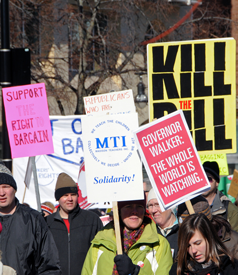
Protesters in Wisconsin on February 19, 2011. (Photo: mrbula)


http://www.truth-out.org/the-betrayal-public-workers67939

All,

Still more truth and consequences...

Kofi


The Betrayal of Public Workers
by Robert Pollin and Jeffrey Thompson
16 February 2011

Truthout


The Great Recession and its aftermath are entering a new phase in the United States, which could bring even more severe assaults on the living standards and basic rights of ordinary people than we have experienced thus far. This is because a wide swath of the country’s policy- and opinion-making elite have singled out public sector workers—including schoolteachers, healthcare workers, police officers and firefighters—as well as their unions and even their pensions as deadweight burdens sapping the economy’s vitality.

The Great Recession did blow a massive hole in state and municipal government finances, with tax receipts—including income, sales and property taxes—dropping sharply along with household incomes, spending and real estate values. Meanwhile, demand for public services, such as Medicaid and heating oil assistance, has risen as people’s circumstances have worsened. But let’s remember that the recession was caused by Wall Street hyper-speculation, not the pay scales of elementary school teachers or public hospital nurses.

Nonetheless, a rising chorus of commentators charge that public sector workers are overpaid relative to employees in comparable positions in the private sector. The fact that this claim is demonstrably false appears not to matter. Instead, the attacks are escalating. The most recent proposal gaining traction is to write new laws that would allow states to declare bankruptcy. This would let them rip up contracts with current public sector employees and walk away from their pension fund obligations. Only by declaring bankruptcy, Republican luminaries Jeb Bush and Newt Gingrich argued in the Los Angeles Times, will states be able to “reform their bloated, broken and underfunded pension systems for current and future workers.”

But this charge is emanating not only from the Republican right; in a front-page story on January 20, the New York Times reported on a more general trend spreading across the country in which “policymakers are working behind the scenes to come up with a way to let states declare bankruptcy and get out from under crushing debts, including the pensions they have promised to retired public workers.”

Considered together, state and local governments are the single largest employer in the US economy. They are also the country’s most important providers of education, healthcare, public safety and other vital forms of social support. Meanwhile, the official unemployment rate is stuck at 9 percent—a more accurate figure is 16.1 percent—a full eighteen months after the recession was declared over. How have we reached the point where the dominant mantra is to dismantle rather than shore up state and local governments in their moment of crisis?

Why States Need Support During Recessions

The Wall Street–induced recession clobbered state and local government budgets. By 2009, state tax revenues had fallen by fully 13 percent relative to where they were in 2007, and they remained at that low level through most of last year. By comparison, revenues never fell by more than 6 percent in the 2001 recession. Even during the 1981–82 recession, the last time unemployment reached 9 percent, the decline in state tax revenues never exceeded 2 percent. These revenue losses, starting in 2008, when taken together with the increased demand for state services, produced an average annual budget gap in 2009–11 of $140 billion, or 21 percent of all state spending commitments.

Unlike the federal government, almost all state and local governments are legally prohibited from borrowing money to finance shortfalls in their day-to-day operating budgets. The state and local governments do borrow to finance their long-term investments in school buildings, roads, bridges, sewers, mass transit and other infrastructure projects. They have established a long record of reliability in repaying these debt obligations, even during the recession. Nevertheless, these governments invariably experience a squeeze in their operating budgets during recessions, no matter how well they have managed their finances during more favorable economic times.

If, in a recession, states and municipalities are forced to reduce their spending in line with their loss in tax revenues, this produces layoffs for government employees and loss of sales for government vendors. These cutbacks, in turn, will worsen conditions in the private market, discouraging private businesses from making new investments and hiring new employees. The net impact is to create a vicious cycle that deepens the recession.

As such, strictly as a means of countering the recession—on behalf of business interests as well as everyone else in the community—the logic of having the federal government providing stimulus funds to support state and local government spending levels is impeccable. The February 2009 Obama stimulus—the American Recovery and Reinvestment Act (ARRA)—along with supplemental funds for Medicaid, has provided significant support, covering about one-third of the total budget gap generated by the recession. But that leaves two-thirds to be filled by other means. ARRA funds have now run out, and the Republican-controlled House of Representatives will almost certainly block further funding.

In 2010 roughly another 15 percent of the budget gap was covered by twenty-nine states that raised taxes and fees-for-services. In general, raising taxes during a recession is not good policy. But if it must be done to help fill deepening budgetary holes, the sensible way to proceed is to focus these increases on wealthier households. Their ability to absorb such increases is obviously strongest, which means that, unlike other households, they are not likely to cut back on spending in response to the tax hikes. In fact, ten states—New York, Illinois, Connecticut, North Carolina, Wisconsin, Oregon, Hawaii, Vermont, Rhode Island and Delaware—have raised taxes progressively in some fashion.

Of course, the wealthy do not want to pay higher taxes. But during the economic expansion and Wall Street bubble years of 2002–07, the average incomes of the richest 1 percent of households rose by about 10 percent per year, more than three times that for all households. The richest 1 percent received fully 65 percent of all household income growth between 2002–07.

One charge against raising state taxes in a progressive way is that it will encourage the wealthy to pick up and leave the state. But research on this question shows that this has not happened. We can see why by considering, as a hypothetical example, the consequences of a 2 percent income tax increase on the wealthiest 5 percent of households in Massachusetts. This would mean that these households would now have $359,000 at their disposal after taxes rather than $370,000—hardly enough to affect spending patterns significantly for these households, much less induce them to relocate out of the state. At the same time, a tax increase such as this by itself will generate about $1.6 billion for the state to spend on education, healthcare and public safety.

The forces against independent journalism are growing. Help Truthout keep up the fight against ignorance and regression! Support us here.

But even with the ARRA stimulus funds and tax increases, states and municipalities have had to make sharp cuts in spending. More severe cuts will be coming this year, with the ARRA funds now gone. These include cuts that will reduce low-income children’s or families’ eligibility for health insurance; further cuts in medical, homecare and other services for low-income households, as well as in K–12 education and higher education; and layoffs and furloughs for employees. The proposed 2012 budgets include still deeper cuts in core areas of healthcare and education. In Arizona, the governor’s budget would cut healthcare for 280,000 poor people and reduce state support for public universities by nearly 20 percent. In California, Governor Brown is proposing to bring spending on the University of California down to 1999 levels, when the system had 31 percent fewer students than it does today.

State and Local Government Workers Are Not Overpaid

Even if state and local government employees are not responsible for the budgetary problems that emerged out of the recession, are they nevertheless receiving bloated wage and benefits packages that are holding back the recovery? Since the recession began, there has been a steady stream of media stories making such claims. One widely cited 2009 Forbes cover article reported, “State and local government workers get paid an average of $25.30 an hour, which is 33 percent higher than the private sector’s $19…. Throw in pensions and other benefits and the gap widens to 42 percent.”

What figures such as these fail to reflect is that state and local government workers are older and substantially better educated than private-sector workers. Forbes is therefore comparing apples and oranges. As John Schmitt of the Center for Economic Policy Research recently showed, when state and local government employees are matched against private sector workers of the same age and educational levels, the public workers earn, on average, about 4 percent less than their private counterparts. Moreover, the results of Schmitt’s apples-to-apples comparison are fully consistent with numerous studies examining this same question over the past twenty years. One has to suspect that the pundits who have overlooked these basic findings have chosen not to look.

State Pension Funds Are Not Collapsing

Not surprisingly, state and local government pension funds absorbed heavy losses in the 2008–09 Wall Street crisis, because roughly 60 percent of these pension fund assets were invested in corporate stocks. Between mid-2007 and mid-2009, the total value of these pension funds fell by nearly $900 billion.

This collapse in the pension funds’ asset values has increased their unfunded liabilities—that is, the total amount of benefit payments owed over the next thirty years relative to the ability of the pension funds’ portfolio to cover them. By how much? In reality, estimating the total level of unfunded liabilities entails considerable guesswork. One simply cannot know with certainty how many people will be receiving benefits over the next thirty years, nor—more to the point—how much money the pension funds’ investments will be earning over this long time span. The severe instability of financial markets in the recent past further clouds the picture.

Thus, these estimates vary by huge amounts, depending on the presumed rate of return for the funds. The irony is that right-wing doomsayers in this debate, such as Grover Norquist, operate with an assumption that the fund managers will be able to earn returns only equal to the interest rates on riskless US Treasury securities. Under this assumption, the level of unfunded liabilities balloons to the widely reported figure of $3 trillion. To reach this conclusion, the doomsayers are effectively arguing that the collective performance of all the Wall Street fund managers—those paragons of free-market wizardry—will be so anemic over the next thirty years that the pension funds may as well just fire them and permanently park all their money in risk-free government bonds. It follows that the profits of private corporations over the next thirty years will also be either anemic or extremely unstable.

But it isn’t necessary to delve seriously into this debate in order to assess the long-term viability of the public pension funds. A more basic consideration is that before the recession, states and municipalities consistently maintained outstanding records of managing their funds. In the 1990s the funds steadily accumulated reserves, such that by 2000, on average, they were carrying no unfunded liabilities at all. Even after the losses to the funds following the previous Wall Street crash of 2001, the unfunded share of total pension obligations was no more than around 10 percent. By comparison, the Government Accountability Office holds that to be fiscally sound, the unfunded share can be as high as 20 percent of the pension funds’ total long-term obligations.

A few states are facing more serious problems, including New Jersey, Illinois and California. New Jersey is in the worst shape. But this is not because the state has been handing out profligate pensions to its retired employees. The average state pension in New Jersey pays out $39,500 per year. The problem is that over the past decade, the state has regularly paid into the system less than the amount agreed upon by the legislature and governor and stipulated in the annual budgets. For 2010 the state skipped its scheduled $3.1 billion payment altogether. However, even taking New Jersey’s worst-case scenario, the state could still eliminate its unfunded pension fund liabilities—that is, begin running a 100 percent fully funded pension fund—if it increased the current allocation by about 4 percent of the total budget, leaving 96 percent of the state budget allocation unchanged.

In dollar terms, this worst-case scenario for New Jersey would require the state to come up with roughly $4 billion per year to cover its pension commitments in an overall budget in the range of $92 billion. Extracting this amount of money from other programs in the budget would certainly cause pain, especially when New Jersey, like all other states, faces tight finances. But compare this worst-case scenario with the bankruptcy agenda being discussed throughout the country.

To begin with, seriously discussing a bankruptcy agenda will undermine the confidence of private investors in all state and municipal bonds—confidence that has been earned by state and municipal governments. When the markets begin to fear that states and municipalities are contemplating bankruptcy, this will drive up the interest rates that governments will have to pay to finance school buildings, infrastructure improvements and investments in the green economy.

Then, of course, there is the impact on the pensioners and their families. For the states and municipalities to walk away from their pension fund commitments would leave millions of public sector retirees facing major cuts in their living standards and their sense of security. Something few Americans understand is that roughly one-third of the 19 million state and local employees—i.e., those in fifteen states, including California, Texas and Massachusetts—are not eligible for Social Security and will depend exclusively on their pensions and personal savings in retirement. In addition, public sector pensions are not safeguarded by the federal Pension Benefit Guaranty Corporation. Unlike Wall Street banks, state pensioners will receive no bailout checks if the states choose to abrogate their pension fund agreements.

Getting Serious About Reforming State Finances

Of course, there are significant ways the public pension systems, as well as state and local finances more generally, can be improved. The simplest solution, frequently cited, involves “pension spiking”—that is, practices such as allowing workers to add hundreds of hours of overtime at the end of their careers to balloon their final year’s pay and their pensions. This has produced serious additional costs to pension obligations in some states and municipalities, but it is still by no means a major factor in explaining states’ current fiscal problems.

But states and municipalities also have to follow through on the steps they have taken to raise taxes on the wealthy households that are most able to pay. They should also broaden their sources of tax revenue by taxing services such as payments to lawyers, as well as by taxing items purchased over the Internet. And they have to stop giving out large tax breaks to corporations as inducements to locate in their state or municipality instead of neighboring locations. This kind of race to the bottom generates no net benefit to states and municipalities.

Finally, state and local governments are in the same boat as the federal government and private businesses in facing persistently rising healthcare costs. As was frequently noted during the healthcare debates over the past two years, the United States spends about twice as much per person on healthcare as other highly developed countries do, even though these other countries have universal coverage, longer life expectancies and generally healthier populations. These costs weigh heavily on the budgets of state and local governments, which finance a large share of Medicaid and health benefits for state employees. The problem is that we spend far more than other countries on medications, expensive procedures and especially insurance and administration. We also devote less attention to prevention. It remains to be seen how much the Obama healthcare reform law—the 2010 Patient Protection and Affordable Care Act—will remedy this situation. It is certainly the case that more must be done, especially in establishing effective controls on the drug and insurance industries.

These are some of the long-run measures that must be taken to bolster the financing of education, healthcare, public safety and other vital social services, as well as to support investments in infrastructure and the green economy. If states declare bankruptcy they will break their obligations to employees, vendors, pensioners and even bondholders, which will undermine the basic foundations of our economy. As we emerge, if only tentatively, from the wreckage of the Great Recession, this is precisely the moment we need to strengthen, not weaken, the standards of fairness governing our society.


Robert Pollin is a professor of economics and co-director of the Political Economy Research Institute (PERI) at the University of Massachusetts. One of his most recent books (co-written) is A Measure of Fairness: The Economics of Living Wages and Minimum Wages in the United States.

Jeffrey Thompson is an assistant research professor at the Political Economy Research Institute (PERI) at the University of Massachusetts.


Saturday, March 7, 2009

Really Bad News--National Unemployment Rate Continues to Soar

http://www.nytimes.com/2009/03/07/business/economy/07jobs.html?hp=&pagewanted=all

All,

This is horrible news of course and it indicates both just how bad things really are and how bad they are surely going to get. The official Government figure of 8.1% means in reality that the actual national unemployment rate is much closer to an economic Depression level of 16% (a much more realistic figure which includes the millions of people who have in fact stopped looking for nonexistent work but haven't been counted because they are no longer on the statistical roll of those still officially looking for employment). Unless and until we all seriously begin to politically demand as citizens that corporate America, Wall Street, the media, the courts, and the executive, legislative, and judicial branches of government address our primary social needs nothing fundamental will change. However, if we organize, educate, and mobilize people on a local, state, and national level, actively support the President's new budget and general economic program (while simultaneously holding him and his administration fully accountable and responsible in the process as we also continue to demand even more comprehensively progressive programs and legislation from Congress), then we will have made the kind of major grassroots intervention that is necessary for real change to happen in this country.

Needless to say our actual political and ideological independence and integrity is created and sustained by an ongoing committment that critically goes far beyond the given status quo in our political, economic, and cultural institutions. But words alone won't do it and passively or cynically watching the arrogant, wealthy elites in government, media, corporate, and the financial sector play their usual corrupt games won't cut it either. There's very serious work to be done by all of us...

Kofi


Continuing Job Losses May Signal Broad Economic Shift
By PETER S. GOODMAN and JACK HEALY
March 6, 2009
New York Times


Another 651,000 jobs disappeared from the American economy in February, the government reported Friday, as the unemployment rate soared to 8.1 percent — its highest level since 1983.

More than 4.4 million Americans have lost their jobs since the recession started in December 2007.

The latest grim scorecard of contraction in the American workplace largely destroyed what hopes remained for an economic recovery in the first half of this year, and added to a growing sense that 2009 is probably a lost cause.

Most economists now assume that the American fortunes will not improve before near the end of the year, as the Obama administration’s $787 billion emergency spending program begins to wash through the economy.

“The current pace of decline is breathtaking,” said Robert Barbera, chief economist at the research and trading firm ITG. “We are now falling at a near record rate in the postwar period and there’s been no change in the violent downward trajectory.”

Indeed, the monthly snapshot of the national employment picture worsened an already abysmal picture as the government revised upward the number of jobs lost in December and January. The economy has now lost at least 650,000 jobs for three consecutive months, the worst decline in percentage terms over that length of time since 1975.

Since the recession began, the economy has eliminated roughly 4.4 million jobs, and more than half of those positions — some 2.6 million — disappeared in the last four months.

The acceleration has convinced some economists that, far from an ordinary downturn after which jobs will return, the contraction under way reflects a fundamental restructuring of the American economy. In crucial industries — particularly manufacturing, financial services and retail — many companies have opted to abandon whole areas of business.

“These jobs aren’t coming back,” said John E. Silvia, chief economist at Wachovia in Charlotte. “A lot of production either isn’t going to happen at all, or it’s going to happen somewhere other than the United States. There are going to be fewer stores, fewer factories, fewer financial services operations. Firms are making strategic decisions that they don’t want to be in their businesses.”

For American policy makers, such a reality poses fundamental challenges to the traditional response to hard times. For decades, the government has reacted to economic downturns by handing out temporary unemployment insurance checks, relying upon the resumption of economic growth to deliver needed jobs. This time, argues Mr. Silvia, the government needs to put a much greater emphasis on retraining workers for careers in other industries.

In the auto industry, for example annual American car sales have dropped from some 17 million a year a few years ago to 9 million now. Even if sales increase to 10 or 12 million, that still leaves a lot of unneeded factories.

“That’s a lot of workers that are not coming back,” Mr. Silvia said. “That’s a lot of steel, a lot of rubber, a lot of suppliers that are not coming back. It’s really challenging to us as a society.”

President Obama responded to the figures by declaring that “this country has never responded to a crisis by sitting on the sidelines and hoping for the best” and asserting that government has a huge role to play in bringing out the best in the American people.

“I know that throughout our history we have met every great challenge with bold action and big ideas,” he told police academy graduates in Columbus, Ohio, on Friday. “That’s what’s fueled a shared and lasting prosperity.”

Mr. Obama cited the unemployment figures as further evidence that those who opposed “the very notion that government has a role in ending the cycle of job loss at the heart of this recession” are on the wrong side of history. (The president’s stimulus package was approved by the House with no support from minority Republicans, whose leader, Representative John A. Boehner, is from Ohio.)

In February, another 168,000 manufacturing jobs were eliminated, bringing losses over the last year to 1.2 million. In Michigan, where the troubles of the auto industry have been particularly traumatic, the unemployment rate is at 10.6 percent, the highest of any state.

“The people who do what I do in the Detroit area are a dime a dozen,” said Kim Allgeyer, 46, a machine toolmaker in Westland, Mich., who was laid off in January from a company that makes manufacturing assembly lines for the Detroit automakers. Since then, he has failed to find another full-time job, subsisting on day labor and one weeklong stint for contractors. He is thinking of moving to Louisiana or Mississippi to seek work as a shipbuilder.

“Who’s going to put me to work?” he asked. “Where’s the work at? It’s just a great big black hole.”

Much the same can be said for financial services, which gave up another 44,000 jobs in February. During the housing boom, banks hired tens of thousands of well-compensated traders, analysts and marketers to sell mortgage-backed securities and other exotic flavors of investments. That industry is unlikely to return to anything close to its former shape.

Retailers are shuttering stores as the era of easy money fueled by rising house prices and abundant credit gives way to a new period in which millions of households are being forced to confine their spending to their paychecks, limiting their trips to the mall. The economy lost 39,500 retail jobs in February, and has eliminated more than 500,000 in the last year.

The United States has been neglecting job training programs for decades, argues Andrew Stettner, deputy director of the National Employment Law Project in New York. In current dollars, the nation devoted the equivalent of $20 billion a year on job training in 1979, while spending only $6 billion last year.

The stimulus spending bill includes $4.5 billion in additional monies for job training. But under current programs, many of those eligible for training are given vouchers that cover only a semester or two at community colleges, while careers in growth industries like biotechnology and health care typically require two-year degree programs.

“We have to seriously look at fundamentally rebuilding the economy,” Mr. Stettner said. “You’ve got to use this moment to retrain for jobs.”

Friday’s report reinforced the degree to which the economy is being assailed at once by panic in the financial system, falling household spending power and plunging real estate prices, with growing numbers of companies resorting to wholesale layoffs after months of merely declining to hire.

“There’s been no place to hide,” said Stuart Hoffman, chief economist at PNC Financial in Pittsburgh. “Everybody in every industry has lost jobs or is feeling insecure about whether they’re going to keep their jobs or how their company’s going to do."

Some economists suggested the substantial increase in layoffs reflected the anxiety that has gripped the financial system since last fall when major Wall Street institutions failed, notably the giant investment bank Lehman Brothers. Borrowing costs have spiked for American companies, making even healthy businesses reluctant to expand and hire. Perhaps even more decisive, the collapse last fall has left many companies spooked.

“There was a huge increase in uncertainty and a huge hit to confidence which caused a large rethinking among businesses,” said Ethan Harris, co-head of United States economics research. “That caused a big downshift in employment.”

In similar crises, like the stock market crash of 1987 and the near collapse of the enormous hedge fund Long Term Capital Management in 1998, dysfunction continued to grip markets for about six months, Mr. Harris said, suggesting that this episode may be nearing its end.

But history also shows that when fear lifts, the economy returns not to normalcy but to wherever it was when the crisis began, Mr. Harris said. That means that even if order is restored to the financial system, the economy will still be staring at a recession.

And order cannot be restored, many economists say, until the Obama administration creates and executes a credible plan to remove the bad loans choking the balance sheets of financial institutions.

“The 800-pound gorilla is whether we face up to the bad loans in the financial system,” said Alan Levenson, chief economist at the trading firm T. Rowe Price in Baltimore.

David Stout contributed reporting.


Fighting for Labor in the Obama Administration

http://www.nytimes.com/2009/03/02/washington/02labor.html?_r=1&nl=pol&emc=pola1


In Obama, Labor Finds the Support It Expected
By STEVEN GREENHOUSE
Published: March 1, 2009
New York Times


John J. Sweeney, the nation’s top union official, often complains that he was invited just once to the White House during George W. Bush’s eight years in office — and even that was at the Vatican’s behest during a visit by Pope Benedict.

If an index is needed for how much closer organized labor is to President Obama than to his predecessor, it might be the number of times Mr. Sweeney, the A.F.L.-C.I.O.’s president, has visited the White House since Inauguration Day — at least once a week for receptions, bill signings and a meeting on fiscal responsibility.

Mr. Obama has delighted labor by issuing four pro-labor executive orders that reversed Bush policies. He has also appointed a union-friendly chairwoman to the National Labor Relations Board and named a labor secretary whose parents were both union members.

But those changes worry corporate America, especially as Mr. Obama has signaled he will push for legislation that would expand labor’s thinned ranks by making it far easier to unionize workers. Labor leaders expect Vice President Joseph Biden to spell out the administration’s battle plans for the bill on Thursday, when he is scheduled to speak at the A.F.L.-C.I.O.’s winter meeting in Miami Beach.

Any doubts that union leaders might have had about Mr. Obama dissolved several weeks ago when, in announcing a new Task Force on the Middle Class, he said: “I do not view the labor movement as part of the problem. To me, it’s part of the solution. You cannot have a strong middle class without a strong labor movement.”

Mr. Sweeney and many other labor leaders were thrilled. “It’s like night and day having a president who believes in helping working people build power,” Mr. Sweeney said. “I look upon Obama as the most pro-union president since John Kennedy, and I have even compared him to Franklin Delano Roosevelt.”

But Republicans and business leaders are not so happy. They complain that Mr. Obama is simply paying back labor for all the money and volunteers that unions invested in his victory.

“This last election the labor bosses spent $400 million to $500 million getting the other side elected, and they just didn’t do that for their good health,” John Boehner, the House Republican leader, said at a conference in Washington last Thursday. “They’ve been making investments in the other side so they can control the policy-making side.”

Randel Johnson, vice president for labor policy at the U.S. Chamber of Commerce, also voiced concern. “The jury is still out on the degree to which the Obama administration will be controlled by organized labor,” he said. “Whether he will triangulate organized labor like Clinton or become their handmaiden, we’re not sure.”

Nate Tamarin, an associate White House political director who is in charge of outreach to labor, said Mr. Obama’s pro-worker policies reflected what he promised during his campaign.

“Everything he has done is consistent with what he thinks is right for American working people and is consistent with what he viewed throughout his career as the important place unions have in building the American middle class,” Mr. Tamarin said.

Union leaders are certainly pleased with Mr. Obama’s $787 billion recovery package, as well as his plans for universal health coverage and increasing taxes on the rich.

The president of the Communications Workers of America praised the $7.2 billion earmarked in the recovery package to expand broadband service. The steelworkers’ president hailed Buy America provisions. And the president of the American Federation of Teachers lauded billions set aside for spending on education.

Unions also applaud the four executive orders, including one that makes it more likely that construction projects receiving federal dollars will be unionized. Unions also played a role in persuading the president to delay revamping Social Security and possibly making benefits less generous.

Most of all, they are looking to President Obama to help unions reverse their decades-long slide in power and membership. With 16 million members, unions represent just 7.6 percent of private-sector workers today, down from more than 25 percent in the early 1980s.

Labor is pinning its biggest hopes on the passage of the Employee Free Choice Act, a bill that unions hope will add millions of new members by giving workers the right to union recognition as soon as a majority of employees at a workplace sign pro-union cards. The bill would take away management’s ability to insist on a secret ballot election.

Business leaders have warned of Armageddon in their fight to kill the bill, which Democratic leaders say will come up for a vote in May, June or July. Union leaders voice confidence that they will muster the 60 Senate votes needed to overcome a filibuster, while Republicans expect to defeat the bill in the Senate.

Republican and business strategists say they are focusing on lobbying several Democratic senators, especially Mark Pryor and Blanche Lincoln of Arkansas, Mark Warner of Virginia, Ben Nelson of Nebraska and Mary Landrieu of Louisiana, to help deny the 60 Senate votes needed for passage.

Mr. Johnson, of the Chamber of Commerce, denounced the bill, saying, “The idea of radically changing employment law when companies are trying to dig themselves out of a hole is ludicrous.”

But Mr. Obama disagreed, telling regional newspaper reporters last month: “I don’t buy the argument that providing workers with collective-bargaining rights somehow weakens the economy or worsens the business environment. If you’ve got workers who have decent pay and benefits, they’re also customers for business.” If there is one area where labor remains uneasy with Mr. Obama, it is trade policy.

Leo Gerard, president of the United Steelworkers, said he was worried that the trade representative, Ron Kirk, and commerce secretary-designate, Gary Locke, were too much in favor of free trade and would not do enough to preserve America’s manufacturing jobs.

“We cannot work our way out of this economic mess unless we refocus on making things in America,” Mr. Gerard said.

Saturday, January 31, 2009

Equal Pay for Equal Work--Attacking Sexism at its Economic Source

http://thecaucus.blogs.nytimes.com/2009/01/29/first-lady-in-her-first-public-policy-role/?nl=pol&emc=pola2

All,

Very good news as President Obama overturns reactionary, sexist 2007 Supreme Court ruling upholding pay discrimination against women and signs equal pay bill. AmerThis legislation was well overdue for many years and it demonstrates what genuine power any President has to actually protect and defend the real interests of working people if he chooses to...

Needless to say this truly progressive decision on Obama's part goes under the category that I mentioned yesterday of that citizen activism that "will actively support and prop up what needs to be supported"...

Kofi


Obama Signs Equal-Pay Legislation

President Obama signed his first bill into law on Thursday, approving the Lilly Ledbetter Fair Pay Act, a law named for Ms. Ledbetter, fourth from left, an Alabama woman who at the end of a 19-year career as a supervisor in a tire factory complained that she had been paid less than men.

By SHERYL GAY STOLBERG
Published: January 29, 2009
New York Times

WASHINGTON — President Obama signed his first bill into law on Thursday, approving equal-pay legislation that he said would “send a clear message that making our economy work means making sure it works for everybody.”

Mr. Obama was surrounded by a group of beaming lawmakers, most but not all of them Democrats, in the East Room of the White House as he affixed his signature to the Lilly Ledbetter Fair Pay Act, a law named for an Alabama woman who at the end of a 19-year career as a supervisor in a tire factory complained that she had been paid less than men.

After a Supreme Court ruling against her, Congress approved the legislation that expands workers’ rights to sue in this kind of case, relaxing the statute of limitations.

“It is fitting that with the very first bill I sign — the Lilly Ledbetter Fair Pay Act — we are upholding one of this nation’s first principles: that we are all created equal and each deserve a chance to pursue our own version of happiness,” the president said.

He said was signing the bill not only in honor of Ms. Ledbetter — who stood behind him, shaking her head and clasping her hands in seeming disbelief — but in honor of his own grandmother, “who worked in a bank all her life, and even after she hit that glass ceiling, kept getting up again” and for his daughters, “because I want them to grow up in a nation that values their contributions, where there are no limits to their dreams.”

The ceremony, and a reception afterward in the State Dining Room of the White House, had a celebratory feel. The East Room was packed with advocates for civil rights and workers rights; the legislators, who included House and Senate leaders and two moderate Republicans — Senators Susan Collins and Olympia Snowe, both of Maine — shook Mr. Obama’s hand effusively (some, including House Speaker Nancy Pelosi, received presidential pecks on the cheek) as he took the stage. They looked over his shoulder, practically glowing, as Mr. Obama signed his name to the bill, using one pen for each letter.

“I’ve been practicing signing my name very slowly,” Mr. Obama said wryly, looking at a bank of pens before him. He handed the first pen to the bill’s chief sponsor, Senator Barbara Mikulski, Democrat of Maryland, and the last to Ms. Ledbetter.

The ceremony also marked First Lady Michelle Obama’s policy debut; she spoke afterward in a reception in the State Dining Room, where she called Ms. Ledbetter “one of my favorite people.”

Mr. Obama told Ms. Ledbetter’s story over and over again during his campaign for the White House; she spoke frequently as an advocate for him during his campaign, and made an appearance at the Democratic National Convention in Denver.

Now 70, Ms. Ledbetter discovered when she was nearing retirement that her male colleagues were earning much more than she was. A jury found her employer, the Goodyear Tire and Rubber Company plant in Gadsden, Ala., guilty of pay discrimination. But in a 5-4 decision, the Supreme Court threw out the case, ruling that she should have filed her suit within 180 days of the date that Goodyear first paid her less than her peers.

Congress tried to pass a law that would have effectively overturned the decision while President George W. Bush was still in office, but the White House opposed the bill; opponents contended it would encourage lawsuits and argued that employees could delay filing their claims in the hope of reaping bigger rewards. But the new Congress passed the bill, which restarts the six-month clock every time the worker receives a paycheck .

Ms. Ledbetter will not see any money as a result of the legislation Mr. Obama signed into law. But what she has gotten, aside from celebrity, is personal satisfaction, as she said in the State Dining Room after the signing ceremony.

“Goodyear will never have to pay me what it cheated me out of,” she said. “In fact, I will never see a cent. But with the president’s signature today I have an even richer reward.”


January 29, 2009
First Lady in Her First Public-Policy Role
By RACHEL L. SWARNS


Michelle Obama stepped into the public-policy spotlight as first lady for the first time on Thursday, hailing a new law that will give women greater power to challenge sex discrimination in the workplace.

Standing below a portrait of Lincoln in the State Dining Room of the White House, Mrs. Obama described pay equity as “a top and critical priority for women of all racial and ethnic backgrounds, older women, younger women, women with disabilities and their families.’’

Mrs. Obama said the legislation, which was signed into law by President Obama on Thursday, symbolized her commitment and her husband’s to ensure that policies are put in place to “help women and men balance their work and family obligations without putting their jobs or their economic security at risk.

Mrs. Obama’s comments marked her first public appearance since she moved into the White House with her family last week. She stood in a purple power suit alongside Lilly M. Ledbetter, a supervisor at a Goodyear Tire and Rubber Company plant in Alabama.

Ms. Ledbetter became a cause célèbre among advocates for women when the Supreme Court ruled in 2007 that she was not entitled to compensation even though she received much smaller raises over several years than men in comparable positions at her plant.

The new law overturns that Supreme Court decision, which made it much harder for employees to challenge unlawful pay discrimination based on gender, race, age and disability.

Mrs. Obama and Ms. Ledbetter appeared together during the presidential campaign. And on Thursday, they stood together again before a crowd that included the cheering, clapping members of 150 advocacy organizations that had pressed for the law.

“I know that my daughters and granddaughters and your daughters and granddaughters will have a better deal,’’ Ms. Ledbetter said. “That’s what makes this fight worth fighting.”

Mrs. Obama has said that she plans to focus on supporting working parents and military families.